Prices for precious metals actually began rising with Russia’s invasion of Ukraine back in early 2022, but economists say prices surged significantly with the US and Israeli attacks on Iran.
In 2023, silver prices in India largely fluctuated between $725 (70,000 rupees) and $830 (80,000 rupees) per kilogramme, rising to around $985 (98,000 rupees) in 2024. But this year, amid the conflict with Iran, silver prices briefly soared as high as $4,670 (450,000 rupees) per kg before easing after the ceasefire. Even now, after some decline, prices are hovering around $2,600 (250,000 rupees) per kg, more than three times their levels just a few years ago.
Dr. Salahuddin Ayyub, an economist and international trade expert with India’s Ministry of Commerce and Industry, said geopolitical conflicts have triggered unprecedented volatility in global commodity markets.
“When stock markets become volatile, investors move their money into safer assets, such as gold and silver,” Ayyub explained. “This sudden surge in demand pushes the prices of precious metals sharply upwards.”
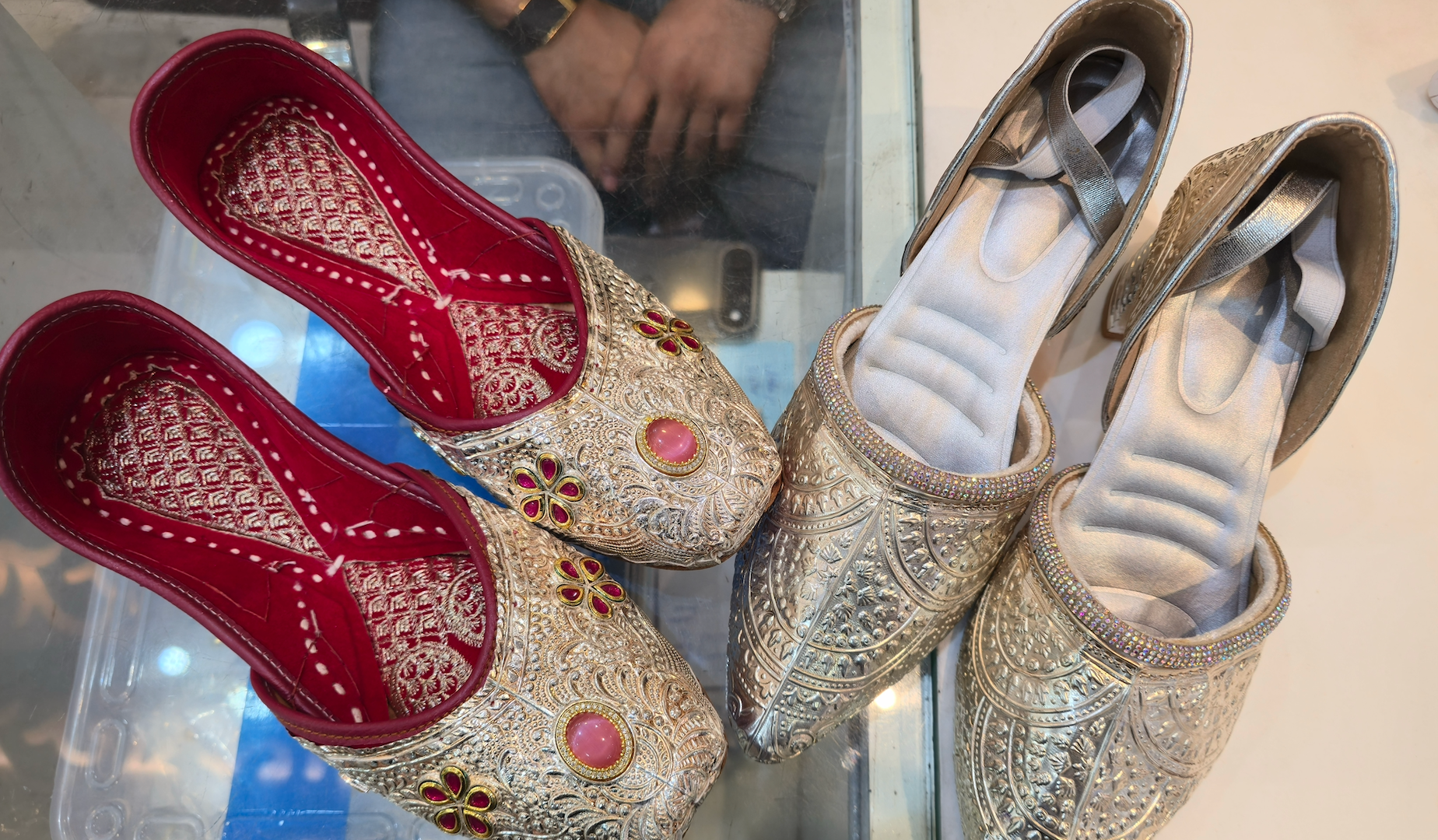
The consequences have been particularly severe in India, he said, because gold and silver remain deeply intertwined with weddings, other cultural traditions and family savings. As prices continue to rise, many households are increasingly opting for lower-cost alternatives, such as artificial jewellery.
He warned that while consumers may find substitutes, those whose livelihoods depend on the precious metals industry, including artisans, silversmiths, jewellery shopkeepers and traditional craftsmen, have far fewer options.
“The impact extends well beyond consumers,” Ayyub said. “Entire communities whose incomes depend on these metals are now facing shrinking demand and growing economic uncertainty.”
The surge in silver prices has had another consequence that is often overlooked by the government and policymakers. According to Ayyub, when a country witnesses a sharp rise in demand for imported precious metals, governments often intervene to curb imports and protect their foreign exchange reserves.
“India depends heavily on imported silver. A sudden spike in imports puts pressure on the country’s foreign exchange reserves, so the government tries to discourage excessive imports through tariffs and other restrictions,” Ayyub said.
These import duties are eventually passed on to consumers. “As tariffs increase, the landed cost of silver rises. That is one of the reasons why silver prices in India are currently trading above global prices,” he said.
Globally, silver currently costs $2,100 (201,000 rupees) per kg, but in India, it’s more than 20 percent higher because of heavy government import taxes and strict licensing that chokes off supply. India depends on imports to meet more than 80% of its domestic silver demand and its purchases account for over 20 percent of the global trade in refined silver.
India more than doubled its effective import taxes on gold and silver in May. That saw silver imports plunge by 87 percent to just $75.6 million that month, down from $566.2 million the previous year, the country’s lowest level in over three years.
High silver prices are now forcing Lucknow’s brides to make tough, sometimes devastating, decisions.
The Cockroach Janta Party wants Chief Election Commissioner Gyanesh Kumar to quit over changes to voter lists.
Published On 10 Oct 202610 Oct 2026
India has deployed thousands of police and paramilitary personnel in central Delhi and restricted transport in and around the capital ahead of a youth-led protest demanding the resignation of Gyanesh Kumar, the country’s chief election commissioner.
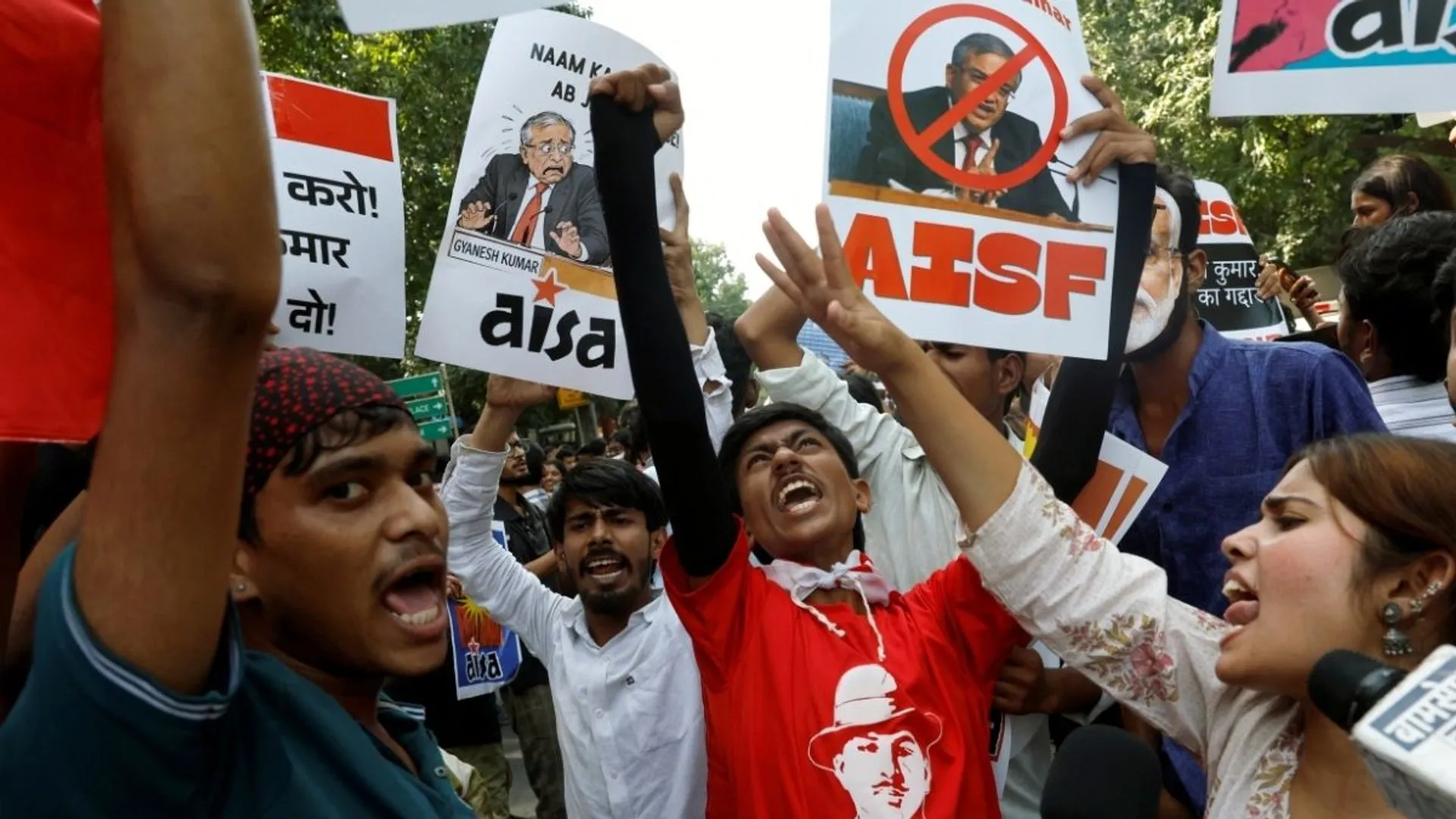
Saturday’s rally, called by the Cockroach Janta Party (CJP), a youth-based political movement, is expected to be the biggest yet in a wave of near-daily protests over a revision of voter lists that critics say favours Prime Minister Narendra Modi’s ruling Bharatiya Janata Party (BJP).
Recommended Stories
list of 3 itemsend of list
Organisers have billed it as a protest to “Save Democracy”.
Shutdown of central Delhi
Police have not authorised a rally at Jantar Mantar in central Delhi, which authorities usually designate for protests, because they said the request was not made on time and that the CJP had violated undertakings given during earlier protests.
Police have also warned that protesters will face a forceful law enforcement response if they violate the ban.
Roads to the site are blocked with multiple layers of metal barricades, as authorities shut 57 metro stations from Friday night, cancelled several long-distance trains and suspended mobile internet within 4km (2.5 miles) of the protest area until Saturday night, the Indian news agency ANI reported.
India’s Supreme Court said on Friday that some trains must still run and that blanket closure of metro stations is unlikely.
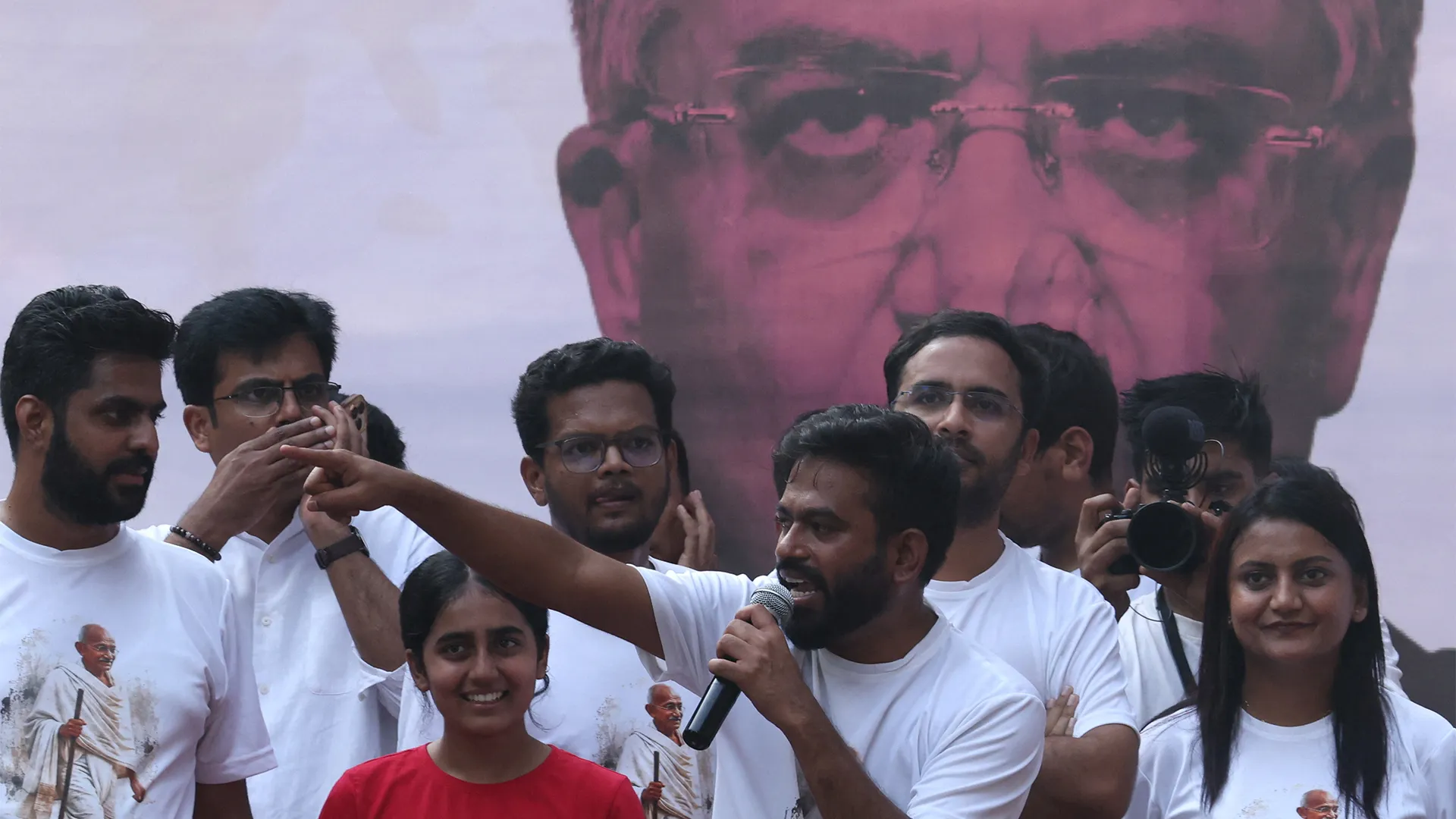
“The dictator would rather shut down the entire national capital and inconvenience millions of citizens than allow a peaceful protest at a designated protest site,” CJP chief Abhijeet Dipke said on X.
The CJP says at least 10,000 people, including protesters travelling to Delhi by train, have been detained across the country.
“You can detain the people, you cannot detain the movement,” said Neha Bora, national president of the All India Students’ Association, who has emerged as a leading face of the protests.
What kicked off the protests
Protesters want Chief Election Commissioner Gyanesh Kumar to quit over a voter list revision that has removed more than 130 million names.
The Election Commission says the exercise removes duplicate and ineligible voters and aims to prevent “foreign illegal immigrants” from voting.
Critics say it has disproportionately affected marginalised and minority communities.
The protests escalated after the Indian Express reported that Kumar’s two deputies had formally raised concerns at least 14 times in the past 10 months over the revisions.
The Election Commission and the BJP have denied the allegations. The BJP says the opposition is misleading the country because it cannot win elections.
The CJP began online as political satire in May after Chief Justice Surya Kant called unemployed youth “cockroaches”, sparking nationwide outrage. Since then, the CJP has garnered a large following among India’s youth.
The July protests led Modi’s education minister to resign over exam paper leaks. The latest demonstrations come months before a series of state elections in early 2027, including in Uttar Pradesh, India’s most populous state, which the BJP governs.
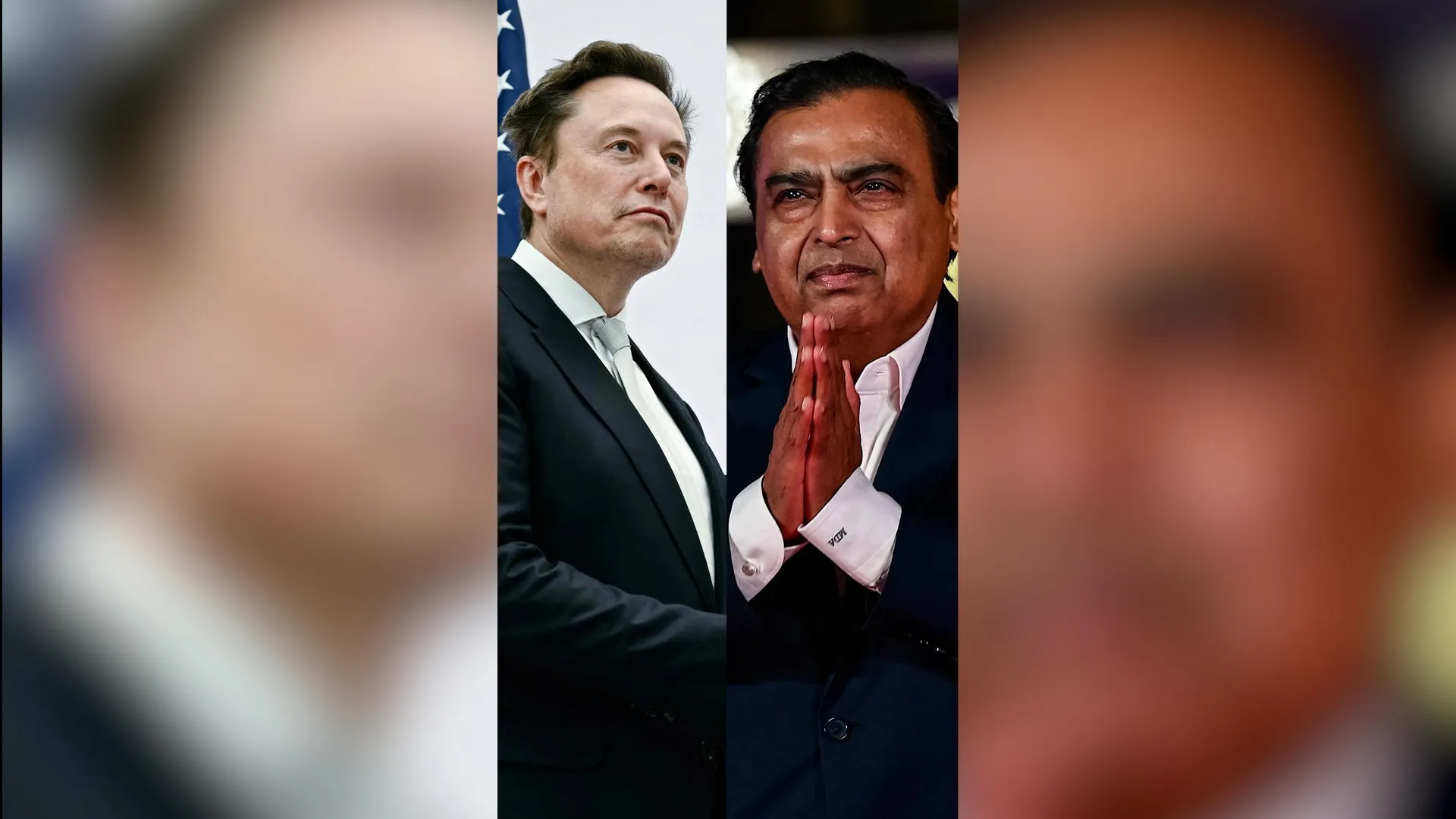
Elon Musk has accused Indian billionaire Mukesh Ambani of being India’s ‘real boss’ in a row over delays to Starlink’s entry into India. Ambani’s Reliance Jio has over 500M subscribers in India, and Musk claims Ambani is using political interference to sabotage his business interests.
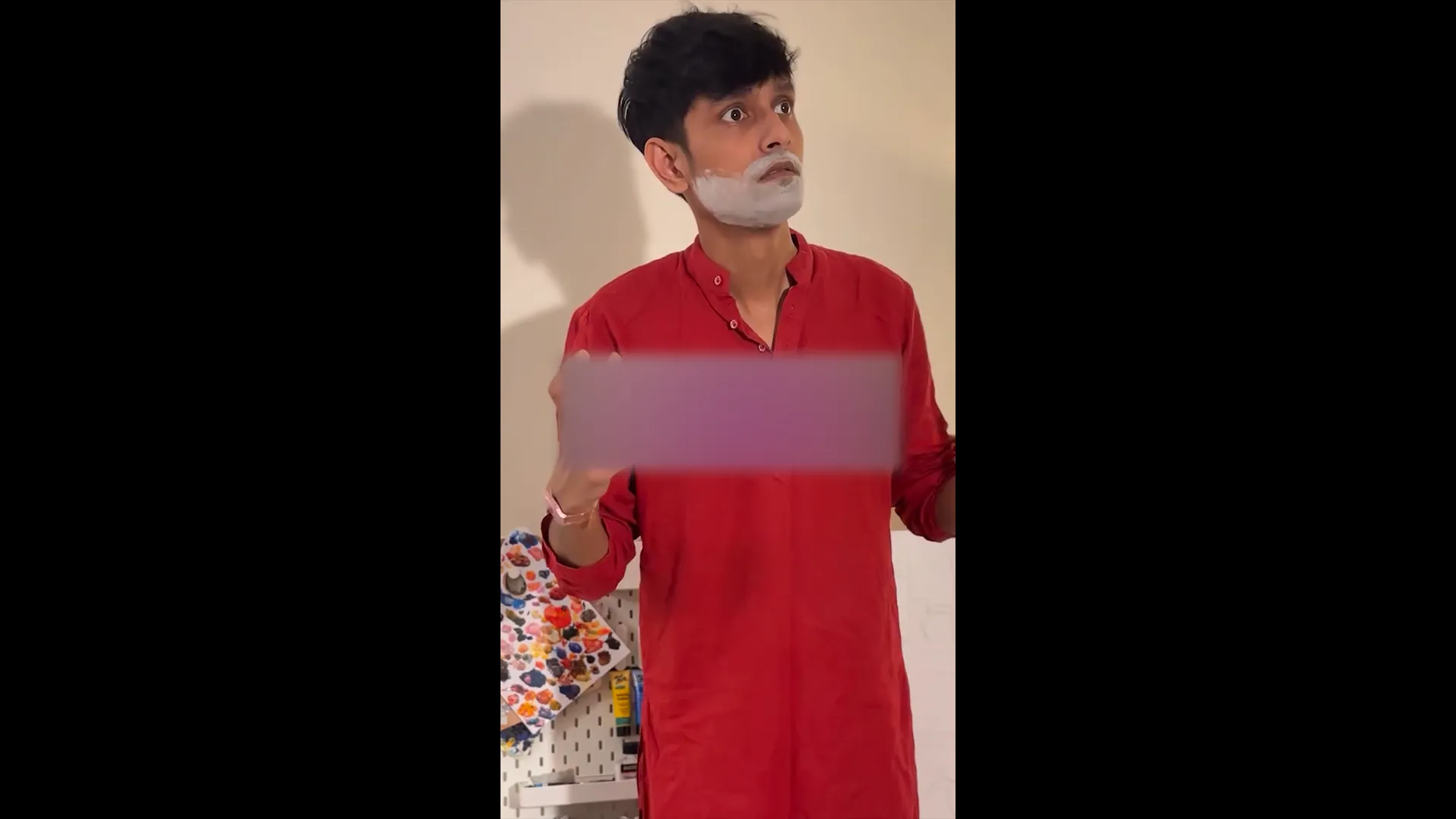
New Delhi, India – Stand-up comic Brijesh Jha posted a parody video on Instagram last week to protest the removal of his name, along with his father’s and sister’s, from a voter list in the eastern Indian state of West Bengal.
The video, which alleged that India’s Chief Election Commissioner Gyanesh Kumar had disenfranchised millions of voters at the behest of Prime Minister Narendra Modi’s Bharatiya Janata Party (BJP), garnered 1.7 million views after it was posted on September 29.
Recommended Stories
list of 4 itemsend of list
Two days later, Meta, the United States-based company that owns Instagram, took the video down, citing “local laws” without giving further explanation.
“I felt very helpless that day. I have only one thing in this country – that I can vote. If you take that away from me, then I have nothing left. So I didn’t know what to do. As an artist, I can just make art, or I can protest,” the Mumbai-based artist told Al Jazeera.
Jha said his parody song was removed because the Modi government is “scared” after an investigation by the Indian Express newspaper last month revealed that two of the election commission’s three members had raised serious concerns over a controversial revision of voter rolls being conducted by the poll panel across the country.
The exercise, known as the Special Intensive Revision (SIR), was launched in June last year to identify deceased, duplicate or dubious voters and remove them from the rolls. So far, the process has deleted more than 130 million voters – nearly 14 percent of India’s total voters, an overwhelming number of them Muslims who do not usually vote for Modi’s Hindu nationalist party.
The Indian Express investigation found that two of Kumar’s fellow election commissioners had formally objected at least 14 times to key decisions linked to the SIR exercise taken by their chief.
Opposition politicians and critics accused Kumar, a Modi government appointee, of acting at the behest of the BJP and demanded an independent inquiry into the decisions taken by the election commission during his tenure.
The revelations have led to street protests across India, demanding Kumar’s resignation.
On Tuesday, police in the capital New Delhi briefly detained the main opposition leader, Rahul Gandhi, and other leaders of his Congress party as they tried to march to the election commission office.
“The country has been hijacked by Narendra Modi through vote theft,” Gandhi told reporters. “What has been done to our country is called treason. Nobody is going to escape.”
In response, the BJP accused the opposition parties of “making a concerted effort to change the government”.
“They are deliberately attacking India’s democracy and constitutional institutions,” a BJP spokesman told reporters on Tuesday.
The Congress protesters and their political allies were back on the streets on Wednesday. Their demonstrations followed a series of protests by the satirical Cockroach Janta Party (CJP) and a group of left-wing students in Mumbai and New Delhi since October 2. The CJP has planned another demonstration in New Delhi on October 10 if Kumar does not resign by then.
‘Question the people in power’
What stood out in these protests was an increasingly inventive language of dissent, driven by humour, art and music, with much of it existing online alongside the demonstrations on the streets.
But a crackdown on such memes and jokes has also been simultaneous.
According to the Indian Express newspaper, the government issued nearly 195,000 content-blocking orders to Instagram, Facebook and YouTube between March and July this year – an average of one blocking order every 68 seconds.
Rejecting the newspaper report, the government said in a statement, “With 600 million users in India posting up to 78,703 items every 68 seconds, it is reasonable to expect that on average, one of these items may not be lawful.”
The crackdown came after the Modi government tightened rules governing online content in February. According to the new rules, social media platforms must remove content that a government authority or court has declared “unlawful” within three hours of receiving the order, down from 36 hours previously.
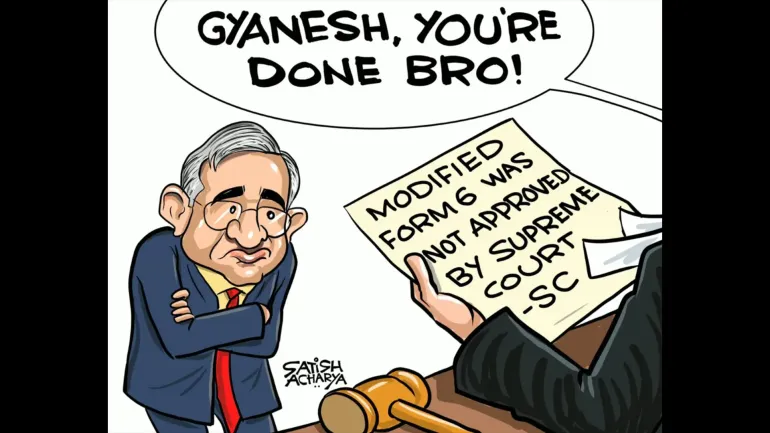
Among those whose works were taken down was political cartoonist Satish Acharya.
One of Satish Acharya’s cartoons taken down by the social media companies [File: Al Jazeera]
Several of Acharya’s cartoons, some up to three years old, were removed and his Instagram account was blocked in India from September 28 until late on October 5, he told Al Jazeera.
“At different phases of history, people used cartoons as a tool to express their protest and question the people in power. With the advanced use of social media, cartoons appear in different forms now, sometimes memes and reels,” the 55-year-old said.
“I have a lot of hope in Gen Z. They are fearless, they are creative and they care for the country. Our politicians can learn a lot from them.”
Stand-up comic Jha, who attended the CJP’s protest in Mumbai, agrees. “The more cruel the power is, the softer, more humorous and more artistic the protest becomes,” he told Al Jazeera.
But Jha has refused to apply for a reinstatement of his name in the voters’ list.
“I think they will see this interview and probably I will be in some detention centre. I just want to see what will happen. I’ll not register my name again,” he said.
However, he had a satirical message for Modi as he urged the Indian leader to stop the crackdown on online content.
“Please give back my right to vote. You are a great leader with a 56-inch chest. You shouldn’t be scared of one video,” he said, invoking a long-held right-wing boast about Modi’s famous bust.
India’s Cockroach Janta Party says its members have been subjected to mass arrests across India ahead of Saturday’s protest in New Delhi. Protesters are demanding the election panel chief’s resignation over alleged irregularities in voter-list revisions that critics say benefited Modi’s BJP.
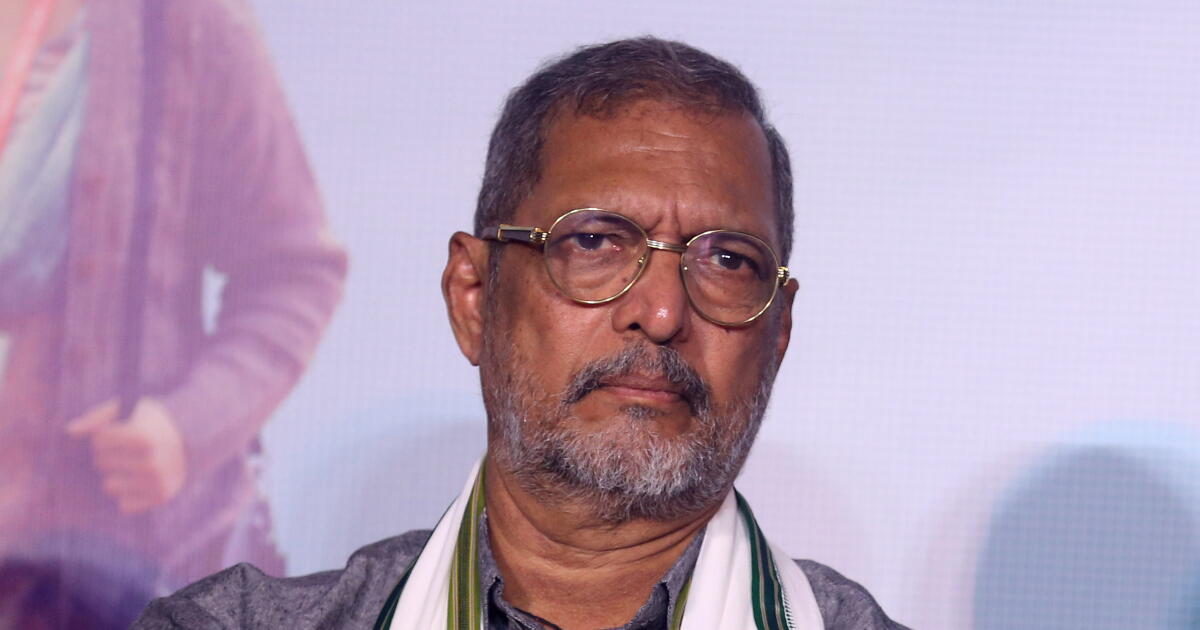
NEW DELHI — Nana Patekar, an acclaimed Indian actor and filmmaker, died Thursday at his home in the western state of Goa. He was 75.
Patekar died of a suspected cardiac arrest, the Press Trust of India news agency reported, citing a doctor at the hospital where he was pronounced dead.
Born in 1951 in India’s western state of Maharashtra, Patekar built a career spanning nearly five decades in Hindi- and Marathi-language cinema. He was known for intense performances and roles that often portrayed complex or unconventional characters.
Patekar made his film debut in the 1978 Hindi film “Gaman” and later earned acclaim for “Parinda” and “Krantiveer.” Patekar became popular in mainstream Bollywood films, while also working in India’s “parallel cinema” movement, known for its focus on realism and social issues. He gained wider international recognition with filmmaker Mira Nair’s Oscar-nominated “Salaam Bombay!”
He won three National Film Awards, India’s highest film honors, and received the Padma Shri, one of the country’s highest civilian honors.
In 2018, during India’s #MeToo movement, a Bollywood actress accused Patekar of sexual harassment on a film set. Patekar denied the allegation. The case was among several that drew attention as women publicly spoke about sexual misconduct in India’s film industry.
Prime Minister Narendra Modi mourned Patekar’s death, praising his “intensity, individuality and unmistakable presence” as an actor.
“He brought remarkable versatility and creativity to every role and gave us characters that will be remembered for generations,” Modi wrote on X.
Ukraine says it has received proposals from India, Turkiye, Egypt and the United States to broker talks with Russia. The offers come as the two adversaries escalate attacks on each other’s energy and port infrastructure with their war now in its fifth year.
Ukrainian Foreign Minister Andrii Sybiha revealed the four proposals at a briefing in Kyiv on Friday and singled out New Delhi’s. “The most comprehensive is India’s proposal,” he said, adding that India had signalled a willingness to play a role for the first time.
Recommended Stories
list of 3 itemsend of list
None of the proposals aims to end the war. Each seeks a narrower truce, covering energy facilities, ports or commercial shipping in the Black Sea.
Here’s what we know:
What is India proposing?
India has not made its plan public. Quoting unnamed sources, however, Indian media have reported it has three parts. According to the Hindustan Times, it would aim to protect infrastructure, keep grain and energy supplies moving through Black Sea ports, and ensure the safety of commercial shipping.
The first part – mutually halting strikes on energy facilities and ports – matches what Kyiv has been demanding. Sybiha said any deal must be a complete energy truce that covers port infrastructure as well.
The second part builds on the Black Sea Grain Initiative, which Turkiye and the United Nations mediated in 2022 but Russia abandoned in 2023.
The third part, protecting merchant ships and their crews, is particularly important to India because Indian sailors have been killed or harmed on Black Sea routes.
The sources were quoted as saying India’s plan goes further than the other three proposals because it covers infrastructure and shipping together. A Ukrainian official told the Kyiv Independent that it incorporates elements of the Turkish, Egyptian and US initiatives. The Kyiv Post reported that Sybiha also described the plan as addressing a possible ceasefire along the front lines, although other accounts said he gave no specifics.
The proposal likely took shape during Indian External Affairs Minister Subrahmanyam Jaishankar’s first visit to Ukraine last month and in a later meeting with Sybiha at the UN General Assembly in New York, also in September. Jaishankar said New Delhi was “trying to be helpful, starting with the Black Sea safety of shipping issue”.
What do we know about the Turkish and Egyptian proposals?
Very little. Neither Ankara nor Cairo has published details. Both reportedly focus on keeping Black Sea grain supplies moving by suspending attacks on commercial shipping. Some reports said the two countries proposed a grain truce jointly while others described two separate plans.
Turkiye has done this before. With the UN, it steered the 2022 grain deal, one of the few narrow truces of the war to hold for any length of time. Ankara and the UN are now organising new Black Sea talks with a round planned for October.
Beyond its Black Sea focus, almost nothing is known about Egypt’s proposal. Its interest, however, is clear: Egypt relies on Ukraine for nearly one-third of its grain supplies.
What is the US pitching?
According to Ukrainian President Volodymyr Zelenskyy, Washington has proposed three steps: a mutual halt to energy strikes, a reopening of the grain corridor and a trilateral meeting with Ukraine and Russia, possibly in Abu Dhabi.
The latest effort began in early September when US President Donald Trump’s envoys visited Kyiv and Moscow and secured an agreement in principle for a trilateral meeting. Steve Witkoff and Jared Kushner met Russian President Vladimir Putin in Moscow on September 5 while Kremlin envoy Kirill Dmitriev visited the US twice in September.
The trilateral meeting has since been pushed back. It had been expected to take place in the United Arab Emirates in early October. Washington now wants it in late October, and people close to the talks blamed the delay on Russia.
Washington has also invited Putin to the Group of 20 summit in Miami, Florida, in December. “We hope that’s an invitation he’ll accept,” US Secretary of State Marco Rubio said. The Kremlin said no decision has been made.
At the same time, the US is applying pressure to try to end the war. Trump recently signed a law giving him sweeping powers to sanction buyers of Russian energy.
He has also called on Ukraine to stop targeting Russian diesel facilities amid a diesel prices crisis in the US, where Trump faces tricky midterm elections next month. “Mr Zelenskyy has to do one thing,” he said on September 13. “He has to stop knocking out diesel fuel in Russia.” This drew much criticism that Trump instead should focus his comments on Russia, which began the war with its invasion of Ukraine in February 2022.
He is reportedly sceptical about his own government’s latest diplomatic initiative. People familiar with his thinking have told US media that he doubted Putin would agree to an energy truce before winter.
(Al Jazeera)
How have Russia and Ukraine responded?
Sybiha said Ukraine would agree to a truce but with conditions. It would accept an energy and Black Sea shipping ceasefire, but only as a combined package, he said.
He added that Kyiv is also open to an unconditional ceasefire along the current front lines. Zelenskyy backs the US-proposed meeting but stressed it needs “not only Ukraine but also the Russian side” to support it.
Moscow has been warm in tone but has committed to nothing. Kremlin spokesperson Dmitry Peskov said Russia would welcome India’s peace efforts while Putin said Modi has “very good ideas aimed at finding mutually acceptable solutions”, but he did not elaborate.
In private, Moscow appears to have said no. A Ukrainian official told the Kyiv Independent that Russia has rejected India’s proposal although this has not been confirmed publicly. Ukraine’s agriculture minister said Russia had rejected every Black Sea ceasefire option the mediators have presented.
Why are Global South countries becoming more involved?
Food supplies, the lives of their citizens and fuel prices are all at stake.
“I think it’s clear to many countries that this war is not a localised war, but it’s a war that has these global consequences,” Fredrik Wesslau, a senior policy fellow at the European Council on Foreign Relations, told Al Jazeera.
Russia and Ukraine account for more than a quarter of global wheat shipments, and their attacks on each other’s ports helped push wheat futures to a three-year high in August.
Sailors from countries with no links to the war are being killed. At least five Indian seafarers have died in strikes on Black Sea shipping in recent months along with seven Azerbaijani crew members since June. On Saturday, a Russian strike on a Liberian-flagged ship in a port in the Odesa region killed a crew member. Ukraine, for its part, has targeted tankers it links to Russia’s shadow fleet since July.
The energy war is also being felt in global markets. Ukraine reported more than 194 drone attacks on Russian refineries this year, hitting all 11 of the largest. Bloomberg News estimated that Russia’s fuel output has fallen by more than 30 percent. With Middle East supply already down as a result of the US-Israel war on Iran, global diesel markets are more exposed to the loss of Russian supplies.
Maximilian Hess, a nonresident senior fellow in the Eurasia Program at the Foreign Policy Research Institute, said energy is at least as important as grain in driving the diplomatic efforts. He pointed to a “clear frustration” among many countries over high oil prices, which reflect both the Russia-Ukraine war and the crisis in the Middle East.
“Of course, Ukrainian grain is important for them, but the oil-price factor is important there as well,” he told Al Jazeera. “I think it is those commodity-shock concerns that are pushing them to re-embrace this rhetoric, rather than anything else.”
What are the challenges ahead?
Every previous attempt at diplomacy has failed to end the Russia-Ukraine war. A US-brokered, 30-day energy truce in early 2025 collapsed amid accusations of violations on both sides. At talks in Istanbul in May 2025, Zelenskyy complained that Russia had sent a junior delegation with no authority to sign a ceasefire.
In August 2025, a meeting between Trump and Putin in Alaska yielded no results despite Trump claiming to be close to a deal ahead of it.
Wesslau said Washington’s efforts have faltered partly because Trump – who had boasted he would end the war within 24 hours of taking office in January 2025 – has appeared unwilling to put real pressure on Moscow. “The Russians see this, and they conclude that they can continue this war,” he said.
Deep distrust remains. Oleksandr Merezhko, head of the Ukrainian parliament’s foreign affairs committee, said: “Putin never keeps agreements.”
Moscow’s actions on the ground suggest it is in no hurry, Wesslau said “They’re trying to strangle Ukraine, strangle the economy, and make it unliveable ahead of the winter,” he said. He added that Moscow’s occasionally softer rhetoric was aimed mainly at the Trump administration and “has always proved to be a bluff”.
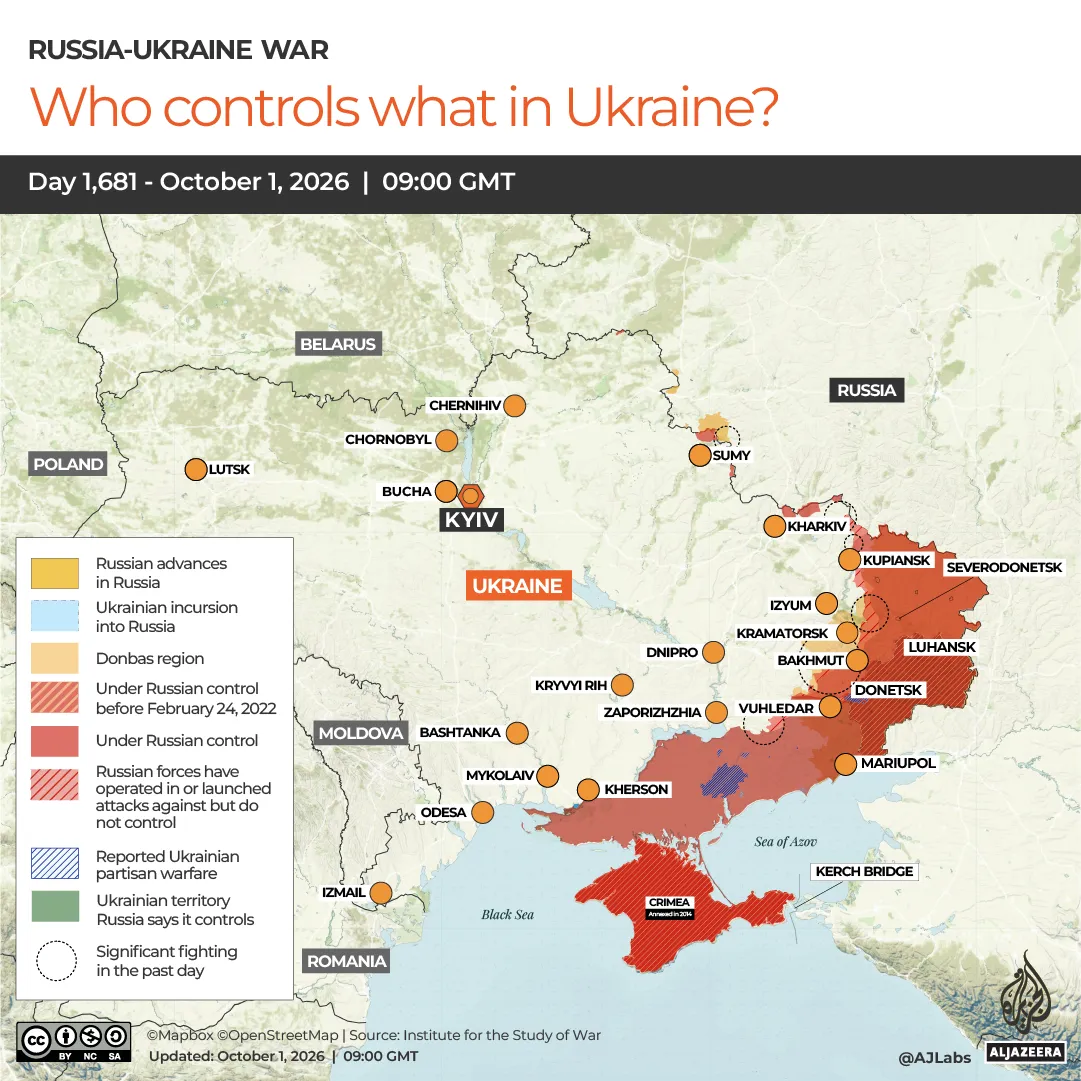
Russia’s terms are another obstacle. Hess said Moscow’s demands have not softened at any point since it launched the war and at times have grown. Putin has demanded all of Ukraine’s Donetsk, Luhansk, Kherson and Zaporizhia regions, including territory Russian forces have never controlled, as well as a buffer zone in northern Ukraine. Moscow is also seeking sanctions relief and military concessions for any Black Sea deal.
“I don’t think it’s a question of who actually mediates. I think it’s really a question of the calculation in Moscow,” Wesslau said. “Fundamentally, the problem is that Putin doesn’t want a ceasefire or a peace agreement. He wants to continue the war. He believes that he can win.”
Analysts said only greater economic pressure is likely to change that calculation.
Wesslau said if Europe can close down Russia’s shadow fleet of oil tankers, “this would be a massive blow to Russia’s war economy.” Hess said the country best placed to shift things quickly is China, rather than the US, by cutting its purchases of Russian oil. However, he added: “I don’t think Beijing is interested in doing so.”
Hess said that unless there is an outside shock, the war “is much more likely to last another four years than another four months”.
Rahul Gandhi has been arrested several times at protests demanding the resignation of poll body chief.
Published On 7 Oct 20267 Oct 2026
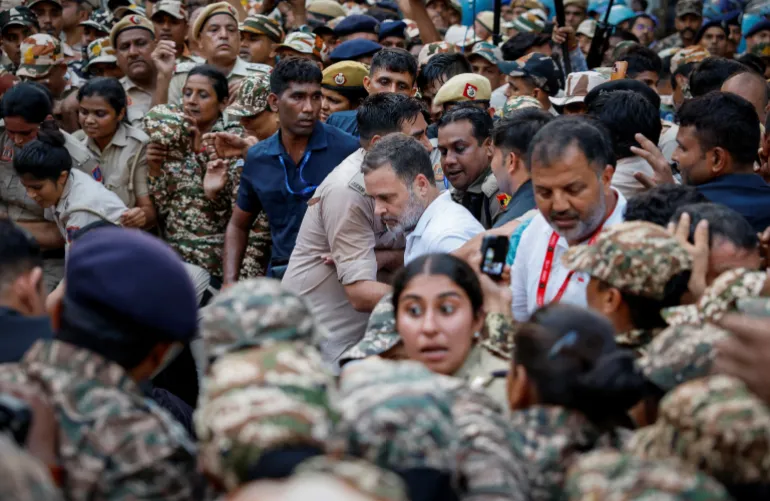
Indian opposition leader Rahul Gandhi has been detained for the third time in two days during a protest demanding the resignation of the election chief over a controversial revision of voter lists.
Gandhi and other opposition lawmakers were apprehended by police on Wednesday as they marched towards Jantar Mantar, a designated protest site in India’s capital, New Delhi.
Recommended Stories
list of 3 itemsend of list
A live feed on the YouTube channel of Gandhi’s Congress Party showed police taking him into a vehicle and driving away. Authorities also detained several other opposition lawmakers and protesters.
Opposition parties, their student units and the “Cockroach” youth movement have been demanding the resignation of Chief Election Commissioner Gyanesh Kumar, accusing the poll body he heads of benefiting Prime Minister Narendra Modi’s ruling Bharatiya Janata Party.
India’s Election Commission has so far removed more than 130 million names from the voter lists, with millions appealing the removals. About 969 million people were eligible to vote in the 2024 election.
Protesters allege the changes disproportionately removed voters who support opposition parties while preserving or adding voters more likely to back Modi’s party.
Police detain Indian opposition leader Rahul Gandhi during a protest organised by opposition parties in New Delhi [Adnan Abidi/Reuters]
The commission and government deny the allegations. They say the revision has no political motive but is aimed at removing duplicate and ineligible entries while ensuring eligible voters remain registered.
Opposition lawmakers led by Gandhi protested on Tuesday as well, before police broke up their gathering and briefly detained them.
Speaking before his detention on Wednesday, Gandhi said protesters showed up unannounced after Delhi police “stopped” their gathering the day before.
“We will go to the designated protest site, sit there, and tell the country that, for us, Gyanesh Kumar is not the legitimate commissioner,” he told reporters, referring to Jantar Mantar.
“The people who have done this [vote theft] are traitors … Gyanesh Kumar will have to resign,” he added.
There was no immediate comment from the police on the detentions.
The demonstrations present a new political challenge to Modi midway into his third term, just months after similar protests led by the Cockroach Janta Party youth movement forced the resignation of his education minister over exam paper leaks.
The “Cockroach” protests, one of the most visible signs of public dissent against Modi’s government in recent years, reflected growing anger over job scarcity, corruption and a lack of government accountability.
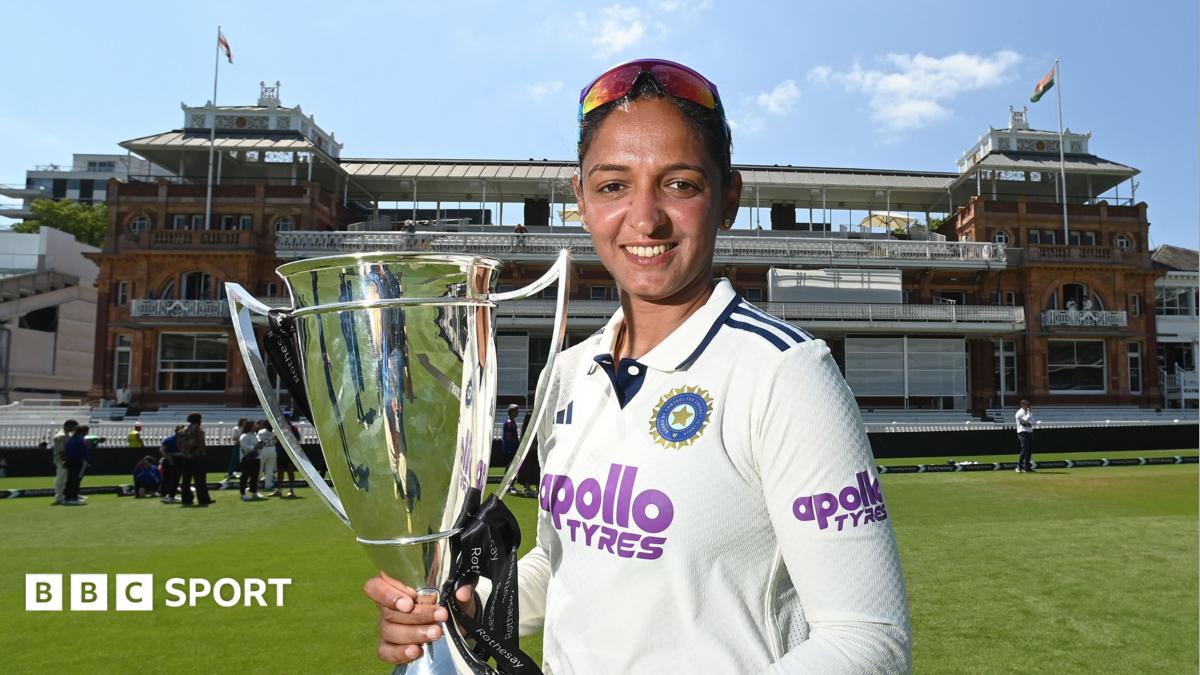
India batter Harmanpreet Kaur has left her role as national team captain across all three formats of international cricket.
Harmanpreet led India in five Tests, 51 one-day internationals and 155 T20 internationals and took her country to their first global title, winning the 50-over World Cup last year.
The 37-year old last captained her country on 22 September, when she helped secure a second successive Asian Games title against Sri Lanka.
She will be replaced by opener Smriti Mandhana, who has already skippered the side in limited-overs games.
In a post on Instagram, external, Harmanpreet said she was leaving the India side in a “good place” and that she’s now “ready to play for the love of the game again”.
“This is not an easy decision,” Harmanpreet wrote. “It carries years of memories, emotions, sacrifices, and moments that will stay with me for the rest of my life.
“I have given everything I had to this team and to Indian women’s cricket – my blood, my sweat, my time, and many times, a part of my own game and personal ambitions.
“There were moments when I had to put my individual performance, my own growth, and what I wanted for myself aside, because I believed the team had to come first.
“As a captain, I have had to make difficult decisions. Decisions that were not always understood, not always easy, and sometimes came at a personal cost. But every decision I made was with one intention – to make this TEAM better and to give other players the opportunity to grow, believe in themselves and become the best versions of themselves.”
Mandhana, 30, has previously captained India in 18 T20s and four ODIs.
She has also captained Royal Challengers Bengaluru to two Women’s Premier League titles.
She said: “To be given the responsibility of leading India is a very special honour, and the opportunity to lead the team is something I will value deeply.”
India are set to welcome Zimbabwe for three T20s and three ODIs from 16 October.
The 37-year-old is the longest-serving cricket captain, among both men and women, to have captained in more than 150 T20I games.
Published On 6 Oct 20266 Oct 2026
India’s long-serving captain of the women’s cricket team, Harmanpreet Kaur, has stepped down from the role across all formats, bringing down the curtain on a successful stint as she led the South Asian team to their first ICC Women’s World Cup title at home in 2025.
Kaur announced her decision in a social media post on Tuesday, two weeks after leading India to a successful defence of their gold medal at the Asian Games.
Recommended Stories
list of 4 itemsend of list
“Today, I step down as captain of the Indian Women’s Cricket Team across all formats,” she wrote in an Instagram post.
“This is not an easy decision. It carries years of memories, emotions, sacrifices, and moments that will stay with me for the rest of my life.”
The 37-year-old was the Twenty20 captain for more than a decade after assuming the role in 2016, followed by ODI and Test captaincy in 2022.
Kaur, who made her T20I and ODI debuts for India in 2009, has had an illustrious career as skipper.
Indian media reports said Kaur’s decision came a day after she met Devajit Saikia, secretary of the Board of Control for Cricket in India (BCCI), to discuss the future of the women’s team.
Opening batter Smriti Mandhana, who has been Kaur’s deputy since 2022, is the favourite to take over the captain’s role.
Most recently, she led India to title defence at the Asian Games, thrashing Sri Lanka, just after lifting the Women’s Asia Cup trophy earlier in September.
The top-order batter helped India reach the semifinals of the 2018 and 2023 Women’s T20 World Cups, as well as finish runners-up in the 2020 edition.
Kaur has captained India in five Tests, 51 ODIs and 155 T20Is, and is also the first cricketer — male or female — to captain her side in international cricket in more than 150 T20I games.
“I leave the captaincy today with a heart full of emotions, but also with peace … because I genuinely believe my team is in a good place,” she said in her Instagram post. “I feel I have done my duty.
“Captaincy may end today, but my love for Indian cricket never will.
“Now, I’m ready to play for the love of the game again. Captaincy ends. The journey continues.”
Teenage athletes have headlined some of the biggest Asian Games triumphs, leading their countries to historic gold medals, breaking records and cementing their legacy as formidable forces in the field.
Far from being intimidated by competitors double or triple their age, these schoolchildren remained cool and unfazed as they cruised to gold at their Asian Games debut.
Recommended Stories
list of 4 itemsend of list
Many are already familiar with the pressure and expectations of the world stage and have dominated their sport all season.
Al Jazeera Sport looks at some of the stars who left their mark in Japan:
Yu Zidi, 13
China: Swimming
At just 13, Yu was named female Most Valuable Player (MVP), as she bagged three gold medals and broke as many Asian Games records in a fairytale debut.
The schoolgirl stormed to victory in the women’s 200m butterfly, 200m and 400m individual medley (IM) and had a comfortable lead over her competitors.
Her time of two minutes and 6.10 seconds (2:06.10) in the 200m IM stands as a world junior record and second-fastest time ever.
“I don’t think I am what people describe as a prodigy,” she said after being crowned MVP. “I will continue to train hard, push myself and work alongside young athletes across Asia to inspire more young people to love and take part in sports, especially swimming.”
Yu Zidi celebrates after winning the 400m Individual Medley [Atsushi Tomura/Getty Images]
Zhang Zhanshuo, 19
China: Swimming
Zhang held up seven fingers after his 400m freestyle win to count out his gold medals at the Games – the most at this edition, and more than what 27 of the 45 participating nations had in their medal tally at the conclusion of the event.
He set Games records in the 400m and 800m freestyle, an Asian record in the 200m, and helped power China to gold and Asian records in the men’s 4x100m and 4x200m freestyle relays.
But the 19-year-old has bigger victories in sight.
“The Asian Games is not the goal. I’m still aiming for the Olympics and competing with the best,” he said.
The teenager’s haul helped China sign off from swimming with 30 golds out of 41 medal events in the pool, with chief rival Japan a distant second with seven titles.
Zhang at the end of the men’s 400m freestyle [Andy Chua/Reuters]
Shin Ohashi, 17
Japan: Swimming
Ohashi broke the world record in the men’s 200m breaststroke (2:04.83) in front of a home crowd to become the first swimmer under the 2:05 mark.
The gold added to his title in the 100m breaststroke shared with China’s Dong Zhihao, bronze in the 50m breaststroke, and silver in the mixed and men’s 4x100m medley relays.
The teenager said he was surprised and honoured that Olympic champion Leon Marchand knew who he was, after the Frenchman described the 17-year-old as a “scary” prospect ahead of the 2028 Los Angeles Olympics.
“I respect him because I know just how strong he is. But if I want to win, he’s someone I know I’ll have to beat.”
Ohashi’s world record performance came just a week after the teenager recovered from COVID-19.
Shin Ohashi broke the world record in men’s 200m breaststroke [Atsushi Tomura/Getty Images]
Yan Ziyi, 18
China: Athletics
Yan was already javelin world number one and Asian record holder when she stepped onto the field for her Games debut – her first and only throw of 70.46 metres was enough for gold and a Games record.
It was the sixth-best of all time and well ahead of Olympic champion and home hero Haruka Kitaguchi’s 62.70m.
Yan is closing in on the world record of 72.28m set by Barbora Spotakova in 2008. In May, she hurled a world-leading, record-breaking 71.74m to open an unprecedented season.
Yan during the women’s javelin throw final [Mohd Rasfan/AFP]
Chen Yujie, 17
China: Athletics
Chen stormed to a new Games record in the women’s 100m en route to her first gold as she announced herself as the new sprint queen in Asia.
“I have no limits,” was her response when asked how much faster she hopes to run.
She followed up her podium finish with a silver in the 200m and gold in the women’s and mixed 4x100m relays.
Chen celebrates after winning the women’s 100m final [Mohd Rasfan/AFP]
Taiju Goto, 17
Japan: Athletics
Goto narrowly missed gold in the men’s 400m hurdles, but his 47.93s was enough for a world under-18 best time, Asian under-20 best time, and a new personal best.
The teen star has run sub-50 seconds eight times this season alone, an impressive feat for a 17-year-old. His Asian Games silver added to the World Under-20 one he bagged in August.
Bassem Hemeida of Qatar crosses the finish line to win the gold medal ahead of Japan’s Taiju Goto in the men’s 400m hurdles final [Yong Teck Lim/Getty Images]
Kumkum Mohod, 17
India: Archery
Mohod scripted history for India when she became the first Indian to win an individual recurve archery gold at the Games. The 17-year-old helped India to gold in the women’s team recurve, and partnered with Dhiraj Bommadevara for mixed team silver.
Mohod’s gold was no stroke of luck; she defeated South Korea’s reigning world champion and Olympic medallist Kang Chaeyoung in the quarterfinals before dominating China’s Zhu Jingyi in the semifinals.
“Ever since I’ve made it to the national team, I’ve been visualising this moment. I had visualised shooting an X, and that is exactly what happened,” she told reporters after the match, according to Indian media.
Kumkum Anil Mohod [Anushree Fadnavis/Reuters]
Anahat Singh, 18
India: Squash
World junior champion Anahat Singh has been India’s finest in the sport for several years now. Despite only being 18, Aichi-Nagoya was Singh’s second Asian Games outing after competing at Hangzhou 2023, where she won two bronze medals in the mixed doubles and women’s team events.
This time round, she won a silver in the women’s singles against world number five Sivasangari Subramaniam of Malaysia. However, her semifinal match against Japan’s Satomi Watanabe was what she called the “best win” of her career after producing a stellar comeback to defeat the world number six.
India’s Anahat Singh in action during the women’s singles gold medal match [Chalinee Thirasupa/Reuters]
Yuki Kurihara, 11
Japan: e-sports
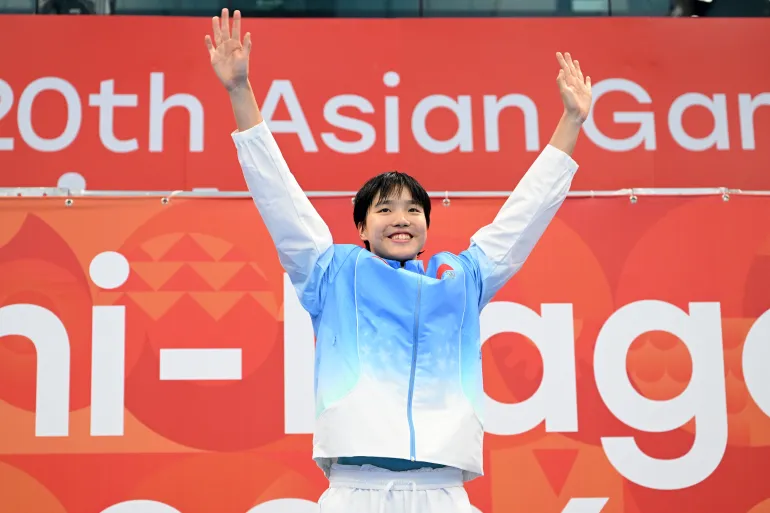
At just 11 years of age, e-sports prodigy Kurihara became the youngest gold medallist in Asian Games history when he won Puyo Puyo Champions.
“I’m really happy. The gold medal is really beautiful, shiny and heavy,” Kurihara said after his final, where he barely broke a sweat.
Kurihara started playing Puyo Puyo in his first year of primary school – where he still studies – and soon started competing and winning in tournaments. He obtained his pro licence in April this year and regularly beats adults, often triple his age.
Yuki Kurihara of Japan poses on the podium [Toru Hanai/Getty Images]
Ku Yong-yan, 12
Taipei: Skateboarding
Ku took silver in the men’s skateboarding park with 87.33 points, and was just one of several teenagers – in his case, a pre-teen – who medalled in skateboarding at the Games.
Japan’s Izuru Nagahara, 15, took gold in the event. China’s Zhu Yuanling, also 15, won gold in the women’s street skateboarding competition.
China’s Cao Shiqi finished fourth in women’s skateboarding park and was the youngest athlete in China’s delegation at the Games.
Ku Yong-yan in action during the men’s park final [Andrew Couldridge/Reuters]
Protesters say the election commission’s voter-roll revision has removed millions of eligible voters to benefit Prime Minister Narendra Modi’s ruling BJP party.
Published On 4 Oct 20264 Oct 2026
Thousands of youth and opposition protesters have rallied for a third day in India demanding the resignation of the country’s election commission chief.
Thousands marched in Mumbai on Sunday, while others gathered for a third day of demonstrations in New Delhi. The protests began on Friday demanding that Election Commission of India (ECI) chief Gyanesh Kumar step down due to reports that he has overseen voter-roll revisions removing millions from electoral lists.
Recommended Stories
list of 3 itemsend of list
Protesters say the disenfranchisement stands to benefit Prime Minister Narendra Modi’s ruling Bharatiya Janata Party (BJP). Both the ECI and the BJP have denied the allegations.
Led by opposition leaders Raj Thackeray and Uddhav Thackeray, thousands marched in Mumbai on Sunday, waving Indian flags and calling for Kumar to step down.
In the capital, New Delhi, protesters started gathering in the early evening. As on previous days, some were detained by police as they arrived, according to the Reuters news agency.
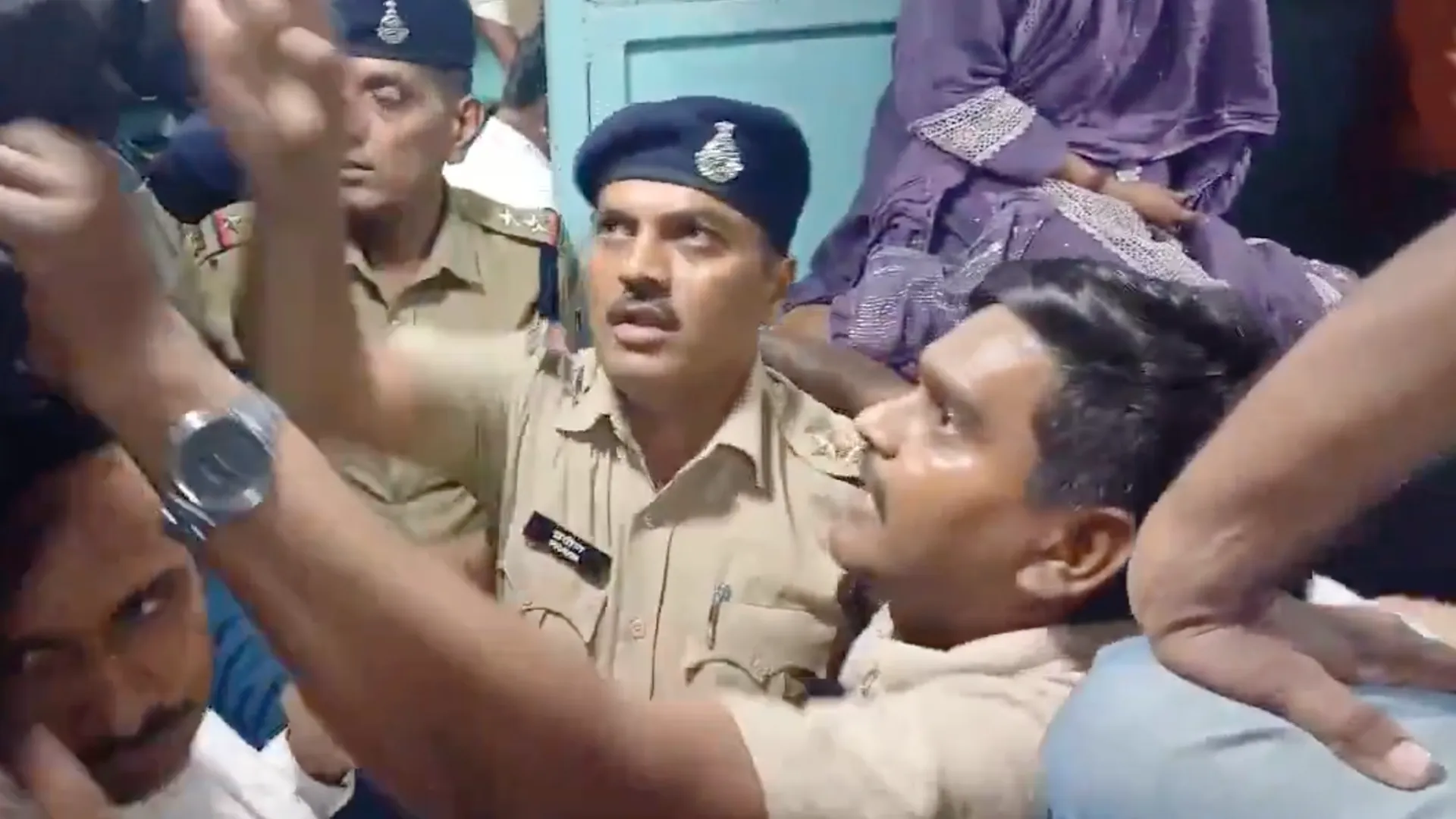
Police in the capital have clamped down in a bid to prevent protesters from assembling over the last two days, detaining dozens and taking them away by bus.
Some of the detainees were released later on Friday and Saturday, but police registered cases against some on charges of violating orders banning mass gatherings in the centre of the capital.
Police and security personnel detain a protester during a demonstration against India’s Chief Election Commissioner Gyanesh Kumar in New Delhi on October 3, 2026, to demand his resignation [Arun Sankar/AFP]
“I just want to tell the ruling party this much … We are angry about how you are wielding that power. It’s the people of this country who should decide who sits in power and who sits in opposition, not the election commission,” Raj Thackeray told the crowd in Mumbai.
The ECI says the voter-roll revision is designed to remove duplicate, deceased or ineligible entries and maintain electoral integrity. On Friday, it directed its officials to register eligible voters inadvertently omitted from electoral rolls.
Kumar has not publicly responded to the demands for his resignation or commented on the protests, which look set to continue over the coming days, with more rallies planned.
An alliance of India’s opposition parties plans to launch protests to “save democracy” with a march to the election commission office on Tuesday. The Gen Z-led Cockroach Janta Party (CJP) has announced plans for a major rally in New Delhi on October 10.
“Mumbai is out on the streets again for free and fair elections!” Abhijeet Dipke, chief of the CJP, said in a social media post on Sunday.
“Solidarity with all the protesters,” he added. “All Indians need to come together. It’s now or never!”
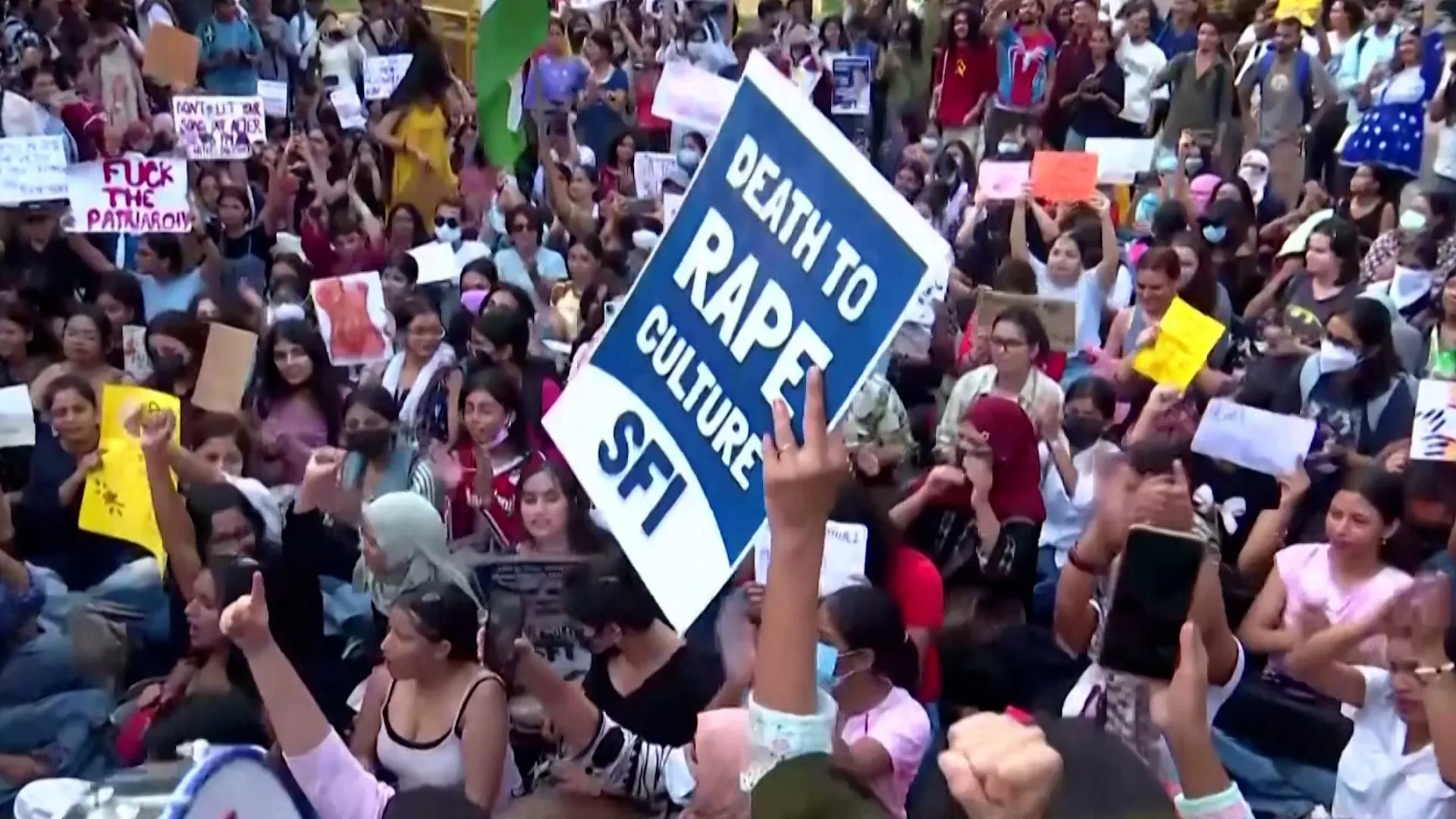
Aditi Subramanian joined protests after the alleged gang rape of a teenager in New Delhi, calling for women’s safety without more restrictions or surveillance. As she and hundreds of others tried to reach the planned protest site, they were detained. This piece was produced in collaboration with Jigyasa Mishra.
Shai Hope’s 162 leads the West Indies to a record cricket run chase as they beat India by five wickets in the third ODI.
Published On 4 Oct 20264 Oct 2026
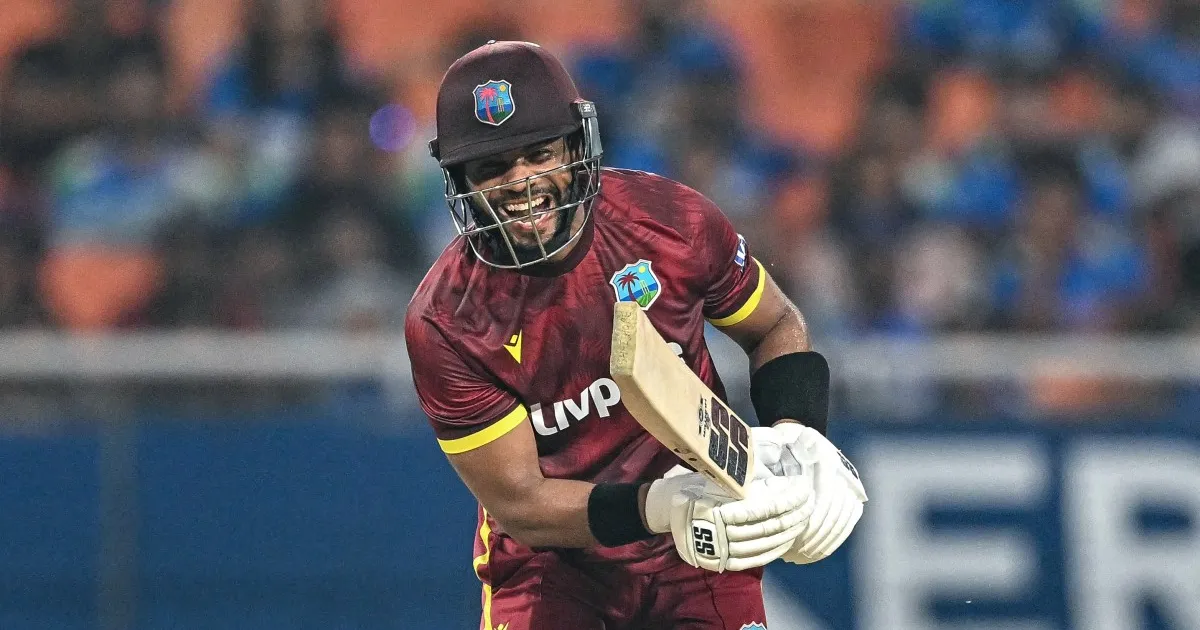
Captain Shai Hope’s unbeaten 162 led West Indies to a record run-chase win against India in one-day international cricket in Chandigarh.
The West Indies achieved their highest ODI run chase on Saturday, reaching 352-5 and winning by five wickets with 10 balls to spare after India made 351-7, featuring Lokesh Rahul’s 129 not out.
Recommended Stories
list of 4 itemsend of list
India had already won the three-match series after eight-wicket wins in Thiruvananthapuram and Guwahati. But the West Indies, chasing for the first time in the series, overcame India for the first time since 2023.
Hope promoted himself to opening batter after Jewel Andrew reportedly injured a finger making a catch and had to go to hospital. After keeping wicket for all of India’s 50 overs in high humidity, he batted brilliantly to score his second successive hundred in the series but struggled in the last overs.
Fittingly, he hit the winning run.
“Felt something around the groin area but wanted to fight through till the end,” Hope said.
His second-highest ODI score, from 143 balls, included 17 boundaries and three sixes. Amir Jangoo added 67 off 56 and Keemo Paul 44 off 35.
“[Chasing is] always a lot easier in India, especially with the dew,” Hope said. “Glad we got over the line.”
Hope and Jangoo added 109 off 99 balls for the second wicket to defy an India bowling attack that recalled Mohammed Siraj and all-rounder Nitish Reddy and included debutant pacer Anshul Kamboj, who went wicketless.
Jangoo was run out in the 21st over, but Sherfane Rutherford (24) did not let the momentum slip. He added 56 with Hope, who reached 50 off 46 balls and 100 off 104 in his 21st ODI hundred and fifth against India.
Paul’s cameo included five fours as he added 65 off 61 balls with his skipper. Hope shifted gears after Paul was dismissed in the 41st over, caught off Gurnoor Brar.
Hope hit seven more fours and two sixes after his milestone, taking 62 off the last 39 balls faced to rush West Indies to victory.
India had to serve a slow over rate penalty for the last four overs, with an additional fielder inside the 30-yard circle, as Hope and Gudakesh Motie (19 not out) added 62 off 29 balls for the sixth wicket.
India won the toss again but skipper Shubman Gill was caught behind on 1 and Virat Kohli was bowled for a golden duck. Both fell to Jayden Seales.
Only 28 runs came in the first 10 overs, then Rohit Sharma and Rahul propelled the hosts.
Sharma resurrected the innings with 92 off 85 balls, adding 137 for the third wicket with Ruturaj Gaikwad.
Sharma took his time and was unlucky to miss a second consecutive hundred in the series; he was caught off Paul in the 25th over.
Four overs later, Gaikwad — 57 off 69 — was Seales’s third wicket.
That brought Rahul to the crease, and he led the charge past 350.
Rahul hit six sixes and 10 fours. He scored 50 off 41 balls and his second 50 off 39 balls. He enjoyed good partnerships with Naman Dhir and Brar and finished 129 not out off only 87 balls.
The teams begin a five-match Twenty20 series on Tuesday, starting in Lucknow, Uttar Pradesh.
India’s Cockroach Janta Party has launched a new protest demanding change after millions of voters were allegedly improperly removed from electoral rolls. Other protest movements joined the rallies, which led to scuffles and arrests in the capital.
Smit Machchhar recalls mid-air disaster after co-pilot’s attack on flydubai flight to Tel Aviv.
Published On 2 Oct 20262 Oct 2026
Indian pilot Smit Machchhar, who was stabbed by his co-pilot in an alleged attempt to crash a Flydubai flight to Tel Aviv, has shared a public account of how he managed to open the cockpit door and let passengers take control of the plane despite his injuries.
Speaking on Friday from a hospital bed in Abu Dhabi via video call with Indian Prime Minister Narendra Modi, Machchhar said that he knew the aircraft was going down as he lay bleeding on the floor.
Recommended Stories
list of 3 itemsend of list
“I had suffered so many injuries that I had collapsed. At that time, I could feel that the aircraft was going down. I knew this was the last push, that the door was right there,” he said in a nearly 10-minute video released on the prime minister’s social media channels.
He added: “I was being hit even then, but I just opened the door and everyone came in.”
Machchhar, who has 17 years of aviation experience, including 11 as a captain, said that experience helped him grasp what was happening even while wounded.
He told Modi he had recited a Hindu devotional prayer during the ordeal.
“I know God himself saved me,” he said, in an emotional exchange with Modi, who is from the same home state of Gujarat.
Modi praised Machchhar’s bravery, saying his presence of mind had saved lives and the reputation of Indian pilots.
Machchhar said he allowed passengers and crew to overpower the co-pilot and let a second pair of Flydubai pilots take control and land the plane in Tabuk, Saudi Arabia.
The Flydubai flight was carrying 174 people as it briefly plunged around 17,000 feet (5,180 metres) before it was brought back under control.
UAE presidential adviser Anwar Gargash has called the incident a “terrorist act”, while Israeli Prime Minister Benjamin Netanyahu said the co-pilot had undergone “Islamist radical indoctrination” and appeared “suicidal”.
US President Donald Trump has warned that Iran would be “hit very hard” if found to be linked to the attack.
India is facing growing discontent among its youth and they are taking to the streets. One Indian artist tells Al Jazeera the Modi government changed his voting status and had his Instagram post taken down. Now he’ll join thousands expected at a Cockroach Janta Party-led protest demanding change.
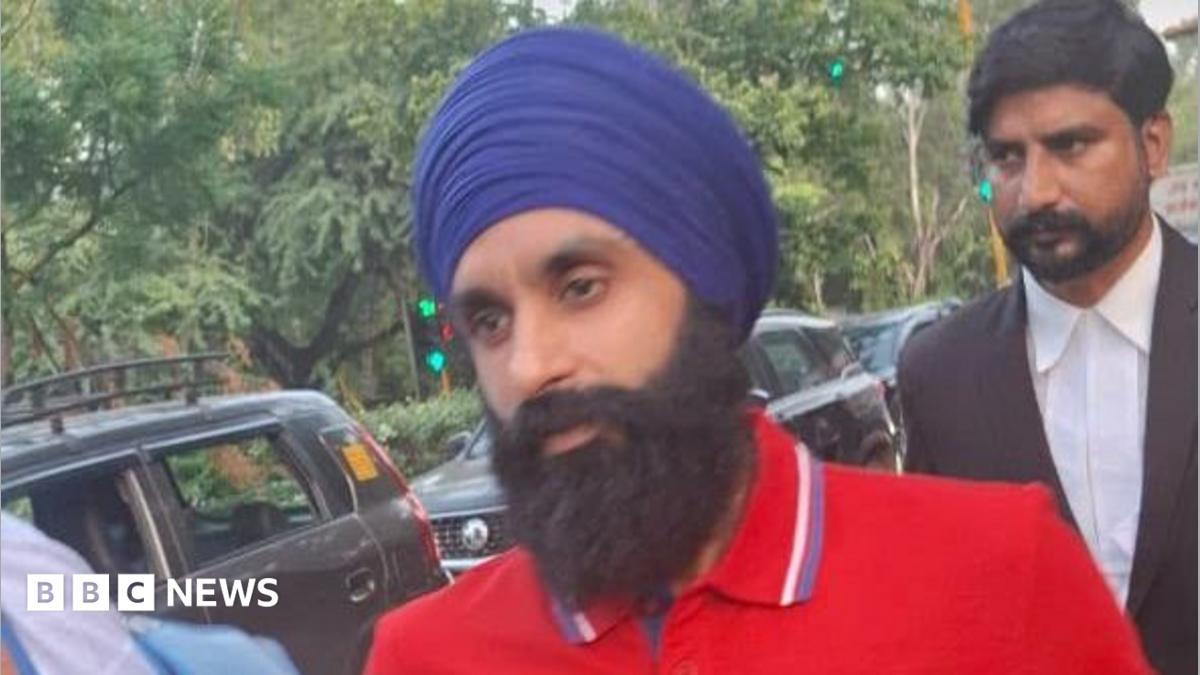
Last year Johal was acquitted in a case where he was accused of financially supporting the KLF terror group.
He remained in prison because he faces federal charges in eight other cases, for which he potentially faces the death penalty.
However, his legal team argues that these cases are almost identical and that the other charges should be dismissed.
There have been hundreds of hearings over the past nine years and the bail order concludes that the trial is “certainly not likely to conclude anytime soon”.
His brother Gurpreet Singh Johal – who has lobbied successive governments calling for his release – said the decision to grant bail had been a “really important milestone”.
“It is just a first step, but it is a step in the right direction,” he said.
The move was also welcomed by politicians and the legal charities Redress and Reprieve, who represent Johal in the UK.
Reprieve’s deputy executive director Dan Dolan said the release was “a really important moment” – but that Johal still faced the death penalty on “trumped up charges”.
“It is really important that we recognise he’s not out of the woods yet,” he said.
“We now really need to push to get him home.”
Redress said Johal’s release from prison could not undo “the intolerable suffering caused by nine years of arbitrary detention”.








![TOKONAME, JAPAN - SEPTEMBER 26: Gold medalist Yuki Kurihara of Japan poses on the podium at the medal ceremony for the Esports Puzzle [Puyo Puyo Champions] on day seven of the 20th Asian Games Aichi-Nagoya at Aichi Sky Expo on September 26, 2026 in Tokoname, Aichi, Japan. Kurihara becomes the youngest gold medalist at the Asian Games at the age of 11. (Photo by Toru Hanai/Getty Images)](https://i0.wp.com/www.aljazeera.com/wp-content/uploads/2026/10/getty_6ac2424a21-1791115850.jpg?w=640&ssl=1)

![Police and security personnel detain a protester during a demonstration against India's Chief Election Commissioner Gyanesh Kumar in New Delhi on October 3, 2026, to demand his resignation [Arun SANKAR / AFP]](https://i0.wp.com/occasionaldigest.com/wp-content/uploads/2026/10/AFP__20261003__D24U6XM__v1__HighRes__IndiaPoliticsElectionProtest-1791123918.jpg?w=640&ssl=1)