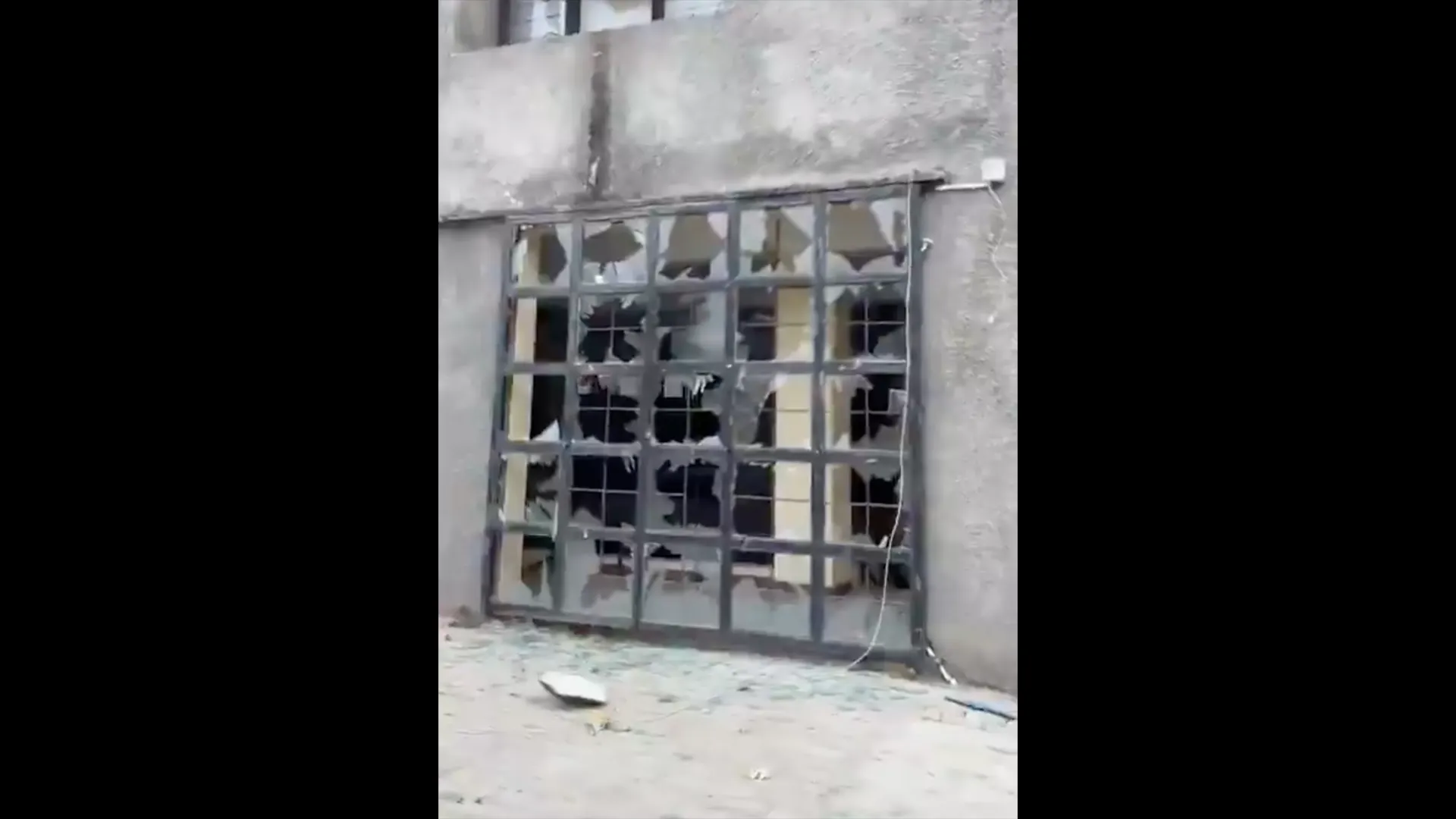
Hindutva activists tried to storm the Bangladesh High Commission in New Delhi, India as they rallied against the neighbouring nation for failing to protect its Hindu minorities. The demonstration comes after a 25-year-old Hindu man was lynched and burned publicly following allegations of blasphemy.
Sonam Losoong (Farmers’ Harvest) is a New Year celebration of the Sikkimese Bhutia. It is called Namsoong by the Lepchas. The festival marks the time when the farmers rejoice and celebrate their harvest. Although the festival is celebrated privately among family members and friends there is an air of festivity all around. The Black Hat dance takes place at this festival commemorating the victory of good over evil, with ‘chaams’ held in many monasteries two days prior to Losoong.
The festival of Lossong is celebrated with traditional gaiety and colour both by the Lepchas and Bhutias. On the occasion pujas are performed for peace and prosperity for the new year. Certain competitions are also held in traditional skills, such as archery and the merry-making will continue for days.
More than 8,000 candidates sat for a government exam on a runway in Odisha in India, to compete for only 187 positions with the state’s Home Guard. Drones were used to monitor examinees. 18% of Indians under 24 are unemployed, according to the ILO.
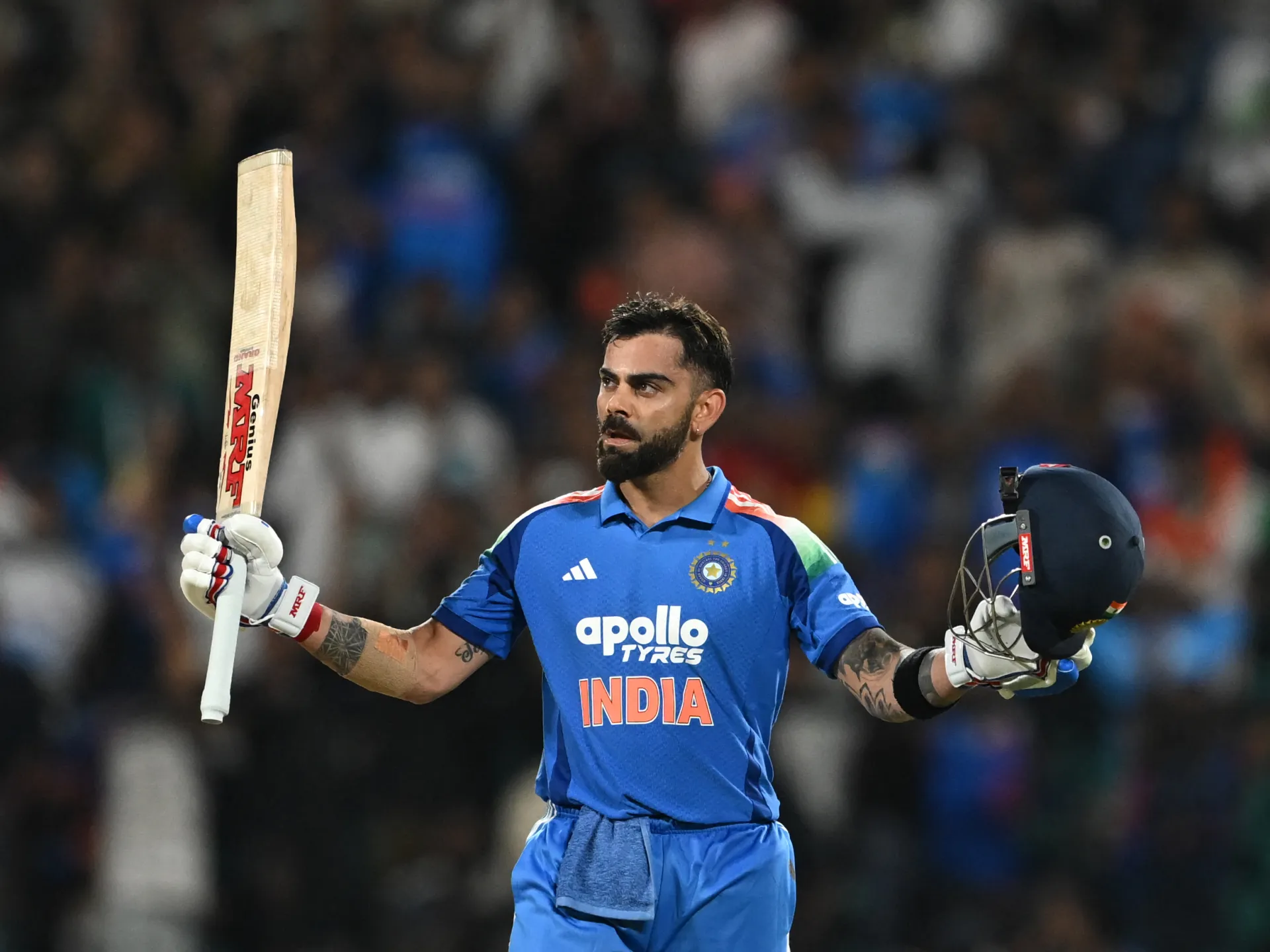
India have dropped Test and one-day international captain Shubman Gill from their 15-man squad for the men’s T20 World Cup.
The 26-year-old’s omission follows him scoring 291 in his 15 T20 matches in 2025, with India’s chief selector Ajit Agarkar saying the batter was “short of runs at the moment”.
Gill missed the T20 international against South Africa on Friday as India won the match to claim a 3-1 series victory.
Suryakumar Yadav scored five runs in that game and, despite his tally of 218 runs in his 19 T20 outings this year, he retained the captaincy.
“We have full faith in our captain to deliver during the World Cup,” said Agarkar.
Suryakumar said: “I know what to do. I have time to fix it. We will definitely see Surya the batter.”
India, who are defending champions, will host the T20 World Cup with Sri Lanka from 7 February to 8 March.
India are in the same group as Namibia, Netherlands, Pakistan and USA.
By the end of the 15th century, Portuguese explorers, such as Vasco da Gama, had discovered a new sea route to India, making Goa an attractive base for the new trade routes. In 1510, the Portuguese overthrew the ruling Bijapur sultan Yusuf Adil Shah with the help of a local ally, establishing a permanent settlement in Goa. This was the beginning of Portuguese rule in Goa that would last for over 450 years.
Goa prospered, becoming the largest city in Asia for a time, with a population of over 40,000. It became known as ‘Rome of the East’ and boasted over 300 churches.
By the middle of the 18th century, Portuguese Goa had expanded to most of its present-day state limits. Though they lost other possessions in India, the borders of Portguese control stabilised, forming the Estado da Índia Portuguesa or State of Portuguese India, of which Goa was the largest territory.
After India gained its independence from the British in 1947, India requested that Portuguese colonies on the Indian subcontinent be ceded to India. In line with the approach of the Estado Novo government regarding its overseas territories, Portugal refused to negotiate on the sovereignty of its Indian territories. The Portuguese argued that India had no rights to this territory because the Republic of India did not exist at the time when Goa came under Portuguese rule
On 19 December 1961, the Indian Army invaded with Operation Vijay. The operation took 36 hours and ended with the surrender of the Portuguese Governor General Vassalo da Silva and the annexation of Goa, and of Daman and Diu islands into the Indian union. Goa, along with Daman and Diu, was organised as a centrally administered union territory of India.
On 30 May 1987, the union territory was split, and Goa became India’s twenty-fifth state, with Daman and Diu remaining a union territory.
In October, a small electronics manufacturer in the western Indian state of Gujarat shipped its first batch of chip modules to a client in California.
Kaynes Semicon, together with Japanese and Malaysian technology partners, assembled the chips in a new factory funded with incentives under Indian Prime Minister Narendra Modi’s $10bn semiconductor push announced in 2021.
Modi has been trying to position India as an additional manufacturing hub for global companies that may be looking to expand their production beyond China, with limited success.
One sign of that is India’s first commercial foundry for mature chips that is currently under construction, also in Gujarat. The $11bn project is supported by technology transfer from a Taiwanese chipmaker and has onboarded the United States chip giant Intel as a potential customer.
With companies the world over hungering for chips, India’s entry into that business could boost its role in global supply chains. But experts caution that India still has a long way to go in attracting more foreign investment and catching up in cutting-edge technology.
Unprecedented momentum
Semiconductor chips are designed, fabricated in foundries, and then assembled and packaged for commercial use. The US leads in chip design, Taiwan in fabrication, and China, increasingly, in packaging.
The upcoming foundry in Gujarat is a collaboration between India’s Tata Group, one of the largest conglomerates in the country, and Taiwan’s Powerchip Semiconductor Manufacturing Corporation (PSMC), which is assisting with the plant’s construction and technology transfer.
On December 8, Tata Electronics also signed an agreement with Intel to explore the manufacturing and packaging of its products in Tata’s upcoming facilities, including the foundry. The partnership will address the growing domestic demand.
Last year, Tata was approved for a 50 percent subsidy from the Modi government for the foundry, along with additional state-level incentives, and could come online as early as December 2026.
Even if delayed, the project marks a pivotal moment for India, which has seen multiple attempts to build a commercial fab stall in the past.
The foundry will focus on fabricating chips ranging from 28 nanometres (nm) to 110nm, typically referred to as mature chips because they are comparatively easier to produce than smaller 7nm or 3nm chips.
Mature chips are used in most consumer and power electronics, while the smaller chips are in high demand for AI data centres and high-performance computing. Globally, the technology for mature chips is more widely available and distributed. Taiwan leads production of these chips, with China fast catching up, though Taiwan’s TSMC dominates production for cutting-edge nodes below 7nm.
“India has long been strong in chip design, but the challenge has been converting that strength into semiconductor manufacturing,” said Stephen Ezell, vice president for global innovation policy at the Washington, DC-based Information Technology and Innovation Foundation (ITIF).
“In the past two to three years, there’s been more progress on that front than in the previous decade – driven by stronger political will at both the central and state levels, and a more coordinated push from the private sector to commit to these investments,” Ezell told Al Jazeera.
Easy entry point
More than half of the Modi government’s $10bn in semiconductor incentives is earmarked for the Tata-PSMC venture, with the remainder supporting nine other projects focused mainly on the assembly, testing and packaging (ATP) stage of the supply chain.
These are India’s first such projects – one by Idaho-based Micron Technology, also in Gujarat, and another by the Tata Group in the northeastern Assam state. Both will use in-house technologies and have drawn investments of $2.7bn and $3.3bn, respectively.
The remaining projects are smaller, with cumulative investments of about $2bn, and are backed by technology partners such as Taiwan’s Foxconn, Japan’s Renesas Electronics, and Thailand’s Stars Microelectronics.
“ATP units offer a lower path of resistance compared to a large foundry, requiring smaller investments – typically between $50m and $1bn. They also carry less risk, and the necessary technology know-how is widely available globally,” Ashok Chandak, president of the India Electronics and Semiconductor Association (IESA), told Al Jazeera.
Still, most of the projects are behind schedule.
Micron’s facility, approved for incentives in June 2023, was initially expected to begin production by late 2024. However, the company noted in its fiscal 2025 report that the Gujarat facility will “address demand in the latter half of this decade”.
Approved in February 2024, the Tata facility was initially slated to be operational by mid-2025, but the timeline has now been pushed to April 2026.
When asked for reasons behind the delays, both Micron and Tata declined to comment.
One exception is a smaller ATP unit by Kaynes Semicon, which in October exported a consignment of sample chip modules to an anchor client in California – a first for India.
Another project by CG Semi, part of India’s Murugappa Group, is in trial runs, with commercial production expected in the coming months.
The semiconductor projects under the Tata Group and the Murugappa Group have drawn public scrutiny after Indian online news outlet Scroll.in reported that both companies made massive political donations after they were picked for the projects.
As per Scroll.in, the Tata Group donated 7.5 billion rupees ($91m) and 1.25 billion rupees ($15m), respectively, to Modi’s Bharatiya Janata Party (BJP) just weeks after securing government subsidies in February 2024 and ahead of national elections. Neither group had made such large donations to the party before. Such donations are not prohibited by law. Both the Tata Group and the Murugappa Group declined to comment to Al Jazeera regarding the reports.
Meeting domestic demand a key priority
The upcoming projects in India – both the foundry and the ATP units – will primarily focus on legacy, or mature, chips sized between 28nm and 110nm. While these chips are not at the cutting-edge of semiconductor technology, they account for the bulk of global demand, with applications across cars, industrial equipment and consumer electronics.
China dominates the ATP segment globally with a 30 percent share and accounted for 42 percent of semiconductor equipment spending in 2024, according to DBS Group Research.
India has long positioned itself as a “China Plus One” destination amid global supply chain diversification, with some progress evident in Apple’s expansion of its manufacturing base in the country. The company assembles all its latest iPhone models in India, in partnership with Foxconn and Tata Electronics, and has emerged as a key supplier to the US market this year following tariff-related uncertainties over Chinese shipments.
Its push in the ATP segment, however, is driven largely by the need to meet the growing domestic demand for chips, anticipated to surge from $50bn today to $100bn by 2030.
“Globally, too, the market will expand from around $650bn to $1 trillion. So, we’re not looking at shifting manufacturing from China to elsewhere. We’re looking at capturing the incremental demand emerging both in India and abroad,” Chandak said.
India’s import of chips – both integrated circuits and microassemblies – has jumped in recent years, rising 36 percent in 2024 to nearly $24bn from the previous year. An integrated circuit (IC) is a chip serving logic, memory or processing functions, whereas a microassembly is a broader package of multiple chips performing combined functions.
The momentum has continued this year, with imports up 20 percent year-on-year, accounting for about 3 percent of India’s total import bill, according to official trade data. China remains the leading supplier with a 30 percent share, followed by Hong Kong (19 percent), South Korea (11 percent), Taiwan (10 percent), and Singapore (10 percent).
“Even if it’s a 28 nm chip, from a trade balance perspective, India would rather produce and package it domestically than import it,” Ezell of ITIF said, adding that domestic capability would enhance the competitiveness of chip-dependent industries.
Better incentives needed
The Modi government’s support for the chip sector, while unprecedented for India, is still dwarfed by the $48bn committed by China and the $53bn provisioned under the US’s CHIPS Act.
To achieve scale in the ATP segment for meaningful import substitution – and to advance towards producing chips smaller than 28nm – India will need continued government support, and there is a second round of incentives already in the works.
“The reality is, if India wants to compete at the leading edge of semiconductors, it will need to attract a foreign partner – American or Asian – since only a handful of companies globally operate at that level. It’s highly unlikely that a domestic firm will be competitive at 7nm or 3nm anytime soon,” Ezell said.
According to him, India needs to continue focusing on improving its overall business environment – from ensuring reliable power and infrastructure to streamlining regulations, customs and tariff policies.
India’s engineers make up about a fifth of the global chip design workforce, but rising competition from China and Malaysia to attract multinational design firms could erode that edge.
In its latest incentive round, the Indian government limited benefits to domestic firms to promote local intellectual property – a move that, according to Alpa Sood, legal director at the India operations of California-based Marvell Technology, risks driving multinational design work elsewhere.
“India already has a thriving chip design ecosystem strengthened by early-stage incentives from the government. What we need, to further accelerate and build stronger R&D muscle – is incentives that mirror competing countries like China [220 percent tax incentives] and Malaysia [200 percent tax incentives]. This will ensure we don’t lose the advantage we’ve built over the years,” Sood told Al Jazeera.
Marvell’s India operations are its largest outside the US.
The Trump effect
India’s upcoming chip facilities, while aimed at meeting domestic demand, will also export to clients in the US, Japan, and Taiwan. Though US President Donald Trump has threatened 100 percent tariffs on semiconductors made outside the US, none have yet been imposed.
A bigger concern for India-US engagement – so far limited to education and training – is Washington’s 50 percent tariff on India over its Russian crude imports. Semiconductors remain exempt, but the broader trade climate has turned uncertain.
“Over half the global semiconductor market is controlled by US-headquartered firms, making engagement with them crucial,” Chandak said. “Any alignment with these firms, either through joint ventures or technology partnerships – is a preferred option.”
The global chip race is accelerating, and India’s policies will need to keep pace to become a serious player amid growing geo-economic fragmentation.
“These new 1.7nm fabs are so advanced they even factor in the moon’s gravitational pull – it’s literally a moonshot,” Ezell said. “Semiconductor manufacturing is the most complex engineering task humanity undertakes – and the policymaking behind it must be just as precise.”
As Afghanistan reevaluates its economic geography in light of the deteriorating relations with Pakistan, India has become a major option for Kabul in its quest for diverse trade routes. The recent top-level meetings between the Taliban and the Indian government indicate a desire on the part of the former to diminish their reliance on the Pakistani transit corridors and to gain more strategic independence. However, India’s role is more a matter of political calculation than of geographical convenience. Afghanistan has no direct land route to India, and therefore its trade with India is expensive routes via Iran with limited air corridors, making it very difficult for a sanctions-hit and cash-strapped economy to scale up. Although the engagement with New Delhi gives the Afghan government the chance to send diplomatic signals and obtain very limited economic relief, it also poses the question of whether India is going to be a long-term trading partner or merely a geopolitical counterweight in Kabul’s broader regional strategy.
Taliban officials have begun signalling a recalibration of economic policy. Deputy Prime Minister for Economic Affairs Mullah Abdul Ghani Baradar publicly urged Afghan traders to explore alternative transit corridors, accusing Pakistan of using border closures as a tool of political pressure. Shortly thereafter, Nooruddin Azizi, Minister of Industry and Commerce of Afghanistan, had an official visit to New Delhi on 19 November 2025 for official discussions aimed at increasing bilateral trade, enhancing the mechanisms for import and export and finding out different ways for Afghan businesses to trade. This visit comes after the Afghanistan’s Minister of Foreign Affairs Amir Khan Muttaqi’s trip to India in October that lasted for eight days, which was his first trip to India, for which he was granted a temporary UN sanctions exemption, even though India has not yet recognized the Taliban government.
Over the past two decades, the Taliban’s propaganda has been persistently depicting India as a Hindu “kafir” state that is supporting the “anti-Islam” forces in Kabul, making Indian diplomats look like enemies and Indian consulates like secret intelligence stations working against Afghanistan and Pakistan. The destruction of the Bamiyan Buddhas was declared as a holy war against the “un-Islamic idols” and the whole Buddhist-Hindu civilization, which was a clear indication of the Emirate’s hardline ideological approach. However, this narrative has changed for political and economic reasons.
Moreover, the Taliban, having once described the Indian state as their ideological enemy, are now actively courting India, even sending their foreign minister and commerce minister to New Delhi to get access to trade routes and investment in infrastructure. However, the newly established open channels of communication between the two parties are indicative of a major pragmatism shift, wherein the former rhetoric of enmity and ideological purity has been replaced by the language of using one another in business transactions, thus, signaling the willingness of Afghanistan to retrieve economic lifelines and gain a strategic position in a region.
Historically, Taliban’s official communications are filled with references to Islamic unity, historical connections, and the values of Muslim brotherhood in its relationship with Pakistan. However, when relations with Islamabad were strained over the Tehrik-i-Taliban support, as well as border management and refugees; the Emirate quickly turned to engagement with other regional states instead of reconciliation with its closest Muslim neighbor. This selective realism reveals a definite order of priorities; Afghanistan is ignoring Pakistan’s main security issues but is ready to do anything for a state that is Hindu-majority and can offer trade routes, investment, and international legitimacy.
This transactional approach is not only limited to regional politics but also encompasses the global economic system. The Taliban constantly criticized “Western economic slavery“, interest-based financial systems and considering themselves as an ideological alternative to the West. Nowadays, the Taliban are lobbying India who is heavily involved in the Western capital markets and global financial networks positively to get banking access, reconstruction projects, and investments. The ideological rigidity at home is sharply contrasted with the foreign policy flexibility; those states which were once labelled as anti-Islamic are now being courted for material and political gains.
The Taliban’s selective pragmatism is also evident in the territorial and security sensitive issues. On one hand, they keep on challenging the issue of the Durand Line with Pakistan, an internationally recognized border between both states, while on the other hand, they are quite liberal with India. Likewise, in the past, Taliban-associated clerics and militants celebrated jihad in Kashmir, denounced Indian government actions toward Muslims there and such discourse got muted during visits to Delhi. It is very clear that economic and diplomatic goals are prioritized over ideological or sectarian consistency.
Afghanistan’s trade pivot underscores the delicate balance between ambition and structural reality. While the Taliban’s efforts to diversify transit routes reflect a desire for economic autonomy and greater regional leverage, geographic constraints, limited infrastructure, and entrenched economic patterns impose severe limitations. Engagement with India offers symbolic and partial relief, yet Pakistan remains the linchpin of Afghan commerce, providing the fastest and most cost-effective access to global markets. The Emirate’s strategy is as much a political signal-demonstrating flexibility, pragmatism, and a quest for de facto recognition as it is an economic maneuver. Ultimately, Afghanistan’s “strategic heart of Asia” narrative will be tested not by intent but by its capacity to reconcile aspiration with the unyielding realities of terrain, logistics, and regional interdependence.
New Delhi, India – A newly released Bollywood spy thriller is winning praise and raising eyebrows in equal measure in India and Pakistan, over its retelling of bitter tensions between the South Asian neighbours.
Sunk in a sepia tone, Dhurandhar, which was released in cinemas last week, is a 3.5-hour-long cross-border political spy drama that takes cinemagoers on a violent and bloody journey through a world of gangsters and intelligence agents set against the backdrop of India-Pakistan tensions. It comes just months after hostilities broke out between the two countries in May, following a rebel attack on a popular tourist spot in Pahalgam, in Indian-administered Kashmir, which India blamed Pakistan for. Islamabad has denied role in the attack.
The film stars the popular actor Ranveer Singh, who plays an Indian spy who infiltrates networks of “gangsters and terrorists” in Karachi, Pakistan. Critics of the film argue that its storyline is laced with ultra-nationalist political tropes and that it misrepresents history, an emerging trend in Bollywood, they say.
A still from the trailer of Dhurandhar [Jio Studios/Al Jazeera]
What is the latest Bollywood blockbuster about?
Directed by Aditya Dhar, the film dramatises a covert chapter from the annals of Indian intelligence. The narrative centres on a high-stakes, cross-border mission carried out by India’s Research and Analysis Wing (R&AW), and focuses on one operative who conducts operations on enemy soil to neutralise threats to Indian national security.
The film features a heavyweight ensemble cast led by Singh, who plays the gritty field agent tasked with dismantling a “terror” network from the inside. He is pitted against a formidable antagonist played by Sanjay Dutt, representing the Pakistani establishment, and gangsters such as one portrayed by Akshaye Khanna, while actors including R Madhavan portray key intelligence officers and strategists who orchestrate complex geopolitical manoeuvering from New Delhi.
Structurally, the screenplay follows a classic cat-and-mouse trajectory.
Beneath its high-octane set pieces, the film has sparked an angry debate among critics and audiences over the interpretation of historical events and some key figures.
A scene shown in the trailer of the new Bollywood film, Dhurandhar [Jio Studios/Al Jazeera]
Why is the film so controversial in Pakistan?
Despite the longstanding geopolitical tensions between the two countries, India’s Bollywood films remain popular in Pakistan.
Depicting Pakistan as the ultimate enemy of India has been a popular theme retold for years, in different ways, especially in Bollywood’s spy thrillers, however. In this case, the portrayal of Pakistan’s major coastal city, Karachi, and particularly one of its oldest and most densely populated neighbourhoods, Lyari, has drawn strong criticism.
“The representation in the film is completely based on fantasy. It doesn’t look like Karachi. It does not represent the city accurately at all,” Nida Kirmani, an associate professor of sociology at Lahore University of Management Sciences, told Al Jazeera.
Kirmani, who has produced a documentary on the impact of gang violence in Lyari of her own, said that like other megacities in the world, “Karachi had periods of violence that have been particularly intense.”
However, “reducing the city to violence is one of the major problems in the film, along with the fact the film gets everything about Karachi – from its infrastructure, culture, and language – wrong”, she added.
Meanwhile, a member of the Pakistan People’s Party (PPP) has taken legal action in a Karachi court alleging the unauthorised use of images of the late former prime minister, Benazir Bhutto, who was assassinated in 2007, and protesting against the film’s portrayal of the party’s leaders as supporters of “terrorists”.
Critics, including Kirmani, say the film also bizarrely casts gangs from Lyari into geopolitical tensions with India, when they have only ever operated locally.
Kirmani said the makers of the movie have cherry-picked historical figures and used them completely out of context, “trying to frame them within this very Indian nationalistic narrative”.
Mayank Shekhar, a film critic based in Mumbai, pointed out that the film “has been performed, written, directed by those who haven’t ever stepped foot in Karachi, and perhaps never will”.
“So, never mind this dust bowl for a city that, by and large, seems wholly bereft of a single modern building, and looks mostly bombed-out, between multiple ghettos,” Shekhar said.
He added that this is also in line with how Hollywood “shows the brown Third World in action with a certain sepia tone, like with Extraction, set in Dhaka, Bangladesh”.
Bollywood actor Ranveer Singh (centre) performs during the music launch of his upcoming Indian Hindi-language film Dhurandhar in Mumbai on December 1, 2025 [Sujit Jaiswal/AFP]
How has the film been received in India?
Dhurandhar has been a huge commercial success in India and among the Indian diaspora. However, it has not escaped criticism entirely.
The family of a decorated Indian Army officer, Major Mohit Sharma, filed a petition in Delhi High Court to stop the release of the film, which, they claim, has exploited his life and work without their consent.
The makers of the film deny this and claim it is entirely a work of fiction.
Nonetheless, the film’s storyline is accompanied by real-time intercepted audio recordings of attacks on Indian soil and news footage, film critics and analysts say.
People linger outside a movie theatre that is screening The Kashmir Files, in Kolkata, India, on March 17, 2022 [Debarchan Chatterjee/NurPhoto via Getty Images]
Is this an emerging pattern in Bollywood films?
Shekhar told Al Jazeera that focusing on a deliberately loud, seemingly over-the-top, hyper-masculine hero’s journey is not a new genre in Bollywood. “There’s a tendency to intellectualise the trend, as we did with the ‘angry young man’ movies of the 1970s,” he said, referring to the formative years of Bollywood.
In recent years, mainstream production houses in India have, however, favoured storylines that portray minorities in negative light and align with the policies of the Hindu nationalist government of Prime Minister Narendra Modi.
Kirmani told Al Jazeera that this frequently means “reducing Muslims across India’s borders and within as ‘terrorists’, which further marginalises Muslims in India culturally”.
“Unfortunately, people gravitate towards these kinds of hypernationalistic narratives, and the director is cashing in on this,” she told Al Jazeera.
Modi himself lavished praise on a recent film called Article 370, for what he said was its “correct information” about the removal of the constitutional provision that granted special autonomous status to the state of Jammu and Kashmir in 2019. Critics, however, called the film “propaganda” and said the film had distorted facts.
Another Bollywood film Kerala Story released in 2023 was accused of falsifying facts. Prime Minister Modi praised the film, but critics said it tried to vilify Muslims and demonise the southern Kerala state known for its progressive politics.
In the case of Dhurandhar, some critics have faced online harassment.
One review by The Hollywood Reporter’s India YouTube channel, by critic Anupama Chopra, was taken down after outrage from fans of the film.
Went looking for Anupama Chopra’s Dhurandhar review? It’s gone. The Hollywood Reporter India quietly made the video private.
For context, The Hollywood Reporter India was launched by RPSG Lifestyle Media, part of the RP-Sanjiv Goenka Group, which also owns Saregama –…
India’s Film Critics Guild has condemned “coordinated abuse, personal attacks on individual critics, and organised attempts to discredit their professional integrity”, in a statement.
“More concerningly, there have been attempts to tamper with existing reviews, influence editorial positions, and persuade publications to alter or dilute their stance,” the group noted.
Weekly insights and analysis on the latest developments in military technology, strategy, and foreign policy.
India, now the sole operator of the Anglo-French SEPECAT Jaguar strike aircraft, is to acquire surplus examples of the Cold War-era jets from Oman, which retired the type in 2014. The decision reflects the continued value of the Jaguar to the Indian Air Force (IAF) but also points to the service’s shrinking fighter force and delays in acquiring new equipment.
Now retired, a Royal Air Force of Oman Jaguar taxies toward the runway at Thumrait, Oman, during Exercise Magic Carpet 2005. Crown Copyright
Multiple reports indicate that India and Oman have come to a deal that will put an undisclosed number of former Omani Jaguars into Indian hands. Starting in 1977, the Royal Air Force of Oman (RAFO) received a total of 27 British-made Jaguars, comprising 20 single-seaters, five two-seaters, and two ex-U.K. Royal Air Force aircraft used as attrition replacements. At least 13 of these were involved in various accidents, which would leave a maximum of ‘intact’ airframes 14 for India. Potentially, some further components could also be harvested from Omani aircraft that were written off while in service.
A Royal Air Force of Oman Jaguar intercepts a Soviet Navy Il-38 May maritime patrol aircraft in 1987. Public Domain
As for the IAF, the service selected the Jaguar for its Deep Penetration Strike Aircraft (DPSA) in 1978 and received 18 aircraft from U.K. Royal Air Force stocks as ‘interim’ equipment, 40 ‘flyaway’ aircraft direct from British Aerospace (BAe), plus around 128 more that were license-built in India under a transfer-of-technology agreement with Hindustan Aeronautics Limited (HAL).
The ex-Omani jets won’t be inducted into IAF service but will be broken down into spare parts to support the aging but still in-demand Indian Jaguar inventory. TWZ contributor and IAF historian Angad Singh told us that the jets will bedismantled in Oman and then shipped to India for ease of transport.
The IAF’s demand for increasingly hard-to-find Jaguar spares saw India turn to France in 2018–19. France, which retired its last Jaguars in 2005, shipped 31 complete airframes plus various spare parts to India, with New Delhi paying only for the cost of transport.
A Tennessee Air National Guard KC-135 Stratotanker refuels a French SEPECAT Jaguar. Both aircraft were operating out of Aviano Air Base, Italy, supporting NATO missions in the Balkans during the 1990s. U.S. Air Force
These airframes and spares are being used to support the IAF’s current six Jaguar squadrons, each of which has between 18 and 20 aircraft on strength. However, the fleet is being slowly eroded by attrition, with three Jaguar losses this year alone.
The last new Jaguar to be built in India came off the HAL production line in 2008; British and French production had long since ceased by this date. Since then, obtaining spare parts and components, including new or refurbished engines, has become much more complex. Already, India is reportedly having to cannibalize some aircraft to keep the others in the air.
Further evidence of the importance of the Jaguar to the IAF’s plans comes from the continued efforts to upgrade the jets, the oldest of which are now around 45 years old.
A U.S. Navy F/A-18E, top, flies in formation with an Indian Air Force Su-30MKI Flanker, middle, and Jaguar over the aircraft carrier USS Theodore Roosevelt (CVN 71) in the Indian Ocean in March 2021. U.S. Navy photo by Mass Communication Specialist 3rd Class Carlos W. Hopper
At the center of this effort is the Display Attack Ranging and Inertial Navigation (DARIN) modernization program for the Indian Jaguars, which first began in the 1980s and which has since progressed through three rounds of upgrades.
The first of these, DARIN I, kept the Jaguar’s original ‘chisel’ nose profile but added a new Sagem navigation/attack system, a combined map and electronic display, and a head-up display and weapon-aiming computer. A new Mil Std 1553B databus was added, making it easier to integrate new weapons and sensors. This would pay dividends during the 1999 Kargil War with Pakistan, during which Jaguars employed laser-guided bombs.
Indian Air Force Jaguars prepare for the Iron Fist firepower demonstration at Pokharan, Jaisalmer, Rajasthan, in February 2013. The two-seater leads four single-seaters with the original ‘chisel’ nose configuration. Indian Ministry of Defense
Starting in the early 2000s, DARIN II changed the nose profile, with a new Thales laser targeting and designation system fitted. Other new additions included an Israeli-made Elbit head-up display, an inertial navigation/GPS system, and a multifunction display in the cockpit. Self-protection was enhanced with an Israeli-made Elta EL/L-8222 jammer, locally made Tarang radar warning receivers, and new countermeasures dispensers. New weapons included the ASRAAM air-to-air missile and the Textron CBU-105 Sensor Fuzed Weapon.
In a category of their own are India’s Jaguars tasked with maritime strike. These were originally fitted with a radar nose accommodating an Agave radar, used in conjunction with Sea Eagle anti-ship missiles. Under DARIN II, these items were replaced with the Elta EL/M-2032 and the AGM-84 Harpoon Block II, respectively.
An Indian Air Force Jaguar IM tasked with maritime strike. This upgraded aircraft is armed with an AGM-84 Harpoon Block II anti-ship missile. IAF
The most significant of the upgrades is DARIN III, begun in 2008, which includes a new active electronically scanned array (AESA) radar, the Israeli-made Elta EL/M-2052. The Jaguar became the first Indian combat jet to feature an AESA, and you can read more about the upgrade here.
The DARIN III program, led by HAL and informed by the Tejas Light Combat Aircraft program, saw the first flight of an upgraded Jaguar in 2012, but thereafter it suffered significant delays. Issues included integration of the locally developed open-system-architecture mission computer as well as a re-engining effort, which planned to replace the original Rolls-Royce Turbomeca Adour afterburning turbofans with Honeywell F125-INs. Replacement engines were finally canceled in 2019, after they were judged to be too expensive.
Other advanced DARIN III features include a fully ‘glass’ cockpit with three multifunction displays, an engine and flight instrument system (EFIS) digital display, and a digital head-up display. Also new is the Elbit Display and Sight Helmet (DASH), which is used to cue the ASRAAM missile. The ASRAAM, like the Magic 2 before it, is carried on the Jaguar’s unique overwing missile pylons.
Maintainers from the Indian Air Force work to change a shock absorber on their Jaguar at Eielson Air Force Base, Alaska, during a Red Flag-Alaska exercise in April 2016. U.S. Air Force photo by Staff Sgt. Shawn Nickel/Released
The DARIN III program is planned to extend the life of at least some of the Indian Jaguars until 2050. However, the initial phase-out of the aircraft will begin before then. As Singh explained, the oldest (British-made) jets will not undergo the full upgrade, meaning that at least two of the IAF’s six Jaguar squadrons are due to disband in the near future.
Fabulous photos shared by Sanjay Simha, taken by his father, Mr TL Ramaswamy, in June 1982 — the maiden flight of the first Indian assembled Jaguar. Still in primer, piloted by HAL Chief Test Pilot Wg Cdr MW Tilak. Ferried out to Ambala on 21 Sep 1982, and still in service! pic.twitter.com/UcRxbapkPN
Even the India-made HAL jets are now getting long in the tooth, but with examples still going through the DARIN III upgrade, at least some of them will be able to see out another 10 years or more of service.
“The Jaguar is still useful as a strike aircraft, and has been kept relevant with upgrades to electronic warfare, nav-attack systems, standoff weapons, and so on,” Singh told TWZ.
The fact that New Delhi has pressed on with upgrades to the Jaguar is a testament to the rugged reliability and precision-attack capabilities of the jet, despite its age, but it also points to underlying problems in the IAF, especially in terms of the size of its combat jet fleet.
A DARIN III Jaguar recovers from a night-bombing mission during training. Angad Singh
Faced with the dual threats of Pakistan and China, the Indian government has said that the IAF needs at least 42 squadrons of combat aircraft. Currently, it has just 29, meaning the service is operating its smallest combat force since it went to war with China in 1962. The retirement of the veteran MiG-21 Fishbed has not helped matters in this regard.
Meanwhile, India’s plans to buy new off-the-shelf fighters are going nowhere fast.
After buying 36 Dassault Rafales, India announced a requirement for 114 fighters, initially specifying single-engine types. Subsequently, the competition appeared to be wide open, with the F-15EX, for example, now also being offered to India, and with the Rafale and the F/A-18E/F Super Hornet also in the running. If India decides to procure another single-engine fighter, after all, the Indian-specific F-21 configuration of the F-16 is also a viable candidate. But with no decision made, and with homegrown combat aircraft programs also proceeding slowly, the ‘squadron gap’ is only set to grow.
A DARIN II Jaguar launching with a pair of slick 1,000-pound free-fall bombs. Angad Singh
“The Indian Air Force is at 70 percent of its planned 42-squadron fighter strength — a number that was arrived at in the 1960s and will only be revised upward on any fresh assessment. Given this dire situation, the brass simply has no choice but to keep aircraft around, no matter how old,” Singh concluded.
Faced with this stark reality, it is less surprising that India is now searching far and wide for spare parts that will ensure its prozed Jaguars can see out their service life as maintaining them becomes ever more of a challenge.
Messi concluded his India tour with an event at a stadium in Delhi on Monday
Football superstar Lionel Messi has wrapped up his three-day India tour in pollution-choked Delhi, after a chaotic opening in Kolkata.
On Monday, thousands of fans gathered in a Delhi stadium to get a glimpse of the Argentina and Inter Miami forward.
As Messi, accompanied by Inter Miami team-mates Luis Suárez and Rodrigo De Paul, strolled on the pitch – kicking balls into the stands, passing with a group of children and signing autographs – the crowd chanted his name.
His flight from Mumbai had been delayed due to fog, local media reported, and his itinerary had to be trimmed. On Saturdayangry fans vandalised a Kolkata stadium because they didn’t get to see him during his appearance there.
Getty Images
A fan holds a jersey of Messi at the event in Delhi
AFP via Getty Image
Messi played football with children at a stadium in Delhi
Messi had a packed schedule in India, attending a string of promotional events in Kolkata, Hyderabad and Mumbai since arriving in the early hours of Saturday.
Before heading to Kolkata’s Salt Lake Stadium later that day, he virtually unveiled a 70ft (21m) statue of himself, assembled over 27 days by a 45-strong crew in the eastern city.
The tour, however, got off to a disastrous start after angry fans ripped up seats and threw items towards the pitch at the stadium.
Football is hugely popular in West Bengal state – of which Kolkata is the capital – and thousands of adoring supporters had paid up to 12,000 rupees (£100; $133) to attend the event.
However, most of them didn’t even get to see him as he was surrounded by officials and celebrities on his brief walk around the stadium and then quickly whisked away as the situation turned hostile.
Kolkata’s The Telegraph newspaper said in an editorial that “poor management of a hyped-up event, lack of co-ordination” and security lapses turned the stadium into a “battlefield”, as fans – denied even a glimpse of Messi – “vented their anger by indulging in violence”.
The ruckus, which made international headlines, cast a shadow over Messi’s first visit to India since 2011 for what has been called a ‘GOAT [greatest of all time] tour’.
The event organiser in Kolkata has been arrested, police said, and a city court has remanded Satadru Dutta to 14 days in police custody.
Messi’s visits to Hyderabad and Mumbai passed off smoothly, with fans sharing their delight at seeing the global icon online and in media interviews.
Anadolu via Getty Images
Messi virtually unveiled a 70ft statue of himself in Kolkata
Getty Images
Messi met Indian cricket legend Sachin Tendulkar in Mumbai
Messi also met several politicians and celebrities – Bollywood star Shah Rukh Khan in Kolkata (at his hotel before the stadium fiasco), opposition leader Rahul Gandhi in Hyderabad, and cricket legend Sachin Tendulkar in Mumbai.
In between these interactions, Messi could be seen waving to large fan gatherings in stadiums and dribbling the ball with groups of children.
There were reports earlier that Messi would meet Narendra Modi in Delhi, but the Indian prime minister left the country on Monday morning on a scheduled visit to Jordan, Ethiopia and Oman.
Messi’s popularity stems not just from his long international career and wide TV coverage of European football – he’s record scorer for Barcelona, the team he used to play for – but also the emotional connection that millions of Indians have with what is often called the beautiful game.
Alang, India – Standing on the windswept coastline of the Arabian Sea in the western Indian state of Gujarat, Ramakant Singh looks towards the empty, endless horizon.
“In the olden days, ships lined up at this yard like buffaloes before a storm,” says the 47-year-old. “Now, we count the arrivals on our fingers.”
Recommended Stories
list of 4 itemsend of list
Ramakant works at Alang — the world’s largest ship-breaking yard, located in Bhavnagar district of Gujarat, Prime Minister Narendra Modi’s home state. For two decades, Ramakant has cut apart vessels as large as oil tankers and cargo carriers that sailed in from Europe and other Asian countries for his livelihood.
With its unique tidal pattern and gently sloping beach, Alang in the 1980s became the backbone of India’s ship recycling industry, where ships could be beached and dismantled at a minimal cost.
Over the decades, more than 8,600 vessels — collectively weighing roughly 68 million tonnes of light displacement tonnage (LDT), which is the actual weight of a ship without fuel, crew and cargo — have been taken apart here, accounting for nearly 98 percent of India’s total and about a third of the global ship recycling volume.
Rows of rescue boats wait to be resold, alongside chains, lifejackets and other salvaged remnants at Alang yard [Anuj Behal/Al Jazeera]
Across the world’s oceans, an ageing fleet of cargo ships, cruise liners, and oil tankers is nearing the end of its life. Of the roughly 109,000 vessels still in service, nearly half are more than 15 years old — rusting giants that will soon be retired.
Each year, close to 1,800 ships are declared unfit to sail and sold for recycling. Their owners pass them on to international middlemen, known as cash buyers — operating out of global shipping hubs such as Dubai, Singapore, and Hong Kong. These brokers, in turn, resell the vessels to dismantling yards in South Asia, where the final act of a ship’s life unfolds.
In Alang, ships are driven ashore at high tide — a process called beaching. Once grounded, hundreds of workers cut them apart piece by piece, salvaging steel, pipes, and machinery. Almost everything — from cables to cupboards — is resold for use by construction and manufacturing industries.
However, over the past decade, the number of ships arriving on Alang’s coast has dwindled. Once a skyline of giant hulls that looked like high-rise buildings against the town’s asbestos roofs, only a few cruise ships and cargo carriers dot the horizon today.
“Earlier, there was plenty of work for everyone,” Chintan Kalthia, who runs one of the few yards still open, tells Al Jazeera. “Now, most of the workers have left. Only when a new ship beaches do a few come back to Alang. My own business is down to barely 30-40 percent of what it used to be.”
According to data from India’s Ship Recycling Industries Association, 2011-12 marked Alang’s busiest financial year since it began operations in 1983, with a record 415 ships dismantled. Since then, the yard has faced a steep decline — of the 153 plots developed along the 10km (6-mile) coastline, only about 20 remain functional, and even they are operating at barely 25 percent capacity.
“But what’s going wrong in Alang has multiple reasons,” says Haresh Parmar, secretary of the Ship Recycling Industries Association (India). “The biggest is that globally, shipowners are not retiring their old vessels. Post-COVID, a surge in demand led to record profits in shipping. With freight rates soaring, owners are pushing ships beyond their usual operational life instead of sending them for dismantling.”
From cables to cupboards, almost all materials are reclaimed and repurposed for construction and manufacturing markets [Anuj Behal/Al Jazeera]
A key factor behind the surge in freight rates is global disruptions. Israel’s genocidal war in Gaza has had a ripple effect on global trade routes, with Yemen’s Houthi rebels repeatedly attacking commercial vessels in the Red Sea in solidarity with the Palestinians. The resulting security crisis has forced ships to bypass the Suez Canal and instead take the longer Cape of Good Hope route, sending freight rates soaring and delaying cargo worldwide.
Similarly, an analysis by the United Nations Conference on Trade and Development (UNCTAD) conducted in June 2022 found that the Russia-Ukraine war and other Middle East tensions had pushed up marine fuel costs by more than 60 percent, adding to operational expenses and shipping delays.
Together, these factors have sharply reduced the supply of end-of-life ships heading to Alang. “When owners are earning well, they don’t scrap their vessels,” says Parmar. “That’s why our yards are standing empty.”
Compliance raising costs
But that is not the only reason why Alang is struggling.
India’s ship recycling industry has undergone a significant transformation since the country acceded to the Hong Kong International Convention for the Safe and Environmentally Sound Recycling of Ships (HKC) in November 2019, becoming one of the first top ship-breaking nations to do so. Under the HKC and the 2019 Recycling of Ships Act, yards at Alang upgraded their infrastructure, installed pollution control systems, lined hazardous waste storage pits, trained workers, and maintained detailed inventories of toxic materials used in vessels.
These measures made Alang-Sosiya Ship Recycling Yards (ASSRY) one of the most compliant ship-recycling clusters in the developing world, with 106 of ASSRY yards having received HKC Statements of Compliance (SoC). Sosiya is a village located right next to Alang on the Gulf of Khambhat coast in Gujarat. Together, Alang and Sosiya form the entire stretch of beach where ship-breaking plots operate.
But achieving these standards came at a high cost: each yard had to invest between $0.56m and $1.2m to meet compliance norms, raising operational costs at a time when competition from neighbouring countries remains fierce.
“Think of it like a roadside eatery versus a global burger chain — the chain has shinier rules, cleaner kitchens, and safer gear, but you pay extra for the sparkle. The Hong Kong Convention works the same way,” said Kalthia, whose company, RL Kalthia Ship Breaking Private Limited, became the first ship recycling facility in India to receive HKC compliance certification from ClassNK in 2015, as their website shows. ClassNK is a leading Japanese ship classification society that audits and certifies international maritime safety and environmental standards.
“Compliance makes things safer and brings us up to international standards — it gives us an edge only on paper,” says Chetan Patel, a yard owner at Alang. “But it has also raised costs significantly.”
That, in turn, has made it hard for Alang’s ship-breakers to offer prices comparable to those of competitors.
“When neighbouring markets can pay more, shipowners go there,” Patel said.
Unused ships quickly become a financial drain, forcing owners to offload them, even if that means dismantling them long before their intended lifespan [Anuj Behal/Al Jazeera]
Competing ship-recycling yards are thriving. In Bangladesh’s Chattogram port and Pakistan’s Gadani yard, shipowners are being offered $540-550 per LDT and $525-530 per LDT, respectively, compared with $500-510 per LDT at Alang.
“We can’t match the rates offered by Bangladesh and Pakistan,” says Parmar. “If we tried, we’d be running at a loss.”
This is reflected clearly in the data: the number of ships decommissioned in India dropped from 166 in 2023 to 124 in 2024. In contrast, Turkiye’s figures nearly doubled to 94 from 50, and Pakistan’s rose from 15 to 24 during the same period.
Supporting industries struggle
Alang is not just a ship-breaking yard, but a vast recycling ecosystem that sustains the surrounding region’s economy.
From the coastal town of Trapaj — the last big settlement before Alang — an 11km (7-mile) stretch of road is lined with sprawling, makeshift shops selling remnants of decommissioned ships. Everything that used to be part of life at sea eventually finds its way here: rusted chains, rescue boats, refrigerators, ceramic crockery, martini glasses, treadmills from shipboard gyms, air conditioners from cabins, and chandeliers from officers’ quarters.
“Whatever is there on the ship, we own it,” says Parmar. “Before the cutting begins, all valuable items are auctioned and reach these stores.”
All remnants of life on the ocean wind up here – corroded chains, rescue boats, ceramic crockery, martini glasses, and treadmills from ship gyms [Anuj Behal/Al Jazeera]
Ram Vilas, who runs a ceramic shop selling salvaged crockery by the kilo, says most of his customers used to come from commercial establishments across Gujarat. “Now, business has gone dead,” he tells Al Jazeera. “This stretch you see doesn’t even have one-tenth of the crowd it used to. With fewer ships coming in, we don’t have enough stock to fill our shops.”
The ripple effects of Alang’s decline extend to other industries as well. Waste is handled by specialised facilities, while reusable steel is supplied to more than 60 induction furnaces and 80 rerolling mills, some 50km (30 miles) away in Bhavnagar, converting it into TMT bars – reinforced steel rods – and other construction materials.
But with fewer ships arriving, the supply of scrap steel has dropped sharply, disrupting operations of furnaces, mills, and hundreds of small businesses that depend on ship-derived goods. More than 200 retail and wholesale shops that once bustled with activity now face dwindling sales.
“Gas plants, rolling mills, furnace units, transporters, drivers — everyone connected to this chain has lost their livelihood,” says Parmar.
Most shops are stacked with whatever the ship-breaking yards have yielded that day [Anuj Behal/Al Jazeera]
In Bhavnagar, 29-year-old Jigar Patel, who runs a flange manufacturing unit, says his business has suffered.
“I opened my unit in 2017, seeing the opportunity with steel sheets easily available from Alang,” he says. “But in the past two years, the slowdown has hit hard. Now, I have to buy sheets from Jharkhand. It’s not just expensive, but the raw steel is harder to cut and process. The Alang sheets were more malleable and ductile — they were made for work and of international standard.”
Workers at Alang, most of them migrants from poorer Indian states in the north and east, including Jharkhand, Bihar, Odisha and Uttar Pradesh, have also begun to leave. “They only show up when ships arrive at the docks,” Vidyadhar Rane, president of the Alang-Sosiya Ship Recycling and General Workers’ Association, tells Al Jazeera.
“Yard owners call them when there is work. The rest of the time, they find other jobs in nearby towns,” he says.
At its peak, Alang employed more than 60,000 workers. Today, that number has shrunk to fewer than 15,000, according to the union.
Ramakant, who first arrived in Alang at the age of 35, recalls working for seven straight years before the slowdown began. “Now, I only return when my employer calls,” he says, adding that he spends the rest of his time working in the industrial town of Surat.
The work at the yard, he admits, has become far safer than it once was. “This was once the deadliest job — we would see workers dying every other day. Now there’s training, safety gear, and order,” Ramakant says, looking towards the silent coast.
“But what’s the point of safety when there’s no work? Everything now depends on whether the next [ship] arrives at the yard or not.”
Lionel Messi’s tour of India got off to chaotic start in Kolkata as fans vented their anger over the Argentina legend’s brief appearance at a city stadium. Fans paid up to $150 for a ticket to see their football idol – but many barely caught a glimpse of him.
Argentina football icon Lionel Messi is on a three-day GOAT tour of India ahead of the 2026 defence of FIFA World Cup.
Published On 13 Dec 202513 Dec 2025
Share
Lionel Messi’s much-hyped tour of India got off to a rocky start on Saturday with angry fans throwing bottles and attempting to vandalise a stadium after many of them failed to get more than just a glimpse of their hero.
The Times of India reported that many ticket holders said that they failed to see Messi at all – either in person or on the stadium’s big screens – despite waiting for hours.
Recommended Stories
list of 4 itemsend of list
West Bengal Chief Minister Mamata Banerjee apologised to the Argentinian football star for the “mismanagement” of the event.
“I am deeply disturbed and shocked by the mismanagement witnessed today at Salt Lake Stadium,” Banerjee wrote on social media, where she also apologised to fans who had expected more after paying for tickets.
Police officials speak to spectators as they throw debris onto the field at Vivekananda Yuva Bharati Krirangan (VYBK) during the Lionel Messi GOAT tour [Ayush Kumar/Getty Images]
Banerjee said a committee would be constituted to “conduct a detailed enquiry into the incident, fix responsibility, and recommend measures to prevent such occurrences in the future”.
Messi’s three-day “GOAT (Greatest of All Time) India Tour” was to bring the World Cup winner from Kolkata to Hyderabad and then Mumbai before concluding in New Delhi on Monday.
He was joined by longtime teammates Luis Suarez and Rodrigo De Paul.
Earlier on Saturday, Messi remotely “unveiled” a 21-metre (70-foot) statue of himself in Kolkata.
A fan hits a sound system with a pole during the Lionel Messi GOAT tour [Ayush Kumar/Getty Images]
Former FIFA President Sepp Blatter once described India as a “sleeping giant” in the football arena, but the sport in the country has run into many problems in recent years.
The Indian Super League (ISL) – India’s top football competition – has been in danger of collapse over a dispute between the federation and its commercial partner.
ISL side Bengaluru FC stopped paying the salaries of its first team’s players and staff as a result of the turmoil.
In a statement in August, the 2018-19 ISL champions said they had taken the decision “in view of the uncertainty surrounding the future of the Indian Super League season”.
A 21-metre statue of international footballer Lionel Messi of Argentina was built in Lake Town for the Lionel Messi GOAT tour [Ayush Kumar/Getty Images]
Angry fans attending Lionel Messi’s tour of India ripped up seats and threw items towards the pitch after his appearance at Kolkata’s Salt Lake Stadium.
Thousands of adoring supporters had paid up to 12,000 rupees (£100; $133) to catch a glimpse of the football star, but were left disappointed when he emerged to walk around the pitch, and was obscured by a large group of officials and celebrities.
When the Argentina and Inter Miami forward was whisked away early by security after around 20 minutes, elements of the crowd turned hostile.
West Bengal’s chief minister, Mamata Banerjee said she was “deeply disturbed and shocked” by the events.
Messi is in India for his ‘GOAT tour’, a series of promotional events in Kolkata, Hyderabad, Mumbai and New Delhi.
His tour began with the unveiling of a 70ft statue of himself in Kolkata, which had been assembled over the course of 27 days by a 45-strong crew.
It was unveiled virtually due to security reasons, meaning thousands of fans instead travelled to the city’s stadium for a chance to see the footballer.
They were chanting, buying jerseys and wearing “I love Messi” headbands.
Messi initially walked around the stadium waving to fans, but after his appearance was abruptly ended on Saturday, frustrated fans stormed the pitch and vandalised banners and tents, as others hurled plastic chairs and water bottles.
The 2022 World Cup winner – considered one of football’s greatest players of all time – had been expected to play a short exhibition game at the stadium, the AFP news agency reports.
Reuters
As it became apparent Messi’s appearance had ended, local media say the scene turned ugly
Reuters
Fans on the pitch in Kolkata after Messi had left
“Only leaders and actors were surrounding Messi … Why did they call us then … We have got a ticket for 12 thousand rupees, but we were not even able to see his face”, a fan at the stadium told Indian news agency ANI.
One angry fan told the Press Trust of India news agency people had paid the equivalent of a month’s salary to see the eight-time Ballon d’Or winner.
“I paid Rs 5,000 for the ticket and came with my son to watch Messi not politicians.
“The police and military personnel were taking selfies, and the management is to blame.”
Reuters
Kolkata is the capital of the Indian state of West Bengal and has a large football fanbase in an otherwise cricket-crazed country.
In the city, it is common to see hundreds of thousands of fans gather at stadiums at a derby of local clubs.
Reuters
The Inter Miami forward was mostly obscured by a large entourage at the event
Announcing an enquiry, Banerjee apologised to Messi and “sports lovers” for the incident at the stadium.
“The [enquiry] committee will conduct a detailed enquiry into the incident, fix responsibility, and recommend measures to prevent such occurrences in the future,” she said on X.
In the early hours of Saturday, thousands lined the roads and congregated outside the hotel where Messi was staying to try and catch a glimpse of him.
Hitesh, a 24-year-old corporate lawyer, flew nearly 1,900 kilometres from the south Indian city of Bengaluru.
“For me it’s personal. You can see I am quite short, and I love to play football with my friends,” Hitesh told the BBC, standing in front of the statue.
“Messi is the player I related with the most, no one can match his talent. He gives me hope that with talent you can do anything.”
It is just a small part of India’s homage to the former Barcelona and Paris St-Germain forward.
Fans can visit ‘Hola Messi’ fan zone where there is a life-sized replica Messi sat on a throne, a hall adorned with some of his trophies and a recreation of his Miami home complete with mannequins of the player and his family sat on a balcony.
To provide the best experiences, we use technologies like cookies to store and/or access device information. Consenting to these technologies will allow us to process data such as browsing behavior or unique IDs on this site. Not consenting or withdrawing consent, may adversely affect certain features and functions.
The technical storage or access is strictly necessary for the legitimate purpose of enabling the use of a specific service explicitly requested by the subscriber or user, or for the sole purpose of carrying out the transmission of a communication over an electronic communications network.
The technical storage or access is necessary for the legitimate purpose of storing preferences that are not requested by the subscriber or user.
The technical storage or access that is used exclusively for statistical purposes. The technical storage or access that is used exclusively for anonymous statistical purposes. Without a subpoena, voluntary compliance on the part of your Internet Service Provider, or additional records from a third party, information stored or retrieved for this purpose alone cannot usually be used to identify you.
The technical storage or access is required to create user profiles to send advertising, or to track the user on a website or across several websites for similar marketing purposes.
New Delhi is deepening economic ties with Moscow, despite pressure from Washington.
India is hedging between energy security and strategic partnerships.
Despite pressure from the United States, it has continued buying cheap Russian oil and has recently strengthened economic ties with Russia — from trade to weapons and critical minerals.
But this is a delicate balancing act for Prime Minister Narendra Modi: he wants to cut deals with Moscow, while staying friends with Washington, his biggest trading partner.
For President Vladimir Putin, it shows Russia still has powerful partners and is not completely isolated despite Western sanctions.
And Syria’s economy one year after the fall of Bashar al-Assad.