“We delivered another quarter of meaningful year-over-year improvement in our financial performance with higher sales across all end markets and stronger profitability and cash flow generation.” (CEO, President & Director Ali El-Haj)
Seeking Alpha’s Disclaimer:This article was automatically generated by an AI tool based on content available on the Seeking Alpha website, and has not been curated or reviewed by humans. Due to inherent limitations in using AI-based tools, the accuracy, completeness, or timeliness of such articles cannot be guaranteed. This article is intended for informational purposes only. Seeking Alpha does not take account of your objectives or your financial situation and does not offer any personalized investment advice. Seeking Alpha is not a licensed securities dealer, broker or US investment adviser or investment bank.
WASHINGTON — President Trump’s administration is on track to deport about 660,000 people over the past year, a new report released Thursday shows, as arrests ramp up across the country fueled by billions of dollars meant to supercharge his immigration agenda.
The report by the Migration Policy Institute shows deportations increased from 620,000 during the first year of Trump’s second administration. The numbers fall short of previous highs in the early 2000s and fail to meet the Trump administration’s promise, made when it received the billions from Congress, that the money would allow for 1 million deportations annually.
The report, based on publicly available data obtained through Freedom of Information Act requests, comes after the Trump administration in January 2025 stopped publicly releasing similar figures compiled by the Department of Homeland Security.
Trump, a Republican, returned to power last year promising to stanch crossings at the southern border and crack down on immigration. His administration has pushed through restrictions on both legal and illegal immigration and launched high-profile arrest operations in its bid to force migrants out.
More people being deported, but not at all-time highs
The analysis found that the Department of Homeland Security carried out 980,000 deportations during the first 18 months of the second Trump administration.
During the last fiscal year — when the Trump administration’s immigration enforcement mechanisms were shifting into high gear — an estimated 660,000 people were deported.
According to MPI’s analysis, that’s a 26% increase from the yearly average from 2021 to 2024 during the administration of President Biden, a Democrat, but well below the 1.86 million deportations recorded in 2000, under President Clinton, another Democrat.
Despite the surging arrests, the report details some of the challenges to the Trump administration reaching its deportation targets.
Historically, many immigrants living in the U.S. without authorization were from Mexico and didn’t often seek asylum. But in recent years, migrants have come to the U.S. from a wide range of countries, which can make it more complicated to deport them. And immigration courts, which ultimately decide whether someone can be removed from the country, face more significant case backlogs.
Voluntary departures are increasing as are interior arrests
The report said voluntary departures — when people give up their cases in immigration court and agree to leave the country — were at an “all-time high,” with 170,000 choosing to do so since Trump returned to office in January 2025. People who choose voluntary departure could one day return to the U.S. But some immigrant advocates and lawyers say that people give up their court fight and agree to leave simply to get out of U.S. Immigration and Customs Enforcement, or ICE, detention.
The Trump administration was also increasingly deporting people it arrested in the country’s interior, the report said, reflecting how it was stepping up enforcement against migrants who have been in the country for a long time. In 2025, about 28% of the people deported were arrested inside the country, but by July of this year that had risen to 39%.
Migrants arrested at the southern border still make up a large number of deportations, the report said — 69% of all deportations between Jan. 20, 2025, and July 31, 2026, were of people initially intercepted at the border.
People in the country longer may have more opportunities to contest their removal while the government typically has greater authority to fast-track deportations for people arrested at the border.
The analysis said most people deported have never been convicted of a crime, despite the Trump administration claiming to be targeting the “worst of the worst.” Previous data has showed the same.
In response to the MPI report, White House spokesperson Lauren Bis said: “President Trump has delivered the largest reduction in illegal immigration in modern history.”
Trump administration no longer regularly releases immigration data
Homeland Security stopped releasing similar data when Trump took office, making it difficult to track one of his key campaign promises. Figures the Trump administration has released are inconsistent and unverifiable.
The administration says it is transparent. On Tuesday, it released some of its own figures as part of a document boasting of its achievements on immigration, including that 1.2 million migrants have been deported or removed during Trump’s second term. The discrepancy could not immediately be reconciled.
In the absence of regular data, analysts and activists interested in immigration trends have relied on information obtained through lawsuits or limited and sporadic information released by federal agencies to track deportation data.
Athens, Greece – Tonia Katerini, a 69-year-old architect, leaned into her computer, scrolling through the property contracts that she said are remaking her neighbourhood.
Across Exarchia, the Athens district long known for its radical left-wing politics, flats are being bought up and turned into short-term rentals, pushing out the people who live there.
For months, Katerini and a group of neighbours have been digitally mapping foreign purchases using public records, marking them with red dots.
She zoomed out from her street on the map; it was a sea of red.
The balcony doors of her flat, where she has lived since 1986, were open and noise from the cafes below drifted in past the plants and stacks of architectural plans.
Her group says much of the money behind the rentals is Israeli; by their count, more than half of the area’s new company-run hotels and rentals .
In a neighbourhood where Palestinian flags hang from balconies and solidarity slogans cover the walls, that has caused friction.
On her own cobbled street, where the noise of arriving tourists rolling their suitcases wakes her in the morning, Israeli investors have bought two buildings, she said. The flat below hers belongs to one such company.
“They are nice guys we have downstairs,” she said. “It’s an Israeli company.”
Tonia Katerini in her flat in Exharchia in Athens [Nils Adler/Al Jazeera]
A few streets away, a residential building is streaked with black paint.
“Airbnbs leave us homeless,” reads one slogan across its facade. “Zionists not welcome,” reads another.
Such buildings are easy to spot. Instead of residents’ names, the buzzer panels show only numbers and a keypad by the door releases keys for Airbnb guests.
Across the neighbourhood, activists have splattered keypads and facades with red paint.
They say short-term rentals are driving an aggressive gentrification that is pricing out locals and erasing the area’s identity.
Foreign money has poured into Greek property in recent years: non-residents invested a record 2.75 billion euros ($3.2bn) in Greek real estate in 2024, according to the Bank of Greece, before easing last year.
No official figures break down foreign buyers in Athens by nationality. But an annual survey of completed sales by the agency network RE/MAX Hellas found that Israelis were the largest group of foreign buyers in Attica, the region around the capital, ahead of buyers from Turkiye and Lebanon, reported the Greek weekly To Vima.
Exarchia’s political activism runs deep. In 1973, students at the nearby Athens Polytechnic rose up against the US-backed military government, which fell the following year.
In 2008, police shot dead Alexandros Grigoropoulos, a 15-year-old Greek student, in Exarchia, provoking protests that spread across the country. It came, Katerini said, like “fire on dry land”.
As Greece’s debt crisis deepened, that anger on the streets helped propel the left-wing Syriza party to power in 2015.
A protester confronts riot police in Athens, December 7, 2008 [John Kolesidis/Reuters]
‘Tenants displaced, apartment blocks emptied’
Chrysoulla Papageorgiou, a schoolteacher who has lived in Exarchia for 24 years, is a familiar face on its streets. Earnest and straight-talking, the 46-year-old remembers it as “a neighbourhood of solidarity”.
The change came slowly, then quickened. At first, small owners rented out a spare room. After the COVID-19 pandemic, companies began buying entire blocks.
“Overnight, tenants were displaced and apartment blocks emptied,” she said.
Bars opened, spilling tables and chairs across pavements on streets that had once been quiet.
Rents rose and migrants and low-income families, many living in basements and on the lower floors, were the first to go. Schools lost pupils and old bookshops, traditional cafes and grocers closed.
For years, Exarchia residents sheltered refugees in occupied buildings. Sitting on prime real estate, they were among the first buildings police emptied and then sold, Papageorgiou said.
“Half were squats,” she said. “Now we have only one.”
That last building is draped in painted sheets declaring solidarity with the families inside. Neighbours help make sure the children get to school.
The last building in Exarchia where migrants and refugees without housing can stay [Nils Adler/Al Jazeera]
Since 2022, Exarchia Square, long the heart of the neighbourhood’s protests, has been a fenced-off construction site for a new metro station that many residents fought against. Riot police, Papageorgiou added, are now a daily presence.
The aim, she believed, is to turn central Athens into somewhere “purely touristic”.
In recent years, buyers have been “almost only Israeli”.
Riot police walk through Exarchia [File: Nils Adler/Al Jazeera]
Near the square hangs a large Palestinian flag. Tourists sometimes scrawl anti-Palestinian messages on its white stripe, and activists paint it white again.
Foreign buyers, Katerini said, see Greece as a safer place for their money than Israel itself, and in Athens “the government is very friendly with Israel”. In August, Athens signed a missile deal with Israel worth $3.5bn.
‘A very good opportunity’ for investors
Vagelis Lazaridis, a stocky real estate agent who heads a branch of the Athens-Attica Real Estate Agents’ Association, talks about his trade with passion. He said the reasons for the investments were purely practical.
Exarchia “was a run-down area” which made it “a very good opportunity”, he said.
It is beside the centre, close to the metro and to universities full of students from abroad. Unlike Plaka, beneath the Acropolis, it has few building restrictions.
Once a handful of buyers arrive, he said, others follow.
One of the many slogans criticising short-term rentals in Exarchia, Athens, Greece [File: Nils Adler/Al Jazeera]
Greece to become ‘far less appealing’ for Israeli buyers
The government is now trying to cool the market.
Prime Minister Kyriakos Mitsotakis announced last month that the transfer tax for homebuyers from outside the European Union would rise from 3 percent to 15 percent from next July.
“The party is over in Greece,” The Jerusalem Post wrote in a recent report. “The country, which in recent years has become a preferred destination for Israelis seeking real estate investments at reasonable prices and with attractive yields, is about to become far less appealing.”
Lazaridis said agents’ associations oppose the plan, which has yet to become law. It “may not take effect, or may be postponed”, he said.
Agents expect some non-EU buyers to speed up purchases before the deadline, reported the Greek news site in.gr.
A ‘tourists go home’ poster in Exarchia, October 10 2026 [Nils Adler/Al Jazeera]
‘Fewer Airbnbs’
Not everyone in the trade sees an unstoppable tide.
Iryna Rondyak, who is originally from Ukraine, runs her own estate agency near Exarchia. She said that when Israeli buyers began arriving about a decade ago, they made up about 60 percent of her foreign clients, many buying whole office buildings to turn into hotels.
Until around 2024, foreigners accounted for about 70 percent of her sales, she said.
This year, it is about 30 percent, as state-backed mortgages for young Greeks, under a scheme called “Spiti mou” (My Home), attract local buyers back.
Iryna Rondyak in her office in Athens, October 10, 2026 [Nils Adler/Al Jazeera]
She credits new rules for the turnaround.
No new short-term rental licences are being issued in central Athens, including Exarchia, and in September the freeze was extended to the end of 2027, reported To Vima.
Properties bought under Greece’s “golden visa” residency scheme can now only be let long-term. While a cheaper route into the scheme, at 250,000 euros ($280,000), rewards investors who convert empty office buildings into flats.
“Anyone living in Greece couldn’t find a home in the centre. Everything was on Airbnb,” she said. “Now there are far fewer.”
It is “a little better,” she said, but “the problem still exists”.
Rents remain high, at 10 to 15 euros ($12 to $17) per square metre, even in the southern suburbs, she said. Many flats sit empty because owners find renting them out is not worth the tax bill.
A building in Exarchia converted into Airbnb rentals has been pelted with paint by activists, October 10, 2026 [Nils Adler/Al Jazeera]
Residents are less convinced.
The rental freeze is temporary, they say, and investors with enough money can still find ways in. Nor does it undo what has already happened: many of the neighbourhood’s buildings are already short-term rentals.
Back in Exarchia, Papageorgiou counts herself lucky.
Her landlady, whose family has lived in the area for generations, refuses to raise the rent as an “act of resistance”.
Papageorgiou said jokingly that her landlady’s accountant has told her she is ruining the market.
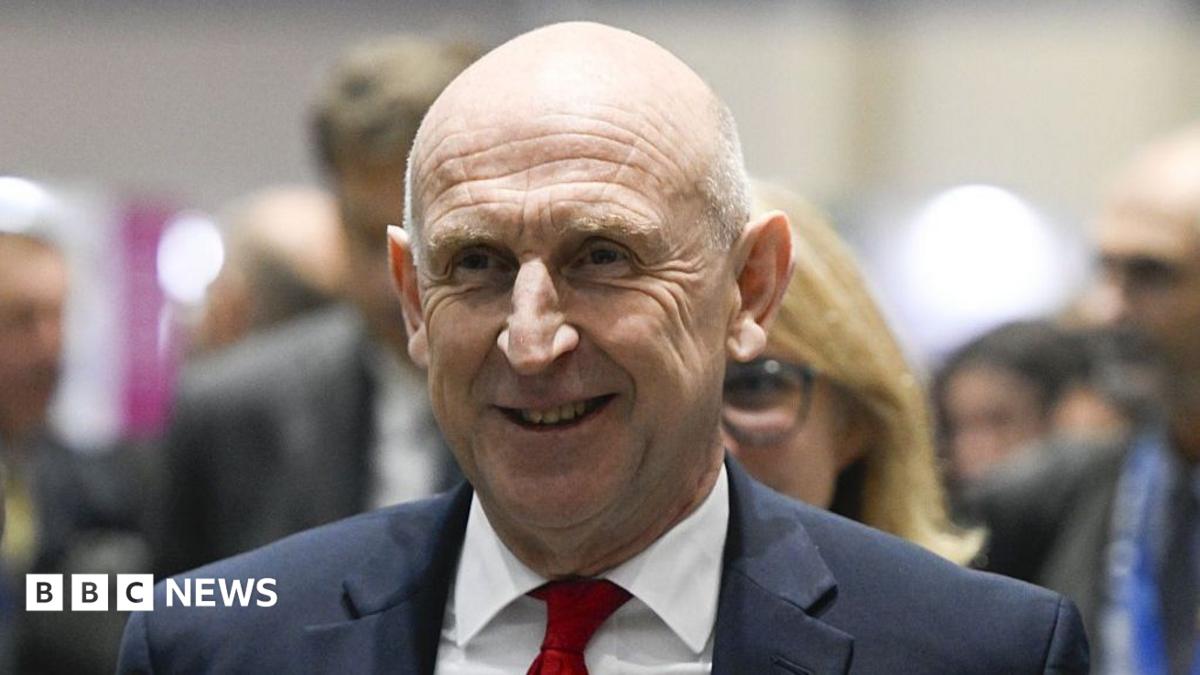
Senior banking executives have told the BBC they expect the sector to be “on the menu” when the chancellor announces his Budget in two weeks’ time.
John Healey has described the banks as part of “the crown jewels” of the UK economy, yet has refused to rule out a raid on the sector.
The biggest four banks collectively made around £15bn profit in the first six months of this year, leading to calls from trade unions and others for additional taxes.
However, the banking sector trade body, UK Finance, warned that “further increases in bank taxes would weaken competitiveness, discourage investment and job creation, and work against the government’s ambition to deliver growth in every postcode”.
The UK’s biggest banks and building societies currently pay a surcharge of 3% on top of the baseline 25% rate of corporation tax, plus a levy on the assets held on their balance sheets.
The sector contributed nearly £40bn to the Treasury last year, if income tax on employees is factored in.
The bank levy generated £1.4bn last year and the surcharge a further £1.2bn.
There are a number of ways the chancellor could extract more money from the sector.
The 3% surcharge was reduced from 8% under Rishi Sunak when he was chancellor, at the same time as he raised corporation tax from 19% to 25%. Returning the surcharge to its previous level could raise around £2bn a year.
The bank levy currently charges 0.1% on outstanding short-term loans and 0.05% on longer-dated loans, although mortgages are excluded from the calculation.
In the past banks have successfully argued that higher taxes would risk making the UK uncompetitive with other jurisdictions and would reduce their ability to lend, and therefore be anti-growth.
In truth, banks were pleasantly surprised they were not hit at the last Budget, given the large profits they have been making in recent years. Rising interest rates have expanded the margin between the rate at which they lend to customers and the rate they pay savers.
There is another option that has been discussed with Treasury officials. Currently banks can use losses from the past to offset against profits – thereby reducing their tax bill in any given year. Lloyds in particular has been a beneficiary of this policy, as large losses from the financial crisis have been used to lower tax bills ever since.
Some analysts and bank executives have pushed the idea of a moratorium on this practice for a few years, which would yield an estimated extra £1bn per year for the Treasury. That would provide a windfall while being “a lot more bearable”, in the words of one bank executive.
It would also spare foreign banks from an additional hit, including JP Morgan, whose chief executive Jamie Dimon has warned that the UK already has one of the highest tax burdens on banks in the world. He warned that adding further sector-specific taxes could discourage investment and damage competitiveness.
However, industry leaders say any form of tax rise that hits UK banks and exempts foreign banks’ operations in the UK would be hard to square with the government’s push to back British business.
Whatever form it takes, banks believe the chancellor now has much more of an appetite to take a larger slice of their pie.
David Zaslav, the longtime TV executive who created Warner Bros. Discovery Inc. but ultimately failed to keep it going as an independent company, made about $600 million on the sale of the business to Paramount Skydance Corp. this week.
Much of Zaslav’s compensation came in the form of stock options. Warner Bros. stockholders received $31 a share in cash in the sale, a nearly 25% increase from when the stock first began trading in April of 2022. The Standard & Poor’s 500 rose 76% over that period.
Many other Warner executives received large paydays, including streaming boss JB Perrette and strategy chief Bruce Campbell. A spokesperson said Zaslav doubled the number of employees overall who received stock awards.
The new company, now called Skydance Corp. and led by technology scion David Ellison, is one of the largest media businesses in the world, comprising the century-old Paramount and Warner Bros. movie studios, dozens of TV networks, like CBS and CNN, as well as the Paramount+ and HBO Max streaming services.
Christopher Palmeri and Dylan Sloan report for Bloomberg.
Venezuelan authorities have pledged to incorporate 1,300 MW into the grid by the end of the year. (Radio Fe y Alegria)
Caracas, September 30, 2026 (venezuelanalysis.com) – Venezuelan Minister of Electric Energy Rolando Alcalá announced a plan to add 1,300 megawatts (MW) to the country’s electric grid amid growing protests against recurring blackouts.
In a televised message published on Tuesday, Alcalá pledged that the electricity supply would improve in the final quarter of 2026 to mitigate outages. He explained that a unit at Planta Centro, Venezuela’s main generation complex serving the central-western region, will come online “in the coming days” and provide 600 MW to the area.
The official also announced that seven generation units with a combined capacity of 500 MW will be added to a key thermoelectric plant in Zulia state, which borders Colombia and is one of the areas hardest hit by power failures.
The government is also reportedly working on an alternative energy plan for the state, including the Machango solar panel park, which is expected to come online next year.
The remainder of the planned generation will come from units located in other regions of the country.
“Other units will be brought online nationwide, for a total of 1,300 megawatts during this final quarter of 2026. These will help achieve greater stability, continuity, and fewer interruptions in electricity service nationwide,” Alcalá said in a video shared by Acting President Delcy Rodríguez on social media.
“We have a clear plan to face the challenges of the National Electric System and we are executing it,” she wrote on X. “With organization, coordination, and effort we move forward to overcome this situation.”
Meanwhile, the president of the National Electric Corporation (CORPOELEC), Juan Fernández, explained that “as a complement to the thermal generation plan, major transmission projects are being carried out.” He highlighted the expansion of the Planta Centro substation with the addition of a new 400-230 kV autotransformer, equipment that recently arrived from abroad.
“This year, we have gained access to original spare parts and components from the world’s leading manufacturers,” he added, referencing agreements with US-based GE Vernova, Germany’s Siemens, and Argentina’s Impsa. The US Treasury Department has issued sanctions waivers allowing transactions with Venezuela’s electricity sector.
The latest announcements came amid near-daily protests over power outages throughout the country. Demonstrators have taken to the streets to bang pots and pans or block streets to demand that authorities answer for blackouts that can add up to 16 hours per day.
On Wednesday night, protesters from Guacara, Carabobo State, temporarily blocked the Central-Regional Highway, the main highway connecting Caracas to Western regions, after electricity was shut off for a second time in the same day.
In statements to local press, demonstrators have highlighted that high temperatures and mosquitoes make it hard to sleep without ventilators or air conditioning, leading children to fall asleep in school. They have also criticized authorities for not producing a rationing schedule, making it impossible for families and businesses to plan around outages.
In their Tuesday televised message, Venezuelan government officials stated that the country’s electricity demand has risen in recent weeks, driven by a “rebound in economic activity,” high temperatures caused by the El Niño climate phenomenon, and the twin June 24 earthquakes which “delayed plans that had been underway to repair the electrical system.”
On September 22, the Ministry of Electric Energy reported that electricity demand in Venezuela had reached a record high of 16,424 megawatts (MW), the highest level recorded in the past nine years.
Venezuela has a nominal installed generation capacity of approximately 35,000 megawatts (MW), twice the country’s peak demand. However, actual stable generation currently stands at just 12,000 MW due to a deep structural crisis resulting from US sanctions that prevented the purchase of spare parts, as well as issues of underinvestment, lack of maintenance, and corruption.
Nevertheless, authorities claimed that a proposed reform of the Organic Law of the National Electricity System and Service will allow “the integration of the public and private sectors in electricity generation, transmission, distribution, and commercialization,” with the aim of “promoting competitiveness, and attracting investment to strengthen electrical infrastructure.”
The new law was preliminarily approved by the National Assembly in June, with a second discussion and final approval yet to be scheduled.
The previous legislation, enacted in 2010 under President Hugo Chávez, exclusively reserved all activities across the electricity supply chain for the state, centralized through the state-owned CORPOELEC. The reform authorizes strategic partnerships and concession agreements with domestic and international private companies.
In defending the new law, Venezuelan officials have defended the adjustment of electricity tariffs to reflect “real costs” and secure returns for investors.