improvements

L.A. County supervisors call for improvements to restraining order system

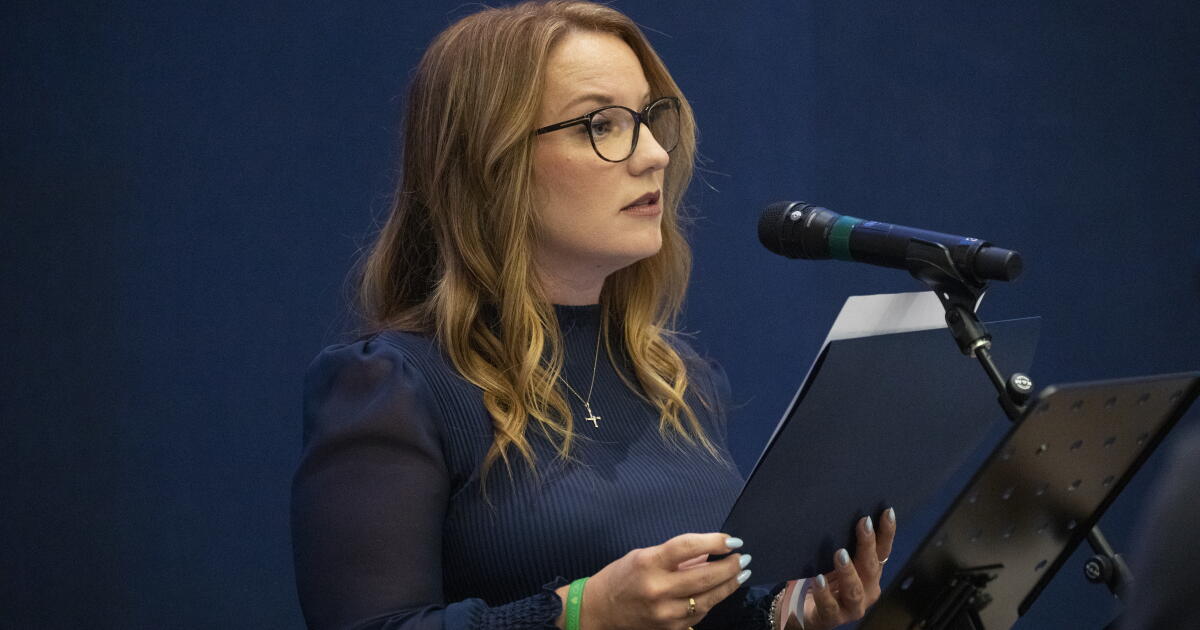
Los Angeles County Supervisor Lindsey Horvath presented a motion Tuesday calling for “bold action” to better protect victims of domestic violence and stalking, seeking to help them more effectively navigate the county’s restraining order system and obtain court-ordered protection.

Horvath cited recent Los Angeles Times reporting on the challenges victims face when obtaining and enforcing restraining orders as an inspiration for the Board of Supervisors motion, which was co-authored by board chair Hilda Solis. The supervisors are scheduled to consider the measure during the board’s Nov. 10 meeting.

“A recent story from the L.A. Times spoke to the process of domestic violence restraining orders and the work done and not being done across the county to support survivors in need of this critical support,” Horvath said.

The Times’ reporting identified at least 63 women killed in 2024 and 2025 in L.A. County whose cases involved a former partner or close relative arrested or charged with their murder. The deaths accounted for more than 40% of the 156 women killed during that period. At least 10 of those women had filed for restraining orders.

In July 2024, the county Department of Public Health’s Office of Violence Prevention issued a report with more than a dozen recommendations for reducing domestic violence homicides by improving access to restraining orders. Today, most of those recommendations have not yet been implemented.

The office said the delay was the result of insufficient funding and challenges with coordinating between the many agencies responsible for the county’s restraining order system.

If passed, the motion would mandate reports from the county’s chief executive, the Los Angeles County Sheriff’s Department, and the departments of Public Health, Mental Health, Consumer and Business Affairs, Public Social Services, and Homeless Services to assess current efforts, improvement plans and additional funding needs.

“We know that domestic violence restraining orders protect survivors and I believe the board must take every step possible to better support and protect our survivors,” she said. “The county,” she added, “must step up and lead in this space.”

The motion calls for allocating millions of dollars annually to fully fund nine county-run self-help legal centers that assist people navigating the restraining order process.

It would also officially identify “Gender-Based Violence and Intimate Partner Violence” as a priority for the Board of Supervisors, and require a presentation from the Sheriff’s Department on how the agency plans to improve its handling of restraining orders.

The Office of Violence Prevention would be required to develop a plan for a “peer navigator model” to guide survivors through the restraining order system.

The Department of Homeless Services and Housing would be asked for an assessment of what additional resources would be necessary to provide emergency beds for all people fleeing intimate partner violence.
Source link

Venezuelan Gov’t Promises Electricity Improvements as Blackout Protests Increase

Venezuelan authorities have pledged to incorporate 1,300 MW into the grid by the end of the year. (Radio Fe y Alegria)

Caracas, September 30, 2026 (venezuelanalysis.com) – Venezuelan Minister of Electric Energy Rolando Alcalá announced a plan to add 1,300 megawatts (MW) to the country’s electric grid amid growing protests against recurring blackouts. 

In a televised message published on Tuesday, Alcalá pledged that the electricity supply would improve in the final quarter of 2026 to mitigate outages. He explained that a unit at Planta Centro, Venezuela’s main generation complex serving the central-western region, will come online “in the coming days” and provide 600 MW to the area.

The official also announced that seven generation units with a combined capacity of 500 MW will be added to a key thermoelectric plant in Zulia state, which borders Colombia and is one of the areas hardest hit by power failures. 

The government is also reportedly working on an alternative energy plan for the state, including the Machango solar panel park, which is expected to come online next year.

The remainder of the planned generation will come from units located in other regions of the country. 

“Other units will be brought online nationwide, for a total of 1,300 megawatts during this final quarter of 2026. These will help achieve greater stability, continuity, and fewer interruptions in electricity service nationwide,” Alcalá said in a video shared by Acting President Delcy Rodríguez on social media.

“We have a clear plan to face the challenges of the National Electric System and we are executing it,” she wrote on X. “With organization, coordination, and effort we move forward to overcome this situation.”

Meanwhile, the president of the National Electric Corporation (CORPOELEC), Juan Fernández, explained that “as a complement to the thermal generation plan, major transmission projects are being carried out.” He highlighted the expansion of the Planta Centro substation with the addition of a new 400-230 kV autotransformer, equipment that recently arrived from abroad.

“This year, we have gained access to original spare parts and components from the world’s leading manufacturers,” he added, referencing agreements with US-based GE Vernova, Germany’s Siemens, and Argentina’s Impsa. The US Treasury Department has issued sanctions waivers allowing transactions with Venezuela’s electricity sector.

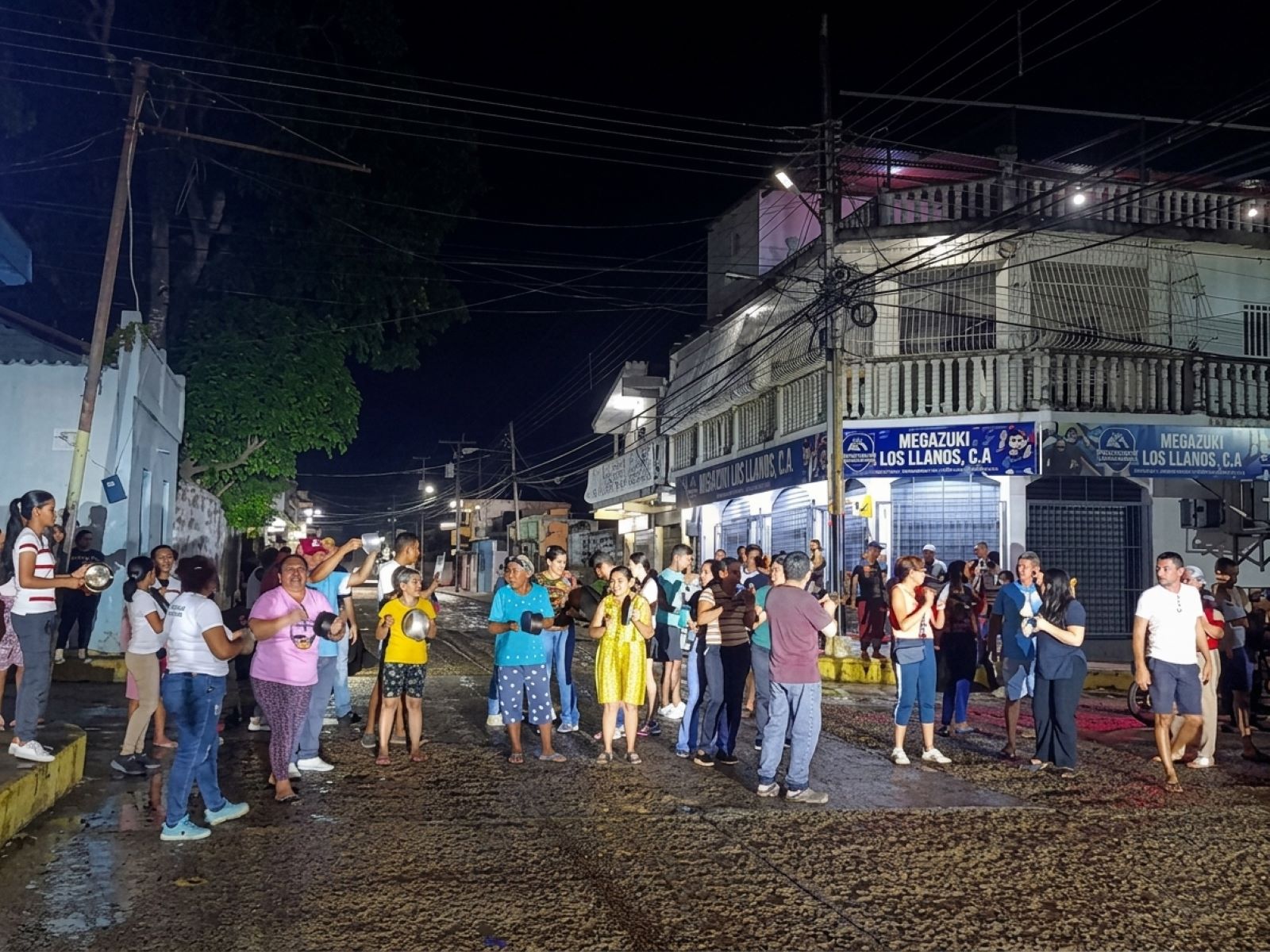
The latest announcements came amid near-daily protests over power outages throughout the country. Demonstrators have taken to the streets to bang pots and pans or block streets to demand that authorities answer for blackouts that can add up to 16 hours per day.

On Wednesday night, protesters from Guacara, Carabobo State, temporarily blocked the Central-Regional Highway, the main highway connecting Caracas to Western regions, after electricity was shut off for a second time in the same day. 

In statements to local press, demonstrators have highlighted that high temperatures and mosquitoes make it hard to sleep without ventilators or air conditioning, leading children to fall asleep in school. They have also criticized authorities for not producing a rationing schedule, making it impossible for families and businesses to plan around outages.

In their Tuesday televised message, Venezuelan government officials stated that the country’s electricity demand has risen in recent weeks, driven by a “rebound in economic activity,” high temperatures caused by the El Niño climate phenomenon, and the twin June 24 earthquakes which “delayed plans that had been underway to repair the electrical system.”

On September 22, the Ministry of Electric Energy reported that electricity demand in Venezuela had reached a record high of 16,424 megawatts (MW), the highest level recorded in the past nine years.

Venezuela has a nominal installed generation capacity of approximately 35,000 megawatts (MW), twice the country’s peak demand. However, actual stable generation currently stands at just 12,000 MW due to a deep structural crisis resulting from US sanctions that prevented the purchase of spare parts, as well as issues of underinvestment, lack of maintenance, and corruption.

Nevertheless, authorities claimed that a proposed reform of the Organic Law of the National Electricity System and Service will allow “the integration of the public and private sectors in electricity generation, transmission, distribution, and commercialization,” with the aim of “promoting competitiveness, and attracting investment to strengthen electrical infrastructure.”

The new law was preliminarily approved by the National Assembly in June, with a second discussion and final approval yet to be scheduled.

The previous legislation, enacted in 2010 under President Hugo Chávez, exclusively reserved all activities across the electricity supply chain for the state, centralized through the state-owned CORPOELEC. The reform authorizes strategic partnerships and concession agreements with domestic and international private companies.

In defending the new law, Venezuelan officials have defended the adjustment of electricity tariffs to reflect “real costs” and secure returns for investors.

Edited by Ricardo Vaz in Caracas.


Source link

Home Improvement’s Jonathan Taylor Thomas arrested for being ‘drunk in public’ and ‘resisting police officer’ in L.A.

HOME Improvement star Jonathan Taylor Thomas has been arrested and jailed in Los Angeles, The U.S. Sun can confirm.

A spokesperson for the Malibu/Lost Hills Sheriff’s Station told The U.S. Sun that the former actor, 45, was a passenger in a vehicle that was pulled over by police on September 21 around 12:30 am.

Jonathan Taylor Thomas, here in 2013, rose to fame as a child star in the 1990s on sitcom Home Improvement Credit: FilmMagic
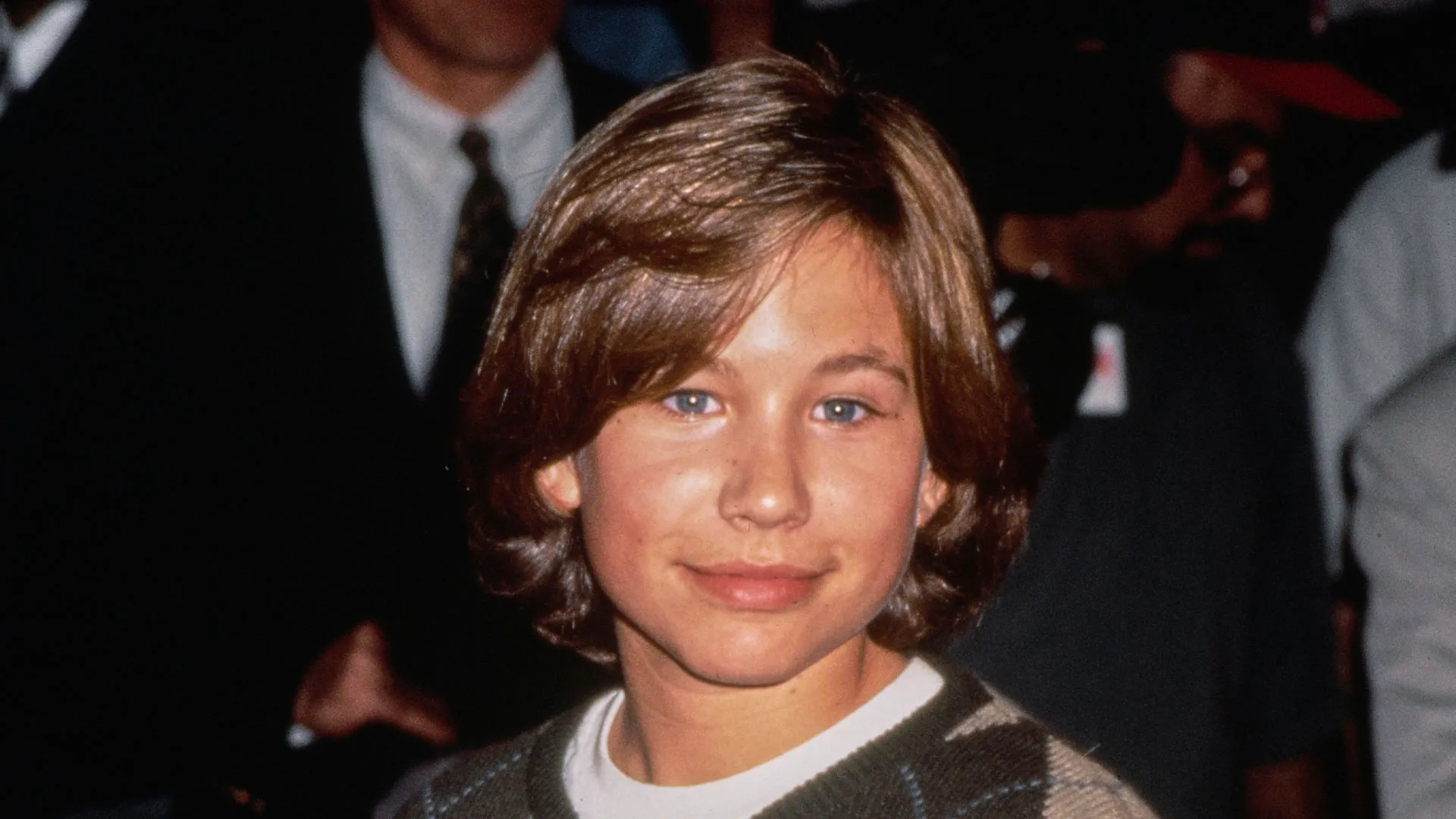
Jonathan stepped out in 1995, when he was a household name in the U.S. Credit: Getty Images

According to the police spokesperson, a DUI investigation was conducted.

“During the investigation, [Jonathan] stepped out of the vehicle and became uncooperative and resistant, and was subsequently arrested for [being] drunk in public,” the spokesperson said.

He was charged with being drunk in public and resisting or deterring an executive officer.

Jonathan has not yet spoken out about the incident.

TMZ was first to report the news.

Jonathan rose to fame in the 90s as a main cast member on Home Improvement opposite superstar Tim Allen.

He played middle son Randy for eight seasons, and soon jumped to bigger Hollywood projects.

He took on the role of Tom Sawyer in Tom and Huck in 1995, and voiced a young Simba in The Lion King in 1994.

Most read in Entertainment

Jonathan reunited with Home Improvement mom Patricia Richardson and brother Taran Noah Smith in July 2026 Credit: Instagram/prichardsonla
Jonathan played middle brother Randy on Home Improvement. He posed with the cast in 1992 Credit: Getty

Despite becoming a teen heartthrob in his younger years, he abruptly left the film industry altogether in the early 00s.

Jonathan attended Harvard University, and got a graduate degree from Columbia in 2010.

He made a very rare public appearance on Home Improvement mom Patricia Richardson’s Instagram with brother Taran Noah Smith in July.

Before his social media cameo, he was spotted going incognito on a walk in Hollywood in 2023.

“I never took the fame too seriously,” he said in 2013 in a very rare interview.

“It was a great period in my life, but it doesn’t define me. When I think back on the time, I look at it with a wink.

“I focus on the good moments I had, not that I was on a lot of magazine covers.”

Source link