immigration enforcement

Homeland Security finds itself back in the headlines after 3 fatal ICE encounters

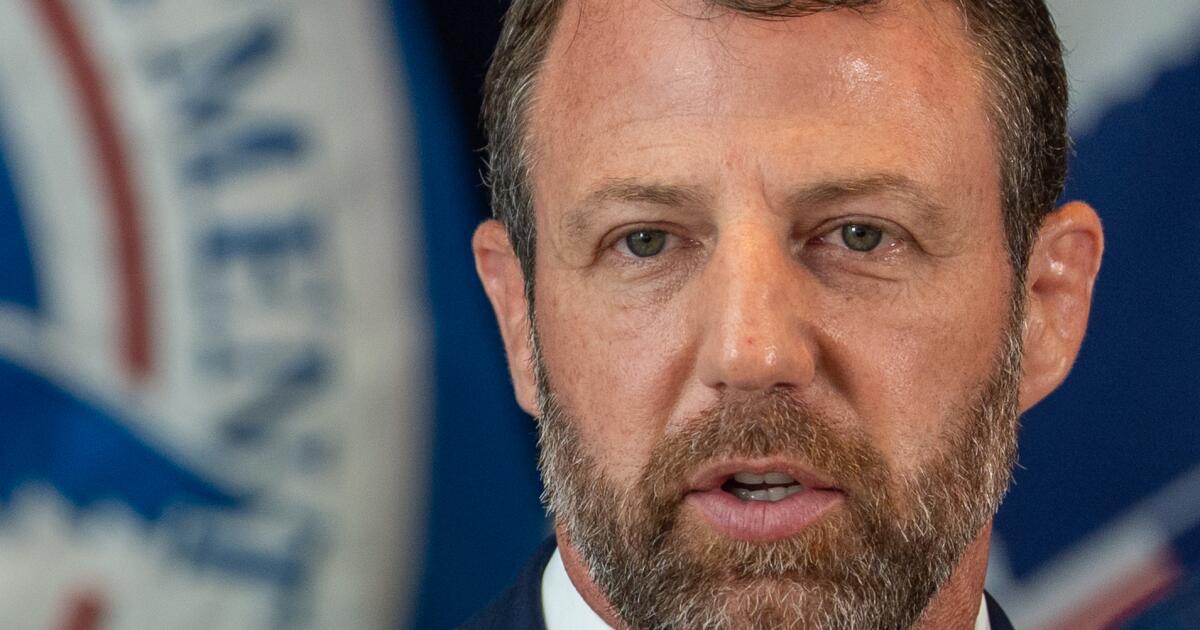
When Markwayne Mullin took over as Homeland Security secretary from fired Kristi Noem, he pledged to get the department responsible for carrying out the Trump administration’s mass deportations policy out of the headlines.

But just months into Mullin’s time in office, the department is squarely in the center of controversy again after three people were killed in encounters with Immigration and Customs Enforcement officers in the span of less than a week.

The events are the first major test for Mullin, who promised a steady hand for a department roiled by his predecessor’s conduct and the Trump administration’s immigration crackdown.

As he navigates the uptick in violence, he is being forced into a balancing act that has him juggling pressures from a White House eager to carry out mass deportations and his former colleagues in Congress seeking answers — all while attempting to ease tensions in American cities over the deaths.

“When he took his position, Secretary Mullin said that his goal was to get the department off the front page of the news,” Democratic Rep. Seth Magaziner said on the House floor Tuesday. Then, waving a newspaper, he said: “Well, you’re back on the goddamn front page now.”

Mullin’s approach is a marked change from his predecessor, Kristi Noem

Mullin, a former senator from Oklahoma, was a surprise pick to run the sprawling department after Noem was fired in the wake of two deadly shootings of American protesters at the hands of federal immigration officers in Minneapolis earlier this year.

As the secretary in charge of carrying out the administration’s mass deportations vision, Noem pushed an aggressive style of immigration enforcement where she was front and center, including most famously, a visit to a Salvadoran detention center. She was quick to speak publicly on controversial events, weighing in on both Minneapolis shootings with statements accusing the killed protesters of being agitators.

President Trump, who made mass deportations a central promise of his second administration, ultimately soured on Noem over a $200 million ad campaign and her handling of the Minneapolis operation.

Mullin promised a different approach, while still pledging to deliver on the president’s priorities. His first trip as secretary was not to promote immigration enforcement but to observe hurricane recovery efforts in North Carolina. Noem frequently went out on immigration raids with her officers — Mullin has not.

Since he became secretary and in the aftermath of the Minneapolis violence, the administration has also moved away from high-profile and unpopular immigration operations in American cities to a quieter approach to enforcement that has largely shifted media attention away from the crackdown. Under Mullin, Immigration and Customs Enforcement is also retreating from a plan to use warehouses to detain migrants.

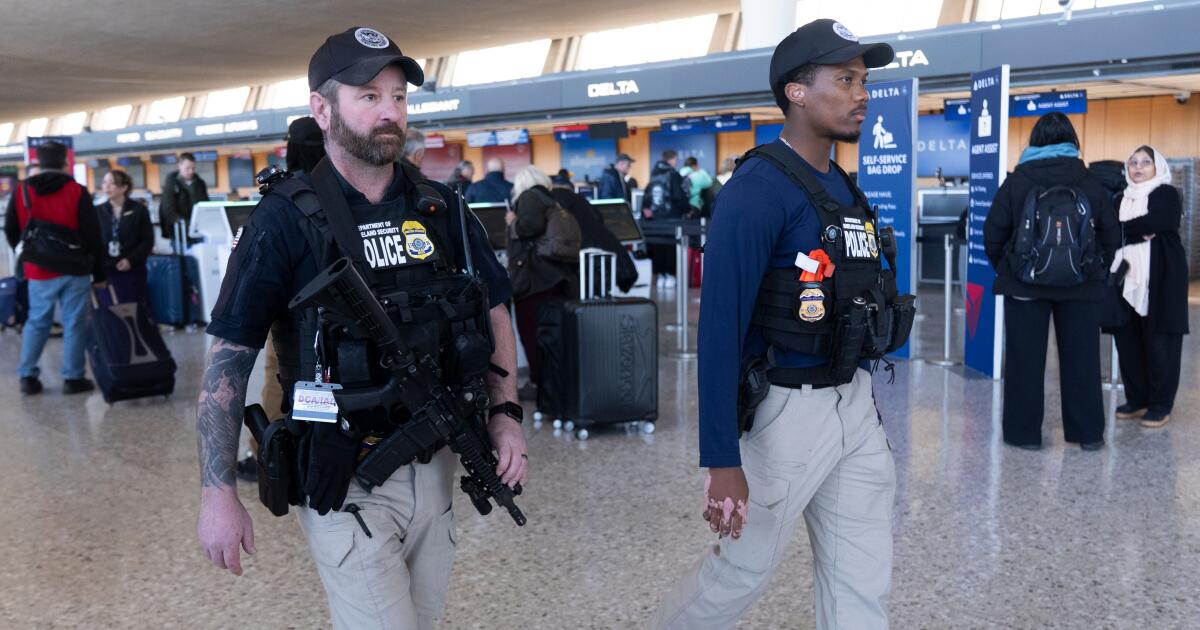
But immigration arrests continue under Mullin and often with little fanfare: ICE arrested 10,000 people over a five-day period in late June, averaging out to about to 2,000 arrests per day. And legal pathways to immigration have also faced new restrictions.

Trump, during Mullin’s tenure, has hailed the secretary as “so incredible,” and “amazing,” lauding him for giving up his Senate seat to run DHS.

For months, it appeared as though Mullin’s change in approach was taking hold. While advocates and civil rights activists accused the department of mistreating immigrants under his leadership, Mullin’s less confrontational approach seemed to keep the department out of the spotlight.

But the events of the past week have posed a new challenge for Mullin as he walks a tightrope between his softer approach and the president’s demands.

“Trying to deal with competing policy objectives is a challenge for any Cabinet secretary, but Mullin has this worse than most,” said Tom Warrick, a former counterterrorism official at Homeland Security who’s now at the Atlantic Council.

“In the case of Homeland Security, the White House wants both to meet their immigration quotas at the same time that they keep public trust, and how you do that — even with the funding that Mullin has — is a really difficult challenge.”

ICE officers in Houston and Maine shot and killed individuals in their cars during immigration operations. In Florida, a man fleeing ICE officers was killed in a car crash.

Mullin has not spoken publicly about the deaths while the department’s public affairs office has released only brief statements following each.

Behind the scenes, Mullin, who frequently talks about how he shares his cellphone number with members of Congress and encourages them to call him directly, has talked with lawmakers and shared information, including talking with both senators from Maine.

And after the second shooting death in Maine, as criticism surged from both protesters and Mullin’s former colleagues in Congress, ICE was ordered to suspend most vehicle stops.

Trump heaps pressure on Mullin over vehicle stop order

That decision infuriated Trump’s supporters.

Conservative influencer Nick Sorter called it a “TOTAL CAPITULATION to the left,” in a post on X. Conservative activist Mike Davis accused Mullin of heeding the advice of Maine Sen. Susan Collins, who said she’d suggested the vehicle stop pause to the secretary.

A day later, Trump appeared to contradict the guidance to ICE, saying in a social media post “we must be strong, tough and smart and we CANNOT give up one of ICE’s most important and effective Crime Fighting tools, THE TRAFFIC STOP!”

Mullin then reposted Trump’s words, adding that people in the country would be “arrested and deported wherever they are.” He later said on X that he and the president are “on the same page.”

It was not immediately clear whether vehicle stops were back on.

But it showed the friction between Mullin’s attempts to maintain calm and the president’s demands that illegal immigrants, which the administration has in many instances portrayed as criminals, be arrested in large numbers.

Democrats have slammed the new secretary, saying that they see little change at the department.

“Secretary Mullin, if he wants to, and if he has the backing of the White House, he has the ability to get ICE under control and make them follow the law,” said Rep. Joaquin Castro, a Democrat from Texas. “So either he has no interest in doing that, or the White House is not backing him up, or the agents are simply out of control.”

Republican lawmakers have come to Mullin’s defense.

“I think the Secretary has lived up to what he’s wanted to do to try to change the atmosphere over there,” said Rep. Andrew Garbarino of New York, who as chair of the congressional Homeland Security Committee has requested a bipartisan briefing on ICE’s use of force policies from DHS.

“I don’t think anybody is celebrating that ICE is back in the headlines,” Garbarino said.

Santana writes for the Associated Press. AP writer Lisa Mascaro contributed to this report.

Source link

House is set to fund Trump’s immigration actions for the rest of his time in the White House

House Republicans will look to get nearly $70 billion for immigration enforcement over the finish line Tuesday, enough to fund a pair of Homeland Security agencies through the next three years and the rest of President Donald Trump’s time in office.

Speaker Mike Johnson will need near perfect attendance and unity on his side to complete weeks of action on the bill. The legislation got sidetracked when Republicans sought to include $1 billion for enhanced security on the White House grounds, including for Trump’s new ballroom, and the Trump administration tried to create a nearly $1.8 billion fund to compensate allies of the president who claim they have been unjustly investigated and prosecuted. Those proposals proved politically toxic and were scrapped.

Now, the bill is focused entirely on immigration enforcement, a topic that Republicans have treated as a defining issue between the two major political parties and one they hope will carry them to victory in this year’s midterm elections. The bill provides $38 billion for Immigration and Customs Enforcement, $26 billion for the Border Patrol and another $5 billion to cover unforeseen costs, fueling Trump’s deportation agenda.

“It’s long overdue,” said Johnson, R-La., of the bill. “We have to fund border security and immigration enforcement, and it’s sad that Republicans have to do it on our own.”

Funding accelerates Trump’s deportation agenda

The funding comes on top of the nearly $140 billion that the Republican-controlled Congress gave ICE and Customs and Border Protection last year as part of Trump’s tax and spending cuts bill.

Democrats objected to giving the agencies more money without significant changes in the way they operate after the deaths of Alex Pretti and Renee Good in Minneapolis. For example, Democrats insisted that agents be required to display their ID badges during enforcement operations and that they get a judicial warrant before entering private property. Instead, the funding will come with virtually no strings attached.

House Democratic Leader Hakeem Jeffries vowed his party would oppose the package.

“We believe that taxpayer dollars should be used to make life more affordable for the American people – not give ICE another $70 billion blank check so that they can unleash brutality on American citizens and violently target law-abiding immigrant communities,” said Jeffries of New York.

Homeland Security faced longest shutdown in history

The package is the result of a monthslong standoff in Congress after Democrats refused to fund the Department of Homeland Security in the wake of the immigration enforcement actions in Minneapolis and other American cities, leading to the longest shutdown in agency history.

Negotiations had been underway with the White House to alter ICE operations as Democrats were demanding. When those negotiations failed, Republicans turned to a complicated procedural maneuver to get around the filibuster and pass the immigration funding with no Democratic votes.

If approved, the package would next go to Trump for his signature, all but assuring an essentially uninterrupted flow of funds for his immigration enforcement and deportation agenda into 2029.

The Senate completed its work on the legislation last week during an all-night session that extended into the early morning hours Friday. The final 52-47 vote on the bill was nearly party line, with Sen. Lisa Murkowski of Alaska the only Republican to oppose it.

Money comes at pivotal time for immigration agenda

The money will come at a pivotal time for the Department of Homeland Security, which is under new leadership after Trump replaced Kristi Noem with new Secretary Markwayne Mullin in March.

While Mullin has vowed to keep the department out of the headlines, the administration is under pressure from anti-immigration advocates to deliver on Trump’s campaign promise of the largest deportation operation in American history.

So far, the administration has not hit its goal of 1 million deportations a year, but Trump’s border czar, Tom Homan, has promised more to come, including hinting at immigration enforcement actions in New York, the nation’s biggest city, which is heavily Democratic.

At the same time, the administration is making it more difficult for legal immigrants to remain in the U.S. by working to end Temporary Protective Status, changing the processes for obtaining green cards and leaving some Dreamers — the young people who were brought illegally to the U.S. as children — reporting delays in renewing their status, which allows them to stay and work.

Tight vote ahead

On the House side, Johnson has little margin for error. Republicans can afford to lose only a couple of votes if every lawmaker is present. GOP leadership opted to avoid any hiccups and sent lawmakers home last week rather than take up the bill early Friday once the Senate had completed its all-nighter.

The bill is just a slim package, without the hundreds of pages of details and directives that typically come from Congress when it provides funding for agencies.

Leading up to the vote, Democrats portrayed DHS as an agency that has used its new resources to buy private jets for its leadership, warehouse immigrants in deplorable conditions and attack U.S. citizens.

“To give these rogue agencies another $70 billion now when they still have $100 billion in the bank from last year would implicate all of us in the escalating corruption and shameful actions of this department,” said Rep. Jamie Raskin of Maryland, the ranking Democratic member on the House Judiciary Committee.

Republicans countered that they were fulfilling their duty to safeguard the nation and support the men and women charged with enforcing the law.

“Democrats can say whatever they want, but what it’s about is public safety. What’s it about is keeping Americans safe,” said Rep. Michelle Fischbach, R-Minn.

Freking and Mascaro write for the Associated Press.

Source link

Homeland Security Secretary Markwayne Mullin refuses to commit to following court orders

Homeland Security Secretary Markwayne Mullin, under intense grilling at a Senate hearing Tuesday, refused to commit to abiding by federal court orders.

Mullin also conceded that his predecessor as secretary, Kristi Noem, had inaccurately described two shootings involving immigration officers in Minneapolis.

His refusal to commit to complying with court orders came during a testy exchange with Sen. Chris Murphy (D-Conn.). Murphy quoted Chief U.S. District Judge Patrick Schiltz in Minnesota — a Republican appointee — who said Immigration and Customs Enforcement had violated nearly 100 court orders and had “likely violated more court orders in January 2026 than some federal agencies have violated in their entire existence.”

When Murphy asked Mullin to commit to complying with court orders in the future, Mullin replied that his agency would not break the law.

So you’ll pick and choose which court orders you’ll obey?

— Sen. Chris Murphy

“But that doesn’t sound like the same thing as committing that you will obey a court order,” Murphy said.

“If we didn’t think the courts were politicized, then I would probably be able to answer that. But we see courts over and over again that use their bench for political opinion and not just the rule of law,” Mullin said.

“So you’ll pick and choose which court orders you’ll obey?” Murphy asked,

Mullin told Murphy not to put words in his mouth.

Addressing his fellow senators, Murphy said, “If you’re a Democrat or a Republican on this committee, you should be really, really freaked out.”

Murphy later returned to the court orders question, saying that ignoring judges erodes democracy.

“I agree that there is politics involved in judicial decisions,” he said. “I do not think that gives an excuse to either Democratic or Republican administrations to ignore those court orders. I think that’s actually the end of our republic, if the administration willfully ignores a court order because they disagree with it or its motivation.”

Mullin faced the Senate Appropriations Committee amid scrutiny over the agency’s budget and immigration enforcement ahead of the World Cup. President Trump tapped Mullin to take over leadership of the embattled Department of Homeland Security after Noem was fired in March.

Mullin’s appearance came as the Senate is considering legislation that would fund immigration enforcement agencies through the end of Trump’s term. Republicans intend to use a legislative maneuver that would bypass the need for support from Democrats, who have pushed for reforms since two U.S. citizens were killed by immigration agents in Minneapolis.

During his previous appearance before senators, Mullin projected himself as diplomatic, saying he would work to bring confidence to the agency and keep it out of the news. But recently, he has set the travel industry on edge by threatening to remove Customs and Border Protection officers from airports in so-called sanctuary cities, which limit collaboration with immigration enforcement agents.

Millions of people are preparing to visit the United States for the World Cup, which starts June 11 and includes host cities such as Los Angeles, San Francisco and Seattle. Mullin said he will attend his first soccer game June 12 in Los Angeles.

Murphy, the committee’s top Democrat, made note of Mullin’s promise to keep Homeland Security out of the news. He said the agency has repeatedly broken the law, wasted billions in taxpayer dollars and lined the pockets of private prison corporations.

“Nothing has really gotten better,” he said. “In fact, you spent the first two months of your tenure threatening to suspend international arrivals in states represented by Democrats. Not only would that throw our entire air travel system into chaos, it’s completely illegal.”

Mullin took issue with Murphy’s characterization of the agency’s behavior, calling it political theater. Murphy sat with his head propped up on his hand, looking directly back at his former Senate colleague.

Mullin said threats against immigration agents are up significantly and that Murphy’s “reckless tone is getting people hurt.”

Protests erupted last month outside an immigrant detention facility in New Jersey after detainees launched a hunger and labor strike over what they called inhumane conditions such as rotten food and medical neglect. Tensions have escalated over several days as protesters clashed with law enforcement and counterprotesters.

On Monday in Dallas, Mullin said he would pull Customs officers from airports around the country to help with the security in Newark, if it became necessary.

Addressing the issue of officer training, Mullin said Tuesday that the agency will return next month to 72 days of training for new recruits, including training on crowd control. Last year, then-acting ICE Director Todd Lyons told Congress the agency had reduced the number of training days to 42.

He also said the agency is not “actively patrolling” sensitive locations, such as schools, and said that the agency has stopped relying on administrative warrants to enter a residence by force and is now seeking judicial warrants before doing so in most cases.

Asked by Sen. Patty Murray (D-Wash.) about body-worn cameras, Mullin said the agency doesn’t have the money to supply enough body cameras for every immigration officer. Homeland Security received an unprecedented windfall last year of $170 billion under Trump’s sweeping tax bill, the One Big Beautiful Bill Act.

Mullin said the agency suffered a blow to morale because of the historic 76-day shutdown of ICE and CBP after a congressional stalemate over funding.

“Some people couldn’t sustain it,” he said. “We lost a tremendous amount of workforce, about 8%.”

During an exchange with Sen. Chris Van Hollen (D-Md.), Mullin acknowledged that Noem had unfairly and inaccurately described two shootings involving immigration officers in Minneapolis.

An ICE agent was recently arrested over the nonfatal shooting of a Venezuelan man, whom Noem had called an attempted murderer.

“That’s an untrue statement, isn’t it?” Van Hollen said.

“From what we have been briefed on, yes,” Mullin replied.

Next, Van Hollen brought up Alex Pretti, who was shot and killed by CBP agents. Noem called him a domestic terrorist.

“You agree the facts don’t support that statement?” Van Hollen said.

“The investigation would say that’s probably not accurate,” Mullin replied.

Mullin was scheduled to appear before the House on Wednesday.

Source link