immigrants

While celebrating Maduro’s capture, Venezuelan immigrants worry about deportation

After President Trump ordered strikes that led to the capture of Venezuela’s president, Nicolás Maduro, celebrations erupted in Venezuelan communities across the U.S.

But for many of the hundreds of thousands of Venezuelan immigrants facing possible deportation, their relief and joy were cut by the fear about what comes next from an administration that has zeroed in on Venezuelans as a target.

“Many of us asked ourselves, ‘What’s going to happen with us now?’” said A.G., a 39-year-old in Tennessee who asked to be identified by her initials because she lacks legal status. Even so, Maduro’s ouster gave her a lot of hope for her mother country.

Venezuelans began fleeing in droves in 2014 as economic collapse led to widespread food and medicine shortages, as well as political repression. Nearly 8 million Venezuelans are now living outside the country — including 1.2 million in the U.S.

Venezuelans migrants walk toward Bucaramanga, Colombia, in 2019.

Venezuelans migrants walk toward Bucaramanga, Colombia, in 2019.

(Marcus Yam/Los Angeles Times)

A.G. and her now-18-year-old son arrived at the southern border in 2019. Since then, she said, they have built a good life — they own a transport company with delivery trucks, pay taxes and follow the law.

Maduro’s fall left her with mixed feelings.

“He’s obviously a dictator, many people have died because of him and he refused to give up power, but the reason that they entered Venezuela, for me what President Trump did was illegal,” she said. “Innocent people died because of the bombs. I’m asking God that it all be for good reason.”

Dozens of Venezuelans and others were killed in the U.S. invasion — more than 100, a government official said — including civilians.

The Trump administration is framing its Venezuela operation as an opportunity for Venezuelans like A.G. “Now, they can return to the country they love and rebuild its future,” said U.S. Citizenship and Immigration Services spokesman Matthew Tragesser.

Katie Blankenship, a Miami-based attorney with Sanctuary of the South who has represented many Venezuelans facing deportation, sees a less promising future.

“We’re going to see increased targeting of Venezuelans to force them to leave the U.S. into a political and socioeconomic environment that’s likely only more destabilized and subject to more abuse,” she said.

The Venezuelan community in the U.S. swelled, in part, because the Biden administration expanded pathways for them to enter the country.

Volunteer help a Venezuelan immigrant at the storage units

Volunteer help a Venezuelan immigrant at the storage units from a volunteer-run program that distributes donations to recently arrived Venezuelan immigrants in need, in Miami, Fla., in 2023.

(Eva Marie Uzcategui / Los Angeles Times)

One of those programs allowed more than 117,000 Venezuelans to purchase flights directly to the U.S. and stay for two years if they had a U.S.-based financial sponsor and passed a background check. Other Venezuelans entered legally at land ports of entry after scheduling interviews with border officers.

By the end of the Biden administration, more than 600,000 Venezuelans had protection from deportation under Temporary Protected Status, a program used by both Republican and Democratic administrations for immigrants who cannot return home because of armed conflict, natural disaster or other “extraordinary and temporary conditions.”

On the campaign trail, Trump repeatedly referred to Venezuelan immigrants as criminals, singling them out more than any other nationality — in 64% of speeches, an Axios analysis showed. He has said repeatedly, without evidence that Venezuela emptied its prisons and mental institutions to flood the U.S. with immigrants.

One of Trump’s first acts as president was to designate the Venezuelan gang Tren de Aragua as a foreign terrorist organization. Within two months, he invoked an 18th century wartime law, the Alien Enemies Act, to deport 252 Venezuelan men accused of being Tren de Aragua members to El Salvador, where they were imprisoned and tortured despite many having no criminal histories in the U.S. or Latin America.

Later, the Trump administration stripped away protections for Venezuelans with financial sponsors and TPS, with Homeland Security Secretary Kristi Noem calling the latter “contrary to the national interest.”

In a September Federal Register Notice, Noem said that TPS for Venezuelans undercut the administration’s foreign policy objectives because one result of allowing Venezuelans in the U.S. was “relieving pressure on Maduro’s regime to enact domestic reforms and facilitate safe return conditions.” In other words, if Venezuelans returned home, that would pressure the government to enact reforms.

Attorney General Pam Bondi, Homeland Security Secretary Kristi Noem and Louisiana Governor Jeff Landry at a news conference

Secretary of Homeland Security Kristi Noem, along with U.S. Atty. Gen. Pam Bondi, left, and Louisiana Gov. Jeff Landry, right, participates in a news conference near Camp 57 at Angola prison, the Louisiana State Penitentiary and America’s largest maximum-security prison farm, to announce the opening of a new Immigration and Customs Enforcement (ICE) facility that will house immigrants convicted of crimes in West Feliciana Parish, Louisiana, on Sept. 3, 2025.

(Matthew Hilton / AFP via Getty Images)

The administration has offered contrasting assessments of conditions in Venezuela. Noem wrote that although certain adverse conditions continue, “there are notable improvements in several areas such as the economy, public health, and crime.”

Throughout the year, though, the State Department continued to reissue an “extreme danger” travel advisory for Venezuela, urging Americans to leave the country immediately.

Conditions for Venezuelans in the U.S. grew more complicated after a man from Afghanistan was accused of shooting two National Guard members in November; in response, the administration froze the immigration cases of people from 39 countries, including Venezuela, that the administration considers “high-risk.” That means anyone who applied for asylum, a visa, a green card or any other benefit remains in limbo indefinitely.

After a panel of the U.S. 5th Circuit Court of Appeals struck down the Trump administration’s use of the Alien Enemies Act in September, the Justice Department appealed. In a support brief filed in December, the Justice Department cited escalating tensions with Venezuela.

David Smilde, a Tulane University sociologist and expert on Venezuelan politics, said that invading Venezuela could justify renewed use of the Alien Enemies Act.

The law says the president can invoke the Alien Enemies Act not only in times of “declared war,” but also when a foreign government threatens or carries out an “invasion” or “predatory incursion” against the U.S.

“Now it will be difficult, I think, for the court to say, ‘No, you can’t use this,’” Smilde said.

With U.S. officials promising improved conditions in Venezuela and encouraging citizens to return, Smilde said, they could invoke the Alien Enemies Act to quickly deport undocumented immigrants who don’t leave willingly.

“There’s several layers to this,” he said, “and none of it looks very good for Venezuelan immigrants.”

a man wearing an American flag shirt embraces a woman in a church

This couple from Venezuela shared their story of why they left their three children back in their home country and spoke of the the experiences of their travel to the United States at the Parkside Community Church in Sacramento on June 16, 2023.

(Jose Luis Villegas / For The Times)

Jose, a 28-year-old Venezuelan living east of Los Angeles, fled Venezuela in 2015 after being imprisoned and beaten for criticizing the government. He lived in Colombia and Peru before illegally crossing the U.S. border in 2022, and now has a pending asylum application. Jose asked to be identified by his middle name out of fear of retaliation by the U.S. government.

The news this week that an ICE agent had shot and killed a woman in Minnesota heightened his anxiety.

“You come here because supposedly this is a country with freedom of expression, and there is more safety, but with this government, now you’re afraid you’ll get killed,” he said. “And that was a U.S. citizen. Imagine what they could do to me?”

People visit a memorial for Renee Nicole Good on Jan. 7 in Minneapolis.

People visit a memorial for Renee Nicole Good on Jan. 7 in Minneapolis.

(Scott Olson / Getty Images)

Jose qualifies for a work permit based on his pending asylum, but his application for one is frozen because of the executive order following the National Guard shooting.

The news of Maduro’s arrest was bittersweet, Jose said, because his mother and grandmother didn’t live to witness that day. He said his mother died last year of kidney failure due to lack of medical care, leaving him as the primary breadwinner for his two young sisters who remain in Venezuela with their father, who is disabled.

Still, he said he’s happy with what Trump has done in Venezuela.

“People are saying he’s stealing our petroleum,” he said, “but for 25 years, Cuba, China and Iran have been stealing the petroleum and it didn’t improve our lives.”

Many Venezuelans were encouraged by news that Venezuela would release a “significant number” of political prisoners as a peace gesture.

For Jose, that’s not enough. Venezuela’s government ordered police to search for anyone involved in promoting or supporting the attack by U.S. forces, leading to detentions of journalists and civilians.

“Venezuela remains the same,” he said. “The same disgrace, the same poverty and the same government repression.”

A.G. said she was heartened to hear Noem say Sunday on Fox News that every Venezeulan who had TPS “has the opportunity to apply for refugee status and that evaluation will go forward.” But the administration quickly backtracked and said that was not the case.

Instead, Noem and other administration officials have doubled down on the notion that Venezuelans without permanent lawful status should leave. Noem told Fox News that there are no plans to pause deportation flights despite the political uncertainty in Venezuela.

Tragesser, the U.S. Citizenship and Immigration Services spokesman, said the agency’s posture hasn’t changed.

“USCIS encourages all Venezuelans unlawfully in the U.S. to use the CBP Home app for help with a safe and orderly return to their country,” he said.

Source link

U.S. faith leaders supporting targeted immigrants brace for a tough year ahead

For faith leaders supporting and ministering to anxious immigrants across the United States, 2025 was fraught with challenges and setbacks. For many in these religious circles, the coming year could be worse.

The essence of their fears: President Trump has become harsher with his contemptuous rhetoric and policy proposals, blaming immigrants for problems from crime to housing shortages and, in a social media post, demanding “REVERSE MIGRATION.”

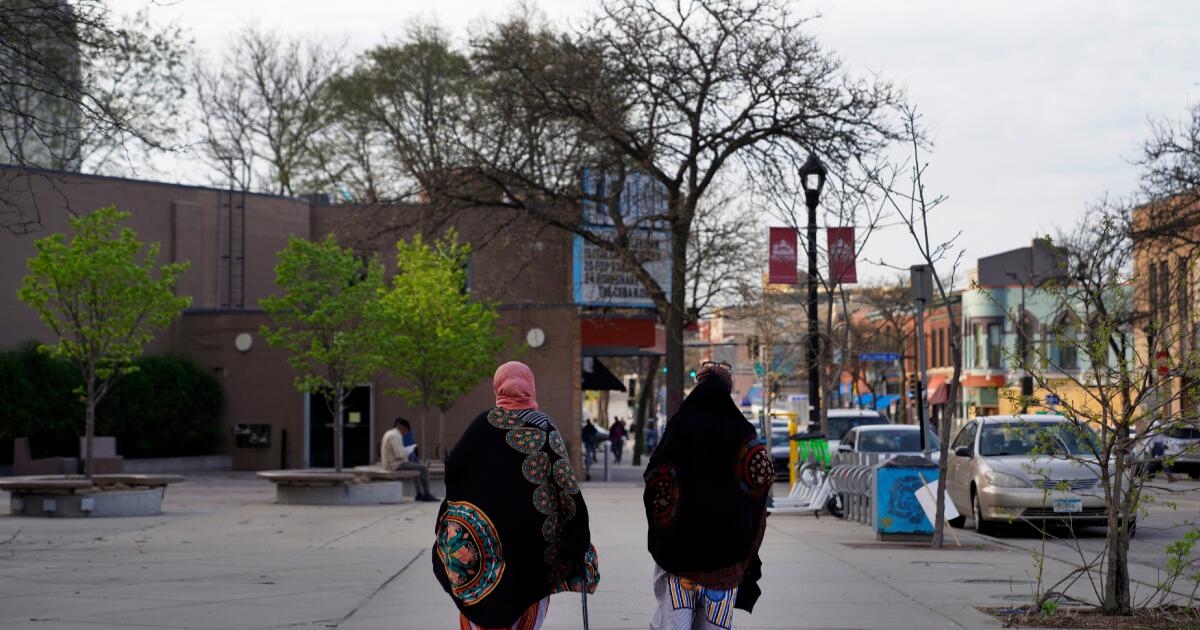
Haitians who fled gang violence in their homeland, as well as Afghans allowed entry after assisting the U.S. in Afghanistan before the Taliban takeover, now fear that their refuge in America may end due to get-tough policy changes. Somali Americans, notably in Minnesota’s Twin Cities, worry about their future after Trump referred to them as “garbage.”

After Trump’s slurs, the chair of the Catholic bishops conference’s subcommittee on racial justice urged public officials to refrain from dehumanizing language.

“Each child of God has value and dignity,” said the bishop of Austin, Texas, Daniel Garcia. “Language that denigrates a person or community based on his or her ethnicity or country of origin is incompatible with this truth.”

Here’s a look at what lies ahead for these targeted immigrant communities, and the faith leaders supporting them.

Haitians in limbo

In 2024, Trump falsely accused Haitians in Springfield, Ohio, of eating their neighbors’ cats and dogs. It worsened fears about anti-immigrant sentiment in the mostly white, blue-collar city of about 59,000, where more than 15,000 Haitians live and work.

Thousands of them settled in Springfield in recent years under the Temporary Protected Status program.

Their prospects now seem dire. The TPS program, allowing many Haitians to remain legally in Springfield and elsewhere, expires in early February.

“It’s going to be an economic and humanitarian disaster,” said the Rev. Carl Ruby, pastor of Central Christian Church — one of several Springfield churches supporting the Haitians.

Ruby and Viles Dorsainvil, a leader of Springfield’s Haitian community, traveled recently to Washington to seek help from members of Congress.

“Every single legislator we’ve talked to has said nothing is going to happen legislatively. Trump’s rhetoric keeps getting harsher,” Ruby said. “It just doesn’t feel like anything is going our way.”

Many Haitians fear for their lives if they return to their gang-plagued homeland.

Faith communities have come together to support immigrants in the face of Trump’s crackdown, Ruby said.

“It’s increasing our resolve to oppose this,” he said. “There are more and more churches in Springfield saying we will provide sanctuary. … We will do whatever it takes to protect our members.”

Afghan refugees

Trump suspended the U.S. refugee program on the first day of his second term. Halting the program and its federal funding affected hundreds of faith-based organizations assisting refugees.

Among them was Lutheran Social Services of the National Capital Area, which serves the region around Washington, D.C., and lost 68% of its budget this year. The organization laid off two-thirds of its staff, shrinking from nearly 300 employees to 100.

Many of its employees and nearly two-thirds of its clients are Afghans. Many worked with the U.S. in Afghanistan and fled after the Taliban’s takeover from a U.S.-backed government in 2021.

The Trump administration announced new immigration restrictions after an Afghan national became the suspect in the Nov. 26 shooting of two National Guard members in Washington.

“It shook up our team. It was awful,” said Kristyn Peck, CEO of LSSNCA.

Peck said there is increased fear among Afghans on her staff and a false public narrative that Afghan immigrants are a threat.

“A whole group of people have now been targeted and blamed for this senseless act of violence,” she said.

She still finds reasons for hope.

“We continue to do the good work,” Peck said. “Even in challenging moments, we just continue to see people putting their faith into action.”

Volunteers have stepped up to provide services that employees no longer have funding to provide, including a program that helps Afghan women with English-language and job-skills training.

U.S.-based World Relief, a global Christian humanitarian organization overseen by the National Association of Evangelicals, has joined left-of-center religious groups decrying the new crackdown on Afghan refugees.

“When President Trump announces his intention to ‘permanently halt’ all migration from ‘Third World countries,’ he’s insulting the majority of the global Church,” declared World Relief CEO Myal Greene. “When his administration halts processing for all Afghans on account of the evil actions of one person, he risks abandoning tens of thousands of others who risked their lives alongside the U.S. military.”

Somalis targeted by Trump

In mid-December, imams and other leaders of Minnesota’s Somali community established a task force to tackle the fallout from major fraud scandals, a surge in immigration enforcement, and Trump’s contemptuous words toward the largest group of Somali refugees in the U.S.

“We’re not minimizing the crime, but we’re amplifying the successes,” said imam Yusuf Abdulle.

He directs the Islamic Association of North America, a network of more than three dozen mostly East African mosques. About half are in Minnesota, which, since the late 1990s, has been home to growing numbers of Somali refugees who are increasingly visible in local and U.S. politics.

“For unfortunate things like fraud or youth violence, every immigrant community has been through tough times,” Abdulle said. “For the number of years here, Somali is a very resilient, very successful community.”

Even though most Somalis in Minnesota are U.S. citizens or lawfully present, Abdulle said, many deserted local businesses and mosques when immigration enforcement surged.

The new task force includes more than two dozen faith and business leaders, as well as community organizers. Addressing their community’s fears is the first challenge, followed by increased advocacy ahead of the 2026 midterm elections.

“Every election year the rhetoric goes up. And so we want to push back against these hateful rhetorics, but also bring our community together,” said community leader Abdullahi Farah.

Faith leaders respond

In mid-November, U.S. Catholic bishops voted overwhelmingly to issue a “special message” decrying developments causing fear and anxiety among immigrants. It marked the first time in 12 years that the bishops invoked this urgent way of speaking collectively.

“We are concerned about the conditions in detention centers and the lack of access to pastoral care,” said the message. “We oppose the indiscriminate mass deportation of people. We pray for an end to dehumanizing rhetoric and violence, whether directed at immigrants or at law enforcement.”

The bishops thanked priests, nuns and lay Catholics accompanying and assisting immigrants.

“We urge all people of goodwill to continue and expand such efforts,” the message said.

The presiding bishop of the Evangelical Lutheran Church in America, Yehiel Curry, issued a similar pastoral message last month thanking ELCA congregations for supporting immigrants amid “aggressive and indiscriminate immigration enforcement.”

“The racial profiling and harm to our immigrant neighbors show no signs of diminishing, so we will heed God’s call to show up alongside these neighbors,” Curry wrote.

HIAS, an international Jewish nonprofit serving refugees and asylum-seekers, has condemned recent Trump administration moves.

“As a Jewish organization, we also know all too well what it means for an entire community to be targeted because of the actions of one person,” HIAS said.

“We will always stand in solidarity with people seeking the opportunity to rebuild their lives in safety, including those being targeted now by harmful policies and hateful rhetoric in the Afghan American and Somali American communities.”

Crary, Dell’Orto, Henao and Stanley write for the Associated Press.

Source link

Trump regime’s lies against immigrants in 2025 even did Frank Sinatra dirty

This is a column about lies. Big lies. Presidential lies. Dumb lies. The type of lies that have made life in the United States a daily dumpster fire of bad news. The kind of lies that would’ve made Frank Sinatra want to knock out a palooka.

More on Ol’ Blue Eyes in a bit.

For now let me tell you about one victim of President Trump’s mountain of lies whose brush with the administration defined our 2025.

On June 7, Brayan Ramos-Brito drove east on Alondra Boulevard from Compton toward a Chevron in Paramount to buy some snacks. It was his day off. It also was the weekend when Trump unleashed his deportation Leviathan on Southern California in a campaign that hasn’t stopped.

Ramos-Brito, a cook, had no idea that was going on as traffic froze on Alondra in front of a Home Depot. A “stay-at-home type of guy,” he didn’t even vote in the 2024 election because “politics isn’t my thing.”

But as the slender 30-year-old sat in his car, he saw federal immigration agents who had gathered across the street from the Home Depot fire flash-bang grenades at protesters who were screaming at them to leave. That’s when the moment “got to me.”

Ramos-Britos, a U.S citizen, got out of his car to yell at la migra, accusing those who looked Latino of being a “disgrace.” He said one of them shoved him into a scrum of protesters. After that, “all I remember were knees and kicks” by agents before they dragged him on the pavement and into the back of a van.

For hours Ramos-Brito and others stayed zip-tied inside as “craziness” erupted outside. Hundreds more residents arrived, as did L.A. County sheriff’s deputies. Smoke from blazes set by the former and tear gas canisters tossed by the latter seeped inside the van — “we kept telling agents we couldn’t breath, but they just ignored us.”

Photos and footage from the Paramount protest went viral and sparked an even bigger rally the following day near downtown L.A. that devolved into torched Waymo cars and concrete blocks hurled at California Highway Patrol vehicles. Soon, Trump called up the National Guard and Marines to occupy the City of Angels under the pretense that anarchy now ruled here — even though protests were confined to pockets of the metropolis. Siccing the National Guard on cities is something Trump has since tried to replicate across the country in any place that has dared to push back against immigration sweeps.

Ramos-Brito spent two weeks in a detention facility in Santa Ana stuffed in a cell with undocumented immigrants facing deportation. He faced federal felony charges of assaulting a federal agent and was accused of being one of the Paramount protest’s ringleaders as well.

Prosecutors tried to scare him into pleading guilty with threats of years in prison. Despite having no money to hire a lawyer, he refused: “I wasn’t going to take the blame for something I didn’t do.”

Federal public defender Cuauhtémoc Ortega represented Ramos-Brito during a two-day September trial. Ortega screened video footage to the jury that proved his client’s version of what happened and easily caught federal agents contradicting each other and their own field reports.

The jury took about an hour to acquit Ramos-Brito on misdemeanor assault charges. He wants to move on — but the mendacity of the administration won’t let him.

The lies it used to try to railroad an innocent man turned out not to be an aberration but a playbook for Trump’s 2025.

A stretch of Alondra Boulevard in Paramount

The stretch of Alondra Boulevard in Paramount where a June 7 protest against immigration agents resulted in the arrest of 30-year-old Compton resident Brayan Ramos-Brito on allegations he assaulted one of them. A jury found him not guilty.

(Gary Coronado/For The Times)

Lies, of course, have fueled the president’s career from the days he was was a smarmy New York developer riding the coattails of his daddy. This year he and his apologists employed them like never before to try to consolidate their grip on all aspects of American life. They lied about the economy, about the contents of the Epstein files, about the efficacy of vaccines, the worth of diversity, equity and inclusion initiatives, our supposed noninterventionist foreign policy and so much more.

Above all, or at least most malignantly, Trump and his crew lied about immigrants. The big lie. The lie they thought everyone would believe and thus would excuse all the other lies. They have lied about and maligned just about anyone they don’t see worthy of being a so-called “heritage American,” aka white.

Trump ran for reelection on a promise to focus on targeting “the worst of the worst” but has shrugged his shoulders as most of the people swept up in raids have no criminal record and are sometimes even citizens and permanent residents. He vowed that deporting people would improve the economy despite decades of studies showing the opposite. Trumpworld insists immigrants are destroying the United States — never mind that the commander in chief is the son of a Scotswoman and is married to a Slovenian while vice president JD Vance’s in-laws are from India.

The administration maintains unchecked migration is cultural suicide even as cabinet members sport last names — Kennedy, Rubio, Bondi, Loeffler — once seen by Americans of past generations as synonymous with invading hordes.

This is where Frank Sinatra comes in.

Over the Christmas weekend, White House deputy chief of staff Stephen Miller posted on social media that his family watched a Christmas special starring the Chairman of the Board and his fellow paisan, Dean Martin.

“Imagine watching that and thinking America needed infinity migrants from the third world,” Miller sneered. It didn’t matter that the crooners were proud children of Italian immigrants who arrived during a time where they were as demonized as Venezuelans and Somalis are now.

Take it from Sinatra himself.

In 1945 he released “The House I Live In,” a short film in which he tells a group of boys chasing one of their Jewish peers to embrace a diverse America. In 1991 as his Republican Party was launching an era of laws in California targeting illegal immigrants, Sinatra penned a Fourth of July essay for The Times opposing such hate.

“Who in the name of God are these people anyway, the ones who elevate themselves above others?” Sinatra wrote. “America is an immigrant country. Maybe not you and me, but those whose love made our lives possible, or their parents or grandparents.”

As 2025 went from one hell month to another, it really felt like Trumpworld’s lies would loom over the land for good. But as the year ends, it seems truth finally is peeking through the storm clouds, like the blue skies Sinatra sang about so beautifully.

Trump’s approval ratings have dropped greatly since his inauguration even among those who voted for him, with his deportation disaster playing a role. Judges and juries are beginning to swat away charges filed against people like Ramos-Brito like they were flies swarming around a dung pile. Under especial scrutiny is Border Patrol commander Gregory Bovino, the public face of Trump’s deportation ground game.

In November, U.S. District Judge Sara L. Ellis ruled the federal government had to stop using excessive force in Chicago after months of agents firing pepper balls and tear gas at the slightest perceived insult. Her decision reasoned that Bovino’s sworn testimony about a Chicago under siege by pro-immigrant activists was “not credible” because he provided “cute” answers when he wasn’t “outright lying.”

Among the victims of those lies: Scott Blackburn, who was arrested for allegedly assaulting Bovino during an immigration raid even though videos showed the migra man tackle Blackburn like they were playing sandlot football, and Cole Sheridan, whom Bovino claimed injured his groin while arresting him during a protest; federal prosecutors quickly dropped all charges against Sheridan when they realized there was a lack of evidence to back up Bovino’s story.

And then there is Ramos-Brito, who had to endure a federal trial that hinged on Bovino insisting he was guilty of assaulting a federal agent in Paramount. He shook his head in disgust when I told him about Bovino’s continued tall tales.

“Justice was served for me,” Ramos-Brito said, “but not for others. I got lucky.”

Brayan Ramos-Brito, 30, of Compton

Brayan Ramos-Brito, 30, of Compton, was found not guilty of assaulting a federal agent during June’s immigration enforcement protests in Los Angeles County.

(Gary Coronado/For The Times)

We spoke in front of the Home Depot where the June 7 protest happened, where Trump’s year of immigration lies went into overdrive. The day laborers who used to gather there for years weren’t around. The gate where la migra and protesters faced off was closed.

Ramos-Brito still drives down that stretch of Alondra Boulevard for his snacks from the Chevron station that stands a block away from where his life forever was changed. It took him months to go public with his story. Scars remain on his ribs, back and shoulders.

“There’s times when little moments come through my head,” he acknowledged.

What finally convinced him to speak up was think about others out there like him. He now realizes speaking out against Trump’s lies is the only way to stop him for good.

“Whoever is going through the same that I did, keep fighting,” Ramos-Brito said softly. “They should look at my experience to give them hope.”

Source link

Federal judge blocks ICE from arresting immigrants in Northern California courts

A federal judge in San Francisco on Wednesday barred Immigration and Customs Enforcement and its Justice Department counterpart from “sweeping” civil arrests at immigration courthouses across Northern California, teeing up an appellate challenge to one of the Trump administration’s most controversial deportation tactics.

“This circumstance presents noncitizens in removal proceedings with a Hobson’s choice between two irreparable harms,” Judge P. Casey Pitts wrote in his Christmas Eve decision.

“First, they may appear in immigration court and face likely arrest and detention,” the judge wrote. “Alternatively, noncitizens may choose not to appear and instead to forego their opportunity to pursue their claims for asylum or other relief from removal.”

Wednesday’s decision blocks ICE and the Department of Justice’s Executive Office for Immigration Review from lying in wait for asylum seekers and other noncitizens at routine hearings throughout the region — a move that would effectively restore pre-Trump prohibition on such arrests.

“Here, ICE and EOIR’s prior policies governing courthouse arrests and detention in holding facilities provide a standard,” the judge said.

Authorities have long curbed arrests at “sensitive locations”— such as hospitals, houses of worship and schools — putting them out of reach of most civil immigration enforcement.

The designation was first established decades ago under ICE’s predecessor agency, Immigration and Naturalization Services. ICE absorbed the prohibitions when the agency was formed in the wake of the Sept. 11 attacks.

Courts were added to the list under President Obama. The policy prohibiting most courthouse arrests was suspended during the first Trump administration and reinstated by President Biden.

Internal ICE guidance from the Biden era found “[e]xecuting civil immigration enforcement actions in or near a courthouse may chill individuals’ access to courthouses and, as a result, impair the fair administration of justice.”

Nevertheless, the agency’s courthouse policy was reversed again earlier this year, leading to a surge in arrests, and a staggering drop in court appearances, court records show.

Most who do not show up are ordered removed in absentia.

Monthly removal in absentia orders more than doubled this year, to 4,177 from fewer than 1,600 in 2024, justice department data show.

More than 50,000 asylum seekers have been ordered removed after failing to appear in court hearings since January — more than were ordered removed in absentia in the previous five years combined.

“ICE cannot choose to ignore the ‘costs’ of its new policies—chilling the participation of noncitizens in their removal proceedings —and consider only the policies’ purported ‘benefits’ for immigration enforcement,” Pitts wrote in his stay order.

That ruling likely sets the San Francisco case on a collision course with other lawsuits seeking to curb ICE’s incursions into spaces previously considered off-limits. This suit was brought by a group of asylum seekers who braved the risk and were detained when they showed up to court.

One, a 24-year-old Guatemalan asylum seeker named Yulisa Alvarado Ambrocio, was spared detention only because her breastfeeding 11-month-old was with her in court, records show. Administration lawyers told the court ICE would almost certainly pick her up at her next hearing.

Such arrests appear arbitrary and capricious, and are unlikely to survive scrutiny by the courts, Judge Pitts ruled Wednesday.

“That widespread civil arrests at immigration courts could have a chilling effect on noncitizens’ attendance at removal proceedings (as common sense, the prior guidance, and the actual experience in immigration court since May 2025 make clear) and thereby undermine this central purpose is thus ‘an important aspect of the problem’ that ICE was required, but failed, to consider,” Pitts wrote.

A district judge in Manhattan ruled the opposite way on a similar case this fall, setting up a possible circuit split and even a Supreme Court challenge to courthouse arrests in 2026.

For now, the Christmas Eve decision only applies to ICE’s San Francisco Area of Responsibility, a region encompassing all of Northern and Central California, as far south as Bakersfield.

The geographic limit comes in response to the Supreme Court’s emergency decision earlier this year stripping district judges of the power to block federal policies outside narrowly-tailored circumstances.

The administration told the court it intends to appeal to the 9th Circuit, where Trump-appointed judges have swung the bench far to the right of its longtime liberal reputation.

Source link