ICC

ICC states should not ignore judicial experts’ conclusions in Khan’s case | ICC

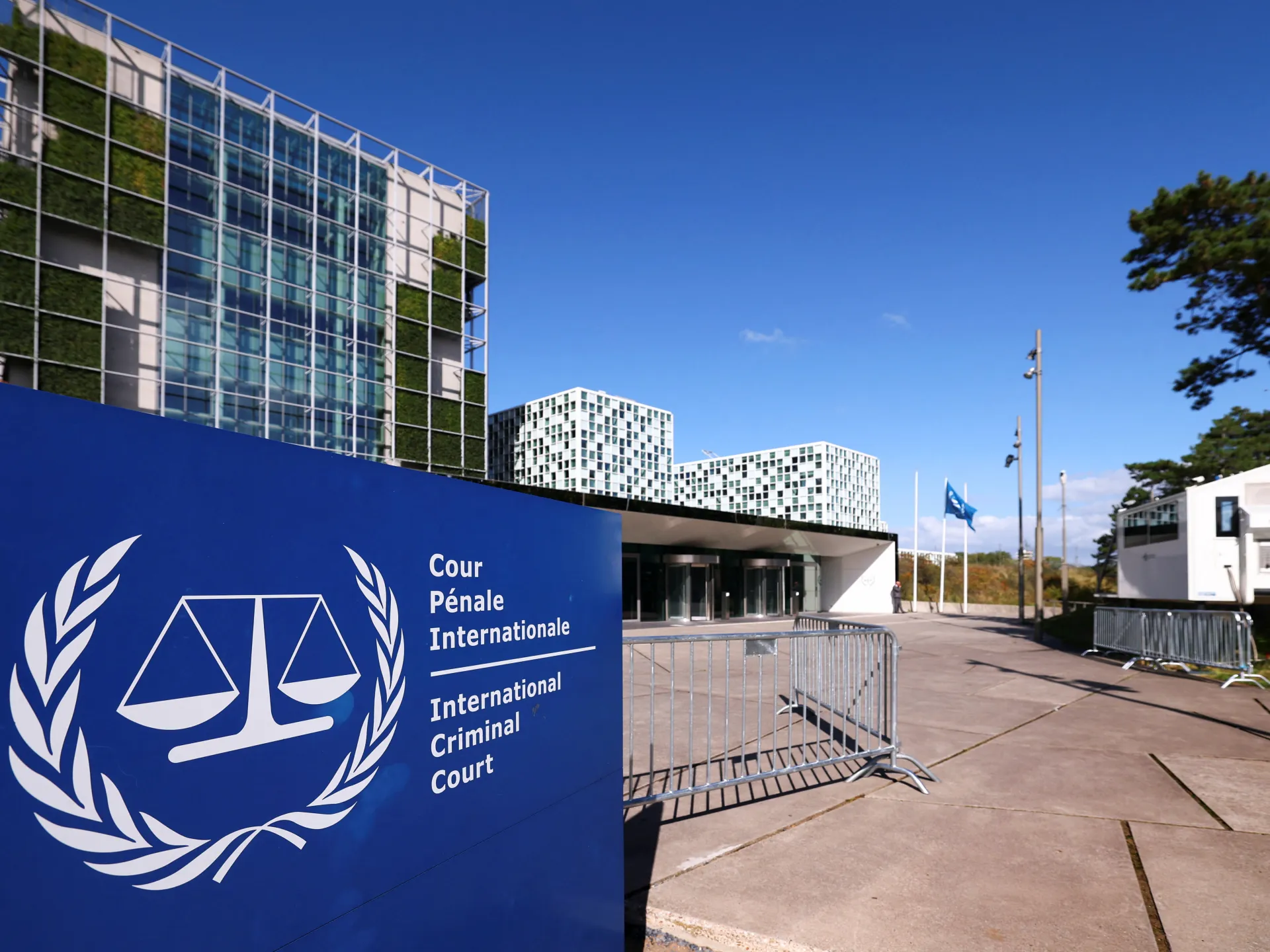
One week ago, several outlets reported on a consequential development in the disciplinary case regarding the alleged sexual misconduct by the International Criminal Court (ICC) prosecutor, Karim Khan. In a confidential report addressed to the Bureau of the Assembly of States Parties (ASP), the judicial experts tasked with assessing the United Nations probe’s factual findings unanimously concluded that no misconduct or breach of duty by Khan could be established under the legal framework.

It is now for the 21 ICC states represented on the bureau to decide whether to uphold or depart from the panel’s legal conclusion. If the bureau were to find misconduct of a less serious nature, it could impose sanctions on Khan. A finding of serious misconduct would lead to a plenary ASP vote on the possible removal.

A minority of bureau members have reportedly been pushing for the judicial experts’ report to be set aside and for the bureau to substitute its own conclusions for those of the panel. This would be a precarious step. We are concerned that it would undermine the quality of subsequent decisions in Khan’s case and seriously damage the integrity of the ICC’s governance framework. It would also raise serious questions about the state parties’ credibility and their commitment to the rule of law in governing the court.

This position is consistent with our unequivocal belief that there must be zero tolerance for sexual and other forms of workplace abuse in any organisation — public or private — especially those dedicated to international justice and the fight against impunity for the most serious crimes, and that accountability for any such abuse is non-negotiable.

At the same time, particularly in politically sensitive cases, strict adherence to due process, the highest standards of decision-making, and the rule of law is of paramount importance to prevent ill-founded decisions, political interference, and abuse of power. These convictions are not in tension. For us, the ends do not justify the means.

It is true that the bureau is not legally bound by the panel’s conclusions: the experts performed an advisory function, and their report is not formally binding. Their mandate was to assist the bureau in reaching a credible and well-founded decision on the legal assessment of the factual findings reached in the UN investigative report.

The question before the panel was strictly legal. It was to give a legal characterisation of facts established by UN investigators. Factual findings are distinct from the allegations or the evidence on which they are based, and, as far as can be judged from media reports, the panel did not cross that line.

Diplomats should refrain from assuming the role of judicial experts at this stage, particularly now that such judicial expert advice has been issued. As a political body, the bureau initially recognised that it was not well-placed to make this legal determination on its own — understandably so, given the risks of politicisation of the process and the diminished credibility of any outcome. It mandated a nonpolitical, quasi-judicial body — a panel of judicial experts with relevant subject-matter expertise and experience — to carry out that assessment. This was a sound decision.

The integrity of the court and of the Rome Statute system is at stake as never before. Given the seriousness and complexity of this matter, it was appropriate that the legal assessment be entrusted to an independent and impartial body of judicial experts. In politically charged contexts, such bodies are best placed to assist political decision-makers in reaching conclusions that are both well-founded and credible – and, as much as possible, insulated from political influence.

This is precisely what the bureau set out to achieve. It developed a novel procedure to be applied to this case and itself chose and appointed the judicial experts. As revealed by The New York Times, the panel was composed of three highly regarded senior judges with impeccable track records and experience serving on the highest national and international courts. Tasked with the legal analysis of the UN investigators’ factual findings, it did the job it was meant to do – where such findings had been made.

But now that the process has run its course and the panel has reached its conclusions after three months of intensive work, some states and rights advocates are ready to ignore them because they disagree with the result. Why pursue a quasi-judicial process in the first place if its outcome can so readily be dismissed?

We are convinced that, given the current stage and the nature of the process that was adopted to get there, the panel’s report should be accorded due deference by the bureau and taken seriously, not dismissed lightly, by ICC states. Should states substitute their own conclusions, however, the outcome would be even more problematic than if no panel had been established in the first place.

Disregarding the report will create the impression that the panel was only needed to assist states in reaching one specific conclusion. Can the impression be avoided then that the judicial expert panel’s report has lost all value in the eyes of assembly officials and bureau states, who had devised and supported this process, once its conclusions proved unwelcome? The spectre of a show trial looms large.

Furthermore, if states disagree with the panel, one must ask: based on what factual findings and based on whose legal analysis? The bureau would need a very solid foundation to depart from the judicial experts’ conclusions. But it can realistically neither conduct a follow-up investigation to collect additional evidence and analysis of facts to resolve the remaining uncertainties, nor engage in their legal consideration de novo.

In our view, dismissing the judicial expert report and substituting the bureau’s own judgement would be deleterious to the rule of law, due process, and the integrity of the legal determination as to the existence or otherwise of misconduct by Prosecutor Khan. It would also undermine the authority of the judicial panel mechanism now codified in the ICC rules for any such situations in the future.

Political decision-making should not be allowed to replace and displace a legal assessment carried out in accordance with the highest standards of judicial competence, independence and impartiality, which the political body itself insisted on upholding.

The implication that legal form was used merely as a cover for arbitrary power would be hard to escape. We fear that this would plunge the ICC system deeper into an already existing crisis, without offering the relief some may hope for. The ICC states know full well that this is a cost they cannot afford, particularly at this juncture.

The views expressed in this article are the authors’ own and do not necessarily reflect Al Jazeera’s editorial stance.


Source link

ICC Chief Prosecutor Khan cleared of sexual misconduct by judges: Report | ICC News

Karim Khan has denied the allegations and took voluntary leave from his position in May.

Judges have cleared the chief prosecutor of the International Criminal Court (ICC), Karim Khan, of all wrongdoing after an investigation into alleged sexual misconduct, Middle East Eye reports.

A report by Middle East Eye published on Saturday said a panel of three judges submitted a confidential report to the court’s oversight body, the Bureau of the Assembly of States Parties (ASP), on March 9.

Recommended Stories

list of 3 itemsend of list

“The Panel is unanimously of the opinion that the factual findings by [The UN’s Office of Internal Oversight Services] OIOS do not establish misconduct or breach of duty under the relevant framework,” the report concluded, according to the sources cited by Middle East Eye.

The OIOS investigation was commissioned by the head of the ASP in November 2024 after a member of Khan’s office accused the prosecutor of sexual misconduct.

In August last year, a second woman came forward and alleged that Khan had abused his power over her while she was working for the British lawyer.

The woman had described his behaviour to UK newspaper The Guardian last year as a “constant onslaught” of advances.

Khan has denied the allegations and took voluntary leave from his position at the ICC in May, while awaiting the inquiry’s results. His deputy prosecutors have been in charge of his office in his absence.

According to Middle East Eye, the ASP met on Monday to discuss its response to the panel’s report. Under the court’s rules, if the bureau determines that no misconduct has occurred, the investigation should be closed.

The ASP has 30 days from receiving the report to make its preliminary assessment of the alleged sexual misconduct. Khan will then have 30 days to respond, and the bureau will have another 30 days to make its decision.

Khan declined to comment on the report, the outlet said.

The allegations of sexual misconduct came as Khan’s office was pursuing an investigation into alleged war crimes and genocide by Israeli officials and forces in Gaza and the occupied Palestinian territory.

Khan sought arrest warrants for Israeli Prime Minister Benjamin Netanyahu and his then-defence minister, Yoav Gallant, over “criminal responsibility” for alleged war crimes and crimes against humanity in Gaza.

He also sought arrest warrants for Russian President Vladimir Putin and other Russian officials over the alleged unlawful deportation of Ukrainian children during Moscow’s ongoing war on Ukraine.

Source link

ICC prosecutor clears U.S. in sanctions against Venezuela case

The International Criminal Court in The Hague, the Netherlands, has cleared the United States of crimes against humanity against Venezuela for sanctions. File Photo by Robin Utrecht/EPA

March 12 (UPI) — The International Criminal Court Office of the Prosecutor announced Thursday that the United States did not commit crimes against humanity with its sanctions against Venezuela.

The investigation, called Venezuela II by the court, was referred to the court by Venezuela’s government in 2020, alleging that sanctions against the country had caused suffering and hardship.

The referral from now-deposed President Nicolas Maduro alleges the suffering of Venezuelans from “the application of unlawful coercive measures adopted unilaterally by the government of the United States of America against Venezuela, at least since the year 2014.”

Venezuela alleged that “murder, extermination, deportation, persecution and other inhumane acts constituting crimes against humanity” were committed, the OTP said.

The ICC prosecutor determined that the “evidential requirements of causation and intent are not met.”

The evidence “must provide a reasonable basis to believe that sanctions by the United States of America led to murder, displacement or other alleged crimes,” the OTP said.

The decision is unrelated to the January 2026 events in Venezuela, the prosecutor noted.

In January, the United States invaded Venezuela, arrested Maduro and his wife and took them to Manhattan, where they await trial on drug trafficking charges.

The ICC prosecutor said it is still investigating “Venezuela I,” a case that doesn’t involve the United States.

Supporters of ousted Venezuela’s President Nicolas Maduro carry his portrait during a rally outside the National Assembly in Caracas, Venezuela, on January 5, 2026. Photo by Jonathan Lanza/UPI | License Photo

Source link

ICC rejects bias claims from stranded South Africa, West Indies cricketers | ICC Men’s T20 World Cup News

Frustrated players say they were left in the dark for days over their travel while England flew out within two days.

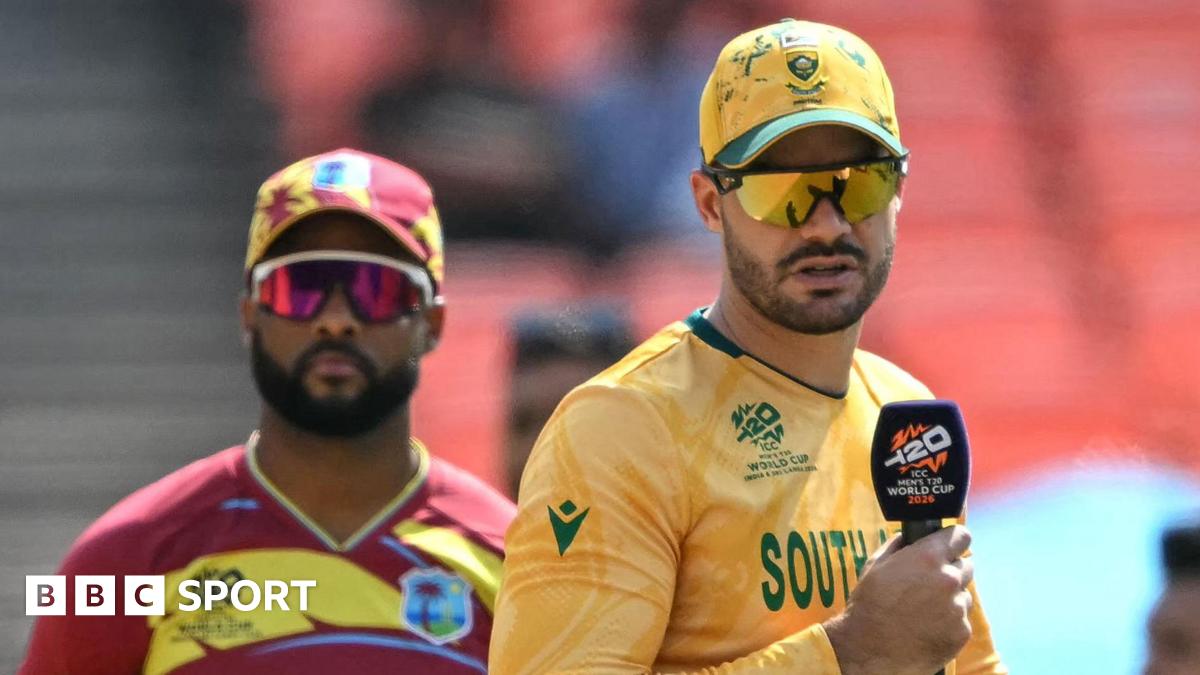
Cricket’s governing body has rejected suggestions of unequal treatment after the West Indies and South Africa squads were stranded in India for more than a week following their exit from the T20 World Cup, while England flew out in less than two days.

The International Cricket Council (ICC) has been accused of giving preferential treatment to one team over the other two amid the travel chaos resulting from airspace closures and rerouted flights because of the war in the Middle East.

Recommended Stories

list of 3 itemsend of list

However, the ICC said on Wednesday it “rejects any suggestion that these decisions have been driven by anything other than safety, feasibility and welfare”.

“We understand that players, coaches, support staff and their families who have completed their ICC Men’s T20 World Cup 2026 campaigns are anxious to return home,” it said in a statement.

Cricket West Indies said on Tuesday its squad had waited nine days for a charter flight that was “repeatedly delayed”, calling the uncertainty “increasingly distressing”.

West Indies ‌players were leaving India on commercial flights in batches 10 days after their scheduled departure, which led to frustrated players airing their thoughts in social media posts.

The ICC said nine West Indies players and staff members were already travelling to the Caribbean, with the remaining 16 booked on flights departing India within 24 hours.

Indian media reported that a charter flight for the West Indies and South ⁠Africa Twenty20 World Cup teams scheduled to fly to Johannesburg before continuing on to Antigua was cancelled earlier on Tuesday.

Meanwhile, South Africa, who have been stranded in ⁠India since March 4, will begin to fly home on Wednesday, with the entire contingent ⁠departing in the next 36 hours, the ICC said.

England flew home ‌less than two days after being beaten in the semifinals, prompting criticism of the ICC from the South African and West Indian camps.

Darren Sammy, head coach of West Indies, began venting his frustration on social media on the fifth day since his team’s exit from the T20 World Cup.

“I just wanna go home,” he wrote on X, followed by another tweet requesting an update after being left in the dark for five days.

Three days after South Africa were knocked out, in the first semifinal, their players Quinton De Kock and David Miller said the team had heard nothing from the ICC regarding their departure while England, who were eliminated a day later in the second semifinal had already left.

“England are leaving before us somehow?! Strange how different teams have more pull than others,” De Kock wrote in an Instagram story.

Miller, commenting on a post announcing England’s departure, said: “It doesn’t take the ICC long to organise England charter. WI have been waiting for 7 days for a charter and SA coming on 4 days now. And yet we still wait.”

The ICC said the criticism was “incorrect” and that there was no comparison between arrangements for South Africa and the West Indies and those made for England, “which arose from separate circumstances, routing options and different travel conditions”.

“Throughout this period, the ICC’s overriding ⁠priority has been the safety and welfare of everyone affected,” the sport’s global governing body said.

“We will not move people until we are satisfied that the travel ‌solution in place is safe, and that commitment will not change.”

Source link

Duterte’s drug war faces judgement at the ICC | Rodrigo Duterte

As world institutions wobble, The Hague has unexpectedly become the stage for a reckoning long denied in the Philippines.

Proceedings at the International Criminal Court (ICC) in late February offered a rare glimpse of accountability at a moment when global norms feel increasingly fragile. The court held a hearing in the case against former Philippine President Rodrigo Duterte to confirm charges for crimes against humanity committed during the so‑called “war on drugs”.

For the families of those killed in the “drug war” watching tearfully from the public gallery, this hearing marked the first real step towards justice after years of violence, denial, and dehumanisation of their loved ones. As a Filipino lawyer and counsel for the victims, Joel Butuyan, told the court, “Truth is the antidote to the virus of impunity.”

A three-judge panel – women from Romania, Mexico and Benin – heard arguments from prosecutors, victims’ counsel, and Duterte’s defence lawyer. Their task was not to determine guilt, but to assess whether there is sufficient evidence for the case against Duterte to proceed to trial.

The case focuses on 49 incidents of alleged murder and attempted murder, involving 78 victims, including children, between November 2011 and March 2019, when the ICC still had jurisdiction over the Philippines. In March 2018, soon after the former ICC prosecutor announced a preliminary inquiry into the situation of the Philippines, Duterte withdrew the Philippines from the court’s membership, which became final one year later.

The case against Duterte covers his tenure as mayor of Davao City, in the southern Philippines, and the period after he was elected president in 2016. The prosecutors emphasised that the specific incidents they focused on represent only a fraction of the thousands of killings attributed to police and hired hitmen during Duterte’s anti-drug campaign.

I sat in the public gallery alongside victims’ families, activists, clergy, journalists, and lawyers who had traveled from the Philippines to witness a moment many never thought possible. Duterte’s supporters were there, too. But Duterte himself was absent as he waived his right to be present. His written statement declared that he did not recognize the court’s jurisdiction and claimed he had been “kidnapped”. His refusal to appear was obviously a disappointment for the victims’ families, hoping to see him in the dock.

Still, his voice echoed through the courtroom. Prosecutors played video after video of Duterte urging police to kill drug suspects and ignore legal restraints. In one chilling 2016 address, he warned: “If I become the president, I will order the military and the police to hunt down the drug lords, the big ones, and kill them.”  Duterte’s lawyer argued that the prosecutors were selective in their approach to the speeches and that they missed critical information that would exonerate Duterte, including references to using force in self-defence.

Human Rights Watch has been reporting on Duterte’s “drug wars” since 2009, when we detailed the operations of the “Davao Death Squad” that targeted street children, petty criminals and drug suspects when Duterte was mayor. A 2017 Human Rights Watch report showed how Duterte’s “drug war” escalated nationwide after he was elected president.

The panel now has 60 days to decide whether the case will proceed to trial. But while the ICC deliberates, drug-related killings in the Philippines continue, though reduced from their peak during the Duterte administration.

Domestic accountability remains woefully inadequate. Nearly 10 years after the nationwide “drug war” began, five cases have resulted in convictions of a total of nine police officers. The vast majority of those responsible, including senior officials, remain untouched.

The political context is also fraught. Sending Duterte to The Hague may have suited the current president, Ferdinand Marcos Jr,  allowing him to distance himself from the bloodiest excesses of his predecessor. But several of Duterte’s alleged co‑perpetrators – senior police officers and officials who helped transplant Davao City’s “neutralisation” strategies to the national stage – still wield influence or have gone into hiding.

The security architecture that enabled the killings within the national police force remains largely intact. With the wrong political signal, the violence could easily surge again.

Marcos now faces a defining choice. He can continue outsourcing justice to the ICC while tolerating a culture of impunity at home. Or he can demonstrate genuine commitment to accountability and the rule of law. Doing so would require a clear, public repudiation of the decade-long police operation underpinning the anti-drug campaign, and an explicit assurance that its methods are no longer acceptable state policy.

Marcos should also empower the Department of Justice to pursue investigations and prosecutions in earnest, and take steps to rejoin the ICC, which would, in turn, help strengthen domestic accountability efforts. Without credible domestic action, promises of reform will ring hollow.

This is a moment of reckoning for the Philippines. Families who have waited years for answers deserve more than political convenience; they deserve justice. Whatever the ICC decides in the coming months, the Philippine government need not – and should not – wait. Ending impunity and honouring the dignity of victims begins at home.

The views expressed in this article are the author’s own and do not necessarily reflect Al Jazeera’s editorial stance.

Source link

T20 World Cup: ICC rejects claims of “bias” over travel issues caused by Iran war

Windies coach Daren Sammy has been vocal on social media throughout the issue. On Thursday he posted “I just wanna go home”. “At least an update, tell us something,” he also said.

After England’s departure was confirmed, South Africa batter Quinton de Kock said “Funny, we have heard nothing! Strange how different teams have more pull than others.”

West Indies, South Africa and England were all scheduled to depart India via the Gulf – a situation made difficult by the Iran war and subsequent air strikes across the region.

England departed via Egypt on Saturday. West Indies and South Africa will finally travel together on a chartered plane on Monday.

“The safety and well-being of players, support staff, officials, and our own workforce remain our absolute priority as we respond to the evolving situation affecting air travel across parts of the Middle East,” the ICC said.

“The current disruption to multiple airspaces has created a highly complex and fast-moving logistical challenge.

“For instance, the England team and their staff were able to fly out from Mumbai without restriction due to the route’s airspace being unaffected and flights operating as usual.

“The ICC categorically refutes any claims of bias in this or other instances, and has been fully accommodating of specific demands and conditions put forth by teams.

“The ICC’s logistics and events teams have been working continuously with governments, aviation authorities, airlines and charter providers to secure safe travel options for all participating teams and tournament personnel.

“Furthermore, they and the ICC chief executive have maintained regular dialogue with the members’ representative ICC directors, board chairs and CEOs to assure all involved of their teams’ safety and the impact of the rapidly-changing situation.”

Source link

India vs New Zealand: T20 World Cup final – ‘No pressure, no fun’ for hosts | ICC Men’s T20 World Cup News

India have a treble of firsts before them in T20 World Cup final vs New Zealand, and the expectations of 1.4 billion fans behind them.

The best way to deal with pressure is to embrace it, India captain ⁠Suryakumar Yadav reminded ⁠his teammates ahead of Sunday’s final of the Twenty20 World Cup at the Narendra Modi Stadium.

India are bidding to become the first team to ⁠retain the T20 World Cup title, to win it on home soil and to win the trophy for a record third time.

Recommended Stories

list of 4 itemsend of list

To achieve all that, they will have to deal with not just a strong New Zealand XI but also the weight of expectation ⁠from a cricket-mad nation of 1.4 billion people.

Leading the team in the final of a home World Cup was a “special feeling”, and Suryakumar said they were looking forward to the challenge.

“There are nerves, butterflies in the stomach, but as I always say – if there’s ‌no pressure, there’s no fun,” Suryakumar told reporters on Saturday.

“I’m very excited. All the boys and support staff, and I’m sure all of India is excited [for the game].”

More than 100,000 predominantly home fans are expected to fill the world’s largest cricket stadium, where Australia famously beat India in the final of the 50-overs World Cup three years ago.

Expectations are mounting again as India also try to become the ⁠first host to win a T20 World Cup.

Suryakumar said they try ⁠not to talk about cricket, and the presence of “characters” like Arshdeep Singh and Axar Patel keeps the dressing room atmosphere light.

“It’s very important to have such characters around, because when the situation is tight, you ⁠need someone to joke around in the bus and in the dressing room, to calm the dressing room,” said Suryakumar.

“We do ⁠not talk about cricket-intense situations because players, like Axar, ⁠Arshdeep, [Jasprit] Bumrah – all these people, they know what to do.

“We want to be very relaxed, be in the present, not think about what will happen in the final.”

Suryakumar said as captain, he had also resisted the ‌temptation to be the “big brother” in the dressing room and encouraged individuality.

“I feel a good team culture is very important. A happy team atmosphere is the key,” he added.

“Give ‌them ‌freedom, listen to their ideas as well about what they feel.

“I think it is very important to understand what everyone wants in the team.”

Source link

India vs New Zealand: Fans hope for World Cup final redemption in Ahmedabad | ICC Men’s T20 World Cup

Mumbai, India – For millions of Indians, the ghosts of a home Cricket World Cup defeat to Australia still haunt their memories two years on from the final in Ahmedabad.

It’s a wound that still stings the cricket-mad nation of at least 1.4 billion people, tens of thousands of whom thronged the world’s largest cricket stadium on 19 November 2023, and millions of others who followed the game elsewhere.

Recommended Stories

list of 4 itemsend of list

But just as the heartbreak of the “cursed day” brought them together two years ago, local fans hope that this Sunday will give them a reason to celebrate as India face New Zealand in the T20 World Cup final at the same venue.

A stunned crowd of more than 90,000 watched in silence as Australia crushed India with a six-wicket victory at the Narendra Modi Stadium, turning the undefeated home side’s crowning moment into a day where thousands of seats had emptied before the final ball was bowled.

The sombre atmosphere was akin to a prophecy come true as, on the eve of the 2023 final, Australia’s captain Pat Cummins famously said: “In sport, there’s nothing more satisfying than hearing a big crowd go silent.”

“The 2023 final defeat is still on our minds,” Sounak Biswas, a 29-year-old fan from Mumbai, told Al Jazeera. “Social media posts calling the Ahmedabad stadium a bad omen keep reinforcing that thought.

“On Sunday, I hope I can forget those bad memories and create happier ones.”

Fireworks explode at the end of the 2023 ICC Men's Cricket World Cup one-day international (ODI) final match between India and Australia at the Narendra Modi Stadium in Ahmedabad.
The last time Ahmedabad’s Narendra Modi Stadium hosted a World Cup final, India ended on the losing side [File: AFP]

Cautious optimism

The collective mood of the country – from fans to experts and the media – is optimistic.

Oddsmakers have given India a 70 percent chance of defeating New Zealand to become the first host nation to retain its title, local media have thrown their weight behind Suryakumar Yadav’s team to cross the final hurdle and cricket chatter has taken centre stage at workplaces, homes and outdoor gatherings.

Come Sunday, fans will throng pubs, roadside cafes and restaurants from Mumbai to Kolkata and Chennai to Chandigarh to catch the action on large screens or their smartphones. While those without internet access will gather outside electronics stores, a pane of glass separating them from the live broadcast playing on the high-end televisions inside.

Then there are those fans who will undertake journeys from all corners of the country to Ahmedabad in order to watch the action from up close and soak in the atmosphere of a World Cup final.

Mumbai-based fan Biswas and his friend Piyush Nathani will join another 30 or so members of the “North Stand Gang” – a hardcore fan group from the Wankhede Stadium – as they carry their support to the neighbouring state.

For Nathani, Sunday’s final will cap an exhilarating journey of watching the monthlong tournament across stadiums in India and Sri Lanka.

Through the ups and downs of Team India’s campaign, he has held on to one small ritual and he won’t change it for the big match.

“I wear the same jersey and pair of trousers for every game,” the 29-year-old said.

Indians watch the live telecast of ICC Men's Cricket World Cup final match between Australia and India on a television displayed at a TV store in Guwahati, India, Sunday, Nov. 19, 2023. (AP Photo/Anupam Nath)
Indians watch the live telecast of the 2023 ICC Men’s Cricket World Cup final match between Australia and India on a television displayed at a TV store in Guwahati, India [File: Anupam Nath/AP]

Squad depth to India’s rescue

India’s route to the final included its fair share of hiccups: the co-hosts didn’t look their strongest against minnows USA in their opening game, fell to South Africa in the next stage and were pushed to the brink by England in the semifinals.

But in their pursuit of victory, a different player stepped up as the team began to falter.

From the ever-reliable pace-bowling star Jasprit Bumrah and versatile all-rounder Hardik Pandya to young wicketkeeper-batter Ishan Kishan and the stunning Sanju Samson, who made a sparkling return to the playing XI, India never fell short of match-winners.

“The Indian team is by far the best in the tournament because of the quality in the squad,” Indian cricketer and TV analyst Aditya Tare told Al Jazeera ahead of the final.

“There were moments when the team was under pressure, but they showed character, picked themselves up from tough situations and finished games off.

“The biggest example of the squad’s depth is Sanju Samson. He didn’t get a spot in the playing XI for a few games, but the moment he got in, he picked up two player of the match awards. That goes to show that India isn’t reliant on just one or two players [to win matches].”

India's Sanju Samson looks to the heavens after India won the T20 World Cup cricket match against West Indies in Kolkata, India, Sunday, March 1, 2026. (AP Photo/Bikas Das)
India’s batter Sanju Samson heads into the final on the back of two consecutive man of the match performances [File: Bikas Das/AP]

‘Pressure is privilege’

Suryakumar’s team will undoubtedly carry the hopes of more than 1.4 billion people at home and millions of Indian diaspora watching elsewhere in the world, with Sunday’s result shaping the mood of the nation the next morning – whether Indians wake up brimming with joy or grappling with another heartbreak.

For some fans, however, that pressure is not a burden but a sign of how deeply the team is loved.

“I think pressure is a privilege,” Aritra Mustafi, a fan from Bengaluru, said of the expectations the team carries. “If 90,000 fans turn up again, and it puts the team under pressure, it’s a privilege [for the players] that so many are supporting them.”

India line up for the national anthems ahead of the ICC Men's T20 World Cup India & Sri Lanka 2026 Semi-Final match between India and England at Wankhede Stadium
After a monthlong tournament, the final hurdle awaits a gritty India side [Prakash Singh/Getty Images]

The venue has been a major part of the discourse in the run-up to the final. The decision to stage another World Cup final at the 132,000-capacity Narendra Modi Stadium instead of the traditional homes of Indian cricket – Mumbai’s Wankhede Stadium or Kolkata’s Eden Gardens – has prompted debate among fans online.

Those who have attended matches there believe the vast stadium gives more supporters a chance to witness India playing for another world title.

“From a fan atmosphere perspective, Gujarat might not be the best place, but stadium-wise it’s pretty good because of the crowd management,” said Mustafi, who attended two matches in Ahmedabad during the 50-over World Cup in 2023. “There are concerns about how such a huge crowd will enter and exit, but during my last visit, I did not face any issues.”

Watching your team lift a trophy on the grandest stage is a dream for many fans, and Hyderabad-based Praketh Reddy is no different.

“I want to experience how it feels to watch India win the World Cup,” he said. “Singing our national song — Vande Mataram — with a 100,000-strong crowd will be incredible. If we win, the post-match celebrations will go on late … I don’t think I’ll make it back to my hotel until about 3am!”

For Biswas, the final also carries a personal significance: it falls a day after his birthday, and a victory would be the sweetest present.

“When the captain of our country lifts the trophy, it will be a dream come true,” he said.

Mumbai's 'North Stand Gang' will be in Ahmedabad doing what they do best: cheer for the team on the top of their voices [Photo courtesy of Sounak Biswas]
Mumbai’s ‘North Stand Gang’ will be in Ahmedabad doing what they do best: cheer for the team at the top of their voices [Courtesy of Sounak Biswas]

Source link

India beat England to reach T20 World Cup final as Sanju stars again | ICC Men’s T20 World Cup News

Sanju Samson hit 89 for India as they posted 253-6 and beat England by 7 runs in second semifinal of cricket’s 2026 T20 World Cup.

Defending champions India edged one of the all-time great T20 World Cup matches to beat England by seven runs in their semifinal in Mumbai.

Sanju Samson appeared to put the tournament co-hosts in a near-unassailable position with a total of 253-6 on Thursday, but a century for Jacob Bethell put England on the verge of a historic run chase.

Recommended Stories

list of 4 itemsend of list

Having found themselves 64-3 inside the powerplay, England were looking down the barrel of a heavy defeat at Wankhede Stadium.

A cameo of 17 from 5 balls by Tom Banton ignited the chase, however, and Will Jacks’s 35 from 20 aided matter in a partnership of 77 in 6.3 overs with Bethell.

When the latter fell – run out in the final over – with 105 from 48 balls, the game was up and India were on their way to the final as England finished on 246-7

Suryakumar Yadav’s side will now seek a record third T20 World Cup title when they take on New Zealand on Sunday.

Earlier, England decided to field upon winning the toss, but saw Samson’s scintillating 89 off 42 balls lay the platform for India to pile up a massive total.

The in-form opener, who made 97 not out against the West Indies in the previous match, hit seven sixes and eight fours to thrill a raucous home crowd.

The hosts flayed England’s attack to all parts of the ground, hitting 19 sixes and 18 fours, meaning Harry Brook’s side needed a T20 World Cup record chase of 254 to reach the final.

Samson signalled his intent with a four and six off Jofra Archer’s first over after Brook won the toss and decided to bowl.

Jacks took the second over and struck a blow for England when Abhishek Sharma (9) lifted the off-spinner to Phil Salt at deep mid-wicket.

Samson was given a life on 15 when Brook dropped a simple chance at mid-off off Archer.

It proved a costly mistake as, helped by some ill-disciplined bowling, Samson raced to his half-century off 26 balls with another huge six as Liam Dawson’s first over was pummelled for 19 runs.

Ishan Kishan put on 97 from 48 balls with Samson for the second wicket before the left-hander holed out to Jacks off Adil Rashid in the 10th over to make it 117-2.

Samson powered on until Jacks returned to have him caught by Salt in the deep in the 14th over, at which point India were 160-3.

Shivam Dube continued the onslaught with 43 off 25 balls with four sixes before being run out by Brook’s direct hit.

Hardik Pandya hit 27 off 12 balls late on and Tilak Varma 21 off seven balls to take India past the 250 mark.

Jacks was the pick of the England bowlers with 2-40 but the wayward Archer was plundered, taking 1-61 off his four overs.

New Zealand beat South Africa in a comprehensive victory on Wednesday and await in Sunday’s final in Ahmedabad.

Source link

New Zealand annihilate South Africa to reach T20 World Cup final | ICC Men’s T20 World Cup News

Finn Allen hits fastest century at a T20 World Cup as New Zealand crush South Africa by nine wickets to reach final.

New ⁠Zealand stormed into the Twenty20 World Cup final ⁠with a nine-wicket demolition of South Africa in ⁠the first semifinal at the Eden Gardens.

Put into bat, South Africa recovered ‌from a precarious 77-5 to post a competitive 169-8 after Marco Jansen led their recovery with a belligerent 55 not ⁠out.

Recommended Stories

list of 4 itemsend of list

Finn Allen smashed an ⁠unbeaten 100 off 33 balls, however, and shared a 117-run ⁠opening stand with Tim Seifert (58) as ⁠New Zealand romped ⁠to their target in only 12.5 overs.

Allen’s achievement was the fastest century scored at a T20 World Cup.

“We wanted to start well and put them on the back foot early,” Allen said. “It is easy for me when Tim [Seifert] is going like that. The way he batted got us off to an absolute flyer.

“It is easy in semifinals to stay up for the fight and with Tim [Seifert] we keep each other in it, and we enjoy it out there together.”

Earlier Jansen’s fifty came in response to Kiwis spinners Rachin Ravindra and Cole McConchie took two wickets each before Tristan Stubbs and Jansen put on 73 to rescue the innings at Kolkata’s Eden Gardens.

Stubbs (29) and Jansen, who hit two fours and five sixes in his 30-ball knock, helped set New Zealand a target of 170 to reach the final.

India successfully chased 196 against the West Indies on Sunday on the same ground.

South Africa were the only unbeaten team in the tournament, while New Zealand had edged into the semifinals on net run-rate.

McConchie struck first in the second over with his off-spin to send back Quinton De Kock for 10 and Ryan Rickelton next ball, but Dewald Brevis avoided the hat-trick.

Aiden Markram was reprieved on three when Ravindra dropped him at midwicket off pace bowler Lockie Ferguson.

Left-arm spinner Ravindra made amends when he had the South Africa captain caught in the deep by Daryl Mitchell for 18.

David Miller was dropped on three by Glenn Phillips but fell for six to Ravindra five balls later, with Mitchell again taking the catch at long-on.

South Africa had lost half their side in 10.2 overs when Jimmy Neesham cut short Brevis’s knock on 34.

Ferguson bowled Stubbs but Jansen hit him for six to reach his fifty.

Pace bowler Matt Henry, who arrived back only on Tuesday night after going home for the birth of his child, took 2-34.

The bowling figures for South Africa will be ones to quickly forget, as the figures to focus on – and the moment to remember – belonged to Allen.

“You take the positives from this game, celebrate little moments of success,” Allen added “Then we have a final to play on Sunday and we look forward to that.”

Defending champions India take on ‌twice champions England in the second semi-final in Mumbai ‌on ‌Thursday, ahead of Sunday’s final.

Source link

T20 World Cup semifinal: Unbeaten South Africa ‘fresh’ for New Zealand | ICC Men’s T20 World Cup News

South Africa captain Aiden Markram says his team’s win over New Zealand in the group phase will count for nothing in the T20 World Cup semifinal, which will be a “completely fresh start”.

The two teams clash at Kolkata’s Eden Gardens in the first semifinal on Wednesday, with both having never lifted a cricket World Cup in either the 20-over or 50-over formats.

Recommended Stories

list of 4 itemsend of list

South Africa are the only unbeaten side in the last four, and are trying to rid themselves of a reputation for choking in the final stages at World Cups.

They have been the team to beat in this edition and got the better of New Zealand by seven wickets in a group game in Ahmedabad on February 15.

“We had a good run against them in the group stages, but both teams have played a lot of cricket since then,” Markram told reporters on Tuesday.

“It’s a completely fresh start [on Wednesday] and it being a semifinal, which is exciting as well.

“I don’t think it’s as straightforward as just being able to repeat that. We’ll try to bring our best game to the front again.”

South Africa suffered a heartbreaking defeat in the 2024 T20 World Cup final against India in Barbados, when they needed 30 off 30 balls with six wickets and lost by seven runs after a clatter of wickets.

The Proteas beat India and the West Indies in the Super Eight to have many marking them down as the favourites to lift the trophy.

“With regards to being favourites or not, that’s all different people’s opinions,” said Markram.

“Us as a team really just try to focus on putting good games of cricket together and playing that exciting brand that we’ve been trying to play for the last 18 months or so.”

Markram has led South Africa from the front with 268 runs, including three half-centuries and a top score of 86 not out in seven matches.

He holds an impressive captaincy record of 15 wins in 16 T20 World Cup matches, with the only defeat in the 2024 final.

“The senior guys in the team, we lean on them a lot. They help guide you and lead you when you have a few doubts,” said Markram.

“I think because of that and a really strong group of players over the years, we’ve developed that. Fortunately, it reflects well, but it’s definitely a reflection on the group as a whole.”

New Zealand ‘back themselves’ as outsiders for T20 World Cup

Underdogs New Zealand, meanwhile, back themselves against anyone in “one-off games”, according to captain Mitchell Santner.

Santner admitted that Markram’s unbeaten South Africa were “very good”.

New Zealand have lost twice at this edition, also falling to England in the Super Eight, and squeaked into the semifinals on net run-rate ahead of Pakistan.

“Whether you want to call us the underdogs or not, I think for us it is everyone’s goal throughout the tournament to get to this stage,” Santner told reporters at Eden Gardens.

“We are here now, and we back ourselves on one-off games against most teams, being able to adapt as quick as we can to what’s in front of us.

“South Africa look like a very good outfit as they have shown.

“I guess they are in the same boat as us now, it is one game, and you are into the final,” said the left-arm spinner.

New Zealand will be playing their fourth semi-final in the last five T20 World Cups. They reached the final in 2021 but lost to Australia.

“It is probably two teams that have been in and around it for a long time. We know the heartbreak of South Africa two years ago,” Santner added.

“It is whoever turns up on the day, whoever sees the conditions the best.”

New Zealand are the only semifinalist to lose more than once in the tournament and defeated only two Test-playing nations on the way to the last four – Afghanistan and cohosts Sri Lanka.

“We haven’t played the perfect game throughout this tournament,” said Santner.

“That’s a good thing for us. If we can put it all together, it can put us in a pretty good position.

“There is no real hiding or secrets about what South Africa are going to bring.

“We know they are probably going to roll out the same team and a very good team.”

New Zealand fast bowler Matt Henry returned home for the birth of his second child after the defeat to England in Colombo on Friday.

Santner said the bowler would arrive back later Tuesday night.

“He’ll obviously have a little run around in the morning to see if he’s ready to go.”

Source link