ICBM

Russia Plans To Deploy Sarmat ICBM Operationally Later This Year

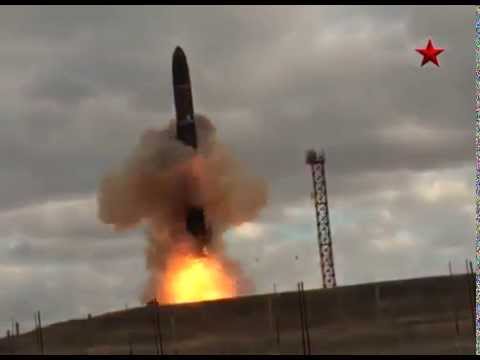
Russia has announced a successful test of its long-delayed Sarmat intercontinental ballistic missile (ICBM), which President Vladimir Putin now says will be operationally deployed later this year. The weapon, developed to deliver multiple nuclear warheads over great distances, has had a very mixed track record of testing so far, and was once planned to be fielded in 2020. All this makes today’s announcements more significant, although they have yet to be independently verified.

The test-launch from the Plesetsk Cosmodrome in the Arkhangelsk region took place at 11:15 a.m. Moscow time today, according to the Kremlin. Around half an hour later, Russian officials said that the missile hit its target at the Kura test range on the Kamchatka Peninsula in Russia’s Far East.

🚀🇷🇺 Russia announced it has conducted a successful test launch of its RS-28 Sarmat intercontinental ballistic missile (ICBM) on Tuesday.

Russian President Putin said that the Sarmat is set to enter service within the Strategic Missile Forces by the end of 2026 (in 2021-2022,… pic.twitter.com/uX8cNeUZTt

— Status-6 (War & Military News) (@Archer83Able) May 12, 2026

The commander of the Strategic Rocket Forces, Sergei Karakayev, informed Putin of the successful test. The Russian leader monitored the launch via video link from his office bunker.

Putin called the test a “major event and unconditional success.”

“The positive results of the Sarmat missile system launch will allow us to deploy the first missile regiment armed with this missile system to combat duty in the Uzhur formation of Krasnoyarsk Krai by the end of this year,” he added, referring to the 62nd Red Banner Rocket Division at Uzhur in Siberia.  

Putin says the missile’s range could exceed 35,000 kilometers (21,748 miles).

Apparently, Russia managed a successful test-launch of its much-delayed new ICBM, Sarmat (RS-28, SS-29). A Russian MOD video allegedly shows the launch: https://t.co/V5fyAoYdnG (h/t to @krakek1 for first post).

Check back tomorrow for our new Russian Nuclear Notebook. pic.twitter.com/9QDn3KMl4m

— Hans Kristensen (also on Bluesky) (@nukestrat) May 12, 2026

The RS-28 Sarmat, known to NATO by the codename SS-29 Satan II, is Russia’s new-generation heavy ICBM, intended to replace the Soviet-era R-36M2 system (SS-18 Satan).

A video shows the launch of the R-36M2 ICBM (SS-18 Satan):

Russian Intercontinental ballistic missile SS-18 Satan R36M2 Voevoda thumbnail

Russian Intercontinental ballistic missile SS-18 Satan R36M2 Voevoda


The Sarmat is a silo-launched, liquid-fueled, nuclear-armed ICBM. The missile will reportedly have a host of capabilities intended to defeat ballistic missile defenses, ranging from decoys and other countermeasures to a fractional orbital bombardment capability, and independent post-boost vehicles (IPBV). There have even been suggestions that it could carry a payload of multiple hypersonic boost-glide vehicles.

While these features are all relatively novel, the fact that the Sarmat is liquid-fueled might seem like something of a throwback to the Cold War. However, as we have discussed in the past, it does bring certain benefits:

A liquid-fueled ICBM might seem somewhat dated, but it does offer the advantage of a more capable and dynamic propulsion arrangement. But unlike a solid fuel design, it has historically been difficult to keep these types of missiles in a fueled state indefinitely, often meaning that launch crews had to go through a lengthy process of fueling the weapon shortly before launch. However, a hydrazine-based liquid rocket fuel with nitrogen tetroxide (NTO) as the oxidizer provides a more stable, less corrosive option that allows for long-term storage of missiles in a fueled, ready state when combined with the right component materials and environmental controls.

Details of the missile were presented by Putin back in 2018, at the same time he unveiled several previously unknown strategic weapons systems.

An official video of the Sarmat released by the Russian Ministry of Defense in 2018:

Ракетный комплекс «Сармат» thumbnail

Ракетный комплекс «Сармат»


The first successful test launch of the Sarmat took place in 2022, also from Plesetsk. However, it was followed by a failed test launch in February 2023. A further test in September 2024 was also unsuccessful, leading to the destruction of the Yubileynaya test silo at Plesetsk. 

The original plan was for the Sarmat to become operational in 2020, something that obviously did not come to pass.

Exactly what has caused the problems is unclear. The delays could be due to technical issues with the missile, Russia’s sluggish economy, or, very likely, a combination of factors. 

Indeed, there were delays in the development of the Sarmat even before Russia launched its all-out invasion of Ukraine in February 2022, which has led to international sanctions and other strains on the country’s defense industrial base.

A pool photograph distributed by the Russian state agency Sputnik, showing President Putin holding a videolinked meeting with the missile forces commander, Sergei Karakayev, on the successful test launch of the Sarmat ICBM, in Moscow on May 12, 2026. Photo by Mikhail METZEL / POOL / AFP

On the other hand, the slow progress made by the Sarmat so far means that it will now enter service after the demise of the New START Treaty, which expired in 2021.

New START had placed hard limits on the number of deployed and non-deployed land-based ICBMs, total available launch tubes for submarine-launched ballistic missiles (SLBMs), and nuclear-capable heavy bombers that Russia and the United States could have in total. The agreement also set a firm limit on total deployed and non-deployed systems.

With those limits now gone, Russia will be able to replace the R-36M with Sarmat on a one-for-one basis, while still maintaining its other ICBMs if it desires, and moving ahead with other strategic weapons modernization programs, including the Avangard nuclear-armed hypersonic boost-glide vehicle.

A video released in conjunction with the fielding of the Avangard missile complex at the Dombarovsky Strategic Rocket Forces base:

Ракетный комплекс «Авангард» thumbnail

Ракетный комплекс «Авангард»


Even under New START regulations, Russia had fewer than 520 deployed “launchers” as of September 2018, with the treaty allowing for a maximum of 700 such systems. These “launchers” in this context comprise land-based ICBMs, SLBM launch tubes, and heavy bombers.

Meanwhile, the lifting of New START limits on America’s nuclear arsenal means that, at this point, it is unclear whether or not the new LGM-35A Sentinel ICBMs will carry multiple warheads. Like the Sarmat, the Sentinel has faced issues, chief among them major delays and spiraling costs, driven heavily by complexities associated with building new infrastructure. Regardless, the ongoing development of the Sentinel in the United States is also spurring work on the Sarmat program.

At this stage, it remains to be seen whether the apparent success of the test today allows the Sarmat to enter service before the end of the year. So far, its test history has been distinctly patchy. If the missile can be perfected, however, it could pave the way for Russia to deploy even more strategic missiles in the future, with the potential for triggering a new arms race.

Contact the author: thomas@thewarzone.com
Thomas is a defense writer and editor with over 20 years of experience covering military aerospace topics and conflicts. He’s written a number of books, edited many more, and has contributed to many of the world’s leading aviation publications. Before joining The War Zone in 2020, he was the editor of AirForces Monthly.


Source link

What Is Behind Turkey’s Pursuit Of An ICBM?

In a surprising development this week, Turkey unveiled a model of a previously unknown intercontinental ballistic missile (ICBM), named Yildirimhan (Turkish for lightning). In recent years, Turkey’s defense industries have been pumping out a remarkably wide range of weapons, including multiple missiles and drones, but the apparent plans to field a weapon in this class are something new.

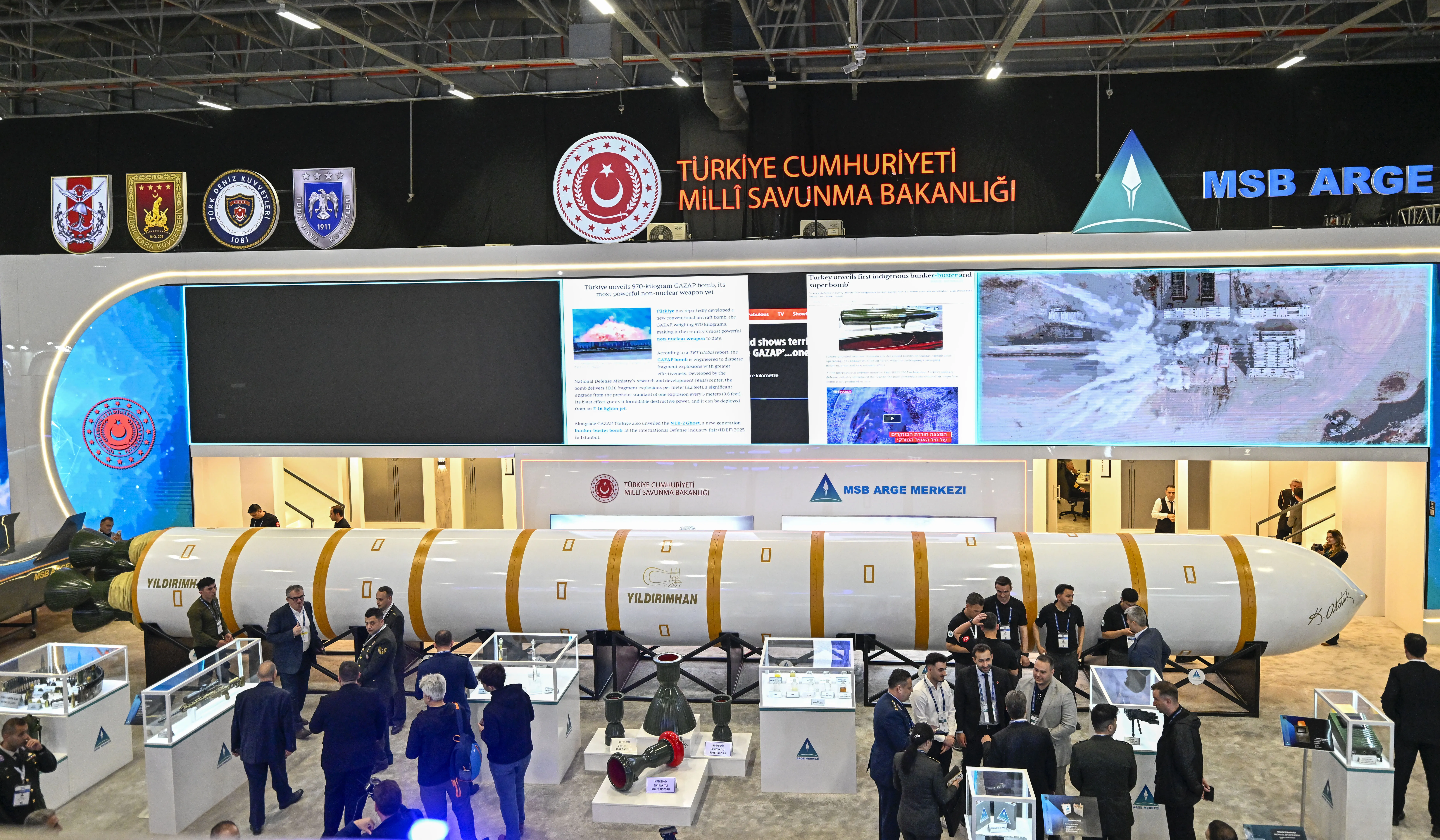
The full-size Yildirimhan model was first shown publicly this week at the SAHA 2026 International Defense and Aerospace Exhibition in Istanbul, where it gained much attention. The program was presented by Turkish Minister of Defense Yasar Guler and is said to have been in development for around a decade.

ISTANBUL, TURKIYE - MAY 05: Intercontinental ballistic missile Yildirimhan is showcased as the centerpiece of the Turkish National Ministry stand during the SAHA 2026 International Defense, Aerospace, and Space Industry Fair in Istanbul on May 5, 2026. (Photo by Muhammed Enes Yildirim/Anadolu via Getty Images)
The Yildirimhan ICBM model is showcased as the centerpiece of the Turkish National Ministry stand during the SAHA 2026 International Defense, Aerospace, and Space Industry Fair in Istanbul on May 5, 2026. Photo by Muhammed Enes Yildirim/Anadolu via Getty Images

The Yildirimhan is a conventionally armed non-tactical longer-range ballistic missile, which is itself a somewhat novel concept, albeit one that we have discussed in the past, in relation to China, Israel, and Russia.

The missile is planned to have a range of 6,000 kilometers (3,728 miles), which puts it just into the ICBM category. Missiles in this class are considered to have a range of over 5,500 kilometers, and most can reach considerably further.

The Yildirimhan is powered by four rocket engines and uses only a single stage, which is also unusual. It may be a measure of technological limitations, since Turkey hasn’t previously embarked on a missile that can fly this far.

ISTANBUL, TURKIYE - MAY 05: Turkiye's first intercontinental ballistic missile YILDIRIMHAN is introduced within the SAHA 2026 International Defense, Aerospace and Space Industry Fair at Istanbul Expo Center in Istanbul, Turkiye on May 05, 2026. (Photo by Muhammed Enes Yildirim/Anadolu via Getty Images)
The rear of the intercontinental ballistic missile model reveals its four motors. Photo by Muhammed Enes Yildirim/Anadolu via Getty Images

The Turkish Ministry of Defense says the Yildirimhan will be road-mobile — as seen in the accompanying video, embedded below — and will be able to carry a very large warhead weighing 3,000 kilograms (around 6,600 pounds). It will be liquid-fueled, powered by a combination of nitrogen tetroxide and hydrazine.

🛡️ MSB ARGE tarafından geliştirilen 6000 km menzilli YILDIRIMHAN kıtalararası balistik füze (ICBM) projesine ait animasyon görüntüleri ilk kez kamuoyu ile paylaşıldı.#SAHA2026 pic.twitter.com/t2xqoEX9AQ

— SavunmaTR (@SavunmaTR) May 5, 2026

This means the ICBM would have to be fueled before launch. As a result, its response time would be reduced compared to a solid-fuel weapon. This would also make the missile far more vulnerable to preemptive strikes and more complicated to handle.

At this stage, there are no details about the timelines for the potential introduction of the Yildirimhan to service, although Turkish media reports claim that production of the fuel and development of the warheads are already underway.

Notably, of the NATO nations in Europe, only Turkey currently fields a conventional ground-launched missile with a range of more than 300 kilometers (186 miles) — the locally developed Tayfun (previously Bora-2) short-range ballistic missile (SRBM).

In the past, Turkish President Recep Tayyip Erdogan called for Turkey to field missiles with ranges beyond 2,000 kilometers (1,243 miles), reflecting concerns about growing regional threats.

“As Turkey, we are located in a geography of high strategic importance, located in the heart of three continents, where global arm wrestling is never lacking … the first condition for survival in such a geography is deterrence,” Erdogan said at the time.

As we have discussed in the past, Turkey unveiled its Tayfun Block IV missile in 2025. This is the largest and heaviest member of the shorter-range Bora/Tayfun weapon family and is considered likely to have a range of around 1,000 kilometers (621 miles). A test firing apparently occurred in the fourth quarter of 2025.

RIZE, TURKIYE - DECEMBER 11: Turkiye's longest-range ballistic missile, TAYFUN, which is currently in mass production and delivery, is seen after the new test launch in Rize, Turkiye on December 11, 2025. Testing continues on various variants of Turkiye's domestically produced ballistic missile, TAYFUN. (Photo by Fikret Delal/Anadolu via Getty Images)
In December 2025, Turkey test-fired what it said was its longest-range ballistic missile, thought to be the Tayfun Block IV. Photo by Fikret Delal/Anadolu via Getty Images

“The Tayfun Block IV achieves long ranges, setting another record for the Turkish defense industry,” manufacturer Roketsan said in a statement at the time, according to Turkey’s state-run Anadolu Agency news outlet. Roketsan added that it “will be capable of destroying numerous strategic targets, such as air defense systems, command and control centers, military hangars, and critical military facilities.”

Furthermore, Turkey has been working on a medium-range ballistic missile (MRBM), known as Cenk, with a range of 2,000 kilometers, which would meet the ambition set out by Erdogan. In the past, there has been speculation that Cenk could be a further development of the Bora/Tayfun family, which should make development more straightforward, although the precise relationship between these weapons remains unclear. Like the Yildirimhan, Cenk could also be an all-new design.

The Cenk MRBM would already put most of Turkey’s potential adversaries within range. Even the Tayfun Block IV has the reach to strike anywhere in the eastern Mediterranean and deep into the Middle East.

As it stands, Turkey has developed its strike capabilities primarily to counter its regional rival, Greece, while it has also reportedly used short-range ballistic missiles against Kurdish militants in Iraq in the past. Of course, neither of these threats requires an ICBM.

There is also the fact that Turkey has limited means of testing a missile with a range of 6,000 kilometers. Turkey’s primary missile-test range is on the Black Sea, but the distance from east to west is under 1,000 kilometers. This would require longer-range missiles to be launched on a steep parabolic trajectory, something that North Korea has repeatedly done for its missile tests.

However, there has been talk of developing a spaceport in conjunction with Somalia, which could provide a solution to this problem, offering the potential to launch ballistic missiles — as well as space launch vehicles — far out into the Indian Ocean.  

Unlike the earlier Bora/Tayfun family, which utilizes aero-ballistic trajectories, within the atmosphere, the MRBM and ICBM would complete much of their flight in the exo-atmospheric regime. As well as enhanced performance, larger missiles like the Cenk and Yildirimhan also introduce the option of carrying larger or multiple warheads and potentially decoys and other countermeasures against anti-missile defenses.

All of this poses a greater technological challenge, but it’s clearly one that Turkey is now grappling with.

Over the past quarter-century, Turkey has rapidly expanded its missile industry to encompass both ballistic and cruise systems, many of which have since entered service with the Turkish Armed Forces. Some of these weapons have also been offered for export, where the Turkish defense sector has profited from the fact that its products are free from the restrictions imposed by the U.S. International Traffic in Arms Regulations (ITAR) guidelines. ITAR serves to limit the transfer of defense and military technologies and services — especially the more sensitive ones — to certain countries. There is an argument that bringing a conventionally armed ICBM to the export market might be considered logical, albeit potentially geopolitically disruptive, in this context.

ISTANBUL, TURKIYE - MAY 05: The 'YILDIRIMHAN' intercontinental hypersonic ballistic missile, developed by the Turkish National Defense Ministry R&D Center, is showcased for the first time at the SAHA 2026 International Defence, Aerospace and Space Industry Exhibition in Istanbul, Turkiye, on May 05, 2026. (Photo by Ali Atmaca/Anadolu via Getty Images)

On the other hand, Turkey is a member of the Missile Technology Control Regime (MTCR) arms control bloc, an arrangement that puts severe restrictions on the export of missiles that can carry payloads of more than 1,100 pounds to distances of more than 190 miles. This would rule out exports of the Yildirimhan, unless Ankara were to walk away from MTCR.

Most likely, therefore, is that Turkey is looking to field the Yildirimhan to extend the reach and firepower of its own conventional deterrent, allowing it to hold at risk targets as far away as Beijing.

As planned, the ICBM also carries a very heavy warhead that would have a significant bunker-busting effect, as well as being able to take out certain area targets. At the same time, interest is growing in having a strategic conventional ballistic missile deterrent to go against a nuclear foe, a concept that Iran has adopted.

There are, so far, no indications that Turkey might be seeking to develop nuclear warheads, with Ankara having relied on NATO’s collective defense and U.S. nuclear guarantees ever since the Cold War. However, the new ICBM would provide a potential stepping stone to such a capability, were priorities to change. This is a reality that has been identified in the case of South Korea and its ballistic missile developments.

It should also be noted that Turkey has a track record of developing high-end defense products as flagships of the country’s military aerospace capacity and as points of pride for the nation as a whole. The TF Kaan new-generation fighter is a prime example of this trend.

The TF Kaan is the latest and most impressive expression of Turkey’s increasingly ambitious military aerospace industry. via X

Regardless of the utility of an ICBM to Turkey, the political leadership in Ankara has consistently supported its missile sector, including promoting increasingly longer-range weapons. With that in mind, the Yildirimhan represents the latest outcome of a wider research-and-development effort, and one that reflects the country’s aim to strengthen its conventional deep-strike deterrence.

Contact the author: thomas@thewarzone.com

Thomas is a defense writer and editor with over 20 years of experience covering military aerospace topics and conflicts. He’s written a number of books, edited many more, and has contributed to many of the world’s leading aviation publications. Before joining The War Zone in 2020, he was the editor of AirForces Monthly.


Source link