Most UK holidaymakers still consult and trust their family and friends’ recommendations over AI for travel advice

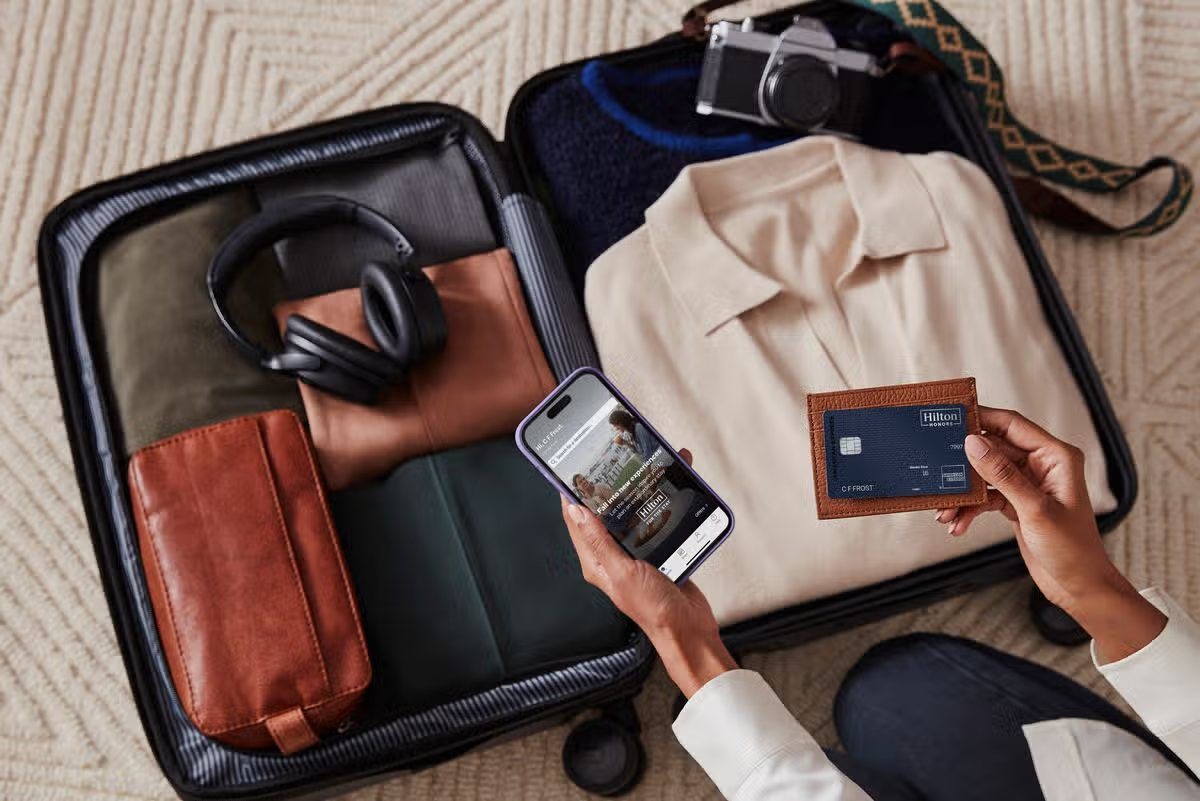
Three-quarters of Brits said having a holiday booked gives them a ‘sense of purpose’(Image: Hilton)
A landmark study of 14,000 travellers from countries including the UK and Australia found that in the UK, family (84%) and friends (81%) trumped AI (45%) for travel tips and holiday hotspots.
Just one in 10 rely on influencers for travel advice – highlighting ‘The Travel Trust Equation’ will be a strong theme emerging for 2027. Artificial intelligence is seen to be transforming the way we travel, but it hasn’t quite replaced the human touch. It also revealed they are set to prioritise things like balance, flexibility and trips that leave a lasting impact.
Of the 1,000 Brits surveyed as part of the Hilton 2027 Trends Report, The Great Rebalance, three-quarters said having a holiday booked gives them a ‘sense of purpose’.
This reflects ‘The Beforeglow’, with booking a trip giving people a much-needed psychological boost and offering them a sense of excitement, motivation and escape weeks, or even months, ahead of departure. More than a quarter (27%) also seek a new perspective through travel, which changes how they view everyday life when they get back home.
Simon Vincent CBE, executive vice president and president, EMEA, Hilton, said: “Travellers are increasingly focused on making their time away count. Rather than chasing a one-size-fits-all idea of the perfect trip, they’re looking for experiences that reflect their own interests and priorities.
“Our job is to help guests make the most of every trip; whether they’re exploring a new destination, reconnecting with loved ones, taking time to switch off – or even a little bit of everything.”
The study also found 60% of all Brits claimed having a holiday booked helps them stick to personal goals, while 53% use them to mark important life moments, meaning travellers are well into their ‘Optimisation Era’.
But 28% of Gen Z travellers see holidays as a chance to kick-start a healthier lifestyle, whereas 63% are more likely to make a significant life change after returning home from their travels.
Nearly three quarters of this generation (74%) also feel motivated to stick to personal goals knowing a holiday is on the cards, and 32% regarded maintaining their fitness routine while away as ‘non-negotiable’.
But the Morning Consult research found 29% of younger travellers feel pressure to plan the ‘right’ kind of trip – compared with just 6% of 62-80-year-olds, showing a rise in ‘Boomer Goals’.
Only 18% of this older generation stick to a strict itinerary, compared with 41% of Gen Z, with 53% of Boomers favoured a spontaneous approach instead. And 72% never feel pressure when making travel decisions, compared with only 27% of Gen Z.
Travel loyalty is emerging as another status symbol among younger holidaymakers, with 27% of Gen Z belonging to a points or miles programme.
The rise of ‘Status Seekers’ suggests travel loyalty programmes have entered a new era, where status matters as much as savings.
With 37% even admitting to feeling jealous of friends with a higher travel status, as 41% see that status as a sign of personal success.
A further 58% of 18-to-29-year-olds believed people with elite travel status have greater influence over group travel decisions.
Where travellers stay is changing too, as gardens were named as an accommodation ‘must-have’ by 40% of Brits, placing them ahead of hotel pools at 33%.
Fresh air and time outdoors were key to holiday relaxation (76%), while 47% will use travel to spend more time immersed in settings such as forests, mountains and coastlines.
UK adults are also reconsidering the traditional big annual getaway in favour of shorter, more flexible breaks, with 65% planning to take more short trips over the next year.
Among these “micro-travellers”, 35% want to tick more destinations off their travel lists, and 26% value the spontaneity offered by shorter breaks.
A further 56% will plan a micro-trip around one standout experience, rising to 74% of Gen Z travellers.
Simon Vincent added: “With a portfolio spanning everything from luxury retreats and city-centre collection hotels to family-friendly resorts and extended-stay brands, we offer travellers the choice and flexibility to find the experiences that are right for them.”
Seven travel trends for 2027
- The Travel Trust Equation – AI may be transforming travel, but it hasn’t replaced the human touch.
- Status Seekers – Travel loyalty programmes have entered a new era: where status matters as much as savings.
- Boomer goals – In contrast to the younger generation’s optimisation obsession, Boomers are making a compelling case for doing less.
- The Beforeglow – Booking a trip is giving people a much-needed psychological lift, offering a sense of excitement, motivation and escape weeks, or even months, ahead of departure.
- Optimisation Era – Self-optimisation culture continues as travellers will see time away as an opportunity to return home levelled-up.
- Wellness Rewired – Nature is the new must-have, with outdoor spaces now valued more than hotel pools.
- The Micro-Travel Mindset – More Brits are swapping one big annual holiday for a series of shorter, experience-led escapes throughout the year