Hugo

Hugo Chávez: Truth as a Form of Struggle

Chávez never shied away from self-criticism and taking responsibility for his actions. (Archive)

In these times when it is once again fashionable to accuse Commander Chávez of mistakes, whether real or imagined. As we mark 13 years since his untimely death on March 5, 2013, I would like to highlight the value of truth in his political actions. Truth was manifest in the responsibility he assumed for his actions; the consistency between his words and deeds; the acknowledgment of his own mistakes, when it is easier for most people to point out the mistakes of others; and his sincere efforts to correct them. To the above, I would add that when he had to make tactical and strategic shifts in the course initially set, Chávez always had the political honesty to explain in detail why he was doing so, and he courageously took responsibility for them before the people.

There are countless examples which can be found in many of his speeches. I will mention just a few. Beginning with the day of his introduction to the Venezuelan people, February 4, 1992: “Unfortunately, for now, the objectives we set for ourselves were not achieved in the capital city, that is, we here in Caracas did not manage to control power… And I, before the country and before you, take responsibility…” Then in the streets and in the 1998 election campaign: “Let’s go to the Constituent Assembly,” and on February 2, 1999, in what would be his first act of government, he signed the decree calling for the constituent process, and we went to the Constituent Assembly.

In April 2002, he surrendered to the coup leaders, without thinking about saving his own “skin”: “I am an imprisoned president; you decide what to do with me.” After his release, with a cross in his hand, he stated that “it was necessary for all sectors of the country to make a greater effort, with all the goodwill we can muster, to be able to live together in peace, accepting the rules of the game.”

In 2005, he called for the Bolivarian Revolution to take on a socialist character. In the 2006 election campaign, he said, “Let’s go for socialism!” and explained in detail why this strategic shift was necessary. He outlined the characteristics of our socialism, 21st-century Bolivarian socialism, which, as he insisted until his last public words, had to be “essentially democratic” or it would not be socialism at all.

In the elections of December 6, 2006, Commander Chávez obtained the highest number of votes and was re-elected. In December 2007, while awaiting the results of the referendum on constitutional reform and hearing reports of a close count, he called a meeting of the party leadership in Miraflores. I said to him at that meeting: “President, let’s wait for the final count, and if we lost, we lost, but if we won, we won.” He replied with a sharp look: “I don’t want a victory like that, let’s go out and acknowledge defeat now.” And that’s what he did.

In September 2010, we won a majority in the National Assembly. Without a doubt, it was a resounding political victory. But Chávez identified a warning sign: in quantitative terms, the difference in votes between Chavismo and the opposition was minimal. Once again, he assumed political responsibility. In January 2011, he published the “Strategic Lines of Political Action,” a deeply self-critical document.

Late May 2011, he told me: “Elías, I feel like something is wrong with me.” June 2011, after undergoing the necessary tests, on national television: “Cancer cells have been detected in my body.” Easter Week 2012, during a mass in Barinas, broadcast live: “We must be aware that I have an illness that limits my life… Christ, give me your cross.”

On the night of December 8, 2012, in a public address, he raised the possibility of not continuing among us and explained in detail the constitutional procedures that would have to be followed if he were to be permanently incapacitated. That day, once again, he decided to tell us the truth, no matter how hard it was:

Some colleagues told me it wasn’t necessary, or have said in recent hours that it wasn’t necessary to say this. In truth, I could have said almost everything I said tonight from Havana… But I believe that the most important thing, what my soul, my heart, and my conscience tell me, the most important thing… has been this, Nicolás. The most important thing.

“The most important thing”: telling the truth, explaining the reality to the people, the decision he had made, and the steps that needed to be taken.

But that political honesty was not just an individual value. It was the political conviction that the people formed a collective wisdom, a conscious body that knew how to understand and draw its own conclusions about situations. That is why he was so careful to keep them informed at all times.

I once heard him say: “There are those who say that you shouldn’t speak plainly to the people, because then the adversary will seize on that truth and manipulate it against you.” That, Chávez said, is to think that the people are mentally eunuchs. The people understand, more often than not, more than some leaders. For Chávez, speaking the truth was always a decisive show of trust and respect for the people.

And “most importantly,” it was also to make clear for posterity his conviction about the democratic path of the revolution he had led:

In all circumstances, we must guarantee the progress of the Bolivarian Revolution, the victorious progress of this revolution, building the new democracy that is here mandated by the people in the Constituent Assembly; building the Venezuelan path to socialism, with broad participation and ample freedom, which are being demonstrated once again in this gubernatorial election campaign, with candidates here and candidates there. Freedom, complete freedom.

With the power of truth, the truth of his project and his life, Chávez managed to accumulate immense political strength based on the moral autoritas he gained by never peddling falsehoods or shirking his responsibilities, much less in defeat or when he made mistakes. That same moral authority comes not only from consistency between words and deeds, but also from trying to act despite difficult circumstances as well as from recognizing and explaining when and why it is not possible to achieve a certain goal. I stand by that way of doing politics. With Chávez forever!

The views expressed in this article are the author’s own and do not necessarily reflect those of the Venezuelanalysis editorial staff.

Translated by Venezuelanalysis.

Source: CEDES

Source link

FPL gameweek 29 tips – Captain Antoine Semenyo, pick Harry Wilson and Hugo Ekitike

Bruno Fernandes, Manchester United, £9.9m – Newcastle (a)

Is Fernandes a must-pick for the rest of the season? He’s got four double-digit returns in seven games.

His 59 points since returning from injury in week 21 is the most of any player.

Antoine Semenyo (c), Manchester City, £8.2m – Nottingham Forest (h)

In the same bracket as Fernandes is Semenyo. Keeps starting, keeps scoring.

Every Manchester City player carries a slight question mark as they enter a period that also involves Newcastle away in the FA Cup, two legs against Real Madrid and the Carabao Cup final against Arsenal.

But it’s also impossible to second-guess Pep Roulette so start Semenyo with confidence – Fernandes is my vice-captain if he doesn’t play.

Harry Wilson, Fulham, £6m – West Ham (h)

Wilson’s now the fourth-highest-scoring midfielder and at just £6m still.

He takes on West Ham this week, who just conceded five goals at Liverpool, and you’ll want to eye up Burnley at home in gameweek 31 too.

Wilson is another player whose injury status you need to watch this week.

Marcus Tavernier, Bournemouth, £5.3m – Brentford (h)

Another player returning from gameweek 28’s team and, at this price, how can you resist?

A team-high four shots last week and a big chance created, Tavernier ended up with bonus points and an assist.

He has a lot of routes to points for a £5.3m midfielder and faces a Brentford side that conceded three – and should possibly have been more – at Burnley.

Kiernan Dewsbury-Hall, Everton, £5m – Burnley (h)

KDH is the forgotten budget gem after his long injury, but he’s got three returns in four games and is always a good shout for defensive contribution points.

This home match against Burnley is too good to pass up.

Source link

Millie Mackintosh admits she spent Valentine’s weekend ‘sobbing’ after split from Hugo Taylor

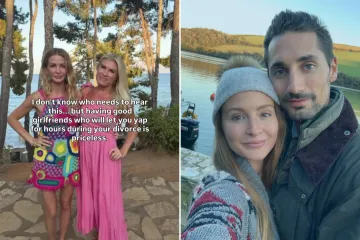
MILLIE MACKINTOSH has admitted she spent Valentine’s weekend “sobbing” following her split from husband Hugo Taylor.

It was revealed earlier this month that the couple had parted ways after seven years of marriage.

Millie Mackintosh has admitted she spent Valentine’s weekend ‘sobbing’Credit: Instagram/@milliemackintosh
She went to watch Margot Robbie’s new romantic drama, Wuthering HeightsCredit: Alamy
It comes after it was announced she’d split from husband Hugo TaylorCredit: Alamy

As she celebrated Valentine’s Day as a newly-single woman, it turned out to be an emotional one for the 36-year-old mum-of-two.

She went to watch the new romantic drama Wuthering Heights in cinemas before coming home and reviewing the Margot Robbie and Jacob Elordi film in a video.

The movie follows the love story between Heathcliff and Catherine Earnshaw, a woman from a wealthy family in 18th-century England.

Millie said: “So I saw Wuthering Heights over the weekend, it was very spicy. The way Heathcliff loved her ah! Everyone in the cinema was just sobbing.

READ MORE MILLIE AND HUGO

SPLIT TO SALSA?

Millie Mackintosh ‘lined up for Strictly’ after marriage split


WARNING SIGNS

Millie Mackintosh’s husband Hugo Taylor threatened to divorce her 3 years ago

“I would definitely recommend to go and see it. They had great chemistry and the costumes were so good.”

It comes after she opened up about having an “alternative” Valentine’s Day this year as she nurses her heartbreak over the end of her marriage.

She took to Instagram on Friday to share a photo of a London Underground board titled: “Valentine’s Day Alternatives.”

The suggestions included: “Galentine’s Day” with the girls, “Malentine’s Day” with the lads, and “Palentine’s Day” with friends.

According to the Daily Mail, Millie and Hugo, 39 – who share two daughters – went their separate ways after a series of discussions in the New Year.

An insider told the publication: “Millie and Hugo are currently going through a separation and have sadly decided to split.

“They have known each other for many years, and in recent weeks, have had serious conversations about their future, ultimately deciding it’s better for them both to part ways.

“Their main priority remains their children and family life, and separating is not something they ever hoped would happen.”

The source added they are living a part and figuring out how best to co-parent.

The pair got married in 2018, seven years after initially dating on Made in Chelsea.

However, they ended up parting ways, with Millie marrying rapper Professor Green in 2013.

But, following their divorce in 2016, Millie and Hugo got back together before tying the knot themselves two years later at Whithurst Park in West Sussex.

Millie said at the time: “Even in my wildest dreams I didn’t imagine it would be this ­perfect. I am so excited to finally be married to Hugo — he’s the love of my life.”

They had their first daughter, Sienna, in 2020 and second daughter, Aurelia, in 2021.

After the news broke of their split, Hugo was pictured still wearing his wedding ring while Millie was seen without hers.

Millie was hooked on the raunchy cinematic relationshipCredit: Getty
They are living apart and working on co-parenting their childrenCredit: Getty

Source link