house

Virginia Supreme Court considers whether to block voter-approved U.S. House map favoring Democrats

Virginia Supreme Court justices on Monday questioned whether the state’s Democrat-led legislature complied with constitutional requirements when it sent a congressional redistricting plan to voters, in a case that could help decide the balance of power in the U.S. House.

The new districts, which could net Democrats four additional seats, won narrow voter approval last week. But a Republican legal challenge contends the General Assembly violated procedural rules by placing the constitutional amendment before voters to authorize the mid-decade redistricting. If the court agrees that lawmakers broke the rules, it could invalidate the amendment and render last week’s statewide vote meaningless.

The Virginia court proceedings mark the latest twist in a national redistricting battle between Republicans and Democrats seeking an advantage in a November midterm election that will determine whether Republicans maintain their narrow majority in the U.S. House.

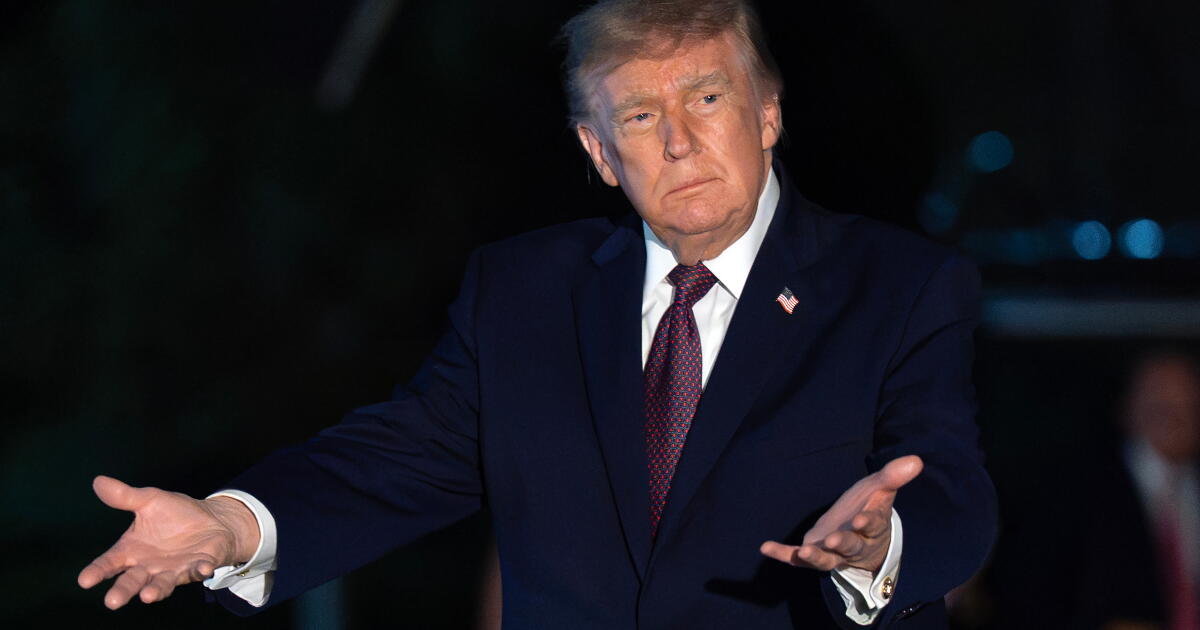
President Trump kicked off a tit-for-tat round of gerrymandering last summer when he urged Texas Republicans to redraw districts to their favor in an attempt to win several additional House seats. That set off a chain reaction of similar moves in other states, leading to the voter approval last week of Virginia’s new map.

Next up is Florida, where Republican Gov. Ron DeSantis has included congressional redistricting on the agenda for a special session of the GOP-controlled Legislature beginning Tuesday.

Virginia arguments focus on what counts as an `election’

During Monday’s arguments, the Virginia Supreme Court focused on whether the new congressional districts should be invalidated because of the process used by lawmakers. The justices issued no immediate ruling.

Because the state’s redistricting commission was established by a voter-approved constitutional amendment, lawmakers had to propose an amendment to redraw the districts. That required approval of a resolution in separate legislative sessions, with a state election sandwiched in between, to place the amendment on the ballot.

The legislature’s first vote occurred in October — while early voting was underway but before it concluded on the day of the general election. Judicial questioning focused on whether that was too late, because early voting already had begun.

Attorney Matthew Seligman, who defended the legislature, argued that the “election” should be defined narrowly to mean the Tuesday of the general election. In that case, the legislature’s first vote on the redistricting amendment occurred before the election and was constitutional, he told judges.

But an attorney arguing for the plaintiffs, Thomas McCarthy, said “election” means the entire period during which people can cast ballots, which lasts several weeks in Virginia. If that’s the case, then the legislature’s initial endorsement of the redistricting amendment came too late to comply with the state constitution, he said.

Attorneys argue over the rights of voters

The purpose of Virginia’s two-step amendment process, with an intervening election, is so voters can know whether legislative candidates support or oppose a proposed constitutional amendment, McCarthy said.

He pointed to the case of Democratic voter Camilla Simon, one of the plaintiffs in the lawsuit alongside Republican state lawmakers, who cast an early vote last fall for Democratic Del. Rodney Willett. After she voted, Willett sponsored the Democratic redistricting amendment, and Simon wished she could have undone her vote, McCarthy said.

“None of these voters had any idea this was coming, and that’s not how this process is supposed to work,” McCarthy told the justices.

Those defending the Democratic redistricting plan also contend that the voters’ will should be respected.

The people voted to ratify the constitutional amendment, “and the challengers are asking to overturn that democratic result,” Seligman told reporters after the arguments.

Nationwide redistricting battle has no clear winner so far

So far, the two major parties have battled to a near draw in the states that have redrawn their congressional maps for this year’s midterms.

Republicans think they could win up to nine more seats under revised districts in Texas, Missouri, North Carolina and Ohio. Democrats think they could win as many as 10 additional seats under new districts in California, Utah and Virginia. But legal challenges remain in both Virginia and Missouri.

Virginia currently is represented in the U.S. House by six Democrats and five Republicans who were elected from districts imposed by a court after a bipartisan redistricting commission failed to agree on a map after the 2020 census. The new districts, which narrowly won voter approval on April 21, could give Democrats an improved chance to win 10 districts.

Some candidates already have begun campaigning based on the new districts in advance of the state’s Aug. 4 primary election.

More court battles could remain in Virginia

In January, a judge in rural Tazewell County, in southwestern Virginia, ruled that lawmakers failed to follow their own rules for adding the redistricting amendment to a special session last fall. Circuit Judge Jack Hurley Jr. also ruled that lawmakers failed to initially approve the amendment before the public began voting in last year’s general election and that the state had failed to publish the amendment three months before the election, as required by law. As a result, he said, the amendment is invalid and void.

The Virginia Supreme Court placed Hurley’s order on hold and allowed the redistricting vote to proceed before hearing arguments on the case.

During Monday’s arguments, justices also raised questions about the ability of lawmakers to expand the agenda for their special session and whether the three-month public notice requirement was important enough to thwart a voter-approved amendment.

Republicans have filed at least two additional legal challenges, which also are winding their way through the courts.

Robertson and Lieb write for the Associated Press. Lieb reported from Jefferson City, Mo. AP writers Allen G. Breed in Richmond and Nicholas Riccardi in Denver contributed to this report.

Source link

What does Trump shooting at White House dinner mean for World Cup security? | World Cup 2026 News

A high-profile shooting incident that targeted United States President Donald Trump at the White House Correspondents’ Association dinner has raised security concerns about the country’s role as cohost of the FIFA World Cup 2026.

US authorities said on Sunday that the gunman accused of trying to storm the dinner was targeting Trump and members of his administration.

Recommended Stories

list of 3 itemsend of list

The suspect — who was armed with a shotgun, a handgun, and multiple knives — rushed a US Secret Service checkpoint at the Washington Hilton hotel and managed to shoot a law enforcement officer, although the suspect himself was not struck by gunfire.

The incident is seen as a major breach of security by football fans around the globe, millions of whom will follow their teams at the World Cup tournament, which the US will cohost June 11-19 with Canada and Mexico.

Here’s what fans and experts are saying about the incident and how it could affect their safety at the World Cup:

Will the Trump shooting impact World Cup security?

With the US hosting the majority – 78 of 104 – fixtures, it is expected to see an influx of five to 10 million football fans from around the world, many of whom have expressed concerns for their teams’, as well as their own, safety following the targeting of Trump.

“Their [US] own security service allowed a single person with a shotgun into the most secure building in the world, and missed every shot at him. How are the players going to be safe?” a fan wrote in a social media post.

Others questioned how fans and other members of the public will be safe during the tournament if the country’s president has come under attack.

This is not the first time Trump has been involved in an attempted assassination; he was injured in a shooting at a campaign rally in Pennsylvania in July 2024, and in September 2025, a suspect was convicted of plotting to kill Trump while he was playing golf in Florida a year earlier.

However, security analyst Massimiliano Montanari believes the shooting in the US capital will have “no impact” on security preparations for the World Cup.

“It’s undeniable that this shooting creates additional concerns, but with or without this shooting, the US Secret Service is keeping the highest level of attention on the president,” Montanari told Al Jazeera.

“The world is in a moment of immense pressure; several international turmoils are happening at this time, and the shooting will not change the perception of fans coming to the US,” he added.

“The US has very strong security and counterterrorism experience; I’m sure all necessary measures are in place.”

FIFA did not respond to Al Jazeera’s request for comment on World Cup security in the aftermath of the shooting in Washington.

How will Trump’s presence affect security and fan experience at the World Cup?

Fans critical of the US and its lax gun laws, which lead to hundreds of mass shootings across the country each year, say the latest security breach highlights the country’s failure to control gun violence.

Comments on social media ranged from fans questioning the US as a host to calling for the matches in the country to be cancelled altogether due to security risks.

Mass shootings are a common occurrence in the US. In 2026, the country has seen more than 126 incidents which have resulted in more than 3,100 deaths and 5,300 injuries so far, according to Gun Violence Archive, a non-profit research group.

Some critics also wondered if Trump’s likely presence at World Cup games will endanger fans and negatively impact their experience at the tournament.

“I presume Donald Trump will attend the World Cup at some point as the President of the host nation,” Kate Wilton, a social media user, noted in a post on X. “If he’s an assassination risk, surely him attending is a security risk to all those attending?”

US President Trump shares a close relationship with FIFA President Gianni Infantino and was present at the World Cup draw on December 5, 2025.

Later that month, Trump’s attendance at the US Open men’s tennis final delayed the start of the match, as hordes of tennis fans struggled to get through security checkpoints.


INTERACTIVE AR15 rifle mass shooting ar-15-1725524403
[Al Jazeera]

What does ICE presence at World Cup mean for fans?

The White House shooting also invoked a broader conversation regarding national security in the US, which has seen immigration-related crackdowns across various states.

The Trump administration’s push for mass deportation, as well as its efforts to tighten legal immigration pathways, have spurred concerns about whether the World Cup’s international audience might be targeted by US immigration authorities.

In February, US Immigration and Customs Enforcement (ICE) acting Director Todd Lyons confirmed to a committee in the House of Representatives that his agency would be on the ground for World Cup events. When questioned about visitor concerns, he declined to commit to pausing ICE operations at the matches.

“Fans should be treated as guests and clients of the event, not as a potential threat or as criminals,” Montanari, who heads the International Centre for Sport Security (ICSS), said of the border patrol agents’ presence.

He emphasised that any security officials on the ground must be deployed as discreetly as possible.

“Major global sporting events like the World Cup must remain sporting events and not security events,” he explained, adding that the elements of safety, security and service must work cohesively.

Montanari emphasised that at the previous World Cup in Qatar, where he is currently based, fans were not discriminated against for their nationalities or backgrounds, something that upcoming iterations of the event must emulate.

“I think at any World Cup, the key success factor will be the level of international or regional cooperation; no country can deliver a safe major sporting event without that.

“Securing an event is not just about securing venues, but protecting the overall community, and this involves strong partnership with the government, the business community, and civil society — a holistic effort everyone has to put together.

Last week, the American Civil Liberties Union (ACLU) and Amnesty International, along with more than 120 civil society groups, issued a “travel advisory” for foreigners attending the 2026 FIFA World Cup in the US due to the “deteriorating human rights situation in the US and the absence of meaningful action and concrete guarantees from FIFA, host cities, or the US government”.

The US Senate has taken the first steps towards reopening the Department of Homeland Security (DHS) – which has been partially shut down since mid-February after Democrats demanded immigration-enforcement policy changes following fatal shootings of two protesters by federal agents. The Senate approved a budget framework that would fund immigration enforcement agencies, despite opposition from the Democrats.

Source link

DOJ asks trust to drop White House ballroom suit after WHCA shooting

April 26 (UPI) — The Trump administration asked the National Trust for Historic Preservation on Sunday to end its legal challenge to President Donald Trump‘s ballroom following Saturday’s arrest at the White House Correspondents’ Association Dinner, saying its lawsuit “puts the lives of the president, his family and staff at grave risk.”

“Enough is enough. Your client should voluntarily dismiss this frivolous lawsuit today in light of last night’s assassination attempt on President Trump,” Assistant Attorney General Brett Shumate of the Justice Department’s Civil Division said in a letter to the National Trust for Historic Preservation’s lawyers.

Cole Tomas Allen, 31, of Torrance, Calif., was arrested Saturday night at the annual White House Correspondents’ Association Dinner hosted at the Washington Hilton Hotel with Trump, his family, members of his Cabinet and many others in attendance.

U.S. Secret Service agents apprehended the suspect — armed with a shotgun, a handgun and knives — who allegedly rushed a Secret Service checkpoint in the hotel’s lobby, authorities said.

Law enforcement and the suspect exchanged gunfire, resulting in an agent sustaining an injury when shot in the bullet-resistant vest. The injured agent and the suspect, who was not struck by gunfire, were transported to a local hospital for treatment.

Trump has been locked in a monthslong legal battle with the preservation organization over his plans to construct a $400 million donor-paid ballroom where the East Wing of the White House once stood.

The National Trust for Historic Preservation argues that the Trump administration needs congressional approval for the project and its financing mechanism, while the Justice Department argues the project is legally authorized and that, now that construction has begun, completing it is necessary for the security and the safety of the president.

A federal judge has sided with the preservation organization, ruling that Trump needs congressional approval for the plan to proceed. After the judge earlier this month permitted only below-ground construction for security purposes, the D.C. Circuit issued an administrative stay allowing the project to continue while the government’s appeal proceeds, with oral arguments scheduled for June 5.

Calls of support from the White House and Republicans have increased following Saturday’s incident, with Trump stating in a press conference that night, “We need the ballroom.”

In his letter on Sunday, Shumate said the ballroom would mean the president would no longer need to leave the White House to attend large gatherings.

He said the National Trust for Historic Preservation has until 9 a.m. Monday to dismiss the lawsuit or the Justice Department will move to dismiss the case “in light of last night’s extraordinary events” and state that the preservation organization opposes the motion.

UPI has asked the National Trust for Historic Preservation for comment.

Source link

White House correspondents’ dinner becomes the news as reporters take cover

A night devoted to celebrating the 1st Amendment and journalism turned into a breaking story of its own.

The attendees at the White House Correspondents’ Assn. dinner Saturday took cover under the tables in the Washington Hilton ballroom when they heard gunshots outside, which led to the evacuation of President Trump and many of his Cabinet officials at the gala.

But instinct kicked in swiftly, and many of the journalists in the crowd of 2,600 people were using their phones to capture video. Uploading pictures to social media was a challenge as the internet coverage in the ballroom was poor, but they would eventually provide a detailed chronicle of the night.

“I reached for my phone as soon as I could and started shooting video to capture as much of the moment as I could,” said Sara Cook, a CBS News producer and press association board member seated on the dais near the president, First Lady Melania Trump and Vice President JD Vance, who were hustled out while a SWAT team swarmed the stage.

“I could hear Secret Service officers saying, ‘Where is it coming from?’” Cook said. “They seemed to be quite confused onstage about exactly what was happening, where the threat was coming from and if there still was a threat.”

Authorities identified the suspect as Cole Tomas Allen, a 31-year-old teacher from Torrance. He was apprehended after rushing a security checkpoint one floor above the ballroom. Law enforcement officials said Allen was armed with a shotgun, a handgun and multiple knives.

After guests were told the evening program would not proceed, many of the TV anchors and correspondents in the crowd headed to their Washington studios. Many didn’t wait. CNN’s Wolf Blitzer, who was returning from a restroom on the floor where the incident occurred, delivered an eyewitness account from the Hilton lobby using a Webex app on a smartphone.

There was at least one fog-of-war moment as well. CNN anchor Kaitlan Collins reported on air that the armed suspect was killed by the Secret Service, attributing it to security for Education Secretary Linda McMahon. She had to correct the report after Fox News said Allen was alive and detained by agents.

“CBS Evening News” anchor Tony Doukopil and CBS News editor-in-chief Bari Weiss walked several blocks from the Hilton to waiting vehicles that took them to the network’s offices and studios on M Street. (Weiss granted a reporter’s request to go behind the scenes to observe the news-gathering operation.)

Four people around a desk.

Matt Gutman, Nancy Cordes, Tony Dokoupil and Bari Weiss at the CBS News Washington bureau on April 25, 2026.

When Doukopil and Weiss arrived at the bureau, CBS News national correspondent Matt Gutman and Nancy Cordes, chief White House correspondent, were already on the air with a special report, showing video shot by its journalists in the ballroom.

Doukopil joined his colleagues, all still dressed in formal wear, and took over the coverage. The newsroom soon filled with executives and producers arriving from the Hilton, several dressed in long gowns and carrying their high-heeled shoes.

CBS News President Tom Cibrowski stood over a large multiview screen, monitoring his network’s broadcast alongside the competition.

When Cibrowski was on the floor of the ballroom when the commotion began, he texted his family to let them know he was OK. He then called David Reiter, the executive producer of special events for CBS News, to alert him that they would be breaking into regular programming on the network, a rarity lately with so many 24-hour news sources available.

Reiter left his seat at a Broadway show and headed to the CBS News studios on the west side of Manhattan to get the feed on the air.

Weiss walked over to the Washington set and consulted with Doukopil, Cordes and Gutman during a break, providing a bipartisan list of government officials and activists who were subjected to politically motivated violence in recent years. She settled in at a workspace to turn out a memo to staff, acknowledging the rapid work of getting its images from inside the ballroom on the air.

“This is what we do,” wrote Weiss, a digital entrepreneur who has dealt with criticism over her lack of experience in TV news since taking on her high-profile role in October. “Most importantly, we are thankful that everyone is safe.”

Later, she led a lengthy meeting to plan further coverage, which included Norah O’Donnell interviewing Trump for Sunday’s edition of “60 Minutes.”

After Doukopil finished his special report, he was off to prepare a segment to air on “CBS Sunday Morning.”

“It’s very strange to go from drinking wine to drinking coffee,” Dokoupil said as he departed the set.

Every journalist in the ballroom left with a story.

Tom Llamas, anchor of “NBC Nightly News,” was seated next to Secretary of State Marco Rubio when Secret Service agents pulled Rubio and his wife away as White House officials were evacuated. Llamas had to alert the agents that another, less high-profile Cabinet member, Energy Secretary Christopher Wright, and his wife were at the table as well.

Llamas made his way from the hotel to the NBC News bureau with “Meet the Press” moderator Kristen Welker and veteran Washington correspondent Andrea Mitchell. The anchor took over the network’s special report and felt compelled to explain his attire.

A man in a tuxedo and bow tie.

“NBC Nightly News” anchor Tom Llamas reports on the shooting at the dinner on April 25, 2026.

“It is unusual to come on the air in a tuxedo, but this is a very unusual night,” he told viewers.

Llamas praised the performance of his peers who have seen the image of their profession take a beating in recent years.

“There was a while there, we did not know what was going on,” he said. “For all the crap that is written about our industry, I saw people jump into action immediately, and it was incredible. I was proud of all my colleagues.”

The canceled dinner created a predicament for MS NOW and NBC News, which both planned lavish after-parties late Saturday evening. Many of the big-name on-air talent stars and executives expected to attend were working on the story.

After a half-hour of deliberations, both networks decided their parties would go on. But planned stunts for the MS NOW soiree at DuPont Underground — such as a performance by a university drum line — were scrapped.

NBC’s event at the home of the French ambassador was billed as “The After Party.” A text message told attendees to expect a more subdued affair described as “a gathering for people who wanted to convene, eat and drink and be with community.”

Privately, one network executive explained why the festivities moved forward. “Nobody died,” he said.

Source link

Shooter’s path to White House press gala prompts security questions

An attack on the White House correspondents’ dinner by a gunman who came within feet of the ballroom where President Trump sat raised immediate questions about the night’s security protocol — and the future of large, high-profile events in a country with easy access to firearms and increasingly high political tensions.

The man breached metal detectors in front of the Washington Hilton ballroom and sprinted dozens of feet ahead before exchanging fire with federal agents. Shots were fired in an anteroom that had not an hour before seen thousands of guests, including senior government officials, streaming through.

A manifesto allegedly written by the suspect described his targets as members of the Trump administration, ranking from the highest to the lowest — but said he was willing to “go through” any guest standing in his way in order to kill the president’s aides.

The attempted attack on a room full of dignitaries underscored domestic unrest in Trump’s second term and deepened questions about how to effectively create security in a modern era of lone actors, online radicalization and mass shootings. It was the third known time an attempted assassin has come close to Trump since his 2024 presidential campaign began.

Acting Atty. Gen. Todd Blanche on Sunday called the U.S. Secret Service response a “massive security success story.” But within hours of the incident, bipartisan leaders of the House Oversight Committee demanded a hearing on the agency’s security plans for the dinner.

In the manifesto sent to his family, the alleged gunman, Cole Tomas Allen, of Torrance, marveled at a lack of security.

“No damn security. Not in transport. Not in the hotel. Not in the event,” he wrote. “I walk in with multiple weapons and not a single person there considers the possibility that I could be a threat.”

The Hilton, in a ritzy Washington neighborhood, has long hosted the White House correspondents’ dinner. It is the same hotel where President Reagan and three others were shot in 1981.

The shooting caused terror among guests, some of whom noted they had expected more security to enter the event and Trump was whisked offstage within the first minute of shots being fired. While the event has traditionally hosted sitting presidents in the past, Trump’s decision this year to appear for the first time since taking office made the event particularly high profile.

His presence, alongside Vice President JD Vance and much of the Cabinet and line of succession, brought with it added security protocols and personnel — raising questions over whether the storied dinner and its guests of congressional members, diplomats and mid-level officials would have been even more susceptible to attack without Trump in attendance.

Trump on Sunday said it is “tough” to secure a hotel in the middle of a city with “buildings all around and hotel rooms on top,” but praised the Secret Service and law enforcement officers. One officer was shot, not fatally.

Talking to reporters after the incident Saturday night, Trump swiftly likened it to the attempt on his life by a gunman in Butler, Pa., during the 2024 presidential campaign, and suggested that it justified his controversial plans to construct a fortified ballroom on the White House grounds. He called the hotel “not a particularly secure building,” though he later said the room was “very, very secure.”

Plans to reschedule the dinner are under review. White House Correspondents’ Assn. President Wiejia Jiang of CBS News said the organization’s board would meet to assess what had happened.

Blanche said Sunday an investigation into what had happened was ongoing. He had attended a reception before the dinner on the first floor of the hotel hosted by CBS News, one of many that did not require any security check by law enforcement authorities.

“The first takeaway, or the takeaway that should be obvious, is that the system worked. And that we stopped the suspect, and we stopped him as soon as he tried to do what he was trying to do,” Blanche said on NBC’s “Meet the Press.”

But the attack raises a question about whether presidential security protocols are effective for modern tactics, or whether the country is “in a new domain” in which those procedures no longer meet the nature of the possible threats, said Neil Shortland, director of the Center for Terrorism and Security Studies at the University of Massachusetts Lowell.

Federal investigators should examine what the security policies were, what type of attacks they were designed to prevent, and whether that protocol was out of date, Shortland said.

“Did you follow the policy is a great question,” he said. “Was the policy correct in this modern day and for this modern situation is a separate question.”

The country is facing “the most complex threat environment in our nation’s history,” particularly from lone actors who are often radicalized online, Sam Vinograd, a former official at the Department of Homeland Security, said on CBS’ “Face the Nation.”

“It can be true that law enforcement and intelligence professionals prepared exhaustively for last night,” she said Sunday. “But it can also be true that in this moment, in this security environment, the paradigms of the past may not be sufficient to meet the moment.”

That raises the “need to rethink what it is going to take to actually secure these mass gatherings,” she said.

Trump appeared to voice the same idea Saturday evening, telling reporters, “Today, we need levels of security that probably nobody’s ever seen before.” He went on to say that “this is why we have to have” the East Wing ballroom, which he described as drone-proof and having bulletproof glass.

Kris Brown, president of the gun control organization Brady — which is named after Reagan’s press secretary, James Brady, who was shot in the 1981 attack — said lawmakers should instead consider passing legislation to help prevent gun violence.

“Not every public event can take place in the ballroom, in that kind of protection — nor can we afford to live in a society where our solution to gun violence is to barricade our public officials, our children, away in fortresses,” Brown said.

About 2,000 journalists, dignitaries and other guests attended the event, rushing through rain to enter using multiple hotel entrances. They were asked to show their tickets as they walked past security guards, but there was no check-in procedure or ID check. A Times reporter was waved toward the entrance without showing a ticket as she tried to get it out of her purse.

Inside, guests milled about on multiple levels where pre-dinner receptions were occurring. Hotel guests mingled with the crowd, granted full access to the hotel’s amenities, including its boutiques and restaurants.

Two protesters briefly took over a small red carpet where guests were lined up to take professional photos; Times reporters saw a third woman dressed in a formal gown and shouting protest slogans being escorted out by security guards after apparently having entered the event.

Guests were required to flash their tickets to go down an escalator to the ballroom level, then present the ticket before walking through metal detectors and having bags searched ahead of the ballroom entrance.

Allen, who had reserved a room as a hotel guest, said in his manifesto obtained by the New York Post that security was far less stringent than he had expected. Two U.S. officials told The Times that the contents of the manifesto are authentic.

“I expected security cameras at every bend, bugged hotel rooms, armed agents every 10 feet, metal detectors out the wazoo. What I got (who knows, maybe they’re pranking me!) is nothing,” he wrote.

He noted that security guards appeared to be focused on protesters and arrivals outside, writing, “apparently no one thought about what happens if someone checks in the day before.”

It is possible that steps to further restrict access to the ballroom level, keep guests away from the event location and check attendees’ identities outside could have provided additional security, said Erin Kearns, director of law enforcement partnerships at the National Counterterrorism Innovation, Technology and Education Center.

“The lesson that can be taken away is just thinking about how to harden and strengthen security at future events when you have so many high-profile people,” she said.

The hotel was a “soft target” with a makeshift perimeter, and there were “almost zero intervention points” where the shooter could have been apprehended before arriving, Shortland said. That was partly because he traveled by train, which does not have security screenings.

Authorities should also examine whether Allen was known to authorities and, if so, whether intelligence operatives could have pieced together his train travel and arrival in the president’s orbit, Shortland said.

The attempted shooting added to a growing list of instances of political violence in the United States. Last year, one Minnesota state legislator and her spouse were killed by a gunman while another lawmaker and his wife survived; the conservative activist Charlie Kirk — whose wife, Erika, was in attendance Saturday — was shot and killed at a speaking event; an arsonist attacked the residence of Pennsylvania Gov. Josh Shapiro.

Some of that violence has been directed toward Trump, something he frequently talks about. He was injured in the Butler incident, but has used his survival to argue that God saved him so he could become president. Two months later, a Secret Service agent shot at a gunman pointing a rifle on Trump’s golf course as the president golfed.

On Feb. 22, an armed man was shot and killed after entering the secure perimeter around Trump’s Mar-a-Lago home, when the president was in Washington.

“It’s always shocking when something like this happens. It’s happened to me a little bit,” Trump said Saturday.

Source link

White House Correspondents’ Dinner Shooting Puts Trump’s Security Back in the Spotlight

The shooting of a Secret Service agent at the White House Correspondents’ Association dinner on Saturday night has raised concerns about the safety of political leaders amid rising political violence. Despite hundreds of agents from various law enforcement agencies being assigned to secure the event, a suspect armed with a shotgun and other weapons was able to approach just one floor above where prominent figures, including President Donald Trump, Vice President JD Vance, and several cabinet members, were dining.

The alleged gunman, who carried a shotgun, a handgun, and knives, was reportedly staying at the Washington Hilton hotel, where the dinner took place. Trump’s remarks following the incident highlighted the dangers of his role, noting the hotel is “not particularly a secure building. ” This vulnerability is concerning given recent assassination attempts against him during the 2024 presidential campaign.

Attendees had to pass through metal detectors at the ballroom, but only needed tickets to access the hotel, which was open to other guests. Many attendees faced demonstrators protesting the Trump administration’s policies. Video footage showed the gunman rushing past a security checkpoint before shooting the agent, after which he was tackled and arrested by officials.

Inside the ballroom, guests were dining when gunshots were heard. Secret Service agents quickly acted to protect Trump and Vance, while security responses varied for other officials, with some agents forming shields and others reacting differently. The timing for evacuating protectees differed, with some leaving almost immediately and others remaining longer. Trump, who has faced close calls with violence in the past, later acknowledged that carrying on with the event was not feasible after the attack.

With information from Reuters

Source link

Sexual misconduct scandals in Washington spark scramble for reforms, expedited investigations

In the span of 10 days, the nation’s capital saw a cascade of ethical scandals that cut across party lines and branches of government, raising fresh doubts about whether Washington is capable of holding itself accountable.

Three members of Congress — two Democrats and a Republican — resigned within days of one another as they faced calls for their expulsion due to their alleged misconduct. A fourth lawmaker is facing the same pressure but has so far refused to step down.

A Cabinet secretary stepped down amid a months-long investigation into allegations that she pursued a romantic relationship with a member of her security detail, while her husband stood accused of sexually assaulting female staffers in her agency.

In a separate case, the Department of Homeland Security confirmed last week that it put a senior counterterrorism official on administrative leave as it investigates an ex-boyfriend’s allegations that she was seeking out wealthy men online to pay for luxury items.

The back-to-back resignations and investigations, spanning both parties and both the legislative and executive branches, have reignited a debate about whether Washington’s rules and institutions for self-oversight can keep pace with the misconduct unfolding within it. Even those charged with policing it say the system is failing.

“Clearly, we have an ethical problem,” Rep. Mark DeSaulnier (D-Concord), the top Democrat on the House Ethics Committee, said in an interview.

DeSaulnier, who has served on the committee since 2023, said the panel is long overdue for an overhaul. He would like to see the committee speed up investigations and give it more authority to root out misconduct before lawmakers can resign to avoid accountability.

“It takes too long,” he said, drawing an analogy to law enforcement standards for officers facing misconduct allegations. “If you’re a law enforcement officer, there are standards for a suspension with pay or without pay. I think we need to take a look at things like that.”

The committee’s records show that since 1976, it has investigated 28 instances in which a House member was suspected of sexual misconduct. The outcome in 13 of those cases was a loss of jurisdiction, meaning the member resigned, retired or otherwise left the House before the committee could reach a conclusion on the allegations.

“Unfortunately, there likely exist matters never reported to the Committee,” the panel said in a rare statement last week. It added that its “greatest hurdle” in evaluating allegations of sexual misconduct is “convincing the most vulnerable witnesses to share their stories.”

Lonna Drewes, left, and her attorney, Lisa Bloom, arrive at a press conference

Lonna Drewes, left, and her attorney, Lisa Bloom, arrive at a news conference in which Drewes accused U.S. Rep. Eric Swalwell (D-Dublin) of sexual assault, on April 14 in Beverly Hills.

(Justin Sullivan / Getty Images)

The two most recent cases in which the committee lost jurisdiction were the investigations into former California Rep. Eric Swalwell, a Democrat accused of sexual assault who denied the allegations, and Republican former Texas Rep. Tony Gonzales, who last month admitted to a sexual relationship with a staffer who later died by suicide.

The committee is currently investigating Rep. Cory Mills, a Florida Republican, on allegations of “sexual misconduct and/or dating violence.” Mills has denied wrongdoing and declined to step down, telling CNN that House Speaker Mike Johnson told him not to resign and let the process play out.

Johnson, a Louisiana Republican, has defended his stance on ensuring there is due process for House members, telling reporters last week that representatives should not be removed based only on allegations.

“There’s got to be an element of due process,” he said at a news conference, in which he also acknowledged that “sometimes it takes a long time” to achieve that and that he is open to suggestions on how to make the process better.

House Minority Leader Hakeem Jeffries (D-N.Y.) has also expressed hesitance in ousting members before they receive due process. He said that much in relation to Rep. Sheila Cherfilus-McCormick (D-Fla.), who eventually resigned as she faced an ethics investigation and federal criminal charges of stealing $5 million in disaster relief funds. She has pleaded not guilty to the charges.

House Ethics Committee Chairman Michael Guest (R-MS) (R) and Ranking Member Mark DeSaulnier (D-CA) speak to reporters

House Ethics Committee Chairman Michael Guest (R-Miss.) and Ranking Member Mark DeSaulnier (D-Concord) speak to reporters after a hearing with the House Ethics Committee on Capitol Hill on Tuesday in Washington.

(Anna Moneymaker / Getty Images)

The stance has drawn objections from 14 House Democrats in competitive swing districts, including California Reps. Mike Levin and Derek Tran.

In a letter addressed to Johnson and Jeffries, the lawmakers urged both House leaders to push the Ethics Committee to “expedite their investigation” with more transparency, including public hearings.

“We must demonstrate that no one is above the law and that serious misconduct will result in serious consequences,” the lawmakers wrote.

The calls for reform are not limited to the House.

Sen. Adam Schiff (D-Calif.) said Congress as a whole needs to increase transparency around how ethics complaints are handled and create a system that better protects junior staffers rather than members and senior aides who oversee them.

“The House of Representatives has an office that provides legal advice and representation to staff, but the Senate doesn’t appear to have such a thing,” Schiff said. “So that is also something I’m looking into.”

Schiff is also looking beyond Capitol Hill. He is pushing to install an inspector general inside the executive office of the President, a watchdog position that has never existed there despite being standard across the rest of the federal government.

two men shake hands in Rayburn Building

Inspector General Michael E. Horowitz, left, chair of the Pandemic Response Accountability Committee, and David Smith, assistant director, Office of Investigations U.S. Secret Service, arrive for the House Oversight and Accountability Committee hearing titled Federal Pandemic Spending: A Prescription for Waste, Fraud and Abuse in Rayburn Building on Feb. 1, 2023.

(Tom Williams / CQ Roll Call via Associated Press)

President Trump has fired at least a dozen inspectors general during his second term, according to the New York Times. The dismissals of those independent watchdogs across the executive branch are likely to complicate Schiff’s efforts, which he said will need to “overcome the instinctual opposition of many in the president’s party who may view [the bill] as an indictment of the president’s actions.”

“But if we are ever going to ensure that a president and his administration are not above the law, an inspector general in the executive office is critical,” he said.

Richard Painter, a former White House ethics lawyer under President George W. Bush, said he has long advocated for installing an independent watchdog in the White House but doubts that a Congress operating under its own cloud of scandal would take that step now.

“They are not complying with their own rules,” he said. “It is a big problem.”

Painter also argued that Trump’s own conduct is itself reshaping what members of his own administration and allies in Congress believe they can get away with.

Trump, for example, entered his second term as the first president convicted of a felony — for fraud in a sex scandal involving a hush money payment to adult film actor Stormy Daniels. Separately, he was found liable by a jury for sexually abusing and defaming writer E. Jean Carroll in a decades-old incident.

The president’s past social ties to convicted sex offender Jeffrey Epstein have also received renewed scrutiny as his administration is criticized for the handling of the files. Trump has denied wrongdoing in all three matters.

“That sends a message to the entire administration and to Congress as to what is acceptable,” Painter said.

Trump, who is known for chiming in on myriad topics on social media, has not talked much about the sex scandals on Capitol Hill. But the president did call Swalwell a “sleazebag” in a recent interview with the Daily Mail.

“I don’t know anything about the charges, but he’s a bad guy,” Trump said. “He’s always been a bad guy, he’s a corrupt politician, and everyone knows it, so it’s happening to him, and we’ll see what happens. Right? Let him go defend himself.”

The president has not been as candid with his administration’s own controversies, but watchdogs in executive agencies have scrutinized some of his members.

Lori Chavez-DeRemer attends the world premiere of Amazon MGM's "Melania" at The Trump-Kennedy Center

Lori Chavez-DeRemer attends the world premiere of Amazon MGM’s “Melania” at The Trump-Kennedy Center on Jan. 29 in Washington.

(Taylor Hill / WireImage via Getty Images)

The White House declined to comment on the allegations against former Labor Secretary Lori Chavez-DeRemer, who stepped down last week after multiple allegations of abusing her position’s power, including having an affair with a subordinate and drinking alcohol on the job.

The New York Times reported that Chavez-DeRemer was under investigation by the agency’s inspector general, and that an imminent report was likely to be unfavorable toward her. The investigation had been ongoing for several months before her departure.

In a separate case, the Department of Homeland Security confirmed to the Los Angeles Times that Julia Varvaro, the agency’s deputy assistance secretary, was put on administrative leave amid an investigation into allegations that she was seeking out so-called sugar daddies online.

The scandals come as recent polling shows Americans are growing more dissatisfied with Trump and Congress.

Congress’ approval rating has plummeted to 10%, according to Gallup polling released last week. Public approval of Trump has dropped to 28%, according to a Marquette University Law School poll released earlier this month. The president’s approval ratings are tightly linked to concerns about the Iran war and the economy.

Some lawmakers, like DeSaulnier, worry the scandals will continue to erode Americans’ confidence in the government and the people who represent them.

“If they don’t have trust in these institutions and the people who are in these positions, that’s a real, serious problem for American democracy,” he said.

Source link

Here’s how the GOP could scheme to keep control of the House

For Democrats or, for that matter, anyone who believes in checks and balances, things are starting to look up.

President Trump’s days of untrammeled war-making, law-breaking and generally doing whatever he damn well pleases may finally be drawing to a close. Public opinion, history and, especially, the surging price of gasoline and groceries, all point to a Democratic takeover of the House in November’s midterm election.

There’s a direct correlation between a president’s approval rating and the way his party performs at the midpoint of his term. Anything below 50% favorability portends political trouble; right now Trump’s positive standing in polls hovers around a dismal 40%.

Then there’s the history part. Since World War II, the party out of the White House has gained an average of more than two dozen House seats in midterm elections. Democrats need to pick up just three to take control beginning in January.

(While the Republican grip on the Senate seems weaker than just a few months ago, the GOP is still favored to hang onto the chamber in November.)

There is, however, a looming threat causing nervousness among Democrats and their allies as they contemplate a celebratory fall, a landmine of sorts buried deep in the congressional election process.

Let’s acquaint ourselves with Article 1, Section 5 of the Constitution.

The pertinent language written by the Framers states, “Each House shall be the Judge of the Elections, Returns and Qualifications of its own Members.” In other words, it’s up to the House and Senate to acknowledge and abide by the will of voters as expressed in the election returns.

What could possibly go wrong?

Well, if you let your paranoia run wild, quite a lot. If the election outcome is close — and probably it would have to be very close — Republican lawmakers could theoretically seize on phony claims of fraud and effectively nullify the results of enough contests to deny Democrats control of the House.

There’s plenty of skepticism that would or could ever take place. But if it were to happen, hello, national crisis!

Normally, we could count on the occupant of the White House to humbly submit to the election returns, even if it’s a “shellacking” as President Obama called his walloping in the 2010 midterm election, or a “thumpin’ ” as President George W. Bush described his electoral spanking in 2006.

Not Trump.

This president has amply demonstrated the lengths to which he’ll go to overturn an honest election, siccing a violent mob on lawmakers certifying his 2020 defeat, telling endless lies and using the Justice Department to confiscate ballots and intimidate innocent election officials and others Trump deems his enemies.

He strong-armed Texas into a highly unusual, highly partisan redrawing of its congressional boundaries, an effort to net five seats and lengthen the odds against a Democratic takeover.

The move appears to have backfired, spurring voters in California and, last week, Virginia to redraw their state’s political maps to more than offset Texas and boost Democrats in November. (The Virginia results are being contested in court.)

A gathering of Virginia voters in front of television screens

Voters attend an Arlington Democrats redistricting vote watch party during a special election Tuesday in Virginia. A measure to redraw the state’s congressional map was narrowly approved.

(Valerie Plesch/Bloomberg via Getty Images)

That failure doesn’t take away Trump’s malign intent. And in the supine Speaker Mike Johnson, he has the perfect handmaiden to undermine the midterm vote.

In 2020, Johnson was the lead author of a Supreme Court brief seeking to overturn the results in four states that Joe Biden had indisputably won. That speaks to Johnson’s probity and integrity.

How would subversion of November’s election take place?

One theory goes like this: When the balloting is over, Johnson could appoint a House committee packed with Trump’s acolytes to investigate alleged voting irregularities. (And if you think Trump won’t be bellowing the words “rigged” and “fraud” in the face of defeat, you’ve either been in a coma or living on another planet for the last decade.)

Those hearings and the “evidence” they turn up could then be cited by election officials in key states — collaborators, if you will — as a reason to delay the certification of election results and block the seating of majority-making Democrats in the next Congress. In their place, the theory goes, Republicans could vote to fill those seats with GOP candidates who lost at the polls, keeping themselves in control.

Derek Muller, an election law expert, suggests that scenario is little more than a fever dream of doomsday devotees and overly nervous Nellies.

He said he’d be very surprised if all the election results weren’t certified by Jan. 3, when the new Congress convenes, given the legal remedies available to prevent stalling and undue delay. And, Muller said, there is no assurance Republicans would march in lockstep behind a plan to prevent the seating of Democrats.

Thwarting a duly elected Democratic majority “involves extraordinary coordination and precedents that have never occurred, with a unique convergence of factors,” said Muller, who teaches law at Notre Dame — though, he added, if control of the House came down to, say, a single seat “all bets are off.”

Far-fetched? Perhaps. Some of the spun-up theories surrounding November’s election do sound a bit like a product of political science fiction.

But what kind of president picks a fight with the pope? Plunges the world into crisis by unilaterally going to war with Iran with no exit plan? Demolishes the East Wing of the White House on an egotistical whim?

If Trump, an inveterate norm-buster, sees a way to keep his grip on unchecked power, don’t put anything past him.

Source link

Trump returns to White House after shooting at Correspondents Dinner

April 25 (UPI) — President Donald Trump returned to the White House after a shooting incident at the White House Correspondents’ Association Dinner in Washington, D.C.

There was a shooting incident near the main security screening area at the Washington Hilton, with one person in custody as law enforcement assesses the situation, Anthony Guglielmi, chief of communications for the U.S. Secret Service, said in a statement.

All protectees, Guglielmi said, are safe, including the president, first lady and members of the Cabinet who were at the dinner.

Trump said in a post on Truth Social that he wanted to return to the dinner and for the “SHOW TO GO ON,” but security insisted that they leave the hotel and return to the White House.

“Law Enforcement has requested that we leave the premises, consistent with protocol, which we will do immediately,” Trump posted about an hour after the incident.

“The First Lady, plus the Vice President, and all Cabinet members, are in perfect condition,” Trump posted. “I have spoken with all the representatives in charge of the event, and we will be rescheduling within 30 days.”

An announcement in the ballroom mirrored Trump’s announcement about rescheduling the dinner for next month.

The FBI confirmed that the suspect is in custody in a statement.

The suspect has been taken to the hospital, as has a Secret Service agent who was injured, The Washington Post reported.

Trump also said he would give an update from the press briefing room at the White House later this evening.

Dinner was being served at the annual gathering of the Washington press organization when shots could be heard from the ballroom before Trump was evacuated by security, according to video of the event.

President Trump, Melania Trump and other members of the administration on the dais and in the ballroom were evacuated within minutes of shots being heard over C-SPAN and other networks broadcasts.

As the officials were cleared from the room, Secret Service agents swarmed it and ordered other guests to stay in their seats.

Most of the other guests remained in the ballroom after organizers made an announcement that the show would continue shortly.

There was also speculation whether Trump would return to the dinner after the announcement the show would continue and the Presidential Seal was not immediately removed from the podium on the dais.

C-SPAN reported that waiters started to clear the salad portion of dinner as guests started to open wine while waiting for more information about the situation before the announcement that the dinner is going to be rescheduled.

This is a developing story. Please check back for updates.

Source link

Trump rushed off stage at White House Correspondents’ Assn. dinner; reports of gunshots

President Trump was evacuated from the White House Correspondents’ Assn. dinner on Saturday evening after an incident led to a security response and reports that gunshots were fired.

A Times reporter attending the dinner was forced to shelter in a restroom. He said he heard about four to five gunshots around 8:30 p.m. Eastern time. He said security told him that the person may have had a firearm. It was unclear whether the person was dead or wounded.

Guests mingle in a room

Guests at the White House Correspondents’ Assn. dinner mingle while awaiting updates about a shooting during the event at the Washington Hilton Hotel on Saturday.

(Andrea Castillo / Los Angeles Times)

A presidential motorcade was spotted outside the Washington Hilton hotel at about 8:45 p.m., though Trump’s location is yet unknown.

At about the same time, an ambulance arrived on scene as about 100 event attendees were escorted out of the secured event. The bulk of the attendees are still inside the hotel.

This is a developing story and will be updated.

Source link

Trump evacuated from the White House correspondents’ dinner | Donald Trump News

BREAKING,

The US president was escorted out from the event at a Washington DC hotel by his secret service agents.

United States President Donald Trump has been evacuated from the White House correspondents’ dinner at a hotel in Washington, DC, by his secret service agents.

The evacuation on Saturday evening came after loud sounds were heard inside the banquet hall of the Washington Hilton, where the event was taking place.

Footage from the scene showed Trump and attendees taking cover after the loud noise, after which the US president was led away. Heavily armed agents then take over the head table.

More soon…

Source link

10 minutes backstage with Lyle Lovett at Stagecoach

Lyle Lovett performed Friday evening in Stagecoach’s Palomino tent with the group of killers he calls his Large Band. After the show, I sat with the singer and actor in the front seats of what I’ll call his Large SUV. “It’s a rental,” he said.

We’re in here because you want to protect your voice?
You know, I don’t smoke marijuana.

Anymore, or period?
Period. I have no moral judgment for other people, but I don’t think it’s good for me. When I smell it, I get concerned that it’s going into my body, and so I just try to stay away from it. In the artist tent, there were plumes everywhere. In fact, at our set, two songs in, I called over our assistant tour manager and I said, “Can you put some fans blowing back out into the audience?”

To send the weed back from whence it came.
Well, I don’t want people to waste it either — they paid good money for it. Jackson Browne asked me once in the parking lot of Conway [Recording Studios] — we were doing “The Road to Ensenada,” and he said, “Is it true you’re not cool with weed?” I said, “You know, I’m not.”

Where do you live these days?
In a couple of places, but in Austin, mainly.

People from Texas have strong opinions about the hierarchy of its cities. What’s the best city in Texas?
I can’t answer that.

You wouldn’t deign to.
It’s your thought, not my thought. The cities in Texas are distinct — wildly different from one another. Houston is one of the most international cities in the world. Austin is the most liberal city in Texas but it’s also being transformed by tech money. What’s going on there is analogous to what the oil business did in Houston and Dallas. San Antonio is the gateway to South Texas — it’s like 85% Hispanic. You feel the difference in culture there, and that’s wonderful. That’s my answer.

Did you ever have a move-to-L.A. moment?
I leased houses three different times. The first album I made in Los Angeles was “Joshua Judges Ruth,” in 1991, and the house belonged to a college professor who took a job at New Mexico State. It was on a street called Multiview, one switchback down from Mulholland — between Laurel and Nichols Canyon on the Valley side. I had a beautiful view of Universal City and the 101 as it came in. I remember this professor, when he was showing me the house, he called it “the river of lights.” So I lived there and then later rented the same house two different times, years apart, on a street called Torreyson, right below the Lautner [Chemosphere].

You’re set to get a star this year on the Hollywood Walk of Fame.
I don’t know if that’s true. I think I’m eligible.

It’s true — I checked.
We’ll see.

Let’s say it happens, which it will. How’s that strike you?
I think it’s always an honor to be recognized by any official organization. But that sort of stuff seems completely separate from the work I’m concerned with. What’s important is the work and how you get to do it.

Which of your albums would you say is your best?
It’s impossible to say. I’m proud of the Nashville records — the budgets were smaller and I had to record those records more quickly. But when I went to Los Angeles and spent too much money recording “Joshua Judges Ruth,” that was one of the most expansive creative experiences I ever had.

Define “too much,” right?
It was too much. Instead of recording three or four songs a day, we recorded two songs. Two weeks later, you didn’t love the take, let’s record it again. There was time to search for ideas, not just document ideas — that was the biggest difference for me. The natural way of doing things — just knocking it out — is absolutely valid. But from my point of view, I was more comfortable spending more money [laughs].

Where’d you like to eat when you were working in L.A.?
When we worked at Conway, we’d have lunch every day at Lucy’s El Adobe to the point that I gave them a credit on the albums.

Source link

After years of avoidance, Trump to attend first White House press dinner | Donald Trump News

Washington, DC – Donald Trump — whose political career has been built, in part, on deriding the United States press — is set to attend his first White House Correspondents’ Dinner as president.

Saturday’s event continues a decades-long tradition, dating back to 1921. Still, the black-tie gala held in Washington, DC, remains a divisive event.

Recommended Stories

list of 3 itemsend of list

For years, detractors have argued its chummy approach to the presidency risks blurring the independence of the press corps.

Trump himself is one of the dinner’s critics. Until this year, Trump had refused to attend, appearing poised to defy a tradition of sitting presidents dining at least once with the press corps during the annual event.

Since he launched his first presidential campaign, Trump has taken a bellicose approach towards the media, issuing both personal attacks on journalists and lawsuits against news organisations for coverage he deems unfair.

His presence at Saturday’s dinner has only heightened questions about the event’s role in the modern era.

Trump has previously declined five previous invitations to attend, across his first and second terms. His inaugural visit on Saturday has been accompanied by changes to the dinner’s format: Most notably, the longstanding practice of having a comedian perform has been nixed.

Journalist organisations and rights groups, meanwhile, have called on the event’s host, the White House Correspondents’ Association (WHCA), to send a “forthright message” to the president about protecting the freedom of the press.

“We also urge the WHCA to reaffirm, without equivocation, that freedom of the press is not a partisan issue,” a coalition of groups, including the Society of Professional Journalists, wrote in an open letter.

A return for Trump?

Saturday is set to be the first time Trump attends the correspondents’ dinner as president, but it is not his first time attending the event.

He was present as a private citizen at the 2011 dinner, years before launching his first successful presidential campaign.

At the time, Trump had begun his foray into national politics, pushing the so-called “birtherism” theory: the racist claim that then-President Barack Obama was born in Kenya and had faked his US birth certificate.

It is tradition for the sitting president to speak at the event, and Obama seized the moment to lob barbs at Trump’s conspiracy theories and his nascent political career.

In one instance, Obama poked fun at Trump’s work hosting the reality television show The Apprentice.

Referring to Trump’s “firing” of actor Gary Busey, Obama mockingly praised his decision-making. “These are the kind of decisions that would keep me up at night,” he quipped. “Well played, sir.”

Obama also envisioned what a future Trump presidency would look like, displaying a mock-up of a “Trump White House Resort and Casino”.

Comedian Seth Meyers, who hosted the night’s event, also took aim at Trump’s birtherism claims and political ambitions.

“Donald Trump has been saying that he will run for president as a Republican,” he quipped at one point, “which is surprising since I just assumed he was running as a joke.”

Trump sat stone-faced in the audience, with several confidants later crediting the night as a major motivator for his 2016 presidential bid.

The White House Correspondents’ Association was launched in 1914, as a response to threats by then-President Woodrow Wilson to do away with presidential news conferences. The organisation has worked to expand White House access for reporters.

Comedians became mainstays of the annual dinner in the early 1980s, with both presidents and journalists often the subject of their pointed jokes.

Defenders of the event have argued that the presence of comedians helps to celebrate free speech and ground the black-tie proceedings, underscoring that no attendee is above ridicule.

But since President Trump first declined to attend the event after taking office in 2017, that norm has shifted.

Michelle Wolf’s no-holds-barred performance in 2018 is often seen as a breaking point.

In her jokes, she seized upon Trump’s past statements appearing to praise sexual assault, and she charged that Trump did not have a “big enough spine to attend” the event. She also mocked the mainstream media’s coverage of the president.

While praised by fellow comedians and some members of the press, her performance divided the White House press corps. Trump and his top officials took particular issue with the material, with the president decrying Wolf as “filthy”.

The following year, the association instead invited historian Ron Chernow to speak at the event. The dinner did not have another comedian until 2022, during the administration of US President Joe Biden.

Last year, during Trump’s first term back in office, the association abruptly cancelled a planned performance by comedian Amber Ruffin, with the board’s then-President Eugene Daniels saying it wanted to avoid “politics of division”.

This year, a mentalist, Oz Pearlman, is set to perform instead of a comedian.

Calls for press freedom

The Society of Professional Journalists, Freedom of the Press Foundation, and The National Association of Black Journalists are among the organisations and hundreds of individual journalists urging their colleagues to use the event to make a statement.

In an open letter, it said the actions by the Trump administration “represent the most systematic and comprehensive assault on freedom of the press by a sitting American president”.

The organisation pointed to a series of hostile actions the Trump administration has taken against journalists.

They include limiting the White House and Pentagon press pools, threats by the Federal Communications Commission against broadcasters, immigration enforcement actions against non-citizen journalists, and an FBI raid of a Washington Post reporter’s home.

The letter also pointed to the White House’s launching of a “hall of shame” page on its website, which highlights news organisations accused of biased coverage, as well as Trump’s repeated verbal attacks on reporters.

But the Trump administration has rejected allegations that it treats journalists unfairly or that it has prevented public access to information.

White House spokesperson Karoline Leavitt, for example, has regularly touted Trump as the “most transparent” president in US history, pointing to his regular media events.

During his second term, Trump has also taken spur-of-the-moment phone interviews from reporters, even amid the US-Israeli war in Iran.

In their letter, the journalists and professional organisations note that some attendees on Saturday plan to wear pocket handkerchiefs or lapel pins with the words “First Amendment”.

The pins reference the section of the US Constitution that protects freedom of speech and freedom of the press.

But the journalists called on the White House Correspondents’ Association to go further and make it clear that it will not “normalise” Trump’s behaviour — “but instead fight back against any officeholder who has waged systematic war against the journalists whose work the dinner celebrates”.

Source link

The stunning Greek island that will pay you to move there AND give you a house

DO YOU WISH you could live out the Mamma Mia dream on a remote island, away from cars, pollution and social media?

Well, in Greece you can, as one island is offering to pay people to move there.

Antikythera is a small, eight-square-mile island found between Crete and Peloponnese Credit: Alamy

Follow The Sun’s award-winning travel team on Instagram and Tiktok for top holiday tips and inspiration @thesuntravel.

Antikythera is a small, eight-square-mile island found between Crete and the Peloponnese and is home to only 24 permanent residents.

One recent visitor even described it as “a small, peaceful planet that moves at its own unique pace”.

And the local church is inviting people to move to the island.

Read more on travel inspo

CHEAP BREAKS

UK’s best 100 cheap stays – our pick of the top hotels, holiday parks and pubs


BARGAIN HOL

Travel companies reveal their CHEAPEST spots this summer, with hols from £189pp

Not only will those who move there be paid €500 (£433.49) a month for three years, they will also be given a newly built house to live in.

Of course, there are a couple of catches including that you must be a family with four children and you must have a skill or work in trade, such as fishing.

This is because the scheme is aiming to grow the island’s population as well as its economy.

To apply, you will need to contact the local council.

As for life on the island, it couldn’t be further from other tourist hotspots in Greece.

The entire island remains untouched and boasts natural, rugged beaches and to get to it, you’ll have to hop on a two-hour ferry from Kythera.

Once you reach the island’s port, you’ll see white houses and chapels, as well as a statue dedicated to a diver who discovered a bronze man, underwater, just off of the island.

The statue is believed to date back to between the first and second centuries and one of the divers mistook it for a heap of rotten corpses.

Today, you can see the statue in the National Archaeological Museum in Athens, Greece.

While there isn’t much to do on the island, as you’d expect with Greece it does boast beautiful beaches.

The island is offering to pay people to live there Credit: Alamy
As you reach the port, you will see a statue of a diver who found a bronze statue off of the island which is now in a museum in Athens Credit: Alamy

One beach found near the port is Paralia Potamos Beach, which according to local reports, is about 80metres long, with pebbles and clear water.

A recent visitor commented: “Peaceful beach on a peaceful, charming little island.”

Another beach you can head to on the island is Xiropotamos, which is about a 20-minute walk from the port and is bigger than Paralia Potamos.

Across the rest of the island you’ll find ancient ruins, with the Greek Ministry of Culture often carrying out excavations on the island.

There’s also a number of small chapels and ruined windmills and just off its coast there’s a shipwreck that dates to around 82BC where parts of a mechanism thought to be the world’s first computer were found.

If you get hungry, there’s only one place to eat on the island – Strato’s Corner – which is run by one of the locals and sells typical Greek dishes as well as local goat and fish caught off of the island.

When it comes to shopping, the island has only one food store which doubles as a coffee shop, where you’ll often find the locals hanging out.

If you don’t fancy living on the island but do want to visit, there is a small hostel as well with 15 rooms.

The island also has a few beaches to explore Credit: Getty

Our favourite Greece holidays

*If you click on a link in this box, we will earn affiliate revenue.

Blue Bay Beach Resort, Rhodes

The four-star Blue Bay Beach Resort sits a stone’s throw away from this beach, and has its own pools, splash park and water slides. Here you’re only a 15-minute drive away from Rhodes Old Town, where UNESCO-listed medieval streets wind through castle-like architecture. Make sure to check out the Street of the Knights, one of the best-preserved medieval streets in Europe.

BOOK HERE

Gouves Bay Hotel, Crete

Gouves Bay Hotel keeps things simple on a sunny Greek island location right by the sea. This hotel has a relaxed, family-friendly feel with two pools, a kids’ club and easy all-inclusive dining. And if you fancy a change of atmosphere, Gouves’ bars and tavernas are just a short walk away for your choice of evening drinks with a view.

BOOK HERE

Aegean View Aqua Resort, Kos

The picturesque hotel is perched up high and surrounded by lush greenery in the historic harbour town of Kos. Here you’ll find a huge swimming pool and a waterpark, as well as activities like darts, tennis, football and more. There’s evening entertainment six days a week, and an on-site spa with a hot tub and sauna to unwind.

BOOK HERE

TUI Blue Lagoon Queen, Halkidiki

This mega resort with six pools and its own waterpark is rated five stars by TUI. In the main restaurant, you’ll see show cooking displays as you take your pick from an extensive international buffet. Plus, Kalives beach is on the doorstep of this hotel, with its strikingly blue water and soft golden sands.

BOOK HERE

And if you do travel to the island, make sure to head there on August 17 when the island celebrates its patron saint – Saint Myron.

The celebrations bring about 1,000 people to the island, where they enjoy a festival.

In addition to the ferry from Kythera, there is also a small airport in Kythera with flights to Athens, which take about an hour each way.

Or you can also catch a boat trip from the island to Crete or Athens, though these services are less regular.

For more inspiration on Greek holidays, here are our top five Greek islands with white-washed houses and pretty beaches as Emily in Paris heads to Greece.

Plus, forget Mykonos and Santorini – TUI says these four less-popular Greek islands are set to be huge in 2026.

You can get to the island via a two hour ferry from Kythera Credit: Alamy


Source link

House Oversight chair says some members support a Ghislaine Maxwell pardon

The Republican chair of the House Oversight Committee said some of its members would support a presidential pardon for convicted sex trafficker Ghislaine Maxwell in exchange for her assistance in the committee’s investigation into Jeffrey Epstein.

But good luck getting any of them to admit it.

Rep. James Comer (R-Ky.) told Politico Wednesday that “a lot of people” support the idea of Maxwell receiving a pardon from President Trump in exchange for her cooperation in the committee’s investigation.

Although Comer said he opposed a pardon himself — “other than Epstein, the worst person in this whole investigation is Maxwell” — he offered that his committee was “split” on the issue.

Rep. Robert Garcia of Long Beach, the top Democrat on his committee, condemned the idea of a Maxwell pardon and said Democrats on the committee uniformly oppose it.

“It’s outrageous that Republicans on the Oversight Committee are considering a pardon for Ghislaine Maxwell,” Garcia said in a statement. “She is a sexual abuser who facilitated the rape of women and children.”

The Times reached out to all 26 Republicans on the committee to see who, if anyone, supported the idea of a pardon.

Although most didn’t respond, the few who did expressed outrage at the idea.

“I am absolutely not supporting a pardon for her nor have I heard that from anyone else,” said Rep. Anna Paulina Luna (R-Fla.).

“Never in a thousand years,” said Rep. Clay Higgins (R-La.).

Maxwell declined to answer the committee’s questions during a video deposition in February from the Texas federal prison where she is serving her 20-year prison sentence.

She is still challenging her 2021 conviction on five counts related to the sex trafficking of minors for her role in recruiting and grooming girls for Epstein to abuse. She was accused at trial of also participating in the abuse of one victim.

At the time of her February deposition, Maxwell’s attorney David Oscar Markus said she would offer the “unfiltered truth” if granted clemency by Trump.

Attorneys who have represented victims abused by Epstein and Maxwell strongly opposed the idea of a pardon.

“This is a woman who belongs behind bars for the rest of her life for what she did to women,” said Spencer Kuvin, who has represented numerous Epstein victims.

Sigrid McCawley, a managing partner at Boies Schiller Flexner, questioned the value of information Maxwell could provide.

“Ghislaine Maxwell is a proven self-serving liar,” McCawley said in a statement. “There is nothing credible that she will offer the government, and the assertion that she would provide information is simply a smoke screen.”

Trump has not said he is considering a pardon but when asked by reporters he has declined to rule it out.

Epstein abused more than 1,000 girls and young women over the span of decades. He negotiated a lenient deal nearly two decades ago with federal prosecutors in south Florida that allowed him to serve 13 months in a Palm Beach County jail where he was allowed to come and go freely to settle claims that he had abused dozens of high school girls.

Following investigative reporting on that deal by the Miami Herald, federal prosecutors in the Southern District of New York brought new sex charges against Epstein in July 2019. He died in federal custody one month later.

Epstein and Maxwell counted members of the British royal family, multiple presidents and business titans among their friends.

They have been accused of forcing some of their victims to have sex with some of those men. But Maxwell is the only other person who has ever been charged in connection with Epstein’s crimes.

The committee has deposed numerous people who knew Epstein, including Ohio billionaire Les Wexner, who hired Epstein to manage his finances, and former President Clinton and former Secretary of State Hillary Clinton.

The committee has not, however, deposed Trump, who once famously called Epstein a “terrific guy” and said, “I just wish her well,” when told of Maxwell’s arrest in 2020.

The Department of Justice has also released millions of pages of documents from its investigations into the deceased sex offender in response to the bipartisan Epstein Files Transparency Act, which was signed into law last year.

The release of the files has led to criminal inquiries in the United Kingdom into Andrew Mountbatten-Windsor, the former prince, and Peter Mandelson, the former British ambassador to the United States, over allegations that they provided secret government information to Epstein.

So far, the files have not led to any publicly known criminal investigations in the United States.

Source link

Democratic Rep. Sheila Cherfilus-McCormick of Florida resigns amid ethics investigation

Rep. Sheila Cherfilus-McCormick is resigning from Congress rather than be formally disciplined by the House as part of an ethics investigation into her use of campaign funds.

Explaining her decision in an extended social media statement on Tuesday, the Florida Democrat decried the internal investigation process as unfair. She said the House Committee denied her and her new attorney adequate time to prepare a defense.

“Rather than play these political games, I choose to step away,” she wrote.

Members of the House Ethics Committee on Tuesday had been set to weigh what punishment to recommend after they found she committed 25 violations of House rules and ethical standards, including breaking campaign finance laws.

Republicans had already called for the expulsion of Cherfilus-McCormick, who was in her third term and was running for reelection in a southeastern Florida district. She is also facing federal criminal charges accusing her of stealing $5 million in coronavirus disaster relief funds and using the money to buy items such as a 3-carat yellow diamond ring.

Cherfilus-McCormick has pleaded not guilty to the criminal charges and says she is not guilty of ethics violations, either.

The allegations against the congresswoman center on how she received millions of dollars from her family’s healthcare business after Florida mistakenly overpaid the business by roughly $5 million with COVID-19 disaster relief funds. She is accused of using that money to fund her 2022 congressional campaign through a network of businesses and family members.

Cherfilus-McCormick declined to testify during a previous Ethics Committee hearing, citing her Fifth Amendment right against self-incrimination. Her attorney, William Barzee, sparred with some of the lawmakers and argued that they should have allowed a thorough ethics trial, at which he could present witnesses and evidence to counter the conclusions of House investigators.

A group of supporters in Cherfilus-McCormick’s congressional district had weighed in on her behalf with the lawmakers who lead the Ethics Committee, urging committee leaders to proceed with caution.

“Our communities deserve stability. Our voices deserve to be heard. And our right to representation must be protected,” said one of the letters sent to the committee signed by about a dozen local faith leaders, union officials and others.

In all, the panel’s two-year investigation led to the issuance of 59 subpoenas, 28 witness interviews and a review of more than 33,000 pages of documents.

Rep. Greg Steube, a Florida Republican, had said he would move to expel Cherfilus-McCormick once the Ethics Committee made a determination on what punishment it would recommend.

That move could in turn prompt Democrats to seek the expulsion of Rep. Cory Mills, a Florida Republican who is the subject of a wide-ranging investigation by the Ethics Committee that includes whether he violated campaign finance laws, misused congressional resources and engaged in sexual misconduct or dating violence. That investigation is ongoing. Mills has denied any wrongdoing.

The focus on lawmaker wrongdoing comes just one week after two lawmakers resigned during ethics investigations into alleged sexual misconduct. Democratic Rep. Eric Swalwell of California and Republican Rep. Tony Gonzales of Texas headed off possible expulsion votes with their resignations.

House Democratic leaders had declined to condemn Cherfilus-McCormick, saying they wanted to see the ethics process play out. Potential punishments included a reprimand or a censure, which serve as forms of public rebuke. The committee could also have recommended a fine. The most severe form of punishment was expulsion, but the House has historically been reluctant to serve as the final arbiter of a lawmaker’s career, preferring to give that final say to the voters.

Only six members of the House have been expelled. The first three fought for the Confederacy during the Civil War and were expelled for disloyalty. The next two had been convicted of crimes. The final one was George Santos, the scandal-plagued freshman who was the subject of a blistering ethics report on his conduct as well as federal indictment. Santos, a New York Republican, served time in prison for ripping off his campaign donors before President Trump granted him clemency, and he has apologized to his former constituents.

Under the Constitution, at least two-thirds of the House has to vote for expulsion for it to occur, a high threshold that requires enormous bipartisan support.

House Speaker Mike Johnson (R-La.) told reporters last week he believes the House will move to expel Cherfilus-McCormick.

“The facts are indisputable at this point, and so I believe it’ll be the consensus of this body that she should be expelled,” Johnson said.

Freking and Groves write for the Associated Press.

Source link

L.A. ‘barn’ explodes with colorful thrifted finds and maximalist flair

“Gambrel roofed Barnhaus,” the listing read, “next door to the best burritos in town.”

Its photos revealed something unusual for Inglewood, which is famous for its mix of architectural styles, including Midcentury Modern homes by R.M. Schindler and Googie-style coffee shops: a brick-red barn-style house on a large corner lot, listed at $449,000.

When Meeshie Fahmy and her husband, Aaron Snyder, toured the house, they learned that the burrito claim was true. The photos, however, had clearly been touched up to make the house, located just a few miles from the Kia Forum and SoFi Stadium, look better than it actually was.

A blue barn-style house with a lush garden filled with flowers.

Outside, the former dirt lot is now a lush garden with towers of colorful black-eyed susans on arches, planters full of nasturtiums and vegetables, a firepit and pergola.

Inside, the house had “wall-to-wall carpets on both floors that were heavily stained and worn, dated wood paneling on the walls, holes in the walls,” Fahmy says.

Despite these flaws, the couple saw the home’s potential and decided to buy it, even though a leaning retaining wall nearly derailed their escrow. “It was a blank canvas for us to play and experiment,” she recalls a decade later.

  • Share via

After they moved in, neighbors revealed the house was not original to the site. Years earlier, the original Craftsman had been torn down; the current house, a sweepstakes prize, arrived in two pieces by crane. “Our neighbors recalled it was quite a sight,” Fahmy says.

At the time, Fahmy, 44, worked as an event planner at the Getty Museum. As renovations started and she followed her passion for interior design, Snyder proudly introduced her to staff at the local Carniceria as “an interior designer.” She replied, “That’s not what I do.”

“I told her, ‘If you don’t start saying it, it’s not going to happen,’” says Snyder, 49, who pursued his own dream of becoming a professional skateboarder before moving into video editing. “Speak it to existence.”

Finishing the house took years, patience and a lot of DIY projects because of their budget. But Fahmy didn’t just dream — she made it happen. In 2018, she started working for interior designer Willa Ford, who mentored her at WFord Interiors. By 2020, Fahmy launched her own design firm, Haus of Meeshie. “It’s been a progressive layering of colors, furniture, reupholstering, adding art, wallpaper, lighting,” she says. “Low and slow; the flavor is richer.”


Meeshie Fahmy and Aaron Snyder's family room, a colorful and over the top maximalist dream.

Meeshie Fahmy and Aaron Snyder’s family room is a colorful maximalist dream with thrifted furnishings, art and layered textures and patterns.

A trippy clock stands next to a large scale print
A living room with green walls, art and eclectic furnishings

Ninety percent of the furnishings are thrifted. “Nothing is too precious,” Fahmy says.

Today, their home reflects Fahmy’s fearless approach — it’s a true “petri dish for experimentation.” The vibrant, layered four-bedroom house is a maximalist fever dream, packed with furniture, accessories and art sourced from Facebook Marketplace, vintage shops, flea markets (Long Beach flea is a favorite), estate sales and secondhand stores in L.A. and elsewhere.

She estimates about 90% of the furnishings and accessories in her home are thrifted, antiques or things she found on the side of the road, and nothing is too precious, reaffirming her playful approach to decor.

A dining room with art hung salon style on the wall.

A Jonathan Adler dining table, found on sale, sits in front of a wall filled with art arranged salon-style. Among the pieces is Fahmy’s favorite: a wedding portrait her father, Walter Fahmy, painted of her.

A colorful lounge with green wallpaper.

The speakeasy features a vintage standing bar from Craigslist, barstools and a Geo pendant light by Los Angeles designer Jason Koharik and a mirror Fahmy found at a neighborhood estate sale.

She likes to refer to her decorating style as “creatively unhinged.”

“It all flows,” she says, curled up with her dogs on a CB2 couch she found on Craigslist. “There’s a rhythm. Every piece tells a story. Pick one — I’ll share it.” She recalls throwing herself on a vintage Baker sideboard at a Florida Goodwill without knowing how she’d get it back to Los Angeles and laughs when Snyder discovers a tiny Jack Black-as-Jesus portrait tucked into a gilded dining-room oil painting.

The sink and vanity in the guest bathroom? That used to be a dresser she found on Craigslist.

Although others have questioned their home purchase, Fahmy never doubted they could transform the space into something special.

A kitchen with blue cabinets.
A purple bathroom with artworks hanging on the walls.

A red wall with photographs.
A staircase leading up to the second level, backed by a pink wall.

Color ties the house together. The powder room is purple, the entry hall is red, the kitchen has blue cabinets and the hallway is painted pink.

“When I first saw the house, when they bought it, I thought she was crazy,” Meeshie’s friend and former colleague, Talene Kanian, says in an email. “Other than keeping the ‘barn’ shape, she completely transformed the interior. Now, when you step inside, you’re welcomed into a home full of color, pattern and playfulness.”

Snyder adds: “Meeshie is able to visualize things 10 steps ahead of everyone else, even things that seem like a complete mess.“

Working together, the couple removed the shag carpeting and wood paneling from the first floor and the stairway, installing drywall in their place.

Next, they painted the walls — no beige here. The deep green living room sets a bold scene: a clock worthy of Dalí, leopard prints, pink Persian rugs, a snake ottoman and a thrifted tufted chair with Art Deco vibes from CB2.

Designer Meeshie Fahmy pictured with her pet dogs in her garden.

“I did not venture into interior design formally,” Fahmy says. “I feel very lucky to have found this passion.”

The color story flows through the house: The powder room is purple, the entry hall red and the dining room walls pink, with one wall in a bold 1970s-style mushroom-pattern wallpaper from Londubh Studio. The speakeasy features a vintage standing bar from Craigslist that Snyder squeezed into his car, barstools and a Geo pendant light by Los Angeles designer Jason Koharik and a mirror Fahmy found at a nearby estate sale.

In the kitchen, they removed the 1970s-era wooden cabinets and Formica countertops, replacing them with more pink walls, Moroccan-style tile flooring and blue cupboard fronts from Semihandmade, which creates cabinet doors for IKEA cabinets.

Fahmy painted a Keith Haring-style black-and-white mural at the top of the stairs and continued onto the second-floor walls using a paintbrush taped to a broomstick. She finished by painting the handrail bright blue and wrapping each stair with a Persian-style runner.

Outside, the couple leveled the once-dirt backyard, added pea gravel, built a pergola with a handyman and installed a firepit where they enjoy entertaining their friends.

A bedroom with burgandy walls
A bathroom with perisan rug print wallpaper

The main bedroom features burgundy walls, while the bathroom next to it has Persian rug-patterned wallpaper from House of Hackney.

Now the once-empty backyard is a lush garden: towers of colorful black-eyed susans on arches, planters of nasturtiums and homegrown vegetables. A trickling fountain greets visitors as they walk through the French doors. Snyder, an avid cook, can easily step out to cut fresh herbs mid-simmer, making the outdoors a true extension of the home.

The couple’s home is full of memories, and as you walk through, you can sense how much their stories matter to them. In the downstairs hallway, Snyder smiles as he points out photos of his family in Wisconsin. Similarly, Fahmy proudly shows a photo of her great-great-grandmother Theresa “Tessie” Cooke Haskins, a noted harpist whose daughter Maud Haskins was the first harpist to perform with the orchestra at the Hollywood Bowl.

Art is everywhere, from the Polaroids pinned to the walls in the powder room to the ceramics and masks hanging throughout the house. Yet Fahmy’s favorite possession is deeply personal: a portrait of her on her wedding day, painted by her father, Walter Fahmy, who studied art in Egypt before coming to America.

A staircase with pink walls leads to the downstairs.
Upstairs hallway leading into designer Meeshie Fahmay and Aaron Snyder's primary bedroom.

Upstairs, Fahmy created a black-and-white mural inspired by Keith Haring at the top of the stairs, then kept going along the second-floor walls using a paintbrush taped to a broomstick. She finished by painting the handrail a bright blue and wrapping each stair with a Persian-style runner.

View of designer Meeshie Fahmy and Aaron Snyder's dining room looking onto their outdoor garden in their home.

French doors connect the house to the garden, so the backyard feels like a natural part of the home.

For Fahmy, these details matter. “I feel like our home is a love letter to my upbringing,” she says, referring to her parents, who were both pharmacists. “It’s an ode to them and the sacrifices they made for me.”

Visitors feel the same way. Their house is a true labor of love, apparent the second you enter,” Kanian adds. “It radiates warmth and love.”

Snyder feels it too. “I feel an immense amount of pride when I walk into our house,” he says.

Like a barn raising that brings people together, their house has become a welcome part of the neighborhood with its blue siding, bright yellow front door and a playful mural by Venice artist and skateboarder Sebo Walker. “We’ve had neighbors knock on our door and tell us, ‘We love what you’re doing,’” says Snyder.

A blue kitchen looking into the living room.

“I love color,” Fahmy says. “I love to experiment.”

With the main house finished for now, Fahmy hopes to turn the garage into an accessory dwelling unit, or ADU, in the style of Mexican architect Luis Barragán: bold with color and texture. “I’m envisioning a mini boutique hotel,” she says. “Simple to execute, yet unique in L.A. I’d love a pink building.”

Like the possibility of a pink building — or not — Fahmy’s freewheeling style proves it’s OK to experiment and make mistakes. (She wants to demo the kitchen next for a fresh look.)

“You’re not tattooing your face. You’re painting your walls,” she says as a way to encourage others to experiment. “Your home should be a reflection of who you are. I hope our home inspires others to live how they want to live.”

Source link

Mother, 6 children die in Pennsylvania house explosion

A mother and her six children, ranging from 3- to 11-years-old, died in a fire in Clinton County, Pa., when their home exploded. File Photo by Bonnie Cash/UPI | License Photo

April 20 (UPI) — A mother and her six children, ranging from 3- to 11-years-old, died in a fire in Clinton County, Pa., when their home exploded.

On Sunday at about 8:42 a.m. EST., emergency response units from nearby Centre and Lycoming counties were alerted to a fire on Long Run Road in Lamar Township. The home of 34-year-old Sarah B. Stolzfus and her children was fully engulfed in flames when first responders arrived on the scene.

State police said the cause of the explosion is under investigation.

Stolzfus and her children, four boys ages 11, 10, 4 and 3, and two daughters, ages 8 and 6, were pronounced dead at the scene.

A propane leak inside the home is a potential cause for the explosion, state police said. There were propane tanks outside of the home that did not explode, nor were they involved in the fire.

Children race to push colored eggs across the grass during the annual Easter Egg Roll event on the South Lawn of the White House in Washington on April 21, 2025. Easter this year takes place on April 5. Photo by Samuel Corum/UPI | License Photo

Source link