house appropriations committee

House passes short-term funding bill to avoid a shutdown before the election

The House passed a short-term measure Tuesday to fund the federal government into early December, a move designed to avoid a chaotic shutdown as lawmakers campaign for reelection.

Lawmakers needed to act before the fiscal year concludes at the end of September to avoid a funding lapse. They were determined not to bump up against that deadline during the campaign season following this past year’s historic shutdowns.

The House passed the bill by a vote of 370-48. The Senate has already overwhelmingly approved the measure, so it now moves to President Donald Trump’s desk for his signature.

“It gives the nation and our constituents certainty, certainty that the government will remain open, certainty that our service members will be paid,” said Rep. Tom Cole, the Republican chairman of the House Appropriations Committee.

A record 43-day shutdown occurred last fall when the two parties disagreed on renewing an expiring tax credit that lowers the cost of health coverage obtained through Affordable Care Act marketplaces. Then came the shutdown of the Department of Homeland Security, which lasted 76 days before lawmakers agreed to fund much of the department but not its immigration enforcement operations.

Lawmakers were wary of a repeat before voters go to the polls. They also blamed the other party for the recent impasses.

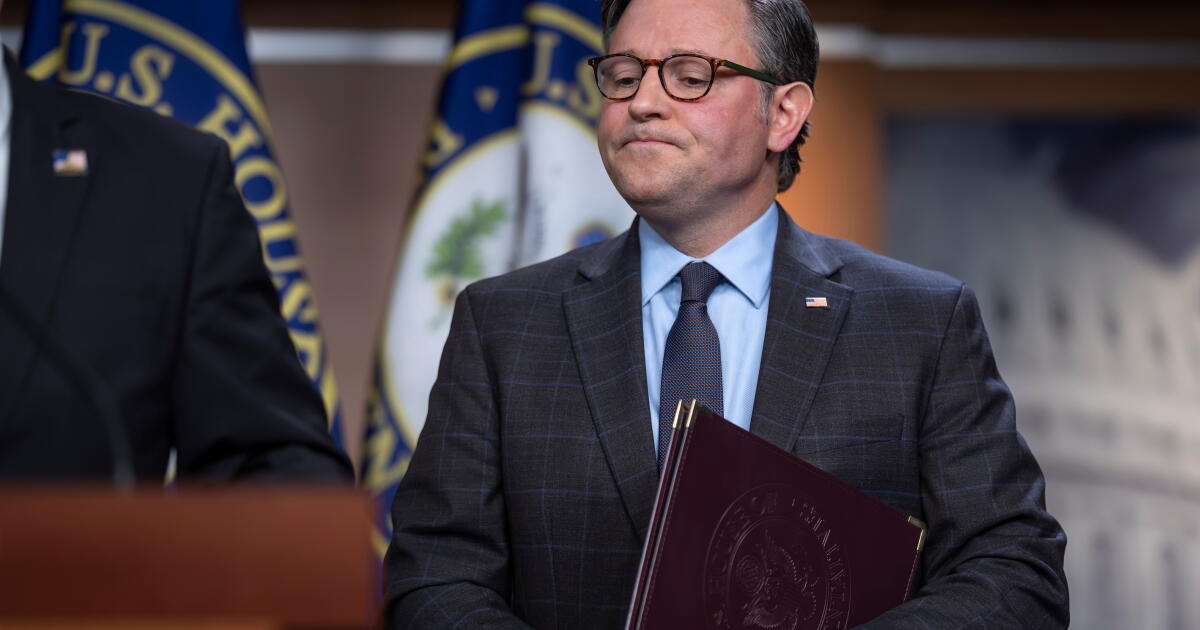
“We’re going to avoid the threat of another Democratic shutdown,” House Speaker Mike Johnson told reporters in advance of the vote.

Rep. Rosa DeLauro, the lead Democrat on the House Appropriations Committee, encouraged her Democratic colleagues to vote for the measure during a closed-door meeting Tuesday morning.

She said the bill was much improved from the product that passed the House earlier this summer on a mostly party-line basis. For example, she said it prevents the Department of Homeland Security from transferring funds to the Border Patrol, and it delays a proposed rule that would give political appointees in the Trump administration more authority to stop federal grants from going out for programs they view as not in line with the president’s agenda. Those changes were made when the Senate approved its version of the bill.

Democrats fear the administration will use the proposed regulation on grants to steer money away from Democratic-led states. DeLauro called the delay an important first step, but said more must be done to block the policy from taking effect.

“Whether a community receives disaster relief should not depend on who they voted for in the last election,” DeLauro said.

The short-term measure funds federal agencies generally at current levels through Dec. 11. It will give lawmakers more time to find compromise on a full-year measure, though that will likely be quite difficult.

Republicans are seeking hundreds of billions of dollars in additional spending for the military while cutting most non-defense programs. Democrats say that’s a non-starter and insist on a bipartisan approach that treats domestic programs with parity.

Freking writes for the Associated Press.
Source link

After uncertainty, a good sign for 2028 Games transportation funding

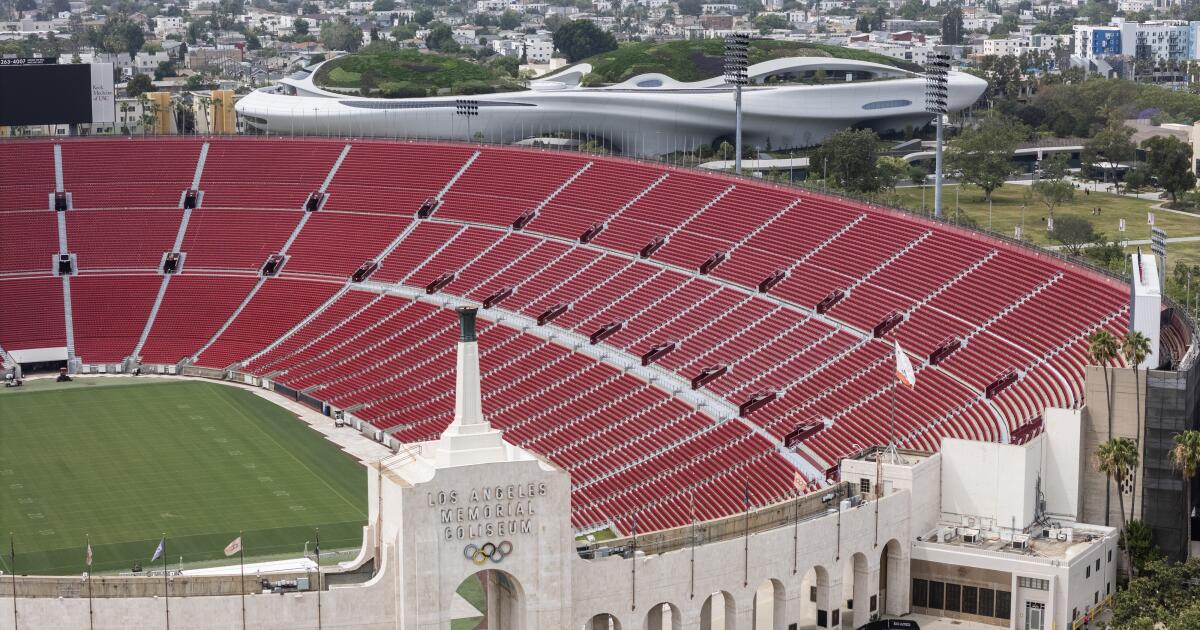
The House Appropriations Committee has approved $875 million to fund public transportation for the 2028 Olympic Games, a positive sign for LA28 after the exclusion of Olympics transit funding from President Trump’s fiscal year 2027 budget request this spring.

The funding must be passed by Congress in a future spending bill — part of a lengthy 2027 budgeting process that is underway now — but its approval in committee last week is a crucial signal of investment from Washington after weeks of uncertainty.

“We are encouraged by the House Appropriations Committee’s action,” spokesperson Maya Pogoda of the Los Angeles County Metropolitan Transportation Authority said in a statement, “and we look forward to continuing to work with the Senate and the White House to make America’s Games the best ever in history.”

LA Metro has sought $2 billion in federal funding for the planned transit service for the Games, which includes leasing buses, hiring drivers and building temporary depots. With the clock ticking to start projects that require significant lead time to be completed before the Games, the absence of any funding in Trump’s budget request in April had raised concerns among lawmakers and other stakeholders.

In recent weeks, the transit authority, the city and LA28 had publicly pressed for federal funding; LA28 Chief Executive Casey Wasserman reportedly met with lawmakers on Capitol Hill in April.

“The House Appropriations Committee’s most recent transportation bill is another positive signal of the continued bipartisan support in Congress to provide federal transit money for the Games,” LA28 spokesperson Jacie Prieto Lopez told The Times.

The inclusion of the funding in the bill conveyed bipartisan support for the Games, an event that Trump — who places an outsize importance on displays of patriotism — is likely to want to see go well during his tenure.

“This is on the American stage,” said former Los Angeles County Supervisor Zev Yaroslavsky, who was on the City Council during the 1984 Olympic Games. “The success of the Games are the success of the country.”

The Olympics item was included in the fiscal year 2027 transportation funding bill approved by the House Appropriations Committee last week. In its report, the committee noted that the funding is intended for all host cities, including those outside California.

“The 2028 games will put our nation on center stage, and this investment will help ensure that we are prepared to meet the moment and showcase why the United States is the best country in the world,” Rep. Steve Womack (R-Ark.), who chairs the subcommittee that put forth the bill, said in a statement.

The Games in Los Angeles are expected to draw massive crowds and will be the first Summer Olympics held in the United States since Atlanta hosted in 1996. More than 4 million tickets were sold during LA28’s first ticket release; a second ticket drop is coming in August.

The massive event requires federal involvement not just on funding but also on issues including athlete visas and the import of Olympic horses.

LA Metro has planned to lease 1,700 buses from transit agencies across the country, build three temporary transit depots and create dedicated traffic lanes for athletes, officials and others as required by the International Olympic Committee. Metro estimates that 1 million additional trips per day will be taken during the 16-day Games.

It’s crucial for federal funding to come through in a timely manner, Yaroslavsky said, particularly given the scope of the security and transportation considerations for the sprawling Games.

“The city and the LA28 committee need to know that this money is going to be made available,” Yaroslavsky said. “This has to be in place long before the Games start.”

Source link