Hospitals

Father Ted legend dies aged 70 as tributes paid to ‘wonderful actor’

Ben Keaton, who is best known for playing Father Austin Purcell in the iconic Channel 4 sitcom, has died at the age of 70 – tributes have poured in for the ‘wonderful actor’

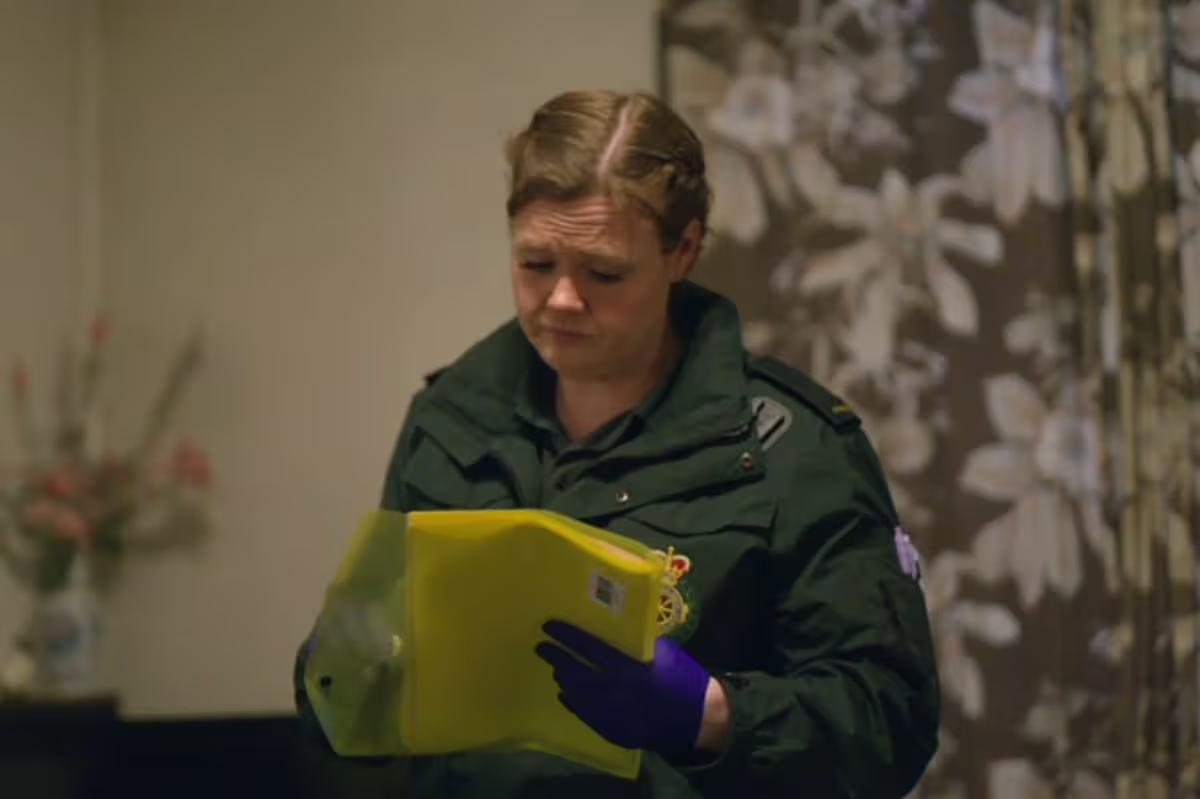
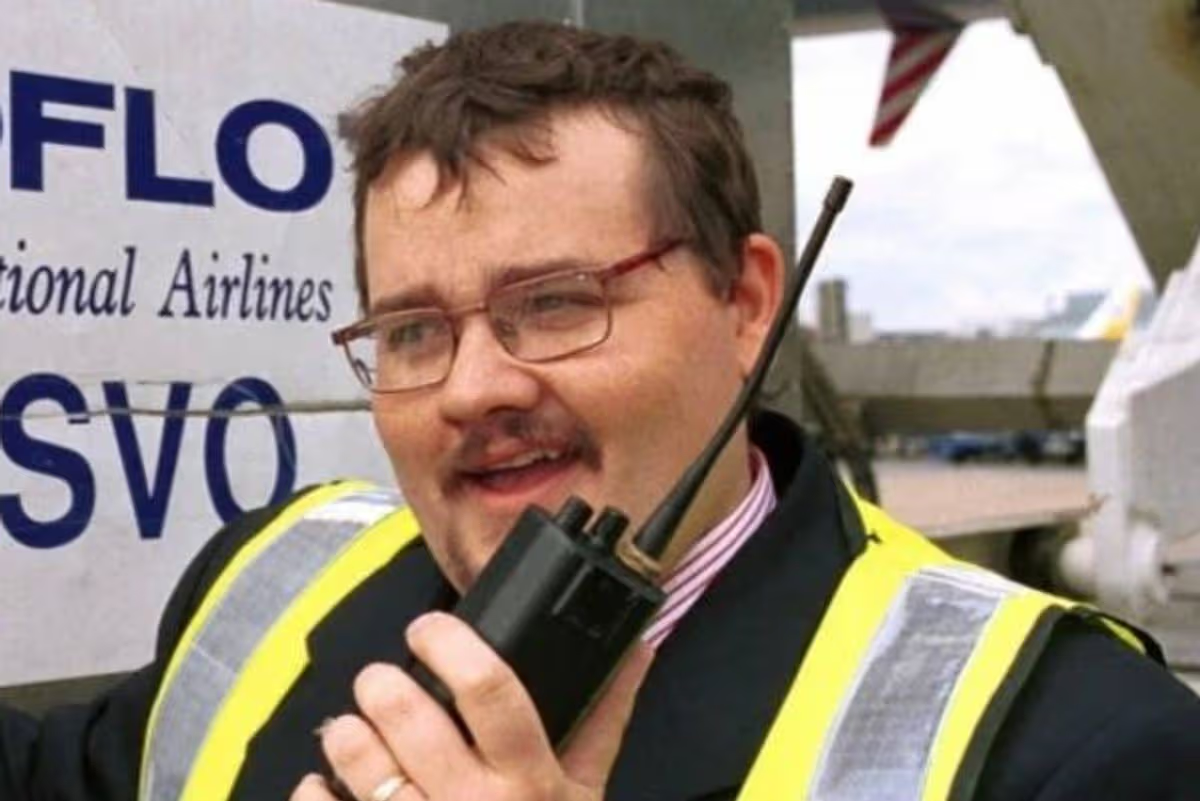
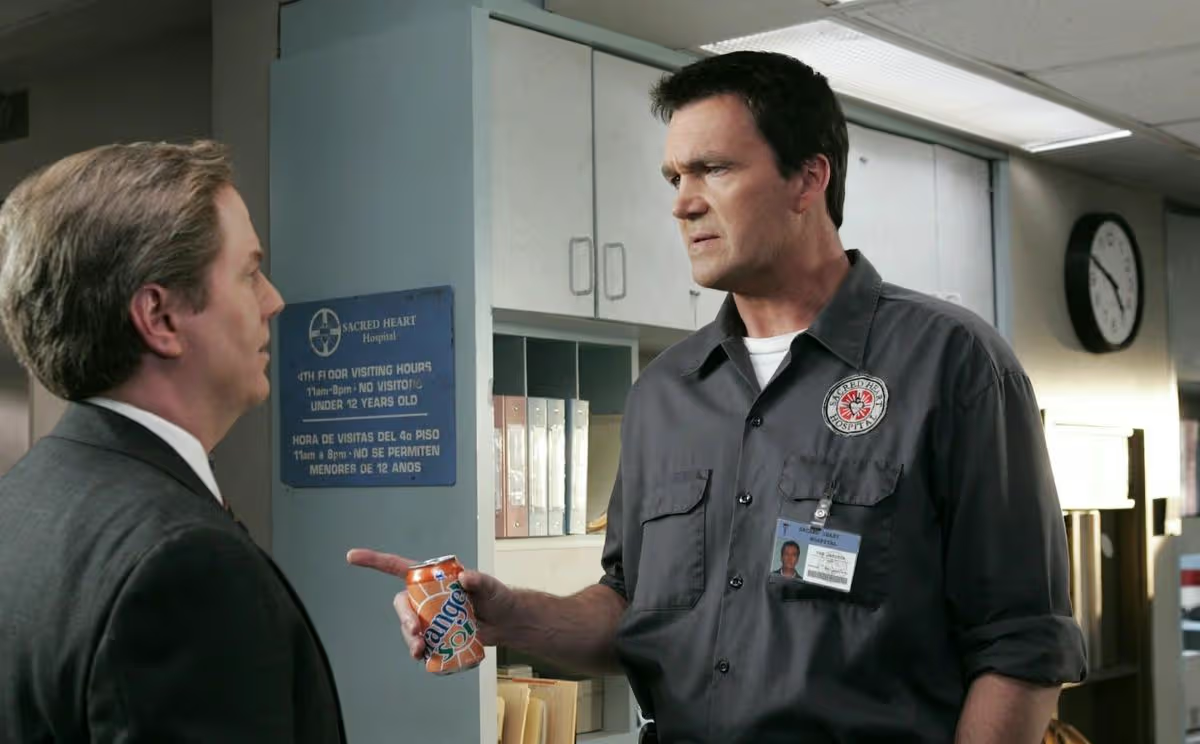
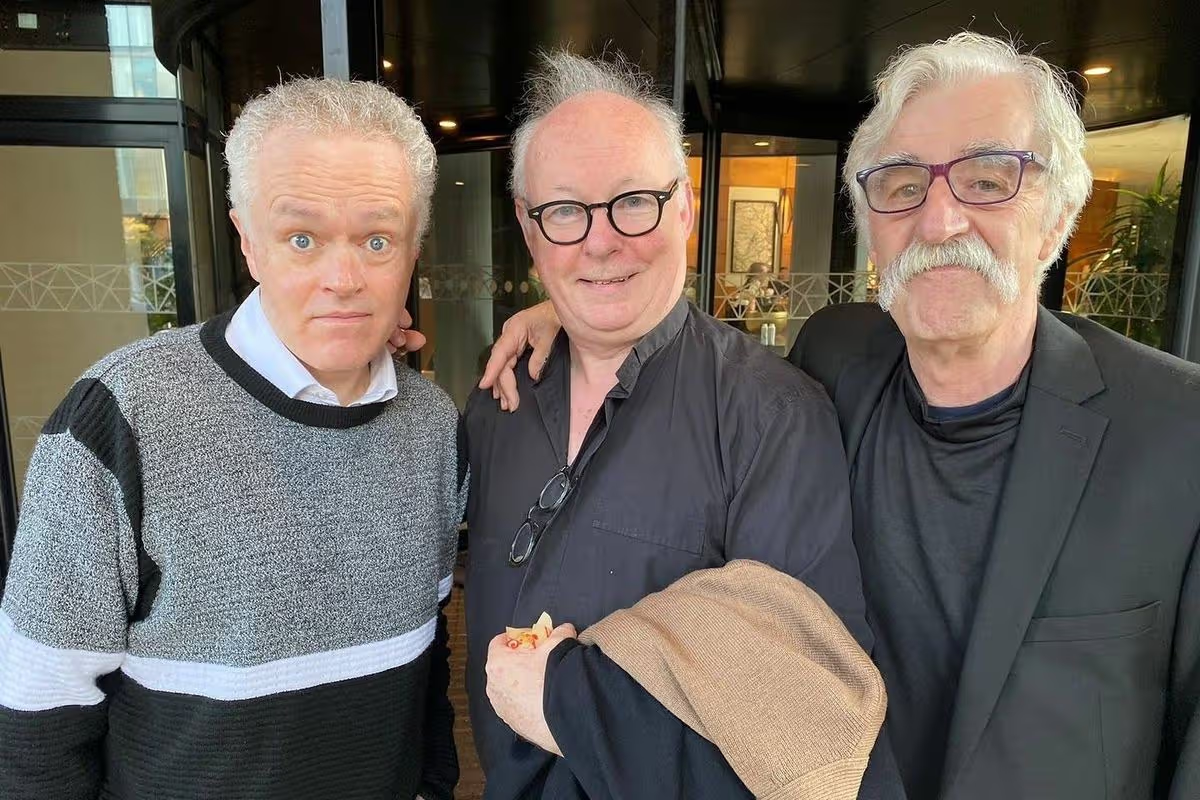
Father Ted actor Ben Keaton has passed away aged 70. Keaton, who portrayed Father Austin Purcell in the beloved comedy series, alongside appearances in Casualty and Doctors, died at Lincoln County Hospital on Friday, it has been announced.

His death notice reads: “Ben will be forever greatly missed, loved and fondly remembered by his ex-wife Polly, son Waldo and daughter Daisy, brothers Des and Thom, sister Jeanette.”

In tribute, the Nottingham Playhouse said: “We are so sorry to hear of the death of Ben Keaton, a wonderful actor who is fondly remembered in our 2008 production of Vertigo. Sending our deepest sympathies to his family and friends.”

READ MORE: Family friend of Brit, 22, left to rot in Dubai jail shares update on ‘year of hell’READ MORE: Donald Trump threatens to obliterate Iran’s power plants and gives 48 hour deadline

Ensure our latest headlines always appear at the top of your Google Search by making us a Preferred Source. Click here to activate or add us as your Preferred Source in your Google search settings.

Meanwhile, a Father Ted fan X account shared: “Saddened to hear of the passing of actor Ben Keaton. We knew him as Father Austin Purcell (one of my favourite one-off characters). He was a regular at ComicCon events, so I imagine many got to meet him over the years. My thoughts are with his family, friends, and many fans.”, reports the Daily Star.

Outside his television work, the Irishman was a distinguished stage performer. He dedicated much of his professional life to The Royal Exchange Theatre in Manchester, appearing in an eclectic array of productions from American Buffalo to Hay Fever.

A versatile artist, he co-established the improv group South Of The River and served in a senior position at the Creative Academy. His awards collection showcased his range, including the 1986 Perrier Comedy Award and two Best Actor accolades from the Manchester Evening News, culminating in a nomination for the esteemed Laurence Olivier Awards.

Honouring him in a message on X (formerly Twitter), one admirer wrote: “RIP Ben Keaton. A great actor and comedian – there can be little praise higher (if at all) in that he stole the scene every time he appeared in Father Ted. Off to the great parochial house in the sky.”

In 2022, Keaton witnessed an unexpected surge in digital popularity after being surrounded by fans seeking autographs at the CovCon event in Coventry. The frenzy intensified when he joined forces with fellow Father Ted cast members Joe Rooney (Father Damo), Michael Redmond (Father Stone), and Patrick McDonnell (Eoin McLove) to film an impromptu TikTok video.

Looking back on the viral sensation, Keaton told The Irish Sun: “The video went from 500 views to 50,000 and up and up. Joe now says we are up at half a million views on TikTok. It’s incredible.” He confessed he was frequently astonished by the lasting impact of his fleeting, scene-stealing turn as the world’s most tedious priest.

Drawing comparisons to his other roles, Keaton remarked: “I appeared in Casualty for three years, nobody cares. I did three minutes on Father Ted and it’s all people want to talk about and something which just sails through time.”

For more of the latest showbiz news and gossip, follow Mirror Celebs on TikTok, Snapchat, Instagram, Twitter, Facebook, YouTube and Threads.


Source link

Iran demands international action after attacks impact hospitals, schools | Israel-Iran conflict News

Authorities in Tehran have called for international action and solidarity after several hospitals and schools were impacted by United States and Israeli air strikes on the country as Iran continues to fire missiles and drones across the region.

Iranian Ministry of Foreign Affairs spokesman Esmaeil Baghaei said on Monday that the two countries “continue to indiscriminately strike residential areas, sparing neither hospitals, schools, Red Crescent facilities, nor cultural monuments”.

Recommended Stories

list of 3 itemsend of list

“These actions constitute the deliberate commission of the most heinous crimes of international concern. Indifference to this ongoing and extreme injustice will only further darken the future of humanity by jeopardising the shared values upon which our global community stands,” he wrote in a post on social media.

Pir Hossein Kolivand, the head of the Iranian Red Crescent Society, wrote a letter publicised late on Sunday to the president of the International Committee of the Red Cross (ICRC), demanding an explicit condemnation of attacks impacting children and educational and medical centres.

He also said monitoring and support mechanisms outlined in the Geneva Conventions must be invoked, adding that the ICRC must “adopt immediate measures” to stop similar incidents from taking place again as the war rages.

“The Red Crescent Society of the Islamic Republic of Iran, as a member of the global Red Cross and Red Crescent movement, declares its full commitment to the fundamentals of humanity, impartiality and independence, emphasising that damaged centres had no military applications,” Kolivand wrote.

ICRC President Mirjana Spoljaric said in a statement at the start of the war on Saturday that rules of war must be upheld as an obligation, not a choice.

“Civilian infrastructure such as hospitals, homes and schools must be spared from attack. Medical personnel and first responders must be allowed to carry out their work safely,” she said.

Hospitals sustain damage

Multiple Iranian hospitals have been damaged as a result of air attacks and were evacuated by authorities, but there are not believed to have been any direct strikes on any hospitals yet.

In Tehran, major strikes on Sunday damaged multiple medical centres located in two areas, according to official accounts, footage circulating on social media and information geolocated by Al Jazeera.

Videos broadcast by state media from the entrance and surrounding area of Gandhi Hospital in northern Tehran showed significant damage after a projectile struck a nearby area.

Mohammad Raeiszadeh, the head of Iran’s Medical Council, told state media from the hospital on Monday that the in-vitro fertilisation department was destroyed along with its equipment, forcing staff to move cells and embryos. Footage also showed an infant being moved by nurses on Sunday night.

The hospital appears to have been damaged after the Israeli military struck buildings housing Iranian state television’s Channel 2 and a communications antenna nearby.

This led to state television programmes being disrupted for several minutes. The broadcaster confirmed that some of its departments were bombed on Sunday without divulging details.

World Health Organization Director General Tedros Adhanom Ghebreyesus said reports of damage to the hospital are “extremely worrying” and the United Nations agency is working to verify the incident.

After a separate attack on Sunday, the Iranian Red Crescent Society released a video showing the aftermath of strikes near one of its main buildings located near Khatam al-Anbiya Hospital.

[Translation: Right now. Direct attacks by the Zionist regime and America on the vicinity of the Red Crescent building, Khatam al-Anbiya Hospital, Welfare Organisation, and Motahari Hospital in Tehran]

Footage circulating online showed plumes of smoke rising and debris scattered after the strikes. According to the Red Crescent, the ICRC’s Spoljaric visited the site of the damaged medical treatment facility on Monday and condemned any strikes impacting humanitarian centres.

Khatam al-Anbiya Hospital, the Motahari Hospital specialising in helping burn victims and the Valiasr Hospital are all located nearby. They reported either sustaining some damage or having to hurriedly move patients out.

The main target hit by Israeli warplanes in the area appeared to have been the central headquarters of the Iranian police. Police Chief Ahmad-Reza Radan did not comment specifically on the targeting of the headquarters but confirmed that police buildings were receiving regular direct hits.

On Monday afternoon, fighter jets conducted bombing runs across Tehran once again. Attacks damaged the main building of the province’s medical emergency services, located in Iranshahr Street in the downtown area. Videos released by state-affiliated media showed staff evacuating, and the state-run Tasnim news agency said several staff members were injured.

According to Iranian authorities, the Aboozar Children’s Hospital in western Iran’s Ahvaz and three medical emergency centres in the provinces of East Azerbaijan, Sistan-Baluchistan and Hamedan were also damaged.

The Iranian Red Crescent said that by noon on Monday at least 555 people had been killed after 131 counties across the country were attacked.

During and after the killing of thousands of people during January’s nationwide protests, Iranian authorities have consistently rejected calls for transparency and condemnations by the UN and international human rights organisations for attacks on hospitals by state forces to detain protesters and medical staff helping the wounded. A number of doctors and medical personnel remain incarcerated and face national security and other charges.

Schools, sports centre take hits

In Tehran, an air strike targeting 72 Square in the eastern neighbourhood of Narmak damaged a high school with authorities reporting that at least two children were killed.

Local media said the target of the attack was Mahmoud Ahmadinejad, the former populist president who may potentially have a role in shaping Iran’s political future after the killing of 86-year-old Supreme Leader Ali Khamenei and other officials. It was unclear whether Ahmadinejad was present at the site of the attack or was harmed.

There were also multiple casualties after a sports centre was targeted in Lamerd in the southern province of Fars, local authorities said on Saturday.

But the single largest casualty incident announced by Iranian authorities was from a girls school in the southern city of Minab.

After two days of working through the debris, authorities said 165 people were killed and 95 wounded, most of them children. The governor on Monday afternoon released a handwritten list of 56 of the victims but did not provide further information.

The US said it was aware of civilian casualty reports from the school and was investigating. The Israeli army said it was not aware of any Israeli or US strikes in that area.

Education International, a global federation that brings together organisations of teachers and other education employees, condemned the school attack.

“Children, teachers, and schools must never be military targets. The killing and wounding of students and educators is an intolerable violation of human rights and a grave breach of international humanitarian law,” it said.

Source link

The largest helicopter in the world is so huge it once carried a 23,000-year-old frozen woolly mammoth

The largest and most powerful helicopter has been in service since 1977

The Mil Mi-26 (codename: Halo) is a Russian-built helicopter and currently holds the title of the world’s largest. Having taken its maiden flight in 1977, the Mi-26 was initially built to transport heavy cargo to isolated locations inaccessible by conventional aircraft.

This huge helicopter boasts rear-loading doors and can carry up to 20 tonnes. Aviation specialists at Key Aero have named it the “undisputed king of military heavy lift helicopters”.

It measures 40 metres in length, making it “taller than a giraffe”, and is also the world’s most powerful helicopter.

“Two 11,400bhp engines allow it to carry loads weighing up to 20 tonnes. In 1982, the aircraft set the world record for the heaviest mass lifted to 2,000 metres by carrying a load of 56,768 kilograms, a record that still stands today.”

Aviation experts said it is “so big it can operate as a mobile hospital”. Perhaps the Mi-26’s most extraordinary cargo was a 20-ton, frozen woolly mammoth, reports the Express.

Back in 1999, the helicopter airlifted the preserved remains of a 23,000-year-old frozen Woolly Mammoth retrieved from Siberia’s frozen Taimyr Peninsula.

Content cannot be displayed without consent

Fair Lifts notes: “The Mi-26 is often the first choice for missions that involve transporting heavy machinery, including armoured vehicles, generators, and even small aircraft.

“Its eight-blade main rotor and twin-turbine engines deliver a unique blend of raw power and flight stability, enabling it to operate in some of the world’s harshest environments, from Siberian tundras to Middle Eastern deserts.”

The helicopter continues to serve actively today, mainly deployed by the Russian Aerospace Forces, but it’s also used across other nations, including China and India.

The largest aircraft in the world is the Antonov An-225 Mriya, a remarkable plane built by the Soviet Union, capable of transporting “52 mature elephants “.

Source link