hopes

US sending envoys to Pakistan, raising hopes of talks with Iran’s Araghchi | US-Israel war on Iran News

Iranian Foreign Minister Abbas Araghchi arrives in Islamabad, but Tehran yet to commit to more talks with US delegation.

United States President Donald Trump is sending envoys Steve Witkoff and Jared Kushner to Pakistan as Iran’s foreign minister arrived in the country, raising hopes of new talks on ending the US-Israeli war on Iran amid a fragile ceasefire and growing tensions over control of the Hormuz Strait.

White House press secretary Karoline Leavitt said on Friday that US envoys would sit down with Abbas Araghchi, expressing hope that parties would “move the ball forward to a deal”, but it remained unclear whether the Iranian delegation had agreed to hold talks.

Recommended Stories

list of 3 itemsend of list

Writing on X on Friday, Iran’s top diplomat had said he was off on a “timely tour of Islamabad, Muscat, and Moscow”, to coordinate on “bilateral matters”, with no specific mention of any intention to meet with US negotiators.

Trump expressed optimism over a potential deal, telling the news agency Reuters that Iran was “making an offer” aimed at satisfying US demands, which include ending its nuclear programme.

Earlier, US Defense Secretary Pete Hegseth said Iran had a chance to make a “good deal”. “Iran knows that they still have an open window to choose wisely … at the negotiating table,” he said, adding that all they had to do was “abandon a nuclear weapon in meaningful and verifiable ways”.

But two Pakistani government sources told Reuters that the Iranian foreign minister’s visit would be brief, focusing on Iran’s proposals for talks with the US, which mediator Pakistan would then convey to Washington.

Reporting from Tehran, Al Jazeera’s Ali Hashem said a “senior official” had “made it clear” to him that there would not be any US-Iran talks in Pakistan.

“These regional partners all have their own ideas on how to solve this deadlock, but for the moment, Iran has said it would not meet for a new round of talks,” he said.

Top negotiators from last round absent

Reports on Araghchi’s trip in Iranian state media made no mention of Mohammad Baqer Ghalibaf, the speaker of Iran’s parliament, who was the head of its delegation at talks with a US delegation earlier this month that ended with no breakthrough.

The Iranian parliament’s media office denied a report that Ghalibaf had resigned as head of Iran’s negotiating team, adding that there was no new round of talks scheduled yet, according to Reuters.

US Vice President JD Vance also participated in the first round of talks, but is not travelling to Pakistan on this occasion, though Leavitt said he remained “deeply involved” and was on “standby” to join if needed.

She said Trump decided to send Witkoff and Kushner to Pakistan “to hear the Iranians out”. “We’ve certainly seen some progress from the Iranian side in the last couple of days,” she maintained, without offering any further details.

Reporting from Washington, Al Jazeera’s Mike Hanna said there appeared to be a “graded process” in place, describing it as “an initial exploratory phase” that could lead to “higher-level engagement if negotiations deepen”.

A new round of talks had been expected to start on Tuesday but did not materialise, with Iran saying it was not yet ready to commit to attending.

Trump had unilaterally extended a two-week ceasefire on Tuesday to allow more time to reconvene the negotiators as the US continued its blockade on Iranian ports.

Iran says it will not stop blocking the Strait of Hormuz, a crucial maritime trade chokepoint, until Trump lifts his blockade. On Friday, the US applied more pressure on Tehran by freezing $344m in cryptocurrency assets in a bid to “systematically degrade Tehran’s ability to generate, move, and repatriate funds”.

Source link

Trump extends ceasefire and hopes for ‘unified proposal’ | Newsfeed

NewsFeed

In a social media post, President Trump announced an extension of the ceasefire in the war on Iran, but with the US blockade still in place. Al Jazeera’s Alan Fisher says there are signs of movement as Trump shifts towards discussing a ‘unified proposal’.

Source link

French Open: Carlos Alcaraz says test on wrist injury ‘crucial’ for hopes of defending title

“I’m trying to be very patient. But we are good and just waiting a little bit.

“We have a few tests in the next few days and then we will see how the injury is and what the next steps will be.”

The 22-year-old, who won clay-court titles in Monte Carle, Rome and Roland Garros and reached the final in Barcelona last season, could lose significant ground to Sinner in the rankings because of the injury.

Italian Sinner reclaimed the number one ranking this month after beating Alcaraz in the Monte Carlo final.

Alcaraz said: “I’d rather come back a little later but in great shape than come back early, rushing around, and unwell.

“God willing, I have a very long career ahead of me, many years, and pushing myself too hard at this Roland Garros could seriously harm me in future tournaments.

“Things happen in the professional world. You have to accept them. I need to recover really well if I don’t want it to affect me later on.”

Source link

European Markets Fall as US–Iran Tensions Reignite and Peace Hopes Fade

European stock markets slipped on Monday as investor sentiment weakened amid renewed tensions between the United States and Iran. The downturn followed the seizure of an Iranian cargo ship by US forces and Tehran’s vow of retaliation, raising fears that a fragile ceasefire nearing its expiry may collapse.

The situation has been further complicated by Iran’s rejection of fresh peace talks and ongoing uncertainty over maritime security in the Strait of Hormuz, a critical global energy route.

Market Reaction

The pan-European STOXX 600 index declined by 0.8%, reflecting broad-based caution across financial markets. Major indices also moved lower, with Germany’s DAX down 1% and France’s CAC 40 falling 0.9%.

Losses were concentrated in sectors sensitive to geopolitical risk. Travel and leisure stocks led declines, followed by banking and automobile shares, which also came under pressure. In contrast, energy stocks rose as oil prices surged, reflecting concerns about supply disruptions.

Oil and Energy Impact

Crude oil prices jumped sharply, with Brent crude rising more than 5% to around $95 a barrel. The increase reflects heightened fears of disruption in the Strait of Hormuz, through which a significant portion of global energy trade passes.

Energy-dependent European economies remain particularly sensitive to price volatility, adding to investor caution across broader markets.

Geopolitical Tensions

Market sentiment shifted sharply from the previous week’s optimism, when easing signals from the Strait of Hormuz had briefly boosted equities. That optimism faded quickly after renewed maritime incidents and political escalation.

The United States and Iran continue to exchange accusations over ceasefire violations, while diplomatic efforts appear increasingly uncertain. The rejection of fresh negotiations by Iran and continued US pressure have added to concerns that the conflict could intensify further.

Outlook

Financial markets remain closely tied to developments in the Middle East. With the ceasefire approaching its expiration and no clear diplomatic breakthrough in sight, volatility is expected to persist.

Investors are likely to remain cautious until there is greater clarity on both maritime security in the Strait of Hormuz and the future of US–Iran relations.

With information from Reuters.

Source link

NEWS ANALYSIS : Clinton Sees Chance to Win the Budget Battle : Politics: President hopes GOP proposals will cause a public backlash. That would pave way for a compromise.

Amid the din of battle over the federal budget, President Clinton summoned Democratic congressional leaders to the White House last week and gave them an unexpectedly upbeat message: With a little discipline and a little luck, they might win this fight yet.

“The Republicans are very disciplined and very good,” Clinton warned his war council around the Cabinet Room’s long mahogany table, according to people who were present. “But we’re making headway.”

Congress’ drive to cut the budget this spring was launched by triumphant GOP leaders, confident that they had a mandate from voters to slash government programs and shrink the federal budget deficit to zero.

But after three months of rhetorical battle, Clinton believes that he has begun to turn the Republicans’ issue around–into a major political opportunity for himself.

The budget battle is “the centerpiece” of Clinton’s work this year, said White House Chief of Staff Leon E. Panetta. “It will determine a lot about the priorities of the country; it will determine a lot about our economy in the future; it will determine a lot about the role of government.”

It will also determine a lot about how voters view Clinton as the election year of 1996 approaches. “It . . . will better define who the President of the United States is, and I think that’s helpful,” Panetta said in an interview.

Transforming budget-cutting from a liability into an asset would be a startling turnaround for a President whom Republicans succeeded in painting as a “tax-and-spend Democrat” only last year. But public opinion polls read raptly by White House aides suggest that the voters are moving Clinton’s way: An ABC News-Washington Post poll last week found that while respondents by a wide margin once trusted Congress over Clinton to deal with the deficit, the President has nearly closed the gap.

Clinton’s biting attacks on GOP plans to shrink Medicare, education and veterans programs have helped lift his approval rating in the poll to 51%, its highest level in a year.

White House strategists said they were not worried that the House Republicans passed their GOP budget plan last week, as was long expected. More important, they said, was that Clinton apparently succeeded with his threat to veto a GOP spending-cut bill, since the GOP leadership acknowledged that they probably wouldn’t have the votes to override a veto. It showed that the President can still make himself relevant.

Clinton is betting that House Speaker Newt Gingrich (R-Ga.) and other GOP leaders overestimated the public’s desire for cutting government–especially once the public realizes that the savings would come not only from unpopular programs, such as welfare and foreign aid, but also from middle-class benefits.

Political strategists note that Clinton’s argument may attract some swing voters–especially white women older than 35, one of the President’s critical demographic targets. Making up more than one-fourth of the electorate, they largely voted for Clinton in 1992, abandoned the Democrats in 1994–and could be key to his prospects in 1996.

At the same time, Clinton and his aides believe that they must eventually seek a budget compromise with the Republicans–if only to avoid the charge that the President has become irrelevant to the process of shrinking the government, a goal most voters still want.

“Preserver of the Big Government status quo is not a place you can end up in a fight this big,” one presidential adviser said.

So Clinton, Panetta and other aides have devised a two-part strategy to try to stop the GOP juggernaut and turn the budget battle to their advantage.

The first phase has been to shift the topic away from the deficit, force the public to confront the kind of cuts the Republicans want and paint the GOP as heartless vandals who would loot Medicare and student loans to give tax cuts to the wealthy.

“Less government? That’s not the issue. The issue is: Do you want your kids to go to college?” Labor Secretary Robert B. Reich said.

If that tactic works, and Republicans retreat from their proposed spending and tax cuts, then the Administration wants to sit down and try to negotiate a compromise, a budget “that might be nobody’s first choice but that is really quite a good budget,” said Alice Rivlin, director of the Office of Management and Budget.

But Clinton doesn’t want to begin those negotiations until “his leverage is at a peak,” Panetta said, meaning the President wants to continue whipping up public opposition to GOP budget cuts and threatening to veto a budget he doesn’t like, at least for a while.

“The Republicans are beginning the budget triage, amputations and decapitations, and for the moment the Democrats are happy to sit in the surgical theater and watch the blood flow,” said Ross K. Baker, an expert on Congress at Rutgers University.

Already, however, Panetta and other Administration officials have begun sending signals to Capitol Hill about the kind of deal Clinton might eventually want to make.

“Yes, we want additional deficit reduction,” Panetta said. “But in order to engage, the Republicans have to back off these huge tax cuts, they have to recognize that any Medicare or Medicaid savings have to be done in the context of [health care] reform, and they have to be willing to protect education as a key investment.” Almost everything else is “on the table,” he said.

One key concession the White House has quietly offered: Clinton is willing to drop most or all of his proposed $500-per-child tax credit–the core of his long-promised “middle-class tax cut”–if Congress agrees to make college tuition tax-deductible.

Those early signals suggest to some members of Congress, including some worried liberal Democrats, that Clinton may be willing to give up quite a lot–except for his major concerns on Medicare, Medicaid and education–for the chance to claim a victory.

When bargaining can begin in earnest depends mostly on the GOP’s tolerance for pain. Aides say Clinton will stay on the attack for at least three weeks as Republicans pass their budget resolutions and begin making decisions on the discretionary portion of the budget.

But White House officials hope that the solid Republican line will begin to fracture as members of Congress read the mood of their constituents. Some in Congress predict a turning point could come as early as the Memorial Day recess, which begins Saturday, but others warn that it might be September before negotiations start.

The White House strategy is not assured of success, of course. At least three problems loom:

First, Clinton has succeeded only partially in changing the focus of the debate from deficits to middle-class benefits. By a wide margin, the public still says it wants a balanced federal budget, with no deficit. The President’s dirty little secret is that he doesn’t think a balanced budget can be achieved in the foreseeable future at reasonable cost.

In fact, the public is inconsistent on these issues. Large majorities say they want to balance the budget, but equally large majorities say they are opposed to significant cuts in Medicare, Medicaid, student loans and other education programs.

Second, Democrats aren’t entirely unified behind Clinton’s strategy, which is why the President spent much of his meeting in the Cabinet Room last week appealing for more discipline.

Some strains were already evident in the closed-door session, participants said. House Minority Leader Richard A. Gephardt (D-Mo.) urged Clinton to give the Republicans no quarter, but Sen. John Kerry (D-Mass.) said: “It’s not enough to complain; we need to say where we go from here.”

Third, and most important, the Republicans may not cooperate. “Democrats have no standing to say anything about what we are doing in the House and the Senate,” House Budget Committee Chairman John R. Kasich (R-Ohio) said last week. Gingrich and Senate Majority Leader Bob Dole (R-Kan.) often disagree with each other, but they agree on one point: They don’t want Clinton to win credit for their hard work in fashioning a leaner federal budget. So they may be tempted to pass a budget bill of their own design and dare Clinton to veto it this fall.

That would lead to a messy confrontation that could require the federal government to halt routine operations until a solution is found.

“I don’t think anyone comes out a winner” in an impasse like that, Panetta said. “I don’t think the President wins; I don’t think Republicans or Democrats win.”

Source link

Hopes grow for a breakthrough in US-Iran talks as Pakistan mediates | US-Israel war on Iran News

Pakistani officials are expecting a “major breakthrough” in talks between Iran and the United States on Tehran’s nuclear programme, sources have told Al Jazeera, as Islamabad steps up diplomatic efforts to end a war that has killed thousands of people.

The optimism on Wednesday came as a high-level Pakistani delegation, headed by Army Chief Asim Munir, arrived in Tehran to deliver a message from the US to the Iranian leadership, according to Iran’s Press TV broadcaster.

Recommended Stories

list of 4 itemsend of list

He was received by Iran’s Foreign Minister Abbas Araghchi, who expressed gratitude for Pakistan’s “gracious hosting of dialogue”. According to Press TV, Munir is also seeking to lay the groundwork for a second round of talks between the US and Iran.

Al Jazeera’s Osama Bin Javaid, who has been covering the US-Iran talks, said Pakistani officials were expecting “a major breakthrough on the nuclear front” and that the delegates were continuing to relay messages back and forth between Washington and Tehran.

The central sticking point remains the duration of any enrichment freeze by Iran and the country’s stockpile of 440 kilogrammes of highly enriched uranium.

“We know that both sides are essentially stuck on between five years of no enrichment to 20 years of no enrichment. And there is a solution in the middle,” Bin Javaid said.

“There’s also talk about what Iran will do with the 440kg of nuclear-enriched material that it has in the country. There are multiple options – whether sending it abroad to a third party or bringing it down to either uranium in its natural form or up to 3 percent,” he said.

“According to these sources, there’s major headway that has been made, and they’re expecting that the Pakistanis are going to be able to convince Tehran,” he added.

Shuttle diplomacy

The shuttle diplomacy by Pakistan came after talks between the US and Iran in Islamabad ended over the weekend without an agreement to end the war. Mediators are pressing for a compromise on three main issues: Iran’s nuclear programme, control of the Strait of Hormuz – which Tehran has effectively closed, causing a surge in global oil prices – and compensation for wartime damages.

The conflict, launched by the US and Israel on February 28, has killed more than 3,000 people in Iran and triggered retaliatory attacks by Tehran on Gulf countries. It has also reignited a conflict between Israel and Hezbollah in Lebanon, where Israeli forces have killed more than 2,000 people since March 2.

A ceasefire between Tehran and Washington on April 8 has halted attacks in Iran and the Gulf, but strikes by Israeli forces on Lebanon have continued.

Separately on Wednesday, Pakistan’s Prime Minister Shehbaz Sharif also travelled to Saudi Arabia as part of a regional tour that also includes stops in Qatar and Turkiye. Al Jazeera’s Bin Javaid said Sharif’s tour was part of a “double-pronged strategy”.

“While the Iranians are speaking to the Pakistani military chief, the Pakistani prime minister and foreign minister are talking to the Saudis and the Qataris. The day after, they go to Turkiye,” he said, with the aim of neutralising any detractors to a deal

Bin Javaid said the detractors include elements in Tehran, in Washington, DC, and most of all, Israel, “which does not want a peace deal and wants a perpetual war in the region”.

‘Very close to over’

The diplomatic push appears bolstered by optimistic comments from US President Donald Trump, who said late on Tuesday that the world should brace for an “amazing two days” and the war on Iran is “very close to over”.

White House Press Secretary Karoline Leavitt later said that further negotiations would likely be held in Islamabad, calling Pakistan-mediated discussions “productive and ongoing”.

“We feel good about the prospects of a deal,” she said on Wednesday.

In Tehran, Iran’s Ministry of Foreign Affairs confirmed that exchanges with the US have continued since the end of the talks in Islamabad. Spokesman Esmaeil Baghaei said “several messages have been exchanged through Pakistan” and that Iranian “positions have been expressed in those exchanges”.

Tensions remain, however.

A US Navy blockade on Iranian ports – which began following the end of the talks – remains in effect in the Strait of Hormuz. The US Central Command claimed it has turned back nine vessels as of Wednesday.

Iran’s military has denounced the blockade as a violation of the April 8 ceasefire. Iran’s Fars News Agency separately reported that a sanctioned Iranian supertanker had crossed the Strait of Hormuz despite the blockade, though it gave no further details.

Ali Abdollahi, the commander of Iran’s joint military command, has also threatened to halt trade in the region if the US does not lift its blockade. He warned that Iran would retaliate by blocking trade through the Red Sea, along with the Gulf and the Sea of Oman.

Source link

Oil prices fall as renewed hopes for peace talks feed a stock market rally

European stocks were mostly steady on Wednesday as investors weighed signals from Washington that a diplomatic breakthrough in the Iran war could be imminent.


ADVERTISEMENT


ADVERTISEMENT

The pan-European Stoxx 600 had ticked down 0.1%, Germany’s Dax edged 0.11% higher and the FTSE 100 climbed 0.11%. The CAC 40 in France fell by a slightly greater margin, at 0.65%.

US President Donald Trump said fresh talks between Washington and Tehran “could be happening over the next two days” in Islamabad, signalling a possible diplomatic breakthrough, and added that the war was “very close to over” — despite continued uncertainty over key sticking points in negotiations.

Asian markets were broadly higher.

Japan’s Nikkei 225 gained 0.5%, South Korea’s Kospi jumped 3.0% and Hong Kong’s Hang Seng edged up 0.7%.

The Shanghai Composite added 0.2%, while Australia’s S&P/ASX 200 was little changed, up less than 0.1%.

On Wall Street, the S&P 500 added 1.2% to its gains from the previous day, and the index at the heart of many 401(k) accounts is now just 0.2% below its record set in January.

The Dow Jones Industrial Average rose 317 points, or 0.7%, while the Nasdaq Composite climbed 2%.

On Wednesday, benchmark US crude inched up by 1 cent to $91.29 a barrel.

Brent crude added 48 cents to $95.27, or less than 1%, after falling 4.6% the previous day. While that is still above its roughly $70 level from before the war began in late February, it remains well below the peak of $119.

Lower oil prices help reduce costs for businesses across the economy. However, some analysts noted that the war is still ongoing, warning that the optimism may prove unfounded.

“The counterintuitive decline in crude appears driven by growing hopes that a second round of peace talks between Washington and Tehran could soon materialise, after the first attempt fizzled out,” said Tim Waterer, chief market analyst at KCM Trade.

“Traders are clearly choosing to price in the possibility of de-escalation rather than the immediate reality of restricted flows,” he added.

Asian nations depend on access to the Strait of Hormuz, a narrow waterway that is the main route for crude oil produced in the Persian Gulf to reach customers worldwide. Disruptions there have kept oil off the global market, driving up prices.

Global inflation this year is expected to accelerate to 4.4% from 4.1% in 2025, according to the International Monetary Fund, which had previously forecast a slowdown to 3.8%.

The IMF also downgraded its forecast for global economic growth to 3.1% this year, from 3.3% projected in January.

Overall, the S&P 500 rose 81.14 points to 6,967.38. The Dow Jones Industrial Average gained 317.74 points to 48,535.99, while the Nasdaq Composite climbed 455.35 points to 23,639.08.

In the bond market, Treasury yields eased as falling oil prices reduced inflationary pressure. The yield on the 10-year Treasury fell to 4.25% from 4.30% late Monday.

In currency trading, the US dollar edged up to 159.03 Japanese yen from 158.79 yen. The euro stood at $1.1780, down from $1.1797.

US stocks climbed to the brink of a record high on Tuesday, while oil prices eased as hopes grew that Washington and Tehran may resume talks to end their war.

The S&P 500 rose 1.2%, leaving it just 0.2% below its January peak. The Dow Jones Industrial Average gained 0.7%, while the Nasdaq Composite jumped 2%, tracking broader global market gains.

Investors are betting that renewed diplomacy could prevent a prolonged surge in oil prices and inflation, allowing focus to return to corporate earnings.

Brent crude for June delivery fell 4.6% to $94.79, down from recent highs, though still above pre-war levels.

However, volatility remains high, with markets sensitive to developments around the Strait of Hormuz, a key route for global oil supply.

Source link

Champions League: Arne Slot’s Alexander Isak gamble backfires as Liverpool’s silverware hopes end

Less than a year on from the day Liverpool won the Premier League title, Arne Slot’s side find themselves in a position where their season rests on qualifying for the Champions League.

For Slot, perhaps his future does too. There will be no silverware and the Dutchman has already said failing to have Champions League football next season would mean this would “definitely not be an acceptable season”.

This was Liverpool’s 17th defeat of the campaign but it came after arguably one of their better performances. Until Ousmane Dembele’s 72nd-minute strike for Paris St-Germain, Liverpool battled admirably against the champions of Europe.

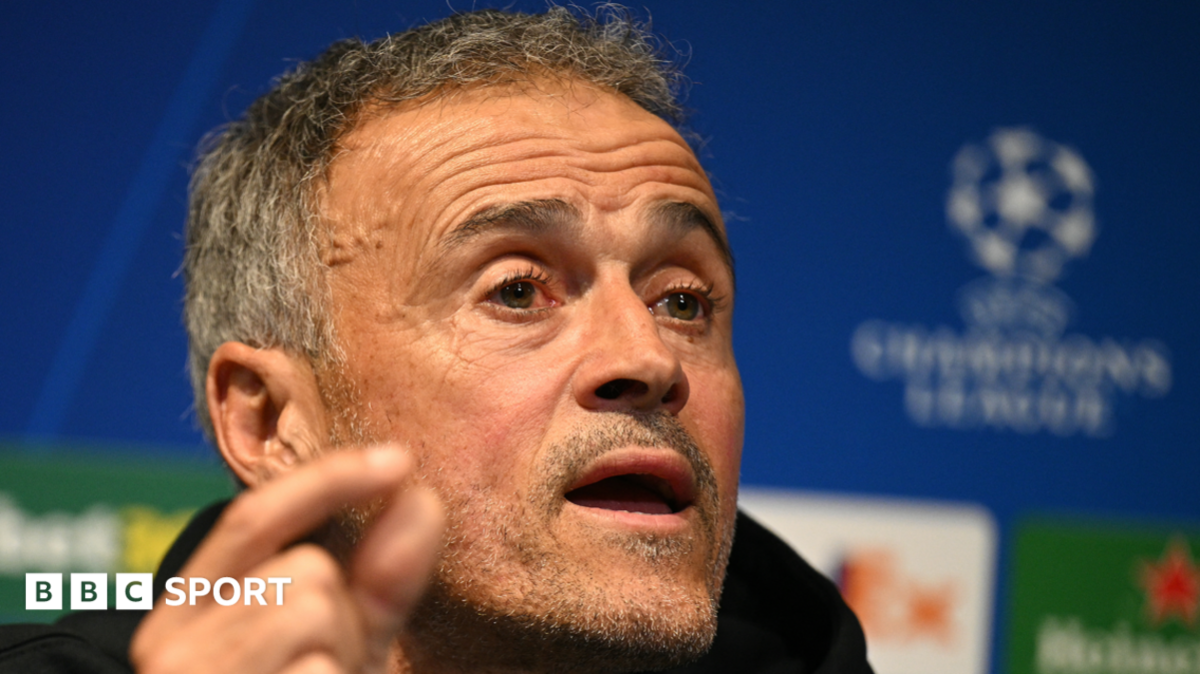
“It was an intense match between two teams who played really good football,” said PSG head coach Luis Enrique.

For Liverpool, there is no shame in getting knocked out by this PSG side. Luis Enrique’s side are a joy to watch and play with confidence when in possession.

But the worry for Liverpool is they have gone backwards.

When these two sides met in the Champions League last 16 last season, PSG were the better side across the two legs but they needed a penalty shootout to knock Liverpool out.

This time around, they outclassed Slot’s side in Paris and, while there were spells on Tuesday night when Liverpool threatened, the final scoreline of 4-0 across two legs was fair.

“Of course we are very disappointed because I think there were parts of the second half where you could feel ‘if we could just score now, this could become a very special night’,” said Slot.

“But the future looks very bright for this team, for this club. We have showed we can compete with the champions of Europe in our stadium. To be the dominant team, not many teams can be dominant against PSG and create as many chances as we did,” he added.

At Anfield, Liverpool’s xG was 1.94 compared with the 0.18 at the Parc des Princes last week.

So there were positives to take, but there is still plenty to be done before they can be considered serious contenders on the European stage again.

After the match, Mohamed Salah waved goodbye to the Anfield crowd after playing his last game for Liverpool in the Champions League.

Now the question is whether Slot and Liverpool will be back in the Champions League next season.

Source link

Stock markets gain and oil falls on hopes of renewed US-Iran talks

Trading on Tuesday began with high expectations that the Iran war is inching to a close, fuelling gains across major stock markets and pushing oil back under $100 a barrel.


ADVERTISEMENT


ADVERTISEMENT

Investors remained hopeful for a lasting de-escalation of the conflict, now in its seventh week, as the US and Iran are said to be weighing a second round of talks before a temporary ceasefire agreement expires next week.

The US military on Monday began a blockade of Iranian ports as Washington steps up pressure on Tehran, following weekend ceasefire talks between the two sides that ended without agreement.

Trump also suggested on Monday that the United States is still willing to engage with Tehran.

“I can tell you that we’ve been called by the other side,” he said, without elaborating further.

Oil prices continued to pull back on Tuesday from earlier gains.

Brent crude, the international standard, was down 0.8% at $98.62 per barrel, nearing 8 am CET.

It reached nearly $104 early on Monday amid Iran war concerns and limited progress in weekend ceasefire talks.

Benchmark US crude fell 1.7% early Tuesday to $97.40 a barrel.

The global energy shock stemming from maritime traffic disruptions in the Strait of Hormuz, through which roughly a fifth of the world’s oil is typically transported, has led to surging fuel prices and threatens to push up inflation in many countries and weigh on economic growth.

Stock markets are hungry for good news

Investors were quick to recover after the dismal first trading day on Monday. Asian markets were mostly up on Tuesday morning, tracking Wall Street gains.

Tokyo’s Nikkei 225 was up 2.4%, while South Korea’s Kospi jumped more than 3% to 6,004.30.

Hong Kong’s Hang Seng rose 0.4% to 25,759.75, while the Shanghai Composite climbed 0.6% to 4,010.45.

This comes as China on Tuesday reported worse-than-expected export growth.

The world’s second-largest economy expanded its exports by 2.5% in March year on year, significantly slower than the previous two months as uncertainties rose from the Iran war and its impact on energy prices and global demand.

The March data missed analysts’ estimates and was sharply down from the 21.8% export growth recorded in January and February.

Wall Street rose on Monday. The S&P 500 gained 1%, the Dow Jones Industrial Average climbed 0.6% and the Nasdaq Composite added 1.2%.

Shares in Goldman Sachs fell 1.9% despite the investment bank posting better-than-expected quarterly profits.

In other trading, gold and silver prices rose on Tuesday. Gold was up 0.6% at $4,796.60 (€4,219.62) an ounce, while silver gained 1.8% to $77.05 (€67.80) per ounce.

The US dollar fell to ¥159.08 from ¥159.45. The euro was trading at $1.1766, up from $1.1759.

Source link

Asia’s stock markets surge, oil falls on hopes for US-Iran talks | Financial Markets News

Relief for global markets comes after Trump says Iranian officials are keen on a deal.

Asia’s main stock markets have surged, and oil prices have declined amid renewed hopes for ceasefire talks between the United States and Iran.

The relief for global markets on Tuesday came after US President Donald Trump said overnight that Iranian officials had reached out to his administration and expressed their openness to a deal.

Recommended Stories

list of 4 itemsend of list

“We’ve been called by the other side, and they would like to make a deal very badly,” Trump said in remarks at the White House.

Japan’s benchmark Nikkei 225 rose as much as 2.5 percent on Tuesday, while South Korea’s KOSPI gained about 3.7 percent.

Singapore’s Straits Times Index climbed about 0.6 percent.

In Hong Kong, the Hang Seng Index was up about 0.4 percent in the early afternoon, while the SSE Composite Index in Shanghai was about 0.5 percent higher.

The rally in Asia followed gains on Wall Street, with the benchmark S&P 500 finishing up 1 percent overnight.

Brent crude, the benchmark for global oil prices, dipped nearly 1.5 percent, falling below $98 a barrel.

The positive turn for markets came despite the US following through on its threat to impose a naval blockade on Iranian ports, a move that analysts warn is likely to exacerbate the energy shortage that is roiling the global economy.

Brent had surged above $103 per barrel after Trump on Sunday threatened to impose a blockade on the Strait of Hormuz, a conduit for about one-fifth of global oil and natural gas supplies.

The US military later clarified that the blockade would only apply to vessels entering and exiting Iranian ports, in an apparent scaling back of Trump’s threat to fully close the waterway.

Iran has effectively halted shipping through the strait since the start of the war on February 28, throwing the global energy market into a tailspin.

Only 21 vessels transited the strait on Sunday, according to maritime intelligence provider Windward, compared with roughly 130 daily transits before the start of the conflict.

Source link

Clippers lose to Trail Blazers, jeopardizing their No. 8 seed hopes

Deni Avdija scored 35 points, Donovan Clingan had 18 points and 13 rebounds, and the Portland Trail Blazers beat the Clippers 116-97 on Friday night to take the inside track for the eighth seed in the Western Conference.

If Portland beats the Sacramento Kings on Sunday, the Blazers will secure their spot in the 7-8 play-in game on Tuesday in Phoenix against the Suns.

Robert Williams III had 13 points and 10 rebounds as Portland outrebounded the Clippers 46-35 and won the turnover battle despite leading the league in turnovers.

Kawhi Leonard led the Clippers with 24 points and eight rebounds.

After Portland took a 55-35 first-half lead, the Clippers stormed back. Jordan Miller’s three-pointer gave the Clippers their first lead since the first quarter at 82-79 with 2:05 left in the third. But the lead was short-lived as Matisse Thybulle tied it at 82 on Portland’s next possession.

After the Clippers took an 88-86 lead with 11:06 left, Jrue Holiday tied the game at 88 with free throws and Williams gave Portland a 90-88 lead with 10:31 left.

Williams scored on a dunk with 8:22 left to make it 92-88, forcing a timeout. Leonard missed a jumper out of the timeout and Avdija’s three-point play made it 95-88 with 7:41 left.

Avdija made two foul shots to make it 99-90 with 4:51 left. Brook Lopez’s three-pointer with 4:36 left made it 99-93. Portland’s Toumani Camara made it 101-93 on Portland’s next possession. Lopez was called for a technical foul with 3:26 left and Avdija made the shot to make it 104-93.

Avdija hit a three-pointer with 2:41 left to make it 109-93 and Portland never looked back.

Portland’s Shaedon Sharpe returned after missing the last 28 games and finished with eight points in 15 minutes.

Up next for the Clippers: Host the Warriors on Sunday.

Source link

Man City: Pep Guardiola hopes Rodri will stay but unhappy players can leave

Rodri won the Ballon d’Or in 2024 but missed almost the entirety of last season after sustaining a knee injury and City failed to win a major trophy for the first time in eight years.

He has missed large chunks of this campaign because of a hamstring issue but has played 28 games in all competitions, helping the side to win the Carabao Cup against Arsenal at Wembley.

During his time at City, Rodri has won four Premier League titles, the Champions League, FA Cup and three League Cups.

Rodri previously said to Spanish media: “There have been many players who’ve gone down that path [playing for Atletico and Real].

“Not immediately, but over time. For me, you can’t turn down the best clubs in the world.”

Guardiola said Rodri has shown over time “how attached, how close he is” to City and his “contribution has been massive”.

The manager confirmed he would “absolutely” not stand in the midfielder’s way if he wanted to leave, adding: “The organisation of the club is above all of us – if one player is not happy they have to leave and [we] continue the same always if they are happy – and I think he is happy.

“If he is not happy just knock on the door of the sporting director, accept an offer according to his incredible quality and after that he doesn’t belong to the club – only himself.

“I know what the club wants. They informed me what they want from Rodri – it is to stay, stay, stay. I always had the positive [feeling] with that but at the end I don’t know.”

Source link

Seoul stocks rebound nearly 3 pct amid hopes for Hormuz Strait reopening

This photo, taken Friday, shows the trading room of Hana Bank in central Seoul as South Korean stocks jumped nearly 3 percent on hopes that the Strait of Hormuz would reopen. Photo by Yonhap

South Korean stocks soared by nearly 3 percent Friday, as Iran’s discussions with Oman on a protocol to monitor traffic through the Strait of Hormuz boosted hopes of easing oil supply disruptions despite heightened tensions in the Middle East. The Korean won strengthened sharply against the U.S. dollar.

The benchmark Korea Composite Stock Price Index (KOSPI) added 143.25 points, or 2.74 percent, to 5,377.30, rebounding from sharp losses in the previous session.

Trading volume was moderate at 1.12 billion shares, with a total value of 22.13 trillion won (US$14.69 billion), as gainers outnumbered losers 664 to 224.

Foreign and institutional investors bought a net 814.57 billion won and 716.93 billion won worth of shares, respectively, while individuals sold a net 2.09 trillion won worth of shares.

The rebound followed news that Tehran was drafting a protocol with Oman to monitor maritime traffic through the Strait of Hormuz, raising hope of progress toward reopening the waterway.

The strategic waterway has effectively been shut since the outbreak of war in the Middle East in late February, driving up global oil prices due to supply disruptions.

Dozens of countries are also seeking ways to resume shipments through the Strait of Hormuz after U.S. President Donald Trump warned of an “extremely hard” attack on Iran within the next two to three weeks, while urging countries that rely on the key shipping route for energy imports to “take care of” it themselves.

“Iran has said the measure is intended to ensure safety and improve services, suggesting that the blockade of the waterway may be easing,” Seo Sang-young, a researcher at Mirae Asset Securities, said.

Top-cap shares finished mixed.

Market bellwether Samsung Electronics surged 4.37 percent to 186,200 won, while chip giant SK hynix soared 5.54 percent to 876,000 won.

Defense giant Hanwha Aerospace climbed 2.26 percent to 1,449,000 won, and artificial intelligence investment firm SK Square went up 2.88 percent to 483,000 won. Nuclear power plant builder Doosan Enerbility jumped 3.21 percent to 96,600 won.

Shipbuilders gathered ground. Local industry leader HD Hyundai Heavy spiked 9.23 percent to 479,000 won, and its rival Hanwha Ocean went up 7.29 percent to 128,000 won.

Carmakers finished mixed. Top automaker Hyundai Motor advanced 1.18 percent to 471,000 won, while its affiliate Kia fell 0.27 percent to 150,200 won.

Leading battery maker LG Energy Solution fell 1.48 percent to 398,500 won, and bio giant Samsung Biologics lost 1.96 percent to 1,554,000 won. Leading financial firm KB Financial shed 0.68 percent to 145,500 won.

The local currency was quoted at 1,505.2 won against the U.S. dollar as of 3:30 p.m., up 14.5 won from the previous session.

Copyright (c) Yonhap News Agency prohibits its content from being redistributed or reprinted without consent, and forbids the content from being learned and used by artificial intelligence systems.

Source link

Children’s hospital in Tehran keeps hopes and smiles alive during war | Health News

Staff at the Children’s Medical Center organise activities to offer a joyful experience to children in hospital amid the ongoing US-Israeli war on Iran.

Tehran, Iran – Many Iranian families picnicked outdoors during daylight hours on Thursday for Sizdah Bedar, which marks Nature Day in the Persian calendar, despite the ongoing bombardment by the United States and Israel.

Thousands gathered at Pardisan Park, a sprawling complex northwest of Tehran, to spend time with loved ones as holidays for Nowruz, the Persian New Year, came to an end with politicians and commanders ordering more strikes and threatening to escalate attacks.

Recommended Stories

list of 3 itemsend of list

A short drive away near the downtown area of the capital, a group of doctors and healthcare providers tried to offer a joyful experience to children who could not go outside with their families due to illness.

Resident doctors and interns at the Children’s Medical Center, a hospital operating under the Tehran University of Medical Sciences, have been pooling their own money with some donations to organise activities for the children suffering from underlying health conditions.

The paediatric facility, and the adjacent Imam Khomeini Hospital, have not been impacted by strikes, unlike a number of other medical facilities in Tehran and across the country, some of which have had to suspend services.

But the bombs have rung out loud numerous times after hitting nearby areas since the start of the war over a month ago.

“The children and their families have been going through a lot of pressure and anxiety because they have to be in the hospital under these stressful conditions,” Dr Samaneh Kavousi, one of the organisers, told Al Jazeera.

Iranians celebrate Iranian Nature's Day, called 'Sizdah be Dar,' the 13th day of Nowruz (Persian New Year) in a park in Tehran, Iran on April 2, 2026.
Iranians celebrate Iranian Nature’s Day, called ‘Sizdah Bedar’ and marking the 13th day of Nowruz (Persian New Year), in a park in Tehran, Iran on April 2, 2026 [Abedin Taherkenareh/EPA]

“We’ve been trying to do what we can to relieve some of that anxiety,” she said.

During the Nowruz holidays that started on March 20, children were encouraged to draw and paint, and the artworks were on display on Thursday when their families came to celebrate at the hospital.

The main themes were the Haft Sin table and Sizdah Bedar, or the 13th day of the first month, which symbolises doing away with ill fortune.

Most of the children were very young, a few of them babies being held by fathers, mothers and siblings who came out to support them and keep spirits alive despite the hardships of caring for a sick family member amid the war.

Some danced together to children’s music, along with hospital staff wearing costumes of Toy Story’s Buzz Lightyear and characters from PAW Patrol, the popular animation series about brave puppies who work together to safeguard their community.

Others played with balls, had their faces painted, filled colouring books, or left palm prints on paper. The children also received a fun bag filled with toys and food.

Dr Zeynab Aalihaghi, another resident organiser of the event at the hospital, said that the facility is not tasked with treating children wounded during the war, but the number of its patients has declined compared to before the war.

She told Al Jazeera that up to about 400 children were being cared for in the hospital before the war, while less than 100 are now there. The doctor added that some parents have opted to take their children to paediatric facilities in other cities, which may be perceived as being safer at the time that the child needs treatment.

“But our emergency admissions have increased over the past two days, so it could mean that we might experience a new peak after the Nowruz holidays,” Aalihaghi said.

The doctor said she believes that, at its current state, the hospital is prepared to quickly bounce back to normal activity levels when the war ends.

Kavousi, the other doctor, said the facility faces no shortage of medicine at the moment, and hopes to be able to continue helping children and their families.

“Healthcare personnel are also under a lot of mental strain,” she said. “But we will continue to do our duty to serve our people and work to take away children’s pain.”

Source link

What Wales need to stop World Cup heartbreak hitting Euro 2028 hopes

Having done more than most to step into the boots of talisman Gareth Bale, Harry Wilson still has time on his side.

The forward, who has scored 17 international goals, will be 31 when the Euros come around and there is no real reason why he cannot build on the brilliant form he has shown this season.

With Wilson being tipped to leave Fulham at the end of his contract this summer, Wales and Bellamy will cross fingers he picks the right club from what is expected to be a lengthy list of suitors.

Former England captain Wayne Rooney recently suggested Wilson fitted Fulham perfectly and wondered whether he would get lost at one of the Premier League’s top clubs.

It would be natural for Liverpool academy graduate Wilson to want to test himself at the highest level possible, but Wales will certainly want to feel the benefit of him being a certain starter with his club side.

Where Harry heads might well be significant.

Source link

Stocks jump and oil drops as Trump renews hopes of Iran war ending

Published on

Renewed optimism over a possible de-escalation in the Iran war, now in its fifth week, gave a strong boost to stock markets in Europe and Asia on Wednesday.


ADVERTISEMENT


ADVERTISEMENT

At the time of writing, the Euro Stoxx 50 is up over 1%, while the broader pan-European Stoxx 600 is around 2.5% higher.

In London, the FTSE 100 has risen roughly 0.8% with Germany’s DAX 30 and France’s CAC 40 making equal moves to the upside. Italy’s FTSE MIB has jumped the most and is 1.7% higher.

During a press gaggle at the White House on Tuesday, US President Donald Trump stated that the country would “probably” stop attacks on Iran within two to three weeks “‘whether we have a deal or not”.

Following Trump’s comments, the front month future contracts for oil also saw a sharp decline, with Brent crude and WTI both trading around 4% lower and below $100 a barrel.

Trump also stressed that the US would “not have anything to do with” what happens next in the Strait of Hormuz.

Despite the relief, markets are eagerly anticipating Trump’s address to the nation about the conflict, which will occur overnight on Wednesday, according to the White House Press Secretary.

Asian markets, US futures and precious metals

Asian shares also rose sharply on Wednesday after Trump’s statement.

At the time of writing, South Korea’s Kospi has recovered losses from earlier this week, surging over 8%, while Tokyo’s Nikkei 225 rose more than 2%.

A survey by Japan’s central bank released on Wednesday showed that business sentiment among major manufacturers had improved despite concerns over the Iran war.

Hong Kong’s Hang Seng index is also over 2% higher, while the Shanghai Composite has jumped around 1.5%. Additionally, India’s Sensex rose roughly 2%, Australia’s ASX 200 is up 1% and Taiwan’s Taiex climbed more than 4%.

“De-escalation hopes have given markets a lift, but we think the effects of the war would, in many cases, persist even if it were to end soon,” said Thomas Mathews, head of markets for Asia Pacific at Capital Economics, in a research note on Wednesday.

US futures are also all trading between 0.7% and 1.2% higher.

The move comes after US stocks recorded their strongest day in almost a year on Tuesday, when the S&P 500 rose 2.9%, its largest gain since May.

The Dow Jones Industrial Average climbed 2.5%, while the Nasdaq jumped 3.8%.

“It’s worth considering how markets might respond if the war were to end very soon. Do markets have further to recover if sentiment continues to improve? The answer is almost certainly yes,” Mathews added.

In other trading, gold rose is up 1.4% trading at around $4,730 while silver is down roughly 1% to $74.3 an ounce.

Source link

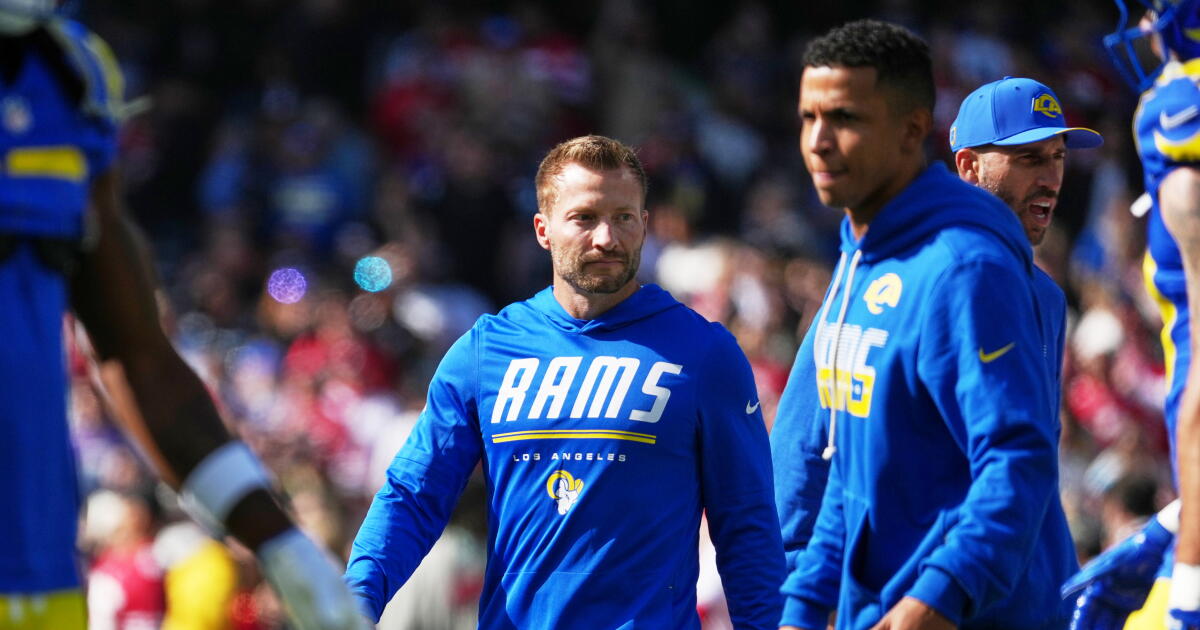
Sean McVay hopes Puka Nacua will learn from off-field incidents

Rams coach Sean McVay could not help repeating himself when asked about star receiver Puka Nacua.

“I trust this kid’s heart,” McVay said three times Monday at the NFL owners meetings.

But do the Rams trust Nacua, who has been at the center of several off-the-field situations, enough to break the bank with a massive extension?

Last week, a woman filed a civil lawsuit against Nacua, alleging that on New Year’s Eve he made an antisemitic statement during a group dinner and later bit her shoulder. Nacua’s attorney told The Times before the lawsuit was filed that Nacua “denies these allegations in the strongest possible terms,” and that Nacua would “pursue all available legal remedies in response to these false and damaging statements.”

Last season during a livestream, Nacua criticized NFL officials and made a gesture regarded as antisemitic. Nacua apologized, and the Rams and the NFL issued statements condemning antisemitism and discrimination. But after the Rams’ loss to the Seattle Seahawks, Nacua criticized officials in a social media post from the locker room. The NFL fined him $25,000.

Last week the Seahawks signed receiver Jaxon Smith-Njigba to a record-breaking extension that includes $120 million in guarantees, putting Nacua in line to possibly match or exceed that deal.

If Nacua’s off-the-field actions become a pattern that does not reflect well on the organization, are the Rams hesitant to invest in the 24-year-old star who led the NFL with 129 catches?

“The play on the field is amazing, and then with what the play has dictated and determined there is a responsibility in terms of representing all things not exclusive to just that,” McVay said. “He knows that, those are expectations and we are hopeful that … this will be an opportunity for him to learn and grow, and we are hopeful that he’s a Ram for a really long time.

“But he understands what the responsibility is, not exclusive to just the production on the field.”

Nacua was one of several topics McVay addressed during a 30-minute session with reporters.

With the return of quarterback Matthew Stafford, the reigning NFL most valuable player, and the addition of star cornerback Trent McDuffie and Jaylen Watson, the Rams are expected to be a favorite to play in Super Bowl LXI at SoFi Stadium.

The Rams traded for McDuffie, an All-Pro who won two Super Bowls with the Kansas City Chiefs, to a four-year extension that includes $100 million in guarantees, making him the highest-paid cornerback in NFL history.

McVay said McDuffie “can do a lot of things” that made Jalen Ramsey such a force when he helped the Rams win Super Bowl LVI.

“He’s rare,” McVay said of McDuffie. “And then he’s a rare human. … You can’t find anybody that doesn’t love this guy and what he represents.”

Like McDuffie, his former Chiefs teammate, Watson has played in three Super Bowls, winning two titles.

“He’s been in a lot of big-time atmospheres and environments,” McVay said of the 6-foot, 2-inch Watson, “and he’s got some of the length.”

McDuffie and Watson join a secondary that includes safety Quentin Lake, who signed an extension in January, and safety Kam Curl, who re-signed with the Rams this month.

The secondary was not the only position group the Rams considered remodeling.

McVay confirmed a report that the Rams explored trading receiver Davante Adams, who led the NFL with 14 touchdown catches.

“If we felt like it was best for our team, we would have done that,” McVay said, “but we didn’t think it was best for our team, so excited about being able to move forward with him.”

McVay said he spoke directly with Adams about the situation.

“I addressed what those conversations were even though they never really got too far but I did want to acknowledge it,” McVay said. “He’s a grown man, and I think he understood that this is a part of this business.”

McVay said he would “love” for Jimmy Garoppolo to return as Stafford’s backup. But Garoppolo remains a free agent.

Atlanta Falcons quarterback Kirk Cousins prepares to take a snap against the Rams in December.

Atlanta Falcons quarterback Kirk Cousins prepares to take a snap against the Rams in December.

(Danny Karnik / Associated Press)

“At this point, when there hasn’t been a decision, it feels less likely than likely, but I don’t want to rule that out,” McVay said of Garoppolo’s possible return for a third season with the Rams.

McVay said that he has communicated with Kirk Cousins and his agent about possibly signing with the Rams. McVay coached Cousins in the NFL with Washington.

“He’s a guy that I have familiarity with, history and a lot of reverence for because of the gratitude from our experiences together.”

Staff writer Steve Henson contributed to this report.

Source link