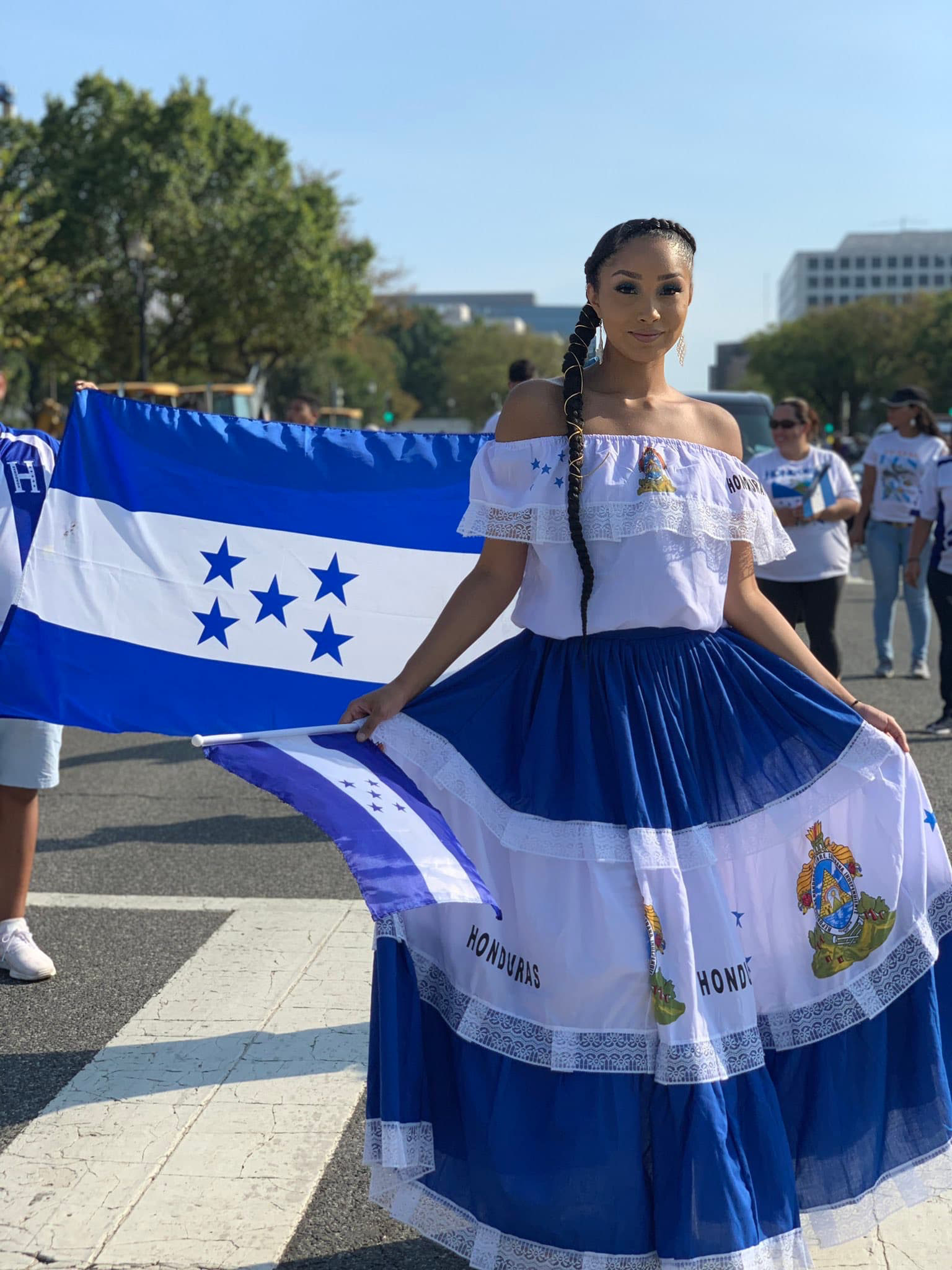
honduras

Wife of active-duty Army sergeant is deported to Honduras under Trump’s immigration crackdown

The wife of an active-duty U.S. soldier was deported Monday to her native Honduras, according to her family and the U.S. Department of Homeland Security.

Cristy Maryori Villafranca-Trejo is at least the seventh spouse or parent of an active-duty U.S. military service member to be deported under President Trump’s immigration crackdown.

The Associated Press has found more than 50 cases in which immediate family members of U.S. troops were placed in federal immigration detention after the Trump administration rolled back protections for military families. In some instances, DHS has released military spouses following media attention and advocacy by congressional leaders.

Villafranca-Trejo’s husband, Army Sgt. Hedar Leonel Turcios Juarez, said he has been struggling to manage his military duties since she was detained July 11 outside a Walmart near Fort Bliss, Texas, where he is stationed. Since then, he’s had to care for their 6-year-old daughter without his wife’s help. Instead of training in the mornings, he takes his daughter to first grade, and he said he has already had to postpone a planned assignment at another base.

“I don’t know if I will be able to continue with this,” Turcios Juarez told AP of his Army career. “I have to make a plan to make sure I can still fulfill my military responsibilities — but also take care of my family.”

DHS confirmed Villafranca-Trejo’s deportation, saying she had “received due process.”

Villafranca-Trejo, who has no known criminal record and entered the U.S. in 2016 at age 18, was issued a final order of removal by an immigration judge in 2017 after failing to appear at a hearing, according to DHS. Villafranca-Trejo’s husband said she had not received a notice for the hearing she missed and did not realize she had been ordered deported until they went to apply for her green card after marrying in 2022.

Originally from Honduras, Turcios Juarez became a U.S. citizen in 2024 after enlisting two years earlier.

Villafranca-Trejo’s motion to reopen her case was denied last May and an appeal before the Board of Immigration Appeals remained pending, according to her attorney. She had also been waiting for about a year for a decision on her application for military parole-in-place, a program that allows the immediate family of U.S. troops to remain in the country to apply for a green card.

“We were following the rules — we did everything we could on our side to fix this problem,” Turcios Juarez told the AP.

Prior to Trump’s second administration, U.S Immigration and Customs Enforcement would typically allow immediate family members of U.S. troops to adjust their legal status even if they had been issued a final order of removal, according to Dan Gividen, who served as ICE deputy chief counsel from 2016 to 2019 under Trump.

“If you’ve got an active-duty military member that’s married to someone now, and that’s going to give her the opportunity to get a green card, you wouldn’t detain them, much less execute the removal order,” Gividen said.

JP Caballero, a spokesperson for U.S. Rep. Veronica Escobar, a Democrat representing El Paso, said Escobar had opened a congressional inquiry into Villafranca-Trejo’s case and visited her at the Camp East Montana detention facility in Texas earlier this month.

“My heart breaks for her, her children and the soldier who must feel so betrayed by the country he is sacrificing for,” Escobar told AP in a statement. “There are far too many families like theirs who are being targeted instead of supported.”

Turcios Juarez said he is unsure how he will care for his daughter without his wife. He still hasn’t figured out how to tell his daughter what has happened. But he says he still wants to keep serving his country.

“I love what I do, I want to keep doing this,” he said of the Army. “I just don’t know how I am going to keep doing this.”

Brook writes for the Associated Press.

Source link

U.S. sends more than 2,300 Mexican deportees to Guatemala and Honduras

The United States has deported nearly 2,300 Mexicans to Guatemala this year and sent at least dozens more to Honduras, according to official data, a shift from the beginning of President Trump’s second term when such transfers were minimal.

Until now, Mexicans deported from the U.S. were sent almost exclusively back to their country by air and land. Only a handful arrived in other countries.

Some civil organizations believe this change reported in recent days is a way to increase pressure on Mexico, whose government has protested the deaths of 17 Mexicans in U.S. immigration custody or during enforcement operations. This also comes as Trump has expanded agreements with allied Latin American countries to conduct joint operations in the region against criminal groups and has increased U.S. security demands on Mexico.

Sent to Central America by plane and Mexico by bus

Guatemalan President Bernardo Arévalo confirmed Wednesday night that, so far this year, 2,284 Mexicans deported from the U.S. have arrived in the country as part of a “transit stopover” before being taken to Mexico as part of an “arrangement” with the Mexican government, and without these individuals being under any refugee or asylum status.

“They are arriving on planes carrying Guatemalan returnees, and what we have done is bring them in transit so that, in coordination with Mexican immigration authorities, we can return them to Mexican territory within 24 hours of their arrival in the country,” he explained at a news conference.

The costs of these operations are covered by the Mexican government or, in some cases, by U.S. funding, he added.

Mexico’s National Migration Institute confirmed to the Associated Press in a brief message that Mexicans have been deported by the Trump administration to Guatemala and Honduras, primarily since April, and are then transported by bus to southern Mexico.

“The reason is that the United States wants to prevent them from crossing back into its territory,” the institute said. It did not provide figures or further details.

Asked about why the Mexicans were sent to Central America and not their home country, and for more details, the U.S. Department of Homeland Security, which oversees immigration enforcement, said in an emailed statement that the administration “is utilizing all lawful options to carry out the largest deportation operation in history, just as President Trump promised.”

“The Mexican government has expressed its opposition to this practice to U.S. authorities and has reiterated that every Mexican citizen has the right to enter the country,” the Mexican foreign ministry said in a statement Thursday. It added that Mexico is coordinating with the countries involved to ensure the safe return of Mexican citizens.

Third-country deportations raise concerns for Mexican migrants

Historically, Mexico has always been willing to receive its deported citizens.

Since Trump’s first term, it has also accepted deportees from third countries, although the details of immigration agreements with Washington have usually been opaque. In 2025, Mexico received about 12,000 deported foreigners, mostly Cubans and Venezuelans, according to figures provided by Mexican President Claudia Sheinbaum. The government has not updated these figures since December although the practice has continued.

Authorities in Honduras also did not respond to requests for comment, but according to official documents from the country accessed by the Associated Press, 82 Mexicans deported from the U.S. arrived in the Honduran city of San Pedro Sula on two flights on Aug. 13 and Saturday. An additional 35 were scheduled to arrive Thursday.

An additional 165 Mexicans were deported to Honduras between May and mid-July, according to the website Third Country Deportation Watch, run by the nongovernmental organizations Human Rights First and Refugees International, which track U.S. deportation flights to third countries.

The website does not clarify the source of its nationality figures, but both organizations have expressed concern because these transfers could endanger migrants who possibly sought asylum in the U.S. or have few resources in an unknown country.

The deportation tactic “seems to be to put pressure on the Mexican government,” said Savitri Arvey of Human Rights First. “They really don’t want any Mexicans crossing the border.” Some of those deported arrived in Honduras on U.S. military flights, she added.

A recent change in the deportation pattern

At the beginning of his second term, with immigration control as one of his priorities, Trump reached agreements with Mexico, Guatemala, El Salvador, Honduras, Costa Rica and Panama to act as “bridge” or destination countries for migrants from third countries expelled from U.S. territory. These agreements gradually expanded to more countries, including some African ones, most recently Liberia.

Until recently, only a handful of Mexicans had been expelled from the U.S. to countries other than Mexico.

Arévalo said Wednesday that Guatemala received 15 Mexicans in 2025. As of February 2026, Honduras had officially reported the arrival of six. Costa Rica has received 11 Mexicans since Trump’s return to the White House, and according to local immigration authorities, they remain in the country. Presumably, these individuals may have requested to not be returned to Mexico out of fear.

Immigration lawyers believe that the Trump administration is using deportations to third countries as a legal loophole to indirectly force asylum seekers to return to Mexico when the government cannot send them there because it would violate court orders from immigration judges that recognize the dangers. Organizations and politicians both inside and outside the U.S. have also questioned the use of force by U.S. immigration authorities.

Pérez, Verza and González write for the Associated Press. Verza reported from Mexico City and González from Tegucigalpa, Honduras.

Source link

Honduras’s Hernandez returns home after Trump pardon: How it happened | Explainer News

Nearly four years after being extradited to the United States for a drug-trafficking trial, former Honduran President Juan Orlando Hernandez returned home after a pardon by US President Donald Trump at the end of last year.

Trump claimed the trial was a “set up” orchestrated by former President Joe Biden’s administration.

Hernandez still faces corruption charges in Honduras but returned on Sunday after an arrest warrant against him was cancelled.

Human rights activists and lawyers fear a trial on home soil, where his party holds the presidency, would be a sham.

So why did Trump pardon and release the former president of Honduras despite abducting and arresting Venezuela’s Nicolas Maduro on drug and gun charges in January?

Former Honduran President Juan Orlando Hernandez is greeted by family and friends after arriving at his home in Tegucigalpa following his return to Honduras on July 26, 2026
Former Honduran President Juan Orlando Hernandez is greeted by family and friends after arriving at his home in Tegucigalpa following his return to Honduras on July 26, 2026 [Leonel Estrada/Reuters]

Why did Hernandez return to Honduras?

Hernandez was able to return after being pardoned by Trump, released from a US prison and then having an arrest warrant against him suspended last month.

He arrived at Palmerola International Airport, where he was greeted by his family and supporters of his National Party.

Hernandez led his country from 2014 to 2022, during which, according to US prosecutors, he once boasted he would “shove the drugs right up the noses of the gringos”, referring to Americans.

Shortly after leaving office, he was extradited to the US, where he was found guilty by a federal jury and sentenced to 45 years in prison for involvement in a scheme to export cocaine to the US.

Prosecutors described the scheme as “one of the largest and most violent drug trafficking conspiracies in the world”. He was convicted of accepting millions of dollars in bribes from violent drug-trafficking organisations over 18 years, which he was alleged to have used to fuel his rise in politics.

“During his political career, Hernandez abused his powerful positions and authority in Honduras to facilitate the importation of over 400 tons of cocaine into the US,” the US Department of Justice said after he was sentenced last year.

During his trial, Hernandez denied taking bribes from drug dealers, arguing he in fact cracked down on the narcotics trade and citing his administration’s cooperation with the US military.

“I cannot deny the profound emotion and joy I feel in my heart to be returning home,” Hernandez wrote on social media earlier this month, saying he was counting down the days to see his family.

“It wasn’t easy. The process has been extremely difficult … and what I experienced in prison, I truly wouldn’t wish on anyone,” he added.

Hernandez is expected to appear in court on August 3 to face the Honduran corruption charges.

Hernandez shakes hands with US President Donald Trump on September 25, 2019, in New York during the signing of an agreement under which Honduras would accept more asylum seekers heading to the US
Hernandez shakes hands with US President Donald Trump on September 25, 2019, in New York during the signing of an agreement under which Honduras would accept more asylum seekers heading to the US [Handout/Honduran Presidential Palace via Reuters]

Why did Trump pardon him?

Under the US Constitution, a president may offer two types of clemency for federal crimes: pardons, which forgive defendants their federal charges and restore their civil liberties, and commutations, which reduce people’s punishment without addressing their convictions.

Hernandez was pardoned by Trump in December. The US president said Hernandez had not received a fair trial and had been “set up” by the Biden administration.

Trump added that Hernandez was “treated very harshly and unfairly”.

At the same time, Trump also threw his weight behind right-wing candidate Nasry “Tito” Asfura, a member of Hernandez’s party. He ran in November’s presidential election and was declared the winner a month later in the close race after delays and allegations of fraud. He took office in January.

A Pandora Papers corruption investigation also accused Hernandez of diverting nearly $11m in state funds to political campaigns from 2010 to 2013.

Venezuelan President Nicolas Maduro and his wife, Cilia Flores, are moved out of a helicopter and into a New York courthouse on January 5, 2026, for an initial appearance to face US federal charges including ‘narcoterrorism’, conspiracy, drug trafficking and money laundering shortly after US forces abducted them from Caracas
Venezuelan President Nicolas Maduro and his wife, Cilia Flores, are moved out of a helicopter and into a New York courthouse on January 5, 2026, for an initial appearance to face US federal charges including ‘narcoterrorism’, conspiracy, drug trafficking and money laundering shortly after US forces abducted them from Caracas [Adam Gray/Reuters]

Why a pardon for some but jail for others?

The Trump administration has faced criticism at home for pardoning the Honduran leader while at the same time abducting former President Maduro of Venezuela and his wife, Cilia Flores, in January on similar charges.

Maduro and Flores were seized in Caracas by the US military and flown to New York, where he is facing a range of guns and drugs charges and accusations of being a “narcoterrorist”.

At the time of Maduro’s abduction and since then, the Trump administration has targeted small boats in the Caribbean and eastern Pacific that it claims, without providing evidence, are involved in drug trafficking. More than 220 people have been killed in more than 60 such strikes on small boats in what many lawyers and activists have deemed extrajudicial killings.

Since taking office for a second term in January 2025, Trump has ordered more than 1,800 acts of clemency benefitting a range of personalities, including cryptocurrency billionaires, disgraced politicians and hundreds of political allies.

Some of the most controversial beneficiaries are supporters of his Make America Great Again (MAGA) movement, including hundreds of rioters who attacked the US Capitol on January 6, 2021, in a bid to prevent the certification of Biden’s electoral victory over Trump two months earlier.

Legal experts have argued that while the president’s clemency power is broad, using it for allegedly corrupt purposes, such as to protect political allies or obstruct justice, could form the basis for impeachment proceedings.

US constitutional expert Bruce Fein told Al Jazeera that the US Constitution’s framers “understood the abuse of the pardon power to shelter political or personal friends to constitute an impeachable high crime and misdemeanour justifying the removal of the president through the impeachment process”.

“If Democrats gain control of Congress in the midterm elections, Trump will be in impeachment jeopardy for pardoning Hernandez,” Fein said, referring to elections in November.

Source link

World Cup 2026: Lionel Messi not used in Argentina beat Honduras as Brazil and Germany also win warm-up games

Germany earned a 2-1 victory against World Cup co-hosts United States in the final warm-up game for both teams.

Kai Havertz had an early goal for Germany cancelled out by Antonee Robinson’s stunning volley before Leroy Sane’s winner for Julian Nagelsmann’s side.

“I’m happy with the performance of everyone,” said US coach Mauricio Pochettino, who believed his side were “unlucky” to lose.

“We played one of the most important teams in the world. I think we need to be happy with that.”

The US will start their World Cup campaign against Paraguay on 12 June, while Germany, who have won nine games in a row, begin with a game against Curacao on 14 June.

Germany coach Julian Nagelsmann said his side’s win against the US had been a “perfect test for us, both in terms of the weather and the opponent”.

Brazil beat Egypt 2-1 in the final warm-up game for both countries, with Newcastle United midfielder Bruno Guimaraes scoring early on for the winners.

Mostafa Zico equalised for Egypt but Raphinha set up Endrick to win it for the South American side, who had to take defender Wesley off after 17 minutes.

Egypt forward Mohamed Salah, who recovered from a “minor muscle injury” to play for Liverpool towards the end of the season, came on for the second half against Brazil.

“Salah underwent a rehabilitation program with Liverpool and then with the national team, and he is now ready for matches,” said Egypt coach Hossam Hassan.

Egypt’s opening game of the World Cup on Monday, 15 June will be against Belgium, who thrashed Tunisia 5-0.

Leandro Trossard, Charles de Ketelaere, Kevin de Bruyne, Dodi Lukebakio and Nicolas Raskin each scored against a Tunisia side reduced to 10 men following the dismissal of Ismael Gharbi after 62 minutes.

Belgium boss Rudi Garcia brought Romelu Lukaku on after 66 minutes as he manages the striker’s return to action.

“It is a good preparation for the World Cup, we know this team can do great things,” said Garcia, whose side were beaten 2-0 by Croatia in their previous game.

Source link