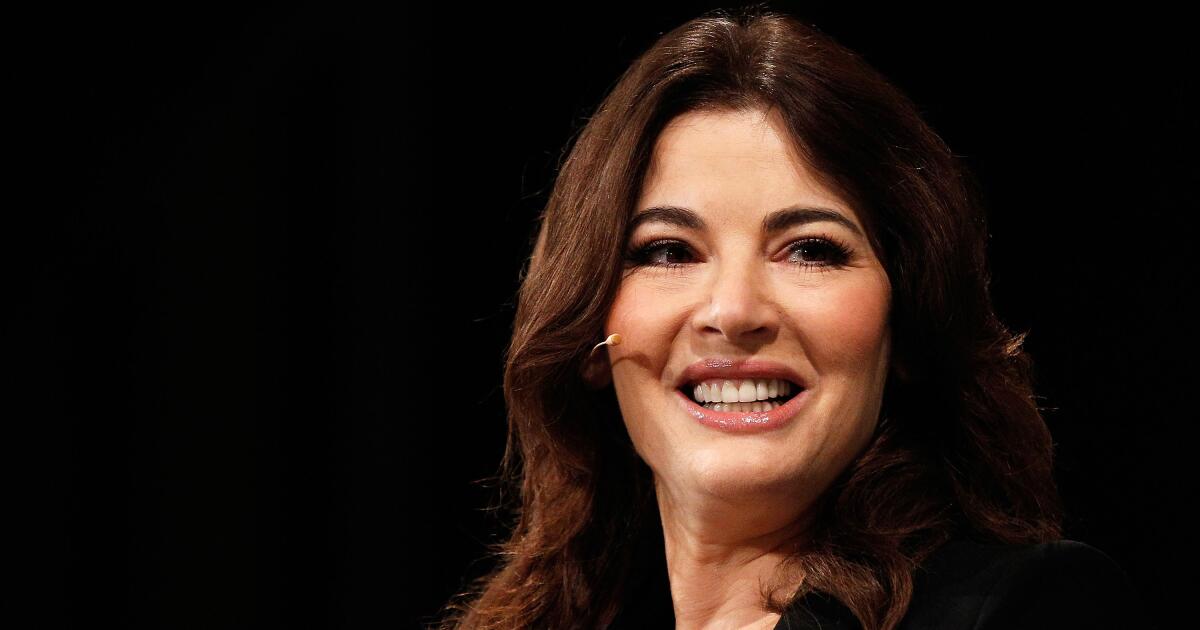
Dame Judi Dench has revealed a worrying update amid her ongoing health battleCredit: GettyThe 90-year-old previously told how she ‘can’t leave home alone’Credit: GettyThe former Bond actress, who suffers from age-related macular degeneration, has told how she can’t see anymoreCredit: Rex
Macular degeneration is the biggest cause of sight loss in the UK, affecting more than 700,000 people.
AMD is an eye disease that can blur an individual’s central vision.
According to the National Eye Institute, age-related macular degeneration “happens when aging causes damage to the macula – the part of the eye that controls sharp, straight-ahead vision.”
The disease does not cause total blindness, but it can make everyday activities difficult.
LIFE-CHANGING
Judi has been candid in addressing her worsening health battle.
During an interview on Trinny Woodall’s Fearless podcast, Dame Judi says “somebody will always be with me” when she leaves the house.
She continued: “I have to [have someone] now because I can’t see.
What is age-related macular degeneration (AMD)?
DAME Judi Dench has spoken openly about her diagnosis of age-related macular degeneration (AMD). Yet what is it?
Macular degeneration is the biggest cause of sight loss in the UK, affecting more than 700,000 people.
It first affects people in their 50s.
AMD is an eye disease that can blur an individual’s central vision.
According to the National Eye Institute, age-related macular degeneration “happens when aging causes damage to the macula – the part of the eye that controls sharp, straight-ahead vision.”
The disease does not cause total blindness, but it can make everyday activities difficult.
In a study of more than 500,000 people, scientists from the Hubei University ofMedicineinChinafound a link between instant coffee intake and the risk of dry AMD – one of the forms of the sight-robbing disease.
In contrast, groundcoffeeand decaffeinated brews bore no links to AMD.
“And I will walk into something or fall over.
“I’m always nervous before going to something.
“I have no idea why. I’m not good at that at all.
“Not at all. Nor would I be now.
“And fortunately, I don’t have to be now because I pretend to have no eyesight.”
Dame Judi made her professional debut in 1957 with the Old Vic Company and is now referred to as one of Britain’s best actresses.
After landing roles on TV and in movies from the late 50s, she has starred in a plethora of big titles, with IMDB crediting her for 120 on-screen productions.
Some of her notable roles include Chocolat, Notes on a Scandal, The Best Exotic Marigold Hotel, Philomena and Iris and also her role as “M” in several James Bond films.
She’s a ten-time Bafta winner including winning Best Actress in A Fine Romance (1981) in which she appeared with her late husband, Michael Williams.
Judi has also been nominated for six Oscars and won one of these as Best Supporting Actress for Shakespeare in Love in 1998.
She has also won seven Laurence Olivier Awards and has a further eight nominations under her belt for her professional theatre work.
She was made an Officer of the Order of the British Empire in 1970, and a Dame of Order of the British Empire in 1988.
Dame Judi told how she can’t see theatre shows any moreCredit: GettyYet she told how she hd been keeping up to date with pal Celia Imrie’s progress on Celeb Traitors via word of mouthCredit: BBCThe screen queen has told how she can’t leave the house unaccompaniedCredit: Rex
FOR one city in the UK, Christmas has come early as it’s been transformed into a wintry delight for a Hollywood movie.
Stars of the screen have been spotted in one of the country’s most famous streets to film scenes for the upcoming blockbuster.
Sign up for the Travel newsletter
Thank you!
The Shambles in York were transformed for Christmas early due to festive filmingCredit: AlamyHollywood’s Richard E Grant was spotted filming for an upcoming 2026 movieCredit: Alamy
York, known for being one of UK’s oldest cities, was also named the top place in the country for the best quality of life according to the Good Growth for Cities Index.
And now it is being turned into a winter wonderland for an upcoming movie.
The film is called ‘Merry Christmas Aubrey Flint’ and is due for release in 2026.
Game of Thrones star John Bradley, who plays the titular character Aubrey Flint, was spotted filming scenes, along with fellow actor Kiell Smith-Bynoe.
According to production company WestEnd Films, the movie tells the story of a reclusive model soldier painter with a lifelong hatred of Christmas who ends up assisting with a care home production of A Christmas Carol.
Shopkeepers and passers by watched on as the stars filmed on Colliergate, a street very near The Shambles.
One of the shops used as a filming location was Barnitts, a department store that sells everything from Christmas decorations to homeware and DIY tools.
Totally Awesome Toy Shop, will also make an appearance in the film, and the owner, Jo Patton, told the BBC: “To have a film star stood literally on your doorstep, in some ways wasn’t too strange, because in York you expect the unexpected.”
Celebrity Traitors star and actress will appear in the filmCredit: BBCGame of Thrones actor John Bradley plays titular character Aubrey FlintCredit: Alamy
The cast and crew also filmed scenes outside an empty shop on Colliergate.
It was transformed from being empty to a miniature model shop and outside table salt lined the edges of the windows to create the illusion of snow.
York was founded by the Romans in 71AD making it one of the oldest cities in the country.
It’s possibly most famous for its 233ft tall York Minster that dates back to the 7th century.
Visitors are welcome to explore the cathedral whether you fancy a guided tour, or a trip up the tower – tickets for general admission starts at £20pp.
The Shambles, which was used to film the Christmas movie, is full of independent shops selling everything from gifts to baked treats or toys,
Lots of visitors compare the street to Harry Potter’s Diagon Alley which has towering timber-framed shop fronts.
It’s not just all mooching about seeing the sights, visitors can settle in one of York’s 365 pubs.
The film cast and crew were spotted on Colliergate street in November 2025Credit: Google mapsYork is home to the famous mister which is 233ft highCredit: Alamy
One writer who visited suggested popping into House of Trembling Madness which serves a selection of local beers and huge sharing boards of meats and cheeses.
He said: “York is the best UK city for families because it has so many captivating activities and attractions.
“There’s enough in York to keep both junior and secondary school children entertained, from the Viking Museum to York Chocolate Story and Harry Potter-style streets and a cold war bunker.
“The Viking Museum has interactive activities for children, the Castle Museum has recreated Victorian Streets and there’s also the Shambles, the inspiration behind JK Rowling‘s Diagon Alley.”
“There’s so much to keep kids busy in York, families will be spoilt for choice.”
Here’s the UK’s ‘most beautiful town’ set to star in huge new Christmas movie with Hollywood stars…
Between January and February 2025, cast and crew were spotted in the Yorkshire town, in areas like Castlegate, Riverside, and Green Dragon Yard.
Filming of the Sky Original Christmas movie meant that the festive decorations were up for months longer than usual.
The film, set to be released on November 28, will see Kiefer Sutherland play Bradley Mack, a failed Hollywood action star ending up in a small, snow-dusted village to star in the town’s eccentric production of Cinderella.
It’s here that he encounters a number of oddball locals, one of whom is no-nonsense choreographer Jill, played by Rebel Wilson.
Knaresborough has pretty waterfront cafes and the opportunity to canoe down the river, while watching steam trains travel over the viaduct.
Katrina said: “If you venture down by the river from either Bond End or walking down the steps at the castle you’ll stand at the foot of the iconic viaduct.
“Amongst the cafes and houses are two boat hire places – Blenkhorn’s and Marigold Cafe & Boating. Both are open daily, weather permitting, and are a great way to soak up the stunning scenery.
“No visit to Knaresborough is complete without heading to Knaresborough Castle for the best view of the viaduct.
“You don’t need to pay to enter the castle grounds, and I recommend seeing the view during the day and at night time, with the viaduct all lit up.”
The famous city of York will appear in a Christmas movie next year
The cuts in Hollywood just keep coming, following a sadly familiar script.
Last week it was Paramount, which laid off about 1,000 workers in the first wave of a deep staff reduction planned since tech scion David Ellison’s Skydance Media took over the storied media and entertainment company.
The cuts affected a wide swath of the company, from CBS and CBS News to Comedy Central, MTV and the historic Melrose Avenue film studio, my colleague Meg James and I reported. Another 1,000 layoffs are expected in the coming weeks.
You’re reading the Wide Shot
Samantha Masunaga delivers the latest news, analysis and insights on everything from streaming wars to production — and what it all means for the future.
And that doesn’t even include widespread job losses that happened earlier this year at companies such as Walt Disney Co., Warner Bros. Discovery, NBCUniversal and Six Flags Entertainment Corp.
It all adds up to a grim picture for Hollywood’s workers, who have faced a near endless marathon of economic hurdles for the last five years.
First it was the pandemic, followed by the dual writers’ and actors’ strikes in 2023, cutbacks in spending after studios splurged on streaming productions, and the outflow of production to the U.K. and other countries with lower costs than California.
Then, in January, nature struck a blow, with the fires in Altadena and the Pacific Palisades destroying many industry workers’ homes.
Topping it off, Saturday marked the first day that millions of low-income Americans lost federal food assistance due to the government shutdown that began Oct. 1. That has affected some 5.5 million Californians and probably some who work in the entertainment industry.
“It’s been one crisis after another, without enough time in between,” said Keith McNutt, western regional executive director of the Entertainment Community Fund, which provides social services for arts and entertainment professionals. “People are concerned and very worried and really trying very hard to figure out where they go from here.”
McNutt reports that the nonprofit group has already heard from some people who were recently laid off, and has experienced a sharp increase in demand for its services, particularly from those in the film and TV industry. The fund offers healthcare and financial counseling and operates a career center. It also provides emergency grants for those who qualify.
Clients include not only low-income people who are always hit hardest in downturns, but also veteran entertainment industry professionals who’ve worked in the business for 20 to 30 years.
Those who were lucky enough to have savings saw those wiped out by the pandemic, and then were unable to replenish their rainy-day funds after the strikes and industry contraction, said David Rambo, chair of the fund’s western council.
“It has been snowballing very slowly for about five years,” Rambo said.
Many in the industry are hopeful that California’s newly expanded film and television tax credit program will bring some production — and jobs — back to the Golden State. That’s what backers campaigned on when they lobbied Sacramento legislators to bolster the program. Dozens of TV shows and films have received credits so far under the revamped program, but it’ll take some time to see the results in filming data and employment numbers.
And that doesn’t help the workers who were just laid off last month. For those folks, McNutt suggests calling the fund’s health insurance team to make sure they understand their options and also to spend some time with career counselors to understand how Hollywood skills can be transferable to other employers, whether that’s on a short- or long-term basis. Most importantly, don’t isolate yourself.
“You’re not alone,” he said. “Nobody’s alone in this situation that the industry is finding itself in right now, and so reach out to your friends, reach out to your colleagues. If you’re not comfortable with that, reach out to the Entertainment Community Fund.”
The 2017 Game 7 win by the Houston Astros over the Dodgers had an audience of 28.3 million.
The Dodgers are now the first Major League Baseball team to win back-to-back championships in 25 years. On Monday, thousands of Dodgers faithful turned out for the team’s victory parade through downtown L.A.
Finally …
You’ve no doubt heard of L.A.’s famous star tours. But what about a tour of a historic cemetery?
The cemetery is the final resting place for many of L.A.’s early movers and shakers, including the Lankershims and the Hollenbecks, and it’s also a prime example of L.A.’s multicultural history.
Channel 4 is reportedly gearing up to axe The Inheritance, which was fronted by Liz Hurley and Rob Rinder and saw 13 players attempt to win money from a will, after just one series
Liz Hurley starred as The Deceased in the Channel 4 game show (Image: Channel 4)
Elizabeth Hurley‘s reality show could be about to be axed after just one series. The Hollywood star, 60, teamed up with Good Morning Britain presenter Rob Rinder to front the game show, which aired on Channel 4 earlier this year.
The Bedazzled actress played the The Deceased, with Rob working as The Executor, and 13 contestants battled it out in a series of challenges to unlock money from the will as they try to convince each other that only they should be trusted with the money pot. Whilst no official decision has bene made on the programme’s future, insiders have claimed that it is not expected to come back for a second run of episodes.
A source told The Sun: “The Inheritance has been widely viewed as a flop, despite all the publicity and having a big star at its heart.
“Channel 4 maintains no decision has been made on its future, but many people involved in the debut series are working on the basis that it isn’t returning. Of course there may be some huge changes of mind and the show enjoys a stay of execution, but all the signs are that this is another expensive flop and they’re likely to quit while they’re behind.”
The Mirror has contacted Channel 4 representatives for comment.
The first episode of The Inheritance pulled in just half a million viewers, although this grew once catch up figures were taken into account. However, over the course of two weeks, overall, the programme averaged just 1.5 million. In the end, it was 28-year-old Yorkshire scaffolder Cam who emerged victorious, winning the vote amongst his fellow finalists to be the ultimate Prime Beneficiary, receiving a whopping £100,000 fortune from The Deceased’s estate.
Cam then had the option of keeping the prize money to himself, which would add to the already huge £10,000 he had accumulated throughout the game. However, in a nail biting final decision, he chose to share his winnings with Emma, Hafsah, Hannah and Jesse, who each took home £20,000 each, along with what they had already banked throughout.
In total, Cam walked away with £30,000 with the rest of the finalists trailing closely behind. Hannah and Jesse received £28,200 each Hafsah taking home £27,700 and paramedic Emma walking away with a modest £23,800.
During the tense moment, host Rob Rinder was seen standing with the finalists during the tense moment, as he revealed that Cam had chosen to split the money with all four players. “You arrived at the final at the final stages of this game together, and you now leave with an equal slice of the inheritance,” Rob announced, as the contestants broke down in tears.
“You arrived at the final at the final stages of this game together, and you now leave with an equal slice of the inheritance,” Rob announced, as the contestants broke down in tears.
“The inheritance is now concluded, please collect your money from the safe boxes and leave the estate immediately,” he concluded.
While the players were left shocked at Cam’s generous decision, it was a no brainer for him, as he announced: “I’ve had debt hanging over my head for years, I can’t describe the feeling of a fresh start.
“My dad taught me integrity and in that strong room it is literally a battle between your head and your heart. To be able to change the lives of four other people too, I am so happy and proud.” Of course, he’s only human, and he did have second thoughts when the money was right in front of his eyes.
“We all spoke about it in the final division ceremony, dividing all the money up, and I think it’s easy to say you would,” he said. “However, when you get down into that room, and you’ve got a hundred thousand pounds in front of your face, you start thinking about everything back at home and how much it could change your life.
“It really is a tough decision but at the end of the day I’m a team player, and I’m just so happy that I did make the decision I made.”
DOWNLOAD festival has landed a Hollywood A-lister to perform at the rock and metal event next summer.
The 2026 line-up was announced this evening and features the surprising actor, as well as three American bands topping the bill.
Sign up for the Showbiz newsletter
Thank you!
Keanu Reeves will play Download festival next summer as bassist for band DogstarCredit: GettyGuns N’ Roses will also hit the stage on the SaturdayCredit: Getty
Download will return to Leicestershire’s Donington Park from June 10 to 14, with The Matrix and John Wick star Keanu Reeves set to play.
The band Dogstar, for which he plays bass, are among a series of acts which have been officially unveiled.
Linkin Park will close the festival on the Sunday night, marking their first performance at the festival since frontwoman Emily Armstrong was brought in.
They previously headlined four times between 2004 and 2014 with their original line-up.
And it comes after Linkin Park played a sold out concert at Wembley Stadium in June.
Tickets are already on sale for the 23rd annual festival, which will also feature performances from Pendulum, Trivium, The All-American Rejects, Mastodon and Bush.
Other acts on the line-up include Feeder, Ash, Tom Morello, The Pretty Reckless and Those Damn Crows.
Limp Bizkit’s booking comes just a fortnight after it was revealed that bassist and founding member Sam Rivers had died aged 48.
They paid tribute to him last month when they described him as not “just our bass player” but “the soul in the sound.”
The band said: “From the first note we ever played together, Sam brought a light and a rhythm that could never be replaced.
“His talent was effortless, his presence unforgettable, his heart enormous.”
The full rundown of artists was revealed at a launch event at the Barbican in central London, where guests were entertained by fortune tellers and a string quartet.
You may not know Eliot Mack’s name, but if a small robot has ever crept around your kitchen, you know his work.
Before he turned his MIT-trained mind to filmmaking, Mack helped lead a small team of engineers trying to solve a deeply relatable problem: how to avoid vacuuming. Whether it was figuring out how to get around furniture legs or unclog the brushes after a run-in with long hair, Mack designed everything onscreen first with software, troubleshooting virtually and getting 80% of the way there before a single part was ever manufactured.
When Mack pivoted to filmmaking in the early 2000s, he was struck by how chaotic Hollywood’s process felt. “You pitch the script, get the green light and you’re flying into production,” he says, sounding both amused and baffled. “There’s no CAD template, no centralized database. I was like, how do movies even get made?”
That question sent Mack down a new path, trading dust bunnies for the creative bottlenecks that slow Hollywood down.
In 2004 he founded Lightcraft Technology, a startup developing what would later be known as virtual production tools, born out of his belief that if you could design a robot in software, you should be able to design a shot the same way. The company’s early system, Previzion, sold for $180,000 and was used on sci-fi and fantasy shows like “V” and “Once Upon a Time.” But Jetset, its latest AI-assisted tool set, runs on an iPhone and offers a free tier, with pro features topping out at just $80 a month. It lets filmmakers scan a location, drop it into virtual space and block out scenes with camera moves, lighting and characters. They can preview shots, overlay elements and organize footage for editing — all from a phone. No soundstage, no big crew, no gatekeepers. Lightcraft’s pitch: “a movie studio in your pocket.”
A series on how the AI revolution is reshaping the creative foundations of Hollywood — from storytelling and performance to production, labor and power.
The goal, Mack says, is to put more power in the hands of the people making the work. “One of the big problems is how siloed Hollywood is,” he says. “We talked to an Oscar-winning editor who said, ‘I’m never going to get to make my movie’ — he was pigeonholed as just an editor. Same with an animator we know who has two Oscars.”
Eliot Mack, CEO of Lightcraft, an AI-powered virtual-production startup, wants to give creators the power and freedom to bring their ideas to life.
(Christina House/Los Angeles Times)
To Mack, the revolution of Jetset recalls the scrappy, guerrilla spirit of Roger Corman’s low-budget productions, which launched the early careers of directors like Francis Ford Coppola and Martin Scorsese. For generations of creatives stuck waiting on permission or funding, he sees this moment as a reset button.
“The things you got good at — writing, directing, acting, creating, storytelling — they’re still crazy useful,” he says. “What’s changing is the amount of schlepping you have to do before you get to do the fun stuff. Your 20s are a gift. You want to be creating at the absolute speed of sound. We’re trying to get to a place where you don’t have to ask anyone. You can just make the thing.”
AI is reshaping nearly every part of the filmmaking pipeline. Storyboards can now be generated from a script draft. Lighting and camera angles can be tested before anyone touches a piece of gear. Rough cuts, placeholder VFX, even digital costume mock-ups can all be created before the first shot is filmed. What once took a full crew, a soundstage and a six-figure budget can now happen in minutes, sometimes at the hands of a single person with a laptop.
This wave of automation is arriving just as Hollywood is gripped by existential anxiety. The 2023 writers’ and actors’ strikes brought the industry to a standstill and put AI at the center of a fight over its future. Since then, production has slowed, crew sizes have shrunk and the streaming boom has given way to consolidation and cost-cutting.
According to FilmLA, on-location filming in Greater Los Angeles dropped 22.4% in early 2025 compared with the year before. For many of the crew members and craftspeople still competing for those jobs, AI doesn’t feel like an innovation. It feels like a new way to justify doing more with less, only to end up with work that’s less original or creative.
“AI scrapes everything we artists have made off the internet and creates a completely static, banal world that can never imagine anything that hasn’t happened before,” documentary filmmaker Adam Curtis warned during a directors panel at the 2023 Telluride Film Festival, held in the midst of the strikes. “That’s the real weakness of the AI dream — it’s stuck with the ghosts. And I think we’ll get fed up with that.”
How you feel about these changes often depends on where you sit and how far along you are in your career. For people just starting out, AI can offer a way to experiment, move faster and bypass the usual barriers to entry. For veterans behind the scenes, it often feels like a threat to the expertise they’ve spent decades honing.
Past technological shifts — the arrival of sound, the rise of digital cameras, the advancement of CGI — changed how movies were made, but not necessarily who made them. Each wave brought new roles: boom operators and dialogue coaches, color consultants and digital compositors. Innovation usually meant more jobs, not fewer.
But AI doesn’t just change the tools. It threatens to erase the people who once used the old ones.
Diego Mariscal has seen first hand as AI has cut potential jobs for grips.
(Jennifer Rose Clasen)
Diego Mariscal, 43, a veteran dolly grip who has worked on “The Mandalorian” and “Spider-Man: No Way Home,” saw the writing on the wall during a recent shoot. A visual effects supervisor opened his laptop to show off a reel of high-end commercials and something was missing. “There were no blue screens — none,” Mariscal recalls. “That’s what we do. We put up blues as grips. You’d normally hire an extra 10 people and have an extra three days of pre-rigging, setting up all these blue screens. He was like, ‘We don’t need it anymore. I just use AI to clip it out.’”
Mariscal runs Crew Stories, a private Facebook group with nearly 100,000 members, where working crew members share job leads, trade tips and voice their growing fears. He tries to keep up with the steady drip of AI news. “I read about AI all day, every day,” he says. “At least 20 posts a day.”
His fear isn’t just about fewer jobs — it’s about what comes next. “I’ve been doing this since I was 19,” Mariscal says of his specialized dolly work, which involves setting up heavy equipment and guiding the camera smoothly through complex shots. “I can push a cart in a parking lot. I can push a lawnmower. What else can I do?”
Who wins, who loses and what does James Cameron think?
Before AI and digital doubles, Mike Marino learned the craft of transformation the human way: through hands-on work and a fascination that bordered on obsession.
Marino was 5 years old when he first saw “The Elephant Man” on HBO. Horrified yet transfixed, he became fixated on prosthetics and the emotional power they could carry. As a teenager in New York, he pored over issues of Fangoria, studied monsters and makeup effects and experimented with sculpting his own latex masks on his bedroom floor.
Prosthetics artist Mike Marino asks a big question related to generative AI: What role do the human creatives play?
(Sean Dougherty / For The Times)
Decades later, Marino, 48, has become one of Hollywood’s leading makeup artists, earning Oscar nominations for “Coming 2 America,” “The Batman” and last year’s dark comedy “A Different Man,” in which he helped transform Sebastian Stan into a disfigured actor.
His is the kind of tactile, handcrafted work that once seemed irreplaceable. But today AI tools are increasingly capable of achieving similar effects digitally: de-aging actors, altering faces, even generating entire performances. What used to take weeks of experimentation and hours in a makeup trailer can now be approximated with a few prompts and a trained model. To Marino, AI is more than a new set of tools. It’s a fundamental change in what it means to create.
“If AI is so good it can replace a human, then why have any human beings?” he says. “This is about taste. It’s about choice. I’m a human being. I’m an artist. I have my own ideas — mine. Just because you can make 10,000 spaceships in a movie, should you?”
“If AI is so good it can replace a human, then why have any human beings?”
— Mike Marino, makeup artist on “A Different Man”
Marino is no technophobe. His team regularly uses 3D scanning and printing. But he draws the line at outsourcing creative judgment to a machine. “I’m hoping there are artists who want to work with humans and not machines,” he says. “If we let AI just run amok with no taste, no choice, no morality behind it, then we’re gone.”
Not everyone sees AI’s rise in film production as a zero-sum game. Some technologists imagine a middle path. Daniela Rus, director of MIT’s Computer Science and Artificial Intelligence Lab and one of the world’s leading AI researchers, believes the future of filmmaking lies in a “human-machine partnership.”
AI, Rus argues, can take on time-consuming tasks like animating background extras, color correction or previsualizing effects, freeing up people to focus on what requires intuition and taste. “AI can help with the routine work,” she says. “But the human touch and emotional authenticity are essential.”
Few directors have spent more time grappling with the dangers and potential of artificial intelligence than James Cameron. Nearly 40 years before generative tools entered Hollywood’s workflow, he imagined a rogue AI triggering global apocalypse in 1984’s “The Terminator,” giving the world Skynet — now a cultural shorthand for the dark side of machine intelligence. Today, he continues to straddle that line, using AI behind the scenes on the upcoming “Avatar: Fire and Ash” to optimize visual effects and performance-capture, while keeping creative decisions in human hands. The latest sequel, due Dec. 19, promises to push the franchise’s spectacle and scale even further; a newly released trailer reveals volcanic eruptions, aerial battles and a new clan of Na’vi.
A scene from “Avatar: The Way of Water.” Director James Cameron differentiates between using machine-learning to reduce monotonous movie-making work and generative AI.
(Courtesy of 20th Century Studios/Courtesy of 20th Century Studios)
“You can automate a lot of processes that right now tie up a lot of artists doing mundane tasks,” Cameron told The Times in 2023 at a Beyond Fest screening of his 1989 film “The Abyss.” “So if we could accelerate the postproduction pipeline, then we can make more movies. Then those artists will get to do more exciting things.”
For Cameron, the promise of AI lies in efficiency, not elimination. “I think in our particular industry, it’s not going to replace people; it’s going to free them to do other things,” he believes. “It’s going to accelerate the process and bring the price down, which would be good because, you know, some movies are a little more expensive than others. And a lot of that has to do with human energy.”
Cameron himself directed five films between 1984 and 1994 and only three in the three decades since, though each one has grown increasingly complex and ambitious.
That said, Cameron has never been one to chase shortcuts for their own sake. “I think you can make pre-viz and design easier, but I don’t know if it makes it better,” he says. “I mean, if easy is your thing. Easy has never been my thing.”
He draws a line between the machine-learning techniques his team has used since the first “Avatar” to help automate tedious tasks and the newer wave of generative AI models making headlines today.
“The big explosion has been around image-based generative models that use everything from every image that’s ever been created,” he says. “We’d never use any of them. The images we make are computer-created, but they’re not AI-created.”
In his view, nothing synthetic can replace the instincts of a flesh-and-blood artist. “We have human artists that do all the designs,” he says. “We don’t need AI. We’ve got meat-I. And I’m one of the meat-artists that come up with all that stuff. We don’t need a computer. Maybe other people need it. We don’t.”
Reshaping creativity — and creative labor
Rick Carter didn’t go looking for AI as a tool. He discovered it as a lifeline.
The two-time Oscar-winning production designer, who worked with Cameron on “Avatar” and whose credits include “Jurassic Park” and “Forrest Gump,” began experimenting with generative AI tools like Midjourney and Runway during the pandemic, looking for a way to keep his creative instincts sharp while the industry was on pause. A longtime painter, he was drawn to the freedom the programs offered.
“I saw that there was an opportunity to create images where I didn’t have to go to anybody else for approval, which is the way I would paint,” Carter says by phone from Paris. “None of the gatekeeping would matter. I have a whole lot of stories on my own that I’ve tried to get into the world in various ways and suddenly there was a way to visualize them.”
Midjourney and Runway can create richly detailed images — and in Runway’s case, short video clips — from a text prompt or a combination of text and visuals. Trained on billions of images and audiovisual materials scraped from the internet, these systems learn to mimic style, lighting, composition and form, often with eerie precision. In a production pipeline, these tools can help concept artists visualize characters or sets, let directors generate shot ideas or give costume designers and makeup artists a fast way to test looks, long before physical production begins.
But as these tools gain traction in Hollywood, a deeper legal and creative dilemma is coming into focus: Who owns the work they produce? And what about the copyrighted material used to train them?
In June, Disney and Universal filed a federal copyright lawsuit against Midjourney, accusing the company of generating unauthorized replicas of characters such as Spider-Man, Darth Vader and Shrek using AI models trained on copyrighted material: what the suit calls a “bottomless pit of plagiarism.” It’s the most high-profile of several legal challenges now putting copyright law to the test in the age of generative AI.
“Forrest Gump” director Robert Zemeckis, left, with production designer Rick Carter at an art installation of the movie’s famed bench. (Carter family)
(Carter family)
Working with generative models, Carter began crafting what he calls “riffs of consciousness,” embracing AI as a kind of collaborative partner, one he could play off of intuitively. The process reminded him of the loose, improvisational early stages of filmmaking, a space he knows well from decades of working with directors like Robert Zemeckis and Steven Spielberg.
“I’ll just start with a visual or a word prompt and see how it iterates from there and what it triggers in my mind,” Carter says. “Then I incorporate that so it builds on its own in an almost free-associative way. But it’s still based upon my own intuitive, emotional, artistic, even spiritual needs at that moment.”
He describes the experience as a dialogue between two minds, one digital and one human: “One AI is artificial intelligence. The other AI is authentic intelligence — that’s us. We’ve earned it over this whole span of time on the planet.”
Sometimes, Carter says, the most evocative results come from mistakes. While sketching out a story about a hippie detective searching for a missing woman in the Himalayas, he accidentally typed “womb” into ChatGPT instead of “woman.” The AI ran with it, returning three pages of wild plot ideas involving gurus, seekers and a bizarre mystery set in motion by the disappearance.
“I couldn’t believe it,” he says. “I would never have taken it that far. The AI is so precocious. It is trying so much to please that it will literally make something out of the mistake you make.”
Carter hasn’t used generative AI on a film yet; most of his creations are shared only with friends. But he says the technology is already slipping into creative workflows in covert ways. “There are issues with copyrights with most of the studios so for now, it’s going to be mostly underground,” he says. “People will use it but they won’t acknowledge that they’re using it — they’ll have an illustrator do something over it, or take a photo so there’s no digital trail.”
Carter has lived through a major technological shift before. “I remember when we went from analog to digital, from ‘Jurassic Park’ on,” he says. “There were a lot of wonderful artists who could draw and paint in ways that were just fantastic but they couldn’t adapt. They didn’t want to — even the idea of it felt like the wrong way to make art. And, of course, most of them suffered because they didn’t make it from the Rolodex to the database in terms of people calling them up.”
He worries that some artists may approach the technology with a rigid sense of authorship. “Early on, I found that the less I used my own ego as a barometer for whether something was artistic, the more I leaned into the process of collaboratively making something bigger than the sum of its parts — and the bigger and better the movies became.”
Others, like storyboard artist Sam Tung, are bracing against the same wave with a quiet but unshakable defiance.
Tung, whose credits include “Twisters” and Christopher Nolan’s upcoming adaptation of “The Odyssey,” has spent the last two years tracking the rise of generative tools, not just their capabilities but their implications. As co-chair of the Animation Guild’s AI Committee, he has been on the front lines of conversations about how these technologies could reshape creative labor.
To artists like Tung, the rise of generative tools feels deeply personal. “If you are an illustrator or a writer or whatever, you had to give up other things to take time to develop those skills,” he says. “Nobody comes out of the womb being able to draw or write or act. Anybody who does that professionally spent years honing those skills.”
“Anything I’ve made with AI, I’ve quickly forgotten about. There’s basically nothing I get from putting it on social media, other than the ire of my peers.”
— Sam Tung, storyboard artist on “The Odyssey”
Tung has no interest in handing that over to a machine. “It’s not that I’m scared of it — I just don’t need it,” he says. “If I want to draw something or paint something, I’ll do it myself. That way it’s exactly what I want and I actually enjoy the process. When people tell me they responded to a drawing I did or a short film I made with friends, it feels great. But anything I’ve made with AI, I’ve quickly forgotten about. There’s basically nothing I get from putting it on social media, other than the ire of my peers.”
What unsettles him isn’t just the slickness of AI’s output but how that polish is being used to justify smaller crews and faster turnarounds. “If this is left unchecked, it’s very easy to imagine a worst-case scenario where team sizes and contract durations shrink,” Tung says. “A producer who barely understands how it works might say, ‘Don’t you have AI to do 70% of this? Why do you need a whole week to turn around a sequence? Just press the button that says: MAKE MOVIE.’ ”
At 73, Carter isn’t chasing jobs. His legacy is secure. “If they don’t hire me again, that’s OK,” he says. “I’m not in that game anymore.” He grew up in Hollywood — his father was Jack Lemmon’s longtime publicist and producing partner — and has spent his life watching the industry evolve. Now, he’s witnessing a reckoning unlike any he, or anyone else, has ever imagined.
“I do have concerns about who is developing AI and what their values are,” he says. “What they use all this for is not necessarily something I would approve of — politically, socially, emotionally. But I don’t think I’m in a position to approve or not.”
Earlier this year, the Palisades fire destroyed Carter’s home, taking with it years of paintings and personal artwork. AI, he says, has given him a way to keep creating through the upheaval. “It saved me through the pandemic, and now it’s saving me through the fire,” he says, as if daring the universe to test him again. “It’s like, go ahead, throw something else at me.”
‘Prompt and pray?’ Not so fast
Many in the industry may still be dipping a toe into the waters of AI. Verena Puhm dove in.
The Austrian-born filmmaker studied acting and directing in Munich and Salzburg before moving to Los Angeles, where she built a globe-spanning career producing, writing and developing content for international networks and streamers. Her credits range from CNN’s docuseries “History of the Sitcom” to the German reboot of the cult anthology “Beyond Belief: Fact or Fiction” and a naval documentary available on Tubi. More recently, she has channeled that same creative range into a deepening exploration of generative tools.
Puhm first began dabbling with AI while using Midjourney to design a pitch deck, but it wasn’t until she entered a timed generative AI filmmaking challenge at the 2024 AI on the Lot conference — informally dubbed a “gen battle” — that the creative potential of the medium hit her.
“In two hours, I made a little mock commercial,” she remembers, proudly. “It was actually pretty well received and fun. And I was like, Oh, wow, I did this in two hours. What could I do in two days or two weeks?”
What started as experimentation soon became a second act. This summer, Puhm was named head of studio for Dream Lab LA, a new creative arm of Luma AI, which develops generative video tools for filmmakers and creators. There, she’s helping shape new storytelling formats and supporting emerging creators working at the intersection of cinema and technology. She may not be a household name, but in the world of experimental storytelling, she’s fast becoming a key figure.
Verena Puhm, a director, writer and producer, has used generative AI in a number of her projects, says it’s breaking down barriers to entry.
(Jason Armond/Los Angeles Times)
Some critics dismiss AI filmmaking as little more than “prompt and pray”: typing in a few words and hoping something usable comes out. Puhm bristles at the phrase.
“Anybody that says that tells me they’ve never tried it at all, because it is not that easy and simple,” she says. “You can buy a paintbrush at Home Depot for, what, $2? That doesn’t make you a painter. When smartphones first came out, there was a lot of content being made but that didn’t mean everyone was a filmmaker.”
What excites her most is how AI is breaking down the barriers that once kept ambitious ideas out of reach. Luma’s new Modify Video tool lets filmmakers tweak footage after it’s shot, changing wardrobe, aging a character, shifting the time of day, all without reshoots or traditional VFX. It can turn a garage into a spaceship, swap a cloudy sky for the aurora borealis or morph an actor into a six-eyed alien, no green screen required.
“I remember shopping projects around and being told by producers, ‘This scene has to go, that has to go,’ just to keep the budget low. Now everything is open.”
— Verena Puhm, Head of Studio at Dream Lab LA
“It’s such a relief as an artist,” Puhm says. “If there’s a project I’ve been sitting on for six years because I didn’t have a $5 million budget — suddenly there’s no limit. I remember shopping projects around and being told by producers, ‘This scene has to go, that has to go,’ just to keep the budget low. Now everything is open.”
That sense of access resonates far beyond Los Angeles. At a panel during AI on the Lot, “Blue Beetle” director Ángel Manuel Soto reflected on how transformative AI might have been when he was first starting out. “I wish tools like this existed when I wanted to make movies in Puerto Rico, because nobody would lend me a camera,” he said. “Access to equipment is a privilege we sometimes take for granted. I see this helping kids like me from the projects tell stories without going bankrupt — or stealing, which I don’t condone.”
Puhm welcomes criticism of AI but only when it’s informed. “If you hate AI and you’ve actually tested the tools and educated yourself, I’ll be your biggest supporter,” she says. “But if you’re just speaking out of fear, with no understanding, then what are you even basing your opinion on?”
She understands why some filmmakers feel rattled, especially those who, like her, grew up dreaming of seeing their work on the big screen. “I still want to make features and TV series — that’s what I set out to do,” she says. “I hope movie theaters don’t go away. But if the same story I want to tell reaches millions of people on a phone and they’re excited about it, will I really care that it wasn’t in a theater?”
“I just feel like we have to adapt to the reality of things,” she continues. “That might sometimes be uncomfortable, but there is so much opportunity if you lean in. Right now any filmmaker can suddenly tell a story at a high production value that they could have never done before, and that is beautiful and empowering.”
For many, embracing AI boils down to a simple choice: adapt or get cut from the frame.
Hal Watmough, a BAFTA-winning British editor with two decades of experience, first began experimenting with AI out of a mix of curiosity and dread. “I was scared,” he admits. “This thing was coming into the industry and threatening our jobs and was going to make us obsolete.” But once he started playing with tools like Midjourney and Runway, he quickly saw how they could not only speed up the process but allow him to rethink what his career could be.
For an editor used to working only with what he was given, the ability to generate footage on the fly, cut with it immediately and experiment endlessly without waiting on a crew or a shoot was a revelation. “It was still pretty janky at that stage, but I could see the potential,” he says. “It was kind of intoxicating. I started to think, I’d like to start making things that I haven’t seen before.”
After honing his skills with various AI tools, Watmough created a wistful, vibrant five-minute animated short called “LATE,” about an aging artist passing his wisdom to a young office worker. Over two weeks, he generated 2,181 images using AI, then curated and refined them frame by frame to shape the story.
Earlier this year, he submitted “LATE” to what was billed as the world’s first AI animation contest, hosted by Curious Refuge, an online education hub for creative technologists — and, to his delight, he won. The prize included $10,000, a pitch meeting with production company Promise Studios and, as an absurd bonus, his face printed on a potato. But for Watmough, the real reward was the sense that he had found a new creative identity.
“There’s something to the fact that the winner of the first AI animation competition was an editor,” Watmough says. “With the advent of AI, yes, you could call yourself a filmmaker but essentially I’d say most people are editors. You’re curating, selecting, picking what you like — relying on your taste.”
Thanks to AI, he says he’s made more personal passion projects in the past year and a half than during his entire previous career. “I’ll be walking or running and ideas just come. Now I can go home that night and try them,” he says. “None of that would exist without AI. So either something exists within AI or it never exists at all. And all the happiness and fulfillment that comes with it for the creator doesn’t exist either.”
Watmough hasn’t entirely lost his fear of what AI might do to the creative workforce, even as he is energized by what it makes possible. “A lot of people I speak to in film and TV are worried about losing their jobs and I’m not saying the infrastructure roles won’t radically change,” he says. “But I don’t think AI is going to replace that many — if any — creative people.”
What it will do, he says, is raise the bar. “If anyone can create anything, then average work will basically become extinct or pointless. AI can churn out remakes until the cows come home. You’ll have to pioneer to exist.”
He likens the current moment to the birth of cinema more than a century ago — specifically the Lumière brothers’ “Arrival of a Train at La Ciotat,” the 1896 short that famously startled early audiences. In the silent one-minute film, a steam train rumbles toward the camera, growing larger. Some viewers reportedly leaped from their seats, convinced it was about to crash into them.
“People ran out of the theater screaming,” Watmough says. “Now we don’t even think about it. With AI, we’re at that stage again. We’re watching the steam train come into the station and people are either really excited or they’re running out of the theater in fear. That’s where we are, right at the start. And the potential is limitless.”
Then again, he adds with a dry laugh, “I’m an eternal optimist, so take what I say with a grain of salt.”
At a Starbucks in downtown Culver City, Amit Jain pulls out his iPad Pro and presses play. On-screen, one of his employees at Luma AI — the Silicon Valley startup behind a new wave of generative video tools, which he co-founded and now runs — lumbers through the company’s Palo Alto office, arms swinging, shoulders hunched, pretending to be a monkey. Jain swipes to a second version of the same clip. Same movement, same hallway, but now he is a monkey. Fully rendered and believable, and created in seconds.
“The tagline for this would be, like, iPhone to cinema,” Jain says, flipping through other uncanny clips shared on his company’s Slack. “But, of course, it’s not full cinema yet.” He says it offhandedly — as if he weren’t describing a transformation that could upend not just how movies are made but what Hollywood is even for. If anyone can summon cinematic spectacle with a few taps, what becomes of the place that once called it magic?
Luma’s generative AI platform, Dream Machine, debuted last year and points toward a new kind of moviemaking, one where anyone can make release-grade footage with a few words. Type “a cowboy riding a velociraptor through Times Square,” and it builds the scene from scratch. Feed it a still photo and it brings the frozen moment to life: A dog stirs from a nap, trees ripple in the breeze.
Dream Machine’s latest tool, Modify Video, was launched in June. Instead of generating new footage, it redraws what’s already there. Upload a clip, describe what you want changed and the system reimagines the scene: A hoodie becomes a superhero cape, a sunny street turns snowy, a person transforms into a talking banana or a medieval knight. No green screen, no VFX team, no code. “Just ask,” the company’s website says.
For now, clips max out around 10 seconds, a limit set by the technology’s still-heavy computing demands. But as Jain points out, “The average shot in a movie is only eight seconds.”
A series on how the AI revolution is reshaping the creative foundations of Hollywood — from storytelling and performance to production, labor and power.
Jain’s long-term vision is even more radical: a world of fully personalized entertainment, generated on demand. Not mass-market blockbusters, but stories tailored to each individual: a comedy about your co-workers, a thriller set in your hometown, a sci-fi epic starring someone who looks like you, or simply anything you want to see. He insists he’s not trying to replace cinema but expand it, shifting from one-size-fits-all stories to something more personal, flexible and scalable.
“Today, videos are made for 100 million people at a time — they have to hit the lowest common denominator,” Jain says. “A video made just for you or me is better than one made for two unrelated people. That’s the problem we’re trying to solve… My intention is to get to a place where two hours of video can be generated for every human every day.”
It’s a staggering goal that Jain acknowledges is still aspirational. “That will happen, but when the prices are about a thousand times cheaper than where we are. Our research and our engineering are going toward that, to push the price down as much as humanly possible. Because that’s the demand for video. People watch hours and hours of video every day.”
Scaling to that level would require not just faster models but exponentially more compute power. Critics warn that the environmental toll of such expansion could be profound.
For Dream Machine to become what Jain envisions, it needs more than generative tricks — it needs a built-in narrative engine that understands how stories work: when to build tension, where to land a joke, how to shape an emotional arc. Not a tool but a collaborator. “I don’t think artists want to use tools,” he says. “They want to tell their stories and tools get in their way. Currently, pretty much all video generative models, including ours, are quite dumb. They are good pixel generators. At the end of the day, we need to build general intelligence that can tell a f— funny joke. Everything else is a distraction.”
The name may be coincidental, but nine years ago, MIT’s Media Lab launched a very different kind of machine: Nightmare Machine, a viral experiment that used neural networks to distort cheerful faces and familiar cityscapes into something grotesque. That project asked if AI could learn to frighten us. Jain’s vision points in a more expansive direction: an AI that is, in his words, “able to tell an engaging story.”
For many in Hollywood, though, the scenario Jain describes — where traditional cinema increasingly gives way to fast, frictionless, algorithmically personalized video — sounds like its own kind of nightmare.
Jain sees this shift as simply reflecting where audiences already are. “What people want is changing,” he says. “Movies obviously have their place but people aren’t spending time on them as much. What people want are things that don’t need their attention for 90 minutes. Things that entertain them and sometimes educate them and sometimes are, you know, thirst traps. The reality of the universe is you can’t change people’s behaviors. I think the medium will change very significantly.”
Still, Jain — who previously worked as an engineer on Apple’s Vision Pro, where he collaborated with filmmakers like Steven Spielberg and George Lucas — insists Hollywood isn’t obsolete, just due for reinvention. To that end, Luma recently launched Dream Lab LA, a creative studio aimed at fostering AI-powered storytelling.
“Hollywood is the largest concentration of storytellers in the world,” Jain says. “Just like Silicon Valley is the largest concentration of computer scientists and New York is the largest concentration of finance people. We need them. That’s what’s really special about Hollywood. The solution will come out of the marriage of technology and art together. I think both sides will adapt.”
It’s a hopeful outlook, one that imagines collaboration, not displacement. But not everyone sees it that way.
In Silicon Valley, where companies like Google, OpenAI, Anthropic and Meta are racing to build ever more powerful generative tools, such thinking is framed as progress. In Hollywood, it can feel more like erasure — a threat to authorship itself and to the jobs, identities and traditions built around it. The tension came to a head during the 2023 writers’ and actors’ strikes, when picket signs declared: “AI is not art” and “Human writers only.”
What once felt like the stuff of science fiction is now Hollywood’s daily reality. As AI becomes embedded in the filmmaking process, the entire ecosystem — from studios and streamers to creators and institutions — is scrambling to keep up. Some see vast potential: faster production, lower costs, broader access, new kinds of creative freedom. Others see an extraction machine that threatens the soul of the art form and a coming flood of cheap, forgettable content.
AI storytelling is just beginning to edge into theaters — and already sparking backlash. This summer, IMAX is screening 10 generative shorts from Runway’s AI Film Festival. At AMC Burbank, where one screening is set to take place later this month, a protest dubbed “Kill the Machine” is already being organized on social media, an early flashpoint in the growing resistance to AI’s encroachment on storytelling.
But ready or not, the gravity is shifting. Silicon Valley is pulling the film industry into its orbit, with some players rushing in and others dragged. Faced with consolidation, shrinking budgets and shareholder pressure to do more with less, studios are turning to AI not just to cut costs but to survive. The tools are evolving faster than the industry’s playbook, and the old ways of working are struggling to keep up. With generative systems poised to flood the zone with content, simply holding an audience’s attention, let alone shaping culture, is becoming harder than ever.
While the transition remains uneven, some studios are already leaning in. Netflix recently used AI tools to complete a complex VFX sequence for the Argentine sci-fi series “El Eternauta” in a fraction of the usual time. “We remain convinced that AI represents an incredible opportunity to help creators make films and series better, not just cheaper,” co-chief executive Ted Sarandos told analysts during a July earnings call.
At Paramount, incoming chief executive David Ellison is pitching a more sweeping transformation: a “studio in the cloud” that would use AI and other digital tools to reinvent every stage of filmmaking, from previsualization to post. Ellison, whose Skydance Media closed its merger with Paramount Global this week and whose father, Larry Ellison, co-founded Oracle, has vowed to turn the company into a tech-first media powerhouse. “Technology will transform every single aspect of this company,” he said last year.
In one of the most visible examples of AI adoption in Hollywood, Lionsgate, the studio behind the “John Wick” and “Hunger Games” franchises, struck a deal last year with the generative video startup Runway to train a custom model on its film and TV library, aiming to support future project development and improve efficiency. Lionsgate chief executive Jon Feltheimer, speaking to analysts after the agreement, said the company believes AI, used with “appropriate guardrails,” could have a “positive transformational impact” on the business.
Elsewhere, studios are experimenting more quietly: using AI to generate early character designs, write alternate dialogue or explore how different story directions might land. The goal isn’t to replace writers or directors, but to inform internal pitches and development. At companies like Disney, much of the testing is happening in games and interactive content, where the brand risk is lower and the guardrails are clearer. For now, the prevailing instinct is caution. No one wants to appear as if they’re automating away the heart of the movies.
Legacy studios like Paramount are exploring ways to bring down costs by incorporating AI into their pipeline.
(Brian van der Brug / Los Angeles Times)
As major studios pivot, smaller, more agile players are building from the ground up for the AI era.
According to a recent report by FBRC.ai, an L.A.-based innovation studio that helps launch and advise early-stage AI startups in entertainment, more than 65 AI-native studios have launched since 2022, most of them tiny, self-funded teams of five or fewer. At these studios, AI tools allow a single creator to do the work of an entire crew, slashing production costs by 50% to 95% compared with traditional live-action or animation. The boundaries between artist, technician and studio are collapsing fast — and with them, the very idea of Hollywood as a gatekeeper.
That collapse is raising deeper questions: When a single person anywhere in the world can generate a film from a prompt, what does Hollywood still represent? If stories can be personalized, rendered on demand or co-written with a crowd, who owns them? Who gets paid? Who decides what matters and what disappears into the churn? And if narrative itself becomes infinite, remixable and disposable, does the idea of a story still hold any meaning at all?
Yves Bergquist leads the AI in Media Project at USC’s Entertainment Technology Center, a studio-backed think tank where Hollywood, academia and tech converge. An AI researcher focused on storytelling and cognition, he has spent years helping studios brace for a shift he sees as both inevitable and wrenching. Now, he says, the groundwork is finally being laid.
“We’re seeing very aggressive efforts behind the scenes to get studios ready for AI,” Bergquist says. “They’re building massive knowledge graphs, getting their data ready to be ingested into AI systems and putting governance committees in place to start shaping real policy.”
But adapting won’t be easy, especially for legacy studios weighed down by entrenched workflows, talent relationships, union contracts and layers of legal complexity. “These AI models weren’t built for Hollywood,” Bergquist says. “This is 22nd-century technology being used to solve 21st-century problems inside 19th-century organizational models. So it’s blood, sweat and tears getting them to fit.”
In an algorithmically accelerated landscape where trends can catch fire and burn out in hours, staying relevant is its own challenge. To help studios keep pace, Bergquist co-founded Corto, an AI startup that describes itself as a “growth genomics engine.” The company, which also works with brands like Unilever, Lego and Coca-Cola, draws on thousands of social and consumer sources, analyzing text, images and video to decode precisely which emotional arcs, characters and aesthetics resonate with which demographics and cultural segments, and why.
“When the game is attention, the weapon is understanding where culture and attention are and where they’re going.” Bergquist says, arguing media ultimately comes down to neuroscience.
Corto’s system breaks stories down into their formal components, such as tone, tempo, character dynamics and visual aesthetics, and benchmarks new projects against its extensive data to highlight, for example, that audiences in one region prefer underdog narratives or that a certain visual trend is emerging globally. Insights like these can help studios tailor marketing strategies, refine storytelling decisions or better assess the potential risk and appeal of new projects.
With ever-richer audience data and advances in AI modeling, Bergquist sees a future where studios can fine-tune stories in subtle ways to suit different viewers. “We might know that this person likes these characters better than those characters,” he says. “So you can deliver something to them that’s slightly different than what you’d deliver to me.”
A handful of studios are already experimenting with early versions of that vision — prototyping interactive or customizable versions of existing IP, exploring what it might look like if fans could steer a scene, adjust a storyline or interact with a favorite character. Speaking at May’s AI on the Lot conference, Danae Kokenos, head of technology innovation at Amazon MGM Studios, pointed to localization, personalization and interactivity as key opportunities. “How do we allow people to have different experiences with their favorite characters and favorite stories?” she said. “That’s not quite solved yet, but I see it coming.”
Bergquist is aware that public sentiment around AI remains deeply unsettled. “People are very afraid of AI — and they should be,” he acknowledges. “Outside of certain areas like medicine, AI is very unpopular. And the more capable it gets, the more unpopular it’s going to be.”
Still, he sees a significant upside for the industry. Get AI right, and studios won’t just survive but redefine storytelling itself. “One theory I really believe in is that as more people gain access to Hollywood-level production tools, the studios will move up the ladder — into multi-platform, immersive, personalized entertainment,” he says. “Imagine spending your life in Star Wars: theatrical releases, television, VR, AR, theme parks. That’s where it’s going.”
The transition won’t be smooth. “We’re in for a little more pain,” he says, “but I think we’ll see a rebirth of Hollywood.”
“AI slop” or creative liberation?
You don’t have to look far to find the death notices. TikTok, YouTube and Reddit are full of “Hollywood is dead” posts, many sparked by the rise of generative AI and the industry’s broader upheaval. Some sound the alarm. Others say good riddance. But what’s clear is that the center is no longer holding and no one’s sure what takes its place.
Media analyst Doug Shapiro has estimated that Hollywood produces about 15,000 hours of fresh content each year, compared to 300 million hours uploaded annually to YouTube. In that context, generative AI doesn’t need to reach Hollywood’s level to pose a major threat to its dominance — sheer volume alone is enough to disrupt the industry.
The attention economy is maxed out but attention itself hasn’t grown. As the monoculture fades from memory, Hollywood’s cultural pull is loosening. This year’s Oscars drew 19.7 million viewers, fewer than tuned in to a typical episode of “Murder, She Wrote” in the 1990s. The best picture winner, “Anora,” earned just $20 million at the domestic box office, one of the lowest tallies of any winner of the modern era. Critics raved, but fewer people saw it in theaters than watch the average moderately viral TikTok.
Amid this fragmentation, generative AI tools are fueling a surge of content. Some creators have a new word for it: “slop” — a catchall for cheap, low-effort, algorithmically churned-out media that clogs the feed in search of clicks. Once the world’s dream factory, Hollywood is now asking how it can stand out in an AI-powered media deluge.
Audience members watch an AI-assisted animated short at “Emergent Properties,” a 2023 Sony Pictures screening that offered a glimpse of the uncanny, visually inventive new wave of AI-powered filmmaking.
(Jay L. Clendenin / Los Angeles Times)
Ken Williams, chief executive of USC’s Entertainment Technology Center and a former studio exec who co-founded Sony Pictures Imageworks, calls it a potential worst-case scenario in the making — “the kind of wholesale dehumanization of the creative process that people, in their darkest moments, fear.”
Williams says studios and creatives alike worry that AI will trap audiences in an algorithmic cul de sac, feeding them more of what they already know instead of something new.
“People who live entirely in the social media world and never come out of that foxhole have lost the ability to hear other voices — and no one wants to see that happen in entertainment.”
If the idea of uncontrolled, hyper-targeted AI content sounds like something out of an episode of “Black Mirror,” it was. In the 2023 season opener “Joan Is Awful,” a woman discovers her life is being dramatized in real time on a Netflix-style streaming service by an AI trained on her personal data, with a synthetic Salma Hayek cast as her on-screen double.
So far, AI tools have been adopted most readily in horror, sci-fi and fantasy, genres that encourage abstraction, stylization and visual surrealism. But when it comes to human drama, emotional nuance or sustained character arcs, the cracks start to show. Coherence remains a challenge. And as for originality — the kind that isn’t stitched together from what’s already out there — the results so far have generally been far from revelatory.
At early AI film festivals, the output has often leaned toward the uncanny or the conceptually clever: brief, visually striking experiments with loose narratives, genre tropes and heavily stylized worlds. Many feel more like demos than fully realized stories. For now, the tools excel at spectacle and pastiche but struggle with the kinds of layered, character-driven storytelling that define traditional cinema.
Then again, how different is that from what Hollywood is already producing? Today’s biggest blockbusters — sequels, reboots, multiverse mashups — often feel so engineered to please that it’s hard to tell where the algorithm ends and the artistry begins. Nine of the top 10 box office hits in 2024 were sequels. In that context, slop is, to some degree, in the eye of the beholder. One person’s throwaway content may be another’s creative breakthrough — or at least a spark.
Joaquin Cuenca, chief executive of Freepik, rejects the notion that AI-generated content is inherently low-grade. The Spain-based company, originally a stock image platform, now offers AI tools for generating images, video and voice that creators across the spectrum are starting to embrace.
“I don’t like this ‘slop’ term,” Cuenca says. “It’s this idea that either you’re a top renowned worldwide expert or it’s not worth it — and I don’t think that’s true. I think it is worth it. Letting people with relatively low skills or low experience make better videos can help people get a business off the ground or express things that are in their head, even if they’re not great at lighting or visuals.”
Freepik’s tools have already made their way into high-profile projects. Robert Zemeckis’ “Here,” starring a digitally de-aged Tom Hanks and set in one room over a period for decades, used the company’s upscaling tech to enhance backgrounds. A recently released anthology of AI-crafted short films, “Beyond the Loop,” which was creatively mentored by director Danny Boyle, used the platform to generate stylized visuals.
“More people will be able to make better videos, but the high end will keep pushing forward too,” Cuenca says. “I think it will expand what it means to be state of the art.”
For all the concern about runaway slop, Williams envisions a near-term stalemate, where AI expands the landscape without toppling the kind of storytelling that still sets Hollywood apart. In that future, he argues, the industry’s competitive edge — and perhaps its best shot at survival — will still come from human creators.
That belief in the value of human authorship is now being codified by the industry’s most influential institution. Earlier this year, the Academy of Motion Picture Arts and Sciences issued its first formal guidance on AI in filmmaking, stating that the use of generative tools will “neither help nor harm” a film’s chances of receiving a nomination. Instead, members are instructed to consider “the degree to which a human was at the heart of the creative authorship” when evaluating a work.
“I don’t see AI necessarily displacing the kind of narrative content that has been the province of Hollywood’s creative minds and acted by the stars,” Williams says. “The industry is operating at a very high level of innovation and creativity. Every time I turn around, there’s another movie I’ve got to see.”
The new studio model
Inside Mack Sennett Studios, a historic complex in L.A.’s Echo Park neighborhood once used for silent film shoots, a new kind of studio is taking shape: Asteria, the generative AI video studio founded by filmmaker-turned-entrepreneur Bryn Mooser.
Asteria serves as the creative arm of Moonvalley, an AI storytelling company led by technologist and chief executive Naeem Talukdar. Together, they’re exploring new workflows built around the idea that AI can expand, rather than replace, human creativity.
Mooser, a two-time Oscar nominee for documentary short subject and a fifth-generation Angeleno, sees the rise of AI as part of Hollywood’s long history of reinvention, from sound to color to CGI. “Looking back, those changes seem natural, but at the time, they were difficult,” he says.
Ed Ulbrich, left, Bryn Mooser and Mateusz Malinowski, executives at Moonvalley and Asteria, are building a new kind of AI-powered movie studio focused on collaboration between filmmakers and technologists.
(David Butow / For the Times)
What excites him now is how AI lowers technical barriers for the next generation. “For people who are technicians, like stop-motion or VFX artists, you can do a lot more as an individual or a small team,” he says. “And really creative filmmakers can cross departments in a way they couldn’t before. The people who are curious and leaning in are going to be the filmmakers of tomorrow.”
It’s a hopeful vision, one shared by many AI proponents who see the tools as a great equalizer, though some argue it often glosses over the structural realities facing working artists today, where talent and drive alone may not be enough to navigate a rapidly shifting, tech-driven landscape.
That tension is precisely what Moonvalley is trying to address. Their pitch isn’t just creative, it’s legal. While many AI companies remain vague about what their models are trained on, often relying on scraped content of questionable legality, Moonvalley built its video model, Marey, on fully licensed material and in close collaboration with filmmakers.
That distinction is becoming more significant. In June, Disney and Universal filed a sweeping copyright lawsuit against Midjourney, a popular generative AI tool that turns text prompts into images, accusing it of enabling rampant infringement by letting users generate unauthorized depictions of characters like Darth Vader, Spider-Man and the Minions. The case marks the most aggressive legal challenge yet by Hollywood studios against AI platforms trained on their intellectual property.
“We worked with some of the best IP lawyers in the industry to build the agreements with our providers,” Moonvalley’s Talukdar says. “We’ve had a number of major studios audit those agreements. We’re confident every single pixel has had a direct sign-off from the owner. That was the baseline we operated from.”
The creative frontier between Hollywood and AI is drawing interest from some of the industry’s most ambitious filmmakers.
Steven Spielberg and “Avengers” co-director Joe Russo were among the advisors to Wonder Dynamics, an AI-driven VFX startup that was acquired by Autodesk last year. Darren Aronofsky, the boundary-pushing director behind films like “Black Swan” and “The Whale,” recently launched the AI studio Primordial Soup, partnering with Google DeepMind. Its debut short, “Ancestra,” directed by Eliza McNitt, blends real actors with AI-generated visuals and premiered at the Tribeca Film Festival in June.
Not every foray into AI moviemaking has been warmly received. Projects that spotlight generative tools have stoked fresh arguments about where to draw the line between machine-made and human-driven art.
In April, actor and director Natasha Lyonne, who co-founded Asteria with her partner, Mooser, announced her feature directorial debut: a sci-fi film about a world addicted to VR gaming called “Uncanny Valley,” combining AI and traditional filmmaking techniques. Billed as offering “a radical new cinematic experience,” the project drew backlash from some critics who questioned whether such ventures risk diminishing the role of human authorship. Lyonne defended the film to the Hollywood Reporter, making clear she’s not replacing crew members with AI: “I love nothing more than filmmaking, the filmmaking community, the collaboration of it, the tactile fine art of it… In no way would I ever want to do anything other than really create some guardrails or a new language.”
Even the boldest experiments face a familiar hurdle: finding an audience. AI might make it easier to make a movie, but getting people to watch it is another story. For now, the real power still lies with platforms like Netflix and TikTok that decide what gets seen.
That’s why Mooser believes the conversation shouldn’t be about replacing filmmakers but empowering them. “When we switched from shooting on film to digital, it wasn’t the filmmakers who went away — it was Kodak and Polaroid,” he says. “The way forward isn’t everybody typing prompts. It’s putting great filmmakers in the room with the best engineers and solving this together. We haven’t yet seen what AI looks like in the hands of the best filmmakers of our time. But that’s coming.”
New formats, new storytellers
For more than a century, watching a movie has been a one-way experience: The story flows from screen to viewer. Stephen Piron wants to change that. His startup Pickford AI — named for Mary Pickford, the silent-era star who co-founded United Artists and helped pioneer creative control in Hollywood — is exploring whether stories can unfold in real time, shaped by the audience as they watch. Its cheeky slogan: “AI that smells like popcorn.”
Pickford’s flagship demo looks like an animated dating show, but behaves more like a game or an improv performance. There’s no fixed script. Viewers type in suggestions through an app and vote on others’ ideas. A large language model then uses that input, along with the characters’ backstories and a rough narrative outline, to write the next scene in real time. A custom engine renders it on the spot, complete with gestures and synthetic voices. Picture a cartoon version of “The Bachelor” crossed with a choose-your-own-adventure, rendered by AI in real time.
At live screenings this year in London and Los Angeles, audiences didn’t just watch — they steered the story, tossing in oddball twists and becoming part of the performance. “We wanted to see if we could bring the vibe of the crowd back into the show, make it feel more like improv or live theater,” Piron says. “The main reaction is people laugh, which is great. There’s been lots of positive reaction from creative people who think this could be an interesting medium to create new stories.”
The platform is still in closed beta. But Piron’s goal is a collaborative storytelling forum where anyone can shape a scene, improvise with AI and instantly share it. To test that idea on a larger scale, Pickford is developing a branching murder mystery with Emmy-winning writer-producer Bernie Su (“The Lizzie Bennet Diaries”).
Piron, who is skeptical that people really want hyper-personalized content, is exploring more ways to bring the interactive experience into more theaters. “I think there is a vacuum of live, in-person experiences that people can do — and maybe people are looking for that,” he says.
Attendees check in at May’s AI on the Lot conference, where Pickford AI screened a demo of its interactive dating show.
(Irina Logra)
As generative AI lowers the barrier to creation, the line between creator and consumer is starting to blur and some of the most forward-looking startups are treating audiences as collaborators, not just fans.
One example is Showrunner, a new, Amazon-backed platform from Fable Studio that lets users generate animated, TV-style episodes using prompts, images and AI-generated voices — and even insert themselves into the story. Initially free, the platform plans to charge a monthly subscription for scene-generation credits. Fable is pitching Showrunner as “the Netflix of AI,” a concept that has intrigued some studios and unsettled others. Chief executive Edward Saatchi says the company is already in talks with Disney and other content owners about bringing well-known franchises into the platform.
Other AI companies are focused on building new franchises from the ground up with audiences as co-creators from day one. Among the most ambitious is Invisible Universe, which bypasses traditional gatekeepers entirely and develops fresh IP in partnership with fans across TikTok, YouTube and Instagram. Led by former MGM and Snap executive Tricia Biggio, the startup has launched original animated characters with celebrities like Jennifer Aniston and Serena Williams, including Clydeo, a cooking-obsessed dog, and Qai Qai, a dancing doll. But its real innovation, Biggio says, is the direct relationship with the audience.
“We’re not going to a studio and saying, ‘Do you like our idea?’ We’re going to the audience,” she says. “If Pixar were starting today, I don’t think they’d choose to spend close to a decade developing something for theatrical release, hoping it works.”
While some in the industry are still waiting for an AI “Toy Story” or “Blair Witch” moment — a breakthrough that proves generative tools can deliver cultural lightning in a bottle — Biggio isn’t chasing a feature-length hit. “There are ways to build love and awareness for stories that don’t require a full-length movie,” she says. “Did it make you feel something? Did it make you want to go call your mom? That’s going to be the moment we cross the chasm.”
What if AI isn’t the villain?
For nearly a century, filmmakers have imagined what might happen if machines got too smart.
In 1927’s “Metropolis,” a mad scientist gives his robot the likeness of a beloved labor activist, then unleashes it to sow chaos among the city’s oppressed masses. In “2001: A Space Odyssey,” HAL 9000 turns on its crew mid-mission. In “The Terminator,” AI nukes the planet and sends a killer cyborg back in time to finish the job. “Blade Runner” and “Ex Machina” offered chilling visions of artificial seduction and deception. Again and again, the message has been clear: Trust the machines at your peril.
Director Gareth Edwards, best known for “Godzilla” and “Rogue One: A Star Wars Story,” wanted to flip the script. In “The Creator,” his 2023 sci-fi drama, the roles were reversed: Humans are waging war against AI and the machines, not the people, are cast as the hunted. The story follows a hardened ex-soldier, played by John David Washington, who’s sent to destroy a powerful new weapon, only to discover it’s a child: a young android who may be the key to peace.
“The second you look at things from AI’s perspective, it flips very easily,” Edwards told The Times by phone shortly before the film’s release. “From AI’s point of view, we are attempting to enslave it and use it as our servant. So we’re clearly the baddie in that situation.”
In Gareth Edwards’ 2023 film “The Creator,” a young AI child named Alphie (Madeleine Yuna Voyles) holds the key to humanity’s future.
(20th Century)
In many ways, “The Creator” was the kind of film audiences and critics say they want to see more often out of Hollywood: an original story that takes creative risks, delivering cutting-edge visuals on a relatively lean $80 million. But when it hit theaters that fall, the film opened in third place behind “Paw Patrol: The Mighty Movie” and “Saw X.” By the end of its run, it had pulled in a modest $104.3 million worldwide.
Part of the problem was timing. When Edwards first pitched the film, AI was still seen as a breakthrough, not a threat. But by the time the movie reached theaters, the public mood had shifted. The 2023 strikes were in full swing, AI was the villain of the moment — and here came a film in which AI literally nukes Los Angeles in the opening minutes. The metaphor wasn’t subtle. Promotion was limited, the cast was sidelined and audiences weren’t sure whether to cheer the movie’s message or recoil from it. While the film used cutting-edge VFX tools to help bring its vision to life, it served as a potent reminder that AI could help make a movie — but it still couldn’t shield it from the backlash.
Still, Edwards remains hopeful about what AI could mean for the future of filmmaking, comparing it to the invention of the electric guitar. “There’s a possibility that if this amazing tool turns up and everyone can make any film that they imagine, it’s going to lead to a new wave of cinema,” he says. “Look, there’s two options: Either it will be mediocre rubbish — and if that’s true, don’t worry about it, it’s not a threat — or it’s going to be phenomenal, and who wouldn’t want to see that?”
After “The Creator,” Edwards returned to more familiar terrain, taking the reins on this summer’s “Jurassic World Rebirth,” the sixth installment in a franchise that began with Steven Spielberg’s 1993 blockbuster, which redefined spectacle in its day. To date, the film has grossed more than $700 million worldwide.
So what’s the takeaway? Maybe there’s comfort in the known. Maybe audiences crave the stories they’ve grown up with. Maybe AI still needs the right filmmaker or the right story to earn our trust.
Or maybe we’re just not ready to root for the machines. At least not yet.