Hollywood

Susan Boyle delivers birthday serenade to Hollywood superfan Timothée Chalamet

SINGER Susan Boyle treated Hollywood pal Timothée Chalamet to a rendition of happy birthday after he named her one of his greatest living Brits.

The chart-topper, 64, filmed the sweet Instagram video to mark the A-lister turning 30 yesterday which ended with her blowing him a kiss.

Chart star Susan Boyle, 64, blows a kiss to new pal Timothée Chalamet after singing him happy birthday
Timothée and girlfriend Kylie Jenner at the Los Angeles premiere of latest hit Marty SupremeCredit: Getty Images
Timothée hailed SuBo as one of his greatest living Britons for proving doubters wrong with her BGT debutCredit: AFP/Getty Images

She wore a blue hoodie he gifted her celebrating the release of his latest blockbuster Marty Supreme.

SuBo and Timothée — boyfriend of model and Keeping Up With The Kardashians star Kylie Jenner — struck up an unlikely friendship this month after he gushed about her iconic Britain’s Got Talent debut.

In the 23-second clip, she tells the Dune leading man: “Timothee have a wonderful 30th.

“All the best, love Susan.”

New Yorker Timothée began his career as a child actor but shot to fame after starring in coming-of-age film Call Me By Your Name.

Comedy Marty Supreme was released on Boxing Day and sees him play a table tennis champion determined to reach the top of the sport.

During an interview to promote the film, he named Susan, of Blackburn, West Lothian, one of his favourite Britons alongside David and Victoria Beckham and F1 hero Lewis Hamilton.

The actor hailed her for wowing Simon Cowell and the BGT judges with her performance of Les Miserables classic I Dreamed A Dream in 2009.

He was just a schoolboy when she blew them away with her incredible rendition before revealing she lived alone with her cat and had never been kissed.

Timothée said: “Who wasn’t moved by that? I remember that like it was yesterday.

“She dreamt bigger than all of us.”

Susan has since sold 20 million records — including two US No1s.

Source link

Larry Ellison pledges $40 billion personal guarantee for Paramount’s Warner Bros. bid

Billionaire Larry Ellison has stepped up, agreeing to personally guarantee part of Paramount’s bid for rival Warner Bros. Discovery.

Ellison’s personal guarantee of $40.4 billion in equity, disclosed Monday, ups the ante in the acrimonious auction for Warner Bros. movie and TV studios, HBO, CNN and Food Network.

Ellison, whose son David Ellison is chief executive of Paramount, agreed not to revoke the Ellison family trust or adversely transfer its assets while the transaction is pending. Paramount’s $30-a-share offer remains unchanged.

Warner Bros. Discovery’s board this month awarded the prize to Netflix. The board rejected Paramount’s $108.4-billion deal, largely over concerns about the perceived shakiness of Paramount’s financing.

Paramount shifted gears and launched a hostile takeover, appealing directly to Warner shareholders, offering them $30 a share.

“We amended this Offer to address Warner Bros. stated concerns regarding the Prior Proposal and the December 8 Offer,” Paramount said in a Monday Securities & Exchange Commission filing. “Mr. Larry Ellison is providing a personal guarantee of the Ellison Trust’s $40.4 billion funding obligation.”
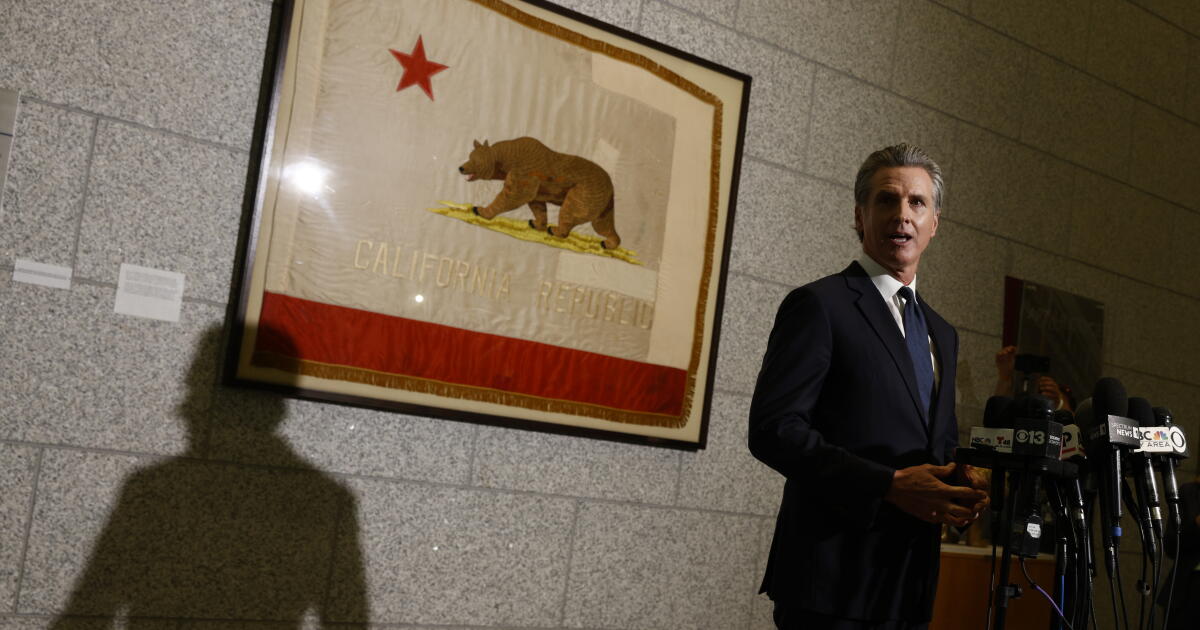
The Ellison family acquired the controlling stake in Paramount in August. The family launched their pursuit of Warner Bros. in September but Warner’s board unanimously rejected six Paramount proposals.

Paramount started with a $19 a share bid for the entire company. Netflix has offered $27.75 a share and only wants the Burbank studios, HBO and the HBO Max streaming service. Paramount executives have held meetings with Warner investors in New York, where they echoed the proposal they’d submitted in the closing hours of last week’s auction.

On Monday, Paramount also agreed to increase the termination fee to $5.8 billion from $5 billion, matching the one that Netflix offered.

Warner Bros. board voted unanimously to accept Netflix’s $72-billion offer, citing Netflix’s stronger financial position, the board has said.

Three Middle Eastern sovereign wealth funds representing royal families in Saudi Arabia, Qatar and Abu Dhabi have agreed to provide $24 billion of the $40.4-billion equity component that Ellison is backing.

The Ellison family has agreed to cover $11.8-billion of that. Initially, Paramount’s bid included the private equity firm of Jared Kushner, Trump’s son-in-law, but Kushner withdrew his firm last week.

Paramount confirmed that the Ellison family trust owns about 1.16 billion shares of Oracle common stock and that all material liabilities are publicly disclosed.

“In an effort to address Warner Bros.’s amorphous need for ‘flexibility’ in interim operations, Paramount’s revised proposed merger agreement offers further improved flexibility to Warner Bros. on debt refinancing transactions, representations and interim operating covenants,” Paramount said in its statement.

Paramount has been aggressively pursuing Warner Bros. for months.

David Ellison was stunned earlier this month when the Warner Bros. board agreed to a deal with Netflix for $82.7 billion for the streaming and studio assets.

Paramount subsequently launched its hostile takeover offer in a direct appeal to shareholders. Warner Bros. board urged shareholders to reject Paramount’s offer, which includes $54 billion in debt commitments, deeming it “inferior” and “inadequate.” The board singled out what it viewed as uncertain financing and the risk implicit in a revocable trust that could cause Paramount to terminate the deal at any time.

Paramount, controlled by the Ellisons, is competing with the most valuable entertainment company in the world to acquire Warner Bros.

Executives from both Paramount and Netflix have argued that they would be the best owners and utilize the Warner Bros. library to boost their streaming operations.

In its letter to shareholders and a detailed 94-page regulatory filing last week, Warner Bros. hammered away at risks in the Paramount offer, including what the company described as the Ellison family’s failure to adequately backstop their equity commitment.

The equity is supported by “an unknown and opaque revocable trust,” the board said. The documents Paramount provided “contain gaps, loopholes and limitations that put you, our shareholders, and our company at risk.”

Netflix also announced Monday that it has refinanced part of a $59 billion bridge loan with cheaper and longer-term debt.

Bloomberg contributed to this report.

Source link

Can movie stardom survive the age of AI?

Kevin Hart is almost impossible to avoid.

The stand-up comic turned actor has spent the past decade as one of Hollywood’s most bankable and visible stars, headlining megahits like the “Jumanji” films alongside a steady output of comedies and animated features, while still selling out arena tours and releasing hit Netflix comedy specials. Off-screen, his face turns up everywhere: pitching banking apps, tequila and energy drinks.

For a long time, that kind of omnipresence carried real security in Hollywood.

In the era of artificial intelligence, though, that guarantee has begun to erode. A quick Google search for “Kevin Hart AI” turns up unofficial versions of his voice, available with a few clicks.

A series on how the AI revolution is reshaping the creative foundations of Hollywood — from storytelling and performance to production, labor and power.

That helps explain why, one evening last month on the Fox lot, the head of Hart’s entertainment company, Hartbeat, was on an industry panel talking not about box office or release strategies but AI. Jeff Clanagan painted a picture of a landscape in which movie stardom is no longer protected by traditional channels, as attention splinters across platforms and audiences fragment. In that environment, AI can be both a risk and a lever.

“The most valuable resource right now is attention,” Clanagan told the audience of 150 studio executives, filmmakers, investors and technologists gathered at Hollywood X, an invitation-only event focused on responsible adoption of AI. “You’re competing for it everywhere — everybody is always on a second screen. That fragmentation is where the disruption is.”

Hollywood was built on the idea that a small number of stars could reliably command attention and turn it into leverage. As AI and algorithm-driven platforms reshape how attention is created and distributed, even the most recognizable names are newly exposed — not only to dilution but to the prospect of being replaced altogether.

People speak on a panel

Jeff Clanagan, right, president and chief distribution officer of Kevin Hart’s entertainment company, Hartbeat, speaking on a panel at last month’s Hollywood X event.

(Randall Michelson)

In parts of Asia, synthetic performers are no longer hypothetical. In Japan, the anime-style virtual pop star Hatsune Miku has sold out concerts and headlined festivals. In China, AI hosts run shopping streams on the video platform Douyin. And in the U.S., Lil Miquela, a computer-generated influencer created by the Los Angeles startup Brud, has amassed millions of followers and appeared in major fashion campaigns, including a Calvin Klein ad with Bella Hadid.

For studios, brands and producers, the appeal isn’t hard to see. A virtual performer doesn’t call in sick, miss a shoot or carry off-screen baggage. There’s no aging out of roles, no scheduling crunch. They don’t need trailers, negotiate contracts or arrive with riders, entourages and expense accounts in tow.

The old mythology was that a star might be discovered at Schwab’s lunch counter or in an audition room. Hollywood has always chased the “it factor.” What happens when the performer is, quite literally, an it?

That question came into sharp focus this fall with the appearance of Tilly Norwood, a photorealistic, AI-generated character that took the guise of a rising British actor, styled to read mid-20s and approachable — exactly the kind of star Hollywood is always looking for.

It landed in an industry already on edge. Hollywood was still reeling from strikes, layoffs and a prolonged contraction, with anxiety about AI simmering just below the surface. The response was immediate and visceral.

SAG-AFTRA warned that projects like Tilly risked relying on what the union called “stolen performances,” arguing that AI-generated actors draw on the work of real performers without consent or compensation, concerns that were central to the union’s 2023 strike. On a Variety podcast, Emily Blunt was shown an image of Tilly and paused. “No — are you serious? That’s an AI?” she said. “Good Lord, we’re screwed.”

SAG-AFTRA members march in one "Unity Picket" on strike day 111 at Walt Disney Studios in Burbank on Nov. 1, 2023.

SAG-AFTRA members march in one “Unity Picket” on strike day 111 at Walt Disney Studios in Burbank on Nov. 1, 2023.

(Myung J. Chun / Los Angeles Times)

Even some of Hollywood’s most tech-forward figures have drawn a line. On the press tour for his latest film, “Avatar: Fire and Ash,” James Cameron — the director who once warned of Skynet in “The Terminator” — called the idea of AI replacing actors “horrifying,” arguing that human performance would become increasingly “sacred.”

Yves Bergquist, an AI researcher who directs the AI in Media Project at the USC Entertainment Technology Center — a think tank supported by major studios and technology companies — expects AI to continue to encroach on territory once reserved solely for humans.

“Will we see AI movie stars?” Bergquist asks. “Probably.” But he draws a line between what the technology can generate and what audiences are willing to invest in emotionally.

“Prince writing his songs is a great story,” he says. “Pushing a button and making music is not. Very soon — it’s already starting — we’re going to have this us-versus-them mentality. These are the machines and we’re the humans. And we’re not the same.”

The actor that didn’t exist

“Are you allowed to speak to me from L.A.?” Eline van der Velden, the creator of Tilly Norwood, asks with a quick, nervous laugh on a video call from London — a nod to how radioactive the subject of synthetic performers has become.

The question isn’t entirely a joke. Three months ago, when Van der Velden presented her latest project at an industry conference in Zurich, it touched off one of Hollywood’s most heated debates yet over AI and performance, one that still hasn’t fully cooled.

Van der Velden, 39, came up as an actor before pivoting into production, eventually landing in London, where she founded Particle6, a digital production company known for short-form video work for broadcasters and major platforms. She was in Zurich to introduce its newest offshoot, Xicoia, an AI studio designed to build and manage original synthetic characters for entertainment, advertising and social media. “It’s not a talent agency — we’re making characters,” she says. “So it’s really like a Marvel universe studio in a way.”

a woman sits on a couch gesturing

Eline van der Velden, creator of the AI-constructed Tilly Norwood, at Web Summit 2025 in Lisbon, Portugal.

(Florencia Tan Jun/Sportsfile via Getty Images)

Tilly Norwood was meant to be the first and most visible example of that approach. Conceived as a recurring character with an unfolding story arc, Tilly was built to exist across short-form videos and scripted scenarios. As part of the Zurich presentation, Van der Velden screened a short satirical video titled “AI Commissioner,” introducing Tilly as a “100% AI-generated” actor — smiling on a red carpet and breaking down on a talk-show couch.

Other short videos featuring Tilly had already circulated online, including a montage placing her in familiar movie genres and a parody riffing on Sydney Sweeney’s controversial American Eagle jeans ad (“My genes are binary”). The “AI Commissioner” video itself had been posted on YouTube months earlier. By then, photorealistic synthetic characters were no longer novel and similar experiments were spreading online.

In Hollywood, it triggered an immediate backlash. Press accounts out of Zurich, amplified by Van der Velden’s remark that Tilly might soon be signed to an agent, collided with an industry already on edge about AI. Van der Velden was stunned at the intensity of the outcry: “Tilly was meant to be for entertainment,” she says. “It’s not to be taken too seriously. I think people have taken her way too seriously.”

Across the industry, working actors, already facing shrinking opportunities, recoiled at the idea of a fabricated performer potentially taking real jobs. Some called for a boycott of any agents who might take on Norwood. Speaking to The Times, SAG-AFTRA President Sean Astin demanded that the real-life actors used for AI modeling be compensated. “They need to know that it’s happening,” he said. “They need to give permission for it and they need to be bargained with.”

As the coverage ricocheted far beyond the trades and went global, the reaction escalated just as quickly. Asked when she knew Tilly had struck a nerve, Van der Velden answers matter-of-factly: “When I got the death threats. That’s when I was like, oh — this has taken a very different turn.”

Van der Velden understands why the idea of a synthetic performer unsettled people, especially in a business already raw from layoffs, strikes and contraction. “Tilly is showing what we can do with the tech at this moment in time, and that is frightening,” she says. But she argues that much of the backlash rests on fears that, in her view, haven’t yet materialized — at least not in the way people imagine them.

Tilly Norwood, an AI construct, smiles serenely at the camera.

Tilly Norwood, an AI construct created by Particle6.

(Particle6)

“There’s a bad reputation around AI,” she says. “People try to swing all sorts of things at it, like, ‘Oh, it’s taking my job.’ Well, I don’t know of anyone whose acting job has actually been taken by AI. And Tilly certainly hasn’t taken anyone’s job.”

Union representatives argue that displacement is already occurring through subtler mechanisms: background roles increasingly filled by digital doubles, commercials replacing actors with synthetic performers and projects that never get greenlighted because AI offers a cheaper alternative. The impact shows up not in pink slips but in opportunities that vanish before auditions are ever held.

Even as the controversy grew, Van der Velden says she began hearing something else privately. Producers and executives reached out, curious about what Tilly could do, with several asking about placing the character in traditional film or television projects — offers she says she declined. “That’s not what Tilly was made for,” she says.

Van der Velden insists the character was never intended to replace actors, framing Tilly instead as part of a different creative lineage, closer to animation. “I was an actor myself — I absolutely love actors,” she says. “I love pointing a camera at a real actress. Please don’t stop casting actors. That’s not the aim of the game.”

With a background in musical theater and physics, Van der Velden spent her early career in Los Angeles acting, improvising at Upright Citizens Brigade and making YouTube sketches. An alter ego she created, Miss Holland — designed to make fun of rigid beauty standards — won an online comedy award and helped launch her career in the U.K., where she founded Particle6.

Tilly began as an exercise: Could Van der Velden design a virtual character who felt instantly familiar, the kind of approachable young woman audiences would naturally be drawn to? “It’s like building a Barbie doll,” she says, noting at one point she considered making Tilly half robot. “I had fun making her. It was a creative itch.”

She pushes back on the idea that synthetic characters are simply stitched together from parts of real people. “People think you take this actress’ eyes and nose and that actress’ mouth,” she says. “That’s not how it works at all.”

Over six months, a team of about 15 people at Particle6 worked on developing Tilly, generating more than 2,000 visual versions and testing nearly 200 names before selecting Tilly Norwood, one that fit what Van der Velden calls the “English rose” aesthetic they were looking for and wasn’t already taken. “It’s very human-led,” Van der Velden says, likening AI tools to a calculator for creatives. “You need taste. You need judgment. You still have to call the shots.”

Even as the technology advances, the uncanny valley remains a stubborn barrier. Van der Velden says Tilly has improved over the last six months, but only through sustained human steering. “It takes a lot of work to get it right,” she says.

That labor, she says, is what separates an emerging form of storytelling worth taking seriously from AI slop. “I’ve seen some genuinely amazing work coming out of AI filmmaking,” she says. “It’s a different art form but a real one.”

She sees Tilly less as a provocation than as a reflection. “She represents this moment of fear in our industry as a piece of art. But I would say to people: Don’t be fearful. We can’t wish AI away. It’s here. The question is, how do we use it positively?”

Her focus now is on what she calls Tilly’s “inside” — the personality, memory and backstory that give the character continuity over time. That interior life is being built with Particle6’s proprietary system, DeepFame, software designed to give the character memory and behavioral consistency from one appearance to the next.

“People ask me things like what her favorite food is,” Van der Velden says. “I’m not going to answer for Tilly. She has a voice of her own. I’d rather you ask her yourself — very soon.”

Hollywood fights back

While Van der Velden wishes the industry were less afraid of what AI might become, Alexandra Shannon is helping Hollywood arm itself for what’s already here.

As head of strategic development at Creative Artists Agency, one of the industry’s most powerful agencies, Shannon works with actors, filmmakers and estates trying to navigate what generative technology means for their work — and their identities.

The questions she hears tend to fall into two camps. “First is, how do I protect myself — my likeness, my voice, my work?” she says. “And then there’s the flip side: How do I engage with this, but do it safely?”

Those concerns led to the creation of the CAA Vault, a secure repository for approved digital scans of a client’s face and voice. Shannon describes it as a way to capture a likeness once, then allow performers to decide when and where it can be used — for example, in one shot created for one film. It doesn’t eliminate uncertainty, she says, but it gives talent something they’ve rarely had since AI companies entered the picture: control.

“There’s a legitimate way to work with them,” she adds. “Anything outside that isn’t authorized.”

A large gray, glassy building stands in Los Angeles.

Creative Artists Agency’s headquarters in Century City, where talent representatives are grappling with how to protect clients’ likenesses.

(Robert Gauthier / Los Angeles Times)

Those risks are no longer abstract. Unauthorized AI-generated images and videos resembling Scarlett Johansson have circulated online. Deepfake ads have falsely enlisted Tom Hanks to promote medical products. AI-generated images have placed Taylor Swift in fabricated scenarios she never endorsed. Once a likeness becomes live and responsive, Shannon says, control can erode quickly.

For all the panic around AI, Shannon rejects the idea that digital likeness will undercut human stars overnight. “It’s not about all of a sudden you can work with Brad Pitt and you can do it for a fraction of the cost,” Shannon says. “That is not where we see the market going.”

What CAA is intent on preserving, she says, isn’t just a face or a voice but the accumulated meaning of a career.

“For an individual artist, their body of work is built over years of creative decisions — what roles to take, what brands or companies to work with, and just as importantly, what roles not to do, what companies not to support,” she adds. “That body of work is a fundamental expression of who they are.”

Shannon doesn’t dispute that the tools are improving or that some AI-native personas will find an audience. But she believes their growth will sharpen, not weaken, what distinguishes human performance in the first place. “In a world where there’s this vast proliferation of AI-generated content, people will continue to crave live, shared, human-centered experiences,” she contends. “I think it’s only going to make those things more valuable.”

Not everyone is convinced the balance will tilt so neatly.

“The genie’s out of the bottle,” Christopher Travers says by phone from Atlanta, where he runs Travers Tech, advising companies and individual creators on generative video and digital-identity strategy. “There are now more than a million characters across all sorts of media, from VTubers to AI-generated performers.”

Travers got his start in generative AI with the backing of Mark Cuban, founding Virtual Humans in 2019, a startup focused on computer-generated performers and digital identities. These days, his journey would have been much easier. “It costs nearly nothing now,” he says. “And when cost drops, volume increases. There’s pressure on celebrities to keep up.”

Having watched countless virtual characters come and go, Travers wasn’t particularly impressed with Tilly Norwood herself. What mattered to him was the reaction.

“Tilly is maybe 1% of the story,” he says. “The other 99% is the worry and the fear. What it did was strike a chord. We all needed to have this conversation.”

What stardom looks like now

Few people have spent more time inside Hollywood’s old star-making system than mega-producer Jerry Bruckheimer, whose films like “Beverly Hills Cop,” “Top Gun” and “Pirates of the Caribbean” helped turn actors into global commodities.

Even amid the disruption reshaping Hollywood, he believes the industry still knows how to discover and elevate stars. “It’ll happen,” he told The Times earlier this year. “Timothée Chalamet is a star and Zendaya is a star. Glen Powell is becoming a star — we’re going to bring him up. Damson Idris is going to be a star. Now they have to be smart and make good choices on what they do. That’s up to them.”

A man stands in a sci-fi hallway.

Stellan Skarsgård as Luthen Rael in the series “Andor.”

(Des Willie / Lucasfilm Ltd.)

The industry may still know how to make stars, but keeping them there has become harder. Chalamet’s biggest box office successes, like “Wonka” and the “Dune” films, have arrived as part of franchises rather than as standalone vehicles. Powell’s latest film, last month’s remake of “The Running Man,” fell short of expectations.

Bruckheimer himself has been pragmatic about AI. During postproduction on his recent Brad Pitt–led Formula One drama, an AI-based voice-matching tool was briefly used to replicate Pitt’s voice when the actor was unavailable for looping, a demonstration of how AI can extend a star’s reach rather than replace them. “AI is only going to get more useful for people in our business,” he says.

If Hollywood has been having more difficulty launching fresh faces, it has become adept at keeping familiar ones on the screen. AI tools can smooth a face, rebuild a voice or extend a performance long after an actor might otherwise have aged out. Stardom no longer has to end with retirement — or even death.

Stellan Skarsgård, for one, is uneasy with the idea. In recent years, the veteran actor — a current Oscar front-runner for “Sentimental Value” — has been part of two of Hollywood’s most valuable franchises, playing Luthen Rael in the “Star Wars” series “Andor” and Baron Harkonnen in the “Dune” films, roles built to carry on through sequels and spinoffs.

Asked about the prospect of an AI version of himself playing those characters after he’s gone, the 75-year-old Skarsgård bristles. The question carries particular weight. Three years ago he suffered a stroke, an experience that forced a reckoning with his craft and sense of mortality.

“SAG has been very adamant — there was a strike about it,” Skarsgård says. “And I do hope it won’t be like that in the future, that it will be controlled and that money won’t have all the rights.” He pauses. “You should have rights as a person, to your own voice, your own personality.”

Those questions — about control, consent and what survives a person — moved from the abstract to the practical last month at Hollywood X on the Fox lot.

Onstage, Jeff Clanagan mentioned a documentary that Hartbeat, Kevin Hart’s entertainment company, is producing with the estate of comedian Bernie Mac, who died in 2008. Built around Mac’s own audiobook narration, the documentary will rely on authorized existing recordings, not newly generated performances, pairing traditional animation with AI-assisted imagery to visualize moments Mac had already described. Clanagan said the technology offered a faster, less expensive way to bring those scenes to life.

But that took some convincing. An Oscar-winning director attached to the project initially wanted to tell the story entirely through traditional animated reenactments. Clanagan said it took months of persuasion — including creating sample scenes to demonstrate the approach — before that resistance eased. “Once he saw it, he was converted, and now we’re doing a little bit of a hybrid,” he said.

That work, Clanagan added, has become part of the job, not just externally but inside Hartbeat as well. “Part of it is educating the talent community on what you can do and still be aligned,” he said, noting that much of the hesitation comes from fear stoked by headlines and unfamiliarity with the tools. “It’s about helping people understand the process. People are starting to believe.”

As the Hollywood X panel ended, attendees filed out of a theater named for Darryl F. Zanuck, one of the architects of the studio-era star system, then crossed the Fox lot toward a reception. Along the way, they passed by cavernous soundstages, some painted with towering murals: Marilyn Monroe in “The Seven Year Itch,” Julie Andrews in “The Sound of Music,” Bruce Willis in “Die Hard.” Faces from another era, still watching as the industry weighs what will endure.


Source link

Sydney Sweeney’s sexiest outfits ever from ‘nude’ red carpet moment and plunging dresses to racy lingerie

IT’S no question Sydney Sweeney has cemented her status as one of Hollywood’s most talked about sex symbols – and the actress often pairs red-hot outfits to match. 

Since her rise from Euphoria to international stardom the A-lister hasn’t shied away from showing off her now famous assets.

Sydney Sweeney has cemented her status as one of Hollywood’s most talk-about sex symbolsCredit: Getty
Actress Sydney Sweeney hasn’t shied away from showing off her now famous assetsCredit: Not known, clear with picture desk

This week, Sweeney leaned fully into old Hollywood glamour, turning heads as she put on a busty display for her upcoming flick The Housemaid, which is already getting buzzy reviews after a few recent misses in her repertoire.

Her boxing biopic Christy failed to set the box office alight and saw her criticized for its poor performance paired with her shock American Eagle advert ‘great jeans’ backlash

But one thing the blonde bombshell’s fans never tire of is her plethora of sexy outfits.

From barely-there ’nude’ red carpet moments to plunging gowns and racy lingerie, let’s take a look at some of the actresses’ most raunchiest ever looks…

READ MORE ON SYDNEY SWEENEY

CURVE BALL

Sydney Sweeney takes lie detector test to prove if her boobs are real


MAID IN AMERICA

Sydney Sweeney channels her inner Monroe in plunging white gown at premiere

THAT NUDE DRESS

Sydney went braless with her bare chest on display under her figure-hugging attireCredit: Getty

In one of her sexiest outfits ever, the actress went almost naked in a jaw-dropping sheer chainmail style silver dress that left very little to the imagination.

Back in October, the White Lotus star went braless with her bare chest on display under her figure-hugging attire, which featured a floor-skimming hemline and elbow-length sleeves.

The see-through fabric gave a glimpse at her famous boobs, as well as the skin on her torso and thighs, making her appear pretty much naked in the exposing gown.

Sydney opted to keep the rest of her look minimal as it was clear that the dress was the statement piece here.

Monroe Muse

Sydney oozed sexiness in the striking halterneck with corset detail for the premiere of The HousemaidCredit: Getty

Sydney looked a vision in a plunging white gown adorned with a fur trim that seemed to be inspired by the late Marilyn Monroe.

The star showed out with her revealing red carpet look for the premiere of The Housemaid alongside her co-star Amanda Seyfried.

Sydney oozed sexiness in the striking halterneck, with corset detail to highlight her curves and a floor-length hemline.

The American’s bust was on full display, bursting out of the dress as she posed for the cameras.

Baring It All

The star stripped down to a lacy lingerie ensemble in this daring lookCredit: Frankies Bikinis

As one of the biggest young starlets in Hollywood Sydney has endured more than her fair share of criticism.

She was once slammed by Hollywood producer Carol Baum, who criticised her looks and acting ability, saying: “She’s not pretty, she can’t act. Why is she so hot?”

Taking it in her stride the actress remains unafraid to push boundaries with her exposing outfits.

Sweeney looked the classic bombshell in a sizzling photoshoot for her swimwear collection with Frankies Bikinis.

The star stripped down to a lacy lingerie ensemble, dressed in black head-to-toe in this daring look.

Sheer Sweens

The risqué gown had Sydney grabbing at the fabric to cover her modestyCredit: Splash

Back in 2023, the actress flew to her namesake Aussie city for the premiere of rom-com Anyone But You.

And it was transparent to all that fans loved meeting her. . . and her see-through dress.

The gown had a pair hot pants and a bikini style top fitted into the bodice of the almost completely sheer overlay.

The risqué gown had Sydney grabbing at the fabric to cover her modesty and clutching at her chest.

Playing Dress-up

Sydney’s racy costume showed off her natural curves with its leotard revealing her busty display and plunging necklineCredit: Instagram

The two-time Emmy nominee swapped the gowns for a more revealing number, as she dressed up as the Dragon from Shrek for her Friends-giving party this year.

The star dazzled, in her plunging red sequined leotard, black tights, stilettos and a horned headband for the holiday.

The racy costume showed off her natural curves, with the leotard revealing her busty display and plunging neckline.

She celebrated the Friendsgiving festivities alongside her boyfriend Scooter Braun.

Lace and Grace 

Although a more modest look for Sydney, the actress still managed to find a way to reel in the sex appealCredit: Getty

The actress opted for a bridal style dress with white lace stockings when attending the Southwest Film Festival.

The gown covered the movie star’s cleavage this time but revealed a sexy thigh high slit adorned with a white lace stocking. 

Although a more modest look for Sydney, the actress still managed to find a way to reel in the sex appeal.

Over the years, the star has been vastly underestimated, with Sydney famously declaring the biggest misconception people have about her is she’s just “a dumb blonde with big t**s.”

But when it comes to her outfits she’s certainly unafraid to push boundaries, and is unapologetic in her confidence.

Latex Look

Sydney put on a raunchy display for this next look opting for a latex figure hugging topCredit: Getty

The Euphoria star looked striking in a black outfit, whilst out at Variety’s annual Power of Young Hollywood event.

Sydney put on a raunchy show for this next look, opting for a latex figure hugging top which clung on to her every curve. 

The plunging neck line had her assets very much front and centre, while the leather skirt boasted a split and a flash of her pins.

Teasing her fans

Sydney wowed in a gorgeous tool gown which was half see through due to the mesh stripes placed on the dressCredit: Getty

Back in 2023, Sydney wowed in a gorgeous tule gown which was mostly transparent due to the mesh stripes placed on the dress.

The sheer fabric exposed her midriff, abs and thighs whilst the strapless neckline left her arms and shoulders on show.

Much of the scrutiny around Sydney revolves around her physical appearance, which has fanned debates about the double standards that women face in Hollywood.

Known for choosing roles that lean into hyper-sexualised archetypes, she’s become a lightning rod for public debate.

Known for choosing roles that lean into hyper-sexualised archetypes Sydney’s become a lightning rod for public debateCredit: Getty

Source link

Heartbroken George Clooney reveals his sister has died aged 65 as Hollywood star pays tribute to her ‘courage and humor’

GEORGE Clooney is mourning the loss of his sister Adelia Zeidler who has died aged 65.

The Hollywood star’s sibling passed away on Friday (December 19) following a battle with cancer.

Hollywood star George Clooney has confirmed his older sister Ada has diedCredit: Getty
Clooney with his older sister Adelia Zeidler during his wedding in Venice in 2014Credit: Getty
Ada was a talented artist and worked as a schoolteacherCredit: Facebook

Clooney, 64, described his sister – known as Ada – as his “hero” and praised her bravery.

He said: “My sister, Ada, was my hero. She faced down cancer with courage and humor.

“I’ve never met anyone so brave. Amal and I will miss her terribly.”

Ada’s official biography says she died “peacefully” while “surrounded by the people she loved” at St Elizabeth healthcare in Kentucky.

CLOO-ED IN

George Clooney reveals movie regrets and why Batsuit left kids ‘needing therapy’

‘Talented artist’

She was born on May 2 1960 in Los Angeles to mum and dad Nina and Nick, and was described as a “talented artist”.

She was named after her great-grandmother.

Her obit states: “A talented artist, she shared her skills as an elementary art teacher at Augusta Independent School for several years.

“In high school, her academic achievements qualified her to be a National Merit Scholar.

“Her love for reading connected her with other readers in a local book club.

“She was also a member of the Augusta Art Guild and was a past grand marshal of Augusta’s Annual White Christmas Parade.”

Ada married Norman Zeidler, a retired army captain, in Augusta in 1987.

While she led a very private life, she supported her brother publicly over the years, including attending his wedding to wife Amal in Venice in 2014.

Ada was snapped standing next to Clooney on a boat as they rode along a canal in the Italian city.

The siblings grew up together in Kentucky.

Clooney told CBS This Morning in 2015: “My sister, I’m very close to.”

Their mum Nina told HGTV in 2006 how she once came home to find her children had thrown a house party, and had thrown cooked marshmallows all over the walls.

Ada pictured next to her famous brother during a boat trip along a Venice canalCredit: Getty
George and Ada as children with their mum and dad Nina and NickCredit: Alamy

Source link

Brooks Nader bares ALL in totally see-through black dress on wild night out in Hollywood

BROOKS Nader has left very little to the imagination in a sexy ensemble while on a night out with pals.

The reality star and model bared all in a totally see-through black dress on a wild night in Hollywood, while looking sensational in the process.

Brooks Nader left very little to the imagination in the sheer numberCredit: BackGrid
She put on the eye-popping display while going braless underneath the sheer garmentCredit: BackGrid
She finished off the look with a bright red clutch bagCredit: BackGrid

The former Dancing with the Stars starlet, 28, donned a tiny minidress made of an incredibly flimsy fabric.

The black minidress was made of an extremely sheer chiffon.

Brooks risked it all by going completely braless for the occasion, which meant her breasts and nipples were on full display.

She wore her blonde locks down and in a sleek style, with her makeup glamorous yet natural.

Brooks completed the look with a red clutch bag and some gold earrings.

On the night out, Brooks was seen beaming beside Jeff Bezos’ wife Lauren Sanchez.

Lauren was seen rocking all navy in the form of a lace top and oversized long-line double-breasted coat.

This isn’t the first time Brooks has bared all.

Back in October, Brooks showcased her bare breasts once again in an entirely see-through top while leaving a talk show appearance in New York City.

Photos obtained by The U.S. Sun captured the reality star donning the sexy ensemble.

Brooks paused to acknowledge the cameras, showing off her sheer black top, exposing her boobs, and a short black skirt.

She completed the look with a black blazer, pointed-toe black high heels, and her blonde hair flowing straight down.

Brooks became a household name after winning the Sports Illustrated Swim Search competition in 2019, which skyrocketed her modeling career.

Dancing With The Stars fans would also remember her from last season, when she competed with her pro partner, Gleb Savchenko – who she struck up a romance with on the show.

The pair were eliminated after reaching ninth place, but their names continued to circulate in the media due to their romance.

However, their relationship ended not long after when Brooks accused Gleb of cheating on her, which he vehemently denied.

Brooks is now romantically linked to Spanish professional tennis player Carlos Alcaraz.

In addition to her modeling career and stint on DWTS, Brooks stars on the new reality TV series, Love Thy Nader, which premiered on Hulu earlier this year.

The show follows Brooks and her sisters —Mary Holland, Grace Ann, and Sarah Jane —as they navigate building careers in the Big Apple.

She wore tights and heels to round off the lookCredit: BackGrid
She stepped out alongside Lauren SanchezCredit: BackGrid

Source link

Hollywood stars launch Creators Coalition on AI

A group of entertainment industry workers launched a new coalition that aims to advocate for the rights of creators amid the growing AI industry.

The group, called Creators Coalition on AI, was founded by 18 people, including writer-director Daniel Kwan, actors Joseph Gordon-Levitt and Natasha Lyonne and producer Janet Yang, former president of the Academy of Motion Picture Arts and Sciences.

Gordon-Levitt said the group is not limited to Hollywood luminaries and is open to all creators and the skilled workers around them, including podcasters, digital content creators and newsletter writers.

“We’re all frankly facing the same threat, not from generative AI as a technology, but from the unethical business practices a lot of the big AI companies are guilty of,” he said in a video posted on X on Tuesday. “The idea is that through public pressure, through collective action, through potentially litigation and eventually legislation, creators actually have a lot of power if we come together.

The coalition’s formation comes at a time when Hollywood has been grappling with the fast growth of artificial intelligence tools. Many artists have raised concerns about tools that have used their likenesses or work without their permission or compensation.

The tech industry has said that it should be able to train its AI models with content available online under the “fair use” doctrine, which allows for the limited reproduction of material without permission from the copyright holder.

Some studios have partnered with AI companies to use the tools in areas including marketing and visual effects. Last week, Walt Disney Co. signed a licensing deal with San Francisco-based ChatGPT maker OpenAI for its popular Disney characters such as Mickey Mouse and Yoda to be used in the startup’s text to video tool Sora.

Kwan told The Hollywood Reporter that when Disney and OpenAI’s deal was announced many people felt “completely blindsided.”

“On one hand, you can say that this is just a licensing deal for the characters and that’s not a big deal, and it won’t completely change the way our industry works,” Kwan told THR. “But for a lot of people, it symbolically shows a willingness to work with companies that have not been able to resolve or reconcile the problems.”

There has also been lawsuits filed against some AI companies. Earlier this year, Disney, Universal and Warner Bros. Discovery sued AI business Midjourney accusing it of copyright infringement.

The Creators Coalition on AI said it plans to convene an AI advisory committee “to establish shared standards, definitions, and best practices as well as ethical and artistic protections for if and when AI is used.” Some of the principles the group lists on its website include the importance of transparency, consent, control and compensation in the use of AI tools, sensitivity to potential job losses, guardrails against misuse and deepfakes and safeguarding humanity in the creative process.

“This is not a full rejection of AI,” the group said on its website. “The technology is here. This is a commitment to responsible, human-centered innovation.”

“This is not a dividing line between the tech industry and the entertainment industry, nor a line between labor and corporations,” the group said . “Instead, we are drawing a line between those who want to do this fast, and those who want to do this right.”

The idea for the coalition was sparked by Kwan, who produced a documentary about AI, which comes out next year, Gordon-Levitt said in his video. He said work on the group began in the middle of this year. Already the collective has many signatories, including actors Natalie Portman, Greta Lee, Kirsten Dunst and Orlando Bloom.

Source link

Melissa Barrera is ready for action

The Mexican actor and human rights advocate taps into her inner Sydney Bristow alongside Simu Liu in “The Copenhagen Test,” the new spy series on Peacock.

Melissa Barrera is no stranger to a certain type of espionage. Dangerous missions. Sometimes starting in the dark of night. One particular covert operation she regularly took part in is one many daughters have had to take with their resolute mothers — Black Friday shopping.

She recalls crossing the border from her hometown in Monterrey, Nuevo León, in the wee hours of the morning to McAllen or Brownsville in Texas to score primo deals at the big-box stores.

“It felt like a treasure hunt for me,” she recalled. “In my mind, it was like a mission, getting the things that we had to get. I like challenges and being given instructions. That was very satisfying for my personality type.”

That experience prepared the Mexican actor for her role as a spy juggling secret identities in Peacock’s “The Copenhagen Test,” premiering Dec. 27. The espionage thriller stars Simu Liu as an intelligence analyst whose brain has been hacked, putting his thoughts and memories in the hands of unknown perpetrators. Barrera co-stars as Michelle, a spy tangled in the web of deceit.

“It was a challenge. I’d never done anything like this before, in the sense that you really don’t know who Michelle is,” said the actor, who chatted over Zoom from Barcelona where she’s filming another thriller, “Black Tides.”

“It was also confusing for me as an actor, because we didn’t have all the scripts at the beginning, so I had made up who I thought Michelle was — and then I would get more scripts and I was like, ‘Well, that goes out the window.’ It was a constant construction.”

Those Black Friday missions weren’t the only ways in which Barrera was innately prepared for the role. Growing up, she devoured the Jennifer Garner spy series “Alias.” She spent hours as a teen watching and rewatching episodes on DVD. It was Garner’s ass-kicking turn as Sydney Bristow, and her many stealthy alter egos, that planted a seed in Barrera.

“I was obsessed with that show,” she says. “As a young teenager, I was like, ‘I want to be a spy.’ I would research online: ‘How do you get recruited as a spy?’ That’s how obsessed I was.”

She longed for intrigue, for covert operations, for wigs. Not just the kind of spy business that equates to elbowing señoras at Best Buy for a deeply discounted TV. And then came “The Copenhagen Test.”

“I just thought that it was so fun, the role playing within the role playing that happens,” she said. “I read the scripts, and they were really good. And I got to be a spy. I was like, this is a no-brainer for me. I’ve been asking for this since I was 12, so it was a dream come true for young me.”

From "Episode 101" of "The Copenhagen Test": Melissa Barrera as Michelle and Simu Liu as Alexander.

From “Episode 101” of “The Copenhagen Test”: Melissa Barrera as Michelle and Simu Liu as Alexander.

A spy series is just the latest in a long wishlist of roles for Barrera, who got to flex her dramatic side in “Vida,” her vocal and dance prowess in the musical “In the Heights,” and dive into scream queen territory in “Scream V” and “Scream VI.”

“I think it’s valuable for Latinos onscreen to bring in some of their background when it fits, and when it doesn’t, there’s no need to push it — I’m representing Latinos just by being there,” said Barrera, with a nod to ongoing discussions surrounding Latino inclusion in Hollywood. “[Yet] I’ve always wanted to explore all parts of myself. I’ve always wanted to try different things. I think it’s been happening, because I do believe that whatever you put out into the universe comes to you.”

It’s not just dream acting roles that Barrera puts out into the universe, hoping it produces something good. The 35-year-old is an outspoken advocate for Palestinian rights, wearing her beliefs quite literally on her chest — during our call she sports a hoodie with the phrase “words not actions” in the shape of a watermelon, a symbol of perseverance and resistance for Palestinian people. She’s never shied away from using her voice, in particular for this specific human rights issue, and it’s come with its consequences.

Two years ago, Barrera was fired from the forthcoming installment of the Scream franchise, “Scream VII,” as well as dropped from her agency for posts she shared and wrote on social media calling Israel’s attacks on Gaza acts of genocide and ethnic cleansing.

“Gaza is currently being treated like a concentration camp,” read one of her Instagram stories in following the events of Oct. 7. “Cornering everyone together, with no where to go, no electricity no water … People have learnt [sic] nothing from our histories. And just like our histories, people are still silently watching it all happen. THIS IS GENOCIDE & ETHNIC CLEANSING.”

Her firing drew widespread attention and critical discussion over what was viewed by many as the latest form of Hollywood blacklisting. Last year, Barrera spoke to De Los about the backlash, saying, “It wasn’t easy to be labeled as something so horrible when I knew that wasn’t the case. But I was always at peace because I knew I had done nothing wrong. I was aligned with human rights organizations globally, and so many experts and scholars and historians and, most importantly, Indigenous peoples around the world.”

Over a year later, her stance hasn’t changed. In fact, that period changed everything for Barrera.

“I’ve always had that inner inquietude, that kind of yearning for equality and for justice and for eliminating any kind of prejudices and racism and colorism, which is very prevalent in Mexico,” she explained. “But I honestly think it was Palestine that did it for me, that crumbled everything for me. After that, it’s been a before and after in my way of thinking and my way of viewing the world; in my way of viewing the industry and the way that I want to move forward.”

As Barrera moves forward, using her platform to speak up for injustice is inextricable from her sense of self and her place in Hollywood. What she brings to the screen is her full self, regardless of the role; to play a spy, or a scream queen, or any other character takes knowing who you are and what you stand for. Now, more than ever, Barrera is firmly grounded and ready for action.

Source link

2 dead in homicide at Rob Reiner’s home; police question family member

Los Angeles police are investigating an apparent homicide at the Brentwood home of Rob Reiner, where two people were found dead Sunday afternoon.

The bodies of a 78-year-old man and a 65-year-old woman were found at the home in the 200 block of Chadbourne Avenue, according to Police Capt. Mike Bland.

Law enforcement sources told The Times that a family member was being questioned in connection with the death. .

The sources, who were not authorized to speak publicly about the ongoing investigation, confirmed that there was no sign of forced entry into the home. The names of the victims have not been released.

Margaret Stewart, a Los Angeles Fire Department spokesman, said the department was called to the residence around 3:30 p.m. for medical aid. Inside the home, fire personnel discovered the bodies of the man and woman.

US actor and director Rob Reiner and his wife Michele Reiner attend the 46th Kennedy Center Honors.

Rob Reiner and wife Michele Reiner attend the 46th Kennedy Center Honors gala at the Kennedy Center for the Performing Arts in Washington in December 2023.

(Kent Nishimulra / AFP via Getty Images)

Reiner, 78, has had a five-decade-long career in Hollywood.

Early in his career, he played Michael “Meathead” Stivic on the iconic sitcom “All in the Family” from 1971 to 1979, alongside Carroll O’Connor as Archie Bunker.

As a director, Reiner helmed a string of hits including “When Harry Met Sally,” “The Princess Bride” and “This Is Spinal Tap.” His work took a dramatic turn when he directed the 1986 adaptation of Steven King’s novella “Stand by Me.”

Reiner was finally nominated for an Academy Award for 1993’s “A Few Good Men,” which starred Jack Nicholson and Tom Cruise, though the movie lost to Clint Eastwood’s western “Unforgiven.”

Reiner also was a leading political voice in Hollywood.

He was a co-founder of the American Foundation for Equal Rights, the organization that led the fight to overturn Proposition 8, which banned same-sex marriage. He’s also been active in children’s issues through the years, having led the campaign to pass Proposition 10, the California Children and Families Initiative, which created an ambitious program of early childhood development services.

Proposition 10 was considered landmark policy. Reiner enlisted help in the effort from Steven Spielberg, Robin Williams, and his own father, comedy legend Carl Reiner.

Reiner was married to Penny Marshall, star of “Laverne & Shirley,” from 1971 to 1981. He met photographer Michele Singer on the set of “When Harry Met Sally” and the two married in 1989, the year the movie came out.

Michele Singer Reiner began producing films over the last decade, including “Shock and Awe,” “Albert Brooks: Defending My Life” and “Spinal Tap II: The End Continues,” all directed by her husband. She also produced “God & Country,” a look at Christian nationalism in the U.S.

By Sunday evening, law enforcement had swarmed Reiner’s sprawling estate in Brentwood, though an eerie quiet hung over Chadbourne Avenue, which had been sealed from the public with yellow crime scene tape.

Police cars were stationed at either ends of the block where the Reiner residence is located while a chopper circled overhead.

Officers spoke to a young man inside of the sealed off area, who left the scene around 7:30 p.m. in a white Tesla and declined to speak to the media.

Councilmember Traci Park, whose Westside district includes Brentwood, said in a statement that the LAPD had increased patrols in the neighborhood “out of an abundance of caution.”

“As we continue to wait for more updates, I want to express my profound concern and sadness at the news coming out of Brentwood,” Park wrote in the statement. “We are in close contact with LAPD as the homicide unit continues their investigation.”

This breaking news story will be updated.

Times staff writer David Zahniser contributed to this report.

Source link