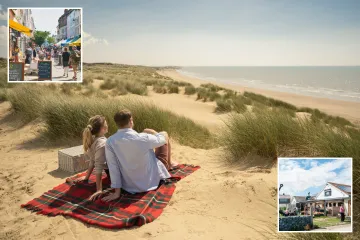
THERE’S a small town along the Essex coastline that’s one of the driest places in the country.
Shoeburyness has a lower annual rainfall average than the rest of the UK – not to mention it has two Blue Flag beaches and is just one hour away from London.
Sign up for the Travel newsletter
Thank you!
Shoeburyness in Essex is one of the driest places in the countryCredit: AlamyThe seaside town has green spaces too – like Shoebury ParkCredit: Tripadvisor
Thirteen minutes from Southend-on-Sea is the lesser-known coastal spot of Shoeburyness.
The town is home to around 22,000 people and is one of the driest places in the country.
Its position on the southeast coast means it gets less rainfall than other spots around the UK.
Shoeburyness records an average of between 526.78mm and 527mm of rain per year.
In comparison, the average annual rainfall for the entire UK is 1,163mm – Shoeburyness receives less than half of that.
So, it’s no wonder that lots of people flock to the town to visit its two Blue Flag beaches; Shoebury Common and Shoebury East Beach.
Shoebury Common is a sand and shingle beach that’s popular with families during the summer.
But it’s not just bucket and spade friendly, or for paddling, though. It’s also a popular place to launch boats and jet-skis, and is good for kitesurfing too.
Up on the promenade are colourful beach huts, as well as Uncle Tom’s Cabin where visitors can grab an ice cream, soft drink or cup of tea.
The new inclusive playground at Shoebury’s East Beach inSouthendwill have themed zones inspired by the sea.
There will be a sandpit, climbing areas and a submarine structure in the middle of the playground.
The playground will be open to all age groups and abilities and include wheelchair-accessible swings, roundabouts and sensory features.
The area surrounding East Beach had a new addition last summer with the Beach House Cafe opening next door to the East Beach Cafe and marking the completion of a £2million regeneration project.
One visitor to the Beach House said: “Love it here! Come for brunch every weekend, drive up from London. Lovely beach setting, food is fresh, tasty & lush!”
Last year, The Telegraph also named Shoeburyness as one of the top 20 destinations in Britain for the best secret and remote beaches.
The Telegraph stated: “Just three miles from the mayhem that is Southend in summer, Shoeburyness has two Blue Flag beaches that are far less well known.
“Its East Beach is the nicest and is popular with local paddleboarders and kitesurfers, thanks to its long strand of sand.”
The town was once even accessible on the London Underground – although it was never officially part of the network.
The District line ran seasonal, direct services to Shoeburyness via Southend between 1910 and 1939 – and was known as the ‘Southend Service’.
The seaside town has two Blue Flag beachesCredit: AlamyFurther inland is a Wetherspoon pub Parson’s BarnCredit: J D Wetherspoon
Those who want to visit Shoeburyness can still do so very easily from London by getting on a direct train from London Fenchurch Street.
The journey takes just one hour and one-way tickets are as little as £11.30.
If you head further into the town of Shoeburyness, you’ll find a Wetherspoon called Parson’s Barn.
There’s also a popular restaurant called The Angel Inn which earned itself a Tripadvisor Travellers’ Choice Award last year.
Here you can dig into sizzling fajitas from £15, burgers, mains like steak with chips and salmon with broccoli and paprika cous cous.
Speaking of which, on Tuesdays, The Angel Inn does Pie and Pint Night where you can get any pie and any drink from its menu from £17.
Shoebury Park is another popular spot, it stretches across 20 acres and is filled with green areas and ponds.
It also has a tennis court, basketball court, cricket pitch, bowling green, BMX trail track, skateboarding facilities, fishing lake, and a children’s playground.
For more on Southend – here’s how the coastal city has become cool with celeb visitors…
Southend-on-Sea has become an unlikely hot spot for some of the UK’s best-known TV personalities.
The Essex town has seen a surge in popularity, thanks to its colourful beach huts, award-winning hotels and stunning coastline.
Dubbed the British Miami by fans because of its long golden beaches, the town often welcomes celebrity visitors.
It was reported earlier last year that the hotel would undergo a £10million makeover. Currently, the Roslin Beach Hotel has 37 bedrooms, but with the extension, it will have an extra seven rooms.
They also want to add a spa, a new wedding venue, and add outdoor restaurant facilities.
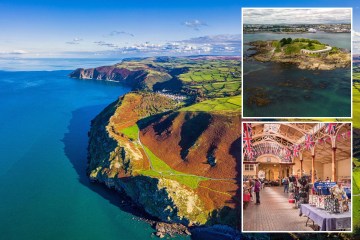
The February half-term is this week but you don’t need to spend money on a day outCredit: PR Handout image
With so many different activities you can ensure the kids will have fun without having to spend any money.
The Super Duper Family Festival, Manchester
The Super Duper Family Festival starts on February 18 and runs through until February 21.
Across four days, families can explore Manchester‘s public spaces that will be transformed into free Play Zones with games, dancing, activities, crafts, movies and performances.
For example, The Carnival zone will feature a Victorian carousel, Hook a Duck, Spin the Wheel, a Coconut Shy and Ferris Wheel Hoopla.
Family Day: impasto studio, National Portrait Gallery, London
On February 17, families can head to the National Portrait Gallery between 11am and 4pm for fun-filled activities.
Between 11am and 1pm and 2pm and 4pm, families can take part in a sketcher’s session, where you get to make your own sketchbook.
At the same times, there will be two relaxed workshops where you can draw from still lives.
Or head to animal attire, to draw and collage an animal accessory to wear.
Across the day there are also free activity trails to explore.
Pancake Day races, various
This year, Pancake Day falls within the half-term holidays which is ideal to enjoy some pancake-themed fun.
For example, you could head to Leadenhall Market in London to see the Pancake Race at 12:30pm, where teams of four run a 20 metre relay flipping pancakes.
In Devon, you could head to Dartmouth between 2:30pm and 4pm to see an afternoon of pan-flips.
There is also pancake making of course…
Search ‘Pancake Day race near me’ to find your local event.
On Tuesday this week, it is Pancake Day and around the country pancake races are being heldCredit: Alamy
February Festival, Blackpool
Between February 19 and 22, there will be a festival of circus, live entertainment and family activities in Blackpool.
Events include Elton Wrong, who will be roaming the town centre with his mobile white piano.
There will be dancers on the streets too such as ballerinas.
Railway family fun day, Clitheroe Castle in Lancashire
On February 16, Clitheroe Castle Museum is hosting a family fun day to celebrate 200 years of the modern railway.
Across the day, there will be hands-on fun, creative activities and immersive railway heritage.
At the castle, visitors will be able to see a working ‘Rock and Roll’ model railway, meet Lancashire children’s author Susan Brownrigg who will read extracts from her book Wrong Tracks, play train spotting games and decorate your own train wagon.
In addition, there’s the ‘Tracks of Life: Trains, People and Place’ exhibition, which celebrates the life and work of Ken Roberts (1928–2024) who was a local railway enthusiast and photographer.
There also a Railway family fun day at Clitheroe Castle this weekCredit: Getty
Nottinghamshire Festival of Science & Curiosity
Nottinghamshire Festival of Science & Curiosity returns for another half-term full of activities.
Running until February 20, you can get involved in a number of different activities that are designed to inspire curiosity and imagination.
These include geology workshops, bath bomb making, Lunar New Year celebrations and Lego sessions.
Ikea events, various
Ikea is a great day out in itself, but did you know each store often hosts free events too?
For example, you could head to the Hammersmith store this week for Lunar New Year Fun sessions.
Or perhaps visit Ikea Exeter for spring flower garden canvas painting.
Just head to Ikea’s website and then to the events section and explore the activities at the store near you.
Seven Stories – The National Centre for Children’s Books, Newcastle
If your kids love reading and are good with their imagination, then head to Seven Stories – the UK’s National Centre for Children’s Books.
Inside, visitors can explore children’s stories through exhibitions, performances and workshops.
If your kids love books, head to The National Centre for Children’s BooksCredit: Alamy
Cotswolds Designer Outlet
Across this week, the Cotswolds Designer Outlet will have special guests from Scrubditch Care Farm.
Kids can meet therapy farm animals, which include baby lambs and goats.
There will also be a farmyard trail where little ones can spot colourful animals around the shopping outlet.
There’s an indoor soft play area and adventure playground too.
Waterstones stores treasure hunts, various
Over this half-term, Waterstones stores across the country host scavenger and treasure hunts.
For example, at Waterstones York Monks Cross, there are events themed on Winnie the Pooh’s 100th birthday.
Every day at 11am there will be a storytime session, then there are themed colouring sessions and a picture hunt as well.
Or at Waterstones Carlisle you can browse the bookshelves to try and find Dav Pilkey’s Dogman.
Have you had a memorable family adventure? A trip where you stepped outside your comfort zone and tried something new together? Whether it’s a family backpacking trip, completing a long-distance hike, bike or canoe trail, wild camping, youth hostelling or trying out a new activity, we’d love to hear from you.
The best tip of the week, chosen by Tom Hall of Lonely Planetwins a £200 voucher to stay at a Coolstays property – the company has more than 3,000 worldwide. The best tips will appear in the Guardian Travel section and website.
Keep your tip to about 100 words
If you have a relevant photo, do send it in – but it’s your words we will be judgingfor the competition.
We’re sorry, but for legal reasons you must be a UK resident to enter this competition.
The competition closes on Monday 23 February at 10am GMT
Your responses, which can be anonymous, are secure as the form is encrypted and only the Guardian has access to your contributions. We will only use the data you provide us for the purpose of the feature and we will delete any personal data when we no longer require it for this purpose. For alternative ways to get in touch securely please see our tips guide.
If you’re having trouble using the form click here. Read terms of service here and privacy policy here.
One airline has launched an incredible family deal that will see children aged up to 11 fly free to a European hotspot this summer. Make sure you don’t miss out on the offer
Samantha Bartlett Assistant Editor, Social News
12:02, 16 Feb 2026
Enjoy a family holiday for less with one travel deal (stock image)(Image: J_art via Getty Images)
Plenty of us are daydreaming about a family summer holiday after the miserable conditions we’ve been battling lately, and if you’re itching to whisk the kids off for a European coastal adventure, you’ll want to listen up as one airline has launched an absolutely brilliant offer on flights.
Aegean Airlines is currently running a superb travel promotion for families, allowing youngsters to jet off to a European destination without paying a penny. The news was shared on Instagram by baby travel guru Diana, who posts under the handle @babylifewithdiana. She shared a reel with her 79,800 followers, showcasing clips from a gloriously sunny family holiday.
Text across the screen read: “Every parent needs to know this!
Expanding on this in the caption, she wrote: “Forget everything what you’re doing! Aegean Airlines has launched an amazing offer for families.
Content cannot be displayed without consent
“Kids will travel free to Greece this summer.”
However, there are a few strings attached if you’re hoping to snap up this bargain.
Bookings need to be made by February 19th, 2026 and you’ll need to jet off between March 1st, 2026, and November 30th, 2026.
The offer is valid for youngsters up to 11-years-old.
Through this promotion, children and babies fly at no cost, whilst other family members bag up to 30% off their tickets.
The Aegean Airlines offer is valid across all direct and connecting flights to and from any international or Greek destination. The announcement sparked excitement amongst users, racking up more than 3,000 likes.
One person enthused: “What a deal,” whilst another added: “On our bucket list.”
Which Greek destination works best for families with kids?
Greece makes for a brilliant family getaway suitable for youngsters of every age – offering gorgeous beaches, safe bathing spots, engaging pursuits, cultural experiences, and delicious food all wrapped up in glorious sunshine. Here are some top picks for a family-friendly Greek escape:.
Crete
Greece’s biggest island boasting golden sandy shores and tranquil shallow waters ideal for youngsters.
Plenty of family-oriented activities: boat excursions, water parks, gentle walks, and historic attractions like Knossos.
Accommodation and hotels frequently feature kids’ clubs, splash pools, and family suites.
Perfect if you’re after diversity and an extended break with abundant exploration opportunities.
Corfu
Renowned for gentle, secure beaches with shallow waters, Corfu is perfect for tiny tots.
Family highlights include Aqualand Waterpark offering slides suitable for all age groups.
Picturesque towns, seafood tavernas, and convenient transport links make getting about straightforward.
Ideal for families seeking both seaside entertainment and cultural landmarks.
Rhodes
Blends medieval settlements and kid-friendly beaches like Faliraki with ample room for play.
Pursuits in Rhodes include wildlife farm visits, aquariums, and straightforward day-trips across the island.
Excellent if your children enjoy combining history with coastal adventures.
Naxos Long sandy beaches with shallow water near towns like Naxos Town (very walkable).
Less crowded than some islands but still plenty of tavernas and activities.
Perfect for a relaxed holiday, especially with younger children.
Zante
Beautiful sandy shores in places like Tsilivi and Alykanas with shallow water.
Chance to see loggerhead sea turtles in the National Marine Park – exciting for kids.
A BUDGET hotel chain with self-serve bars and private pod rooms is looking to open in the UK.
There’s talk of the brand, LyLo, opening several sites across the country, and it has its sights set on Southwark in London.
Sign up for the Travel newsletter
Thank you!
New bargain pod hotels could open in the UKCredit: LyLo QueenstownThe current locations have spaces for socialising and designated quiet spotsCredit: LyLo Queenstown
Hotels in the city, and across most of the UK can be expensive – but if it opens in the UK LyLo is set to be very affordable.
Its ethos is ‘lower prices and higher comfort at the centre of everything’.
If priced like they are in Australia and New Zealand, a stay in a pod could cost as little as £20.24 (AUD$39).
LyLo promises fuss-free check-in, on-site drinks and eats, WiFi, workspaces, and spaces to play encouraging guests to socialise with various events.
Some of current pod hotels even have rooftop spots where guests are welcome to relax and play games.
LyLo also holds events like welcome drinks, pop-up dinners, local tours, surprise gigs, wellness activities and film screenings.
Some of the LyLo hotels like the ones in New Zealand’s Queenstown and Australia’s Brisbane, even have their own self-pour cocktail and beer wall.
Guests have to show ID to the bar manager, load up their hotel card, then tap and pour – when the balance runs low, just top up and carry on.
Visitors can help themselves to lager, beer, cider and even cocktails like espresso martinis on tap.
For those who need some peace and quiet for work, the hotel also offers a range of ‘quiet spaces’.
Each hotel has a kitchen fully kitted out with ovens, microwaves, fridges, freezers and plenty of cutlery.
At the current sites, guests can either stay in self-contained pods or private rooms.
Visitors can rent out a self-contained pod with a king size mattress, USB charging port and WiFi.
These pods are within a shared room which can sleep up to 10 guests – so each cabin comes with its own privacy screen.
Guests can stay in a pod room – or opt for a private oneCredit: LyLo QueenstownVisitors are welcome to use the kitchen facilities – and have access to a free BBQCredit: LyLo Queenstown
There’s also the option for a female-only space.
Guests can also opt for a private room, or an ensuite room which comes with private bathroom facilities.
If travelling with a number of travellers, there’s also an option to book out a full room of pods for one large group.
LyLo managing director Tim Alpe said: “We are thrilled to introduce LyLo to Europe, with London as the perfect city to launch our first property.
“Our innovative pod hotel concept has already proven successful in New Zealand and Australia, and we are confident that the European market will embrace our unique blend of affordability and community-focused design.
“London’s dynamic and diverse traveller base makes it an ideal location to begin this exciting new chapter, and we look forward to bringing LyLo’s fresh approach to hospitality to the city.”
The brand currently operates 608 pods across New Zealand and Australia.
Here’s another cheap pod hotel that’s already opened in London…
Travel Writer Helen Wright recently spent the night in London’s newest pod hotel – Zedwell – here’s how it went…
“Zedwell is one of the city’s newest hotels to open, right in the middle of Piccadilly Circus. Being so central, you can normally expect hotels to have high prices – the nearby Ritz and the W Hotel can command nightly rates of £500 or more.
“Not Zedwell – the new hotel claims to be the world’s biggest capsule hotel, and with that, comes the small price of just £30 a night. That definitely makes it the cheapest hotel room in the city (unless you want to bunk up in an 18-bed dorm).
“Inside, decked out with a modern concrete and timber design, there are nearly 1,000 individual sleep capsules over five floors. Guests use an iPad to self-check in, before being directed to one of the correct floor and room.
“Each dorm needs a key card to access, too, so you can only enter the dorm you are assigned, which definitely makes it feel secure. It’s a twist on the traditional ‘dorm style’ hostel set up as each guest gets privacy and security of being tucked up in your capsule, with the ability to lock it from the inside.
“Inside, I was surprised to find a cute little space, with mood lighting and welcoming interiors. Each capsule is made from oak and come with a single Hypnos mattress, Egyptian cotton bedding, individual mini aircon or heat, smart climate control, noise reduction, and ambient lighting.
“There is also a plug socket inside, two USB plugs and a mirror. Make sure to bring your own padlock too, so you can lock your pod if you plan on going out (although reception let you buy them on-site as well).
“There are clean common areas, which felt more adult then teen-backpacker, which includes a lounge and co-working space. I was impressed with how clean the communal bathroom and toilet area as well, with light jazz music playing overhead.”
This article contains affiliate links, we will receive a commission on any sales we generate from it. Learn more
I booked a mystery holiday for £79 and thought things couldn’t get worse — they did(Image: Portia Jones )
While doom scrolling and sipping a large glass of cava, I came across a deal that stopped me mid gulp: a mystery holiday for just £79. As a travel writer and podcaster, I’m constantly planning work trip itineraries, so I rather fancied the thought of letting someone else decide where I’m going. What could possibly go wrong?
If, like my husband, you are wondering what a mystery holiday is, allow me to explain. The popular Wowcher deal promises return flights and two nights in a hotel somewhere abroad for a low price. It was £79 per person when I booked it on a deal, but it’s normally £99 per person. It could be Dubai, New York, the Maldives, Las Vegas or Mexico, or European destinations such as Paris, Monaco, Sicily, and Lake Como.
Your destination is allocated via a randomised draw and is subject to availability. Every booking is randomly assigned to one of three tiers. Six holidays sit in Tier 1. Twelve in Tier 2. And a whopping 1,982 in Tier 3. That is 2,000 packages in total, enough for 4,000 travellers, all distributed by draw.
Tier 1 means the headline, long-haul, brag-on-Instagram trips, but the vast majority are European weekend breaks. You just have to make peace with the fact that you may end up posting sunset shots from Tier 1 Barbados or in an adequate three-star hotel in a European city. You have to decide if it’s worth the risk.
Darling husband was not wildly enthusiastic about paying to be surprised, but I deployed my usual negotiation technique: talking until he loses the will to live. We bagged the deal at £79 each in a special offer, and we were in the game.
Obviously, the odds of us swanning off to Dubai were, frankly, casino-level, but I chose optimism. I was determined we would escape the British drizzle and emerge somewhere glamorous.
Credit card in hand, I effectively gambled our annual leave on Wowcher and waited for the universe to reward my impulsiveness.
Shortly after paying, a code and redemption link arrived in my inbox, which felt very exciting. I entered our details into the site, selected our preferred departure airport, and discovered that flying from anywhere other than London costs extra, and if you want to take more than a t-shirt and a pack of fem wipes, you’ll have to pay for a bag. Of course.
Then came the grand reveal. I was mentally picturing us in the Caribbean, toes in turquoise waters, sipping piña coladas. Then I clicked. It was the Costa del Sol. I screamed the F word. And it wasn’t “fantastic!”
After my minor meltdown, I regrouped. Spain in February would be great, a chance of blue skies, tapas and cocktails by the sea. Given that it has rained every single damn day in Britain for weeks, this trip was destined to be the sunny salvation my vitamin-D-deficient heart deserved.
I pictured balmy afternoons in a cute seaside resort with an ocean view where I could watch epic sunsets. This is what I told myself as I boarded our delayed Ryanair flight in the freezing cold.
I stayed positive through the turbulence. Nothing could ruin my holiday. Then the captain spoke: “Good afternoon, ladies and gentlemen, this is your captain speaking from the flight deck. As we begin our descent, I’d like to give you an update on the weather conditions. The area is currently experiencing adverse weather, including heavy rain and strong winds.”
And that was it. Right there. Right there, that was the moment I officially abandoned all hope. I was landing in the middle of Storm Leonardo rather than in lovely Spanish sunshine. Things could not possibly get worse, until they absolutely did.
It turns out that Wowcher’s concept of a ‘minimum three-star hotel stay’ differs from mine. While I had imagined a cutesy hotel with an ocean-view terrace, what we got was a tired-looking budget apartment block in Benalmadena town that clearly hadn’t been updated since the 90s. To be fair, our apartment was fairly clean and of a decent size, but it was extremely basic.
No balcony, toiletries or even coffee. There was also the threat of “fines” if you left the light on when you went out, and you had to check out before 10 a.m. This was a bare bones stay for the budget traveller, not the mid-tier relaxing break I had hoped for.
I’m not sure what I was expecting for £79, but I was now fully in a negative spiral as Storm Leonardo raged outside, rain lashing and wind howling.
Husband, after living with my particular brand of travel chaos for 12 years now, seemed surprisingly calm about the whole thing, almost as if it had fully met his expectations for a holiday for less than £100. It’s always irritating when he’s completely right.
Undeterred, I confidently announced we would visit the aquarium, the perfect place for a wet and windy Wednesday. Surely penguins would cheer me up.
“Due to Storm Leonardo, the aquarium is closed”, the sign taped to the door read. Rightio. Of course. To the pub then. “Sorry love, we don’t do Sauvignon blanc.” Must. Not. Scream.
So why, you might reasonably ask, didn’t we admit defeat, check out, and head home? To take a short break from being a negative Nancy, the answer is that when the sun made appearances in between downpours, Benalmadena town really isn’t that bad.
The town is divided into three main areas: the traditional hilltop Pueblo, the central Arroyo de la Miel, and the seaside Costa, and there’s plenty to do here.
Sure, like most places in the Costa del Sol, you have bars for boozed-up Brits with blaring music, souvenir stores hawking tat, and vape shops, but there’s also a gorgeous seafront, swish marina and tasty tapas.
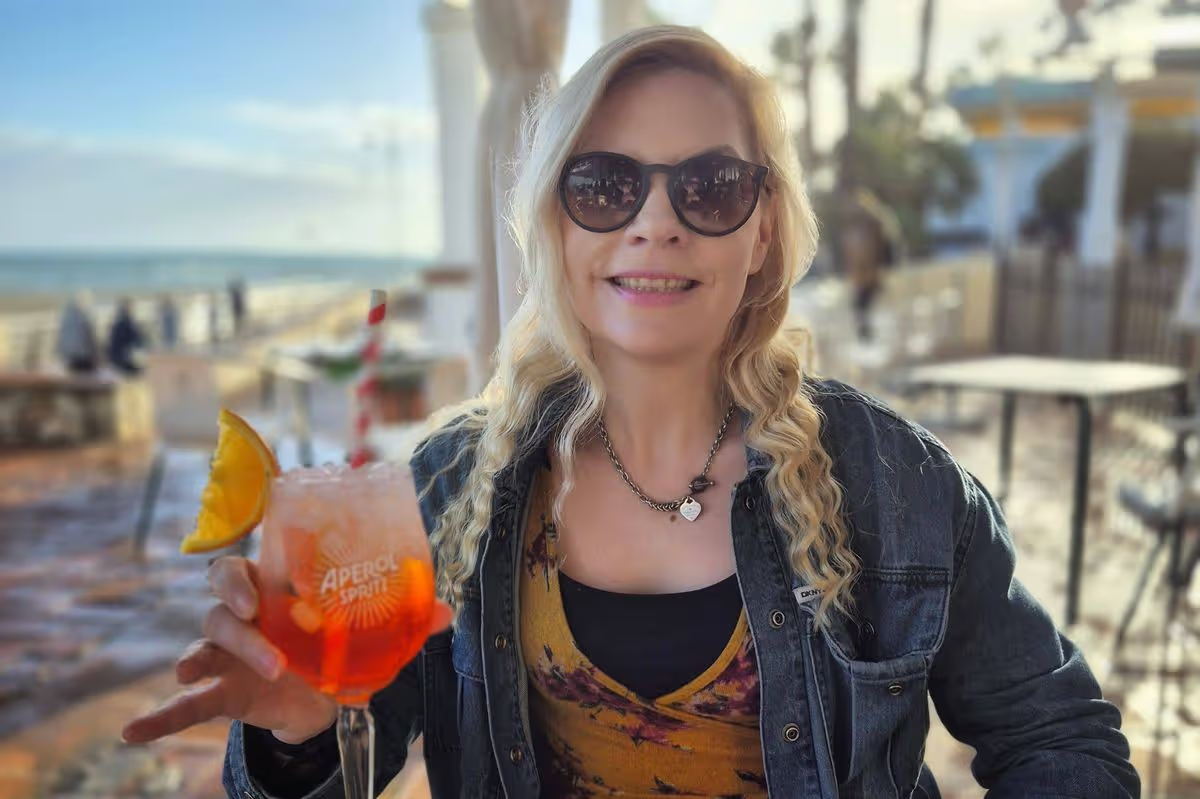
When the weather is behaving, plod along the 10-kilometre stretch of sandy beaches, including Blue Flag options like Santa Ana Beach. The palm tree-lined promenade is also dotted with ocean-view restaurants and bars where you can buy an Aperol Spritz and watch the waves.
Puerto Marina is also worth a visit. The major, uniquely designed marina features shopping, dining, and the Sea Life aquarium (when it’s not closed due to rain, despite the marine life living in tanks).
Attractions in the area include the 33-metre-tall Buddhist Stupa, Colomares Castle, and the Teleférico (cable car) to Mount Calamorro for panoramic views.
If you want a slice of more ‘authentic Spain’, wander away from the seafront, and you’ll soon stumble across tapas bars and restaurants like Asador Casa Miguel serving Andalusian dishes. The Iberian pork medallions were exceptional.
If you’re feeling adventurous, you can always hop on a cheap, 30-minute train to Málaga, a historic port city packed with culture and excellent eats.
Explore the palm-dotted city, and you’ll find astonishing historical sites, such as Alcazaba (Moorish fortress), a Roman Theatre, and a 16th-century cathedral. There are also over 30 museums here, including the Picasso Museum and the Carmen Thyssen Museum.
As the weather alternated between rain and sunshine, we found that a trip to Málaga was an excellent way to escape the rain, and the sun also came out.
We spent a delightful few hours visiting cultural heavyweights like the Picasso birthplace and the Roman Theatre and eating our way around the buzzing Mercado de Atarazanas (Malaga food market).
Here you’ll find stalls brimming with local produce where you can slurp fresh oysters on the shell for €3 and sip cava for under €4 a glass. Lush.
Despite the stormy weather, our time in Costa del Sol felt all too brief, and it was soon time to head back to the airport. I suppose that’s the issue with this particular Wowcher mystery deal: you’re given a narrow window in which to experience your destination. If the weather is glorious, you’re smug. If it’s biblical, you’re essentially on a layover with sangria.
But here’s the real lesson the Wowcher mystery holiday taught me. In travel, as in life, you get exactly what you pay for.
During my 20s, while backpacking on the cheap, I stayed in three-dollar-a-night hostels with sanitary conditions so questionable the Red Cross would have intervened.
I am older now. Wiser. More aware of thread counts. I like comfort and hotels with fluffy towels and working air conditioning.
I have learned, repeatedly, that if you book a budget break, you must be prepared for budget realities: inconvenient flight times, accommodation with “character,” and dire customer service.
So, is it worth booking? That depends entirely on your expectations. If you’re dreaming of ticking off a bucket-list long-haul destination, swanning into a five-star resort with seamless transfers and a welcome Bellini, perhaps do not gamble £99 on a surprise getaway.
Especially when the “extras” (baggage, seat selection, breathing near the aircraft) begin adding up. For money-saving tips, sign up to our Money newsletter here
However. If you’re game for a laugh, can persuade your partner or a few pals to embrace chaos, and, importantly, you enjoy a story more than a sun lounger, then it’s worth a punt for under £100.
Sure, you might end up with awful flight times, a dingy hotel and landing during a storm, but at least you’re not at work, right?
Book the deal. Surrender to the travel gods, pack lightly and manage expectations heavily. Who knows, you might get Thailand, or you could be jetting off to Benidorm. May the odds ever be in your favour.
In the streets of Cartagena, Colombia, cumbia musicians beat tambora drums and blow into flautas, women in red, yellow and blue ruffled dresses whisk by, and sweating food vendors push carts, their arepas sizzling.
Among the music and striking color of Cartagena, my dad handed me my first arepa. Arepas are the most essential dish of Colombia and neighboring Venezuela, centered around South America’s most treasured crop: corn.
To prepare an arepa, corn kernels are ground into flour or pre-ground corn flour is used (often the iconic yellow bag of Venezuelan brand P.A.N.), and mixed with water and salt. The soft dough is then fried, grilled or baked into a pancake-like shape. The result is delightfully simple yet endlessly customizable.
“My memory of arepas is eating them morning, afternoon and night,” said Yesika Baker, owner of Chamo’s Venezuelan Cuisine in Pasadena. “In Venezuela, the areperas are open 24/7.”
The arepa has deep roots. Before Colombia and Venezuela came to be known as separate territories, they were unified by Indigenous groups with similar culinary traditions. When the Spanish first arrived in South America, Indigenous women were cooking corn cakes similar to the modern arepa, meaning the tradition likely goes back thousands of years, according to University of Venezuela anthropology professor Ocarina Castillo.
Today, the arepa is popular in both countries. In Colombia, an arepa tends to be simple: topped with cheese by street vendors, filled with egg for a tasty breakfast or, most often, served as a side to a hearty meal. Some say the masa of a Colombian arepa tends on the thinner side as well.
“Growing up in Colombia, the arepa is like the Mexican’s tortilla. Everything comes with an arepita,” said Santiago Restrepo, owner of Sus Arepas in East L.A. “Venezuelans, on the other hand, use it like a pita — stuffed. With Venezuelan-style arepas, you can really have fun with the fillings.”
The Venezuelan arepa “rellena” or stuffed style, is one that you’ll see dominate this list, with an experimental appeal that makes them a favorite for Angelenos. One of Venezuela’s most popular arepas is the Reina Pepiada, which translates to “curvy queen” and is typically filled with shredded chicken, avocado, cilantro and mayonnaise. According to Castillo, the name is in honor of a real beauty queen, Susana Duijm, the first Venezuelan to win Miss World in 1955.
In Colombia and Venezuela, it’s common to eat arepas at least once a day, especially at breakfast. But for a dish so essential to millions of people, for a long time, arepas were underrepresented in L.A.’s food scene.
“When I first moved to L.A. [in the ‘80s], you couldn’t find arepas anywhere,” Restrepo said. “Up until 2020, I wouldn’t have considered them a popular dish here. But just in the past few years, they’ve exploded.”
Restrepo credits their meteoric rise to a photogenic appeal. If you’re an avid consumer of food content online, then you’ve likely seen the arepa rellena — after a typical wait time of 20 minutes, they come layered and overflowing with ingredients like shredded beef, stewed beans, melted cheese or plantains.
“A good arepa rellena is all in the fillings,” said Mercedes Rojas, chef of the Arepa Stand, which pops up at local farmers markets on the weekends.
From creative picks stuffed with mango and cheese to a Koreatown-inspired arepa with bulgogi and plenty of traditional options, this guide features nine standouts in L.A.’s growing arepa scene.
Although, for your sake, don’t try to ask which country created the arepa, or who does it best. “It’s a long fight, amiga,” Baker said. “From Venezuela or Colombia, we defend our arepas.”
PARTS of the UK have seen rain every day of 2026 so far.
But there is a popular country in Africa where you can find sunshine as it has the least amount of rainfall in the world.
Sign up for the Travel newsletter
Thank you!
Egypt has barely any rainfall all year round and highs of 30C this weekCredit: AlamyElysees Hotel Hurghada will set you back just £339pp for a 10 night stayCredit: Love Holidays
Egypt is constantly ranked the country with the lowest average annual rainfall in the world.
In one year, it only gets about 0.7 inches of rain – in comparison, the UK sees on average 47 inches.
This week, while the UK shivers in freezing temperatures and possible snow, Egypt is basking in highs of 30C.
The good news for Brits is that Egypt is incredibly accessible with the flight time being as little as five hours – and there are very cheap holiday offers throughout the year.
The most popular resort towns for Brits are scattered along the Red Sea – these are Sharm El Sheikh, Hurghada, El Gouna, and Marsa Alam.
You can pick the destination depending on what kind of break you’re after.
Sharm El Sheikh, on the southern tip of Egypt’s Sinai Peninsula, is a premier Red Sea resort city with world-class diving and snorkelling thanks to its stunning coral reefs.
Hurghada is also a Red Sea city and is known for having incredible beaches along with great nightlife in Sakalla.
Just up the coast from Hurghada is El Gouna – a secure and gated resort town with high-end hotels, golf courses and marinas.
Meanwhile, Marsa Alam is further south – its U-shaped Abu Dabab Bay is known for its sea turtles and sea cows.
You can spend 10 nights at in Giza for as little as £249 each with loveholidays.
The hotel has spacious bedrooms – some even have bathtubs in the rooms.
The rooftop is the perfect place to gaze at the ancient pyramids, and guests can hire out BBQ equipment for some outdoor cooking.
The price is room only and includes flights from London Stansted.
The Nomad Pyramids Boutique Hotel has incredible viewsCredit: Love HolidaysThe Red Sea resorts are popular spots for diving thanks to their pretty coral reefsCredit: Alamy
Staying in Giza, a city on the west bank of the Nile is the perfect stop for anyone wanting to explore Egypt’s history.
It is home to the last remaining Wonder of the Ancient World—the Great Pyramid of Giza and the Sphinx.
Over in Hurghada, you can stay at the 4-star Elysees Dream Beach Hotel which has its own beach, and lots of children’s facilities.
A 10 night stay at Elysees Dream Beach Hotel (starting on February 26) starts from £339pp this includes breakfast – and flights from London Stansted.
Hurghada is the perfect spot for a ‘fly and flop’ break – and February sees more mild temperatures as in peak summer season it can get as hot as 38C.
For a different kind of holiday, why not check out an Egyptian river cruise?
TUI offers package cruises from £1459pp with the Legends of the Nile.
This package is across seven nights, it’s all inclusive with a superior cabin which comes with air conditioning and shower as well as other room amenities.
Guests can explore spots like Aswan, Edfu and Kom Ombo seeing ancient cities and ruins.
One Travel Writer hopped onboard a TUI river cruise when it first launched.
She said: “I got to explore the ancient lands of Egypt in possibly the best way a tourist can — a cruise along the River Nile on board Al Horeya,TUI’s first river cruise ship to sail outside of the European waterways.
“Luxor was the first stop on my seven-night bucket list adventure.
“And I was desperate to explore the Valley Of The Kings where some of Egypt’s most illustrious — and notorious — Pharaohs are buried.
“After a busy day of exploring this fascinating city on the Nile’s east bank, the double bed in my Superior French Balcony Cabin seemed all too inviting.
“From the first night, the Egyptian rosé wine Shahrazade became my tipple of choice – luckily, stays aboard the TUI Al Horeya are all-inclusive which meant I could swig back as many wines as I fancied.”
Former Ryanair cabin crew member Eleanor has shared which seats to avoid when booking with the budget airline, while also revealing the best row to be in, especially if you want a quieter tirp
Liam McInerney Content Editor
07:30, 16 Feb 2026
Eleanor was a flight attendant for Ryanair (Image: greyeyeswitch/Instagram)
A former Ryanair cabin crew member has issued a warning to travellers about two seats they should swerve when making their bookings. Eleanor, who was stationed in Marseille, France, clocked up significant flight hours with the no-frills carrier and has pinpointed the seats that could seriously dampen your journey.
The 25-year-old content creator revealed to the Manchester Evening News: “I can only say to avoid 11A. That’s supposed to be a window seat – but it doesn’t have a window! You won’t be able to see outside.”
Eleanor isn’t the first member of cabin crew to sound the alarm about the infamous 11A seat, previously dubbed “Europe’s most hated”. It’s widely recognised as the sole ‘A’ seat on a Boeing 737 that’s missing an actual window.
But Eleanor didn’t stop there. Having previously documented the highs and lows of working for Ryanair on her YouTube channel, she went on to share additional guidance on seating choices.
Following her 11A caution, she added: “Also avoid row 32 on the 737 MAX, an aircraft that Ryanair has only in some bases. That has emergency exits at the wings, and a crew seat near them that faces the passengers.
“So, if you sit in that row, you’ll have the flight attendant stare at you during take off and landing, and you’ll have to move every time they have to pass. It was very uncomfortable as a flight attendant, I imagine it is as a passenger also.”
However, she stressed that on the whole, seat selection on Ryanair isn’t terribly crucial. This is largely down to the fact that flights tend to be relatively brief and there’s no complimentary meal service on offer, meaning your seating position won’t guarantee you’ll receive your food first, as it might with other carriers.
Eleanor suggested it ultimately boils down to individual preference, noting: “Another thing I can say is to avoid sitting at the rear of the aircraft, most because sometimes, although not often with Ryanair, only in some airports, you will have a bridge from the front and you’ll be the last one to disembark if you’re sitting at the back.
“And also because in case of ditching (controlled emergency landing onto water), that’s the first part that goes in the water, and you won’t be able to open the doors at the back, so you’re less likely to make it in case of a landing in water.”
For those keen to be more selective during booking, Eleanor, an Italian now based in New Zealand, reckons certain seats provide optimal comfort and are even guaranteed to be child-free zones.
She disclosed: “I would say usually it’s better to sit at the emergency exits in the middle of the aircraft, usually around row 17 for safety reasons. You have more space and also because children under 16 can’t sit at the emergency exits and infants under two can’t even be in the two rows before and ahead of the emergency exits.
“So these and row 1 are basically the only seats where you can be sure you won’t be spending your flight with crying babies next to you.”
As I take my seat in Galimard’s Studio des Fragrances, in the Provençal town of Grasse, I limber up my nostrils for the task ahead: to create my own scent from the 126 bottles in front of me. Together they represent a world of exotic aromas, from amber and musk to ginger and saffron. But given that I have left the grey British winter behind to come here, I am more interested in capturing the sunny essence of the Côte d’Azur.
Here in the hills north of Cannes, the colours pop: hillsides are full of bright yellow mimosa flowers, violets are peeping out of flowerbeds and oranges hang heavy on branches over garden walls, even though it’s not yet spring. It is the perfect antidote to the gloom back home, and the chance to bottle these very scents is a joy.
Over the next two hours, with the help of perfumery expert Manon Zamoun, I blend my own perfume that I name “Mimosa trail”. The scents (natural essences or synthetic aromas), are set out on three shelves, the top shelf for the high notes, the bottom for base notes, with the heart notes in between. I sniff, blend and decant; it’s the most rewarding chemistry lesson of my life.
The bottles’ labels are turned away from me so my choices are led by my nose not my brain. I’m surprised to find I liked parma violets and patchouli, while rose d’orient and fleurs de lilas don’t make the cut.
Galimard is Grasse’s oldest perfume house, established in 1747. The trade grew out of the town’s leather tanning industry; with scents created to cover the pong, it became the “perfume capital of the world”. Its other two famous perfume houses, Molinard and Fragonard, opened in 1849 and 1926 respectively, later joined by big names such as Dior, Guérlain and Chanel.
But beyond perfume, Grasse is a delight to wander – a maze of yellow-hued streets, overlooked by towering palm trees and, today at least, a welcome blue sky, though there’s still a little chill in the air. I take comfort in the fact it’s 10 degrees warmer than it is back home because I’m here to fast-forward spring with a short road trip between the lesser-known villages and towns of the Côte d’Azur.
Grasse, where the perfume industry developed initially to cover the smell of the town’s leather tanning trade. Photograph: StockByM/Getty Images
En route to Grasse, I’d stopped at Tourrettes-sur-Loup for another of the region’s flowers: violets. When seen from the south, the village is a jumble of terracotta-roofed houses clinging to a clifftop. It’s known for its tradition of growing the small, purple blooms, and has supplied the perfume industry since Queen Victoria visited in the late 19th century while wintering in Nice, 18 miles (30km) south west of here. The queen gave her name to the variety that was, in her day, cultivated by 40 families in Tourrettes and, thanks to its long stalk, was traditionally given in small posies between Christmas and Valentine’s Day.
At La Bastide aux Violettes, a small museum on the outskirts of the village, I discover more about the flower and its history, and inhale its sweet, delicate scent in the greenhouse, where they grow in vertical columns. There are now only three producers, including Jérôme Coche and his family, who turn the petals into products such as crystalised violet sweets. The village still celebrates the end of the season with La Fête des Violettes in late February/early March, which attracts about 12,000 people (some on coach trips from Italy) with carnival floats, dancing, music and a flower and produce market.
Out of season the village is quieter, awaiting the summer crowds. Wine bar-restaurant La Cave de Tourrettes is buzzing with life though, even on a wet Wednesday evening, and my two-course meal is a superb beef tartare with grana padano, caper berries and cornichons, followed by pork filet mignon and orange-scented sweet potato with braised leeks (mains from €25.50). The next morning, the sky is a blaze of blue and I eat breakfast on the balcony of my townhouse apartment, with a lovely view of the valley towards the Mediterranean.
A cafe in Mandelieu-la-Napoule decorated with mimosas. Photograph: Hemis/Alamy
The sun is also shining in Mandelieu-la-Napoule, on the coast, my last stop. Mimosas were just starting to come into bloom on the dramatic route between Tourrettes and the village of Gourdon, which winds through the Gorge du Loup, with its waterfalls, tunnels and steep cliffs – but down on the coast, spring has really sprung.
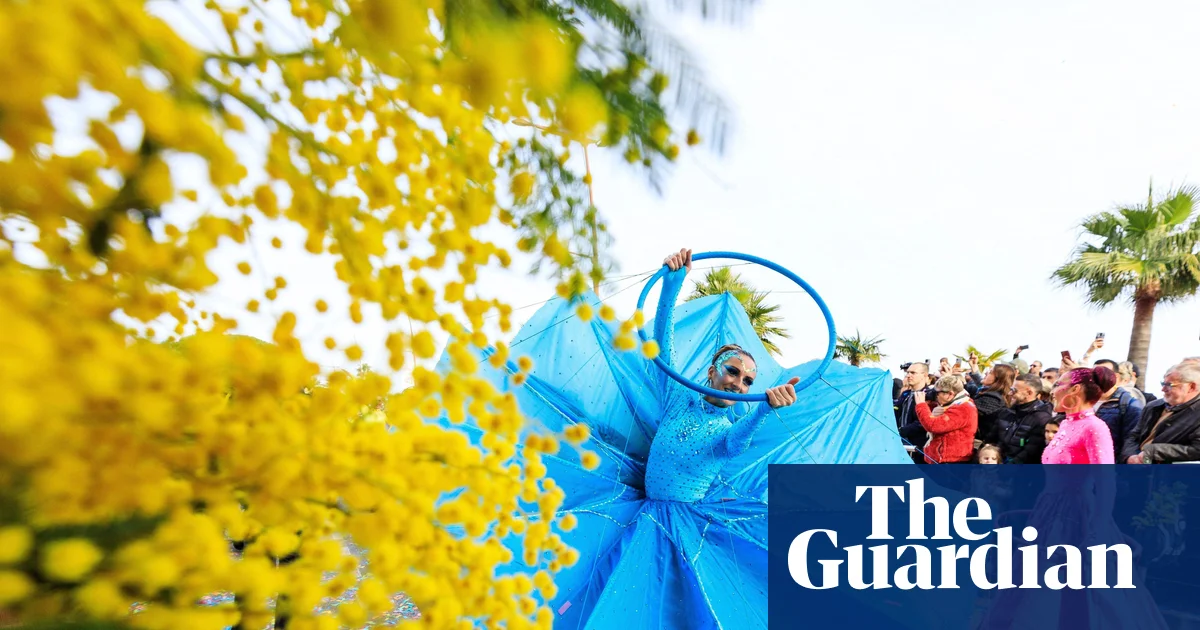
La Route du Mimosa is a trail through the most impressive blooms, covering 80 miles from Bormes-les-Mimosas to Grasse. Around the town of Mandelieu-la-Napoule – which hosts the Fête du Mimosa, a weekend of celebrations to mark the start of the season in February – there are group hikes into the hills organised by the tourist office, as well as farms to visit and shops where producers have turned its delicate flavour into jams and cordials, and its scent into candles and soaps.
For a thrilling ride and to gain some local knowledge I’ve booked a three-hour tour with La Grande Vadrouille (€160 for one or two). Local guide Daniel Saffioti welcomes me to ride in the side-car of his Chang Jiang Pekin Express motorbike. Daniel knows all the best routes from Mandelieu to Tanneron, a town farther inland where you find mimosas in abundance. After donning my helmet and sunglasses, we set off along the coast road, La Corniche d’Or.
This sinuous route southward to the Cap d’Esterel offers astonishing views of Cannes and its backdrop, the snow-capped Mercantour mountains of the Alpes-Maritimes. Along the road, mimosas burst between palm trees and over the garden walls of luxurious villasWe double back toward Mandelieu, and then motor on into the hills, stopping for a rest just outside Tanneron, where the landscape is a tapestry of olive groves, eucalyptus trees and lavender fields awaiting their summer blooms. A closer inspection of a mimosa tree allows me to breath in its delicate scent and see its fern-like leaves and tiny flowers up close – like little yellow pompoms electrified by the sunshine. Daniel tells me how they were introduced by the British, having been brought from Australia (they are a kind of acacia) and how council workers work hard to keep them from taking over the landscape and roadsides, such is their propensity to thrive in the Provençal climate.
Our tour finishes in Mandelieu and after bidding Daniel farewell, I sit on the terrace of the Biskota cafe for lunch and a mimosa-infused lemonade. In the evening is the opening of the Fête du Mimosa. Gingham-clothed tables and benches are laid out for locals to sit and drink wine and street performers, some on stilts, dance through the crowds. Tomorrow there will be floats adorned with flowers, but tonight a firework display shoots up over the crenellated walls of the waterside chateau. I breath in the sulphurous tang that hangs in the air; it may not be the floral scent of spring, but it doesn’t matter – I’ve got a bottle of that in my bag.
The trip was provided by Côte d’Azur Tourism and Mandelieu-La-Napoule Tourism. La Borgarda in Tourrettes-sur-Loup has a one-bedroom apartment from €195 a night and a three-bedroom townhouse from €330 a night. The Pullman hotel has doubles from £130. Perfume blending at Galimard’ Studio des Fragrances is €99pp
The trail is an 8.5-mile family-friendly walk through the Peak District with stunning viaduct views, tunnels and plenty of cafes along the flat, accessible route perfect for pushchairs
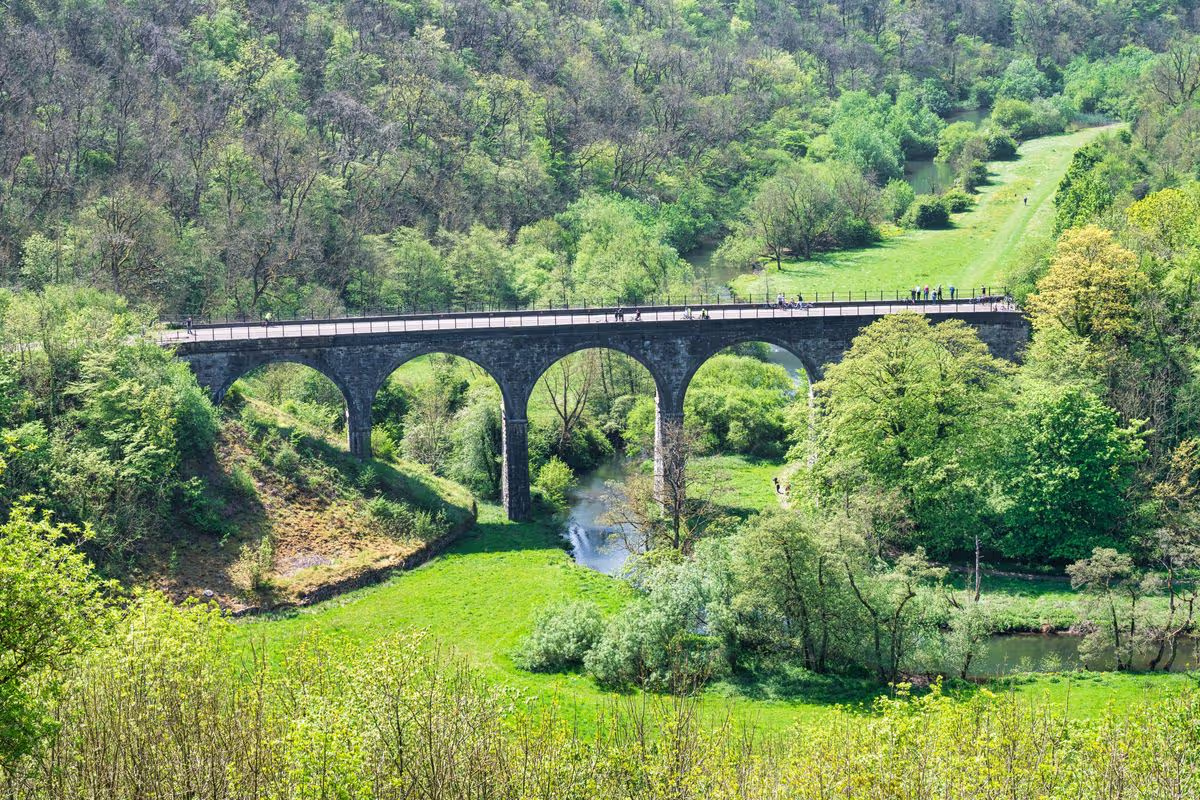
The trail is 8.5 miles long in total (Image: Shawn Williams via Getty Images)
Featuring views of a bridge looking like something straight out of Harry Potter, this Peak District ramble will delight youngsters without being too demanding on their small legs this half-term.
The Monsal Trail is a beloved Derbyshire spot that traces the route of the old Manchester to London Midland Railway line, which closed down in the 1960s.
These days, it serves a different function – guiding ramblers along the path, through tunnels and across the magnificent railway viaduct.
A recent visitor described their experience on TripAdvisor, stating: “For enthusiasts of railway walks, this route stands out as one of the finest in the UK.
It offers a captivating combination of stunning views, numerous tunnels, and impressive viaducts that showcase the area’s historical and engineering heritage.”
Along the way, there are three cafés-two conveniently located directly on the trail and one set slightly back-providing excellent opportunities to rest and refresh. “
The Route
To reach the trail’s starting point, you’ll need to begin behind Hassop Station, walking past the front of the building and proceeding beneath the bridge.
The route then continues as you pass Longstone Station, Headstone Tunnel and the Monsal Viaduct – all standout and characteristic features of this walk.
Best Derbyshire holiday cottage deals
This article contains affiliate links, we will receive a commission on any sales we generate from it. Learn more
Derbyshire is known for its dramatic Peak District landscapes, historic market towns and stately country houses. Sykes Cottages has hundreds of places to stay, with prices from £32 per night.
Two shorter tunnels await before you arrive at Miller’s Dale Station. To reach the trail’s end, you’ll need to press on along the viaducts, bearing left beneath the dramatic cliffs of Chee Tor towering above – completing an 8.5-mile route.
What makes this walk so beloved and ideal for a half-term outing is how accessible it is; suitable for pushchairs, wheelchairs and young children alike.
The level terrain allows for an effortless stroll through the dales, whilst the multiple refreshment points dotted along the way make it perfect for little ones requiring a quick loo stop or energy boost.
Cafés
Before your adventure even kicks off, you can pop into Hassop Station for breakfast, all-day brunch, lunch and loads of sweet treats.
Alternatively, you can simply pause for a cuppa, getting fuelled up before a lengthy ramble through the Peak District at this handily positioned café.
It also features shops for a quick browse, stocking books, accessories, homeware and more. Plus, as it’s the trail’s starting point for many visitors, they offer bike hire to tackle the route in style.
One customer commented: “Visited the café three times in our week. By far the best place for breakfast, lunch, coffee and cake. Also the best Bakewell slice we had! The trail is stunning and such a great café to visit before and/or after was a great find we’ll be returning for!”
The refurbished Refreshment Room at Millers Dale Station provides another excellent place to pause for delicious food and refreshments during your journey.
The building stands as a stunning homage to the railway history of the trail and provides ample room to relax or shelter from the weather, complete with toilet facilities and refreshments.
One visitor said: “Stopped here for a bite to eat after a walk, absolutely wonderful café! The coffee was one of the best I’ve tried! Lovely customer service by all staff. Will 100% be going back.”
Where to stay
The Monsal Trail lies in the heart of the Peak District, with Bakewell positioned at one end and Blackwell Mill, near Buxton, at the opposite end.
This positioning makes it a favoured route for visitors exploring these major towns who fancy extending their stroll into a weekend break. Alternatively, it’s just over an hour’s drive from Derby city centre.
Bakewell is famous for the much-loved Bakewell Tart, available in practically every café and coffee shop throughout the town. The area also boasts numerous pubs offering more substantial meals following a lengthy day’s ramble.
Buxton, meanwhile, is a spa town, renowned for its natural spring water and status as Britain’s highest market town. Visitors typically choose a weekend break here for the spa facilities, tranquillity and easy access to excellent walking and cycling routes.
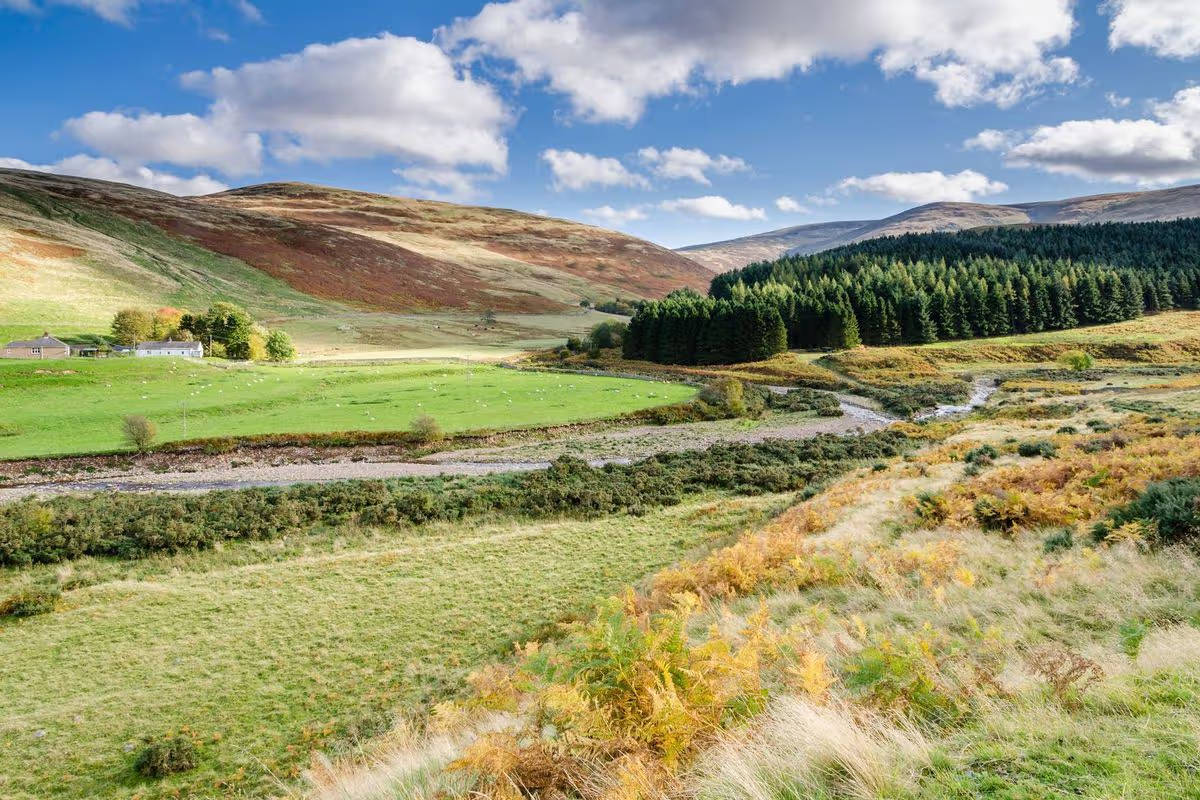
Nestled in the Cheviot Hills, College Valley in Northumberland is home to wild ponies, roe deer and ancient ruins including Iron Age stone circles, hillforts and a well-preserved Romano-British settlement
06:00, 16 Feb 2026Updated 08:33, 16 Feb 2026
This article contains affiliate links, we will receive a commission on any sales we generate from it. Learn more
You can stay within the estate for £17 a night(Image: PA)
Tucked away in the Northumberland hills lies the lush College Valley, teeming with stunning wildlife and ancient ruins.
Wandering through the meadows, you’ll encounter wild ponies, roe deer, hares and wild goats, according to Northumberland National Park.
Hethpool
Leaving your vehicle at the Hethpool car park, you can discover remnants of an Iron Age stone circle. The area offers picnic spots along Great Hetha, with ancient fortifications perched above the Hethpool Linn Pools, where you can take a refreshing dip during summer, reports Chronicle Live.
Northumberland is famed for its rugged coastline, ancient castles and unspoiled natural beauty. Sykes Cottages has a range of places to stay starting from £38 per night
Come autumn, you can witness sea trout and salmon jumping upstream towards their spawning grounds.
Approximately 2,800 years ago, during the Iron Age, communities built timber roundhouses surrounded by substantial wooden palisades. Opposite Hethpool House sits a well-preserved Romano-British settlement.
History
People have lived in this area at least 7,000 years, with traces of late Stone Age farmers.
During the early Bronze Age, when temperatures were warmer than today, farming reached higher altitudes. Various terraced fields and numerous burial cairns survive from this era.
Given its closeness to Scotland, the valley suffered significant devastation during battles between English and Scottish armies throughout the 14th to 16th centuries. Border Reiver raids resulted in the land being plundered.
Hillforts
Northumberland claims Britain’s highest concentration of hillforts, and College Valley is no different. Scattered across the Cheviot Hills, these ancient Iron Age fortifications provide a glimpse into prehistoric settlements.
As an added benefit, they also offer spectacular vantage points overlooking the undulating hills.
Wildlife
Covering more than 12,000 acres, College Valley hosts an abundance of wildlife including flora, trees, birds and even Exmoor ponies to admire.
Bear in mind – mobile phone signal is virtually non-existent and only 12 vehicles are permitted entry daily. If you fancy a longer break surrounded by nature, you can reserve one of the numerous holiday cottages on offer.
Visitors can see everything from the extinct volcano Cheviot Massif to the enchanting Collingwood Oaks.
Tucked away at the valley’s head, just a mile from the Pennine Way, lies Mounthooly Bunkhouse.
Housing 24 guests across three rooms, this charming bunkhouse offers walkers, cyclists and all visitors unique accommodation in a beautifully remote part of the valley.
With beds starting from £17 per night, you may be inclined to prolong your visit and discover more of what the valley has to offer, safe in the knowledge you can return to hot showers and a log burner.
One TripAdvisor review stated: “What a wonderful valley to visit, either walk or to drive through, they only allow 12 cars a day to drive through and you need a permit £10 you can book online.
“It was so peaceful and in May the colour of the gorse it just beautiful. The memorial to the pilots that crashed during WW2 over the Cheviot Hills is so moving.”