If kids were in charge on holiday they would eat dessert before mains, go treasure hunting – and have a giant water fight. A poll of 1,000 children aged 6-12 revealed their ideal getaway, which would include eating three ice creams a day, using bikes or scooters as their go-to form of transport and playing board games every night.
One in five would play hide and seek with their family, 14% would indulge in a pyjama day and 40% would spend all day in the pool. When it comes to locations, 93% of youngsters want to stay at a holiday park, with 72% of them saying they are fun places with lots of activities to keep them entertained.
The study was commissioned by Sykes Holiday Cottages, which has unveiled a competition to appoint two youngsters as its resident Directors of Fun, created to place kids at the centre of holiday planning.
The playful job ad specifies entrants must be spontaneous, have a big imagination and bring enthusiasm to every day, and applicants can share their perfect holiday itineraries until 30th April 2026 to win the chance to make them come true.
James Shaw, spokesperson for the staycation specialist said: “It’s always interesting to see what kids would do if they were in charge of the whole holiday – and it turns out it would be pretty fun for everyone else too.
“While there’s plenty of excitement around things like unlimited ice cream and activities, what really stands out is how much they value simply spending time together.
“That’s why we wanted to bring children back into the heart of holiday planning with this competition, recognising that their ideas of a great break are often less about packed schedules and more about being with the people around them.”
Over half (51%) of the youngsters surveyed said their favourite aspect of being on holiday was spending time with family and for over a third (35%) it’s meeting other kids their age.
Eight out of ten confessed they’d like to take control of a family holiday, with leading the way in order to do the activities they want (63%), instructing their relatives what to do (41%) and feeling like an adult (40%) the top three reasons.
The research via OnePoll.com also discovered 19% feel like holiday parks are a home away from home, with popular forms of entertainment such as swimming, adventure playgrounds and arcade games making it ideal accommodation.
James Shaw added: “Holidays should give families the chance to properly switch off, reconnect and enjoy shared experiences all in one place.
“What’s striking is how much children value the freedom to shape their own days – whether that’s choosing activities, exploring, or just having unstructured time to play.
“That’s where settings like holiday parks come into their own, offering a mix of flexibility and variety that lets every family member make the most of their time away.”
THE TOP 10 THINGS KIDS WOULD DO ON HOLIDAY IF THEY WERE IN CHARGE:
British holiday firms are reporting a boom in bookings up to 235% compared to this time last year, as the Iran war forces people to cancel far-flung destinations and look closer to home instead
10:30, 21 Mar 2026Updated 12:51, 21 Mar 2026
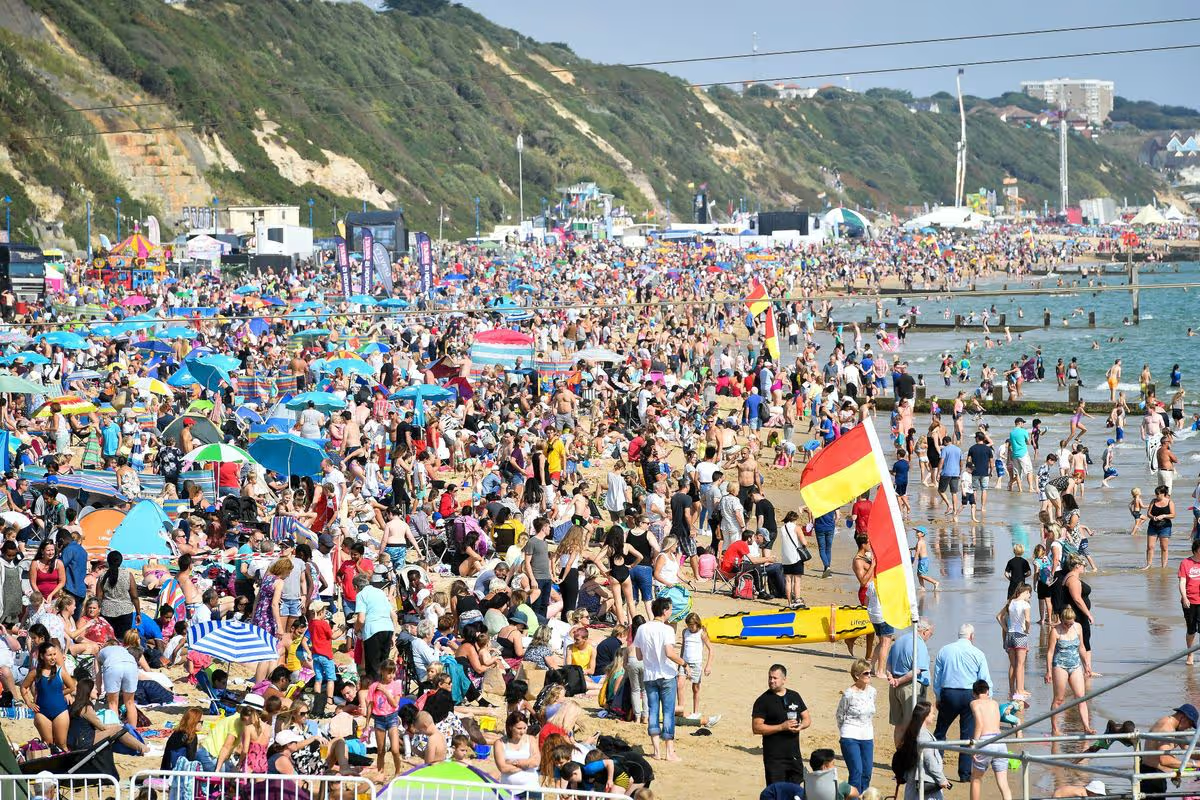
The Great British seaside holiday is undergoing a revival thanks to the Iran war(Image: PA)
Brits are looking again at holidays closer to home this summer as fears grow that the Iran war could ground flights and spike plane ticket prices by up to 50%.
Contingency plans being drawn up would see holidaymakers hit by airlines ‘rationing’ their operations, including a reduced schedule, higher prices and cancellation of less profitable routes.
It comes as other destinations beloved by British tourists have ended up Iran’s crosshairs.
Cyprus, Turkey and Abu Dhabi are some of the destinations thrown into doubt this year thanks to the Middle East crisis – but holidaymakers are already making ‘staycation’ bookings instead for the likes of Norfolk, Pembrokeshire and the Isle of Wight as they eye up a safer, more certain getaway.
David Land, who works at the University Technical College in Durham, was forced to cancel upcoming stays in Dubai and the Maldives for his wife Barbara’s birthday – and has lined up “sunny Cornwall” as an alternative.
“I’m a bit of a foodie, so I quite like the idea of seeing how many restaurants I can go to, in terms of Paul Ainsworth’s, Rick Stein’s”, he said, aiming to spend four or five days “at least” in the Land of Saints.
David and his wife, who are both in their 70s and tied the knot in 1979, went on one of their first holidays together on the beaches of Northumberland – and he’s also considering a return there this year.
“I would say the majority of our holidays have been abroad, in Europe, the Middle East, the Indian Ocean – but we’ve been saying ‘Why can’t go on a holiday more in the UK’?”, he told the Mirror. “Apart from the need to pack appropriate clothing, it’s a lovely place to go – as long as the people doing it don’t try to rip us off, as happened a bit around Covid.”
‘We’re not going to listen to Donald Trump’
Asked why he hasn’t chosen to simply reschedule his existing foreign holidays, he said: “We’re not going to listen to Donald Trump when he says the war’s going to be over in ‘three or four weeks’. There’s no confidence that we would be able to go back, not until the war stops, and even then we’d have to know that it’s not going to start again.”
Businesses across the UK tourism industry are already reporting a boom in bookings not seen since the pandemic, with Google searches for ‘best staycations’ up 40% since Trump launched his bombardment of Iran.
Business is booming, say British travel firms
Samantha Evans, founder of Humphreys of Henley, said her luxury travel firm has experienced the “busiest start to the year on record”, with the “safe and deeply enriching” surrounds of the English countryside attracting both domestic guests and those from further afield, particularly the United States.
She told the Mirror: “Luxury hotels are reporting an increase in domestic demand over the next three months. British guests are choosing to stay closer to home, but still want exceptional, experience-led travel – so they’re trading airports for the countryside rather than cancelling plans altogether.”
Rental agency Habitat Escapes told the Mirror that their bookings are up 235% this week compared to the same date last year, with the majority for Silverlake Estate in Dorset and the remainder for Lower Mill Estate in the Cotswolds.
And industry expert Emily Keogh, a former judge for The Hotel Magazine Awards, said there was renewed interest in “spontaneous countryside escapes and coastal getaways that can be booked at relatively short notice” because of the new difficulties in international travel.
Others believe this is part of a movement back towards British holidays that began well before the Middle East crisis, as Matthew Price, CEO of travel firm Awaze, said: “This trend of staying closer to home is part of a broader pattern of behaviour we’ve seen in the UK for a number of years, where holidaymakers are choosing staycations over going abroad. From coastal to countryside getaways, the quality and variety on offer in the UK means a domestic break can feel just as exciting as going overseas.
He revealed bookings were up 26% for Cottages.com, alongside a 10% rise in summer bookings for Hoseasons. While the South West remains a popular destination, regions like the North West and Southern Scotland are seeing “the strongest year-on-year growth for the peak summer period”, Mr Price said.
And the Great British holiday may benefit too from rising jet fuel prices, which experts have warned could push up the cost of plane tickets very soon.
Jet fuel shortages threaten cancellations and price hikes
European jet fuel prices reached an all-time high of $1,698 per tonne this week – more than double the $830 per tonne before the air strikes on Iran – and the closure of the Strait of Hormuz is sending alarm bells ringing among airline bosses.
While European airlines have stressed that they are currently operating with normal levels of fuel, Scandinavia’s SAS became the first this week to admit it had introduced a “temporary price adjustment” in response to the soaring prices, with more expected to follow.
Experts now predict a potential 30% to 50% hike in plane tickets for European summer holidays if the fuel crisis drags on, potentially costing an extra £600 for a family of four heading to the Canary Islands, Greece or Morocco.
Long-haul flights would see even steeper price increases, with a family trip to Australia going up by an eye-watering £2,400.
James Noel-Beswick, head of commodities at market intelligence firm Sparta Commodities, told the BBC: “I think we’re weeks away from maybe flight cancellations or delays due to lack of jet fuel, rather than months.”
An end to the age of cheap foreign holidays is likely to help tip the balance back in favour of domestic holidays when it comes to cost, as ‘staycations’ have long been criticised for poor value for money – especially when it comes to accommodation.
You can expect to pay at least £500 for five nights in a budget holiday let near St Ives – but in Malaga, the equivalent would set you back just £350.
Air travel chaos threatens holiday favourites
British holidaymakers preparing to head to Spain on their Easter getaways have meanwhile been warned to expect chaos at airports, with a national baggage handler strike threatening to cause missed connections and delayed boarding.
And there’s mounting uncertainty around Turkey, where three Iranian missiles have been intercepted since the beginning of the conflict, and popular Brit destination Cyprus, which saw the RAF base on the island’s southern coast come under drone attack.
Foreign Office chiefs currently advise anyone travelling to either country to be aware of the risks of ‘regional escalation’.
The Citizens Advice Bureau say holidaymakers who are unsure over a trip they have booked in the months ahead should get in touch with their travel provider – but don’t cancel before speaking to them, as you may lose your right to a refund.
Top 10 destinations for British summer holidays:
The top 10 UK destinations for summer staycations, based on consumer research of 2,000 UK adults by Sykes Holiday Cottages:
Spain is one of the most popular holiday destinations for Brits, but stricter rules have been introduced in hotspots including vaping bans, dress codes and driving restrictions – here’s what you need to know
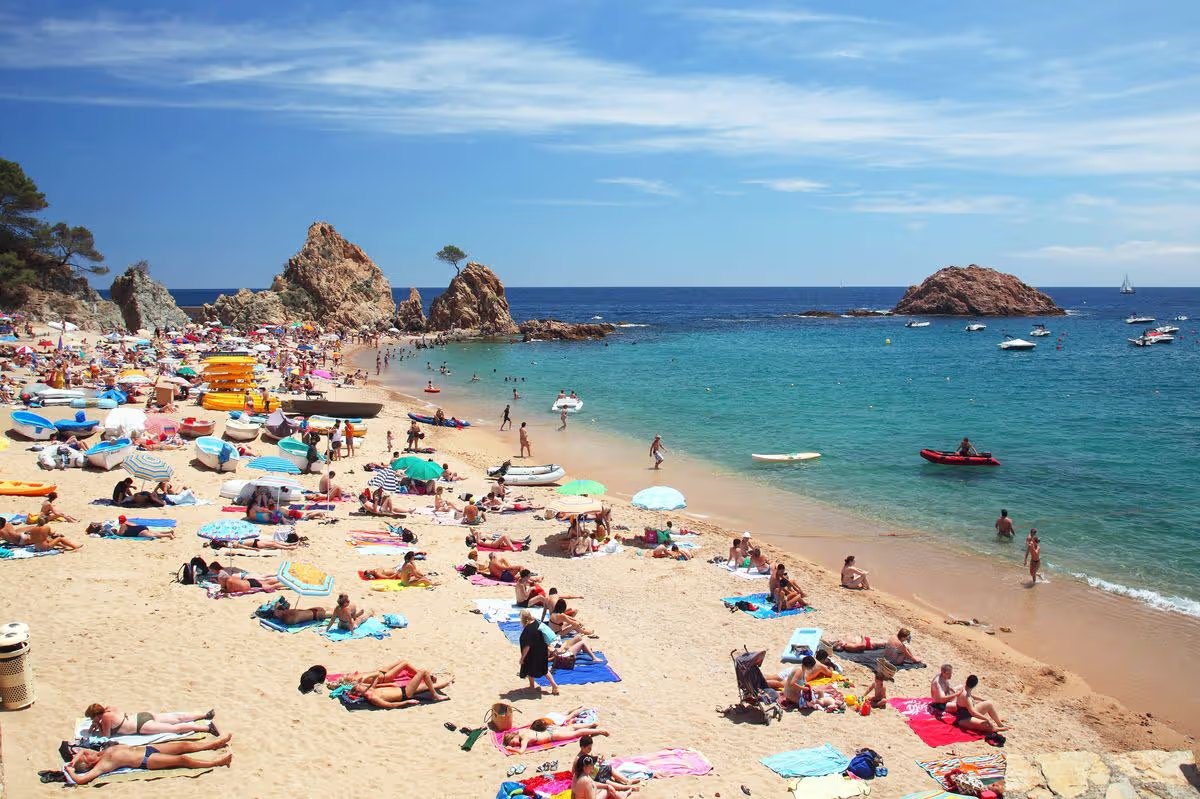
Spain is a popular destination for many Brits to go to(Image: fhm via Getty Images)
Spain remains one of the most popular holiday destinations for Brits, but in recent years, problems associated with excessive drinking and overtourism have prompted numerous hotspots – including the Canary Islands and Balearic Islands – to introduce tougher regulations for tourists.
From new measures to prevent people hogging sunbeds for hours on end, fresh vaping restrictions to even a regulation nicknamed the ‘bikini ban’, British holidaymakers should pay attention before their next trip; in certain instances, breaking the rules could result in a substantial fine.
To help you out, we’ve compiled some of the most significant regulations and recent updates to be aware of before your next Spanish break.
Vaping fines
Spain continues its clampdown on vaping, and the penalties for vaping in prohibited areas are just as severe as those for smoking. In 2025, the country brought in an outdoor smoking ban, which covers all manner of public areas, from restaurant and bar terraces to beaches
The prohibition includes smoking, vaping, shisha, any heated tobacco products, and nicotine pouches, with fines ranging between €30 to €2,000 (approximately £26 and £1,700), though for a first offence, it’s more likely to be towards the lower end. Watch out for signage before you take a drag of your vape.
Footwear restrictions
Planning to hire a car in Spain?
Think carefully about your footwear choice in the morning. If temperatures soar and you’re contemplating a pleasant coastal drive, you might be inclined to slip on flip-flops or slides, but this decision could land you with a substantial fine.
Spanish driving regulations demand footwear that permits ‘free movement’ to operate the pedals correctly, which excludes items such as flip-flops and sandals, high heels, wedges, or even going barefoot. Police officers can impose fines ranging from €80 to €200 (approximately £69 to £172) if they believe you lack proper control of your vehicle.
Therefore, if you’re organising a Spanish road trip, remember to pack some practical shoes to switch into.
Dress codes and ‘bikini bans’
Whilst in a Spanish seaside resort, it’s fairly typical to spot men wandering about topless or women sporting bikinis travelling to and from the beach. Nevertheless, certain Spanish destinations have grown weary of such displays and have introduced stringent regulations compelling holidaymakers to cover up when away from a beach or poolside.
The Foreign, Commonwealth and Development Office’s (FCDO) travel guidance for Spain notes: “In some parts of Spain, it’s illegal to be in the street wearing only a bikini or swimming shorts. Being bare-chested is also illegal in some areas in Spain. You could be fined if you’re caught wearing swimwear on the seafront promenade or adjacent streets.”
Penalties can reach up to €500 in certain areas, approximately £430. Spain isn’t the only country where you’ll encounter rules like these – certain parts of Italy have also brought in similar measures after residents grew tired of holidaymakers wandering around town or attempting to enter restaurants in their swimwear.
Alcohol crackdowns and bans
For countless holidaymakers, a trip to Spain wouldn’t be complete without a sangria or two. However, let’s be honest, Brits frequently take things too far when overseas, and in some regions, exhausted by intoxicated tourists, stringent crackdowns and prohibitions have been put in place.
In the Balearic Islands, particularly around Magaluf and Playa de Palma in Majorca, and San Antonio in Ibiza, there are now prohibitions on happy hours, all-you-can drink promotions, pub crawls, and party boat excursions. Some all-inclusive hotels in Majorca also cap daily drinks at six; three at lunchtime and three at dinner to prevent binge drinking and antisocial behaviour.
Particular resorts on both the mainland and the islands are taking action against people drinking on the street, as well as illegal parties being hosted in villas and private properties.
The FCDO also warns: “Hotels and other establishments will evict you if you behave dangerously on balconies. You could also get a fine.”
Reserving sunbeds
Bagging sunbeds with a towel remains a prevalent practice among British holidaymakers, despite its potential to irk other tourists, but some beaches are taking a stand against the habit by imposing fines. In a resort near Valencia, two retirees were slapped with a £250 fine for reserving sunbeds by laying down towels before 8am to secure a prime beachfront spot.
Whilst it’s unlikely to result in a fine, numerous Spanish hotels have taken action against sunbed monopolisers by confiscating their belongings or handing out warning cards if sunbeds are left unoccupied for a specified period.