Itamar Greenberg laughed when asked if he thought he should be afraid. The 19-year-old Israeli antiwar activist had just described being spat on in the street and is the target of an online hate campaign.
“Yes!” he finally responded. “If I thought about it, I probably should be. I just don’t have time.”
Voices like Greenberg’s are rare in Israel at a time when public clamour for war is growing, and genocidal language already familiar to millions of Palestinians is reemerging, but with a different target – Iran.
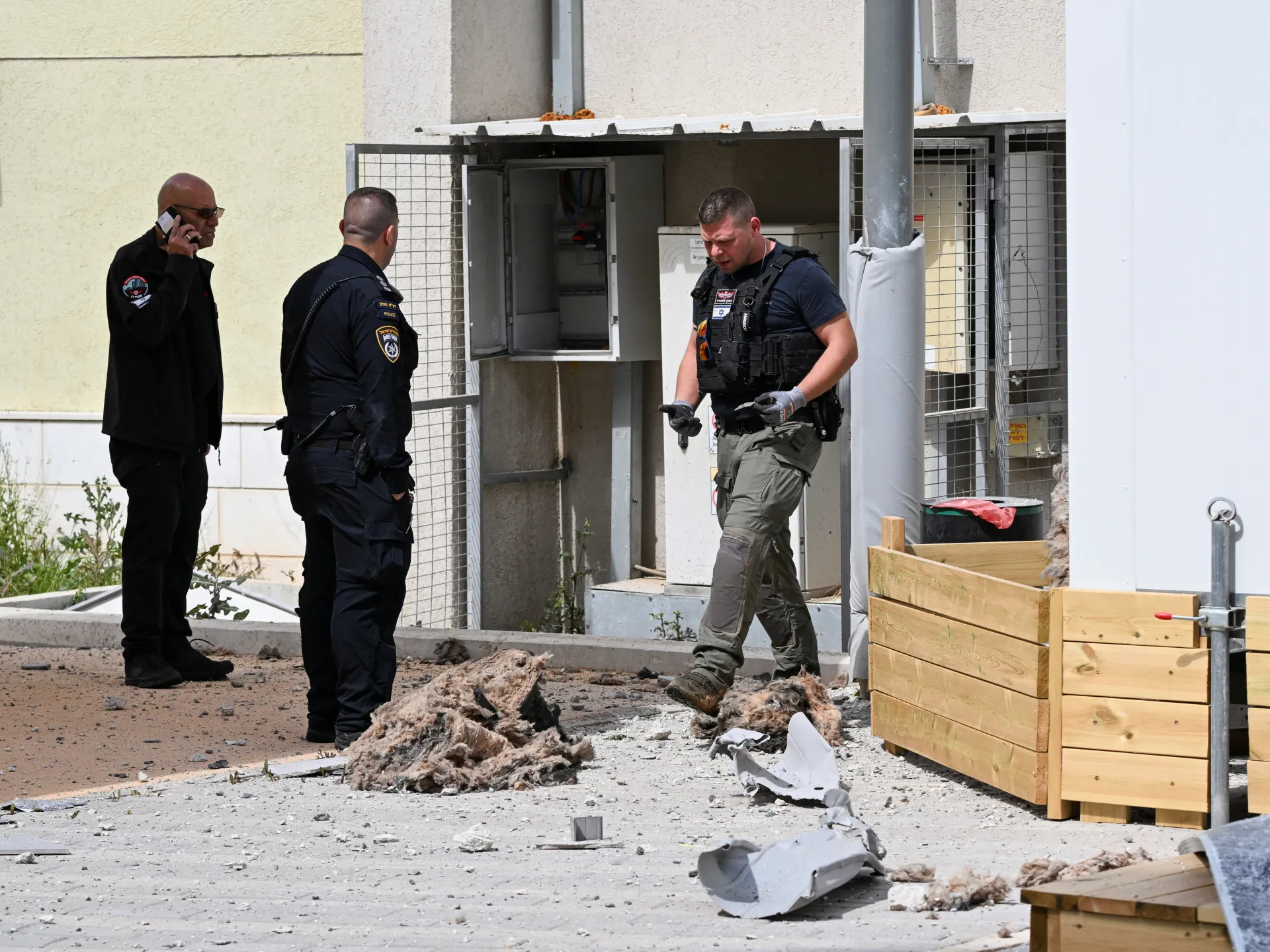
Officially, 11 Israelis have been killed in Iranian strikes since the US and Israel launched their war on Iran on February 28. What the actual number might be, or how many of Iran’s ballistic missiles may have penetrated the country’s Iron Dome defence shield, is unknown.
Speaking at the site of an Iranian missile strike in West Jerusalem, shortly after the start of the US-Israeli attacks on Iran, Israeli Prime Minister Benjamin Netanyahu returned to the use of apocalyptic language that has characterised the genocide his country has conducted in Gaza. Comparing Iranians with the Jewish people’s biblical foe, Amalek, who the Jews had been divinely ordered to wipe from the face of the planet, Netanyahu told reporters: “In this week’s Torah portion, we read, “‘Remember what Amalek did to you.’ We remember, and we act.”
So far, Iran claims to have launched strikes across Israel, saying its missiles and drones hit military sites, symbolic infrastructure, and even Netanyahu’s office. Tehran has described the attacks as precise and strategic, rather than indiscriminate and part of a broader regional response. Iran also claims to have targeted locations such as Tel Aviv, Ben Gurion airport and Haifa.
However, Israeli officials have denied many of the specific claims. Netanyahu’s office dismissed Iranian assertions about hitting his office, or affecting his condition, as “fake news”, with stringent reporting restrictions on Iranian strikes within Israel making confirmation either way difficult.
What is clearer is that against the drumbeat of Iranian strikes, the fervour for war appears to be increasing among the public. A poll carried out last week by the Israel Democracy Institute (IDI) suggested overwhelming public support for the war, with 93 percent of Jewish-Israeli respondents expressing support for the strikes on Iran, and 74 percent expressing support for Netanyahu, the country’s historically divisive prime minister.
“No one’s talking about opposition to the war,” Greenberg said, describing an environment in which figures from across Israel’s media and political landscape – with the exception of the left-wing Hadash party and antiwar organisations such as Greenberg’s Mesarvot – had lined up behind the war. “It’s also getting increasingly violent,” he said.
“We held a protest on Tuesday, where the police were already waiting. They beat and arrested us. I was illegally strip-searched,” he said, describing it as efforts intended to humiliate him.
Greenberg is no stranger to such tactics. Six months ago, after being arrested for protesting the genocide in Gaza, prison guards had threatened to carve a Star of David on his face, a permanent reminder of what they thought his priorities should be.
It’s not just antiwar activists who have faced the brunt of the Israeli security establishment’s force.
“The atmosphere is very violent,“ lawmaker Ofer Cassif of the Hadash party told Al Jazeera. “When I leave the house, I’m more worried by the danger posed by a physical attack by fascists than I am by any missile,” he said.
Hadash and lawmakers like Cassif have been targeted by physical threats and attacks throughout the Gaza war. But criticism of the Netanyahu government’s handling of Israeli captives in Gaza meant that opposition to the Gaza war was – comparatively – more socially acceptable. When it comes to Iran, the current climate is toxic, Cassif said.
“We’re often accused of supporting the regime in Tehran,” Cassif explained of the attempts to delegitimise their opposition to the war.
“We’re unequivocally not. We want to see that regime go, but we’re not going to allow Netanyahu to say he’s doing this for the Iranian people. He isn’t. That’s not just rhetoric, that’s fact. The Israeli leadership was just as supportive of the shah as the US, and he was a murderous dictator no less than the current regime,” Cassif said, referring to Mohammad Reza Pahlavi, the leader of Iran before the Islamic revolution.
For now, analysts and observers in Israel describe a society that believes it is almost engaged in a holy war.
“They brought an antiwar activist onto one of the light news programmes,” political analyst Ori Goldberg said from near Tel Aviv, “and she was treated like you would a flat-earther. It’s as if it’s inconceivable that anyone would oppose this war.
“Israel has become a society with no middle ground, no capacity for conversation. It’s as if our entire existence is dependent on our ability to do anything we want. And if the world tries to stop that, then the world’s anti-Semitic, and we all burn.”