historical site

Trump orders new signs outside Smithsonian claiming some exhibits are inaccurate

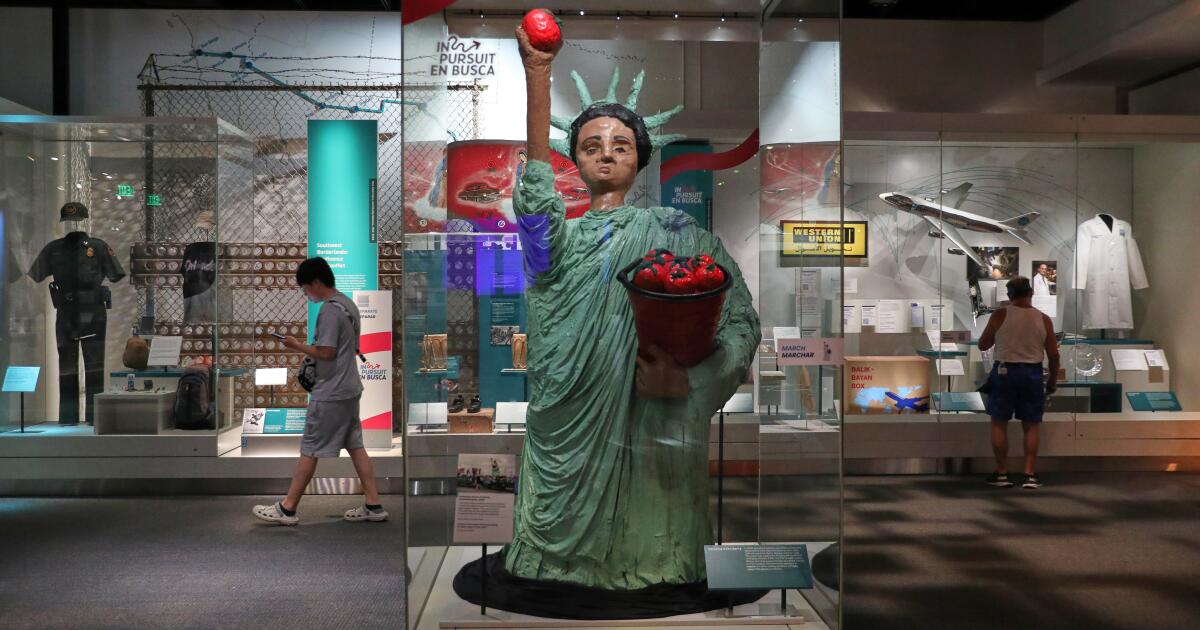
President Trump ordered his administration Friday to install signs in front of the Smithsonian Institution’s U.S. history museum telling visitors that some of the exhibits are inaccurate, his latest move to reshape how the story of the United States is told.

Trump’s move follows a report released July 4 by his Domestic Policy Council saying leaders of the Smithsonian and its National Museum of American History don’t tell history “in a way that is inspiring, unifying, and worthy of our great republic.”

The president lacks authority to quickly fire the Smithsonian leadership or to order changes to exhibits, so his executive order targets the sidewalks out front, which are maintained by the National Park Service. The order calls for signs telling visitors about the White House report and directing them to resources for what he calls “accurate information regarding America’s history.” It also calls for a temporary exhibit that corrects information he deems inaccurate.

Smithsonian officials declined to comment on Trump’s order.

Anthea M. Hartig, director of the National Museum of American History, challenged the White House report during congressional hearings last week.

“As we continue to fact-check the report, we unwaveringly attest that it does not fairly or accurately characterize the full body of work at the museum,” she told lawmakers. “There is always room for improvement. But I also know the beauty and the inspiration and the expertise that lies in our collections, our exhibits, and our programming.”

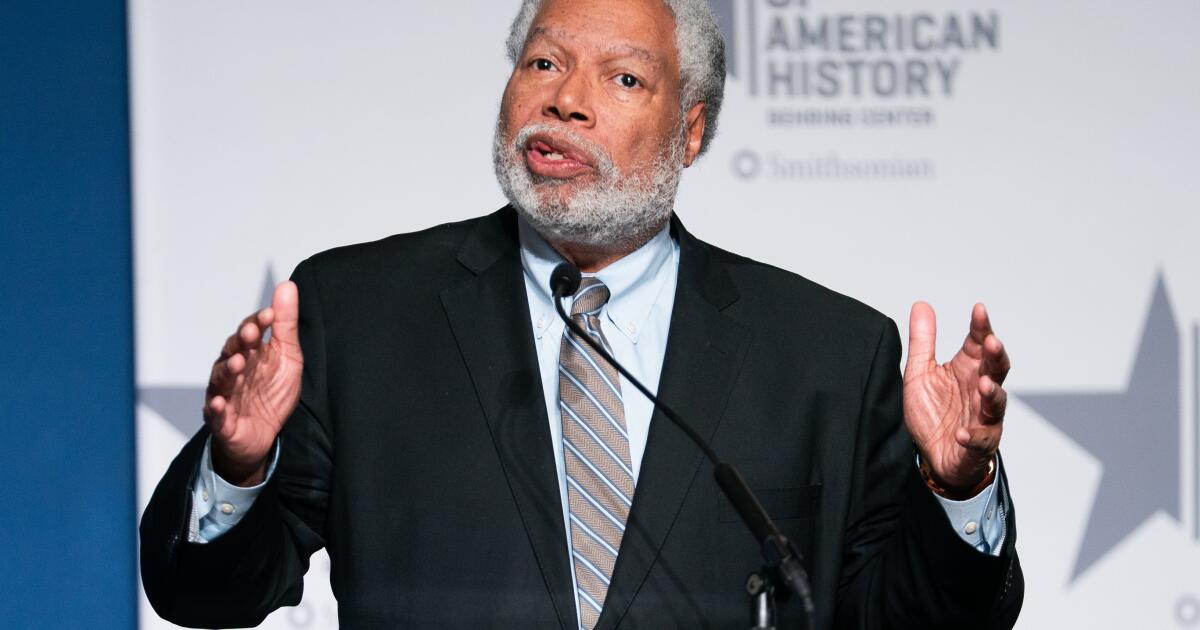
The Smithsonian operates outside the executive branch, and museum directors report to Smithsonian Institution Secretary Lonnie Bunch, who is subject to oversight from its Board of Regents.

Trump’s escalating effort to force changes at the Smithsonian marks the president’s latest move to transform cultural pillars of society, such as universities and art, that he considers out of step with conservative sensibilities. Trump had himself installed as chairman of the John F. Kennedy Center for the Performing Arts with the aim of overhauling programming, and his handpicked board voted to add his name to the building, only for a federal judge to later order the signs to be removed.

Trump has also imposed changes on historical sites beyond Washington, including in Philadelphia, where the administration won a court ruling this month allowing it to reinstall interpretive panels that critics say whitewash the history of slavery at the site of President Washington’s home. Advocates, academics and officials have been concerned for months that the version that complies with Trump’s order could give a history that plays down the pain in the nation’s past in favor of a more triumphant view.

Trump in March revealed his intention to force changes at the Smithsonian Institution with an executive order that targeted funding for programs that advanced “divisive narratives” and “improper ideology.”

Cooper writes for the Associated Press.
Source link

White House report brands Smithsonian leadership as radical activists who can’t be trusted

A White House report brands the leadership of the Smithsonian Institution, especially at the National Museum of American History, as radical activists who cannot be trusted, indicating that President Trump may be preparing to install his own team.

The report released late on Independence Day by the White House Domestic Policy Council comes in the midst of Trump’s aggressive campaign to overhaul some of Washington’s most sacred cultural and historic institutions. Trump in March revealed his intention to force changes at the Smithsonian Institution with an executive order that targeted funding for programs that advanced “divisive narratives” and “improper ideology,” as he continued a broadside against culture he deems too liberal.

“The Smithsonian Institution, and the National Museum of American History in particular, under its current leadership and current interpretive ideology, cannot be trusted to tell America’s story honestly and in a way that is inspiring, unifying, and worthy of our great republic,” according to the report by the council, which is led by a former top Trump speechwriter.

The authors added: “As this report shows, confirmed in the words of Museum leadership, this ideological capture has moved the Museum’s mission away from straightforward historical education and scholarship toward an extreme political activism that seeks to transform our country.”

The Smithsonian did not immediately respond to requests for comment Sunday.

Historian Lonnie Bunch, the Smithsonian’s current secretary, is the first African American to lead the institution. In an unrelated interview that aired Sunday on NBC’s “Meet the Press,” Bunch said “the notion of being a more perfect union, not the perfect union, is really what motivates me.”

“I think what I want people to understand is that there is a responsibility to continue to make those aspirations available, accessible, meaningful to a whole range of people,” Bunch said. “And that, in essence, America’s greatest strength, it’s not running away from its history, but it’s understanding how that history shaped us and continues to shape us.”

Historian Anthea M. Hartig is the first woman to serve as director of National Museum of American History.

Trump’s escalating effort to force changes at the Smithsonian marks the Republican president’s latest move to transform cultural pillars of society, such as universities and art, that he considers out of step with conservative sensibilities. Trump had himself installed as chairman of the John F. Kennedy Center for the Performing Arts with the aim of overhauling programming, and his handpicked board voted to add his name to the building, only to have a federal judge later order the signage to be removed.

The administration also forced Columbia University to make a series of policy changes by threatening the Ivy League school with the loss of several hundred million dollars in federal funding.

Trump has also imposed changes on historical sites beyond Washington, including in Philadelphia, where the administration won a court ruling last week allowing it to reinstall interpretive panels that critics say whitewash the history of slavery at the site of President George Washington’s home. Advocates, academics and officials have been concerned for months that the version that complies with Trump’s order could give a history that plays down the pain in the nation’s past in favor of a more triumphant view.

Gov. Josh Shapiro, D-Pa., accused Trump and his allies of trying to “rewrite history.”

“There’s not one individual narrative that a president gets about our history,” Shapiro, a potential presidential prospect, said in an interview that aired Sunday on CNN’s “State of the Union.” “And any president should want to make sure that that full history is shared, that the American people are able to draw their own conclusions.”

Shapiro added, “If we understand where we came from, we’re going to have a better path forward.”

Trump’s Domestic Policy Council does not necessarily agree.

The National Museum of American History “confronts visitors with materials intended to undermine faith in American institutions and the longstanding shared ideals of the American people,” the council’s report said. “We must be committed to restoring truth and sanity in how American history is presented and taught.”

In seeking to fulfill Trump’s order, which he called “Restoring Truth and Sanity to American History,” the review concluded by finding that the museum “by the intention and at the direction of current Museum and Smithsonian leadership, has become subject to institutional capture by a radical, activist ideology that is fundamentally opposed to telling the noble, honest story of the great country we know and love.”

Peoples writes for the Associated Press.

Source link