Highlands

‘You’d be pushed to find a more soul-stirring landscape in Scotland’: walking in Beinn Eighe | Highlands holidays

The waymarked quartzite path glimmers in the sun, flanked by amber-gold grassland. Beyond, one of Scotland’s finest landscapes opens up before me, a woodland of ancient Caledonian pines leading my eye to the metallic glint of Loch Maree. On the other side of the water, a winding river separates the steep, stacked rocks of Beinn a’Mhùinidh from Slioch, one of the great mountains of Wester Ross, rising to a knuckle ridge of Torridonian sandstone.

I’m walking the four-mile mountain trail looping through Beinn Eighe national nature reserve (NNR), Britain’s first NNR, which celebrates its 75th anniversary this year. In a crowded list, you’d be hard pushed to find a more soul-stirring landscape in all of Scotland.

“The mountain path gives you a real flavour for Beinn Eighe,” the reserve manager, Doug Bartholomew, told me earlier. “It takes you right through the heart of the ancient Caledonian pinewood, then you climb steeply up to this rocky upland with views of Beinn Eighe mountain itself.”

When I reach the high point, at about 550m (1,805ft), I’m awed by the views across a lonely valley to the jagged ridgeline of mountain, which surges and falls like Atlantic waves locked in stone.

Beinn Eighe NNR stretches 48 sq km from Loch Maree to the eponymous mountain summit. When it was created in 1951, a key mission of the NNR was to protect Coille na Glas Leitir (the Wood of the Grey Slope), which is the largest remaining fragment of ancient Caledonian pinewood in north-west Scotland. The woodland was felled by some of Scotland’s earliest ironworks in the 1600s, and forestry and farming took its toll over the generations, but it is believed to have been here for the last 8,000 years.

After the Highland clearances, the lower slopes of Beinn Eighe were increasingly used for grazing. Deer-stalking, grouse-shooting and muirburn (when old growth is burnt off to encourage new growth for grazing) followed. The final exploitation happened during the second world war, when lumberjacks were brought in from Newfoundland and British Honduras to fell the trees for ammunition boxes. But thanks to pioneering landscape restoration work, namely deer management and tree planting, woodland cover has increased by more than 40% in the 75 years since the reserve was created.

Today, it’s a rare Scottish landscape where you can walk beneath twisted and gnarled pine branches hundreds of years old, but also alongside younger, conical trees.

Stuart Kenny in the ancient pinewoods on the mountain trail. Photograph: Isabelle Erbacher

“In the past, we had a tree nursery; so we collected seeds from the reserve, grew them in our nursery and planted them,” said Bartholomew. “We’ve now got continuous woodland linked from Glas Leitir all the way through to Coulin Estate, where you’ve got other remnants of ancient woodland, and we’re moving more to natural processes – conditions that will allow the woodland to regenerate and expand naturally.”

I soon descend into Coille na Glas Leitir on the mountain trail, passing a mosaic of birch and pines, draped in lichen. This path was a public access landmark when it opened in the early 70s, encouraging visitors to explore the mountain, and it’s still perfectly marked (though snowfall can obscure it in winter). Stags roar from the other side of Loch Maree as I walk. Tougher to pick out are the crossbills, with crossed mandibles to prise open pine cones. In warmer months, dragonflies with magical names – northern emerald, azure hawker – nose around rare mosses.

While steep, the mountain trail isn’t technical. Along with the easier woodland path, which showcases the ancient forest, and short loops from the excellent visitor centre, the beauty of this reserve really is accessible. Local providers such as Shieldaig Outdoor Adventures also offer days out exploring the islands of Loch Maree by canoe or kayak in warmer months.

I’m staying in Torridon youth hostel, at the head of Upper Loch Torridon, south-west of the Beinn Eighe massif. It’s a 20-minute drive from Coille na Glas Leitir via the village Kinlochewe, passing beneath the bulky mass of Beinn Eighe before Liathach, an icon of Glen Torridon, is revealed. The hostel is tucked beneath this mighty mountain, not in the nature reserve itself, but in an ideal place to explore it and the Torridon hills beyond.

The view from Torridon youth hostel. Photograph: Stuart Kenny

“When we mention that we live in Torridon, people get misty eyes,” jokes Debbie Maskill, manager of the youth hostel. “For us, it’s the best part of Scotland. A real jewel.” It’s true that few place names roll so sweetly off the tongue of a hillwalker as Torridon. This is a place of grandeur – of immense, intimidating mountains set on some of the oldest rocks in Britain; of shifting light and uncompromising ferocity – with a beauty verging on myth.

The hostel – which itself turned 50 last year – is a pilgrimage site for hikers; it’s in close reach of some of Scotland’s finest scrambles, as well as the family-friendly nature reserve. Walkers and climbers trade stories and photographs in the communal kitchen and dining area. Floor-to-ceiling windows in the cosy lounge allow you to watch the weather roll over the Wester Ross peaks.

I stay in a comfy private room, and regret my early bedtime when a French guest shows me the photographs he took of the aurora shimmering above Loch Torridon the next morning. “Winter really captures the far north essence here, but by February, it’s getting lighter,” says Paul Thompson, duty supervisor at the hostel. “In the middle of winter, we don’t see the sun here, but in February it’s above the hills for quite some time. Then you get to May, a stunning time of year, when everything is fresh and you’ve got almost endless daylight. I love it all.”

Loch Maree seen from Beinn Eighe. Photograph: Stuart Kenny

On a six-mile loop of Loch Clair and Loch Coulin, just outside the reserve, I stroll beneath more tall pines, looking on to the Torridon beasts. The grey, dotted ridge of Beinn Eighe looks like it has a snow leopard’s coat draped over it, and the pyramidal mass of Liathach reflects back off the water.

I plan to walk to the Triple Buttress of Coire Mhic Fhearchair on my final day (three glacial rock towers in a corrie of Beinn Eighe), but heavy rain arrives. It’s all the excuse I need for a venison lunch at Bo & Muc, a field-to-fork restaurant at the swanky five-star The Torridon hotel.

I leave Torridon via the road to Achnasheen, stopping at the Glen Docherty viewpoint for one last look over the road to Kinlochewe, the lapping mountains and Loch Maree.

After centuries of deterioration, it’s heartwarming to see the fragments of ancient pinewood reconnecting here, in this immediately spellbinding landscape. In another 75 years, the young pines of Beinn Eighe will stand taller and, if all goes to plan, those who pass by them will be walking through a fully regenerative forest.

Accommodation was provided by Hostelling Scotland. Torridon youth hostel has private rooms for two from £52 a night, dorm beds from £20.50. The Beinn Eighe NNR trails are open year-round and are free to visit. The Beinn Eighe NNR visitor centre (with info on the reserve) is open April to October, 10am to 5pm
Source link

‘Children see magic in the smallest adventures’: exploring Scotland with my four-year-old | Highlands holidays

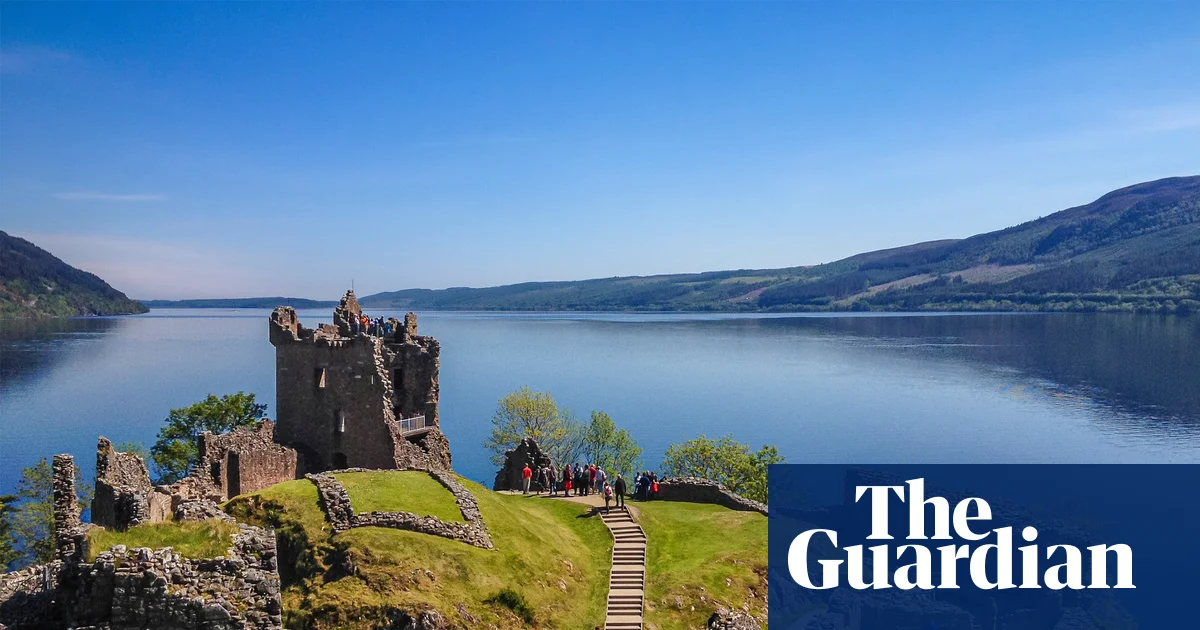
‘There! There – I can see it!” The cries of my four-year-old echoed around the ruins of 13th-century Urquhart Castle, causing a group of US tourists to come running over to the corbelled bartizans (overhanging turrets) where we stood. “It’s Nessie, I saw her,” he insisted, pointing at the ripples spinning out from the back of a sightseeing vessel on Loch Ness.

This was day four of a budget, week-long Scotland adventure for the two of us, and we were spending the day in Drumnadrochit, on the shores of the country’s most famous body of water, looking for the fabled monster.

It wasn’t the first time that reality and wishful thinking had seemingly combined on this holiday. When I told people I was going to take my son on a week-long trip across Scotland and my budget was £500, they were sceptical – especially as we were travelling in the school holidays. But as a woman who likes a challenge, I was up for proving them all wrong.

We’d begun our adventure in Glasgow, having travelled by train (£30), then picked up a cheap hire car for the five-hour drive to the Isle of Skye. Accommodation on Skye is pricey, but I had a secret weapon – my tent.

The car journey was punctuated by stops at lochs so enchanting they could have been lifted from the pages of a children’s book. We finally reached the island and checked in at Camping Skye, a community-owned campsite by the sea in Broadford. For the £16 cost of a pitch, we spent the evening playing beneath the flanks of Beinn na Caillich, eating chips and mushy peas from the local shop, and roasting marshmallows on a firepit.

Camasunary Bay near Elgol on the Isle of Skye was a hit with Phoebe Smith’s son. Photograph: Phoebe Smith

The next morning, primed for a mini-expedition and stocked up with supplies, we drove to the southern enclave of Elgol. The crowds who flock to the island for the Fairy Pools and spectacular Quiraing rock forms melted away as we went deeper into the countryside. We pulled over at a nondescript parking area and I explained the plan to my son. We were going to walk about 2.5 miles (4km) to our accommodation – and no, mummy couldn’t carry him as I would be carrying all our supplies. Excited by the carrot on a stick in the form of a bag of Percy Pigs, we set off, me with a full backpack, him clad in waterproofs, clutching a walking pole.

“I can do this. It’s going to be hard, but it’s going to be worth it,” I heard him muttering to himself as the ascent kicked in. Along the way I pointed out the purple petals of the devil’s-bit scabious flower – mythology claims the devil was so enraged by the plant’s healing properties that he chewed its roots, leaving them short and jagged. My son loved how stories such as this and the landscape combined, and it distracted him from the climb. When we reached the highest point, we could see down to Camasunary Bay, and the thought of playing on the beach made our descent fly by.

Our accommodation was a free (unbookable) bothy and, being first to arrive, we picked the top bunk of the sleeping platform, and I laid out our things. As more people came, my boy confidently greeted the guests as though welcoming them into his own home, proudly telling them this was his first bothy.

Reindeer in the Cairngorms national park. Photograph: Simon Whaley Landscapes/Alamy

That evening was spent running around on the near-black sand beach just outside the door, making trenches, cooking pesto pasta on my camping stove and laughing at the “loo with a view” that sits above the bothy on the hillside.

Having stayed in many bothies over the past 15 years, I had wondered how taking a child would pan out. But his presence brought everyone together in an amazing way, and by 9pm all 12 residents were fast asleep, likely lulled by the white noise I was playing for him on my phone.

Next morning, my son’s determination to reach the car was only eclipsed by his desire to have ice-cream for breakfast, which I had promised as an incentive to climb up the hill. He was beaming with pride when he told the owner of The Creel pop-up cafe by Elgol harbour that he’d walked more than 5 miles “all by myself” and made friends in a bothy.

From there, it was back to the mainland and a two-hour drive on to Drumnadrochit for a stay in a private room at Loch Ness Backpackers Lodge (£60), with an afternoon spent in the nearby Loch Ness Centre, learning all about Nessie. After the novelty of sharing a bunk bed (me on top, him below), the next day was reserved for paddling in the shallows of the loch, running around the aforementioned Urquhart Castle and getting visitors’ hopes up with proclaimed sightings of the legendary plesiosaur.

That afternoon we journeyed to our final stop – the Cairngorms national park. At the reindeer centre in Glenmore Forest, we met the UK’s only free-ranging herd (which had been brought here to be checked over by a vet) and joined a scavenger hunt designed to teach children about these creatures. We ended the day at Loch Morlich, building sandcastles with children my son befriended in that easy way kids seem to do. I pointed up to the summit of Cairn Gorm – the sixth highest mountain in Britain. “That,” I told him, “is where we go tomorrow.”

Phoebe Smith’s son was happy to walk miles with the right incentives. Photograph: Phoebe Smith

After a night in a camping pod at the Speyside Trust’s Badaguish outdoor centre (£75), we braved the mountain during rain squalls on a guided hike (£35) which involved taking the mountain railway to Ptarmigan top station at 1,097m, then an hour’s walk to the summit. As we stood on the misty peak, our guide told us we were at 1,245m. I’ve never seen such a proud look on my son’s face.

The UK’s highest restaurant, the Ptarmigan, sits at the railway’s top station, and we indulged in hot chocolate before exploring the learning zone’s exhibition, with its panoramic film showcasing the landscapes around us in much better weather than we experienced. There are also interactive sandboxes where children can create their own natural environments. We rounded off the day by taking the train back down and going tubing (£15pp), laughing gleefully as we slid down the purpose-built dry slope in giant rubber rings.

Determined to make the journey home part of the adventure, I had booked the sleeper train back to London – our biggest indulgence at £170 for a cabin with a private loo and shower. Dusk hit as we boarded in Inverness, and the sky began to turn black outside the picture windows while we ate macaroni cheese in the dining car and my son told incredulous strangers about our adventures.

The truth is that kids love holidays – but they love spending time with their parents most of all. And by taking my son on my kind of adventure, I had bonded with him in a way I never thought possible. Children see magic in even the smallest of adventures – and their enthusiasm is utterly infectious. Our total spend after six days away was just under £500 which, when I think of the memories we have made, and the stories my son continues to tell, seems to me the best buy ever – even more fantastical than a magic monster that lives in Scotland’s largest loch.

Phoebe Smith is the author of Wayfarer: Love, Loss and Life on Britain’s Pilgrim Paths (Harper North). To buy a copy for £9.89, go to guardianbookshop.com. Delivery charges may apply


Source link