THE UK is home to some of the world’s most stunning coastlines, but a stay at a “big name” resort can end up costing you more than a week in the Med.
Not to worry, we’ve unearthed the seaside spots which offer an unforgettable staycation without spending a fortune.
With a golden sandy beach backed by a traditional seaside promenade the town of Cleethorpes is a great holiday destinationCredit: Nelincs.gov.uk/The Cleethorpes Coast Light Railway offers two-mile trips along the coast in a steam or diesel locomotiveCredit: Cleethorpes coast light railway
Follow The Sun’s award-winning travel team on Instagram and Tiktok for top holiday tips and inspiration
Whether you’re after a classic bucket-and-spade stay with a nostalgic promenade, or looking for those off the beaten path hiking spots, we’ve got you covered.
Best of all, we’ve found 2026 staycation deals starting from as little as £49 – meaning your next seaside escape could cost less than going out for dinner.
Cleethorpes, Lincolnshire
Often overshadowed by Skegness, Cleethorpes is an underrated seaside town on the east Lincolnshire coast.
This family-friendly resort town boasts miles of unspoilt soft sands, with a traditional pier and promenade.
In the central promenade area you’ll find an abundance of activities such as bowling, crazy golf and seaside amusements.
The Lollipop Land Train is a big hit with kids, taking you on a scenic ride along the seafront for just £2 each way – plus kids come away with a lollipop!
You’ll also find the 19th-century Ross Castle, as well as the Cleethorpes Coast Light Railway, which offers two-mile trips along the coast in a steam or diesel locomotive, costing £5.75 per adult or £5.25 per child for a return.
That’s not all – a full day can easily be spent at the Light Railway as the site also hosts a tearoom, crazy golf course and toy shop.
Plus halfway along the line you’ll find Lakeside, where a vintage railway building has been transformed into a miniature pub called The Signal Box Inn, often hailed as the smallest pub on the planet.
When you want to explore a little further, a 10-minute drive takes you to Grimsby, home to the award-winning attraction the Fishing Heritage Centre. Here you’ll be transported back to a 1950’s fishing port, and visit the famous trawler Ross Tiger.
Haven Cleethorpes Beach is a mega holiday park with its own on-site Wetherspoons, as well as a massive, action-packed Adventure Village.
You can book a four-night stay at Cleethorpes Beach in a four-bed saver caravan from just £49 with a Haven Hideaway deal.
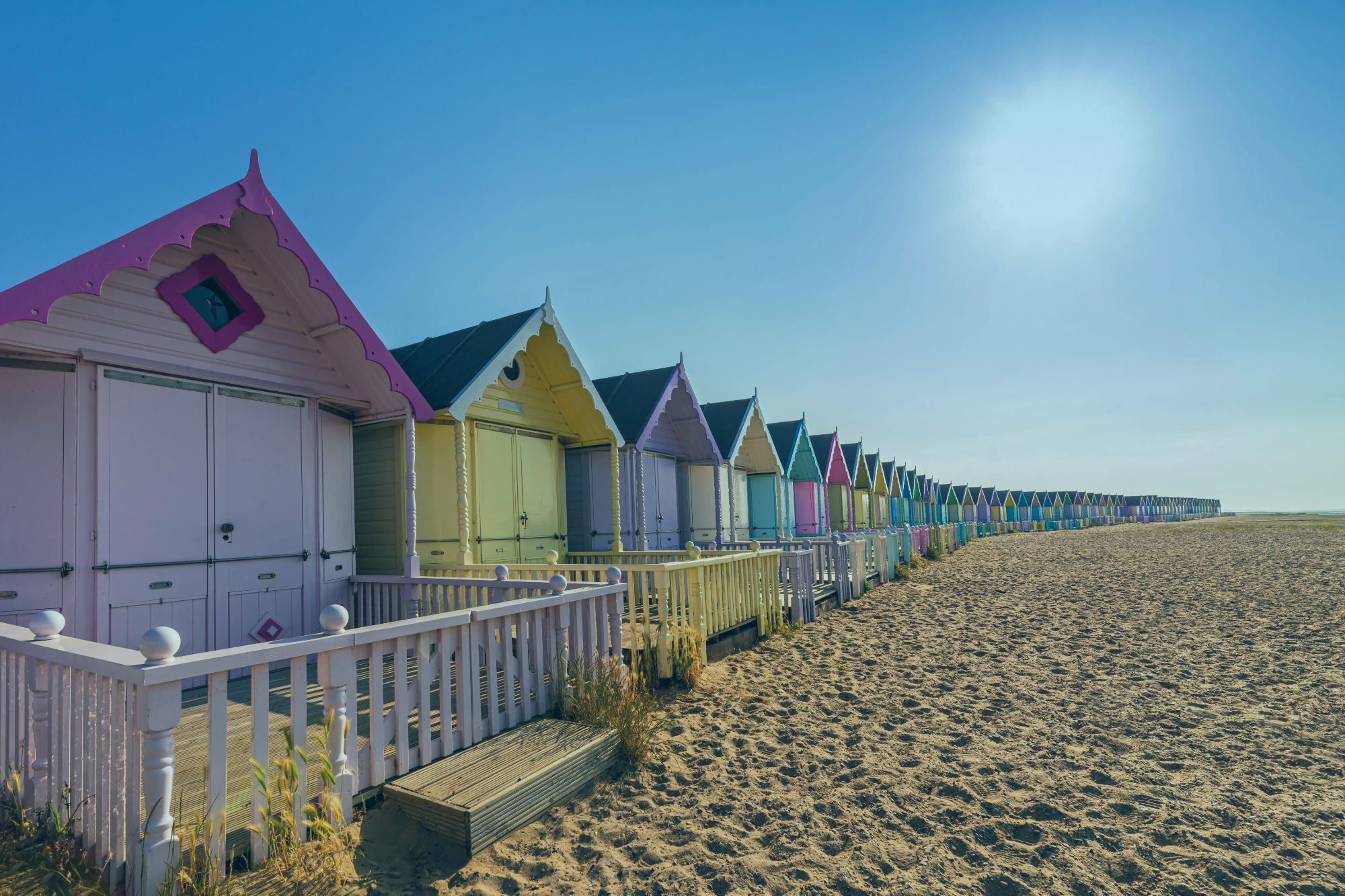
West Mersea Beach is lined by quirky pastel beach huts in Mersea Island, EssexCredit: AlamyCudmore Grove Country Park has a wooden play area and plenty of trails for dog walksCredit: Visit Essex
Mersea Island, Essex
Mersea Island is a seaside gem accessible via a causeway that disappears under the tide twice a day, with stunning landscapes and a laid-back vibe that feels worlds away from the flashy piers of Southend.
The island is known for its unique beaches, marshland wildlife and delicious oysters.
West Mersea Beach is an old-fashioned spot backed by pastel-coloured beach huts, whilst Monkey Beach is a lesser-known spot likely named after the monkey steps leading down to its shores.
You can spend a free afternoon crabbing off the West Mersea pontoon, or exploring the Cudmore Grove Country Park, a Green Flag spot with a wooden play area and pretty meadows made for dog walks.
A 20-minute drive (at low tide) takes you to Colchester, Britain’s oldest recorded town, where you can visit its impressive castle or take a Roman and Medieval walking tour (£9 per adult and kids go free).
Coopers Beach Holiday Park offers direct beach access, plenty of sports courts and outdoor activities, and family restaurants with sea views.
Parkdean Resorts offer a four-night stay in a Bronze caravan which sleeps six from £99.
Pretty Pwllheli sits on the Lleyn Peninsula on the coast of North WalesCredit: GettyThe beaches of Pwllheli tend to be quieter than its upmarket neighbour AbersochCredit: Getty
Pwllheli, North Wales
While the holiday crowds flocks to nearby Abersoch, savvy travellers head to the bustling market town of Pwllheli to enjoy the same stunning shores for a fraction of the cost.
The town’s two massive beaches are perfect for bucket-and-spade days as a family, plus the nearby Plas Heli sailing centre offer sailing, kayaking and stand up paddle-boarding lessons.
It’s also a brilliant base for exploring the rest of the Llŷn Peninsula. For a historical afternoon out, an 18-minute drive leads to Criccieth Castle, where 13th-century ruins overlook Cardigan Bay.
Or to soak up the sights by foot, you can walk the coastal path to reach the art galleries and sheltered bay of Llanbedrog.
Plus if you’re really up for a hiking challenge, Snowdonia is only a 30-minute drive away.
With an indoor pool and water park, lazy river, four-lane waterslide and its own lake for pedalo hire, Hafan y Mor is the place to stay in Pwllheli.
You can book a four-night stay in a two-bed apartment at Hafan y Mor from just £79.
Filey has a beach that stretches for five miles and a rocky peninsula with plenty of wildlifeCredit: GettyWalk along the beach to the cliffs of Filey Brigg for some of the best sea viewsCredit: Getty
Filey, North Yorkshire
Sat between Scarborough and Bridlington, Filey is a charming seaside town where visiting feels like stepping back in time.
There’s a five-mile stretch of golden sands, perfect for setting up a spot to play beach games and build sandcastles.
You can spend a totally free afternoon exploring the dramatic Filey Brigg – a mile-long rocky peninsula built for birdwatching and spectacular sea views.
Or wander through the peaceful Glen Gardens, where you can visit the open air boating lake, burn off energy in the play park or set up a picnic on its scenic grounds.
When you fancy a change of pace, an 18-minute drive takes you to Scarborough, where you can enjoy a classic day out of spending loose change in the arcades or tackling the rides of Luna Park.
If you travel 22 minutes in the opposite direction it will take you to Bridlington, where Brid Spa hosts fantastic, family-friendly theatre productions. Head up further along the coast to Bempton Cliffs to spot adorable puffins.
Plus, Filey is significantly easier on the pocket than its busier neighbours, with top-tier holiday parks for affordable prices.
Hoseasons offer a 7-night stay in a two-bedroom saver caravan for just £125 at Blue Dolphin holiday park.
Bembridge on the Isle of Wight is one of the UK’s largest villagesCredit: GettyBembridge is also home to the last remaining windmill in the Isle of WightCredit: Alamy
Bembridge, Isle of Wight
If you want an Isle of Wight trip that feels more like a relaxing private getaway than a tourist trap, Bembridge is the place.
Skip the business of Sandown and head to this sprawling coastal gem. As one of England‘s largest villages, everything here is spaced out and relaxed, with plenty of room to wander without pushing through crowds.
You can spend a free morning visiting the historic Bembridge Windmill -the only windmill left on the island, dating back to 1700.
Or wander the dramatic 200-metre seaside pier, where the Lifeboat Station sits perched at the end overlooking the water.
When you want to explore further, less than 30 minutes’ drive south lands you in the trendy, hilly streets of Ventnor.
Charles Dickens once described the town as “The prettiest place I ever saw in my life, at home or abroad”, and it’s clear to see why. This artsy town has colourful buildings, beautiful botanical gardens and pebbled shores that zig-zag down to the seafront.
Or you could drive 10 minutes to Culver Down, for impressive chalk cliffs that offer a panoramic view of the English Channel.
Hoseasons offer a four-night stay in a two-bedroom chalet at the perfectly-positioned Whitecliff Bay Holiday Park from £84.
Morecambe is close to busy Blackpool, but it has plenty of its own family attractionsCredit: GettyVisit nearby Lancaster Castle on a trip to Morecambe, just 15 minutes’ drive awayCredit: Alamy
Morecambe, Lancashire
With the bustle of Blackpool nearby, Morecambe offers a more relaxed, retro feel with five miles of promenade to stroll.
Kids will love Happy Mount Park, home to a soft play, adventure golf, a massive splash park, tennis courts and more – perfect for a family day out no matter the weather.
For something more unique, head to the Stone Jetty to find the Tern Project: an interactive art trail with bird-themed pavement games, mazes, and puzzles along the way.
If you’re feeling adventurous, you can join a guided group (from £15) to trek across the famous sands of the Cross Bay Walks at low tide – just don’t try it alone!
Lancaster is a 15-minute drive away, where you can explore its hilltop medieval castle, while you can reach Blackpool for an exciting day out in 45 minutes.
Whether you explore the thrills of Blackpool Pleasure Beach, or explore Madame Tussauds or the Blackpool Dungeons within the tower, you’re sure to have an action-packed day out – with a quieter change of scenery to return home to.
Parkdean Resorts offer a two-night stay in a two-bedroom silver caravan at Morecambe’s Ocean Edge from £99.
Wemyss Bay Station was rated 5 stars in Britain’s 100 Best Railway StationsCredit: AlamyCatch the Victorian ferry from Weymss Bay over to Rothesay on the Island of ButeCredit: Getty
Wemyss Bay, Scotland
While most tourists charge straight past to the inner isles, the charming village of Wemyss Bay is the perfect place to enjoy the dramatic Firth of Clyde landscapes.
To soak up the best of the local scenery, wander the coastal paths that look out over the isle of Bute. Walk down to the rocky shoreline at low tide to go beachcombing for sea glass – Wemyss Bay is a prime spot.
Or head to Kelly Burn to see the pretty woodland stream that marks the border between Renfrewshire and Ayrshire, leading you through lush greenery to hidden waterfalls.
Wemyss Bay Woods is also fantastic for nature walks, with a network of forest trails with mountain views.
Train enthusiasts will love visiting the award-winning Wemyss Bay Station, regularly hailed as one of the most beautiful railway stations in the UK thanks to its stunning glass canopy.
To explore further afield, you can hop on a ferry over to Rothesay to visit its castle and explore the isle (£8.70 adult return, kids £4.40).
And for the ideal indoor family attraction, 15 minutes by car or bus will take you to the traditional seaside town of Largs to visit the Vikingar! museum.
This interactive centre has a replica 8th century Viking house, character storytelling, an indoor swimming pool and more. Tickets cost £9.20 per adult and £6.30 per child.
The clifftop Wemyss Bay Holiday Park offers an affordable place to stay with striking views of the mountains across the water.
Hoseasons offer a four-night stay in a two-bedroom Bronze caravan from £99.
Thornwick Bay Holiday Village is perfectly located for beach access in FlamboroughCredit: GettyThe sea arch at Flamborough Head on the Yorkshire Coast is known as the Drinking DinosaurCredit: Alamy
Flamborough, East Yorkshire
Flamborough is one of East Yorkshire’s most picturesque seaside spots, with some of the UK’s most spectacular coastal walks and views.
Head to this rugged peninsula to explore North Landing – a sheltered cove dotted with traditional fishing boats, where you can explore its caves for free.
Flamborough is also home to the Living Seas Centre, which puts on family-friendly events such as fossil hunts, boat trips and rockpool safaris.
You can also drive just six minutes to Sewerby Hall and Gardens, with woodland walks and beautiful walled and rose gardens. Entering the hall to see its stately rooms costs £4.50 per adult and £3.50 per child.
Head up to Thornwick Bay to find crystal clear waters protected by chalk cliffs, which open up dozens of fascinating rockpools at low tide.
But don’t just stick to the main beaches – head to Selwicks Bay at low tide to see the “Drinking Dinosaur” rock formation – a massive natural arch that’s the perfect backdrop for a family photo to remember your holiday.
Thornwick Bay Holiday Village is an unbeatable budget base, with activities ranging from water sports at the Boathouse to indoor arts and crafts at the Activity Barn.
Hoseasons offer a four-night stay in a two-bedroom saver caravan from £69.
You can reach Great Yarmouth from Hopton in just 15 minutes to visit popular Britannia PierCredit: AlamyHaven’s Hopton Holiday Village provides direct access to the beaches of Hopton-on-SeaCredit: Haven
Hopton-on-Sea, Norfolk
If you want the golden sands of the Norfolk coast without the price tag of the posh towns like Burnham Market or Holkham, Hopton-on-Sea is your best bet.
Perched on the border between Norfolk and Suffolk, this quiet village has a pristine beach that’s far less crowded than its noisy neighbours.
Here you’re perfectly placed between two major seaside resorts: Lowestoft and Great Yarmouth.
A 15-minute drive north takes you to Yarmouth for some old-school pier fun and theme park Pleasure Beach, whilst the same time driving south lands you in Lowestoft, with its award-winning Blue Flag beaches.
Plus Hopton itself is a beautiful village worth exploring. Take a walk along its scenic grass-topped cliffs, or wander down to the water for a quiet spot to sunbathe.
Hopton Holiday Village is a bargain holiday park with direct beach access, and you can have a four-night break for less than the cost of one night in a seaside hotel.
Haven offer a four-night stay in a bronze caravan sleeping up to six at Hopton Holiday Village from £89.
Recently travelling from Madrid to San Sebastián, we spent three days in picturesque Briñas in La Rioja, staying at the beautiful Finca Torre de Briñas (doubles from €189 B&B). The neighbouring town, Haro, reached via a 40-minute walk by the Ebro River, hosts several of the largest wine producers in the region (CVNE and Muga are recommended). You can stop in and sample them, before heading into the town centre, which has several tapas spots to fuel the walk back to the hotel. Bliss. Tom Dickson
Forests and badlands in Murcia
Aleppo pine forests in Sierra Espuña massif. Photograph: Juan Vilata/Alamy
Less than an hour’s drive – yet a world away – from the bustling Murcia coast sits the brooding Sierra Espuña mountain range, a green respite from the summer heat and the site of a rewilding project started more than a century ago. After a morning’s hike through the shady pines, we drove up a switchback mountain road to check out the 16th-century Pozos de la Nieve, and descended steps into a silent, cavernous interior. Come summer, stored ice was hauled by horse and cart from here down to wealthy city folk. Our return route passed the Barrancos de Gebas, a lunar “badlands” landscape formed from a seabed more than 10m years ago. There were few other visitors and it felt like our secret. Cathy Robinson
Terraced vineyards in Galicia’s gorges
The Sil river bends its way through the Ribeira Sacra. Photograph: Pedre/Getty Images
Forest fires in the Picos mountains led us on a detour via the Ribeira Sacra, a wine region in inland Galicia. The area is characterised by the deep canyons of the Sil and Miño rivers, and the steep-sided banks are lined with terraced vineyards, the grapes benefiting from the delicate ecosystem the gorges create. We swam in waterfalls, drank wine and walked among the narrow terraces. A highlight was the walk at the top of the Miradoiro de Souto Chao (the Grape Pickers’ Viewpoint). The views were stunning: tranquil, natural and barely a tourist in sight. Ruth Chapman
A fairytale town in Navarre
The medieval settlement of Gallipienzo. Photograph: Vicenfoto/Getty Images
A medieval settlement rising above the sparse landscape of Navarre province, Gallipienzo is the stuff of fairytales. Before beginning our ascent on the winding road to the old town, we took a dip in the Aragón River, much needed after sightseeing in scorching Pamplona. Arriving at Hotel Heredad Beragu (doubles from €109 B&B), we were given a warm welcome by Patxi and Ramón, who have turned an old farmstead into a chic getaway. After a sunset walk, soaking up views of the surrounding countryside framed by ramshackle doorways, we headed back to the hotel for a locally sourced dinner, rather smug to have discovered this gateway to the past. Anna
The city of Bilbao is deservedly popular. But take a 25-minute train ride along the Nervión River to the coast and you will arrive in Portugalete. Head straight to the Crepería Miramar for great coffee and a perfect tortilla. The cafe sits on the estuary in the shadow of the wonderful Vizcaya Bridge. Built in 1893, it is the world’s oldest transporter bridge, a Unesco world heritage site, and the perfect combination of beauty and function. For €1 take a trip on the transporter over to Getxo and walk around the bay to the lovely fishing village of Algorta. A perfect day. Michael Quinn
Exploring the Alpujarras, near Granada
Pitres in the Sierra Nevada. Photograph: Juergen Feuerer/Chromorange/Alamy
Last month, I was delighted to find the almond blossom out while walking the Ruta Medieval in the Alpujarran municipality of La Taha. This year, after the disastrous storms in the south, no hike has been without hazards – landslides and fallen trees – so an app such as Wikiloc is essential to find detours. If you don’t have a car, a bus stops at Pitres, the start of the waymarked trail along ancient cobbled paths, through whitewashed, flat-roofed Moorish villages that hang on the side of the gorge created by the River Trevélez. There are various options after Ferreirola. A strenuous climb through Atalbéitar to Pórtugos, or a gentler one to Busquístar. Both have a bus back to Pitres or onwards to Órgiva (of Chris Stewart, Driving Over Lemons, fame) or even Granada. Laura
Profile
Readers’ tips: send a tip for a chance to win a £200 voucher for a Coolstays break
Show
Guardian Travel readers’ tips
Every week we ask our readers for recommendations from their travels. A selection of tips will be featured online and may appear in print. To enter the latest competition visit the readers’ tips homepage
–
Medieval gems in Léon
The castle of Ponferrada. Photograph: Ivan Marc Sanchez/Alamy
We arrived in Ponferrada on foot as part of our Camino de Santiago walk, so we could see the town looming up ahead of us well in advance. As well as an attractive centre with old buildings, restaurants, and bars serving the famous Bierzo wine, the most famous thing about Ponferrada is its huge Disney-like castle, thought to have been built by the Knights Templar, which not only hosts mock-medieval pageants but also contains a stunning collection of manuscripts and maps. After our journey from the lovely mountain village of El Acebo, we still found the energy to do the extra couple of miles uphill in the sun to visit the tiny romanesque church of Santo Tomás de las Ollas, which for me was worth a dozen castles. Barbara Forbes
A spectacular slow rail trip from Santander
The coastal village of Llanes. Photograph: StockPhotoAstur/Getty Images
We got off the ferry at Santander and took a train on the narrow-gauge railway heading west. The slow and spectacular former Feve (now operated by Renfe) line runs along the northern Spanish coast towards Oviedo and Ferrol. We stopped off at coastal villages Llanes and San Vicente, and found great value places to stay, good local wine and excellent restaurants. Viveiro was another excellent stop where restaurants served cloudy white wine in ceramic jugs to accompany the wonderful seafood. Lonely and dramatic beaches complete the idyll. We had a lot of time so were able to absorb all this wonderful coast could offer before heading down towards Vigo and Porto by train. Alan White
A stunning find near Girona
Plaça de Les Voltes in Peratallada. Photograph: Jordi Carrio/Alamy
The stunning medieval town of Peratallada made a peaceful base for exploring the Empordà region in September. Against cloudless, azure skies, its caramel-coloured walls and arches dripped with red campsis and bougainvillea. It’s an excellent day trip from Girona (20 miles away) and towns on the Costa Brava, but it’s worth more of your time. Climb the Torre de las Horas bell tower (free; visitor numbers restricted) for great views, and work your way around the welcoming shops, cafes and restaurants. Particular favourites were Restaurant La Roca and DO Candelaria. Kay Julier
Winning tip: Hanging in Cuenca
Vertiginously perched houses in Cuenca. Photograph: Getty Images/iStockphoto
In the Castilla-La Mancha mountains east of Madrid, I visited the Unesco world heritage city of Cuenca. Sitting proudly upon its plateau and ensnared by the Júcar and Huécar rivers, this city offers spectacular vistas. To take advantage of the views and the otherworldly karst rock giants, hike the 4-mile circular route through pine forest, finishing with a sunset over the medieval city. Add to that a free abstract art museum vertiginously perched within the Casas Colgadas, and a beautifully-lit labyrinth of streets after dusk, and Cuenca is a perfect town to visit off the beaten track. James Mulligan
After years of statistical silence, the Venezuelan Central Bank (BC) has now published GDP growth figures. The new series—annual and quarterly, in real terms and using 2007 as the base year—at least allow economic discussion to return to the realm of data. However, the comeback is partial. As has been customary, the BCV released rates of change, but not GDP levels at constant prices, nor values at current prices, nor the sectoral weights needed to understand how the economy is composed.
This omission is not a technical detail. Without weights, growth rates float in a vacuum. They indicate the direction of movement, but not its relevance. A sector may grow by 20% and still remain marginal. Another may expand only slightly and yet dominate the aggregate outcome. Reading GDP solely through growth rates is like looking at a map without a scale.
Based on the sectoral variations published by the BCV, it is possible to conduct an indirect exercise: reconstruct volume indices with base 2007 = 100 and, from them, estimate the implicit sectoral weights within GDP. This is not meant to replace official national accounts, but to extract structural information that is not explicitly presented in the published figures. The result helps answer a key question: what is the Venezuelan economy that has emerged after the recession and the recent rebound actually made of?
Less State production, greater private weight
The first finding is institutional in nature. In 2018, at one of the deepest points of the crisis, the private sector accounted for just 44.8% of GDP, the lowest level observed in the reconstructed series. The public sector, by contrast, exceeded 52%, reflecting both the collapse of private activity and the relative weight of State-led production.
Since then, the relationship has reversed. By 2025, the private sector reaches around 52.1% of GDP, while the public sector declines to 42.4%. The Venezuelan economy emerging from the crisis is, in relative terms, less state-driven than it was at the end of the previous decade.
Oil typically accounted for around 12% of GDP and was often surpassed by manufacturing. Today, the oil sector can be up to four times larger than manufacturing.
This shift should be interpreted with caution. It does not necessarily imply vigorous expansion of the private sector in absolute terms. It rather reflects a sharper and more persistent contraction of the public sector as a direct producer of goods and services. Still, the rebalancing is significant and marks a break from the pattern observed during the most acute years of the crisis.
Oil: renewed centrality with statistical caveats
The second axis of this restructuring is the oil sector. In the new series, its share of GDP stands at around 20.5% in 2020 and rises to approximately 25.9% in 2025. At first glance, these figures suggest an economy once again dominated by oil.
But here a methodological warning is essential. The 2007 base year coincides with a period of high oil prices. This tends to inflate the sector’s relative weight in real terms. In the previous series, based on 1997, oil typically accounted for around 12% of GDP and was often surpassed by manufacturing. Today, the oil sector can be up to four times larger than manufacturing.
This figure should not be dismissed, but it must be interpreted carefully. It reflects both the current structure of the economy and a statistical effect derived from the change in base year. Oil’s centrality remains indisputable, although its exact magnitude depends on the methodological lens.
Among non-oil activities, the most structural change is observed in information and communications. For more than a decade, between 2007 and 2019, this sector averaged just 5.2% of GDP. From 2020 onward, its share consistently exceeds 10%, consolidating it as one of the main beneficiaries of the recent restructuring.
This increase points to an economy reorganizing around connectivity services, telecommunications, and information flows. It does not necessarily imply high productivity, but it does signal a clear shift in the basket of value-generating activities.
Agriculture follows a different dynamic. While it remains a moderate-scale sector, it now represents about 5% of GDP, compared to an average of 3.3% between 2007 and 2019. The key lies in its relative resilience during the 2014–2020 recession: it declined less than other sectors and, as a result, gained weight within a smaller economy.
Within the services universe, real estate, professional, scientific, technical, administrative, and support activities also stand out. This is a broad and heterogeneous sector, yet it shows a clear pattern over time. Before the crisis, these activities accounted for around 11% of GDP and, like agriculture, displayed relative resilience during the most difficult years of the downturn. In a context of high inflation and exchange-rate volatility, services (particularly professional and technical ones) tend to adjust more flexibly than activities intensive in inventories or physical capital.
Enthusiasm for some growing sectors fades when considering their weights in 2025 GDP: approximately 3.6% for construction, 1.5% for finance, and just 0.8% for mining.
That said, the sector is not without nuance. In 2020 it reached a peak of around 16.7% of GDP, but part of that gain later moderated, settling at about 13% in 2025. This reflects the fact that the aggregate includes very different dynamics: while some professional and technical services expanded, more affected segments, such as real estate activities, continue to operate below historical levels. Even so, as a whole, this block has consolidated itself as the largest non-oil sector in Venezuela’s current economy.
Other sectors, by contrast, show greater structural stability. Trade and vehicle repair, which now account for around 5% of GDP, fell to as low as 3.8% during the most acute years of the crisis (reflecting the collapse in consumption) but have since returned to ranges similar to pre-crisis levels.
A similar pattern is observed in accommodation and food services, which hit a low point during the pandemic (1.3% of GDP in 2020) as a direct consequence of mobility restrictions, closures, and the near paralysis of tourism. It has partially recovered since then, reaching about 1.6% in 2025. Despite the recent attention it has received, its aggregate impact remains moderate and its behavior more stable than popular perception might suggest.
The biggest losers: manufacturing and the producing State
Still within non-oil activities, manufacturing illustrates the scars of the crisis. After exceeding 10% of GDP up to 2013, its share collapsed to a low of around 5.4% in 2019. In subsequent years, a partial recovery is observed, reaching roughly 6.8% in 2025, but still far from historical levels. Rather than reindustrialization, the data point to stabilization at low levels.
The most abrupt adjustment, however, is seen in general government services. After reaching a historic peak of about 22.9% of GDP in 2019, its share drops to just 10.8% in 2025. No other sector loses as much weight in such a short period. The State remains relevant, but its role as a direct producer of value added is now much smaller.
Spectacular growth, limited impact
The highest growth rates in recent years correspond to sectors that remain small. Specifically, between 2023 and 2025, construction recorded cumulative growth of nearly 57%, financial and insurance activities around 40%, and mining close to 27%.
However, the enthusiasm fades when considering their weights in 2025 GDP: approximately 3.6% for construction, 1.5% for finance, and just 0.8% for mining. These are dynamic sectors in percentage terms, but with limited macroeconomic impact due to their size. It is a reminder of why sectoral weights matter as much as growth rates.
What this restructuring tells us, and what it doesn’t
The Venezuelan economy that emerges from this exercise is different from that of fifteen years ago: relatively greater private-sector weight, statistically dominant oil, expanding information services, weakened industry, reduced finance, and a much smaller State as a direct producer.
It is important to stress the limits of the analysis. The weights discussed here are implicit, not official, and depend on the internal consistency of the growth rates published by the BCV. Future revisions could alter some magnitudes.
Even so, the central message is clear. Behind the growth rates that currently capture public attention, there is a silent restructuring of the Venezuelan economy. Understanding it is essential for any serious discussion of economic policy, investment, or productive development. Because in the end, it is not only how much GDP grows that matters, but (perhaps above all) what it is made of.
A low-key and cosy eatery in a market town has been crowned Best Pasta Restaurant at the Italian Awards 2026, putting the Derbyshire hidden gem on the culinary map
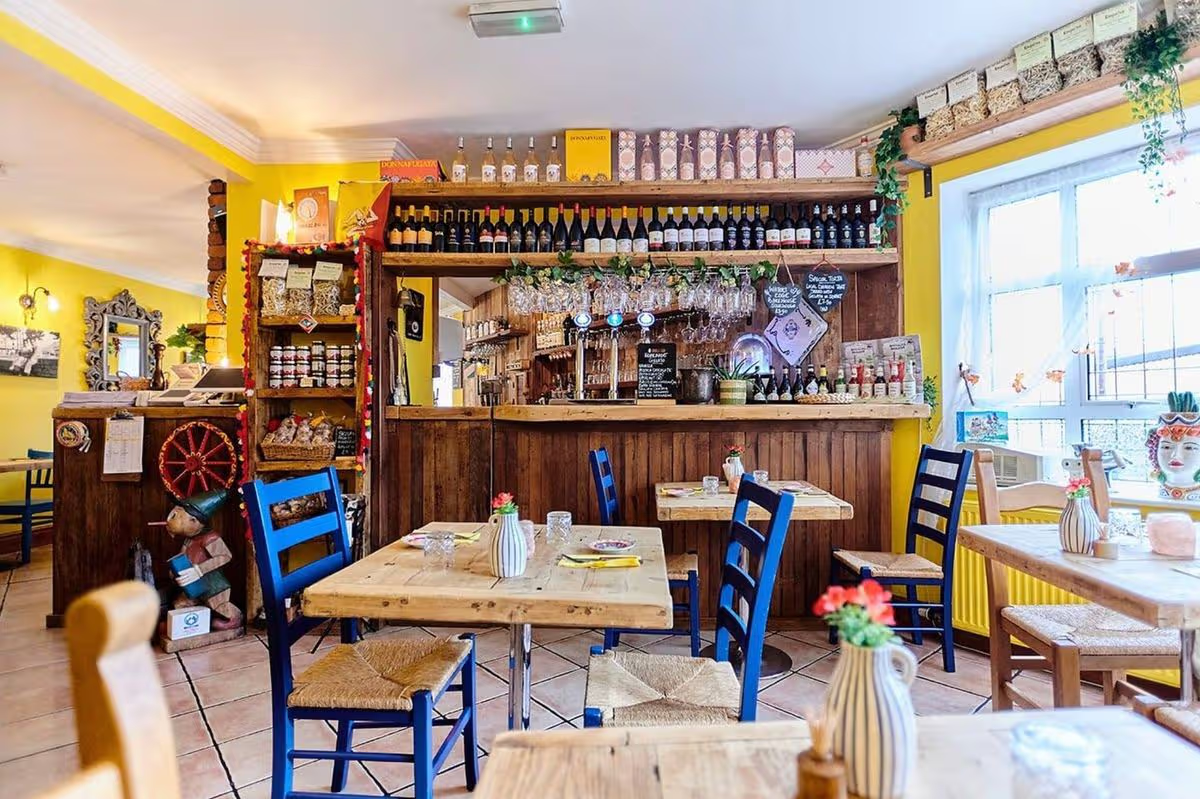
The authentic restaurant is known for being small and cosy (Image: A Tavola Gastronomia Siciliana)
Italian cuisine is always a firm favourite when it comes to dining out but what you might not realise is that some of the finest examples can be found right on your doorstep.
In what has essentially become the Oscars of the Italian hospitality world, the Italian Awards 2026 took place recently, celebrating the very best pizza, pasta, restaurants and cafés across the UK.
And in a fiercely competitive category, the winner of Best Pasta Restaurant turned out to be a hidden gem nestled in New Mills, High Peak, Derbyshire.
A Tavola Gastronomia Siciliana, the authentic Italian eatery, claimed the coveted prize – and will no doubt see a wave of curious food lovers descend upon them as a result.
Best Derbyshire holiday cottage deals
This article contains affiliate links, we will receive a commission on any sales we generate from it. Learn more
Derbyshire is known for its dramatic Peak District landscapes, historic market towns and stately country houses. Sykes Cottages has hundreds of places to stay, with prices from £32 per night.
Led by award-winning chef Alessio Muccio, the restaurant takes great pride in producing fresh pasta, gelato and pastries on the premises, using traditional Sicilian ingredients.
Their website states: “Our restaurant is small and cosy and adorned with Sicilian artefacts; it’s a little slice of Sicily here in the High Peak.”
One delighted customer left a glowing review on TripAdvisor, saying: “A Tavola is a colourful, warm, and welcoming trattoria located in the dark, cold, wintery heart of the Peak District.
“Highly recommended for those longing for those rich Sicilian flavours but far from the light and abundance of the Bel Paese. Sicilian sweet and sour flavours are present in many dishes, from pistachio and fennel to sardines with pine nuts and raisins.”
Another reviewer said: “What a wonderful restaurant! A lucky find as we were looking for somewhere to eat before going to hear some live music nearby. Very friendly staff, delicious food and a convivial ambience.
“I only wish it were not over 100 miles from my home. I highly recommend a visit, especially if you are missing being in Italy! You will be transported!”
The Derbyshire eatery bills itself as a ‘labour of love’ from the chef, who has crafted a menu designed to accommodate all dietary needs. What’s more, his specials change with the seasons to guarantee fresh and seasonal ingredients year-round.
These touches haven’t gone unnoticed by diners, with one writing: “Absolutely fantastic food and service. From start to finish totally delicious. Thanks so much. Can’t wait to go back. 5 stars!”
It’s an unexpected location to discover authentic, mouthwatering Italian pasta, nestled in a market town, but it’s definitely worth stopping by while exploring the Peak District.
The restaurant sits on Albion Road, New Mills, High Peak, roughly eight miles south-east of Stockport and just 13 miles from Manchester.
While it might seem somewhat off the beaten track, it wasn’t quite concealed enough to escape the notice of the Italian Awards, which bestowed upon it the recognition its patrons believe it richly deserves.
Awards Director Warren Paul, discussing the launch of the Italian Awards for 2026, expressed his delight in celebrating the efforts of “passionate people”. He added: “That’s why we do what we do.
“It’s to make sure the hard-working inspirational people and businesses get the recognition they deserve.
“Everyone jumps to criticise and leave a negative review or complaint over the tiniest thing, but very few rush to praise good service, food and experiences. That’s where we come in. So congratulations to our winners.”
Highly Recommended restaurants in the same category included:
Italian Touch By Ivano Pizzeria & Ristorante (Bedford)
Mele e Pere (London)
Primavista (Bury St Edmunds)
Shambles Restaurant & Winebar (Teddington)
The Kettlebridge Inn, Bar & Italian Restaurant (Cupar)
Newly opened Ella Álkyna is an adults-only, all-inclusive 5-star resort on Corfu’s west coast with stunning sea views and private pools
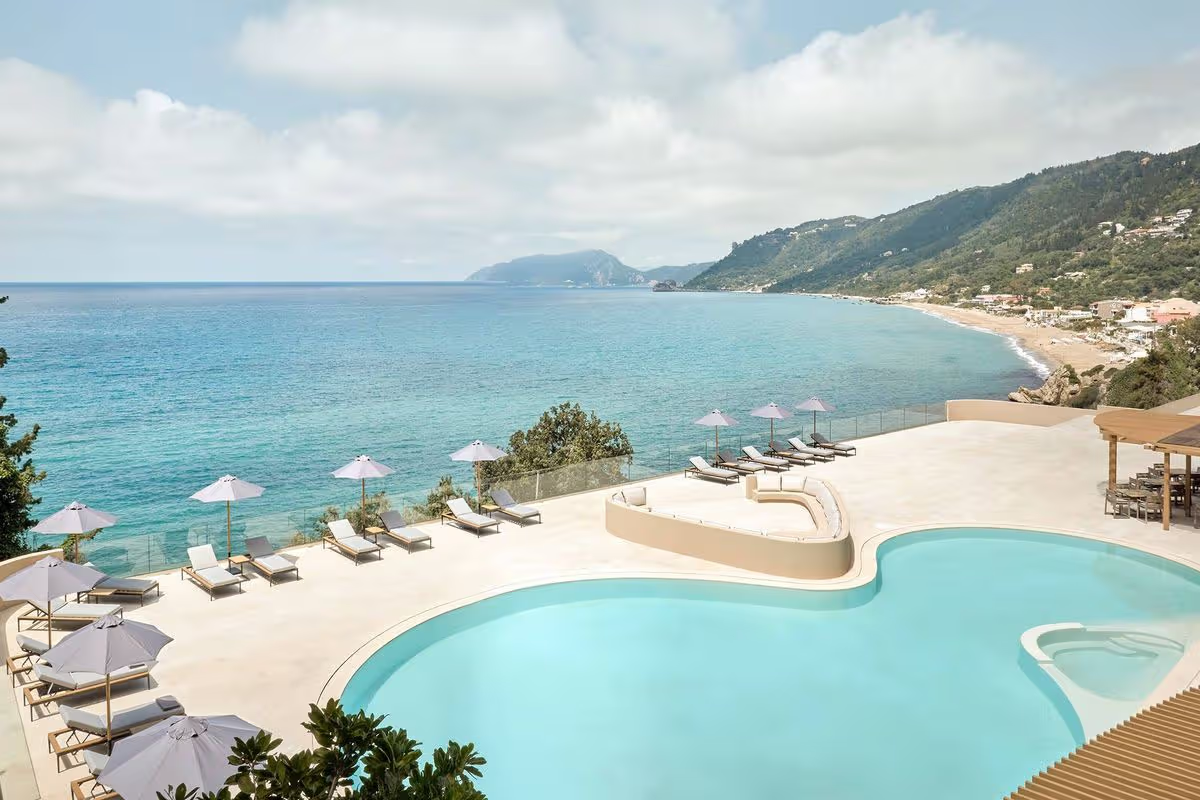
The resort sits close to the small village of Agios Gordios(Image: Ella Álkyna)
There arrives a moment in life when the notion of an adults-only, all-inclusive resort suddenly seems less of a luxury and more of a relief. No inflatable pool toys hurtling towards you, no frantic early-morning buffet chaos – simply sea vistas, excellent cuisine and the freedom to do absolutely nothing if that’s what you fancy. That’s precisely the atmosphere Ella Álkyna delivers to Corfu’s west coast.
Recently launched and positioned high above the dramatic bay of Agios Gordios, it’s crafted as a sophisticated, luxury retreat, yet without the eye-watering bill you’d typically encounter at other 5-star Mediterranean resorts.
The accommodation
The resort boasts 349 rooms, suites and villas, all orientated towards the Ionian Sea to ensure the panorama is practically inescapable. I stayed in a private pool sea-view room, which swiftly became the standout feature of the entire visit. At the more budget-friendly end of the spectrum, you can also reserve charming comfort rooms that still offer equally stunning vistas.
Inside, the design is serene and modern, featuring touches of pale timber, sandy hues and linen finishes that mirror the scenery beyond. But the genuine showstopper is the terrace. My compact private pool gazed straight out across the water, meaning mornings commenced with a pre-breakfast swim and evenings frequently concluded with another plunge as the sun descended behind the cliffs. Bathrooms are spaciously proportioned with rainfall showers and sumptuous robes, reports OK!.
The resort Álkyna is carved into the hillside overlooking Agios Gordios beach, and the location is breathtaking. The resort’s terraces tumble downwards, meaning virtually every spot – from the pools to the dining areas – boasts sweeping sea vistas. Amenities include two primary outdoor pools, an indoor pool, and a contemporary spa and wellness centre.
One point worth noting: the sunloungers surrounding the main pools tend to get snapped up fairly swiftly as the morning progresses. There’s no requirement for a crack-of-dawn towel dash, but if you’ve got your eye on a specific view, it’s wise to head down following breakfast rather than waiting until mid-afternoon.
Dining takes centre stage here, with three restaurants – Cocura, Nafs and Lucáta – plus six bars dotted throughout the resort. Several of the culinary concepts were developed alongside Michelin-starred chef Alex Tsiotinis, which accounts for why evening meals feel more akin to a chic metropolitan eatery than a typical hotel buffet.
Anticipate abundant Mediterranean touches such as grilled seafood, seasonal vegetables, regional olive oil and dishes crafted for leisurely, convivial dining rather than hurried consumption. Most tables are positioned outdoors, as you’d expect, meaning dinner frequently comes accompanied by a sea breeze and a stunning sunset.
It’s worth noting, however, that Corfu’s late-summer wasp season can make alfresco dining slightly more animated than anticipated. They appeared especially drawn to sweet cocktails and anything containing honey during my visit, so a touch of patience or a well-chosen seat makes all the difference if you’re planning to go in August or September.
What’s on offer at the resort
There’s no shortage of activities if you fancy keeping busy. Visitors can take part in fitness classes, yoga and Pilates sessions, or indulge at the spa with massages and facials designed to promote complete relaxation. I was especially taken with the on-site Roée Wellness spa’s Finnish sauna and steam room, and enjoyed the most soothing (and aromatic) 50 minutes of tranquillity thanks to the bespoke massage featuring Greek botanicals and natural oils.
Exploring the local area
The resort is located near the charming village of Agios Gordios, where traditional tavernas dot the seafront and the sunsets are renowned throughout the island. If you venture out just once, I’d urge you to visit Akrogiali Family Taverna, where I sampled the finest honey-drenched baklava and ice cream of my entire life.
I’d also strongly suggest making the journey to Kaiser’s Throne in the quaint town of Pelekas, merely a 20-minute drive away. The walk is brief, and the restaurant perched at the summit serves superb Greek salads alongside endless emerald vistas. For a change of scenery, Corfu Town is approximately a 30-minute taxi journey away and certainly worth a visit. Its Venetian alleyways, independent boutiques and bustling squares make it one of Greece’s most characterful island capitals. Boat excursions along the west coast are also sought-after and showcase some of Corfu’s most striking beaches and secluded coves.
Book it
Comfort Room with Sea View prices start from £215 per night based on an all-inclusive basis. To book, visit here. Flights to Corfu from major UK airports are served by Ryanair, easyJet, Jet2 and more.
EXCLUSIVE: I Love LA has landed in the UK with the launch of HBO Max and it features the daughter of a Hollywood star.
21:56, 01 Apr 2026Updated 21:56, 01 Apr 2026
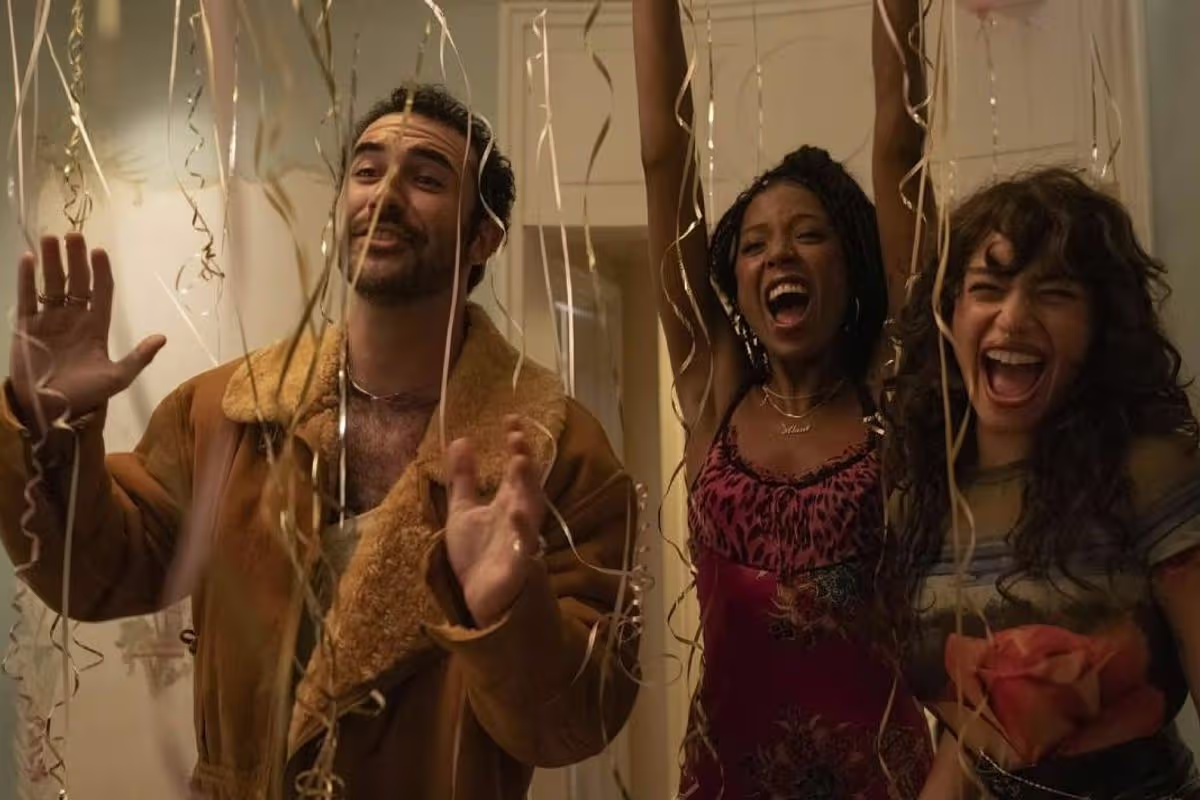
I Love LA is now available to watch on HBO Max(Image: HBO MAX)
An I Love LA actress has shared the unexpected familial link her father has with one of her co-stars.
HBO Max has finally made its way to the UK, dropping an abundance of hit shows, including I Love LA, a sitcom about Maia (played by Rachel Sennott) whose life becomes chaotic with the return of her influencer friend Tallulah (Odessa A’zion).
They are joined by other stars such as Jordan Firstman, Gossip Girl’s Leighton Meester, as well as actress True Whitaker as Maia and Tullulah’s close friend Alani Marcus.
Film buffs may best recognise Whitaker though as the youngest daughter of actor Forest Whitaker, famed for movies such as The Last King of Scotland, The Butler and Rogue One: A Star Wars Story.
But it wasn’t until True got to the set of I Love LA that she discovered that her dad was already very well acquainted with one of her co-stars.
Speaking to Reach Plc, Whitaker explained: “My dad in the show, Keith David, is a friend of my dad’s.
“When I was on set shooting the last episode, I Facetimed my dad being like ‘Hey, do you know this guy? This is my dad.’
“And he [Forest Whitaker] was like ‘Keith?!’ and Keith was like ‘Forest!’
“And apparently my dad is the reason Keith moved to LA. They did Platoon together when they were in their 20s so it was kind of cute to see them reminisce.”
Also starring actors William Dafoe and Charlie Sheen, 1980s film Platoon followed the story of a young American volunteer as he deals with the horrors of warfare in Vietnam.
While Whitaker was behind the role of supporting character Big Harold, actor Keither David played veteran soldier King.
True also shared her famous father’s pride at her landing a major role in I Love LA after first featuring in his drama Godfather of Harlem.
She explained: “He’s extremely proud of me. Even his assistant pulled me aside and was talking to me and got emotional and was like ‘you have no idea.’
“My dad apparently had just been gloating to everybody and was stoked to see me in this light.
“And for me to be able to use my comedic skills, because obviously in the house I’m annoying and loud and funny but now I can actually utilise it.”
DEVON is one of the most popular counties in the UK to visit for a staycation – so when looking at where to explore it can be hard to find somewhere that only locals know about.
Nestled within the coastline, between Dawlish and Torquay, you’ll find Babbacombe.
Sign up for the Travel newsletter
Thank you!
Babbacombe Downs in Devon is a hidden gem on the coastCredit: AlamyThere are two beaches you can head to, below the sandstone cliffsCredit: Getty
While it is often skipped for its larger neighbours on the English Riviera, Babbacombe deserves a spotlight of its own.
What used to be just a humble fishing village in the 16th century, has turned into a much-loved local gem.
In records, the area was previously known as ‘Babbecumbe’ meaning ‘Babba’s Valley’ and by 1775 there were only a few cottages littered across the area.
In the late 19th century, John ‘Babbacombe’ Lee survived three attempts to hang him at ExeterPrison for a murder he had committed in Babbacombe.
He became known as ‘the man they could not hang’ and has become a story told by locals.
In the Victorian era, the region grew in popularity for tourists as it was recognised for its dramatic cliff scenery.
The small town is home to Babbacombe Beach, which is made up of shingle and sits below the towering red cliffs that form Babbacombe Downs.
One recent visitor said: “Babbacombe Beach is a very peaceful, attractive place; the views from the top of the cliff are stunning.”
At Babbacombe Downs, you’ll find a promenade which is thought to be the highest in England, boasting amazing views across the bay.
And from there you can head to Oddicombe Beach, by walking down a picturesque lane – but be warned it is rather steep.
Alternatively, you can catch the funicular down to the beach.
One recent visitor said: “Oddicombe beach is a wonderful suntrap with a micro climate of its own.”
If with little kids, I would recommend taking the Babbacombe Cliff Railway, which has been operating for 100 years, this year.
The funicular runs from Babbacombe Downs to Oddicombe Beach, which neighbours Babbacombe Beach.
Babbacombe is also home to a funicular which is 100 years old, this yearCredit: Alamy
The Babbacombe Cliff Railway was built in 1926 and over that time has shuttled hundreds of holidaymakers to and from Oddicombe Beach.
The funicular did have to close for some time though between 1941 and 1951 due to wartime restrictions.
The carriages were later replaced in the early 2000s and painted in the original maroon and cream colours, with Torbay’s coat of arms on either side.
I remember as a child using the 200-metre cliff railway, with it feeling like stepping back in time, as if I was entering a part of history that I had been learning in school.
Nothing quite compares to the views either, the steepness of the track nestled between red sandstone and grey Devonian limestone 73metre-high cliffs means you can see the beach below with nothing disturbing the picture.
Because the railway and beaches below are hidden in the cliffside, not many tourists know about it.
It’s also away from the main hubbub of the main towns on the coastline.
If you’re wanting somewhere special to eat, head to Babbacombe Bay Cafe.
They serve freshly made toasties with salad and warming cups of tea that are ideal after being buffeted by the coastal winds.
You can also take a walk to the high street, which is about three minutes from the Downs.
Also in Babbacombe, you can head to Bygones which has a full-scale replica of a Victorian high streetCredit: Alamy
One place to visit here is Bygones, a museum with a full-scale replica Victorian street.
The museum has over 2,000 artefacts to discover and your four-legged friend can even join you on a visit.
Tickets cost from £13.95 per adult and £9.75 per child.
Spread across four acres, visitors can feel like a giant as they explore hundreds of scenes depicting British life, including iconic landmarks.
I used to visit once or twice a year growing up and particularly remember going at Christmas when all of the park’s models become covered in ‘snow‘.
The attraction has a sense of humour too, great for keeping parents entertained.
For example, there’s an ‘unaffordable housing development’ and a celebrity mansion with the Mutant Ninja Turtles and The Incredibles family playing in the garden.
Also nearby is Babbacombe Model Village, which features models of iconic London landmarksCredit: Alamy
Included in your admission ticket, you also get the chance to watch a film in the attraction’s 4D cinema.
It was always a laugh being jolted around in your seat as puffs of air and water were sprayed at you.
Every Friday evening from April to October, the whole park is illuminated with multi-coloured lights as well.
Tickets cost £21.95 per adult and £17.95 per child.
If you are looking for somewhere to stay, there are several options.
For example, you could stay at the Babbacombe Palms Guest House from £65 per night.
Fancy something a little more luxury? Then opt for the Cary Arms Hotel and Spa costing from £195 per night.
Planning your summer holiday but want to avoid crowded tourist hotspots? These three stunning European destinations offer beautiful beaches and coastal charm without the crowds.
La Gomera has some gorgeous beaches(Image: Getty)
Spring has finally sprung, meaning summer is just round the corner. Britain is fortunate to have countless stunning countries within easy reach, and if you’re pondering where to head this year, you’re in for a treat.
One of the most frustrating aspects of arranging a holiday is deciding on a destination – and with hordes of tourists flocking to all the popular spots, finding somewhere peaceful and relaxing can prove even more challenging.
If you’re after coastal beauty without thousands of holidaymakers crowding the beaches with towels and parasols, these are the three European locations you need to consider, reports the Express.
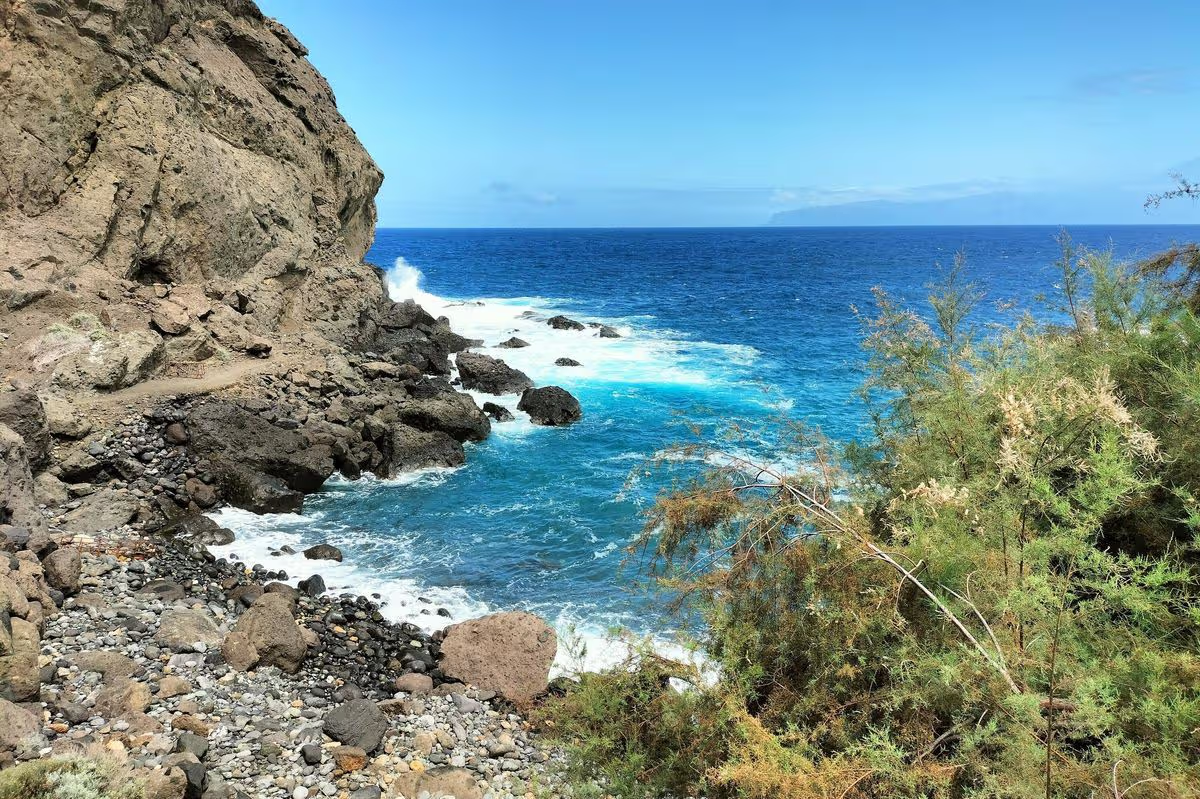
In contrast to Tenerife or Lanzarote, this stunning island remains relatively undiscovered and experiences fewer crowds during peak season than the British favourites.
Laura Evans-Fisk from eurochange commented: “It’s the perfect tranquil, peaceful alternative to the more popular islands. You could stay here for a restful few days or make a day trip from Tenerife by hopping on the ferry.
“La Gomera is also a great spot for hikers and nature lovers, home to the lush UNESCO-listed Garajonay National Park.
“Its beaches are much more secluded than the ones you’ll find on the other islands, and you’ll encounter no large-scale resorts or nightlife.”
“Like other islands in the region, La Gomera benefits from pleasant temperatures throughout the year too. And, its low light pollution means it’s an excellent spot for stargazing.”
Renowned for its breathtaking turquoise waters and pristine sand beaches, this stretch of Albania is known as the “Albanian Riviera”. It’s becoming increasingly popular with holidaymakers, yet sections of it remain largely undiscovered.
Laura explained: “Ksamil, an area often coined the ‘Maldives of Europe’, is one of the most beautiful and popular beaches, with white sands and strikingly clear waters.
“For a more relaxed vibe, visit Porto Palermo – this stunning bay has a small peninsula connecting it to the mainland, and an impressive 19th-century castle, Ali Pasha.”
The Algarve is frequently packed with tourists, but further north in Alentejo there’s a far more laid-back atmosphere. With its picturesque coastal landscapes and gorgeous beaches it provides the ideal summer getaway.
Laura commented: “Further North than the Algarve, this coastline surrounds the city of Lisbon, making charming towns like Cascais, Estoril and Azenhas do Mar perfect day excursions from the capital.”
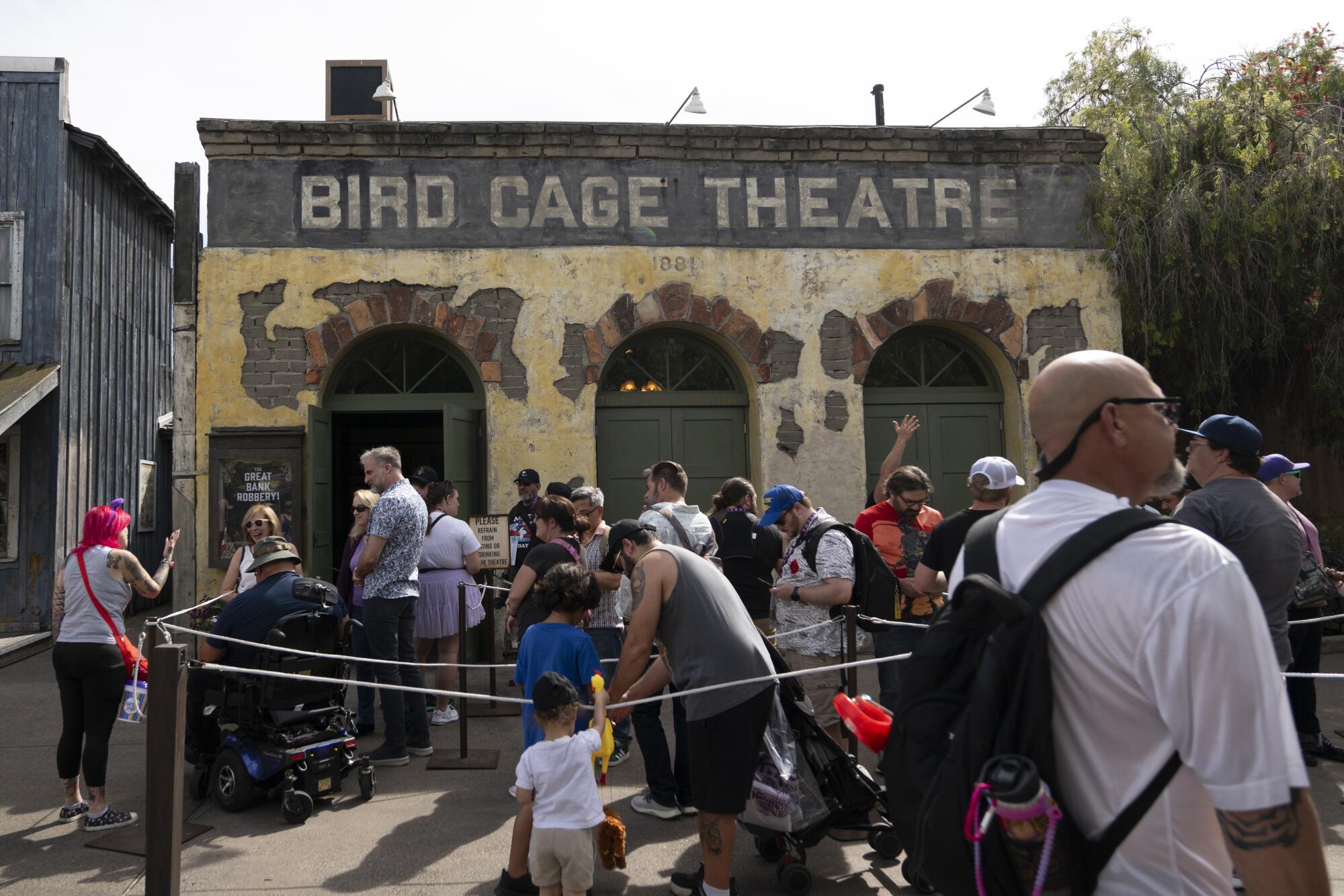
The Bird Cage Theatre has stood inside Knott’s Berry Farm for 72 years — albeit not always soundly. Long framed by a tin roof and a tent, the theater had a reputation for discomfort, as it was a source of punishing heat and the occasional mouse sighting.
“It was hot, it stunk and it was dirty,” says Payden Adams, the park’s VP of entertainment.
Still, though it has long felt like an endangered species, the Bird Cage Theatre is one of Southern California’s most historic revival houses, a place for vaudeville-style, fourth-wall-breaking shows that deviate from the expected theme park fare. To quote the theater’s most recent production, its entertainment can be “flirtatious and a little bit saucy.”
Knott’s Berry Farm’s Bird Cage Theatre is modeled after a historic venue in Tombstone, Ariz.
(Kyusung Gong / For The Times)
Opened in 1954, the Bird Cage Theatre has specialized in vaudeville-style melodramas.
(Knott’s Berry Farm)
And now, against all odds, the Bird Cage is getting a second life. Knott’s Berry Farm recently completed a renovation designed to keep it thriving for another 72 years. Gone is the tarpaulin roof: The Bird Cage is now a fully enclosed, soundstage-like structure. And blessedly, it has modern air conditioning.
The theater reopened this past weekend with “The Great Bank Robbery,” a 30-minute-plus show in which audiences are encouraged to boo, hiss and swoon over the characters, a Bird Cage tradition since 1954. Characters are caricatures, be it a villain that feels plucked from a cartoon western, complete with a purring raccoon for a sidekick, to a greedy wannabe politician of a bank manager. Though set in Ghost Town with period garb, there are modern flourishes, such as tongue-in-cheek nods to the theme park’s attractions and a damsel in distress who ultimately proves to be anything but.
Though it once operated as a daily theater, the Bird Cage is today most active during holidays and seasonal events, such as the park’s annual Boysenberry Festival, which also began this weekend. Popular summer show “Miss Cameo Kate’s Western Burle-Q- Revue” is a 20-minute cabaret-style performance, complete with a torch song and a slightly risqué cancan finale.
When it’s running, the Bird Cage is a must-see attraction. Live theater in theme parks can feel like a moving target, as conventional wisdom often argues that today’s smartphone-addled guests are after thrills and more attention-grabbing, interactive experiences. But when it works, such as during the over-the-top silliness of “The Great Bank Robbery,” or at Universal Studios’ “Waterworld”-themed stunt show, it can offer guests some of the most memorable, personal moments at the parks.
The Bird Cage Theatre reopened this past weekend with the show “The Great Bank Robbery.”
(Kyusung Gong / For The Times)
“You’re not wrong, especially when it comes to attention spans. We experience that,” says Adams, who oversaw the theater’s restoration. “The way we’ve pivoted and navigated is just ensuring our shows are tight and clean. It might be a little over 30 minutes, but audiences are engaged. In melodramas, we ask the audience to participate, and we can train them how to participate beforehand. When you see characters, even when they’re heightened or over-the-top, people still connect with them.”
The Bird Cage Theatre first opened in the summer of 1954, its facade a near-replica of the original Bird Cage in Tombstone, Ariz. That the family-focused Knott’s would nod to the Arizona locale is an oddity in and of itself, as the actual theater had a bawdy reputation. Stories today speak of a place that initially opened with grand ambitions but eventually succumbed to gambling and prostitution.
At Knott’s, the theater was built around existing structures, although park founder Walter Knott, according to the book “Knott’s Preserved” by Chrstopher Merritt and J. Eric Lynxwiler, often talked about completing it as a full tribute to the Arizona space. That never really happened.
Knott’s re-created the original wallpaper of the Bird Cage Theatre for its remodeling.
(Kyusung Gong / For The Times)
And yet over the years the Bird Cage won over audiences thanks to programming from Vaudeville veterans. Early on, students from nearby colleges would appear at the space, including Steve Martin, whose signed photograph graces a celebrity wall in the Bird Cage’s introductory hall. Donna Mills and singer Rick Nelson have graced the Bird Cage’s horseshoe-shaped stage, as have Dean Jones and Skip Young.
It was, to say the least, a quirky place to perform. “Knott’s Preserved” tells of a show in which a mouse once sat at the base of the stage, and quotes Martin as reminiscing over performances affected by the weather. “When it rained, no one could hear each other because the rain was beating so hard on that tarp,” Martin said.
None of that should be a problem anymore, although returning guests will likely feel they’re in a familiar space. Though the Bird Cage has been outfitted with modern lighting capable of new theme park tricks and projections, the rig is hidden among curtains designed to re-create the look of the original tent. Lights, in bird cage enclosures, still hang above the audience seating area, which has room for about 250 guests.
The Bird Cage Theatre at Knott’s Berry Farm now has a properly enclosed roof and air conditioning.
(Kyusung Gong / For The Times)
And along the way a few discoveries were made. Adams says that when they began stripping away wooden walls added sometime in the 1970s, they found the Bird Cage’s original wallpaper, a scarlet-red strip that surrounds the space with flower-adorned bird cages. Not all of it could be salvaged, so Knott’s meticulously re-created the look. With the new-old wallpaper intact, Adams estimates that guests can count about 11,055 bird cages throughout the theater.
The original pieces will be preserved in the park and gifted to important Bird Cage players. Adams jokes, “If you have a mailing address for Mr. Steve Martin, I have a gift to send him.”
The fishing village sits magnificently in a stunning cove on a peninsula, offering fresh seafood, timeless charm and an escape from typical tourist crowds
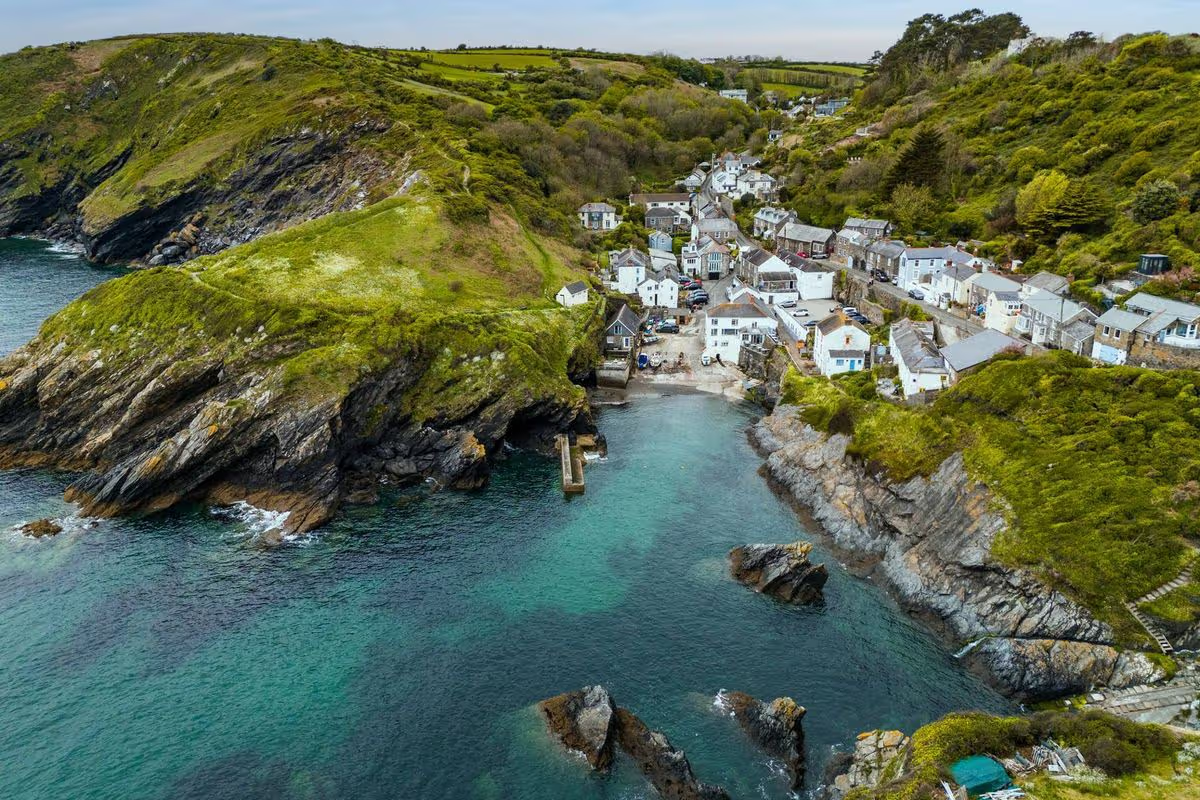
The village seems to be frozen in time(Image: Getty Images)
Cornwall harbours a hidden gem which truly seems frozen in time.
Encircled by stunning scenery and overflowing with authentic Cornish charm, this South Cornwall fishing village stands amongst the area’s most exceptional locations.
Described by Secrets of Cornwall as “a great secret frozen in time”, this tiny harbour village nestles magnificently at the foot of a steep, dramatic valley that opens out onto the splendid Veryan Bay.
Considered the crown jewel of Cornwall’s Roseland Peninsula, this coastal village provides quintessentially Cornish views, yet remarkably stays free from the usual tourist masses.
The late Sir John Betjeman – Poet Laureate and famously the campaigner who saved St Pancras Station from destruction during the 1960s – once described this little hamlet as “one of the least spoiled and most impressive of Cornish fishing villages”, and it’s safe to say Portloe has fully lived up to such acclaim.
Save on the best holiday cottages in Cornwall
This article contains affiliate links, we will receive a commission on any sales we generate from it. Learn more
Famous for its rugged coastline, golden beaches, picture-perfect villages and rich maritime heritage, Cornwall is one of the most-visited corner of the UK. Sykes Cottages has a large number of holiday homes to choose from, with prices from £36 per night.
Timeless Cornish treasure
The village derives its name from the Cornish ‘Porth Logh’, meaning ‘cove pool’ – a fitting description reflecting its picturesque position within a cove surrounded by dramatic hillsides.
This naturally sheltered spot established its role as a flourishing pilchard fishing harbour throughout the 17th and 18th centuries.
In fact, until the 20th century, over 50 fishing boats operated from the village’s protected cove harbour, a number that has since dropped to just two.
These remaining operational vessels continue their work, hauling in lobster and crab which is then supplied to the village’s two venues – The Lugger and The Ship Inn.
Considered among Cornwall’s most delightful villages, Portloe stands as a true hidden gem, preserved from the passage of time and modern development, reports Cornwall Live.
The steep valleys encircling the village have guaranteed Portloe’s protection from urban sprawl over the years, leaving the settlement and its buildings practically unaltered since their initial construction during the 17th and 18th centuries.
Like much of Cornwall, Portloe’s past is linked with smuggling, with French brandy being the main contraband transported through the village in a bid by locals to supplement the hamlet’s dwindling fishing trade.
Famous connections
Portloe provides a genuine escape from Cornwall’s well-known summer crowds, offering simply a scenic historic harbour and a small beach which exposes a limited stretch of sand at low tide – its picture-perfect surroundings undisturbed by tourist commotion.
The village’s unspoilt appeal has also rendered it a popular filming destination over the years, most notably appearing in Forever England (1935) starring John Mills, Treasure Island (1949), The Camomile Lawn (1991), and more recently in Richard Curtis’ rom-com blockbuster About Time (2013), the BBC’s Wild West television series, and Irish Jam (2006).
What to see and do in the picturesque coastal village
Tourists should not overlook Portloe’s two most renowned establishments – The Lugger hotel and The Ship Inn.
Situated right at the top of the harbour slipway, The Lugger provides diners with the opportunity to relish freshly caught lobster, crab and fish while taking in unmatched views of the Cornish coastline.
Immersed in Portloe’s history, The Lugger was once a notorious smuggler’s refuge, with its landlord even meeting his end at the gallows during the 18th century for smuggling French brandy.
For those favouring a valley-facing view and a more traditional pub atmosphere, the much-adored Ship Inn awaits – originally a 17th-century fisherman’s abode that remains decorated with maritime memorabilia.
Serving delicious meals, The Ship Inn has established its reputation on fresh seafood whilst also accommodating lovers of more typical pub favourites.
One Tripadvisor review of this beautiful village reads: “One of those hidden treasures that we love. Tucked away and not easy to find, but so well worth the trip.
“There is no beach to speak of, this is still very much a fishing village. One hotel, one pub, lots of fancy pants second homes and a handful of old fishing boats plying their trade.
“A great place to start a section of the coast path also. Or just sit and be, and let the day drift by.”
Another visitor said about Portloe: “Lovely, timeless location, where they still winch small fishing boats up on the beach. The only other place I know of like this is Cadgwith Cove on the Lizard peninsula. Simple and unspoiled – thankfully not inundated with tourists like Polperro. There are beautiful clifftop walks to enjoy, or you can just sit and listen to the waves lapping on the shore.”
There’s remarkably little else to keep you busy in this charming Cornish fishing village apart from dining, enjoying a drink and absorbing the breathtaking coastal views – and frankly, we can’t think of a better way to spend your holiday time.
Many of the papers lead on Iran’s attacks on British troops at airbases in Iraq and accusations Russia is helping Iran. “Hidden hand of Putin”, reads the Guardian’s headline, quoting UK Defence Secretary John Healey and referring to Russia’s President, Vladimir Putin. It writes Iranian drone pilots are “using methods learned on Ukraine battlefield”, while Russia also benefits “from oil price rise to fund war with Kyiv”.
“UK points to Kremlin following attack on base” says the Times, which also leads with Healey’s “hidden hand of Putin” quote. In a separate story on the front page, the paper splashes: “3D printers could provide personalised hospital food.” It writes edible inks – a science in its early stages – could be used “to build foods layer by layer, creating customised shapes, textures and nutritional profiles”.
The i Paper calls the Middle East conflict “the oil war”, as the new Supreme Leader, Mojtaba Khamenei, “vows to make the world pay for Trump’s bombs by blockading shipping”. The UK military “is planning to protect ships in the Strait of Hormuz ‘with major allies'”, with sources telling the paper “Royal Marines have been told they may be deployed at short notice”.