hes

Emmerdale Matty star from transition to rarely-seen partner he’s ‘lucky to have’

Away from Emmerdale, Matty Barton star Ash Palmisciano is loved-up with his partner and went through a heartbreaking loss a few years back

Ash Palmisciano has become a firm favourite on Emmerdale playing Matty Barton – but what do we know about his real life?

The actor made his debut on the ITV soap back in 2018, as the son of soap legend Moira (Natalie J. Robb). And it’s fair to say he has played a part in several big storylines.

From a shock prison stint to his adorable marriage to Amy (Natalie Ann Jamieson), who died last year, his time in the Dales has not been short of memorable.

But who is actor Ash’s real-life partner? And what heartbreaking loss has he suffered? Here’s everything we know about the Matty Barton star.

Ash on his transition

In 2018, he got his big break on Emmerdale when he was cast as Matty Barton. Ash was originally brought in to advise soap bosses on their new transgender character, via the charity All About Trans.

Upon finding out Ash is an actor, Emmerdale bosses asked him to audition and soon cast him as Matty. The actor described his casting as a “big thing” and branded his character “groundbreaking”.

The 36-year-old has previously spoken about his own real-life transition, revealing to The Mirror that it differed hugely from Matty’s in Emmerdale. While Matty went through his transition alone, Ash said he was surrounded by family and support.

“My life is unlike Matty’s. I had family around me from the start, so it is definitely different. Matty’s story might not be the same as mine, but it has helped having that insight into how he might feel,” the actor said.

Ash on horrific abuse he faced in street

In 2024, Ash bravely opened up about the senseless abuse he faces just for his identity, but highlighted how many Emmerdale fans got in touch when he joined the soap. He told The Mirror: “I’ve experienced trolling. I’ve heard horrific language and had disturbing threats.

“But actually, when I joined Emmerdale, I was shocked by how many people wanted to talk and share their own experiences. I keep one letter in my bag that’s so touching about the difference the character made to someone, and to their family.”

Recalling one incident, he shared: “One time, a guy had clearly had a lot of alcohol, he was angry and aggressive and came up to my face and told me, ‘No matter how hard you try, you’ll never be a man.

“I know he’d had a lot to drink, but surely he must have known how hurtful that can be?”

Ashley’s family heartbreak

Ash sadly suffered his own personal grief in 2022 after the death of his beloved mum aged 60, after reported complications from long-term rheumatoid arthritis. He told The Mirror: “Mum was the most important person in my life.”

He then expressed his gratitude that Shea was able to meet his mum before she died. Ash revealed: “I’m glad Mum got to meet her a few times before she died.

“We’ve been through a lot in a short space of time. I believe lockdown taught us all that you know straight away if something’s meant to be, though.”

Ash’s romance with girlfriend

Away from the soap, actor Ash is in a relationship with his girlfriend Shea Rowan. The couple went Instagram official on New Year’s Eve as they rang in 2022 together.

Ash has previously spoken about Shea and gushed over his girlfriend for all of her support. He told OK! in 2024: “She’s really proud, and I’m very lucky to have her. She’s very level-headed and chilled-out.”

However, Ash quipped, “Shea was a bit annoyed that I got married in the show. She helps me learn my lines and really helps me with the wedding stuff.

“We’re good mates with Natalie [Ann Jamieson] and her partner too – we live quite close to each other, so we all hang out together.”

Emmerdale airs Monday to Friday at 8:00pm on ITV1 and ITVX

Source link

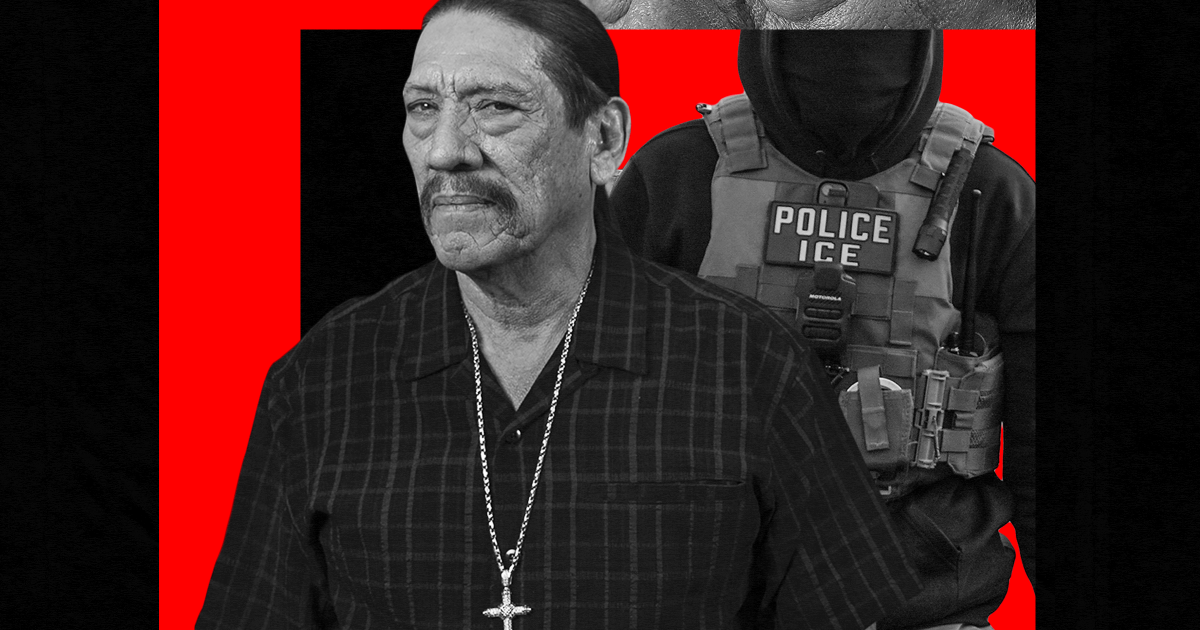
Danny Trejo says he’s ‘not pro ICE’ amid casting in Daily Wire movie

Danny Trejo made his stance on Immigration and Customs Enforcement tactics clear.

The actor spoke out Friday after it was revealed last week he was cast in the film “Pawn Shop,” which is reportedly inspired by the fatal shooting of Renee Good by an ICE officer in Minneapolis.

The feature is co-produced by the Daily Wire — the right-wing media company launched in 2015 by conservative political commentator Ben Shapiro — and Bonfire Legend, a production company formed by prolific producer Dallas Sonnier in 2021.

Frequently featured in movies targeting Latino audiences, Trejo built a devoted following within the demographic over the years as one of the more prominent Mexican American actors in Hollywood.

He was criticized online for his involvement in “Pawn Shop” due to its positive portrayal of ICE agents, who have been antagonizing the Latino community at an accelerated clip over the last two years. Trejo was called a “sellout” and a “traitor” across social media in recent days.

“I want to address some social media comments about me. Make no mistake. I am a proud Mexican who has always been and will always be a supporter of my community,” Trejo wrote in an Instagram post. “I am also obviously pro-immigrant. I am not pro ICE. I know where I come from and I know our struggles. I am an actor. My job is to tell a story.”

Trejo’s casting was first announced by the Montana newspaper Bozeman Daily Chronicle after speaking with one of Trejo’s cast members on the film’s set in Livingston, Mont., as well as Livingston locals who had seen and photographed the actor in the city’s downtown area.

Deadline confirmed that Trejo, along with “Reservoir Dogs” actor Harvey Keitel and “E.T. the Extra-Terrestrial” star Henry Thomas, was scheduled to appear in the film after reviewing the call sheet.

The 82-year-old Trejo has previously voiced support for immigrant communities. During the initial onset of the COVID-19 pandemic in spring 2020, he was part of a coalition of Latino actors who pushed forward the #AyudaEnEspanol campaign, which advocated for providing COVID-19 resources kits in Spanish for Latino migrant farmworkers across the U.S.

In an interview with TMZ in fall 2025, the actor, who has appeared in over 400 films and television programs, was asked to give a message to the families that had been affected by ICE raids.

“To the families, keep up hope,” Trejo said. “Help your neighbor and do whatever you can for people in need.”

His recent statement came after “Pawn Shop” made headlines for hitting snags in its production in Livingston following local protests. Residents claimed the movie’s production interrupted local businesses’ operations — and that the crew did not properly communicate with businesses about its schedule.

Production on the film was temporarily paused on Oct. 3 from an order by the Livingston city commission. Filming resumed on Oct. 6 after Livingston officials reinstated permits for the movie.


Source link

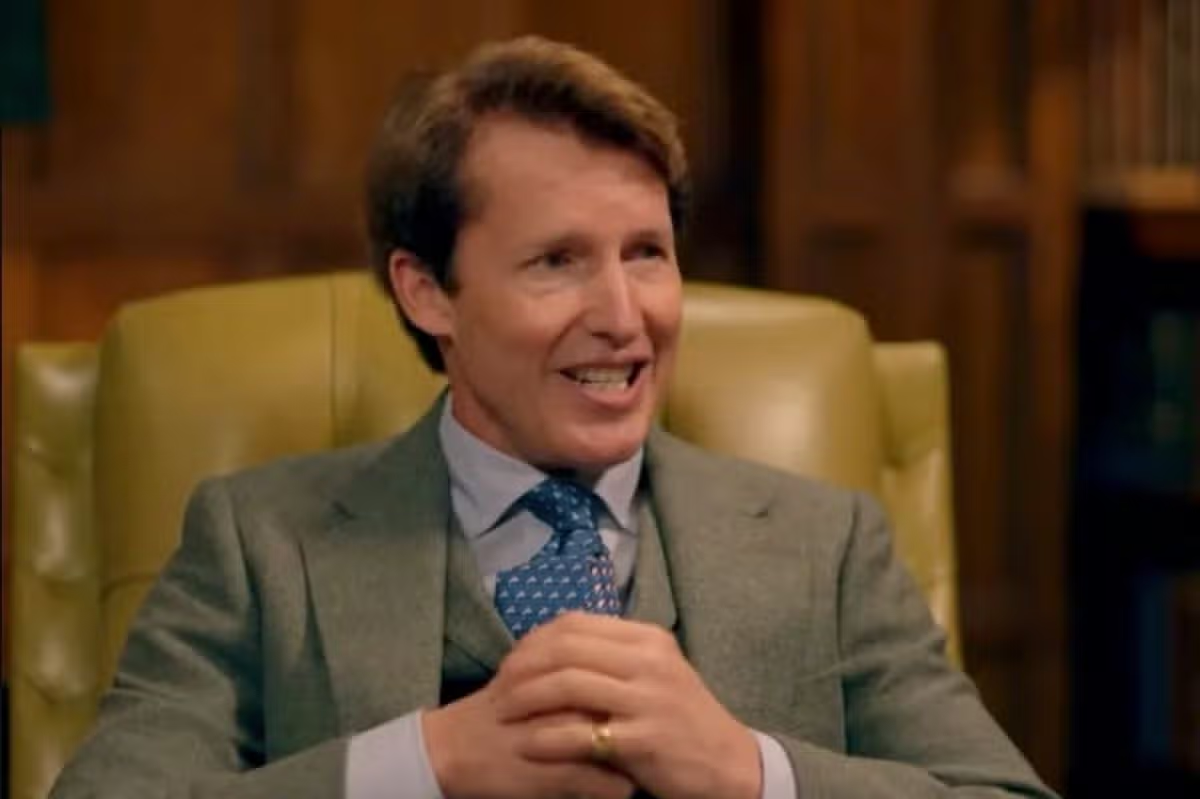
James Blunt reveals secret Traitors game he’s been playing that most viewers missed

Celebrity Traitors star James Blunt made a major move at the Round Table in the latest episode of the BBC show, which left Hannah Fry and Jerry Hall vulnerable for murder

James Blunt has admitted to some serious skulduggery on Celebrity Traitors that only fan managed to rumble.

The You’re Beautiful crooner, 52, is among a slew of stars who have signed up for the second series of the BBC show, which kicked off this month.

Last week, James made a very subtle move at the Round Table, while his co-stars, Hannah Fry and Jerry Hall were vulnerable for murder to save the one he wanted to stay in the game.

After the rest of the Faithfuls received a shield to keep them safe, the singer claimed in front of the cast that he was suspicious of maths whizz, Hannah, while dramatically declaring that the ‘most obvious solution is often truest’.

Musing over the likelihood of one murder and a recruitment, James proposed the perfect plan would be to murder one threat to the Traitors – Amol Rajan – and recruit an even bigger threat – Hannah.

The nail-biting episode ended on a cliffhanger. However, James has now taken to Instagram admitting that mentioning Hannah was actually a ruse to stop her from being murdered as he needed her on side.

One eagled-eyed viewer posted: “I’d like to think it’s a tactic to keep her in the game. If her name is brought up the Traitors are less likely to murder her.”

Confirming that this was his game plan all along, James replied: “Bingo!”

We don’t know if Hannah, stays or not, however some fans reckon she must have survived another night on the show after James appeared to let the cat out of the bag online.

Fans are also wondering if thespian Richard E. Grant has been given the chop after the tense Round Table ended without any votes.

Richard was in journalist Amol’s bad books after being the first murder of the actor last week.

Speaking on Radio 4 today, Amol said that Richard, 69, apologised to him and admitted that he went “completely mad” filming the BBC show.

“Absolutely [I played it all wrong],” he said. “There is generally a tactic that is applicable and effective – you’ve got to try and stay schtum. And the one or two things I might say in my defence are: you know how these things work—it’s all in the edit.

“Also, lots of people were having a go at Richard, we all had a go at him because he said he was a traitor, which has never happened before and is a completely ludicrous thing to do.”

Revealing the pair had lunch together to clear the air, Amol concluded: “So it wasn’t just me doing it. I actually had a lunch with him (it was all filmed in Spring) a few weeks ago, and I did ask him and he said, ‘I’m so sorry, I went completely mad and thought you were a threat.'”

SURELY, he can’t survive?

Like this story? For more of the latest showbiz news and gossip, follow Mirror Celebs on TikTok, Snapchat, Instagram, Twitter, Facebook, YouTube and Threads.


Source link

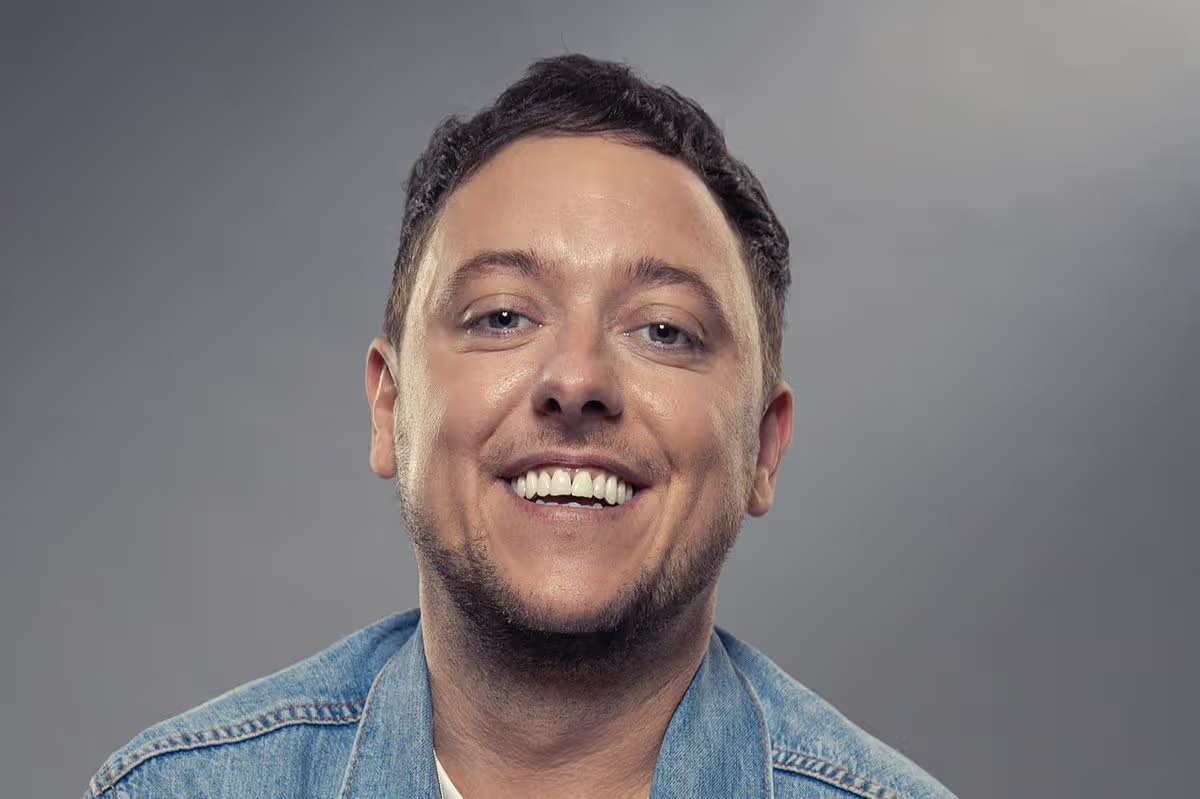
Ben Gleib built a late-night show in his house — he’s not the only comedian going DIY

A quick glance from the sidewalk shows a midsize home in the Valley. Fallen leaves from a large tree scatter across the neatly trimmed front lawn. It’s just like any other house in a suburban neighborhood outside of Los Angeles.

Inside, there’s a whole network TV operation going on.

The three-bedroom chateau is packed with people. Every inch of space in the house is being used to make “Good Night With Ben Gleib” happen. The living room TV displays the multiple angles of cameras spread across the house. The pantry doubles as a control room while the backyard shed was turned into a venue for the musical guest.

It’s not a traditional late-night talk show. It’s not on a legacy network, it isn’t filmed in a studio, and the U.S. president isn’t calling the host a “deranged lunatic.”

This show is filmed in a room of Gleib’s house that was converted into an 18-seat studio. The host drinks a cocktail as he delivers his topical monologue in front of blue drapes, and after the taping concludes the cameras continue to roll and capture the nightcap, where Gleib mingles with audience members.

Rather than following the traditional path — from stand-up or sketch comedy to eventually landing behind a late-night desk — Gleib built his own opportunity and releases it on YouTube, a trend becoming more prominent in the comedy world.

“The landscape has changed very largely,” Gleib said. “It’s hard to make your mark in TV and a stand-up appearance on late night doesn’t change your career like it use to, you really have to find creative ways to create your dream career.”

Production staff controls the taping of the show.

Production staff controls the taping of the show “Good Night With Ben Gleib” on Sept. 16.

(Brian Feinzimer / For The Times)

Since “Lazy Sunday” from “Saturday Night Live” hit the airwaves and caught a second wind on YouTube, the comedy landscape “had changed forever,” according to Seth Meyers.

“What made it so great then and still today is that it was an instant hit but also felt DIY in a way things hadn’t for so long,” said the “Late Night” host in an interview with GQ.

Social media platforms like YouTube have helped make it easier for anyone with a camera to create original content and spread it to the masses. The hashtag “comedy” has 20 billion views on TikTok and genres such as stand-up and sketch comedy grow every year, according to Business Insider. Meanwhile, late-night television has taken a dip in audience and ad revenue.

The old guard of comedy is changing and the DIY movement has transformed fame in the comedy world. Comics no longer have to wait to get stage time on a late-night talk show, they just need to get it done, said Nicole Blaine, owner of the Crow comedy club. It is also inexpensive to create digital content. With platforms like TikTok, Instagram and YouTube, the ability to be seen is easier, she added.

“I don’t think you can count on anyone to ‘make it,’” Blaine said. “I think you literally have to make it yourself and I do believe that the industry [is] paying attention behind the scenes in more ways than the artists know.

“You want to be your own showrunner,” she added.

Makeup artist Lisa Lopez applies makeup to musical guest Ada Pasternak while in the kitchen of the home.

Makeup artist Lisa Lopez gets musical guest Ada Pasternak ready in the kitchen of Ben Gleib’s home, also the set of “Good Night.”

(Brian Feinzimer / For The Times)

Representation comes and goes, but the fan base a comedian creates for themselves stays with them, Blaine said. Creating digital content for social media to back up a career in stand-up demonstrates that success is completely within the control of comics, she continued.

The DIY formula relies on taking advantage of the skills each performer has and using them to self-produce material to build a fan base, a concept that comedian Emmy Browning is putting into practice. Using her background in screenwriting, she pitched “Hands!” to the Elysian Theater and performed it for its Spaghetti Festival, designed to showcase new work, within three months.

“I essentially wrote, cast, directed, produced, got a crew together …,” she said. “It was just a crazy team of people that came together for no money to make this thing happen.”

“Hands!” spoofs FX’s “The Bear,” while satirizing TV conventions, like the will-they-won’t-they romantic plotlines, multicamera operation and filming in front of a live studio audience. Browning’s show was performed live while a camera crew shot different angles that were being projected on screens located on stage.

It made the stream of the show feel like an actual live performance. Now the stream can be seen by anyone, anywhere in the world, at any time. Browning said when her comic friends began to create clips for social media, they were able to travel around the country and perform for the fans they’ve garnered from their content.

“There are so many different ways and opportunities to be seen first,” Browning said. “…If you have the stamina to generate content online that promotes yourself, you can really make a living or create a fan base yourself.”

Self-producing isn’t only about promotion, it’s about creative ownership.

“There’s nothing as creatively freeing as being your own boss and not having to conform to network notes or the comedic ideas and opinions of people who have never been comedians and have never been recognized for their comedy skills,” Gleib said.

Guests are interviewed during the taping of "Good Night With Ben Gleib."

Guests are interviewed during the taping of “Good Night With Ben Gleib.”

(Brian Feinzimer / For The Times)

The sentiment is shared by Ron Lynch, a comedian known for voicing Hugo, the neurotic health inspector in Fox’s animated series “Bob’s Burgers,” who’s produced a variety show at the Elysian Theater called “Tomorrow!” for 20 years now.

The show gives participants the opportunity to do whatever they want, within a five-minute time frame. Half the acts are stand-ups, the other half “are just weird.”

“We’re not responsible for sponsors or anything like that,” Lynch said. “We can basically do whatever we want.”

Self-producing allows creators to explore their voice without any limitations.

“What we do is provide entertainment,” Lynch said.

In the new DIY era, it is not a matter of when a performer will make it, but rather how much a performer really wants it, Blaine said. It’s a lot of work that needs to get done, even after a day job, but it will separate the people who want it badly over those not wanting to put in the time, she added.

It isn’t about landing a late-night talk show, it is about creating.

“It isn’t easy,” Blaine said. “But artists will always find a way if we really want to do it.”

The DIY movement also comes with big risks that will not work unless the comedian believes in it, said Gleib. His team is putting a lot on the shoulders of the comedian to reinvent late night and make it a lucrative business.

And if the big swing doesn’t work?

“I’ll have to come crawling back to the traditional entertainment industry, hoping that I still have a place there,” he added.

Source link

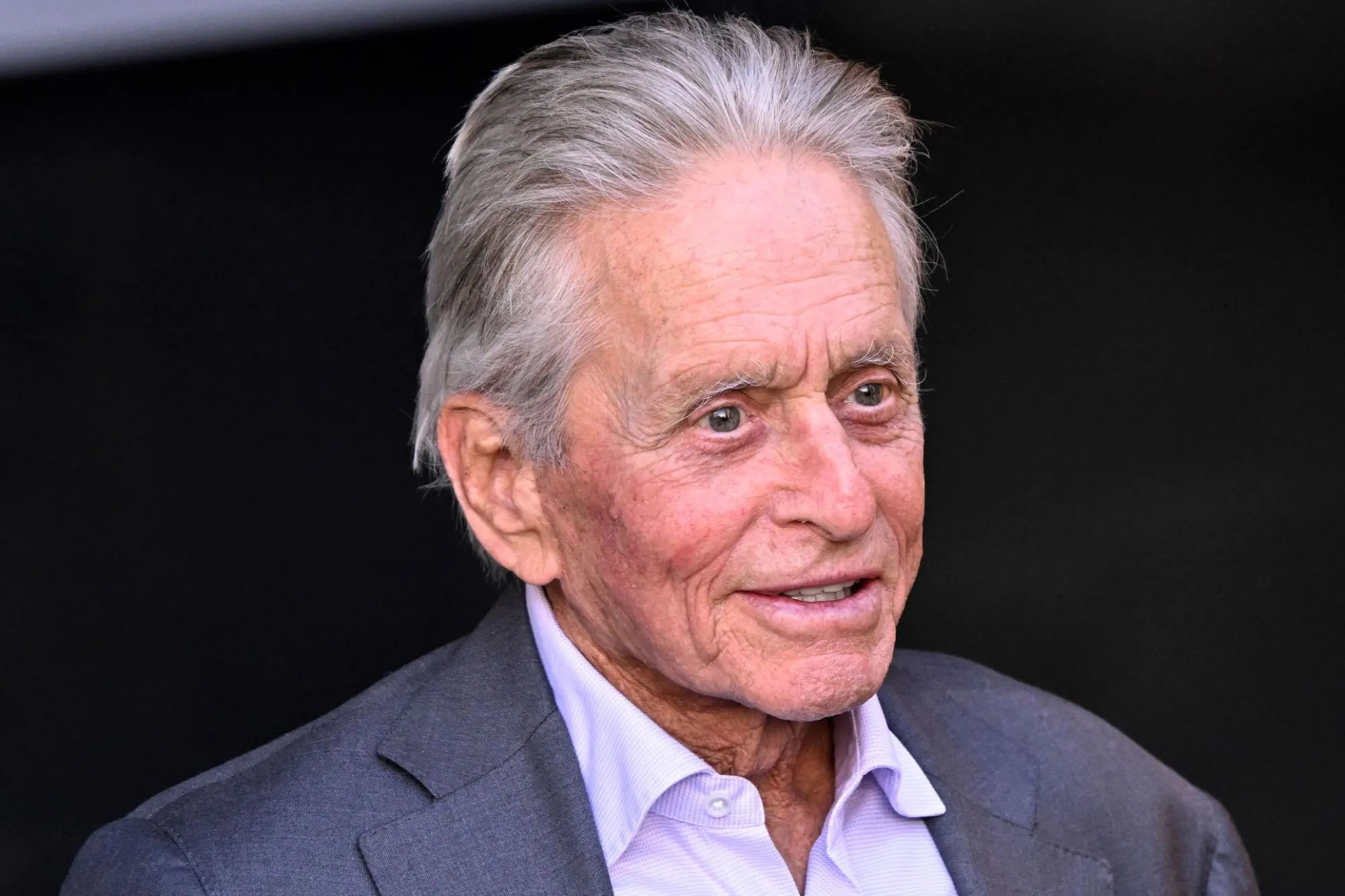
Michael Douglas, 82, denies he’s a sex addict amid colourful love life after actor revealed affair with Kathleen Turner

MICHAEL Douglas has denied he’s a sex addict and said he was a “healthy product of the Sixties” after his affair revelation with Kathleen Turner.

The actor, 82, confessed to having a relationship with Kathleen as they filmed their 1984 action flick Romancing The Stone.

Michael Douglas has denied he’s a ‘sex addict’ in his new book Credit: Getty
The actor revealed he had an affair with Kathleen Turner when he was married to his first wife Credit: DHUB_Search_Shutterstock_Editorial_NUK

At the time, Michael was married to his first wife Diandra Luker.

The Basic Instinct star opened up about his colourful love life and insisted he was not a “sex addict” despite his multiple flings.

Speaking to The Times, he was asked if he ever wondered why he had slept with so many women.

Michael replied: “I don’t know if I slept with so many women, I don’t see it that way. No, not me, no. I was a healthy product of the Sixties.”

The actor insisted he was ‘ a healthy product of the Sixties’ Credit: DHUB_Search_Shutterstock_Editorial_NUK
The Wall Street star is now smitten and happily married to Catherine Zeta Jones Credit: AFP

He added: “My curiosity is why, of all countries, of all the press that I do, why are the Brits so consumed with the issues of sex?”

In the nineties, it was reported that Michael had entered rehab for a sex addiction.

But Michael has said in an excerpt from his upcoming memoir One Helluva Ride: “I was never a ***ing sex addict.”

Shared by People, Michael dished about his extramarital romance with Kathleen.

Michael penned: “Kathleen was smart, funny, and sexy with a deep, sultry voice that became her signature.

“I instantly liked her, and we were immediately attracted to each other.”

Michael then claimed that his marriage to Diandra “was in a bad place” and that he had been having an affair with Romancing The Stone screenwriter Diane Thomas prior to meeting Kathleen.

In the book, he described himself as “technically married, but separated” as he had an affair with Kathleen.

He noted that audiences spotted their chemistry, and they were forced to deny everything and put it down to them both being “terrible flirts” due to him being married.

“It was a lie meant to protect my wife and son, a lie we told the world for 40 years.”

In his book, Michael confessed: “The truth is that during the production of Romancing the Stone, Kathleen and I fell hard for each other and began a relationship.”

He said that their relationship “grew naturally” and noted how much they respected and cared for one another, “and how attracted we were to each other”.

Michael added: “Like every other guy in the world at the time, I was knocked sideways by Kathleen….”

They continued their romance until it fizzled out when his wife visited on set and made it clear to Kathleen they were still married.

Diandra warned her off and Kathleen “didn’t want to interfere”.

Although their romantic relationship was over, they continued to star in movies together until 1989.

His first marriage to film producer Diandra Luker lasted from 1977 to 2000.

After 18 years together, Diandra filed for divorce in 1995, leading to a protracted legal separation which was finalised in 2000.

Michael is now smitten and happily married to Catherine Zeta Jones.

Catherine and Michael first met in August 1998 at the Deauville American Film Festival in France.

Source link

Trump’s mail voting crackdown tests Postal Service leader who says he’s ‘not political’

Long before he was the top official at the U.S. Postal Service, David Steiner was a corporate executive surfing mid-oughts television when he came across Donald Trump on “The Apprentice.”

He was unimpressed.

“If that is leadership, if that’s what we’re telling people that our culture and our media portrays as leadership, we’re screwed,” Steiner, then the CEO of Waste Management, said during a 2007 speech at the University of Arkansas Clinton School of Public Service. “If that’s leadership, count me out.”

“And for God’s sake,” he added to laughter, “if I have to get my hair to look like that, if I have to do that to be a leader, you can definitely count me out.”

Nearly two decades later, Trump has migrated from reality television to the presidency. And onetime detractors — Vice President JD Vance, Secretary of State Marco Rubio and Sen. Ted Cruz of Texas, for example — now loyally execute his agenda.

Trump’s effort to use the Postal Service as a tool to reshape American elections is testing whether Steiner will follow a similar path.

Independent or a Trump ‘pawn’?

When Trump signed an executive order restricting mail ballots this year, Steiner moved quickly to finalize a rule implementing the measure, arguing he had little choice. But after the U.S. Supreme Court rejected the effort, Steiner told The Associated Press that work had stopped on one of the plan’s most controversial elements, a government portal for voter rolls.

He refused to endorse the Republican president’s order as sound policy, saying he was focused on implementation and letting the courts ultimately decide the matter.

“I don’t get to decide what rules that are put on us that I decide to accept or not accept,” he said. “We are an independent agency of the executive branch.”

The episode prompted fierce criticism of Steiner for allowing Trump to deploy an agency designed to be shielded from politics.

Jena Griswold, Colorado’s Democratic secretary of state, called him a “Trump lackey.” Nevada Secretary of State Cisco Aguilar, a Democrat, recently asked Congress to deploy observers to ensure postal workers can scan envelopes holding mail ballots without disruption, saying the Trump administration “has attempted to weaponize federal agencies to interfere in our elections, and the leadership at USPS is going along with it.”

Sen. Elissa Slotkin, D-Mich., accused Steiner of being a Trump “pawn” during a congressional hearing this summer. Dozens of congressional Democrats have pressed Steiner to reveal his interactions with the White House during the development of the mail ballot rule.

Some Republicans have joined in the criticism. Sen. Josh Hawley of Missouri, incensed by abandoned mail, called for Steiner’s resignation and introduced legislation to block him from receiving a bonus.

During a lengthy interview, Steiner seemed surprised at points by his reception in Washington. He insisted he wasn’t a “political person” and said he had no intention of stepping down despite the criticism. He dismissed heated congressional appearances as “theater” at odds with more substantive private interactions on Capitol Hill.

Steiner was chagrined, however, at the mention of his 2007 remarks on Trump, delivered well before he launched a political career. Steiner recalled speaking at the university but said he didn’t remember his comments, acknowledging a tendency to be “flippant.”

“That’s funny,” he said. “I don’t recall it.”

The White House didn’t respond to a request for comment on Steiner’s remarks or his stewardship of the Postal Service.

Steiner didn’t follow the traditional path to power in Trump’s Washington

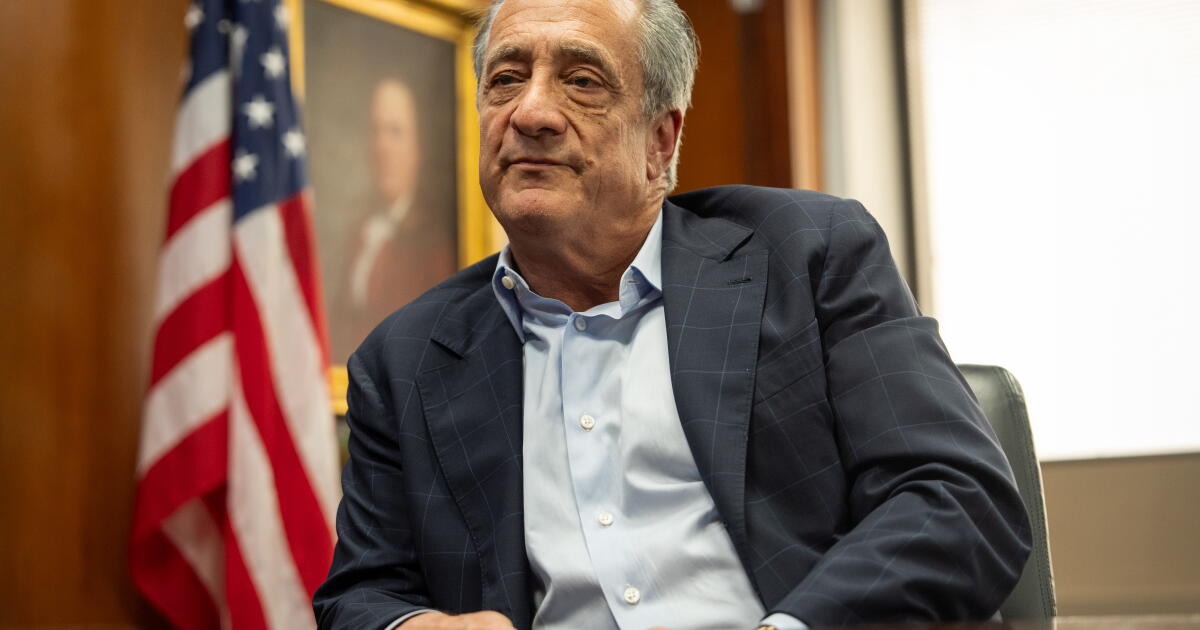
The Postal Service dates to Benjamin Franklin, the first postmaster general, whose portrait and bust are displayed in Steiner’s office overlooking the Washington Wharf. The agency has more than 630,000 employees, dwarfing many Cabinet departments.

While the quickest way to top jobs in Trump’s Washington is often by writing big checks, the 66-year-old Steiner doesn’t appear to have followed that course. He has largely donated to Republicans but also gave to John Kerry’s Democratic presidential campaign in 2004. Unlike his predecessor as postmaster general, Louis DeJoy, Steiner was not a major GOP donor or Trump backer.

Born in Oakland, California, as one of eight children to a father who spent his career at Chevron, Steiner worked in corporate and securities law before moving to Waste Management in 2000. He became CEO in 2004 and ran the company for 12 years. He was also a longtime director at FedEx, where board chairman Brad Martin recalled him as “outcome oriented” and rarely political.

“He’s going to follow the rules. He’s going to follow the law,” Martin said. “I don’t recall us ever talking politics.”

By the time a headhunter contacted Steiner about the postmaster general job, he was largely removed from daily corporate life and initially demurred.

“I talked to my wife, and we both agreed I was happily retired,” he said.

He changed his mind, he said, during a visit to the beaches of Normandy, feeling a sense of civic duty.

Now at the Postal Service, he earns about $346,000 in annual salary along with a relocation bonus that amounts to half his salary, far less than the $17 million in compensation he earned during his final year at Waste Management. His current role is designed to exist one layer removed from the political process, reporting to a board of governors that is selected by the president and confirmed by the Senate.

He was hired in 2025 by a board that was made up of five members, three of whom were Democrats. All but one were appointed by President Joe Biden. That makeup could change as four Trump nominees — all Republicans — await Senate confirmation. Steiner can be fired only by the board.

Steiner said he first met Trump along with Commerce Secretary Howard Lutnick at the board’s urging after he was already selected as postmaster general. Since then, he described a minimal relationship with the White House.

“We don’t fly on the radar,” he said.

That is, until Trump revived his effort in March to crack down on mail voting. Steiner said he “wasn’t in on the development piece” of the order and first saw it about a month before it was signed.

“They gave it to us to say, ‘Have your lawyers look at it, and how do you operationalize it?’” Steiner said.

The portal spurred a massive development effort inside the Postal Service while some states criticized it as federal overreach. A whistleblower report released by Sen. Richard Blumenthal, D-Conn., argued the system was hastily built and riddled with errors, though Steiner said he was confident it could have been unveiled around Sept. 15.

“The heavy lifting was clearly, clearly the IT work,” Steiner said.

Challenges ahead for the Postal Service

Though the Supreme Court dispensed with the rule, the dynamics for the Postal Service don’t get easier.

The agency posted a $9 billion net loss last year, and Steiner has warned it could soon run out of cash unless Congress lifts a $15 billion borrowing cap. Political hurdles have prevented potential cost savings from cutting service or closing some post offices.

And while Trump’s executive order won’t take effect, the Postal Service will still play a critical role in this year’s elections. There are mounting concerns that mail ballots could be rejected for late postmarks. Steiner encouraged voters to get their ballots in a week before the election to avoid problems.

The Postal Service is a rare corner of government still viewed favorably with more than half of Americans, 56%, saying it was doing an “excellent” or “good” job in a Gallup poll conducted last year. That could change if the agency is seen as increasingly political.

Steiner, however, said Americans will judge the Postal Service by their experience of it.

“What they care about is when they get that wedding invitation after the wedding or when they send a package and it disappears,” he said. “If we want to have the trust of the American public, let’s be the best service provider. Everything else is noise.”

Sloan writes for the Associated Press.
Source link

Court reminds California sheriff he’s not above the law

Riverside County Sheriff Chad Bianco got slapped down Thursday by the California Supreme Court in not one but two cases. Ouch.

First, the court told Bianco to return more than 600,000 ballots he had seized as part of an ill-conceived, conspiracy-laden “investigation” into voter fraud — making it clear it was the sheriff who was the criminal.

“The seizure of the ballots was unlawful,” the court wrote, before ordering Bianco to give them back to the registrar of voters and “refrain from further handling of the ballots except as necessary to comply with our order.”

Then the court, in a separate case, told Bianco he’s not a law unto himself, and in fact does have a boss in the form of the state Atty. Gen. Rob Bonta. Bonta had previously ordered Bianco to pause his investigation, and Bianco largely ignored him.

The court found that the constitutional authority held by the attorney general “includes the power to give binding directions to sheriffs.”

While the high-profile lawsuit about Bianco’s seizure of hundreds of thousands of ballots from last year’s special election on redistricting has grabbed headlines, the second case about the authority of the state attorney general to oversee all California sheriffs and district attorneys is equally powerful.

It’s the first time the court has weighed in on a long-running debate in California over whether elected sheriffs have to answer to anyone. Not only did Bianco lose for election deniers everywhere in the first case, he also managed to clarify for all California sheriffs in the second case that they are not as powerful as some would like to believe.

Combined, the two opinions by the state’s highest court give another layer of assurance to Golden State residents that the integrity of the November midterm elections is as secure as the state can make it — some welcome news in a national landscape where free and fair elections are increasingly at risk.

The quiet advocate

Before we get into what the ruling means for midterms in California, there are two overlooked bits that make these cases even more interesting.

First, gubernatorial candidate and former Atty. Gen. Xavier Becerra has been closely involved in the ballot-seizing case, but also pretty quiet about it.

Whenever a politician does something good and doesn’t advertise it, it always catches my attention. Politicians, especially ones running for office, aren’t big on modesty.

But Becerra has not spent a lot of time talking about this, even though he is actually a working attorney on this case, as an advisor to the UCLA Voting Rights Project. He came up with ideas, he participated — this wasn’t just a put-my-name-on-it role, I’ve been told by folks who know.

And it’s not the first time Becerra has helped the Voting Rights Project in a major endeavor. It was their work that helped define the legal arguments that made Proposition 50 happen. That’s last year’s ballot initiative that redrew California voting maps to favor Democrats, in response to a Texas effort to gerrymander in favor of Republicans. It was Proposition 50 ballots that Bianco seized.

“Today the California Supreme Court handed voters a great victory,” Becerra said in a statement from the voting project. “The Court knocked election deniers off their feet and strengthened our hand in election protection just ahead of the November vote. We must use every lever at our disposal to beat back voter interference and intimidation.”

That line about knocking election deniers is not hyperbole. In some far-right, conspiracy-rich circles, Bianco’s cowboy-saving-the-day routine was viewed as heroic. Maybe even something to emulate.

Across the country, there are rumblings — including from President Trump — about seizing ballots from past or future elections. While this ruling is firmly rooted in California law, most states have similar chains of custody when it comes to ballots. So it’s likely to at least make other would-be-Biancos pause.

In a later interview, Becerra told me that the Voting Rights Project was “the one thing I decided I would do after I came home from being secretary in Washington, D.C.,” whether he ran for office or not, “just because I so believe in the work that they do.”

He said as he campaigns this year, he’s seeing anxiety in minority communities from that interference and intimidation, maybe even fear that could pressure some legal voters to sit this one out.

“It makes it tough when you’ve got all these things standing in your way before you even get to thinking about going to vote,” Becerra said. “The Latino community, other communities, mostly under-served communities, I always tell them, we’re not rich. The way we win these things is by voting.”

The Liu concurrence

The second fact that caught my attention was a concurring opinion on the ballot case by Justice Goodwin Liu.

While the court was unanimous in its findings, Liu wrote his own opinion highlighting how the Riverside registrar of voters was “caught between a rock and a hard place” when the sheriff of his own county showed up with a warrant, guns and “enough trucks to remove several pallets of materials.”

That trifecta, Liu wrote, left the registrar little room for dissent — but that’s a problem.

Liu’s point seemed to be that with the current state of our president making election denial chic, our voting officials need to step up. He said the registrar should have come directly to the court for relief, and not left it to the Voting Rights Project and other plaintiffs.

“It is a lot to ask of our election officials that they not only do their jobs competently but also stand ready to sue anyone who unlawfully interferes with their duties,” Liu wrote. “Yet here we are.”

Since Bianco seized the ballots, state law has been changed. This session, legislators passed (and Gov. Gavin Newsom signed) at least 13 laws pertaining to election security, including making it a felony to break the chain of ballot custody, and ensuring that local election officials immediately contact the state in instances when that is threatened. Those laws will offer protection to election officials if a situation like this comes up again.

But Liu’s point is still valid. Being an election official is no longer a sleepy little job, but a front-line battle for democracy, and for “our democracy to flourish, our elections must be conducted in accordance with the law.”

Which brings us back to the midterms. California shouldn’t be complacent, but the state isn’t slouching on preparation, or resolve.

As Bonta put it, “if you can imagine it, we are ready for it.”

I’m not quite that confident — and definitely concerned for contests outside of the Golden State — but Thursday’s rulings are a reminder that the law still holds, even when lawmen try to break it.

What else you should be reading:

The must-read: Ballot seizure by Riverside County sheriff was ‘unlawful,’ California Supreme Court rules
The California angle: This deadly fungus isn’t just a rural threat anymore. New studies point to cities and oil wells
The L.A. Times Special: Hollywood would get 20% federal film tax credit under proposed new bill
Stay Golden,
Anita Chabria

—
Was this newsletter forwarded to you? Sign up here to get it in your inbox.

Source link

Trump Believes Venezuela’s Stability Depends on Chavismo. He’s Wrong

On the same day Delcy Rodríguez was in New York meeting Donald Trump and representing Venezuela at the United Nations, María Corina Machado was trying, unsuccessfully, to get closer to her own country.

It was her third attempt in barely 24 hours. First came a planned maritime departure from Panama, which was canceled after the company operating the vessel reported mechanical problems. Then came an attempted flight to Aruba, from where Machado intended to continue by sea. Finally, there was another flight plan, this time for Curaçao. That trip did not happen either. Her team now says she has attempted to return to Venezuela seven times since she left in December 2025 to get her Nobel Prize in Oslo.

The exact responsibility for the latest failures remains unclear. But what happened during previous attempts is better documented. Axios reported in July that the Trump administration’s position was that third countries should not help Machado enter Venezuela. When Deputy Secretary of State Chris Landau appeared to tell the Dutch government otherwise, officials in Washington corrected the message. Curaçao withdrew permission for Machado’s plane to land while she was already in the air. According to the same account, Secretary of State Marco Rubio subsequently reiterated the policy to Machado personally.

This sits awkwardly beside Washington’s public position. Rubio said this month that Machado, as a Venezuelan citizen, has every right to return “whenever she wants.” A State Department official told Congress in July that the US would not obstruct her return. Trump himself has denied telling her to stay away.

After World War II, keeping Emperor Hirohito in power did not mean preserving his capacity to decide who could participate in Japanese politics.

All of those statements may be technically true. The US does not issue Venezuelan visas and cannot legally forbid a Venezuelan citizen from entering Venezuela. But Machado cannot teleport into Caracas. Getting home requires aircraft, airports, territorial waters, neighboring governments and, increasingly, governments that want to know Washington’s position before helping her. There is a meaningful difference between saying that the US will not prohibit her return and telling American partners that facilitating it is not US policy.

This would already be an odd arrangement for any opposition leader. It is stranger still in Machado’s case. She is hardly a geopolitical threat to Washington. She has gone out of her way to present a democratic Venezuela as a close strategic partner of the US. In December, she said explicitly that America would be Venezuela’s “main ally.” She has spoken about opening the country to Western investment, rebuilding the energy sector with foreign capital and transforming Venezuela from a security liability into a partner for the US. After Maduro’s removal, she publicly thanked Trump and Rubio and described the outcome as a potential “win-win” for both countries.

Yet Reuters reported last week that US officials remain wary of her return because they fear her presence could disrupt the transition Washington is supporting around Rodríguez. Machado’s movement is not part of the current US-backed negotiating mechanism, while Delcy’s government has become Washington’s main Venezuelan interlocutor.

That raises a question that goes beyond Machado.

The postwar parallel

The Trump administration has repeatedly defended its approach as a matter of sequencing. Venezuela needs stability first, then economic recovery and reconciliation, and “ultimately democratic transition.” The White House argues that rebuilding the economy is a precondition for elections rather than a substitute for them.

There is a serious argument behind that position. Venezuela inherited a devastated public administration, a crippled oil industry, enormous external debt and institutions hollowed out by years of authoritarian rule. Abruptly dismantling the bureaucracy, military hierarchy or State-owned companies could reproduce some of the worst mistakes made in other post-authoritarian or post-conflict transitions. A functioning State matters.

But preserving the State is not the historical equivalent of preserving the regime.

After World War II, the United States repeatedly confronted versions of this distinction. In Japan, the occupation retained Emperor Hirohito partly because American planners believed institutional continuity could make the transition less destabilizing. But keeping the emperor did not mean preserving the emperor’s capacity to decide who could participate in Japanese politics. On October 4, 1945, General Douglas MacArthur ordered the Japanese government to remove restrictions on political and civil liberties and release political prisoners. Among those released were prominent Japanese Communists who had been imprisoned by the old order. American officials later acknowledged that the resulting political opening was so broad that some Japanese mistakenly concluded that the occupation itself favored the Communist Party.

When it comes to the geopolitical role of the US, the Trump administration depicts itself as the decisive actor reshaping Venezuela. When questions turn to the lack of institutional reforms, Venezuela’s sovereignty becomes a much more convenient explanation for the limits of American responsibility.

Something similar happened in Italy. The Allies initially worked through King Vittorio Emanuele III and Marshal Pietro Badoglio because they needed an Italian government capable of administering the country during the war. At the same time, political exiles were allowed to come home and anti-Fascist parties returned to public life. The contrast is particularly striking in the case of Palmiro Togliatti, the leader of the Italian Communist Party and a former senior official of the Communist International. When Togliatti sought to return from Moscow in 1944, the US State Department explicitly said it had “no objection.” He returned and soon participated in the new political order.

Neither Japan nor Italy offer a blueprint for Venezuela. The historical circumstances were radically different, and American occupation policy was hardly politically neutral. But the underlying distinction is useful. Administrative continuity did not require preserving the old regime’s monopoly over politics. The State could survive while the political system opened around it.

That is precisely where Washington’s current Venezuelan policy becomes harder to understand.

The art of deflecting

Keeping experienced civil servants at their desks is State continuity. Avoiding a wholesale purge of the armed forces may be State continuity. Keeping PDVSA pumping oil while new rules are negotiated is State continuity. None of those choices inherently require preventing opposition politicians from returning, organizing, or campaigning.

And Venezuela’s political opening remains incomplete. A UN Fact-Finding mission reported this month that, despite prisoner releases and some liberalization, the structures responsible for years of repression remain largely intact. Officials linked to previous abuses remain in important positions, restrictive laws survive and arbitrary detention and mistreatment have not disappeared.

This makes the widening gap between economic opening and political opening particularly important. Washington is moving rapidly on the former. Rodríguez traveled to New York accompanied by officials discussing oil, mining, debt restructuring and access to international financial institutions. American companies are negotiating their return to Venezuela’s energy sector. Trump has made the oil agreement one of the centerpieces of his foreign-policy narrative.

At the United Nations this week, Trump went further. After celebrating Maduro’s capture, the release of prisoners and Washington’s relationship with Venezuela’s current leaders, he described the new oil arrangement in unmistakably triumphalist terms. “It was a war,” he said, before invoking the old expression: “to the victor belong the spoils.” He then presented Venezuela as proof that the US would once again impose its power against threats in the Western Hemisphere.

If Machado returns, travels freely, organizes her movement, holds rallies and begins preparing for an eventual presidential campaign, Delcy’s continued presence can still be understood as part of an administrative transition.

The rhetoric creates an uncomfortable asymmetry. When discussing oil, geopolitical alignment or American power, the administration depicts itself as the decisive actor reshaping Venezuela. When questions turn to the remaining coercive apparatus, restrictions on political competition or the continued exclusion of important opposition actors, Venezuela’s sovereignty becomes a much more convenient explanation for the limits of American responsibility.

Washington cannot have unlimited responsibility for everything that happens inside Venezuela. Delcy Rodríguez still controls a government, a bureaucracy and a security apparatus of its own. But the US plainly possesses enormous leverage over the political and economic environment in which that government operates. The history of Machado’s attempts to return suggests that this influence may extend even to whether neighboring governments are prepared to help a Venezuelan opposition leader reach her country.

That is why Machado’s return matters beyond Machado herself.

If she returns, travels freely, organizes her movement, holds rallies and begins preparing for an eventual presidential campaign, Delcy’s continued presence can still be understood as part of an administrative transition: an imperfect bridge between the regime that existed under Maduro and a genuinely competitive political order.

If her return continues to be regarded as destabilizing, however, the logic starts to invert. Political competition itself becomes a threat to stability. The government is no longer merely being preserved so that the State can function while politics reopens; political reopening is being limited because it might endanger the government being preserved.

Venezuela does not need another collapse of the State. But avoiding State collapse and protecting the political equilibrium inherited from chavismo are two different objectives.

The distinction between them may ultimately define this transition.

Source link

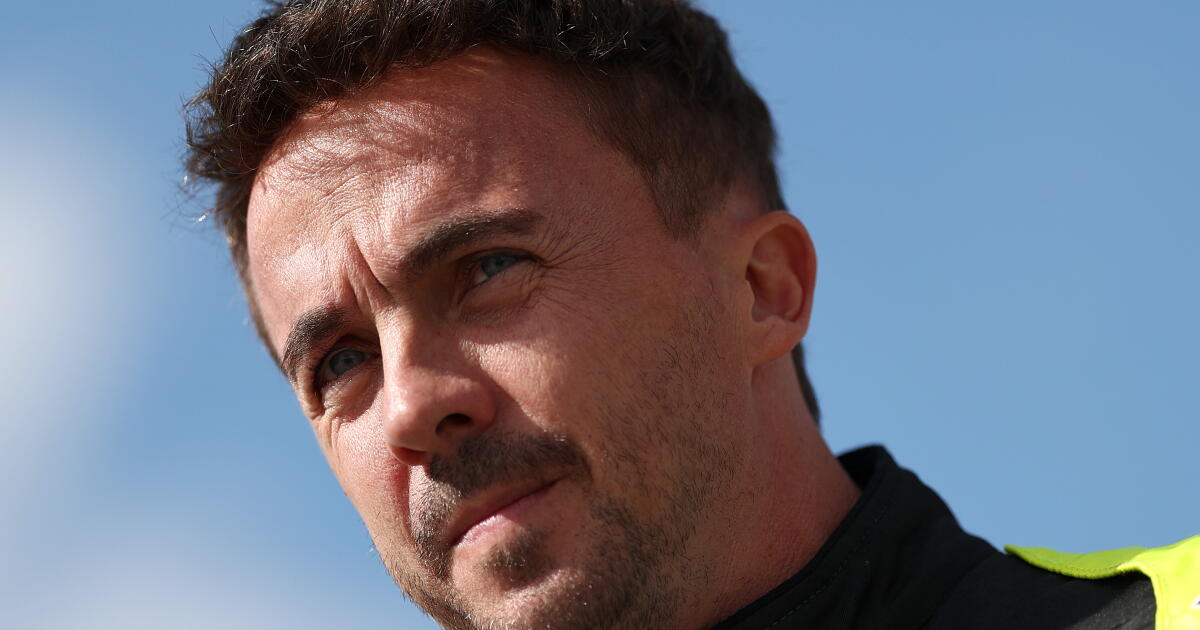
Frankie Muniz says he’s living a ‘nightmare’ in wake of divorce

Frankie Muniz had a vulnerable moment on social media Friday, revealing he’s hit rock bottom following the announcement of his split from wife Paige Price.

The “Malcolm in the Middle” star announced he and Price were calling it quits after seven years of marriage in July, and now the actor is revealing he’s experienced some painful introspection in recent weeks.

“The last 6 weeks of my life have been a nightmare I’m praying to wake up from,” he wrote on Instagram. “Everything felt heavy, unclear, and like it was falling apart at the same time. I wouldn’t wish this season on anyone.”

He continued that despite the painful experience, “the unexpected gift in the middle of it is that I’ve had nowhere to hide.”

The actor-turned-race car driver said he’s spent the last several weeks reflecting and can now see the areas of his life where he thinks he can improve.

“I want to become a better version of me. Not the polished version I show the world … the actual one,” he wrote.

“I read that sometimes hitting rock bottom is the thing that wakes you up. It forces the changes you needed to make all along so you can live the best life possible. That idea has been sitting with me. In five years I believe I’ll look back at this exact low point and feel grateful for it, because the high I’ll be standing on then only exists because I went through this.”

He told his followers that this period isn’t the end of the story, but the catalyst for change.

“It’s the part where I start doing the work … the uncomfortable, unglamorous, necessary work. I’m choosing to treat this season as the foundation, not the finish line.”

Shortly after Muniz’s post, Price posted an Instagram story with a message that some followers speculated may be a response to the actor’s admission.

“Life is all about perspective. If you ask the grass, the zebra is the monster and the lion is the protector,” Price wrote.

Muniz is best known for his titular starring role in the beloved Fox sitcom “Malcolm in the Middle,” which ran for seven seasons in the early aughts. In April, the series returned for a four-episode reunion arc on Hulu starring returning fan favorites Bryan Cranston as Hal, Jane Kaczmarek as Lois and a couple of Malcolm’s TV siblings.

In 2006, when “Malcolm in the Middle” wrapped, Muniz transitioned away from acting and pursued race car driving.


Source link

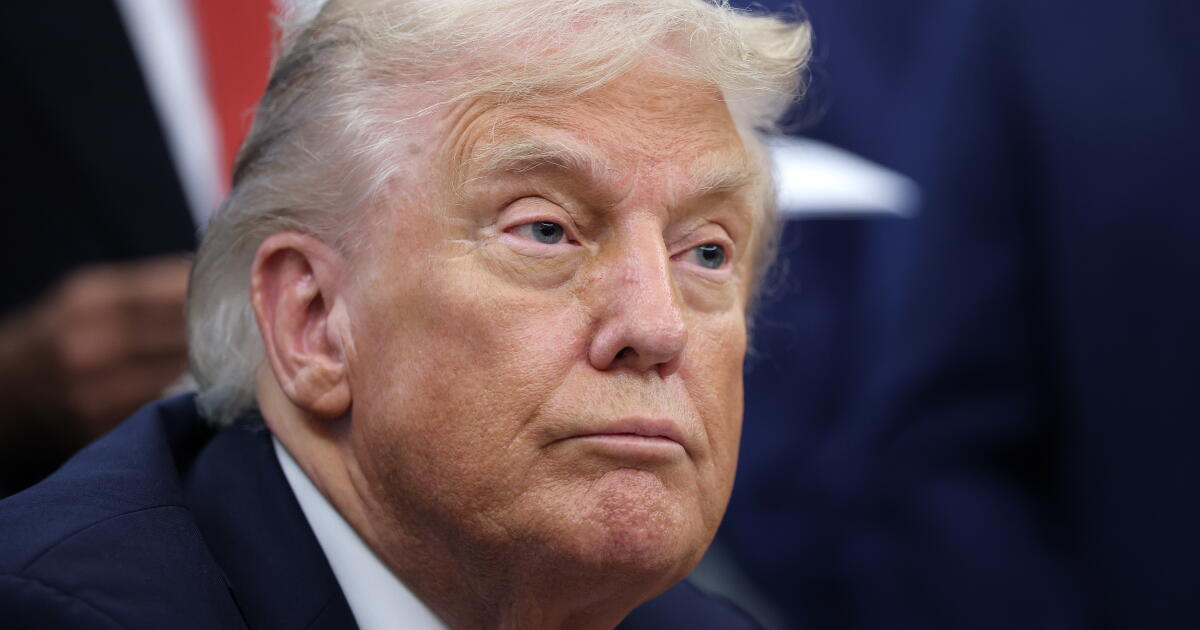
Trump says he’s banning CNN, MS NOW and Politico from the White House

President Trump announced Friday he intends to ban CNN, MS NOW, Politico and other news outlets from covering the White House, his strongest threat yet against a free press.

In a statement on Truth Social, Trump attacked the the reporting of the three outlets which he described as “FAKE NEWS!”

“Media Outlets shouldn’t be able to constantly write or report FICTION and LIES when they’re covering the President of the United States of America,” Trump said.

How a ban would be enacted remains to be seen. In 2018, the White House tried to ban journalist Jim Acosta, then working for CNN, but a court ordered that his press credential be restored.

Trump has stepped up his attacks on the press during his second term. Federal Communications Commissioner Brendan Carr has threatened the broadcast licenses of outlets Trump dislikes. Carr has called for a review of ABC’s TV licenses, which the Walt Disney Co.-owned network is challenging in court.

After the post circulated, Trump held a press briefing from the Oval Office to discuss drug pricing. According to the pool reporter, no journalist was removed from the press room.

Trump was asked about the Truth Social post. He responded by further attacking the three outlets. He did not cite any specific report that led to his call for a ban.

“I dislike dishonest press,” he said.

Trump’s remarks generated an an immediate outcry from press freedom groups.

“It’s difficult to imagine a more blatant violation of the First Amendment than Trump banning news outlets from the People’s House for criticizing the government,” Seth Stern, chief of advocacy at Freedom of the Press Foundation, said in a statement.

“It’s also hard to imagine a dumber move. The historically unpopular president has been retaliating against the press for years, but it hasn’t helped him.”

Source link