England have made medical checks on Cole Palmer as Thomas Tuchel considers whether to select the Chelsea forward in his next squad.
The 24-year-old missed all four games during the previous international window with a minor injury.
He completed 90 minutes for Chelsea against Brentford before those matches, and started for the Blues in the first game afterwards.
Tuchel, who names his squad to face Croatia and Spain on Friday, said at the time that Palmer was “playing with discomfort and pain” but was “missing too many opportunities” with England.
Whether he is recalled will be a key theme on Friday. While it is normal for England medics to check on players under consideration, it also underlines that Palmer remains on Tuchel’s radar despite his stark comments last month.
In addition to deciding whether to select Palmer, head coach Tuchel has a number of other dilemmas to resolve.
Bukayo Saka’s injury absence opens the door to another attacker, with his Arsenal team-mate Noni Madueke pushing for a recall following a string of impressive performances.
Manchester United forward Marcus Rashford has not played since mid-October and is not fit for selection, while Chelsea defender Trevoh Chalobah is a major injury doubt.
Defenders Ben White and Djed Spence are pushing for recalls after missing out on the previous squad through injury.
The likes of Harry Kane, Jude Bellingham, Declan Rice and many others are now stonewall selections – but the intrigue is around the remaining few spots still seemingly up for grabs.
Will some old faces earn a recall or will there be new faces soon pulling on the England shirt? BBC Sport runs down some of the potential candidates for selection.
Film student Angela Henderson was collecting her thoughts, resting on the patio of USC’s School of Cinematic Arts on a recent sunny afternoon while listening to music on her headphones as she stared into the sky. Henderson was taking a short break after applying for dozens of Hollywood jobs.
The 22-year-old cinema and media studies student graduates in December, and she’s admittedly “a little freaked out” by what awaits her.
“What if one day, I am one of those people that ends up losing a job?” Henderson said.
She isn’t wrong to wonder.
Partly fueled by media consolidation, waves of layoffs have swept across the industry, bringing job cuts to Netflix, Walt Disney and Warner Bros., recently acquired by Paramount-Skydance.
Productions keep leaving the state and artificial intelligence and vertical video are reshaping what gets made and who makes it.
Yet aspiring actors, screenwriters and directors, many of them film school students like Henderson, are still making the pilgrimage to Los Angeles. The Times spoke with some of these students about how they plan to navigate today’s Hollywood. Most are clear-eyed about the odds, and none of them are planning to quit.
“Some of us can see a lot of doom and gloom,” said Miranda Banks, a professor of film, television and media studies at Loyola Marymount University. “But this generation has their eye on the power of human creativity in a way that I’m not sure any of us in other generations have been so attuned to.”
She thinks many of her students have a good chance at making it if they are “savvy and strategic” about where the industry is headed.
“We’ve had a lot of unprecedented years, a lot of years with strange things that have impacted the industry and made things particularly challenging,” Banks added. “That has happened before. It will continue to happen.”
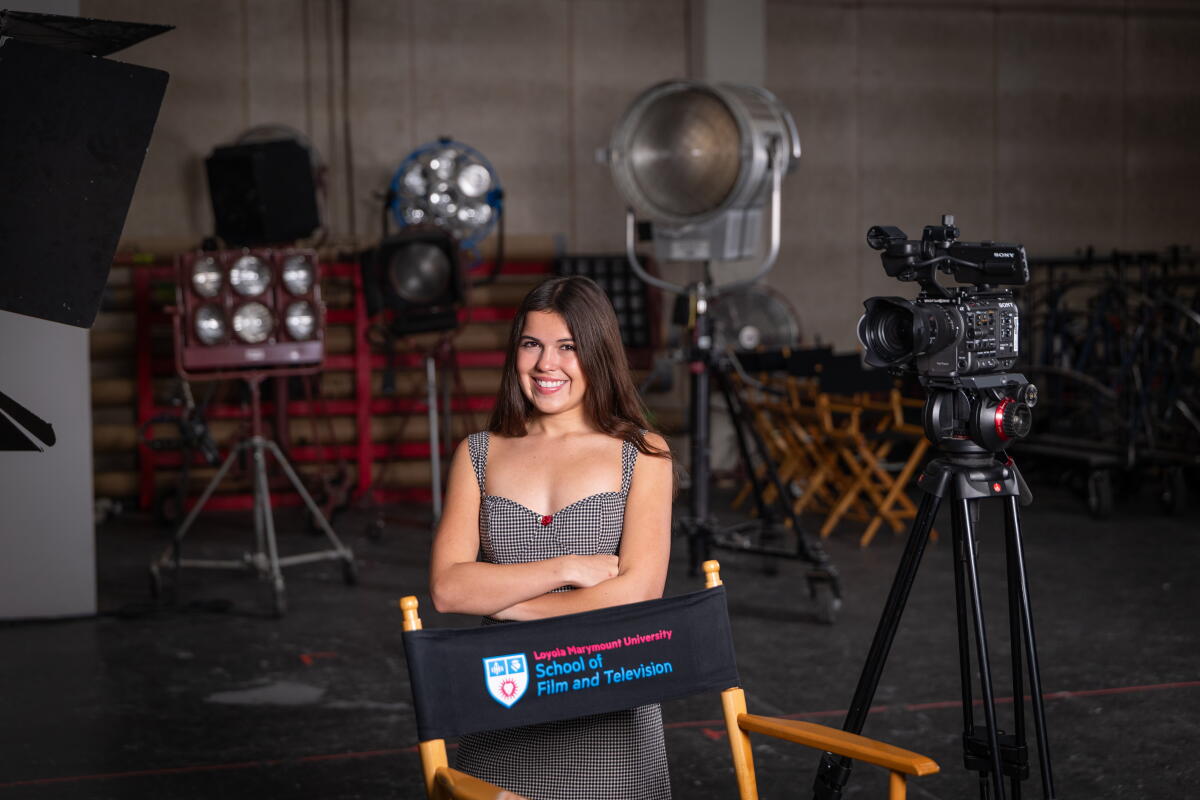
Gianna Jordano, a freshman film and television production major at Loyola Marymount University, is photographed on a film stage inside the Wil and Mary Jane Von der Ahe Communication Arts Building, which houses LMU’s School of Film and Television.
(Allen J. Schaben / Los Angeles Times)
Gianna Jordano, Loyola Marymount University, 19
When Gianna Jordano first applied to film schools, she said she knew the industry was in a bit of a “slump stage.” With fewer movies being made, the impact of AI and an overall lack of jobs, the Huntington Beach native said she was nervous about pursuing a career in the film business.
But after seeing movies like “Primetime,” “The Odyssey” and “Spider-Man: Brand New Day” in theaters this year, Jordano is more inspired than ever.
“My friends and I’ve all been watching all of these new movies, and we’re saying, ‘This is what we want to do. This is what I want to pursue in the future and be able to achieve,’” said the film and TV production major. “I feel less nervous now.”
After graduation, she plans to work her way up to directing — even if that means taking other jobs such as teaching and working in a restaurant to achieve her dream.
“The more open-minded you are, and the more willing you are to work, the easier it is to find a job, even if you’re maybe not always on the best set or doing the job that you want to do,” Jordano said.
Teddy Abularach, left, and Mitch Linebaugh, both 18, visit the Herbert E. Farmer Motion Picture Technology Collection at the USC School of Cinematic Arts.
(Genaro Molina / Los Angeles Times)
Teddy Abularach and Mitch Linebaugh,USC, 18
Freshman screenwriting majors Teddy Abularach and Mitch Linebaugh had recently moved to L.A. from New York City and Des Moines, respectively, to pursue careers in screenwriting.
Despite shared concerns about landing jobs after graduation, both are determined to succeed in the business. .
“We’re just gonna have to work that much harder to get a job. I’m already preparing myself for a brutal postgrad life,” Abularach said. “I wouldn’t be happy if I were in another job. … Even if there’s a small chance for me to succeed and be able to pay the bills and do something that I love, it’s worth it.”
They aren’t blind to the challenges of being a screenwriter.
But Linebaugh said he worries that “everything is just going to become so uniform,” as the industry seems to lean too heavily on algorithms and audiences’ preferences.
“I don’t think people in this industry will let that happen — everyone from the writers to even the executives,” Linebaugh said. “I know the stereotype is that they like to keep their jobs, but I remain hopeful that they want to make good movies too.”
The two 18-year-olds moved to the city with every intention of staying, even as the industry’s local footprint hollows out.
Linebaugh said he’s going to give screenwriting his all, and if it doesn’t work out, he will consider graduate school or entertainment law.
Abularach said there’s no “plan B outside of entertainment.”
He’s already preparing for the life.
“I still can’t get the stereotype out of my head of the L.A. writer who does all the things in L.A., like taking pitch meetings, getting coffee and being in writers’ rooms,” added Abularach.
UCLA film student Tomas Carrasco, center, has makeup applied by UCLA student Song Diqiong, right, before performing in his short film, “D-Facer, Reality Break,” on the set inside Melnitz Hall on the UCLA campus. He wrote, produced, starred in and directed his short film.
(Genaro Molina / Los Angeles Times)
Tomas Carrasco, UCLA, 25
In a hallway lined with movie posters in UCLA’s School of Theater, Film and Television, Tomas Carrasco was in the middle of preparing to shoot his senior capstone film: a surreal horror comedy. The senior, who’s on the director’s track of UCLA’s film and television program, said he isn’t “afraid necessarily about where the industry’s heading because there’s always going to be space for artists.”
Growing up in the San Fernando Valley, Carrasco was always fascinated by moviemaking. His father worked as a soap opera editor and would sometimes bring him to set, where he learned to love the “feeling of being around people making stuff.”
He started his film education at Santa Monica College, where he took every film class offered. Now, he has his sights set on production design.
For all his artistic leanings, he said he’s well aware that movies are products that need to make money. Because of that, he sees more of the industry turning toward technology instead of taking art-centered risks.
“I see the mergers that are happening and all the AI stuff sucks. I don’t like it,” Carrasco said. “But I still have to come into class every day and do my homework. I’m thinking about where the industry is heading, but it takes up as much space as a movie idea.”
As he prepares for an uncertain future, Carrasco plans to keep working at his family’s Northridge cafe, Mate Conmigo, where he can pursue his creative ambitions while maintaining a stable job.
“I do want it as a career path, and I don’t want to be naive,” he said. “But you have to kind of be naive. You have to be delusional about wanting to have a career in the arts.”
USC film student Angela Henderson, 22, stands next to a photo of director Orson Welles at the Herbert E. Farmer Motion Picture Technology Collection at the USC School of Cinematic Arts.
(Genaro Molina / Los Angeles Times)
Angela Henderson, USC, 22
For Henderson, part of the job-induced anxiety is simple math.
“Unfortunately, it’s so hard to be able to separate myself from it,” she said. “There are hundreds of people in film programs here who all want to have the same jobs and careers.”
Raised in Eagle Rock by two musician parents, Henderson always had the world of entertainment within reach. At 10, she took up acting and started doing theater and commercials. She began college at UC Berkeley, where she realized she didn’t want to be only in front of the camera, but also to study the medium from behind it. She transferred to USC with dreams of following filmmakers like Greta Gerwig, who got their start in writing and directing their own projects.
If it takes a while for Henderson to break into the industry, so be it. She said she’s open to any kind of job, including assistant work and food service.
But Henderson said her generation of filmmakers doesn’t feel discouraged, so much as eager to incite change. They’re largely tired, she said, of watching Hollywood “recycle the same material over and over again,” and want to bring new stories to the table.
“It does feel like we’re on the verge of something new. There’s a breakthrough that’s about to happen,” Henderson said. “With all the verticals happening, and the AI slop stuff happening on social media, there’s also like this huge renaissance in indie movies … there’s still this hope that there’s something new that’s going to come.”
The story of “Small Prophets” — the gentle, magical, nostalgic British comedy streaming on Apple TV — begins and ends in a garden shed. The show’s creator, writer and director, Mackenzie Crook, and the animator Ainslie Henderson have been friends for at least 20 years. One day, Henderson went to visit Crook in the shed at the end of his garden.
It’s “a big mess of a creative little place,” Henderson said, where Crook makes things. He writes in there, but it’s a workshop too: he illustrates and he crafts. He made many of the props in the show by hand. Both the shed and his house are peppered with his “beautiful little objects.” “If I’ve got a whole day with no other interruptions, that’s where I am,” Crook said.
When Henderson walked into the shed that day, a weird, white, papier-mâché creature on the shelf caught his eye. It was, as Crook told Henderson, a homunculus: one of a set of tiny prophets, or magical spirits, who lived in glass jars full of water. They could answer any question, and they had to answer truthfully.
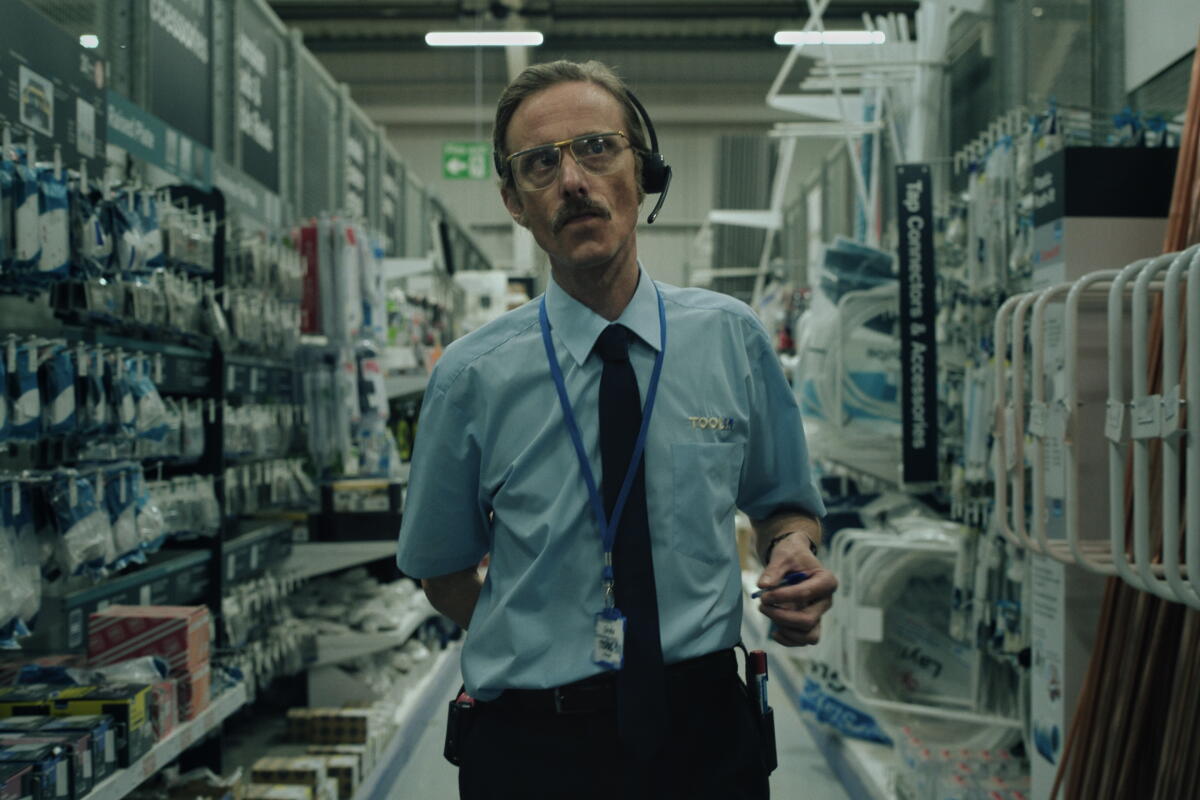
“Small Prophets” follows Michael Sleep (Pearce Quigley), who works in a DIY store (a British term for a home improvement store), visits his dad Brian (Michael Palin) in a retirement home, and yearns for his girlfriend Clea to come home. Clea vanished seven years ago, and Michael’s dad suggests that the homunculi — which he learned about from an Italian alchemist in Egypt — might be able to tell him what happened to her.
The show premiered on BBC Two in February, when it quickly became the BBC’s biggest new scripted launch of the year. (It was renewed for a second season in September, this time on BBC One.) In the U.K., Crook is well-known for playing Gareth Keenan in the original British version of “The Office” (Gareth’s an analogue to Dwight Schrute in the U.S. version) — and for writing, directing and starring in “Detectorists,” which won the 2015 BAFTA for television scripted comedy.
“Detectorists” and “Small Prophets” share a singular comedic sensibility, which arose from Crook’s realization that some shows at that time, like “The Office” or “The Inbetweeners,” were drawing humor from cruelty, embarrassment and awkwardness. This is how he stumbled upon his genre: gentle comedy.
“I didn’t like the word ‘gentle’ at first,” Crook said on a video call earlier this month from Leeds, Yorkshire, where he’s directing his first feature film. “It’s taken me a while to make my peace with that. But now I realize that it’s something to do with being uncynical, being optimistic, but hopefully that doesn’t mean bland or unfunny. … It’s sort of a surprise to find that this is what I do, and this is what I’ve become known for. But I’m thankful for it, as well, because I think this world does need more optimism and hope than it presently has.”
He worries that “gentle” might suggest something not particularly funny or challenging, and would like to clarify that was not his intent. It wasn’t the outcome, either: “Small Prophets” is about some of the most challenging subject matter — grief and loss — while remaining genuinely funny and rather extraordinary.
Mackenzie Crook, who created “Small Prophets,” plays Gordon, Michael’s boss at the DIY store. (Apple)
Michael (Pearce Quigley) befriends Kacey (Lauren Patel), his co-worker at the store. (Apple)
Michael has the epitome of an ordinary life, living a mundane existence in a suburban cul-de-sac, dutifully eating his Malted Squares cereal each morning, and evading his boss at the DIY store (played by a ponytailed, bespectacled Crook). He befriends Kacey (Lauren Patel) at work, a May-December friendship somewhat based on Patel and Quigley’s own (they met working on a radio play). But somehow, Michael is simultaneously “a magnet for beautiful, crazy things,” Crook said.
When oil spills from his dusty, beat-up blue car, it pools into the shape of a big, black rabbit. A shooting star, or rather a meteor, may or may not have landed somewhere inside his house. A room inside is frozen in time, forever decorated for an ‘80s-themed Christmas — a surprise that Clea never got to see. And then there are the homunculi.
The inspiration came from a short passage in “Clea,” the fourth book in Lawrence Durrell’s “Alexandria Quartet,” which references the creatures. “It just fascinated me that he put it in this novel apropos of nothing else,” Crook said. “It didn’t add to the plot.” He squirreled the idea away until he knew what to do with it. Crook is a big fan of David Lynch, and referenced an old trick of his: To make a movie, first come up with 70 ideas.
The homunculi were one of those seed ideas for “Small Prophets.” Crook knew he wanted to set the show in modern-day suburbia, in a cul-de-sac. He knew he wanted to work with Quigley, who plays Michael. And he knew he wanted to work with Henderson, his animator friend, on those homunculi. (In the early stages of design, Crook made illustrations of what the prophets might look like. “They’re like Francis Bacon paintings,” Henderson said. “They’re mad-looking things.”)
Henderson worked on the show with Will Anderson, the former as a stop-motion animator, the latter on digital animation, 2-D animation, compositing and finishing shots. (Glen Southern designed and sculpted the creatures themselves, and they collaborated with Mackinnon & Saunders, a puppet fabricator that has worked on Guillermo del Toro’s “Pinocchio,” Wes Anderson’s “Fantastic Mr. Fox” and Tim Burton’s “Corpse Bride.” There were seven total puppets for three homunculi.)
As much as possible, Crook wanted this world to feel tangible; to achieve it, the team used in-camera effects and props as much as possible, rather than CGI. “It feels a bit more authentic … when it’s stop-motion. You can see the mark of the maker in every movement,” said Anderson in a video call with Henderson. The prophet puppets float “behind this warped glass, which is slightly abstracted and a bit more magical, and separates you from them in a really interesting way with reflections and inks.”
It’s almost as if the flesh-colored prophet puppets were actors, and Henderson directed them, Anderson said, manipulating their silicon bodies into position over and over again. In this analogy, Anderson would be ironing out logistics like camera angles or lighting. He made their garments, like the queen’s billowing cape (“ethereal clothes,” Henderson called them), digitally after the fact.
Crook knew that he wanted the homunculi to be almost still, as if someone had fallen into icy water, their cold, wet clothes clinging to them, barely wanting to move. Near-stillness is one of the hardest things to animate, Anderson pointed out. But “when it’s done well, it really binds, because they are thinking, alive things; they are. That’s our job to animate.”
For many, stop-motion holds a real nostalgia, Henderson said — another theme of the show, dovetailing with Michael’s yearning. Production designer Lucy Spink wove nostalgia into “Small Prophets,” especially in the Christmas room. She texted her sisters pictures of wallpaper options. “Which one makes you cry more?” she asked. “Or makes you feel like you remember being there?”
From a production angle, creating gentle comedy is “a tonal thing,” Spink said on a video call from the Yorkshire Dales. “You know how far to take it. That it isn’t extreme fantasy, but you’re pulling somewhere back from that. And it was a visual serendipity, is what I felt was what we tried to do, which was like the world was saying there’s a little something strange going on.”
If someone described this show as magical realism, Crook would “find that a compliment.” The first time he heard the phrase was about the 1992 Mexican romantic drama “Like Water for Chocolate,” which really struck him. “I just thought, wow, OK, you can do stuff like that, impossible stuff” — like a crocheted bedspread flying in a swirl of colors for a kilometer behind a carriage — “and ask people to believe it.”
“Like Water for Chocolate” is based on Laura Esquivel’s 1989 novel by the same name, which folds recipes into its story. One is for quail in rose petal sauce, which Crook made for his girlfriend at the time, whose name was Clea. She cried because she found the tiny bird so sad.
Kacey (Lauren Patel) gazes at one of the homunculi in a scene from the series.
(Apple)
There’s a quote from “Justine,” the first novel in the “Alexandria Quartet,” that I shared with Crook. It reminded me of how he had spoken about wanting to believe in the unexplained: “We are all hunting for rational reasons for believing in the absurd.”
“I’d not even picked up on that, but that’s it,” Crook said. “I’ve never believed in ghosts, but I would love to see one. And if I did, it would flip my world upside down. I’d have to reevaluate everything, and that would be an exciting thing. And I think ‘Small Prophets’ is a lot about that.”
The “Small Prophets” finale, dropping on Apple TV Nov. 4, channels that essence of storytelling — inexplicable but undeniably real — back into a garden shed. This time it’s Michael’s, engulfed by his wild garden, built with the exact same footprint as Crook’s own.
“That spirit that’s in the show: that gentle, warm funniness — that’s what he’s like to be with,” Henderson said. “Will and I went and stayed in his house, and he made us dinner, and we sat ‘round and drank wine and had a fun time storyboarding. That’s cool. That’s how life should be when you’re making stuff with people.”