hearing

‘Like the Russian mafia’: L.A. judge elections see unusual drama

One judge claims his colleagues have adopted a “gangster mentality” in order to shut him up.

Another compared the state board accusing him of serious misconduct to “the Russian mafia.”

Judicial elections are usually sleepy affairs, subject to little political fanfare or interest. But two battles on the June ballot in Los Angeles have raised the temperature this campaign season and invited questions about the lengths members of the insular local bench will go to protect their own.

Lawyers who aspire to become judge often run for open seats. The challengers in these races, however, say they specifically targeted incumbents they believe are unfit for the office, which carries an annual salary of more than $244,000.

One of the contests could unseat 84-year-old Judge Robert Draper, who is seeking reelection despite having spent the last three years relegated to a room at the Santa Monica courthouse without a computer or caseload, which two other judges described to The Times as a “closet.”

In 2023, then-Presiding Justice Samantha Jessner said Draper was “unable to carry out the duties and responsibilities of a judge” due to deteriorating mental and physical health, according to a letter she sent to the state’s Commission on Judicial Performance.

Draper denied all wrongdoing in an interview with The Times, and said that although he has been diagnosed with Parkinson’s disease, he remains fit for the bench. He has also been accused of sexual harassment and making improper and biased comments by the judicial commission. He is contesting those claims. A hearing that could result in his removal began Monday and is expected to last into early May.

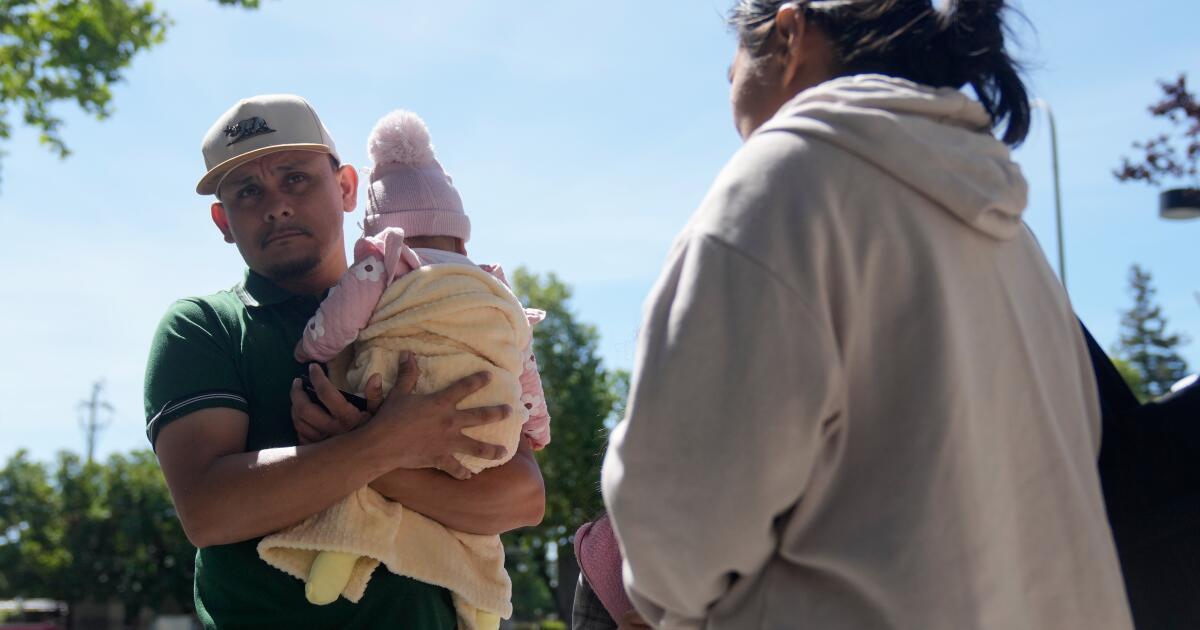
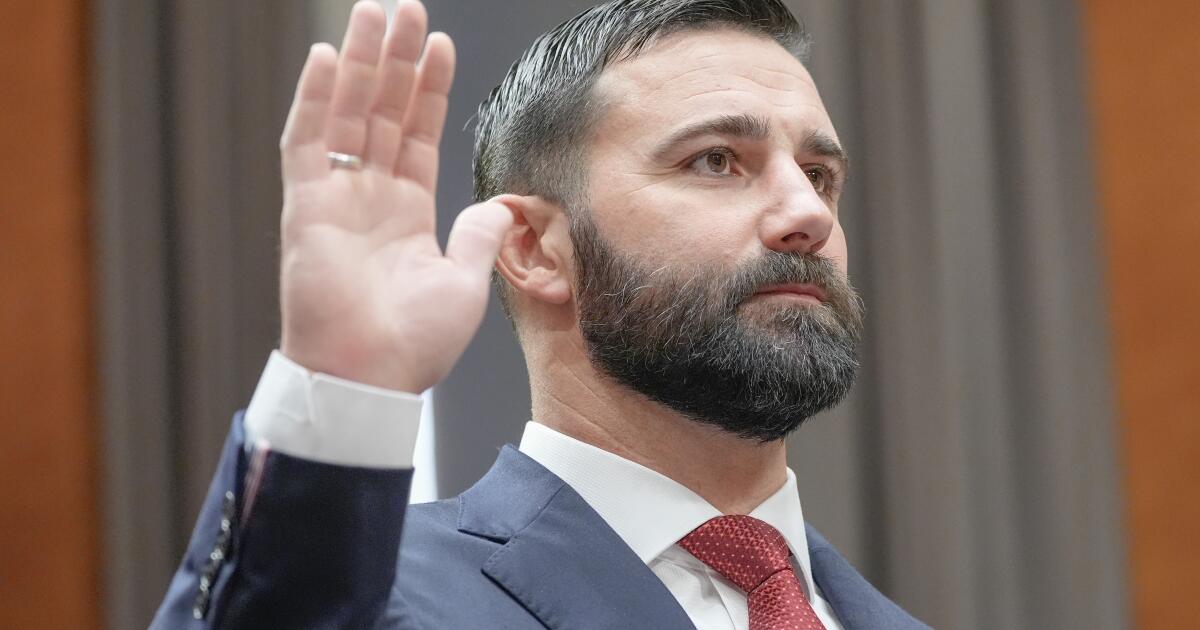
Deputy District Attorney Paul Thompson

Deputy Dist. Atty. Paul Thompson at Clara Shortridge Foltz Criminal Justice Center in Los Angeles.

(Myung J. Chun / Los Angeles Times)

The other incumbent fighting to save his seat is Judge Pat Connolly, 61, a former prosecutor who has drawn support from several other sitting L.A. County judges. But his opponent, Deputy Dist. Atty. Paul Thompson, has called Connolly a “rogue judge” who needs to be replaced.

Connolly has been disciplined multiple times in his 18-year judicial tenure for improper comments toward litigants and, in one case, exhibiting bias against a defense attorney against whom he was weighing contempt charges, according to state judicial commission records.

Thompson, who gained notoriety for his role winning a rape conviction against Harvey Weinstein, purchased the rights to the domain name “patconnolly4judge.com,” which now redirects to one of the commission’s admonishments of Connolly.

“What I see is a man who repeatedly prioritizes his own goodwill over that of the community and the public he is serving … a man who has been repeatedly disciplined for prioritizing his own interests,” said Thompson, who has been endorsed by the L.A. County Democratic Party.

In a bizarre turn, the race was linked to the recent shooting at the White House Correspondents’ Assn. dinner after conservative influencers posted a picture of a Thompson campaign sign on the Torrance lawn of the suspected gunman, Cole Tomas Allen.

Thompson lives next door to the Allen family and described the suspect’s parents as great neighbors. He said he didn’t know their son and dismissed “internet trolls” for trying to tie his campaign to political violence.

This year’s election has sparked conversations about the unwavering support incumbent judges seem to enjoy among their colleagues.

Despite the concerns about Draper’s health, a political action committee run by fellow judges gave $72,500 to his campaign, state election finance records show. The PAC gave the same amount to Connolly.

Judge Maria Lucy Armendariz, who oversees the PAC, did not return a call seeking comment.

“The PAC has some explaining to do here. Why is there this show of support for someone who is facing so many challenges?” asked Laurie Levenson, a former federal prosecutor who now teaches at Loyola Law School. “It doesn’t reflect well on the bench.”

L.A. County Deputy D.A. Tal Khan Valbuena

Deputy Dist. Atty. Tal Khan Valbuena at Grand Park in downtown Los Angeles.

(Christina House / Los Angeles Times)

Draper’s opponent is Deputy Dist. Atty. Tal Khan Valbuena, a refugee from Pakistan who works in the Hollywood mental health court. Khan Valbuena believes his lived experience as a gay Muslim who has faced bigotry will bring a compassionate perspective to a bench some complain is overrun with old-school tough-on-crime prosecutors.

But he also expressed concern about Draper’s mental decline after meeting him for lunch earlier this year.

“His honor had exemplified disorganized thought behavior, tangential thought … things I see on a day-to-day basis [in mental health court],” Khan Valbuena said, while acknowledging that he is not a doctor.

The Los Angeles County Bar Assn. issued its ratings for every judicial candidate last week. Connolly graded best among the judges in the contentious races, described as “well qualified.” Thompson and Khan Valubena were rated as “qualified.” Draper was one of only three candidates labeled “unqualified.”

In 2022, Judge Eric Taylor said he noticed a sharp change in Draper’s behavior that included sending “abusive” and “incoherent” e-mails to colleagues that contained racist and profane language, according to a letter Taylor sent to the state judicial commission.

“He has demonstrated a flagging handle on reality,” Taylor wrote.

Draper was accused of sexual harassment, making racist remarks and callous behavior all over the course of one hearing. According to the state judicial complaint and testimony at Draper’s removal hearing on Monday, the judge allegedly stroked a female lawyer’s hair after going on a tangent to a Black attorney about “Black history, Black football players, the Civil Rights Act, and the Black Lives Matter movement,” even though the case had nothing to do with those issues.

Judge Robert Draper

Judge Robert Draper outside the Ronald Reagan Federal Building in Los Angeles.

(Robert Gauthier / Los Angeles Times)

Later in chambers that same day, he made crude remarks to a group of female attorneys while reflecting on his time as a civil attorney, recalling how male lawyers would deride female secretaries, insisting they learn to “f— better than they could type,” according to testimony given by attorney Janice Brown at Draper’s hearing.

Brown told the review panel that Draper’s behavior left her “aghast” and “perplexed.”

Draper denied much of what was in the complaint. He says that he never touched a lawyer’s hair, and that the comments about Black culture were meant to express his pride at racial progress in America. He criticized the Commission on Judicial Performance.

“This is like the Russian mafia, it’s like Germany,” he said. “There’s no due process for any judge.”

Draper’s attorney, Ashley Posner, said his client would routinely walk up seven flights of stairs when he was assigned to the downtown Stanley Mosk courthouse and remains sharp.

“Things were set up to portray him in the worst light possible … he’s been portrayed as a bigot. He’s been portrayed as doddering and demented, which couldn’t be further from the truth,” Posner said.

In court on Monday, Posner suggested the complaint was part of a broader campaign to force Draper to retire and accused the L.A. County Superior Court’s leadership of ageism. A court spokesperson said they could not comment on personnel matters.

The race between Connolly and Thompson has also focused heavily on alleged misconduct.

Connolly’s past admonishments by the state commission include complaints that he yelled at attorneys for appearing remotely during the COVID-19 pandemic. The judge also told a recently acquitted defendant that he knew the man was guilty, records show.

“I don’t think it’s as much what I’ve said as how I have said it. I think that they have taken issue with the terms that I’ve used,” Connolly said, noting he has never been accused of ethical violations or moral impropriety.

Judge Pat Connolly at Compton Courthouse

L.A. County Superior Court Judge Pat Connolly at the Compton Courthouse.

(Robert Gauthier / Los Angeles Times)

A legal expert raised questions in 2023 about the propriety of Connolly seeking to disqualify a fellow judge from ruling on a petition to resentence a convicted cop killer that Connolly had prosecuted in the late 2000s. The state commission is also currently reviewing two additional complaints against Connolly, according to e-mails seen by The Times. Connolly said he couldn’t comment on either situation.

In an interview with The Times, Connolly said he was surprised by the “venom” Thompson had injected into the race.

He said he sees himself as a fair jurist with a knack for finding creative solutions to cases that balance public safety and alternatives to incarceration. In 2022, court records show, he negotiated a plea deal for an NFL player facing prison time for weapons charges, ordering him to organize sports camps for underprivileged youth.

“I’m one of those who listens to both sides, who gives both sides the opportunity to voice their positions,” he said.

Connolly enjoys the support of many sitting judges and law enforcement leaders, including former Dist. Atty. Steve Cooley and the head of the court’s criminal division, Ricardo Ocampo.

Thompson says some of Connolly’s allies on the bench have come after his supporters.

When Thompson launched his campaign, he published an endorsement from L.A. County Superior Court Judge Scott Yang on his campaign website. Within weeks, Thompson said, Yang asked him to take the endorsement down, claiming he was being pressured by other judges.

Yang, who presides over a court in the Antelope Valley, said his colleagues on the bench exhibited a “gangster mentality” when they told him to withdraw his endorsement in a judicial election, according to a text message reviewed by The Times.

“They were going to target him. They were going to run at him. They were potentially going to make false disciplinary reports around him,” Thompson said.

Connolly was not accused of being involved in the alleged harassment and declined to discuss the matter. Yang did not respond to multiple requests for comment. A court spokesperson said they had not received any reports of threats made against Yang, but a law enforcement source said Yang told them he was harassed by fellow judges over his endorsement of Thompson. The source spoke on condition of anonymity for fear of reprisals from the bench.

The conflict has generated whispers among L.A. County judges, one of whom requested anonymity due to concerns of backlash for speaking publicly. Word of the threats against Yang, the judge said, left some fearing they too could face retribution for breaking ranks.

“It’s totally concerning,” the judge said. “How different is that than the deputy gangs?

Source link

We were there: Hearing gunfire and ducking for cover at the D.C. gala shooting

Directly outside the Washington Hilton ballroom, as the yearly White House Correspondents’ Assn. dinner got underway Saturday, a Times reporter had just entered the men’s room when he heard a handful of loud pops ring out.

“Shooter!” someone shouted. “Get down! Shots fired!”

Inside the ballroom, thousands of journalists and politicians began to duck for cover as the event devolved from a celebration of free speech to a scene of fear.

The Times had six reporters at the dinner, seated at a table near the right side of the stage.

The Times reporter in the restroom, Gavin Quinton, heard the gunfire around 8:30 p.m. He had left The Times’ table minutes earlier, moving past the TV cameras and up toward the raised terrace near the ballroom’s security entrance. He crossed paths with CNN anchor Wolf Blitzer.

Outside the restroom, Cole Tomas Allen, 31, had broken into a sprint through the metal detectors, security footage would later show, getting within feet of the ballroom entrance.

Five or six shots fired by Secret Service agents missed Allen before agents brought him down near a staircase leading to the main floor, where Trump sat prominently in view.

A federal agent was hit in the chest in the exchange of gunfire but was wearing a bullet-proof vest and not seriously injured.

Inside the restroom, Quinton crouched near a corner. Others rushed into the room, including three hotel security guards who flung themselves in so quickly their backs slammed against the tiled wall. Within moments, a Secret Service agent positioned himself at the bathroom entrance, his pistol drawn.

“Head count?” he asked.

“A dozen — no, 15!” someone shouted back.

People stayed locked in bathroom stalls. Some tried to overcome the poor cellphone service to call loved ones. Confused, the mix of tuxedo-clad attendees, uniformed hotel guards and waitstaff tried to piece together what had happened.

“He had a gun,” one of the hotel guards said.

Another witness told Quinton that he initially thought Blitzer had been the shooter’s target.

“I look around and I hear shots as I’m opening the door. And I turn and I see him,” the man said of the gunman. “I look again and I’m like, ‘Oh, they just shot someone.’ ”

Blitzer, who was tackled to the floor by officers during the incident, would later say that “the first thing that went through my mind was whether he was going to shoot me.”

As the group speculated over whether the shooter had died in the volley, one man wondered aloud whether the event would continue. Initially thinking the gunman must have been killed, Quinton replied no.

“Why not?” the man asked. “It’s a bad guy who’s dead. It was a good f— ending. Seriously.”

The Washington Hilton has hosted the annual correspondents’ dinner for decades. The event, referred to locally as “Nerd Prom,” now comes with a slate of pre-parties and after-parties.

This was the president’s first appearance at the dinner since 2015; he had skipped it during his entire first term.

Questions now surround the security protocols. Guests faced little screening to enter the hotel on Saturday — a quick flash of a paper ticket — before heading down escalators to the only area with magnetometers, where bags were also searched.

Trump had entered the ballroom at 8:15 p.m. as the Marine band played “Hail to the Chief.”

Twenty minutes later, videos show, Secret Service officers with ballistic vests and long guns barked instructions to clear a path as they rushed into the ballroom and onto the stage.

One agent pulled Vice President JD Vance away. Another escorted Trump, who appeared to trip, but later explained he had been urged to drop to the floor.

Other officials — Secretary of State Marco Rubio, Defense Secretary Pete Hegseth, FBI Director Kash Patel, Homeland Security advisor Stephen Miller — were quickly whisked away too.

At The Times’ table in the ballroom, nothing appeared amiss at first.

Waiters had just begun to clear plates of spring pea and burrata salad. The reporters did not hear the gunshots, but watched as the room fell silent and others began to drop from their seats and duck under the floor-length white tablecloths.

One reporter lost a shoe in the process and then feared a gunman would spot it. She dragged it under the table.

They stayed in place for several minutes, texting loved ones and waiting for an all-clear, but none came.

From under the tablecloth, reporters heard someone yell out, “God bless America! USA!” They feared that was the shooter.

It turned out to be Dan Scavino, White House deputy chief of staff. The chant did not catch on.

Eventually, others could be heard speaking loudly and dishes clanking. Guests began to peek out from under their tables and warily stand up. Uneasy laughter flickered about the ballroom.

Cellphone service inside the ballroom was spotty. There was confusion at first about whether a shooting had occurred or whether plates dropping to the floor had been mistaken for gunshots.

“I thought it was a tray going down,” Trump said later.

Just before 9 p.m., Weijia Jiang, a senior White House correspondent for CBS News who is president of the White House Correspondents’ Assn., told guests the program would “resume momentarily.”

A half hour later, Jiang returned to the stage and announced that law enforcement had requested guests leave the premises. She said Trump had told her no one was hurt and that he, the first lady and members of the Cabinet were safe.

In closing remarks, Jiang said journalism is a public service “because when there is an emergency, we run to the crisis — not away from it.”

“And on a night when we are thinking about the freedoms of the 1st Amendment, we must also think about how fragile they are,” she said. “I saw all of you reporting, and that’s what we do.”

Law enforcement and media leaders offered conflicting guidance. Quinton was among the first to evacuate the building, though the vast majority of guests waited inside for longer.

On his way out, he noticed a metal detector had already partially been dismantled when the shooter ran through.

Quinton passed the grounded shooter, restrained on his stomach, near the staircase just 20 or so feet from the bathroom entrance. He lifted his phone and recorded a brief, shaky video of the scene before security forced him out of the hotel and onto the street.

The entire spectrum of emotion was on display when security finally ordered everyone to evacuate. Women in gowns ran in fear. One man sobbed into the sleeves of his evening jacket.

Photos on social media showed others stopping to take selfies. Some drank wine straight form the bottle.

Quinton spotted the presidential motorcade outside of the hotel lobby at about 8:45 p.m. Around the same time, an ambulance arrived as about 100 event attendees were escorted out of the secured event perimeter.

More law enforcement was inside the hotel as guests exited the building, including agents from the Secret Service, ATF, FBI and the Department of Homeland Security. National Guard soldiers replaced celebrities and politicians at the red carpet entrance.

Outside, Metropolitan police ushered people north on Columbia Road NW. Hungry guests in tuxedos filed into a nearby 7-Eleven. The dinner’s main course — prime beef and Maine lobster — had not been served.

At the White House afterward, Trump said the event would be rescheduled.

“We’re not going to let anybody take over our society,” he told reporters who had rushed to the news conference still dressed in gowns and black tie. “We’re not going to cancel things out because we can’t do that.”

Meanwhile, the night’s after-parties continued, though organizers attempted a more somber tone. MS NOW, for instance, told those who had RSVP’d that their “Democracy After Hours” party would be a “space for friends and colleagues to be together.”

Independent journalist Tara Palmeri posted a photo on the social media site X of a full party with blue mood lighting.

“People were still partying, still hitting WHCD afterparties last night,” she wrote. “Epstein corruption, an escalating Iran conflict, and an active shooter— and Washington just… kept going. The cognitive dissonance is the system.”

On Sunday morning, the Washington Hilton appeared back to normal, except for the presence of journalists using the hotel as a backdrop for their live shots.

Source link

RFK Jr. goes before the Senate. One lawmaker’s competing loyalties will be on display

Bill Cassidy’s roles as a lawmaker, a doctor and a political candidate will collide on Wednesday as he questions Health Secretary Robert F. Kennedy Jr. in two high-stakes Senate hearings.

The Louisiana Republican chairs one of the Senate committees that oversees Kennedy’s department and sits on another, giving him two chances to interrogate the secretary about his plans for an agency responsible for public health programs and research. As a doctor, Cassidy has clashed with Kennedy’s anti-vaccine ideas even though he provided crucial support for the health secretary’s nomination last year.

At the same time, Cassidy is fighting for his political future in next month’s primary in Louisiana, where President Trump has endorsed one of his opponents in an unusual attempt to oust a sitting senator from his own party.

How Cassidy handles the hearings could affect his chances at a pivotal moment of his reelection campaign and set the tone for how Congress oversees the nation’s health agenda at a time of rampant distrust and misinformation.

Cassidy hasn’t faced Kennedy in public since September. In the subsequent months, Kennedy has attempted a dramatic rollback of vaccine recommendations that, if not blocked by an ongoing lawsuit, could undermine protections against diseases like flu, hepatitis B and RSV.

After a backlash, Kennedy has also pivoted to spending more time talking about less controversial topics like healthy eating — albeit with his own spin, including sharing exaggerated claims that various ailments can be cured by diet alone.

Cassidy will have to decide on Wednesday whether to grill Kennedy on vaccines, an issue deeply important to him, or put their differences aside and prioritize loyalty to the Trump administration.

“He’s taken a risk showing any sort of resistance to RFK,” said Claire Leavitt, an assistant professor at Smith College who studies congressional oversight. “He may pay an electoral price for that.”

Cassidy has long advocated for vaccines

Cassidy has spent years walking a political tightrope. He’s one of the few Republican senators who voted to convict Trump during an impeachment trial after the Jan. 6, 2021, attack on the U.S. Capitol.

As a liver doctor, he advocated for babies to receive hepatitis B vaccines shortly after birth, a step that could have prevented the disease in his patients. But when Trump nominated Kennedy, a longtime anti-vaccine activist, Cassidy supported him. He did so after securing various commitments, including that Kennedy would work within the current vaccine approval and safety monitoring system and support the childhood vaccine schedule.

The vote for Kennedy did not appear to mollify Trump. The president endorsed U.S. Rep. Julia Letlow, one of Cassidy’s two primary opponents.

Cassidy also faces opposition from Kennedy’s allies in the “Make America Healthy Again” movement, a group that includes both anti-vaccine activists and a wide variety of other crusaders for health and the environment. The MAHA PAC, aligned with Kennedy, has pledged $1 million to Letlow’s campaign. While the organization hasn’t publicly said so, some have questioned whether the support is partly in retaliation against Cassidy for criticizing Kennedy’s vaccine policy agenda.

“I’m not really sure what MAHA’s beef is,” Cassidy told reporters earlier this month. “Let me point out that I am the reason that Robert F. Kennedy is now the secretary of HHS. He would not have gotten there otherwise.”

Cassidy argues that he has “strongly supported” the MAHA agenda, especially when it comes to the fight against ultraprocessed foods. However, the physician-turned-senator acknowledged that he and MAHA have “disagreed on vaccines.”

“We’ve seen, frankly, that I am right,” Cassidy added, pointing to recent measles-related deaths of children who were not vaccinated.

At a hearing in September, he slammed Kennedy’s decision to slash funding for mRNA vaccine development. He interrogated Kennedy over his attempt to replace members of a vaccine committee, suggesting the new members could have conflicts of interest. He also raised concerns that Kennedy’s vaccine policy decisions could be making it harder for Americans to get COVID-19 shots.

Later that month, Cassidy convened a hearing featuring former U.S. Centers for Disease Control and Prevention Director Susan Monarez, who was ousted by Kennedy less than a month into her tenure after they clashed over vaccine policy, and former CDC Chief Medical Officer Debra Houry, who resigned in August citing an erosion of science at the agency.

“I want to work with the president to fulfill his campaign promise to reform the CDC and Make America Healthy Again. The president says radical transparency is the way to do that,” Cassidy said at the time.

Experts say Cassidy’s vaccine stance might not hurt him

Political consultants said they expect Cassidy’s primary opponents, Letlow and Louisiana Treasurer John Fleming, to seize on any sound bites from Wednesday’s hearings that can make Cassidy seem at odds with the Trump administration.

But Dorit Reiss, a vaccine law expert at UC Law San Francisco, said the political risk of advocating for vaccines may not be as strong among Republicans as some people assume.

“He’s probably not alienating voters by focusing on the issue and calling it out,” she said.

Louisiana political consultant Mary-Patricia Wray said she thinks most diehard MAHA voters already know who they are voting for, and it’s probably not Cassidy.

Instead, she said, he may still be able to appeal to Democrats who switch their party registration to vote in the primary, as well as a wide swath of still-undecided Republican voters who care about the same health care affordability issues he advocates for every day in Congress.

“If I was advising Bill Cassidy, I would tell him your goal here is not to get out unscathed,” Wray said. “Your goal is to prove that your consistency on issues regarding public health is an asset in your campaign, not a detriment.”

Election outcome will shape future oversight of HHS

Also at stake if Cassidy doesn’t make it to November’s general election is what will happen to his responsibility to oversee the massive U.S. Department of Health and Human Services as the chair of the Senate Health, Education, Labor and Pensions committee.

Leavitt, the Smith College professor, said seniority typically plays the most important role in who chairs Senate committees. She said another Republican in today’s increasingly hyperpartisan Congress may not be as willing as Cassidy to check Kennedy’s power.

Reiss, the vaccine law expert, said she wishes Cassidy had done more hearings or introduced legislation to rein in Kennedy. And she said the senator bears the blame for allowing Kennedy to bring unfounded vaccine fears into the government in the first place.

“His original sin, of course, was voting for Kennedy at all,” Reiss said.

Swenson writes for the Associated Press. AP writer Sara Cline contributed to this report.

Source link

Fed chair nominee Warsh rejects ‘Trump sock puppet’ label at Senate hearing

Kevin Warsh, the man nominated to lead the Federal Reserve, the world’s most important financial institution, told the US Senate Banking Committee on Tuesday that he had made no secret agreements with the White House over interest rate policy, defending his professional integrity.


ADVERTISEMENT


ADVERTISEMENT

He said he would act independently if confirmed to succeed Jerome Powell, despite continued public pressure from US President Donald Trump for lower borrowing costs.

The question of that independence was put sharply to him during the hearing, when Republican Senator John Kennedy asked whether he would be Trump’s “human sock puppet”. Warsh replied: “Absolutely not.”

His comments came amid broader concerns on Capitol Hill about the future direction of the central bank, with lawmakers divided over his past record and approach to monetary policy.

Warsh insisted that the President had never asked him to commit to any specific interest rate path and said he would not have agreed to such a request.

The hearing highlighted the significant pressure facing the Federal Reserve as it maintains its independence while addressing inflation, which remains at 3.3%.

Just hours before the session began, US President Donald Trump stated in a CNBC interview that he would be disappointed if Warsh did not immediately implement rate cuts.

This current friction suggests that the White House may struggle to secure the necessary votes to confirm Warsh before Powell’s term as Fed Chair expires on 15 May.

Democratic opposition and Republican dissent

Democratic senators were particularly vocal in their scepticism, accusing Warsh of shifting his economic stance to suit the political climate.

US Senator Elizabeth Warren labelled the nominee a “sock puppet”, suggesting his installation would facilitate an “illegal takeover” of the institution.

Critics also pointed to his historical record, alleging that he favoured higher rates during Democratic administrations but has become more dovish under Republican leadership.

US Senator Ruben Gallego cited reporting from the Wall Street Journal (WSJ), which claimed the President had previously urged Warsh to reduce borrowing costs. Warsh responded by stating that such reports were based on inaccurate sources and reiterated that the independence of the Fed is “essential” for economic stability.

Despite Trump’s backing, the nomination also faces a critical roadblock within the Republican Party.

US Senator Thom Tillis, a Republican from North Carolina, reiterated his refusal to support Warsh as long as a Department of Justice investigation into Jerome Powell continues.

The probe, led by Assistant US Attorney Jeannine Pirro, is examining whether Powell committed perjury during testimony last year regarding the budget of a Federal Reserve building renovation project.

Tillis and other Republican colleagues have expressed their support for Powell, arguing that the investigation is meritless. According to Tillis, he will not vote for a successor until the “investigation is dropped,” a stance that effectively freezes the nomination in a closely divided committee.

Federal prosecutors have reportedly continued their efforts to access Fed records as recently as last week, even after a judge previously found no evidence to support the charges.

Legal and ethical hurdles

The proceedings also delved into Warsh’s personal financial interests and the logistical challenges of a potential leadership transition.

US Senator Elizabeth Warren raised questions about the nominee’s investments in private entities, including SpaceX and Polymarket, noting that the specific size of these holdings had not been fully disclosed to the public.

Warsh defended his position by stating that the Office of Government Ethics has already approved his plan to divest all assets within 90 days of his confirmation.

Compounding the uncertainty is the unique situation involving Jerome Powell.

Unlike most departing Chairs, Powell has indicated he intends to remain on the Federal Reserve’s governing board until his separate term ends in 2028, or until the perjury investigation is concluded.

This could create an awkward power dynamic where the former Chair sits alongside his successor, a scenario not seen in Washington since the late 1940s.

While US President Donald Trump has threatened to remove Powell from the board entirely, legal experts suggest such a move would be difficult, particularly given recent US Supreme Court precedents relating to the protection of Fed governors from political dismissal.

Source link

A vaccine standoff and other key moments from RFK Jr.’s first congressional hearing in months

Health Secretary Robert F. Kennedy Jr. on Thursday faced federal lawmakers for the first time since September as he sought to defend a more than 12% proposed cut to his department’s budget and dodge arrows from angry Democrats along the way.

In his testimony before the House Ways and Means Committee, kicking off an expected sprint of seven budget hearings he’ll attend across congressional committees and subcommittees over the next week, Kennedy emphasized the administration’s work to reform dietary guidelines and crack down on waste, fraud and abuse.

Republicans on the committee praised Kennedy as a “breath of fresh air” and asked him to promote his department’s recent actions. Democrats, who have been furious over Kennedy’s sweeping overhaul of the U.S. Department of Health and Human Services, largely had a different agenda.

They needled Kennedy on what they viewed as the Trump administration’s hypocrisy on fraud, demanded to know why he was cutting budgets for various programs and slammed his efforts to pull back vaccine recommendations and messaging, which they said have caused unnecessary deaths.

Kennedy fired back, often raising his voice as he accused the Democrats of misrepresenting his work and past statements.

Here are three standout moments from Thursday’s hearing:

A standoff over measles

One heated exchange early in the hearing came between Kennedy and Rep. Linda Sanchez. The California Democrat decried recent measles outbreaks across the U.S. and asked Kennedy to answer for the fact that under his leadership, the Centers for Disease Control and Prevention pulled back public health messaging supporting vaccination.

“As a mother, this horrifies me,” Sanchez said. “Did President Trump approve your decision to end CDC’s pro-vaccine public messaging campaign?”

Kennedy repeatedly refused to answer, saying first he wanted to respond to the “misstatements that you’ve made” and later praising the Trump administration’s record on preventing measles, although protections against the disease have eroded in some parts of the country as vaccination rates have dropped.

“That’s not answering my question,” Sanchez said as the two talked over each other.

But Sanchez also got Kennedy, a longtime anti-vaccine activist before he entered politics, to acknowledge that a 6-year-old who died of measles last year in West Texas could have potentially been saved with vaccination.

“Do you agree with the majority of doctors that the measles vaccine could have saved that child’s life in Texas?” she asked.

“It’s possible, certainly,” Kennedy said.

RFK Jr. denies talking about Black children being ‘re-parented’

A fight erupted between Kennedy and Rep. Terri Sewell, a Democrat from Alabama, when Kennedy vehemently denied making remarks he’d said in 2024.

The comments dated back to when Kennedy was a presidential candidate. On the “High Level Conversations” podcast last July, he said, “Psychiatric drugs — which every Black kid is now just standard put on Adderall, SSRIs, benzos, which are known to induce violence, and those kids are going to have a chance to go somewhere and get re-parented to live in a community where there’ll be no cellphones, no screens, you’ll actually have to talk to people.”

“Have you ever re-parented, or parented, I should say, a Black child?” Sewell asked, as her staff held up a poster featuring an abbreviated version of the quote.

“I don’t even know what that phrase means,” Kennedy said. “I’m not going to answer something I didn’t say.”

“You’re making stuff up,” he later claimed.

A recording of the podcast shows he made the comments during a conversation about free rehabilitation facilities he was proposing opening at the time in rural areas around the country.

Health and Human Services spokesperson Emily Hilliard said Kennedy before joining the administration was referring to spaces where young people facing alienation, mental health challenges and despair could get re-parented, which she said was a psychotherapy term for “developing the emotional regulation, discipline, boundaries, and self-worth that may not have been established in childhood.”

For Kennedy and his former party, civility is the exception

Kennedy spent most of his life as a Democrat, the scion of one of the nation’s most famous political families. Both Republicans and Democrats during the hearing began their remarks by expressing their admiration of Kennedy’s relatives, among them former President John F. Kennedy.

But again and again throughout Thursday’s hearing, the fraying of bonds between Kennedy and his former party was on full display as spiteful comments were passed back and forth.

The Health secretary grew defensive and visibly agitated. He repeatedly criticized Democratic lawmakers for not giving him a word in edgewise.

“They’ve all shut me up,” Kennedy said at one point. “They give a little speech that they can go and market, you know, for fundraising, and they don’t allow me to answer the question.”

On a few rare occasions, the exchanges were civil. One representative, Gwen Moore of Wisconsin, used humor to make that happen.

“I promise to give you easy, comfortable questions if you don’t yell at me and hurt my feelings,” she told Kennedy. He promised he wouldn’t.

Swenson writes for the Associated Press.

Source link