healthy

Bush Breaks Campaign Vow, Says New Taxes Are Necessary : Budget: He declares revenue hikes, spending cuts are needed to keep the economy healthy. GOP conservatives are angered.

President Bush, formally abandoning the central pledge of his 1988 presidential campaign, declared Tuesday that preserving a healthy economy will require new taxes.

“It is clear to me that both the size of the deficit problem and the need for a package that can be enacted require” a series of measures including “tax revenue increases” as well as spending cuts, Bush said in a written statement issued after a breakfast meeting with congressional leaders of both parties.

He specifically mentioned the possibility of trimming “entitlement and mandatory” spending programs, a reference to Social Security, Medicare, Medicaid and other benefit programs. He did not specify the type of tax increase he had in mind.

With his statement, Bush abandoned his campaign pledge–”Read my lips, no new taxes”–and opened the door to a “grand compromise” with Congress that could narrow or even close the federal deficit. Richard G. Darman, Bush’s budget director, has been advocating such a compromise almost since the day Bush took office.

At the same time, however, Bush may have sparked a full-scale revolt among conservatives in his party, many of whom believe that higher taxes are far worse for the country than continued deficits. He may also have given up what many Republican strategists see as the party’s most important issue–low taxes.

Rep. Robert K. Dornan (R-Garaden Grove) said the President’s announcement that he would consider raising tax revenues set off a “firestorm” among conservative Republicans.

“I signed a letter today . . . that said, ‘Mr. President, we hope that (tax) rates are untouchable, that they are absolutely radioactive.’ ”

Rep. William E. Dannemeyer (R-Fullerton), one of the most fiscally conservative members of Congress, said, “The Democrat game plan all along in this Congress has been to break George Bush of his promise not to raise taxes and so to lay the foundation of a campaign against him by saying he broke his promise and he can’t be trusted.

“And frankly, I’d disappointed in Mr. Bush. I thought he was smarter than falling for that.”

Democratic leaders, by contrast, welcomed Bush’s new stance, which was prepared, word by word, during the breakfast meeting.

Administration and congressional negotiators, who have been meeting since May 9 to try to craft a deficit-reduction package acceptable to all parties, have discussed a host of potential tax increases.

Some proposals, such as increased “user fees” and hikes in tobacco and alcohol taxes, might be relatively easy for Bush to embrace. The Administration has already proposed roughly $20 billion in new user fees and other minor revenue increases.

But Tuesday’s statement was made necessary because Democratic leaders said that package was unacceptable. And while White House spokesman Marlin Fitzwater said it was up to the negotiators to decide what to do next, he pointedly refused to rule out broader tax increases.

Republicans, however, may find it difficult to accept Democratic demands to increase income taxes for the wealthiest Americans. “I can’t see Democrats agreeing unless there are (income tax) rate changes that ensure that (the final package) is not unfair to the poor and middle class,” said House Ways and Means Committee Chairman Dan Rostenkowski (D-Ill.).

Budget negotiators hope to work out a final package before Congress leaves Washington for its August recess.

Before Tuesday’s developments, said Senate Budget Committee Chairman Jim Sasser (D-Tenn.), the budget talks “were stalemated, going nowhere. The President broke an impasse.”

Bush himself told reporters at the White House Rose Garden Tuesday afternoon: “It is essential that these talks get moving and get moving faster. I want to see this economy grow. I want jobs. I want to see the deficit down.”

Democratic leaders had insisted when the talks began that they would not get involved in specific negotiations unless Bush publicly admitted that a tax increase would be needed.

At the time, the White House insisted that all issues were “on the table” and that Bush would impose “no preconditions” on the talks. But Democrats had insisted on a more explicit statement.

After Bush gave them what they had sought, Democratic leaders appeared solemn and reserved as they struggled to avoid seeming to take political advantage of Bush’s retreat.

“We hope this is not going to be the subject of a political campaign effort,” said House Speaker Thomas S. Foley (D-Wash.) “Someone who wants to complain about taxes being raised will have to complain against both parties.”

When the negotiations began, Democrats feared that Republicans would maneuver them into a corner–forcing them to call for a tax increase and then campaigning against them as “tax-and-spend” liberals.

Many Republican candidates for the Senate this fall already have been doing just that, much as Bush had done in 1988. In that year, Bush’s favorite line–”Read my lips, no new taxes”–formed the centerpiece of his standard stump speech.

Tuesday’s statement not only abandoned that pledge but also gave up on a central tenet of the Republican political philosophy for the past decade–that the deficit is caused by too much spending, not by too little revenue.

Fitzwater, explaining Bush’s decision, said that closing the deficit without new taxes would require spending cuts so large that they “would be unacceptable to all parties.”

The White House estimates that the federal deficit will be roughly $160 billion in fiscal 1991, which begins on Oct. 1. The Gramm-Rudman deficit reduction law would require about $100 billion in across-the-board spending cuts unless the President and Congress agree on a new budget plan.

To mollify conservatives, Bush aides spent much of the day circulating word that the White House was not agreeing to anything beyond the approximately $20 billion in new user fees and related taxes that Bush has already advocated.

“I’m not changing my mind at all” on taxes, Bush insisted during a 45-minute session with 15 Latino reporters from around the country.

Vice President Dan Quayle echoed the theme. “It should not be viewed as a change of policy,” he said in an interview in Los Angeles, where he was raising money for GOP candidates. “This is a deficit reduction summit, not a tax increase summit.”

Asked if he would now admit that Bush was breaking his campaign pledge against new taxes, Fitzwater responded with a laugh: “Are you crazy? . . . Everything we said was true then, and it’s true now. We feel he said the right thing then; he’s saying the right thing now.”

Democratic leaders reacted with some anger to the White House damage control efforts.

“The President’s statement is clear and unambiguous,” said Senate Majority Leader George J. Mitchell (D-Me.). “He said that it is clear to him that tax increases are required. This is a new statement by the President. Any attempt by White House officials or other Republicans to describe the statement otherwise are totally inconsistent with what occurred today.”

Even Fitzwater conceded as much as he listed a series of factors that had forced Bush to change his mind.

The most important was the weakening of the economy since Bush took office. Fitzwater noted that economic statistics continue to show interest rates higher and growth rates lower than the White House had hoped. Bush advisers and most Democratic economists hold deficits at least partly responsible, a point conservatives dispute.

Moreover, the mounting cost of the savings and loan bailout has swelled the deficit, Fitzwater said.

Not all members of Bush’s party, however, were willing to abandon their belief that new taxes are worse than continued deficits.

“Any tax rate increase now threatens recession,” Rep. C. Christopher Cox (R-Newport Beach) said in a statement. “Just the prospect of a tax increase is like a dagger pointed at the jugular vein of the American economy.”

Within hours of Bush’s statement, 90 Republican members of Congress signed a letter to Bush declaring “we were stunned by your announcement that you would be willing to accept tax revenue increases as a part of a budget summit package.”

Rep. Ron Packard (R-Carlsbad), who represents southern Orange County, said he was “a little bit disappointed and a little bit surprised, because I think it was in a way caving in on the issue.”

“A tax increase is unacceptable,” the GOP congressmen wrote. “We will not vote for a budget package that increases tax rates for the American people.”

Sen. Phil Gramm (R-Tex.), one of the authors of the Gramm-Rudman law, said that an agreement may not be worth having if it means a tax increase.

Times staff writers George Ramos and Robert W. Stewart in Washington and Cathleen Decker in Los Angeles contributed to this story.

GEORGE BUSH ON TAXES Oct. 12, 1987: “There are those who say we must balance the budget on the back of the workers–raise taxes again. . . . I am not going to raise taxes again.” Announcement of candidacy in Houston. Jan. 16, 1988: “I want to be the President who finally whips the budget into shape by holding the line on taxes.” Televised debate with five Republican rivals in Manchester, N.H. May 31, 1988: “I’m not going to propose a tax increase.” After meeting with campaign economic advisers at summer home in Kennebunkport, Me. June 14, 1988: “That’s the difference–as plain as day–between us. Tax cuts vs. tax hikes. I will not raise your taxes, period.” At Cincinnati rally, comparing his position with that of Democratic front-runner Michael S. Dukakis. June 24, 1988: “I’ve ruled them all out.” At a Cincinnati news conference, when asked if Bush included excise taxes or other “revenue enhancers” in his rejection of new taxes. July 9, 1988: “If you go to Yosemite Park with your trailer . . . you may have to pay a little more.” At Atlanta news conference, conceding that costs of some programs might rise for users but asserting that voters understood the difference between user fees and tax hikes. Aug. 18, 1988: “My opponent won’t rule out raising taxes, but I will, and the Congress will push me to raise taxes, and I’ll say no, and they’ll push again, and I’ll say to them ‘Read my lips: no new taxes.’ ” Acceptance speech, Republican National Convention, New Orleans. Jan. 31, 1990: “That budget brings federal spending under control. It meets the Gramm-Rudman target. It brings that deficit down further and balances the budget by 1993 with no new taxes.” State of the Union address, discussing budget he proposed to Congress. March 13, 1990: “You know my position and I have no intention of changing that position.” At White House news conference, when asked if he could promise no new taxes this year. May 24, 1990: “Things are complicated out there on this subject. . . . I’d like to do it exactly the way I propose. I’m now enough of a realist to realize that it might not be done exactly that way.” At White House news conference, when asked if he could fulfill his campaign promise. June 26, 1990: “It is clear to me that both the size of the deficit problem and the need for a package that can be enacted require . . . tax revenue increases.” Written statement after meeting with congressional leaders. PROJECTED IMPACT OF VARIOUS TAX INCREASES

Revenue Impac Proposal Next Year Fossil Fuels Tax fuels linked to global $23 warming Social Security Raise tax on benefits to 12 high earners Energy Impose 5% tax on wide range 14 of energy sources Gasoline Raise tax to 21 cents per 12 gallon from 9 cents Stock Market 0.5% tax on stock and bond 8 transactions Cigarettes, Raise 32 cents per pack and 10 Alcohol 25 cents per ounce Income Increase top income tax 4 rate to 33% Acid Rain Tax sources of air 3 pollution Estate Tax capital gains held 2 until death

t (in billions) Proposal Five Years Fossil Fuels $163 Social Security 100 Energy 80 Gasoline 59 Stock Market 58 Cigarettes, 51 Alcohol Income 42 Acid Rain 22 Estate 10

Source: Congressional Budget Office

PERSPECTIVE ON CHANGE–White House feared that Democrats would quit budget talks and blame Bush. A15

OTHER COVERAGE: A14

Source link

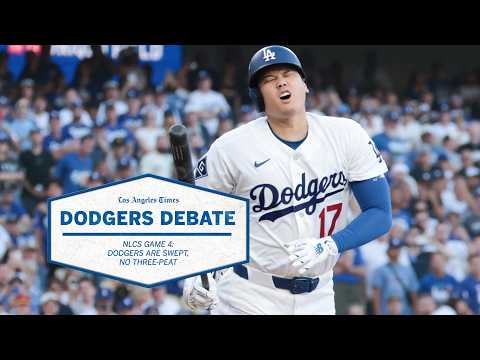
The Dodgers’ most pressing question: Can Shohei Ohtani stay healthy?

Dodgers pitching coach Mark Prior was worried. But how worried? He couldn’t say at first.

The team had taken major steps to address Shohei Ohtani’s lingering left knee condition, presenting him with a plan to skip his last start before the All-Star break and have his knee drained that Sunday. And he’d co-signed it.

The swelling in Ohtani’s knee, however, had been more persistent than the team expected. And pitching seemed to irritate it.

“I would say, moderately concerned,” Prior eventually said in a conversation with The Times last weekend. “But no more concerned than I probably am with anybody else who’s had to deal with aches and pains. Hopefully, this break and this rest will get it to calm down a little bit, and then we’ll see where we’re at next weekend.”

Coming out of the All-Star break, the Dodgers face the most pressing question for their second half: Will they be able to manage Ohtani’s knee condition?

Of course, plenty of other questions loom: What approach will the Dodgers take at the trade deadline? Will the pitchers coming off the injured list in the second half provide enough depth? Can they maintain the best record in the majors?

But naturally, Ohtani’s health is tangled up in all those answers.

The Dodgers have enough star power and enough of a lead in the division to still make the playoffs without Ohtani replicating his first half on the mound (8-2, 1.79 ERA). And they showed last year that they can win a World Series even if their postseason path begins with a wild-card series.

They’d prefer, however, to take a different route, with a strong second half that ensures home-field advantage all the way through the postseason.

“At the end of the day, it’s just trying to expect the best of your ballclub,” manager Dave Roberts said before the break. “And with the talent that we have, we expect to have the best record in baseball, and so that’s our standard. And so, what falls out of it is X, Y and Z. So that’s what we’re playing for.”

That’s also what they need a healthy Ohtani for.

Workload is part of the equation, and an aspect that’s garnered plenty of attention in Ohtani’s first full season balancing two-way duties since 2023.

“I’ve been much more open and watching … his workload, and not just taking for granted that he can be a two-way player, take every at-bat, pitch like a normal pitcher,” Roberts said. “I think that would be unfair. So for me, if anything, it’s just, keep having those conversations with him, bringing them to him, and saying, ‘Hey, this is what we see. This might be a different option, a better option for your best interest and our best interest.’ And I think that with that, he’s responded really well.”

That approach will continue in the second half. But refining Ohtani’s mechanics also will be vital to keeping his knee from becoming an issue again.

Ohtani said it himself, through interpreter Will Ireton, last week: “I have to kind of find a way to adjust my mechanics so that my knee doesn’t get affected.”

He’s been trying to do so since the swelling in his knee first cropped up.

“I think we’ve identified the issue,” Prior said. “Sometimes the fix isn’t always the easiest, especially with a guy who doesn’t spend probably the same amount of time on the mechanics of it.”

As a two-way player, Ohtani doesn’t have the “physical bandwidth,” as Prior put it, for things like multiple bullpen sessions between starts, even if they are a week apart. He has to keep the long, grueling season in mind when he’s also in the lineup every day.

Looking back at Ohtani’s pitching start against the Pittsburgh Pirates last month, the day before he exited the series finale because of inflammation in his knee, the Dodgers observed his right leg landing a little farther across his body in his delivery, probably putting extra strain on that plant leg as he moved around it.

“He fixed it, and then I’m wondering if it got aggravated just in-game,” Prior said. “These guys are extreme compensators, and in the moment they don’t necessarily know what they’re doing, but they’re finding other ways to pitch, and then afterwards you find out that things are a little sore.”

Ohtani had a dominant first half, but, whether because of the knee condition or mechanics or some combination of the two, he wasn’t quite as sharp in his last four starts (4.38 ERA).

“If he can fix the delivery, then he can fix a little bit more of the execution,” Prior said.

But will the delivery adjustment, All-Star break intervention and attention to workload fix Ohtani’s knee at least through the postseason? The Dodgers’ second-half trajectory will be tied up in the answer.

Source link

Gaza pet owners struggle to keep animals healthy amid vet crisis | Gaza News

NewsFeed

Animal lovers in Gaza are resorting to desperate measures to keep their pets alive and healthy. Only two pet clinics are still operating, and critical veterinary supplies and animal food are running low. Vets are warning animal deaths will rise unless supplies arrive soon.

Source link