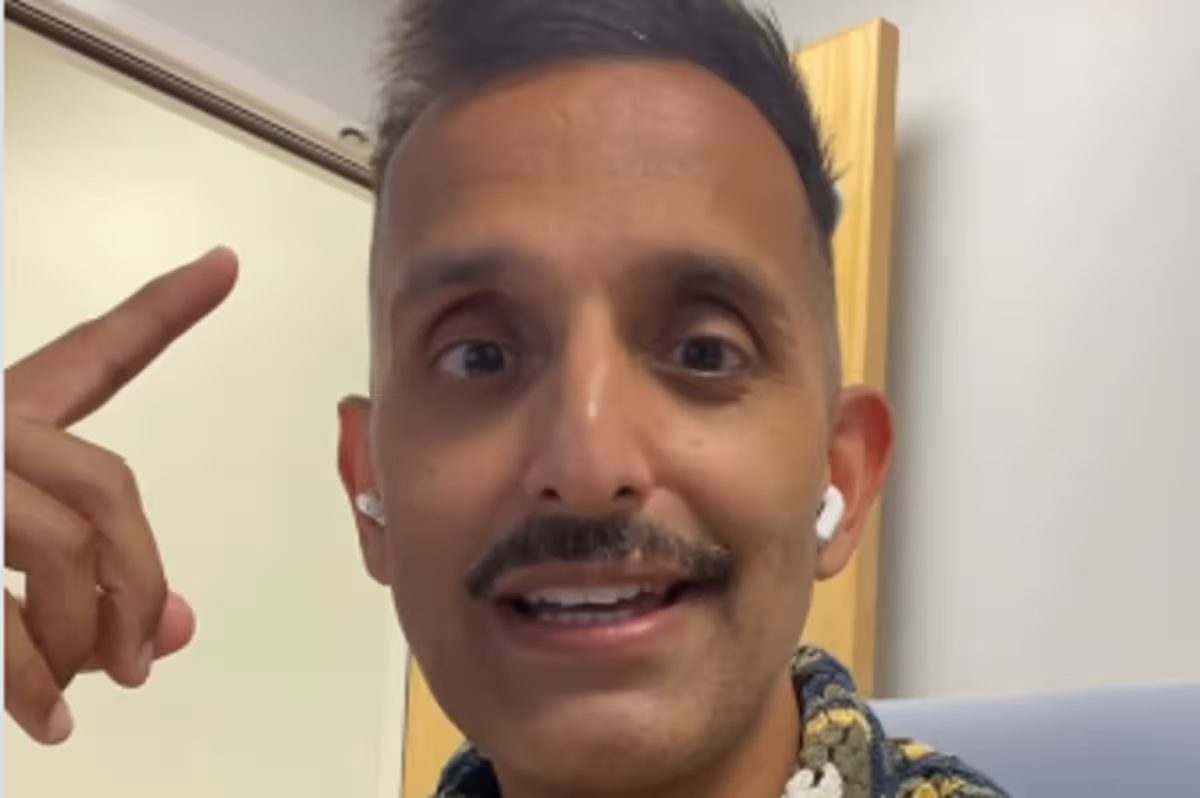
Dr Amir Khan has opened up about his own mental health, saying he has a “full-blown case”

Dr Amir Khan asked if “anyone else have this” after diagnosing himself with anticipatory anxiety(Image: Dr Amir Khan/Instagram)
A doctor has asked if “anyone else has this”, revealing he’s diagnosed himself with a form of anxiety. Doctor Amir Khan, who is known for his appearances on ITV, opened up about something called anticipatory anxiety.
In a video uploaded to social media platform Instagram, the medical professional shared more about his experience. Speaking to his more than one million followers, he said: “I’ve diagnosed myself with something called anticipatory anxiety and I need to know if anyone else has this.”
He explained how this phenomenon causes his brain to prepare for the “worst case scenario”, which in reality, doesn’t happen. “You know, when you’ve got like a meeting coming up or you’ve got an awkward conversation with someone you just don’t want to have,” Dr Amir said.
“It could be, I don’t know your boss at work, a friend, a family member, literally anyone – a meeting normally for me. Well then my brain decides we’re not just going to have one conversation in my head with these people, we’re gonna have 47, it just replays conversations in my head and what they’re going to go like.
“I’ll imagine them saying something awful. So I prepare my perfect comeback, then they say something even worse in my head, so I then prepare for that.
“Then I imagine myself calmly standing my ground, walking away with dramatic dignity, probably to a soundtrack that only I can hear. By the time I’ve finished, I’ve won an argument that never actually happened.
“Then the real conversation comes along and they’re lovely, they’re polite, we agree on things. The meeting lasts like just six minutes, so then it’s just a chat. And I come away thinking, ‘Why on earth did I spend two days emotionally preparing for that?’
“Well, that is anticipatory anxiety, and I have a full-blown case of it all the time.” He said this occurs when your brain starts worrying about something before it’s happened and because your brain’s threat system is trying to protect you, it “often throws in a bit of catastrophizing as well”.
Dr Amir said: “It’s trying to help me it, believes that if it rehearses every possible disaster, I’ll be ready for anything. But in reality most of those disasters, just don’t happen.
“So all that’s really happened is I put myself through stress, once in my imagination and then once again in real life, except the real life version usually turns out absolutely fine.” He added: “Please tell me this isn’t just me.”
He was met by support in his comment section with one person saying: “Omg Amir this is me! I drive myself mad doing it. Glad I’m not alone. Thanks.”
Another commented: “Yes! Amir you most definitely are not alone, this is so me.” And one person replied: “I do this too, it can be exhausting.”
Anticipatory anxiety is a recognised form of anxiety. On its website, Anxiety UK says: “Anticipatory anxiety is where a person experiences increased levels of anxiety by thinking about an event or situation in the future.
“Rather than being a specific disorder in its own right, anticipatory anxiety is a symptom commonly found in a number of anxiety-related conditions, such as generalised anxiety. Anticipatory Anxiety can be extremely draining for people as it can last for months prior to an event.
“The worries people experience specifically focus on what they think might happen, often with catastrophic predictions about an event. The nature of negative predictions about the event will be the difference between an anxiety level that is incapacitating or merely uncomfortable.”
The NHS lists common symptoms of general anxiety as:
- Feeling tired, restless or irritable
- Feeling shaky or trembly, dizzy or sweating more
- Being unable to concentrate or make decisions
- Trouble sleeping
- Worrying about the past or future, or thinking something bad will happen
- Headaches, tummy aches or muscle pain
- Dry mouth
- Pins and needles
- Noticing your heartbeat gets stronger, faster or irregular, or you get short of breath when you start feeling anxious
It says that if you cannot tell if shortness of breath is from anxiety or if you are worried about any other symptoms, you should see a GP.