Weekly insights and analysis on the latest developments in military technology, strategy, and foreign policy.
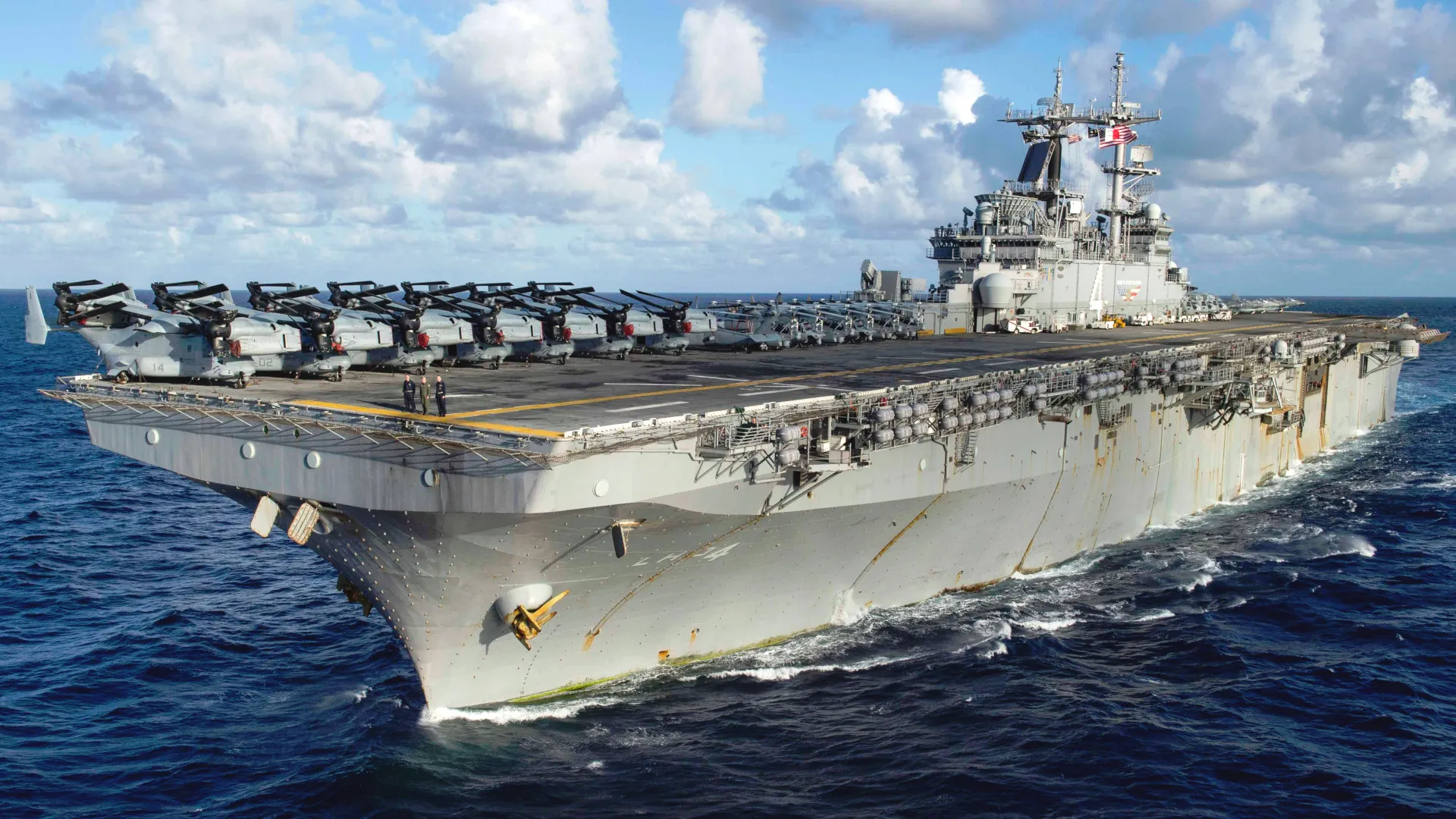
The Pentagon is reportedly sending the Wasp class amphibious assault ship USS Boxer and the rest of its Amphibious Ready Group (ARG), loaded with elements of the 11th Marine Expeditionary Unit (MEU). This comes as the Trump administration is reported to be increasingly considering seizing or blockading Iran’s highly strategic Kharg Island in the Persian Gulf as part of a new phase of Operation Epic Fury.
It has now been widely reported that what is described as an “accelerated” deployment of the Boxer Amphibious Ready Group and the 11th MEU from the West Coast will be in support of Operation Epic Fury.
#BREAKING#EXCLUSIVE The US military has accelerated the deployment of thousands of Marines and sailors to help reinforce US troops in the Middle East amid the war against Iran.
Four officials tell Newsmax the Boxer Amphibious Ready Group and the embarked 11th Marine…
The Boxer Amphibious Ready Group also includes two other amphibious warfare ships, theSan Antonio class USS Portland and the Whidbey Island class USS Comstock. The 11th MEU has roughly 2,500 personnel, in total, and includes air and ground components.
This follows reports last week that the America class amphibious assault ship USS Tripoli and its ARG, carrying elements of the 31st MEU, had also begun moving from the Pacific toward the Middle to support ongoing operations against Iran.
Axios reported today that the Trump administration could be leaning toward establishing a blockade around Iran’s Kharg Island, through which it exports much of its oil, or occupying it, citing unnamed officials. The central goal of doing this would be to step up pressure on the regime in Tehran to, in turn, force it to reopen the Strait of Hormuz. Traffic through that waterway has come to a virtual halt, which is causing massive reverberations across global energy markets.
“[Trump] wants Hormuz open. If he has to take Kharg Island to make it happen, that’s going to happen. If he decides to have a coastal invasion, that’s going to happen,” one official said, according to Axios. “But that decision hasn’t been made.”
The U.S. military carried out extensive strikes on Kharg Island this past weekend. A deployment of U.S. ground troops there would be a major escalation that could have significant ramifications, including domestically.
Last night, U.S. forces executed a large-scale precision strike on Kharg Island, Iran. The strike destroyed naval mine storage facilities, missile storage bunkers, and multiple other military sites. U.S. forces successfully struck more than 90 Iranian military targets on Kharg… pic.twitter.com/2X1glD4Flt
“We’ve always had boots on the ground in conflicts under every president, including Trump. I know this is a fixation in the media, and I get the politics, but the president is going to do what’s right,” a second official, who also said no decision has yet been made, said, per Axios.
A senior official told Axios: “We’ve always had boots on the ground in conflicts under every president, including Trump. I know this is a fixation in the media, and I get the politics. But the president is going to do what’s right.” https://t.co/6dbDy9zCHr
Just yesterday, TWZ spoke with Joseph Votel, the former commander of U.S. Central Command, with a particular focus on the tumultuous Strait of Hormuz, through which around 20 percent of the world’s oil passes. You can read that interview here.
In the meantime, publicly available flight-tracking data indicates that the U.S. Navy is using MQ-4C Triton intelligence, surveillance, and reconnaissance drones to monitor Kharg Island as part of their patrols of the northern Persian Gulf.
A US Navy MQ-4C Triton UAV just completed a reconnaissance mission of the northern Persian Gulf and Kharg Island.
Trump has warned that he might consider targeting oil facilities on the island if Iran or other countries “do anything to interfere” with the safe passage of ships through the strait.
Destroying or damaging oil infrastructure on Kharg could have unintended side effects, however. On the one hand, it would further push up global oil prices. The complex nature of infrastructure might take years to repair, which would compound this. In the long term, there is also the question of whether oil infrastructure here should be preserved for the benefit of a potential new Iranian government.
Any successor to the current regime would lose out on vital oil income, potentially driving further internal strife.
There is also the possibility that seizing the island and cutting off the current Iranian government from its most vital source of revenue could be used as a catalyst to bring about its fall.
Then there is the huge question about the kind of military effort that would be required to seize Kharg. This would require a large-scale, sustained operation and would be brought with risk. The island is only 20 miles from the Iranian mainland, putting whatever U.S. force is there at extreme risk of bombardment of multiple types. Getting amphibious assault ships through the Strait and into the Gulf would be an issue, as well, and those ships would be heavily targeted during transit and especially once inside the Gulf. With this in mind, a longer-range aviation assault would be most likely.
A naval blockade of the island might be easier to achieve in the short term, but it would run the risk of Iranian attacks, likely involving uncrewed surface vessels (USVs), drones, and other asymmetric options, as well as anti-ship cruise missiles, the use of which has been limited up to this point, as you can read about here.
As already noted, additional U.S. forces are headed to the region in the form of the Tripoli ARG and the 31st Marine Expeditionary Unit (MEU). While the deployment of the big-deck amphibious assault ship USS Tripolihad already been reported, we now know it is being supported by the amphibious transport docks USS San Diego (LPD-22) and USS New Orleans (LPD-18), thanks to publicly available ship-tracking data.
USS Tripoli (LHA 7) America-class amphibious assault ship westbound in the Singapore Strait – March 17, 2026 SRC: INST- sgshipspotting pic.twitter.com/iC4qBZUZML
What exactly the next phase of Operation Epic Fury will look like could be clearer as the Navy amphibious warfare ships and the thousands of Marines they are carrying get closer to the Middle East.
UPDATES
UPDATE: 6:16 PM EST –
There are some mixed messages coming out of Washington about the future of Epic Fury.
President Donald Trump said he is considering “winding down” the war on Iran. His comments, delivered on his Truth Social account, come even though two Marine Expeditionary Units (MEUs) are steaming toward the Middle East and the Pentagon has reportedly drawn up plans to put American troops into Iran with the president’s approval.
Trump added that the U.S. could end the war effort even with the Iranians still closing the Strait of Hormuz.
“We are getting very close to meeting our objectives as we consider winding down our great Military efforts in the Middle East with respect to the Terrorist Regime of Iran,” Trump proclaimed.
He stated that the U.S. has: “(1) Completely degrading Iranian Missile Capability, Launchers, and everything else pertaining to them. (2) Destroying Iran’s Defense Industrial Base. (3) Eliminating their Navy and Air Force, including Anti Aircraft Weaponry. (4) Never allowing Iran to get even close to Nuclear Capability, and always being in a position where the U.S.A. can quickly and powerfully react to such a situation, should it take place. (5) Protecting, at the highest level, our Middle Eastern Allies, including Israel, Saudi Arabia, Qatar, the United Arab Emirates, Bahrain, Kuwait, and others.”
The Strait, Trump added, “will have to be guarded and policed, as necessary, by other Nations who use it — The United States does not! If asked, we will help these Countries in their Hormuz efforts, but it shouldn’t be necessary once Iran’s threat is eradicated. Importantly, it will be an easy Military Operation for them.”
Since Day One of Operation Epic Fury, President Trump clearly outlined the U.S. Military’s objectives to end the threat of the Iranian terrorist regime.
The President and the Pentagon predicted it would take approximately 4-6 weeks to achieve this mission.
Our coverage has ended for the day. Stay tuned for more.
UPDATE: 5:15 PM EST –
Retired Marine Gen. James Mattis, who served as Defense Secretary and CENTCOM commander, weighed in on the war, saying he doesn’t believe regime change is likely.
Former General Jim Mattis says that it’s “very unlikely” that this Iranian regime falls right now.
“They’ve told the Iranian parents, don’t let your sons and daughters demonstrate because we will shoot them. We will go after them. So no, they’re not going to go away anywhere… pic.twitter.com/gq3RzIpPlZ
— Firing Line with Margaret Hoover (@FiringLineShow) March 20, 2026
Iranian state media warns Iran will target the UAE’s industrial port city of Ras Al-Khaimah if Iranian islands are again attacked from that nation, Arab News reported.
UPDATE: 4:20 PM EST –
Trump ruled out any ceasefire with Iran.
.@POTUS: “We can have dialogue, but I don’t want to do a ceasefire. You don’t do a ceasefire when you’re literally obliterating the other side… we’re not looking to do that.” pic.twitter.com/g2Yjik41GS
He suggested that re-opening the Strait is “a simple military maneuver.”
.@POTUS on opening the Strait of Hormuz: “It’s a simple military maneuver, it’s relatively safe, but you need a lot of help in the sense that you need ships, you need volume. NATO could help us but they so far haven’t had the courage to do so… it would be nice if the countries,… pic.twitter.com/KDOWOI3rgx
The president also declined to say if he will order troops into Iran.
REPORTER: Are you deploying additional troops to the region for deterrence or to optimize your operational capabilities?@POTUS: “I would say this, that if I told you the answer to that question, my military people wouldn’t be very happy — but we have a lot of troops, we have… pic.twitter.com/2jX7t4tgqq
CBS News is reporting that Pentagon officials have made detailed preparations for deploying U.S. ground forces into Iran. The network cited multiple sources briefed on the plans..
“Senior military commanders have submitted specific requests aimed at preparing for such an option as President Trump weighs moves in the U.S.-Israel-led conflict with Iran, the sources said,” according to CBS. The news outlet’s sources do not specify how those troops would be used. Meanwhile, the Trump administration hasn’t committed to any such plan to put boots on the ground, which would greatly escalate the war.
CENTCOM provided us an update of the number of troops wounded so far in Epic Fury. To date there have been 232 wounded, up from about 200 on Monday. Of those troops, 207 returned to duty. The number of seriously wounded has held steady at 10. The Associated Press was the first to report these details.
The command also shared video of what it says was an attack on The Esfahan Khomeynishahr Drone Production Plant that produced Shahed one-way attack drones.
The Esfahan Khomeynishahr Drone Production Plant produced Shahed one-way attack drones that have been used by the Iranian regime to attack targets across the region. The photo dated March 3, 2026, shows the plant before U.S. strikes. The photo taken on March 12, 2026 shows the… pic.twitter.com/nXxYpv2eyw
New video shows another Iranian cluster munition exploding over Israel. There were no reports of injuries from the attack, which was the ninth so far this evening, according to Times of Israel military correspondent Emanuel “Mannie” Fabian in a post on X.
One of the missiles launched by Iran at central Israel a short while ago carried a cluster bomb warhead, footage shows.
There are no reports of injuries in the attack, the ninth from Iran since midnight. pic.twitter.com/pH2IMCmSOq
— Emanuel (Mannie) Fabian (@manniefabian) March 20, 2026
NATO provided us a statement about pulling its forces out of Iraq as Iranian-backed militias have carried out several attacks there:
“‘I would like to thank the Republic of Iraq and all the Allies who assisted in the safe relocation of NATO personnel from Iraq,’ said Gen. Alexus Grynkewich, Supreme Allied Commander Europe. “‘ would also like to thank the dedicated men and women of NATO Mission Iraq, who continued their mission throughout this period. They are true professionals.’
The last NATO Mission Iraq personnel departed the country on March 20.
NATO Mission Iraq will continue from Joint Force Command Naples. NMI is a non-combat advisory and capability-building mission to assist Iraq in building more sustainable, transparent, inclusive and effective security institutions and forces, so that they themselves are able to stabilise their country, fight terrorism, and prevent the return of ISIS/Daesh.”
Amidst the conflict in the Middle East, the NATO Mission in Iraq has relocated its personnel from the Middle East to Europe, per a release from NATO’s SHAPE page. pic.twitter.com/lSNZ4tH8Kh
Iraq declared a ”force majeure” on all oilfields developed by foreign oil companies, as attacks in the region have disrupted navigation through the Strait of Hormuz,” Al Arabiya reported on X. This is ”preventing most of the country’s crude exports from moving,” oil ministry sources told the outlet.
A force majeure is a contractual clause freeing parties from liability due to extraordinary, unavoidable events, like the war.
Iraq declares force majeure on all oilfields developed by foreign oil companies, as attacks in the region have disrupted navigation through the Strait of Hormuz, preventing most of the country’s crude exports from moving, oil ministry sources say. pic.twitter.com/8mFHXiaRBP
The U.K. Defense Ministry offered its latest update on the war.
The Iranian space program, one of the most advanced in the Middle East, has suffered extensive damage from US and Israeli airstrikes,Bloomberg News reported. The attacks are “potentially driving Tehran to deepen cooperation with China and Russia,” the outlet posited.
The Iranian space program, one of the most advanced in the Middle East, has suffered extensive damage from US and Israeli airstrikes, potentially driving Tehran to deepen cooperation with China and Russia https://t.co/aApWOdfCao
Earlier in our story, we noted that the USS Boxer (ARG) was deploying to the Middle East. Images emerged on line of the Boxer, the Portland and the Comstock departing San Diego.
The USS Boxer Amphibious Ready Group and the 2,500 Marines from the 11th MEU are heading to the Middle East as the US builds up its amphibious assault capabilities in the region.
The USS Boxer, USS Portland, and USS Comstock departed San Diego over the past 48 hours. pic.twitter.com/SKWTleAbG7
Ukrainian President Volodymyr Zelensky is once again touting a deal to provide drones to the U.S., an arrangement Trump has so far dismissed.
“I am very interested in signing this agreement with our close partner – the United States of America,” Zelensky stated on X. “So when President Trump is ready, I will definitely be ready. Our negotiating team will discuss this issue at the meeting in the United States.”
As early as a year ago, we proposed a Drone Deal to the United States of America, because it is our key partner.
The agreement is not only about interceptor drones. First and foremost, it includes naval drones and long-range drones that have been proven in the war. It also…
— Volodymyr Zelenskyy / Володимир Зеленський (@ZelenskyyUa) March 20, 2026
Jerusalem’s Old City, home to some of the most sacred sites in Christianity, Islam and Judaism, was reportedly hit by missile shrapnel that fell near the Al-Aqsa Mosque compound. The official Turkish Anadolu news outlet reported that missile fragments also fell in the Jewish Quarter near Jerusalem’s Old City, amid heightened tension and a security alert in the area.
Shrapnel landed in several locations across Jerusalem, with no immediate details available on the extent of the damage, Anadolu added, citing Israeli media.
Another video shows the moment a fragment from an Iranian ballistic missile struck Jerusalem’s Old City this afternoon. pic.twitter.com/qNvTXmRDr6
— Emanuel (Mannie) Fabian (@manniefabian) March 20, 2026
Shipping giant Hapag-Lloyd provided us with a statement on the current state of their maritime commerce.
“We are monitoring the situation very closely, but the situation in the Middle East remains very fluid. Based on our current risk assessment, we have suspended all transits through the Strait of Hormuz and the Suez Canal as well as bookings from and to the Upper Gulf region. As a result, schedules and port calls may change at short notice, and some services will be adjusted. We have contingency plans in place, and the safety of our people on ground and ocean remains our top priority. Our teams are working closely together to find the best possible solutions for our customers’ shipments.”
A Greek-owned medium-sized cargo vessel, also known as a panamax, became the first bulk carrier to transit the Strait of Hormuz with its Automatic Identification System on since March 2, according to Lloyd’s List.
A Greece-owned panamax has become the first bulk carrier to transit the Strait of Hormuz with its Automatic Identification System turned on since March 2. pic.twitter.com/gfNjJsz517
Moscow proposed a quid pro quo to the U.S. under which the Kremlin would stop sharing intelligence information with Iran, such as the precise coordinates of U.S. military assets in the Middle East, if Washington ceased supplying Ukraine with intel about Russia, according to a report from Politico. The outlet cited two people familiar with the negotiations.
Moscow proposed a quid pro quo to the US under which the Kremlin would stop sharing intelligence information with Iran – such as the precise coordinates of US military assets in the Middle East – if the US ceased supplying Ukraine with intel about Russia.https://t.co/rpN0x8XqOZ
The Israel Defense Forces (IDF) and Iranian media have both reported the death of Iran’s Islamic Revolutionary Guard Corps (IRGC) spokesperson, Ali Mohammad Naeini. The Israeli military said in a post on X that he was killed in an overnight airstrike.
Just before his death, Naeini issued a statement insisting Iran was still able to produce missiles despite the attacks from Israel and the United States.
Naeini made the comment in response to a claim by Israeli Prime Minister Benjamin Netanyahu that Iran could no longer build missiles. Referencing how Iranian schools consider a 20 as a perfect score, Naeini said: “Our missile industry score is 20 and there is no concern in this regard because we are producing missiles even during war conditions, which is amazing, and there is no particular problem in stockpiling.”
Naeini joins a growing list of high-profile Iranian regume figures who have been killed so far in the conflict, others including the former supreme leader Ali Khamenei, the security chief Ali Larijani, head of the paramilitary Basij force, Gholamreza Soleimani, and the intelligence minister, Esmail Khatib.
Tehran has accused the United Kingdom of “participation in aggression,” reflecting the fact that the country has permitted the U.S. Air Force to use its airbases as a launchpad for bombing missions over Iran.
Iranian Foreign Minister Abbas Araghchi warned his British counterpart, Yvette Cooper, and insisted on his country’s right to self-defence. “These actions will definitely be considered as participation in aggression and will be recorded in the history of relations between the two countries. At the same time, we reserve our inherent right to defend the country’s sovereignty and independence,” Araghchi said on his official Telegram channel.
⚡️🇺🇸🇬🇧🇮🇷 Footage of a US Air Force B-52H bomber returning to the UK following a reported strike mission linked to operations against Iran.
US B-52 and B-1 bombers have been deployed to RAF Fairford and are known to be conducting long-range strike missions. pic.twitter.com/m3sj39PHc3
U.S. Central Command says that it has destroyed an Iranian ballistic missile plant in Karaj, to the west of Tehran. The plant was used to “assemble ballistic missiles that threatened Americans, neighboring countries, and commercial shipping,” CENTCOM said.
Prior to Operation Epic Fury, the Iranian regime used the Karaj Surface-to-Surface Missile Plant to assemble ballistic missiles that threatened Americans, neighboring countries, and commercial shipping. The photo dated March 1, 2026, shows the plant prior to U.S. strikes. The… pic.twitter.com/QEs5toZQpX
Satellite imagery from Bandar Abbas suggests that airstrikes have targeted the naval base and port facilities once again. The imagery below shows fires burning at several different structures, although the level of overall damage is not entirely clear.
BDA Update: Bandar Abbas Southern Fleet HQ Mar 18 high-res imagery confirms another wave of strikes near the primary navy piers
➡️Impacts focused heavily on the infrastructure and support buildings just off the waterfront ➡️Active fires with at least 6 distinct structures… pic.twitter.com/KPFAMNacst
Other recent targets of U.S. airstrikes appear to include Qeshm Island in the Strait of Hormuz. Satellite imagery shows cratering, but it unclear if the attacks collapsed the IRGC’s tunnel complex that is understood to be on the island. The underground complex is reportedly used to store small boats, missiles, and drones.
A U.S. strike hit the IRGC’s tunnel complex on Qeshm Island, causing visible surface damage (craters, hits on nearby facilities), but failed to destroy or penetrate the hardened underground tunnels, meaning key assets likely survived.
Israel conducted airstrikes on Tehran today, as Iranians marked Nowruz, the Persian New Year. In a statement on X, the Israel Defense Forces said: “The IDF has now begun a wave of strikes targeting infrastructure of the Iranian terror regime in the heart of Tehran.”
Meanwhile, there are growing questions about the degree to which Israel and the United States are on the same page as regards the war against Iran.
Israeli Prime Minister Benjamin Netanyahu has said that Israel acted alone in the bombing of Iran’s South Pars gas field, one of the largest in the world. He also confirmed that Trump had asked Israel to stop any further such attacks. “President Trump asked us to hold off on future attacks, and we’re holding out,” Netanyahu explained.
Iran is being “decimated” and no longer had the capacity to enrich uranium or make ballistic missiles, but a revolution in the country would require a “ground component,” Netanyahu added.
When asked whether he had dragged Trump into the conflict, Netanyahu responded: “Does anyone really think that someone can tell President Trump what to do?” Netanyahu told reporters, at a press conference. “He didn’t need any convincing,” he added. “I don’t think any two leaders have been as coordinated as President Trump and I. He’s the leader. I’m, you know, his ally.”
Israel, Kuwait, and the United Arab Emirates today all announced that their air defenses were responding to Iranian missile attacks. Elsewhere in the region, Bahrain’s interior ministry announced an air raid alert, while Saudi Arabia’s defence ministry said it had intercepted a drone in the country’s east.
Kuwait’s state oil firm KPC reported that its Mina Al-Ahmadi refinery was hit by multiple drone attacks early on Friday, causing a fire in some units. No initial casualties were reported, according to the state news agency.
Early this morning, multiple Iranian attack drones hit Kuwait’s Mina Al-Ahmadi oil refinery, setting several areas of the refinery complex ablaze and causing a partial shutdown. pic.twitter.com/9HwqC0fHZi
Iranian attacks on energy infrastructure have taken a toll on Qatar, too. Ras Laffan Industrial City in Qatar has been forced to reduce the country’s liquefied natural gas (LNG) export capacity by 17 percent, according to QatarEnergy, the state-run energy giant. The “extensive damage” could reportedly reduce its annual revenues by $20 billion and take “up to five years” to repair.
Footage shows a fire and the moment of impact of an Iranian ballistic missile in Ras Laffan Industrial City, home to the world’s largest liquefied natural gas (LNG) production. pic.twitter.com/zIyGJ5p9ue
Iran has also launched strikes against energy infrastructure in Israel.
According to Israel’s energy ministry, an Iranian missile attack — reportedly using cluster warheads — hit oil refineries in the northern port city of Haifa but did not cause “significant damage.” Energy Minister Eli Cohen added that power was disrupted, but electricity was soon restored to most of those who were affected.
The video below purports to show debris from an intercepted Iranian ballistic missile landing on a car in central Israel.
According to the Fars news agency, the Iranian military has reportedly threatened American and Israeli military personnel and officials. In a post on Telegram, the agency quoted a senior spokesperson for Iran’s armed forces as saying: “We are keeping an eye on your cowardly officials and commanders, your wicked pilots and soldiers… From now on, based on the information we have from you, the world’s tourist attractions, resorts, and entertainment centers will not be safe for you either,” the spokesperson reportedly said.
A warning about ‘additional information about existing entry requirements’ has been issued
People travelling to the US have been issued fresh advice
The Foreign, Commonwealth and Development Office (FCDO) has released new travel guidance for the USA. The update was released earlier today (Friday, March 13).
The FCDO explained that the amendment pertains to ‘additional information about existing entry requirements and new information on possible travel disruption’. It was posted on the official ‘Foreign travel advice’ page.
The most recent advice also encompasses American Samoa, Guam, Northern Mariana Islands, Puerto Rico, and United States Virgin Islands. The website states: “There could be longer than usual queues at some US airports due to a partial US government shutdown. Check with your travel provider, departure airport or airline for the latest guidance.
“You must have the correct approval prior to travel. This will be either a valid US visa or Electronic System for Travel Authorisation (ESTA), depending on your personal circumstances and purpose of travel.
“US authorities enforce entry rules strictly. If you do not have the correct immigration status, or if you breach the terms of your entry, there is a risk you may be detained, refused entry, or removed (deported). Overstaying your permitted time in the US can also lead to detention and future bans on re-entry.
“A valid ESTA or visa does not guarantee you will be allowed to enter the US. Authorities may refuse you entry if, for example, they believe you do not plan to stay longer than permitted or have provided inaccurate or incomplete information. The US may change the conditions to travel to the US at any time without prior notice.”
The US is set to co-host the World Cup later this year, with the tournament running from 11 June to 19 July. If you’re planning a trip to the US during this period, check out the World Cup page for additional details. Further advisories include ensuring your passport is valid for the duration of your intended stay.
If your journey involves transiting through another country en route to or from the US, make sure to verify the entry requirements for that nation. Many countries only permit entry if your passport has at least six months’ validity remaining.
To gain entry or transit through the US, you’ll need either an Electronic System for Travel Authorisation (ESTA) or a visa. More information on visas can be found on the US State Department’s website.
Travellers whose gender on their passport differs from their birth-recorded sex should seek further advice from the US Embassy or a consulate in the UK.
Officials may request to examine your electronic devices, emails, text messages, and social media activity. Refusal could result in delayed or denied entry.
More information on electronic device searches can be found on the US Customs and Border Protection website.
WASHINGTON — In a major shakeup of the agency at the center of the Trump administration’s immigration policies, President Trump announced Thursday that he was replacing embattled Homeland Security Secretary Kristi Noem, who will step down at the end of the month.
Trump said on Truth Social that he will nominate Sen. Markwayne Millin (R-Okla.) to take over the job, two days after Noem was grilled on Capitol Hill by Democrats and some Republicans.
Trump said Noem will become a “Special Envoy for The Shield of the Americas,” a new security initiative that he said would focus on the Western Hemisphere.
Noem, the former South Dakota governor, is the first Cabinet secretary to leave during Trump’s second term as president. Her departure comes amid intense scrutiny over immigration enforcement tactics since last year that intensified after the shooting deaths of two protesters in Minneapolis by immigration agents.
Those killings led to demands for more accountability within the agency, and disagreement over how to rein in the tactics deployed by federal immigration agents, have led to a weeks-long standoff over the agency’s funding.
Since the shutdown, lawmakers from both parties have used a series of contentious oversight hearings to question Noem’s management of the agency. During a hearing Tuesday, the criticism from Republicans was particularly blunt.
“We are an exceptional nation, and one of the reasons we are exceptional is because we expect exceptional leadership, and you’ve demonstrated anything but that,” Sen. Thom Tillis (R-N.C.) told Noem.
When Trump announced the shakeup on social media, Noem was speaking at a conference in Nashville. She answered questions from local law enforcement organizations, and did not offer hints that she knew her departure was imminent. She was not asked about her firing during the event.
After the conference ended, Noem thanked Trump for her special envoy appointment, a diplomatic position she said will have her working to curb drugs from coming into the United States.
“I am super excited about this opportunity. It came at not a complete surprise, but it came at a little bit of a surprise,” Mullin told reporters outside the Capitol.
Mullin said he was not expecting the call Thursday, but that he is “ready to get started” and will work to “earn everybody’s vote,” regardless of party affiliation.
“When I go into this position, yes, I am a Republican, yes I am conservative, but the Department of Homeland Security is to keep everybody — regardless of whether you support me , if you don’t support me, regardless of what your thoughts are — I am here to enforce the policies that Congress passed,” Mullin said.
Mullin would need to be confirmed by the Senate, but under federal law is allowed to serve as acting Homeland Security secretary while his nomination is pending.
When the news broke, Republican senators appeared to be congratulating Mullin on the Senate floor as the chamber was conducting business. Meanwhile, Democratic senators applauded the decision to fire Noem but lamented that she will continue to serve in public office.
“The atrocities she oversaw, the falsehoods she peddled, & the corruption she committed — all richly deserve her discharge,” Sen. Richard Blumenthal (D-Conn.) wrote on X. “President Trump should have made it explicit, rather than disguising it with another position of public trust.”
Noem was also criticized over how her department spent billions of dollars allocated by Congress.
Noem told the Senate panel on Tuesday that the president approved the campaign, which the White House denied to NBC News.
Early criticism of Noem came last June, as DHS was scaling up raids throughout Los Angeles. During a news conference at the Westwood federal building, Sen. Alex Padilla (D-Calif.) was forced to the ground and handcuffed by federal agents after he interrupted Noem to ask her a question.
“If this is how the Department of Homeland Security responds to a senator with a question,” Padilla said later. “I can only imagine what they’re doing to cooks, to day laborers out in the Los Angeles community and throughout California and throughout the country.”
Padilla reacted to Noem’s ouster as evidence of public pressure working to hold her to account.
“This is why we don’t give up,” he said.
Angelica Salas, executive director of the Coalition for Humane Immigrant Rights in Los Angeles, said Noem’s departure was long overdue.
“Her tenure, as two congressional hearings this week clearly showed, was defined by chaos, cruelty, corruption, and a refusal to take responsibility for the abuses carried out by federal agents under her watch,” she said. “For immigrant communities across the country, her leadership represented a dangerous escalation of policies that treated families and workers as targets rather than as human beings who contribute to and strengthen this nation.”
Salas said the new Homeland Security secretary must ensure transparency, respect the Constitution and treat immigrants with dignity.
March 4 (UPI) — NATO air and missile defenses intercepted a ballistic missile launched from Iran heading toward Turkish airspace on Wednesday.
The Turkish Ministry of National Defense announced that the ballistic missile had crossed Iraqi and Syrian airspace before being neutralized by NATO air defenses posted in the Mediterranean Sea. There were no casualties or injuries.
“Our resolve and capacity to ensure the security of our country and citizens are at the highest level,” the Ministry of Defense said in a press release translated from Turkish. “While Turkey supports regional stability and peace, it is capable of ensuring the security of its territory and citizens, regardless of who or where the threat comes from.”
The ministry did not say what it believed the intended target of the missile to be.
The Iranian missile is the first fired toward NATO territory since the conflict began. It followed a warning from Tehran that European countries supporting the United States and Israel would face retaliation from Iran.
Iran has launched missiles and drones toward countries in the Middle East that have a U.S. military presence in response to the U.S. and Israeli strikes on Iran.
“NATO stands firmly with all allies, including Turkey, as Iran continues its indiscriminate attacks across the region,” Allison Hart, NATO spokeswoman, said in a statement. “Our deterrence and defense posture remains strong across all domains, including when it comes to air and missile defense.”
After being intercepted, debris from the missile fell in the Turkish province Hatay in south-central Turkey near the Syrian border.
Turkish President Recep Tayyip Erdogan said in a social media post on Tuesday that he wishes to see a diplomatic solution to the ongoing conflict.
“We do not wish to witness conflict, war, tension and massacre right next door,” Erdogan said. “Our stance on the illegal attacks targeting Iran is also in this direction.
Former South African president Nelson Mandela speaks to reporters outside of the White House in Washington on October 21, 1999. Mandela was famously released from prison in South Africa on February 11, 1990. Photo by Joel Rennich/UPI | License Photo
Weekly insights and analysis on the latest developments in military technology, strategy, and foreign policy.
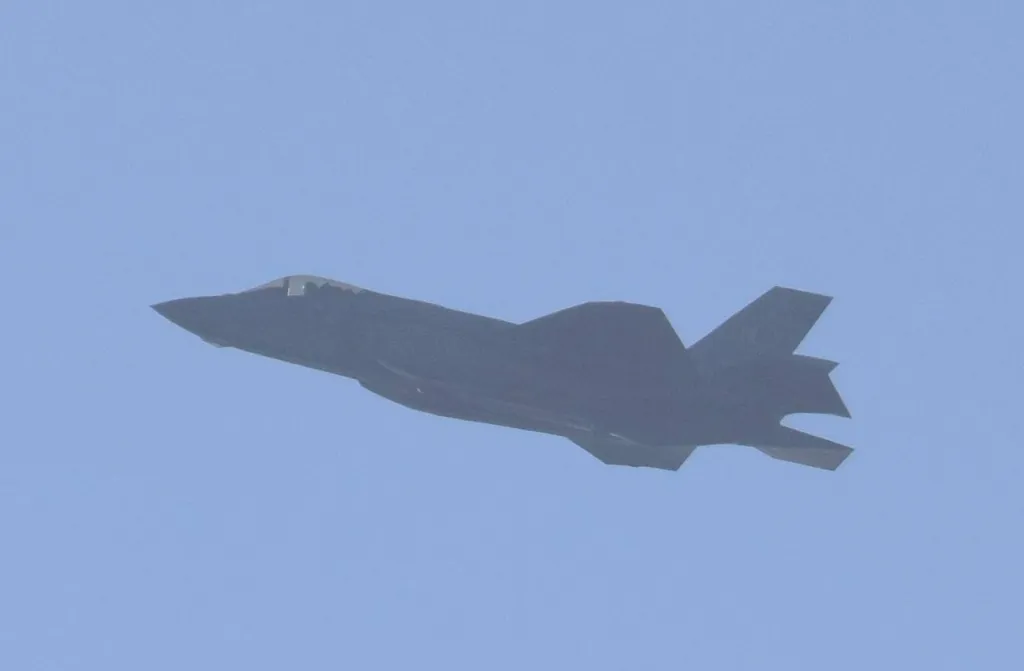
Four days into Operation Epic Fury, the joint American-Israeli attack on Iran, the U.S. is moving more tactical jets to the Middle East. On Tuesday, additional F-35A Lightning II stealth fighters and F-15E Strike Eagle multirole fighters took off from Lakenheath Air Base in the U.K, according to flight trackers and spotters. The jets are joining the large number of fighters already engaged in the war effort. The aircraft will be a welcome sight for CENTCOM, which just lost three F-15E Strike Eagles to friendly fire.
You can catch up with our latest coverage of Epic Fury here.
These movements come in the wake of statements made by Air Force Gen. Dan Caine, Chairman of the Joint Chiefs of Staff, that the U.S. is plussing up its Middle East aviation force.
In his opening remarks during a Monday morning press conference at the Pentagon, Caine said that the commander of U.S. Central Command, Adm. Brad Cooper, “will receive additional forces.”
“Even today, this rapid buildup of forces demonstrated the joint forces’ ability to adapt and project power at the time and place of our nation’s choosing,” Caine said, declining to provide many additional details.
“I don’t want to talk specifics, because that would tip the enemy off,” Caine explained. “We have more tactical aviation flowing into theater just based on the time it took to get it out there. I think we’re just about where we want to be in terms of total combat capacity and total combat power.”
That could change depending on what happens in the fight against Iran.
“For Admiral Cooper…he’ll consistently assess the trajectory of the campaign is the ON or OFF trajectory, and then make an ask of the joint force, which will then develop options for consideration by the secretary and the president to either increase or, in some cases, decrease the amount of combat capabilities that we have over there.”
The open-source intelligence (OSINT) @DefenceGeek X account tracked a dozen F-35As, originally from Hill Air Force Base in Utah, heading to the Middle East.
Hill AFB F-35As on the move from Lakenheath #FreeIran — Operation EPIC FURY —
The F-35As from Hill AFB that arrived at RAF Lakenheath (EGUL) the other week are now heading forward! Aircraft on the move are:
Aviation photographer Eugenia Golding, who lives under the RAF Lakenheath’s airbase flight path, shared some photos with us of F-35As after taking off from Lakenheath.
(Eugenia Golding)
She also provided photos of the F-35As accompanied by a KC-135 Stratotanker aerial refueling jet.
Golding also shared a photo of three F-15Es heading out of Lakenheath accompanied by a KC-135 Stratotanker aerial refueling jet.
(Eugenia Golding)
The fighters leaving Lakenheath today join a wide array of fighters, electronic warfare aircraft, surveillance aircraft, communications planes, maritime patrol jets and tankers deployed to the region.
In addition, CENTCOM confirms that in addition to B-2 Spirit stealth bombers, B-1 Lancer and B-52 Stratofortress bombers have also taken part in Epic Fury, flying from the U.S. to strike targets in Iran. There have also been scores of transport jets hauling air defense systems and other war materiel transiting to the region on a daily basis.
In the first three days of the operation, CENTCOM has hit more than 1,700 targets, including command and control centers, Islamic Revolutionary Guard Corps facilities, air defense systems, ballistic and anti-ship missile sites and naval bases. In addition to attacks from manned aircraft, these strikes have come from drones, ground base rocket artillery systems as well as from the sea with Tomahawk Land Attack Cruise missiles launched from Arleigh Burke class guided missile destroyers.
The war, as we noted earlier in this story, has already taken a toll on U.S. fighters. As we previously reported, three Strike Eagles were mistakenly shot down by Kuwaiti air defenses on March 1. All six crew members survived, but the incident showed that the battlespace is extremely complex. Given how many missiles and drones Iran is firing and all the tactical aircraft coming and going, the threat of friendly fire incidents like this is very real.
The U.S. is not alone in providing airpower. Israel has the largest and most advanced Air Force in the Middle East and has been hitting hundreds of targets, including a major new wave of Israeli strikes going after leadership targets in Tehran today.
🎯STRUCK: The Iranian Regime’s Leadership Compound — the central headquarters have been dismantled
This command headquarters was one of the most heavily secured assets in Iran. The compound that housed the regime’s most senior forum was struck by the IAF overnight using precise… pic.twitter.com/4iW2xd71bC
Meanwhile, aircraft from the U.K. and France have been deployed to the Middle East as well, while Greek fighters have been sent to Cyprus to protect facilities on the island.
France deployed Rafale fighters to the United Arab Emirates for protection of “its naval and air bases against Iranian attacks, French Foreign Minister Jean-Noël Barrot said on Tuesday,” according to Le Monde. “France has hundreds of navy, air force and army personnel based in the United Arab Emirates. Its Rafale aircraft are stationed at the Dhafra base near Abu Dhabi.”
It remains unknown how long Epic Fury will last. U.S. President Donald Trump has offered various timelines, the most recent being an operation that could last “four to five weeks.”
As we have reported in the past, though a large number of aircraft have been pushed to the Middle East, that still might not be enough for a sustained campaign lasting more than a month. As the war drags on, we will very likely see more allied aviation assets pouring into the region, something we will continue to monitor.