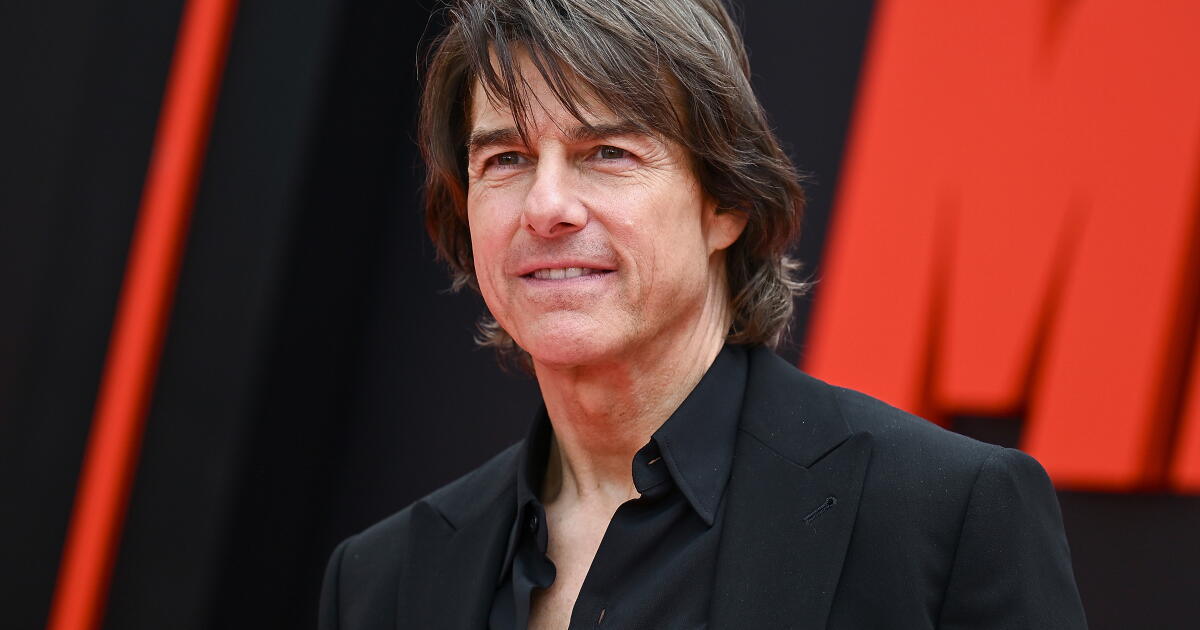
Tom Cruise is set to film a sequel to his 1990 NASCAR hit “Days of Thunder’ with Anne Hathaway, both actors announced in a video posted Saturday on social media.
The Paramount Pictures movie with Cruise reprising his role as NASCAR driver Cole Trickle and Hathaway playing a team owner and engineer will be filmed in IMAX and is expected to be released in the summer of 2028.
Jonathan Levine, whose credits include “Warm Bodies” and “Long Shot,” is directing, and Jerry Bruckheimer and Tommy Harper are producing along with Cruise.
The original film, which earned $157.9 million worldwide at the box office, was directed by the late Tony Scott and starred Robert Duvall, Randy Quaid, Cary Elwes, John C. Reilly and Nicole Kidman, who met Cruise during filming in 1989. The couple married in 1990 and divorced in 2001.
The sequel movie will see Cruise and Bruckheimer join forces again on another legacy sequel after their work on 2022’s Top Gun: Maverick, which came out 36 years after the original blockbuster and grossed $1.5 billion.
Hathaway, who won a best supporting actress Oscar in 2013 for her role in “Les Misérables,” currently stars in the epic drama “The Odyssey,” one of a string of big films including “The Devil Wears Prada 2” the actress starred in this year.
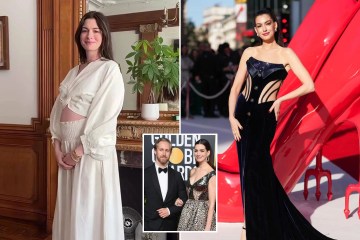
ANNE Hathaway has flashed her baby bump after hitting back at claims she is ‘faking her pregnancy’.
The stunning actress, 43, attended the premiere for her movie The End of Oak Street.
Anne Hathaway looked amazing as she attended the world premiere of The End of Oak Street on SundayCredit: GettyShe wore low rise jeans and a floaty top with her bump on displayCredit: Splash
For the occasion on Sunday night, Anne wore some low-waisted jeans and floaty dip hem top.
With her bump on display, Anne received criticism for her look, as well as wild comments that her bump might be “fake”.
Sign up for the Showbiz newsletter
Thank you!
As the internet exploded with wild claims, Anne hit back in a subtle yet direct way.
Posting a clip to Instagram in her glam chair as she got ready for the premiere, Anne defiantly wrote in the caption: “Fake hair, real bump.”
She made her feelings about the rumours known in the caption of her latest postShe shared a video from the day of the premiere with the caption that defiantly hit back at trollsCredit: annehathaway/Instagram
Fans flocked to the comments to defend the stunning Devil Wears Prada actress.
“Since when was it considered ‘normal’ to comment on a pregnant woman’s bump/appearance in a negative way.
“Anne you look bloody amazing,” said one person.
“Love that you showed off your beautiful bump,” said a second.
“That’s her pregnancy belly! It’s just pale and the baby sitting that way. I saw it jiggle,” penned a third.
While a fourth said: “Fake or not, it’s none of our business. Stay out of her pregnancy. Let her be a person.”
And a fifth penned: “THIS. This is how you clap back at people’s unsolicited opinions!”
Anne revealed she was expecting her third child back in June.
She shared a sweet post of her showing off her blossoming bump, which left her millions of followers completely overjoyed.
Walking into shot wearing a billowing white skirt and cropped top, Anne showed off her blossoming baby bump.
In the caption of the post she gushed: “x Baby, I’m yours x.”
Anne already has two kids with her husband, Adam Shulman.
She has two sons, Jonathan Rosebanks Shulman, born in March 2016, and Jack Shulman, born in November 2019.
Donny Hathaway had already been expounding on the splendors and indignities of American life by the time he got to the Troubadour in West Hollywood in the last week of August 1971.
A classically trained pianist with a declamatory voice shaped by his years in the church, Hathaway closed Side 1 of his 1970 debut with an original called “Tryin’ Times” — “Maybe folks wouldn’t have to suffer,” he sang, “if there was more love for your brother” — and finished the LP with a stately rendition of Nina Simone’s “To Be Young, Gifted and Black.” Months after the album was released, he dropped a joy bomb of a holiday single, “This Christmas,” that unapologetically made space for a Black experience in the yuletide-industrial complex.
Donny Hathaway performs at Mister Kelly’s in Chicago in 1971.
(Val Mazzenga / Chicago Tribune / Tribune News Service via Getty Images)
Yet Hathaway captured something indelibly American during his week of shows at the Troubadour, which were recorded (along with a later gig at New York’s Bitter End) for the singer’s classic “Live” album that came out in February 1972. On an LP full of spine-tingling performances, the undeniable high point is Hathaway’s take on Carole King’s “You’ve Got a Friend” — a clear-eyed if optimistic portrait of resilience and cultural exchange.
King — who’d made her name in the 1960s as half of a prolific Brill Building songwriting duo with her husband, Gerry Goffin — wrote “You’ve Got a Friend” after leaving Goffin and moving to Los Angeles with her two young daughters. Here she remade herself as a low-key singer-songwriter dispensing wise yet unflashy tunes about love, home and family — part of a gentle resetting of pop’s mood after the turmoil of the previous decade.
Cut like the rest of the album at A&M Studios on La Brea Avenue, “You’ve Got a Friend” helped drive King’s 1971 “Tapestry” LP to sales of more than 10 million copies and to a boatload of trophies (including album, record and song of the year) at the Grammy Awards; the singer’s pal James Taylor, whom she’d performed with for the first time in late 1970 at the Troubadour, topped Billboard’s Hot 100 with his own cover of “Friend” featuring background vocals by Joni Mitchell.
On the advice of Atlantic Records’ Jerry Wexler, Hathaway also recorded “Friend” as a studio duet with Roberta Flack, a fellow Howard University alum; their take sat in the Top 20 of Billboard’s R&B chart as Hathaway began his run at the Troubadour — popular enough that the audience on “Live” erupts at the sound of Hathaway’s opening organ lick.
Carole King at A&M Studios in Los Angeles in 1970.
(Jim McCrary / Redferns via Getty Images)
Indeed, the crowd is really the thing in this live version of “You’ve Got a Friend.” Hathaway and his band — including guitarist Phil Upchurch, bassist Willie Weeks and 16-year-old Fred White (soon to be of Earth, Wind & Fire) on drums — are cooking, to be clear; the groove is funky and viscous, and Hathaway’s vocal is gorgeous, not least in his nimble ad-libs.
But it’s his interplay with the few hundred folks in the room that elevates the recording to a deeply moving piece of art.
For King (and Taylor), the song’s promise of unflagging support is an intimate one-to-one matter; their renditions use homey acoustic arrangements to create a picture of two people exchanging confidences. In Hathaway’s hands, “Friend” is about community: Before he even asks them to, the audience takes over for him on lead vocals in the song’s chorus, a congregation in all but name.
Given the proximity to the civil rights movement, it’s impossible to hear Hathaway’s “You’ve Got a Friend” as disconnected from the struggles of Black people. At the Troubadour (as in his and Flack’s duet), he nixes the song’s second verse to arrive more quickly at the bridge, in which he describes a cold world filled with those who’d “hurt you and try to desert you” — even “take your soul if you let them.”
As Emily J. Lordi notes in her 2016 book about “Donny Hathaway Live,” the crowd lays back during the bridge before rejoining Hathaway for the song’s second chorus; the decision, somehow spontaneous and collective at once, is an expert bit of record-making on the part of an audience that, according to legend, hadn’t been told the concert was being taped.
“From this perspective,” Lordi writes of Hathaway’s fans — some number of whom had surely availed themselves of the Troubadour’s bar, as she points out — “they are not stealing the show so much as they are holding him up, ensuring he won’t sing the duet alone.” Together, performer and audience are turning back (not that they necessarily had a choice) to the ugly truths that singer-songwriter music sometimes sought to move past.
In this way, Hathaway’s “Friend” becomes a reinvention of a reinvention — an act of moral imagination about as American as it gets.
This wasn’t the only instance of a Black soul singer interpreting a tune King had written as a single mom newly arrived in L.A.: In May 1972, the Isley Brothers released a sultry cover of “It’s Too Late”; a month after that, Aretha Franklin’s live “Amazing Grace” album mashed up “You’ve Got a Friend” with “Precious Lord, Take My Hand,” completing the gospel-ification that Hathaway had begun in a bastion of white rock culture temporarily remade as an African American church.
Yet in Hathaway’s “Friend” you can hear the whole story American music tells about identity and belonging (and about commercial ambition).
“This might be a record here,” Hathaway tells the crowd near the end of the song, and so it was — a document of adaptation, a testament to borrowing, a bulwark against pretty fictions.