



While most of us know Wetherspoons’ pubs, I had no idea it had also been running hotels since 1998, when the chain’s first opened in Shrewsbury with 22 rooms. It now has more than 50

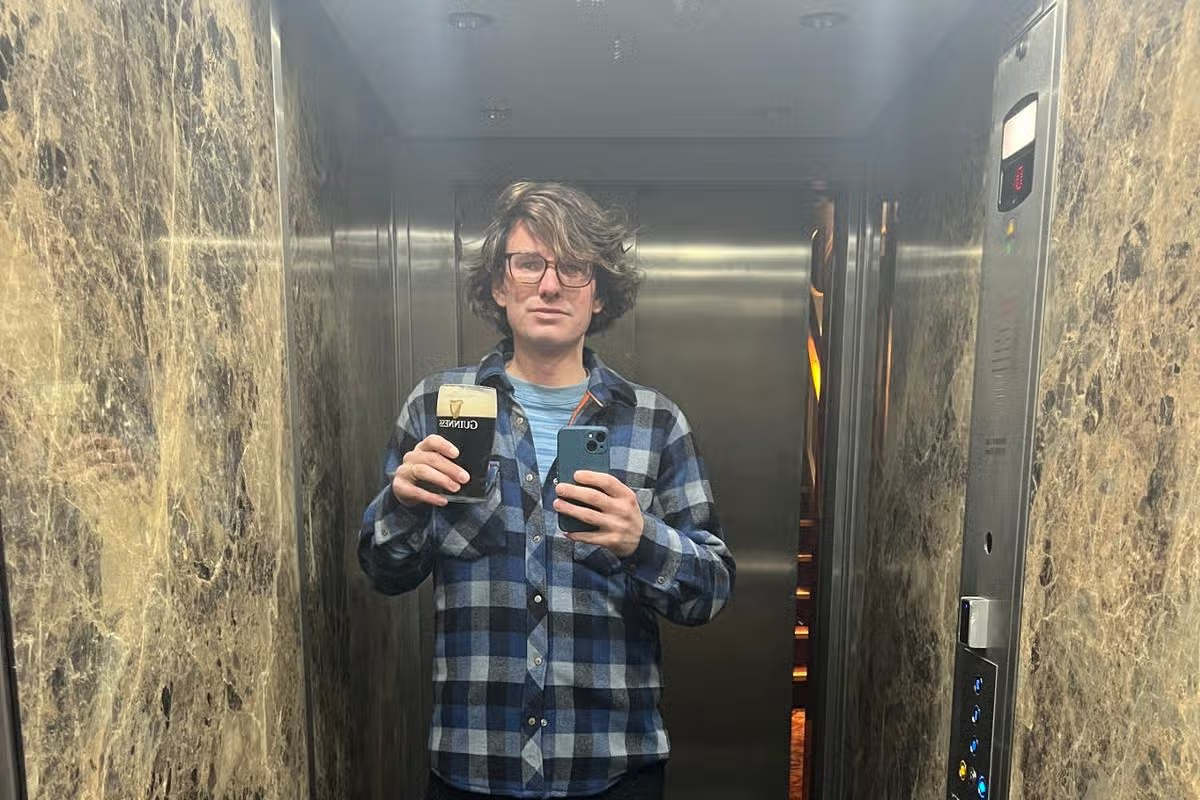
You can even take a pint to your room
Love it or loathe it, Wetherspoons is a British institution. Its patterned carpets, bargain drinks and grand old buildings are familiar features of high streets across the country.
For a long time, I’ve been in the loathe camp. Having whiled away much of my latter teenage years in one of its pubs – a once particularly grand building converted into the biggest, cheapest drinking den in the South East – I fell out of love with Tim Martin’s chain in my 20s. Partly because the local newspaper I worked for had no offices, so we had to hold news conferences in the room above our local Spoons. Partly out of support for independent pubs, which have been in a fight for survival for the past decade.
Something Spoons is certainly not doing. The chain is booming. It has around 800 venues across the UK and brought in £2.13 billion last year, an almost 5% year-on-year increase. But while most of us know its pubs, I had no idea it had also been running hotels since 1998, when the chain’s first opened in Shrewsbury with 22 rooms. A further 54 have opened since.

As you might expect with Spoons, the major draw is the price. A room for a night costs at most £50 at most venues, which is an absolute bargain anywhere near London. The chain also scored four stars out of five for value for money in a Which? budget hotel survey, one of only two to land the score.
So, on a bitter Wednesday in November, I arrived at the Thomas Ingoldsby in Canterbury, frozen and disheveled after a long bike ride from Broadstairs, ready to give Spoons another chance. I was glad that I did.
Price
Cheap drinks are a big part of Spoons’ appeal, and its hotel rooms follow the same formula.
In the Which? survey, Wetherspoons was one of just two hotel groups to earn four stars for value for money. The other was the overall winner, the Coaching Inn Group. While the Coaching Inn Group’s average room rate was £128 a night, Wetherspoons’ was £70. When I checked, a double at the Thomas Ingoldsby for the following Wednesday was available for just £55.
The savings didn’t stop at the bedroom door. I spent the evening drinking £1.89 pints of ale, then tucked into a £2.99 veggie breakfast the next morning. Both were rather decent. Perhaps I’d spent too long inside the M25, but those prices felt almost ridiculously cheap. At a time when leaving the house seems to cost £20 before you’ve done anything, the affordability was the standout attraction.
Atmosphere
My previous Spoons visit had been to the vast, strangely subdued Coronet on London’s Holloway Road. Canterbury on a chilly Wednesday evening couldn’t have felt more different. There were university students, cheerful groups of pensioners and solitary blokes reading books over onion rings. It was a lively cross-section of life, with people happily sharing the same space.
The hotel rooms are a short flight of stairs above the pub, so getting to bed after a pint couldn’t be much easier. You could even take a deli wrap and chips upstairs to enjoy in the bath. A member of staff told me rooms could be booked on a whim, although anyone who had overdone it at the bar might be turned away.
The room
I’ve stayed in plenty of budget hotels, and this was among the best. Everything felt fresh, well maintained and thoughtfully put together. My double room was generously sized, with a large desk, a well-stocked tea tray and a decent-sized television. Better still, it had a view of Canterbury Cathedral that few hotels in the city could rival.
Only two rooms at the Thomas Ingoldsby enjoy that outlook. Those on the other side not only miss out on the cathedral view but are reportedly disturbed by early-morning lorry movements. If you can get it, room 110 is the one I’d recommend. After a freezing day cycling across Kent, I was particularly pleased to discover the thermostat went up to 25C — and that the heating delivered. Within a short time, it felt as though I’d escaped somewhere considerably warmer.
What’s included
There is no all-inclusive package, which is perhaps just as well given the potential combination of Hooch and endless chips. Still, the room came with plenty of useful extras: reliable Wi-Fi, a couple of packets of biscuits, fresh towels, two bottles of water and a generous supply of tea, coffee and hot chocolate sachets. Check-out was at 11am. Breakfast wasn’t included, but at £2.99 for my veggie option, that hardly felt like a reason to complain.
The verdict
A friend’s dad once told me that Spoons was the closest thing Britain had left to a genuine social institution. Watching the mix of people enjoying their evening in Canterbury, I could see what he meant.
As nightclubs and members’ societies close, places where people from different backgrounds can gather feel increasingly valuable. Whatever my reservations about the business, this pub offered exactly that.
Add a comfortable room, a cathedral view and remarkably low prices, and the appeal becomes difficult to resist. I arrived as a skeptic, but Thomas Ingoldsby won me over.