hantavirus

WHO says 12th person infected with hantavirus detected in the Netherlands | Health News

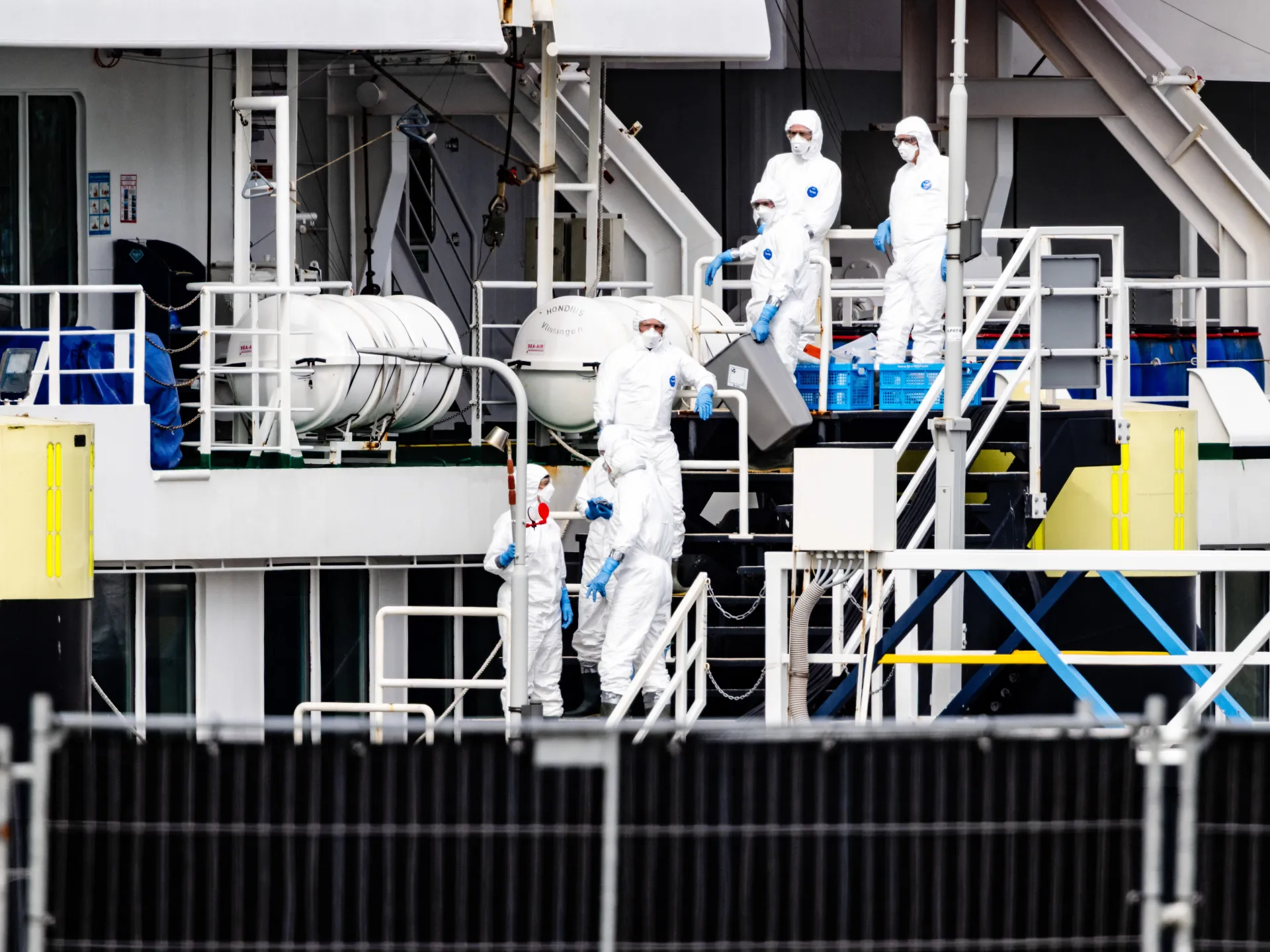
WHO chief, Tedros Adhanom Ghebreyesus, urged all countries to monitor passengers who were on the MV Hondius cruise ship.

The World Health Organization has urged countries to continue monitoring passengers for hantavirus after a case was detected among a Dutch crew member of the ship at the centre of the outbreak.

Tedros Adhanom Ghebreyesus, the WHO chief, told a news conference in Geneva on Friday that he urges all countries to monitor the passengers who were on board the MV Hondius cruise ship and “move carefully for the remainder of the quarantine period”.

Recommended Stories

list of 3 itemsend of list

Tedros said a Dutch crew member had tested positive and was now in isolation, taking the total positive cases to 12.

So far, three people have died due to the virus.

Tedros reiterated that no deaths have been reported since May 2, when the outbreak was first reported to the WHO.

“More than 600 contacts continue to be followed in 30 countries, and a small number of high-risk contacts are still being located,” he added.

Dutch authorities also confirmed that the infected crew member had been taken to hospital.

“The Andes virus has been detected in one person who was in quarantine in the Netherlands. The patient has since been admitted to the hospital as a precaution and is in isolation,” said the Dutch National Institute for Public Health and the Environment (RIVM).

“The RIVM understands that this news may raise questions or concerns. However, the chance of further spread in the Netherlands remains very small,” the statement said.

According to the RIVM, everyone who had evacuated from the Dutch-flagged ship to the Netherlands is tested every week, and two separate laboratories confirmed the positive test.

It added that the person who had tested positive had been isolating at home.

The initial cruise ship had departed on April 1 from Ushuaia, Argentina, before heading to Cape Verde and then Tenerife in Spain’s Canary Islands.

While the WHO is investigating how the virus got on board the ship, it is believed that the first person to contract it could have been exposed to rodents during a bird-watching expedition.

While rodents spread hantavirus, the Andes strain is the only known strain capable of spreading from human to human.

Source link

Ebola, hantavirus: Is the world prepared for the next pandemic? | Health News

The World Health Organization (WHO) has declared that an Ebola outbreak in Uganda and the Democratic Republic of the Congo (DRC) is a “public health emergency of international concern”, setting off alarm bells around the world.

The WHO’s announcement on Sunday came as several countries are battling to contain a hantavirus outbreak linked to a cruise ship trip to South America.

Recommended Stories

list of 3 itemsend of list

While the cause and treatment for the two viruses differ, news of their outbreaks has caused world leaders and health agencies to question what this means for international travel and cross-border coordination in containing them. These questions are particularly pertinent following the COVID-19 pandemic, which resulted in global lockdowns due to the lack of preparedness for the spread of the coronavirus.

But as the WHO faces a funding crisis, is the world better prepared now if another pandemic occurs – or could it be even less so?

Here’s what we know:

Why is the WHO facing a funding crisis?

Every time a health emergency occurs anywhere in the world, the first response of the WHO is to determine the danger the disease poses and then implement a plan to respond to it.

But since 2025, the United Nations health agency has been struggling financially due to a lack of funding from donors.

WHO Director-General Tedros Adhanom Ghebreyesus warned in May 2025 that global health would be at serious risk without enough donor support and that the agency was facing “the greatest disruption to global health financing in memory”.

The crisis deepened after the United States, which had previously covered nearly one-fifth of the WHO’s budget, officially withdrew from the organisation in January this year. US President Donald Trump announced the decision in January 2025, alleging the WHO had mishandled the COVID-19 pandemic and other international health crises.

As a result, the programme budget for the agency’s 2026-27 projects has been set at more than $6.2bn, a 9 percent decrease from the previous year.

In response, the WHO revised its financial plans and scaled back spending by cutting back some of its critical programmes, which has significantly curtailed pandemic preparedness, health experts told Al Jazeera.

“Funding cuts to the WHO have directly weakened disease surveillance efforts, which in turn affect the readiness and preparedness to deliver an effective response to epidemics and pandemics,” Kaja Abbas, associate professor of infectious disease epidemiology and dynamics at the London School of Hygiene & Tropical Medicine and Nagasaki University, said.

Following the recent hantavirus outbreak, passengers and crew members from more than 20 countries on the affected cruise ship, MV Hondius, required coordinated monitoring, contact tracing, medical evacuation, and public health guidance across borders.

Under the International Health Regulations (IHR), the WHO helps to facilitate communication and response efforts among countries, deploys experts, supports laboratory testing and organises emergency responses in case of an outbreak.

Following the Ebola outbreak in the DRC and Uganda, the WHO has deployed experts, personal protective equipment (PPE), laboratory support and emergency funding while coordinating regional preparedness efforts.

But these sorts of efforts are at risk with the current funding crisis, Krutika Kuppalli, an infectious diseases physician in Dallas, in the US state of Texas, with expertise in emerging pathogens, global health and outbreak response, told Al Jazeera.

As infectious diseases do not respect borders, rapid international coordination is essential, she added.

“Weakening WHO through funding cuts risks delaying outbreak detection, slowing response times, and reducing the world’s ability to contain emerging threats before they spread globally.”

In a statement to Al Jazeera, the International Pandemic Preparedness Secretariat (IPPS), an independent entity which helps world leaders prepare and respond to pandemics, highlighted that preparedness relies on consistent funding.

“Sustained investment and strong multilateral coordination are essential to maintain the systems, partnerships, and scientific capabilities needed before the next pandemic threat emerges,” IPPS said.

What else is hampering a global response to another pandemic?

Besides funding issues, the WHO has been struggling to get world leaders to agree on a pandemic treaty for 2026 amid a pathogen-sharing dispute.

In May 2025, it adopted a Pandemic Agreement, which sets out what it describes as a “comprehensive approach to pandemic prevention, preparedness and response that improves both global health security and global health equity”.

But UN member nations have not been able to reach a consensus on the Pathogen Access and ⁠Benefit-Sharing (PABS) aspect of the agreement – or “annex” – due to differences over ensuring every country receives equitable access to vaccines and treatment after data on disease samples have been shared.

Talks on PABS mainly focus on setting up a system to ensure countries can quickly share pathogens that could cause pandemics while receiving fair access to vaccines, tests and treatments that result from their use.

Following talks on PABS in May this year, the WHO chief urged countries to keep working with urgency and said the next pandemic was “a matter ⁠of when, not if”.

“The PABS annex is the last piece of the puzzle not only for the Pandemic Agreement,” he added.

Kuppalli told Al Jazeera that getting agreement on this is crucial, as international cooperation is essential during emerging outbreaks.

“Countries must rapidly share pathogen samples, genomic sequencing data, and epidemiologic information so diagnostics, vaccines, and therapeutics can be developed quickly,” she said.

“Delays or political disputes over information sharing can cost valuable time in the early stages of an outbreak, when containment is most possible,” she warned.

Why is antivaccine sentiment growing?

During the COVID-19 pandemic, when the US and a handful of other countries began rolling out coronavirus vaccines, many people resisted the vaccines, fearing adverse reactions as social media was flooded with misinformation about their safety and purpose.

According to a July 2025 report in The BMJ (formerly the British Medical Journal), antivaccine sentiment among the leadership of US health agencies has also been on the rise. Robert F Kennedy Jr, US health secretary, is among those leaders who often promotes unverified claims about the dangers of vaccines and also opposed the COVID vaccine.

In the report for the BMJ, authors Anna Kirkland and Scott Greer argued that if health agencies are led by such people, it will “likely mean that vaccination information campaigns are reduced, vaccine hesitancy increases, insurance coverage for vaccinations is limited, and public sector capacity to vaccinate is reduced”.

“Research money will be wasted on investigating already debunked links between autism and vaccination, while vaccination infrastructure, such as vaccination programmes run by local governments, will be eroded,” they added.

This is a major issue because public trust is critical during outbreaks, Kuppalli said.

“If large portions of the population reject vaccines or public health guidance, it becomes much harder to control transmission, protect healthcare systems, and reduce deaths,” she said.

“Equally concerning are funding cuts to vaccine research and development. Pandemic preparedness depends on investing in vaccines before a crisis occurs, not after,” she added.

Last August, the US Department of Health and Human Services (HHS) cancelled about $500 million in contracts and grants dedicated to mRNA vaccine development. These cuts affected 22 research initiatives and clinical trials focused on emerging pathogens, pandemic flu, respiratory syncytial virus (RSV), and COVID-19 boosters, according to Harvard University’s TH Chan School of Public Health.

Kuppalli said the development of mRNA vaccines targeting H5N1 avian influenza is an important effort in preparing for the possibility of a pandemic.

“Reductions in funding for these types of programmes risk slowing scientific progress, limiting manufacturing readiness, and leaving the world less prepared when the next outbreak emerges,” she said.

Is the world economically prepared for a pandemic?

Amid antivaccine movements and funding cuts, the current state of the world economy is also making it challenging for world leaders to prepare a pandemic response.

The US-Israel war on Iran has resulted in a sharp rise in oil and gas prices, which has in turn upended the world economy. High fuel costs have disrupted supply chains and international travel, resulting in a spike in the cost of medicines. In the United Kingdom, for example, pharmacies are charging 20 to 30 percent more for over-the-counter medicines. In India, chemists are reporting price rises of common painkillers of as much as 96 percent.

“Wars and economic pressures also strain supply chains, divert government resources, displace populations and weaken already fragile health systems. These all increase the risk of outbreaks spreading unchecked,” Kuppalli warned.

“Emerging infectious diseases are becoming more frequent and more complex, yet many countries are reducing investments in preparedness rather than strengthening them. The result is a growing mismatch between the scale of the threat and the resources available to respond,” she said.

IPPS told Al Jazeera that pandemics and disease outbreaks have devastating economic consequences. “In 2020 alone, the global economy contracted by around 3 percent of GDP, representing trillions of dollars in lost output, alongside widespread job losses and trade disruption.”

“Sustained investment in pandemic preparedness and response (PPR) can help prevent such losses by ensuring that vaccines, therapeutics, and diagnostics are ready to deploy rapidly when new threats emerge,” IPPS said.

Investing in research and development during peacetime ensures that when the next pandemic threat arises, the world has products and systems in place to respond quickly, protect lives, and avoid the economic losses experienced during COVID-19, it added.

“Sustained and diversified funding for pandemic preparedness is not just a health priority; it is also an economic safeguard.”

Has there been any progress at all since COVID-19?

“The pandemic taught all of us many lessons, especially that global threats demand a global response,” Ghebreyesus said in February, six years after the COVID-19 pandemic hit. “Solidarity is the best immunity,” he added.

Besides adopting a Pandemic Agreement last May, in 2022, the WHO launched a fund in collaboration with the World Bank. As of February this year, the fund has “provided grant funding” totalling more than $1.2bn, the WHO says. It has “helped catalyse an additional $11bn that has so far supported 67 projects in 98 countries across six regions, to expand surveillance, lab networks, workforce training and multi sectoral coordination”, it adds.

In 2023, the WHO also set up the Global Health Emergency Corps “in response to the gaps and challenges identified during the COVID-19 response”. The Corps mainly supports countries experiencing public health emergencies “by assessing emergency workforce capacities, rapidly deploying surge support, and creating a network of emergency leaders from multiple countries to share best practices and coordinate responses”.

As a result of all this, Kuppalli said, there are reasons to be hopeful.

“One of the clearest lessons from recent outbreaks is that the global scientific and public health community can collaborate remarkably quickly when faced with an urgent threat,” she said.

She noted how during COVID-19, scientists around the world rapidly shared genomic sequences, clinical data and research findings in real time.

“The development of highly effective COVID-19 vaccines in less than a year was a historic scientific achievement and demonstrated what is possible when there is political will, funding, international cooperation, and regulatory flexibility,” she said.

“In addition, advances in vaccine platforms, particularly mRNA technology, mean we now have the capability to design and begin producing candidate vaccines much faster than in the past,” she explained.

“While many challenges remain, including funding, misinformation, and geopolitical tensions, the scientific progress made over the last several years has unquestionably improved our ability to detect emerging threats and develop medical countermeasures more rapidly than ever before,” she added.
Source link

WHO reports 10 hantavirus cases, 3 deaths, tied to cruise ship

World Health Organization (WHO) Director-General Tedros Adhanom Ghebreyesus briefs the press on the recent hantavirus outbreak linked to the MV Hondius cruise ship during a joint press conference with the Spanish prime minister at Moncloa Palace in Madrid, Spain, on Tuesday. Photo by Chema Moya/EPA

May 15 (UPI) — The World Health Organization said Friday there have been 10 hantavirus cases reported from the MV Hondius cruise ship and three people have died.

The WHO held a press conference to share an update on the hantavirus outbreak Friday, days after passengers of the cruise ship disembarked to return to their home countries under quarantine. It previously reported 11 cases but that number was revised down to 10.

One American who recently had an inconclusive test has tested negative, said Dr. Maria Van Kerkhove, director of the WHO’s Department of Epidemic and Pandemic Management.

“As of today a total of 10 cases, including three deaths, have been reported to WHO, including eight people who were laboratory confirmed for Andes virus infection and two probable,” Dr. Tedros Adhanom Ghebreyesus, WHO director-general, said during Friday’s press conference.

Forty-one people are being monitored for the hantavirus in the United States. Most U.S. passengers were transported from the ship to the University of Nebraska Medical Center, where they were being monitored in a specially designed medical facility.

Stephen Kornfeld is the only American to test positive for hantavirus. He had flu-like symptoms while aboard the cruise ship and was admitted to the facility in Nebraska. He has since tested negative and has been moved into the facility’s quarantine unit.

“I physically feel great. I have felt great for many, many days,” he told ABC News.

On Thursday, the U.S. Centers for Disease Control and Prevention held a press briefing on its response to the hantavirus. Dr. David Fitter, incident manager for CDC’s hantavirus response, said the risk to the general public is “low.”

“Testing is recommended only for those with symptoms, and decisions are guided by the best available evidence,” Fitter said.

Fitter said the monitoring period for the U.S. passengers is 42 days. He noted that there were passengers who left the ship and returned home before the outbreak and they have been identified.

“Some of these people are at home monitoring their health in close coordination with their state and local health departments, with CDC supporting those efforts,” Fitter said.

Source link

Two more cruise ship passengers test positive for hantavirus | Health News

One French passenger and one from the US test positive after being evacuated from the vessel in the Canary Islands.

A French woman and an American man have tested positive for hantavirus infections as countries around the world repatriate passengers from a cruise ship hit by a deadly outbreak.

French Health Minister Stephanie Rist said on Monday that a French passenger who was on the MV Hondius cruise ship tested positive for the virus and her condition was deteriorating, the Reuters news agency reported.

Recommended Stories

list of 3 itemsend of list

“What is key is to act at ⁠the start and break ⁠the virus transmission chains,” Rist told France Inter radio, pointing to the “decree ⁠that came out today that will allow us to ⁠strengthen isolation measures for ⁠contact cases and to protect the population”.

Another four French passengers have so far tested negative, and authorities have identified 22 contact cases.

The US Department of Health and Human Services said on Sunday that an American on a repatriation flight had tested “mildly positive” for the virus and another had mild symptoms. Both were travelling “in the plane’s biocontainment units out of an abundance of caution” and all 17 MV Hondius passengers on board would undergo clinical assessment upon arrival in the US.

The Dutch flagged hantavirus-stricken cruise ship MV Hondius arrives to the industrial port of Granadilla de Abona on the island of Tenerife in Spain's Canary Islands
The Dutch-flagged, hantavirus-stricken cruise ship MV Hondius arrives at the port of Granadilla de Abona on the island of Tenerife in Spain’s Canary Islands [File: Jorge Guerrero/AFP]

The two new cases bring the total number of confirmed cases to 10. The World Health Organization (WHO) has so far confirmed two deaths and one probable death, and as of Friday, four people were hospitalised with one in intensive care in South Africa.

The MV Hondius was anchored near the Canary Island of Tenerife after being stranded for weeks following an outbreak of the hantavirus on the luxury cruise ship. Health authorities have been locating and monitoring passengers who disembarked from the ship before the outbreak was identified.

Investigations into the source of the outbreak are ongoing.

The evacuation ⁠of passengers from the cruise ship will be completed on Monday with flights to Australia and the Netherlands, Spain’s health minister said.

One flight to Australia will evacuate six passengers ⁠from Tenerife and another to the Netherlands will take 18 passengers. Both flights are to also carry passengers from other countries that did not send their own repatriation flights, officials said.

Hantaviruses can cause severe respiratory illness and are usually spread by rodents but can also, in more rare cases, be transmitted between people. Symptoms can begin between one and eight weeks after exposure and include headaches, fever, chills, gastrointestinal issues and respiratory distress.

The fatality rate of the Andes strain of the hantavirus, identified in the ship’s outbreak, can reach 40 to 50 percent, particularly among elderly people.

The WHO has recommended a quarantine of 42 days for the cruise passengers. Experts are stressing the need for calm, noting that the virus is far less contagious than COVID-19.

Robin May, chief scientific officer at the United Kingdom Health Security Agency, said the risk to the public was “extremely low”, the Press Association news agency reported.

Source link

Cruise ship hit by hantavirus outbreak arrives in Tenerife | Health News

The cruise ship hit by a deadly hantavirus outbreak has arrived near the Port of Granadilla in Tenerife in the Canary Islands.

The Dutch-flagged MV Hondius arrived at the Spanish port early on Sunday, escorted by a Civil Guard vessel, according to data from the maritime tracking service VesselFinder.

Recommended Stories

list of 3 itemsend of list

The ship had left for Tenerife on Wednesday from the coast of Cape Verde after the World Health Organization (WHO) and European Union asked Spain to manage the evacuation of its passengers after the hantavirus outbreak was detected.

The WHO said on Friday that at least eight people on the ship had fallen ill, including three who died – a Dutch couple and a German national. Six of these people are confirmed to have contracted the virus with another two suspected cases, the WHO said.

All passengers on the luxury cruise ship are being considered high-risk contacts as a precautionary measure, Europe’s public health agency said late on Saturday as part of its rapid scientific advice.

In Tenerife, the passengers will be tested by Spanish health authorities to ensure they remain asymptomatic and will then be transported to land in small boats, according to Spanish officials.

Sealed-off buses will take the passengers to the Spanish island’s main airport about 10 minutes away, where they will board planes heading to their respective countries.

The evacuation is expected to begin between 7:30am and 8:30am (06:30 and 07:00 GMT), according to Spanish authorities.

Spanish nationals are set to disembark first with other nationalities to follow in groups, government officials said. Thirty crew members will remain on board and will sail to the Netherlands, where the ship will be disinfected.

‘This is not another Covid’

Hantavirus is usually spread by rodents but can in rare cases be transmitted person to person.

WHO Director General Tedros Adhanom Ghebreyesus arrived on Saturday evening in Tenerife with Spain’s interior and health ministers and its minister for territorial policy to coordinate the arrival of the ship.

He gave people in Tenerife assurances and thanked them for their solidarity.

“I need you to hear me clearly,” Tedros wrote in an open letter to the people of Tenerife on Saturday: “This is not another Covid.”

WHO’s epidemic and pandemic preparedness and prevention director, Maria Van Kerkhove, said that while everybody on board will be classified as “a high-risk contact”, the risk to the general public and the people of the Canaries remained low.

In the city of Granadilla de Abona early on Sunday, life appeared largely normal. Some people were swimming, others shopping at the market or sitting at cafe terraces.

“There are worries there could be a danger, but honestly, I don’t see people being very concerned,” David Parada, a lottery vendor, told the AFP news agency.

Tracking and tracing around the world

The MV Hondius left Ushuaia, Argentina, on April 1 for a cruise across the Atlantic Ocean to Cape Verde.

Argentinian provincial health official Juan Petrina said there was an “almost zero chance” the Dutch man linked to the outbreak contracted the disease in Ushuaia based on the virus’s incubation period, among other factors.

Health authorities in several countries have been tracking passengers who had already disembarked and anyone who may have come into contact with them.

A flight attendant on the Dutch airline KLM, who came into contact with an infected passenger from the cruise ship and later showed mild symptoms, tested negative for the hantavirus, the WHO said on Friday.

The passenger, the wife of the first person to die in the outbreak, had briefly been on a plane bound from Johannesburg to the Netherlands on April 25 but was removed before takeoff. She died the following day in a Johannesburg hospital.

Spanish authorities said a woman on that flight was also being tested for the hantavirus after having developed symptoms at home in eastern Spain. She is in isolation in hospital, Secretary of State for Health Javier Padilla said.

Two Singapore residents who had been on the ship tested negative for the disease but will remain in quarantine, the city-state’s authorities said on Friday.

British health authorities also said on Friday that there was a suspected case on Tristan da Cunha in the South Atlantic, one of the world’s most isolated settlements with about 220 residents. The MV Hondius had stopped there on April15.

Source link

Should we be worried about the hantavirus outbreak? | Health News

The incident has drawn comparisons to the COVID-19 pandemic.

The World Health Organization says the hantavirus poses a low risk to public health.

Arrangements are underway to repatriate passengers from a cruise ship after three people on board died.

So, how are officials applying the lessons learned during the COVID-19 pandemic to respond to the hantavirus?

Presenter: James Bays

Guests:

Dr Mukesh Kapila – Professor Emeritus of Global Health and Humanitarian Affairs at the University of Manchester

Dr Margaret Harris – Lecturer at the United Nations Institute for Training and Research, former W.H.O. spokeswoman

Nicholas Locker – Professor of Virology at the Pirbright Institute, near Guildford, UK

Source link

As hantavirus outbreak unfolds on ship, CDC is absent

No quick dispatching of disease investigators. No televised news conference to inform the public. No timely health alerts to doctors.

In the midst of a hantavirus outbreak that involves Americans and is making headlines around the world, the U.S. government’s top public health agency, the Centers for Disease Control and Prevention, has been uncharacteristically missing in action, according to a number of experts.

To President Trump, “we seem to have things under very good control,” as he told reporters Friday evening.

To experts, the situation aboard a cruise ship has not spiraled because, unlike COVID-19 or measles or the flu, hantavirus does not spread easily. It has been health experts in other countries, not the United States, who have been dealing primarily with the outbreak in the last week.

“The CDC is not even a player,” said Lawrence Gostin, an international public health expert at Georgetown University. “I’ve never seen that before.”

Not until late Friday did CDC actions accelerate.

Health officials confirmed the deployment of a team to Spain’s Canary Islands, where the ship was expected to arrive early Sunday local time, to meet the Americans onboard. They said a second team will go to Offutt Air Force Base in Nebraska as part of a plan to evacuate U.S. passengers from the ship to a University of Nebraska quarantine center for evaluation and monitoring. Also, the CDC issued its first health alert to U.S. doctors, advising them of the possibility of imported cases.

At their first briefing, held Saturday by telephone only for invited reporters, officials pledged to be transparent in updating the public but said the media could not cite the speakers by name under rules set by aides to Health Secretary Robert F. Kennedy Jr. They did not directly answer a question about whether the U.S. passengers could leave the university medical facility when they wanted.

The CDC’s diminished role in this outbreak is an indicator the agency is no longer the force in international health or the protector of domestic health that it once was, some experts said.

The hantavirus outbreak is “a sentinel event” that speaks to “how well the country is prepared for a disease threat. And right now, I’m very sorry to say that we are not prepared,” said Dr. Jeanne Marrazzo, chief executive officer of the Infectious Diseases Society of America.

How the outbreak unfolded

Early last month, a 70-year-old Dutch man developed a feverish illness on a cruise ship traveling from Argentina to Antarctica and some islands in the South Atlantic. He died less than a week later. More people became sick, including the man’s wife and a German woman who both died.

Hantavirus was first identified as a cause of sickness of one of the cases on May 2. The World Health Organization swung into action and by Monday was calling it an outbreak. About two dozen Americans were on the ship, including about seven who disembarked last month and 17 who remained on board.

It’s WHO taking center stage

For decades, the CDC partnered with the WHO in such situations. The CDC acted as a mainstay of any international investigation, providing staff and expertise to help unravel any outbreak mystery, develop ways to control it and communicate to the public what they should know and how they should worry.

Such actions were a large reason why the CDC developed a reputation as the world’s premier public health agency.

But this time, the WHO has been center stage. It made the risk assessment that has told people the outbreak is not a pandemic threat.

“I don’t think this is a giant threat to the United States,” said Jennifer Nuzzo, director of Brown University’s Pandemic Center. But how this situation has played out “just shows how empty and vapid the CDC is right now,” she said.

Tumult under Trump

The current situation comes after 16 tumultuous months during which the Trump administration withdrew from the WHO, has restricted CDC scientists from talking to international counterparts at times and embarked on a plan to build its own international public health network through one-on-one agreements with individual countries.

The administration has laid off thousands of CDC scientists and public health professionals, including members of the agency’s ship sanitation program.

As this was playing out, Kennedy said he was working to “restore the CDC’s focus on infectious disease, invest in innovation, and rebuild trust through integrity and transparency.”

Waiting to hear from the CDC

The CDC has not been completely silent on hantavirus.

The agency on Wednesday issued a short statement that said the risk to the American public is “extremely low,” and described the U.S. government as “the world’s leader in global health security.”

Said Nuzzo: “Not only was that not helpful, it actually does damage because a core principle of public health communications is humility.”

The CDC’s acting director, Dr. Jay Bhattacharya, posted a message on social media that the agency was lending its expertise in coordinating with other federal agencies and international authorities. Arizona officials this week said they learned from the CDC that one of the Americans who left the ship — a person with no symptoms and not considered contagious — had already returned to the state. WHO officials said the CDC has been sharing technical information.

The CDC also is “monitoring the health status and preparing medical support for all of the American passengers on the cruise,” Bhattacharya wrote.

But federal health officials have mostly been tight-lipped, declining interview requests.

COVID-19 comparison

In interviews this week, some experts made a comparison with a 2020 incident involving the Diamond Princess, a cruise ship docked in Japan that became the setting of one of the first large COVID-19 outbreaks outside China.

The CDC sent personnel to the port, helped evacuate American passengers, ran quarantines, shared genetic data on the virus, coordinated with the WHO and Japan, held public briefings and rapidly published reports “that became the world’s reference data on cruise ship COVID transmission,” said Dr. Tom Frieden, a former CDC director.

Some aspects of the international response to the Diamond Princess were criticized, and it did not halt the outbreak or stop COVID-19’s spread across the world. But some experts say it was not for the CDC’s lack of trying.

“The CDC was right on top of it, very visible, very active in trying to manage and contain it,” Gostin said, while the agency’s work now is delayed and subdued.

Instead of working with nearly all of the world’s nations through the WHO, the Trump administration has pursued bilateral health agreements with individual nations for information sharing, public health support, and what it describes as “the introduction of innovative American technologies.” Roughly 30 agreements are currently in place.

That’s not sufficient, Gostin said. “You can’t possibly cover a global health crisis by doing one-on-one deals with countries here and there,” he said.

Stobbe writes for the Associated Press. AP writers Ali Swenson in New York, Darlene Superville in Washington and Susan Montoya Bryan in Albuquerque contributed to this report.

Source link

Hantavirus Tenerife travel update issued by World Health Organisation after cruise ship outbreak

The island is a popular holiday destination for Brits

The World Health Organisation (WHO) has moved to reassure concerned residents in Tenerife that they will not come into contact with passengers from a hantavirus-affected cruise ship due to arrive on the island. Nearly 1million people call the island home, which also serves as a major holiday destination for British tourists and visitors from across Europe.

The UN health body confirmed there had been six cases of hantavirus linked to the MV Hondius vessel, with four patients currently receiving hospital treatment. It revealed that a total of eight cases, including three fatalities, had been recorded — though one suspected case has since been ruled out after returning a negative hantavirus test.

Around 22 British passengers and crew members aboard the ship are due to arrive in Tenerife on Sunday, with plans to fly them back to the UK on the same day. Representatives from the UK Health Security Agency (UKHSA) and the Foreign Office will meet the MV Hondius when it arrives in Spain’s Canary Islands, with British nationals on board undergoing hantavirus testing before disembarking.

Those who test negative and show no symptoms will be transported directly to a specially arranged repatriation flight with medical staff on board. British citizens returning home will be required to self-isolate for 45 days and will be prohibited from using public transport to reach their residences. The WHO confirmed on Saturday that no symptomatic passengers were currently aboard the vessel. In a letter to the residents of Tenerife, WHO director-general Dr Tedros Adhanom Ghebreyesus acknowledged locals were “worried”.

READ MORE: Parents using baby product told to ‘stop immediately’ after urgent recallREAD MORE: Ryanair passengers with flights booked to Portugal issued EES update

The Ethiopian public health official described the virus as “serious” but stressed the outbreak was “not another Covid” and the “current public health risk from hantavirus remains low”.

He explained: “Spain’s authorities have prepared a careful, step-by-step plan: passengers will be ferried ashore at the industrial port of Granadilla, far from residential areas, in sealed, guarded vehicles, through a completely cordoned-off corridor, and repatriated directly to their home countries.

“You will not encounter them. Your families will not encounter them. Nearly 150 people from 23 countries have been at sea for weeks, some of them grieving, all of them frightened, all of them longing for home. Tenerife has been chosen because it has the medical capacity, the infrastructure, and the humanity to help them reach safety.”

Two British men are currently being treated for hantavirus in the Netherlands and Johannesburg, South Africa, while a third British man with symptoms is being cared for on the isolated South Atlantic island of Tristan da Cunha. The Foreign Office confirmed that a total of 30 passengers and crew aboard the MV Hondius are British nationals, with 22 still remaining on the vessel. The outbreak has been linked to a birdwatching trip in Argentina, which two of the passengers attended prior to embarking on the ship.

Source link

Hantavirus on Cruise Ship: How Spain Plans to Evacuate Passengers Safely

Spain will receive the luxury cruise ship MV Hondius, which has 149 people aboard from 23 countries and suffered a hantavirus outbreak that killed three people. Four others are confirmed infected, and three more are suspected cases. The ship is expected to arrive in Tenerife, part of the Canary Islands, on Sunday around noon but will not dock. Instead, it will anchor nearby, and those onboard will be taken to land using smaller boats. Spanish authorities stated that this measure was requested by local officials and there is no public health risk from docking.

The MV Hondius began its journey on April 1 from Argentina and carries 88 passengers and 61 crew members, including one deceased German guest. Oceanwide Expeditions confirmed no remaining passengers show symptoms of infection. After arriving, evacuees will be taken to the main airport in Granadilla, ten minutes away, using sealed buses with drivers in protective gear. These buses will go directly to the airport runway for boarding onto evacuation flights. It is not clear if all crew members will leave the ship.

The Spanish government is coordinating these evacuations, with the U. S. and Britain already sending charter planes. Countries with the highest numbers aboard include the Philippines (38), Britain (23), the U. S. (17), Spain (14), and the Netherlands (13). Although authorities aim to evacuate everyone quickly, a special isolated unit at a local hospital is prepared as a backup.

One of the deceased passengers remains on board while the Netherlands will handle their evacuation. The MV Hondius must continue to the Netherlands after its obligations, although it is currently undetermined when that will happen. Spanish officials stress that the ship will not linger in the area longer than necessary, and disinfection will be carried out with care for health safety.

With information from Reuters

Source link

Three dead in suspected hantavirus outbreak on Atlantic cruise ship | Health News

Three of six passengers who fell ill from suspected rodent-transmitted virus have died, and one is in intensive care, the WHO says.

Three people have died on a cruise ship in the Atlantic, with at least one confirmed to have suffered from hantavirus, a rare disease transmitted to humans from rodents.

Health authorities are now investigating a suspected outbreak of the virus on the MV Hondius, which is sailing from Ushuaia in Argentina to Cape Verde.

Recommended Stories

list of 3 itemsend of list

In a statement on Sunday, the World Health Organization said that one case had been confirmed and at least five other passengers were suspected of being infected.

“Of the six affected individuals, three have died, and one is currently in intensive care in South Africa,” WHO said in a statement.

“Detailed investigations are ongoing, including further laboratory testing and epidemiological investigations. Medical care and support are being provided to passengers and crew. Sequencing of the virus is also ongoing.”

WHO added that it was “facilitating coordination” between countries to evacuate the two other passengers showing symptoms of the infection.

Hantavirus, a rare disease transmitted to humans through the droppings or urine of infected rodents, can be fatal in severe cases and cause hemorrhagic fever.

Infected couple among casualties

South Africa’s National Department of Health said earlier on Sunday that there had been an outbreak of a “severe acute respiratory illness”, which had killed at least two people, and that a third person was in intensive care in Johannesburg, according to the AFP news agency.

The ministry’s spokesperson, Foster Mohale, confirmed that the patient being treated in Johannesburg tested positive for hantavirus.

A 70-year-old was the first to develop symptoms. He died on the ship, with his body now being held on the island of Saint Helena, a British territory in the South Atlantic, the spokesman said.

The patient’s 69-year-old wife also fell sick and was evacuated to South Africa, where she died in a Johannesburg hospital, he added.

Mohale told AFP that authorities have not confirmed the nationalities of the deceased. But the person in intensive care was reported by AFP to be a 69-year-old Briton.

Source link