Hamas

Hamas announces dissolution of Gaza governing body | Israel-Palestine conflict News

A Palestinian technocratic committee will take its place to manage the enclave’s day-to-day governance.

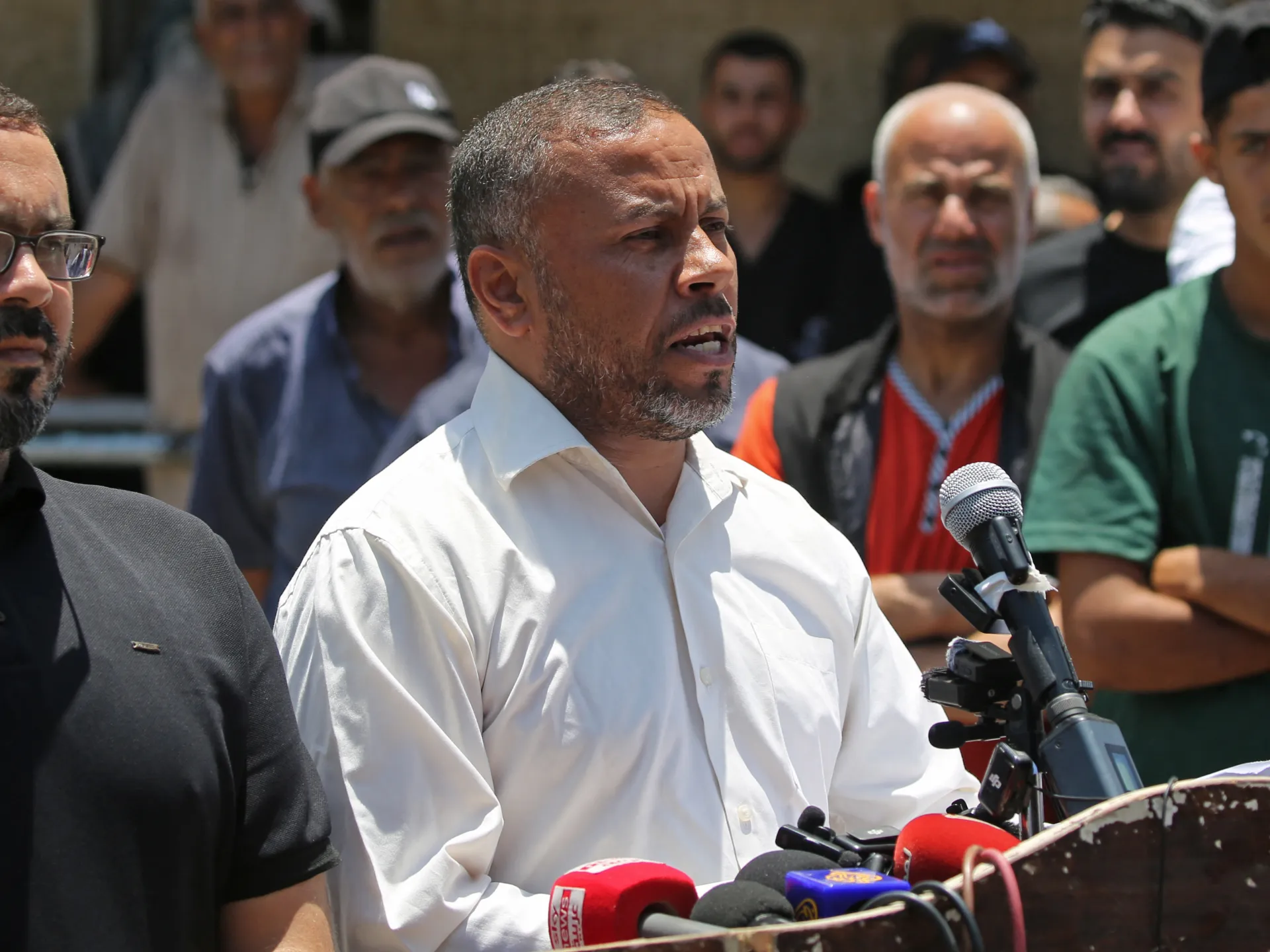
The Palestinian group Hamas has announced the dissolution of the body that has governed Gaza for nearly two decades, paving the way for a technocratic committee to implement civilian rule in the war-ravaged, besieged territory.

The move on Monday marks a significant political shift by Hamas, which has governed Gaza since its fighters seized control from rival Palestinian movement Fatah in 2007 after Hamas won legislative elections the previous year.

Recommended Stories

list of 3 itemsend of list

Since a United States-brokered “ceasefire” with Israel took effect in Gaza last October, the group has repeatedly said it is prepared to step aside from day-to-day governance, but the question of its disarmament remains unresolved.

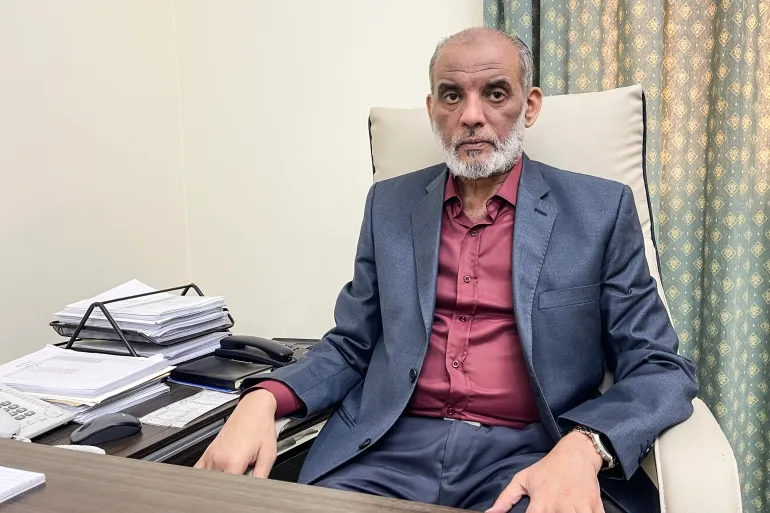
Mohammed al-Farra, head of the government’s emergency committee, “has decided to submit his official resignation from his position and to announce the dissolution of the Government Emergency Committee, as a demonstration of the seriousness of these measures, in implementation of the agreed arrangements, and to facilitate the administrative transition process”, read a statement released by Gaza’s Government Media Office on Monday.

A Hamas official said the group wished for the swift entry of the National Committee for the Administration of Gaza (NCAG), a body which is tasked with overseeing the future administration of Gaza under a US-backed plan to end Israel’s genocidal war on the Palestinian territory.

“Hamas has taken a new step in that it will no longer be in charge of the Gaza Strip, in order to remove any pretexts for the occupation, which continues its aggression and war of extermination,” Hamas spokesman Hazem Qassem told the AFP news agency.

“We hope for the swift entry of the [NCAG], and Hamas affirms its readiness to hand over governmental responsibilities to the committee to ensure its success.”

Reporting from Gaza City, Al Jazeera’s Hani Mahmoud said Hamas’s announcement appears to be “politically significant”.

“It has been viewed as part of the concession from the Hamas side in order to move the negotiations forward, to pave the road for the technocratic committee to arrive to the Gaza Strip and take responsibility after months of an increasing power vacuum there.”

Mahmoud stressed that the move doesn’t mean that Hamas is relinquishing its political or military role in Gaza, but rather “stepping back from the direct civilian government in Gaza”.

The head of the NCAG welcomed Hamas’s announcement.

“We affirm that the [NCAG] is fully prepared to assume its national responsibilities as soon as the necessary resources and capabilities are available,” Ali Shaath, head of the committee, wrote on social media.

Nickolay Mladenov, the high representative overseeing the US-founded Board of Peace for Gaza, which would supervise the NCAG’s work, said the decision “underscores the importance of bringing the roadmap discussions to a successful conclusion”.

“It is the bridge between declarations and implementation,” he added.

Mladenov noted that once an agreement is reached on the remaining implementation provisions, the NCAG will be able to assume its responsibilities.

The NCAG has remained based outside Gaza for months, reportedly due to Israeli objections to its entry into the besieged enclave.

Israel has ruled out allowing Hamas to rule the enclave but has also rejected a direct takeover by the Palestinian Authority, which controls the occupied West Bank, at this stage.
Source link

Analysis: Will Lebanon remain a battlefield, bargaining chip despite U.S.-Iran deal?

Hezbollah leader Sheikh Naim Qassem delivers a televised speech during a gathering in Beirut, Lebanon, on Sept. 27, 2025. Analysts say southern Lebanon could remain a battlefield and a bargaining chip in regional negotiations despite a preliminary agreement between the United States and Iran. Photo by Wael Hamzeh/EPA

BEIRUT, Lebanon, June 19 (UPI) — The Iran war may be over, but southern Lebanon is likely to remain a battlefield and a bargaining chip in regional negotiations, despite Lebanon’s inclusion in the memorandum of understanding between Iran and the United States — a provision Israel rejected to preserve its freedom of action against Hezbollah, analysts said.

Violence in southern Lebanon subsided after the United States and Iran announced a 14-point preliminary agreement to end hostilities, reopen the Strait of Hormuz, and begin nuclear talks under a 60-day extended ceasefire.

The MOU was signed remotely on Wednesday by U.S. President Donald Trump and Iranian President Masoud Pezeshkian, two days ahead of a formal signing ceremony scheduled to take place in Switzerland.

Rather than a cessation of hostilities, southern Lebanon witnessed a sharp escalation in fighting, with Israel intensifying its airstrikes and Hezbollah targeting Israeli forces seeking to seize the strategic Ali Taher hill in the Nabatiyeh district. Both sides traded accusations of violating the ceasefire established under the MOU.

The overnight exchange left 47 people dead, including women and children, and 97 others wounded in Israeli strikes on several areas of Lebanon, including Nabatiyeh and the eastern Bekaa Valley. Four Israeli soldiers, including a lieutenant colonel, were also killed by Hezbollah fire.

Israeli airstrikes continued beyond a new ceasefire between Israel and Hezbollah, brokered by the United States and Qatar with Iranian assistance, and set to take effect at 4 p.m. Friday.

It remains to be seen how long this new truce will last, as is the case with the U.S.-Iran ceasefire, given ambiguities in the MOU and differing interpretations of its clauses.

Israel, which rejected Trump’s “betrayal” and the agreement with Iran, is seeking to change the arrangement by force in order to preserve its freedom of action against Hezbollah threats in southern Lebanon. It also seeks to maintain control of a security zone in southern Lebanon and is not willing to withdraw its forces unless its northern region is secured and safe.

Riad Tabbarah, Lebanon’s former ambassador in Washington, said Israel believes it has the right, as it usually does, to modify the agreement on the ground after “accepting it on paper, so as not to annoy Trump.”

“This is exactly what they did last time, and what they do every time,” Tabbarah told UPI. “Today, they are doing the same.”

He was referring to the Nov. 27 ceasefire agreement brokered by the United States and France to halt the war that began when Hezbollah opened a support front for Gaza on Oct. 8, 2023.

Despite the truce, Israel continued to carry out strikes against Hezbollah, which refrained from retaliation for 15 months as it sought to reorganize its ranks before resuming fighting on March 2 in support of Iran.

The March escalation increased the human and material toll in Lebanon after Israel applied what was described as a “scorched earth” policy to empty border areas of residents and render them uninhabitable.

More than 3,980 people have been killed and 12,001 injured in the past 109 days, with 1.2 million displaced under Israeli evacuation orders. Large areas were devastated, including the complete destruction of 70 villages and heavy damage to infrastructure.

It would be “pure imagination and illogical” to think that Israel would easily withdraw and relinquish the security zone it is building in southern Lebanon, intended to prevent anyone from crossing its border and carrying out kidnappings like Hamas did from Gaza on Oct. 7, 2023, according to Tabbarah.

What could stop the frustrated Prime Minister Benjamin Netanyahu from sabotaging Trump’s efforts to finalize a lasting peace deal with Iran and continuing his military campaign in Lebanon?

The tension between Trump and his administration on one side, and Netanyahu and his government officials on the other, over the Iran deal “is growing, and we need to wait and see how it will develop,” said Lebanese former foreign minister Fares Boueiz.

As for Iran, Boueiz noted that as long as it believes it is benefiting from the deal with Trump, it “won’t do anything to jeopardize the understanding.”

“It is clear that the U.S.-Iran war is over, with no winner and no loser and no complete victory for anyone,” he told UPI. “The next 60 days will determine whether a final agreement is reached and whether Netanyahu will be able to obstruct it.”

The fear that Lebanon remains an open battlefield and a bargaining chip has grown, despite Iran’s pledge to Hezbollah that it will not proceed with the MOU talks if Israel fails to observe a full ceasefire in Lebanon and withdraw from the southern region.

Lebanese retired Maj. Gen. Abdul Rahman Chehaitli argued that the war in south Lebanon was “an Iran-Israel war sponsored by the U.S.”

“Now that Iran has reconciled with the U.S., signed an agreement, and is negotiating, the battle is over for them,” Chehaitli said in an interview with UPI. “This means that Lebanon should work toward a solution with Hezbollah and engage in serious negotiations to secure Israel’s withdrawal and end any illegitimate armed presence.”

Lebanon, which opted for U.S.-mediated direct talks with Israel to end the war despite Hezbollah’s objections, is preparing for another round of diplomatic talks with Israel scheduled to take place in Washington next week.

While Hezbollah leader Sheikh Naim Qassem has set new terms for the talks, saying they should be limited to “mutual security,” Israel is insisting on disarming the Iran-backed group and keeping it away from its borders.

Hezbollah has also been pushing to drop the Lebanon-Israel direct negotiations in favor of the U.S.-Iran track.

“Hezbollah can say whatever it wants, but Lebanon should negotiate on its own,” Chehaitli said, adding that the militant group “is concerned about the day after, seeking security guarantees or immunity.”

Lebanon has no option but to negotiate its way out of the war, but the process will be long, and southern Lebanon will remain under Israeli fire and a bargaining chip in Iran’s hands until a final deal with Washington is reached, according to some analysts.

Tabbarah argued that Israel did not go through all this war only to back down, while Iran seeks a high price in return for Hezbollah and its other regional armed proxies.

“I don’t think Iran will go to war again. It will find a formula to save face for its armed militias,” he said, adding that the U.S., on its part, will have to restrain Israel and force Netanyahu to accept a full ceasefire in Lebanon.

He explained that a decision by Trump to stop U.S. military assistance to Israel, or “anything of the sort,” would be a serious step.

Tabbarah, however, warned that the solution “is not for tomorrow unless Israel drops its dream of establishing Greater Israel.”

Source link

Israel releases Hamas co-founder after two years in detention | Newsfeed

NewsFeed

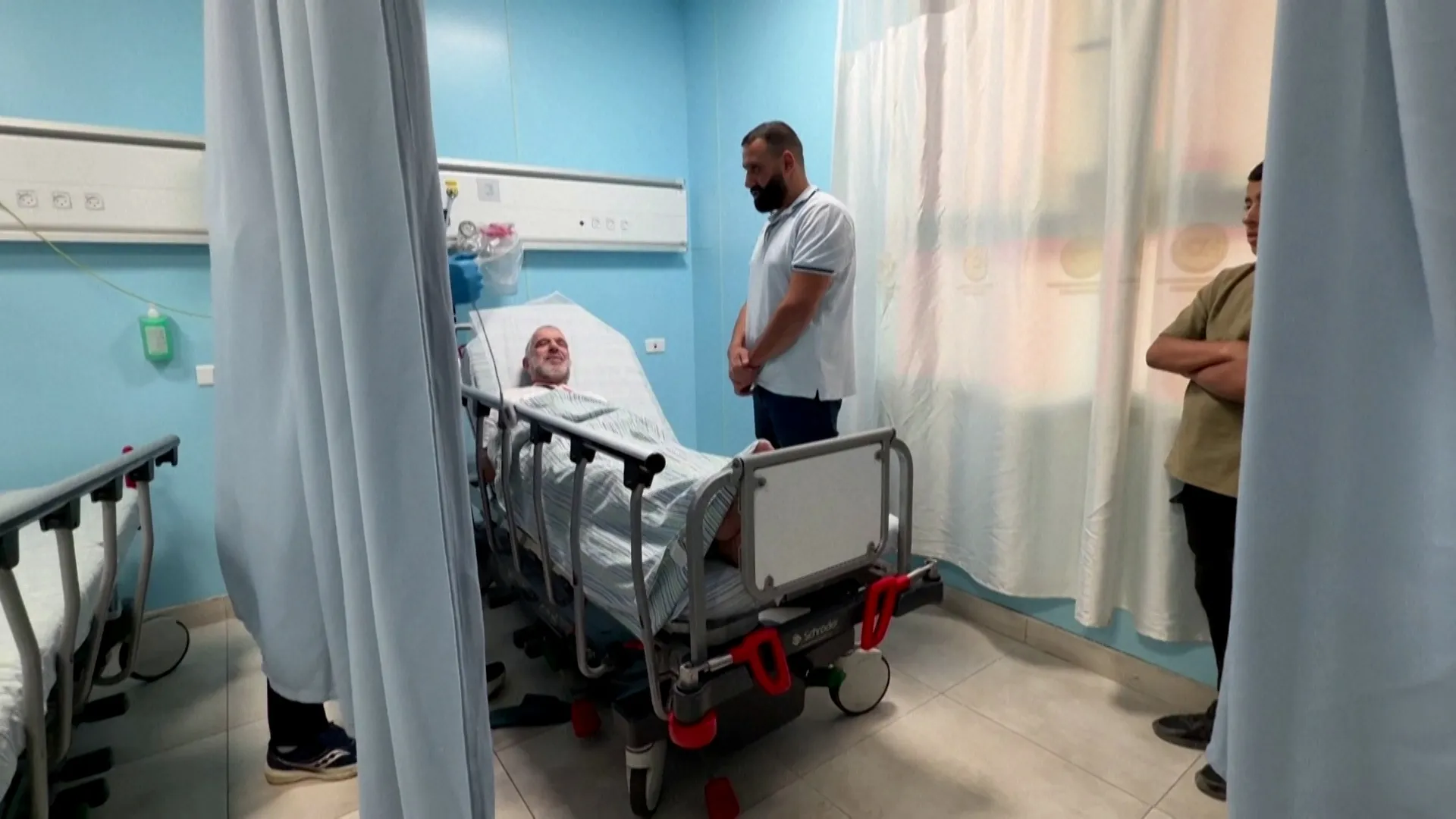
Israeli authorities released Hamas co-founder Hassan Yousef after more than two years in administrative detention. He was jailed without trial following his arrest in October 2023. The 71-year-old was taken to a hospital in Ramallah where he was received by family members.

Source link

Hamas says won’t surrender arms but only police will carry weapons in Gaza | Gaza News

Hamas says it will not hand over its weapons right now, resisting ongoing disarmament demands and stating that the ultimate fate of its military arsenal will be decided following comprehensive discussions with other Palestinian factions.

Hossam Badran, a member of the Hamas Political Bureau, spoke exclusively to Al Jazeera about the group's vision for a long-term Hudna in Gaza. [Mohammad Mansour/Al Jazeera]
Husam Badran, a member of the Hamas political bureau, spoke exclusively to Al Jazeera about the group’s vision for a long-term ceasefire in Gaza [Mohammad Mansour/Al Jazeera]

In an exclusive interview with Al Jazeera, Husam Badran, a member of the Hamas political bureau, offered an inside look into the group’s proposed solutions to the stalled negotiations, introducing the concept of a long-term hudna (truce).

“When this Palestinian committee [the National Committee for the Administration of Gaza (NCAG)] comes to take over the Gaza Strip, there will be no visible weapons in the streets and alleys of Gaza except the official weapons belonging to this committee, which is the official Palestinian police, ” Badran told Al Jazeera. “There will be no armed manifestations like the ones we were accustomed to in the Gaza Strip.”

But he clarified that this did not mean a formal surrender of arms.

“We are not talking about handing them over; we are talking about, at least, weapons not being visible except for the official weapons of the Palestinian police,” he said. “The details of this matter will be discussed within a national framework.”

The Hamas stance comes as an informed source told Al Jazeera that the group is preparing to send its delegation to Cairo for renewed talks, which are set to begin this weekend. Hamas had briefly delayed its participation to demand a halt to ongoing Israeli assassinations—such as the recent killings of military commanders Izz al-Din al-Haddad and Mohammed Odeh—to ensure a more favourable negotiating environment.

The disarmament of Hamas and the withdrawal of Israeli troops from Gaza remain the biggest sticking points in the United States-brokered October 2025 ceasefire plan.

Factional consensus in Cairo

The upcoming Cairo meetings will gather eight key Palestinian factions to form a unified national stance. Badran confirmed the attendance of representatives from Hamas, Palestinian Islamic Jihad (PIJ), the Popular Front for the Liberation of Palestine (PFLP), the Democratic Front for the Liberation of Palestine (DFLP), the PFLP-GC, the National Initiative, the Popular Resistance Committees (PRC), and the Democratic Reform Current affiliated with the Fatah movement.

These talks aim to salvage the ceasefire originally proposed by United States President Donald Trump. However, Badran noted that Israel has failed to implement even 30 percent of its phase one obligations, making any transition to subsequent phases impossible.

“We are talking about humanitarian aid … the Rafah crossing mechanism, the infrastructure, and the assassinations,” Badran explained. “The idea was a comprehensive ceasefire, but around 1,000 people have been killed. Saying Israel implemented even 30 percent is an overstatement.”

Only 150 to 250 aid trucks are entering the Gaza Strip daily instead of the agreed-upon 600, while the critical infrastructure for electricity, hospitals and fuel remains completely decimated.

The ‘disarmament’ deadlock

While Palestinian factions demand the fulfilment of these phase one survival metrics, Israeli officials and Nickolay Mladenov, the high representative for Gaza on Trump’s “Board of Peace”, are conditioning the transition to phase two on the disarmament of armed groups.

To break the deadlock, Mladenov recently presented a 15-point “roadmap” built by the ceasefire guarantors. In a May 2026 briefing to the United Nations Security Council, Mladenov defended the plan, emphasising that its architecture rests on a strict principle of reciprocity and verification. Addressing Palestinian concerns, Mladenov clarified that the roadmap explicitly dictates that “no Palestinian armed group will be required to transfer its weapons to Israel”. Instead, the decommissioning of weapons would be gradual, sequenced, and Palestinian-led, with all arms transferred to the NCAG.

Mladenov outlined that this disarmament process is tied directly to an Israeli military pullback. The plan commits Israel to a phased withdrawal of its forces to Gaza’s perimeter on an agreed timetable, conditional upon verified progress on decommissioning and the deployment of an International Stabilization Force (ISF) to act as a buffer.

Mladenov warned the UNSC of the severe consequences of rejecting the roadmap. With 85 percent of Gaza’s buildings damaged or destroyed, he stressed that “reconstruction financing will not follow where weapons have not been laid down”. Without an agreement, he cautioned, Gaza will remain divided, with Hamas holding administrative control over less than half the territory.

‘Negotiation time’ and Israeli expansion

However, Palestinians view this 15-point framework as a stalling tactic designed to extract concessions while Israel deepens its occupation. Palestinian political analyst Wissam Afifa told Al Jazeera that Israel is exploiting “negotiation time” to exhaust the population through continuous escalation.

“They shifted from Trump’s 20 points to a new square, the 15-point square, which revolves entirely around one single clause: disarmament,” Afifa explained. He noted that the Palestinian resistance has been cornered and asked to make major concessions without real guarantees, while the Israeli government uses the talks to advance its territorial goals.

According to Afifa, Prime Minister Benjamin Netanyahu is weaponising the negotiations for domestic electoral gains, expanding Israel’s control from 60 percent of Gaza to 70 percent or more. This expansion is happening while oversight mechanisms, such as the Civil-Military Coordination Center (CMCC), have completely failed and paralysed the monitoring process.

“We are facing a scenario where the occupation has reshaped the ceasefire on its own terms,” Afifa said, adding that Mladenov has in effect adopted the Israeli and American vision by demanding disarmament without offering a clear political horizon for “the day after”.

The National Committee hurdle

This ongoing expansion complicates the transition of power. Amid accusations that Hamas is clinging to power, the group’s spokesperson, Hazem Qassem, reiterated that Hamas is fully prepared to hand over all governance and security responsibilities to the Cairo-based National Committee. Badran confirmed that Hamas has prepared all necessary administrative and security files for the transfer.

However, the NCAG itself faces massive operational barriers and has become, as Afifa described, a “hostage” to Israeli pressure.

A member of the committee, speaking to Al Jazeera on condition of anonymity, firmly denied reports that the body would enter Gaza soon, outlining strict conditions for assuming power. The committee categorically refuses to operate behind the Israeli-controlled “Yellow Line” or to cooperate with Israeli-backed armed militias currently operating in the Strip, the source said.

Furthermore, the source stressed that the committee will not enter Gaza until the International Stabilization Force is deployed in the buffer zones separating Israeli forces from Palestinian areas.

While the political deadlock continues, the human toll mounts. Mladenov acknowledged in his UN briefing that ceasefire violations continue to kill civilians and obstruct humanitarian access.

Since the ceasefire took effect, ongoing Israeli military actions have killed 933 Palestinians and injured 2,868, raising the total death toll since October 2023 to 72,942, with 172,967 people injured.

Source link

Family mourn ‘Hamas leader’ killed in Israeli attack | Hamas

NewsFeed

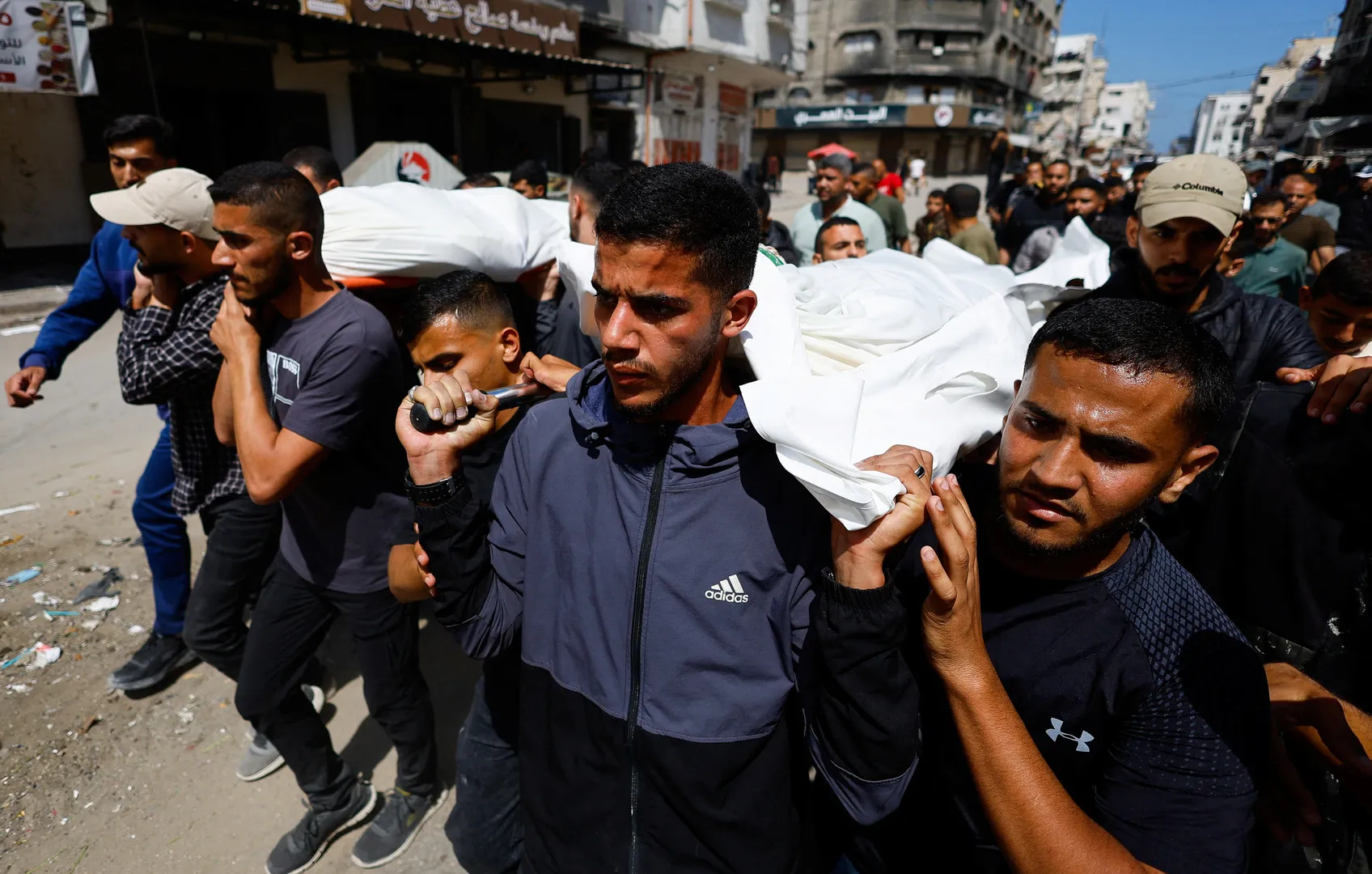
A funeral has been held for Mohammed Odeh, believed to be the leader of Hamas’s military wing, who Israel said was killed in a strike on a busy area in Gaza City on Tuesday. Odeh’s family has reportedly confirmed his death, despite no official comment from Hamas.

Source link

IDF claims it killed Hamas military leader Mohammad Odeh

May 27 (UPI) — The Israeli Defense Force said Wednesday that it has killed Mohammed Odeh, a senior commander in Hamas‘ military, during a strike in northern Gaza.

An airstrike in Gaza City hit a residential building Tuesday and also killed at least three Palestinians while injuring dozens more. It struck the upper three floors of the al-Kayali building above a busy shopping area in the center of the city.

The IDF claims the residential building was used by Odeh as a hideout.

The area of the strike was busy as shoppers prepared for Eid al-Adha, a Muslim holiday that began on Wednesday.

The IDF said Odeh was responsible for planning Hamas’ Oct. 7, 2023, terrorist attack in Israel.

“The commander of Hamas terror [organization’s] military arm number 4 in Gaza was eliminated yesterday and sent to meet his partners in the depths of hell,” Israel Katz, Israeli Defense Minister, posted on social media.

The IDF said it had been tracking Odeh for months leading to the airstrike.

More than 900 Palestinians have been killed in Gaza since Israel and Palestine reached a ceasefire agreement enacted on Oct. 11. The Gaza Ministry of Health reports that 72,803 Palestinians have been killed in the war since Oct. 7, 2023.

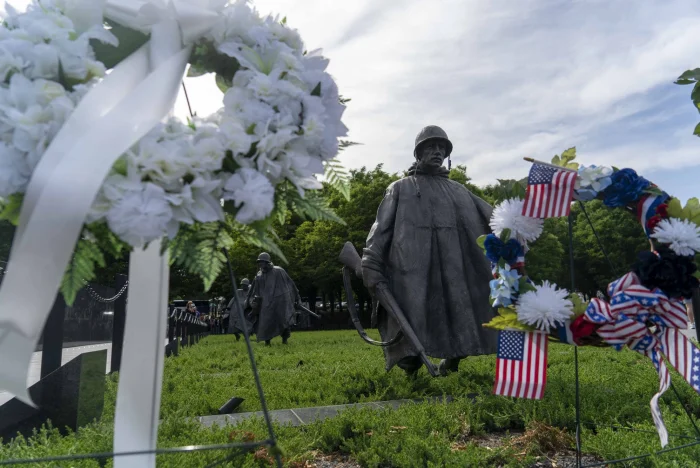
Wreathes are seen amongst the statues at the Korean War Veterans Memorial during Memorial Day weekend in Washington on May 27, 2023. Memorial Day, which honors U.S. military personnel who died while in service, is held on the last Monday of May. Photo by Bonnie Cash/UPI | License Photo

Source link