Hamas

How will Izz al-Din al-Haddad assassination impact Hamas’s Gaza operations? | Drone Strikes News

The killing of Izz al-Din al-Haddad, the recently appointed head of Qassam Brigades, the armed wing of Hamas, has dealt a symbolic blow to the Palestinian group in Gaza, but the impact on its military operations is far from certain.

Al-Haddad was killed on Friday in a sophisticated dual-strike on a residential apartment in Gaza City’s Remal neighbourhood and a vehicle attempting to flee the scene. The delivery of heavy munitions into a densely populated area, packed with displaced civilians, killed seven other Palestinians, including women and children, and wounded 50 people.

Yet, despite Israeli claims that the killing will cripple the group’s operational capacity, analysts argue that its decentralised nature is built to absorb such shocks. As the region watches to see how the resistance faction will respond, al-Haddad’s death raises critical questions about the future of the fragile “ceasefire” and who remains to lead the Qassam Brigades.

Operational impact: Will the Qassam Brigades collapse?

The killings of Qassam Brigades commanders, including Mohammed Deif, Marwan Issa, and Yahya Sinwar’s brother Mohammed, left al-Haddad as the key military figure managing the fight against Israel.

Saeed Ziad, a Palestinian political analyst, told Al Jazeera that while the loss is a “massive symbolic and moral blow” to Palestinians, the immediate operational impact on Hamas’s armed wing will be limited.

“The Qassam Brigades are not built on a hierarchical, sequential structure, but a parallel one,” Ziad explained. “Over the past two decades, Hamas has transitioned into a decentralised guerrilla force. Units operate as isolated, self-sufficient groups with their own logistical supply lines and combat doctrines.”

“If a brigade or battalion loses its commander, the group already knows its mission and has the resources to execute it independently,” he said. Reorganising the Qassam Brigades’ central command to cope with the loss will likely take mere days, not months.

Furthermore, al-Haddad had successfully utilised the October ceasefire with Israel to rebuild the group’s infrastructure. “Over the past 200 days, he reconstructed the resistance’s capabilities – its tunnels, weaponry and combat formations – making it capable of defending itself once again,” Ziad noted.

Who is left in the Hamas military leadership?

Israeli officials have boasted that they are close to dismantling Hamas’s central command, claiming that only two members of the military council before the pre-October 2023 attacks on Israel – Mohammed Awad and Imad Aqel – are alive.

However, analysts point out that Hamas’s military wing, which boasted roughly 50,000 fighters before the war, possesses a deep bench of cadres and a strict protocol for leadership succession that enables it to quickly recover when commanders are killed.

“The resistance typically appoints a first, second, and third deputy for every active commander, from the general commander down to the platoon leaders,” Ziad said. “Filling these voids happens rapidly.”

Hamas immediately confirmed Haddad’s death, with spokesperson Hazem Qassem officially mourning him as the “General Commander” of the Qassam Brigades. He stressed that despite his death being a “massive loss”, the group’s “long journey of resistance continues”.

The ‘Ghost’ of the Qassam Brigades

Born in the early 1970s, al-Haddad joined Hamas upon its inception in 1987. He rose through the ranks from an infantry soldier to commander of the group’s Gaza City Brigade, overseeing six battalions – each consisting of 1,000 fighters plus 4,000 support personnel.

He played a foundational role in establishing al-Majd – Hamas’s internal security apparatus designed to track down Israeli intelligence collaborators. But it was his ability to survive multiple assassination attempts – including bombings of his home in 2009, 2012, 2021, and three separate times during the current genocidal war on Gaza – that earned him the moniker “Ghost”.

Al-Haddad left an indelible strategic mark on the movement as a primary architect of the October 7, 2023 attacks. He personally oversaw the breach of the eastern fence, directed elite units that stormed the Re’im military base and the Fajja outpost. According to intelligence reports, it was al-Haddad who handed localised commanders a paper hours before the attack detailing the operation and ordering the capture of Israeli soldiers.

In January 2025, an Israeli air raid killed his son, Suhaib, but al-Haddad survived and continued to command operations and oversee the detention of Israeli captives until a deal was reached.

A fragile ‘ceasefire’ on the brink

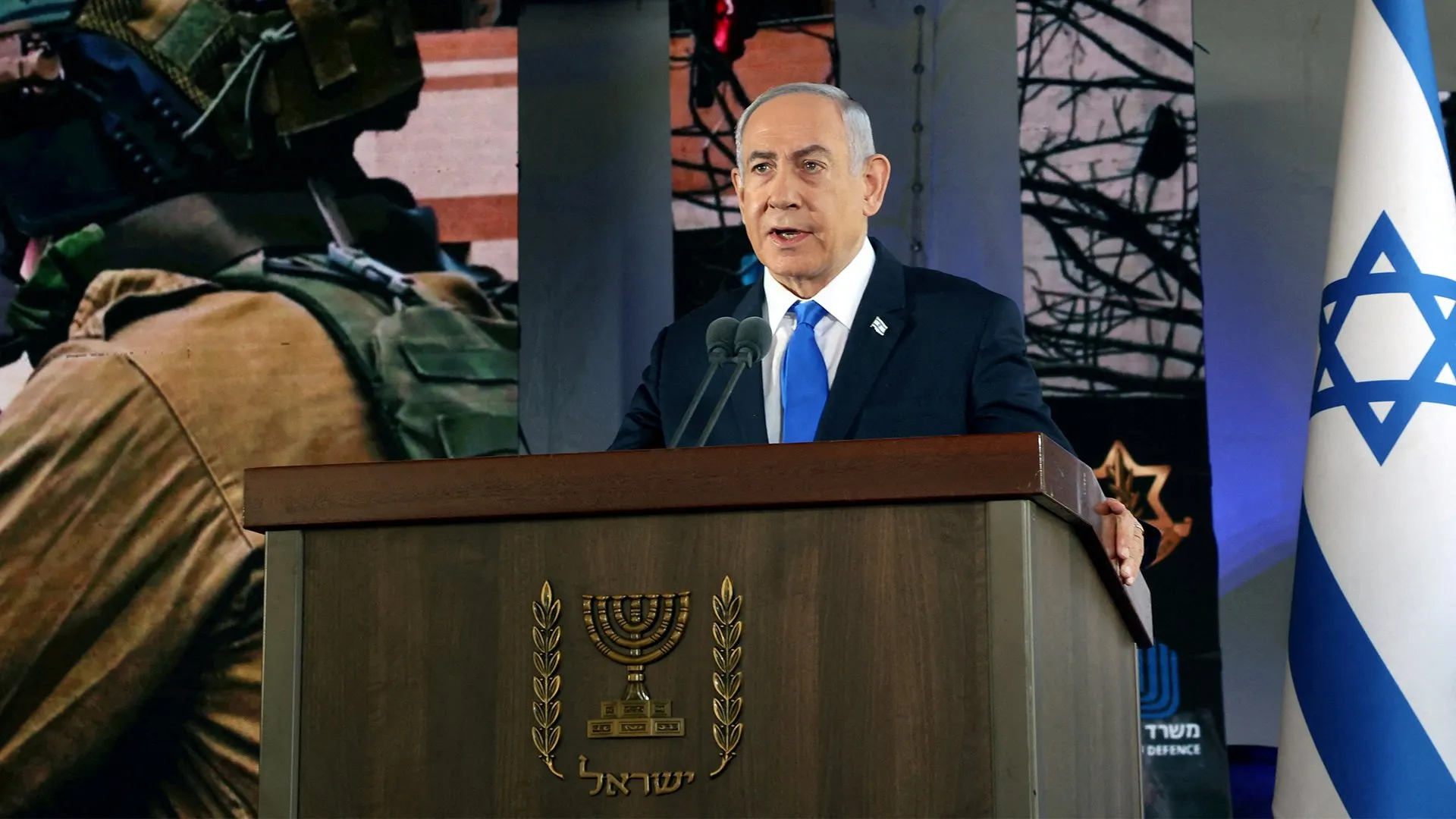
Shortly after Friday’s strike, Israeli Prime Minister Benjamin Netanyahu and Defence Minister Israel Katz issued a rare joint statement, boasting that the killing was carried out under their direct orders.

Mohannad Mustafa, an analyst of Israeli affairs, said al-Haddad’s killing shows that Israel is attempting to “normalise” blatant violations of the “ceasefire” agreement, while the Netanyahu-Katz statement was an appeal to Washington to allow it to continue the killing campaign. At least 871 Palestinians have been killed since the “ceasefire” was announced on October 10, 2025, most of them civilians.

“Netanyahu is pitching this to the US administration as a necessary step to ‘disarm Hamas’ under the Trump plan,” Mustafa told Al Jazeera. “But the reality is that Israel never wanted this ceasefire. It was imposed on them.”

By systematically killing civilians, police, and military figures without offering immediate justifications for “ceasefire” breaches, Israel aims to provoke a response. “The ultimate goal is to force Hamas to retaliate, leading to the collapse of the agreement and giving Israel the green light to launch ‘Gideon 2’ – a military operation to occupy the entirety of the Gaza Strip,” Mustafa added.

With Netanyahu lacking a definitive strategic victory, such as the total surrender of Hamas, Ziad said the Israeli leadership is now leaning heavily on a “philosophy of assassinations” to project a “picture of victory” to its domestic base.

But history has shown that killings of leading military figures, such as al-Haddad, rarely have a significant long-term impact on armed Palestinian movements like Hamas.

“For the fighters and the society in Gaza, these killings create a blood covenant,” Ziad said. “It hardens their resolve. Retreating after the loss of leaders like Deif, Sinwar, or Haddad is viewed as a betrayal of that blood.”

Source link

Board of Peace envoy says ceasefire hinges on Hamas’ disarmament

Nickolay Mladenov, the top diplomat overseeing the U.S.-brokered ceasefire in Gaza, said Wednesday the truce hinged on Hamas’ disarmament, a sticking point that has stalled progress on other fronts, including rebuilding the mostly destroyed enclave.

The high representative for President Trump’s International Board of Peace in Gaza, Mladenov, said months without progress implementing the deal benefited neither Israel nor Palestinians. He said the phased deal was paralyzed over Hamas not yet disarming, calling it “not negotiable.”

International mediators have long said disarmament is core to the ceasefire, to which Hamas has agreed, but no significant progress has been made toward it. The Palestinian militant group has sought to link any demilitarization to Israeli troop pullbacks. Israel’s military remains in control of more than half of Gaza.

“The only way that we believe that we can ensure that Israeli withdrawal takes place to the perimeter is if we have the full element of the plan unfolding in Gaza,” Mladenov said at a rare press conference in Jerusalem.

Mladenov stated plainly that the plan envisioned in the ceasefire was off to a rocky start. He also said conditions remain dire and miserable for the more than 2 million people in Gaza. He accused both sides of violating the ceasefire but said it had mostly held and staved off the return of full-scale war.

Disarmament is among the most challenging elements of the ceasefire. Hamas, whose founding charter calls for armed resistance against Israel, has been reluctant to give up its arsenal, including rockets, anti-tank missiles, and explosives.

Mladenov did not answer questions about what could lie ahead for Gaza in the absence of disarmament. He criticized Hamas for consolidating power in parts of Gaza under its control, saying it hoped “to squeeze better terms of a negotiation.”

He also said that he could envision a role for Hamas in postwar Gaza if it disarms.

“We are not asking Hamas to disappear as a political movement,” Mladenov told reporters.

Israeli leaders have said they want to destroy the militant group that has governed Gaza for two decades and orchestrated the attack on Israel on Oct. 7, 2023, killing some 1,200 people and taking 251 as hostages.

Israel’s ensuing offensive has killed over 72,724 Palestinians, including at least 846 since a ceasefire took hold last October.

Mladenov’s remarks came as the Board of Peace faces scrutiny, with efforts to advance the phased ceasefire stalled.

The truce envisioned Hamas handing over its weapons, Israeli forces withdrawing and rebuilding destroyed swaths of the coastal enclave after more than two years of war.

Instead, the seven months since the ceasefire have seen Israel and Hamas trade accusations of violations. Aid groups say Israel has not allowed the promised amount of aid in. Hamas has not disarmed and remains in control of roughly half the strip.

Trump’s 20-point plan says that all of Hamas’ “military, terror and offensive infrastructure, including tunnels and weapon production facilities” in Gaza must be destroyed. It also says that weapons must be placed “permanently beyond use.”

Israel and the U.S. say this language is clear and that Hamas must surrender all of its weapons.

Hamas has sought to differentiate between “heavy” weapons, such as rockets, and “light” weapons like rifles and pistols, Hamas officials and mediators say, speaking on condition of anonymity to discuss the negotiations.

Israel has stepped up its attacks in Gaza in recent days, since the U.S.-Iran ceasefire, and many Palestinians fear a return of more airstrikes and full-scale war may be imminent.

Frankel and Metz write for the Associated Press.

Source link

Israeli military raids Gaza aid flotilla on international waters

Some of the 20 ships hoisting the Palestinian flag dock in the port in Barcelona, Spain, on Sept. 1, 2025. The Global Sumud Flotilla was intercepted by Israeli forces on Thursday near the Greek island of Crete. File Photo by Quique Garcia/EPA

April 30 (UPI) — Israeli forces intercepted and boarded the Global Sumud Flotilla in international waters off Greece on Thursday, preventing it from delivering aid to Gaza and drawing international condemnation.

The Israeli military, using drones and armed personnel, blocked the fleet of ships in the Mediterranean Sea off the coast of the Greek island of Crete. Twenty-two of 58 vessels were seized, with passengers held at gunpoint.

“Our boats were approached by military speedboats, self-identified as ‘Israel’, pointing lasers and semi-automatic assault weapons, ordering participants to the front of the boats and to get on their hands and knees,” the Global Sumud Flotilla aid mission said in a statement.

The Israeli Foreign Ministry said in a social media statement on Thursday that it detained about 175 activists from the more than 20 boats of the flotilla.

“Well done to our Navy!” Prime Minister Benjamin Netanyahu said in a statement following the operation, stating he had directed the military to intercept the boats before they reached Gaza.

“No ship and no Hamas supporter reached our territory, and not even our territorial waters. They were turned back and will return to their countries of origin.”

The flotilla was sailing from Barcelona, Spain, to Gaza when its ships were intercepted. Crete is more than 700 miles from the Palestinian enclave.

The Global Sumud Flotilla social media page posted that Israeli forces smashed engines and destroyed navigation arrays on its ships before retreating.

“Intentionally leaving hundreds of civilians stranded on powerless, broken vessels directly in the path of a massive approaching storm,” the social media post reads. “Furthermore, communications with multiple vessels have been jammed, severing their ability to coordinate or signal for help.”

Israel has maintained a maritime blockade of Gaza since 2009. It has said the blockade is meant to block weapons smuggling to Gaza.

The Israeli Foreign Ministry called the aid flotilla a “PR stunt.”

“As international media have exposed, these are professional provocateurs on pleasure cruises, addicted to self-promotion,” the Israeli Foreign Ministry wrote on social media.

Numerous countries, politicians and human rights organizations voiced condemnation of the Israeli operation, with a dozen-country bloc, including Brazil, Pakistan, Spain, Malaysia and South Africa, describing the interception as an “Israeli assault” on a peaceful civilian humanitarian initiative.

“The Israeli attacks against the vessels and the unlawful detention of humanitarian activists in international waters constitute flagrant violations of international humanitarian law,” the bloc said in a statement.

Italian President Giorgia Meloni separately condemned the seizure, while Turkey’s Foreign Ministry called upon the international community “to adopt a unified stance against this unlawful act by Israel.”

The U.S. State Department, meanwhile, issued a statement condemning the flotilla.

Wreathes are seen amongst the statues at the Korean War Veterans Memorial during Memorial Day weekend in Washington on May 27, 2023. Memorial Day, which honors U.S. military personnel who died while in service, is held on the last Monday of May. Photo by Bonnie Cash/UPI | License Photo

Source link

Palestinians in Gaza vote in first election in 20 years

People cast votes in the municipal elections in Deir al-Balah, in the central Gaza Strip, on Saturday — the first election held in Gaza in 20 years, and the first in the West Bank since the outbreak of the war. Photo by Haitham Imad/EPA

April 25 (UPI) — Palestinians in Gaza held an election for the first time in 20 years as municipal elections were held there and in the West Bank on Saturday.

People in Deir al-Balah, a city in central Gaza, voted for the first time since 2006 because it was the least destroyed area after two years of airstrikes by Israel after the attacks of Oct. 7, 2023, CNN reported.

The elections, which also were held in many parts of the West Bank, were run by the Palestinian Authority and required candidates to agree with Palestinian Liberation Organization to recognize the state of Israel and support a two-state solution.

Elections were last held in the West Bank in 2022, The BBC reported, and had not been held in Gaza since Hamas took the enclave over two decades ago. Hamas was not permitted to participate in the elections.

Election results will be reported either late Saturday or on Sunday.

Salama Badwan, who voted with his wife and daughter, told Al Jazeera that the first election “is a truly Palestinian democratic celebration.”

“We must change everything through the ballot box,” Badwan said. “Whoever wins, it is their right, but not through inheritance … change must be through the hands of the people.”

Roughly 70,000 Palestinians — or 5% of the entire Gazan population — in Deir al-Balah were eligible to vote because many of the places that would have been used for voting were destroyed, as were supplies like ballot boxes.

The Palestinian Authority’s Fatah party dominated ballots as votes were held for 90 municipal councils and 93 village councils — leaving 42 other municipal councils and 155 village councils to be decided without votes.

Hamas praised the vote in Gaza and expressed hope for the rest of the territory to also choose its own leaders, although after its election in 2006 it forced Fatah out of Gaza in often violent battles and had not held an election since.

Thousands of displaced Palestinians walk along the Rashid coastal road toward Gaza City on October 10, 2025, after the implementation of a cease-fire agreement between Israel and Hamas. Photo by Hassan Al-Jadi/UPI | License Photo

Source link