A pet project of architect Frank Gehry, a smaller concert hall to complement his legendary Walt Disney Concert Hall, is taking shape in downtown Los Angeles for an opening next September.
Elements Gehry devised to set it apart are already visible, as construction on the $337-million addition to the Colburn School of Performing Arts reveals details the architect conceived years ago.
The centerpiece of the expansion will be a 1,000-seat concert hall named for Pasadena philanthropists Terri and Jerry Kohl with an in-the-round design meant to create intimacy between the performers and the audience. The hall will include an orchestra pit and a stage similar in size to the one at Disney Hall so it can accommodate grand orchestra, opera and dance performances.
The Colburn Center, still under construction, in downtown Los Angeles last week.
(Genaro Molina / Los Angeles Times)
Gehry set out to create an immersive hall that would inspire artists and envelop the audience, said Meaghan Lloyd, his chief of staff and right-hand at his firm, Gehry Partners.
“Frank’s passion was bringing the audience closer to the performers and getting the relationship between the two just right, so that the audience can feel the performers, the performers can feel the audience reacting,” Lloyd said.
Kohl Hall will be part of the school where Colburn’s symphony orchestra, bands, youth string programs and children’s choirs will perform. It will also be available for rent for outside productions such as jazz and classical music concerts. It is expected to be in use more than 200 times a year.
Architect Frank Gehry with a model of his design for an addition for Colburn School.
(Christina House / Los Angeles Times)
The hall will open with a concert on Sept. 25, the Colburn School announced Tuesday. The weekend celebration will include inaugural performances at the Dance Center, a new dance instruction and performance venue being built as part of the 100,000-square-foot Gehry-designed addition.
The new Dance Center will double facilities for the school’s Trudl Zipper Dance Institute. The dance facilities will include a 100-seat theater for dance and four professional-size studios for dance instruction and rehearsal.
Beginning next year, the hall will be the home of the Los Angeles Chamber Orchestra, a group of professional musicians about half the size of the Los Angeles Philharmonic. LACO concerts will feature premieres of new fanfares by celebrated film composers, including a work by John Williams to be performed at LACO’s inaugural concert in the hall.
Meaghan Lloyd, chief of staff and partner at Gehry Partners, left, and Sel Kardan, president and chief executive of the Colburn School, look over construction of the Terri and Jerry Kohl Hall.
(Genaro Molina / Los Angeles Times)
Part of the hall’s commercial appeal is expected to be its size, in a sweet spot between the 2,265-seat Disney and the popular 415-seat Herbert Zipper Concert Hall already on the Colburn campus. The nearby Dorothy Chandler Pavilion seats about 3,200 guests. The Peacock Theater at L.A. Live seats 7,100.
Kohl Hall’s in-between size “is the missing piece of the venue puzzle” for Los Angeles, Colburn President Sel Kardan said.
A key feature already in place, hanging from the ceiling, is an array of steel clouds packed with concrete, designed to improve acoustics and evoke a sense of airiness. The clouds were made in the Netherlands by a firm with a history of building steel ship hulls that now specializes in building complex steel constructions like the clouds using digital data.
Visitors stand underneath concrete sound clouds designed to improve acoustics.
(Genaro Molina / Los Angeles Times)
The exterior metal cladding of the addition features a luminescent pink paint coating called Pink Kandi.
Japanese acoustical engineer Yasuhisa Toyota will serve as the hall’s acoustician, as he has for all of Gehry’s concert halls, beginning with Disney Hall.
The long-awaited Colburn School addition will be the third Gehry-designed building on Bunker Hill, which already has Disney Concert Hall and the Grand LA, a $1-billion apartment, hotel and retail complex he designed for New York mega-developer Related Cos.
The Colburn School dates to 1950 and moved to its current location downtown in 1998, where it has more than 2,000 students, most of whom range from middle school to college age.
Student groups call for the abolition of Greek life and punitive action in wake of fraternity assault allegations.
Published On 5 Oct 20265 Oct 2026
Protesters in the United States have shattered a glass door at Cornell University’s main administrative headquarters and spray-painted messages on the building’s walls as backlash continues following allegations about a 2024 gang rape at a local fraternity.
In the early hours of Monday, the glass panes on an entrance door for the building, Day Hall, were smashed, leaving shards strewn across the floor.
Recommended Stories
list of 3 itemsend of list
Activists, outraged at the school’s handling of the case, also graffitied nearby walls with slogans like “At Cornell rapists are protected protesters are expelled” and “Smash the patriarchy”.
The predawn incident came ahead of a rally demanding “justice for survivors” by student groups on Monday.
Cornell spokesperson Kyle Kimball said Monday that the university was investigating the vandalism.
“We understand the frustration and strong emotions being expressed across our community,” Kimball said. “Those concerns deserve to be heard, but damaging property is not the answer.”
Cornell, a prominent Ivy League university in the state of New York, has been at the centre of a national firestorm over sexual violence on US campuses, after an anonymous student, Jane Doe, filed a civil lawsuit last month alleging a gang rape at the fraternity Chi Phi.
Her complaint accuses seven former students of perpetrating “heinous criminal sexual acts” against her during a fraternity party on the night of October 19, 2024, after she says she was pressured to drink and take the drug ketamine.
The fraternity, Cornell University and others are named as co-defendants in the suit. Lawyers for two of the former students have rejected claims that they participated in sexual assault.
The case has elicited outcry over how sexual assault is handled on campuses across the country.
At Monday’s demonstration, students demanded an overhaul of the university’s sexual assault complaint process, the termination of certain school officials and stricter disciplinary action against alleged abusers.
In a statement to the student news outlet The Cornell Daily Sun, student organisers wrote that they were calling for the “abolition” of the Interfraternity Council system on campus and the “expulsion/revocation of degrees for all Chi Phi members involved in the rape”.
They also demanded that Cornell’s Office of Student Conduct and Community Standards be replaced by a “democratic disciplinary system”. Monday’s protest, they added, was designed to draw attention to the systemic failures that allow sexual violence to occur.
“We wanted to ensure that Day Hall, the centre of Cornell’s administrative function, was not able to continue business as usual,” the students told the campus paper.
The alleged crime at the fraternity, they wrote, was part of a “rampant pattern of sexual assault perpetrated by members of Greek life at Cornell University and hundreds of other academic institutions throughout the country”.
Under pressure by New York Governor Kathy Hochul and Attorney General Letitia James, the university announced this week it would be appointing a law firm to conduct an independent internal review of how it initially handled the case.
A transcript, obtained by US media, shows that although no charges were filed, Doe told campus police at the time that she could “say with 100% confidence I was raped”.
Her lawsuit also alleges that Cornell “afforded” the accused fraternity members “the opportunity to mitigate their conduct by submitting essays” to the school. Two were later expelled, and another two were suspended.
Ready for a luxury East London break? Enter our exclusive competition to win a stylish two-night stay at the award-winning Town Hall Hotel, complete with daily breakfast and an exquisite dinner for two at Elis.
Win a luxurious 2 night stay in the stunning Town Hall Hotel
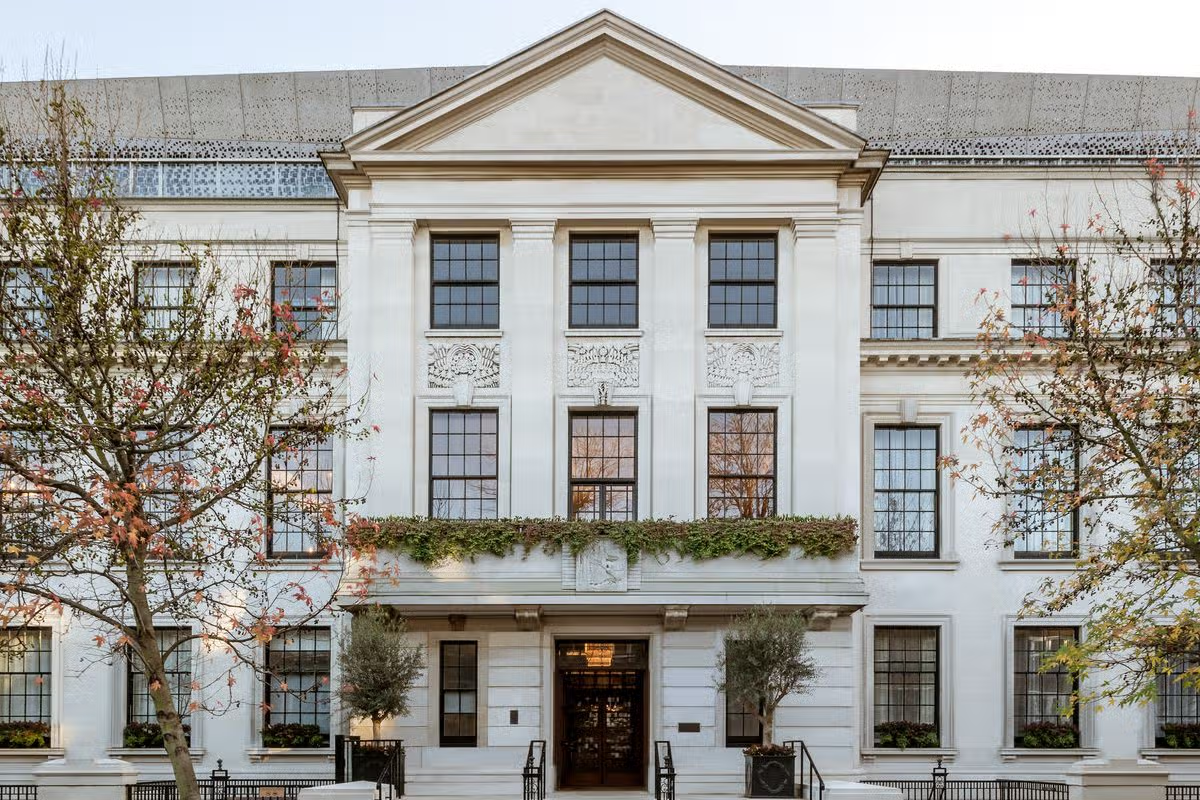
Looking for the ultimate East London escape? We’ve teamed up with the award-winning Town Hall Hotelin Bethnal Green to give one lucky reader and a guest the chance to win a stylish two-night stay, complete with daily breakfast and dinner at the acclaimed Elis .
Housed inside the former Edwardian Bethnal Green Town Hall, this Grade-II listed landmark seamlessly blends grand historic architecture with cutting-edge modern design. Step inside to discover sweeping marble staircases, intricate Art Deco detailing, and a striking glass-and-steel extension—creating a boutique retreat like no other.
Experience the best of East London
Positioned right in the energetic heart of Bethnal Green, Town Hall Hotel is perfectly placed for exploring East London’s vibrant culture from the independent boutiques of Shoreditch, to the iconic Columbia Road Flower Market and historic Brick Lane.
When you’re not out exploring, unwind in the hotel’s breath taking 14-metre indoor heated swimming pool, squeeze in a session at the gym, or relax with a cocktail at the bar.
What you can win:
A two-night stay for two guests in one of the hotel’s spacious, gallery-like luxury suites (featuring fully equipped kitchens and bespoke interiors).
Daily breakfast (B&B) to start each morning in style.
Dinner for two at Elis, where two-Michelin-starred chef Rafael Cagali and his team serve up a relaxed menu inspired by his Brazilian-Italian roots.
For your chance to win simply fill in the form below. if you can’t see the form, click here.
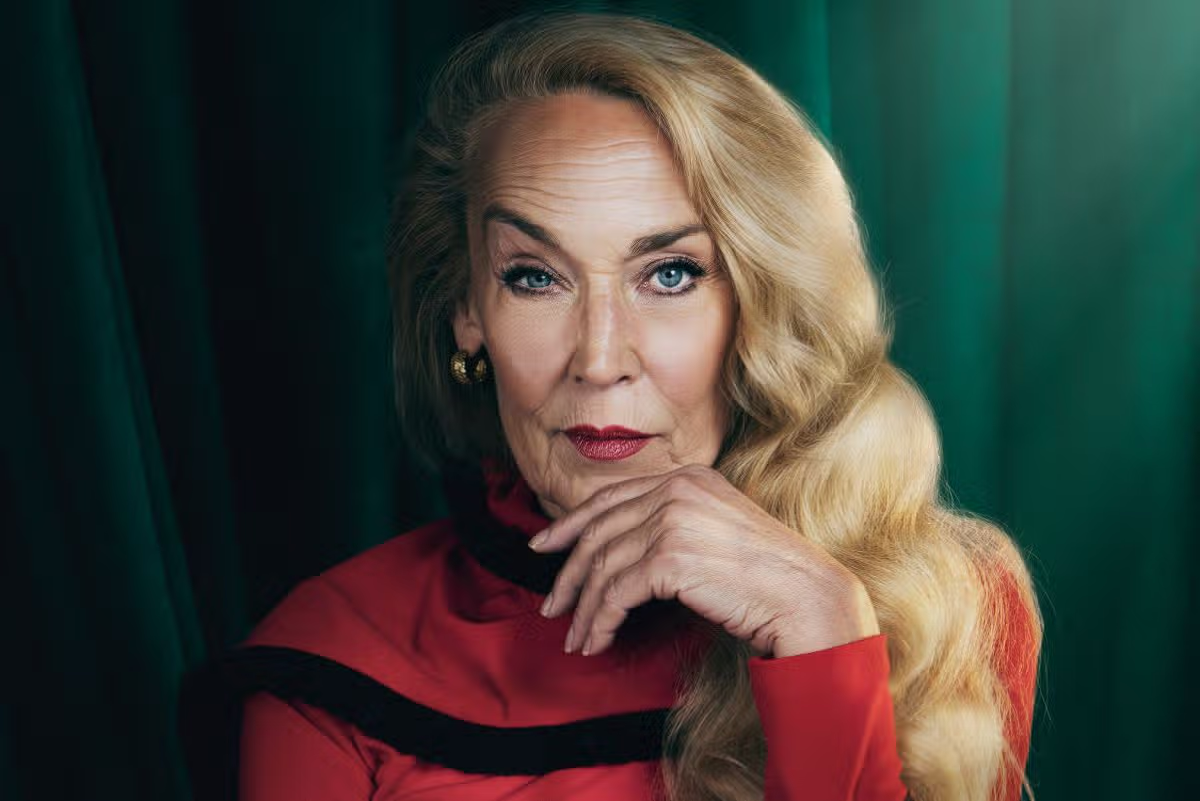
Model Jerry Hall will tonight find herself in some uncomfortable situations on Celebrity Traitors – but she should be used to navigating awkward social situations after her string of controversial romances
Jerry will make her debut on Celebrity Traitors tonight(Image: CREDIT LINE:BBC/Studio Lambert/Cody Burridge/BBC Creative)
Model Jerry Hall will need to put her acting skills to the test on Celebrity Traitors tonight if she’s cloaked up and hoping to deceive her co-stars.
But the 70-year-old is no stranger to navigating awkward social situations after her numerous high-profile and controversial relationships. The Texas-born star was a long-term partner of Rolling Stones icon, Sir Mick Jagger, with whom she shares four children.
She was also married to American businessman Rupert Murdoch, who owns numerous newspapers worldwide and previously owned Sky. But why did she split from arguably two of the most powerful men in the public eye? Here, we look at Jerry’s relationships and the reasons they broke down.
Sir Mick Jagger
Jerry and Sir Mick first met in 1976 at a dinner party. At the time, she was engaged to British singer and Roxy Music frontman Bryan Ferry. Sir Mick was also married to Bianca Jagger at the time.
Just a year later, the couple began an affair, and Jerry eventually left Bryan. Later that year, Jerry seemed to be a positive influence on Sir Mick, encouraging him to quit both heroin and LSD. By 1990, they had tied the knot in a traditional Hindu wedding in Bali; however, they were not legally married.
Just two years later, though, their relationship was plagued by allegations of infidelity on Mick’s side. Despite working through their differences, things came to a dramatic end in 1999.
It emerged that Mick was expecting a child with Luciana Gimenez Morad, who later welcomed a son Lucas Maurice Morad Jagger. Jerry subsequently filed for divorce, with British courts declaring their 1990 marriage void due to a lack of legal registration.
The pair later came to a “mutually acceptable legal and financial settlement”. She later said that she found annulling their relationship rude, but remained on good terms with Mick. These days, the pair have a very close blended family.
Speaking to The Guardian in 2010, Jerry said: “Getting a divorce is always horrible, because you feel you’ve failed. Everyone hates to give up on a marriage. You think your family’s broken up.
“But we managed to keep the family quite strong and to still be friendly. Divorce is not the end of the world. It’s worse to stay in an unhealthy marriage. That’s a worse example for the children.”
Rupert Murdoch
In 2015, Jerry started dating Rupert after his sister and niece introduced them. By October of that year, the pair went public and were seen attending the Rugby World Cup final together in London.
Their relationship went full speed and they got engaged in January 2016. Rupert announced their news in the Births, Marriages and Deaths page of The Times newspaper, which he owns. He popped the question with a staggering 19-carat marquise diamond ring.
Just three months later, the pair tied the knot at Spencer House, followed by a bigger celebration at St Bride’s Church on Fleet Street, with Rupert saying he felt like “the luckiest and happiest man in the world” as their friends and family gathered to witness their big day.
But despite their relationship going from strength to strength, including the purchase of a sprawling $200 million cattle ranch in Montana in December 2021, things soon came to an end.
Fast forward to June 2022, and their marriage was over. Rupert emailed Jerry, informing her that the marriage was over and that she should now contact him only through his lawyers. The divorce was later leaked to The New York Times.
Just a few days later, Jerry officially filed for divorce in Los Angeles, citing “irreconcilable differences”. The divorce was finalised just a few weeks later, with legal representatives for both parties saying that they ” remain good friends and wish each other the best for the future”.
While details about their settlement haven’t been disclosed, it was reported that Jerry received tens of millions, as well as an £ 11 million Oxfordshire mansion, as part of the settlement.
Strictly Come Dancing contestant Graeme Hall has been forced to defend his prior dance background on It Takes Two, after it emerged that he took part in ballroom and latin competitions
21:06, 29 Sep 2026Updated 21:06, 29 Sep 2026
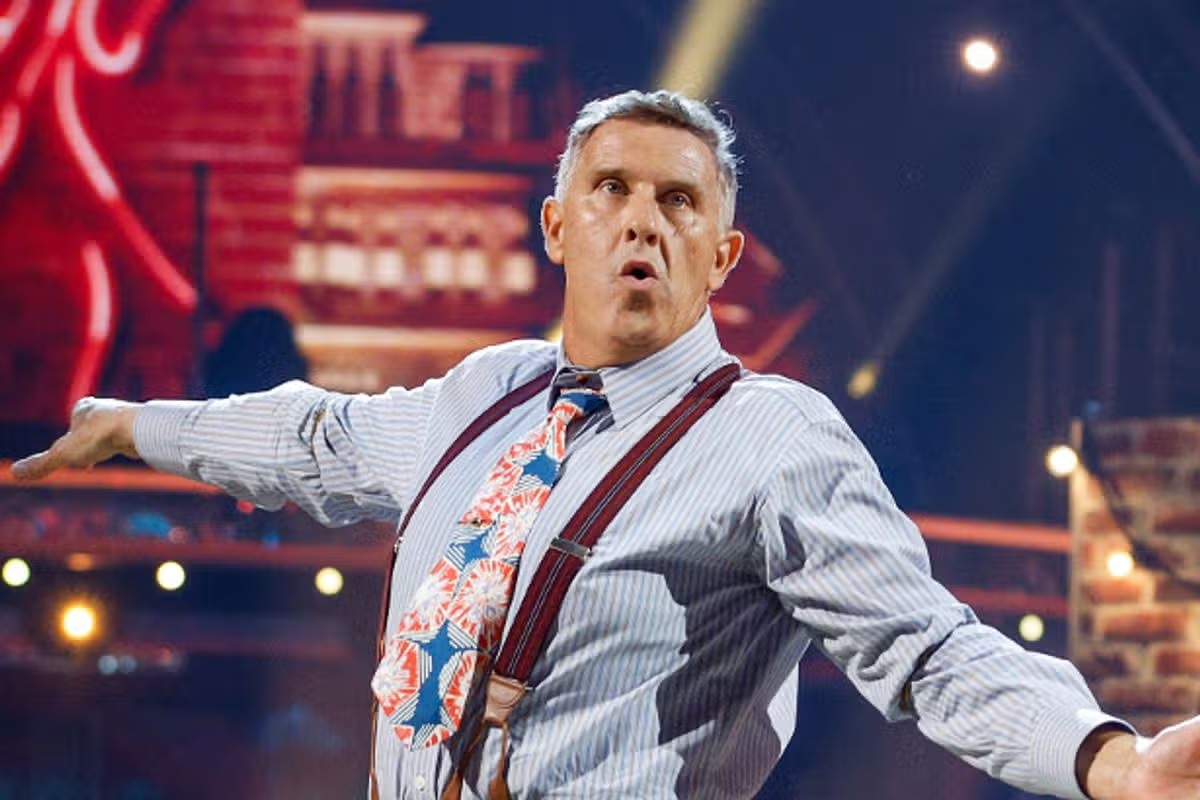
Graeme Hall on Strictly Come Dancing(Image: Guy Levy/BBC/PA Wire)
Strictly Come Dancing star Graeme Hall has addressed his dance background on It Takes Two. He was the subject of online speculation after it emerged that he had entered ballroom and latin competitions in the past.
Graeme, 60, made his live Strictly debut on Saturday 26 September, when he and Lauren Oakley danced a Cha Cha Cha and surprised fans with how rhythmical he was. Soon after, fans took to the internet to share that the celebrity dog trainer did, in fact, have dance experience.
An online record was put on social media of Graeme’s dance scores from competitions, dating back to 2013 when he competed in an Over 35s Intermediate Latin contest. His most recent competition was was in 2019, when he took part in the ballroom section of the Champions of Tomorrow competition.
Graeme was asked about his dance experience on Strictly spin off show It Takes Two. Host Ellie Taylor said: “A lot of people online have been talking about the fact that you have had sort of some dance experience – do you think that’s helping you, do you think it’s something to be considered?”
To see more of the Strictly stories you love from The Mirror and to find them easily in Google then make us your preferred source. Free and easy-to-do, just click on the link here to find more from The Mirror at the top of your feed.
Graeme answered: “It does and it doesn’t. You’re right as a hobby I did a bit of ballroom and latin and I entered a few competitions. The problem with that is, I wasn’t very good then and that was quite a few years ago.”
He added that his dance partner Lauren had to “undo all the bad things that I was doing” and put it right and indicated with his hands that their training was very up and down.
Graeme and Lauren’s first dance was to Elvis Presley’s Hound Dog and they received 24 out 40 for their routine. Fans complimented the pair on their dancing, with one writing: “I already loved Graeme and we all know Lauren is a superstar but nothing could’ve prepared me for this! What a fabulous pairing and what a great first dance. Think I’ve found my winners already.”
Another added: “This is the only dance all night that had me smiling from beginning to end! Graeme has such an ease and quiet elegance when he dances and he’s so light on his feet! He also looks like he’s genuinely enjoying himself which translates to the viewer.
“I feel so relaxed and chill watching him and so uplifted! I can’t wait to see what him and Lauren do next. I think they will be fan favourites.”
Graeme has previously coughed up to the dance experience, saying: “I have danced it before, but I’ve had a real mental block over one particular step and my leg just keeps doing something in the opposite direction to the way it’s meant to go.
“I’m convinced it’s a bit of muscle memory from 10 years ago. So it’s as much a hindrance as a help.”
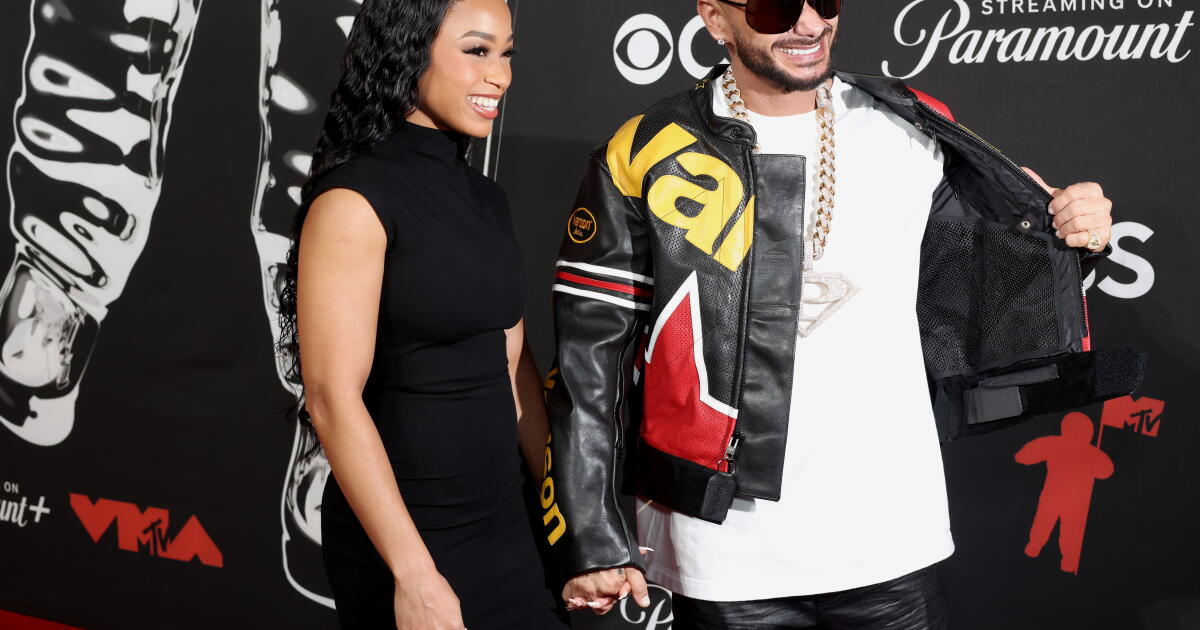
Wedding bells are ringing for Paul “DJ Pauly D” DelVecchio and his longtime girlfriend Nikki Hall.
The “Jersey Shore” alum proposed to the Jamaican-born influencer over the weekend while DJing at the Omnia Dayclub at Caesars Palace in Las Vegas. The popular party destination posted the proposal on Instagram on Sunday with the caption, “Things just got serious,” alongside a video of DelVecchio bringing Hall onto a stage and getting down on one knee.
Although a techno remix of Bruno Mars’ “Marry You” was blasting in the video, the DJ’s lips are seen mouthing, “Will you marry me?” Hall nods enthusiastically in response, and bikini-clad models appear in the background carrying signs overhead that read “Congratulations on the engagement! Yeah Buddy!”
Through a series of clips and photos shared on DelVecchio’s Instagram stories, it appears the two celebrated the engagement with Italian food and a hotel room decked out with red rose petals and balloons.
“We’ve spent these years choosing each other, growing together, building a life we love, and never rushing a chapter just because the world was ready to read it,” Hall posted on Instagram, adding that saying yes to DelVecchio was “the easiest YES” she’s ever said.
DelVecchio celebrated in the replies of the post, writing, “She said yesssssss!!!!!”
The pair met back in 2019 on MTV’s “Double Shot at Love,” a reality dating show hosted by DelVecchio and fellow “Jersey Shore” alum Vinny Guadagnino, in which 20 women competed to capture the hearts of both Pauly and Vinny, respectively.
The early days of their relationship played out on the series, with both Hall and DelVecchio smitten from the start. Their season ended with a twist when DelVecchio chose to say goodbye to Hall and “roll solo for now.” But clearly, his decision didn’t stick, and in 2020, the pair quarantined together during the pandemic, a revelation that arose when eagle-eyed fans noticed their social media content had identical backgrounds.
A solitary man believes he’s been wronged by a vast, overarching system. Feeling helpless to take it on directly, he picks up a gun and violently confronts the most powerful person he can think of who embodies his grievance.
It is a chilling dynamic that keeps repeating itself in American culture, and one at the heart of “American Hostage,” a dramatic miniseries making its debut Sunday on MGM+.
The eight-episode series re-creates the true story of Tony Kiritsis, an Indianapolis man who, in 1977, kidnapped Richard O. Hall, a mortgage broker whose family Kiritsis blamed for his own financial hardships.
The standoff lasted 63 hours, during which Kiritsis kept a shotgun attached by wire to Hall’s neck, and it became a national media spectacle. Throughout the crisis, Kiritsis made live calls to Fred Heckman, a local AM radio news broadcaster, pleading to listeners for the justice he believed he was due.
A half-century after this incident, not even the creators and stars of “American Hostage” can say for certain why we find stories like this so compelling — or why they keep happening in real life.
“We haven’t quite figured this situation out,” said Jon Hamm, who plays Heckman in “American Hostage” and is one of its executive producers.
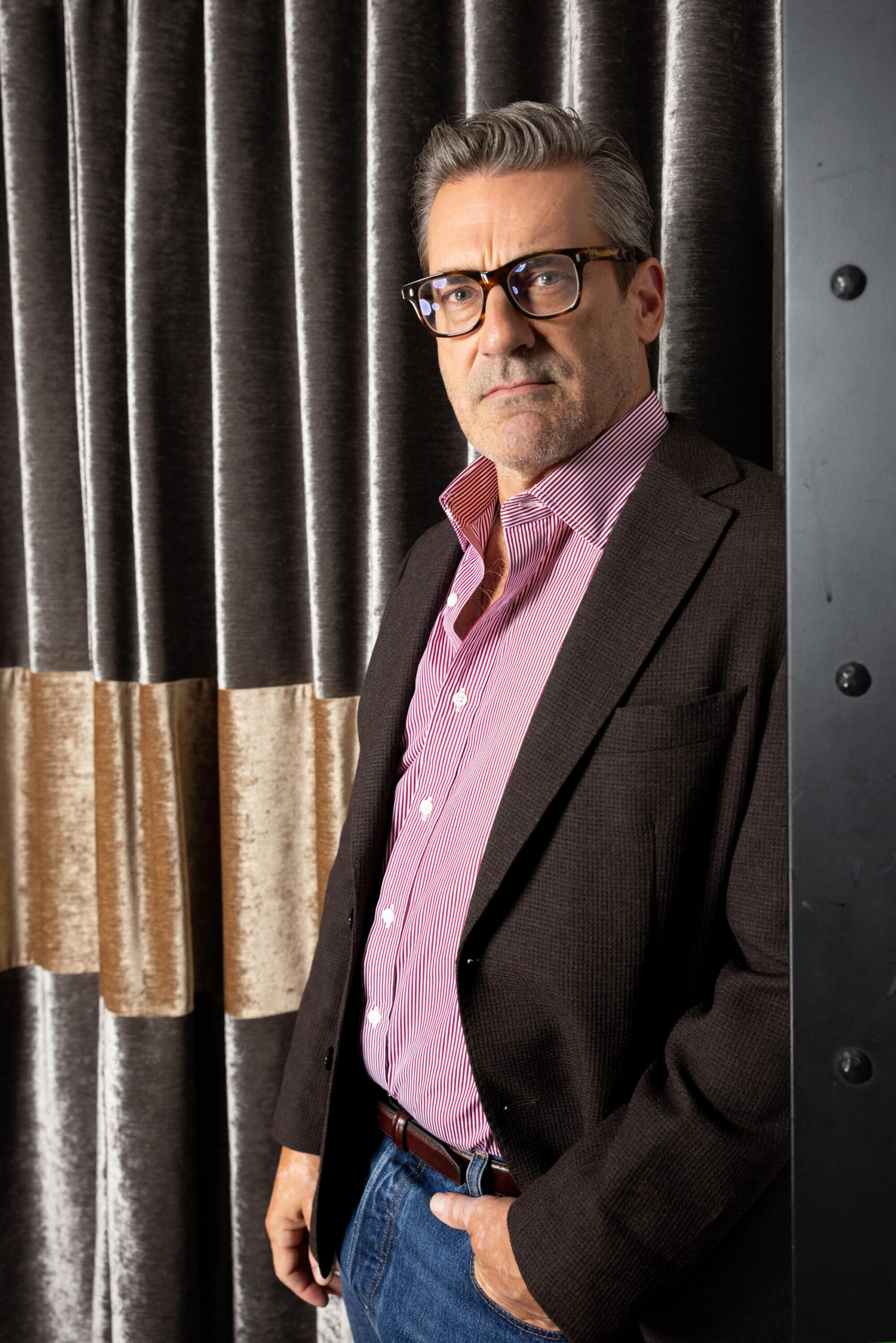
Jon Hamm plays Fred Heckman, a radio news broadcaster, in “American Hostage” and is an executive producer.
(Jason Armond/Los Angeles Times)
The “Mad Men” star — no stranger to period pieces — said that beneath its retro production values and wide lapels, “American Hostage” is fundamentally about how people who feel voiceless in our society fight to be heard, even if the means is violence.
“There’s a lot that really resonates in the current media landscape and culture 50 years down the road, that people can still really connect with,” Hamm said.
Hamm and his colleagues hardly need to argue that point when the nation has been fixated on the case of Luigi Mangione, who in August pleaded guilty to federal charges in the December 2024 killing of Brian Thompson, the chief executive of UnitedHealthcare.
Though work on “American Hostage” had begun before Mangione’s crimes and the show was not inspired or motivated by them, series co-creator Shawn Ryan said that audiences have a boundless fascination with these types of stories — with or without any counterparts in current events.
“Dramatically, it’s always very interesting to see somebody do the wrong thing for the right reason,” Ryan said.
The TV series originated with a 2022 scripted podcast, produced by Criminal Content and also called “American Hostage,” on which Hamm also played the role of Heckman. It told of how Kiritsis, an Army veteran, enacted the kidnapping on his belief that the Hall family had swindled him on his mortgage — a loan for land where he had hoped to build a shopping center.
While Kiritsis sought to use Hall’s life as a bargaining chip for prosecutorial immunity, he also portrayed himself as an underdog taking on powerful financial interests. On the other end, Heckman wrestled with the moral predicament of giving airtime to a potential murderer while hoping to keep Hall alive. (Hall survived the ordeal and Kiritsis, acquitted of his crimes by reason of insanity, was later institutionalized.)
In the spring of 2022, Hamm approached Ryan, the creator of TV thrillers like “The Shield” and “The Night Agent,” with the idea of adapting the “American Hostage” podcast into a miniseries.
Ryan created the TV adaptation with Eileen Myers, a collaborator of his on shows like “Last Resort” and “Mad Dogs.” They both saw in the source material a story that was a combination of classic 1970s films like “Network” and “Dog Day Afternoon.”
(In a parallel development, Kiritsis’ story was also adapted into the Gus Van Sant film “Dead Man’s Wire,” which was a box-office disappointment earlier this year.)
Ryan and Myers said they were fascinated with how the American news media covered the kidnapping in instantaneous fashion and in an era long before the internet. In the 1970s, Ryan said, “There were fewer journalists and they were better and more trusted, and if Walter Cronkite said something, you believed it.”
Shawn Ryan, Jon Hamm and Eileen Myers executive produce the TV adaptation of “American Hostage.” Hamm approached Ryan, who brought in Myers to co-create and co-showrun the series.
(Jason Armond / Los Angeles Times)
The question that journalists like Heckman were confronted with, Myers said, was, “Do you allow a man who’s got a shotgun to somebody’s head dictate the terms of whether you’re going to put them on the air or not?”
Hamm, who has played alluring if ultimately disreputable characters on “Mad Men” and now Apple TV’s “Your Friends & Neighbors,” said he appreciated that “American Hostage” gave him a character who an audience can feel good about rooting for.
“I thought, I’m 55 years old,” Hamm said. “I was close to Fred’s age when this all went down. It was fun to play somebody morally conflicted that is actually on the good side.”
With some hesitation, Hamm pointed to the career trajectory of Bryan Cranston, who followed his celebrated heel turn on “Breaking Bad” with projects like “All the Way,” the play and TV film about President Lyndon B. Johnson.
“I don’t want to draw a comparison that’s stretching the bounds of reality,” Hamm said, “but Bryan went from Walter White to LBJ. You go, ‘All right — he’s still morally conflicted, but at least he’s on the right side of things.’”
“American Hostage” also benefited from the casting of Giovanni Ribisi (“Saving Private Ryan,” “Avatar,” “Sneaky Pete”), who brings a blend of volatility and humanity to the role of Tony Kiritsis.
Hamm recalled how Ribisi was in the midst of shooting another project — the upcoming Prime Video miniseries “The Greatest,” about Muhammad Ali — when he agreed to do a reading for “American Hostage” over Zoom.
“He brings value to every project he does, and he’s picky, as he should be,” Hamm said. “He’s a phenomenal DP — he might just go be a camera person or something if he wants to do it. So we were lucky to get him.”
Giovanni Ribisi plays Tony Kiritsis, the man who kidnapped Richard O. Hall. “So we were lucky to get him,” Hamm said.
(Steven Ackerman / MGM+/Sony Pictures Television)
There are of course unavoidable parallels between the stories of Kiritsis and Mangione, including the fact that both men were celebrated as folk heroes by some people who identified with their broader resentments.
But Hamm drew a crucial distinction between the two cases: Mangione “killed a guy,” he said. “He shot a man in cold blood. Like, I don’t care how good your point is. That’s not how we do it.”
Going back to the Boston Tea Party, Hamm said, every era of American history has had its dissidents who feel “wronged and done over by a system that is stacked against you” and are willing to take aggressive actions against it.
Hamm said that feeling persists and thrives today. “I think this is a big part of the rise of Trumpism,” he said. “I think this is a big part of the rise of the MAGA mentality, of ‘I have been done wrong and no one is hearing my complaints.’”
When those feelings go unaddressed for long enough, Hamm said, people will come to accept a certain amount of lawlessness from the figures they feel can solve their problems.
“We have a guy in the Oval Office right now who thinks that the laws don’t apply to him and a Supreme Court that said, ‘Yeah, they don’t — you can do whatever you want,’” he said.
For supporters of President Trump, Hamm said, “I think it’s fun for them to be able to flout the law and say, ‘Who cares?’ and all the things that they’re currently saying, but it’s not the principles that we were founded on.”
Hamm and Ryan make no secret of the fact that they’d like to keep “American Hostage” going as an anthology series and explore more of what Hamm called “these watershed moments of American life, to see how they rippled and how we got here from there.”
One could certainly imagine other events that would fit the show’s interest in real-life hostage crises that became media spectacles — the 1974 abduction of Patty Hearst; the 1963 kidnapping of Frank Sinatra Jr. — though Hamm kept any specific plans for the series close to the vest.
Perhaps the upper limits they face are the hours in a day to make and to broadcast the show.
“We’re living in great times right now for television,” Hamm said. “There’s so many opportunities to tell stories. Almost too many.”