Residents in Limoges, France, are expressing shock and anger after protests saw their 140-year-old town hall set ablaze. The fire destroyed its roof and clock tower, as officials condemned the attack.
After the L.A. mayoral debate on NBC4 ended Tuesday, reporters rushed downstairs to a courtyard hoping to speak with the candidates or their surrogates.
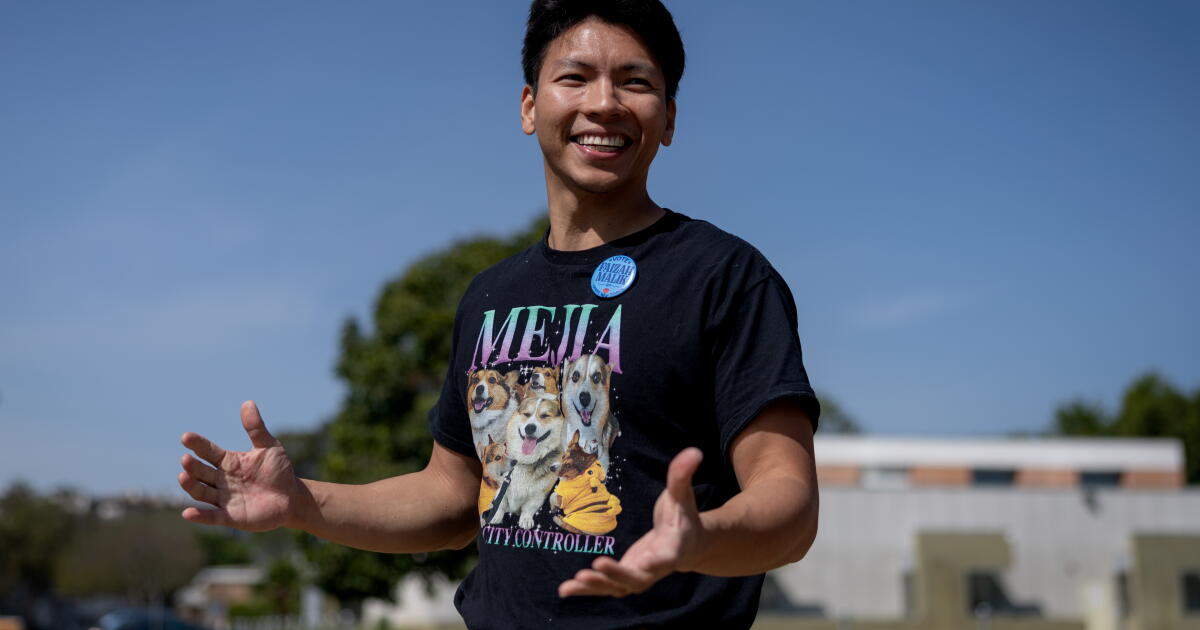
Speaking for Mayor Karen Bass were Councilmember Monica Rodriguez and State Assemblymember Rick Chavez Zbur (D-Los Angeles). On the other side, speaking for Councilmember Nithya Raman, the sole spin doctor was Controller Kenneth Mejia.
“What Councilmember Nithya Raman did up there was show a better path, a better vision for what this city could be,” Mejia told reporters outside the NBC4 and Telemundo52 studios in Universal City.
Mejia isn’t just listed as Raman’s top endorser on her campaign website. He’s also her biggest cheerleader, and the only elected official at City Hall publicly supporting her mayoral bid. (Raman’s camp has contended throughout the campaign that endorsements are not necessarily a sign of how the electorate is feeling.)
Of all the elected officials out there, Mejia is an obvious ally for a politician like Raman who has been somewhat ostracized at L.A. City Hall since she announced her candidacy in February. Not a single council member — even her three fellow comrades in the Democratic Socialists of America — has endorsed Raman’s candidacy.
“When you’re in office, once you learn how status quo works and how to game it, you don’t want to change it,” Mejia told The Times, referring to the three DSA council members supporting Bass.
As for Mejia, he doesn’t mind being on the outside.
“It’s been lonely since I’ve been here [at City Hall],” he said.
“People have told me, ‘Kenneth you ruined your political career by endorsing Nithya,’” he said. “I’m honored to be the only one endorsing her … Karen Bass said the political establishment doesn’t like Nithya and I said, ‘So? I won by bucking political establishment.’”
Mejia has turned into an attack dog for Raman over the past few weeks. After endorsing her in July, he has showed up at news conferences with her and posts sometimes multiple times per day on social media supporting her or attacking the mayor.
Raman, meanwhile, has said she’ll open the books to Mejia.
If Raman wins, she will have a formidable City Hall ally in Mejia, who has not been shy about using social media to attack an assortment of political targets in and outside city government. On Friday, he announced that he had issued subpoenas to LA28, the private Olympic organizing committee, demanding financial records on the planning for the 2028 Games.
You’re reading the L.A. on the Record newsletter
Sign up to make sense of the often unexplained world of L.A. politics.
By continuing, you agree to our Terms of Service, which include arbitration and a class action waiver. You agree that we and our third-party vendors may collect and use your information, including through cookies, pixels and similar technologies, for the purposes set forth in our Privacy Policy such as personalizing your experience and ads.
A vote, but no endorsement
Fourteen members of the Los Angeles City Council have endorsed Bass (yes, that includes Raman, who subsequently decided to challenge the incumbent).
The sole holdout on the council, Traci Park, made her allegiances — soft as they may be — abundantly clear Wednesday at a town hall in Pacific Palisades when she said she would be voting for Bass but not endorsing her.
“I want some change too,” Park said, addressing her constituents about the mayor’s race. “But the alternative does not actually get us where we want to be. I think it actually impedes our progress.”
“I have deep concerns about the leadership and effectiveness of both candidates. I have personally been deeply frustrated and angry with our current mayor. We have tangled on some major policy issues. But always respectfully.”
Park said that as difficult as things may be now, they could get worse if Raman were elected.
The council member, who represents a large swath of L.A.’s Westside, said she is “very, very concerned” about a Raman mayoralty.
Park represents the Palisades, where the Palisades fire burned last year, destroying thousands of homes and killing 12 people.
Park told The Times in an interview that an endorsement of Bass would have represented “an affirmative statement of support earned based on agreement with someone’s records or positions or accomplishments.”
But Bass is someone Park can work with, the council member told The Times.
“I cannot say the same thing about Nithya Raman. That’s the problem. She doesn’t work with others. I think that deep frustration with her unwillingness to collaborate with others is reflected in the fact that no other council members at all are endorsing her,” Park said.
Bass goes to Ramanland
Bass went hard after Raman at this week’s NBC4/Telemundo 52 debate, accusing her of neglecting constituents in her district, which stretches from Silver Lake to the San Fernando Valley. She pushed even harder the following morning, appearing with some of those dissatisfied residents and business owners in Sherman Oaks.
Standing outside the Valley Inn Restaurant and Martini Bar, Bass said she reached out to Raman early on as mayor to warn her that some of her Valley constituents had contacted the mayor’s office to voice unhappiness with Raman. Bass said she told Raman she was going to meet with them.
“She essentially said to me that … she knew that they didn’t like her, that it was a feeling that was mutual, and to have at it if I want,” Bass said. “To me, I thought that was a strange way to respond.”
Raman spokesperson Liz Garcia denounced Bass’ comments as “bizarre and simply not true,” saying her boss has maintained positive relationships with her constituents. In a statement, she pointed to recent polling that showed Raman with an 8-point lead in the Valley.
“Nithya’s results in her district help explain why: She has reduced encampments, tents and RVs by 70% in her district over the past three years, helped businesses succeed, protected tenants, installed traffic safety upgrades and improved quality of life for residents,” Garcia said.
Raman has been pushing back against the mayor’s claims in other ways, noting that two-thirds of voters in the June 2 primary chose someone other than the incumbent.
During this week’s debate, Raman criticized Bass for boasting that she had given Sherman Oaks residents her personal cell number, saying it showed that regular government operations are dysfunctional.
Standing outside the martini bar, Bass acknowledged that her own staffers aren’t always happy about her generosity with her cell number. But things were worse when she was a member of Congress, she said.
“My cellphone was on my business card,” Bass said.
State of play
— BLOW FOR BLOW: The gloves came off in the final debate between Bass and Raman this week, with the two candidates trading verbal jabs over public safety, the Palisades fire and the fate of Police Chief Jim McDonnell. Meanwhile, here’s who three L.A. Times columnists believe won the debate.
— A MOVING TARGET: Raman has shifted her position on police hiring, public safety spending, the so-called mansion tax and other issues, causing some to question what she stands for. Raman has defended her various policy shifts, saying she made them after receiving new information or recognizing changed circumstances.
— CHIEF AMONG THEM: Raman and Bass have diverged over whether to keep Chief McDonnell. Raman said she would replace the chief if she becomes mayor, although she offered mixed messages on the timing. Bass said that McDonnell’s replacement before the 2028 Olympics could throw the LAPD into turmoil.
— GATES-GATE: Bass denounced Raman for saying the “gold standard” for the LAPD’s noncooperation with immigration enforcement took place during the tenure of former police chief Daryl Gates. Bass suggested Raman is not in touch with the city’s Black community, while Raman said the mayor had deliberately twisted her words.
— HOPE FOR HOUSING: Both Bass and Raman have been talking up their work on housing affordability. Bass said her administration has fast-tracked tens of thousands of units of affordable housing, while Raman has boasted of her success in enacting the strongest tenant protections in L.A. in 40 years.
— FIGHTING FRAUD: Los Angeles County voters are concerned about a host of voter fraud issues that could disrupt the Nov. 3 general election, even though they have a high degree of confidence in local elections officials, according to a new poll funded by the nonprofit California Community Foundation.
QUICK HITS
Where is Inside Safe? The mayor’s signature program did not have an operation this week.
On the docket next week: The final, pre-election campaign finance statements are due in Los Angeles runoff contests on Thursday.
Stay in touch
That’s it for this week! Send your questions, comments and gossip to LAontheRecord@latimes.com. Did a friend forward you this email? Sign up here to get it in your inbox every Saturday morning.
The Swedish academy says the academics’ models are ‘now used by central banks and governments around the world’.
Published On 12 Oct 202612 Oct 2026
The 2026 Nobel Prize in Economic Sciences has been awarded to US academics Robert Hall and Michael Woodford for their work on how monetary and fiscal policy can help stabilise fluctuations in the economy, according to the Royal Swedish Academy of Sciences.
The winners of the prestigious award, formally known as the Sveriges Riksbank Prize in Economic Sciences in Memory of Alfred Nobel and the final prize to be given out this year, were announced on Monday.
Recommended Stories
list of 4 itemsend of list
The two laureates developed new macroeconomic models that improve people’s ability to implement effective stabilisation policies, enabling fiscal and monetary policy measures that can reduce damaging swings in the economy.
“The laureates’ work has provided us with a stable theoretical foundation for the models that are now used by central banks and governments around the world,” John Hassler, chair of the Committee for the Prize in Economic Sciences, said in a statement.
“With them, we are better equipped to deal with shocks in the economy, such as energy crises or sudden changes in how much households consume.”
During the oil crises in the 1970s, the existing Keynesian models used to determine when and how measures should be implemented to tackle recessions or other economic fluctuations stopped working. Hall and Woodford then developed new tools to understand what policy responses could be the most effective.
“Rather than basing the models on statistical links between macroeconomic variables, such as inflation, production and consumption, they chose to build them on a microeconomic foundation,” the academy said. “This encompasses an understanding of how the total mass of individual households and businesses affect the economy through their actions.”
The economics prize, first awarded in 1969, is not part of the five original awards created in the 1895 will of industrialist and dynamite inventor Alfred Nobel, but was instead established by Sweden’s central bank.
The majority of previous laureates have been from the United States. Only three women have ever won, most recently Claudia Goldin in 2023 for her work on how gender has affected pay and employment over time in the US.
Last year’s winners – Joel Mokyr, Philippe Aghion and Peter Howitt – won for their work on “creative destruction” and how new technology and production methods can boost growth and living standards.
Like the other Nobel awards, the economics prize consists of a diploma, a gold medal, and a $1.2m cheque.
You’re reading the Essential California newsletter
L.A. Times reporters guide you through the most important news, features and recommendations of the morning.
By continuing, you agree to our Terms of Service, which include arbitration and a class action waiver. You agree that we and our third-party vendors may collect and use your information, including through cookies, pixels and similar technologies, for the purposes set forth in our Privacy Policy such as personalizing your experience and ads.
Sunday morning, Oct. 9, 2022, around 8 a.m., I was about to take a shower when I decided to check my cellphone one more time. Thank God I did: If I hadn’t, I would’ve been half an hour late on assisting in one of the most explosive stories ever to hit L.A. politics.
Via Slack, Times assistant managing editor Steve Clow asked if I could serve as a second set of ears on audio that my colleagues had unearthed involving four of the most powerful L.A. políticos at the time: City Council President Nury Martinez, Councilmembers Gil Cedillo and Kevin de León, and L.A. County Federation of Labor President Ron Herrera. I was still in my birthday suit (sorry for the visual, gentle readers, but I’m sworn to report the facts on this job) when I played the snippet Clow shared: Martinez describing the Black son of then-Councilmember Mike Bonin as “su negrito” — his darky.
I put on my shorts and told my wife I wouldn’t be helping at her restaurant that day.
Clow sent me more clips over the next hour, each crasser than the other — I remember gasping audibly at the part when the four were laughing as Martinez referred to Oaxacans as “ugly.” That morning, my colleagues Benjamin Oreskes, Dakota Smith, Julia Wick and David Zahniser published their first story on the fiasco, which turned out to be a secretly recorded conversation from a year earlier that someone had posted on Reddit just the day before.
The scandal quickly became a national sensation, with even then-President Joe Biden weighing in. L.A. wretched in collective disgust and demanded action, which definitely came: Martinez and Herrera quickly resigned, while Cedillo — who had already lost his reelection bid — would stay on until his bitter end, and De León wouldn’t leave until challenger Ysabel Jurado destroyed him in his 2024 reelection bid. The electoral repercussions of the audio leak can still be felt four years later in this election, as Nithya Raman stages a strong challenge against incumbent Karen Bass — a sentence no one would’ve believed in the fall of 2022, when Bass was on the cusp of winning her first term, and Raman was the lone democratic socialist on the council.
I would’ve figured the anniversary of something as titanic as all of the above would’ve sparked more commemorations than just my columna this week. Nope! L.A. has moved on to the point that Cedillo wasn’t booted from a group photo that included current District 9 council candidate Jose Ugarte, former Assemblymember Wendy Carrillo, former Mayor Antonio Villaraigosa and current Assemblymember Mark Gonzalez — because even Chicanosauruses can survive a political asteroid, I guess?
Having political leaders spew racist, homophobic nonsense now seems like the good ol’ days in an era where infernos destroy or stink up swaths of L.A., immigration agents terrorize immigrants from Westwood to the Eastside, and a spokesperson for a sitting American president denies that the commander in chief suggested Iran bomb the City of Angels, even though he said it during a campaign rally.
I shouldn’t really be surprised, I guess: L.A. infamously loves to forget its own history. But I would urge all you readers to read the great, Pulitzer Prize-winning coverage my colleagues did in the aftermath of the audio leak scandal, because it captured the city at its worst — but also its finest as residents fought back and demanded politicians do better.
Four years later, we can only hope this upcoming election shows more of the same.
The week’s biggest stories
Domenic Hix looks back as a large wave crashes on the shoreline in Laguna Beach on Friday.
(Allen J. Schaben / Los Angeles Times)
Tropical Storm Rachel in SoCal
California real estate
California crime
In memoriam
More news
Editor’s pick
More picks
Things to do
(Illustrations by Lindsey Made This; photograph by Charles Phoenix)
Today’s recipe
(Rebecca Peloquin / For The Times)
This recipe makes apple butter that is less sweet than most; use more sugar if you like, but don’t use less or there won’t be enough to properly preserve the pureed apples.
Have a great day, from the Essential California team
Jack Dolan, investigative reporter Hugo Martín, assistant editor, fast break desk Kevinisha Walker, multiplatform editor Andrew Campa, weekend writer Karim Doumar, head of newsletters
Mustache. Aviator sunglasses. Bears sweater vest. Though Mike Ditka‘s look may be iconic, his time as a player and coach is what cemented his name in NFL history.
Ditka, the first ever tight end to be inducted into the Pro Football Hall of Fame and coach of the legendary 1985 Chicago Bears, has died. He was 86.. His family announced his death in a statement Friday.
“It is with profound sadness that we announce the passing of our beloved husband, father, grandfather, and friend, Mike Ditka,” The family said. “While the world knew Mike as a Hall of Fame football player, legendary coach, and leader of the Chicago Bears’ Super Bowl XX championship team, we knew him as the heart of our family. Mike will be missed beyond measure and remembered forever.”
With nicknames “Iron Mike,” “Da Coach” and “The Hammer,” Ditka was inducted into the Pro Football Hall of Fame in 1988 after a 12-year playing career that featured five Pro Bowls, 427 receptions, 43 touchdowns and 5,812 receiving yards.
Ditka, who won two Super Bowls as a coach and one as a player, revolutionized the tight end position, transforming it from a primarily blocking-focused role to one that could pose a threat in receiving.
Notorious for his fiery personality, Ditka also took his stardom from field to screen, starring alongside Will Ferrell in “Kicking & Screaming,” in which he played himself. Though instead of coaching the championship-winning Bears, he helps coach a little league soccer team — but his competitive spirit remains the same. He also made several TV appearances, including in “Cheers,” “L.A. Law” and “Entourage.”
Born in Carnegie, Pa., on Oct. 18, 1939, Ditka was a first-round draft pick of the Chicago Bears in 1961. The team at the time was helmed by Bears founder, president and head coach George Halas, who later bestowed Ditka with his first NFL head coaching job in 1982.
Coming from the University of Pittsburgh, where he also played basketball and baseball and received All-America honors in football, Ditka immediately became a mainstay in the Bears lineup, going on to start 84 straight games. He was named rookie of the year with 56 catches for 1,076 yards and 12 touchdowns, becoming the first tight end to reach 1,000 yards receiving in his rookie season.
He also earned All-NFL honors from 1961 to 1964 and made the NFL Pro Bowl five times in his first six seasons. Ditka was enshrined into the College Football Hall of Fame in 1986.
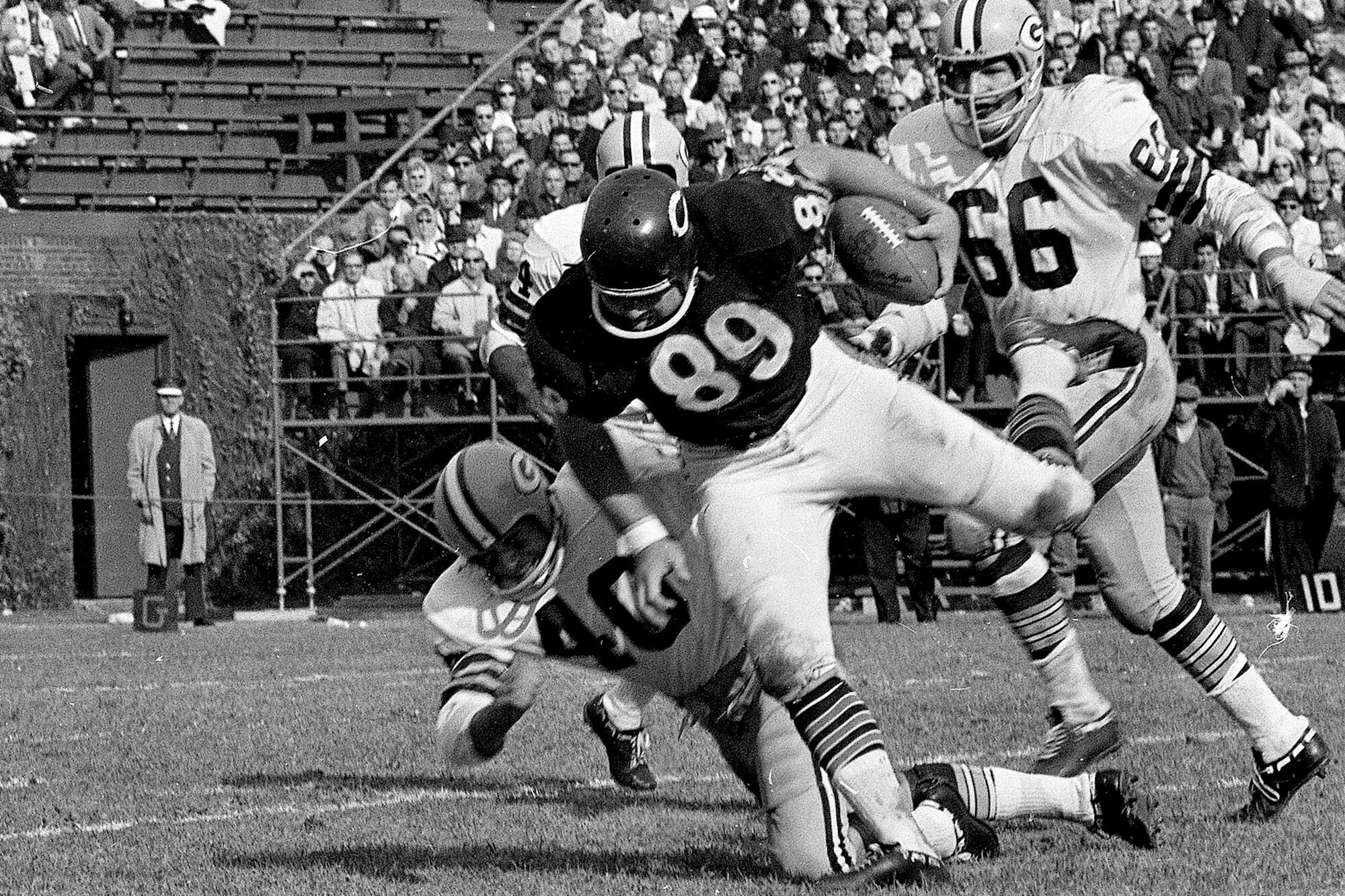
Chicago Bears tight end Mike Ditka is tackled after a pass reception against the Green Bay Packers at Wrigley Field on Oct. 16, 1966.
(Associated Press)
The tight end eventually became a coach, famously leading the 1985 Chicago Bears. The team, one of the best in NFL history, went 15-1 and scored 456 points while only allowing 198. The Bears had plenty of personality that year as well, audaciously recording a rap-styled video called “The Super Bowl Shuffle” that was released during the regular season.
But it was not only a strong season on paper — Ditka is credited with leading the Bears back to relevance and luster after losing records in 1980, 1981 and 1982. He built them back to a team fans adored and competitors feared.
“I think that’s the way Mr. Halas always wanted it,” Ditka told The Times in 1985. “He wanted to have a ballclub with a certain personality, a team made up of, you know, rough, tough guys, a team that didn’t take any crap from anybody and could dish it out.”
Ditka and the team brought triumph to Chicago in Super Bowl XX in New Orleans with a 46-10 win against the New England Patriots.
Winning NFL coach of the year with the ’85 team, Ditka is one of only two who have won a Super Bowl as a player, assistant coach and head coach.
“I believe Mike Ditka represents us, in more ways than one,” then linebacker and captain Mike Singletary told The Times. “We know he’s not coaching the Chicago Bears because he needed a job. The Bears mean something to Mike Ditka. The team is part of him.”
His time in Chicago wasn’t all glitz and glamour, though. Ditka wasn’t immediately welcomed back to the Bears as a coach, with his temper a source of strain between him and the owners. He also had a DUI conviction in 1985 and suffered a heart attack in 1988.
“There was a (magazine) poll of 200 NFL players who said the coaches they would least like to play for were, first, (Tom) Landry and, tied for second, Don Shula and me. I was flattered. What a great compliment,” wrote Mike Ditka in his 1986 autobiography.
Ditka was entrenched in controversy, having been outspoken about Washington not changing its name from the Redskins, also facing backlash for comments he made in 2016 criticizing Colin Kaepernick and social justice protests, later apologizing.
Despite it all, his name is etched in NFL history.
“Ditka was proud and headstrong,” wrote former Times sports columnist Mike Downey. “He was common and condescending. … He did as he pleased. But he restored the reputation of the Chicago Bears, made them winners and made them watchable.”
During his playing career, he made an iconic 63-yard catch-and-run against the Steelers on Nov. 23, 1963, which stands in 69th place on NFL’s 100 Greatest Plays. The highlight helped the Bears to a 17-17 tie after being down 17-14 in the fourth quarter; the team later went on to win the NFL championship.
In 1967, he was traded to the Philadelphia Eagles and then to the Dallas Cowboys in 1969. During his time with the Cowboys, Ditka made it to two Super Bowls, with a loss in 1971 and finally a win the following year in which he scored the final touchdown in a 24-3 win against the Miami Dolphins.
After retiring in 1972, Ditka joined the Cowboys as an assistant coach. He got his hands on the Super Bowl trophy once again in 1977 with the team and stayed on until joining the Chicago Bears.
The Hall of Famer’s ties with Chicago were once again severed, this time with his firing in 1993 following a 5-11 season. But he refused to shed the navy and orange in the years after he went 106-62 and led the Bears to seven playoff appearances in 11 seasons.
“Yeah, I was fired by the Bears, but that’s life,” Ditka said during a visit to Chicago’s practice field in 2013. “There has never been a time I was not a Bears fan. I have a right to be a Bears fan as much as anybody. I played on a championship team and I coached a championship team.”
The Bears retired Ditka’s number, 89, in 2013.
His involvement with the NFL expanded off the green as he explored TV commentating, even earning Sports Emmy nominations for outstanding sports personality in 1994 and 1996.
Ditka did have one more head coaching stint in the NFL from 1997 to 1999 with the New Orleans Saints. After two 6-10 seasons, the Saints traded all of their draft picks — plus a first-round selection in 2000 — to move up and select running back Ricky Williams. But the team went 3-13 in 1999 and Ditka was fired after the season.
He finished his coaching career 121-95 after the 15-33 stint in New Orleans.
“I’ve been to the top of the mountain and I’ve seen it,” Ditka told The Times in 2004. “And I’ve been to the bottom of the mountain and I’ve seen that too. I don’t want to get anywhere between them anymore.”
Professional football would not see the last of him, however, as he went on to do radio and TV broadcasting for programs such as The NFL Today, Monday Night Football and SportsCenter. His passion for football would never fade, apparent in his launch of X Football, women’s tackle football competition league, in 2021.
And his mark on Chicago was not confined to the stadium gates; he was a partner in Ditka’s Restaurant Group which first opened a steakhouse in downtown Chicago in 1997, boasting its signature dish, “Da Pork Chop.” While the original location closed in 2020, there are still locations in Oakbrook, Ill., and Pittsburgh.
After a short stint living in Florida, Ditka and his wife, Diana, replanted roots in Chicago at the end of 2024.
‘‘I was born in Pennsylvania and raised in Pittsburgh, but Chicago is my home . . . and it is my life,” Ditka told the Chicago Sun Times.
If I ever need to humble myself — if my head inflates with grand visions of becoming the next Steve Lopez or Bill Plaschke — I pull up the transcript of the secret recording that upended Los Angeles politics after The Times broke the story exactly four years ago.
It’s like a modern-day version of “Ozymandias,” except far more vulgar, nowhere near as poetic and a better warning against hubris than anything Shelley could have penned.
“The thing for us is to exercise our power,” said then-City Councilmember Gil Cedillo, about halfway through an hourlong conversation he was having with three of the city’s most powerful political figures.
Oh, did they ever — and nowhere near the way they intended.
Nury Martinez and Ron Herrera, the president of the City Council and head of the Los Angeles County Federation of Labor, respectively, quickly resigned for their roles in the racist, homophobic drivel on the recording. Cedillo — who was finishing out his term — and Councilmember Kevin de León refused to step down, besmirching their well-earned reputations as progressive lions.
The L.A. they sought to create — where Latinos ascend at the expense of the Black community, and anyone who gets in the way is crushed — never came to be. And the recording that exposed their machinations ultimately destroyed the type of ethnic politicking that made the careers of too many self-serving power grabbers, including this quartet.
The transcript of their back-and-forth now reads as prophecy — and we’re far better for it.
Much of the discussion, which happened in October 2021 at the headquarters of the L.A. County Federation of Labor, was devoted to whining that L.A.’s Latino-majority council districts, and some cities elsewhere in the county, were represented by Black leaders instead of Latinos, even as Latino residents far outnumbered Black ones.
“F—, the way I see it, all of the seats are Latino,” said Herrera, who hailed the rise of a “little Latino caucus of our … own” that he felt should reign permanently.
He and the others predicted a future in which vengeful Black politicians would try to sabotage future Latino leaders on their way out of office, creating “poor Latino districts with nothing,” as Martinez put it.
She was referring to redistricting proposals that would chop off assets like the Coliseum and Exposition Park from South L.A.’s District 9 — the most Latino district in the city, represented by a Black council member, Curren Price.
“So they f— a future Latino for CD 9,” De León whined. “That’s how arrogant, just how arrogant it is.”
That’s not what ended up happening.
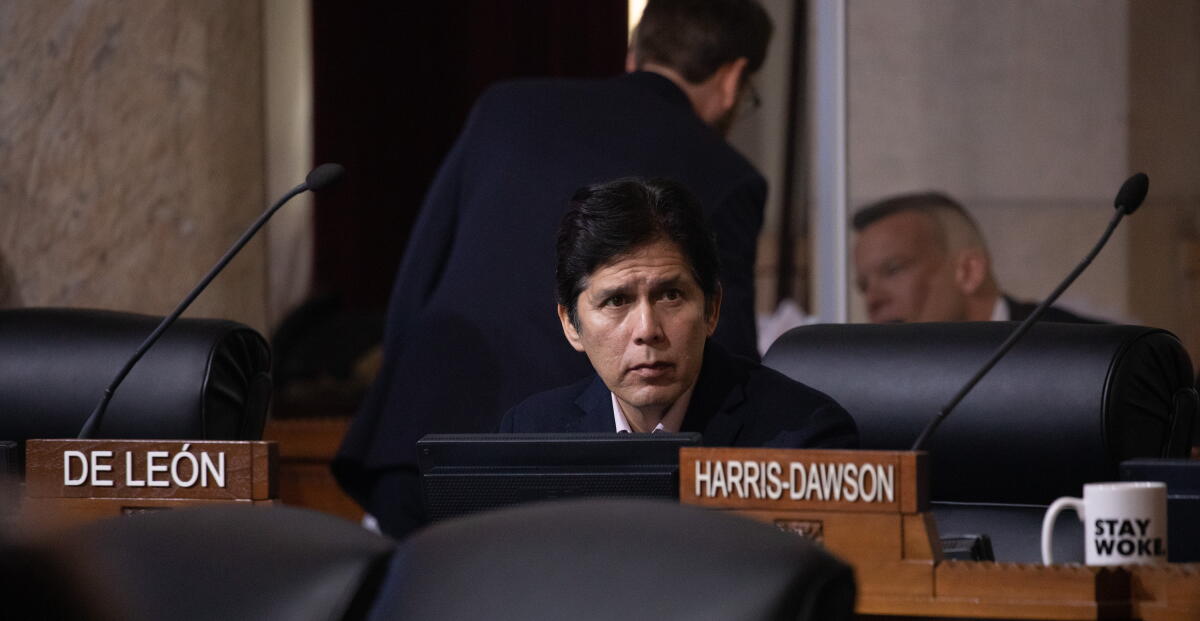
Los Angeles City Councilmember Kevin de León at a council meeting in December 2022 after a two-month absence following his role in that year’s audio leak scandal.
(Myung J. Chun / Los Angeles Times)
District 9 didn’t lose any assets. Black leaders saw the writing on the wall and didn’t run a serious Black candidate to replace the termed-out Price this year. That created space for two Latinos — Estuardo Mazariegos and Jose Ugarte — to make it to the general election. No matter which candidate wins in November, the City Council will have fewer than three Black members for the first time in 63 years.
Both Mazariegos and Ugarte say that the anti-Black scheming of the audio leak villains inspired them to run campaigns focusing on Black and Latino residents as one constituency, reflecting how life is actually lived in South L.A., not how Latinos from elsewhere in the city imagine it to be.
Mazariegos attended the first City Council meeting after The Times dropped the audio leak bombshell in October 2022. He remembers Cedillo peeking at the angry audience and temporarily returning to the council’s back room.
“No community should have to lose power for another to gain it,” said Mazariegos, who would become the first Central American immigrant to serve on the council if he were to win. “Our power grows when we build it together.”
Ugarte, formerly one of Price’s top aides, agreed. He argued that the best way to lead in South L.A. as a Latino council member is “with respect for those who came before us, the humility to listen to those doing the work today, and the understanding that District 9 is strongest when [Black and Latino residents] move forward together.”
Born in Oaxaca, Ugarte would become L.A.’s first Indigenous council member if he wins. That would be a rich coda to the audio leak, considering that Oaxacans received some of the nastiest insults. Martinez described them as “ little short dark people” who were feos — ugly. Cedillo joked that they were “little ones,” while Herrera cracked that they were “indios.”
Who’s laughing now?
The Feos Four also spent time kvetching about Nithya Raman, who was finishing her first year on the council. In 2020, she had upset an incumbent to become the first democratic socialist council member.
At the time of the recording, rivals were trying to diminish Raman’s power by drawing boundaries that would put her district “in the blender and chop [it] up, left and right,” as De León described it.
“She’s not our ally,” Cedillo said. “She’s not going to help us. Her district is not a district we can count on.”
Give credit to Cedillo and his pendejo pals: They were already seeing Raman and other democratic socialists as an emerging force, even while downplaying the DSA’s chances. De León said that Raman’s politics were “about just her as an individual.” Herrera dismissed Hugo Soto-Martínez, then a no-name union organizer aiming to unseat Councilmember Mitch O’Farrell, as a “kid.” Nury Martinez blithely mispronounced Eunisses Hernandez’s name while cackling about the first-time candidate’s challenge to Cedillo.
If Cedillo and De León weren’t so convinced of their own political immortality, they could have helped check the DSA’s rise that has so vexed L.A.’s liberal leaders. Instead, Hernandez beat Cedillo in a shocking upset in 2022, while Soto-Martínez won in the fall. And fellow democratic socialist Ysabel Jurado took out De León in 2024. Those triumphs paved the path for DSA-LA-backed candidate Marissa Roy to make a strong run for city attorney this year. Mazariegos is also endorsed by DSA-LA, which is backing Raman for mayor against incumbent Karen Bass.
Then-Councilmember Gil Cedillo at the Los Angeles City Council meeting on Oct. 11, 2022, two days after the release of explosive audio involving him led to protesters demanding his resignation.
(Gary Coronado / Los Angeles Times)
The group should send Cedillo and De León bouquets of red roses as gracias for assisting their ascendancy. All of us owe the foursome a thanks for hastening the demise of the old Latino political machines that birthed them and kept the city stuck in tribalism for too long.
Now, Latino politicians must run on their bona fides for all Angelenos, instead of just their latinidad. Soto-Martínez and Hernandez won reelection outright in the June primary because their constituents appreciated their sewer socialism approach, focusing on quality of life issues instead of ideological revolution. Meanwhile, Chicanosauruses are wheezing with diminished power as they urge Latinos to back Bass. The message doesn’t seem to be landing: A recent Berkeley IGS/Times poll found that 45% of Latino voters favored Raman to Bass’ 21%, with 34% undecided.
Gone are the days when Latino voters blindly believed Latino leaders. Why bother, after Martinez and her crew proved the folly of ethnic politics?
Near the start of the recording, Martinez complained that voters and the media always seemed to forgive Black politicians caught up in scandal, while Latinos didn’t get the same treatment.
“They’re never done,” she complained. “They never close a chapter on us.”
L.A. did close the chapter. Now, the Feos Four’s only legacy is “that colossal wreck” of their conversation, to quote the finale of “Ozymandias,” left to rot forever.
California Republican gubernatorial candidate Steve Hilton dove deep into his housing platform and lobbed a few attacks at his Democratic opponent, Xavier Becerra, during a town hall with Los Angeles news outlets Tuesday.
Hilton also pointed to some disagreements with President Trump, providing daylight between himself and a president who remains deeply unpopular in California, during the event hosted and livestreamed by the Los Angeles Times and LAist.
Democratic Gov. Gavin Newsom’s final term ends in early January, providing California voters the opportunity to select a new governor at a time of conflict between the state and the Trump administration over environmental policies, immigration, healthcare and other pressing issues.
Ballots already have started to arrive in California voters’ mailboxes ahead of the Nov. 3 election.
Here are the top takeaways from the discussion with Hilton:
Walking the tightrope on Trump
Republicans running for statewide office already have an uphill battle because of California’s heavily Democratic electorate. It’s an acute challenge this year, campaign experts say, because many Democratic voters are itching to help their party regain control of Congress and neutralize Trump’s agenda.
Trump endorsed Hilton in April, which helped the former Fox News host pull ahead of his GOP rival, Riverside Sheriff Chad Bianco, and secure the second-place spot in the primary election, behind Becerra.
On the campaign trail, Hilton has remained supportive of Trump and said Democratic policies, not the war in Iran, are to blame for high prices.
The Republican said those differences are rooted in his strong support for states’ rights.
“The broader point I want to make, and you can track this back to the commentary and what I’ve written over the years, is I’m a strong believer in decentralizing power,” he said. “I think there’s far too much involvement of the federal government in our affairs in California, and I’m going to be a very strong advocate for bringing those powers back in all sorts of ways.”
Gas prices, taxes and housing permits
Hilton described California’s cost of living as “a nightmare” and a major contributor to residents and businesses moving out of the state.
He laid out an affordability plan, which he refers to as “Califordable,” that he would prioritize if elected governor. His plan includes:
Ending income taxes for Californians who earn $150,000 or less.
Slashing oil industry regulations and clean energy mandates for utility companies to achieve $3 gas and lower electric bills.
Ushering in a new construction boom of single-family homes, including by developing 10 new cities around the state, and capping government fees on newly constructed houses.
He blames the state’s affordability woes on Democrats, who have controlled the state legislative seats and held every elected statewide office since 2009.
“It’s not just that it’s time for some change in California, it’s time for balance. It’s time to try something different after 16 years of doing it the same way,” he said.
Republican gubernatorial candidate Steve Hilton said he does have some policy differences with President Trump during a town hall at the Los Angeles Times Building on Tuesday in El Segundo.
(Ronaldo Bolanos/Los Angeles Times)
Hilton said he would stop enforcing laws requiring communities to meet housing production goals and instead focus on building in undeveloped areas of the state that want new homes.
“We’ve got this attitude that the only place you can build is inside what’s currently developed, and that’s motivated by a desire to stop traffic and sprawl and all these things. But the consequence of that is that you end up finding [it] almost impossible to build anything” because of permitting battles and lawsuits, he said. “My plan is to open that up so that we build outwards, not just upwards, increasing the amount of space we use for housing.”
How he would pay for it all
Hilton said that Newsom and Democratic lawmakers have gotten accustomed to spending big and that he wants to return California’s state budget to its pre-pandemic size.
Earlier this year Newsom signed a budget just shy of $352 billion. His first budget as governor, in 2019, clocked in at nearly $215 billion.
The growth occurred during a time “when around 2 million people on net have moved out of the state,” Hilton said. “So we’re spending twice as much for a big reduction in population and worse results.”
He said he could offset the tax cuts by ending funding for high-speed rail, trimming state agencies by 5% and cracking down on Medicaid fraud. Together, he estimates those cuts would save about $25 billion annually. He has also promised to end state-funded healthcare for undocumented immigrants and to hollow out agencies that regulate the state’s air quality and coastlines.
Another round of attacks on Becerra
While he largely stayed focused on policy, Hilton criticized Becerra’s record as U.S. Health and Human Services secretary and dinged him for skipping the town hall.
“Looking forward to perhaps one day having another chance to sit down with my competitor in this race, Xavier Becerra. We’ve had one debate. He promised that there would be debates, plural. Not to be today. But hopefully we can have that conversation because Californians deserve a conversation about the future of our state,” he said during his opening remarks.
On Monday, Hilton attacked Becerra for having “pulled out” of the debate, though the Democratic candidate never agreed to attend a debate proposed by The Times and LAist. Becerra’s spokesperson said the campaign declined the invitation because of a full campaign schedule.
In the weeks following the June primary election, Becerra made himself scarce on the campaign trail and attended few public events. In August, he told reporters there would be multiple debates. He and Hilton faced off last week in an hourlong debate on CNN but no other debates have been announced.
Offshore wind projects “grotesque,” Hilton says
At a time when the Trump administration has systematically dismantled climate and environmental policies, Hilton took care to cast himself as an environmentalist who is concerned about climate change.
He criticized many of the policies favored by Democrats, however, as a “very one-dimensional way of thinking” and offered a more business-friendly approach to addressing climate change:
Planting 3 billion trees and restoring wetlands.
Expanding the use of climate-friendly geothermal energy near places such as the Salton Sea and Sonoma and Modoc counties.
Expanding oil production in California, which he said reduces the need to import foreign oil on tanker ships that spew carbon emissions.
“So that’s a way of reducing carbon emissions that doesn’t burden working people and small businesses with the highest energy costs in the country. We’ve got to get the balance right,” Hilton said.
Hilton aligns with Trump’s vehement opposition to offshore wind projects, a potential source of abundant renewable energy. This year, the Trump administration announced deals to pay wind project developers billions to abandon U.S. wind leases off the coasts of California, North Carolina, New York and New Jersey.
“I think offshore wind is an absolute abomination. I mean, you look at beautiful Morro Bay or Humboldt up in the northern part of our state,” Hilton said. “The industrialization of our coastline that offshore wind would create, I think, is just grotesque, and I’m dead against it.”
Working across the aisle
When asked how he would work with a Democratic majority in the state Legislature, Hilton said he has experience doing it — as an advisor to former United Kingdom Prime Minister David Cameron, he shared an office with a member of the opposite party.
“We worked together very well. Didn’t agree on everything,” he said. “That would be my attitude. I’m very open. I’m not tribal. I’m not particularly partisan. I’m a pragmatic, problem-solving kind of person, and I’m looking forward to working with the Legislature.”
He said he would press the Legislature to cut spending and “the endless number of bills that they pass every year. … But I want to work together to reduce costs for Californians.”
Hilton also found alignment with Democrats who ran in the gubernatorial primary, including former Orange County Rep. Katie Porter, San José Mayor Matt Mahan and former Los Angeles Mayor Antonio Villaraigosa.
“Katie Porter in the primary … actually endorsed my tax plan. Matt Mahan and I agree on a lot of things to help” cut costs and speed up housing constriction, he said. “Antonio Villaraigosa, we agreed on a lot of things to do with energy policy. So I think there are Democrats who we’ll be able to work with to get consensus on some of the things that we need to get done.”
A pet project of architect Frank Gehry, a smaller concert hall to complement his legendary Walt Disney Concert Hall, is taking shape in downtown Los Angeles for an opening next September.
Elements Gehry devised to set it apart are already visible, as construction on the $337-million addition to the Colburn School of Performing Arts reveals details the architect conceived years ago.
The centerpiece of the expansion will be a 1,000-seat concert hall named for Pasadena philanthropists Terri and Jerry Kohl with an in-the-round design meant to create intimacy between the performers and the audience. The hall will include an orchestra pit and a stage similar in size to the one at Disney Hall so it can accommodate grand orchestra, opera and dance performances.
The Colburn Center, still under construction, in downtown Los Angeles last week.
(Genaro Molina / Los Angeles Times)
Gehry set out to create an immersive hall that would inspire artists and envelop the audience, said Meaghan Lloyd, his chief of staff and right-hand at his firm, Gehry Partners.
“Frank’s passion was bringing the audience closer to the performers and getting the relationship between the two just right, so that the audience can feel the performers, the performers can feel the audience reacting,” Lloyd said.
Kohl Hall will be part of the school where Colburn’s symphony orchestra, bands, youth string programs and children’s choirs will perform. It will also be available for rent for outside productions such as jazz and classical music concerts. It is expected to be in use more than 200 times a year.
Architect Frank Gehry with a model of his design for an addition for Colburn School.
(Christina House / Los Angeles Times)
The hall will open with a concert on Sept. 25, the Colburn School announced Tuesday. The weekend celebration will include inaugural performances at the Dance Center, a new dance instruction and performance venue being built as part of the 100,000-square-foot Gehry-designed addition.
The new Dance Center will double facilities for the school’s Trudl Zipper Dance Institute. The dance facilities will include a 100-seat theater for dance and four professional-size studios for dance instruction and rehearsal.
Beginning next year, the hall will be the home of the Los Angeles Chamber Orchestra, a group of professional musicians about half the size of the Los Angeles Philharmonic. LACO concerts will feature premieres of new fanfares by celebrated film composers, including a work by John Williams to be performed at LACO’s inaugural concert in the hall.
Meaghan Lloyd, chief of staff and partner at Gehry Partners, left, and Sel Kardan, president and chief executive of the Colburn School, look over construction of the Terri and Jerry Kohl Hall.
(Genaro Molina / Los Angeles Times)
Part of the hall’s commercial appeal is expected to be its size, in a sweet spot between the 2,265-seat Disney and the popular 415-seat Herbert Zipper Concert Hall already on the Colburn campus. The nearby Dorothy Chandler Pavilion seats about 3,200 guests. The Peacock Theater at L.A. Live seats 7,100.
Kohl Hall’s in-between size “is the missing piece of the venue puzzle” for Los Angeles, Colburn President Sel Kardan said.
A key feature already in place, hanging from the ceiling, is an array of steel clouds packed with concrete, designed to improve acoustics and evoke a sense of airiness. The clouds were made in the Netherlands by a firm with a history of building steel ship hulls that now specializes in building complex steel constructions like the clouds using digital data.
Visitors stand underneath concrete sound clouds designed to improve acoustics.
(Genaro Molina / Los Angeles Times)
The exterior metal cladding of the addition features a luminescent pink paint coating called Pink Kandi.
Japanese acoustical engineer Yasuhisa Toyota will serve as the hall’s acoustician, as he has for all of Gehry’s concert halls, beginning with Disney Hall.
The long-awaited Colburn School addition will be the third Gehry-designed building on Bunker Hill, which already has Disney Concert Hall and the Grand LA, a $1-billion apartment, hotel and retail complex he designed for New York mega-developer Related Cos.
The Colburn School dates to 1950 and moved to its current location downtown in 1998, where it has more than 2,000 students, most of whom range from middle school to college age.
Student groups call for the abolition of Greek life and punitive action in wake of fraternity assault allegations.
Published On 5 Oct 20265 Oct 2026
Protesters in the United States have shattered a glass door at Cornell University’s main administrative headquarters and spray-painted messages on the building’s walls as backlash continues following allegations about a 2024 gang rape at a local fraternity.
In the early hours of Monday, the glass panes on an entrance door for the building, Day Hall, were smashed, leaving shards strewn across the floor.
Recommended Stories
list of 3 itemsend of list
Activists, outraged at the school’s handling of the case, also graffitied nearby walls with slogans like “At Cornell rapists are protected protesters are expelled” and “Smash the patriarchy”.
The predawn incident came ahead of a rally demanding “justice for survivors” by student groups on Monday.
Cornell spokesperson Kyle Kimball said Monday that the university was investigating the vandalism.
“We understand the frustration and strong emotions being expressed across our community,” Kimball said. “Those concerns deserve to be heard, but damaging property is not the answer.”
Cornell, a prominent Ivy League university in the state of New York, has been at the centre of a national firestorm over sexual violence on US campuses, after an anonymous student, Jane Doe, filed a civil lawsuit last month alleging a gang rape at the fraternity Chi Phi.
Her complaint accuses seven former students of perpetrating “heinous criminal sexual acts” against her during a fraternity party on the night of October 19, 2024, after she says she was pressured to drink and take the drug ketamine.
The fraternity, Cornell University and others are named as co-defendants in the suit. Lawyers for two of the former students have rejected claims that they participated in sexual assault.
The case has elicited outcry over how sexual assault is handled on campuses across the country.
At Monday’s demonstration, students demanded an overhaul of the university’s sexual assault complaint process, the termination of certain school officials and stricter disciplinary action against alleged abusers.
In a statement to the student news outlet The Cornell Daily Sun, student organisers wrote that they were calling for the “abolition” of the Interfraternity Council system on campus and the “expulsion/revocation of degrees for all Chi Phi members involved in the rape”.
They also demanded that Cornell’s Office of Student Conduct and Community Standards be replaced by a “democratic disciplinary system”. Monday’s protest, they added, was designed to draw attention to the systemic failures that allow sexual violence to occur.
“We wanted to ensure that Day Hall, the centre of Cornell’s administrative function, was not able to continue business as usual,” the students told the campus paper.
The alleged crime at the fraternity, they wrote, was part of a “rampant pattern of sexual assault perpetrated by members of Greek life at Cornell University and hundreds of other academic institutions throughout the country”.
Under pressure by New York Governor Kathy Hochul and Attorney General Letitia James, the university announced this week it would be appointing a law firm to conduct an independent internal review of how it initially handled the case.
A transcript, obtained by US media, shows that although no charges were filed, Doe told campus police at the time that she could “say with 100% confidence I was raped”.
Her lawsuit also alleges that Cornell “afforded” the accused fraternity members “the opportunity to mitigate their conduct by submitting essays” to the school. Two were later expelled, and another two were suspended.
Ready for a luxury East London break? Enter our exclusive competition to win a stylish two-night stay at the award-winning Town Hall Hotel, complete with daily breakfast and an exquisite dinner for two at Elis.
Win a luxurious 2 night stay in the stunning Town Hall Hotel
Looking for the ultimate East London escape? We’ve teamed up with the award-winning Town Hall Hotelin Bethnal Green to give one lucky reader and a guest the chance to win a stylish two-night stay, complete with daily breakfast and dinner at the acclaimed Elis .
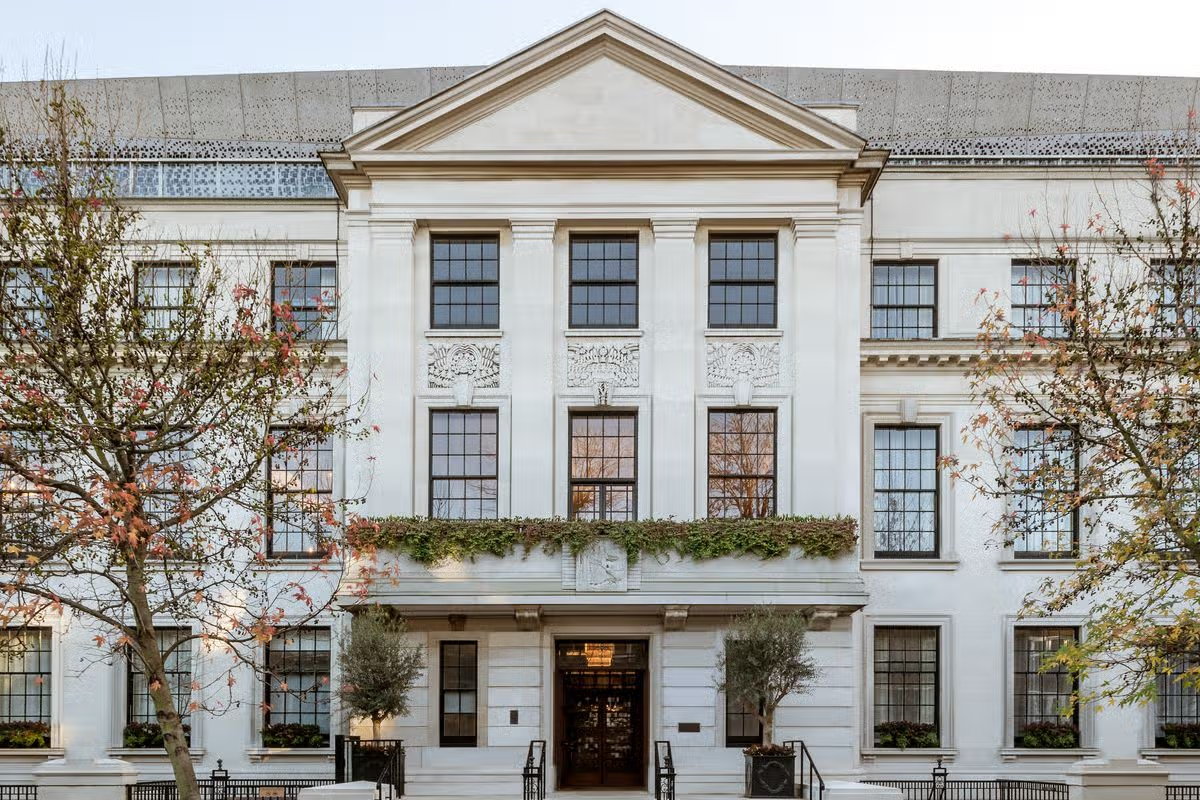
Housed inside the former Edwardian Bethnal Green Town Hall, this Grade-II listed landmark seamlessly blends grand historic architecture with cutting-edge modern design. Step inside to discover sweeping marble staircases, intricate Art Deco detailing, and a striking glass-and-steel extension—creating a boutique retreat like no other.
Experience the best of East London
Positioned right in the energetic heart of Bethnal Green, Town Hall Hotel is perfectly placed for exploring East London’s vibrant culture from the independent boutiques of Shoreditch, to the iconic Columbia Road Flower Market and historic Brick Lane.
When you’re not out exploring, unwind in the hotel’s breath taking 14-metre indoor heated swimming pool, squeeze in a session at the gym, or relax with a cocktail at the bar.
What you can win:
A two-night stay for two guests in one of the hotel’s spacious, gallery-like luxury suites (featuring fully equipped kitchens and bespoke interiors).
Daily breakfast (B&B) to start each morning in style.
Dinner for two at Elis, where two-Michelin-starred chef Rafael Cagali and his team serve up a relaxed menu inspired by his Brazilian-Italian roots.
For your chance to win simply fill in the form below. if you can’t see the form, click here.
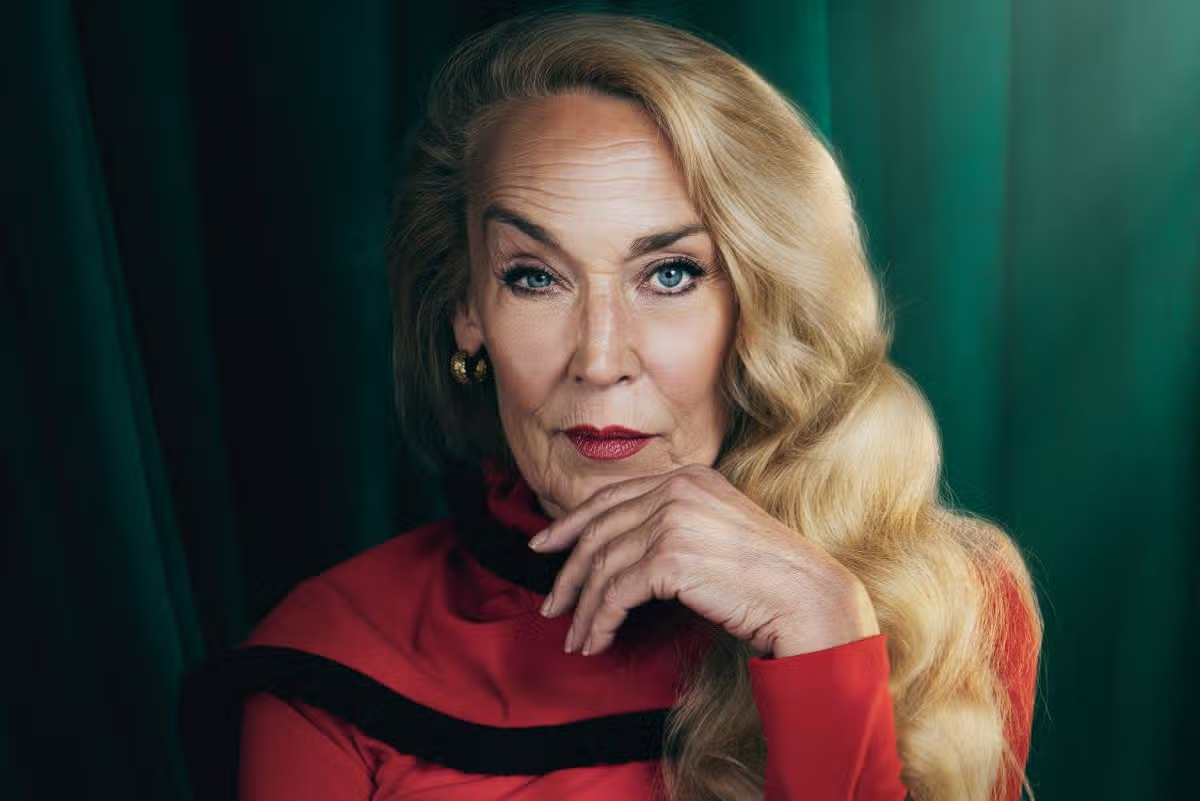
Model Jerry Hall will tonight find herself in some uncomfortable situations on Celebrity Traitors – but she should be used to navigating awkward social situations after her string of controversial romances
Jerry will make her debut on Celebrity Traitors tonight(Image: CREDIT LINE:BBC/Studio Lambert/Cody Burridge/BBC Creative)
Model Jerry Hall will need to put her acting skills to the test on Celebrity Traitors tonight if she’s cloaked up and hoping to deceive her co-stars.
But the 70-year-old is no stranger to navigating awkward social situations after her numerous high-profile and controversial relationships. The Texas-born star was a long-term partner of Rolling Stones icon, Sir Mick Jagger, with whom she shares four children.
She was also married to American businessman Rupert Murdoch, who owns numerous newspapers worldwide and previously owned Sky. But why did she split from arguably two of the most powerful men in the public eye? Here, we look at Jerry’s relationships and the reasons they broke down.
Sir Mick Jagger
Jerry and Sir Mick first met in 1976 at a dinner party. At the time, she was engaged to British singer and Roxy Music frontman Bryan Ferry. Sir Mick was also married to Bianca Jagger at the time.
Just a year later, the couple began an affair, and Jerry eventually left Bryan. Later that year, Jerry seemed to be a positive influence on Sir Mick, encouraging him to quit both heroin and LSD. By 1990, they had tied the knot in a traditional Hindu wedding in Bali; however, they were not legally married.
Just two years later, though, their relationship was plagued by allegations of infidelity on Mick’s side. Despite working through their differences, things came to a dramatic end in 1999.
It emerged that Mick was expecting a child with Luciana Gimenez Morad, who later welcomed a son Lucas Maurice Morad Jagger. Jerry subsequently filed for divorce, with British courts declaring their 1990 marriage void due to a lack of legal registration.
The pair later came to a “mutually acceptable legal and financial settlement”. She later said that she found annulling their relationship rude, but remained on good terms with Mick. These days, the pair have a very close blended family.
Speaking to The Guardian in 2010, Jerry said: “Getting a divorce is always horrible, because you feel you’ve failed. Everyone hates to give up on a marriage. You think your family’s broken up.
“But we managed to keep the family quite strong and to still be friendly. Divorce is not the end of the world. It’s worse to stay in an unhealthy marriage. That’s a worse example for the children.”
Rupert Murdoch
In 2015, Jerry started dating Rupert after his sister and niece introduced them. By October of that year, the pair went public and were seen attending the Rugby World Cup final together in London.
Their relationship went full speed and they got engaged in January 2016. Rupert announced their news in the Births, Marriages and Deaths page of The Times newspaper, which he owns. He popped the question with a staggering 19-carat marquise diamond ring.
Just three months later, the pair tied the knot at Spencer House, followed by a bigger celebration at St Bride’s Church on Fleet Street, with Rupert saying he felt like “the luckiest and happiest man in the world” as their friends and family gathered to witness their big day.
But despite their relationship going from strength to strength, including the purchase of a sprawling $200 million cattle ranch in Montana in December 2021, things soon came to an end.
Fast forward to June 2022, and their marriage was over. Rupert emailed Jerry, informing her that the marriage was over and that she should now contact him only through his lawyers. The divorce was later leaked to The New York Times.
Just a few days later, Jerry officially filed for divorce in Los Angeles, citing “irreconcilable differences”. The divorce was finalised just a few weeks later, with legal representatives for both parties saying that they ” remain good friends and wish each other the best for the future”.
While details about their settlement haven’t been disclosed, it was reported that Jerry received tens of millions, as well as an £ 11 million Oxfordshire mansion, as part of the settlement.
Strictly Come Dancing contestant Graeme Hall has been forced to defend his prior dance background on It Takes Two, after it emerged that he took part in ballroom and latin competitions
21:06, 29 Sep 2026Updated 21:06, 29 Sep 2026
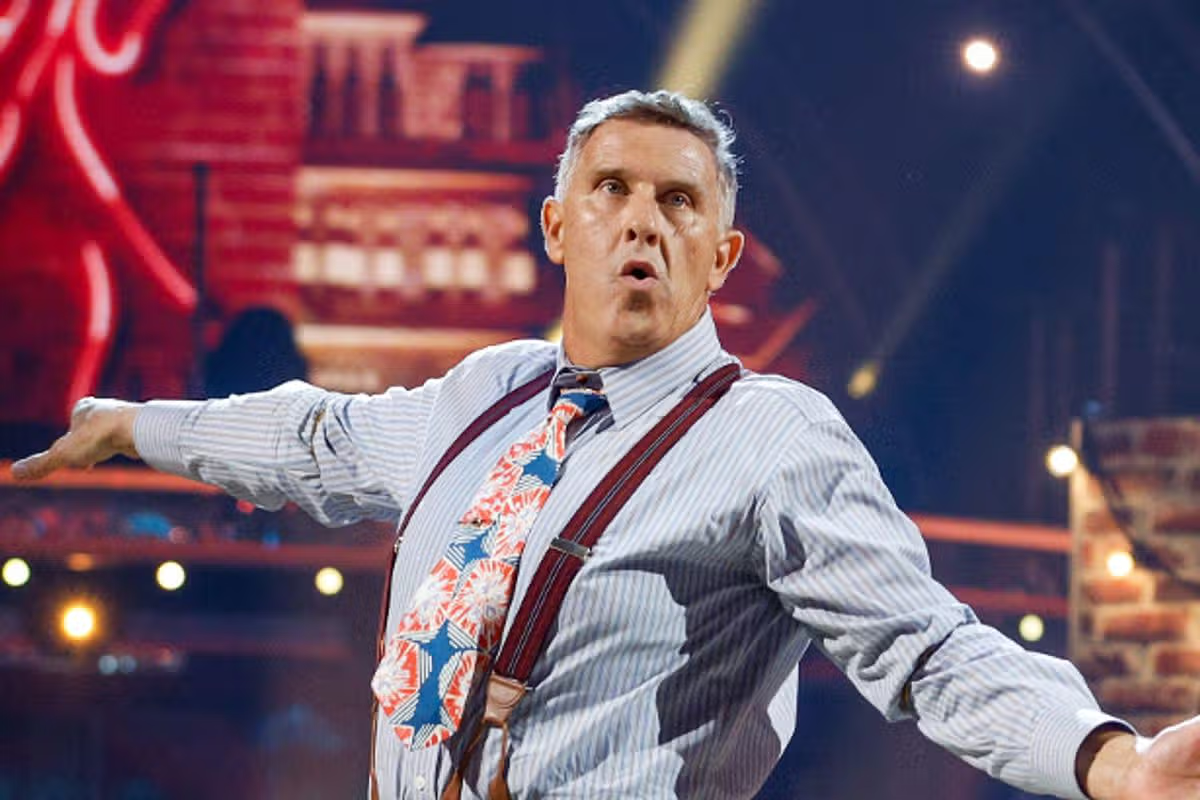
Graeme Hall on Strictly Come Dancing(Image: Guy Levy/BBC/PA Wire)
Strictly Come Dancing star Graeme Hall has addressed his dance background on It Takes Two. He was the subject of online speculation after it emerged that he had entered ballroom and latin competitions in the past.
Graeme, 60, made his live Strictly debut on Saturday 26 September, when he and Lauren Oakley danced a Cha Cha Cha and surprised fans with how rhythmical he was. Soon after, fans took to the internet to share that the celebrity dog trainer did, in fact, have dance experience.
An online record was put on social media of Graeme’s dance scores from competitions, dating back to 2013 when he competed in an Over 35s Intermediate Latin contest. His most recent competition was was in 2019, when he took part in the ballroom section of the Champions of Tomorrow competition.
Graeme was asked about his dance experience on Strictly spin off show It Takes Two. Host Ellie Taylor said: “A lot of people online have been talking about the fact that you have had sort of some dance experience – do you think that’s helping you, do you think it’s something to be considered?”
To see more of the Strictly stories you love from The Mirror and to find them easily in Google then make us your preferred source. Free and easy-to-do, just click on the link here to find more from The Mirror at the top of your feed.
Graeme answered: “It does and it doesn’t. You’re right as a hobby I did a bit of ballroom and latin and I entered a few competitions. The problem with that is, I wasn’t very good then and that was quite a few years ago.”
He added that his dance partner Lauren had to “undo all the bad things that I was doing” and put it right and indicated with his hands that their training was very up and down.
Graeme and Lauren’s first dance was to Elvis Presley’s Hound Dog and they received 24 out 40 for their routine. Fans complimented the pair on their dancing, with one writing: “I already loved Graeme and we all know Lauren is a superstar but nothing could’ve prepared me for this! What a fabulous pairing and what a great first dance. Think I’ve found my winners already.”
Another added: “This is the only dance all night that had me smiling from beginning to end! Graeme has such an ease and quiet elegance when he dances and he’s so light on his feet! He also looks like he’s genuinely enjoying himself which translates to the viewer.
“I feel so relaxed and chill watching him and so uplifted! I can’t wait to see what him and Lauren do next. I think they will be fan favourites.”
Graeme has previously coughed up to the dance experience, saying: “I have danced it before, but I’ve had a real mental block over one particular step and my leg just keeps doing something in the opposite direction to the way it’s meant to go.
“I’m convinced it’s a bit of muscle memory from 10 years ago. So it’s as much a hindrance as a help.”
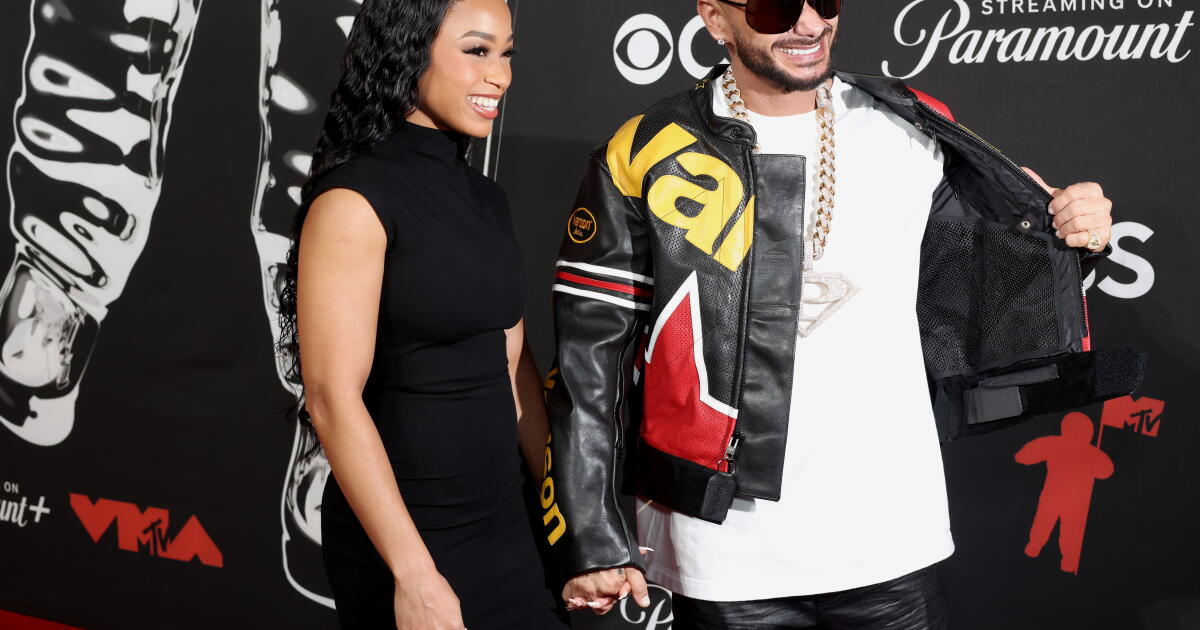
Wedding bells are ringing for Paul “DJ Pauly D” DelVecchio and his longtime girlfriend Nikki Hall.
The “Jersey Shore” alum proposed to the Jamaican-born influencer over the weekend while DJing at the Omnia Dayclub at Caesars Palace in Las Vegas. The popular party destination posted the proposal on Instagram on Sunday with the caption, “Things just got serious,” alongside a video of DelVecchio bringing Hall onto a stage and getting down on one knee.
Although a techno remix of Bruno Mars’ “Marry You” was blasting in the video, the DJ’s lips are seen mouthing, “Will you marry me?” Hall nods enthusiastically in response, and bikini-clad models appear in the background carrying signs overhead that read “Congratulations on the engagement! Yeah Buddy!”
Through a series of clips and photos shared on DelVecchio’s Instagram stories, it appears the two celebrated the engagement with Italian food and a hotel room decked out with red rose petals and balloons.
“We’ve spent these years choosing each other, growing together, building a life we love, and never rushing a chapter just because the world was ready to read it,” Hall posted on Instagram, adding that saying yes to DelVecchio was “the easiest YES” she’s ever said.
DelVecchio celebrated in the replies of the post, writing, “She said yesssssss!!!!!”
The pair met back in 2019 on MTV’s “Double Shot at Love,” a reality dating show hosted by DelVecchio and fellow “Jersey Shore” alum Vinny Guadagnino, in which 20 women competed to capture the hearts of both Pauly and Vinny, respectively.
The early days of their relationship played out on the series, with both Hall and DelVecchio smitten from the start. Their season ended with a twist when DelVecchio chose to say goodbye to Hall and “roll solo for now.” But clearly, his decision didn’t stick, and in 2020, the pair quarantined together during the pandemic, a revelation that arose when eagle-eyed fans noticed their social media content had identical backgrounds.