gun

Chavismo in the Mirror: From the Oath to Resist to the ‘Gun to the Head’ Thesis

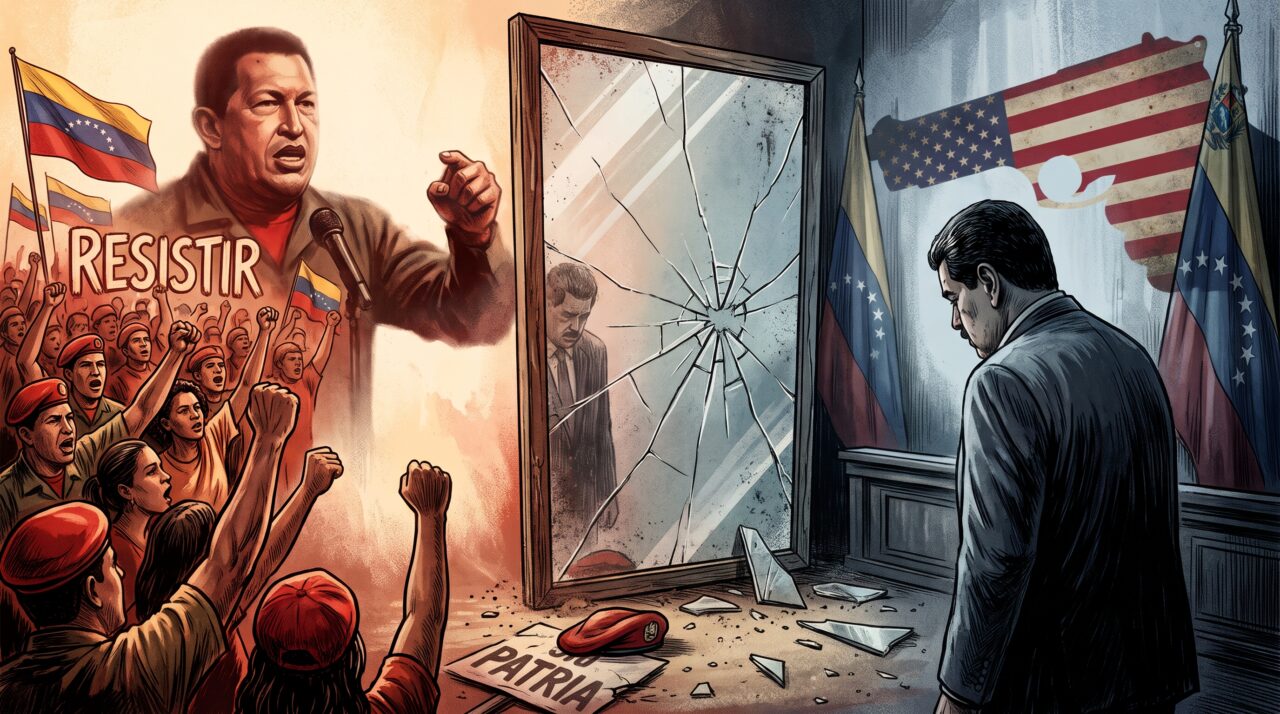
Chávez, like other Latin American predecessors, had vowed to defend national independence to the last consequences. (AI-generated image)

Writing today from a place of sympathy and loyalty to the founding principles of the Bolivarian project means confronting a semantic and political discomfort.

Recently, a fellow Chavista, deeply critical of those currently leading the party and the government, flatly rejected being labeled a dissident. “Who are the dissidents? I am not one, nor are those who think like me,” he declared, opening a necessary debate about where true consistency with the historical legacy of Hugo Rafael Chávez Frías really lies.

Those of us who identify with Chavismo without renouncing critical judgment find it difficult to accept what happened before, during, and after the January 3 [US] military operation, and we struggle to understand why Nicolás Maduro did not resist during the incursion in which he was kidnapped along with his wife, Cilia Flores.

Everything indicates that there was no effective preparation to resist to the bitter end, which shows that the US deployment in the Caribbean was underestimated and that there was excessive confidence, all the more so after two phone calls from Donald Trump.

For years, the Venezuelan political and military leadership insisted that a foreign intervention would meet fierce resistance throughout the country. Many of us faithfully believed those proclamations and repeated with great conviction and complete confidence that the aggressors “may be able to get in; the hard part will be getting out,” trusting in the readiness of a popular militia of more than four million members, according to official sources. Yet when the hour came, only 56 Venezuelan and Cuban soldiers fell in combat.

In light of this outcome, an interpretation has gained traction that seeks to explain the conduct of the political-military leadership with the argument that “with a gun to their head, they had no alternative.” With all due respect to those who have defended this thesis, among them the combative former Ecuadorian President Rafael Correa and the astute Spanish analyst Juan Carlos Monedero, it is difficult to subscribe to that interpretation without questioning the chasm between the earlier rhetoric and the facts on the ground.

The coercion alibi

The military asymmetry with the United States was no secret before the early hours of January 3, so attributing the lack of resistance solely to the imbalance of forces raises serious political questions. If the adversary’s military might ruled out any armed response, one must ask why, for two decades, a rhetoric of preparing for total confrontation was cultivated, in which millions of militants in the Bolivarian Republic of Venezuela and around the world placed their faith.

One need only recall Hugo Chávez’s historic speech of February 29, 2004, when, faced with threats to break Venezuela apart, he responded firmly that “there are enough balls to defend this homeland from any intruder, damn it.” That day, the Comandante declared himself ready to give his life like the Indigenous chief Guaicaipuro or Negro Primero, expressing that when the homeland is under threat, one’s personal existence becomes secondary.

His political heirs turned that promise into a routine slogan, assuring from official podiums that they were tracking those who called for foreign intervention, while warning that they would not hand over a single drop of oil for free. Yet it is striking that the emblematic clip of Chávez demanding courage to save the homeland has vanished from the screens of state-aligned television and allied programs, suggesting a quiet shift in discourse.

The disappearance of that reference seems to reflect the discomfort of a leadership that is now trying to manage an adverse situation according to a logic different from that of its founders. They fail to realize that when leaders distance themselves from the example they held up for years as a non-negotiable standard, the rhetoric loses its moral force and compels the movement to look itself in a mirror that reflects the unanswered questions.

Dying with dignity

The history of liberation struggles offers numerous examples that contrast with the thesis that the enemy’s superiority necessarily forces surrender. Salvador Allende endures as a symbol of revolutionary integrity because he resisted at La Moneda fully aware of his military inferiority, rejecting the plane offered by the coup plotters in order to honor his commitment to the working people, unlike other heads of state who chose to flee or surrender without a fight.

That same ethical firmness defined the thought of Juan Pablo Duarte, who conceived of national sovereignty as an inalienable principle, declaring that “to live without a homeland is the same as to live without honor.” For the Dominican founding father, accepting foreign tutelage in exchange for the promise of order or stability amounted to betraying the very nature of the Republic – a conviction for which he chose to die poor and in exile in Caracas rather than endorse any form of foreign protectorate.

In that same tradition of Caribbean dignity stands Colonel Francisco Alberto Caamaño Deñó during the April Revolution of 1965 in Santo Domingo, facing down the arrogance of US Ambassador William Tapley Bennett. When the imperial envoy demanded an end to what he described as mere disorder, Caamaño replied with words that transcended his time: “I am going to show you what it means to die with dignity.”

Far from taking refuge in calculations of personal survival, Caamaño left the diplomatic residence and marched to the front line at the Duarte Bridge alongside his comrades. “Bollo, haven’t I told you we’re dead men? So consider yourself dead, damn it, and let’s go to the bridge and fight,” he said, a reminder that a leader’s moral authority rests on his willingness to share the fate of those he calls to arms.

The judgment of History

When political leaders stray from these historical examples, pragmatic explanations fill in the gap to justify inaction in extreme situations. In 1808, the Dominican brigadier Juan Sánchez Ramírez warned that he would have any drummer who sounded the retreat shot, along with the officer who ordered it, himself included. At Fuerte Tiuna, by contrast, the drums remained silent, awaiting an order to resist that never came.

It is impossible to overlook the contrast between that institutional silence and the sacrifice of the 56 Venezuelan and Cuban fighters who lost their lives facing the assault on unequal terms. To those fallen belong the verses of José Martí, who wrote that in dying in the arms of a grateful homeland, life at last begins, while those in the high command who survived still owe the country and the continent a convincing explanation.

To argue now that the absence of combat averted a greater tragedy opens a legitimate debate, but one that falls short unless it is accompanied by deep self-criticism about the gap between what was promised and what was delivered. Political consistency demands that slogans about the comprehensive defense of the nation be matched by the actual preparedness and genuine will of those who take on the responsibility of leading the state.

Today, those who continue to uphold the original banners of Chavismo from an honest and committed stance have the right to demand clarity in the face of any attempt to normalize foreign tutelage. Because, as Hugo Chávez himself reminded us in words that retain their full moral force, at the decisive moments in a people’s history, the choice always reemerges between defending the homeland and submitting to the empire.

The views expressed in this article are the author’s own and do not necessarily reflect those of the Venezuelanalysis editorial staff.

Translated by Venezuelanalysis.

Rafael Méndez is a Dominican political analyst, former congressman, and international solidarity activist. His articles on Latin American and Caribbean geopolitics have appeared in outlets including Resumen Latinoamericano, Acento, and Tiempo Argentino.

Source: Resumen Latinoamericano
Source link

Oddball CFL-120 Karpat Medium Tank With A Big Gun Faces A Battlefield Increasingly Hostile To Armor

An intriguing new Slovak-Turkish medium tank, the CFL-120 Karpat is designed to appeal to militaries unable to afford or field heavier main battle tanks (MBTs) or have requirements for something lighter and more nimble. But the Karpat arrives at a moment when the survivability of armored vehicles of all kinds is being increasingly questioned, making the case for something of a new class of tank — which combines a 120mm tank gun with a much lighter tracked chassis — far from straightforward.

The Karpat (meaning Carpathians, after the mountain range) made its first public dynamic appearance yesterday at Slovakia’s Záhorie Military Testing Area, demonstrating its mobility off-road and firing its main gun. The vehicle previously made its public debut at the IDEB 2026 defense exhibition in Bratislava earlier this year.

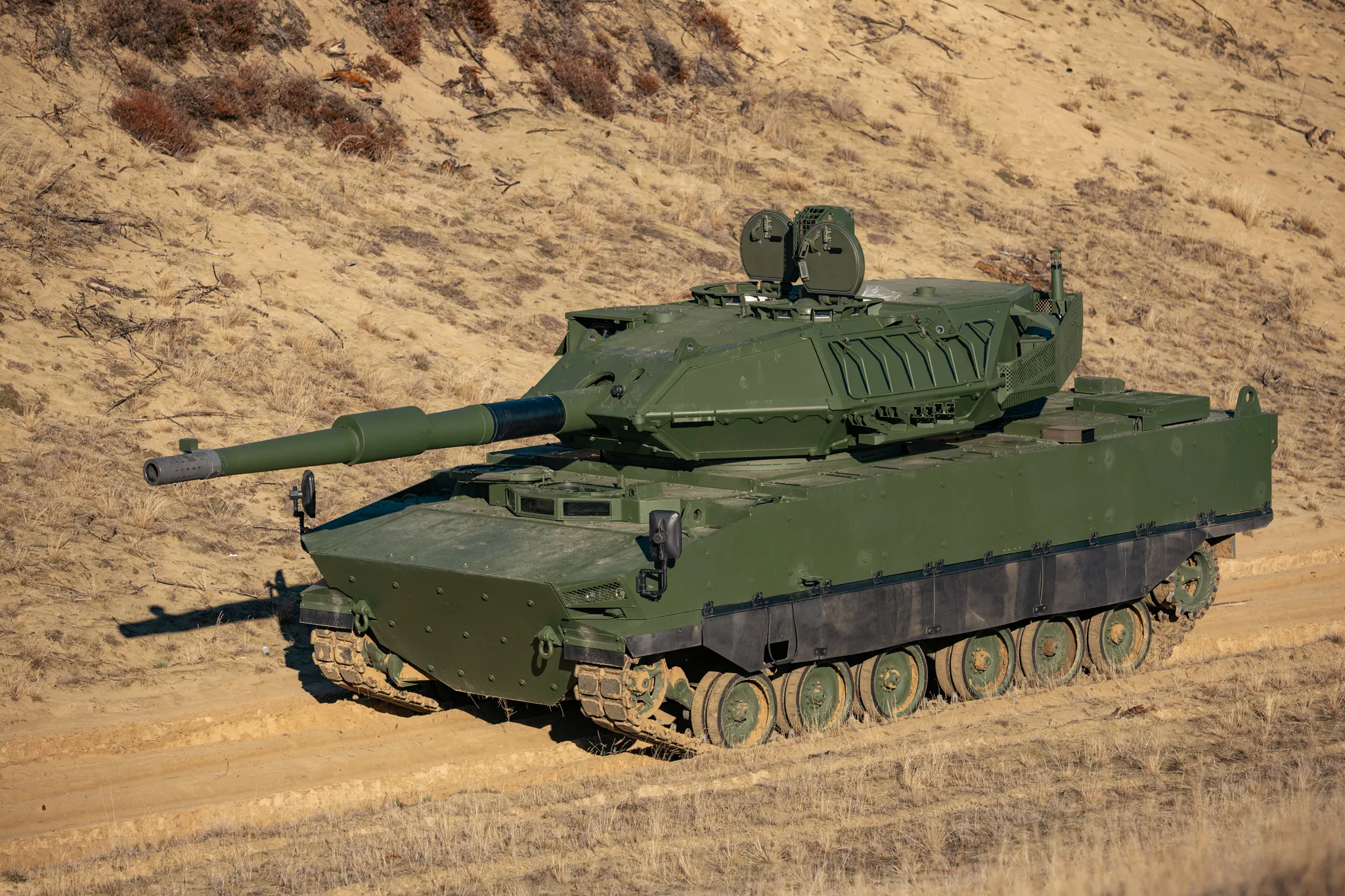
CFL-120 Karpat during trials. CSG UZZIAH R6

Developed through a partnership involving Slovakia’s Czechoslovak Group (CSG), Turkey’s FNSS, and Italy’s Leonardo, the Karpat combines FNSS’s tracked Kaplan platform with Leonardo’s HITFACT Mk II turret. The latter is armed with a 120mm cannon, giving the vehicle firepower typically associated with much heavier MBTs. The gun is manually loaded, requiring a fourth crew member, although an autoloader could potentially be introduced in the future.

This video provides a backgrounder on the HITFACT Mk II turret, in this case on a Centauro 2 8×8 Mobile Gun System:

Indo Defence 2018: Italian Leonardo Defense Systems HITFACT 120MM turret thumbnail

Indo Defence 2018: Italian Leonardo Defense Systems HITFACT 120MM turret

The vehicle reportedly weighs around 35 tons, substantially less than a modern MBT, a class of vehicle that has grown increasingly heavy as armor, sensors, and other systems have evolved. The SEPv3 version of the widely used M1 Abrams MBT, for example, comes with an overall weight, in combat, of 73.6 tons.

The M1A2 SEPv3 main battle tank. U.S. Army

The Leonardo turret is mounted on FNSS’s tracked chassis, a platform already associated with the Kaplan MT medium tank developed in cooperation with Indonesia (which calls the vehicle Harimau — both names mean Tiger). The Karpat, meanwhile, offers a relatively mobile tracked platform with a large-caliber weapon without the transportation, infrastructure, and logistical demands associated with a 60- to 70-ton tank.

But the weight and firepower combination is not necessarily the answer to the challenges facing armored vehicles today.

BANDUNG, INDONESIA - MARCH 4: Kaplan MT medium tank shows at PT Pindad in Bandung, Indonesia on March 4, 2020. Medium Weight Class Tank Kaplan MT (Turkish) or 'Harimau' (Indonesian) is a collaborative tank production between Turkish FNSS Defense Systems and Indonesian State Defense manufacturer PT Pindad. (Photo by Anton Raharjo/Anadolu Agency via Getty Images)
A Harimau (Kaplan MT) medium tank in Bandung, Indonesia, in March 2020. Photo by Anton Raharjo/Anadolu Agency via Getty Images

An increasingly difficult battlefield for armor

The proliferation of drones, loitering munitions, and advanced anti-tank weapons has fundamentally changed the environment in which tanks operate. Ukraine has demonstrated how persistent aerial surveillance and relatively inexpensive attack drones can make movement difficult, expose vehicles well beyond the immediate frontline, and create threats that traditional armor protection was never designed to address.

Heavy MBTs remain capable in some scenarios, particularly when employed as part of a combined-arms force with infantry, artillery, drones, electronic warfare, air defense, and other supporting capabilities. But their employment has become more complicated, while their cost and logistical demands make losses increasingly hard to bear.

CFL-120 Karpat underway. CSG UZZIAH R6

A lighter vehicle does not necessarily solve these problems. The Karpat may be easier to transport and maneuver across infrastructure that cannot support heavier tanks, such as smaller bridges, but it remains a substantial armored vehicle with a significant battlefield signature. Its comparatively light weight also limits how much protection can be built into the platform, particularly against mines, drones, top-attack ATGMs, and other threats that are increasingly prominent on modern battlefields. In its basic form, it notably lacks an active protection system, but FNSS says there is scope to add one. Explosive reactive armor (ERA) is another add that could be needed in a high threat area, but all this adds weight to what is supposed to be a much lighter tank.

Meanwhile, even the future role of conventional MBTs is being debated as militaries reconsider how much protection, weight, and expense can reasonably be packed into a single platform.

A warning from the M10 Booker program

The U.S. Army’s canceled M10 Booker program provides an important comparison with the Karpat. The U.S. vehicle was conceived to provide protected direct-fire support to infantry formations, particularly units that could not readily deploy alongside Abrams tanks. Rapid deployability and a more manageable weight were central to its operational appeal, rather than simply creating a lighter version of an MBT.

Despite that rationale, the program ultimately ran into questions surrounding its weight, cost, utility, and place within the Army’s force structure, leading to its cancellation.

The Army's New M10 Booker: Deploy Fast and Carry a Big Gun thumbnail

The Army’s New M10 Booker: Deploy Fast and Carry a Big Gun

The Booker and the Karpat emerged from different requirements and have different configurations and prospective customers. But the lessons of the Booker underscore the fact that identifying a gap between heavy MBTs and lighter infantry fighting vehicles does not necessarily create a viable market for a new armored category.

The Karpat will need a compelling operational requirement to justify its existence beyond offering tank-like firepower on a lighter chassis. That is particularly true as militaries reassess how armored formations can operate under persistent surveillance and drone attack.

A niche market may still exist

There are nevertheless environments where the Karpat’s characteristics could prove attractive. Mountainous regions, island territories, remote border areas, and infrastructure that cannot accommodate heavier tanks could provide opportunities for a vehicle with substantial direct-fire capability and a smaller logistical footprint.

The Indo-Pacific is an obvious market to explore, given its geography and the transportation challenges associated with moving heavy armor across archipelagos and less-developed infrastructure. The existing Kaplan MT program developed by FNSS and Indonesia also provides an established industrial and operational footprint in the region that could help create opportunities for the Karpat, too.

European militaries may also find lighter tracked vehicles useful for specific roles, particularly where bridge classifications, transportation constraints, and cost make conventional MBTs difficult to deploy in sufficient numbers.

The Karpat is not alone in pursuing this market. China’s VT-5, Israel’s Sabrah, and FNSS’s aforementioned Kaplan MT are among the lighter tanks competing for export customers. However, most of these platforms use 105mm guns, giving the Karpat’s 120mm armament a notable distinction.

ZHUHAI, CHINA - NOVEMBER 10: VT5 light tanks perform during Airshow China 2022 on November 10, 2022 in Zhuhai, Guangdong Province of China. The 14th Airshow China will be held from Nov. 8 to 13. (Photo by VCG/VCG via Getty Images)
VT-5 light tanks perform during Airshow China 2022 in Zhuhai, Guangdong Province of China. Photo by VCG/VCG via Getty Images

That larger gun could be attractive to countries seeking heavier direct-fire capability, although it also brings considerations involving ammunition storage, loading arrangements, turret integration, and the limits imposed by the vehicle’s weight. It does not, by itself, make the Karpat equivalent to a conventional MBT in terms of combat capability.

A vehicle in search of a role?

The industrial partnership behind the Karpat may ultimately be one of its strongest selling points. CSG, FNSS, and Leonardo bring established manufacturing capabilities and export experience, while Slovakia could potentially benefit from domestic production and supply-chain participation.

CFL-120 Karpat. CSG UZZIAH R6

CSG Defense, MSM Land Systems, and Leonardo have also signed a memorandum of understanding establishing a framework for cooperation on promotion, sales, and production of the HITFACT Mk II turret associated with the Karpat program. The agreement could help establish an industrial foundation for future orders, although the vehicle still needs customers willing to commit to production quantities.

Slovakia is one potential customer, with the Karpat reportedly competing here against the BAE Systems Hägglunds CV90120 for a light tank requirement. FNSS has previously suggested that the vehicle could cost around a third of a modern MBT, although actual acquisition costs would depend heavily on configuration, protection, support packages, and more. This makes a lot of sense for a country like Slovakia, which wants to replace its Cold War-era T-72s and newer Leopard 2A4s but cannot justify procuring a modern main battle tank on cost grounds. By way of comparison, the Leopard 2A8 — a vehicle ordered by Croatia, the Czech Republic, Germany, Lithuania, the Netherlands, Norway, and Sweden — costs around $30–35 million apiece.

CV90120. Strong. Agile. Lethal. thumbnail

CV90120. Strong. Agile. Lethal.

The Karpat is an interesting vehicle, particularly because mounting a 120mm cannon on a relatively lightweight tracked platform is no small engineering undertaking.

But it appears at a time in which the battlefield is becoming far more lethal for both heavy and lighter armored vehicles. A smaller logistical footprint and substantial firepower are valuable attributes, but they do not resolve the increasingly difficult problem of keeping armored vehicles alive in an environment saturated with drones and other precision weapons.

The Karpat may find customers with specific operational requirements, and its combination of mobility and firepower could be useful in those circumstances. Whether that translates into a meaningful export market is another question entirely. For now, it remains an unusual vehicle arriving at a time when militaries are questioning not only what their tanks should weigh and how much they should cost, but also how much risk they can afford to accept by putting them on the battlefield in the first place.

Contact the author: thomas@thewarzone.com

Thomas Newdick is a staff writer at TWZ, where he covers military aviation, defense technology, weapons systems, and international security. Based in Berlin, Germany, he reports on conflicts, military modernization efforts, and emerging aerospace technologies around the world, with a particular interest in airpower and its role in contemporary warfare. His reporting is informed by deep expertise in modern and historical airpower, particularly in Europe, with a focus on military aviation, air campaigns, and aerospace developments across the continent and beyond.


Source link

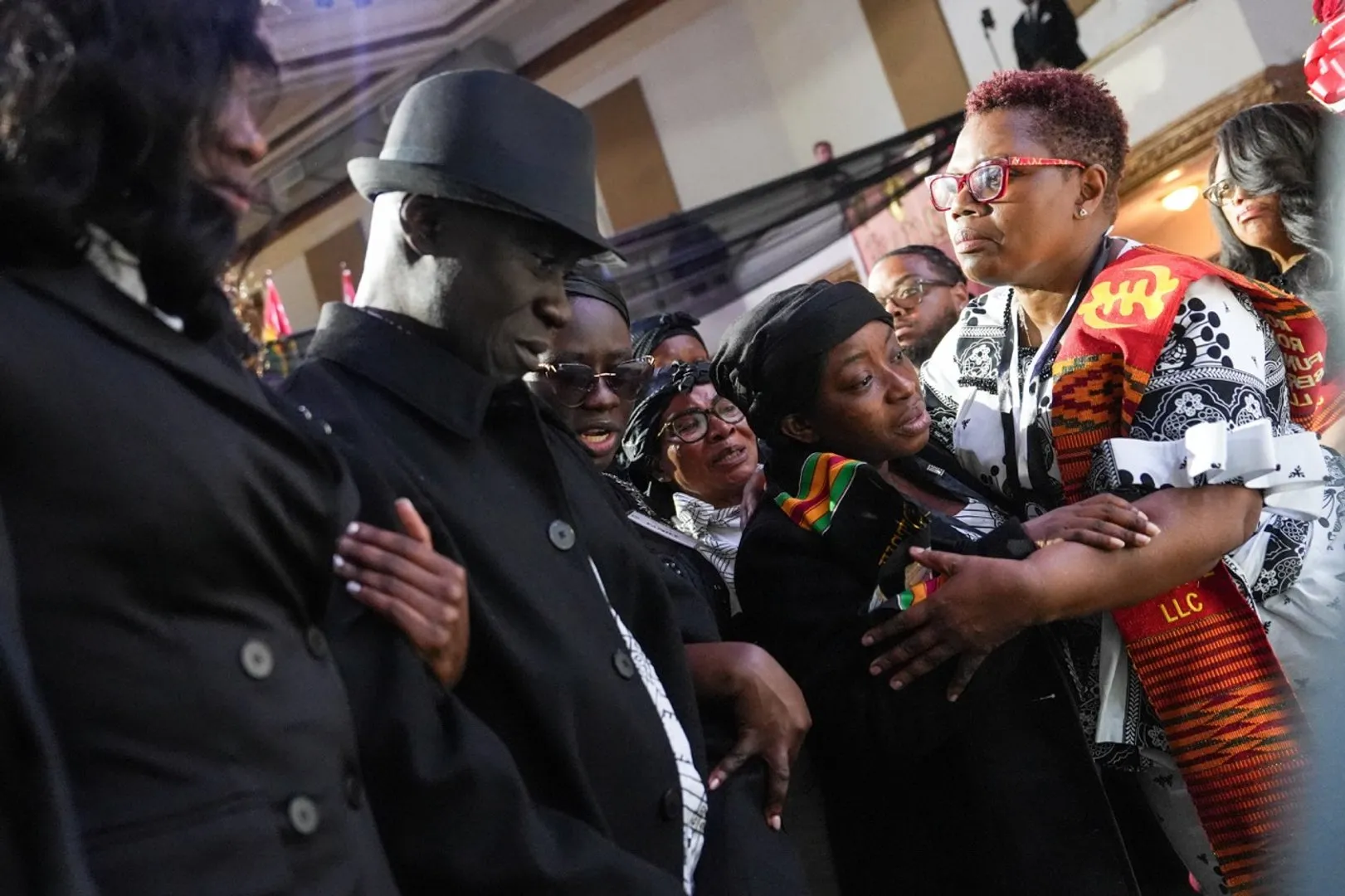
Funeral held for New York teen shot while walking to school | Gun Violence

The funeral for Javits Frimpong, a 15-year-old from Ghana shot dead in October, was held in New York City. Police say three teenage boys were involved, one has already been charged with murder. He had moved to the US with his father a year earlier and hoped to become a doctor.

Source link

Poland mass shooting assailant dies in hospital, police say | Gun Violence News

DEVELOPING STORY,

The assailant was shot by police officers and arrested minutes ‌after he ​opened fire at people in central Krakow.

The gunman who killed six people in central Krakow last week has died in hospital, police have said.

Police announced early Monday morning that the 24-year-old attacker had died.

The assailant was shot by police officers and arrested minutes ‌after he opened fire at people at Krakow’s historic main square from his car on Saturday.

The government said the attacker may ⁠have been inspired by far-right ideology, without providing further details.

This is a developing story.


Source link

Bollywood star greets fans in bulletproof glass after bomb threat | Gun Violence

Bollywood legend Amitabh Bachchan had greeted fans from a bulletproof enclosure outside his residence in Mumbai during his customary Sunday greeting. The security measure follows a bomb threat and the recent shooting attempt on Bollywood actor Tiger Shroff.

Source link

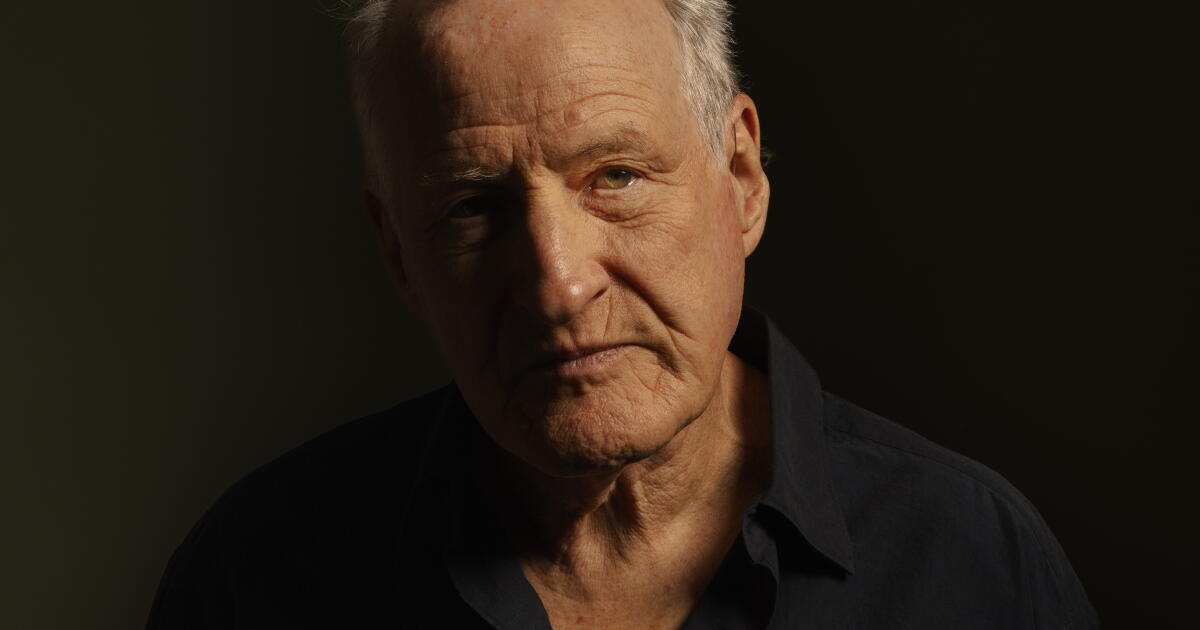
Michael Mann accidentally shoots himself at L.A. gun range, rep says

Michael Mann, the acclaimed filmmaker behind crime thrillers including “Heat” (1995) and “Collateral” (2004), accidentally shot himself in the leg Saturday at a Los Angeles gun range, suffering a minor injury.

“On Saturday, at a gun range, a weapon accidentally discharged while holstered, resulting in a superficial injury to film director Michael Mann,” his representative said in a statement Sunday. “He was treated and is being released.”

Mann, 83, was engaged in target practice at a sanctioned shooting range when the accident occurred. The director has been an experienced target shooter for decades, according to a person familiar with the circumstances, who described the injury as minor and subcutaneous.

The shooting occurred around 4 p.m. Saturday at the Range LA, according to TMZ, which first reported the incident. Police and paramedics responded, and Mann was taken by ambulance to a hospital.

Mann is known for his painstaking attention to detail and realistic depictions of gun violence, perhaps most famously in the elaborate bank robbery shootout in “Heat,” in which Robert De Niro and Val Kilmer’s heavily armed crew exchange gunfire with police on the streets of downtown Los Angeles. He is developing a sequel to the film, which is expected to begin shooting early next year.

Mann also helped define the look and feel of the influential 1980s television series “Miami Vice,” serving as executive producer before directing a 2006 film adaptation. His other credits include “Thief” (1981), “The Last of the Mohicans” (1992), “The Insider” (1999), which earned seven Oscar nominations, “Ali” (2001) and “Ferrari” (2023).

Source link

Man with fake gun shot after using abused partner as shield | Gun Violence

Brazilian police shot a man who assaulted and threatened his partner with a fake gun in Criciuma, southern Brazil. Video shows him striking her and attempting to use her as a human shield as officers arrived. Both were taken to hospital for treatment.

Source link

Thousands mourn victims of deadly Jordan church attack | Gun Violence News

Jordan’s prime minister represents king at funeral for eight of the church attack victims as hunt for gunmen continues.

Thousands of mourners have gathered for the funerals of eight of the victims of a deadly attack on a church in southern Jordan, with Prime Minister Jafar Hassan also in attendance.

The burials on Sunday were beside St George’s Greek Orthodox Church in the village of Hamoud, southwest of the capital, Amman, two days after attackers opened fire during another funeral there.

Recommended Stories

list of 2 itemsend of list

Nine people were killed and dozens wounded in a rare attack on Jordan’s Christian minority, prompting three days of national mourning.

The ninth victim, Mohammed al-Qasous, is due to be buried on Monday, his family told the AFP news agency.

Coffins wrapped in Jordanian flags were carried through crowds gathered around the church in Karak province, as priests led prayers and security personnel stood guard.

Prime Minister Hassan attended the service alongside government ministers and senior military and civilian officials, according to Jordan’s state news agency, Petra.

Thousands of citizens also participated in the funeral procession, Petra said.

Among those caught in Friday’s shooting was Sahar al-Halsa, who told the Reuters news agency from her nearby home that she sheltered behind a pillar as gunfire erupted and people screamed.

When she rushed outside, she found her cousin Assem lying wounded.

“Assem, Assem, my darling, answer me,” she recalled calling to him. He briefly opened his eyes before dying, she said.

Father Yohanna Hamati told AFP that about 170 to 200 people were at the church for Friday’s funeral when firing began outside.

The mourners initially struggled to understand what was happening, he said, before people began rushing into the church to escape.

By Saturday, bullet holes remained in the walls and wooden pews, and windows had been shattered.

Church workers were cleaning away blood as villagers prepared to bury the dead. Jordanian authorities have described the attack as “extremist terrorism”.

King Abdullah, who visited some of the wounded in hospital on Friday, has promised a forceful response and the assailants are still being sought.

Officials say they have not established whether the attackers were connected to an armed group and no organisation has claimed responsibility.

The violence has also drawn expressions of solidarity across religious lines. Christians account for about 3 percent of Jordan’s largely Muslim population and AFP reported that Muslims were among those wounded.

Young volunteers visited a hospital in Karak with flowers and a message reading, “Our loss is one”.

The mourning reached Washington, DC, on Sunday, where members of the Jordanian community lit candles outside their country’s embassy.

Jordan’s ambassador to the US, Dina Kawar, told those gathered that efforts to stir religious division were “bound to fail”. Back in Hamoud, Father Hamati appealed for unity, stressing that Muslims had also suffered in the attack.

“We make no distinction between Muslim and Christian,” he told AFP.

Source link