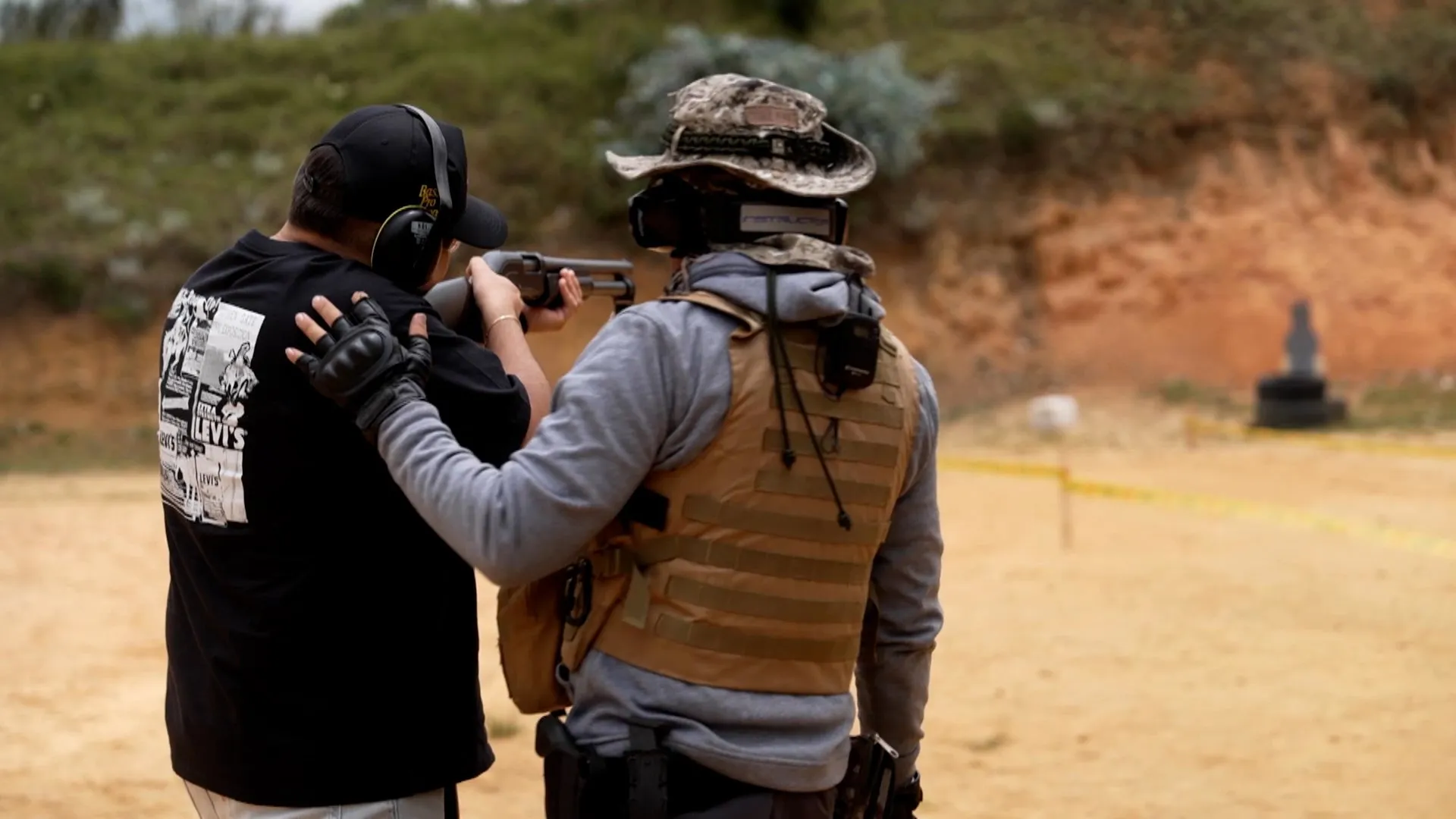
gun

THE TORTURED SOUL OF A HIRED GUN : CLINT REILLY IS ONE OF THE MOST POWERFUL–AND FEARED–POLITICAL OPERATIVES IN CALIFORNIA. HE IS ALSO HIS OWN WORST ENEMY.

Times staff writer Amy Wallace is covering the California gubernatorial campaign. Her last article for the magazine profiled videodating king Jeffrey Ullman

To understand political consultant Clinton Reilly–the hard-charging, number-crunching, message-honing, score-evening, candidate-firing, vitriol-spewing millionaire who is running Democrat Kathleen Brown’s campaign for governor–the autumn of 1993 is a good place to start.

One year before Election Day, Reilly was looking for work. Fresh from Los Angeles, where he had helped Richard Riordan beat the odds and become mayor, the San Francisco-based strategist had no major California clients. The problem was, in partisan races at least, he worked almost exclusively for Democrats, and the Democrats at the top of the ticket–Kathleen Brown and U.S. Senator Dianne Feinstein–had already hired their campaign teams.

Shut out, Reilly then did what no other political player in California would dare to do–he met with Joe Shumate, a top adviser to Gov. Pete Wilson, and discussed if he could play a role in reelecting the state’s top Republican. Weeks later, he talked to Congressman Michael Huffington about managing his campaign for Feinstein’s seat. Reilly had consorted with the Republican enemy. In his business, that just isn’t done. “It’s like the Hatfields and McCoys,” says Wilson’s campaign manager, George Gorton. “You switch sides, and neither side trusts you.” Then, Reilly switched sides again. Last March, a few months after talking to Wilson’s forces, he stepped in to rescue Brown’s floundering campaign.

It was the kind of maneuver that has made Reilly one of California’s most feared and envied political consultants–and one of the most brilliant. If you don’t believe it, just ask him. To hear Reilly talk, he is to other consultants what L’Oreal is to Prell–the one candidates hire because they’re worth it. He’s the big gun, the closer, the one you call when money is no object. And Reilly lives up to his own hype just often enough to make it seem true.

In more than two decades, Reilly has run winning campaigns for some of California’s best-known politicians, including Feinstein, Barbara Boxer, Tony Coehlo, Bill Honig, Robert Matsui, Nancy Pelosi and David Roberti. He has helped elect the current mayors of San Francisco and Los Angeles. Even his sharpest critics say Reilly knows the California electorate–where it lives, how it thinks, why it votes–as well as any political operative in the state. Reilly knows how to reach people, and that’s what politicians pay him handsomely to do. The 47-year-old son of a Bay Area milkman wears Italian suits, drives a lipstick-red Jaguar and lives just down the street from Robin Williams in a three-story Seacliff home that looks out at the Golden Gate Bridge.

More powerful than many candidates he’s helped elect, more influential than most Democratic party officials, Reilly epitomizes the modern campaign consultant. His loyalty lies not with his party but with himself, and his egotism is legendary. So is his paranoia. He is “Nixonian,” says one colleague. “Queeg-like,” says another. State Sen. Quentin Kopp, a former client, refers to him fondly as “Satan.”

In what is essentially an anonymous profession, Reilly has a knack for attracting attention, and not all of it flattering. In 1988, he managed–and lost–what remains the most expensive political campaign in state history, the insurance industry’s $63.8 million effort to beat back reform. (Reilly’s firm netted at least $6 million). In 1989, after working for months on Feinstein’s gubernatorial campaign, he noisily fired the candidate, faxing a press release to the media that claimed she lacked the gumption to become governor. (They haven’t spoken since.)

Last year, Reilly went to the San Francisco Examiner for a talk with Publisher William R. Hearst and Executive Editor Phil Bronstein. Reilly left on a stretcher with a broken ankle that required nine screws and a metal plate to fix. Though subsequent litigation never established whether Bronstein or Reilly was the aggressor, it did reveal that Reilly injects testosterone, a tidbit that only enhanced his fearsome reputation. (According to Reilly, his doctor prescribes the injections to correct a hormone imbalance.)

“When the opponent knows you have (him) on your side, a chill goes up their spine,” says San Francisco Mayor Frank Jordan. “He’s certainly better to have inside the tent than outside.”

Now, Reilly faces his toughest test. Can he reinvigorate Kathleen Brown’s once promising campaign and propel her to victory? If he succeeds in electing the first woman governor of California, one thing is sure. Nothing will stand in the way of Clint Reilly. Except, perhaps, himself.

Reilly is holding court in the restored San Francisco warehouse that houses the Clinton Reilly Group. He sits in a conference room at one end of a long, sleek table. As always, he wears an expensive suit–today, it’s navy blue–a starched white shirt, a designer tie and patterned socks. The ovals of his wire-rimmed glasses are perched high on his pale, prominent nose. Unsmiling, he fiddles with an Evian bottle cap and crosses and uncrosses his legs.

Nine members of Kathleen Brown’s campaign staff sit around the table, and judging by the accumulation of empty coffee cups, they’ve been there for hours. The question at hand: how to energize the electorate–”to turn it on,” says Reilly, “so it votes.” The answer sounds simple: Demonize Pete Wilson. “Why is PW a bum?” asks the hand-scrawled heading atop a big sheet of paper. The answers are taped to the walls. “California in decline . . . . Never done what he’s said he’d do . . . . He’s a blank . . . . 12 years asleep at the wheel . . . . He’s a hypocrite.”

After half a day’s brainstorming, however, something is still missing. Reilly summons a female assistant who hurries off, returning a moment later with a folder stuffed with mailers from previous Reilly campaigns. He picks out a lustrous Riordan-for-mayor brochure. “The declining city,” he says, displaying a glossy four-color photograph of graffiti-scarred Los Angeles streets. “Everybody sees it. It’s not a core issue, it’s a symbolic issue. Then, you’ve got crime,” he says, pointing to another slick image: a gloved hand, aiming a revolver directly at the camera. What the Brown campaign lacks, Reilly says, are visual cues that show voters why California needs a change.

“That’s one of our problems. It’s the worst recession since the Great Depression. But how do you portray a middle-class Depression?” he asks, thinking aloud. “It’s not bread lines. It’s a whole new image for the ‘90s. And we need to capture that. We need to show people how four more years of Wilson will hurt them.” This is the Reilly trademark, distilling a race down to a few stark ideas. Political consultants like to boast of their ability to identify the themes that underlie a given election, but what sets Reilly apart is his capacity to condense those themes in evocative, elegantly produced television ads and mailers.

“The guy’s a genius,” Riordan says. “He’s weird. But he’s a genius.”

To bring home the threat of crime during the 1993 Los Angeles mayoral race, Reilly created a mailer about rape in Hollywood, the district that Riordan’s opponent, City Councilman Mike Woo, had represented for years. The text of the ad was mostly statistics. But its frightening series of photos caught the eye: a young woman, her face out of focus, with a spreading stain of red that looked alarmingly like blood. “Mike Woo,” said the punch line. “A Record on Crime That Could Kill You.”

Other consultants specialize–in mail, in television, in polling, in campaign management. Reilly prides himself on running a full-service firm, which he has deliberately modeled on a commercial advertising agency. He even went so far as to locate the Clinton Reilly Group in San Francisco’s ad district. It is, he says, a “real company” that makes a profit by meeting his clients’ every need, from speech writing to graphic design. Other consultants may ride the peaks and valleys of the campaign cycle by downsizing during the off-season. Reilly employs as many as 15 people regardless. Which, of course, costs money.

“He always talks about overhead,” says Dick Pabich, a Democratic political consultant. “We joke about his middle name: Clint ‘Overhead’ Reilly. You can’t have a 10-minute conversation without it coming up.” Not coincidentally, Reilly tends to work with deep-pocketed candidates. “His talent is he is able to convince his clients that they have to spend a lot of money,” says Ron Smith, a Republican political consultant. “I hope that comes off as a compliment.”

What do candidates get in return? His formidable ability to target key voters–a discipline known as “narrowcasting.” Using a computer-generated breakdown of the electorate, Reilly identifies groups of like-minded voters (white Democratic women who voted in five of the last six elections, for example). Then, he fills their mailboxes with custom-made Reilly brochures that dovetail with pointed Reilly television commercials. “(You don’t) talk vanilla to people who want chocolate or strawberry or rocky road,” he says.

Most important, Reilly’s clients get Reilly himself: a shrewd but unforgiving perfectionist, a relentless taskmaster who, during a campaign, rarely sleeps. “He is a nocturnal animal,” says Jack Davis, a San Francisco consultant. “He does his best work in the darkness.” There are many tales of his 3 a.m. telephone calls, and until about a year and one-half ago, he did not own a wrist watch. “He didn’t want to know what time it was,” says his younger brother, Kevin. “It was a way to extend his day and give it that little bit more that he could give it.”

When talking about the campaigns he has run, Reilly has a habit of referring to “the candidates I’ve elected,” speaking in a shorthand that strips the candidates themselves of any credit. The message is clear: Reilly is not merely an employee but a partner. Politicians aren’t the only ones with something to lose. Reilly’s reputation also is on the line.

“When it’s all over, you can’t give excuses for why you didn’t win,” says Reilly, sitting on an oversized couch in his cream-colored living room. Freshly cut roses sit in a vase, and the housekeeper has left a neat stack of logs in the fireplace, which Reilly has lit. “You basically have to live with the result for the rest of your career, for the rest of your life. So pretty soon, you start to say (to candidates), ‘Hey, look! If you don’t have the money, you’re not going to win, so get the money!’ You start saying to campaign workers, ‘Hey look, this isn’t a trial run here.’ ” He pauses. “They don’t like it sometimes. And they don’t like you.”

This take-no-prisoners behavior has taken its toll on Reilly. It has isolated him; few people call him a friend. “People either hate him and despise him or hate him and admire him,” says one former Reilly employee who puts himself in the latter group. “We used to refer to his mansion as Xanadu. The implication was that he was wandering around talking to the pictures.”

“ ‘Why do they walk away from me?’ ” Tony Coehlo, the former congressman from Merced, remembers Reilly lamenting. “ ‘I’ve helped them win and now they’re attacking me? Why?’ He gets hurt, really hurt, when people turn against him.”

Instead of dissuading clients, Reilly’s obsessiveness only adds to his allure. “You have to understand how much these people want to be elected. They’re people who want it so bad,” says one former Reilly employee. “They hire Clint because they know he has a monster in him, and that’s what they think they need to win.”

At Christmastime, 1969, Bess and Joe Reilly received a letter from the eldest of their 10 children. Clinton Thomas Reilly was 22 years old–the right age, he wrote, to tell his parents “thanks.” But the seven-page letter contained more than gratitude. It revealed the aspirations of a driven idealist who yearned to “drain myself in the service of others.”

“I am a restless man and cannot settle for least best,” Reilly wrote in careful script on lined notebook paper. “There is a strange will for perfection–not in detail but in vision–which threads my action during the day and often keeps me awake at night. . . .”

Reilly had recently left the seminary, ending nine years of study, and had decided to work in politics. “Where would I be now if your entire lives had been dedicated to the pursuit of money?” he asked his parents. “Would I be in a graduate school of business somewhere, waiting to become an executive trainee for a large corporation? What a dull–unexciting life that would be–and what a barren future that would hold.

“I am also aware that little can be done without money. Since I am primarily a doer, I plan to make enough of it to stay alive. My meager talents are worth plenty to someone! And I promise to make him pay!”

Reilly was born in Oakland in 1947, and he says he was drawn to politics even as a child. In the fifth grade, he was elected class president under the banner “Take a Hint, Vote for Clint”–a slogan crafted by his campaign manager and younger sister, Jill. Years older than their other siblings, Clint and Jill were inseparable, best friends, and when she was diagnosed with a brain tumor at the age of 11, “it was like a bullet that hit you and didn’t hit me. I had a feeling of a certain responsibility that came to me.”

Reilly’s mother, a recent convert to Catholicism, was raising her children in the Church. As Jill fought her illness, her faith became more intense. “She wanted to be a nun,” her mother says, and soon after Jill’s death, Clint announced his desire to enter the seminary. The Reilly family moved to a new home in the working-class city of San Leandro, and when Clint was 14, he went to live at St. Joseph’s Seminary in Mountain View. Pursuing the priesthood, he earned his college degree in philosophy and under the supervision of his favorite professor, the Rev. Eugene J. Boyle, he got his first taste of social activism.

In 1968, while in college, Reilly led a group of seminarians in producing a local version of the Kerner Commission report, the analysis of racial tensions that was written in the wake of the 1967 summer riots. The resulting 577-page “Little Kerner Report” concluded that white San Franciscans were “sleeping through a revolution.” (Mayor Joseph Alioto scoffed, calling the report “the product of 21-year-old students who have been secluded in their seminary and not in contact with the objective facts.”) A year later, Reilly left the seminary just three and one-half years shy of taking his vows. After a brief stint working for Planned Parenthood, he threw himself into politics.

“I think initially, intuitively, I wanted to get involved in politics because that was a place where you could improve people’s lives and make the biggest impact on the direction of the world,” says Reilly. “It was a pure motivation.”

In 1974, Reilly urged Father Boyle, well known as a liberal activist, to run for the state Assembly against another Democrat, John Francis Foran. “Loyal to the People,” was the slogan Reilly devised for Boyle, and the underdog candidate was gaining ground by the day. Then, at the last minute, Foran sent out a campaign mailer that showed a photograph of what was purported to be Boyle’s residence: a building that looked like a cross between the White House and “The Beverly Hillbillies” mansion. “Why doesn’t Father Boyle practice what he preaches?” the mailer asked. In truth, the building was the Jesuit School of Theology in Berkeley. Nobody lived there. Still, the hit piece succeeded. Boyle lost by a few hundred votes, and Reilly’s days as a political ingenue were over.

“That was a real turning point for Clint,” says John Thiella, a State Board of Equalization staffer who worked with Reilly on several campaigns during the ‘70s and ‘80s. “(Afterward), he understood that it wasn’t just the right ideology and goodness that led to success. You had to do some harsh things to win.”

Reilly puts it differently: “I learned the power of money.”

He certainly wasn’t making any. For most of the ‘70s, Reilly estimates that his campaign work earned him only a few thousand dollars a year. To make a living, he opened a high-class junk shop that sold traffic lights, milk cans, apple crates, Mao buttons–anything that would bring in cash. Reilly’s break came in 1979 when he ran San Francisco Supervisor Quentin Kopp’s campaign for mayor, forcing heavily favored incumbent Dianne Feinstein into a runoff. Kopp lost, but Reilly was on the map.

By his own admission, Reilly was drinking heavily during this period. “He was a Remy Martin kind of guy,” says his friend Jack Davis. In the middle of the Kopp campaign, Reilly was arrested for drunk driving and resisting arrest, according to police records. Then, while he was running the 1980 reelection campaign of then-Van Nuys Congressman Jim Corman, a Democrat, something happened between him and a girlfriend that would haunt him for years.

“Did you ever hit (your girlfriend)? Did you ever grab (her) in anger? Did you cause injury to (her)?”–lawyers for the San Francisco Examiner would pepper Reilly with these questions 13 years later, in response to the lawsuit he filed after his ankle injury. During legal proceedings, Reilly’s lawyer advised him not to answer. Still, by the time the newspaper settled–paying Reilly somewhere between $400,000 and $900,000–the alleged incident with his former girlfriend had become part of the Reilly lore. As the San Jose Mercury News put it: “Is . . . Clint Reilly a testosterone-crazed, woman-beating bully . . . ?”

“I just don’t feel it’s fair to ask me to answer that question,” he says, grimacing as he paces his office at Kathleen Brown’s headquarters. “I have acknowledged that I had a drinking problem, and that I also had problems coping with the pressures of the work. I stopped drinking in 1981 and sought counseling and even continue today to see the counselor that I saw back then. A number of things I did were destructive. And I felt it was real important for me to sort of look at myself and my behavior and make significant changes.”

Reilly insists that he had gotten ahold of himself by the time he opened his firm in 1982. With more than 30 campaigns behind him, it was time to make money. “I began to say to myself, ‘Well, gee, somebody who gets a job for $125,000 as a result of what I do and who may have that job for life. Because of his own good efforts but also what I did for him, he’s earned a ton of money, he’s gotten a lot of personal psychic rewards, he’s gotten to be a famous person. Now why in the heck should I do this for 2,000 bucks a month?”

He started demanding more money and getting it–at least six figures a campaign. Still, some candidates flinched. In 1982, after Reilly orchestrated a decisive primary victory for Barbara Boxer in her first congressional race, Boxer fired him for exceeding her campaign budget and leaving her in debt. “It’s very expensive to have a manager like Clint,” she said at the time. It could also be maddening. In the midst of the campaign, Reilly demanded that Boxer mortgage her house to raise more cash. When she refused, he went to her husband, who told Reilly to get out of his office. (Boxer refused to comment on the incident, saying it was “personal.”)

But Reilly was getting to be known as a winner. In the early years, he had lost business because he was not part of the San Francisco political machines of then-Lt. Gov. Leo McCarthy or Assembly Speaker Willie Brown. By the mid-’80s, though, Reilly’s nonalignment had become an asset. Plenty of candidates sought his services, and he was free to work for whomever he wished. Soon, his behavior made some wonder if there was anything he wouldn’t do.

There was the way he conducted the 1988 insurance initiative campaign, spending what many people think was an obscene amount of money–and making a fair bit himself. (Afterward, he says, “I basically didn’t have to work a day in my life for the rest of my life.”) There was the way he publicly ditched Feinstein in 1989. (“That was bad judgment, a humbling experience for an arrogant man. But I’ll tell you what it did. It got Dianne off her ass.”) And there was the way, in 1990, he sought to work on behalf of a pro-development ballot measure in San Francisco. When the developers hired a rival consultant, Reilly turned around and spent $150,000 of his own money to defeat it. (“I think the message was adequately communicated.”)

Reilly had come to understand that money was more than merely a way “to stay alive,” as he’d written his parents in 1969. Money was the enduring currency of power. Money bought freedom–to be generous, perhaps, or to even old scores. And money commanded one of the things Reilly most craved: respect. No longer the idealistic 22-year-old, compelled to serve others, Reilly wanted to be appreciated, and experience had shown him that people appreciated what they paid for. He had learned this lesson, but he resented those who had taught him.

“In many ways, I see him as a high-priced call girl,” says Calvin Welch, a community activist in San Francisco whom many describe as Reilly’s Father-confessor. “On the one hand he greatly luxuriates in charging people top dollar and spending an incredible amount of money and having that reputation, which means he will only go after certain kinds of candidates. On the other hand, he despises those people for thinking they can buy Clint Reilly.”

Kathleen Brown sat down with Clint Reilly for the first time last March. Attorney Bill Wardlaw, a Brown adviser who had worked closely with Reilly on the Riordan campaign, hosted the afternoon session in his West Los Angeles office. Immediately, Brown says, she was struck by Reilly’s sophisticated analysis of California politics. Although the meeting had been arranged less than 24 hours before, Reilly had sketched out a formula for victory–”He diagnosed my campaign better than anyone had in a year and a half,” she says.

As darkness fell, Brown saw something else. “After about 2 1/2 hours, the lights went out–the building had closed down,” Brown remembers. “He kept right on going–(talking about) the Inland Empire margin of victory. We continued our conversation in semi-darkness. It was unusual.” Impressed by his intensity, Brown offered Reilly the job of campaign chairman. “He is a warrior. A commando. There’s nothing that comes across the transom that unnerves him or distracts him from the focus of this campaign.”

Reilly’s arrival unnerved some of Brown’s campaign staff, however. Within days of Brown’s decision, campaign manager Teresa Vilmain, policy director Roy Behr and media consultant Jim Margolis all resigned–opting to “make the tough decision now,” Margolis said in a statement, “rather than face difficulties later.” Reilly got what he wanted: complete control.

Reilly appeared to be just what Brown needed. Known for little more than her lineage, she lacked the very thing Reilly’s candidates are known for–a sharply defined image. But along with his expertise, Reilly brought his reputation as a walking cluster bomb. One woman fund-raiser who had worked for Brown for three years quit the campaign without even meeting him because of what she had heard. Other staffers had heard the stories, too. There were so many, they were impossible to avoid.

Among the things people claim to have seen Reilly do over the years: comment on the size of a woman’s breasts in front of a roomful of male colleagues; inform a male employee that he wanted “to vomit” at the sight of him; reduce men and women staffers to tears; throw paper clips; punch a wall repeatedly next to an employee’s head; pound a chair up and down; break a glass ashtray by slamming it on a table; knock the telephone receiver out of a woman’s hand while she was talking; chase an employee down a street.

“That’s one that does have a kernel of truth to it,” Reilly says of the last example. According to two sources, in the midst of a 1986 supervisorial race, Reilly became so upset at mistakes made by a staffer named Laurie R. Glenn that he pursued her, shouting, out of his office and into the streets of San Francisco in the middle of the night. Reilly says that he can’t recall precisely what occurred. “I wasn’t chasing her down the street,” he says. “I think, actually, she was chasing me.” (Glenn declined to comment.)

Reilly hates the subject of his temper, even though he often brings it up himself. When asked to explain it, he is by turns irate, contemptuous and remorseful. He concedes that he can be out of control sometimes and unnecessarily hurtful, though “much, much less than legend would have it.” That kind of anger “there’s no excuse for,” he says. “I feel badly about it.” During a campaign, though, Reilly says he uses anger strategically. Candidates “are not hiring me because they want me to get along with everybody. They’re hiring me because they want to win. The campaign is a war, you know?” And rage is a tactical weapon.

“We human beings on many levels are motivated by our desire to look good in front of our colleagues, and (by) the fear of shame,” he says, explaining why he has humiliated staffers in the presence of others. “I want it to be a public experience (so) that you know that everyone in the whole organization is going to know that you f- – -ed up.”

Reilly isn’t entirely wrong. He may have trouble getting along with people, but in the most fundamental sense, he understands them. He has pondered their motivations for years–as a seminarian, as a philosophy student, as a campaigner, as a boss. He has made a fortune by identifying and appealing to voters’ hopes and fears. He is a professional manipulator. That, say several former colleagues, is what makes him so cruel.

“The man possesses a superhuman ability to zero in on your emotional or psychological vulnerability. Clint’s weapon is words, and I’ve never seen anybody who can hit you so on the mark,” says one former employee who echoed the descriptions of dozens of others. Reilly often seems “loopy” and “out there,” this person says, but when he cuts into you, he does so with surgical precision. “That Jesuit training was really something he paid attention to. That priestly kind of power over you is there. It’s not just about a boss telling you you didn’t get enough widgets done. It’s about a priest making a fundamental comment about (your) character.”

As Reilly excoriates others, Calvin Welch says, he also flays himself. “He is a guy at war with himself. There’s the seminarian. There’s the hard-boiled campaigner. And then there’s what you could call the friend. Sometimes they don’t fit together. He is basically troubled by doubts as to whether or not he made the right decisions in his life.”

In 1991, those doubts made Reilly quit campaigning. He was exhausted, he said, and disillusioned. “In my experience, most politicians are not up to the task,” he told the San Francisco Chronicle in announcing his retirement. But few people thought he would stay out of the game for long. Politics had made him a man about town in San Francisco–a staple of Herb Caen’s column, he escorted beautiful women to expensive restaurants and hosted extravagant parties at his home. As many had predicted, he was back at work within months, joining Frank Jordan’s long-shot campaign for mayor. He had decided to reconcile himself, he now says, to “certain realities of the business that will never change: the wear and tear, the continuous, the seven days a week, 16 hours a day, day after day after day.”

There are obvious payoffs–his museum quality art collection, his private beach, his up-close view of the Golden Gate Bridge. But they come at a price. Reilly says he doesn’t have to justify his temper, his wealth, his work. Still, he never stops doing so. “Look, you know . . . I am who I am and I am what I am and I’m proud of what I am,” he says. “I enjoy what I do. It’s exciting. It’s exhilarating. It’s fun. But it’s also very difficult. It’s tiring. It’s emotionally draining. It’s sometimes frustrating. It’s full of tension. . . . Sometimes, one doesn’t have total serenity about everything that you do. But, in general, I, you know . . . I am not at peace. I’m at a relative state of happiness, with a lot of tension in there as well.”

The San Francisco fund-raiser was going marvelously. The ballroom of the St. Francis Hotel was packed with nearly 1,000 Kathleen Brown supporters who had paid at least $500 a plate. “Here Comes the Sun,” blared from the loudspeaker as Brown and Vice President Al Gore entered the room and began working their way through a crowd that included several other Reilly clients. Congresswoman Nancy Pelosi was seated at the head table. State Sen. Milton Marks and former Supt. of Schools Bill Honig were a few tables away. Reilly’s girlfriend–a Riordan staffer named Janet Koewler–also was there, sitting at his side. But Reilly’s gaze rarely settled on anyone but Brown and her special guest.

Reilly is running the race of his life. If Brown ousts Gov. Pete Wilson, she will instantly become the most prominent woman in American politics, and Reilly could be catapulted into the national fray as well. “Clint wants to elect a President,” says one observer. Already, there is speculation that if Brown wins, Reilly’s old friend Tony Coehlo, now at the Democratic National Committee, may try to land him a job on President Clinton’s reelection campaign.

But that’s a big if. Reilly has yet to arrest Brown’s slide. Although he has brought discipline to the Brown campaign, her lead–which had hit a high of 23 points in May, 1993–is now a distant memory. The Los Angeles Times poll in mid-September had Brown behind by nine points among likely voters. With the election five weeks away, Kathleen Brown is still struggling with the problem that has vexed her from the start: explaining to voters why she is an alternative to Pete Wilson, why she should be California’s next leader.

Reilly insists that the 1994 election is about effectiveness. He says he’s convinced that if the campaign can connect Wilson to the decline of California, voters will turn to Brown. Thus, most of the 30 different television ads he has created for Brown do little more than attack Wilson. But you can’t beat something with nothing, and for all of Reilly’s efforts, Brown’s political identity remains almost as unfocused today as when she hired him.

Still, Brown remains optimistic, saying Reilly, whom she’s paid more than $690,000 in commissions and fees so far, is worth the price. “All the polls last year were not realistic assessments of what the race was going to be about. I knew that,” she said in late August. Because of Reilly, “we are right where I needed to be–in a neck-and-neck race with an incumbent governor who will be defeated in November.”

Not everyone is so sure. “(Reilly) is the best opener I’ve ever seen. He can handicap a race, he can analyze the electorate, figure out what votes are needed where. He’s almost worth his fee for that alone,” says longtime confidant, Calvin Welch. “He never gets crazy at the beginning because he has it all figured out. But when things don’t unfold the way they’re supposed to–the candidate wears the wrong dress, some bozo doesn’t get the third mailer out to the left-handed Lithuanians — But his great weakness is his end game. That’s when he loses it. .”

Clint Reilly hasn’t lost it so far. He hasn’t thrown anything, hasn’t reduced a staffer to tears. But he continues to flog himself. He hasn’t taken a day off since he joined the Brown campaign (he has been known to chide staffers who have). He sees his girlfriend infrequently. On their one-year anniversary in June, she gave him a frame to hold a picture of the two of them. Today, it sits empty–there’s been no time to pose for a photo.

“This is the most important race for governor anywhere in the country,” Vice President Gore told the audience at Brown’s fund-raiser. Reilly’s girlfriend gave his hand a squeeze. “This is a bus,” Gore continued, “we cannot and will not allow to stall.” Reilly probably couldn’t have said it any better himself.

THE CLIENTS

“He is a warrior. A commando. Nothing unnerves him.”

STATE TREASURER KATHLEEN BROWN

(1994 gubernatorial race)

“The guy’s a genius. He’s weird. But he’s a genius.”

LOS ANGELES MAYOR RICHARD RIORDAN

(1993 mayoral race)

“When opponents know you have (him), a chill goes up their spine.”

SAN FRANCISCO MAYOR FRANK JORDAN

(1991 mayoral race)

“It’s very expensive to have a manager like Clint.”

SENATOR BARBARA BOXER

(1982 congressional race)

“He gets hurt, really hurt, when people turn against him.”

FORMER CONGRESSMAN TONY COELHO

(1982, ‘84, ’86 congressional races)

She and Reilly have not spoken in five years.

SENATOR DIANNE FEINSTEIN

(1983 mayoral race)

Source link

Abbey Clancy reveals her daughter, 15, was ‘nearly ARRESTED’ after she made ‘gun’ joke with immigration officers in US

ABBEY Clancy revealed her and Peter Crouch’s daughter Sophia Ruby was nearly arrested while going through airport security.

The model, 40, opened up about her recent family trip to New York with her kids Sophia, 15, Liberty, 11, Johnny, eight and Jack, seven.

Abbey Clancy reveals her daughter Sophia was ‘nearly arrested’ at the airport Credit: YouTube
The model was travelling with her four kids when the mishap took place in New York Credit: YouTube

But things took a surprise turn when US immigration grilled Sophia when she made a ill-timed joke about a “gun” while entering the US.

Speaking on the latest episode of their podcast The Therapy Crouch, Abbey said: “Sophia nearly got arrested at the airport, we’re landing in New York, it’s kind of security heavy… strict.

“Those immigration officers are not fun. You cannot crack a joke with them.

“Sophia renewed her passport since she last visited the US and she had to do her fingerprints.

READ MORE ON ABBEY CLANCY

HOUSE PROUD

Abbey Clancy & Peter Crouch accused of boasting about wealth amid Portugal move


bedtime story

Abbey Clancy strips topless for new snaps and writhes around in her knickers

“Sophia was like ‘why do I have to do fingerprints? Is that in case there are fingerprints on the gun?’

“They were like ‘sorry Miss, what did you say? What fingerprints on the gun?’ and then she was like ‘there’s guns here and you could have my fingerprints…’ and they were like ‘what? your fingerprints are on a gun?’.”

Sophie (left) made an ill-timed joke while going through US immigration Credit: Instagram
Sophia was questioned by security after the joke didn’t go down well Credit: Instagram

Abbey was then forced to intervene to explain that her daughter was just making an observation about how they catch criminals.

The mum-of-four continued: “I was like ‘no, my daughter is not saying her fingerprints are on a gun’, she’s saying ‘is that how you catch criminals, if fingerprints are on a gun?’”

But things went from bad to worse when a woman left a bag unattended next to Abbey in a queue, leaving security panicked.

Abbey said: “A lady left her bag and the queue spirals and everyone was going ‘whose is this?’

“At this point she was at the opposite end and I was right near the bag and I was thinking f***ing hell, so this poor woman got accused of leaving a bomb bag.

“She just left it at the end as she didn’t want to keep carrying it.

“So then we got our bags and the driver left us because we were taking too long and I just burst into tears.”

Just last week, Abbey and Peter were accused of boasting about their wealth after moving to Portugal while their £3m UK mansion is renovated.

Peter read out a question from a listener, which asked: “Have you completely relocated to Portugal or are you there while renovating your home?”

Abbey replied: “Obviously, we sold our house, we were looking for a new house, we thought we would try living in Portugal for a bit.

“We’ve absolutely loved it and you know it works perfectly for us because you know we can renovate our new place and all come back and it’ll be done.”

However, some fans thought they were boasting about their wealth and one commented bluntly: “Yeah when you have bagfulls of money, yeah try another country.”

“Bet they’re in Quinta do Lago as it’s very fancy,” added another.

The couple were previously criticised by fans for ‘flaunting’ their enviable £3 million mansion while hosting a lavish Asian-inspired banquet.

The pair were giving a tour of their luxury estate prior to hosting an extravagant dinner party with lavish catering provided by London’s Nobu.

The multi-million pound property featured its own luxury cinema room and a spacious home office for Peter and his trophies.

Fashion-savvy Abbey had her own walk-in wardrobe, while the outside area boasted a ‘magical’ and ‘peaceful’ garden complete with a high-tech BBQ and swimming pool.

One fan commented: “We get it, you’re loaded. Well done.”

A second added: “How they live, we don’t need to know.”

Source link

Hollywood prop makers fight back against proposed 3-D printed gun ban

California has some of the nation’s toughest gun laws, but state lawmakers are concerned that a new technology is allowing criminals to obtain firearms by building them from scratch. By using 3-D printers, they warn, lawbreakers are able to make key components of untraceable “ghost guns” with the press of a button.

Ghost guns, which authorities say make it more difficult to investigate shootings because they lack serial numbers, have been a growing problem for law enforcement nationwide. According to federal data, the number of privately made firearms recovered in crimes surged from more than 1,600 in 2017 to nearly 27,500 in 2023. California leads the nation in recoveries over that period.

In response, legislators are seeking to mandate that all 3-D printers sold in the state come equipped with software that prohibits users from making triggers and other gun parts. A bill passed the Assembly in May and is advancing through the Senate.

But the proposal has drawn opposition from a diverse coalition, which includes civil liberties groups, tech companies and 3-D printing enthusiasts as well as Hollywood effects studios, who argue that “firearm blocking software” will also prohibit legitimate designs and expose makers to government or corporate surveillance.

  • Share via

Inside a San Fernando workshop, Samuel McBride makes movie monsters come to life for the camera. One of his latest creations, an animatronic hand, clutches when he pulls a trigger that he built using a 3-D printer.

McBride says the technology has transformed the work at Legacy Effects, where he is a lab manager, but he’s worried it will soon be off-limits because of a proposed change in California law.

McBride fears the law would interfere with the making of devices like the one that activates his lifelike hand.

“If I just took apart this trigger and put it on a printer, how is anyone, computer or human, going to tell me how I intend to use it?” he asked.

Backers of the proposed law say it has the potential to help save lives.

“As gun violence continues to devastate our communities, we cannot allow 3-D printing technology to become a new pipeline for untraceable weapons,” said Assemblymember Rebecca Bauer-Kahan, the bill’s author.

Critics of the proposed California law note that 3-D printed guns represent a small subset of ghost guns recovered by law enforcement at crime scenes. According to the federal Bureau of Alcohol, Tobacco, Firearms and Explosives, most “privately made firearms” recovered by police are assembled from mail-order kits or unfinished parts rather than printed at home.

A man holds a 3-D printed head sculpture

Jorge Perez of Monster City Studios holds a sculpture made with a large, industrial 3-D printer.

(Ronaldo Bolaños / Los Angeles Times)

“This fight is not over whether ghost guns are dangerous,” said David Tobin, an independent creator leading the coalition. “It is over whether the state can or should require a consumer tool to surveil a person’s designs before they are allowed to make something.”

Everytown for Gun Safety, a national nonprofit that advocates for gun control and has pushed for the passage of California’s bill, pointed to rising 3-D printed firearm recoveries across 20 major cities and warned that homemade plastic parts can help people bypass background checks or turn handguns into automatic weapons.

Krystal LoPilato, who advocates for policy at Everytown, said the group has successfully guided a similar bill through the New York state Legislature.

A black handgun frame in a person's hand

A handgun frame made using a 3-D printer is held for display at the office of the federal Bureau of Alcohol, Tobacco, Firearms and Explosives.

(Alex Brandon / Associated Press)

LoPilato said the policy aims to be proactive, rather than allowing more violence to take place before regulating the problem. Opponents counter that California already bars unlawful firearm manufacturing with 3-D printers, and that ghost gun recoveries have declined since the state adopted a series of new laws and enforcement efforts.

A June 1 letter to lawmakers, signed by a group of 3-D printing companies, stagecraft and prop-making studios and industry stakeholders, argued that AB 2047 raises 1st Amendment concerns and would harm businesses. The letter was signed by a wide variety of companies and individuals, including Prusa Research, a prominent 3-D printer manufacturer.

“To an algorithm, a gun barrel and a piece of pipe are the same grooved cylinder,” Jakub Kmošek, head of public affairs at Prusa, said in a statement to The Times. “This bill will only make it harder to build, repair, experiment, and innovate in California.”

Alan Scott, Legacy Effects’ co-founder, said 3-D printing has become central to the company’s survival in an industry where budgets are tighter and deadlines are shorter.

“Everything’s just got to be done faster these days. You don’t get to reduce the quality. We couldn’t stay in business if we weren’t 3-D printing,” Scott said.

To solve this problem, Bauer-Kahan put an entertainment industry exception in the bill, exempting “printers manufactured for and sold exclusively to entertainment industry stagecraft and propmaking studios” from the software requirement.

McBride, Legacy’s 3-D lab manager, said those printers do not really exist.

Legacy uses the same general-purpose machines available to other businesses willing to invest in the equipment, and no printers are marketed exclusively for Hollywood, he said.

1

A sculpture resembling a witch, scarecrow and  skeleton with spiral features

2

A pair of hands holding a gray object.

1. A 3-D printed sculpture concept at Monster City, a special effects studio in Santa Clarita. (Ronaldo Bolaños / Los Angeles Times) 2. 3-D printing advocate David Tobin showcases a robotics kit at Monster City. (Ronaldo Bolaños / Los Angeles Times)

Legacy also worries about privacy. Major studios require strict secrecy before a movie or show is released. To accommodate this, the company shares design files through encrypted servers and protected internal systems.

“We’ve invested hundreds of thousands of dollars to bring all that technology here under the umbrella of our NDAs and our IP protection,” McBride said.

Bauer-Kahan noted at a Senate hearing that she is working to address concerns raised by 3-D printing users and industries that rely on the technology.

Paul Powers, chief executive of Physna, a company whose technology could be used to block gun parts on 3-D printers, said the strongest criticisms of AB 2047 “misunderstand how the software works.”

“Something that vaguely looks like a gun part is not considered to be a match,” he said.

Powers also responded to surveillance concerns by clarifying that his company’s software only blocks the printer from making prohibited parts — it doesn’t flag them to authorities or log users’ intellectual property.

“There’s no communication with anyone; it doesn’t go anywhere,” he said.

But Marleen Vogelaar, chief executive of Thangs3D, a platform for independent creators to share and sell 3-D printable designs, said that answer does not resolve her broader concerns about how AB 2047 would work in practice.

“These databases will always lag behind innovation and can be easily circumvented and generate false positives that block legal designs and wrongly flag everyday makers,” she said at a Senate hearing this month. “The bill also creates serious privacy and security risks by giving third parties access to analyze designer’s files. That threatens intellectual property and adds digital surveillance in a state that values data privacy.”

If the bill passes, the state’s Department of Justice would publish a roster of compliant printers. Printers not on the list would be banned from sale or transfer in California beginning in December 2029.

Aubrey Rodriguez, a legislative advocate with American Civil Liberties Union California Action, an advocacy organization formed by the ACLU’s three affiliates in the state, said the bill would ask ordinary users, schools and businesses to accept a new layer of control based on software they still do not trust.

Rodriguez said the proposal risks creating “a permanent back door into the privacy of our own homes, ripe for exploitation.”

“Once this new infrastructure exists, it is a simple software update away from tracking political dissent or preventing 3-D printing designs deemed inappropriate,” Rodriguez said.

Source link

Storage Wars legend Darrell Sheets left suicide note before taking his own life with gun as cops reveal final days

STORAGE Wars legend Darrell Sheets left behind a chilling suicide note blaming online bullying before taking his own life.

Newly released police documents have shed shocking new light on the 66-year-old’s death as police records reveal his final days.

Newly released police documents have shed shocking new light on the 66-year-old’s death Credit: Getty
The reality star left behind a chilling suicide note Credit: Getty

Darrell died at 67 from a self-inflicted gunshot wound to the head, the US Sun confirmed in April.

Officials responded to reports of a deceased person at Darrell’s home at 2am on April 22, according to a statement from Lake Havasu City Police Department obtained by The U.S. Sun.

He was pronounced dead at the scene after his girlfriend called 911 reporting she had heard a gunshot

Investigators have found a handwritten note hidden inside a black basket in a bathroom closet near where he was found dead.

model behaviour

Most shocking ANTM moments in new doc – inc filming drunk model having sex


FATAL SHOT

Man shot dead by cops after pouring petrol from window in 11-hour standoff

According to the report, obtained by TMZ, detectives said the note appeared to reference the online abuse Darrell had been facing

Police summarised the message as reading: “I could not take anymore the Facebook bulling, f*** you [redacted]”.

Investigators also noted the handwriting appeared shaky.

The heartbreaking discovery came as cops pieced together Darrell’s final hours, revealing a disturbing picture of stress, sleepless nights and family turmoil before the fatal gunshot.

The auction legend was a staple on the hit A&E show until he stepped away in 2023 Credit: Alamy
Darrell, pictured with his ex-wife Kimber, appeared alongside his son Brandon on the show for 9 seasons

Darrell’s girlfriend told investigators he had struggled to sleep on the night he died and got out of bed in the early hours before walking into the doorway of his office

She said he told her to “go back to bed” – before moments later a single gunshot rang out.

Police records also reveal growing family tension in the days before his death.

Darrell’s girlfriend said his son had recently visited and the pair became embroiled in a heated argument over “family drama” before he left.

How to get help

EVERY 90 minutes in the UK a life is lost to suicide

It doesn’t discriminate, touching the lives of people in every corner of society – from the homeless and unemployed to builders and doctors, reality stars and footballers.

It’s the biggest killer of people under the age of 35, more deadly than cancer and car crashes.

And men are three times more likely to take their own life than women.

Yet it’s rarely spoken of, a taboo that threatens to continue its deadly rampage unless we all stop and take notice, now.

If you, or anyone you know, needs help dealing with mental health problems, the following organisations provide support:

She claimed the situation worsened after Darrell received text messages from his daughter-in-law accusing her of being suspicious and stealing money from him.

The messages allegedly left the reality star visibly upset.

In a follow-up interview, his girlfriend told detectives the arguments between Darrell and his son became so intense she left the house after the son was yelling at him.

She claimed Darrell later told her he did not want to be alone with his son and had been “sad as hell” following the confrontation, believing he had let him down.

Investigators also revealed Darrell had been battling severe insomnia for months and was under huge pressure in the run-up to his death.

His girlfriend said he often struggled to sleep and was dealing with overwhelming stress – but insisted he had never spoken about harming himself and that their relationship remained strong.

The medical examiner later ruled his death a suicide.

Following the tragedy, his son Brandon Sheets broke his silence with an emotional tribute, calling Darrell “the best dad a son could ask for”.

He also revealed plans to reopen his father’s Arizona store, Show Me Your Junk, to continue the family legacy.

The mention of Facebook bullying in Darrell’s final note has also raised fresh questions, after fellow Storage Wars star Rene Nezhoda previously claimed Darrell had been facing relentless online harassment before his death.

Police investigated the bullying claims as they worked to understand what led to the TV star’s devastating final moments.

Darrell appeared on Storage Wars as a main castmember from 2010 to 2021 and was known as “The Gambler” for his high-risk purchases.

He continued to make appearances on seasons 14 and 15 as a guest buyer before leaving the show for good.

Darrell was joined by his son, Brandon, for nine seasons on Storage Wars.

Darrell also made appearances on The Tonight Show With Jay Leno and on Rachael Ray’s cooking show.

After retiring from Storage Wars, he moved to Lake Havasu, Arizona, where he operated an antique shop called Show Me Your Junk.

He previously had health issues, including a heart attack in 2019 that he had surgery to recover from.

UK: For help and support, call the Samaritans for free from a UK phone, completely anonymously, on 116 123 or go to samaritans.org. 

US: If you or someone you know needs help, the national suicide and crisis lifeline in the U.S. is available by calling or texting 988. There is also an online chat at 988lifeline.org. 

Source link

Divine Lunga: Zimbabwean football star survives South Africa gun attack

Zimbabwean footballer Divine Lunga has survived a gun attack in Johannesburg, South African police have said.

The football star, 31, was driving in the inner city suburb of Hillbrow on Sunday when his car was shot at by an unknown gunman, according to local reports.

Lunga, who plays for both Zimbabwe’s national football team and top South African club Mamelodi Sundowns, escaped unharmed.

Crime is a major problem in South Africa and the country has one of the highest murder rates in the world.

Police spokesperson Captain Tintswalo Sibeko said they were investigating a case of attempted murder but that no arrests had been made.

She did not provide further details, but South African publication The Citizen said that Lunga was on his way to church with his younger brother when they came under attack.

The duo were driving through Hillbrow when the suspect opened fire on their car, apparently mistaking him for an undercover police officer.

Source link

Gun owners may carry a weapon into stores, Supreme Court rules, rejecting a California law

Licensed gun owners have a right to carry a concealed firearm into stores and other private places unless the owner objects, the Supreme Court ruled Thursday.

The 6-3 decision extends gun rights and strikes down laws in Hawaii, California, New York, New Jersey and Maryland.

Those measures would prohibit carrying guns onto private property that is open to the public unless the owner has expressly authorized them.

“This regime hobbles what the 2nd Amendment protects: the right of Americans to carry arms for self-defense as they go about their daily lives. We hold that the law is unconstitutional,” Justice Samuel A. Alito Jr. said for the court.

The new laws, if upheld, would “impose severe restrictions on the daily activities of residents who have satisfied the state’s rigorous requirements for the issuance of a carry permit. When these permit holders leave home in the morning, … they may also be barred from entering many places that people routinely visit in the course of their daily routines, such as gas stations, convenience stores, restaurants, coffee shops, drug stores, grocery stores, ‘big box’ stores, home improvement stores, barber shops or hair salons, dry cleaners, and laundromats.”

The three liberals dissented, saying the law would protect property owners who don’t want guns in their stores.

“There is no constitutional right to enter private property without the owner’s permission, let alone with a firearm,” said Justice Ketanji Brown Jackson.

Trump administration lawyers had joined a coalition of Hawaii gun owners in urging the court to strike down these blue state laws in the case of Wolford vs. Lopez.

They said the laws, if enforced, would mean “a person carrying a handgun for self-defense commits a crime by entering a mall, a gas station, a convenience store, a supermarket, a restaurant or a coffee shop.”

This litigation is part of much broader debate over where guns may be permitted or prohibited.

Four years ago, the justices ruled that law-abiding persons had a right to obtain a permit to carry a concealed gun when they left home. They also agreed there are “sensitive places” where guns may be prohibited, such as schools, courts and other government buildings.

In response, lawmakers in California and Hawaii adopted their own lists of “sensitive places.” They imposed restrictions on concealed weapons at parks, beaches, playgrounds, places of worship and public transit as well as bars and restaurants that serve alcohol.

Gun owners sued but the 9th Circuit Court refused to block most of those restrictions in a single 83-page opinion covering Hawaii and California. Both states would prohibit carrying guns onto private property open to the public without the owner’s consent.

The 9th Circuit upheld that measure in principle but said California went too far by requiring the owner to post a prominent sign expressly authorizing guns.

“While today’s ruling in Wolford is disappointing, owners still have every right to decide whether firearms are allowed in their stores and businesses,” said Janet Carter, managing director of Second Amendment Litigation at Everytown Law. “The Supreme Court may have changed the default rule, but it cannot take away a private property owner’s authority over their own land.”

The Firearms Policy Coalition said the court had properly protected gun rights and barred states from carving out their “own regional version of the 2nd Amendment.”

“The historical record does not support forcing peaceable people to obtain advance permission before carrying for self-defense in places held open to them,” the group said.

Last week, the court upheld gun rights in a Texas case and said the government may not make it a crime for an “unlawful user” of a drug such as marijuana to own a gun.

Source link

Supreme Court shoots down Hawaii’s private property gun restriction

June 25 (UPI) — The U.S. Supreme Court on Thursday struck down a Hawaiian law that required people to ask permission to carry a concealed firearm onto a private property.

The Court’s majority, in a 6-3 ruling, said that Hawaii cannot block a properly licensed person from carrying a concealed weapon on private properties that are open to the public.

Hawaii was one of five states that enacted similar laws after the Court in a 2018 ruling said that states could not limit gun licenses to “exceptional cases” because it violated the 2nd Amendment right to carry a firearm.

The law required people who wanted to carry their firearm in places such as gas stations, restaurants, grocery and other stores, dry cleaners and other properties that are “open to the public” to get permission to carry their gun.

“Under the new Hawaii law, no one carrying a firearm may enter without the property owner’s express authorization,” Justice Samuel Alito wrote in the majority opinion.

“The effect of this new rule is to impose severe restrictions on the daily activities of residents who have satisfied the State’s rigorous requirements for the issuance of a carry permit,” Alito wrote.

In a dissenting opinion, Justice Ketanji Brown Jackson disagreed with the majority that the Hawaii law is an “attempt to end-run our Second Amendment precedents,” suggesting instead that it applies the first principle of property law, the right to exclude.

In addition to noting that Hawaii has a long history of restrictive gun laws, Brown Jackson said it enacted the permission law in order to prevent confusion among property owners that federal law had affected traditional expectations in the state.

“The public might well have an implied license to enter private property open to the public, and such permission might generally include the ability to enter armed,” she wrote in the dissent.

“But,” she wrote, “any such license is not a matter of right — a license is a creature of state law and custom, and it can vary accordingly.”

Source link

After a weekend of gun violence in Chicago, Trump renews call for intervention

A spate of shootings in Chicago has led to seven deaths and at least 38 injuries since Friday evening, police say, prompting President Trump to renew his call for a military intervention in the nation’s third-largest city.

It is the latest in a series of threats made and interventions ordered by the Republican president against a Democratic-led city, including Los Angeles.

“Why isn’t Governor Pritzker calling me for help. I could make Chicago a safe City in ONE MONTH, in ONE YEAR, it would be one of the safest!!!” Trump said in a Sunday morning post on social media.

The office of Illinois Gov. JB Pritzker, a potential 2028 Democratic presidential contender who has repeatedly rebuffed Trump’s calls for a military intervention, did not immediately respond to a request for comment.

Under Trump, National Guard troops have been deployed on crime-fighting missions in Democratic-led cities including New Orleans, Washington and Memphis, Tenn.; and Marines and Guardsmen were sent to L.A. last year amid protests over federal immigration raids.

Although Chicago Police Department data show a slight increase in shooting incidents compared with the first half of last year, violent crime rates have generally dropped in the city over the last few years, in parallel with national trends.

Preliminary information shared by Chicago police indicate there have been at least two dozen shooting incidents since 5 p.m. Friday. Those killed by gunfire include a 21-year-old shot in the chest Sunday, an 18-year-old shot in the armpit Saturday evening and a 50-year-old shot in the chest Friday.

At least 12 people in a crowd on a Chicago street suffered gunshot wounds Friday evening after an SUV pulled up and two people inside started shooting, police said.

The eight men and four women in the group ranged in age from 17 to 47. They were being treated at four hospitals. Police said another man suffered unknown injuries and refused medical treatment.

That shooting happened on Juneteenth, a holiday that celebrates the end of slavery in the U.S. Earlier Friday, former President Obama and former First Lady Michelle Obama welcomed the first visitors to his presidential center on the South Side.

“What should have been a night of celebration and community reflection for Juneteenth was shattered by a horrific act of violence,” Mayor Brandon Johnson said in an X post Saturday. “My thoughts and prayers are with the victims and their loved ones.”

“Violence has no place in our city, and those responsible will be held accountable,” he said.

Source link

Drug users don’t lose their gun rights, Supreme Court rules

A unanimous Supreme Court ruled Thursday for gun rights and against drug laws.

In a 9-0 ruling, the justices struck down part of the longstanding federal gun control law that makes it a crime for an “unlawful user” of illegal drugs to possess a gun.

The Trump administration had urged the court to uphold the conviction of a Texas man who was investigated for alleged terrorist ties and admitted to being a regular user of marijuana.

Rejecting that claim, Justice Neil M. Gorsuch, speaking for the court, said the law was far too broad and overly harsh.

“The law automatically bans an individual from possessing a gun from the moment he becomes an unlawful user of any controlled substance until he ceases being one,” he wrote. “It doesn’t matter what controlled substance an individual uses, in what amounts he does so, or whether his drug use has ever made him a danger to himself or others.”

And it can lead to a 15-year prison term, he added.

He noted, however, the court was not ruling on “addicts” or people who were under the influence of drugs when they were arrested.

The American Civil Liberties Union welcomed the ruling.

“Today’s unanimous 9-0 decision makes it clear that the government cannot make it crime for people to own a gun, which the Supreme Court has held is a fundamental constitutional right, simply because they use marijuana,” said Cecillia Wang, legal director at the American Civil Liberties Union. “With nearly half of Americans reporting marijuana use at some point in their lives, this ruling protects the rights of millions and curbs the government’s ability to impose arbitrary and discriminatory penalties.”

Since 1968, federal law has prohibited gun possession by felons, fugitives and other persons deemed to be dangerous. Included was anyone who is “an unlawful user of or addicted to any controlled substance.”

But the 5th Circuit Court of Appeals ruled in a Texas case this restriction on guns violated the 2nd Amendment. It said “there is no historical justification for disarming a sober citizen not presently under an impairing influence.”

Appealing to the Supreme Court, the Trump administration urged the justices to uphold the law.

“Habitual illegal drug users with firearms present unique dangers to society—especially because they pose a grave risk of armed, hostile encounters with police officers while impaired,” said Solicitor Gen. D. John Sauer.

He asked the court to rule in the case of a Pakistani native who was investigated by the FBI for his suspected ties to the Islamic Revolutionary Guard Corps.

In 2020, Ali Danial Hemani and his parents “traveled to Iran to participate in a celebration of the life of Qasem Soleimani, an Iranian general and terrorist who had been killed by an American drone strike the month before,” the administration told the court last year.

The FBI obtained a warrant to search Hemani’s family home.

Agents found a Glock 9mm pistol, 60 grams of marijuana and 4.7 grams of cocaine.

Hemani said he used marijuana about every other day.

A federal grand jury in Texas charged him with possessing a firearm as an unlawful habitual user of marijuana.

Source link

Has Kevin Webster died on Coronation Street? Soap legend faces shocking gun showdown

Coronation Street legend Kevin Webster got into a huge showdown with nephew Carl on Tuesday night’s episode of the world’s longest-running TV soap and a shot was fired

Kevin Webster got involved in a shocking gun showdown on Tuesday night’s episode of Coronation Street. The mechanic has been played by Michael Le Vell since 1983 and has been central to many of the soap’s biggest storylines, many of them involving his ex-wife Sally (Sally Dynevor), and their daughters, Rosie (Helen Flanagan) and Sophie (Brooke Vincent).

Over the last year, it’s been a typically dramatic time for Kevin and, not only has he had to deal with a testicular cancer diagnosis, he found out that his now-estranged wife Abi ( Sally Carman ) had been having an affair with Carl Webster, the man he thought was his brother. It was just this year that a major retcon took place and Kevin’s sister Debbie (Sue Devaney) revealed that she was, in fact, Carl’s birth mum.

On top of all that, Carl was recently injured when working on a car on the garage when Tyrone Dobbs (Alan Halsall) let the vehicle collapse down on him, and, to keep himself in the clear, lied to the police about his whereabouts that night, thereby landing innocent Summer Spellman (Harriet Bibby) in prison over the murder of Theo Silverton.

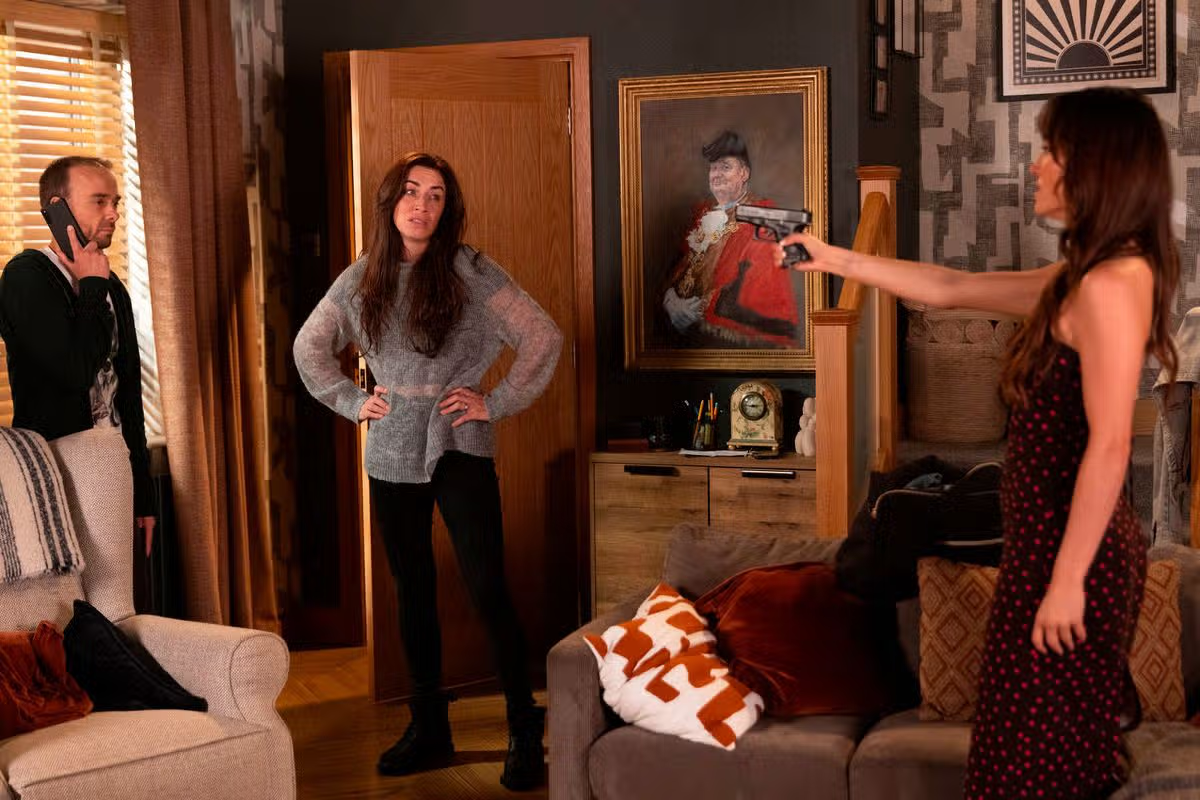
Things came to a head in the latest episode of the world’s longest-running TV soap when Kevin and Carl came face-to-face in the garage as Ronnie Bailey, along with Tyrone, watched on in horror. Having obtained a gun from dodgy car dealer Fiona Morley (Sara Poyzer), it was lying on the floor between them – just after Kevin had tried to hit him with a wrench.

Carl told Kevin: ” Either we fix this… ..or you pick up that gun,” to which his brother-turned-nephew did, believing that it was fake and a violent tussle followed when Carl told him to pull the trigger. A gunshot was heard and it transpired that Kevin had pulled the trigger.

Tyrone got a hold of Kevin to make him see sense and, when he realised Carl had dodged the bullet, he said: “I’m sorry, Carl.” Later on, Carl called round to number 13 where he told Kevin: “Been a bit of a day, eh? Should never have agreed to do that job for Fiona. I don’t know what I was thinking, pulling that out on you. We’re a right pair, aren’t we, eh?

“So, is this us now? Putting everything behind us?” Kevin sighed as he said: “We’re never gonna be best mates, but yeah. We both love Debbie and if you’re serious about doing the right thing by her then we’ll move forward.

“Just one thing. Why did you do it? Abi, I mean. Like, I know I’ve gotta get past it, and it’s doing me no good dwelling on the past but I need to know. Please.” Carl said: “Because she was there, I was selfish, self-destructive. Jealous. Kev, whatever the reason, doing that to you, to both of you, it was wrong and I regret it. I regret it all. I don’t wanna be that person again and I don’t think I’m gonna be.” It was then that the warring relatives seemingly called a truce as they shook hands.

By the end of the episode, Ronnie and Debbie had found out about the whole thing and he claimed he had returned the gun, but now it was nowhere to be seen as Fiona hadn’t received it. Lamenting in the living room, Debbie said to Ronnie and Carl: “So, not only have we got God knows who coming after us, but there’s someone out there with a loaded gun!

“Right, first thing tomorrow, I want you both out there, and I want you to find it, because if you don’t, it won’t be Fiona you’ll have to worry about, it’ll be me! Now, get out of my sight… the pair of you,” and showed them the door. What none of them know, though, is Jodie Ramsey, the mysterious long-lost sister of Shona, had found the gun and taken it for herself.

Reacting to the tense episode, one fan wrote on X: “Carl bringing a gun to an argument.. yes only soft b******* do that!! #Corrie,” whilst another said: “So what’s Jodie planning on doing with the gun then?” Is she gonna use it on David if he doesn’t sleep with her?”

A third wrote: “Aw Carl and Kevin making up. Hope Carl sorts himself out for Debbie,” and a fourth said: “A near miss for Carl and Kevin. Oh s*** the gun has gone off!”

Coronation Street airs Monday to Friday at 8:30pm on ITV1 and is available to stream from 7am on ITV X.

* Follow Mirror Celebs and TV on TikTok , Snapchat , Instagram , Twitter , Facebook , YouTube and Threads .


Source link

Mass shooting with at least 10 attackers in Johannesburg | Gun Violence

NewsFeed

A manhunt is underway for at least 10 suspects in a mass shooting that left 12 people dead near Johannesburg, South Africa. The motive for the attack is not known but Al Jazeera’s Fahmida Miller reports that recent shootings have been linked to turf wars or gang violence.

Source link

James Handy’s girlfriend breaks silence after son allegedly stabbed her Top Gun star boyfriend to death: ‘I love him’

An image collage containing 3 images, Image 1 shows Man with gray hair wearing a brown coat, striped shirt, and patterned tie with a badge pinned to his lapel, Image 2 shows A man in a light shirt and dark pants walking down a residential sidewalk, with a red circle around him, captured by an infrared camera, Image 3 shows Police cars parked outside a suburban house with yellow caution tape across the front door

THE heartbroken girlfriend of James Handy has spoken out in anguish after her own son was accused of brutally stabbing the veteran actor to death.

Wendy Gledhill, 76, fought back tears as she broke her silence outside her home, reeling from the horror of losing her partner and the devastating allegations against her son.

James Handy, pictured in TV series NYPD Blue, has been stabbed to death
Police swarmed round James’ home early on Wednesday morning after receiving a chilling 911 call

“I’m just trying to make it through one day at a time, a minute at a time,” she said.

“I loved James and my son. I still can’t believe it….I can’t believe my son did it. I’m just trying to …,” she added, before retreating inside, overcome with emotion.

Her son, Michael Gledhill, 44, stands accused of fatally stabbing the 81-year-old actor multiple times in the chest  in a shocking attack at the family home in Tarzana, Los Angeles.

Authorities say the horror unfolded on Wednesday morning when police were called to the property on the 19200 block of Erwin Street following a disturbing 911 call.

A voice reportedly told dispatchers: “I am the son of man, I just killed the man of sin.”

When officers arrived at around 9:30am, they found Handy unconscious and bleeding out in the front yard, suffering from multiple stab wounds.

“We also need [a rescue ambulance] for a male, not conscious, not breathing, suffering from a stab wound,” a responding officer said in chilling dispatch audio.

The beloved actor was rushed to hospital but was later pronounced dead.

Most read in Entertainment

Chilling doorbell footage has captured a man casually strolling past the home of veteran actor James Handy around the same time he was killed
The suspect appeared to walk up to the home of the Hollywood star

In a dramatic twist, Gledhill himself allegedly waved down officers as they approached, telling them he was the suspect they were looking for.

He was arrested at the scene and charged with murder. He is currently being held on a $2,000,000 bond.

Disturbing Ring doorbell footage later emerged showing a man believed to be Gledhill pacing near the home.

He was dressed in a purple or pink shirt and blue trousers, at times touching his face before returning to the property and flagging down police.

Another clip showed him walking back towards the house where Handy’s body was later found, with footage also appearing to capture him leading officers across the lawn.

Neighbours described Gledhill as acting erratically in the past, with one claiming his behaviour raised alarm.

“He looked really rugged … he looks like he doesn’t really change his clothes,” said neighbor Joheina Quibol.

She also recalled a bizarre encounter in which he allegedly questioned her father about cameras inside their home, describing him as “paranoid” and suggesting he may have struggled with mental health issues.

The actor, far left, also starred in Arachnophobia in 1990
James Handy was found unconscious and suffering from stab wounds to his chest Credit: Fox11

Other neighbours claimed the suspect and Handy had been overheard arguing overnight before the fatal attack.

Despite the brutal nature of the killing, the Los Angeles Police Department said they believe it to be an isolated incident, adding there is no ongoing danger to the public.

A motive for the attack has not yet been established.

Handy’s death has sent shockwaves through Hollywood, with his talent agent Pam Ellis-Evenas confirming the tragedy in a statement.

“With great sadness I can confirm that the gentleman who was attacked and killed on Wednesday in Tarzana was the actor James Handy.”

The New York City-born star enjoyed a glittering career spanning nearly five decades, racking up close to 150 screen credits across film and television.

He was most recently seen as bartender Jimmy in Top Gun: Maverick alongside Tom Cruise.

Handy also appeared in the 2017 superhero film Logan, starring Hugh Jackman, playing a doctor treating an ageing Wolverine.

One of his most memorable roles came in the 1995 classic Jumanji, where he starred alongside Robin Williams, Bonnie Hunt and Kirsten Dunst.

His extensive television career included appearances in hit series such as The West Wing, 9-1-1, NCIS: Los Angeles, CSI: NY, The Young and the Restless, Castle, Criminal Minds, Cold Case, Without a Trace, ER and The X-Files.

He also had notable roles in Alias as Arthur Devlin, and recurring appearances in Melrose Place and NYPD Blue.

Handy’s brutal killing comes less than a year after another shocking Hollywood tragedy involving Rob Reiner, 78, who was found with his throat slit inside his Los Angeles home.

His son, Nick Reiner, 32, has been accused of killing both him and his mother Michelle, 68, while they were in bed on December 14, 2025. He has pleaded not guilty and is awaiting trial.

Source link

Top Gun: Maverick actor James Handy stabbed to death at Los Angeles home as cops reveal chilling 911 call

TOP Gun: Maverick actor James Handy has been stabbed to death with his girlfriend’s son telling cops in a 911 call: “I just killed the man”.

The 81-year-old, who also starred in Logan and Jumanji, was found unconscious with multiple stab wounds to his chest on his front yard.

James Handy, pictured in TV series NYPD Blue, has been stabbed to death Credit: Getty
Surveillance footage from outside the home caught an unknown man walking past around the time of the stabbing Credit: FOX 11

Authorities rushed to the scene in Tarzana, Los Angeles on Wednesday morning at around 9.30am after receiving a chilling 911 call.

Police revealed a voice at the end of the line said: “I am the son of man, I just killed the man of sin.”

Officials rushed to James’ home on Erwin Street and raced him to hospital where he was pronounced dead.

Some time later, 44-year-old Michael Gledhill – the son of James’ partner – waved down officers as they searched near the home.

GRISLY END

Man bleeds to death after ‘cutting off his penis & slicing throat’ on LA street

James, pictured in TV show X files, was found with multiple stab wounds outside his home Credit: Channel 4
Police swarmed round James’ home early on Wednesday morning after receiving a chilling 911 call Credit: ABC7
Police are continuing to investigate the death Credit: ABC 7
The actor (far left) also starred in Arachnophobia in 1990 Credit: Alamy

Gledhill confessed to carrying out the fatal attack and said he was the one who phoned the police, according to the Los Angeles Police Department.

Gledhill was arrested for murder and taken to Van Nuys Jail with his bail set at $2,000,000.

The LAPD statement said: “Detectives believe this is an isolated incident and there appears to be no danger to the public at this time.”

A motive for the attack remains unclear.

Most read in Entertainment

James (far right) in NYPD Blue Credit: Getty
James (center) had a major role in 1986’s Popeye Doyle Credit: Alamy

Neighbors have claimed Gledhill and James were overheard arguing overnight.

The star’s talent agent, Pam Ellis-Evenas, paid tribute saying: “With great sadness I can confirm that the gentleman who was attacked and killed on Wednesday in Tarzana was the actor James Handy.”

James’ career spanned almost five decades with his most recent major role being in Tom Cruise’s Hollywood sequel Top Gun: Maverick in 2022.

He played the role of bartender Jimmy.

Another memorable role for James came in 2017 superhero flick Logan as he played the doctor who treated lead man Hugh Jackman.

James also starred in 1995 cult classic Jumanji alongside Robin Williams, Bonnie Hunt and Kirsten Dunst.

His career featured several TV credits such as the role of Arthur Devlin in eight episodes of Alias and recurring stints on Melrose Place and NYPD Blue.

James’ tragic death comes less than a year after Hollywood icon Rob Reiner, 78, had his throat slit inside his LA home.

Son Nick, 32, is currently in jail after being accused of killing both Rob and his mum Michelle, 68, while they were in bed on December 14, 2025.

Nick has pleaded not guilty on both counts of murder and is awaiting trial.

Source link

Search For New 5.56mm “Flyweight” Special Operations Machine Gun To Kick Off Soon

U.S. Special Operations Command (SOCOM) is about to kick off the search for what it is calling a Flyweight Assault Machine Gun (FAMG). This will be a new 5.56x45mm caliber belt-fed machine gun to succeed the Mk 46, a lightweight special operations-specific cousin of the M249 Squad Automatic Weapon (SAW).

Lt. Col. Alan Wood, SOCOM’s Program Manager for Special Operations Forces (SOF) Lethality, touched on the FAMG briefly in an exclusive interview with TWZ‘s Howard Altman during the annual SOF Week conference last week. Readers can find the bulk of the interview here.

A member of the US Army’s 75th Ranger Regiment provides overwatch with a Mk 46 machine gun in Iraq in 2006. The new FAMG is intended to be a successor to the Mk 46. US Military

There are “three separate machine gun programs within SOCOM: Lightweight Machine Gun-Medium, Light Machine Gun-Assault, and soon to be FAMG, which is the Flyweight Assault Machine Gun,” Wood explained. “The Medium is your .338 [Norma Magnum], the Assault is your 7.62 NATO [7.62x51mm], and then the FAMG is a 5.56[mm]. All belt-fed machine guns.”

We subsequently reached out to SOCOM for more information about the FAMG, an effort that does not appear to have been previously disclosed.

“The Flyweight Assault Machine Gun (FAMG) will be a 5.56mm belt fed weapon that will replace the MK46 Light Machine Gun,” a spokesperson for the command told us. “Details on the requirement will be published on SAM.gov in the near future.”

While we do not know yet what SOCOM is looking for specifically in the FAMG, beyond its caliber, we do know what the command wants to replace. The Mk 46 traces back to the early years of the Global War on Terror. It is based on the M249 SAW, which is itself a version of the Minimi light machine gun from Belgian gunmaker FN (and later its American subsidiaries).

A member of the US Army firing a current-generation version of the full-size M249 SAW. US Army

FN had initially developed what it called the Special Purpose Weapon (SPW), a significantly lightened version of the Minimi with a shortened barrel that also had a thinner profile. The gun, which was marketed heavily toward special operations forces, featured the collapsing stock that had already been used on short-barreled ‘paratrooper’ versions of the Minimi and the M249, as well.

The FN Special Purpose Weapon (SPW) variant of the Minimi. FN

The standard Minimi design also has a secondary magazine well that allows it to fire ammunition from NATO-standard box magazines like the ones used with AR-15/M16-series rifles, as well as belts. This feature was carried over to the M249. It was omitted on the SPW to further cut weight.

The baseline Mk 46 Mod 0 was a direct evolution of the SPW concept. It most notably used the polymer buttstock found on standard Minimi and M249 light machine guns, which is fixed in length, but also lighter than the collapsing paratrooper type. It also came with a new handguard with rails on four sides for optics, laser aiming devices, lights, and other accessories. The handguard design is very tall on the top side to bring it in line with an additional rail on the gun’s top cover.

The Mk 46 Mod 0 machine gun. FN

An improved Mk 46 Mod 1 variant was subsequently developed, which “incorporates improved receiver pins, a feed tray with retention pawls and a vented hand guard with improved heat shield and three MIL-STD-1913 rails,” according to the entry on FN America’s website at the time of writing. “The MK 46 MOD 1’s cold hammer-forged MIL-SPEC barrel has a hard-chromed bore for longer life and improved accuracy, and serves as the mounting point for the carry handle.”

To make a more direct comparison, the Mk 46 Mod 1, with its 16.3-inch barrel, weighs just under 15-and-a-half pounds empty with no accessories, per FN America. The version it shows on its website currently does also has a more traditional handguard configuration. A current-generation M249 with a full-length 20-and-a-half-inch barrel tips the scales at 17 pounds without any ammunition, optics, or other attachments.

A Mk 46 Mod 1 machine gun. FN America

After years of the U.S. military, including SOCOM, increasingly moving away from 5.56x45mm in favor of calibers that offer longer reach, for rifles and machine guns, there is something of a question as to why the command is now pursuing the FAMG. It had already been relatively rare to see variants of the Mk 46 in actual operational use. For decades now, U.S. special operators have also been using a succession of lightweight 7.62x51mm machine guns, as well, including compact versions of the M60 and a derivative of the Minimi/M249 designated the Mk 48. The aforementioned Light Machine Gun-Assault is a replacement for the Mk 48.

The U.S. Army is also moving to replace at least a substantial portion of its standard M249s with new 6.8x51mm caliber M250 machine guns, which might also make their way into service elsewhere across the U.S. military. The 5.56x45mm M27 Infantry Automatic Rifle (IAR) has also largely supplanted the M249 in the U.S. Marine Corps.

All this being said, U.S. special operators routinely conduct missions in close-quarters environments where the added firepower of a belt-fed machine gun can be beneficial, but the added range offered by a heavier design is not necessary. A design that cuts as much weight as possible is very attractive to fast-moving special operations teams that typically use belt-fed machine guns for brief periods of suppressing fire, as well.

SOCOM is now separately pursuing new hypervelocity 5.56x45mm ammunition that could significantly extend the reach of weapons chambered in that caliber as part of an effort called the Hypervelocity Improved Carbine (HICAR).

In addition, there is value in having commonality in ammunition with other existing rifles and machine guns, as well as those in use with allies and partners. The latter point is especially relevant for special operations forces, which are often forward-deployed alongside their foreign counterparts in locales where access to traditional supply chains is not guaranteed. There are training benefits to being able to use more readily available, less specialized, and often less expensive ammunition, as well.

A US special operator, at right, trains together with Panamanian forces in Panama in 2025. USAF

SOCOM’s Lt. Col. Wood highlighted all of this while speaking more generally during his interview with us last week:

“So, HICAR’s got me excited. Back in the late teens, the Army went down this higher velocity [route], and I’m intentionally using the word velocity and not pressure in what they’ve done with the M7 and M8 rifles. They’ve been able to increase the velocity and therefore create a flatter shooting rifle as well as a rifle that has greater energy on target, and that does incredible things for barrier defeat in a lot of situations. Now we’ve had 10 years, almost, for that technology to mature, people have learned things, and the question then becomes, what could we do for special operators in calibers that are not new?”

“The advantage for SOF [special operations forces] operators is I’ve got, say, the Green Berets who do a lot of partnering with foreign SOF operators, but there’s no [6.8mm] ammo running around central Africa, or you know, pick your favorite spot where we like to do partnering operations around the world. But there’s a lot of 5.56mm and other common cartridges of that nature, and so what we want to…achieve is maybe not the same effect as what the Army’s done with the M7 and the M8 and that high-velocity ammunition that they have, but where could we get close to that in 5.56 and potentially other calibers in the future.”

5.56x45mm could turn out to be just the baseline caliber for FAMG, too. SOCOM has long had a fondness for guns with interchangeable calibers, allowing for different cartridges to be used as appropriate for specific missions. As a tangential example, the command just recently confirmed to TWZ‘s sister site Task & Purpose that its new Mid-Range Gas Gun-Assault (MRGG-A) rifles, now also designated the Mk 24, will be able to be configured to fire either 6.5mm Creedmoor or 7.62x51mm.

It is also worth noting that the U.S. Army’s elite 75th Ranger Regiment has already begun using the 5.56x45mm Light Assault Machine Gun (LAMG) from Knights Armament Company (KAC), at least on a limited level in recent years, alongside current-generation versions of the M249. KAC’s website presents a typical LAMG configuration featuring a 15-inch barrel and weighing 11.4 pounds empty, which is more compact and lightweight than the Mk 46.

One of the 75th Ranger Regiment’s KAC LAMGs. US Army

The LAMG also has what is known as a “constant recoil system,” which is designed to significantly reduce felt recoil and, by extension, improve accuracy during sustained autonomous fire. KAC says this makes the gun “more controllable than other similar machine guns that weigh nearly twice as much.”

There are other 5.56x45mm machine guns on the market today, which could be adaptable to meet the FAMG requirements, as well. This includes FN’s own newer EVOLYS design, which is available in 5.56x45mm, as well as a variety of other calibers.

A promotional shot of FN’s EVOLYS machine gun. FN America

As SOCOM has said, more details about its requirements and plans for the FAMG are set to come soon.

Contact the author: joe@twz.com

Joseph has been a member of The War Zone team since early 2017. Prior to that, he was an Associate Editor at War Is Boring, and his byline has appeared in other publications, including Small Arms Review, Small Arms Defense Journal, Reuters, We Are the Mighty, and Task & Purpose.


Howard is a Senior Staff Writer for The War Zone, and a former Senior Managing Editor for Military Times. Prior to this, he covered military affairs for the Tampa Bay Times as a Senior Writer. Howard’s work has appeared in various publications including Yahoo News, RealClearDefense, and Air Force Times.


Source link

Daughter honours security guard father killed while protecting mosque | Gun Violence News

NewsFeed

The daughter of mosque security guard Amin Abdullah is remembering him as the “absolute best dad in the world.” Family and community members gathered Tuesday to honour Abdullah, who was killed while confronting gunmen during the attack on a San Diego mosque.

Source link

Police say they are responding to ‘active shooter’ at San Diego mosque | Gun Violence News

BREAKING,

Authorities say they are deploying ‘significant resources’ to the scene of the incident at Islamic Center of San Diego.

Police in California have said they are responding to an active shooter at a mosque in San Diego.

Authorities called on residents in Monday to avoid the area of the incident at the Islamic Center of San Diego.

There have been no official reports of casualties, but the Associated Press news agency cited officer Anthony Carrasco as saying that he believes people have been shot.

The police department said later on Monday that the situation remains active but has been “contained” without providing further details. “We have significant resources on scene at this time,” the department said.

Aerial television footage shows a heavy police presence outside the mosque.

San Diego Mayor Todd Gloria said he is continuing to receive reports about the incident. “Emergency personnel are on scene and actively working to protect the community and secure the area,” he wrote on X.

The office of California Governor Gavin Newsom said he is following the situation and coordinating with local law enforcement agencies. “We are grateful to the first responders on the scene working to protect the community and urge everyone to follow guidance from local authorities,” the office said in a statement.

The mosque is in a heavily residential neighbourhood about 9 miles (14 km) north of downtown San Diego. It is the largest mosque in San Diego County, according to its website.

More to come…

Source link

Clinton Tells Students Not to Jump Gun on Economy : Recession: The President-elect, speaking at a Chicago community college, focuses on long road of recovery.

President-elect Bill Clinton used a community college in Chicago Monday to try out an updated economic message that Americans will be hearing frequently from him in the weeks to come: We’re not out of the woods yet.

“When you read that things are getting better with the unemployment rate, inflation rate, housing starts, things of that kind, that’s a good thing,” Clinton told an audience of some 150 students at Wilbur Wright Community College on this city’s northwest side. But, he warned, those improvements are merely part of the short-term business cycle.

“Underneath that,” he said, are “20 years of problems.”

“We may or may not be coming out of the recession,” Clinton said. “There are some good indicators that we are, but the long-term problems are there and that is what I have to address.”

Clinton’s statements reflect a basic dilemma that he faces: He relied on a bad economy to help him get elected. And while he would like to see improvements, he must rely on continued worries about the economy to get his programs enacted over what is certain to be fierce opposition from vested interests in Washington. In addition, of course, having defeated President Bush on the issue of the economy, Clinton would like to be able to say that economic improvements occurred on his watch, not on that of his predecessor.

With the economy showing steady signs of improvement, those factors have impelled Clinton and his aides to try with increasing diligence to focus public attention on the long-term trends of economic stagnation–and his long-term agenda to change them–rather than on talk of a short-term stimulus to help an economy that may well be moving out of recession on its own.

The emphasis on the long-term agenda will be central to the economic conference that Clinton plans to convene in Little Rock next week. Aides envision the conclave in large part as a tutorial to explain to Americans why the country needs Clinton’s agenda of raising taxes, revamping the health care system, and increasing spending on education, training and new technologies to reduce the deficit.

In answering questions from the students, Clinton provided the most detailed view since the election of how he intends to form a coherent agenda out of the many promises he made in the campaign.

Repeatedly he referred to two key proposals: His plan for a national service trust fund to let Americans finance their educations by borrowing money and paying part of it back through public-service work, and his plans to reform the nation’s health care system.

Changing the health care system is the one thing that he would do “if I could wave a magic wand,” Clinton said, reminding the students of the effect that rising health care costs have had on the ability of American companies to compete.

At the same time, the session with the students showcased a shift in Clinton’s rhetoric from the language of the campaign to the sterner realities of governing. During the campaign, Clinton struggled against his natural tendency to give four-part answers to all questions. Now he appears to have given up that fight.

And repeatedly, as the students asked Clinton for more federal money for program after program, the President-elect, mindful of the massive deficit he soon will inherit, responded with a polite version of “no.”

One woman asked if he would provide special incentives for minority students to attend college. No, Clinton said, the goal should be to make loans and scholarship funds broadly available and then recruit in minority communities. A nursing student asked about special incentives to encourage people to pursue nursing careers. No, Clinton replied, noting that nursing salaries have gone up because of shortages.

Still another noted that some of the classes he wanted to take have been canceled due to a lack of funds. Could the federal government help? he asked. “The federal government, with the huge deficits we are now facing, does not have the capacity to take over substantial funding of the community college system,” Clinton replied.

Despite that, Clinton seemed to win the student’s enthusiasm simply by having shown up.

“He could have just gone to Princeton or Yale and spoken in their auditorium. Instead he came here,” said Erika Marie Dimitrijevic, a 35-year-old mother who attends an ultrasound training program at the school. “I think he wants to get closer to the people.”

Dimitrijevic is in many ways representative of the school, whose average student is a 31-year-old woman. Roughly 50% of the 14,000 Wright students are white, while 20% are black and 30% are Latino. About 15% are women who head households.

The President-elect also used the occasion to score some points with the area’s political leaders, who were crucial in his battles to win his party’s nomination and to defeat President Bush. They will be equally important to whatever success he manages in the next four years. Clinton took time to meet with Chicago Mayor Richard M. Daley, along with Daley’s brother William, who has been touted in Chicago as a potential secretary of transportation in the Clinton Administration.

And in speaking to the students, Clinton made a point of praising their local congressman, Rep. Dan Rostenkowski, chairman of the House Ways and Means Committee, whose panel will have jurisdiction over much of Clinton’s economic and health care proposals and whose help Clinton has courted assiduously in recent weeks.

If he succeeds in changing the nation’s health care system, “it will be in no small measure because of Danny Rostenkowski’s leadership,” he said.

Later in the day, Clinton arrived in Washington and courted members of Congress by attending a reception for newly elected freshmen.

He will spend most of today on Capitol Hill, meeting with freshmen congressmen again as well as with congressional committee chairmen.

Clinton’s attempts to woo members of Congress, both the powerful and the new, are in sharp–and deliberate–contrast to the approach of Jimmy Carter, the last Democratic President, whose relations with Capitol Hill were tense and troubled. Clinton and his aides, by contrast, have taken every possible opportunity to try to bring members of Congress onto his team, an effort which is likely to include appointing several to his Cabinet.

The first of those expected Cabinet appointments are expected later this week.

As Clinton left the White House guest quarters at Blair House Monday night, en route to a party at the home of Washington Post Co. Chairwoman Katharine Graham, he was accompanied by several members of his transition team and Lawrence Summers, a World Bank economist, who is considered a possible choice for economic security adviser.

After a scheduled return to Little Rock tonight, Clinton likely will resign from the post of governor Wednesday, closing a 12-year chapter of his life. He is also expected to release new ethics guidelines for his Administration.

Researcher Tracy Shryer in Chicago contributed to this story.

Source link