Gulfs

The Gulf’s Digital Transformation | Global Finance Magazine

The UAE has carefully crafted a position for itself as a hub for digital assets. Can the good times last?

The United Arab Emirates (UAE) positions itself as a center for digital assets, a market that may be worth up to $500 billion over the next few years by some estimates. Dubai and Abu Dhabi are already acknowledged as global hubs, based not only on quality of regulatory oversight but their early strategic bet on tokenization as the basis of a new financial infrastructure.

But the UAE’s pioneering moment may soon end. The US-Israeli war against Iran, launched in February, has sown doubts as to whether the Persian Gulf monarchies are the haven of stability they claim to be. And for all the regional talk of tokenization and fintech, longestablished financial centers elsewhere are taking the lead in drawing up a unified set of rules to govern crypto regulation. If a clear regulatory framework emerges, it could reshape crypto market dynamics at the UAE’s expense.

In January, the New York Stock Exchange (NYSE), the world’s largest financial market, said it was launching a platform for 24×7 trading and on-chain settlement of tokenized securities, a development some analysts predict will spark a revolution in capital markets. The move by NYSE could leave some other financial centers behind as liquidity and institutional investors shift to more efficient, always-on markets.

Financial centers, including London, Singapore, and Hong Kong, are also evaluating tokenization.

And other Gulf Cooperation Council (GCC) member states, notably Saudi Arabia, Qatar, and Bahrain, are increasingly embracing tokenization, backed by financial war chests of various sizes.

Management consultancy Kearney earlier this year estimated that by 2030, close to $500 billion of assets across the GCC could be placed on-chain, the most fertile ground being in private markets, public equities, funds of tokenized sovereign wealth fund (SWF) assets, commodities, real estate, and bank deposits. Tokenizing these assets would unlock some of the GCC’s most prized but difficult-to-access holdings, such as SWF assets and family offices. Tokenizing listed securities, for example, could simplify cross-border transactions and open markets to fractional ownership, a move likely to attract global investors looking to participate at smaller ticket sizes.

UAE real estate is already on the road to wider tokenization. Last year, Dubai launched a real estate tokenization sandbox pilot, the first regulatory body in the region to adopt blockchain-based tokenization for fractional ownership. The initiative coordinates with the emirate’s Virtual Assets Regulatory Authority (VARA), which monitors issuance, trading, and custody, together with the Central Bank of the UAE, which ensures compliance with national financial regulations.

For some analysts, the holy grail would be the tokenization of the GCC’s oil output. In January, Bahrain and UAE-based Gulf Energy Exchange announced plans for the first oil-backed stablecoin, aptly named OIL1, subject to regulatory approval by the Central Bank of Bahrain (CBB). OIL1 is to be collateralized by verified reserves of Persian Gulf crude oil and pegged to the US dollar, creating a link between the energy sector and digital assets.

Regulatory Oases

To stay competitive, however, the UAE will need to continue innovating, given that adoption of tokenization and digital assets is moving at breakneck speeds. Tokenization’s market growth “looks like an express ride to the top of the Burj Khalifa,” Kearney noted, a reference to the world’s tallest building, located in Dubai.

Dubai and Abu Dhabi operate offshore free-zone financial centers—the Dubai International Financial Center (DIFC) and Abu Dhabi Global Market (ADGM)—both of which have taken leading roles in ensur ing the UAE remains at the forefront of digital-asset innovation, says Jason Barsema, president and co-founder of Chicago-based Halo Investing. “The UAE’s ascendancy as the destination for digital assets is rooted in a unique policy-to-production approach that separates it from purely speculative markets,” he notes.

Shivkumar Rohira, Klay Group
Shivkumar Rohira, CEO of EMEA at Klay Group

The UAE’s Securities and Commodities Authority offers a comprehensive regulatory regime straddling the central bank while Dubai’s onshore VARA, Abu Dhabi’s Financial Services Regulatory Authority (FSRA), and the Dubai Financial Services Authority (DFSA), which are offshore entities, operate at the local emirate level.

This regulatory landscape gives international investors a degree of comfort that governance standards are aligned with global legal standards. Its core advantage is a sophisticated yet “pragmatic regulatory architecture that offers something most emerging markets still lack: clarity,” says Shivkumar Rohira, CEO of EMEA at financial services firm Klay Group.

“Dubai’s VARA, alongside the DFSA in the DIFC, has built a tiered, activity-based framework that sets out clear permissions for exchanges, custodians, and token issuers, while tightening standards around AML, investor protection, and market integrity,” he adds.

Abu Dhabi’s ADGM has gone further in positioning itself as an institutional-grade venue with a regime that accommodates tokenized securities, funds, derivatives, and increasingly, staking, among other yield-generating activities.

“This integration keeps Dubai and Abu Dhabi the default GCC base for global digital-asset players even as regional rivals race to catch up,” says Rohira.

Even within the UAE, however, there are fundamental differences of approach between Dubai and Abu Dhabi, notes Martin Leinweber, director of Digital Asset Research and Strategy at MarketVector. The result is a layered system that gives firms the flexibility to structure licensing around their business model, not the other way around.

“What strikes me most from an institutional perspective,” Leinweber says, “is how deliberately the UAE constructed its regulatory architecture at a time when most major financial centers were still debating whether crypto deserved a framework at all.”

Leinweber, MarketVector
Martin Leinweber, director of Digital Asset Research and Strategy at MarketVector

In creating VARA, Dubai established a purpose-built regulator with its own mandate, rulebooks, and enforcement capacity rather than grafting virtual asset oversight onto an existing regulator. In comparison, Abu Dhabi took a complementary path through ADGM’s FSRA, he notes.

Other GCC States Wake Up

While the UAE may be in the lead, other GCC states are finding a place for tokenization in their financial markets as well.

Bahrain’s regulatory framework is closest to the UAE’s, but with the CBB as sole authority for virtual assets. That includes a regulatory sandbox where firms can test and modify digital asset models; Rain was the first crypto-asset firm to be accepted into the program, in 2017.

Bahrain FinTech Bay, the island kingdom’s fintech center, acts as an incubator, bringing together startups, regulators, and financial institutions.

Qatar is taking a more gradual approach; the Qatar Financial Center (QFC) is over seen by the QFC Regulatory Authority, which has recognized tokenized assets, custody, and transfer within a virtual assets framework under the QFC’s jurisdiction.

The GCC’s largest economy, Saudi Arabia, remains underdeveloped when it comes to digital asset readiness, Kearney found, but the authorities have signaled openness to some use cases, including tokenized deposits and stablecoins. Further announcements are expected this year as tokenization becomes embedded in regional capital markets. The Kingdom is home to the buy-now-pay-later juggernaut Tabby, which was valued at $4.5 billion following a recent secondary share sale.

Oman, which recently announced it was establishing a financial center, is moving toward a digital assets framework under the auspices of the Central Bank of Oman, in compliance with existing AML standards. Conversely, Kuwait has adopted the GCC’s most restrictive digital assets policy. Several crypto activities increasingly accepted in other markets, including payments, trading, mining, and tokenization, are banned. The government cites market stability and risk as the primary reasons; the Kuwaiti stock market has a history of instability and volatility.

Although the NYSE threatens to jump ahead of the competition, it has done so against a backdrop of regulatory uncertainty; there is yet to be a definitive set of laws as to how tokenized assets are classified, issued, held, and traded in the US. Dubai and Abu Dhabi may be ahead of that curve, but even they have work to do to allay wider concerns, as does the rest of the GCC.

Those concerns, underscored by the conflict with Iran, center around the question of whether the GCC is a long-term stable environment for global investors. And with the US on the cusp of approving the CLARITY Act, creating a comprehensive regulatory framework for digital assets, and Europe moving toward unified regulation, investors may prove more inclined to opt for the safety of more established financial markets. If so, the UAE’s outsized position in the digital assets market may not be as secure as it would like.
Source link

Who are the Gulf’s military allies, and how are they helping in Iran war? | Drone Strikes News

Gulf countries are coming increasingly under attack from Iranian strikes as the United States-Israeli war on Iran continues to escalate.

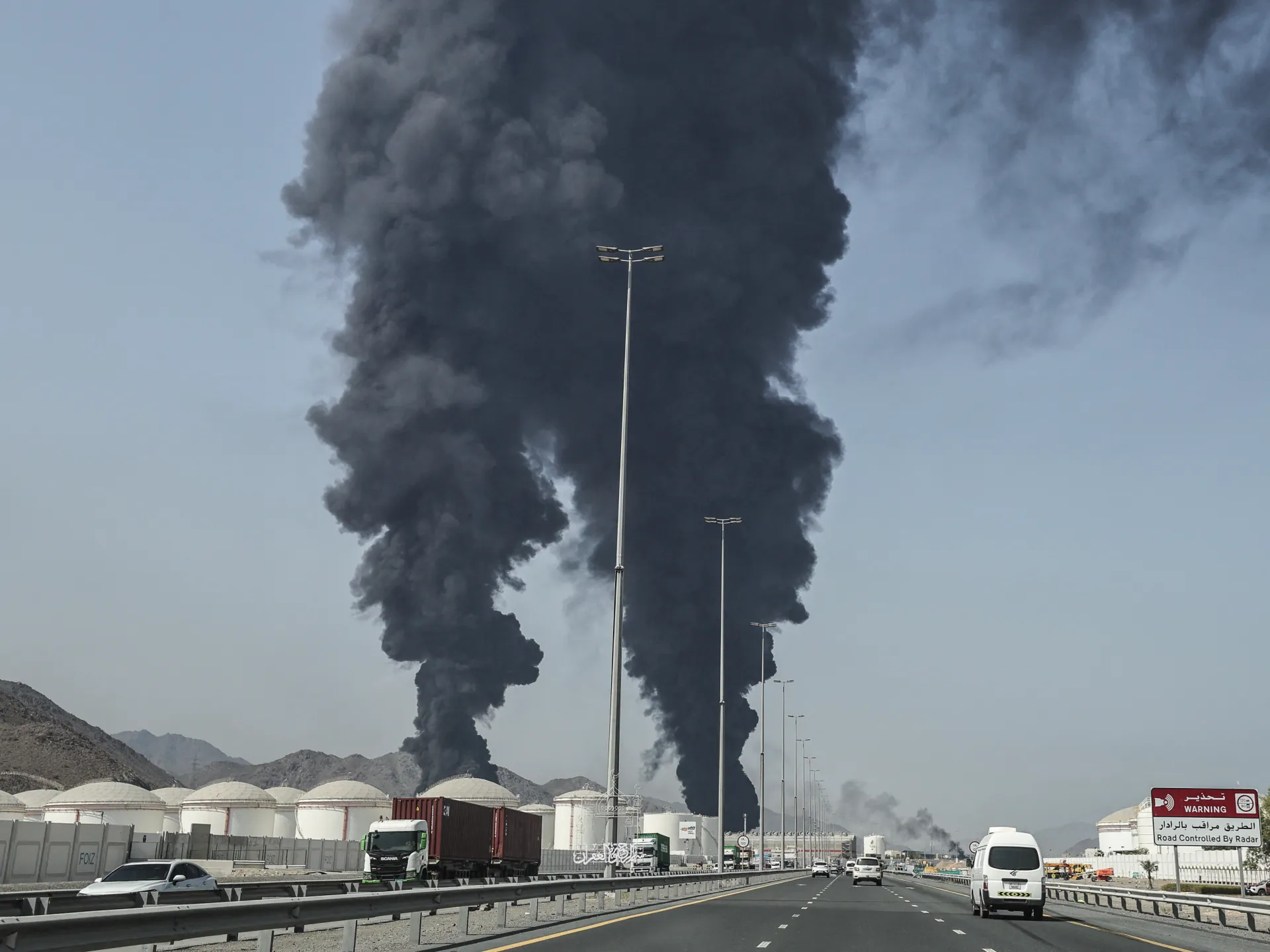
On Friday, Saudi Arabia intercepted multiple waves of Iranian drones and Kuwait Petroleum Corporation said its Mina al-Ahmadi refinery had been targeted by several early-morning drone attacks, leading to some units being shut down.

Gulf countries have repeatedly insisted that their defences are sufficient to repel these Iranian strikes. However, they also have military partnerships and agreements in place with other countries which could potentially provide more assistance as tensions escalate.

In this explainer, we look at what these partnerships are, how they are helping the Gulf and whether they could do more.

What military partnerships do the Gulf countries have?

The Gulf countries have a handful of military partnerships of different kinds.

Qatar

Qatar is home to the largest military base hosting US assets and troops in the region – Al Udeid.

The 24-hectare (60-acre) base, located in the desert outside the capital Doha, was established in 1996 and is the forward headquarters for US Central Command, which directs US military operations in a huge swath of regional territory stretching from Egypt in the west to Kazakhstan in the east.

It houses the Qatar Emiri Air Force, the US Air Force, the United Kingdom’s Royal Air Force, as well as other foreign forces.

Qatar is the second largest Foreign Military Sales (FMS) partner to the US after Saudi Arabia. FMS is the official, government‑run channel the US uses to sell weapons, equipment and services to other governments.

In January, the US State Department said that “recent and significant” sales to Qatar included the Patriot long-range missile system, the National Advanced Surface to Air Missile System, early warning systems, radars and attack helicopters.

On September 9, 2025, Israel struck a residential area of Qatar’s capital, Doha, targeting senior leaders of Hamas including negotiators for a ceasefire in Israel’s genocidal war in Gaza.

On September 29, US President Donald Trump signed an executive order reaffirming support for Qatar, saying: “The United States shall regard any armed attack on the territory, sovereignty, or critical infrastructure of the State of Qatar as a threat to the peace and security of the United States.”

On Wednesday, Israel struck Iran’s critical South Pars gasfield. Soon after, Iran retaliated, hitting a major gas facility at Qatar’s Ras Laffan plant.

In response, Trump wrote in a Truth Social post guaranteeing that Israel would not attack the South Pars field again unless Iran again “unwisely” attacked Qatar.

Trump added that, if it did, the US “with or without the help or consent of Israel, will massively blow up the entirety of the South Pars Gas Field at an amount of strength and power that Iran has never seen or witnessed before”.

There is also a Turkish military base in Qatar as the two countries collaborate via defence cooperation agreements and joint training.

In recent years, Qatar has also strengthened ties with the United Kingdom through joint training and exercises and with France from which it buys weapons.

Earlier this month, UK Prime Minister Keir Starmer said he would send four additional Typhoon fighter jets to Qatar to help with defence.

Despite initially stating that the UK would not permit the US to use UK bases for strikes on Iran, Starmer partially relented on March 1 when he granted a US request to use UK bases for “defensive” strikes on Iranian capabilities.

Nevertheless, Starmer has stated that the UK will not send its own assets or troops or otherwise become involved in the ongoing war.

Saudi Arabia

Saudi Arabia hosts US military assets and personnel at the Prince Sultan Air Base (PSAB), located near Al Kharj, southeast of Riyadh.

Saudi Arabia is also the largest Foreign Military Sales (FMS) partner of the US.

There is no formal mutual‑defence treaty between the US and Saudi Arabia, similar to NATO’s Article 5. Instead, there are defence cooperation agreements between Riyadh and Washington.

Pakistan and Saudi Arabia have had a decades-long security partnership. This was strengthened in September 2025, when the two countries signed a formal mutual defence pact.

The extent to which Pakistan, which shares a 900km (559-mile) border with Iran in its southwest, can and will intervene is unclear, however.

On March 3, Pakistan’s Deputy Prime Minister and Foreign Minister Ishaq Dar told a news conference he had personally reminded Iranian Foreign Minister Abbas Araghchi of Pakistan’s defence obligations to Saudi Arabia.

“We have a defence pact with Saudi Arabia, and the whole world knows about it,” Dar said. “I told the Iranian leadership to take care of our pact with Saudi Arabia.”

An estimated 1,500 to 2,000 Pakistani troops are stationed in Saudi Arabia.

United Arab Emirates

The UAE also hosts US assets and personnel at its Al-Dhafra airbase, including advanced aircraft such as F-22 Raptor stealth fighters and various surveillance planes, drones and airborne warning and control systems (AWACS).

On Thursday, the US announced an $8.4bn arms deal with the UAE, for the Gulf nation to buy drones, missiles, radar systems and F-16 aircraft.

Recently, the UAE has bolstered its military partnership with India. In January this year, the president of the UAE, Sheikh Mohamed bin Zayed Al Nahyan, visited India.

During this meeting, India and the UAE reaffirmed the India-UAE Comprehensive Strategic Partnership. Established in 2017, this is a bilateral agreement focused on defence cooperation, energy security and technology exchange.

The UAE and India do not have a mutual defence-style agreement in place, however.

Oman

The US has long-term access agreements for key air and naval facilities in Oman, notably the Port of Duqm and Port of Salalah, both of which have been subject to Iranian strikes over the past three weeks.

The UK and Oman also have a defence cooperation agreement and conduct regular joint exercises.

Pakistan and Oman also have military ties where they hold regular joint naval exercises.

However, there are no mutual defence commitments in place.

Bahrain

The US operates the Naval Support Activity (NSA) in Bahrain. Home to the US Navy’s Fifth Fleet, the base provides security to ships, aircraft, detachments and remote sites in the region.

Bahrain and the UK also have a comprehensive security pact. Earlier this month, Starmer held talks with King Hamad bin Isa Al Khalifa of Bahrain and confirmed that the UK would send aircraft to bolster Bahrain’s security.

Kuwait

Kuwait hosts Camp Arifjan, a major US Army installation that functions as the main logistics, supply and command hub for US military operations across the Middle East, especially within the US Central Command (CENTCOM) area of responsibility.

On Thursday, the US announced an $8bn arms deal with Kuwait – for air and missile defence radar systems.

In 2023, Kuwait signed an agreement on military cooperation with Pakistan, focusing on joint training and military exercises.

These are not mutual defence agreements, however.

What could these partners be doing to better assist Gulf countries?

Experts say military allies of Gulf nations could provide naval escorts to ships transiting the Strait of Hormuz. One-fifth of the world’s oil and gas supplies are shipped through this route in peacetime from Gulf producers.

On March 2, Ebrahim Jabari, a senior adviser to the commander-in-chief of Iran’s Islamic Revolutionary Guard Corps (IRGC), announced that the Strait of Hormuz – through which 20 percent of the world’s oil and gas is transported – was “closed”. This has contributed to the recent surge in oil prices, which have surpassed $100 a barrel, compared with the pre-war Brent crude price of about $65.

In recent days, countries have been individually scrambling to negotiate safe passage for ships with Iran. A handful of mainly Indian, Pakistani and Chinese-flagged ships have been able to get through as a result.

“Pakistan and India are working with Iran to ensure of safe passage of tankers for their markets,” David Roberts, a senior academic in international security and Middle East studies at Kings College London, told Al Jazeera.

Roberts said that theoretically, the countries could also offer a naval escort for their tankers and other tankers.

“As neutrals, this might be a plausible gambit, but would need the acquiescence of Iran. Support establishing a shipping channel from the monarchies to China, Pakistan, India is plausible with concerted pressure from the three states, but Iran will be reluctant to give up that pressure point.”

Roberts said that European countries on the other hand, are “stretched thinly” when it comes to offering any such military support in the Strait of Hormuz.

He suggested the UK could send “another plane or two” to Qatar to join their joint Typhoon squadron. However, he added that it is difficult to make predictions about what support is likely to be forthcoming.

“Gulf states clearly need support. But it’s not clear what can be offered by anyone,” Roberts said.

He added they likely need more munitions for missile defence but stocks are tight everywhere.

Source link