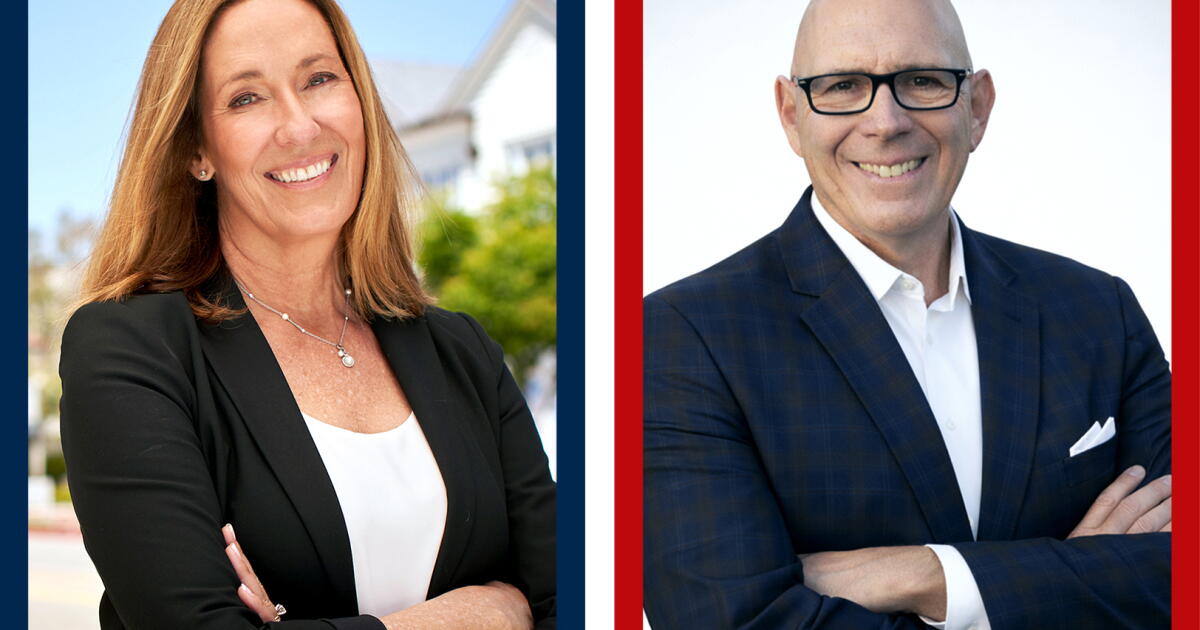
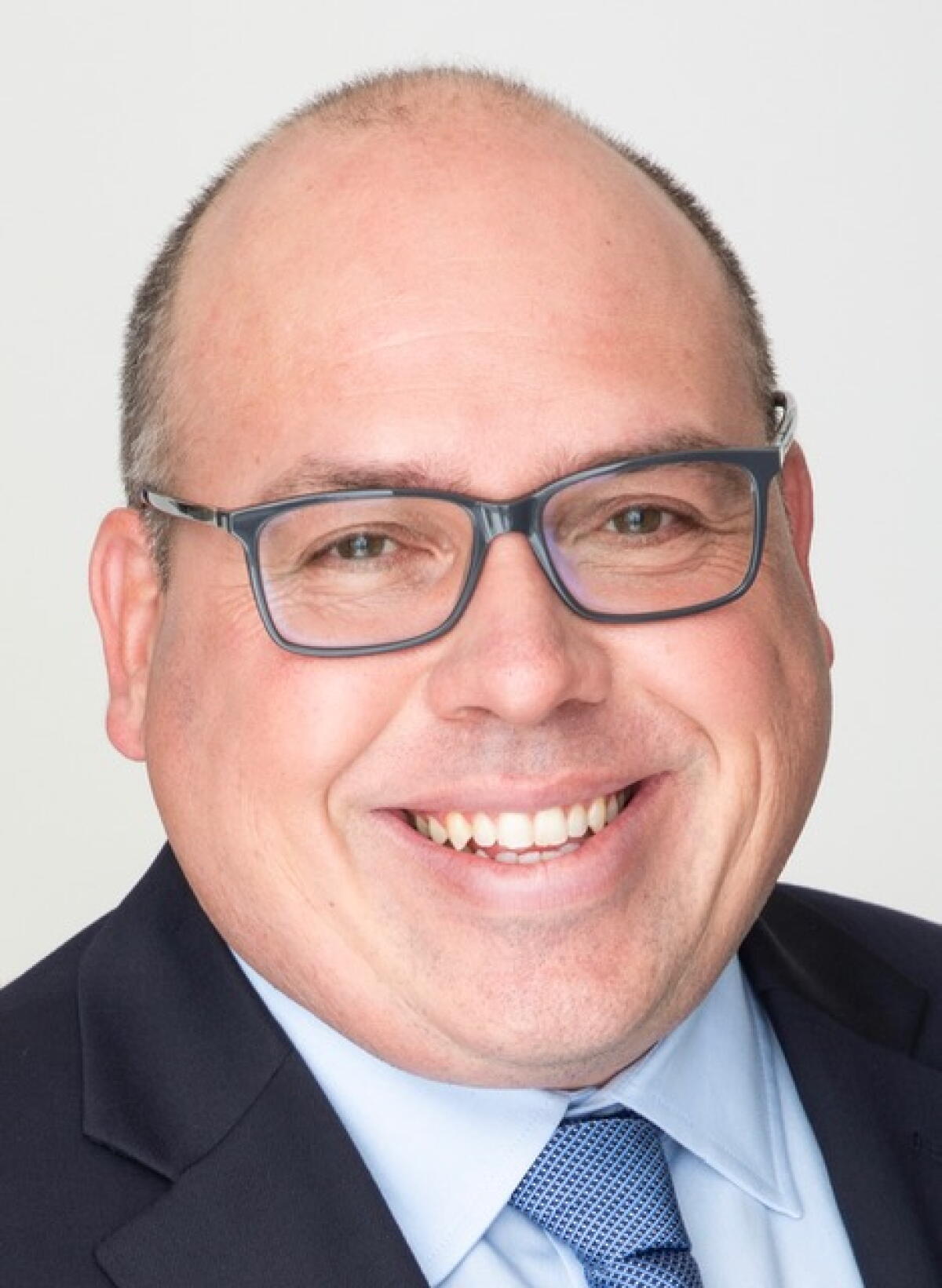
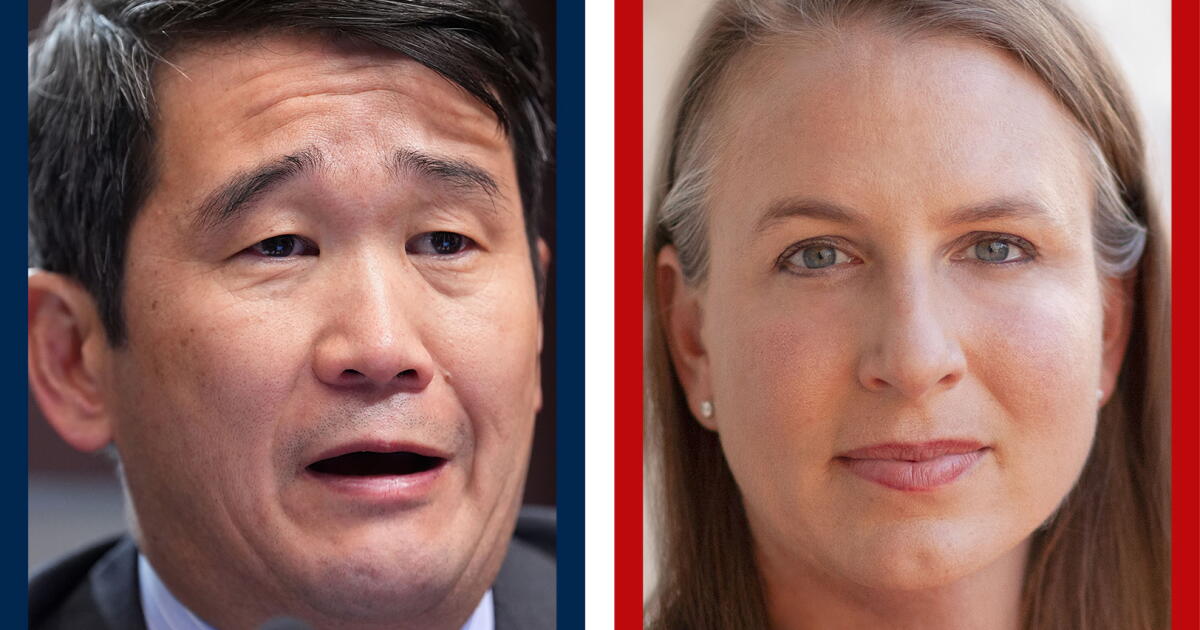
The amendment aims to clarify campaign finance rules for candidates running for a seat on the board of education, which overseas LAUSD and its approximately 350,000 students.
Repetitive language in the Los Angeles City Charter would be deleted and would make clear the same campaign finance rules apply to both mayoral candidates and board of education candidates, except in certain instances, the measure says.
Among those requirements are rules governing campaign contribution limits, filing deadlines, public disclosures and fundraising windows.
Justin Allen Clayton, L.A. County deputy public defender
Bar rating: Qualified
Clayton is a Los Angeles native who attended public schools, earned a bachelor’s degree in criminology and passed the bar in 2012. He joined the public defender’s office two years later and since 2023 has served as deputy in charge of the Inglewood branch.
Clayton describes himself as a “working supervisor” who conducts arraignments and represents clients at preliminary and other hearings. He has completed dozens of trials, including three with life sentences, according to his website.
The position involves overseeing and training attorneys, as well as law clerks and summer interns, on misdemeanor and felony case preparation and trial strategy.
Clayton said a priority is improving court efficiency through pretrial preparation and “firm but fair enforcement of deadlines.”
Time as a candidate, he said, has shown him the importance of effective communication within the court system in bridging language and cultural differences. He called that a guiding principle, particularly for clients who lack counsel.
“Sometimes, one additional question, or one additional statement, can make all the difference in resolving an issue,” he said.
Clayton said running a public defender branch office, which brings him in contact with judges, sheriffs, court clerks, interpreters and others, combined with 14 years as a trial attorney, gives him a “comprehensive understanding” of the courtroom.
“That combination of courtroom experience, leadership and daily interaction with the many people who make our justice system work has uniquely prepared me to serve as a Superior Court judge,” he said.
Anna Slotky Reitano, L.A. County deputy county counsel
Bar rating: Qualified
Reitano spent the early part of her career in criminal defense, contract law and other sectors. In 2014, she joined the L.A. County public defender’s office. A decade there included three years in juvenile court, where she primarily handled felony cases, and five years at the San Fernando Courthouse, where she represented indigent clients facing felony charges.
Reitano focused on mental health diversion and treatment, aiming to support rehabilitation when possible. Having a brother with schizophrenia and witnessing how families navigate the legal system when dealing with mental illness has informed her approach.
“This has given me a deeper understanding of both the challenges individuals and families face and the ways in which the system can fall short in addressing those needs,” she said.
This is not her first bid for office. She lost a campaign for a judgeship in 2022 and two years later assumed her position in the county counsel’s justice and safety division, where she supervises litigation and advises county departments.
Reitano, a former child actor, volunteers with local schools and, according to her website, mentors “future lawyers” through moot court competitions.
Campaigning, Reitano said, has shown her that constituents, no matter how different, uniformly want “a judge who is experienced, prepared, fair and willing to listen.”
“My experience across criminal, juvenile, civil, administrative and government law has uniquely prepared me to serve wherever the court needs me,” she said.
The state Legislature was tasked with developing a better recall system after Gov. Gavin Newsom faced a gubernatorial challenge in 2021, costing state and local governments more than $200 million.
Newsom defeated the recall attempt after nearly 62% voted to keep him in office. Had he been ousted, conservative talk radio host Larry Elder was the leading candidate to replace him with less than 49% of the vote.
Former state Sen. Josh Newman, who was recalled in 2018 and later reelected to office, co-authored the measure that made it to the ballot. He believes that the elimination of a second simultaneous vote for a replacement removes “the political incentive for gamesmanship around recalls.”
“My solution is really simple: It’s to eliminate that second question and maintain the recall as a valid, powerful tool of accountability,” he said.
It’s not uncommon for someone to get appointed to fill an official’s term if they leave office before their time is up. Newman said that slotting the lieutenant governor into the role of governor in the event of a recall would follow a precedent.
The lieutenant governor currently serves as acting governor when the governor leaves the state.
The measure is backed by four of the five supervisors. During the February meeting, Horvath, who authored the initial motion, said that binding arbitration would promote transparency and push the sides to reach a deal. She said that 21 California jurisdictions, including Sacramento and San Francisco counties, have implemented binding arbitration.
Supervisor Hilda Solis called this “another tool in the toolbox.”
A battery of labor unions representing county workers are on board, including the International Assn. of Firefighters Local 1014, the Assn. for Los Angeles Deputy Sheriffs and the Los Angeles County Lifeguard Assn.
Dave Gillotte, president of IAFF Local 1014, which represents more than 3,000 L.A. County Fire Department employees, said contract negotiations with the county generally are intense and lengthy. He said the goal is never having to resort to binding arbitration, but that if required, this would allow a “neutral third party” to make the final decision.
“Binding arbitration really brings about leverage to move both parties to work hard to get a contract done, where we don’t have that now,” Gillotte told the Times.
Sign up for the L.A. Times California Politics newsletter
Deeply reported insights into legislation, politics and policy from Sacramento, Washington and beyond. In your inbox twice per week.
By continuing, you agree to our Terms of Service, which include arbitration and a class action waiver. You agree that we and our third-party vendors may collect and use your information, including through cookies, pixels and similar technologies, for the purposes set forth in our Privacy Policy such as personalizing your experience and ads.
Democratic State Assemblymember Jacqui Irwin is facing off against Republican candidate and nonprofit leader Samuel Gallucci in the race for California’s 26th Congressional District.
They are seeking to claim the open seat created by the retirement of Rep. Julia Brownley, who has represented the region for the last 12 years. The district stretches from the the Pacific Ocean through the foothills of the Santa Monica mountains, encompassing most of Ventura County and the L.A. County communities of Calabasas and Agoura Hills. It includes the communities of Oxnard, Thousand Oaks, Simi Valley, Ventura and Camarillo as well as wide swaths of vineyards and agricultural land.
As with most Californians, the rising cost of living and especially the price of housing are major concerns for constituents. Many communities sit at the wildland-urban interface, making wildfire prevention and response another essential issue. The district is home to a significant immigrant community in agricultural areas such as Oxnard and Camarillo, which have been the site of Immigration and Customs Enforcement raids and protests.
Steven Veres, 46, is vying to maintain his seat on the Los Angeles Community College District Board of Trustees.
(Courtesy of Steven Veres)
Name: Steven F. Veres
Age: 50
Website: www.steveveres.com
Occupation that appears on the ballot: Los Angeles Community College District, member of the board of trustees
Experience: Veres cited his role as trustee and previous work as a teacher as key experience for another four-year term. Veres also has worked as a state politics adviser, including for Sen. María Elena Durazo. As trustee, he said his work has included strengthening job training programs, improving graduation rates and addressing basic student needs.
“Successful colleges depend on students, faculty, and staff having a meaningful voice in decisions” while the board should “listen, set clear priorities, protect public resources, and give our colleges the support necessary to help students succeed,” he said.
District challenges: The district’s greatest challenge is helping students finish their education, given how many are forced to juggle school with “jobs, housing costs, food insecurity, transportation, and family responsibilities … We need to remove those barriers while making the academic experience easier to navigate,” he said.
Priorities: “First, make college truly affordable. Tuition is only part of the cost. Housing, food, transportation, textbooks and childcare can determine whether a student stays enrolled.
“Second, improve completion and transfer rates. Students deserve clear academic pathways, accessible counseling and course schedules that allow them to earn a degree, certificate or transfer without unnecessary delays. Third, connect education to careers. I want to dramatically expand paid internships, apprenticeships and partnerships with employers and organized labor.
“These priorities reinforce each other: Students are more likely to finish when college is affordable, the path to completion is clear, and they can see the economic value of their education.”
Budget: “Our first responsibility is to use taxpayer dollars efficiently while protecting instruction and student services,” he said. In addition, Veres said that because state funding is based on enrollment, boosting it can be a path to financial stability, along with eliminating unnecessary, duplicative spending across the nine colleges and investing in energy efficiency to cut costs.
“Fiscal responsibility is not simply cutting spending,” he said. “It means directing limited resources toward what produces the greatest value for students and taxpayers.”
Student success: Veres would address barriers to student success and enrollment by pushing to make the application process easier and providing more flexible class schedules — including more evening, weekend, online and hybrid options — for working adults, parents and others. “Our job should not end when a student enrolls. It ends when that student reaches their educational goal,” he said.
Robert Payne is running for Los Angeles Community College Board of Trustees Seat 2.
Occupation that appears on the ballot: researcher/writer/environmentalist
Experience: Payne said he has taught at L.A. Mission College. His education at L.A. Valley College and Cal State Northridge helped prepare him for a career as a writer. He said he has worked on movie crews and ran an import business, among other jobs. Growing up in Pacoima helped him understand the needs of immigrants and “those of diverse backgrounds with limited resources.”
“I went through the [community college] system,” he said. “I know the difficulties. All my ideas come from my direct experience.”
District challenges: Payne cited low enrollment growth as the main challenge. Students also need to see a quicker return on their investment. “Life costs money,” he said. “If students could see immediate advantages to college, the colleges would attract more enrollments.”
He reflected on his own experience when discussing the importance of a quick payback. “I graduated from Cal State Northridge. Nothing I learned at L.A. Valley or Cal State paid off immediately,” he said. “I worked as a janitor, security guard, construction site cleaner. I lucked into a union tech job and I earned my way through graduate school. Years later, the master’s degree finally helped me get work as a ‘professor.’ ”
Priorities: Payne wants to make community colleges “cheaper, faster, better” in part by offering students more training for specific jobs and less expensive online textbooks. He also would support ending student debt.
Budget: He does not support cutting “student opportunities” and said if “the colleges can demonstrate success for the students, enrollment will justify the expense of maintaining the expense of the faculty, the staff, the facilities.”
Student success: Payne wants college to do more to offer “immediate perceived value,” including teaching résumé building, interview skills and how to apply to jobs. He said hiring adjuncts with industry experience could enhance student success.
Kristina Irwin is running for Los Angeles Community College Board of Trustees Seat 6.
Occupation that appears on the ballot: parent/business owner.
Experience: As a former community college student, Irwin has firsthand knowledge of the L.A. community college student experience.
She serves on the general advisory board at Santa Monica College and said she also served on the board of trustees at her children’s school, Palisades Charter High School, during the Palisades fire. She said she holds a Public Engagement & Civic Leadership Certificate from the Davenport Institute at Pepperdine School of Public Policy.
District challenges: Irwin said the main challenge is preparing young people to advance in college when their earlier schooling failed to give them the tools to succeed.
Priorities: Irwin wants to establish “preentry” programs in every local high school that would prepare students for community college and do more to give educators the resources they need to craft classes that “fit the needs and life limitations of the students.”
Budget: Irwin said alternative streams could be identified to fund “classroom student resources.” She said that as “responsible stewards” of district resources, trustee actions “are often under scrutiny either formally or informally.”
Student success: Irwin wants to address barriers to student success and enrollment by doing more to demonstrate how a community college education can give them the tools necessary to succeed in their chosen career.
Name: Roy Payan
Payan told the Times he suspended his campaign.
Adriana Cabrera is running for Los Angeles Community College Board of Trustees Seat 2.
Experience: Cabrera said she attended community college and went on to earn bachelor’s degrees in Chicana/o studies and political science and a master’s in education from Cal State Northridge. She said she also served as president of the Central Alameda Neighborhood Council and co-founded Empowering Youth in South Central, a “grassroots collective of students and educators” that “has supported thousands of first-generation students with college, career, financial-aid, and leadership support.”
“I am not coming into this role to learn higher education after I am elected,” she said. “I have studied it, worked in it, navigated it as a student, built programs within it, worked inside public institutions, and organized communities around it.”
District challenges: Cabrera said student services are too difficult to navigate, too many students struggle to afford basic needs such as housing, and clearer pathways are needed to economic mobility, She said budget decisions also can feel “disconnected” from the staff and students those decisions effect.
Priorities: “My first priority is invest in students first,” she said. Cabrera would do that by making student services easier to navigate and strengthening financial aid and other support, including for food, housing, child care and mental health.
Secondly, Cabrera wants to better connect education to economic mobility through good paying jobs. Lastly, Cabrera would give students, faculty, staff, labor organizations and community members “a meaningful voice before major budget priorities are finalized.”
Budget: Cabrera would review the district’s spending “to make sure existing dollars are being used efficiently” and “identify responsible ways to generate additional revenue without shifting costs onto students.” For instance, renting out underutilized facilities.
Student success: Cabrera would take steps to ensure student services are more readily available and the public has better visibility and say in trustee decisions. “The overall standard I would bring to the board is simple,” she said. “Can students enter LACCD, understand their options, find the support they need, complete their goal, and leave with more opportunity than when they arrived?”
California’s general election takes place on November 3. Here is information Times reporters gathered about the races:
L.A. mayor election
L.A. City Council elections
Other L.A. city elections
Community college elections
L.A. County elections
Judge elections
Governor’s race
California statewide propositions
Other statewide races
U.S. House elections
How to vote
Sign up for the L.A. Times California Politics newsletter
Deeply reported insights into legislation, politics and policy from Sacramento, Washington and beyond. In your inbox twice per week.
By continuing, you agree to our Terms of Service, which include arbitration and a class action waiver. You agree that we and our third-party vendors may collect and use your information, including through cookies, pixels and similar technologies, for the purposes set forth in our Privacy Policy such as personalizing your experience and ads.
Get the lowdown on L.A. politics
Sign up for our L.A. City Hall newsletter to get weekly insights, scoops and analysis.
By continuing, you agree to our Terms of Service, which include arbitration and a class action waiver. You agree that we and our third-party vendors may collect and use your information, including through cookies, pixels and similar technologies, for the purposes set forth in our Privacy Policy such as personalizing your experience and ads.
Last year, Kim was one of the sponsors of the Community Investment and Prosperity Act, a proposed law that later was encompassed in another piece of legislation that expanded banks’ ability to invest in communities in a way that promotes economic development and the public good. The law allows national and state member banks to invest up to 20% of their capital and surplus in affordable housing, small business lending and community revitalization.
“Families across California have felt the effects of rising costs for years. From delivering meaningful tax relief to supporting commonsense housing and energy reforms, I remain committed to fighting for opportunity and economic security that put Californians first,” Kim said in a press release issued by Americans for Prosperity in May.
Calvert sees affordability as the biggest challenge facing families and blames Sacramento for the rising costs and “driving businesses out of the state.” He points to his vote in support of the One Big Beautiful Bill Act, which maintained many of the tax cuts in the Tax Cuts and Jobs Act of 2017 and raised the State And Local Tax (SALT) deduction cap.
“My priority is fighting to lower everyday costs, help families keep more of what they earn and supporting policies that fuel economic growth, which in turn provides higher wages and more opportunities for California families and workers,” he said.
The largest chunk of this money — $7.2 billion — would be doled out as loans to builders who agree to rent some of the homes to low-income families; in Los Angeles County, a family of four earning about $133,000 a year qualifies as low-income.
Researchers recently found that the construction of nearly 40,000 low-income homes was in limbo because of a lack of funding.
The second-largest portion of these funds — $1.25 billion — would be set aside for housing for veterans, in the form of homeownership loans. Voters last approved this type of statewide bond for veteran home loans in 2018.
According to the Legislative Analyst’s Office, the remaining dollars would be spread across several other initiatives and could subsidize up to 40,000 rental apartments, 2,500 homes for farmworkers and 1,200 beds for university students:
$1.1 billion to help low- and middle-income families buy homes through direct loans and funds to nonprofits
$500 million for infrastructure related to new housing, such as road and water repairs
$450 million in loans or grants to build or upkeep affordable housing for farmworkers
$350 million to build affordable housing for students, split evenly among the University of California and California State University
$200 million available for tribal members to use to build or repair housing
$200 million available to city and county governments and other entities hoping to pilot programs to build low-cost housing
Arguably the biggest change is to Area Planning Commissions, a group of seven volunteer-led boards that hear cases from homeowners, developers and businesses and make rulings on liquor licenses, hillside developments and more.
The amendment would consolidate those seven commissions into a single unified Neighborhood Appeals Commission.
The goal is efficiency. State laws passed in recent years have changed the appeals process, leading to lower caseloads for the seven boards. It’s also a financial drain on the city to train and take on so many volunteer commissioners while also paying overtime for staffers to host evening meetings for seven bodies — think audio-visual specialists, tech support, etc.
Under the amendment, the total number of commissioners would shrink from 35 to as few as seven, and the staff required to host meetings also would shrink significantly.
A unified board would eliminate the risk of commissions issuing different rulings. Picture a developer trying to build a hillside home; a commission that’s wary of such projects could reject it, while another commission that leans more pro-housing could approve it. Having a single board means that all appeals and applications would be governed by the same logic.
Pave the way for super-skyscrapers
Could an L.A. skyscraper rise higher than those in New York City or Chicago? Could downtown L.A. claim not just the tallest building west of the Mississippi River but also in the entire country?
If so, it would start here.
This amendment allows the City Council to change the existing floor area ratio (FAR) restrictions, which cap the height of certain buildings. FAR ratios vary by neighborhood and height districts, but the highest ratio is currently 13x, meaning a building’s total square footage never can be more than 13 times the size of the parcel of land that it sits on. For reference, L.A.’s tallest building, the Wilshire Grand Center, has a ratio of roughly 10.5, depending on how you calculate the square footage and acreage.
These limits were set in the 1950s, when L.A.’s population was roughly half of what it is now. This amendment would give City Council the flexibility to set higher limits to add density in order to adapt to a growing population.
Individual projects still would require zoning reviews, so no need to worry about skyscrapers coming to Silver Lake.
Set deadlines
You just opened a taco shop and you want to serve margaritas. The City Council said it’s fine, but you’re waiting to hear back from the City Planning Commission. They’re taking too long, and your patrons are drinking water while you wait for a liquor license.
Under current rules, decisions from either the City Council or Planning Department can get kicked back and forth indefinitely. This amendment sets deadlines for both sides to speed up rulings: Planning boards have 30 days to concur or dissent with City Council decisions, and City Council gets 21 days to hold a final vote on Planning decisions — or else the Planning decision becomes final.
Ensure passed amendments actually pass
Here’s how it would work. Say there’s an amendment to the city’s General Plan, which guides land use decisions, or a tweak to one of the neighborhood community plans that oversee development in areas like Hollywood or Boyle Heights. The mayor has signed off on it. The City Planning Commission approves too. But the City Council just hasn’t quite gotten to it yet.
Under current rules, if the City Council doesn’t vote on an amendment within 75 days of the mayor and Planning Commission approvals, it’s automatically denied. This amendment reverses that; if the City Council doesn’t get to an amendment within 75 days, it’s automatically approved.
McKinney has been endorsed by Hochman, the union that represents rank-and-file L.A. police officers and City Councilmembers Traci Park, John Lee, Tim McOsker and Monica Rodriguez. While McKinney has raised half a million dollars, independent expenditures have spent more than $3 million to support the veteran prosecutor.
More than $2 million of those funds have come from a political action committee run by Airbnb. The rental giant was sued by Feldstein Soto for price gouging after the destructive Palisades fire, but McKinney has dismissed criticism that he’s receiving massive financial support from a corporation that if elected, he’d be involved in litigation against.
“Airbnb is going to benefit from a safer L.A., because it’s going to boost tourism to the extent that they have properties and interests here,” he told The Times in May. “When they look at the current city attorney and they look at Marissa Roy, maybe they decided this guy is going to do a better job.”
Roy has the support of the L.A. County Democratic Party, the Democratic Socialists of America’s Los Angeles chapter, California Atty. Gen. Rob Bonta, U.S. Sen. Bernie Sanders (I-Vt.), City Councilmembers Ysabel Jurado and Eunisses Hernandez, L.A. City Controller Kenneth Mejia, L.A. County Supervisors Hilda Solis and Lindsay Horvath, the city attorneys of San Francisco and San Diego, the L.A. County Federation of Labor and a host of other labor unions and Democratic groups.
Mayor Karen Bass endorsed Feldstein Soto in the primary. She has yet to weigh in on the runoff.
Former Long Beach Police chief Robert Luna came out of retirement to run for sheriff in 2022, promising to turn around a department that had veered off course.
As someone who didn’t have the wide name recognition or countywide political experience of some of his challengers, Luna’s second-place finish to Villanueva in the primary was far from guaranteed, but he ultimately cleared the rest of the field by a wide margin.
Fast-forward four years to June, and Luna received 44.2% of the vote in this primary — less than six points short of winning the race outright — versus Villanueva’s 21.7%. And Luna’s been a more effective fundraiser, bringing in $366,000 since Jan. 1, more than three times the nearly $109,000 Villanueva had raised by June 30, according to their most recent campaign filings. Luna had $352,000 in the war chest as of June 30, and Villanueva had about $56,000.
But Villanueva has wide name recognition in L.A. County. And he pulled off a historic political upset of his own in 2018 when he beat Sheriff Jim McDonnell, who is now the Los Angeles police chief. It was the first time an incumbent L.A. County sheriff lost a reelection campaign in more than a century. It was also the first time in 100 years that a Democrat had been elected to the nonpartisan sheriff’s job.
After running on a progressive platform and pitching himself as a criminal justice reformer, Villanueva tacked hard to the right. Within two years he was a favorite of conservative media, including Fox News, where he appeared repeatedly to vilify “woke” culture and criticize Democrats. He ultimately switched his party registration to Republican in a move that solidified a new base of law-and-order supporters while alienating many who supported him in 2018.
Villanueva’s tenure was marked by controversy and scandal. He launched, then walked back a criminal leak investigation of a Los Angeles Times reporter and was ordered to testify after sheriff’s deputies took and shared pictures at the site of Kobe Bryant’s helicopter crash. Villanueva defied subpoenas over so-called deputy gangs.
Now, Luna is the one defending his record as sheriff over the last four years. He’s presided over declines in homicides and violent crime and established a period of relative calm after the stormy Villanueva years. But Luna’s department has come under scrutiny in the wake of a July 2025 incident in which a grenade exploded accidentally in a department parking lot, killing three deputies. The state has fined the department more than $350,000 after identifying a series of safety violations leading up to the blast.
And the Civilian Oversight Commission filed suit against the department in June for declining to provide certain records related to three cases of use of force the commission issued subpoenas for in February 2025. Luna has said the county’s attorneys maintain that the unredacted records can’t be released until it completes a “meet and confer” process with the Sheriff’s Department union, a claim that watchdogs have disputed.
Min said Trump’s attacks on voting by mail and his attempts to get the U.S. Postal Service to refuse to deliver mail-in ballots, combined with his attempts in 2020 to overturn the election, “should worry every American who cares about our country, our Constitution, and the values of our nation.”
In 2024, Min authored a bill which passed that prohibits local governments from forcing voters to present identification before they cast a ballot at a polling place.
“I will continue to do all I can to stand up against these anti-democratic and un-American attacks on the sanctity of our elections,” Min said.
Le Roux told The Times she supports the Safeguard American Voter Eligibility or SAVE America Act, which would require voters to provide documents proving their citizenship at the time of registration and a photo ID at the time they vote.
In California, people are required to provide a driver’s license number or a portion of their social security number when they register to vote.
“Millions of ballots are mailed out in California with very few safeguards and at significant cost, leading to weeks of uncertainty as the rest of the country laughs and mocks us for our incompetence,” she said.
Le Roux also supports Proposition 39, which will appear on the November ballot in California, and would require voters to show government issued identification at the polls. Voters who submit mail-in ballots would need to provide the last four digits of a government ID to vote.
Proponents of the measure say Los Angeles is falling short in providing basic services, including street and sidewalk maintenance, upkeep of streetlights and trees and other services administered by the Department of Public Works.
The measure is intended to streamline public works decision-making to improve city services and add new sources of revenue by leveraging existing resources such as underutilized city land.
Measure LA’s perhaps most controversial element is the proposal to increase the power of the director of public works while reducing the sway of the Board of Public Works or potentially eliminating it.
The director would be able to manage public works projects, including construction, buying or leasing property, exercising eminent domain with City Council approval, granting street permits, regulating parking and recommending budgets for the department.
An opponent of the measure, Rodriguez said the Board of Public Works was established to provide independent review of city contracting, with commissioners’ decisions made in public meetings.
“Removing this important check and balance would reduce public scrutiny and weaken accountability over billions of taxpayer dollars for public projects,” Rodriguez said in her ballot argument against the measure.
Commissioners are appointed by the mayor. They work full-time on the board for five-year terms administering the Public Works Department while assisted by several bureau heads and the director of public works.
Proponents of the measure say the current system of overseeing public works is ineffective because responsibility is spread among multiple officials, commissions, agencies and bureaus.
“Angelenos see the results in crumbling streets, buckled sidewalks and streetlights that stay dark,” proponents said in their ballot argument.
Another key element of the measure is establishing a two-year budget cycle for the city, which currently adopts its budget annually. Under Measure LA, the mayor would be required to submit a proposed two-year budget to the City Council by April 1. A two-year budget would enhance planning for infrastructure improvements under another new requirement that the city adopt a Capital Infrastructure Plan.
Most major U.S. cities rely on multiyear capital improvement plans to schedule spending on roads, bridges, parks and buildings.
A long-term infrastructure plan administered with two-year budgeting “sets clear priorities, identifies the projects that need to get done, and plans how to fund them over time,” proponents said.
Currently, the charter prohibits the city from mortgaging city-owned property and prevents it from operating purely commercial or industrial businesses. The measure would remove these restrictions to raise new revenue.
Easing restrictions on operating a business also would allow the city to use its intellectual property to sell merchandise with city logos, as is done in other cities including New York, Yaroslavsky said.
Ugarte, who once collected signatures for Measure ULA, also known as the “mansion tax,” says it’s not working as intended and is keeping developers away from the city. The measure levies a tax on property sales above $5.3 million and funnels the money to affordable housing programs and homeless prevention.
“If developers are running away from the city of L.A., we gotta know why. We gotta go back to the drawing board. We gotta accept when we make mistakes, including myself,” Ugarte said.
He supports amending the measure to exempt affordable housing developers. He also wants to raise the threshold for properties subject to the tax to $10 million, to account for the increasing costs of construction.
Ugarte supports State Bill 79, a law mandating that cities increase housing density around public transportation hubs. But more transportation, Ugarte said, needs to come before more housing.
Making L.A. more transit-friendly will lower costs for housing, insurance and parking, Ugarte said, giving residents relief from the city’s high cost of living.
Mazariegos said homeless prevention starts with enforcing a “huge list” of the city’s tenant rights laws, including rent control and prohibitions against landlords harassing tenants.
Building affordable housing, along with enforcing those laws, will keep more people housed, he said.
Mazariegos wants to use public land to build social housing, which is publicly subsidized housing separate from the rental market.
He also would push to extend the travel industry’s upcoming $30 minimum wage to all workers and to tie the minimum wage to the consumer price index.
“A combination of those things will reduce and stop the bleeding of folks going into the street, going homeless, and will start giving us a chance as a city to work our way out of this crisis,” Mazariegos said.
It’s relatively easy to find USC and UCLA fans in Southern California, but where can proud Georgia, Michigan, Florida or Alabama fans go to watch games in the Los Angeles area with like-minded sports expats?
Look no further than the Los Angeles Times’ ultimate SoCal college football sports bar guide.
If you’re an alum or fan of teams from the Power Four conferences — the ACC and ally Notre Dame, Big Ten, Big 12 and SEC — this guide will lead you to your tribe. No longer will you be the only person cheering and clapping at the bar when Oklahoma scores a touchdown or walk into a bar wearing Michigan blue and only seeing others decked out in Ohio State gear.
Find your home away from home on game day.
Scroll down or filter through location to find where fan bases for most Power 4 schools hang out during the game.
Normally we stay around Plaka, so Anana is the coffee shop I go to most often. There’s also Behold The Man in Exarchia, which is one of the coolest coffee shops I’ve been to. Exarchia has a really rebellious, anti-establishment feel and this place completely fits that – it has great music, great coffee and it’s just very cool. I don’t think there’s a coffee shop in London that’s quite like it. DC
‘Casual and low-key’: Anäna Cafe, Plaka, Athens.
My favourite is also Anana; It’s casual and low-key, with somewhere to sit down and relax. I’ll have a freddo espresso (espresso shaken over ice), which is basically the Greek national coffee now. NM
For pastries, Akra is one of the best places in Athens. The food itself is rustic, simple and delicious, and the pastries are unbelievably technical. There’s something almost incongruous about it – you eat very simple savoury food and then a dessert arrives that’s incredibly elaborate. It shouldn’t necessarily work, but it does. DC
Roll up! No Crumbs bakery.
No Crumbs opened this year and I’ve already been a few times. It’s a little outside the centre, but it’s where I’d go for breakfast or something to eat on the move. In central Athens, I also like Fillo, which specialises in traditional pies from around Greece. Last time I went, they had three different spanakopitas from three different regions. NM
Breakfast
I don’t really do breakfast in Athens. We’ll normally get coffee, then at about 11am go to Diporto, which is usually our first proper stop. It’s this incredible, old, rundown restaurant near the market: cash only, orders taken with a pen, massive wine barrels in the room, no choice of wine. They just put wine and water on the table. The food is incredibly simple: chickpeas, beans, vegetables cooked down slowly, sometimes grilled sardines or fish from the market. You could recreate a Greek taverna in London, but you could never recreate Diporto. There’s such magic in it. DC
If I want to start the day properly, I go to Ipiros inside the meat market, at about 10.30am. It’s not really breakfast; it’s a proper meal. They serve slow-cooked dishes in huge pots and we usually get the tripe soup, which is good for a hangover, with loads of bread. Then we walk around the corner to Diporto and have the opposite: braised beans, chickpeas, salad and, whatever time it is, wine. NM
Traditional tavernas
Whenever we fly into Athens, we try to go straight to Taverna To Trigono in Kalyvia, out by the airport. It’s as magic as a taverna gets. One side of the menu is salads, tzatziki, cheeses and breads; the other is grilled meat such as sausage, spit-roast lamb, offal, lamb chops, sheep chops. Everything is cooked to order and served with incredible abundance and generosity. It’s very simple: good produce, salt, oregano and lemon; nothing is over-embellished. I wouldn’t go to Athens without going there. DC
Chop-chop! Manári restaurant, Athens.
Manári is a proper meat chop house in central Athens. It’s relatively new, but it feels as traditional as possible, and you don’t need to travel into the mountains outside the city to find meat that good. I order the lamb chops, pasta with meat juices and tomato salad. The lamb chops are as good as – if not better than – a good dry-aged steak. Another favourite is Tavern Spanos in Kato Patisia, for lamb chops and meats cooked slowly on the spit. Once they run out, they run out. NM
New-wave restaurants
Linou Soumpasis & Sia is probably the most forward-thinking restaurant in Athens right now, and probably one of the best in Greece. It takes quite humble, seafood-led food and gives it a fine edge without losing its simplicity. The room is incredibly simple and every detail is really considered. Last time I went, they served a version of kakavia, the traditional fish soup, which was essentially a beautiful fish and vegetable broth with olive oil. Something that simple, done that well, is incredible. DC
‘Restrained and modern’: Linou Soumpasis and Sia restaurant, Athens.
Linou is one of my go-tos, too. It reminds me a bit of Lyle’s meets Brat. It has a restrained approach to food that still feels very modern. I’d also go to Pharaoh, particularly for the vegetables and whatever they’re doing with fermented wheat, and Ateno, which we went to twice in two days on my last trip. Get the Greek salad, stuffed vegetables and fries with mushrooms and eggs. I also really like Ex Machina: their saganaki is fried cheese but served cold, and I always want to see what [the chef] Adam Kodovas is doing with the seafood broth because the dish changes every few months, while the formula remains the same. I go to Akra for lunch because they serve smaller portions and I can order as many dishes as possible. NM
Seafood
Travolta is banging; it’s old-school and a bit like Bentley’s in London. You get huge plates of crudo and whole fish, and they have an amazing prawn and squid skewer with squid ink and olive oil that they mix at the table. It can get expensive (fish is incredibly expensive in Greece), but if you’re really into seafood it’s very cool. Phita is another good seafood place, a little further out. DC
Travolta would be my choice for more classic seafood, too. If you want something more elevated, I’d go to Iodio near Kolonaki. There’s one dish I’ll always remember, which is raw fish served cold with a crisp sheet of rice paper on top and a warm avgolemono sauce – a classic Greek sauce made with egg and lemon. You grab everything together in one bite and it’s great. NM
Cheap eats
For souvlaki, the best is often at little roadside or market stalls. Last time we were in Exarchia, we found a tiny souvlaki stall mainly serving the market vendors. For souvla, the bigger rotisserie-style meats, we go to Psitopoleio Peloponnhsos. They serve huge pieces of meat, lamb heads; all sorts of pretty gnarly stuff cooking on the rotisserie. DC
Gyros are a dangerous subject for Greeks because everyone has their favourite. Achilleas in Neos Kosmos is one of the few places that still makes their own [meat rotisserie] (rather than buying it ready-made). In the centre, I really like Hoocut. They aren’t technically gyros because they slice the meat raw, cook it and then chop it again into small strips, but the mentality is similar. For a late-night version, go to Mandraki in Kaisariani. They’re open until about 2am and cook meat on spits late into the night. Their gyros are huge and often sell out. It’s cheap, traditional and the sort of thing people actually eat every day. NM
Wine and cocktails
Wine is Fine is really good for a pre-dinner drink, and I also love Epta Martyres, from the people behind Loggia [on Sifnos]; I’d been to both loads of times before I even realised they were connected. In Greece, I tend to want wines that are light and bright. Assyrtiko is the obvious one; in that climate you want something really zippy. DC
Baba Au Rum, Athens.
Pharaoh has a great wine list, and Tanini Agapi Mou is an amazing wine bar. A Greek grape I discovered this year is Vidiano. Vidiano can lean quite dry but still feels really pleasant and crisp; depending on where it’s grown, the fruit and minerality change a lot. It’s easygoing but complex at the same time. NM
Line Athens is quite molecular and it’s the kind of place you stay for the night. The cocktails are some of the best I’ve ever had in my life, let alone Athens. Baba au Rum is right in the mix, too. There’s also Rumble in the Jungle behind The Bar in Front of the Bar. The first is a bar where you walk in and think, “This is cool,” then go through another door into the second, even cooler bar hidden behind it. It’s very Athens. DC
You have to mention Line and The Bar in Front of the Bar. At Bar in Front, they’re trying to be as zero waste as possible, and you basically order through a window in a wall and sit drinking in the street. I choose what to drink according to the weather – last time I had a frozen martini that was almost like a slushie. At Line, the Paloma is usually my go-to, although on my last two visits I had one of their punches, which changes regularly. NM
We always go to Athens’ central fish and meat markets. I particularly recommend being in Athens on a Saturday because that’s when you find all these farmers’ markets around the city. Some of my best times in Athens have been wandering around those. DC
Preparing fish ahead of a busy day at the central fish market. Photograph: Image Professionals GmbH/Alamy
Near Diporto there’s Miran, a charcuterie shop with a huge range of cheeses and cured meats that they make themselves. Buy something there, pick up some bread and take it home. There’s also a huge farmers’ market every Saturday around Exarchia with outstanding produce. NM
Out of town
I really like Vouliagmeni, down on the coast where the Four Seasons is. We used to drive down there in the morning for sunrise, or chase the sunset if we were filming. Lake Vouliagmeni is there, too. It’s much more suburban, with huge houses and tree-lined boulevards, and it’s absolutely beautiful. You probably need a car. I don’t have one particular restaurant to send you to; for me it’s the area itself. DC
Lake Vouliagmeni, near Athens. Photograph: Nito/Shutterstock
For meat, go out towards the airport to Kalyvia. There are two enormous tavernas, Christoforos and To Trigono. During the week they can be completely empty, but at the weekend you’ll struggle to get a table. People tend to swear allegiance to one or the other; I don’t have a favourite. It normally depends on who’s driving me and where they want to go. Although the last few times I’ve been to Christoforos. NM