THE first manufactured caravan for neurodivergent guests has been created in the UK.
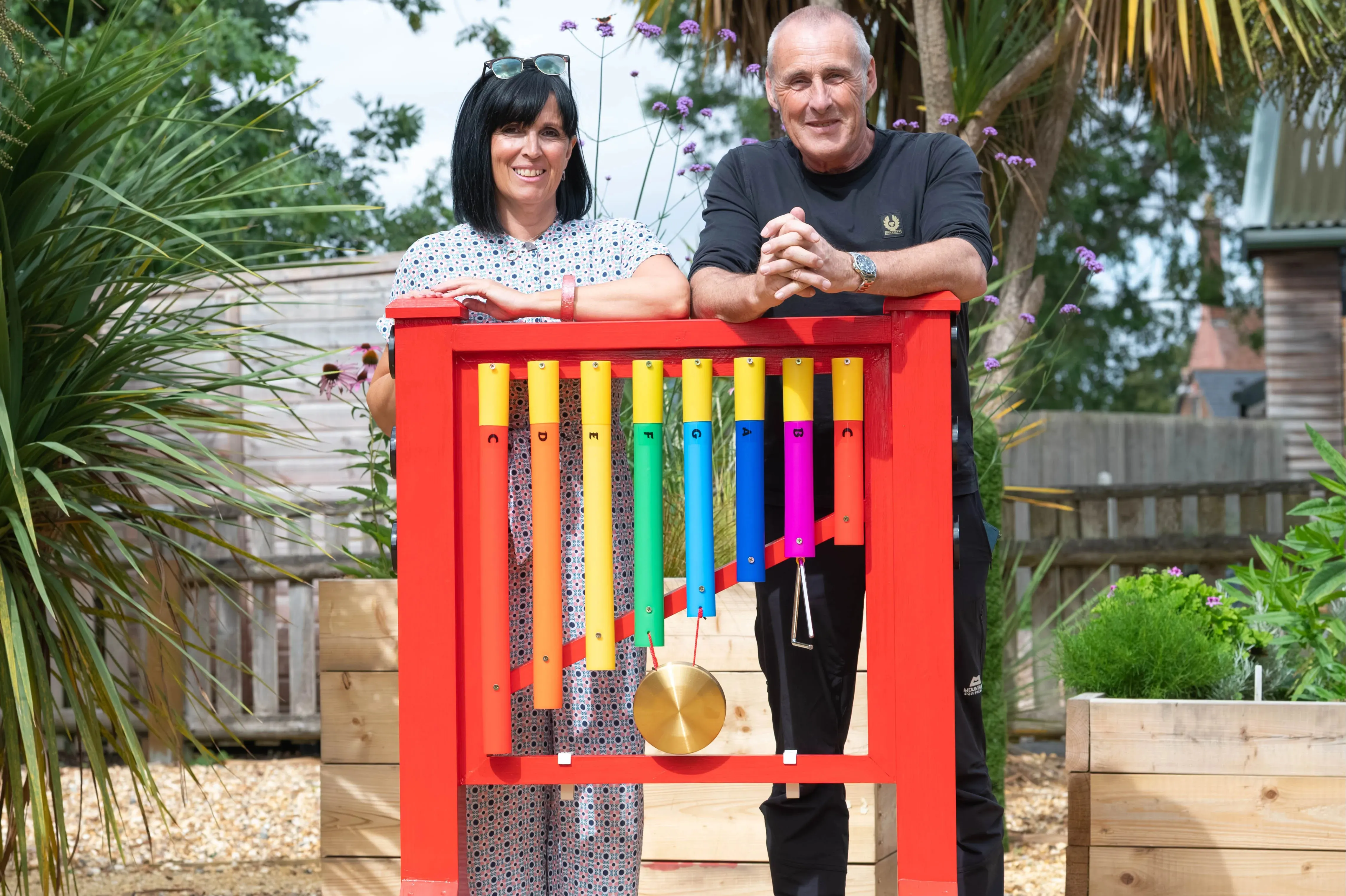
It has been designed by My Safe Place Southern, run by Karen and James Mason who have decades of experience in both the holiday park sector and construction and design.
Sign up for the Travel newsletter
Thank you!
The first caravan for neurodivergent guests has been created in the UKGovernment figures last year suggested that one in five people in the UK are neurodivergent
Government figures last year suggested that one in five people in the UK are neurodivergent – which includes conditions such as autism, ADHD, dyslexia, and dyspraxia.
The first project of My Safe Place Southern was working with Verdant Parks and Sunseeker Holiday Homes.
The new caravan is now installed at Riverside Holiday Park in Northumberland.
They hope that the creation of them will encourage the UK holiday park sector to find ways to make accommodation more suitable for neurodivergent guests.
Karen set up the business after talking to her brother who has three neurodivergent children.
She said: “Wouldn’t it be great if all holiday parks were places where every family, whatever their needs, could relax, connect, and make lasting memories.
“He told me he can’t travel abroad with his kids and both his experiences at UK caravan parks were so stressful he decided never to book another holiday park again.”
“The stark reality is that for many neurodivergent individuals, holidays can be filled with overwhelming sensory triggers, confusing environments, and unprepared staff.
“What should be a chance to relax and connect too often turns into an ordeal. Yet it doesn’t have to be this way.”
The new caravans and lodges will be kitted out with bespoke sensory equipment and important safety features.
They have also created affordable retrofit packages, which allows existing holiday accommodation to be adapted instead of having to install entire new ones.
My Safe Place Southern also provides training to help holiday staff be able to support neurodivergent families.
YouTube travel expert Mark Wolters, who has travelled to more than 80 countries, says there are two areas of a hotel guests should avoid staying in – and they may even consider asking to move rooms
Robin Cottle Assistant Editor Trendswatch
19:49, 08 Apr 2026
Mark Wolters offered his tips for which areas of hotels to avoid(Image: WoltersWorld/YouTube)
A travel expert has claimed there are two parts of a hotel where guests should never stay.
Globe-trotting YouTuber Mark Wolters, who runs the channel Wolters World, suggested people should even look to move if they are situated near one of the areas in question.
Mark has visited more than 80 countries so knows a thing or two about staying in hotels, what to expect and what should not be considered acceptable.
While it is generally considered poor etiquette to complain in the UK, he uploaded a video detailing the specific situations where people should be asking to change room in their hotel.
Two of those scenarios are when the room is located near the lifts (or even an ice machine) or by the stairwell.
Speaking on his channel, which has 1.17 million subscribers, he said: “You might want to think about your sleep. If you’re by the elevators (lifts) or ice machine, those are heavy traffic, heavy noise areas. No matter what time people are coming home, they’re using the elevators, right. You’re going to have the drunk people coming back late, the people coming back from the wedding, or the little kids going to the pool in the morning, you’re going to have a lot of movement there.
“So if you want to get sleep, say, ‘can I move my room away from the ice machine or away from the elevator because that might make it a little bit harder to sleep.”
He went on to recommend asking the front desk to move if you’re hotel room is by the stairwell, which he branded a “weird access point”.
Mark said: “Another thing to think about is if you’re by the stairwell. The stairwell is an odd access point. It might have little weird noises, you might want to consider that.”
The well-travelled YouTuber suggested there are a number of other occasions which might persuade tourists to ask their hotel for a switch in rooms.
One of these could be if you feel generally unsafe. This could be an issue with the windows or the door or even your neighbours in the hotel.
Mark explained: “You do not need to explain to them why this makes you feel uncomfortable. It’s about your safety. Something of the things to look out for – the door doesn’t feel quite secure, check the locks, look at the peephole.”
Another big issue could be if the room is not clean. This could include the bed not being made or something unsavoury being left in the toilet.
He added: “We’ve seen lipstick on the mirror in the bathroom. We were like: ‘This obviously hasn’t been cleaned very well.’ These kind of things are important to bring up because sometimes rooms are missed by the cleaning crew or people left a little bit later, these things do happen.
“Maybe you’re ok with the cleaning crew coming up but do you want to wait two or three hours? That’s why it might be better to ask for a new room instead of waiting for them to clean those rooms because they don’t clean those rooms in five minutes.
“When I’m talking about cleanliness I’m also talking about the smell.”
For the past 36 years, architects, engineers and all sorts of artists have descended on the tiny Swedish town on the outskirts of Kiruna to construct the latest iteration of the ice hotel
It’s not the cold that gets you first. It’s the quiet.
For some of the guests to the ICEHOTEL in the Arctic town of Jukkasjärvi, it isn’t the -10C bedroom temperature that causes them to abandon their £600 ice bed in the middle of the night and make for the hard wooden slats of the mercifully heated changing rooms, but the oppressive, complete silence that comes with being in a room constructed entirely snow packed onto ice foundations.
“If you didn’t know you had tinnitus before, you certainly will once you spend a night in here,” explained guide Glen as he gestured into our icy room for the night.
Poking out from around the doorway was another unnerving element: an adult-sized ice baby.
For the past 36 years, architects, engineers and all sorts of artists have descended on the tiny Swedish town on the outskirts of Kiruna to construct the latest iteration of the ice hotel. The building process begins when massive blocks of ice are harvested from the Torne River. Each block weighs up to two tonnes and is stored cold during the summer, ready for the winter and the construction of the ICEHOTEL in October. They are not there to build uniform, utilitarian ice rooms, however. Instead, they construct something between the fictional ice palace in James Bond’s Die Another Day and a fairground house of fun.
My wife and I were to sleep in one of 12 art suites, ours titled ‘There is no one here’ and created by Turkish artists Ayla Turan and Kemal Tufan. Five round-faced, jellybaby-like figures were in there with us, one standing guard at the door, another popping its head over the bedstead. A third seemed stuck in the wall, as if splinched by a Harry Potter apparition gone wrong.
Before bedding down for the night, guests have a chance to visit the other 11 art suites—that is, before they are shuttered up in April and left to quietly melt into the river beyond. A particularly striking creation is ‘Arctic Archive’, the work of Kristina Möckel and Sebastian Scheller. Each wall is made of rows of shelves filled with hundreds of snow books.
Carl and Malena Wellander’s ‘Survival of the Fittest’ lets guests sleep alongside some of the toughest creatures on the planet: tardigrades. These unusual little “moss piglets” can survive in any habitat on Earth, in space and, it seems, the ICEHOTEL.
What’s less certain is whether Robin Lind and Charlie Hammarlund’s Crystal Souls are evil or benevolent figures. The two blurry, Dr Who-like characters are trapped behind an ice block, seemingly desperate to get through.
There are several ice hotels in the world, but the ICEHOTEL is the first and biggest. Its life began in 1989 when Yngve Bergqvist, who had built an art gallery from ice and snow in his garden, opened its frozen door to Swedish soldiers who needed a place to stay. He woke in the morning in a panic. The temperature had plummeted deep into the -20Cs overnight, and Yngve was convinced he’d killed the troops. He rushed out to the gallery to find them happily making breakfast, having survived the night in their thick Arctic sleeping bags.
Since then, the ICEHOTEL has let thousands of guests do the same. In truth, when tucked up inside a winter duvet-thick sleeping bag, atop reindeer furs, the only real difficulty I had was keeping my snorkel-like nose warm as it peeked out of the bedding folds.
There are several reasons why the hotel is where it is: the proximity of the river and the climate, of course, but also Kiruna, where the vast iron ore mine has delivered untold wealth, an international airport and engineering expertise. Yngve himself spent five years down the mines before turning his skills to hospitality.
It is truly a marvel, both creatively and technically. Using 1,000 tonnes of ice and 30,000 tonnes of snow-ice mixture, the structure is built using steel moulds, snow cannons and huge, perfectly clear blocks.
On the other side of the courtyard from the art suites is the year-round 365 Hotel, which uses cooling techniques to keep the ice from melting even in the height of Arctic summer, which, in fairness, did once reach 24C.
The less transient nature of this part of the hotel has given its creators licence to go bigger. Guests first walk into the bar, where a spiral staircase (made of ice) leads up to an elevated seating area (also made of ice), where you can enjoy a cocktail in a glass (also, ice). Once used, these are tossed into the river from whence they came.
Having donned an extra pair of socks after a foot-numbing tour, I shared a drink with a couple from Leicester who’d spent three days husky sledging, ice fishing and reindeer spotting on a blowout 50th birthday anniversary trip. And blowout it was.
The one hesitation I have about this undeniably magical place is the price point. The cost for an ice room for the night is 4000 SEK (£320) for two, with breakfast included. In itself, not a bad price at all. But once the flight to Kiruna via Stockholm, or the 16-hour night train, is factored in, along with the frankly eye-watering £150pp cost of a fairly average dinner at the ICEHOTEL restaurant, there might not be much left over for excursions. And there has to be given the £400 cost of a private sauna ritual and £800 private transfer to the airport via husky sledge.
But really, no one was in the mood for griping about a few krona or öre once ensconced in this ice palace. I suspected it’d be a magnificent place before I arrived, but I wat I didn’t realise is that it’d be so funny. From my creepy ice baby guard and lounging otter statue to the ice slide that directs tipsy guests back to their room, the ICEHOTEL is packed with witty and unexpected surprises.
Book it
The cost of staying at ICEHOTEL varies depending on the type of room, time of year, and package selected. To sleep in a room made of ice and snow costs from 4000 SEK per night (2 people, B&B). Go to www.icehotel.com