‘Guayoyo’ and ‘Sifrino’ Are Now in the Spanish Canon. Here’s Why
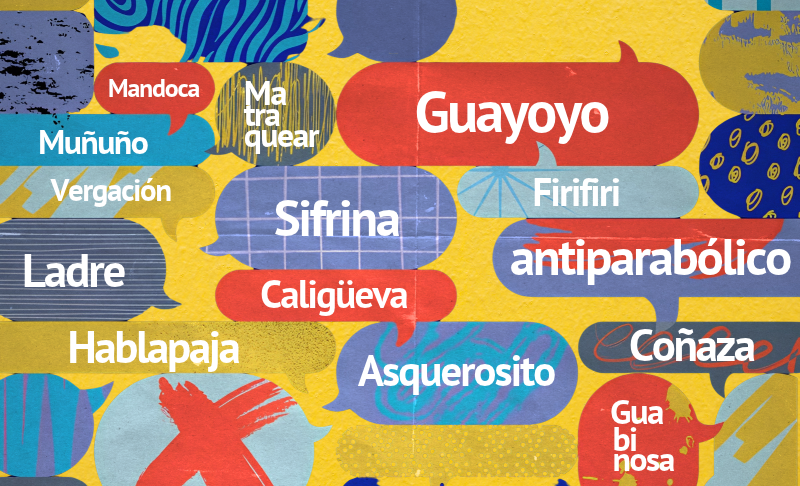
Since November 3, Venezuelans can browse the Diccionario de la lengua española (DLE, Dictionary of the Spanish Language) and find familiar words like guayoyo, a diluted coffee infusion, or sifrino, defined as a pretentious, class-conscious person with affectedly refined tastes. It even includes vergación, a Zuliano exclamation expressing surprise, protest, displeasure, or rejection.
These three words are part of a collection of 81 venezolanismos, words and expressions characteristic of Venezuelan Spanish recently added to the DLE. They were joined by 126 demonyms, words used to identify people from a particular place, such as acarigüeño (from Acarigua), baruteño (from Baruta), and calaboceño (from Calabozo). Their inclusion in the dictionary recognizes words that have long been part of everyday Venezuelan life, reflecting the country’s culture and identity.
The work behind the words
The process to make this happen has been extensive and quite arduous. Luis Barrera Linares, the lexicographer and researcher who led the process and announced the inclusion on X, explained this to Caracas Chronicles in a written interview. He said the process began in 2014, after the publication of the 23rd edition of the DLE. The team reviewed previous academic works documenting Venezuelanisms and proposed a new list, excluding more than 2,000 terms already in the DLE. This list was then approved by a commission.
“Following instructions from the Institute of Lexicography, based in Madrid, the next step was to narrow the selection down to one hundred words that were, at least hypothetically, uniquely Venezuelan and not shared with other Spanish-speaking Latin American countries,” said Barrera Linares.
To do this, the team engaged in an initial round of documentary research to verify that this was the case.ç
Research required demonstrating the word’s consistent use in oral and written sources since 1975, proving it was not an archaism but a living thing in Spanish language.
“As for the demonyms, the process was as follows: first, with the help of an expert in urban planning, we established a set of parameters to determine which place names to select.”
This resulted in a set of selection criteria based on the characteristics of Venezuelan cities, particularly their population size, as well as factors such as the presence of schools, economic activity, and media outlets. The initial list included 148 demonyms, which were narrowed down to 126.
Documentary research of this nature is fascinating. According to Barrera Linares, it involves finding oral and written sources that show a word’s usage after 1975, to check that the word is not an archaism but a living thing in today’s language. It excludes glossaries or other dictionaries that act as “collections of words” as evidence. Instead, researchers prioritize examples of usage in newspapers, both digital and print, literary works, academic books, and magazines. However, social media posts were not considered sufficient evidence, as Barrera Linares mentioned that they were “volatile” in nature. Each word would need at least three documented instances of usage. In the case of demonyms, at times it even involved communicating via email, WhatsApp, or phone with people from each of the cities.
This onerous work is not the effort of an individual, but of a dedicated team of researchers who are part of the Comisión de Lexicografía at Academia Venezolana de la Lengua and do this work ad honorem.
Barrera Linares explained: “Our reward is, first, knowing that we have tried to do the job well and seeing the results of our efforts come to fruition; and second, witnessing how the subject has become a topic of public discussion across numerous media outlets as a positive national news story.”
“Definitions do not always satisfy every reader,” Barrera Linares explained. “There were cases in which certain words had more than one meaning, and those additional meanings were also proposed for inclusion.”
Some of those in the group include Lucía Fraca, Yraida Sánchez, Lourdes Sifontes, César Villegas, and Enrique Obediente. In addition, Barrera Linares highlights the work of interns who were essential to the outreach to different communities to document the demonyms.
The information is sent to Madrid, where it’s discussed and coordinated among the Spanish-language academies and the Institute of Lexicography (ILEX) of the Royal Spanish Academy. A key part of this coordination is the Association of Academies of the Spanish Language (ASALE). The organization’s secretary general, Francisco Javier Pérez, who is also a former president of the Venezuelan Academy of Language, explained that process:
“Each of the language academies submits the findings of its regional lexical research, along with documentation of how each word is used, to the Institute of Lexicography (ILEX) of the Royal Spanish Academy in Madrid. This process allows descriptive labels to be standardized according to criteria agreed upon by the scholars and specialists of each academy, and determines whether a word will be included in the next edition of the Academy’s dictionary, which has been published since 1780.”
Pérez mentioned that his role is to oversee each of those tasks, with particular emphasis on the pan-Hispanic character of the process. Part of the coordination involves the proposal of a brief definition, which aims to describe the whole meaning of the word in a very succinct manner. This definition is repeatedly revised and, at the very end, it’s approved on a platform created by ILEX.
However, the definitions do not always satisfy everyone.
“It should also be noted that definitions do not always satisfy every reader, as they follow established, standardized lexicographic conventions,” Barrera Linares stated. “There were cases in which certain words had more than one meaning, and those additional meanings were also proposed for inclusion.”
Not everything makes the cut
Other important factors were the usage and origins of the words. The words needed to be distinctly Venezuelan and used throughout the country, not just in one region. Therefore, some of the researched words did not make it into the dictionary. Sometimes, researchers had to archive weeks’ worth of work because a word simply did not meet the criteria for inclusion. For instance, the team had prepared documentation for the lexical pair bioanalista/bioanálisis, but found that the words were also used in the Dominican Republic. They even appeared in publications from Spain, which meant they weren’t exclusively Venezuelan.
Another situation Barrera Linares mentioned had to do with the word guiso, which, beyond its standard cooking definitions, is commonly associated in Venezuela with illicit profits and corruption. Although the word already appears in the DLE, the team had proposed adding this specifically Venezuelan meaning. Barrera Linares explained that the proposal was deferred, but that this doesn’t mean the definition is ruled out.
It would be remiss to say that this is the first time something of this magnitude has happened. Over two thousand Venezuelanisms already appear in the DLE.
“In our case, it would simply involve adding another meaning, with a change in grammatical category from verb to noun, which will be addressed at a later stage. In other words, the proposal is valid, but its inclusion will have to wait for a future edition.”
“Behind the scenes, many of us have worked on this, often going unnoticed, even as we remain dedicated to our work, fulfilling the responsibilities we took on when we swore our oath upon joining the Academy,” Barrera Linares said. Moreover, it would be remiss to say that this is the first time something of this magnitude has happened. He mentioned that over 2,000 venezolanismos already appear in the DLE.
A 140-year-old tradition
Those earlier additions also required the careful work of generations of Venezuelan researchers over more than 140 years. Francisco Javier Pérez places that work in its historical context. He mentioned that the Venezuelan Academy of Language has been contributing to the DLE since the 1884 edition: “From then until the present day, generation after generation of Venezuelan scholars have responded to requests from Madrid to incorporate words and expressions distinctive to Venezuelan Spanish.” This work has been incredibly rigorous. According to Pérez, Venezuelan scholarship on this topic has been among the most robust in the Americas. He highlights the work of Rafael María Baralt, Lisandro Alvarado, and Rocío Núñez, among many others.
For him, the inclusion of these words is a continuation of this long-standing tradition of research. He even questions those who claim that this is an unprecedented event. Moreover, Barrera Linares emphasized that this inclusion is not a “legalization” and that the job of the dictionary is merely to register and document language: “It has nothing to do with the idea that a word only begins to ‘exist’ once it is included in the dictionary. As Ángel Rosenblat used to say, these words already existed before; they appear in the dictionary now because their use by a community of speakers has been sufficiently documented.” With a culture that changes so rapidly, such as the Venezuelan one, it’s vital that this work goes on, documenting how we talk and how we see reality, word by word.