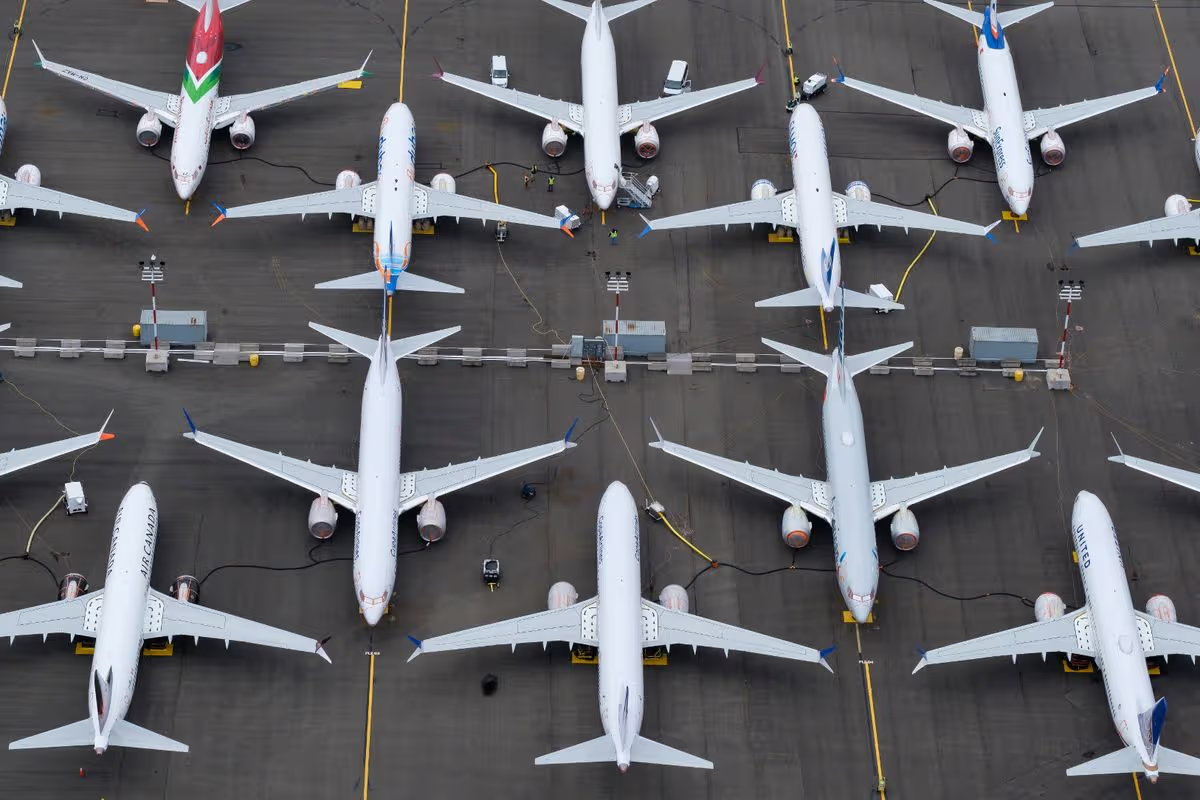
Europe is facing a severe jet fuel crisis due to the Middle East conflict, with International Energy Agency chief Fatih Birol warning the region has ‘maybe six weeks or so’ of jet fuel left and that flight cancellations could follow

Several airlines have already started grounding flights (file photo)(Image: Getty Images)
Europe has just six weeks’ worth of jet fuel remaining due to the ongoing Middle East conflict, with major airlines grounding flights.
Fatih Birol, executive director of the International Energy Agency (IEA), warned that flight cancellations could follow “soon” if oil supplies continue to be restricted by the Iran war. Iran maintains a firm grip on tankers navigating through the Strait of Hormuz, with Mr Birol telling the Associated Press this is triggering “the largest energy crisis we have ever faced”.
He warned that Asian nations such as Japan, India and China, which depend heavily on Middle Eastern energy supplies, are on “the front line”, with the pressure set to “come to Europe and the Americas” shortly after.
Europe has just six weeks of fuel left, according to the IEA director. He added that if the Strait of Hormuz remains blocked, the knock-on effect could mean “some of the flights from city A to city B might be canceled as a result of a lack of jet fuel”.
READ MORE: Jet2 holidays changes to 14 day rule for all travellers and sends emailREAD MORE: Flight cancellations over fuel as passengers told to know their rights
Which airlines are cancelling flights?
A number of airlines have warned that they might have to cancel flights if the situation continues, but the number of those that have already done so is fewer.
Swedish flag carrier SAS has said it would cancel 1,000 flights in April because of high oil and jet fuel prices, after cancelling a “couple hundred” flights in March.
United Airlines said that five per cent of flights would be cancelled in the second and third quarters of 2026, while Dutch airline KLM has cancelled 160 flights for the coming month.
South Korean airline Asiana will slash 22 flights between April and July due to the fuel cost increase.
Hong Kong airline Cathay Pacific will cut some flights from mid-May until the end of June, with about 2% of its scheduled passenger flights grounded. Its budget airline HK Express is cutting around 6% of flights.
German airline group Lufthansa said it would ground 27 planes servicing its short-haul CityLine subsidiary earlier than it had planned, blaming jet fuel prices.
Vietnam Airlines plans to cancel 23 flights per week across domestic routes from April.
Air New Zealand will be cutting back on flights over the next two months, it announced in March. It is expected that 1,100 flights will be impacted.
Norse Atlantic Airways has removed all flights to Los Angeles International Airport from its summer schedule, blaming the fuel shortage.
Although major airlines including British Airways, Ryanair and easyJet have highlighted the potential impact of the fuel price rise on ticket costs and schedules, they are yet to cancel flights as a direct consequence.
However, BA is stopping its route from London Heathrow to Jeddah, although this is due to a shift in demand, according to the airline.
Last week, easyJet chief executive Kenton Jarvis sought to reassure passengers, stating that all airports the airline serves are “operating as normal”.
He continued: “We only ever in this industry have three to four weeks’ visibility (of jet fuel supplies), and that is the same as it was pre-crisis. We have visibility to the middle of May, and we have no concerns. What we’re seeing is airports and fuel suppliers working well to bring jet fuel to the airports.”
EasyJet revealed the Middle East conflict set the airline back roughly £25 million in elevated jet fuel costs last month. The Luton-based carrier said it anticipates reporting a headline pre-tax loss of between £540 million and £560 million for the six months ending in March.
The conflict has created “near-term uncertainty around fuel costs and customer demand”, easyJet revealed.
Bookings have dropped by two percentage points for the three-month periods ending in both June and September when compared with the previous year.
The alert regarding larger-than-anticipated first half losses sent easyJet shares tumbling by as much as 9% during early Thursday trading, before stabilising around 4% down.