Speaker of the Parliament of Iran Mohammad Bagher Ghalibaf speaks during a news conference in Beirut, Lebanon, on October 12, 2024. File Photo by Wael Hamzeh/EPA
March 29 (UPI) — Iran’s parliament speaker, Mohammad Bagher Ghalibaf, issued a warning Saturday against a possible ground troop invasion as the U.S. military sends more troops to the region.
Ghalibaf made the comments in a message marking 30 days since the start of the war. The United States and Israel began strikes on Iran on Feb. 28 in their efforts to diminish the country’s nuclear weapons program.
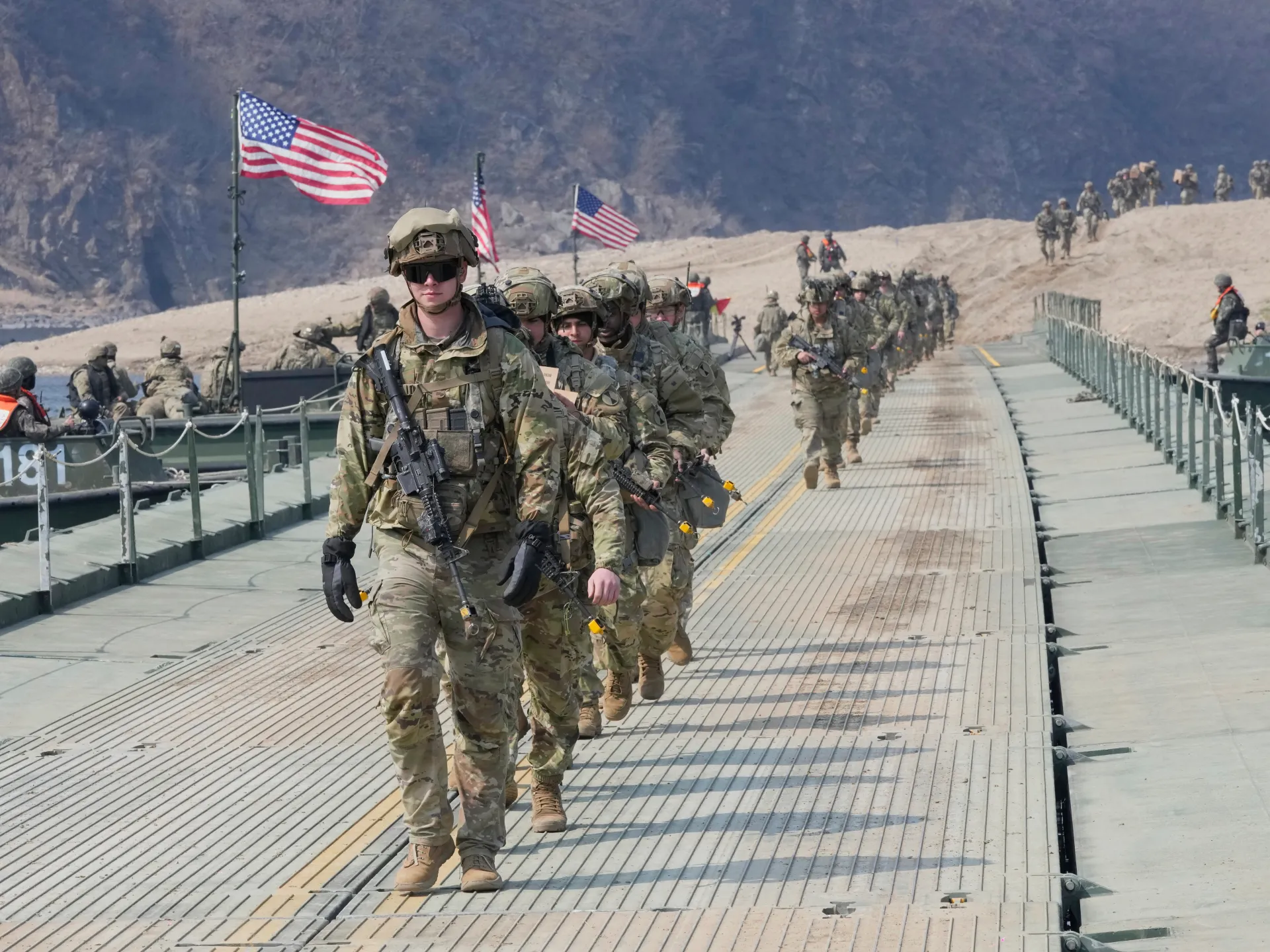
Ghalibaf accused the United States of secretly planning a ground invasion of Iran. On Saturday, two U.S. ships arrived in the region carrying 3,500 U.S. service members as well as fighter jets, transport aircraft, amphibious assault vessels and other tactical assets. More troops were expected, U.S. Central Command said.
“The enemy publicly sends messages of negotiation while secretly planning a ground invasion — unaware that our men are waiting for American troops to enter on the ground, ready to unleash devastation upon them and punish their regional allies,” Ghalibaf said, as reported by CNN.
Last week, the Trump administration proposed a 15-point peace plan with Iran. President Donald Trump also ordered a 10-day halt on strikes against Iranian energy sites, though Israel carried out its own attacks on energy sites Friday.
Secretary of State Marco Rubiosaid Friday that Iran had not responded to the peace proposal.
“The United States speaks of its aspirations, presenting what it failed to achieve in war as a 15-point list to pursue through diplomacy,” Ghalibaf said.
“As long as the Americans seek Iran’s surrender, the answer of your sons remains clear: ‘Far be it from us to accept humiliation.'”
Ghalibaf’s message came in the wake of a Saturday report by The Washington Post that the Defense Department has drawn up plans for a weeks-long ground operation in Iran. Officials told The Post the plan isn’t considered a full-scale ground invasion, but would involve Special Operations forces and infantry troops.
White House press secretary Karoline Leavitt issued a statement in response to the possibility of ground troops in Iran.
“It’s the job of the Pentagon to make preparations in order to give the commander in chief maximum optionality,” she said. “It does not mean the president has made a decision.”
Iran has launched attacks on Israeli and other U.S. allies in the Persian Gulf region, including one Sunday on a military camp in Kuwait, which killed 10 Kuwaiti service members. The army said it detected 14 ballistic missiles and 12 hostile drones in Kuwaiti airspace over the previous 24 hours. Since the start of the war, it has monitored more than 300 ballistic missiles, 2 cruise missiles and more than 600 hostile drones.
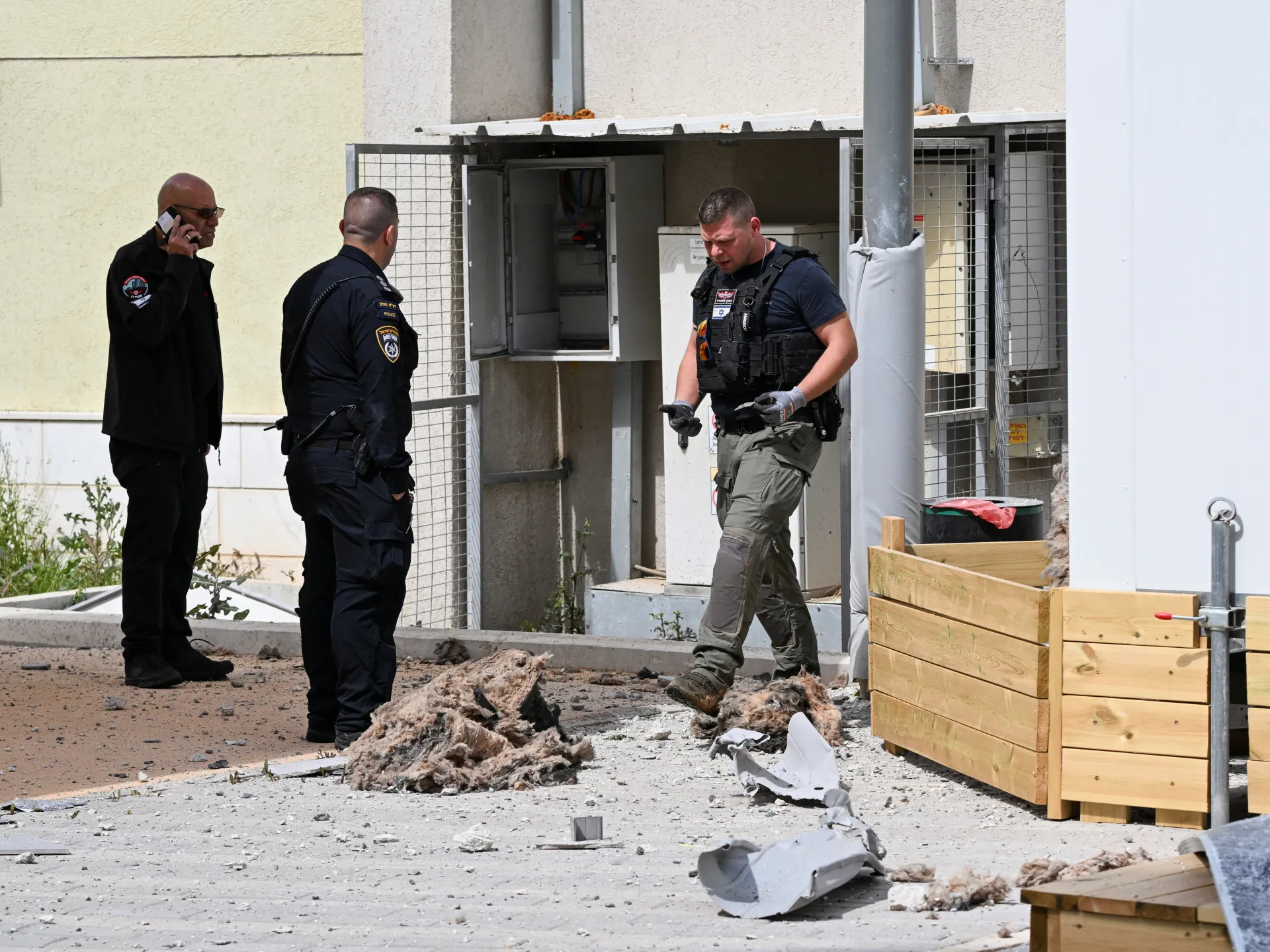
Meanwhile, Israeli officials said emergency officials were working on a large fire that broke out at a hazardous materials factory at the Neot Hovav industrial complex, The Guardian reported. The Israeli military blamed “a weapon fragment or interceptor fragment” for the damage and fire.
The plans, which fall short of a full invasion, could involve raids by special operations and conventional infantry troops, The Washington Post reported.
The Pentagon is preparing for weeks of limited ground operations in Iran, potentially including raids on Kharg Island and coastal sites near the Strait of Hormuz, according to United States officials quoted by The Washington Post newspaper.
The plans, which fall short of a full invasion, could involve raids by special operations and conventional infantry troops, the Post reported on Saturday, exposing US personnel to Iranian drones and missiles, ground fire, and improvised explosives.
Recommended Stories
list of 3 itemsend of list
Whether President Donald Trump would approve any of those plans remains uncertain, according to the report.
“It’s the job of the Pentagon to make preparations in order to give the Commander in Chief maximum optionality. It does not mean the president has made a decision,” White House press secretary Karoline Leavitt said in a statement, responding to questions over the Post report.
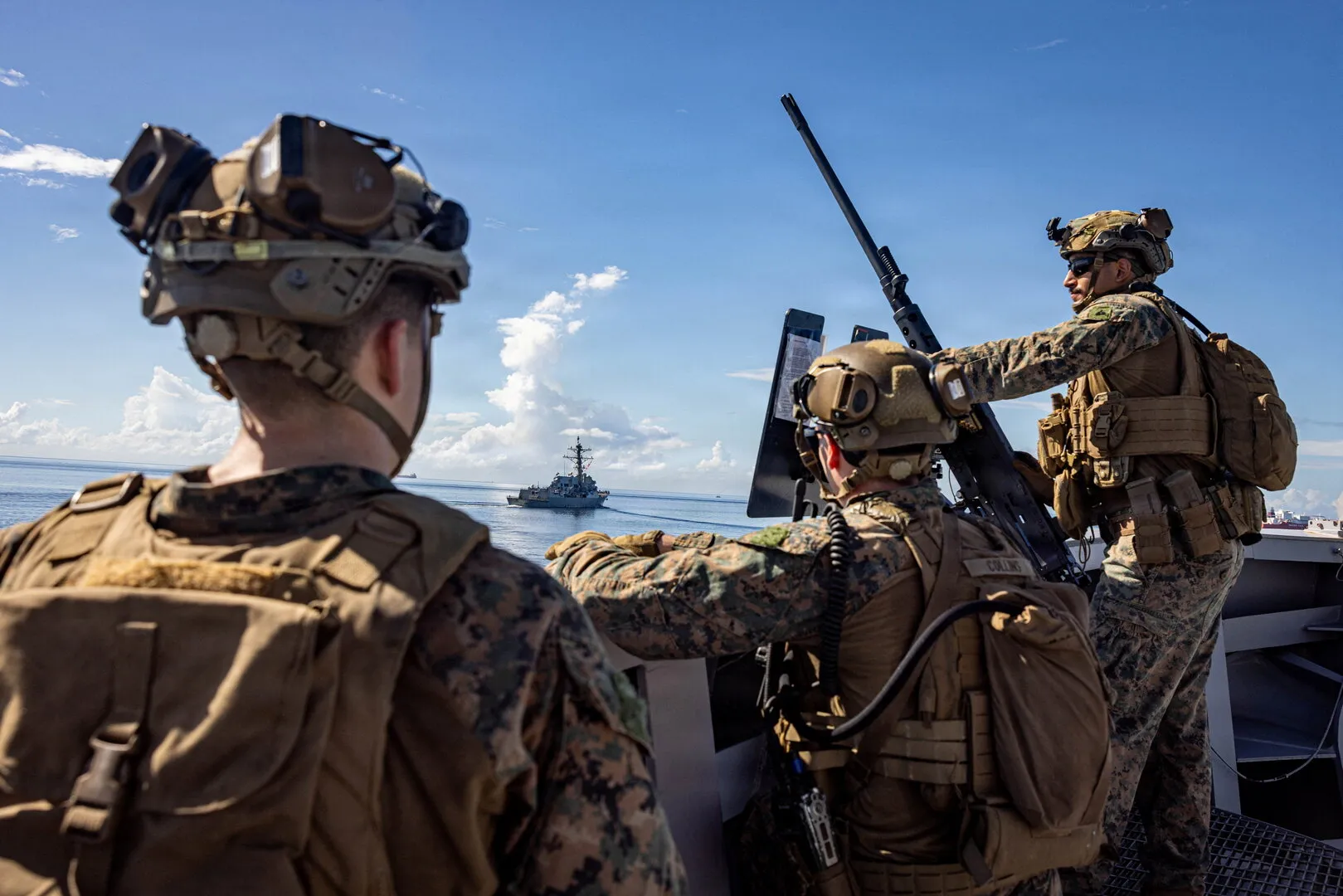
The Trump administration has deployed US Marines to the Middle East as the war in Iran stretches into its fifth week, and has also been planning to send thousands of soldiers from the army’s 82nd Airborne to the region.
On Saturday, the US Central Command (CENTCOM) said about 3,500 additional soldiers arrived in the Middle East on board the USS Tripoli.
The sailors and marines are with the 31st Marine Expeditionary Unit and arrived in the region on March 27, along with “transport and strike fighter aircraft, as well as amphibious assault and tactical assets”, according to CENTCOM.
Officials speaking to The Washington Post said discussions within the administration over the past month have touched upon the possible seizure of Kharg Island, a key Iranian oil export hub in the Gulf, and raids into other coastal areas near the Strait of Hormuz to find and destroy weapons that can target commercial and military shipping.
According to the report, one person said the objectives under consideration would probably take “weeks, not months” to complete, while another put the potential timeline at “a couple of months”.
The Pentagon had not responded on Saturday to the Post’s requests for comment. Iran has yet to respond to the report.
The report comes as Pakistan, which shares a 900km-long (559-mile) border with Iran, mediates between Washington and Tehran, hosting two days of talks starting on Sunday with the foreign ministers of Saudi Arabia, Turkiye and Egypt.
Iranian threats
The Iranian parliament speaker, Mohammad Bagher Ghalibaf, said on Sunday the “enemy openly sends messages of negotiation and dialogue and secretly plans a ground attack”.
“Unaware that our men are waiting for the arrival of American soldiers on the ground to set fire to them and punish their regional partners forever. Our firing continues. Our missiles are in place,” the Tasnim news agency reported, quoting Ghalibaf.
“Our determination and faith have increased. We are aware of the enemy’s weaknesses, and we clearly see the effects of fear and terror in the enemy’s army.”
It was not clear whether Ghalibaf was responding to the Post report.
On Wednesday, Ghalibaf had warned that intelligence reports suggested that “Iran’s enemies” were planning to occupy an Iranian island with support from an unnamed country in the region.
He said any such attempt would be met with targeted attacks on the “vital infrastructure” of the regional country – which he did not name – that assists in the operation.
Tasnim quoted an unnamed military source as saying on Wednesday that Iran could open a new front at the mouth of the Red Sea if military action takes place on “Iranian islands or anywhere else in our lands”.
The source told Tasnim that Iran can pose a “credible threat” in the Bab al-Mandeb Strait, which lies between Yemen and Djibouti.
Tasnim later quoted an “informed source” claiming that Yemen’s Houthi rebels, backed by Iran, are prepared to play a role “if there is a need to control the Bab al-Mandeb Strait to further punish the enemy”.
‘Once the US starts capturing territory in Iran, all bets are off.’
Kenneth Katzman, a senior fellow at the Soufan Center for Strategic Dialogue, says US war objectives in Iran that cannot be met with air power can be met with a limited ground invasion.
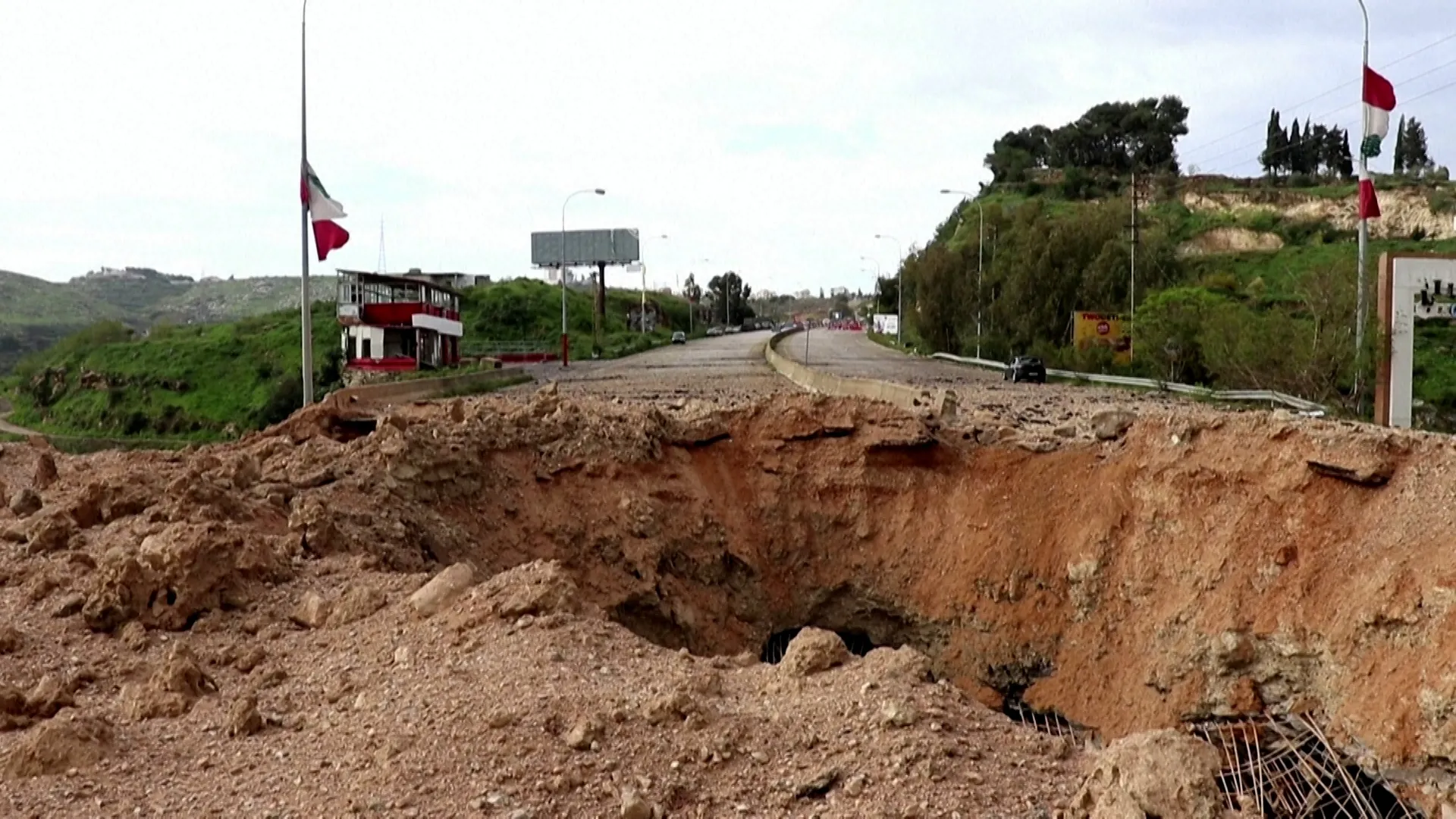
Lebanon fears that Israel’s attack on Qasmiyeh Bridge, a key crossing linking the south to the rest of the country, could be a “prelude to a ground invasion”. The damage caused in the attack could cut off access for civilians, aid and supplies.
LaGuardia shut down after Air Canada Express plane hits ground vehicle upon landing from Montreal.
Published On 23 Mar 202623 Mar 2026
An Air Canada Express regional jet coming from Montreal struck a ground vehicle on Sunday evening while landing at New York’s LaGuardia Airport, leading to the airport’s closure.
The New York Fire Department in a statement said on Sunday that it was responding to a reported incident involving a plane and a vehicle on the runway at LaGuardia airport, but did not provide further details.
Recommended Stories
list of 3 itemsend of list
The CRJ-900 plane struck the vehicle at a speed of about 24 miles per hour (39 kph), flight tracking website Flightradar24 said. The jet was operated by Jazz Aviation, Air Canada’s regional partner.
The Federal Aviation Administration issued a ground stop for all departures to LaGuardia due to the aircraft emergency, with the airport closure in effect until 0530GMT. The probability of an extension was listed as high.
The FAA notice showed that the reason for the halt at the airport was an emergency and there was a high probability of an extension, without specifying any details.
Unverified footage on social media showed damage to the nose of the plane, as it tilted upward. Reuters could not immediately verify the footage.
LaGuardia’s website showed arriving planes had been diverted to other airports or returned to their point of origin.
In a separate notice to airmen, the FAA said that the airport could be shut until 1800 GMT.
Weekly insights and analysis on the latest developments in military technology, strategy, and foreign policy.
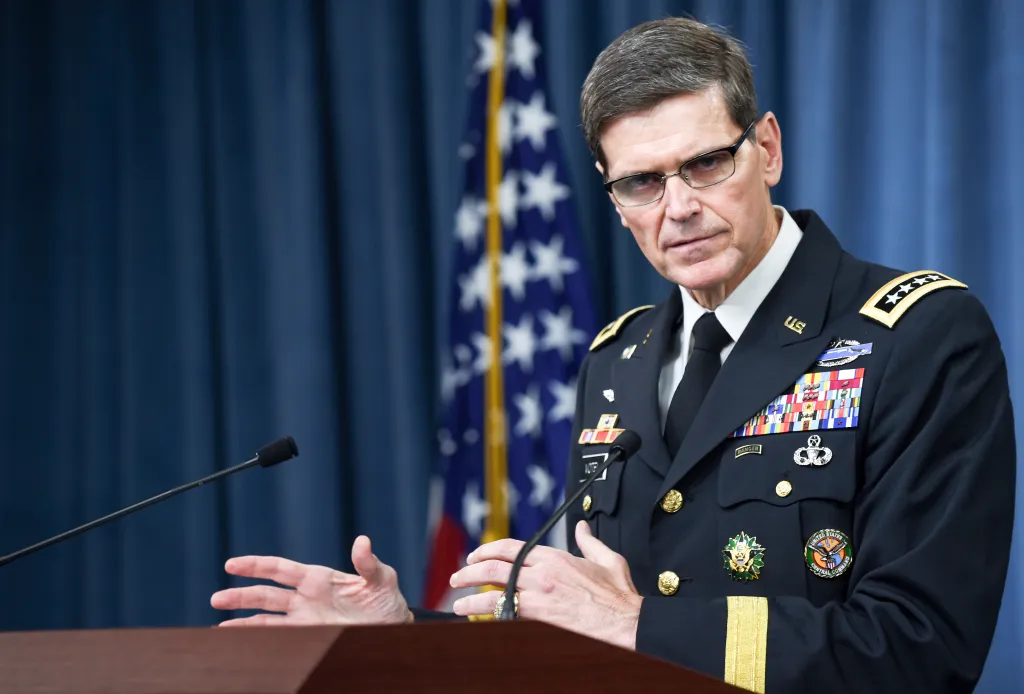
The Pentagon has reportedly drawn up plans to send American troops into Iran, possibly to Kharg Island or far deeper into the country to seize enriched uranium. These moves would represent a huge escalation for Operation Epic Fury. Former CENTCOM commander Joseph Votel offers us exclusive insights into the challenges and dangers of having U.S. boots on the ground in the Islamic Republic, and what it would take to seize Kharg Island or attempt to snatch Iran’s stockpile of enriched uranium that could be very challenging to access.
Gen. Joseph L. Votel, commander, U.S. Central Command, briefs the media in the Pentagon Briefing Room, April 29, 2016. (DoD photo by U.S. Army Sgt. First Class Clydell Kinchen)(Released) Sgt. 1st Class Clydell Kinchen
Some of the questions and answers have been lightly edited for clarity.
Q: Does a seizure of Kharg Island, or an insertion of SOF to recover enriched uranium from Pickaxe Mountain or elsewhere in Iran, seem feasible? What would either of those operations take, in terms of troops and assets?
A: Both of those things are feasible. Let me just start with Kharg Island. We can put troops on there. We can air mobile them in. We could land them by boat. I guess the comment I have about Kharg is, I’m not sure what the significance is of putting troops there. It’s only about 20 miles off the coast of Iran. So you’re definitely under the threat of their weapon systems. You’d be very, very vulnerable there. And I don’t know that it would give us any particular tactical advantage that we don’t already have or couldn’t get someplace else at an offset location where we have established bases and other things like that. So I’m not sure what the tactical advantage of it is.
I get that it has an informational and kind of messaging advantage against the Iranians that we are on their territory. And it may send a message to the broader energy community that we are safeguarding these vital Iranian infrastructures. That might give them some confidence [but] kind of an odd thing to do. But I just don’t really see the big advantage of going to Kharg. But we could certainly do it if we had to.
We would be vulnerable. When you start putting troops on the ground – I know there’s some mishmash and words on that – but that’s troops on the ground right there. It also implies that you are going to have to take care of them, you’re going to have to resupply them, you’re going to medevac them, you have to do all the things that keep them in place for whatever period of time. And that requires that you have a logistical tail, and at some point that tail has to be protected as well. So these are not insignificant considerations and they’re often bigger operations.
I would imagine on a little island like Kharg, you would need a battalion sized force of Marines or soldiers could probably do that. So you’re probably looking at 800 to 1,000 troops, kind of size, maybe a little bit smaller, probably not much larger than that.
The U.S. is reportedly planning to attack or blockade Iran’s Kharg Island. (Google Earth)
Going after the fissile material I think is a bigger operation. Again, I think we have the capabilities to do this. Within our Special Operations community, we have people that are trained to do this and have the right relationships and connections and other things to allow us to get in and do that. So you’d have to be able to project that force onto the ground. This would be going to a place like Natanz or Isfahan – probably one of those locations. Those are well inland – several hundred miles into Iran, a country of the same size as the state of Alaska. So it’s big and it’s diverse. It’s largely in an open plain, so you don’t have a lot of natural terrain protection there. That would have to be taken into consideration.
In addition to the kind of operators you put on the ground, you’d also have to bring in a security force, but probably a sizable security force – a brigade size or 1,000 to 3,000 or 4,000 troops to just secure while they did that work. You’d have to do that. You’d have to make sure you dedicated air power. You’d have to put CAPs [combat air patrols] up over, you’d have to have ISR [information, surveillance and reconnaissance] in place.
Again, you’d have the challenge of people on the ground, so you’d have to logistically sustain them and then be prepared to protect that tail. And then you have to have all of the lift, whether it’s rotary wing or fixed wing, to get them in and get them all back out. And then you have the added challenge of handling nuclear material. So about 450-some kilograms. That’s roughly 1,000 pounds of 60% highly enriched uranium. And that’s a lethal material. So ideally, that would be packaged already, but we’d have to make sure we packaged that and moved it and had someplace to actually take it back to.
A general view of Isfahan (UCF) nuclear power plant about 180 miles from Tehran (HENGHAMEH FAHIMI/AFP via Getty Images) HENGHAMEH FAHIMI
So, yeah, could we do a military operation? Sure. I think it would kind of look like I described there. It would be a big operation, and it wouldn’t be something that would be done in a single period of darkness. It probably takes some time. You’d have to have some special capabilities to go in and excavate these things and identify them.
There’s no real open-source discussion of what the conditions are at these things, you’d have to be prepared for the worst, and the worst would be having to dig down and find it. I’m hoping that our intelligence community understands this a little bit more, and I suspect that is the case. But this is a pretty big, pretty significant operation.
An alternative to this would be waiting until there is a cessation of hostilities and then trying to go in in a more semi-permissive environment with elements of the International Atomic Energy Agency (IAEA) who really have responsibility for this. They would bring expertise in to do this. We – or some other military force – would probably assist with some of that. But that may be another option as well. I’m sure they’re looking at all these.
Q: This is not a job for a Tier One unit like SEAL Team Six or Delta, to go in and grab it, right? There’s a lot of discussion about that.
A: Yeah. First of all, you’re not just going to go in and grab 1,000 pounds of nuclear material and then ferret it right out. That’s not the case. Those unique capabilities reside within the Special Operations community. I won’t identify organizations, but they reside within the tip top of our special operations capability. They’re trained and maintained and normally exercise and rehearse on a regular basis. So, yeah, we have the ability to do that. But it’s unlikely – in my view, my estimate, with what I know – that you just send a few folks in there, grab the stuff and get it out. I don’t think that’s the case. I think it’s going to take more. You might be able to do that in a permissive environment, but I don’t think you want to take the risk associated with that in the environment that we’re seeing right now, or perhaps even in a semi-permissive environment.
A: I have no reason to believe that it wasn’t. Is there pressure on our magazine depth? There sure is. We’ve talked about that for a while. CENTCOM planned – which has been developed and modified over the last 20, 25 years – to do this. Every commander had their fingers involved in it. I do not know the current plan. I’m sure that [CENTCOM commander] Adm. [Brad] Cooper has done that. It was a significant discussion, not only about the targets, but certainly about what was required to execute that and also to protect themselves. So my assessment is, yes, I think we have. And I don’t think we’ve seen an instance where we’ve not been able to defend ourselves because we didn’t have any missiles.
There’s no doubt we’ve expended a lot, and that’s put a lot of pressure on the magazines, but the Department of Defense and CENTCOM and Joint Staff, I think, have been able to make sure that they’ve been able to move enough materials into place so we can sustain this operation, now well into its third week.
A U.S. Army soldier, assigned to 1-43 Air Defense Artillery Regiment (ADAR), operates a forklift bearing MIM-104 Patriot Surface-to-Air Missile (SAM) canisters at an undisclosed location in the CENTCOM region. (U.S. Army photo by Capt. Nick Beavers) Capt. Nick Beavers
Q: How concerned are you about America’s magazine depth of these defensive weapons?
A: We should be concerned. I think the challenge may not necessarily be in CENTCOM. The challenge may be in other areas like the Pacific, Korea, you know, Europe, you know this. This could be impacting our ability to send things to the Ukrainians, or through our NATO partners, the Ukrainians. So I think that’s where the concerns are. And by the way, you know, all of our Gulf Arab partners and many of our partners around the world use THAAD [Terminal High Altitude Area Defense] and use Patriot missile systems, and so they require resupply as well, and stocks available to them.
I think we have long had an issue with making sure we had sufficient magazine depth. We went through this several years ago when North Korea was flexing its muscles and firing missiles towards Guam and over Japan. We had a serious discussion about this. We saw this with the response to Ukraine as well with artillery rounds. The Army’s ramped up production, three or four fold over the last couple of years. But it’s taken a little bit of time. That’s good. But we need to do that with all these other munitions. So a portion of our resources needs to be dedicated to making sure we have sufficient munitions in place for our contingencies and for our partners who have bought our systems they are relying on.
U.S. Army soldiers from the 1st Battalion, 7th Air Defense Artillery Regiment, 108th Air Defense Artillery Brigade, load equipment and trucks onto a C-17 Globemaster III with U.S. Air Force airmen assigned to the 21st Expeditionary Airlift Squadron at an undisclosed location in the CENTCOM Area of Operations. (U.S. Army photo by Sgt. Christopher Neu) Staff Sgt. Christopher Neu
Q: What’s your assessment of Iran’s magazine depth of missiles, operable launchers and drones? How long can they keep presenting a threat?
A: There’s been pretty serious damage done to their missile system and I say the system, because it’s not just the missiles. It’s the launchers, it’s the command and control sites, manufacturing sites, it’s the storage sites. I think we’ve done a lot of damage to that. And you’ve probably heard some of the numbers that have come out of CENTCOM – in the 70, 80% range of destruction. I think we’ve done a lot with the drones as well. I think the concern is the last 15 or 20%.
Don’t pay attention to the numbers. The fact of the matter is, they’re going to have a remnant portion of capabilities, and that’s a portion we’re focused on right now. Iran’s strategy has been to broaden the conflict by hitting a lot of different places, 12 or 13 different countries, and then to extend it by continuing to present this threat to us over a long period of time. They don’t have to shoot large volleys of missiles and drones. They just have to get some across. They just have to launch some every day. And that’s going to keep our focus, and it’s going to keep us occupied doing that. So that’s their strategy on this.
They’ve taken a significant hit in some of their capabilities, and I imagine some of the magazines, but there’s some left. I think at the start of the war, their missile strength was somewhere in the 2,000 to 3,000 range. Some of the numbers I’ve seen show there are probably over 1,000 that have been launched now, and so that leaves a considerable number. They don’t have the ability to launch these. And now that we have air superiority over those locations, we can go anywhere we want. We see something, we can take it out right away. So the missiles are very, very vulnerable, but the drones are much easier [for Iran to protect]. They don’t require all that much, and they probably got larger stores that it’s important to appreciate. They were manufacturing these things for Russia, so they probably have fairly sizable stores of drones left.
Prior to Operation Epic Fury, the Iranian regime used the Karaj Surface-to-Surface Missile Plant to assemble ballistic missiles that threatened Americans, neighboring countries, and commercial shipping. The photo dated March 1, 2026, shows the plant prior to U.S. strikes. The… pic.twitter.com/QEs5toZQpX
Q: How closely is China watching this? And what are they learning from it?
A: Well, I think they’re paying very close attention to this. They’re learning how we respond to counter fire. They’re very closely following our air tactics and how we are working with the Israelis on that. They’re looking at the targets we are going after, and trying to understand the scheme of fires associated with all of this.
They will be watching very closely how we deal with the Strait of Hormuz. We’ve got the straits down there – the Strait of Taiwan and all these other ones in Asia – they’ll be paying very, very close attention to this. They’ll be watching what our readiness rates are throughout all of this, and our ability to marshal forces and how quickly we can do this. So I think they’re absorbing a lot about how we are operating.
But they’re also seeing the use of drones. They’re probably trying to pay attention to how artificial intelligence may be being effectively used. And I would imagine that it is by the US and helping us parse a whole bunch of information and select targets and perform other functions. So, they’re paying a lot of attention. I think they’re also paying attention to what this is doing to our readiness in other areas, frankly. We continue to move resources out of the Asia Pacific, and they certainly are taking note of that.
Q: Do you think China will move on Taiwan given all that?
A: I don’t know. I’m not an expert in that particular area. But what I do know is they’ve had some ambitions of trying to be ready for that in the next year or so. I also know that there’s been a wholesale sacking of their military leadership by President Xi. So he’s putting new people into place, that has an impact. It certainly has an impact on the ability to command and control a major operation to [invade] Taiwan. I don’t think we’re going to see this in the near-term. I don’t know that that’s necessarily the lesson Xi’s taken away from us. I don’t know if they’re actually prepared to do that. But they’re certainly paying attention to how we are doing things here and how that could be used in their types of operations.
A view of China’s new ‘invasion barge,’ which involves a temporary pier that can be connected to other vessels via a barge, or series of barges, with jack-up supports. The development of jack-up barges is widely seen as part of preparations for a possible invasion of Taiwan. (PLAN). via X
Q: So far, the Houthis have been on the sidelines. Why do you think that is and at what point will they get involved?
A: The Houthis – one of the extensions of the Iranian network – have always been much more independent than Hamas or certainly Hezbollah or the Shia militia groups we normally see in Iraq and Syria that are loyal to the Iranian regime. [The Houthis] are much more independent in terms of this. They actually have a governing function, full-on governing function, and so they are trying to make decisions for themselves.
I have heard a couple of discussions on this one. One viewpoint would be that the Iranians have told them to hold on: ‘We want to extend again. We want to extend this conflict out. We want to buy some time. We’re going to be patient,’ and then we may look to do that.
Another theory might be that they’re just keeping their powder dry right now and waiting for an opportunity to launch into this. I think there’s probably a variety of reasons why they aren’t doing it. They have an agreement in place with us. They took a pretty serious beat down during our counter-Houthi operations some months ago. So that had an impact on them. They’re probably not anxious to revisit that immediately, because it was pretty devastating for them. So I imagine they’re just being patient.
A: I don’t view it as particularly likely at this point. There may be some further power shifts there. I think the military component – the IRGC component of the regime, those senior leaders – are having much more influence, and that’s influencing these very angry responses we’re seeing from the Iranians on this, lashing out at the Gulf Arab countries. So I think that the military is definitely ascending in this.
But yet, they have preserved the theocratic side of government by putting a new Ayatollah in place, admittedly, one that’s not well known, that appears to be pretty weak [Mojtaba Khamenei, chosen to replace his father, Ali Khamenei who was killed on the first day of the war]. He actually seems to be very aligned with the hard liners on the military side. There’s not much on him. He doesn’t have a huge amount of religious credibility or anything. So, he could be a figurehead, could be expendable for them, frankly, but their regime is very deep. It has great influence, and it’s pretty much wired everything in Iran, so they can remain in power. And so I suspect that they probably will. Whether a more pragmatic leader arises. I don’t know. I don’t know who that might be.
New Iranian Supreme Leader Ayatollah Mojtaba Khamenei. (Iranian media)
Q: What’s your biggest worry about how this all winds up?
A: That the regime remains in power. They’re going to continue to try to extend and keep this going for a long period of time, and we are going to have to undertake very expensive and deliberate activities to bring this under control. I mean, we’re already three weeks into what has been touted as a four or five week campaign. That’s pretty reasonable based on my experience and knowledge of what CENTCOM is trying to do, and what that plan basically looks like. It makes a lot of sense to me.
And then we have to undertake a very deliberate effort to open the Strait. And then we’ll have to stay committed to helping move ships through there, for some period of time, and Iran will continue to have the ability to interdict that.
My concern is that when we move to a new normal that hasn’t necessarily changed the dynamic all that much, we will have to stay committed to this for some time forward. I don’t know that that was necessarily what we had envisioned at the start of this, or had envisioned for the force long term.
Q: How long do you think this will go on, given what you’re seeing now?
A: I think we’ve got weeks more of operations.
Q: A month? More than that?
A: More than a month, I think probably double digit weeks and single digit months when you throw in a Strait of Hormuz operation, stuff like that. I can see us for a couple of months here.
The amphibious assault ship USS Tripoli is steaming toward the Middle East to boost a growing U.S. military presence there. (Staff Sgt. Samuel Ruiz)
Q: What kind of strain does it put on the U.S. in terms of readiness, in terms of the troops and equipment?
A: Well, most of these naval vessels were not necessarily anticipated or forecasted to be in the Middle East right now. For the most part, they have diverted from other things that they were doing, particularly the carriers. That defers maintenance. It defers normal training cycles, and other readiness cycles that are built into this.
Those ships are fantastic, but they have to go into very deliberate maintenance periods and capital ship maintenance has been an area of some concern for us for a while, because we have so many things going on and because we don’t have the infrastructure that we require to take care of these things. So I think there could be some readiness issues with our maritime vessels. It certainly puts a lot of stress on things like THAADs and Patriots, and again, we have a finite number of those. They’re not in Korea, they’re not other places, they’re not in Europe, they’re here. So that’s going to have an impact, and those organizations are going to have to be reset at some particular point on this.
This is putting more and more stress on our air fleet, our tankers, the C-17 movers, and, of course, all the wear and tear on all of our fighters. I think to our readiness, all of those things have to be taken care of at some particular point. And that’s going to have an impact as we try to rebuild readiness and respond to other contingencies around the world. And in addition to returning to our great power competition. So I think there’s definitely going to be some impacts in this.
An F-35A Lightning II takes off from an undisclosed location in support of Operation Epic Fury. (U.S. Air Force Photo) U.S. Central Command Public Affa
Q: How much of a difference to Epic Fury does it make that the aircraft carrier USS Gerald R. Ford has to leave the theater to undergo fire damage repairs in Souda Bay, Crete? That leaves just the USS Abraham Lincoln as the lone carrier during a major contingency operation.
A: We’ve got a lot of aircraft. We’ve got ground-based aircraft. My understanding is we may be moving another carrier in to replace that one. I don’t recall exactly which one it is, but I think I’ve read at least one or two sources that said it would happen. It takes 80 or 90 airplanes, theoretically, out of the cycle. Now those aircraft can be cross-decked, they can be moved to land. And we may be doing that. I don’t really know. But it takes away a big platform. We lose some flexibility here, and those aircraft carriers are basically floating air bases out in the middle of the ocean, and give us the ability to launch and recover things and project power where we need to. It takes away from some major command and control capability. So, yeah, it creates a void. It’s not impossible to backfill. I suspect we probably will be able to do that, but there’s definitely a diminishment there, and hopefully we’re replacing one with one here.
The USS Gerald R. Ford is heading to Crete to repair fire damage, taking the ship out of the Epic Fury campaign. (USN)
Q: Anything I didn’t ask that you want to talk about?
The US is moving military assets to the Middle East that are key to providing support for ground troop operations. Al Jazeera’s Kimberly Halkett says it’s the clearest sign yet of potential US boots on the ground in Iran to secure the Strait of Hormuz.
Israeli forces have attacked multiple towns in southern Lebanon after announcing “limited and targeted ground operations” against Hezbollah. Israel has warned residents will not be able to return to their homes until the military says so.
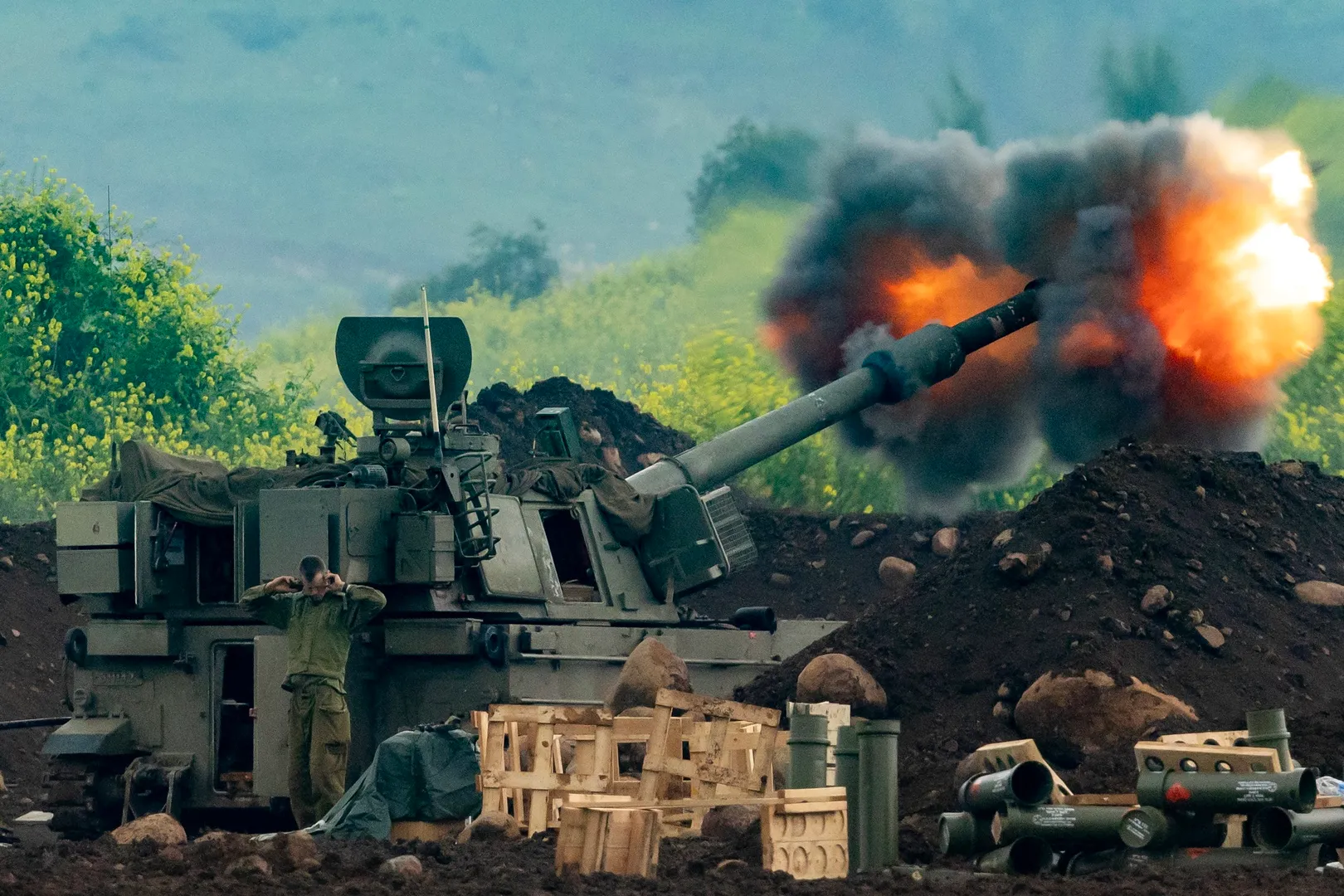
March 16 (UPI) — The Israeli military announced Monday that soldiers were conducting “limited and targeted ground operations” in southern Lebanon against Hezbollah, amid its larger war against the militant organization’s backer, Iran.
Israeli troops were reported in Lebanon earlier this month, but Monday’s announcement appears to formalize and broaden the mission. The language in the announcement was also consistent with other reports that Israel may be planning to significantly expand its ground operation.
“This activity is part of broader defensive efforts to establish and strengthen a forward defensive posture, which includes the dismantling of terrorist infrastructure and the elimination of terrorists operating in the area, to create an additional layer of security for residents of northern Israel,” the IDF said in a social media statement.
Israel has been attacking Hezbollah in Lebanon for years, and launched a ground operation there in October 2024 that ended with a fragile cease-fire, with both sides accusing the other of violations. Fighting erupted again late last month after the United States and Israel launched a war against Iran.
Specifics about the ground operation were minimal, including the day it began, with the IDF stating on Telegram that the troops entered Lebanon “in recent days.”
Troops from the 91st Division are conducting what the Israel Defense Forces called “limited and targeted ground operations” against Iran-backed Hezbollah strongholds.
Videos of the operation taken from apparent night-vision cameras worn by the soldiers and distributed by the IDF online show Israeli forces and military vehicles seemingly operating in southern Lebanon.
The operation was aimed at enhancing the forward defense area and was part of broader efforts to strengthen Israel’s forward defensive posture, the IDF said, which is consistent with reporting by Axios that Israel plans to seize all of Lebanon south of the Litani River and will be a major operation.
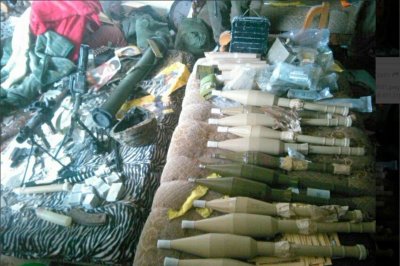
The IDF said airstrikes were conducted before the soldiers of the 91st Division moved in, with a Hezbollah site attacked on Saturday. Troops on Sunday searched the area and found a storage facility housing dozens of rockets, explosive devices and guns, it said in a Monday update on the operation.
Photos included in the release show rockets laid upon a couch inside a debris-filled residence.
Two Hezbollah operatives were also killed, it said, stating the militants had advanced on the Israeli troops.
“The IDF will continue to operate with determination against the Hezbollah terrorist organization following its deliberate decision to attack Israel on behalf of the Iranian regime,” the IDF said.
“The IDF will not tolerate any harm to the residents of the State of Israel.”
במסגרת מאמץ משימת ההגנה הקדמית: כוחות צה”ל חיסלו מחבלים ואיתרו מצבור אמצעי לחימה של מחבלי ארגון הטרור חיזבאללה
במהלך פעילות מבצעית של אוגדה 91, חיל האוויר תקף מבנה צבאי של ארגון הטרור חיזבאללה בו זוהתה פעילות של מחבלי הארגון בסוף השבוע.
אתמול, הכוחות סרקו במרחב המבנה ואיתרו בו… pic.twitter.com/IfLTvjhIZp— צבא ההגנה לישראל (@idfonline) March 16, 2026
The Israeli army says its forces are striking key sites in southern Lebanon, as fierce clashes with Hezbollah continue near the town of Khiam.
Published On 16 Mar 202616 Mar 2026
Share
The Israeli military says its troops have begun ground operations in southern Lebanon as fighting against Hezbollah intensifies around the strategic southern town of Khiam.
At least three air strikes struck the city of Khiam, Al Jazeera Arabic reported on Monday.
Recommended Stories
list of 4 itemsend of list
Khiam, a stronghold of Hezbollah, is strategically located and is seen as a gateway to southern Lebanon. The latest war started after Hezbollah fired rockets in response to the killing of Iran’s Supreme Leader Ayatollah Ali Khamenei. Hezbollah had not attacked Israel since the 2024 ceasefire despite repeated Israeli violations of the United States-brokered deal.
On Monday morning, two Israeli air raids targeted the town of Yater, Al Jazeera Arabic reported. There were no immediate reports of casualties or damage.
Israel also launched raids on Burj Qalawiya, Sultaniya and Chaqra, also in southern Lebanon, according to Al Jazeera Arabic. Two raids were also conducted on the towns of Qantara and as-Sawana.
The Israeli army, in a post on X, said on Monday that its troops in recent days were “focused on ground operations on key targets in southern Lebanon to expand the forward defence area”.
“This operation is part of the effort to establish the forward defence, which includes destroying terrorist infrastructure and eliminating terrorists,” it added.
Importance of Khiam
Khiam sits on high ground just a few kilometres from the Israeli border and the Litani River, giving it a commanding view over northern Israel and nearby Lebanese plains.
Al Jazeera’s Zeina Khodr said a “major battle was under way” in and around Khiam. “The elevation of Khiam for both sides gives them a strategic advantage,” she said.
Moreover, Khodr noted the town lies on a “long and important junction … a road that leads to the eastern and western sectors of southern Lebanon”.
“One of the roads leads to the Bekaa Valley too in eastern Lebanon, another area where Hezbollah has influence,” she said.
“What Israel has been trying to do is really cut the supply lines and the difficult capabilities of Hezbollah, so it’s unable to bring in more weapons and fighters to areas south of the Litani River.”
More than 800,000 people, including women and children, have been forced to flee from their homes as the Israeli army issued evacuation orders for many neighbourhoods in southern Lebanon, as well as the capital, Beirut.
Israeli attacks in Lebanon have so far killed at least 850 people, among them 107 children and 66 women.
Weekly insights and analysis on the latest developments in military technology, strategy, and foreign policy.
U.S. President Donald Trump says there “will be no deal” with Iran unless it surrenders unconditionally, a day after Iran’s Foreign Minister said the country was prepared to stand up to a ground invasion. Trump has also said that any new leadership of the country would have to be “acceptable” to the United States. This follows what has now been seven days of heavy U.S.-Israeli bombardment, including a new major wave of strikes by Israel targeting Iranian leadership in Tehran overnight.
You can catch up with our past coverage of ongoing operations against Iran here.Latest updates on the war are down the page of this article.
Trump’s statement was made via a post on his Truth Social social media network.
“There will be no deal with Iran except UNCONDITIONAL SURRENDER!,” he wrote. “After that, and the selection of a GREAT & ACCEPTABLE Leader(s), we, and many of our wonderful and very brave allies and partners, will work tirelessly to bring Iran back from the brink of destruction, making it economically bigger, better, and stronger than ever before. IRAN WILL HAVE A GREAT FUTURE. “MAKE IRAN GREAT AGAIN (MIGA!).”
BREAKING: Trump on Iran:
There will be no deal with Iran except UNCONDITIONAL SURRENDER!
After that, and the selection of a GREAT & ACCEPTABLE Leader(s), we, and many of our wonderful and very brave allies and partners, will work tirelessly to bring Iran back from the brink of… pic.twitter.com/6Q6TqyHTbt
Trump has increasingly talked about changing the regime in Tehran in recent days, and his desire to be personally involved in that process. This comes despite pushback from other U.S. officials about regime change being an explicit goal of what has been dubbed Operation Epic Fury.
“We want to go in and clean out everything,” Trump told NBC Newsin a phone call on Thursday. “We don’t want someone who would rebuild over a 10-year period.”
“We want them to have a good leader,” the president added. “We have some people who I think would do a good job.”
Trump declined to offer any names, but said he was taking steps to make sure the people on his list make it through the war alive.
EXCLUSIVE: Trump says he wants Iran’s leadership structure gone and wants to ensure his own list of possible leaders survive the war. https://t.co/KRwAmgz2tN
Trump acknowledged that Khamenei’s son, Mojtaba Khamenei, is the most likely successor, but finds that outcome unacceptable and insists he play a role in determining Iran’s next leader, Axios reported.
“They are wasting their time. Khamenei’s son is a lightweight,” Trump told Axios. “I have to be involved in the appointment, like with Delcy in Venezuela.”
Trump was referring to the Venezuelan Vice President Delcy Rodriguez, who took over after the capture of dictator Nicolas Maduro in a dramatic U.S. operation in January.
🚨 EXCLUSIVE: Trump says he must be involved in picking Iran’s next leader.
He said that Mojtaba Khamenei, son of assassinated supreme leader Ali Khamenei, is the most likely successor — and finds that unacceptable.https://t.co/73b4PVOLW2
Trump had also called for Iran’s unconditional surrender during the 12 Day War between Israel and Iran last year, before helping broker a ceasefire agreement between the parties.
The last time Trump demanded Iran’s “unconditional surrender” was during the 12-Day Israel–Iran war (June 13–24, 2025).
Trump twice demanded Iran’s “unconditional surrender” back then.
Before Trump made his unconditional surrender demand, U.S. Navy Adm. Brad Cooper, commander of U.S. Central Command (CENTCOM), laid out how destructive Epic Fury has been to Iran’s military.
“Over the last 24 hours of the operation, compared to where we were at the start, ballistic missile attacks have decreased by 90%, drone attacks have decreased by 83% since day one,” he told reporters, including from The War Zone, during a press conference at CENTCOM headquarters in Tampa, Florida, on Thursday evening. Cooper added that these attacks have also wiped out a large chunk of Iran’s Navy, destroying 20 ships so far.
U.S. Admiral Brad Cooper gives update on Iran: “We are now starting our sixth day of a historic mission to eliminate Iran’s ability to threaten America. The president and Secretary Hegseth have been crystal clear in their expectations and we are at a high level of execution.” pic.twitter.com/Acr4WpQJpc
Overnight, the Israeli Defense Forces (IDF) said it carried out a massive 50-jet raid on Tehran, targeting an underground bunker complex intended for use by Supreme Leader Ali Khamenei and other top leaders. Khamenei was killed elsewhere in the opening phase of what the IDF called Operation Roaring Lion.
The bunker “spanned multiple streets in the heart of Tehran and contained numerous entrances and meeting rooms” for senior Iranian leaders, the IDF explained. It was intended to be used by Khamenei as “a secure emergency command center,” but after his death, “the compound continued to be used by senior Iranian regime officials,” the IDF claimed.
הבונקר התת-קרקעי, נבנה מתחת למתחם והיה נכס חירום מאובטח לניהול הלחימה על ידי המנהיג, שחוסל טרם הספיק להשתמש בו במבצע ‘שאגת הארי’. לאחר חיסול ח’אמנהאי, המתחם המשיך לשמש את בכירי המשטר האיראני.
לאורך שנים, המשטר השקיע את מאמציו להקמת המתחם התת-קרקעי, במטרה לבסס עבורו מקום לקידום… pic.twitter.com/LlPmHSFlR7
The “senior commander” targeted by these Israeli air strikes was Asghar Hijazi, Times of Israel military correspondent Emanuel “Mannie” Fabian reported on X, citing Israeli defense sources.
“Hijazi is said to be the acting head of the supreme leader’s office, following the killing of Ali Khamenei,” Fabian added.
The “senior Iranian commander” targeted in an Israeli airstrike in Tehran a short while ago is Asghar Hijazi, according to Israeli defense sources.
Hijazi is said to be the acting head of the supreme leader’s office, following the killing of Ali Khamenei. https://t.co/7T58UKmkLp
— Emanuel (Mannie) Fabian (@manniefabian) March 6, 2026
Videos emerging from Tehran showed multiple explosions and ensuing fireballs rising in the distance. Local residents described the attack as “the worst, strongest, and most horrifying ever.”
For their part, Iranian officials have been publicly rejecting the possibility of new talks and/or a ceasefire with the United States and Israel amid the ongoing conflict. Iran’s Foreign Minister Sayed Abbas Araghchi also said yesterday that his country was prepared for a ground invasion.
“Relying on its defensive capabilities and the support of the Iranian nation, the Islamic Republic defends the country’s national sovereignty and territorial integrity within the framework of its inherent right to legitimate self-defense and will respond decisively to any aggressive act,” Araghchi told his Cuban counterpart today.
Significant pressure is clearly being put on the regime in Tehran to capitulate, at least to some degree. Top Iranian leadership figures are being actively targeted, as are individuals who could step in to fill the resulting voids. What the U.S. government, as well as its Israeli allies, may actually be willing to accept in order to bring the conflict to an end remains to be seen.
We have concluded our rolling coverage in this piece.
UPDATE: 5:33 PM EST –
After a meeting with major defense contractors called as the U.S. continues to burn through munitions during Epic Fury, Trump said they were boosting weapons production.
“They have agreed to quadruple Production of the ‘Exquisite Class’ Weaponry in that we want to reach, as rapidly as possible, the highest levels of quantity,” the president proclaimed. “Expansion began three months prior to the meeting, and Plants and Production of many of these Weapons are already under way.”
In his post, Trump again asserted that there is “a virtually unlimited supply of Medium and Upper Medium Grade Munitions, which we are using, as an example, in Iran, and recently used in Venezuela. Regardless, however, we have also increased Orders at these levels.”
Air Force Chief of Staff Gen. Ken Wilsbach posted a message on X praising airmen for their efforts during Epic Fury.
U.S. Treasury Secretary Scott Bessent said “tonight will be our biggest bombing campaign” against Iran.
“We will do the most damage to the Iranian missile launchers and the factories that built them.”
INTERESTING: U.S. Treasury Secretary Scott Bessent on Iran:
Tonight will be our biggest bombing campaign.
We will do the most damage to the Iranian missile launchers and the factories that build the missiles. pic.twitter.com/zCYvaytdeC
Videos have emerged on social media claiming to show attacks across Iraq.
Some purport to show an attack on Camp Victory, a facility housing U.S. forces near Baghdad’s international airport. You can see explosions followed by fireballs and smoke in the video. It is not clear who is attacking.
🇮🇶🇮🇷🇺🇲‼️ FEROZ BOMBARDEO IRANÍ: REPORTAN QUE LA BASE CAMPO VICTORIA (EEUU) EN BAGHDAD ESTARÍA EN LLAMAS POR ATAQUE CON 2 MISILES Y DRONES pic.twitter.com/a7VAMWrBpv
— (FRAPP) ANTIFASCISTA #AntiKast #OrgullosoDel42% (@Informa3Chile) March 6, 2026
Another video shows a claimed strike by U.S. helicopters on an Iranian-backed militia group in Mosul. We cannot independently confirm any of these claims and have reached out to CENTCOM for more information.
US helicopters struck at least twice a Kataeb Seyyed a-Shuhadaa’ HQ in al-Rashidiya, Mosul, tonight. KSS is an Iranian-backed militia that has carried out attacks against Iraqi Kurdistan & US interests in Iraq under the facade group Awliyaa’ a-Damm. pic.twitter.com/JdG9u5nqWt
There is also a video claiming to depict an Iranian drone strike on energy facilities in Basra.
Iranian drone strikes hit energy infrastructure in Burjesia/Basra, including a Baker Hughes facility, the Rumaila oil field, and Basra airport. pic.twitter.com/CeeHpKKFSk
The IRGC offered a threatening response to Trump’s order to have U.S. Navy vessels escort commercial ships through the Strait of Hormuz. Iran has previously claimed it had shut down the Strait, and the IRGC said it welcomes these escorts, with a reference to the American supertanker Bridgeton, which hit a mine in the Persian Gulf while being escorted by U.S. Navy warships in 1987. That incident took place in the so-called “Tanker War” that took place during the Iran-Iraq War.
IRGC Spox:
Iran strongly welcomes US’ willingness to escort oil tankers and the claim of the presence of US forces for passage through the Strait of Hormuz, and in fact, the IRGC is waiting for their presence.
Amid all the turmoil, the French aircraft carrier Charles de Gaulle has passed through the Strait of Gibraltar and is now in the Mediterranean.
France’s aircraft carrier Charles de Gaulle has passed through Gibraltar into the Mediterranean Sea and is moving toward the Middle East. pic.twitter.com/TCK9Wuv5i6
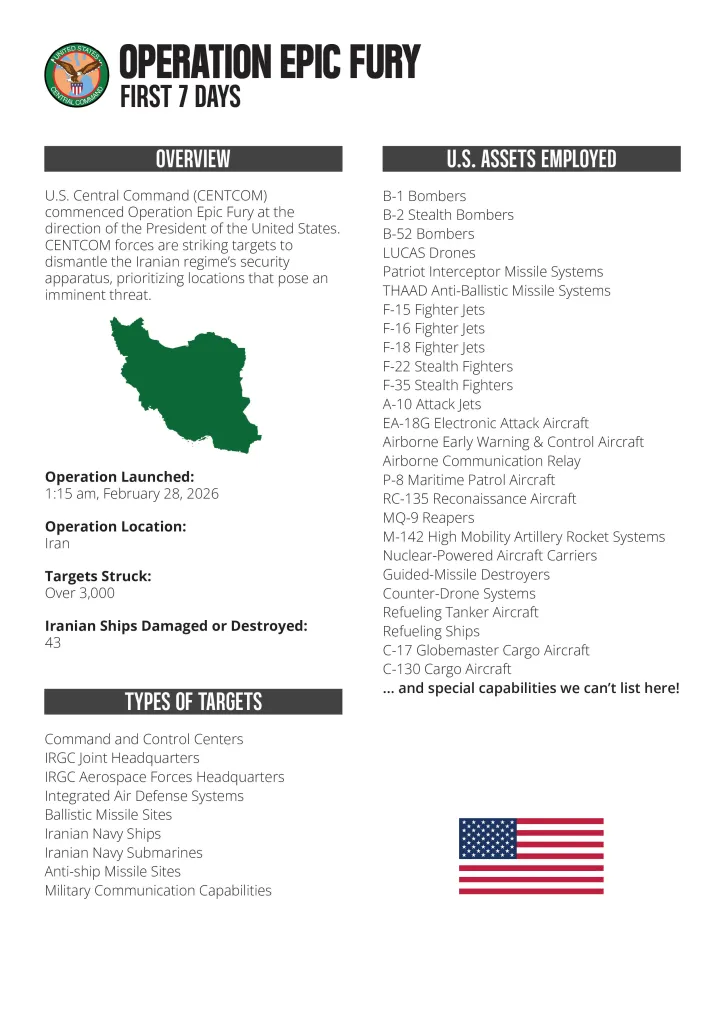
CENTCOM released its latest Epic Fury graphic update showing targets hit and assets deployed. So far, more than 3,000 targets have been hit, including 43 Iranian ships that have been destroyed or damaged, according to the command.
(CENTCOM)
The aircraft carrier USS Gerald R. Ford has transited the Suez Canal and is now in the Red Sea, according to the Navy. Images posted on the Pentagon’s video and image distribution site show the carrier and one of its escorts, the Arleigh Burke class guided missile destroyer USS Bainbridge in the canal.
The world’s largest aircraft carrier, USS Gerald R. Ford (CVN 78), transits the Suez Canal, March 5, 2026. (U.S. Navy photo) U.S. Central Command Public AffaArleigh Burke class guided-missile destroyer USS Bainbridge (DDG 96) transits the Suez Canal, March 5, 2026. (U.S. Navy photo) U.S. Central Command Public Affa
A Chinese satellite image emerged of the Ford and two of its escorts crossing through the canal. This move makes sense considering that the ballistic missile threat against Israel that the carrier strike group was helping defend against has diminished. Being in the Red Sea would provide assets needed to defend against any attacks from the Houthis of Yemen should that Iranian proxy decide to get into the fight.
The Pentagon also released photos of B-52 Stratofortress bombers that took part in Epic Fury.
Aircrew members board a B-52H Stratofortress prior to taking off in support of Operation Epic Fury, March 4, 2026. (U.S. Air Force photo) U.S. Central Command Public Affa
There are claims that Iran struck a Patriot air defense site in the UAE, however we cannot confirm this. We reached out to CENTCOM for more details.
“There may be other countries to join action against Iran and its interests in the region,” the outlet noted.
These claims come days after Azerbaijani officials vowed they would retaliate for an Iranian drone strike on their territory that wounded four people.
We cannot confirm that, however, video emerged earlier today showing Azerbaijani military equipment being moved closer to that nation’s border with Iraq.
The U.K. Defense Ministry (MoD) issued its latest update on operations in the Middle East.
Iran’s intelligence ministry said on Thursday that “separatist terrorist groups” planned to enter the country from its western borders and carry out attacks in urban and border areas, taking advantage of wartime conditions, Iran International reported. “A joint preemptive operation by the intelligence ministry and the Islamic Revolutionary Guard Corps destroyed a significant portion of the groups’ positions and capabilities and inflicted heavy losses,” the ministry said in a statement.
UPDATE 1:07 PM EST –
White House Press Secretary Karoline Leavitt offered an explanation of what Trump means by his unconditional surrender demand on Iran.
“When Trump, as Commander in Chief, determines that Iran no longer poses a threat to the US and the goals of Operation Epic Fury have been fully realized, then Iran will essentially be in a place of unconditional surrender, whether they say it themselves or not,” she explained.
Karoline Leavitt on Iran:
When Trump, as Commander in Chief, determines that Iran no longer poses a threat to the US and the goals of Operation Epic Fury have been fully realized, then Iran will essentially be in a place of unconditional surrender, whether they say it themselves… pic.twitter.com/RMQpAJxx4E
The Army in recent days abruptly canceled a major training exercise for the headquarters element of the 82nd Airborne Division at Fort Bragg, North Carolina, according to The Washington Post.
“This is fueling speculation within the Defense Department that soldiers specializing in ground combat and a range of other missions may be sent to the Middle East as the conflict with Iran widens,” the publication posited.
SCOOP: The Army in recent days canceled a training exercise for the headquarters element of the 82nd Airborne Division, fueling speculation among soldiers that they may be called upon for a still undefined mission as the war with Iran widens.
Ukraine is in talks with the U.S. and Gulf allies about replicating Kyiv’s acoustic detection network to counter Iranian attack drones, Financial Times is reporting, citing people familiar with the matter. Consisting of thousands of acoustic sensors across Ukraine, this system helps detect and track incoming Russian kamikaze drones, alert traditional air defenses in advance, and also dispatch ad hoc drone hunting teams to shoot them down.
New: Ukraine is in talks with the US and several Gulf states about replicating Kyiv’s acoustic detection network to counter Iranian attack drones, according to people familiar with the matter. w/ @fabrice_deprezhttps://t.co/ME2ErGPq8X
Air Force Gen. Dan Caine, chairman of the Joint Chiefs of Staff, posted a message on X honoring six soldiers killed in Kuwait by an Iranian drone on March 1.
“It is with profound sadness that we mourn the loss of six American heroes from the 103rd Sustainment Command U.S. Army Reserves out of Des Moines, Iowa,” Caine noted. “Major Jeffrey R. O’Brien, Captain Cody A. Khork, Chief Warrant Officer 3 Robert M. Marzan, Sergeant First Class Nicole M. Amor, Sergeant First Class Noah L. Tietjens, and Sergeant Declan J. Coady.”
A message from the Chairman of the Joint Chiefs of Staff Gen. Dan Caine:
It is with profound sadness that we mourn the loss of six American heroes from the 103rd Sustainment Command U.S. Army Reserves out of Des Moines, Iowa: Major Jeffrey R. O’Brien, Captain Cody A. Khork,…
Secretary of State Marco Rubio told Arab foreign ministers in a series of phone calls Thursday that the war is expected to last several more weeks, Axios is reporting, citing “sources with direct knowledge of the conversations.”
Rubio said the current military focus is on Iran’s missile launchers, stockpiles and factories, the outlet reported, adding that the secretary “told the ministers the U.S. goal is not regime change — while simultaneously making clear Washington wants different people running the country.”
U.S. Secretary of State Marco Rubio told Arab foreign ministers in calls Thursday that the war with Iran is expected to last several more weeks, according to sources familiar with the conversations. Rubio said the current military focus is on Iran’s missile launchers, stockpiles…
At least one B-1B Lancer bomber landed at RAF Fairford in the U.K. today. This is part of an ongoing buildup of U.S. forces as Epic Fury drags on.
UPDATE: 12:58 PM EST –
“The Iranian terrorist regime has attacked 12 different countries and continues to deliberately target civilians through the Middle East,” CENTCOM commander Adm. Brad Cooper has said in a new statement. “Last night, Iranian forces fired seven attack drones at civilian, residential neighborhoods in Bahrain. This is unacceptable and will not go unanswered. We will continue work with regional partners to address this threat to innocent people across the region.”
There are as-yet unconfirmed reports that U.S. B-1 bombers are headed to RAF Fairford in the United Kingdom, and that they will begin flying strikes on Iran from that base. In a press conference late yesterday, Secretary Pete Hegseth and Adm. Cooper both talked about the continued flow of U.S. forces, including bombers, to support Operation Epic Fury.
USAF B-1B bombers from Dyess AFB are expected to deploy to RAF Fairford in the near term.
Their arrival would significantly increase the tempo of long-range strike operations against targets in Iran. The B-1B carries one of the largest conventional payloads in the U.S. arsenal,…
Restricted airspace around RAF Fairford for the next month (at least) shows the USAF will be deploying bombers to the airfield shortly. Note: NOTAMs are on the www. Credit JS below. https://t.co/i0qiHSGs0m
French authorities have denied that U.S. aircraft are using bases in the country to support operations over Iran, but are instead operating from them to aid in “the defense of our partners in the region.”
✖️No U.S. assets deployed on French bases in the Middle East.
✔️Yes: U.S. assets accepted on Istres Airbase (France) as part of a routine NATO procedure. They are not involved in U.S. operations in Iran but strictly supporting the defense of our partners in the region. https://t.co/NcZ1TyWc8z
It has now been reported that the U.S. Navy submarine that torpedoed the Iranian frigate IRIS Dena in the Indian Ocean was the Los Angeles class USS Charlotte. Separately, another Iranian ship has now sought refuge in India. This is in addition to the IRIS Bushehr, which is now impounded in Sri Lanka.
7th Fleet Los Angeles-class fast-attack sub USS Charlotte (SSN 766) fired the single Mk 48 torpedo that sunk Iranian frigate IRIS Dena (75), @JimLaPorta reports.
One of 30+ Iranian vessels destroyed this week and the first enemy ship sunk by a U.S. sub since WW2. Periscope view: pic.twitter.com/gAGc9I7BjY
BREAKING: Iranian Navy warship IRIS Lavan docked in Kochi with its 183 member crew on March 4, the same day that IRIS Dena was torpedoed. The ship had requested accommodation on Feb 28 and received permission on March 1. The crew is being accommodated in Indian Navy facilities. pic.twitter.com/yLVwPvu54L
The vessel requested entry into Sri Lankan waters on March 4 citing mechanical issues, hours after U.S. forces sank companion vessel IRIS Dena off Galle, killing almost 100 Iran sailors https://t.co/T1wF2qvz2Ipic.twitter.com/13ljHDPTn7
The satellite image below is said to show the aftermath of an attack on an Iranian underground ballistic missile facility.
The video below is said to show an Iranian ballistic missile attack on Prince Sultan Air Base in Saudi Arabia, though it is currently unconfirmed.
Video footage purported to show an Iranian ballistic missile strike on Prince Sultan Air Base in Al-Kharj, Saudi Arabia, with the missile impacting very close to several U.S. servicemembers, thankfully said to have resulted in only minor injuries to personnel at Prince Sultan. pic.twitter.com/Nlju8TCZ22
Pictures and videos showing Iranian ballistic missiles with cluster munition payloads being employed continue to appear online. Images of the submunitions themselves have also now been emerging following the use of these missiles.
The Ministry of Defense of the United Arab Emirates (UAE) says the country’s forces intercepted another nine ballistic missiles and 109 drones fired by Iran today. UAE authorities say they have now intercepted 190 ballistic missiles, eight cruise missiles, and 1,110 drones since the conflict began.
UAE air defences intercept 9 ballistic missiles, 109 drones
The UAE Ministry of Defence announced that the country’s air defence systems detected 9 ballistic missiles today (6th March 2026), all of which were intercepted and destroyed.
MS NOW‘s “Morning Joe” is reporting that authorities in the UAE have now frozen billions of dollars in Iranian assets held in the country.
BREAKING NEWS: #morningjoe has learned that the UAE has frozen billions of dollars in Iranian assets. The move will likely have crippling effects on an already weakened Iranian economy. https://t.co/Da41RisQqY
What is said to be the first U.S. State Department-facilitated evacuation flight from Israel has arrived in Greece, according to JewishInsider.
New from me: The first State Department evacuation flight from Israel landed in Athens on Friday afternoon, where its passengers were greeted on the tarmac by U.S. Ambassador to Greece Kim Guilfoyle.https://t.co/ICBx7NpaHH
U.S. Central Command (CENTCOM) has now released a video showing a strike on the Iranian ‘drone carrier’ Shahid Bagheri, an unusual ship you can read more about here. At a press conference late yesterday, U.S. Navy Adm. Brad Cooper, head of CENTCOM, said an unnamed “Iranian drone carrier ship, roughly the size of a World War II aircraft carrier” had been targeted in “just the last few hours.” In a post on X on March 2 denying claims of an attack on a U.S. carrier, CENTCOM said “the only carrier that has been hit is the Shahid Bagheri.” It remains unclear whether the Shahid Bagheri was struck multiple times.
U.S. forces aren’t holding back on the mission to sink the entire Iranian Navy. Today, an Iranian drone carrier, roughly the size of a WWII aircraft carrier, was struck and is now on fire. pic.twitter.com/WyA4fniZck
A video clip, taken from the shore, has now also emerged that is said to show the Shahid Bagheri on fire following a strike. The U.S. military has made clear that the destruction of Iran’s naval capabilities is a core objective of Operation Epic Fury.
U.S. Central Command continues to release other footage from ongoing strikes on targets in Iran.
Iranian targets are being decimated by U.S. forces, paving the way for continued delivery of overwhelming American military firepower. pic.twitter.com/wQUER9cXWw
✈️⛽️ Additional USAF Tankers (6) heading to Ben Gurion airport/airbase, Tel Aviv.
There were around 30 of them already parked there yesterday. Their role is to refuel different fighter jets in the region attacking Iran. pic.twitter.com/YJ6yBr6mRJ
The Israel Defense Forces have shared a video taken in the cockpit of a fighter flying over Iran.
The Israeli Air Force publishes footage from the cockpit of IAF fighter jets flying over Iran.
“We continue to fight, as required around the clock, and feel your support all the time. We wish you, Israeli citizens, a safe and quiet Shabbat,” a pilot is heard saying in a… pic.twitter.com/cvljwuAJ02
— Emanuel (Mannie) Fabian (@manniefabian) March 6, 2026
Deputy Prime Minister of the United Kingdom David Lammy has said the country would be within its rights to take “defensive action” in response to Iranian threats, including taking “down sites [Iran] that are anticipating attacking our people.” There are no indications that British forces have struck targets in Iran yet.
Publicly available data continues to show a decline in the number of Iranian ballistic missiles and drones launched in retaliatory attacks over the course of the conflict so far.
Day 8 👇
Iran Missile launches during the first 8 days of conflict:
🚀 Ballistic Missiles: 🔴 Day 1 — 350 🔴 Day 2 — 175 🔴 Day 3 — 120 🔴 Day 4 — 50 🔴 Day 5 — 40 🔴 Day 6 — 32 🔴 Day 7 — 28 🔴 Day 8 — 15
CBS News has reported that quadcopter-type drones may have conducted surveillance of U.S. facilities in Kuwait ahead of an attack that killed six American servicemembers.
Iranian intelligence utilized various means to track service members after they left the base.
➡️ In anticipation of the offensive and expected retaliation to include strikes on Camp Arifjan, the Tactical Ops Center (TOC) was moved to the same facility at the port used during… https://t.co/R8VcPGIESm
Qatari authorities say an Iranian attack struck facilities housing its naval personnel in Bahrain.
Qatar Condemns Iranian Attack on Buildings in Bahrain Housing Qatari Amiri Naval Forces Personnel
Doha | March 06, 2026
The State of Qatar condemns, in the strongest terms, the Iranian attack that targeted buildings in various areas of the sisterly Kingdom of Bahrain housing… pic.twitter.com/9Zd8lihCEi
— Ministry of Foreign Affairs – Qatar (@MofaQatar_EN) March 6, 2026
The Washington Post has reported that Russia may be providing Iran with information to help with targeting American forces in the Middle East, citing unnamed officials.
Exclusive: Russia is providing Iran with targeting information to attack American forces in the Middle East, the first indication that another major U.S. adversary is participating — even indirectly — in the war. https://t.co/SfBeKxq7zC
— The Washington Post (@washingtonpost) March 6, 2026
The video below is said to show the remains of an Iranian ballistic missile and its transporter-erector-launcher inside a structure following a strike.
A ballistic missile launcher concealed inside a hay storage site was struck today by U.S. and Israeli aircraft.
The boy who filmed the aftermath wrote: “It doesn’t matter where the launchers are, the Americans and Israelis will find them and target them heavily. Kudos to them.” pic.twitter.com/swI0PvEH6a
The videos below are said to show strikes on targets in the Iranian city of Ilam.
The satellite imagery below is said to show the aftermath of Iranian attacks earlier this week on facilities in Fujairah in the United Arab Emirates (UAE).
🇦🇪 Satellite images of oil facilities in Fujairah, UAE.
❗️UAE is considering freezing billions of dollars in Iranian assets held in the country and possibly seizing Iranian ships, – WSJ
🇶🇦 Qatar says the ongoing war could force Gulf countries to stop energy exports if it… pic.twitter.com/K5U49eikL0
South Korea’s Chosun newspaper has reported that 1,000 guidance kits for Paveway-series laser-guided bombs were moved from storage at Osan Air Base in December, possibly in support of preparation for Operation Epic Fury. However, the sourcing for the story is unclear, and it says that officials in the country have declined to comment.
The U.S. moved 1,000+ Paveway guided-bomb kits from Osan Air Base to the U.S. in Dec 2025, possibly later used in strikes on Iran.
Seoul says the transfer happened without prior consultation.
South Korean media outlets are also reporting that the Cheongung-II surface-to-air missile system, which is in service in the UAE, has made its combat debut, citing members of the country’s National Assembly and unnamed military officials.
S Korea’s Cheong-Gung air defense system in service since 2015.
It made its combat debut with UAE air defense forces, successfully intercepting several Iranian ballistic missiles on 3 March 2026. pic.twitter.com/OT3Pzj1UVk
— Christopher Wipper (@SGTWipper1Each) March 5, 2026
Pro-Iranian Iraqi militants claim to have launched kamikaze drones aimed at Jordanian military bases.
#USA / #Iraq / #Jordan 🇺🇸🇮🇶🇯🇴: Iraqi group “Rijal Al-Bas Al-Shadid” (Men of Great Strength) carried out attacks on Jordanian military bases.
Group seemingly launched several #Iran-made 🇮🇷 X-Tail “Shahed-101” Kamikaze Drones (OWA-UAVs) towards Jordan. pic.twitter.com/QT2ERJ7IJL
There are reports that ships continue to come under attack in and around the Strait of Hormuz. Maritime traffic through this highly strategic waterway continues to be at a virtual standstill due to the ongoing conflict.
While MOST vessels are waiting out the situation at the Strait of Hormuz, the Cook Islands flagged bitumen tanker PUSHPAK just sailed right through with AIS active. pic.twitter.com/FHiP76R8E9
Qatari Energy Minister Saad Sherida Al Kaabi has warned that all Gulf energy producers could halt production “within weeks and drive oil to $150 a barrel” if the ongoing conflict continues unabated in an interview with the Financial Times newspaper. Some oil fields are already cutting back production as available storage capacity in the country fills up as exports slow, according to The Wall Street Journal.
“Qatar expects all Gulf energy producers to shut down exports within weeks and drive oil to $150 a barrel, the country’s Energy Minister Saad al-Kaabi told the Financial Times in an interview published on Friday. “Everybody that has not called for force majeure we expect…
The U.S. government is reportedly easing sanctions on Russian oil exports to India amid disruption in global markets as a result of ongoing operations against Iran, the Financial Times has also reported.
The US is temporarily easing sanctions on Russian oil sales to India to address supply shortages and reduce the impact of the surge in prices in the wake of US and Israeli attacks on Iran. The decision to ease sanctions represents a major shift in policy:https://t.co/v5X5lhptE4
The U.S. Embassy in Baghdad has issued a new alert saying U.S. nationals are “strongly encouraged to depart as soon as they are safely able to do so” and advising them to use overland routes given regional airspace closures. The Embassy has suspended regular consular services.
Security Alert – U.S. Embassy Baghdad, Iraq – March 6, 2026 – Update 1 Location: Iraq Event The U.S. government cares about your safety and will continue to share information you need to make informed decisions about your security. The U.S. government is assessing all options to… pic.twitter.com/MbEhCFSmGj
— U.S. Embassy Baghdad (@USEmbBaghdad) March 6, 2026
The Japan Self-Defense Forces will deploy a transport aircraft to the Republic of Maldives in the Indian Ocean as part of an effort to aid Japanese nationals in departing the Middle East.
“The Ministry of Foreign Affairs has reported that, with regard to supporting the departure of Japanese nationals, transportation for those staying in Kuwait, Bahrain, Qatar, and the United Arab Emirates will be carried out sequentially starting as early as tomorrow onward. In light of this, the Ministry of Defense is proceeding with preparations for the Self-Defense Forces as a precaution, in preparation for unforeseen circumstances such as the inability to operate civilian charter flights,” Japanese Defense Minister Shinjiro Koizumi wrote on X, according to a machine translation of the post below. “The one Air Self-Defense Force transport aircraft moving to and positioning in the Republic of Maldives will be operated by pilots, maintenance personnel, and others from the Air Support Command (the Air Self-Defense Force unit that conducts air transport of supplies and air traffic control), with medical officers also on board.”
Sri Lankan authorities have released a video showing Iranian sailors from the frigate IRIS Dena being rescued after it was torpedoed by a U.S. submarine in the Indian Ocean earlier this week.
New video released by the Sri Lankan navy shows Iranian sailors being rescued after a US submarine attack sank their ship in international waters. pic.twitter.com/LnbsLxlMWB
Reuters has reported that U.S. officials are increasingly of the view that American forces were responsible for a strike on a primary school for girls in Mindab, Iran, but that the investigation is ongoing. Iranian officials have said that 150 students died as a result. The school directly abuts an Islamic Revolutionary Guard Corps (IRGC) facility in Mindab, which is believed to have been the target of the strike.
The girls’ school in Minab, in southern Iran, was hit on Saturday during the first day of U.S. and Israeli attacks on the country. Iran’s ambassador to the U.N. in Geneva, Ali Bahreini, said the strike killed 150 students. Reuters could not independently confirm the death toll.
At a presser Wed morning, SecDef Pete Hegseth said that the U.S. investigating. “”All I know, all I can say, is that we’re investigating that,” Hegseth said. “We, of course, never target civilian targets.”
The Pentagon has not yet responded to an additional request for comment.
Gardening expert Charlie Dimmock has presented numerous TV shows beyond Ground Force and Garden Rescue and fans rated them highly
17:43, 12 Mar 2026Updated 17:43, 12 Mar 2026
Charlie Dimmock has been a fan favourite for decades(Image: BBC)
Fans of gardening expert Charlie Dimmock could be excused for not exploring much beyond Ground Force and Garden Rescue.
With over 150 episodes of Garden Rescue available to watch and 97 instalments of the ’90s favourite Ground Force, there’s no shortage of content. However, throughout her career, she’s created numerous other gardening programmes that slipped beneath most people’s notice.
One such programme is Charlie’s Garden Army, which aired in 1999 and 2000 across 12 episodes. The series featured Charlie alongside volunteer teams transforming derelate wasteland into beautiful public gardens.
She subsequently secured a presenting position on 2002’s The Joy of Gardening and 2001’s Charlie’s Gardening Neighbours, reports the Express.
In 2005, Charlie featured at the Hampton Court Palace Flower Show as a television presenter, and she’s also participated in coverage of the Chelsea Flower Show throughout the years.
Judging purely by IMDb ratings, though, several programmes actually surpass Ground Force in terms of viewer scores.
Ground Force’s typical rating stands at 7.2 stars out of 10 – but it’s eclipsed by Garden Rescue at 7.9 stars, and the Great British Garden Revival with an identical rating.
Charlie inadvertently fell into a television career whilst employed at a garden centre, and during the ’90s, she maintained that she “wasn’t famous” and didn’t perceive herself as a TV personality.
Reflecting on her television work in a 1999 interview with The Guardian, Charlie remarked: “In some ways, the television stuff isn’t unsatisfying, it’s very interesting.
“But the other day, I was at work [at the garden centre], the first time I’d been there properly for three or four weeks, and I thought, ‘God, this is nice!’
“‘You see people you know, regular customers, and there’s no hassle. You fall out of bed, go to work, potter around. It’s all right, really.'”
Garden Rescue is on BBC One and BBC iPlayer
For the latest showbiz, TV, movie and streaming news, go to the new **Everything Gossip** website.
Itamar Greenberg laughed when asked if he thought he should be afraid. The 19-year-old Israeli antiwar activist had just described being spat on in the street and is the target of an online hate campaign.
“Yes!” he finally responded. “If I thought about it, I probably should be. I just don’t have time.”
Voices like Greenberg’s are rare in Israel at a time when public clamour for war is growing, and genocidal language already familiar to millions of Palestinians is reemerging, but with a different target – Iran.
Officially, 11 Israelis have been killed in Iranian strikes since the US and Israel launched their war on Iran on February 28. What the actual number might be, or how many of Iran’s ballistic missiles may have penetrated the country’s Iron Dome defence shield, is unknown.
Speaking at the site of an Iranian missile strike in West Jerusalem, shortly after the start of the US-Israeli attacks on Iran, Israeli Prime Minister Benjamin Netanyahu returned to the use of apocalyptic language that has characterised the genocide his country has conducted in Gaza. Comparing Iranians with the Jewish people’s biblical foe, Amalek, who the Jews had been divinely ordered to wipe from the face of the planet, Netanyahu told reporters: “In this week’s Torah portion, we read, “‘Remember what Amalek did to you.’ We remember, and we act.”
So far, Iran claims to have launched strikes across Israel, saying its missiles and drones hit military sites, symbolic infrastructure, and even Netanyahu’s office. Tehran has described the attacks as precise and strategic, rather than indiscriminate and part of a broader regional response. Iran also claims to have targeted locations such as Tel Aviv, Ben Gurion airport and Haifa.
However, Israeli officials have denied many of the specific claims. Netanyahu’s office dismissed Iranian assertions about hitting his office, or affecting his condition, as “fake news”, with stringent reporting restrictions on Iranian strikes within Israel making confirmation either way difficult.
What is clearer is that against the drumbeat of Iranian strikes, the fervour for war appears to be increasing among the public. A poll carried out last week by the Israel Democracy Institute (IDI) suggested overwhelming public support for the war, with 93 percent of Jewish-Israeli respondents expressing support for the strikes on Iran, and 74 percent expressing support for Netanyahu, the country’s historically divisive prime minister.
“No one’s talking about opposition to the war,” Greenberg said, describing an environment in which figures from across Israel’s media and political landscape – with the exception of the left-wing Hadash party and antiwar organisations such as Greenberg’s Mesarvot – had lined up behind the war. “It’s also getting increasingly violent,” he said.
“We held a protest on Tuesday, where the police were already waiting. They beat and arrested us. I was illegally strip-searched,” he said, describing it as efforts intended to humiliate him.
Greenberg is no stranger to such tactics. Six months ago, after being arrested for protesting the genocide in Gaza, prison guards had threatened to carve a Star of David on his face, a permanent reminder of what they thought his priorities should be.
It’s not just antiwar activists who have faced the brunt of the Israeli security establishment’s force.
“The atmosphere is very violent,“ lawmaker Ofer Cassif of the Hadash party told Al Jazeera. “When I leave the house, I’m more worried by the danger posed by a physical attack by fascists than I am by any missile,” he said.
Hadash and lawmakers like Cassif have been targeted by physical threats and attacks throughout the Gaza war. But criticism of the Netanyahu government’s handling of Israeli captives in Gaza meant that opposition to the Gaza war was – comparatively – more socially acceptable. When it comes to Iran, the current climate is toxic, Cassif said.
“We’re often accused of supporting the regime in Tehran,” Cassif explained of the attempts to delegitimise their opposition to the war.
“We’re unequivocally not. We want to see that regime go, but we’re not going to allow Netanyahu to say he’s doing this for the Iranian people. He isn’t. That’s not just rhetoric, that’s fact. The Israeli leadership was just as supportive of the shah as the US, and he was a murderous dictator no less than the current regime,” Cassif said, referring to Mohammad Reza Pahlavi, the leader of Iran before the Islamic revolution.
For now, analysts and observers in Israel describe a society that believes it is almost engaged in a holy war.
“They brought an antiwar activist onto one of the light news programmes,” political analyst Ori Goldberg said from near Tel Aviv, “and she was treated like you would a flat-earther. It’s as if it’s inconceivable that anyone would oppose this war.
“Israel has become a society with no middle ground, no capacity for conversation. It’s as if our entire existence is dependent on our ability to do anything we want. And if the world tries to stop that, then the world’s anti-Semitic, and we all burn.”
WASHINGTON — The war between the United States and Iran entered its ninth day Sunday with no clear path toward deescalation, as President Trump said deploying American ground troops to the Middle East remains under consideration and Iran’s foreign minister rejected calls for a ceasefire.
Speaking to reporters on Air Force One on Saturday, Trump declined to rule out the possibility of sending U.S. forces inside Iran, saying it could “possibly happen” as the conflict intensifies.
“There would have to be a very good reason,” Trump said. “I would say if we ever did that they would be so decimated that they wouldn’t be able to fight at the ground level.”
As Trump weighs sending ground troops into the widening conflict, Iran has signaled it is not prepared to halt fighting and said it would be ready to fight American soldiers if they descend into the country.
“We have very brave soldiers, who are waiting for any enemy who enters into our soil to fight with them, and to kill them and destroy them,” Iran’s foreign minister, Abbas Araghchi, said in an interview with NBC’s “Meet the Press” on Sunday.
Araghchi added that Iran is not considering a ceasefire at this time. He said the United States and Israel would first need to explain “why they started this aggression and then guarantee there would be a permanent end of the war.”
“Unless we get to that, I think we need to continue fighting for the sake of our people and our security,” he said.
“We allow nobody to interfere in our domestic affairs. This is up to the Iranian people to elect their new leader,” Araghchi said. “It’s only the business of the Iranian people, and nobody else’s business.”
As of Sunday, it remained unclear who would succeed Iran’s former leader Ayatollah Ali Khamenei, 86, who was killed by American and Israeli strikes on the first day of the war. But the clerical body that will choose Iran’s next supreme leader appeared to be close to reaching a majority consensus on its pick, according to several news reports.
Trump said last week that Mojtaba Khamenei — the son of the former leader — would be an “unacceptable” choice.
As the war’s end remains nebulous, the battlefield actions continue to have an economic impact domestically, particularly on oil prices.
“If the war continues like this, there will be neither a way to sell oil nor have the ability to produce it,” Iran’s parliament speaker Mohammad Bagher Ghalibaf said in a social media post Sunday. He added the war would affect not just the U.S., but also the rest of the world “due to [Benjamin] Netanyahu’s delusions,” referring to the Israeli prime minister.
Israeli strikes on Sunday hit an oil storage facility in Tehran, marking what appears to be the first time a civil industrial facility has been targeted in the war.
U.S. Energy Secretary Chris Wright said Sunday that there’s currently a “fear premium in the marketplace” and sought to assure Americans that the soaring oil prices are a short-term problem.
“We never know exactly the timeframe of this,” Wright said in an interview with CNN’s “State of the Union.” “But in the worst case, this is a weeks, this is not a months thing.”
White House Press Secretary Karoline Leavitt echoed the same assurances in an interview with Fox News‘ “Sunday Morning Futures,” calling the rising gas prices a “short-term disruption.”
“Ultimately taking out the rogue Iranian regime is going to be a good thing for the oil industry,” Leavitt said. “Those prices are going to come back down just like they have over the course of the past year, because of President Trump’s American energy dominance agenda.”
The strike on the oil storage facility came as Netanyahu promised “many surprises” for the next phase of the conflict.
Iran also hit a desalination plant in Bahrain, and according to Araghchi, a U.S. airstrike damaged an Iranian desalination plan on Qeshm Island that is a critical drinking water supply in the parched deserts of the gulf.
“Attacking Iran’s infrastructure is a dangerous move with grave consequences. The U.S. set this precedent, not Iran,” Araghchi wrote in a post on X.
The United States has also come under scrutiny after evidence suggested that an American strike was likely responsible for an explosion at an Iranian elementary school that killed more than 165 people, most of them children.
Trump administration officials have said the matter is under investigation and that no determination has been made as to who was responsible for the strike. But on Saturday, Trump said Iran was to blame for the explosion.
“It was done by Iran,” Trump told reporters. “They’re very inaccurate as you know with their munitions. They have no accuracy whatsoever. It was done by Iran.”
Asked Sunday if Iran had any evidence that the strike was conducted by the Americans, Araghchi said it had to have been either the U.S. or Israeli military and said that Trump’s suggestion that Iran was responsible for the attack was “funny.”
“It is our school, these are our students and our girls and they are attacked by an American fighter, a jet fighter and they have been killed. Why [is] Iran responsible?” Araghchi said.
1 of 8 | A National Park Service volunteer etches a name onto paper at the Vietnam Veterans Memorial during Memorial Day weekend in Washington, D.C., on May 27, 2023. On March 8, 1965, about 3,500 U.S. Marines landed in Da Nang, South Vietnam. File Photo by Bonnie Cash/UPI | License Photo
March 8 (UPI) — On this date in history:
In 1817, the New York Stock Exchange was established.
In 1913, the Internal Revenue Service began to levy and collect income taxes in the United States.
In 1914, International Women’s Day was observed on March 8 for the first time and would go on to be marked on this day annually. The United Nations began officially celebrating the day in 1977.
In 1921, after Germany failed to make its first war reparation payment, French troops occupied Dusseldorf and other towns on the Ruhr River in Germany’s industrial heartland.
In 1943, Allied planes led by the Royal Air Force bombed the German city of Nuremberg, an important military manufacturing site. By the end of World War II, the vast majority of the city was destroyed by Allied bombings.
In 1957, Egypt reopened the Suez Canal to international traffic after Israel withdrew from occupied Egyptian territory.
File Photo courtesy Imperial War Museum
In 1965, about 3,500 U.S. Marines landed in Da Nang, South Vietnam. It was the first deployment of a large U.S. ground combat unit to the country, marking the United States’s official entry in the Vietnam War.
In 1974, the streaking epidemic that had been gripped parts of the United States appeared to run its logical course.
In 1983, U.S. President Ronald Reagan referred to the Soviet Union as an “evil empire” in a speech before the British House of Commons.
In 2008, U.S. President George W. Bush vetoed legislation that would have outlawed severe interrogation methods such as waterboarding used by the CIA. Bush said the proposal would eliminate “one of the most valuable tools in the war on terror.”
In 2013, former Argentine President Carlos Saul Menem and ex-Defense Minister Oscar Camilion were convicted of smuggling weapons to Croatia and Ecuador.
In 2014, Malaysia Airlines Flight 370 carrying 239 people vanished over the Indian Ocean en route to Beijing from Kuala Lumpur. A massive search found no sign of the plane and a government statement months later said all aboard — 227 passengers and 12 crew members — “are presumed to have lost their lives.”
In 2022, David Bennett, a 57-year-old man who became the first to receive a heart transplant from a genetically modified pig, died two months after the historic surgery.
In 2024, a U.S. Defense Department report found no evidence that the U.S. government is aware of and concealing the truth about unidentified anomalous phenomena, or UFOs.
European stock markets turned early gains into losses by early afternoon, following a rally in Asian markets, as investors searched for direction nearly a week after the United States and Israel launched strikes on Iran that sent global markets on a rollercoaster.
ADVERTISEMENT
ADVERTISEMENT
By 2 p.m. CET, Germany’s DAX was down by 0.2%, similar to the CAC 40 in Paris and Britain’s FTSE 100.
Madrid’s IBEX stood out by gaining 0.3% as the European benchmark European Stoxx 600 was down by a few points.
Before noon, European trading followed strong gains in Asia, where South Korea’s Kospi jumped by more than 9%, recovering much of Wednesday’s 12.06% fall.
“A decent showing on Wall Street last night and a solid performance from Asia on Thursday helped to spur part of Europe into a higher gear,” said Dan Coatsworth, head of markets at AJ Bell, commenting on the morning trade.
Uncertainty about the war in the Middle East has continued to rattle financial markets, with investors closely watching movements in the oil price.
Crude prices continued to rise. US benchmark WTI was trading 3% higher at around $76.8 a barrel, while the international benchmark Brent crude was up 2% after 2 pm CET.
“Brent crude continued to move higher, nudging above $83 per barrel and stoking fears that energy bills will go through the roof,” Coatsworth said.
“Oil is so important to the world economy and to see the price rise so quickly in just a week could leave investors feeling dazed and confused.”
He added that the situation in the Middle East was unfolding rapidly, making it difficult for investors to judge whether markets were facing a prolonged energy crisis or “just a short, sharp shock”.
Meanwhile, US futures slipped as Iran launched more missiles at Israel on the sixth day of the conflict.
The latest escalation included Iranian attacks on Israeli and American bases. Iran warned the United States would “bitterly regret” torpedoing an Iranian warship in the Indian Ocean, while a religious leader called for “Trump’s blood”.
Israel said it had begun a “large-scale” attack on Tehran.
On Wednesday, US stocks rose as oil prices steadied, albeit temporarily.
Investor sentiment was also supported by a report showing growth in US businesses in the real estate, finance and other services sectors accelerated last month at the fastest pace since the summer of 2022.
The S&P 500 rose 0.8%, erasing much of its losses since the conflict with Iran began.
The Dow Jones Industrial Average added 0.5%, while the Nasdaq Composite climbed 1.3%.
Another report suggested US private-sector employers increased hiring last month, a potentially positive signal ahead of a broader US government labour market report due on Friday.
Investors remain concerned about how long the conflict could last, how much inflation may rise due to higher oil prices, and what impact that could have on corporate profits.
Gains in major technology companies also lifted Wall Street.
Amazon rose 3.9%, while Nvidia added 1.7%. As two of the largest companies in the US market by value, their movements have a significant impact on the S&P 500.
Wednesday’s strong economic data was also welcome news for the Federal Reserve, which is trying to keep the labour market strong while bringing inflation under control.
However, the jump in oil prices could complicate that task by pushing inflation higher.
In other dealings on Thursday, gold trade was slightly down by early afternoon, losing 0.3% and traded at $5,120 an ounce.
The US dollar traded at 157.64 Japanese yen, while the euro slipped to $1.1623 from $1.1636.
Analysts said the dollar has strengthened partly because the US is seen as facing less direct risk from the conflict than other countries.
Democratic senators voiced alarm after a classified briefing on the US‑Israeli war with Iran, warning the Trump administration lacks clear objectives as lawmakers say they fear it could lead to a prolonged conflict and US ground troops.
Weekly insights and analysis on the latest developments in military technology, strategy, and foreign policy.
Details remain very limited at this time, but an F-15 went down in the Middle East. Accounts online claim it occurred over Kuwait. Videos show the aircraft in a flat spin while ablaze, with its vertical tails missing and fire coming from its empennage, before crashing into the ground. At least one crewman safely ejected.
Unconfirmed reports say it was a friendly fire incident, but we cannot confirm that nor who the jet belongs to. The Israeli Air Force or the USAF are highly active over the area to access Iran (primarily via eastern Iraq), as well defend against incoming drones. Both countries fly F-15s. Saudi Arabia and Qatar also fly the F-15 in the region. The aircraft involved looks like it could be Strike Eagle derivative, which is flown by all the countries listed, but that is also inconclusive at this time. Israel and Saudi Arabia also fly single seat F-15A/Cs. No USAF F-15Cs are deployed to the CENTCOM area of responsibility.
Footage of an F-15 falling out of the sky this morning over Kuwait, in an apparent “friendly fire” incident involving the U.S. Air Force. pic.twitter.com/GQvryfJ4C4
A video shows one crewman, without any visible insignia on his uniform, on the ground and standing near his parachute. Another view shows him or another crew member in the back of an SUV in relatively good condition, at least by the looks of it.
The U.S. F-15 fighter jet pilot who was down over Kuwait moments ago in a friendly fire incident is alive. He ejected and is now being taken care of by a group of Kuwaitis pic.twitter.com/mmAAFeZyl0
The battlespace is extremely complex and the threat of friendly fire is very real considering how many missiles and drones Iran is firing west and how much damage those weapons can do, as well as all the tactical aircraft coming and going. It isn’t clear if the incident had anything to do with Arab countries such as Saudi Arabia signaling they may jump into the fight, even in a defensive manner. Doing so is more complicated than it sounds and the U.S. and Israel may push to see this does not happen as deconflicting the airspace and integrating other allies into carefully crafted battle plans is extremely challenging at this stage and fraught with risk. This is exactly what I mentioned on X earlier tonight prior to this incident.
Easier said than done. They have very capable aircraft, but deconflicting air operations and altering planning may be more trouble than it’s worth and invite risk, at least at this stage. https://t.co/uhKS4CwT7L
At the same time, mechanical failures of a catastrophic nature also happen. We just don’t know what occurred at this time.
If this was a USAF or IAF jet, it would be the first known coalition aircraft loss of the war.
Once again, the details could and are likely to change as we find out more about what happened and who was involved.
UPDATE: 2:02 AM EST—
Additional videos and images are emerging, but we cannot verify them, so they must be treated as unconfirmed.
One video shows what is claimed to be the moment the F-15 was hit or had a detonation of some kind. Again, we cannot confirm the authenticity of the short clip:
Additional stills, claim to show two other crewman, a female aviator and another male with a bloody hand, on the ground. There are claims that two aircraft were shot down, not just one. Again, this should be treated as unconfirmed at this time.
Another image claims to show the moment one of the crewmen was approached by locales who demanded they surrender. The ejection seat’s life raft can be seen in the foreground: