An ‘epic moment’ has reportedly caught Celebrity Traitors bosses off guard and forced them to scrap huge plans they had for the series. The change will reportedly “make great TV”
Bosses have been forced to scrap a cliffhanger but what has replaces it “will make great TV”
The Celebrity Traitors bosses have been forced to scrap a cliffhanger but what has replaces it “will make great TV” according to sources.
The show sees twenty-one famous faces head to The Traitors castle, ready to play the ultimate game of deception and betrayal in the hope of winning a cash prize of up to £100,000 for a charity of their choice.
Fans quickly become invested in the show and to keep viewers hooked it has become known for it’s cliffhangers.
Tonight, viewers will tune in to watch the result of last Friday’s cliffhanger. The all-star line-up will be casting their votes on who to banish from Ardross Castle after the Withnail and I actor battled to convince them he was a faithful.
Actor Richard E. Grant was chosen by host Claudia Winkleman to be a Traitor alongside presenter Maya Jama. However, just minutes into the game, comedian Joe Lycett casually asked him what role he had been given, to which Grant immediately replied, “Traitor!”
He then spent the rest of the premiere manically back-pedaling to convince his fellow contestants that he was actually a Faithful who had simply made a bad joke.
A source told The Sun: “Cliffhangers on The Traitors have become legendary so bosses never want to disappoint and hope to have the nation on tenterhooks all week, waiting for Thursdays to come around – that’s part of the reason the format being fed out twice a week works.
“So they plot out likely moments in gameplay that will be the Friday cliffs. But during filming, something so unbelievable happened even execs didn’t see it coming.
“It forced them to throw plans out the window to accommodate the epic moment – which should make great TV.”
Production firm Studio Lambert decide what elements of the show would make good teasers during pre-production.
Speaking at the launch of the series, executive producer Sarah Fay said: “We always have an idea before going into pre-production what might be cliffhangers but we have to be so reactive because who knows what the story is going to be.
“Last year we went to deadlock [at the Round Table] when it was down to David [Olusoga] and Mark [Bonner] where it was a tie. We never knew that that was going to happen until obviously, it was happening right before our eyes.
“I think the beauty of this game as well is every episode we’ve probably got about three options of what the cliffhanger could be because it’s so nail-biting.”
The Mirror has contacted the BBC press office for comment.
The Celebrity Traitors returns tonight at 8pm on BBC One.
The best big city in the US has been crowned for the tenth consecutive year – and it’s not where you might think
This city is the best big city to visit in the US(Image: Getty)
The finest major city in the US has been crowned for the tenth year in a row – and it might surprise you. When considering American cities, New York typically comes to mind first.
However, according to a Condé Nast Traveler’s survey of over 800,000 respondents, Chicago takes the top spot. It’s the first and only city to claim the accolade for 10 consecutive years, initially securing the honour in 2017.
Since then, the city has experienced a decade of evolution that has seen it triumph time and time again.
Kristen Reynolds, President and CEO of Choose Chicago said: “This historic recognition belongs to the entire city of Chicago.
“From the hospitality professionals who welcome guests each day to the chefs, artists, musicians, entrepreneurs, and cultural leaders who create remarkable, only-in-Chicago experiences, it takes an entire city to sustain this standard for a decade.
“We do not stay at the top by standing still. Chicago is always evolving, always creating, and always giving visitors new reasons to come back”.
According to Condé Nast Traveler it’s “no wonder” the city has triumphed once more.
The article reads: “A world-class destination known for its impressive architecture, first-rate museums, brilliant chefs, and massive brewing scene, it’ll take several repeat visits to get through your list of must-dos.”
Mayor Brandon Johnson added: “This historic recognition reflects the creativity of our residents, the strength of our neighborhoods, and the excellence of the local institutions and businesses that welcome visitors from around the world.
For 10 consecutive years, travellers have recognised what Chicagoans already know: there is no place quite like our city.
“This remarkable milestone is a testament to everything Chicago has to offer and one our entire city can celebrate with pride.”
While Chicago claimed the top spot, New York failed to even crack the top three.
The Big Apple landed in fourth place, trailing behind Boston in third and San Francisco in second.
Flag football is now played by 20 million people in more than 100 countries and the rapid growth of the women’s game was key to it becoming one of five optional sports for LA28.
The decision is due before the end of 2026 so flag football could head into its Olympic debut knowing it will feature in back-to-back Games.
Participation has boomed in Australia and scores of athletes are switching from Australian rules football, netball and rugby, while the American team has recruited basketball players.
GB’s Brittany Botterill (football/softball), Phoebe Schecter (equestrian), Marta Mathews (football), Jochebed Frimpong (athletics), Jess Allen (badminton) and Angelica Tait (athletics/snowboarding) all competed in other sports before playing flag football.
US-born Emily Kemp even became an ultimate frisbee world champion last year, in the same summer she helped GB win the flag Euros.
“We are an elite team already, we’re a potential medal threat at LA28, but we’re really aspirational so we’re looking to widen our talent pool,” said Chad Ehlertsen, chief executive of the British American Football Association (Bafa).
“If you look at the top flag players around the world, they’ve generally come from certain sports. They have good hand-eye coordination, agility, speed, decision-making under pressure. These are the qualities we’re looking for.
“In many ways we’re not looking for elite flag players, we’re looking for elite athletes that have the potential [to transfer] and then our coaches will help them understand the game.”
Few pubs boast a more idyllic setting. As I emerge from the woods after a 15-mile hike, The Bridges, on the banks of the Onny River, in the rolling south Shropshire hills, glistens in the late afternoon sun. Inside it’s all wooden beams, with light streaming through stained glass and huge bunches of homegrown flowers adding splashes of colour. There’s time for a pint before general manager Sam Thompson shows me to my room in the recently converted stables.
I’m here exploring part of the 185-mile (297km) Shropshire Way, on a two-day Heart of the Hills hike – one of the county tourist board’s new Rail-Ready Short Breaks. Designed for people who don’t have time to tackle the whole route, the itineraries focus on loops that are easy to access by train, with illustrated PDF downloads, GPX files, accommodation suggestions and highlights of what to do along the way. My route will take me from Shrewsbury to Bishop’s Castle via Ratlinghope – about 27 miles, perfect for a weekend.
The Bridges pub in Ratlinghope.
Shrewsbury itself is worth lingering in – the historic market town is crammed with independent shops and restaurants (I loved Csons for its creative small plates) and impressive Tudor architecture. But I’m most intrigued to learn that beavers have been reintroduced here by the council and the Shropshire Wildlife Trust. The first kit in the county in 400 years was born late last year and the Trust’s Tom Freeland shows me around the site, the Old River Bed nature reserve, just two miles north of the town centre. A boardwalk crossing wetlands allows an up-close view of the rewilding project. Although we don’t spy the elusive creatures (we see heron and plenty of moorhen), there’s still lots to learn. “It’s been a great success in inspiring the community to find out more about our local wildlife,” says Tom. Nature talks and guided tours of the beaver enclosure are in the pipeline, too.
Back at my base, the 16th-century Lion + Pheasant townhouse hotel, I dine on pan-roasted trout in the beamed restaurant (there’s a popular wine and tapas bar on site too) and the next morning set off to walk the first leg to Ratlinghope. Crossing the River Severn, the city soon peters out and quiet country lanes lead to Lyth Hill Country Park where expansive views open up across Shropshire.
It’s a steady climb to Wilderley Hill, past fields of rape, bright patches of yellow in a sea of green, and I stop under an oak tree to picnic. There’s no one around, just the songs of wren and chaffinch filling the air. The landscape changes on the approach to Ratlinghope as the route traces a brook, crosses wooden bridges and winds through pretty woodland. Just off the path lies the 12th-century St Margaret’s Church, the burial place of 19th-century farmer Richard Munslow, the last known “sin-eater”, whose job it was to eat bread and drink ale over corpses to absorb their sins.
I enjoy a drink instead in the pretty beer garden at The Bridges. The seven immaculate, minimalist rooms are round an adjacent courtyard – and guests have access to a lounge above the pub, too. The food in the bar includes Guinness rarebit and duck terrine, while the light-filled restaurant focuses on organic fare from the owners’ regenerative farm on the Linley Estate and the Welsh Marches. I feast on huge radishes with anchoïade, and hake with fennel, capers and crispy polenta. Breakfast the next morning – homemade granola and poached rhubarb – is equally delicious. It’s such a lively, friendly place I’m tempted to move nearby for the pub alone. They’ll even drive locals home if they’ve had one too many, Sam tells me.
Blue skies and gentle sunshine greet me for day two of the hike, a 12-mile yomp across rugged moorland and pastures to Bishop’s Castle. The pub lies on the edge of the Long Mynd, a heath and moorland plateau, but I’m heading north to the Stiperstones, a national nature reserve with a wild, dramatic ridge of quartzite rock formations that pierce the ground. I climb higher, passing Devil’s Chair tor, watching skylarks and buzzards soar overhead.
The Devil’s Chair on the Stiperstones Ridge, Shropshire. Photograph: Vincent Lowe/Alamy
It’s a beautiful walk. After several hours, a magnificent avenue of Linley Beeches line the descent into Bishop’s Castle, a pretty town of half-timbered houses. Bank House B&B, a Georgian renovation with an oak-panelled drawing room and five antique-filled rooms, is my home for the night. I pop into the Poetry Pharmacy where prescriptions are poems chosen to spark specific emotions, to be “taken” when required (I leave with a bottle of Joy). Although little remains of the medieval castle that once stood here and gives the town its name, the grand Castle Hotel, with its pretty gardens and welcoming restaurant, is worth a visit.
With more time, I could, of course, carry on and add another loop of the trail. But the train back home beckons – Craven Arms station is a short bus or taxi ride away – and I leave feeling pleased to have dipped my toe into a small segment of the Shropshire Way. As far as rambling weekends go, it’s ticked all the right boxes, and whetted my appetite to discover more.
Hi, and welcome to another edition of Prep Rally. I’m Eric Sondheimer. League play begins this week in high school football for the best of the best. That means get ready for some great matchups in the Trinity League, the Mission League, the Alpha League, the Marine League and many others.
Get our high school sports newsletter
Prep Rally is devoted to the SoCal high school sports experience, bringing you scores, stories and a behind-the-scenes look at what makes prep sports so popular.
By continuing, you agree to our Terms of Service, which include arbitration and a class action waiver. You agree that we and our third-party vendors may collect and use your information, including through cookies, pixels and similar technologies, for the purposes set forth in our Privacy Policy such as personalizing your experience and ads.
League play begins
Coach Carson Palmer of Santa Margarita will try to help his team win a Trinity League title.
(Craig Weston)
St. John Bosco’s Koa Malau’ulu looks to pass while pressured against Bishop Gorman.
(Ian Maule/ LA Times)
It’s time for a dose of reality. Lots of teams are off to great starts with nonleague schedules designed to get them enough early wins to be able to get an at-large playoff berth in case they stumble in league play.
League play begins, so some of the unbeaten teams are about to be no longer unbeaten.
Santa Margarita was the best team in the state in 2025, but the Eagles didn’t win the Trinity League. St. John Bosco was the champion, and with league play beginning Friday, both schools have ambitions to finish on top.
Santa Margarita (5-0) plays Mater De (3-2) in its opener at Saddleback College and St. John Bosco (4-1) hosts JSerra (4-1). The other league game is Servite (3-2) facing Orange Lutheran (3-2) at Orange Coast College.
What’s different this season is that any of the six Trinity teams look capable of winning on a given night. But some of the teams are about to be strengthened by the addition of sit-out period transfer students that become eligible effective Monday.
The Mission League is all about which team will finish second to unbeaten Sierra Canyon (5-0). A good Friday opener has Chaminade (5-0) hosting Sherman Oaks Notre Dame (5-0).
The new Alpha League will feature weekly battles with Mission Viejo, San Clemente, Edison, Yorba Linda, Los Alamitos and San Juan Hills. The likely title decider on Oct. 16 has Mission Viejo at San Clemente.
Harvard-Westlake has started 5-0, but the Wolverines receive their first major test with a Del Rey League opener against Salesian on Friday.
In the City Section, Birmingham, which has won every West Valley League title since 2018, faces unbeaten Cleveland on Friday at home in a West Valley League opener. San Pedro and Banning have their annual Marine League rivalry game Friday at Banning.
Marshall takes a 5-0 record into the start of Northern League play at Franklin.
Freedom day arrives
It’s freedom day on Monday for Southern Section football players who have been sitting out the first half of the season after transferring without moving.
St. John Bosco can’t wait to insert offensive tackle Elisha Mueller, a transfer from Servite and one of the top prospects from the Class of 2028. Also becoming available is sophomore defensive back Kingston Fatu, a transfer from Tustin who will help a secondary that has been struggling in trying to deny big plays.
Santa Margarita adds 6-foot-3, 285-pound sophomore transfer Karras Vandermade, a defensive lineman. Servite has six players who could compete for major roles, with four on defense that will add much needed depth. Orange Lutheran gains 6-5 tight end Hudson Ploog and linebacker Jamaal Fay, who started for two years at Leuzinger. JSerra adds 6-7, 315-pound offensive lineman Wyatt Martin.
Other schools are also about to be strengthened. Unbeaten Sierra Canyon adds physical wingback/linebacker Fletcher Thomas. Unbeaten Chaminade, hoping to challenge the Trailblazers in the Mission League, picks up sophomore receiver Champ Ross and junior cornerback Jayden Woods.
Long Beach Poly fans will get their first look at Mater Dei transfer Trevor Scott, a sophomore quarterback. Quarterback Daniel Mielke becomes eligible at Chino Hills. Corona Centennial gains Brody Black, an offensive lineman from Servite. San Clemente picks up receiver Titus King, a speedster from Santa Margarita. Amir Morton, a junior running back who transferred from Sierra Canyon, is expected to provide immediate help for Crespi.
Cornerback Tadd Mitchell, a Montana commit, joins Oxnard Pacifica along with lineman Miguel Macias Santiago.
Matix Frithsmith demonstrated his versatility in Hart’s 34-17 Foothill League win over Saugus. He rushed for 218 yards and four touchdowns, including a 91-yard run. Here’s the report.
Corona Centennial traveled to Northern California to take on De La Salle and what a game it was. De La Salle won 35-32 behind Duece Jones-Drew, who rushed for 211 yards. Here’s the report.
Centennial has lost three close games to Santa Margarita, Mater Dei and De La Salle. As soon the Huskies get back to full strength with the return of standout safety/kicker Jaden Walk-Green and others, beware.
Cleveland High running back Moyosoreoluwa Odebunmi gives the thumbs-up after the Cavaliers defeated Crenshaw on the road.
(Joel Beers / For The Times)
Cleveland pulled off the upset of the week in going on the road to improve to 5-0 and beat Crenshaw. Here’s the report.
Receiver Andrew Cordero (left) and quarterback Jeremy Mellalieu have led Chaminade to a 5-0 start.
(Eric Sondheimer / Los Angeles Times)
It’s midseason in high school football, so it’s a good time to check who has lived up to expectations or come out of nowhere to be a major contributor.
When a coach takes his team out of state and plays two players who are listed on the Southern Section transfer portal as not being cleared to play and are also missing from the team’s MaxPreps roster to possibly prevent others from knowing who’s playing, is a two-game coach suspension adequate punishment?
That’s the scenario involving Inglewood football coach Mil’von James, who missed two games after the Southern Section alerted the school that James played two ineligible players during a game in Texas last month. Since Inglewood lost, forcing the school to forfeit was moot. James returned to coaching the team on Friday and told the Daily Breeze that it was an “administrative decision” for him to sit out two games.
The Southern Section has no power to discipline James, but schools and districts are expected to impose appropriate punishment for violating CIF rules.
Huntington Beach won its own tournament championship.
Los Angeles Wilson is off to a 9-1 start and could be the favorite in the City Section. Wilson at defending City Section Open Division champion Marshall on Monday is a big Northern League opener.
Carson is 8-3 and has handed the only loss to Wilson.
Girls golf
Santa Margarita keeps producing low scores in girls golf.
Santa Margarita girls golf are champions of the prestigious Lady Tritons Invitational (6th time in a row) at San Clemente Municipal GC (Par 73), hosted by San Clemente High School. 1st: Santa Margarita / 357 2nd: Peninsula HS / 380 3rd: Huntington Beach HS / 390 SMCHS Junior,… pic.twitter.com/pY4S7QRraA
— SANTA MARGARITA Catholic High School (@SMCHSEagles) September 15, 2026
The defending Southern Section Division 1 champions are stronger than ever. The team is 6-0 and 3-0 in the Trinity League.
Girls varsity golf final score: Santa Margarita Total: 175 OLutheran HS Total: 185 Trinity League Match Marbella CC – Par 36 Medalists: SM Nora Qu (33) and SM Sophia Nguyen – (33) Eagles are now: 6-0 Overall | 3-0 Trinity League pic.twitter.com/OvUqd2S4O3
— SANTA MARGARITA Catholic High School (@SMCHSEagles) September 25, 2026
All-female officiating crew
An all-female officiating crew for Orange County game on Thursday: Kristi Wilson (left, head linesman), Sarita Stamps (back judge), Mary Margaret Montgomery (referee), MaryAnne Menlove (umpire), Nina Berbiglia (line judge).
(Orange County Officials Assn.)
An all-female officiating crew is set to become a first for the Orange County Football Officials Assn. when they work a Thursday game between La Quinta and Garden Grove Santiago on Thursday night at Garden Grove High.
Notes . . .
There’s trouble brewing at Van Nuys High, where the baseball coach has been removed for building an unauthorized batting cage during the summer. Also the softball field had a protective fence demolished earlier this week that was a safety measure to protect fans and dugouts could be next demolished. Here’s the report.
El Camino Real’s boys’ soccer team, going for a third straight City Section championship, has three players committed to Cal State Northridge. Here’s the report….
In girls’ tennis, Corona del Mar defeated Portola in a rematch of last year’s Division 1 final. Here’s a report….
Orange Lutheran baseball player Evan Dugdale has committed to Oklahoma….
Junior catcher Jordan Lindsay of Birmingham has committed to Wake Forrest….
Junior pitcher Eli Martinez of Aquinas has committed to UC Santa Barbara….
Jaylen Maroney of Edison has committed to Sacramento State for women’s soccer….
Junior pitcher Julian Pardinas of La Mirada has committed to UCLA….
Junior pitcher Jayden Singer of Calabasas has committed to USC….
Junior outfielder/pitcher Noah Esquival of South Hills has committed to St. Mary’s….
Left-handed pitcher Charlie Hoye of Palos Verdes has committed to Cal Poly in San Luis Obispo….
Shooting guard Jeremiah Profit from Rancho Christian has committed to Northwestern….
Junior softball player Bailey Holder from Long Beach Poly has committed to Washington….
Junior slapper Makayla Encinas of Chino Hills has committed to UCLA….
Devon Richardson is the new basketball coach at Sun Valley Poly, replacing Joe Wyatt, who’s now the coach at North Hollywood. He was an assistant coach at L.A. Valley College and former head coach at Blair….
The Southern Section has announced its playoff schedule for fall sports. Here’s the link.…
The Orange County Football Officials Assn. announced that it will have its first all-female varsity officiating crew for an Oct. 1 game between La Quinta and Garden Grove Santiago.
Southern Section schools are required to pick a 14-day dead period each summer that all their sports teams have to follow. Now there’s a proposal to allow basketball players participate in CIF-approved recruiting events known as Section 7 and CaliLive. It will be voted on next year by the Southern Section Council….
Sophomore quarterback Marcus Washington of Cajon has committed to Kentucky….
Offensive lineman Kaden Franco of St. John Bosco has committed to Brown….
From the archives: Vernon Adams
Eastern Washington quarterback Vernon Adams Jr. in 2014.
(Elaine Thompson / Associated Press)
After being a star quarterback at Bishop Alemany, Vernon Adamswent on to play quarterback at Eastern Washington and Oregon and has made a strong career in the Canadian Football League. They season playing for the Calgary Stampeders, he has passed for 3,261 yards and 27 touchdowns.
He’s 33 and has been playing in Canada since 2016.
From The Times, a look at Orange junior quarterback Star Thomas III.
Tweets you might have missed
Two Narbonne football players have been given six-game suspensions for a fight during game with Compton. One Compton player was ejected. More Narbonne players are facing one-game suspensions for leaving the bench. Narbonne players can appeal to drop suspension to three games.
Have a question, comment or something you’d like to see in a future Prep Rally newsletter? Email me at eric.sondheimer@latimes.com, and follow me on Twitter at @latsondheimer.
Did you get this newsletter forwarded to you? To sign up and get it in your inbox, click here.
As close to the sea as you can get without setting sail, this newly renovated cottage is moored up between a little shingle beach and the village of Moelfre, with its lifeboat station, pub, fish and chip shop, cafe and parlour serving locally made ice-cream. A former fisher’s cottage, it’s decorated in nautical blues and whites, their cool tones warmed by antique chests and an inglenook fireplace once used for smoking herring. An unusual circular garden spins out towards the sea; hop over its low stone wall and you’re right on the Anglesey Coastal Path, soaking up cinematic views of Puffin Island, and Eryri beyond. Sleeps eight, two nights from £746, boltholesandhideaways.co.uk
Heronden Lodge
Eastry, Kent
Photograph: Nathan Shepherd
This doll’s house-like, red-brick cottage sits sheltered by trees in a quiet corner of the Kent countryside, 10 minutes’ drive from Sandwich and 20 from Deal. Newly spruced up, it’s restfully low-key, with buttermilk walls and wooden floors. Upstairs are two bedrooms (one a king, the other a twin) and a bathroom with a tub: perfect for dunking mud-splattered children after days at the beach or trailing along footpaths. Downstairs, there’s a simple country kitchen, a double-windowed dining room and a sitting room with an open fireplace. Walks lead straight into the surrounding farmland and to the village pub, 20 minutes’ away. There are also two farm shops within 10 minutes’ drive. Sleeps four, two nights from £472, keeperscottages.co.uk
Ty Bach
Beulah, Powys
Photograph: Kayleigh Doyle
Mid Wales is at its moody best in the autumn, the hillsides glowing auburn beneath squally skies. If your walking boots are calling, this recently launched holiday cottage just north of Llanwrtyd Wells is a good base for exploring the trails of the Cambrian Mountains or the Bannau Brycheiniog (Brecon Beacons). The smaller of two cottages on a site that was once a busy village school, it had been empty for more than three decades when the current owners took it on. It took them eight years to restore it, and now it’s a vision of flagstone-floored, putty-walled, slate-roofed comfort, cosied up with a plush raspberry sofa and copper kitchen appliances. This is a place for being rather than doing. Add-ons range from gourmet grazing boards to massage treatments. Sleeps four, two nights from £260, tosholidayhomes.co.uk
Basecamp North Lakes
Troutbeck, Lake District
Photograph: Ruth Burgess
A few miles west of Penrith, this farm shop, cafe, community garden and wetland restoration site juggles more plates than a Barcelona tapas bar on a Saturday night. It’s also home to a charitable enterprise, Alpacaly Ever After, which rescues llamas and alpacas and offers meets, walks and even camping experiences with them, accessible to all. This summer it added one more item to the menu, launching seven smart new cabins beside the site’s lake. Kitted out with glossy green-tiled shower rooms, galley kitchens, wood-burning stoves and private outdoor baths, they each have one bedroom but can sleep two more on a sofa bed in the lounge. Sleeps four, two nights from £300, basecampnorthlakes.co.uk
Peatlands Retreat
Ballybogey, County Antrim
Photograph: Gareth Andrews
Sitting in the countryside between Ballymoney and Portrush, the two restful shepherds’ huts here come with en suite shower rooms and king-size beds. You’re within easy reach of Old Bushmills Distillery, the Giant’s Causeway, Dunluce Castle and a string of some of the most stunning sandy beaches in the UK, but many guests don’t venture beyond the site’s gardens, meadow and woodland, staying to spot resident hares and light wood-burning stoves. The owners also run an artisan micro-bakery on site; Saturday sourdough workshops can be booked (£90pp), bakery breakfasts can be delivered to your door (£16pp) and twice a week there’s a hyper-local pizza-to-hut delivery service (£15 each). Sleeps two, two nights from £320 (discounts for solo stays), peatlandscausewaycoast.com
Pippin Cottage
Bude, Cornwall
Run by a former Vogue producer, her chef partner and their farming family, Pippin is one of three cottages set on a working orchard outside Bude. Mixing heirloom pieces with Studio Ore taps and Hay lighting, it’s a lesson in understated, soulful style. Works by local artists cheer the walls (many are for sale) and in the kitchen you’ll find apple juice pressed straight from the orchard’s trees. This autumn, the site has opened a new custom-built sauna and cold plunge, and guests can book add-on wellness experiences such as yoga and sauna sessions that end with hot cocoa around a fire pit. Sleeps four, two nights from £256, cannorchard.com
Montagu Cottage
Drumlanrig, Dumfries and Galloway
Photograph: Alix McIntosh Photography
Built in the 19th-century as the laundry for the Queensberry estate, Montagu Cottage has been scrubbed up for modern-day guests. A peppermint cream colour scheme cosies up its lofty living area and three bedrooms, there’s a clawfoot bath for post-hike soaks and a double-aspect wood burner blazes in the cottage’s heart. Drumlanrig Castle is easily reached on foot (guests get free access to the gardens and adventure playground until the end of October); spectacular woodland and valley walks lead out from the door; and you’re close to the village of Thornhill for pubs, bakeries, shops, cafes and, if you time it right, a live gig or film screening at the Old School. Sleeps six, three nights from £750, drumlanrigcastle.co.uk
Molly’s Cabin
Sutton Bonington, Nottinghamshire
Tucked into the field-woven gap between Nottingham and Leicester, beneath the approach to East Midlands airport, Bonington Farm’s four distinctive holiday cottages include a blackened timber cabin with sociable, dorm-style bedrooms, a circular grain store, a pretty brick farmhouse and a corrugated former hay barn. The latter, Molly’s Cabin, is a gallery-walled, salvage-speckled hideaway that’s about to undergo a gentle refurb. Single-night Sunday stays include a private movie night in the farm’s cute grain silo cinema. Or, stay for the whole weekend and go leaf-crunching along the trails of The Outwoods, a 110-acre woodland around 20 minutes’ drive away. Sleeps two, one nightfrom £200, boningtonfarm.com
Fjord
Ullapool, the Highlands
Photograph: Lukas Rambousek
A minimalist counterpoint to the rugged maximalist scenery beyond, Fjord is one half of Corylus Retreats, the twin self-catering apartments opened just outside Ullapool in May. Conceived and run by the team behind nearby Ecotone Cabins, it was designed sustainably with stripped-back timber walls, and floor-to-ceiling windows maximise natural light and have views of neighbouring Loch Broom. On clement days, the pretty harbour and restaurants of Ullapool are easily reached, and there are craggy hikes around Assynt, Coigach and the Summer Isles. If it rains, hunker down inside, enjoying the luxury of underfloor heating or curling up on the covered deck to watch scudding clouds. Sleeps four, three nights from £661, premiercottages.co.uk
Hafod Gwyllt
Cwmystwyth, Ceredigion
Photograph: Lou Archell
Its name translates as “wild summer dwelling” but this renovated cottage deep in the Cambrian mountains is equally good for an autumn escape. On the Hafod Estate, deep in the Ystwyth valley, it has no neighbours besides ponies, and has easy access to hiking and wild swimming. Newly available as a holiday rental, it’s stylishly understated inside, with whitewashed walls, slate and wood floors and a collection of ruffled lampshades, tapestry blankets and old pine dressers in soothingly subdued shades. Outside, there’s a wood-fired hot tub with rugged mountain views and the owners can arrange dark skies photography sessions or visits to local potters. Sleeps four, three nights from £690, sandandstoneescapes.com
Cae’n y Bwlch
Talsarnau, Eryri (Snowdonia)
Photograph: Polly Lovegrove
Getting away from it all is a given at this newly launched cottage in a secluded mountain setting north-east of Harlech. Owned by a ceramicist and an artist, its slate floors and limewashed walls are warmed by glowing fires and a colourful collection of antique dressers, jaunty art, textiles and carved wooden love spoons. While you could drive down the hillside for a windswept walk along the beach at Black Rock Sands, or to explore the legacy of Clough Williams-Ellis at Portmeirion and Plas Brondanw, it would also be tempting to arrive fully supplied and squirrel yourselves away, soaking up the views or hiking straight out into the rugged wilds of Eryri national park. Sleeps six, three nights from £509, underthethatch.co.uk
Riders Lodge
Ballycastle, County Antrim
Stay Lagom is a small estate set around a Georgian rectory on the fringes of Ballycastle. With bike hire on site and a new programme of add-on wellness experiences (think yoga and seaside saunas), it’s popular with visitors coming to hike, surf or cycle the Causeway Coast. Hotel-style bedrooms and boutique dorms can be booked and there are two self-catering cottages, including Riders Lodge, where a sofa-bed stretches capacity to six. Popular with families and small groups of friends, it’s a sociable space with surfboards and bikes suspended on the walls, its own courtyard hot tub and a stash of board games for evenings around the wood burner. Sleeps six, two nights from £524, staylagom.com
Hoolet Bothy
Beauly, the Highlands
If Mrs Tiggy-Winkle retrained as an architect, she might come up with something like Hoolet Bothy. A remote, off-grid farm cottage in the hills above Beauly, 12 miles west of Inverness, it’s the epitome of cosy, with timber-panelled walls, a log-burning stove, a double bed tucked into the eaves and a wood-fired Rayburn for cooking and supplying hot water to a small cast iron bath. Guests have access to a fridge and a charging point down at the farm, three minutes’ walk away, and a cool box is supplied for essentials, but there’s no electricity on site so hunker down for days of walking among deer-speckled hills and red kite-dotted skies, and evenings spent storytelling by candlelight. Sleeps two, three nights from £477, airbnb.co.uk
Labour in Vain Cottage
West Bexington, Dorset
Photograph: National Trust
Set back from the 18-mile swoosh of shingle along Chesil Beach, this semi-detached rental (there’s another next door for holidaying apart together) has been newly renovated by the National Trust. Its name, like the lane beside it, is thought to refer to a year of crop failures in the middle ages – but there won’t be much labouring, in vain or otherwise, while staying here. Hike a stretch of the South West Coast Path, go swimming or fossil-hunting, watch the skies for migratory brent geese and head into nearby Bridport for shops, cafes and pubs. As well as a snug ground-floor lounge, the attic has been converted into a games room with a TV, telescope and space to spread out jigsaws or toys. Sleeps four, two nights from £561, nationaltrust.org.uk
Thornfalcon Winery
Taunton, Somerset
Photograph: Felicity Millward
One of two wooden cabins on a working vineyard (there’s also a more spacious barn conversion suitable for families), the Vine Hut blends rustic timber walls with apple green paintwork and a red gingham sofa to give a cheery, gingerbread cottage feel. It comes with its own outdoor copper bathtub and firepit, plus access to the neighbouring swimming lake and Finnish sauna (pictured). Earlier this year the owners of Thornfalcon renovated a barn on site and have launched a wine school there, plus a series of monthly supper clubs, pairing the vineyard’s wines and juices with seasonal menus; October’s is a culinary caper through the hedgerows, fields and waves via pheasant, hake, mussels, squash, radicchio, puntarelle and quince (from £65pp). Sleeps two, two nights from £340, thornfalcon.com
Prices are for October-November and were correct at time of publication
From the chequerboard restaurant chairs to the disco ball-glittered bar and leopard print-cushioned bedrooms, this 41-bedroom hotel has more than a hint of Alice’s Adventures in Wonderland about it. The 2026 winner of Visit England’s gold award for best small hotel, the Tempus recently opened eight wooden cabins overlooking the estate’s lake, and runs stargazing breaks in partnership with nearby Kielder Observatory. This month sees the launch of wellness experiences, combining gentle yoga and sound baths, while foraging workshops celebrate the estate’s wild bounty. Alnwick, Bamburgh and kipper-smoking Craster are close by. Doubles from £121 B&B, thetempus.co.uk
The Old Bridge Inn
Aviemore, the Cairngorms
Photograph: Rupert Shanks
You can walk, cycle, swim or kayak straight from the door of this pub and bunkhouse on the banks of the River Spey in outdoorsy Aviemore. This mellow gastropub serves smoked haddock chowder and Caribbean lamb curry pies along with Cairngorm Brewery’s ales – and you’re likely to catch some live folk music too. Fresh from a recent revamp, its seven vintage-inspired bedrooms are decorated in autumnal shades of gold, green, rust and teal. Ranging from simple dorms to en suite doubles and family rooms, they come with access to a shared kitchen and dining room for DIY dinners and breakfasts. Family rooms for up to fivefrom £80 room-only, oldbridgeinn.co.uk
The Black Horse
Amberley, Sussex
Photograph: Dave Watts
Food is the big draw at this new pub with rooms in the South Downs. Run by farm-to-fork restaurateurs the Gladwin brothers, the 12-bedroom inn is their first venture outside London, and their first with accommodation. One thing they are deeply familiar with is local producers – not least their own family. Beef comes from their farm, wines from their vineyard, Nutbourne, and some of the pub’s artwork has been painted by family matriarch Bridget. Stay over and you can wake to breakfasts of homemade brioche with just-laid eggs, farmhouse sausages or trout gravadlax. Stroll around the village, with its castle hotel and pottery, or hike over to Arundel then catch a train back to Amberley. Doubles from £125 B&B, blackhorse-pub.com
The Abergwaun
Fishguard, Pembrokeshire
Pembrokeshire is home to spectacular beaches, but if an autumn storm blows in, it’s great to have galleries, cafes, pubs and cinemas where you can take cover. That’s where Fishguard comes in. This small harbour town has quietly blossomed over the last couple of years. The latest opening is the Abergwaun, a bistro with rooms launched in July by the folk behind the nearby Red Onion cafe. Feast on locally line-caught seabass with kelp beurre blanc, then drift off to sleep in one of five smart, latte-coloured bedrooms. The next day, take in a pottery workshop at Tŷ Clai, hike along the Pembrokeshire coast path for a Sunday roast at the Sailor’s Safety, or catch a gig at Ffwrn. Doubles from £140 B&B, theabergwaun.co.uk
The Lister Arms
Malham, Yorkshire Dales
Photograph: Jo Ritchie/The Guardian
Malham is one of the Yorkshire Dales’ great hiking hubs, with Malham Tarn, the amphitheatrical cliffs of Malham Cove, and Janet’s Foss and Gordale Scar waterfalls within easy reach – and staying in the village became a little easier this summer with the opening of Lister Farmhouse. Its 13 bedrooms pair smart taupe, olive and blueberry fabrics with warm wood and leather. Part of the expanded Lister Arms, which includes rooms at the inn itself and at a nearby barn conversion, the new farmhouse bedrooms are two minutes’ walk away, beside sister pub the Buck Inn. For breakfast, stroll across a packhorse bridge to the pub. Doubles from £135 B&B, listerarms.co.uk
The Great Decoy
Hurstbourne Tarrant, Hampshire
Photograph: Dave Watts
Formerly the George & Dragon, when this Test valley pub with rooms opened in June, its name was changed to the Great Decoy in a nod to the area’s second world war history, when the surrounding countryside was used as part of a network of decoy sites to draw enemy bombers away from strategic targets. These days, a tempting mix of pub bangers (venison steak frites, wood-fired pizzas), plump-pillowed bedrooms and affordable rates is luring a more peaceful crowd. The pub is a low-beamed, candlelit haven and its eight bedrooms mix antiques with bright modern art and jauntily striped, scalloped headboards. Doubles from £90 B&B, thegreatdecoy.co.uk
The Riverside Inn
Ross-on-Wye, Herefordshire
It was in Ross-on-Wye in the late 18th century that the artist and writer Rev William Gilpin set the blueprint for British tourism. Popularising the picturesque, he encouraged travellers to explore the local landscape for pleasure, helping to establish the idea of the British scenic escape (albeit infamously suggesting that “a mallet judiciously used” might improve the ruined charm of Tintern Abbey). More than two centuries later, five elegant new bedrooms have just opened at the Riverside Inn, giving modern-day visitors a suitably comfortable base from which to explore the area’s antiques and salvage shops, and stroll the leafy riverside pathways around Symonds Yat. Named after Charlie Mackesy characters, the rooms are decorated with finds from Baileys Home Store and other local businesses. Doubles from £180 B&B, riversideinn-wyestreet.com
The William Cecil
Stamford, Lincolnshire
On the edge of the Burghley estate, along one of Stamford’s cute-as-a-bonnet Georgian streets, this treasured hotel underwent a major renovation two years ago. Named after Lord William Cecil, chief advisor to Elizabeth I, the 18th-century building is home to 26 bedrooms decorated in Bridgerton-meets-Babington chic, all chalky pink and sage green stripes, ginghams, velvets and chintz. The latest addition is Wild Floral, a botanical-inspired room launched this summer in collaboration with Lincolnshire designer Sophie Allport. Head out to explore the copper-flecked parkland of Burghley House, then return for pheasant kiev and blackberry tart at Milly’s, the in-house bistro. Doubles from £155 B&B, thewilliamcecil.co.uk
Corsham House
Corsham, Wiltshire
Photograph: Dave Watts
It was no surprise that Corsham was chosen as a backdrop for the recent TV dramatisation of Jilly Cooper’s Rivals – the market town is a primetime destination. Wild peacocks roam its Georgian streets, a “secret” garden unwinds behind stately Corsham Court – home to one of Wiltshire’s finest private art collections – and independent shops and cafes rule. In the centre of it all is Corsham House, a new brasserie and bottle shop with rooms that opened in July. Once a bank, it’s now profiting from the town’s “Bath in miniature” credentials, serving its signature Corsham chips with chicken salt alongside fat rump cap steaks, and putting guests up in 11 small but daintily designed bedrooms painted in shades of rose, damson and beech. Doubles from £111 room-only, corshamhouse.com
The Copley Arms
Hessenford, Cornwall
Just off the A387, between Plymouth and Looe, this riverside pub with rooms is worth detouring off the beaten Cornish track for. Recently taken over by the couple behind Lydford’s award-winning Castle Inn, its 17th-century core has been elegantly refurbished. Fill up on fish tacos or the catch of the day, then head upstairs, or into the cottage just behind the inn, to slumber in one of eight earthily coloured, softly lit bedrooms (the cottage rooms are the quietest). The following morning, wake to a full Cornish before hiking a loop through the woods of the Seaton Valley or strolling a section of the South West coast path over to Looe. Doubles from £100 B&B (two nights for £160 from Sept-April), copleyarms.co.uk
The Swallow Falls Inn
Betws-y-Coed, Eryri (Snowdonia)
Photograph: Tinman Photography
Just across the road from its namesake waterfall, this former coaching inn reopened last year after a major overhaul, offering visitors a comfortable and affordable base for exploring Eryri national park. Its 38 bedrooms are painted in warm, muted shades and bookended by floral wallpapers, tongue-and-groove panelling and bright, metro-tiled bathrooms. Family rooms come with sturdy wooden bunk beds and, downstairs, you can order lasagne or sausage and mash in a space framed by fringed lampshades, floral curtains and mossy green paintwork. From the inn, you can follow a riverside trail into the village of Betws-y-Coed or soak up the autumn colours on one of the waymarked paths in the nearby Gwydir forest park. Doubles from £76 B&B, inncollectiongroup.com
The Crown
Bildeston, Suffolk
Photograph: Lucy Toms
Estate-to-plate dining is the cornerstone of this sunshine-hued Tudor inn between Bury St Edmunds and Ipswich. One of several Suffolk pubs and hotels owned by the Nedging Hall estate, who completed a sympathetic makeover this spring, it has 13 smartly understated new bedrooms. It’s fully plugged into the estate’s homegrown supply chain; the owners also operate a butchery, kitchen garden and East Anglia’s oldest brewery, Mauldons (for which they grow malt barley). Head out on a gentle three-mile loop walk to neighbouring Chelsworth, then take a seat by the dining room’s open fire to feast on treacle-cured pork ribeye with garlic croquettes, and deliciously wibbly Basque cheesecake. Doubles from £195 B&B, thebildestoncrown.com
The Customs House
Bowling, West Dunbartonshire
Photograph: Iain Masterton/Alamy
A hop, skip and jump (or 30-minute train ride) north-west of Glasgow, this stylish new hotel sits at the western end of the Forth and Clyde canal. Well-placed for towpath walks and cycles, it’s a grand reimagining of what was built in 1790 as the customs house for Bowling harbour. There are seven tweed-hued bedrooms in the main building, each with a view of the water and each named after a different cargo, and a floating lodge suite was added this summer, along with a sauna and cold plunge. When the restaurant opens in a neighbouring building next year, it will operate as a full-service hotel but, for now, staff are only on site during the day; evening arrivals are self check-in and continental breakfasts self-serve. Doubles from £120 B&B, thecustomshousebowling.co.uk
Le Strange Arms
Old Hunstanton, Norfolk
Photograph: Matt Keal Photography
Close to the RSPB reserve at Snettisham and the nature reserve at Holme Dunes, this stretch of north Norfolk coastline is a prime destination for spotting waders and waterfowl as they stop to rest on their way south, and is similarly restorative for humans. Follow a day of beach walks and sky-gazing with dinner at newly renovated gastropub the Ancient Mariner – menu highlights include Barsham’s beer-battered fish and chips, and cheeseboards ripe with local favourites Norfolk Dapple and Binham Blue – before walking across to sister hotel Le Strange Arms to sleep. Its more affordable standard rooms have yet to be updated, but recently renovated self-catering lodges and apartments put a modish mustard and navy spin on seaside chic. Doubles from £91 room-only, lestrangearms.co.uk
Wild Duck
Ewen, the Cotswolds
Photograph: Chris Terry
Open fires? A scene-stealing, carved wood bar? Plates of buttery chicken and chips? Double Diamond ale on tap? If you were Pinterest-boarding the fantasy Cotswolds pub after a yomp through the fields (or along the river – the Thames Path starts 10 minutes’ drive away), it would be something like the Wild Duck. Just south of Cirencester, this 16th-century gardeners’ cottage turned coaching inn has been stylishly overhauled by local hospitality luminaries Sam and Georgie Pearman. Reopened in March, it now has five bedrooms above the pub and 14 others in a new wing, each decorated with heritage wallpapers, Edward Bulmer paints, antique finds and custom-designed rugs. Doubles from £150 B&B, countrycreatures.com
Prices are for October-November and were correct at time of publication
I love Loch Lomond in autumn. I’d start with a walk around Balmaha village and a stretch of the West Highland Way, pretending I’m there for the scenery rather than earning the right to eat something massive afterwards. Autumn is when it looks best: orange hills, cold air, dramatic clouds and the constant Scottish gamble of whether you’ll get sunshine, sideways rain, or both within 10 minutes. I finish, if I’m not driving, with a wee dram to properly round things off. Pete
Cornwall’s wild autumn seas
The coastal path from Godrevy. Photograph: Peter Lane/Alamy
The rough beauty of Cornwall’s sea views appeals to me. A great autumn day involves walking along the staggered cliff edges between Godrevy and Portreath. The isolated nature of the coastal paths makes me feel as if the sea is singing just for me, while below the waves go wild, waiting to be admired. On this walk, you will be rewarded with the most breathtaking views, lone benches and burnt orange sunsets. Oliwia
A hydro-powered house in Northumberland
Cragside was a technological marvel of the 19th century, with hydroelectric power and hydraulic gadgets. Photograph: Jonathan Ayres/Alamy
When I first visited the National Trust’s Cragside in Northumberland, a staff member at the entrance made the bold claim that it was “the best place in England”. In autumn you can really see their point. The estate’s 1,000 acres are covered with a huge variety of trees that transform the landscape into a mixture of reds, oranges and deep greens, contrasting perfectly with the often misty Northumberland weather. It’s a perfect autumn day trip for woodland walks, possibly stopping for a picnic at one of the many lakes or gardens, and visiting the extraordinary hydro-powered Victorian house with its pioneering gadgets. Everly
Profile
Readers’ tips: send a tip for a chance to win a £200 voucher for a Coolstays break
Show
Guardian Travel readers’ tips
Every week we ask our readers for recommendations from their travels. A selection of tips will be featured online and may appear in print. To enter the latest competition visit the readers’ tips homepage
–
– back sections make it manageable without losing the drama. Bonita Philp
Deep in the forest in the Scottish Borders
Lichen on fir trees in the Glentress Forest. Photograph: Tom Richardson Scotland/Alamy
Glentress Forest in the Scottish Borders is hard to beat on a crisp autumn day. Start with a walk or mountain-bike ride through the forest, when the trails are surrounded by copper, red and gold, and climb high enough for brilliant views across the Tweed valley. Afterwards, warm up with coffee and something sweet at the cafe before heading into nearby Peebles for a wander along the river and around its independent shops. It feels properly remote despite being less than an hour from Edinburgh. And, whether you’re cycling or walking, autumn is when the forest is at its most spectacular. Remi Lapeyre
Birmingham’s secret oasis
Winterbourne Gardens. Photograph: Michael Kemp/Alamy
Winterbourne House and Garden at Birmingham University is a wonderful little oasis in Edgbaston, just outside the city centre. A beautiful Arts and Crafts style house, set in stunning gardens, it is a lovely place for a wander and is especially beautiful on a sunny day in early autumn when everything is golden. See herons at the reservoir, talk to friendly robins by the walled garden and browse the bookshop. Have coffee there and then head into nearby Harborne for lunch or dinner. Rachel
Rivers and ruins in a Lancashire valley
The River Roddlesworth near Darwen. Photograph: Walker/Alamy
Rocky Brook is the name given by locals to the River Roddlesworth, which flows through a wonderful wooded valley at the edge of the West Pennine Moors. The woodland, planted by Liverpool Corporation Waterworks, provides plenty of autumn colour. A network of paths allows exploration of the woods and the ruins of Hollinshead Hall and well house. There’s a public car park, cafe and pub (the Royal Arms) at Ryal Fold, and for those who walk north-west through the woods there’s also the Hare & Hounds at Abbey Village. Four buses a day run from Blackburn to the Royal. Graham Dean
Sessile oaks in Padley Gorge. Photograph: Septemberlegs/Getty Images
The Longshaw estate in the Peak District is perfect for an autumn stroll. Both Oaks Wood and Bolehill Quarry have a huge variety of fungi in their hidden depths. The twisted oak trees in Padley Gorge look at their most spectacular on early autumn misty mornings. It’s easy to explore pathways on the estate with the friendly free social walk every Wednesday. Finish a wonderful day with a treat in the cafe. Katharine
A lime tree avenue in Nottinghamshire
Clumber Park’s avenue of trees is one of the longest in Europe. Photograph: Eye35 Pix/Alamy
Clumber Park is a must-visit at this time of year. The National Trust property features peaceful woodlands with golden leaf carpets, crisp lakeside views and an ornamental bridge. You’ll want to keep your camera handy as you enter a double tree avenue of 1,296 limes stretching three miles (one of the longest in Europe), which provides a gorgeous golden canopy. The walled kitchen garden is a favourite with its massive apple collection and seasonal displays. The apple juice I’ve tried here is some of the best I’ve tasted. Asma
A Roman autumn at Hadrian’s Wall
Late autumn at Steel Rigg. Photograph: Donaleen Shiell/Alamy
My perfect autumn day is walking Hadrian’s Wall from Steel Rigg, when the moorland turns copper and gold and every climb rewards you with another enormous Northumberland view. Pack a flask, sturdy boots and something waterproof – the weather changes its mind even faster than I do. You only pay for parking, and shorter out- and
Winning tip: Steaming through north Wales
The Llangollen Railway. Photograph: Paul Weston/Alamy
My perfect autumn day out is a trip on the Llangollen Railway in north Wales. There’s something magical about travelling through the Dee valley on a steam train when the leaves have turned orange and gold. We start in Llangollen, grab something warm to drink, then climb aboard for the journey alongside the River Dee, watching the autumn scenery through the window. Afterwards, we wander around Llangollen, exploring the little shops. It’s simple, nostalgic and feels like autumn properly arriving – especially when you hear the steam train whistle through the valley. Chelsea
Great Britain’s Chantelle Reid and Damar Thomas will fight for gold at the European Boxing Championships after semi-final victories on Wednesday.
Reid defeated Serbia’s Milena Matovic 3-2 in her light-middleweight semi-final, while Thomas triumphed 5-0 over Azerbaijan’s Mahammad Abdullayev in the men’s super-heavyweight competition.
Team-mates Callum Makin and Dimeji Shittu are also guaranteed medals in the men’s middleweight and light-heavyweight divisions respectively after victories in their quarter-finals.
Reid, the Commonwealth Games silver medallist, was behind after the first round against Matovic, but she was the unanimous winner of the second and did enough in the third to seal victory at Asics Arena Sports Hall in Sofia, Bulgaria.
“It was a really good bout. She’s a really good girl and I hope we get to share the ring again one day,” said Reid.
“On to the next. Each bout’s gone better, each opponent’s gotten better and I’ll be boxing the best out of the weight category in two days’ time.”
The 28-year-old will face Busenaz Surmeneli in the final on Friday, after the Turkish boxer defeated Russia’s Nadezhda Golubeva 3-2.
Thomas, the 21-year-old Commonwealth gold medal winner, will face Russia’s David Surov in Friday’s final after the Russian also completed a 5-0 victory over Austria’s Ahmed Hagag.
Shittu, who had to settle for Commonwealth Games silver in August after a controversial defeat by India’s Ankush Panghal, made sure of a European medal with a 5-0 win against Austria’s Lucky Aimufua.
The 24-year-old will fight Russia’s Cheerav Ashalaev on Thursday for a place in the final.
“My first performance wasn’t the best, but that’s what I’m like, I go back to the drawing board and showed what I’m really capable of,” said Shittu.
“Credit to my opponent. He was game, he was strong, but ultimately skills paid the bills, booked me a place in the semi-finals and a guaranteed medal.
“Last time I brawled, now I want to show that I can box. And the end of the day it’s hit or not get hit. So I went out there, put on a show. Got the medal, let’s go change that colour.”
Makin, a bronze medallist at last year’s World Boxing Championships, won 3-2 against Armenia’s Marat Mikaelyan.
The 22-year-old will face Azerbaijan’s Saidjamshid Jafarov in Thursday’s semi-final.
The remainder of Great Britain’s fighters experienced defeat on Wednesday, with Lauren Mackie and Amy Broadhurst both losing in the quarter-finals.
Commonwealth Games bronze medallist Mackie lost 5-0 to Lenka Bernadova of the Czech Republic in the women’s bantamweight division, while Broadhurst was beaten 4-1 by France’s Sthelyne Grosy in the women’s lightweight.
Abdul Burton also represents Britain on Thursday, facing Turkey’s Semih Gumus in the men’s super-bantamweight semi-finals.
He and Shittu compete in the session starting at 11:30 BST, while Makin’s bout with Jafarov is among the fights scheduled from 16:00.
Presenter Sara Pascoe has claimed she was ousted from her role on Great British Sewing Bee and said the BBC chose to replace her with a younger woman.
18:28, 23 Sep 2026Updated 18:28, 23 Sep 2026
Sara Pascoe no longer appears on Sewing Bee(Image: CREDIT LINE:BBC/Love Productions Ltd)
Sara Pascoe has claimed she did not leave her job on the BBC‘s Great British Sewing Bee role saying she was “replaced me with a younger woman”.
The comedian, 45, had presented the BBC contest in 2022 and 2023 before taking a year off after welcoming her second child. But shortly after returning, it was announced that Sophie Willan, 38, was to take over the year’s Christmas special and series that followed.
She’s now made it very clear it wasn’t a decision she was part of. She was asked on Harry Hill’s podcast: “There’s The Great British Sewing Bee, do you still do that?”
Bluntly, she responded: “No. They replaced me with a younger woman. Showbusiness is harsh.”
Harry went on to ask: You gave it up, right?” But she hit back: “No I didn’t, absolutely not. I’m, I’m very lucky for the work I’ve had, I’m very gracious, I have bought a house, I send love and light to everyone.”
When Sophie was announced, the BBC said: “Sara has been a brilliant, witty and much-loved presence in the sewing room and both the BBC and the Bee team thank her for three wonderful series.”
Commissioning editor Cal Turner added: “We are delighted to welcome Sophie Willan to The Great British Sewing Bee. With her boundless enthusiasm and energy, Sophie will bring her own unique spark to the sewing room alongside Patrick and Esme.
“We’d also like to thank Sara Pascoe for three brilliant series – her humour and charm have been a joy for viewers and stitchers alike.”
And Tom Davies, Executive Producer Love Productions said: “We are so excited to have Sophie join the Sewing Bee team and we cannot wait to see what she brings to the Sewing Room.”
Earlier this month it was confirmed the new series was already being filmed. Judge Patrick Young praised Sophie for her hosting skills and said the show is kept ‘fresh’ by bringing in new presenters.
“Sophie is amazing,” Patrick said. “I was a massive Alma’s Not Normal fan. Quite often, we get told who is going to be coming on, and I had to pinch myself. I was like, ‘Oh my god, I loved Alma’s Not Normal’. She’s brilliant, she’s so fun.
“Esme loves her. She just helps create the most amazing atmosphere on set. We’ve been making the show for a long time. A lot of the crew and everybody behind the scenes are the same, but it’s lovely having somebody come in and give it a little zhuzh.”
Former The Great British Bake Off host Mel Giedroyc opened up about past moments of jealousy in a candid insight into her friendship with a co-star
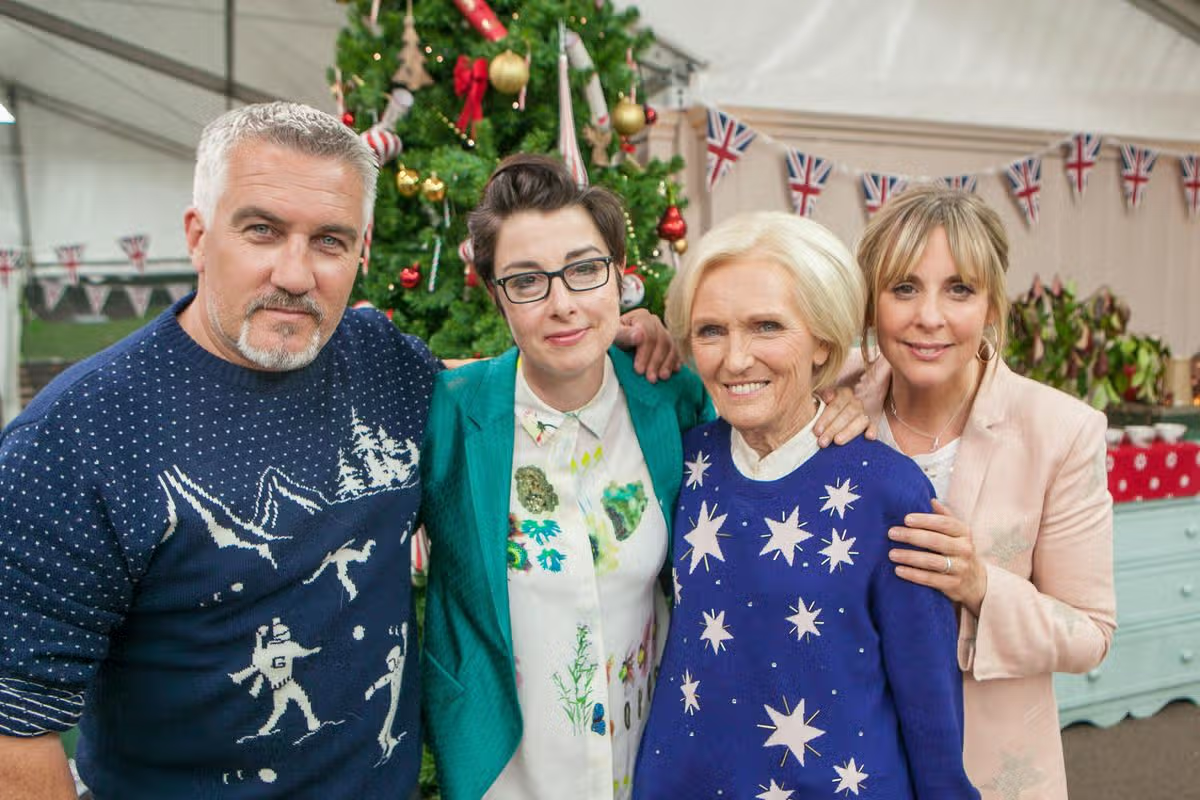
GBBO hosts Mel and Sue with Paul Hollywood and Mary Berry
The Great British Bake Off returns for its 17th series, with hosts Alison Hammond and Noel Fielding at the helm alongside judges Paul Hollywood and Nigella Lawson, who makes her debut on the show. Before the programme moved to Channel 4, presenters Mel Giedroyc and Sue Perkins fronted the series for six years.
The gig was one of many the pair took on together during their long-running friendship, which Mel has now revealed hasn’t always been smooth sailing. The broadcaster said their relationship has gone through “phases”, with periods when they’re inseparable and other times when they’ve been “off” with each other.
Speaking on the Dig It podcast with Jo Whiley and Zoe Ball, Mel explained that she and Sue are currently in one of their closer spells, chatting and seeing each other frequently. At the time of recording, the pair were also preparing to reunite at the Edinburgh International Book Festival.
“There’s a real friendship there, you’ve known each other for ages and you know you’ve got each other’s backs and I think that is such a lovely thing,” she shared. Though keen not to be “disingenuous”, Mel admitted there had been moments of jealousy.
“There’s been times over the last 39 years or whatever that I’ve known Sue, I’m sure that we’ve had moments of a little bit of jealously and, sort of, off with each other but, you know, at base you’ve got each other and it’s everything,” she shared.
“It really is everything and the older I get the more I realise that you have to cling to the real proper quality.”
Mel and Sue released a statement in 2016 when the show left the BBC, saying they were “very shocked and saddened” by the news. In the statement at the time, they praised the BBC for helping shape the programme’s tone and for growing its audience from two million to nearly 15 million.
They also confirmed they were “not going with the dough”, while wishing the future bakers well.
After their departure, the hosting role passed to Sandi Toksvig, who left in 2020, and Noel Fielding, who now presents the show alongside Alison Hammond.
The current judging panel consists of Paul Hollywood, who has been part of the programme since it began, and Nigella Lawson, who makes her debut after stepping into Prue Leith’s shoes.
The new series returns tonight, with 12 amateur bakers entering the tent in the hope of impressing the judges and being crowned this year’s champion.
Away from Bake Off, Mel and Sue have also returned to screens with their Saturday night gameshow Win Win with Postcode Lottery.
Mel Giedroyc hosted The Great British Bake Off for seven years between from 2010 to 2016, but one contestant shared what she’s really like once the cameras stop filming
Mel Giedroyc worked on The Great British Bake Off from seven years
Mel Giedroyc showed her true personality to contestants when cameras weren’t rolling during filing of The Great British Bake Off. Mel Giedroyc hosted The Great British Bake Off for seven years between from 2010 to 2016 and left the show when it moved from the BBC to Channel 4, famously stating they were “not going with the dough”.
Over her time on the show she met dozens of contestants and hundreds of filming and production crews – with one show member lifting the lid on what she was like once the cameras stop rolling. Former contestant Howard Middleton, a graphic designer from Sheffield who left on week six of series four the show.
He shared one moment where he believes Mel showed her true colours once the cameras were not rolling in the tent.
Speaking to Smooth Spins Casino, former GBBO contestant Howard Middleton said: “They [Mel and Sue Perkins] were so funny. They were lovely. I remember there was one occasion where Mel came up and asked whether I wanted a cup of tea.
“And there were no cameras or anything like that. She actually asked one of the runners to get one for me; she didn’t make it herself, but it was just that consideration and warmth, which was very genuine.”
Nigella Lawson replaces Prue Leith for 2026 Great British Bake Off
Earlier this year, Prue Leith 86-year-old announced it was the ‘right time’ to leave The Great British Bake Off after nine years on the show. However, in her place, viewers will welcome Nigella Lawson to the tent as the 66-year-old will be judging this year’s contestants alongside Paul.
Sharing his thoughts on the newcomer, Paul told Radio Times how each person he’s worked alongside has varied from one another.
He remarked that Mary Berry was different from Prue and Prue was different to Nigella before adding ‘Nigella is different to Mary’. Admitting how each of them brought their ‘own character’ to the programme, he highlighted that Nigella is a ‘very warm’ person, especially to the contestants taking part in the competition.
However, Paul commented that he’s the ‘constant’ as he remains the ‘constructively critical’ judge. Although people are welcoming a new face to the tent, presenters Alison Hammond and Noel Fielding are returning as hosts once again.
Channel 4 viewers were treated to a glimpse of Nigella in the iconic tent during a brief teaser clip revealing the show’s return date. She walked towards the camera in a purple jumpsuit before playfully pretending to tuck into the lens as though it was a sweet treat.
When it was announced that Nigella was joining the Channel 4 show, she had nothing but excitement. Nigella commented: “I’m uncharacteristically rather lost for words right now!
“Of course, it’s daunting to be following in the footsteps of Prue Leith and Mary Berry before her, great dames both, but I’m also bubbling with excitement.
“The Great British Bake Off is more than a television programme, it’s a National Treasure – and it’s a huge honour to be entrusted with it.
“I’m just thrilled to be joining the team and all the new bakers to come. I wish the marvellous Prue all the best, and am giddily grateful for the opportunity!”
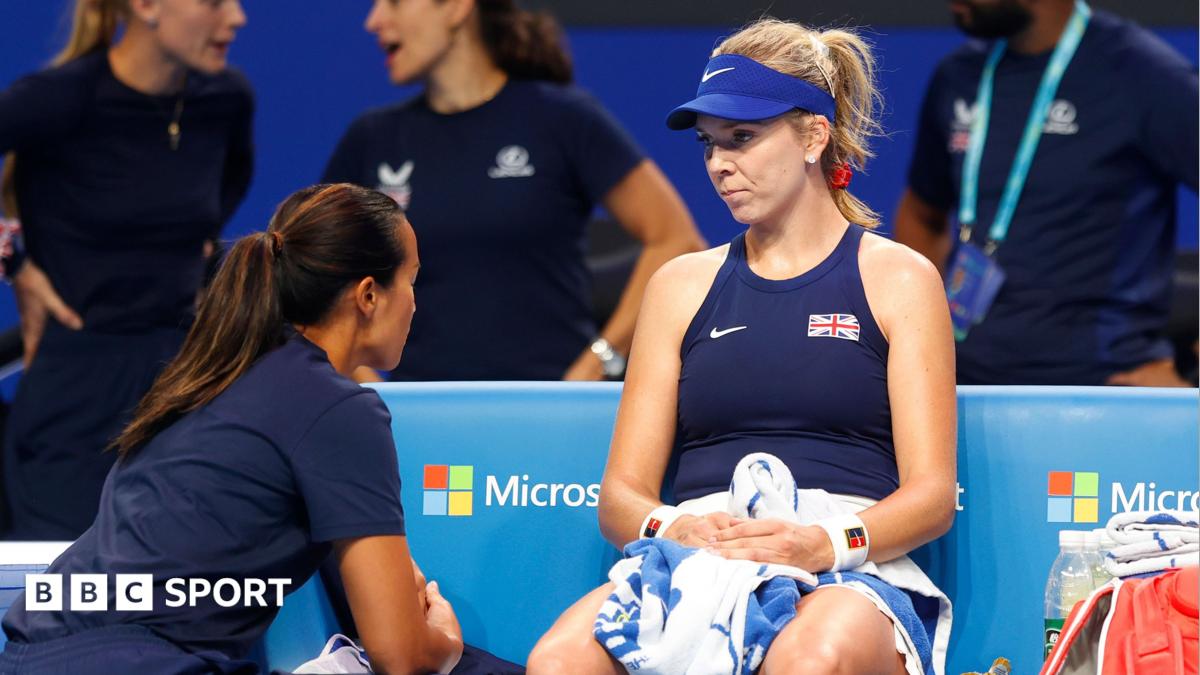
Sonay Kartal and Katie Boulter lost their respective singles matches as Great Britain were beaten by a strong Czech Republic side in the Billie Jean King Cup quarter-finals.
Anne Keothavong’s team headed into the tie as underdogs, with all five Czech players placed higher in the singles rankings than any of the British squad.
Sonay Kartal produced a gritty performance as she returned to tennis after six months out with a lower back injury, but fell to a narrow 7-6 (7-2) 4-6 6-4 defeat in a marathon three-hour encounter with Marie Bouzkova.
Boulter could do little to get Britain back into the best-of-three tie as she was outplayed 6-2 7-6 (7-3) by Wimbledon champion Linda Noskova.
It was a second successive loss for Boulter at the hands of a Czech player, coming just three weeks after a 58-minute demolition by Karolina Muchova at the US Open.
It is the first time since 2023 that Britain have failed to reach the semi-finals at the Billie Jean King Cup and their wait for a maiden title will go on for another year.
The Czech Republic, who are 11-time winners of the tournament and the only team boasting two top-10 players at the Finals, will face either Kazakhstan or Spain in Friday’s semi-finals.
Great Britain will play in November’s Davis Cup Finals as Henry Patten and Neal Skuspki won their doubles match to give the nation an unassailable 3-0 lead in their qualifying tie against Ecuador.
Toby Samuel and Arthur Fery both triumphed in their singles matches at a sold-out Copper Box Arena in London on Saturday to get Britain off to a winning start in the best-of-five tie.
Patten and Skupski then took to the court on Sunday and booked Britain’s ticket to the ‘Final Eight’ event in Bologna at the earliest opportunity with a 6-3 6-4 win over Gonzalo Escobar and Diego Hidalgo.
“We’re feeling great,” said Patten in his on-court interview.
“[Captain] Leon [Smith] was giving us the team talk and saying we needed to be ready for the singles so we’re very, very happy to get it done on the first match.”
Great Britain had not reached the knockout stage of the Davis Cup since 2023 and, even against underdogs Ecuador, there were doubts if captain Leon Smith could end that run given his inexperienced team in London.
Smith was then dealt a late blow when British number two Cameron Norrie pulled out on Friday after feeling pain in his arm during a practice session.
However, Samuel – after a breakthrough season that has seen him rise from outside the world’s top 250 to 95th in the rankings – stepped up on his Davis Cup debut.
Just weeks after winning his first Grand Slam match at the US Open, the 24-year-old overcame nerves and fought back from a set down to beat Andres Andrade 4-6 6-4 6-1.
Fery, meanwhile, was making just his second Davis Cup appearance as the British number one claimed an assured 7-5 6-0 win over Alvaro Guillen Meza.
And with world number one Patten and new US Open champion Skupski to call upon for Sunday’s doubles rubber, victory seemed to be well within Britain’s grasp.
The pair, despite not playing together on the ATP Tour, combined effortlessly and did not face a single break point against the Ecuadorians.
“I made my debut in 2019 with all the other guys like Jamie Murray, Andy Murray, Evo [Dan Evans] and now I guess I am the oldest in the team,” said 36-year-old Skupsi, who was making his 16th Davis Cup appearance.
“It’s been amazing to be back with the team, it’s been a big 18 months and it’s such an honour to play for your county, especially in front of a home crowd like you guys coming out to support – it’s been amazing.”
Great Britain became World Team Cup champions for the fifth time as Alfie Hewett and Gordon Reid joined forces to secure a 2-1 victory over Japan in Florida.
Japan were the defending champions of the competition, which is the wheelchair tennis equivalent to the Davis Cup and Billie Jean King Cup.
However, Hewett and Reid ensured Britain got their hands back on the trophy with a 6-1 6-2 win in the deciding doubles match against Tokito Oda and Daisuke Arai.
“We’re really happy to get the title back,” said Reid, who was also part of the World Team Cup-winning squad alongside Hewett in 2015, 2019, 2023 and 2024.
Hewett added: “It’s the first time it’s come down to the deciding doubles for us, so I’m just really happy that we got over the line.
“It’s always a privilege to play for your country and there’s been a great atmosphere and team spirit again this week between all the lads.”
Reid got Britain off to a winning start on Saturday with a commanding 6-2 6-2 victory over world number 21 Arai, who he has now beaten in all five encounters between the pair.
The start of the second singles match was then delayed because of extreme heat in Orlando, with Hewett and Oda returning to court six hours later when temperatures had cooled.
Just a week after beating the world number one in the singles final of the US Open, Hewett was unable to repeat his feat as he fell to a narrow 6-4 7-5 loss.
“I’m a bit disappointed that it wasn’t a 100% day after my loss in the singles, but it was a really high-level match and just came down to a few points in both sets that could have gone either way,” he said.
However, Hewett bounced back in the doubles alongside Reid as Britain, who also had 21-year-old Ben Bartram in the team and were captained by Martyn Whait, backed up their wins against South Korea and the Netherlands earlier this week.
All Creatures Great and Small fans were quick to share their thoughts on the first episode of the new Channel 5 series.
22:41, 17 Sep 2026Updated 22:41, 17 Sep 2026
Channel 5 viewers were quick to comment on the romance plot in series 7(Image: CHANNEL 5)
Beloved Channel 5 period drama All Creatures Great and Small has returned.
On Thursday (September 17), fans were thrilled when a brand new series kicked off as the residents of Darrowby were now settling into a post-war existence. The episode kicked off with James in London, as Channel 5 viewers got to see Helen’s (Rachel Shenton) sister Jenny (Imogen Clawson) as a nurse in the city.
However, when the couple returned to Darrowby, trouble arose as a new vet arrived in the village, which didn’t sit well with Siegfried (Samuel West), who accused him of trying to poach his clients from Skeldale House.
Fans also saw the return of Dorothy (Maimie McCoy), who made a comeback during the festive special last year and has since sparked a romance with Siegfried.
Although during the episode, it seems as though the pair are including Mrs Hall (Anna Madeley) on their dates, as they spoke about going to see a film at the cinema later that night.
Elsewhere, Helen and Mrs Hall spoke about her return as Helen mentioned her being back had ‘made a difference’. Mrs Hall agreed as she said: “In more ways than one.”
Despite Helen joking that it meant she was keeping Siegfried out of their hair, Mrs Hall remarked: “No, she’s exactly what he needs. I had a feeling she would be if he gave her another chance.
Helen replied: “He doesn’t know how lucky he is to have you, do you know that?” As it seemed as though she was suggesting there was more to their friendship than is said, Mrs Hall didn’t notice.
As Dorothy later suggested, the three of them saw another film, Mrs Hall told her she didn’t mind if they wanted to spend time just the two of them, as she told her: “I’d hate to feel like I was getting in the way.”
Her friend replied: “If anyone is getting in the way, it’s me. You’re working, and here I am getting under your feet.” Mrs Hall added: “If you were in my way, I’d tell you.”
Later on, Siegfried was frazzled over the new arrival as Dorothy assured him he had no reason to worry over it, although Mrs Hall didn’t seem too convinced as she stayed quiet on the matter.
The interactions between the three characters didn’t go unnoticed with viewers, as many were quick to comment on the episode as they noticed the only link between Siegfried and Dorothy is Mrs Hall.
On X, one person said: “Both Dorothy and Siegfried are basically dating Audrey because she is the only common interest they have. brilliant.” Someone else added, “Audrey is the glue between Siegfried and Dorothy. These two do not have much in common, which became obvious. D doesn’t know Siegfried needs truth, not flattery, and Siegfried doesn’t even want her opinion.”
Another person added: “Wait. Why is Dorothy so hesitant to spend time alone with Siegfried, without Audrey there as well? Are things not going well? ill-matched?” While someone agreed: “So the cracks are already visible? Just what my predictive analysis hinted at. We would see stuff already, but things are going south just yet.”
All Creatures Great and Small continues Thursdays on Channel 5 from 9pm
Currency reforms, liquidity pressures, and new payment rails are forcing African CFOs to rethink corporate strategy.
This article appears in the September 2026 issue of Global Finance Magazine.
When Nigeria liberalized the naira in June 2023, something of a chain reaction began across Africa. Egypt sharply devalued the pound in March 2024 under a reform program supported by the International Monetary Fund, and Ethiopia dismantled decades of foreign-exchange controls four months later. Headlines focused on inflation, exchange-rate volatility, and political fallout.
Inside multinational boardrooms, however, another conversation was quietly taking shape.
Where should liquidity be held? CFOs and corporate treasurers asked. Can capital still be repatriated efficiently? Is local-currency borrowing now preferable to offshore funding? And should Africa continue to be managed as dozens of fragmented financial markets, or, increasingly, as one integrated treasury landscape?
The answers are reshaping one of the least visible—but most strategically important—functions within multinational companies.
“Treasury efficiency has shifted from a secondary consideration to a first-order determinant: often the binding constraint, even when infrastructure and trade fundamentals appear sound,” said Phumlani Majozi, executive director of the African Markets Institute (AMI). “The logic is straightforward; multinationals prefer an environment where it’s easy to extract their capital when they need it.”
His observation reflects a profound shift in corporate thinking.
For decades, multinational companies evaluated Africa through a familiar lens: market size, consumer demand, infrastructure, labor costs, and political stability. More often nowadays, the decisive consideration is whether capital itself can move efficiently across the continent.
Treasury as Investment Influencer
Phumlani Majozi, African Markets Institute
The timing is significant.
Lending to Africa by China’s two principal policy banks has fallen dramatically, from US$28.8 billion in 2016 to US$2.1 billion in 2024, according to the Boston University Global Development Policy Center. As governments rely more on commercial finance and private capital to fund development, multinational companies have assumed greater responsibility for financing projects and managing liquidity across multiple jurisdictions.
The African Development Bank estimates that the continent requires some US$170 billion annually to finance infrastructure, but currently attracts only US$80 billion to US$90 billion, leaving a financing gap approaching US$80 billion each year. Against that backdrop, treasury has moved from supporting investment decisions to influencing them.
“The biggest change is that the treasurer is now expected to do far more than manage cash, funding, banking, and risk,” said Mike Richards, founder and CEO of The Treasury Recruitment Company. “Those things remain essential, but today’s treasurer is expected to help the CFO and the board understand what is happening, what the risks are, and what decisions need to be made.”
That evolution is especially evident across Africa.
Unlike Europe or North America, treasury teams operating on the continent must simultaneously navigate 54 sovereign jurisdictions, more than 40 actively used currencies, multiple exchange-rate regimes, and a complex web of banking regulations and capital controls. A finance executive overseeing operations stretching from Lagos to Nairobi and Johannesburg to Cairo may confront four entirely different monetary environments before the workday begins.
One subsidiary may hold surplus cash that cannot easily be repatriated because of foreign-exchange restrictions. Another may require emergency liquidity but operates in a market where access to hard currency remains constrained. Exchange-rate swings can rapidly inflate import costs or reduce earnings when profits are translated into dollars or euros.
“A company may appear to have plenty of cash across the group,” Richards said, “but that does not mean the cash is in the right place, in the right currency, or can be moved when the business needs it.”
That vexatious reality has become one of the defining operational challenges facing multinational companies in Africa. Because more companies are operating across the continent, treasury departments increasingly see fragmented pools of capital, each governed by different regulations, currency regimes, and banking systems.
These inefficiencies impose what amounts to a hidden investment tax, Majozi argues.
“When currency convertibility is uncertain,” he said, “intra-African capital movement is fragmented across more than 40 regulatory regimes, and hedging instruments for smaller African currencies are thin or nonexistent. Treasurers price in a liquidity-trapped capital discount before operational returns even enter the model. That discount frequently outweighs what improvements in infrastructure or regulation can offset.”
Mike Richards, Treasury Recruitment
Technology is helping treasury teams respond.
“We have seen treasury teams become more data-driven in their analysis and execution of currency risk-management programs,” said Bob Stark, global head of market strategy at Kyriba. Greater visibility into balance-sheet and cash-flow exposures, he added, has enabled companies to strengthen natural hedging while making more efficient use of forward contracts and options.
AI is the logical next step.
“There is no AI strategy without a data strategy,” Stark said, noting that multinational companies are investing more in API-enabled treasury platforms that provide real-time tracking of liquidity, foreign-exchange exposure, and banking relationships across multiple African markets.
“The primary benefit of treasury management systems for African treasury teams remains improved visibility and forecasting that unlock and mobilize trapped cash,” he said.
Toward Regional Financial Integration
Regional treasury hubs are also becoming more important. Rather than allowing every subsidiary to manage liquidity independently, multinational companies are consolidating treasury oversight in centers such as Johannesburg, Dubai, and Casablanca, where funding, foreign-exchange management, and banking relationships can be coordinated across multiple jurisdictions while maintaining local execution teams.
Richards recently recruited a senior treasury executive who helped establish a regional treasury center covering 16 African countries, centralizing foreign-exchange management, implementing cash-pooling arrangements, and negotiating local funding facilities across markets including Nigeria and Zambia.
“It is no longer enough to understand treasury technically,” he said. “You also need to understand the markets, the business, and the people operating locally.”
The next stage of evolution may be driven by regional financial integration.
“PAPSS solves a concrete, costly problem,” said Majozi. “Settling directly in local currencies cuts both cost and delay.”
Implementation remains uneven, he cautioned: “Multinationals will likely treat Africa-as-one-market as an aspiration for another five to 10 years, not a current operating reality.”
The direction of travel, however, is unmistakable. Africa’s abundant natural resources, favorable demographics, and expanding consumer markets will continue attracting global investors. Still, sustaining those investments will increasingly depend on modern financial infrastructure.
“Natural resources and favorable demographics may attract initial boardroom attention,” said Majozi. “But sustained, large-scale operational commitments depend on institutionalized monetary predictability, transparent capital flows, and efficient regional financial infrastructure.”
In Africa’s next chapter of economic integration, the competitive advantage may belong not simply to companies that understand the continent’s consumers, but to those that master the sophisticated movement of capital across its markets.
Charles Wachira is a contributing writer based in Kenya.
The Channel 4 series launched on Sunday, September 13, with six celebrities taking on a new challenge. They include Lucy Beaumont, Fatiha El-Ghorri, Richard Herring, Paul Merson, Layton Williams, and Denise Van Outen.
With little to no pottery experience, they braved the pottery studio, hoping to impress judges Keith Brymer Jones and Rich Miller to earn a place in the grand final and be crowned winner. But unlike the original format, the celebrity edition has no weekly elimination rounds.
Channel 4 had earlier teased: “Viewers can expect a few wonky edges, and some cracking clay creations as each celebrity grows in confidence and ability. But who will be holding their breath, waiting to see if their muddy masterpieces emerge from the kiln intact, who will reduce Keith to tears with their creative ceramics, and who will crack under the pressure as the competition gets more competitive over the weeks?”
After being announced as presenter, Liza previously shared: “I knew I’d enjoy Keith and Rich’s company and I did. People flourish around emotionally intelligent people, and the boy’s encouragement and kindness really promoted a growth in our newbie potters that was a pleasure to witness. I absolutely loved being there.”
Viewers have now declared their support for the former BBC Radio 2 presenter, who announced her radio show exit earlier this year, saying that after 36 years, it was “time to go”. Demanding to see more of her on their screens, one fan wrote: “Liza Tarbuck is such a natural presenter, yet television companies consistently use the same faces. Liza is a great addition to #potterythrowdown.”
Another said: “LOVING Liza Tarbuck on #PotteryThrowdown Always loved her on Radio2.. but she is PERFECT for this! What a signing @Channel4.” Someone else wrote: “Never watched Celeb Pottery Throw Down before… It’s brilliant, loving Denise, Layton, Lucy, Richard, and Liza Tarbuck presenting is brilliant… she always is, why doesn’t she get more TV time?”
“More Liza Tarbuck on the telly box please!” one viewer added, as another said: “I’d love to see more of Liza Tarbuck – she’s absolutely hilarious! Make her the permanent presenter for #potterythrowdown.”
Another wrote: “Liza + Pottery Throwdown is a dream come true! But seeing the skill level they’re all starting this, I feel this is going to be an emotional journey of a series.” Yet another echoed: “@PotteryThrow great to see Liza on the TV again, funny lady, love her.”
Meanwhile, Liza spoke about working with judges Keith and Rich in an interview with The Guardian ahead of the new series airing. “Keith is fabulous,” she said. “A really good laugh. But trust me, Rich is the one slyly holding it all together.
“They’re both open-hearted and emotionally intelligent, which is a lovely quality in men of a certain age. That makes it a safe space and brings people’s barriers down. Celebrities aside – what a horrible label – they’re just humans. Keith said to me early on: ‘Just watch the clay work as therapy,’ and it really did.”
After being announced as the presenter of the series, Liza was flooded with support from fans. One person said: “Yay, so excited to see Liza Tarbuck!!”
Another said, “Yay, Lisa Tarbuck,” while a third added, “So excited to see this … and Lisa Tarbuck.” Someone else wrote: “Never watched this before… Liza Tarbuck appears- I’M IN!”
The Great Celebrity Pottery Throw Down is available to watch on Channel 4.
The open ocean, far from the shore and miles above the seafloor, is a vast and formidable habitat that is home to the most abundant life on our planet, from giant squid and jellyfish to anglerfish with bioluminescent lures that draw prey into their toothy mouths.
“Into the Great Wide Ocean” takes readers inside the peculiar world of the seagoing scientists who are providing tantalizing new insights into how the animals of the open ocean solve the problems of their existence.