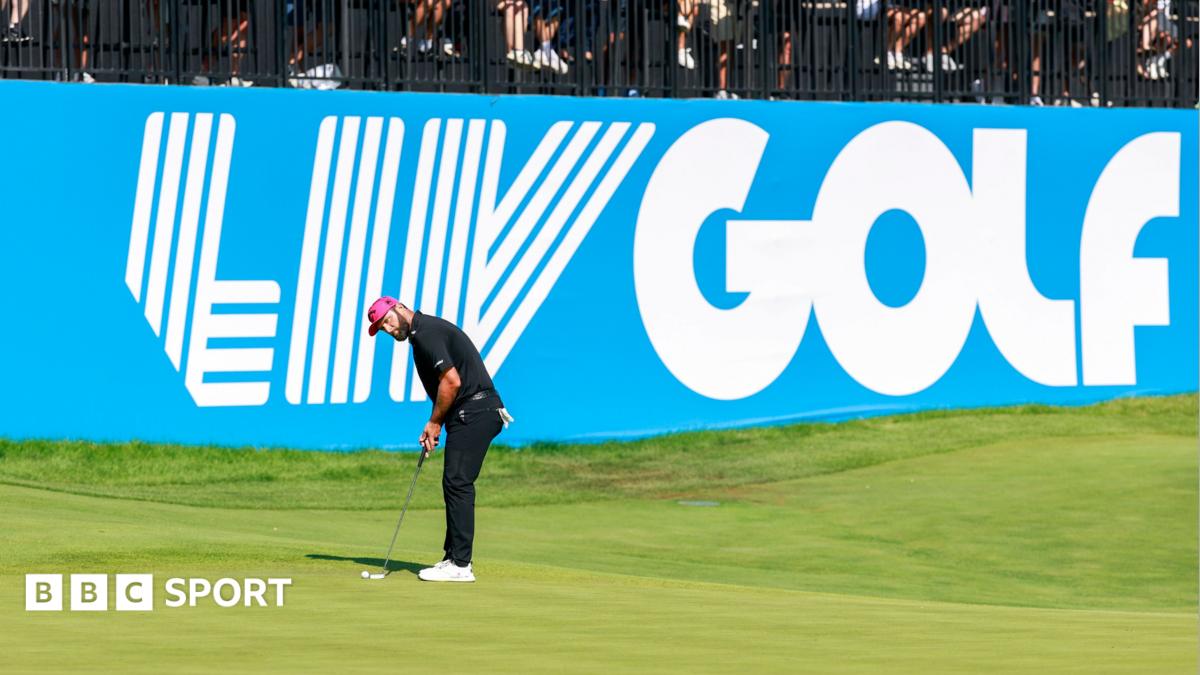
Two weeks ago, LIV Golf did its best to conceal the fact that the Saudi Public Investment Fund would cease to bankroll the league after the current season, only to have LIV CEO Scott O’Neill let the truth slip during a television interview.
This week, the intentions of PIF and consequences to LIV are known by all.
LIV Golf announced Thursday that it has established a new independent board that will attempt to keep the league afloat utilizing a “diversified, multi-partner investment model.” In other words, a model that doesn’t include PIF.
PIF Governor Yasir Al-Rumayyan no longer will serve as LIV Golf chairman, another unmistakable signal that the Saudi sovereign wealth fund worth an estimated $1 trillion is cutting ties with financially troubled LIV.
LIV Golf was supposed to be a key component in Saudi Crown Prince Mohammed bin Salman’s “Vision 2030” plan to diversify the kingdom’s economy away from oil. PIV lured megastar golfers Phil Mickelson, Jon Rahm, Bryson DeChambeau, Dustin Johnson and others away from the PGA Tour by shoveling hundreds of millions of dollars into their bank accounts.
Al-Rumayyan, Prince bin Salman’s trusted technocrat, was charged with implementing the plan, but LIV Golf has failed to attract significant viewership or commercial sponsors despite innovations such as a 54-hole format and a team model.
When LIV and the PGA Tour came to a short-lived, tentative agreement to end pending litigation and potentially join forces in 2023, Al-Rumayyan was a key figure in the negotiations.
A last-ditch effort to broker a merger between the rival leagues took place in the White House in February 2025 when President Trump hosted Al-Rumayyan, PGA Tour commissioner Jay Monahan and Tiger Woods. No agreement was reached.
Now, apparently, PIF will attempt to turn its attention to initiatives that don’t bleed billions. The fund has invested more than $5 billion into LIV Golf since it was launched in 2022 and is reportedly spending $100 million per month this year.
The wealthy but suddenly unmoored LIV golfers have been left to scramble like a weekend hacker trying to salvage a bogey after chipping into a sand trap.
LIV Golf Louisiana announced that the tournament scheduled for June 25-28 in New Orleans has been postponed. A new date hasn’t been set. However, an official told ESPN on Thursday that next week’s tournament at Trump National Golf Club outside Washington, D.C., will take place as planned.
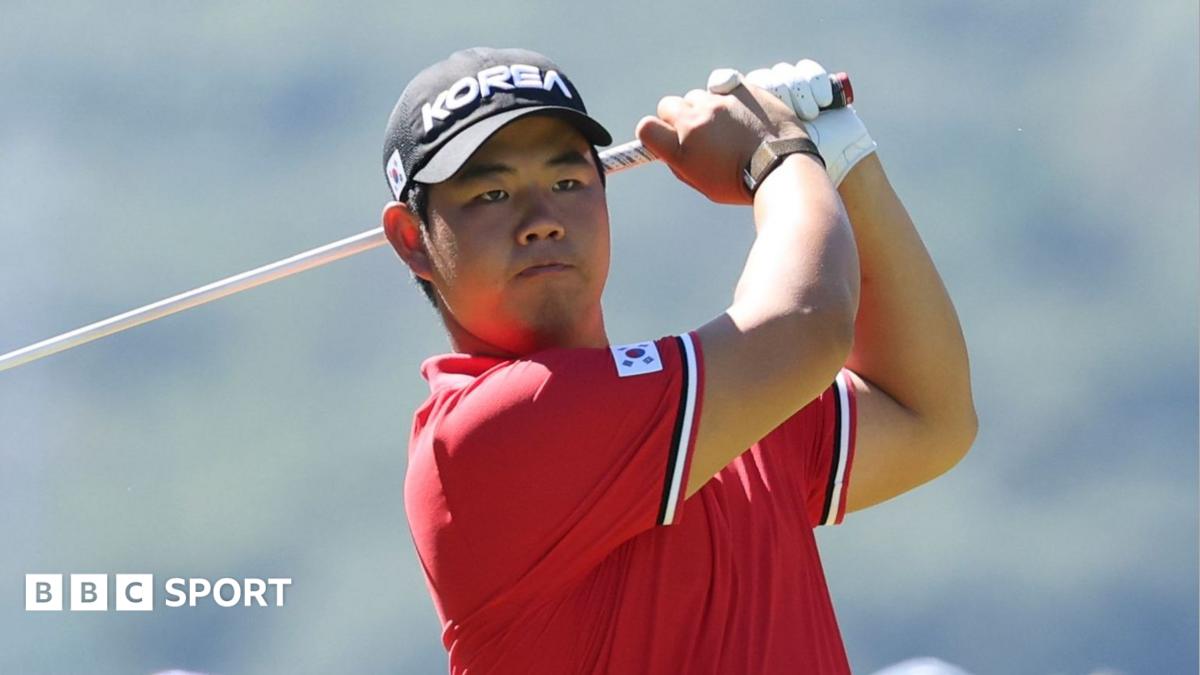
Six other tournaments remain on the schedule that concludes with LIV team championships on Aug. 27-30 at The Cardinal at Saint John’s in Michigan. Tournaments outside the United States are scheduled for South Korea, Spain and Great Britain.
Hired Thursday to come up with a financial model to keep LIV afloat sans PIF are Gene Davis and Jon Zinman, described in a LIV statement as “seasoned experts with proven track records of navigating complex situations and unlocking value for global organizations.”
LIV Golf’s contorted spin on acknowledging that PIF will no longer subsidize the league was a statement saying it will focus on ”securing long-term financial partners to support its transition from a foundational launch phase to a diversified, multi-partner investment model.”
Davis, the newly appointed chairman of the LIV Independent Directors Committee, sees opportunity in the face of a PIF-less future.
“LIV Golf has built something truly differentiated — a global league with passionate fans, world-class talent, and demonstrated commercial momentum,” he said in a statement. “The executive leadership team, along with Jon and I, see a clear opportunity to help the league formalize its structure, attract and secure long-term capital, and position the business for growth while continuing to promote the game across the world.
“ We look forward to positioning LIV Golf for future success.”
R&A chief executive Mark Darbon says that players guilty of on-course misconduct could receive a two shot penalty at the Open in July.
This follows a reprimand for Sergio Garcia at last month’s Masters where the Spaniard damaged a tee box with his club after an angry reaction to an errant tee shot on the second hole of his final round.
Scotland’s Bob MacIntyre was also warned by Augusta officials after microphones caught him swearing and gesturing angrily during a ruinous first-round 80 at the year’s opening major.
Both incidents brought player behaviour into sharp focus in a season where the four major tournaments, the Masters, US PGA, US Open and Open, have agreed to implement a new code of conduct.
The leading professional tours are expected to follow suit, but unlike the majors, their policies have yet to be formalised.
There has always been scope for a player to be disqualified for a serious breach, as Garcia was for furiously damaging a green in a DP World Tour event in Saudi Arabia in 2019.
But now there is scope for referees to impose shot penalties for players who seriously breach the etiquette of the game. It means that, for the first time, a fit of temper could affect a leaderboard at one of golf’s big four tournaments.
“I think first and foremost, you want passion,” Darbon told BBC Sport.
“You want passion from players, you want passion from spectators, but there’s a fine line, and one of the amazing things about this sport are the values and integrity that underpin it.
“So we will watch that line very closely. We, like many of the other major events, are looking to implement a new code of conduct policy that will be in place this summer here at Royal Birkdale.
“And it will give us another measure by which to help influence and control that behaviour.”
Asked how this might impact competitors at the 154th Open, Darbon said: “It will depend on the circumstance and a determination of what their actions may lead to, but you could well see a two-shot penalty, for example, being deployed.
“We will clarify all of those details in the buildup to the championship.”
Barcelona’s Yamal bags Young Sportsperson of the Year accolade a year after winning the Breakthrough award in 2025.
Published On 21 Apr 202621 Apr 2026
Tennis ruled the red carpet in Madrid as Aryna Sabalenka and Carlos Alcaraz were crowned Sportswoman and Sportsman of the Year at the Laureus Awards.
The pair were honoured on Monday after glittering 2025 campaigns that saw them finish atop the women’s and men’s tennis rankings, respectively.
Recommended Stories
list of 3 itemsend of list
Spaniard Alcaraz, 22, reclaimed the year-end world number one spot after capturing two Grand Slam titles at the French Open and US Open, underlining his supremacy across surfaces.
Belarusian Sabalenka, 27, meanwhile, stood alongside him in the winners’ circle in New York and also reached the final in Australia and France, capping a season of relentless consistency.
With her triumph, Sabalenka joins a roll call of Laureus Sportswoman of the Year recipients from her sport, including Serena Williams, Jennifer Capriati, Justine Henin and Naomi Osaka.
Barcelona and Spain athlete Lamine Yamal, 18, won the Young Sportsperson of the Year award. It is the second award for the young Barca forward after being voted Breakthrough Sportsperson of the Year in 2025, making him the youngest athlete to have won two Laureus awards.
German football great Toni Kroos won the world sporting inspiration award, and retired gymnast Nadia Comaneci got the lifetime achievement prize.
The world action sportsperson award went to American snowboarder Chloe Kim.
Brazilian Gabriel Araujo was the world sportsperson of the year with a disability.
In a first for the awards, the ceremony was hosted by two athletes – both former Laureus winners – Novak Djokovic and Eileen Gu. Last year’s top honours went to gymnast Simone Biles and pole-vaulter Mondo Duplantis.
Eileen Gu cohosted the award show with Novak Djokovic[Isabel Infantes/Reuters]
McIlroy takes comeback prize
Elsewhere, Rory McIlroy claimed the World Comeback of the Year Award after ending an 11-year wait to complete the career Grand Slam with a playoff victory at the 2025 Masters, a title he defended in 2026.
Formula One’s Lando Norris was named World Breakthrough of the Year, while Paris St Germain took World Team of the Year after a trophy haul in 2025 that included the French league and Cup, plus their first Champions League crown.
The Laureus World Sports Awards nominees are selected by the global media, while the winners are determined by the 69 members of the Laureus World Sports Academy.
The awards have been presented annually since 2000.
Laureus winners 2026:
World Sportsman of the Year Award: Carlos Alcaraz
World Sportswoman of the Year Award: Aryna Sabalenka
World Team of the Year Award: Paris Saint-Germain
World Breakthrough of the Year Award: Lando Norris
World Comeback of the Year Award: Rory McIlroy
World Sportsperson of the Year with a Disability Award: Gabriel Araujo
World Action Sportsperson of the Year Award: Chloe Kim
World Young Sportsperson of the Year Award: Lamine Yamal
LIV Golf appears to be dying on the vine but doesn’t want to say so.
Amid several reports that the Saudi-backed Public Investment Fund will cease its abundant funding of LIV Golf after the 2026 season, officials with the four-year-old PGA Tour competitor chose to focus on the fact that the show will go on — at least through August.
During a broadcast interview from the LIV tournament in Mexico City, LIV Chief Executive Scott O’Neil would not say if the league has a funding commitment from the Public Investment Fund, or PIF, beyond this year.
O’Neil responded to a question about golfer Sergio Garcia saying this week that LIV Golf Chairman Yasir Al-Rumayyan “told us at the beginning of the year that he is behind us, that they have a project of many years.”
“It’s just not the way the world works,” O’Neil said. “We have commitments to have this … the reality is you’re funded through the season and then you work like crazy as a business to create a business and a business plan to keep us going.
“But that’s not different from any other private equity-funded business in the history of mankind.”
The interview was pulled from the internet shortly after it was posted.
PIF announced a new five-year strategy Wednesday that will reduce international investments from 30% to 18-20% of the portfolio and place greater emphasis on Saudi domestic initiatives to promote sports. LIV Golf does not fit into that category and was not mentioned.
“PIF will continue to support Saudi Vision 2030 objectives by delivering competitive domestic ecosystems,” Al-Rumayyan said in the announcement. “The 2026-2030 strategy is a natural next step in PIF’s growth journey.”
PIF approved more than $250 million in additional funding for LIV Golf this year, hiking the total investment to more than $5.3 billion since the league was launched four years ago. Documented losses are more than $1 billion from 2022 to 2024, according to Forbes.
LIV Golf executives were rushed from various corners of the planet to a meeting this week in New York where the future of the operation was discussed in private and decisions were made.
A few flew in from Mexico City, where this week’s tournament began Thursday at the Club de Golf Chapultepec. It is one of the highest-altitude golf courses in North America, and LIV golfers took deep breaths before answering press questions about reports that the organization was on the verge of collapse.
“For me, it didn’t make sense to think about it or waste time thinking about,” superstar golfer Jon Rahm said after shooting a first-round 65. “Since everything happened so suddenly and so quickly, I wasn’t very worried about it because normally, before the rumors start, we already know something — there’s always someone within the league who knows something.”
Communication at the tournament was spotty. A power outage at the course Tuesday caused interviews to be canceled, and streaming of the first round Thursday was down for about two hours because of what were described as technical difficulties.
Yet nothing could stop the speculation and growing unease about the future of LIV Golf. Money continues to hemorrhage, as does the roster of big-name golfers.
LIV Golf purses each week are $30 million — 50% more than PGA Tour purses. Enormous signing bonuses were doled out to secure the services of superstar golfers Phil Mickelson, Dustin Johnson, Cameron Smith, Bryson DeChambeau and Rahm. All received bonuses of at least $100 million to defect from the PGA Tour, and Rahm, a relative latecomer to LIV Golf, received a reported $300- to $500-million bonus.
Yet original LIV Golf members Brooks Koepka and Patrick Reed recently returned to the PGA Tour. Others are bound to follow.
Former PGA standout Greg Norman was the LIV Golf chief executive until resigning in August, citing exhaustion. His comments upon exiting might have foreshadowed the current difficulties.
“I knew there were going to be a lot of headwinds,” he told the Australian Golf Digest. “I didn’t anticipate the magnitude of those headwinds because … as time went by, those headwinds were created by misperceptions.”
Norman was replaced by O’Neil, whose internal message to the LIV staff Wednesday attempted to quiet concerns about PIF pulling the plug. He urged the golfers to focus on the season that is already underway.
“We are heading into the heart of our 2026 schedule with the full energy of an organization that is bigger, louder and more influential than ever before,” O’Neil wrote in the message obtained by Sports Illustrated. “The life of a startup movement is often defined by these moments of pressure. We signed up for this because we believe in disrupting the status quo.
“We have faced headwinds since the jump, and we’ve answered every time with resilience and grace. Now we answer by doing what we do best: putting on the most compelling show in sports.”
One of those headwinds is that “a compelling show” can be a relative term. LIV Golf has been popular in golf-starved locales such as Australia and South Africa, but TV ratings are low everywhere and interest in events held in the United States is tepid.
PIF — worth an estimated $1.15 trillion — launched LIV Golf as part of a strategy to transform Saudi Arabia into a global sports hub, using its vast oil revenue to drive economic diversification, create jobs and boost tourism. Initiatives include massive investments in soccer, tennis and esports in addition to golf.
The PGA Tour countered by increasing prize money and creating a series of limited-field “signature events” for top players. Rory McIlroy and Tiger Woods are among the sport’s top stars to steadfastly remain loyal to the PGA Tour, with Woods turning down an offer from LIV Golf of $800 million in 2022.
Mexico City is the sixth stop in the LIV Golf 14-tournament season that concludes in August. The Individual Championship finale is scheduled for Indianapolis from Aug 20–23.
The Northern Irishman becomes the first player to repeat at Augusta National since Tiger Woods back in 2001-2002.
Published On 13 Apr 202613 Apr 2026
Jack Nicklaus, Nick Faldo, Tiger Woods, and now, Rory McIlroy.
The Northern Irishman emerged from a tight pack of contenders to win the 90th Masters Tournament on Sunday, joining the trio of golf icons as the only players in history to conquer Augusta National in back-to-back years.
Recommended Stories
list of 4 itemsend of list
McIlroy said earlier this week that winning one Masters would make it easier to win a second, and he dug deep into that belief on Sunday to rally from a three-shot deficit on the front nine to post a one-under-par round of 71 for the winning score of 12-under 276 – one better than Scottie Scheffler.
“I can’t believe that I waited 17 years to get one green jacket, and I get two in a row,” McIlroy told CBS in Butler Cabin. “I think that all of my perseverance at this golf tournament over the years has really started to pay off.”
McIlroy’s sixth career major also tied him with Faldo for the most by a European player in the modern era, and they are tied for 12th-most all-time by any player.
Cameron Young, Russell Henley, England’s Tyrrell Hatton and Justin Rose finished another shot back at 10 under.
McIlroy putts on the 18th hole to win The Masters [Mike Segar/Reuters]
McIlroy rallies
McIlroy began the final round tied for the 54-hole lead at 11 under with Young, who birdied the second hole to reach 12 under and take the outright lead. It appeared that McIlroy’s repeat quest might unravel when he went three over on the two par-threes on the front nine to fall to 9 under for the tournament.
Suddenly, McIlroy’s name was looking up on the leaderboard at Young and Rose, who reached 12 under with four birdies in a five-hole stretch through No 9. Scheffler was also making a run several holes ahead, and Henley reached 10 under through eight holes.
This is when McIlroy kicked it back into gear for the first time since closing with six birdies over his final seven holes on Friday. A birdie on the seventh hole got McIlroy back to double digits under par, and he pulled within one shot of the lead with another on the par-five eighth.
While Scheffler’s rally stalled for a long stretch with 11 consecutive pars, and Rose and Young struggled to hole putts on the back nine, McIlroy kept ratcheting up the pressure. He birdied the 12th and 13th holes to go 2 under through “Amen Corner” and build a two-shot lead.
Scheffler kept it interesting with birdies on numbers 15 and 16 to get to 11 under. Another birdie attempt on 17 stayed on the lip of the cup, and Scheffler parred out to post a 4-under round of 68, with McIlroy on the course with three holes to play.
The two-shot cushion proved helpful for McIlroy when he pushed his drive on the 18th hole well right into the trees. He was able to punch the ball forward into a greenside bunker and put it on the putting surface with his third shot.
From there, McIlroy easily converted the two-putt bogey, and became the fourth player in history to successfully defend at the Masters.
“It’s nice to have that two-shot cushion instead of the one [shot] like I had last year,” McIlroy said. “I looked at the [leader]board after I made the bogey on six, and I went back to 9 under at that point. And I said, ‘If I can get to 14 under, I think I’ve got a really good chance of winning this tournament.’
“I didn’t quite get there, I got to 13, but 13 was good enough standing on the 18th tee.”
After setting a Masters record with a six-shot lead after 36 holes, McIlroy played the final 36 holes in even par. That brought a host of players back into the mix, with at least four different players leading at some point during the final round.
McIlroy admitted that he kept a close eye on the leaderboard after falling back to 9 under to know where he stood in the tournament.
“It was a tough weekend,” he said. “I did the bulk of my work on Thursday and Friday, but just so happy to hang in there and get the job done.”
McIlroy holds the Masters championship trophy during the green jacket ceremony after the final round of the Masters Tournament at Augusta National Golf Club [Kyle Terada/Imagn Images via Reuters]
AUGUSTA, Ga. — Lawrence Bennett wasn’t only a guardian of the green jackets — the iconic garment of Augusta National — but he also oversaw their cremation.
That was among his many responsibilities in a career that spanned 51 years, where he first picked up litter then picked up everyone from celebrities to sports heroes to ex-presidents as the club’s top chauffeur.
“All I’ve known from Day 1 was Augusta National,” said Bennett, 72, sitting in the living room of his tidy home six miles from the storied course. His hallways are painted Masters green. Paintings of the course hang on the walls, as do photographs of famous people with heartfelt inscriptions.
For decades, he embraced the club. The members hugged him back, from bankrolling his college tuition to sending him generous gifts when he retired in 2013 and donations when his beloved wife, Cheryl, died in 2020 after suffering a massive stroke.
Lawrence Bennett, a longtime chauffeur at Augusta National, holds a framed portion of the logo that appears on the green Masters jackets.
(Sam Farmer / Los Angeles Times)
Bennett isn’t watching the Masters this week — he tuned in for Jack Nicklaus, Tiger Woods and some other greats over the years — and he said he’s never swung a golf club. But his job was his life, even though he moonlighted as a high school teacher and administrator.
His father, too, bled green. The late and legendary Freddie Bennett began as a young caddie and worked his way up to caddie master, looking for that ideal chemistry between club members or tournament competitors and the men who carried their golf bags and advised them on putting lines.
“Once you work at Augusta National, they don’t want half of your time,” the younger Bennett said. “They want all of your time. And that’s what he did, and that’s what I did.”
Father and son were highly regarded at the club.
“There’s no doubt they commanded respect,” said Ward Clayton, author of “The Legendary Caddies of Augusta National.” “But at the same time, they understood, whether you’re working for Augusta National or a top corporation, you’ve got to follow the guidelines of the place you’re working for. I think they understood that to the highest degree.”
Augusta National opens its gates to the world every April but otherwise is so secretive that it won’t confirm how many members it has, let alone name them. The waiting list for Masters tickets has been closed for decades and patron badges are passed down through families like heirlooms. The club is closed from mid-May until October, and new buildings appear as if by magic, yet fit in as if they’ve been around forever.
As his father and other club employees did, Bennett signed a non-disclosure agreement that lasted 10 years. Now, more than a decade after his retirement, he’s telling some of his stories.
Hot pockets
When an Augusta member died, left the club or simply wanted a new green jacket, Bennett was responsible for disposing of the old garments. That meant cutting off a coat’s emblem on the pocket, buttons and name tags in the lining, then taking what was left to a local funeral home for cremation. It wasn’t an everyday event. Bennett and a security guard from the club would bring 20-30 of the jackets that would be placed in a coffin-like cardboard box and pushed into a 2,400-degree oven.
Lawrence Bennett, longtime chauffeur at Augusta National, points to a painting of the course in his home.
(Sam Farmer / Los Angeles Times)
“We had to wait until the ashes cooled down to make sure we weren’t leaving buttons or anything identifying about it, and the funeral home would take care of the rest,” Bennett said. “They would just toss it.”
Occasionally, deceased members were buried in their green jackets.
“Some members’ families started to request that,” he said. “And I know one guy — I had to go take the jacket, a local member — I had to watch them put it on him. Didn’t like that too good. Watch them put it on, fixing it neat, and report back to the club manager that it was on.”
Watch your speed
The club had three station wagons and a long blue limousine when Bennett began chauffeuring at age 17. He was well spoken and polite, so his bosses soon began sending him on the most important jobs.
Once, a member named Alexander Chisholm from Mississippi had come into town for a party and round of golf, then stayed over for a dinner at a fancy place called the Green Boundary Club in Aiken, S.C. Bennett brought him in the limo.
“My dad said, `Boy, if you’re going to South Carolina, slow down because they’ll give you a ticket in a minute. They watch for Augusta tags to give you tickets,’” Bennett recalled.
He started slow and cautious.
“Mr. Chisholm, with a big cigar in his mouth, said, ‘Can you go any faster than this?’” he said. “Now, I’m 19. That’s all I needed to hear. I stepped on the gas.”
As soon as he crossed the Savannah River, the police lights pulled up behind him.
“The officer wasn’t real nice,” Bennett said. “He said, `Boy, can’t you read? Can’t you see that speed limit?’ Mr. Chisholm was in back and said, `How much is the ticket?’ The officer said it was going to cost me $150.”
Chisholm peeled off three $100 bills.
“Here,” the member told the officer. “Take $300, because we’re going to be coming back the same damn way.”
Hail to the chief
Back when he was in first grade, Bennett feigned illness so he could get sent home and spend some time with his dad, whom he hadn’t seen in two weeks.
“I would hear him come home and get in the bed, but I didn’t see him because he came home when I was asleep,” he said. “He left when I was asleep. So one day I was at school, and I played sick. So I told my teacher my stomach was hurting.”
His mother was working at the time, so the school called the club.
“Dad came to get me, and he took me to work, gave me a Coca-Cola and a little pack of crackers,” he recalled. “He said, `You can’t be running around, because the President is here.’ Well, I’m 6 or 7. I thought he was talking about George Washington.”
Then, his father pulled a milk crate up to a hedge.
“He said, `You want to see the President?’ So I went out, and he put me on this box, and I could look over the top of the hedge, and there was Eisenhower. That was Clifford Roberts, and that was Bobby Jones,” he said, referencing the Roberts and Jones, co-founders of Augusta National.
Bennett has some snapshot memories of the president.
“I remember him being a big man, big stomach,” he said. “He had brown pants on with pleats, and he got up and made his tee shot off number one, and he looked over and saw me. He did just like this [crisply saluting the child]. I did it back at him.”
The moment left an impression.
“That was my first really inkling of what my daddy did,” he said, “and the type of people that were at the club.”
Supreme honor
As a young chauffeur, Bennett had all sorts of driving duties. He would take members’ wives antique shopping or sit through movies with the children of members who were bored at the tournament.
He picked up Christopher Lee at the airport once, and — as a big fan of Dracula — he half-believed he saw the English actor transforming into a vampire while they drove to the club.
“As we got back, it was getting dark, and all I could see — this was in my mind now — those fiery red eyes in the rear view mirror,” said Bennett, recounting the meeting on the “70 Years of Masters Magic” podcast.
Lawrence Bennett, longtime chauffeur at Augusta National, shows some Augusta National keepsakes at his home.
(Sam Farmer / Los Angeles Times)
“When he got out, I had to tell him. I said, `You know what? I was nervous because all I saw was your eyes and your face in the mirror.’ And it was illegal to get an autograph, but I got it.”
In 2013, the last Masters for Bennett, he drove Arnold Palmer back to the airport and they both got teary rolling back down Magnolia Lane and out of the club.
Maybe the most memorable assignment was picking up Sandra Day O’Connor. He was especially excited because he had just been teaching his ninth-grade students about her, the first female justice on the U.S. Supreme Court.
The two became fast friends, and O’Connor gave him her personal pocket constitution. She inscribed it: “For Lawrence Bennett and his ninth-grade class, always remember the constitution protects you. Sandra Day O’Connor.”
Her husband, John Jay O’Connor, told Bennett: “Do you know what she has given you? She takes that to the bench every day she goes to work.”
It’s framed in Bennett’s den.
From the heart
Bennett, whose mother was a nurse and semi-professional bowler, was the first in his family to finish high school, and first to go to college, where he would earn three degrees. His younger sister followed him, earning a degree in nursing.
Tuition at Paine College wasn’t easy on the family. That’s where the club stepped in.
“Sometimes my dad didn’t have the money, so the club manager [Phil Wahl] said, `Lawrence, Freddie, everything OK?’ My dad said, `No, Mr. Wahl, I’ve got to pay $855.53 for that boy’s semester.’ Mr. Wahl said, `Go to the front desk and get a petty cash slip.’ They gave daddy $855.53 per semester for four or five years. Never asked for it back.
“So I owe a lot to Augusta National. I tried to pay it back but they wouldn’t take it.”
Freddie Bennett retired in 1999 after 46 years as caddie master and 51 years on the property — just as long as his son would work there. He died in 2006.
“Paine College, this huge chapel, we had daddy’s funeral down there,” the younger Bennett said. “It was packed. If you looked at the private field, you thought it was tournament time. The private jets came to his funeral.
“The club manager got up and spoke, and he talked about all of the things that Freddie had done, all the achievements he had done. But he said Freddie’s greatest accomplishment at this club: `He gave us Lawrence.’
“I lost it,” he said, tears welling, “I never thought anybody thought that of me.”
The Masters is one of the most prestigious events in sport. But the story behind The Masters Tournament is also tied to the history of segregation in golf. From the PGA’s “Caucasian-only clause” to the Black caddies who knew Augusta better than anyone. And why Tiger Woods’s victory in 1997 changed the image of the game forever. Al Jazeera’s Samantha Johnson looks at the tournament’s complicated past.
Woods pleaded not guilty in his driving under the influence case in Florida last week after rolling his SUV.
Published On 8 Apr 20268 Apr 2026
Prosecutors are seeking Tiger Woods ‘ prescription drug records from a pharmacy, a week after his vehicle crashed in Florida and he was arrested on suspicion of driving under the influence.
Prosecutors in Florida on Tuesday said they planned to issue a subpoena seeking copies of all prescription medication records for the legendary golfer on file at Lewis Pharmacy in Palm Beach, Florida, from the start of the year through the end of last month.
Recommended Stories
list of 3 itemsend of list
Prosecutors in Martin County, Florida, want the times the prescriptions were filled, the number of pills, the dosage amounts and any instructions that accompanied the pills, such as warnings about driving while taking them, according to documents in an online court docket.
Any objections to the subpoena must be filed with the State Attorney’s Office within 10 days. Neither Lewis Pharmacy nor Woods’ attorney, Doug Duncan, immediately responded to emails seeking comment.
Woods pleaded not guilty in his driving under the influence case in Florida last week, hours after a sheriff’s report said deputies found two pain pills in his pocket and he showed signs of impairment after his SUV clipped a trailer and rolled over on its side.
Woods was travelling at high speeds on a beachside, residential road on Jupiter Island with a 30-mile per hour (nearly 50km per hour) speed limit when the accident occurred, authorities said. The truck had $5,000 in damage, according to an incident report. Woods agreed to a Breathalyzer test that showed no signs of alcohol, but he refused a urine test, authorities said.
Woods said last week that he is stepping away to seek treatment.
It’s the second time Woods has taken a leave following a car crash. In 2009, after his SUV ploughed into a fire hydrant and tree outside his home near Orlando, he took a leave of absence to work on being a better person. That lasted four months, and he returned at the Masters.
He was also in a 2021 car crash in Los Angeles that damaged his right leg so badly he said doctors considered amputation.
Reaction to Tiger Woods’ car crash and driving under the influence arrest last month ranged from sadness to dismay to exasperation. Few observers, however, expressed surprise.
Although widely recognized as perhaps the greatest golfer of all time, Woods, 50, has been in a downward spiral personally and professionally for years.
His struggles with prescription drugs became public in 2017 when police found him asleep at the wheel of his car with the engine running near his Jupiter, Fla., home. Multiple painkillers, sleep aids and THC were detected in his system. Woods checked into rehab shortly after that incident, saying his efforts to manage insomnia and pain from his staggering number of surgeries on his own was a mistake.
Now, though, he’s again in rehab, likely in Switzerland after his private jet landed in Zurich on Friday, according to reports. The latest crash is the fourth major incident involving Woods behind the wheel since 2009.
“I feel bad for Tiger,” fellow golf great Jack Nicklaus told the Palm Beach Post. “He’s been taking painkillers for a long time and I don’t know how much pain he’s in. But I don’t think he’d be taking them if he didn’t need them.”
Woods’ current pivot to recovery follows a barrage of headlines about his rollover crash and unfocused, hiccups-laden aftermath captured on police officers’ body cameras that included a phone call to President Trump, failed field sobriety tests, handcuffs and a drive to jail in the back seat of a squad car.
A vehicle rests on its side after a rollover accident involving golfer Tiger Woods along a road in Rancho Palos Verdes on Feb. 23, 2021. Woods suffered leg injuries that required surgery.
(Ringo H.W. Chiu / Associated Press)
The episode also provides an opportunity to reflect on Woods’ meteoric rise, sustained excellence and precipitous decline on the golf course, his scandal-plagued personal life and what the future might hold.
What does this latest episode say about Tiger Woods and where does he goes from here?
Prodigy to supremacy
Born Eldrick Tont Woods on Dec. 30, 1975, Tiger was given his nickname by his father, Earl, a U.S. Army lieutenant colonel and Green Beret who served in Vietnam. Earl’s combat partner was nicknamed Tiger and it was passed along.
Earl was deployed in the 1960s to the same base in Thailand where Kultida Punsawad worked as a secretary. They married and settled in the Orange County town of Cypress after the war. Tiger was their only child.
“When Tiger was 10 months old, I unstrapped him out of his high chair and he walked over and hit the ball,” Earl recalled on an HBO documentary about his son. “I said, ‘Oh my God, I’ve got something special.’ ”
Amateur Tiger Woods, right, talks with his father, Earl Woods, after practice for the Masters golf tournament at the Augusta National Golf Club in the 1990s.
(Amy Sancetta / Associated Press)
That soon became apparent to everyone. At age 5, Woods showed his golfing prowess on the television show “That’s Incredible.” At 6, he played a televised two-hole exhibition at Calabasas Country Club with legendary golfer Sam Snead, whose record of 82 PGA Tour victories would be equaled by Woods nearly 40 years later.
Life wasn’t all manicured greens. The only black child in his kindergarten class, he was tied to a tree by sixth graders, The Times’ Bill Plaschke reported. Woods played in his first national junior tournament at 13 in Texarkana, Ark., and a local reporter accused him of participating only because he wanted to integrate the local country club.
His excellence eventually stifled racism and quieted critics. As a high school sophomore in 1992, Woods became the youngest golfer to play in a PGA Tour event, shooting a one-over-par 72 at Riviera Country Club in Los Angeles.
He first hurt his back during that historic round, pulling a muscle while hitting out of deep rough. Afterward he remained on site for treatment, foreshadowing what would be a career-threatening battle with back injuries that includes seven surgeries since 2014 — several microdiscectomies, a 2017 lumbar fusion and most recently a lumbar disc replacement performed in October 2025.
“Tiger Woods’ experience with spinal disease highlights a real and under-recognized issue among modern-era golfers,” said Dr. Corey Walker of the Barrow Neurological Institute. “Tiger’s use of the mechanics of the modern-day swing places a tremendous strain on the back.”
The high-torque swing emphasizes maximum rotation of Woods’ shoulders relative to his hips. It’s tough on his spine but also results in long drives and low scores.
Bothersome backs are common among golfers. Scotland-based osteopath Gavin Routledge, who has teamed with renowned golf coach Gary Nicol in developing a treatment program for spinal injuries, views Woods’ medical history as particularly telling.
“I honestly can’t see a way out for him,” Routledge told Golfweek. “We have known for decades that once you have one disc surgery, the chances of having another are substantially higher, especially if you use the fusion technique like Tiger. It’s a domino effect.”
Woods had no such worries in the mid-1990s. Amid winning three consecutive U.S. Amateur titles, he attended Stanford but left in 1996 after two years and turned pro at 20, smiling and saying “Hello, world” at his introductory news conference.
By 2000, he became the youngest golfer to complete the career Grand Slam of winning the Tour’s four majors and only the fifth ever to do so, following Ben Hogan, Gene Sarazen, Gary Player, and Nicklaus.
His dominance accelerated quickly, and nearly every year from 1997 to 2013 he won at least four and as many as nine tournament championships. He had his first back surgery in 2014 and the victories ceased until he shocked the sports world in 2019 by winning the Masters — the tournament considered the pinnacle of golf — for the fifth time, but the first in 14 years.
Tiger Woods and caddie Steve Williams watch Woods’ chip shot teeter at the edge of the cup before dropping in the 16th hole during the final round of the 2005 Masters tournament.
(Al Tielemans / Sports Illustrated via Getty Images)
“It’s overwhelming, just because of what has transpired,” Woods said. “It’s unreal to experience this.”
A few months later he won the inaugural PGA Tour event in Japan to tie Snead’s record of 82 career titles, hoisting the trophy 23 years to the day of his first Tour title at the 1996 Las Vegas Invitational. It was his last victory.
Comeback attempts have been infrequent and unsuccessful, measured against the standards he set for decades. All the while, his injuries mounted and personal life deteriorated.
Losing his grip
Even with his career at its pinnacle and before his back became chronically balky, Woods found his way onto tabloid headlines. It all started with his first public car accident.
Woods crashed his Cadillac Escalade into a fire hydrant outside his home in Isleworth, Fla., at 2:30 a.m. Nov. 27, 2009. He was treated at a hospital with minor injuries and the incident turned out to be the culmination of a whirlwind of missteps that revealed Woods having affairs with several women outside of his marriage to Swedish model Elin Nordegren, the mother of his two children.
Additional reporting identified Woods as a regular at the Mansion, a club for high rollers at the MGM Grand casino in Las Vegas, where he had a $1 million betting limit and played blackjack at $25,000 a hand with NBA superstars Michael Jordan and Charles Barkley.
Woods admitted in 2010 that he had a sex addiction and spent 45 days at an inpatient program in Hattiesburg, Miss. He and Nordegren divorced.
The turmoil took a toll on Woods’ golf game for two years, but he rebounded, winning three tournaments in 2012 and five in 2013. It wasn’t until his first back surgery in 2014 that his career plummeted for good.
Research indicates that retirees who define themselves primarily through their careers are vulnerable to prolonged distress. Few have had a professional life so clearly defined and wildly successful as Woods.
Tiger Woods hits from the fairway at the Riviera Country Club during the second round of the Genesis Invitational on Friday, Feb. 16, 2024 in Pacific Palisades.
(Gina Ferazzi / Los Angeles Times)
While not officially retired — he planned to play in this week’s Masters until his rollover crash and arrest — his last PGA Tour event was the Open Championship in Scotland in July 2024.
His most formidable obstacles to another comeback might be physical. Woods walks with a limp after suffering extensive damage to his right leg and ankle from a near-fatal single-car crash in Rancho Palos Verdes in 2021. And his most serious back surgery took place only six months ago.
Woods’ more immediate concern seems to be kicking his use of addictive opioid painkillers. A judge in Martin County, Fla., granted his request to seek treatment outside the U.S. He also turned down the role of United States Ryder Cup captain in 2027.
“I know and understand the seriousness of the situation I find myself in today,” Woods said in a statement. “I am stepping away for a period of time to seek treatment and focus on my health. This is necessary in order for me to prioritize my well-being and work toward lasting recovery.
“I’m committed to taking the time needed to return to a healthier, stronger, and more focused place, both personally and professionally. I appreciate your understanding and support, and ask for privacy for my family, loved ones and myself at this time.”
What now?
Woods will continue to make a sizable impact on golf even if he never sets another ball on a tee.
He serves as Founder and CEO of TGR, a multibrand enterprise that includes a charitable foundation, a golf course design company, an events production company and an upscale restaurant, among other holdings.
His immense popularity lined the pockets of nearly everyone associated with the PGA Tour. TV ratings skyrocketed, tournament purses spiked and he single-handedly expanded golf’s demographic appeal.
The Masters is taking place this week in Augusta, Ga. Woods, who has donned the famed green jacket given the champion five times, is on the minds of many of the golfers.
Tiger Woods celebrates after sinking his putt on the 18th green to win the Masters at Augusta National Golf Club on April 14, 2019.
(Kevin C. Cox / Getty Images)
“He was my hero growing up,” said Jason Day, a veteran pro golfer and close friend of Woods. “It must be hard to be who he is and have everyone kind of down on him.”
Later, Day added this: “The only thing I don’t understand is that it’s a bit selfish of him to drive and put other people in harm’s way as well. But when you’re the player he was and how strong-willed he is — he thinks he can do almost anything — and that’s probably why he’s driving and a little bit under the influence.”
Woods has also been on the mind of Nicklaus, at 86 the only living golfer who enjoyed anything close to the success of Woods.
“Sometimes you get too far down the line and just need somebody to help you,” he said. “I think Tiger probably needs some help. We all want to help him. We are all on his side.”
Three-time champion Phil Mickelson will miss this year’s Masters and step away from golf “for an extended period” because of a family health matter.
The American has only missed the tournament on three other occasions since making his debut at Augusta National in 1991.
In a post on X, Mickelson wrote: “Unfortunately, I will not play in the Masters Tournament next week and will be out for an extended period of time as my family continues to navigate a personal health matter.
“I have great respect for Augusta National Golf Club and it is definitely the most special week of the year. I wish everyone the best of luck and will be watching.”
His absence this year, for the tournament that runs from 9 to 12 April, means it will be the first time since 1994 that both Mickelson and Tiger Woods will not feature in the Masters.
Mickelson sat out of the first four events of the 2026 LIV Golf season, at Riyadh, Adelaide, Hong Kong and Singapore. He also cited a “family health matter” when announcing his initial absence on 1 February.
Although he returned to action last month at Steyn City in South Africa, where he finished tied for 48th place, it was unclear whether he would play at Augusta.
Mickelson, who missed the cut at last year’s Masters, has also won the US PGA Championship twice and triumphed at the Open Championship, at Muirfield, in 2013.
Only Jack Nicklaus (six), Woods (five) and Arnold Palmer (four) have won more Masters titles than Mickelson.
Expense reports filed over a decade of the Calderon family’s engagement in the California Legislature sheds light on the variety of ways political funds can be spent.
The expenses include $1 million spent at golf resorts, $220,000 on steak dinners, $4,000 for cigars, and $325 for a set of false eyelashes. The filings also show $1.3 million charged on credit cards, where expenses are not itemized and the monthly bill sometimes topped $27,000.
The reports, filed with the California secretary of State’s office, cover 23 political accounts active since 2000 for former Assembly Majority Leader Charles Calderon, his brothers Sen. Ron Calderon and former Assemblyman Tom Calderon, and Charles’ son Assemblyman Ian Calderon. All hail from the Los Angeles County town of Montebello and have represented districts in or near there.
The reports detail extended stays in spa resorts and hideaways in such settings as Las Vegas, Hawaii, Tahoe and Palm Springs. The getaways are sometimes listed as fundraisers, but also as conferences, retreats and “holiday” events.
The expenses include more than $135,000 spent on trips to Vegas, $115,000 on events at the Bandon Dunes Resort in Oregon, and $101,000 for trips to Hawaii during which Calderon family members sometimes also accepted “gifts” to attend conferences at those locations at the same time, staged by two California foundations that don’t reveal their funding sources or publish public agendas.
Gifts can be a big part of public office. The more than $27,000 the Calderons spent giving away money from campaign contributions includes gift certificates for contributors and staff members, and also more than $4,000 in gifts from one Calderon to another. Those include a $325 certificate for Calderon sister-in-law and campaign manager Leslie Rodriguez at Longmi Lashes, a Beverly Hills eyelash extension salon that touts its celebrity clientele. The “appreciation” gift came from the Assembly campaign of Charles Calderon, who married Rodriguez’s sister and listed Leslie Rodriguez as a campaign consultant.
California campaign finance laws generally give politicians wide latitude on how they can spend campaign funds. Fair Political Practices Commission records show few enforcement actions against Calderon family members. Charles Calderon, fined in 1995 and again in 1998 for misusing campaign funds for family birthdays and vacations, in 2009 was found to have failed to report all gifts, but the commission accepted his explanation and took no action. The commission in 2009 dismissed a complaint that Ron Calderon used three of his campaign funds for personal expenses with a warning that crossing the line between personal and political benefit in the future “could result in an enforcement action.”
Donald Trump wanted only the pretty ones, his employees said.
After the Trump National Golf Club in Rancho Palos Verdes opened for play in 2005, its world-famous owner didn’t stop by more than a few times a year to visit the course hugging the coast of the Pacific.
When Trump did visit, the club’s managers went on alert. They scheduled the young, thin, pretty women on staff to work the clubhouse restaurant — because when Trump saw less-attractive women working at his club, according to court records, he wanted them fired.
“I had witnessed Donald Trump tell managers many times while he was visiting the club that restaurant hostesses were ‘not pretty enough’ and that they should be fired and replaced with more attractive women,” Hayley Strozier, who was director of catering at the club until 2008, said in a sworn declaration.
Initially, Trump gave this command “almost every time” he visited, Strozier said. Managers eventually changed employee schedules “so that the most attractive women were scheduled to work when Mr. Trump was scheduled to be at the club,” she said.
A similar story is told by former Trump employees in court documents filed in 2012 in a broad labor relations lawsuit brought against one of Trump’s development companies in Los Angeles County Superior Court.
The employees’ declarations in support of the lawsuit, which have not been reported in detail until now, show the extent to which they believed Trump, now the Republican presidential nominee, pressured subordinates at one of his businesses to create and enforce a culture of beauty, where female employees’ appearances were prized over their skills.
A Trump Organization attorney, in a statement to The Times, called the allegations “meritless.”
In a 2009 court filing, the company said that any “allegedly wrongful or discriminatory acts” by its employees, if any occurred, would be in violation of company policy and were not authorized.
Employees said in their declarations that the apparent preference for attractive women came from the top.
“Donald Trump always wanted good looking women working at the club,” said Sue Kwiatkowski, a restaurant manager at the club until 2009, in a declaration. “I know this because one time he took me aside and said, ‘I want you to get some good looking hostesses here. People like to see good looking people when they come in.’ ”
As a result, Kwiatkowski said, “I and the other managers always tried to have our most attractive hostesses working when Mr. Trump was in town and going to be on the premises.”
Trump has struggled to win the support of female voters as he seeks the nation’s highest office. In the past, he has insulted women’s appearances, sometimes calling them “pigs” or “dogs.”
Trump’s record with women got renewed attention after this week’s presidential debate, when Democratic nominee Hillary Clinton told the story of a former beauty pageant winner who said Trump called her “Miss Piggy” when she gained weight.
Trump has previously defended himself by saying he has “great respect for women” and “will do far more for women” than Clinton. He has also said that “all are impressed with how nicely I have treated women.”
As part of the lawsuit over a lack of meal and rest breaks at Trump’s golf club about 30 miles south of downtown Los Angeles — his largest real estate holding in Southern California — several employees said managers staffed Trump’s clubhouse restaurant with attractive young women rather than more experienced employees in order to please Trump.
The bulk of the lawsuit was settled in 2013, when golf course management, without admitting any wrongdoing, agreed to pay $475,000 to employees who had complained about break policies. An employee’s claim that she was fired after complaining about the company’s treatment of women was settled separately; its terms remain confidential.
A public relations firm working for the Trump campaign referred questions about the lawsuit to one of the attorneys who represented the Trump National Golf Club in the case.
“We do not engage in discrimination of any kind and have always complied with all wage laws, including by providing our employees with meal and rest breaks,” said the attorney, Jill Martin, assistant general counsel for the Trump Organization.
The former employees’ statements primarily describe the club’s work culture from the mid- to late 2000s. The Times spoke at length to one of the ex-employees, who described in detail the allegations about workplace culture. The person declined to be quoted by name, citing a fear of being sued.
In their sworn declarations, some employees described how Trump, during his stays in Southern California, made inappropriate and patronizing statements to the women working for him.
On one visit, Trump saw “a young, attractive hostess working named Nicole … and directed that she be brought to a place where he was meeting with a group of men,” former Trump restaurant manager Charles West said in his declaration.
“After this woman had been presented to him, Mr. Trump said to his guests something like, ‘See, you don’t have to go to Hollywood to find beautiful women,’” West said. “He also turned to Nicole and asked her, ‘Do you like Jewish men?’”
One of the few older people on the wait staff who served Trump, Maral Bolsajian, said she was “uncomfortable” when he visited, calling his behavior toward her “inappropriate.”
“Although I am a grown woman in my forties, Mr. Trump regularly greeted me with expressions like ‘how’s my favorite girl?’” Bolsajian said in a declaration. “Later, after he learned (by asking me) that I was married — and happily so — he regularly asked, ‘are you still happily married?’ whenever he saw me.”
Trump also asked her to pose for photos with him, said Bolsajian, who added that she felt she “had little recourse given that Donald Trump is not only the head of the company but also one of the most powerful, well-known people in the United States.”
Bolsajian said, “In short, I consistently found Mr. Trump to be overly familiar and unprofessional.”
The lawsuit focused on the course’s high-pressure work culture. Employees said they were not allowed to take the breaks required under California law.
The statements about Trump’s preference for young, attractive employees were filed in support of a separate claim for retaliation, lodged after former restaurant host Lucy Messerschmidt, then 45, contended that she had been fired for complaining about age discrimination.
Jeffrey W. Cowan, a Santa Monica attorney who represented the employees in the lawsuit, said the case targeted Trump’s development company, VH Property Corp., but “the evidence certainly suggested” that the club’s work culture flowed from Trump.
Donald Trump takes an unfinished pathway at the Trump National Golf Club in Rancho Palos Verdes in 2005.
(Mel Melcon / Los Angeles Times )
Although Trump was mostly absent from the course he purchased in 2002, workers said his company maintained a rigorous work environment that often left workers exhausted.
Employees said managers urged them to hurry through brief meal breaks, sometimes even expressing impatience with bathroom breaks.
“My manager insisted that because this was Trump’s golf course, it had to be top-notch,” one employee said in a declaration. “He was concerned that if Trump observed employees eating or resting, Trump would not be pleased.”
Another employee said his manager “seemed obsessed with the fact that this was Donald Trump’s golf course,” believing that “Mr. Trump wouldn’t like it if he saw employees sitting around because he would think the golf course was inefficient and overstaffed.” A valet described a stretch where “someone got fired every week.”
One busboy said in a declaration that he took up smoking so that he would have an excuse for going outside for a break.
In response, Trump’s company filed declarations from more than a dozen other employees who said they regularly were offered lunch breaks of at least 30 minutes for every five-hour shift, and were counseled by managers if they didn’t take them.
Lili Amini, general manager, said in a declaration that the company implemented a firm policy about such breaks in 2009.
Employees said managers started instituting breaks after the class-action lawsuit was filed.
The Trump National Golf Club on the Palos Verdes Peninsula in 2005.
(Luis Sinco / Los Angeles Times )
Female employees said they faced additional pressures.
Strozier, the former catering director, said Vincent Stellio — a former Trump bodyguard who had risen to become a Trump Organization vice president — approached her in 2003 about an employee that Strozier thought was talented.
Stellio wanted the employee fired because she was overweight, Strozier said in her legal filing.
“Mr. Stellio told me to do this because ‘Mr. Trump doesn’t like fat people’ and that he would not like seeing [the employee] when he was on the premises,” wrote Strozier, who said she refused the request. (Stellio died in 2010.)
A year later, Mike van der Goes — a golf pro who had been promoted to be Trump National’s general manager — made a similar request to fire the same overweight employee, Strozier said.
“Mr. van der Goes told me that he wanted me to do this because of [the employee’s] appearance and the fact that Mr. Trump didn’t like people that looked like her,” Strozier wrote.
When Strozier protested, Van der Goes returned a week later “and announced he had a plan of hiding [the employee] whenever Mr. Trump was on the premises,” Strozier wrote.
West, who worked as a restaurant manager at the club until 2008, wrote that Van der Goes ordered him “to hire young, attractive women to be hostesses.” West also said Van der Goes insisted that he “would need to meet all such job applicants first to determine if they were sufficiently pretty.”
Van der Goes, who worked at the club until 2008, did not respond to requests for comment, though he defended Trump in a February interview with the Santa Clarita Gazette.
“He’s not a racist. He’s not a bigot,” said Van der Goes, who called Trump “an astute businessman and a marketing genius.”
Employees said several women quit or were fired because they were perceived as unattractive.
A server, John Marlo, recalled seeing a co-worker crying in 2007. The woman had wanted to be promoted to server.
“She told me that she was upset because a manager had told her that she couldn’t be a server because of she had acne on her face,” Marlo said in a declaration. “According to her, she was qualified for the job and wanted it, but couldn’t get it solely because of her acne.”
The woman quit soon after, Marlo wrote.
Messerschmidt, the employee who said she was fired in retaliation for complaining about age discrimination, said in 2008 that one of her managers, Brian Wolbers, changed her schedule to give her time off during one of Trump’s visits because Trump “likes to see fresh faces” and “young girls.”
Wolbers did not respond to a request for comment.
Gail Doner, who worked as a food server from 2007 to 2011, wrote that she was 60 and had often been frustrated by the inefficiency of the restaurant’s young, inexperienced hostesses, who “usually were not competent but were kept anyway.”
“The hostesses that were the youngest and the prettiest always got the best shifts,” Doner wrote.
Meanwhile, Doner — who had 20 years of experience working for wine vendors, and was at “the top of [her] game” while working for Trump National — said managers slowly cut back her shifts until they stopped scheduling her at all, “effectively firing [her].”
“It did not appear to me that this reduction in shifts was happening to any of the younger, more attractive female food servers,” Doner said. She added: “I chose not to fight to get my job back because by that point I was fed up with the toxic environment and the way that I was treated.”
Police are charging professional golfer Tiger Woods with driving under the influence for a second time after he rolled his Land Rover SUV near his Florida home.
It had nothing to do with the Masters — not directly anyway.
The 50-year-old golfing legend will be playing competitively for the first time in more than a year as his Jupiter Links team competes against Los Angeles in the second match of the best-of-three TGL finals Tuesday night in Palm Beach Gardens, Fla.
TGL is a high-tech, indoor golf league that uses simulators and real surfaces, founded by Woods, Rory McIlroy and Mike McCarley in 2022. While a TGL match doesn’t present the same physical challenge as a PGA Tour event, the team event could serve as Woods’ first step toward playing at Augusta National on April 9-12.
Woods last played competitively March 4, 2025, in Jupiter’s final TGL match of that season. He missed all of the PGA season last year as he recovered from a 2024 back surgery and surgery in March 2025 for a ruptured Achilles tendon. Last fall, he underwent disk replacement surgery in his lower back.
A five-time Masters winner, most recently in 2019, Woods is listed as a 2026 invitee on the tournament website but has yet to confirm his participation.
Last month at the Genesis Invitational, a reporter asked Woods if the Masters was “off the table” for him this year. Woods answered simply, “No.”
In the opening match of the TGL finals Monday night, Jupiter lost 6-5, with Kevin Kisner narrowly missing a birdie chip from 20 feet that would have won the match. Woods was on hand as a team captain and supporter, roles he has served all season.
After the match, Woods told reporters he felt bad for his players — Tom Kim, Max Homa and Kisner — but expressed optimism that Jupiter could still come back and claim the title. If Jupiter wins Match 2, a third match will take place immediately afterward to determine the TGL champion.
“We have possibly two more matches,” Woods said. “We’re not out of this.”
Woods didn’t mention the possibility of placing himself in the next day’s lineup. After the news conference, however, TGL posted a graphic on X that showed what appears to be Woods’ torso and the words “He’s back,” along with the viewing information for Tuesday’s match.
Moments later, Jupiter Links posted a graphic on X that featured a photo of Woods and the quote, “I’m back.”
Woods will be replacing Kisner in the lineup for at least Match 2. It is unclear if Woods would take part in a possible third match.
Last week, after Jupiter clinched a spot in the finals, Woods told reporters he has been trying to play all season “but it just hasn’t worked out that way.” He added that the players had done well without him and implied that he didn’t foresee any changes ahead of the finals.
“I really don’t want to screw up the lineup,” Woods added. “I just want these guys to keep playing.”