Allies and aides will urge Trump to push back against Beijing
MANILA — Harassing ships in the South China Sea. Weaponizing its virtual monopoly on critical rare earth minerals. Keeping the world guessing about its advances in artificial intelligence.
As China flexes its economic and military muscle, some of Washington’s closest allies are preparing to press President Trump to take a harder line as he visits the region this week, urging a united front against Beijing’s growing assertiveness in a region where American influence once went largely unchallenged.
Within his own administration, several officials echoed calls on the president to assume a tougher stance ahead of his arrival.
“We do think it’s time for China to step up to the adults’ table, if you will, and have adult conversations about adult things,” one senior administration official said, accusing Beijing of pursuing “opaque” defensive programs with potentially world-altering consequences, from a rapidly expanding nuclear arsenal to artificial intelligence capabilities exceeding human control.
Trump will receive a formal banquet welcome from President Ferdinand Marcos Jr. when he arrives in the Philippines on Tuesday, just two months after the Chinese Coast Guard rammed a Philippine vessel tending to fishermen off Palawan’s coast. He plans to fly to China from there on Wednesday afternoon.
Manila’s famously congested streets were unusually quiet after the government declared an extended holiday to clear traffic for the international summit. Banners marking the gathering hung across the capital, lending the city a festive air as it prepared to host world leaders.
The Quad — composed of India, Japan, Australia and the United States, four influential regional democracies — will meet for the first time in two years in Manila, where Trump will face pressure to sustain resolve against Beijing despite his yearlong courtship of President Xi Jinping.
Trump will meet with the group first thing upon his arrival Tuesday before signing a trade agreement with Thailand. That night, the president will attend a gala dinner with members of the Assn. of Southeast Asian Nations, known as ASEAN.
Marcos will host Trump for a state visit on Wednesday morning before the president flies to Shenzhen, a city in southern China referred to locally as its Silicon Valley.
Without naming China explicitly, foreign ministers of the Quad laid out the stakes for the meeting in a statement after huddling in October, expressing “grave concerns regarding economic coercion, including through arbitrary export restrictions, as well as non-market policies and practices that result in overcapacity to disrupt global supply chains in critical industries.”
Japan’s foreign ministry expressed hope the group would discuss the dangers posed by artificial intelligence, seeking to broaden the Quad’s role beyond maritime security to build a common front against China’s growing technological influence.
“Strategic circumstances in our region are deteriorating,” said Australia’s foreign minister, Penny Wong, at the time, adding: “The region is facing acute economic stress. We know the world is more unpredictable, we know economic volatility is increasing.”
Indian officials hope to focus the meeting on reducing global dependence on China’s near-total monopoly on heavy rare earths, after signing an agreement with Washington in May to develop alternative supply chains spanning mining, processing and recycling.
The meeting itself will be serve as a message to China ahead of Trump’s bilateral meeting with Xi and, afterward, an extraordinary trilateral gathering with the Chinese leader and Russian President Vladimir Putin.
So, too, will Trump’s visit to a country that has served as a critical U.S. military ally in the postwar order.
Despite Trump’s overtures to Xi, the president has increased the size and scope of its military exercises with the Philippines in his second term, incorporating regional allies, such as Japan, to take part in a collective defensive effort designed around potential Chinese ambitions.
Still, White House officials have said that Trump would enter his meetings in Manila with an “America first” agenda, forging “commercial deals and strategic investments” that reflect “more balanced and fair trade for American businesses, farmers and workers.” Trump’s tariff policies have been a constant source of tension between his administration and regional allies.
Marco Rubio, Trump’s secretary of State and national security advisor, has sought to strike a delicate diplomatic balance ahead of the meetings, tempering expectations that the Manila talks would center on containing China’s rise.
But he also acknowledged the primary source of regional anxieties.
“The Quad is not an anti-anybody. It’s not a format that exists to be against any country,” Rubio told reporters in October, when asked about China. “To the extent we express concern about things in the Quad, it’s concern about behaviors. It’s concern about activities.”
“Now, those activities or behaviors are coming repetitively from one country,” Rubio continued, adding: “That’s going to be obvious to everybody.”
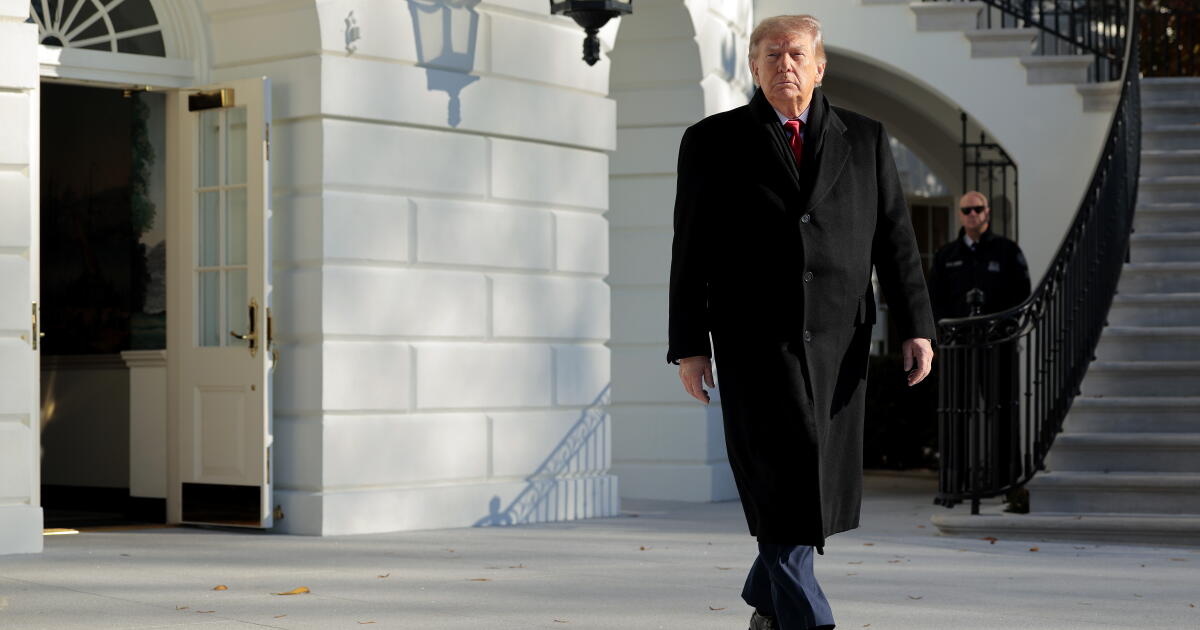
As Trump left the White House Monday, he said he might meet with North Korean leader Kim Jong Un while in China. Kim “may come” to Shenzhen but “that’s up to President Xi,” Trump told reporters, according to the Associated Press.
He also said he plans to talk with Xi and Putin about Russia’s war in Ukraine.
“We’ll talk about my favorite subject, Ukraine. Ukraine’s losing Ukraine,” Trump said. “Russia is losing 25,000 soldiers in the month. So we’ll be talking about that.”