Global South

Beyond Expansion: Can BRICS Convert Economic Weight into Collective Power?

Authors: Janvi Singhi and Kanav Sharma*

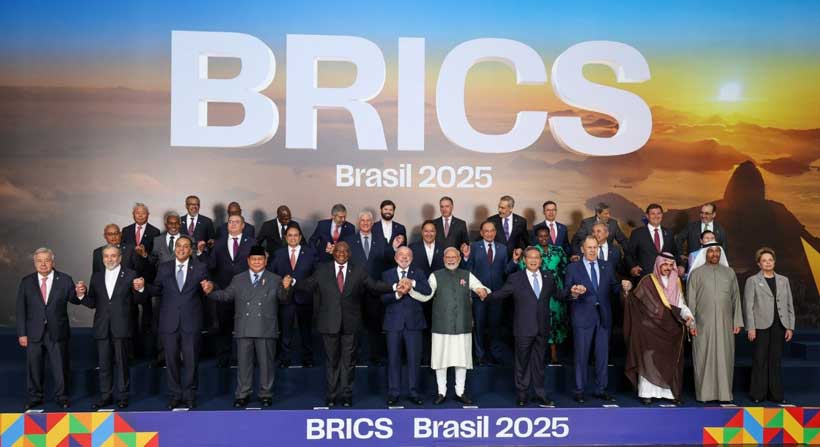
BRICS is moving into a more meaningful phase in its evolution. Its larger membership, considerable resources, population, and markets position it as a voice for the global south. Nevertheless, the fact that the BRICS is economically big does not guarantee that it will turn into a powerful organization. The difficult question is whether BRICS will be able to use the potential of its diversified members to create the institutions and means of collaboration that will meet the needs and interests of different countries, businesses, and banks.

This is where the next chapter of BRICS collaboration will be decided. It is definitely not in need of aspiration. The main question is not whether BRICS will develop a common geopolitical approach but whether BRICS will be able to simplify the issues of cooperation for countries with divergent economic interests and institutional capabilities.

The enlargement of BRICS has brought about both a chance and an enigma. An increased number of members boosts the economic and diplomatic power of the group, but it also entails the presence of more currencies, regulations, economic systems, and foreign policy priorities. States such as India and China may share a desire to amplify the role of developing economies while being in competition with regard to trade, technology, and geopolitics. Resource-rich countries may have their priorities with respect to the manufacturing countries. Financial centers may deal with payment integration differently from countries interested in getting more monetary independence.

Stay ahead of the geopolitical week.

MD Briefing delivers expert analysis across five global fronts — the Indo-Pacific, energy, geoeconomics, European security, and the Middle East — every Monday morning. Free.

The key challenge before BRICS is not about making all the members agree about everything; rather, it is about creating means for cooperation between different countries in the areas where their interests coincide.

This differentiation is essential because BRICS is frequently assessed based on scale indicators, including population, economic output, energy resource reserves, and trade. While these parameters demonstrate the affiliation, the affiliation is not the key to institutional power. BRICS is still functioning as an informal coordinating mechanism and not as a supranational institution due to the absence of an establishing treaty, budget, and secretariat. The conversion of its total economic capabilities into total actions should rely substantially on its members’ coordination. BRICS needs to change its approach, so instead of pursuing expansion, it should focus on implementation.

The issue of cross-border payments can serve as an example. The necessity to improve payment processes within BRICS may be easily explained. International transactions require correspondent banks, multiple currencies, currency exchange, and several commissions. Using local currencies and interoperable payment systems may help reduce some of these expenses and create additional ways of settlements for countries.

However, establishing a new financial structure is much more difficult than just talking about it. The real barriers are technical and institutional: interoperability between national payment systems, regulatory compatibility, foreign exchange liquidity, cybersecurity, anti-money laundering and know-your-customer norms, settlement systems, and trust among the entities participating in the payment system. A domestic payment system cannot simply be hooked up to a foreign payment system without addressing these problems. This leads us to a more practical goal for BRICS countries. Instead of concentrating on the joint BRICS currency, they should work on interoperability among national payment systems.

The example of India’s UPI-PayNow linkage to Singapore shows how this principle works. Two entirely different payment systems can be interlinked without destroying their own systems. The same gap can be figured out at the level of BRICS if all necessary regulations, settlements, and risk management conditions are fulfilled. In order to understand how this can be achieved, BRICS can refer to the examples of other countries that have already applied the same logic.

The same issue of coordination can be observed in trade and supply chains as well. BRICS countries have complementary assets such as resources in energy, agriculture, manufacturing, minerals, technology, and large markets for consumer goods. However, having complementary resources does not automatically result in integrated supply chains.

Businesses need predictable customs, standards that will fit one another, reliable logistics, availability of finance, and clarity of regulation. If countries have different certification systems, digital documents, and technical standards, the theoretical advantages of a large BRICS market will not be fully realized. Therefore, standards will probably prevail over declarations in the end.

So far BRICS has spoken about cooperation of national standard organizations and overcoming technical barriers between trade. Further work is getting cooperation of national standard organizations transferred into standards that will be in demand in real business. Common standards for digital trade documents, selected product certification, customs data, payment systems, and technical standards can connect BRICS economies without full harmonization of their economies.

This method would make it easier to justify politically. There would not be a need for members to give up their power when it comes to buying a wider range of economic policies. The only thing left is for countries with technology to agree on their particular rules where technology will help provide measurable benefits.

The same goes for agricultural projects, as the BRICS countries share similar problems in the fields of food supply, climate, water conservation, and productivity. The BRICS has started pushing for agricultural research and cooperation. So, the question is not whether the BRICS countries have recognized these areas; they already have. The larger question is whether anything can be implemented across borders.

In a situation where one country has effective technology to grow crops and another one has a good way of bringing the crops to a field, BRICS has to find a way to transfer that knowledge or have an organization that can help in that transfer. There should be a value on the moves made regardless of whether formal treaties have been produced or not. This points towards a different institutional model for BRICS: modular cooperation.

BRICS needs to develop a model that allows all members to be part of the major framework and subgroups of interested members cooperating with each other in specific areas that require deep integration. Countries interested in making payments and settlements between them could organize a coalition in charge of finding and implementing technical solutions for that. Those ready to work jointly in the field of agriculture can proceed with agricultural cooperation, while others can focus on critical minerals, logistics, AI technologies, energy, and development finance.

This model recognizes one uncomfortable truth: diversity is BRICS’ asset, but it also acts as an obstacle in its functioning. In a highly heterogeneous grouping, it is impossible to expect rapid integration in view of the differences among its members. Compliance with the needs of all BRICS states only produces long negotiations and ambitious statements that do not work. Modular cooperation, in its turn, enables countries to pursue their own policy while being part of the larger framework.

Moreover, it could also establish a more trustworthy framework for testing. A limited number of members would be given the opportunity to run an initial test of payment or trading procedures, determine any legal or technological obstacles, and welcome other participants once the system is successful. The outcome would be a lowering of the chances of running into challenges that would be involved in the launch of a full project for all members simultaneously. BRICS should also reconsider its parameters of success.

Rather than concentrating on the number of members or the quantity of agreements accepted, BRICS should focus on the outcomes of its activities. There are political benefits to this strategy as well. BRICS will find it difficult to forge sustainable alternatives simply by selling them as counters in the geopolitical confrontation with the West. Governments and businesses respond not just to geopolitical signals but also to incentives. If the BRICS mechanism is cheaper, quicker, safer, and more efficient, then the chances of adoption increase.

This point is especially important for the discussion of de-dollarization. The reduction of dependence on dollar-based systems may in itself be a rational objective for some members; however, viewing de-dollarization as a success in and of itself can overshadow the distinction between geopolitics and economic efficiency. A payment mechanism can only gain credibility if banks and companies use it to solve a problem at hand.

India’s BRICS presidency in 2026 is an excellent opportunity to work on the practical implementation of the above approach. New Delhi can focus on enhancing cooperation based on interoperability and standards, collaboration of sectors, and measurable results. Instead of trying to create a homogenous group, India can create a framework where willing participants will devise their solutions for implementation by others.

Instead of striving to make BRICS like other supranational bodies, we should acknowledge the fact that, given its diversity of membership composition and structure, it is not realistic nor necessary. BRICS differentials provide a comparative advantage of allowing a mix of countries with both different political and economic systems that nevertheless share aspirations for greater policy autonomy and a voice in international affairs.

BRICS does not need to reach consensus on every issue to become successful. What it requires is to be able to determine areas where cooperation can be beneficial economically and create institutions able to do that.

Thus, the biggest problem is not the absence of power. The problem is how to convert power into capacity and capacity into institutions. If BRICS succeeds in this task, its economic capacity will transform from empty statistics into collective power. If it does not, then enlargement might improve visibility of the group, but its effectiveness would stay at the same level.

*Kanav Sharma is a Public Policy Researcher from Jammu & Kashmir with a postgraduate degree in English Literature from the University of Jammu. His interests include public policy, governance, parliamentary and strategic affairs.
Source link

Eastern Economic Forum: Russia Bets on Asia and the Global South

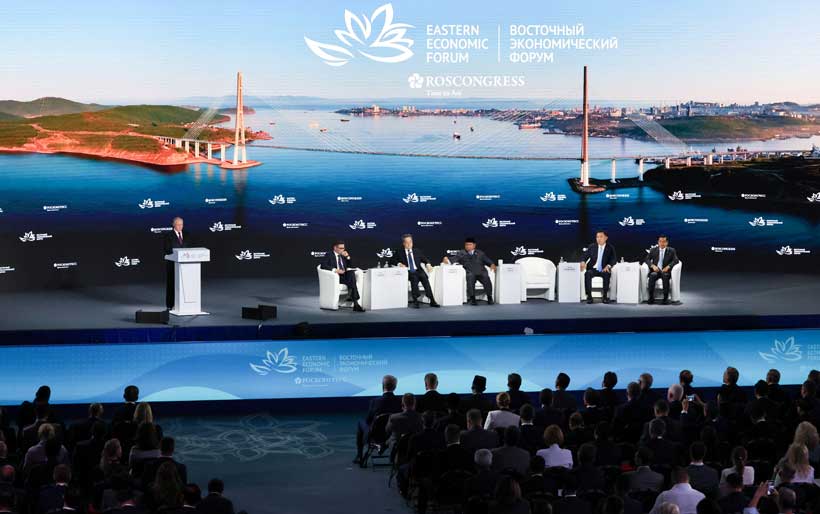
The Eastern Economic Forum (EEF) has been described as a successful solid platform since its creation. It increasingly attracts guests from widely different countries, especially leaders of China, India, Malaysia, Mongolia, and Myanmar. The leaders of Vietnam, Kazakhstan, Laos, and Thailand have visited it in various capacities. The business segment of the forum has long gone far beyond the geographical boundaries of Eurasia. Its frequent unprecedented large number of guests includes businesspeople from South America, Africa, and the Middle East. That, however, it remains open for entrepreneurial contacts with everyone whose natural interests are primarily in the trade, economic, and social spheres. This cross-platform cooperation between the structures is developing, growing deeper and creating a new agenda. The most essential feature is that the platform is guided by the principles of equality, mutual benefit, and honest dialogue, which are entirely different from those of Western-oriented structures. 

The EEF, which opened on 1st-4th September, in Russia’s Far Eastern city of Vladivostok, has become a solid platform for open and constructive dialogue among business leaders, government officials, and members of the expert community. It has also become a unique venue for discussing the strategic development of the Russian Far East and the country as a whole, while fostering and strengthening potential partnerships with counterparts, particularly from the Asia-Pacific region, in food production, infrastructure, logistics, industry, energy, and many other sectors of the economy. While recognizing the huge untapped economic potential of the region, it is also understandable that the development of the Far East largely depends on human capital, entrepreneurial efforts, and the ability of regions to create the necessary conditions for realizing the practical expectations.

On 2nd September, as part of the business program, the “Towards a Common Future: Inclusion as a Development Resource for the Far East” discussion was held with a strong focus on how to create an equal opportunity environment, develop human capital, and engage diverse groups in economic and social life. The following day, the majority of the participants in the “Inspiring Investments: A Development Strategy for Growth and Scaling” session touched on funding mechanisms for creative projects, opportunities to enter foreign markets, and collaboration between businesses, investors, development institutions, and government agencies. The key point focused on the development of the creative economy and international cooperation with Asia-Pacific countries, industry investments, the export of intellectual property and creative products, the media’s role in the development and positioning of regions in the Far East, new content formats, and training personnel for the economy of the future.

As part of the discussions at the forum, Russia and the United States continued their business dialogue, headed by Robert Agee, president and CEO of the American Chamber of Commerce in Russia (AmCham Russia), and with the participation of US representatives. It was spearheaded by the Roscongress Foundation in Russia.  Anton Kobyakov, Adviser to the President of the Russian Federation, noted, however, that there is a strong appetite on both sides for direct professional engagement. What matters most is to sustain the momentum and possibly broaden the agenda to include bilateral entrepreneurial partnership. 

Stay ahead of the geopolitical week.

MD Briefing delivers expert analysis across five global fronts — the Indo-Pacific, energy, geoeconomics, European security, and the Middle East — every Monday morning. Free.

“There is the need to facilitate more networking to identify specific strategic areas for cooperation,” said Robert Agee, president and CEO of the American Chamber of Commerce in Russia, and unreservedly agreed to continue their work on developing business ties and prepare for the participation of American representatives in the Russian Federation.

With many Asian and Pacific participants, explored opportunities for developing small and medium-sized enterprises. This is becoming increasingly important amid structural changes in the economy, as businesses look for new avenues for growth. The EEF made it possible not only to exchange experience but also to find concrete solutions that will help entrepreneurs adapt to changing conditions and unlock new opportunities for growth.

Developing trade, strengthening of interstate ties, and the creation of a common space for interaction among Asia-Pacific countries have assumed a new trend with Russia. The argument was logically based on Russia’s historical experience of cooperation with East Asian countries. It was further underlined that Russia and the Asia-Pacific attract politicians and entrepreneurs from around the world. In these current geopolitical circumstances, Russia needs to seek out new opportunities for development, particularly from the Asia-Pacific region, and with reference to the emerging new multipolar world. At the heart of the forum program was the search for new sources of growth and resilience for SMEs amid structural changes in the economy, from raising productivity and adopting new technologies to managing risks and adapting business models. One section of the program focused on the role of automation and artificial intelligence, changes in business processes, employees’ readiness to work with new technologies, and ways of improving productivity. 

In addition to the above, a special session was devoted to analysis where experts outlined the key economic trends across the Asia-Pacific region. As monitored, this session was set out in the analytical review entitled “Asia Trends 2026: The AI Boom, Industrial Relocation, and Geopolitical Fragmentation,” prepared ahead of the opening of the Eastern Economic Forum on 1st September. The review clearly noted, among other things, that Asia accounts for around 60% of global GDP growth and is becoming the world’s new center of trade, industry, technology, finance, and military power. Within the region, however, economic growth is highly uneven, while technology and capital are concentrated in a small group of states, making consolidation difficult. The ASEAN countries, meanwhile, face competition from Chinese manufacturers while also coming under growing geopolitical pressure from Washington. More broadly, the Asia-Pacific region is more exposed than any other to the effects of the energy crisis and to climate risks such as a super El Niño. 

According to the International Monetary Fund, Asian GDP grew by 5% in 2025, significantly ahead of global growth of 3.5%. Within the region, however, countries face a range of specific challenges, from high labor costs and insufficient industrial capacity to balance-of-payments difficulties and currency instability. These factors are driving increasingly divergent development paths among Asian economies. The region’s advanced economies, such as Japan and South Korea, posted lower growth rates, at 1.2% and 1%, respectively, in 2025. Asia’s emerging economies grew by 5.5% overall over the same period, with performance ranging from a 2% contraction in GDP in Myanmar to an 8% surge in Vietnam. 

Countries with the strongest growth prospects are attracting investment, leaving others with fewer opportunities to draw in capital. According to the United Nations Conference on Trade and Development, developing countries in Asia attracted US$644 billion in foreign direct investment in 2025. That is around 40% of the global total and more than 70% of all investment in developing countries. Capital flows are unevenly distributed: eight of the ten largest recipients of foreign direct investment among developing countries are in Asia, and together they account for around 60% of all inflows to developing economies and more than 80% of inflows to the region. 

Capital is becoming increasingly concentrated not only in a small number of countries but also in a narrow range of sectors, particularly artificial intelligence, clean energy, semiconductors, and critical minerals. In the longer term, this could deepen inequality and worsen the position of countries without a strong presence in these fields. Asia is one of the principal beneficiaries of the global AI boom. The investment cycle associated with its development has driven up demand for semiconductors, memory, servers, network equipment, and related electronics. The region occupies a central position in the global supply chain for these products. Technology exports will remain a powerful engine of economic growth in Asia, although the benefits will be distributed unevenly depending on each country’s position in the value chain.

South-East Asia’s role as an industrial center is growing as production capacity relocates there from China, which is no longer a low-cost manufacturing base. Chinese companies have begun redirecting production to Vietnam and Indonesia in particular in order to mitigate the impact of US tariffs. At the same time, China has increased its exports of industrial components and capital goods, supplying the equipment and parts needed by manufacturing centers in other countries. Exports of intermediate goods, including memory chips, other semiconductors, and industrial components, rose by 9% in 2025. Part of this represented an indirect offset to reduced shipments to the United States, as components, particularly in electronics, were used by manufacturers in other countries to produce goods that were subsequently exported to the US. A fall of roughly US$15 billion in smartphone exports, for example, was matched by a comparable increase in shipments of components, notably to India. 

In many other cases, however, the growth in exports of components and equipment was not linked to replacing sales China had lost in the US. Instead, it supported the expansion of production in third markets, especially developing ones, reinforcing China’s role as a supplier of production inputs rather than an exporter of finished goods. The result is an integrated supply chain taking shape across the region, encompassing research and development and the manufacture of high-technology components in China, assembly and packaging in an ASEAN country such as Malaysia or Vietnam, and the subsequent shipment of products to markets within the region and beyond. 

Amid the fragmentation of the global economy and trade, the development of the Eurasian space calls for resilient regional supply chains and logistical connectivity between states. Russia’s Far Eastern Federal District can play a strategically important role here. Thanks to its location, the district can serve as a resource and logistics gateway within the transport corridors linking European Russia with Asia. For a long time, infrastructure constraints held back the expansion of ties between Russia and Asian states, but the situation has begun to change with the development of the Eastern Operating Domain, which comprises the Baikal–Amur Mainline and the Trans-Siberian Railway. 

A program to modernize the Eastern Operating Domain has been under way since 2013, aimed at eliminating bottlenecks on the railways of Siberia and the Far East. Over that period, its carrying capacity has increased by 84%, reaching 180 million tonnes in 2025. The modernization is expected to raise that figure to 210 million tonnes by the end of 2030 and 270 million tonnes by the end of 2032. The development of the rail network and port infrastructure will largely determine the prospects for Eurasia and for the Asia-Pacific region in particular, as the world’s economic, financial, and trade center shifts towards the region. 

Emerging trends are reshaping the world; South-South economic partnership is seemingly becoming both the political and economic architecture. Logically, developing collaboration with Asian partners, anchoring discussions on technological leadership, and making breakthroughs in scientific fields and adopting innovative technologies are increasingly reshaping the world. Today, the role of academic institutions is to build a solid scientific and technological foundation that addresses applied industrial challenges while enhancing business efficiency, eco-friendliness, and sustainability. It is only through this synergy between science and the real economic sectors that can bring true multifaceted sovereignty. In conclusion, Asia-Pacific and Russia have to create a new model of economic and business and trade relations in the Global South.

As monitored from official reports, Russia is creating practically a new model of development of the Far East with maximally comfortable conditions for enterprises, as well as legal innovations for the investment climate in the region. Therefore, potential Asia-Pacific investors have to work on new ideas and new strategies for developing trade, agro-processing, industry, and other economic sectors in the Far Eastern region. The Eastern Economic Forum was held from September 1 to 4 on the campus of the Far Eastern Federal University. This year’s theme: “The Far East: Development for the Benefit of People.” It was the 11th EEF and organized by the Roscongress Foundation.

Source link

Xi Jinping’s Egypt Visit: How China Is Expanding Its Influence in the Middle East

The upcoming official visit of Chinese President Xi Jinping to Egypt, scheduled for August 30 to September 3, 2026, coincides with the Shanghai Cooperation Organisation (SCO) summit. The visit will address economic and technological cooperation, as well as regional and international issues, and marks the 70th anniversary of diplomatic relations between Egypt and China. The visit aims to strengthen the comprehensive strategic partnership between the two countries and expand Beijing’s economic and political influence in the Middle East amidst escalating regional and international tensions, while also bolstering China’s role in the Global South.

As an Egyptian academic specializing in Chinese politics and the policies of the ruling Communist Party of China, I can analyze and summarize the significance of President Xi Jinping’s visit to Cairo and his meeting with his Egyptian counterpart, President Abdel Fattah El-Sisi, and its importance to China’s influence in the Middle East and the Global South through the following points:

– First: What does China hope to achieve with Xi Jinping’s visit to Egypt at this particular time?

This visit of President Xi Jinping to Cairo (the first by a Chinese president to Cairo in nearly a decade) coincides with the 70th anniversary of the establishment of diplomatic relations between the two countries. It carries several key objectives, including political and international dimensions related to Chinese coordination with Egypt on Middle Eastern issues. The visit comes at a sensitive time, as the region is experiencing tensions linked to the conflict between Iran and the United States and its repercussions on maritime security in the Strait of Hormuz and global energy markets. Beijing also seeks to strengthen its strategic balance and reaffirm its diplomatic presence as an international power that supports diplomatic solutions and cooperates with pivotal countries like Egypt to achieve stability. This follows President Xi Jinping’s participation in the Shanghai Cooperation Organisation summit.  President Xi Jinping’s visit to Cairo also carries several economic and trade dimensions, such as expanding the economic partnership and capitalizing on the significant increase in trade between the two countries to deepen cooperation. Furthermore, China will support infrastructure and energy projects in Egypt by boosting Chinese investments in Cairo, including renewable energy sectors such as wind turbine manufacturing plants, transportation deals, and electric trains, in addition to extending currency swap agreements between the two central banks.

Stay ahead of the geopolitical week.

MD Briefing delivers expert analysis across five global fronts — the Indo-Pacific, energy, geoeconomics, European security, and the Middle East — every Monday morning. Free.

The visit also aims to discuss the technological and artificial intelligence file in China’s relations with Cairo, particularly major technological offers, most notably the offer from the Chinese company Huawei to build data and artificial intelligence centers in Egypt. This project is viewed with apprehension by intelligence, military, political, and strategic circles in Washington, which are attempting to offer Cairo alternatives from major American technology companies such as Microsoft, Nvidia, and AMD.

– Second: Does the visit carry political messages that extend beyond bilateral relations, especially regarding the Middle East and Africa?

Yes, Chinese President Xi Jinping’s visit carries major strategic political messages that transcend the framework of bilateral cooperation. It aims to reshape the international order and build a multipolar world, starting with the Global South. The visit also carries messages that go beyond bilateral relations, pushing for a Global South leadership role. Beijing seeks to garner African and Arab support to assert its position as a major power, offering an alternative to Western and American competition and influence. China also aims to promote multilateralism by urging countries in the region to adopt common positions that support international stability and security, moving away from the unilateral polarization of the United States. Furthermore, President Xi Jinping’s visit signals China’s desire to secure its economic interests. Chinese actions are focused on ensuring the security of maritime routes and the stability of energy and trade markets within the framework of the Belt and Road Initiative. Here, President Xi’s visit to Cairo coincides with the launch of the second iteration of the massive joint air exercises, Eagles of Civilization, in August 2026 at Egyptian air bases. These exercises, which follow the first iteration in May 2025, will involve advanced fighter jets from both sides. This sends political and strategic messages to Washington and Tel Aviv about the new military partnership between Egypt and China, the diversification of arms sources, and the independence of Egyptian military and political decision-making in diversifying its partnerships.

Furthermore, the Chinese president’s visit to Cairo carries support for Egypt’s regional role in the Middle East and Africa, reaffirming the pivotal role of Egypt. Choosing Egypt as a starting point reflects Beijing’s understanding of its geopolitical importance as a key link between the Arab world and the African continent and its commitment to addressing regional repercussions. China is also demonstrating its readiness to cooperate with its African and Arab partners to contain the economic crises resulting from conflicts in the Middle East.  In addition to China’s anticipated plan to expand alliances by strengthening the integration of Chinese development projects with major economic blocs such as BRICS, the Shanghai Cooperation Organisation (SCO), and the Asian Infrastructure Investment Bank, this visit also aims to coordinate common positions on de-escalation and maintaining peace and security in the Middle East and to discuss regional conflicts, particularly in the wake of the Gaza and Iran wars.

– Third: What economic files could witness new agreements or steps between Cairo and Beijing?

Economic relations between Cairo and Beijing are increasingly moving towards signing new agreements and taking new steps focused on strengthening joint investments and supporting financial stability. The most prominent joint economic and investment files between Egypt and China are based on supporting financial partnership and currency diversification. This involves renewing and strengthening local currency swap agreements between the Central Bank of Egypt and its Chinese counterpart to facilitate trade and support monetary stability, independent of international currencies. Economic cooperation and currency swaps will be among the top economic priorities of the visit through monitoring the surge in trade and extending the local currency swap agreement to enhance economic partnership within the BRICS framework.

Furthermore, there is a shared Chinese-Egyptian desire to localize industry and technology in Cairo by attracting substantial Chinese investments in electric vehicle manufacturing, new and renewable energy sectors, and advanced technology industries. With the expansion of Chinese projects in the Suez Canal Economic Zone, through the expansion of Chinese industrial and logistical projects within the Suez Canal Corridor, a major value-added production base is being established. China is also supporting Egypt in achieving food security and agricultural development by preparing joint Egyptian-Chinese alliances targeting large-scale agricultural land reclamation projects to enhance food security. This is happening concurrently with Chinese support for infrastructure and smart cities in Egypt through cooperation in urban development projects and modern smart cities.

– Fourth: Can China strengthen Egypt’s role as a key hub for its projects in the Middle East and Africa?

Yes, China is already strengthening Egypt’s role as a key and central hub for its strategic projects in the Middle East and Africa. The pillars of Chinese strategic cooperation with Egypt are based on China’s projects and investments within the Belt and Road Initiative. China considers Egypt a strategic gateway and a vital corridor for the maritime and land Silk Road, given the Suez Canal’s role as a global trade artery.  With the diversification of Chinese partnerships and investments in the Suez Canal Economic Zone, given the concentration of major industrial projects by Chinese companies in the zone, such as the China-Egypt Economic and Trade Cooperation Zone (TEDA). China aims to access African markets through Egypt. Chinese companies utilize Egyptian land and ports as a joint manufacturing base and a launchpad for exporting products and services to markets across Africa and the Middle East. China also seeks to achieve developmental and security integration with Egypt, aligning its five-year development plans with Egypt’s Vision 2030. This is further evidenced by the development of joint military cooperation and air exercises between Egypt and China, such as the Eagles of Civilization exercises between the Egyptian and Chinese air forces, the first iteration of which took place in May 2025 and the second in August 2026.

Beijing also seeks to disseminate artificial intelligence and innovation technologies through Egypt to the African continent, the Middle East, and the Global South.  Especially since Egypt hosts a number of Chinese companies across various sectors, particularly technology, such as Huawei, Xiaomi, Oppo, ZTE, Midea, and Haier. Furthermore, a $300 million investment fund has been established with Tsinghua University in China, focusing on artificial intelligence and semiconductor design.

– Fifth: To what extent can the Egyptian-Chinese partnership affect the balance of American influence in the region?

The Egyptian-Chinese partnership significantly impacts American influence in the Middle East by diversifying China’s economic and political alliances in the region. However, it does not eliminate the strategic alliances between the United States and several countries in the region, particularly the Gulf states. The partnership between Egypt and China is based on the economic and financial dimension, including major Chinese investments in Egypt. China is pouring billions of dollars into infrastructure projects and the Suez Canal region. China also supports Egypt’s bid to join the BRICS group, led by China and Russia, to reduce its dependence on the dollar and the Western and American financial system. Furthermore, China is keen to closely integrate its Belt and Road Initiative projects with the Egyptian economy. The partnership between Egypt and China also rests on the diplomatic and strategic dimension as well as the diversification of alliances. Egypt pursues a balanced foreign policy that is not limited to a single ally.  Here, the partnership with China grants Egypt greater freedom of movement and a wider margin to maneuver, free from American political conditions and pressures, particularly in the areas of armament and military deals. This creates a delicate balance for Egypt, as it refuses to fully align itself with one power against another, maintaining its security partnership with Washington alongside its relationship with Beijing.

In this context, Beijing does not view Egypt merely as an economic partner, but rather as a strategic gateway and a pivotal pillar of its geopolitical influence in the Middle East and Africa, countering American penetration. This approach stems from China’s desire to fill the political and military vacuums resulting from the decline or fluctuation of the Western and American presence in the region. To this end, China leverages Cairo’s historical and political weight as a platform to expand its diplomatic influence and build partnerships with other countries in Africa and the Arab world. China’s support for Egypt’s membership in the BRICS bloc has provided Beijing with a strong regional ally, bolstering its vision for reshaping the global financial system into a multipolar order in the face of the United States’ unilateral hegemony in the region. This is especially significant given that Egypt represents a crucial land and sea crossroads for China’s Belt and Road Initiative via the Maritime Silk Road, considering the strategic and vital importance of the Suez Canal.

– Sixth: Does Beijing want Egypt merely as an economic partner, or does it see it as a strategic gateway for its influence in the Middle East and Africa?

Beijing views Egypt as a major strategic gateway for its influence, not just an ordinary economic partner. The relationship combines commercial interests with broad geopolitical ties. The economic dimension is based on the importance of the Suez Canal. China considers the Suez Canal a key artery for its trade with Europe and the rest of the world, and it is investing heavily to connect Egyptian ports and roads to its major commercial projects related to its Belt and Road Initiative. In addition to China’s role as a major logistics hub in the Suez Canal Economic Zone, numerous Chinese companies have established factories there to export goods. This is further compounded by Egypt’s strategic and political importance, as well as its sensitive geographical location, which is crucial to China’s interests. Egypt’s position at the crossroads of Africa, Asia, and Europe serves China’s regional influence. This coincided with China’s support for Egypt’s formal accession to the BRICS group, a move fully backed by China to bolster both countries’ political and economic weight globally.

Beijing also focuses on the growing security and military dimension of its relationship with Cairo to secure investments and international maritime routes. Chinese ambitions extend beyond simply selling goods; it seeks a greater role in protecting its interests and citizens by strengthening military cooperation with Cairo and diversifying defense partnerships with countries in the Middle East, Africa, and the Global South through Egypt. Beijing sees the growing military cooperation and arms sales to Egypt and the region as an opportunity to undermine Western and American military influence and to forge closer ties with the Egyptian army, one of the largest armies on the African continent. This is the true objective of China in transforming Egypt into a political and military hub that guarantees Beijing’s vital interests in the Middle East, Africa, and the Global South.

Accordingly, Chinese President Xi Jinping’s visit to Cairo comes at a time when Beijing seeks to strengthen its engagement in the Middle East and expand its relations with developing countries and the Global South, coinciding with escalating competition with the United States for economic and technological influence. Xi’s visit to Cairo also carries significance that transcends bilateral relations, given the ongoing repercussions of a potential US war with Iran and the instability in global energy markets. Therefore, China seeks to leverage Egypt’s pivotal role in achieving regional stability, mitigating crises, and protecting its interests in the Middle East and Africa.

Source link