Yirenkyi breaks Panama hearts with late Ghana winner
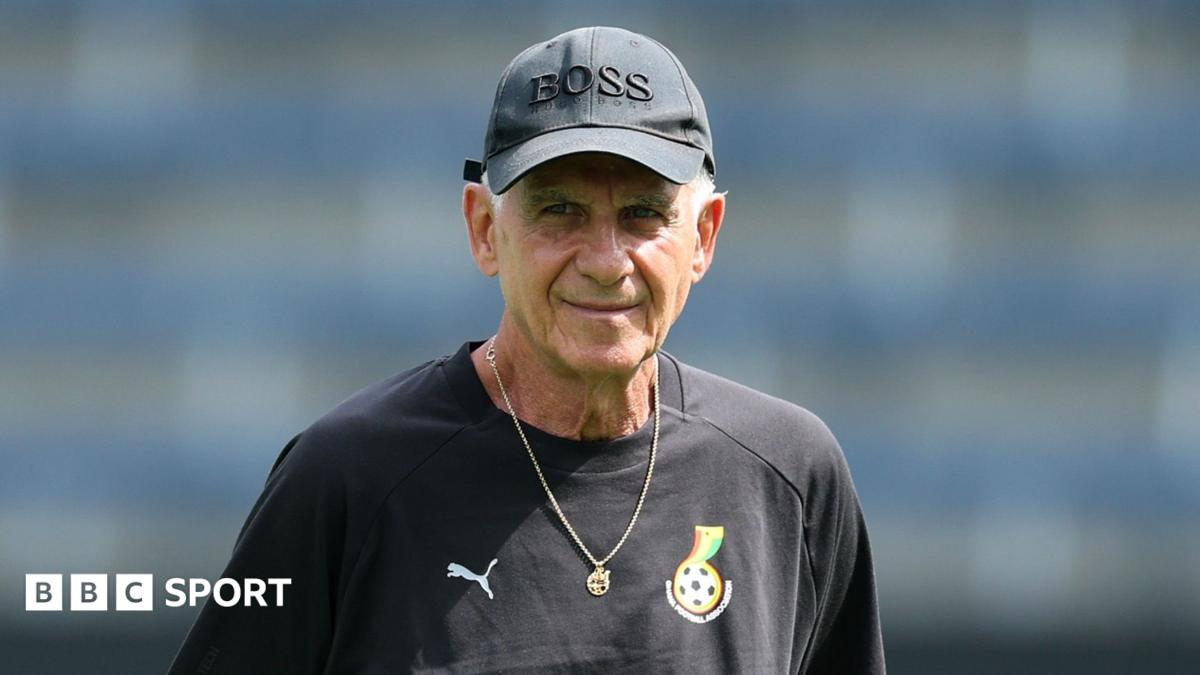
Ghana’s Caleb Yirenkyi scores the only goal from close range in the 95th minute to break Panama hearts in their World Cup Group L match in Toronto.
Source link
Ghana’s Caleb Yirenkyi scores the only goal from close range in the 95th minute to break Panama hearts in their World Cup Group L match in Toronto.
Source link
Published On 13 Jun 202613 Jun 2026
Ghana midfielder Thomas Partey will not play in his team’s World Cup opener after Canada denied his visa application while he awaits trial on multiple charges of rape in the United Kingdom.
FIFA said on Friday in a statement that the 32-year-old Partey won’t be able to travel from his team’s base camp in Smithfield, Rhode Island, for Ghana’s opening match with Panama in Toronto on Wednesday.
“His visa application has been refused by the Canadian government,” the governing body of world football said.
“FIFA is not involved in the immigration processes of host countries, including the adjudication of visas. As with previous FIFA events, the host government ultimately determines who receives a visa and is admitted into the country.”
Immigration, Refugees and Citizenship Canada (IRCC) said in a statement that every person wanting to come to Canada is assessed individually “based on the facts available and the law that applies”.
“Canada is proud to be a host country for the 2026 FIFA World Cup and is working to facilitate a successful event while maintaining the safety and security of Canadians,” the IRCC said in the statement.
“Canada has been consistent that hosting major events does not change Canada’s immigration laws.”
Partey was travelling back to Ghana’s base camp in Rhode Island after his visa denial. He will be able to play on June 23 when Ghana play England in Foxborough, Massachusetts. Ghana conclude group play on June 27 against Croatia in Philadelphia.
Partey is scheduled to stand trial in November or later on allegations dating to his time with English club Arsenal from 2020-25. Partey, who now plays in Spain for Villarreal, has pleaded not guilty.
A second World Cup player, Morocco defender Achraf Hakimi, is awaiting trial on similar charges in Paris.
Ghana are making their fifth appearance in the last six World Cups.
Africa’s performance at World Cups peaked at Qatar 2022 when Morocco became the first side from the continent to reach the semifinal stage.
Even their quarterfinal appearance was noteworthy – the Atlas Lions were only the fourth African nation to get there.
list of 4 itemsend of list
Although Cameroon, Senegal and Ghana are the three other African teams to reach the quarterfinals, North Africa has dominated the continent’s success overall at the World Cup and at the Africa Cup of Nations.
Egypt are the record seven-time winners of AFCON, while three of the top five African qualifiers for World Cup finals are Morocco, Tunisia and Algeria.
Al Jazeera breaks down the chances of the sub-Saharan nations looking to outshine their neighbours from the north at the tournament which kicks off on June 11:
World Cup Appearances: Four – 2002, 2018, 2022 and 2026
Best finish: Quarterfinals
Overall record: P12 W5 D3 L4 F16 A17
FIFA ranking: 14
Prediction: Eliminated at quarterfinal stage
Senegal head to World Cup 2026 with a burning sense of injustice firing their campaign. The Lions of Teranga were stripped of the Africa Cup of Nations (AFCON) title by the Confederation of African Football (CAF), which decided the mid-game walk-off by the Senegalese players and staff voided January’s final – which was later awarded to Morocco, along with the trophy, as a 3-0 win.
In 2002, Senegal upset the odds and reached the quarter-finals in their World Cup debut at the tournament co-hosted by Japan and South Korea.
More than two decades later, expectations are running high – perhaps carrying the greatest expectation on all African teams, including Morocco.
The depth of the 26-man squad is seen as their greatest strength over continental neighbours, but their star power is also envied by rivals.
Sadio Mane remains the country’s greatest export. Although midfield kingpin Pape Gueye, goalkeeper Edouard Mendy and captain Kalidou Koulibaly would grace almost any side at the tournament.
All three are French-born and another shot at the two-time winners of the competition is in their sights.
A 1-0 win against then defending champions France at the 2002 edition announced Senegal as a rising footballing powerhouse. Their first Group I encounter this time around is against Didier Deschamps side in New York on June 16.
“It’s always a pleasure to play against France. It’s a country we know well,” said Senegal coach Pape Bouna Thiaw, who moved to France aged 17.
“If I lose even a second of my belief that I can win the World Cup with Senegal, I will step down,” he added.
Senegal’s group is completed by Iraq and Norway.

World Cup Appearances: Five – 2006, 2010, 2014, 2022 and 2026
Best finish: Quarterfinals
Overall record: P15 W5 D3 L7 F18 A23
FIFA ranking: 74
Prediction: Eliminated at quarterfinal stage
Ghana have only missed one World Cup since their 2006 debut.
Four years after their global bow they became the third African side to reach the quarterfinal stage at Germany 2010.
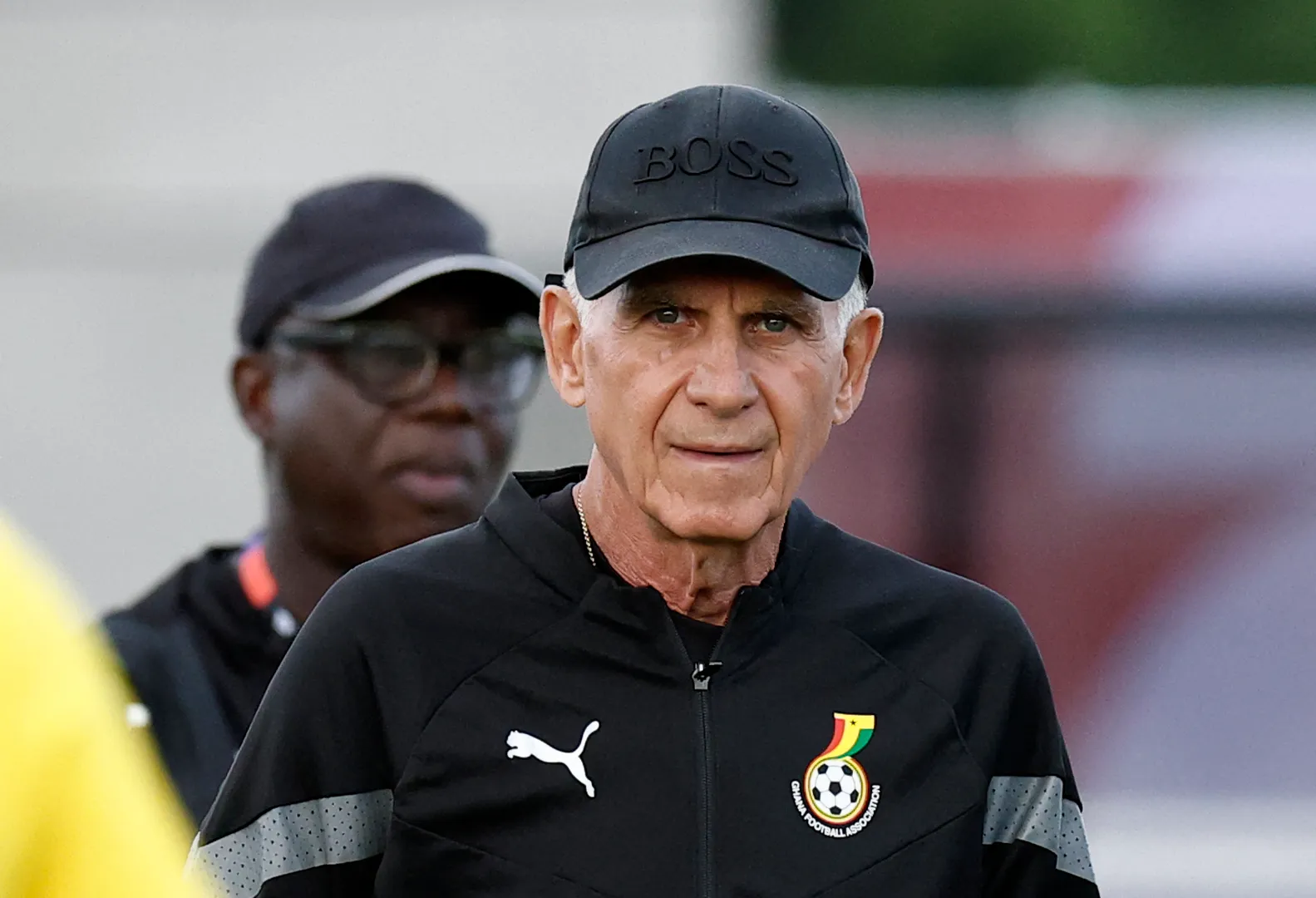
Their run-up to this tournament has not been smooth, with a late change of coach as veteran Portuguese Carlos Queiroz replaced Otto Addo following a run of poor results.
The German-born former Ghana international led his nation at Qatar 2022, but the failure to qualify for the last AFCON and comprehensive losses in their four high-profile games in November and March saw him fired in early April.
It will be a fifth successive World Cup for the 73-year-old Queiroz, whose past African experience has been with South Africa and Egypt, and who managed Real Madrid, and was Alex Ferguson’s right-hand man at Manchester United.
Group L, against Panama, England and Croatia, appears to be the ‘group of death’ in the opening stage of the competition, but with Manchester City’s Antoine Semenyo leading a strong attack, Ghana will fully expect to progress.
“I think that this country has a huge, enormous potential. This is a country of footballers,” Queiroz said.
The Black Stars will, however, be without the injured Tottenham forward Mohammed Kudus, who has become the team’s talisman and key factor in their last two successful qualifying campaigns.

World Cup Appearances: Four – 2006, 2010, 2014 and 2026
Best finish: Group Stage
Overall record: P9 W3 D1 L5 F13 A14
FIFA ranking: 34
Prediction: Eliminated at quarterfinal stage
The Ivory Coast return to the global stage after a 12-year absence – one that was hard-felt following the retirement of some of their greatest players in Yaya Toure and Didier Drogba.
It has been a long rebuild for the Ivorians, but they have won two AFCON titles since their last World Cup appearance.
Their youthful attack led by teenager attacker Yan Diomande, alongside Simon Adingra and Amad Diallo of Manchester United, will be key to their chances.
When hosting AFCON two years ago, Ivory Coast were nearly eliminated in the group stage, but they promoted Emerse Fae from assistant manager for their final game of the opening phase and went on to win the title.
“I believe Ivory Coast has the potential to achieve something exceptional – why not aim for the final?” Fae said ahead of the tournament, that will begin with matches against Curacao, Ecuador and former world champions Germany.

World Cup Appearances: One – 2026
Best finish: NA
Overall record: NA
FIFA ranking: 69
Prediction: Eliminated at group stage
One of the debutants, Cape Verde – with a population of about 600,000 – is the third smallest nation to qualify in the tournament’s long history.
They only debuted at AFCON in 2013, but did go on to reach the quarterfinals – a feat repeated in 2023.
The task before them now – which will be led by their diaspora of players in the main – is daunting, with Uruguay, Saudi Arabia and European champions Spain, lying in wait in the group stage.
“We’ve always been aware of our talent but we haven’t always believed that it could take us much further than we had achieved up to that point,” said manager Bubista, named African Coach of the Year in 2025.
“Therefore, it took courage to face any opponent. The first step in our success was truly believing in our potential. In other words, we changed the players’ mindset.”

World Cup Appearances: Four – 1998, 2002, 2010 and 2026
Best finish: Group stage
Overall record: P9 W2 D4 L3 F11 A16
FIFA ranking: 60
Prediction: Eliminated at round of 32 stage
After a burgeoning beginning to their return to the international fold, with qualification for the 1998 World Cup, South Africa’s fortunes have taken a downtown in the last 16 years.
A first appearance in the finals since 2010 feels long overdue for a nation hoping to reap the rewards of strong domestic growth as they head to North America.
South African club Mamelodi Sundowns are the newly crowned African Champions League winners and eight of their players are in Bafana Bafana’s squad. There are also eight players from Orlando Pirates – the domestic league champions, who pipped Sundowns to the title by a point.
“We can say that we have players of the best teams of the season. Those guys have much experience at a high level,” South Africa’s Belgian-born coach Hugo Broos said of his 26-man selection.
“I’m certainly happy that Sundowns won the Champions League, because I was afraid that if they should lose, I would get players who would be very disappointed. So now they all have that boost of confidence, and that helps a lot.”
South Africa are in the other so-called ‘group of death’ as they take on Czech Republic, South Korea and co-hosts Mexico, who they face in the opening game of the tournament

World Cup Appearances: Two – 1974 and 2026
Best finish: Group stage
Overall record: P3 W0 D0 L3 F0 A14
FIFA ranking: 46
Prediction: Eliminated at quarterfinal stage
DRC’s only previous appearance was when it was still known as Zaire, competing at the 1974 finals in West Germany – the first African side from south of the Sahara to go to the World Cup.
As reigning continental champions, their 9-0 thumping by Yugoslavia did little to raise the flag for Africa at the time.
Much has changed since then for the continent and in its second-largest country. The Congolese players will arrive in North America with a FIFA ranking that outstrips three of the other five sub-Saharan qualifiers.
It did take two playoffs to reach this edition – the African legs saw the Congolese eliminate Cameroon and Nigeria, before edging Jamaica in extra time in their intercontinental playoff
Most of the squad are European-born, either in Belgium, France or Switzerland, plus the London-born Aaron Wan-Bissaka, previously called up by England but who missed out on a cap through injury.
“We are extremely proud because a whole generation hasn’t been able to see its national team in the World Cup but now they will see them there,” said their French coach, Sebastien Desabre.

Accra, Ghana – Ghana has recorded 14 arrests linked to false news and offensive speech in less than 16 months, nearly double the number documented during the previous administration’s entire eight-year tenure, according to the Media Foundation for West Africa (MFWA).
The rise has triggered a sharp debate in one of West Africa’s most stable democracies over whether authorities are simply enforcing long-standing laws in a new digital environment, or edging into a more restrictive approach to public speech.
The controversy carries added political weight because President John Mahama, while in opposition in 2022, warned that using state power to intimidate dissent was a “dangerous blueprint” for democracy.
A senior ruling party official dismissed allegations that the arrests amount to a crackdown.
“The opposition intentionally sponsors people to insult the President,” he told Al Jazeera. “When the law catches up with them, they cry persecution to score cheap political points.”
He pointed to the case of TikToker Prince Ofori, known as “Fante Comedy”, who was arrested last August over alleged threats to President Mahama.
Days after his arrest, Ofori appeared at a political rally alongside opposition figures, a development the official said showed how quickly such cases become politicised.
“They paraded him at an opposition rally,” he said.
Opposition leaders see something more troubling taking shape.
Minority leader Alexander Afenyo-Markin has been among the most outspoken critics.
“The state-sponsored persecution must stop,” he told Al Jazeera. “Arresting citizens for words that do not constitute genuine threats is not justice. It is intimidation.”
![Members of Ghana security forces take part in a joint Show of Force Exercise in Accra, Ghana, 11 December 2025. The exercise featured the Ghana Police Service, Ghana Prisons Service, Ghana National Fire Service, the Customs Division of the Ghana Revenue Authority and the Immigration Service in collaboration with the Ghana Armed Forces, aimed at Police officers on security detail near a police vehicle, with the Ghana Black Star atop a building behind them. [FRANK KPORFOR/Epa]](https://i0.wp.com/www.aljazeera.com/wp-content/uploads/2026/06/13574211-1780497934.jpg?w=640&ssl=1)
He said free speech has limits, but argued that the state is increasingly crossing a line.
“Excessive use of state power risks undoing Ghana’s hard-won democratic gains,” he said.
At the centre of the debate are long-standing provisions in Ghana’s Criminal Code and Electronic Communications Act, which authorities say are now being applied to a fast-moving digital landscape.
Government supporters argue the increase in arrests reflects the explosion of anonymous and unregulated online content.
Critics say the problem is not the laws themselves, but how they are being used.
A legal consultant who reviewed recent cases said he counted at least 16 alleged misapplications of Section 208 in the past 18 months, compared with roughly a dozen in the previous eight years.
“The law has been abused beyond repair,” he said. “Repeal is the only remedy.”
Veteran journalist Ben Ephson said Ghana needs clearer guidance on where free expression ends and harm begins.
“The government must properly explain the arrests so people can draw the line between press freedom and responsible journalism,” he said.
He added that both journalists and state institutions risk overstepping if the rules remain unclear.
“When you compare the freedom of the media and the rights of the individual, we need to be careful that the media, in trying to do their work, don’t trample on people’s rights,” he said.
A wider global debate
Others say Ghana’s debate mirrors tensions playing out in other democracies.
Tegha King of the Universal Peace Federation Ghana said concerns about shrinking civic space are not unique to Ghana.
“The global civic space must cultivate more free speech, not less,” he told Al Jazeera.
He said stronger institutions, not more arrests, are needed to manage the pressures of the digital age.
“There must be independent courts, transparent enforcement, media self-regulation and digital literacy,” he said.
Some analysts point to gaps in public understanding of constitutional rights.
“There is a lack of constitutional education among many Ghanaians,” said David Adofo of the African Chamber of Content Producers. “People must know the consequences of their actions before they act, not after.”
Concerns are also being voiced outside the country.
“We have had many concerns from diasporans about perceived erosion of press and political freedoms, especially news of blogger arrests,” said Nana Kofi Opoku-Agyemang of the NuGhana Expat Center. “Negative news sells fast. The government must be cautious so it does not project a negative image of Ghana in the diasporan community.”
Officials insist there is no coordinated effort to silence dissent.
An NDC communicator said the legal framework in question predates the current administration and defended the approach.
“Ghana’s laws, Section 208 of the Criminal Code and Section 76 of the Electronic Communications Act, have been on the books for decades,” he said. “What has changed is the sheer volume of reckless, anonymous and sometimes dangerous content on social media. There is no systematic crackdown. There is simply enforcement of existing law.”
![Personnel of Ghana's Police Service stands guard during a Show of Force Exercise in Accra, Ghana, December 11, 2025. [Francis Kokoroko/Reuters]](https://i0.wp.com/www.aljazeera.com/wp-content/uploads/2026/06/2025-12-12T002056Z_86881175_RC2DEIA7WL6K_RTRMADP_3_GHANA-SECURITY-1780497947.jpg?w=640&ssl=1)
A political irony at the centre of it all
Ghana remains one of West Africa’s more open democracies, with a competitive political system and active media landscape.
But the rise in speech-related arrests has sharpened scrutiny of how far the state can go in policing online expression without undermining the democratic culture that helped define its reputation.
The debate is also politically charged because of Mahama’s own past warnings.
As opposition leader, he described the use of state power against dissent as a “dangerous blueprint.” Today, critics say his government faces accusations it once condemned.
For Alexander Afenyo-Markin, the moment calls for restraint — and reflection.
“We should not continue to say that because it happened yesterday, it should happen today and tomorrow. That cycle must end,” he said. “President Mahama has an opportunity to leave a legacy of tolerance and free speech. I hope he takes it.”
The first flight carrying around 300 Ghanaians evacuated from South Africa following anti-immigrant tensions and reported attacks on foreign nationals has arrived in Accra. Authorities welcomed returnees with reintegration support and transport assistance.
Published On 28 May 202628 May 2026
Share
Ghana’s Thomas Partey, who joined Villareal from Arsenal in 2025, has pleaded not guilty to seven rape charges in the UK.
Former Arsenal midfielder Thomas Partey has been named in Ghana’s preliminary 28-man squad for next month’s World Cup.
The 32-year-old is due to stand trial next year in the United Kingdom, where he has pleaded not guilty to seven charges of rape and one count of sexual assault.
list of 4 itemsend of list
The charges related to allegations by four different women between 2020 and 2022.
Partey currently plays for Villarreal in Spain’s La Liga, where he moved in 2025, following five seasons with Arsenal.
He was initially charged last July, just days after his Arsenal contract expired. Villarreal signed him in August, two days after he was granted bail.
Partey played a full part in World Cup qualifying games for Ghana, for whom he has made 58 appearances.
Tottenham Hotspur forward Mohammed Kudus will miss next month’s World Cup due to injury.
Kudus, who has scored 13 times in 46 international appearances, suffered a quad injury in January and was expected to return in March. However, the 25-year-old forward suffered a setback in his recovery and has not played a game since Thomas Frank was coaching Tottenham.
Kudus, who joined from West Ham United last summer, made 19 Premier League appearances for Spurs this season, scoring twice.
Veteran coach Carlos Queiroz, who announced the latest squad list on Tuesday, will rely on Manchester City’s Antoine Semenyo and Athletic Club forward Inaki Williams, while PAOK’s former Chelsea defender Abdul Rahman Baba has been recalled for the first time since 2023.
Ghana have been drawn in Group L alongside Croatia, England and Panama.
Goalkeepers: Benjamin Asare (Accra Hearts of Oak SC), Lawrence Ati-Zigi (St Gallen), Joseph Anang (St Patrick’s Athletic), Solomon Agbasi (Accra Hearts of Oak SC), Paul Reverson (Ajax).
Defenders: Baba Abdul Rahman (PAOK), Gideon Mensah (Auxerre), Marvin Senaya (Auxerre), Alidu Seidu (Rennes), Abdul Mumin (Rayo Vallecano), Jerome Opoku (Istanbul Basaksehir), Jonas Adjetey (Wolfsburg), Kojo Peprah Oppong (Nice), Alexander Djiku (Spartak Moscow), Elisha Owusu (Auxerre).
Midfielders: Thomas Partey (Villarreal), Kwasi Sibo (Real Oviedo), Augustine Boakye (Saint-Etienne), Caleb Yirenkyi (Nordsjaelland), Abdul Fatawu Issahaku (Leicester City).
Forwards: Kamaldeen Sulemana (Atalanta), Christopher Bonsu Baah (Al Qadsiah), Ernest Nuamah (Lyon), Antoine Semenyo (Manchester City), Brandon Thomas-Asante (Coventry City), Prince Kwabena Adu (Viktoria Plzen), Inaki Williams (Athletic Bilbao), Jordan Ayew (Leicester City).
Parts of the Puebla stadium for high-profile warm-up for 2026 edition were closed to spectators due to FIFA sanctions.
Published On 23 May 202623 May 2026
Mexico have beaten Ghana 2-0 in Puebla in a World Cup warm-up that offered a glimpse of the excitement building less than three weeks before the country opens the tournament.
While Puebla is not among Mexico’s World Cup host cities, fans in green shirts at Cuauhtemoc Stadium created an electric atmosphere throughout the night on Friday.
list of 4 itemsend of list
Repeated Mexican waves rolled around the stadium despite visible empty sections closed under FIFA sanctions linked to discriminatory chants at previous national team matches.
Brian Gutierrez set the tone immediately, curling home from the edge of the box after two minutes.
Teenage Liga MX sensation Gil Mora struck the post in the first half, and Alexis Vega had a header ruled out for offside before the break.
“He’s a different player, we’ve always said that,” Mexico coach Javier Aguirre said of Mora, who made his first appearance for Mexico since November after returning from injury.
“He’s brave, direct, vertical … he gives us great joy because he’s Mexican and because he’s back without pain.”

Ghana, with recently appointed coach Carlos Queiroz absent and assistants leading from the bench, threatened an equaliser early in the second half after forcing a pair of saves from the Mexican goalkeeper and hitting the crossbar.
But substitute Guillermo Martinez ended the visitors’ hopes in the 54th minute, finishing off a counterattack to double Mexico’s lead.
Coach Aguirre used the friendly to continue evaluating players ahead of naming Mexico’s final World Cup squad on June 1, with Europe-based players Luis Chavez, Edson Alvarez and Jorge Sanchez making second-half appearances after recently joining training camp.
The coach praised the effort shown by players battling for places in the final squad, saying: “The fact they tried and gave their best effort, for me, that’s already worthwhile.
“It’s not easy (to pick the team), it’s the most complex part of my job … It’s a bit about trying to see all the possible scenarios with my coaching staff.”
On March 25, the International Day of Remembrance of the Victims of Slavery and the Transatlantic Slave Trade, the United Nations General Assembly passed a landmark resolution. Proposed by Ghana, it recognised the transatlantic slave trade as the “gravest crime against humanity” and called for reparations. A total of 123 countries supported the resolution; three opposed it, including the United States and Israel, while 52 abstained, Britain among them, and several European Union countries.
The UN’s slavery resolution is a historic moment, but what comes next is even more important. Leading up to the resolution, the African Union urged its 55 member states to pursue slavery reparations through formal apologies, the return of stolen artefacts, financial compensation, and guarantees of non-repetition.
This raises a question the resolution does not directly ask: reparations from whom, and to whom? If the answer is simply from European governments to African governments, then the reparations movement risks ignoring the long history of European engagement with Africa, and in doing so delivering justice to the wrong people.
The contemporary framing of the reparations debate is seductive in its simplicity: Europeans arrived in Africa, Africans were enslaved, Europeans grew rich, and Africans became impoverished. Therefore, Europe owes Africa. This narrative carries moral force, but it risks flattening the complex history of European engagement with the continent.
While European actors undeniably drove the demand for enslaved labour, African political and economic elites were not passive victims. They played a significant role in capturing, transporting and selling enslaved people to European traders.
In some cases, African states, seeking to expand their treasuries and consolidate territorial power, preyed on neighbouring communities, condemning them to enslavement for profit. The Oyo Empire, a powerful Yoruba state in what is now south-western Nigeria, expanded significantly in the eighteenth century through its participation in this commerce. Across the region, African elites who had the means sustained the system by exchanging enslaved people for European goods such as alcohol, textiles and other manufactured commodities.
None of this diminishes European culpability in the slave trade. The demand was European. The ships were European. The plantation system was European. The racialised ideology constructed to justify slavery was European. But it does complicate the story.
The transatlantic slave trade was not solely a narrative of African victimhood and European perpetration. It is a story of elite collaboration, which did not end when the slave ships stopped sailing.
The historical argument: three phases, one logic
European encounter with African societies can be understood in three broad phases, each distinct in form but similar in the underlying logic of collaborative extraction.
The first phase was slavery. Europeans extracted human labour from Africa, often with the active participation of African political rulers. Britain emerged as the world’s leading slave-trading country, transporting roughly 3.4 million Africans across the Atlantic between 1640 and 1807. The abolition of the British slave trade in 1807 marked the formal end of this phase. But abolition did not disrupt the underlying logic of the elite collaboration. It reshaped it.
The second phase was colonialism. A less understood aspect of European domination in Africa is how seamlessly some African rulers transitioned from collaborators during the slave trade to intermediaries in the colonial period.
In Nigeria, for example, regional African rulers became intermediaries for British administrators. As Nigerian historian, Moses Ochonu, demonstrates in Emirs in London, a study of Northern Nigerian Muslim aristocrats who travelled to Britain between 1920 and independence in 1960, these African figures were far from passive subjects of British rule. They actively leveraged their relationship with British authorities to reinforce their own authority at home. Such sponsored travel to the imperial centre helped solidify personal ties between Nigerian elites and British administrators, reinforcing the system of indirect rule.
The third and current phase is the postcolonial era. While formal empire has ended, the structure of elite alignment endures. In countries such as Nigeria, the majority of citizens remain largely excluded from political and economic power. The institutional successors of intermediaries and collaborators during the eras of slavery and colonial rule are now running the African postcolonial states.
Rather than dismantling extractive systems, many have repurposed them. Similar patterns of exclusion and extraction that defined earlier periods have been reproduced, leaving the majority of Africans short-changed by a system that continues to serve elite interests.
Nigerian President Bola Tinubu’s state visit to the United Kingdom last month – complete with royal ceremony, photo opportunities and symbolic gestures – reflected this relationship whose origins lie in the very history the UN resolution condemns. While the majority of Nigerians face difficult socio-economic conditions, the British government announced that Nigerian companies would create hundreds of new jobs in the UK.
This is not an anomaly but a continuation of the extractive logic that shaped the slave trade and colonialism. It endures, now recast in the language of diplomacy and partnership.
Reparations are just, and Britain’s debt is undeniable. But direction matters. If compensation flows from one set of elites to another, the oppressed majority of Africans will once again be excluded. True justice must run in two directions: from European states to formerly colonised societies, and from African elites to the citizens they continue to exploit.
The views expressed in this article are the author’s own and do not necessarily reflect Al Jazeera’s editorial stance.