Ski holidays have gathered a reputation for being some of the most expensive getaways, but how much will a weekend on the slopes really set you back? Oliver Radcliffe went to find out
Ski holidays have a reputation for being on the pricey side. The very pricey side. Holidays to the Alps are increasingly thought of as a reserve for only the richest, as the Mirror’s trip to Megeve last year highlighted. But it doesn’t have to be. A day on the slopes in Austria’s Gastein Valley might not be as expensive as those new to the mountainside life may think (although it’s certainly all relative).
Spread across the trio of resorts of Bad Gastein, Bad Hofgastein, and Dorfgastein, the valley forms part of the region of SalzburgerLand, one of the lesser-known alpine destinations. Yet compared with some of Europe’s biggest-name resorts, the cost of skiing here remains reasonable.
While a local dry slope can offer a cost-effective start for beginners, nothing beats real snow for the authentic experience. A trip to the Angertal ski school could be the perfect place to build your skills and get you able to take on the slopes.
One really handy feature of the region is its Guest Mobility Ticket, which provides free public transport throughout the entire region.
So what does a realistic day on the mountains actually cost?
Do you have a travel story to tell? Email webtravel@reachplc.com
The lift pass
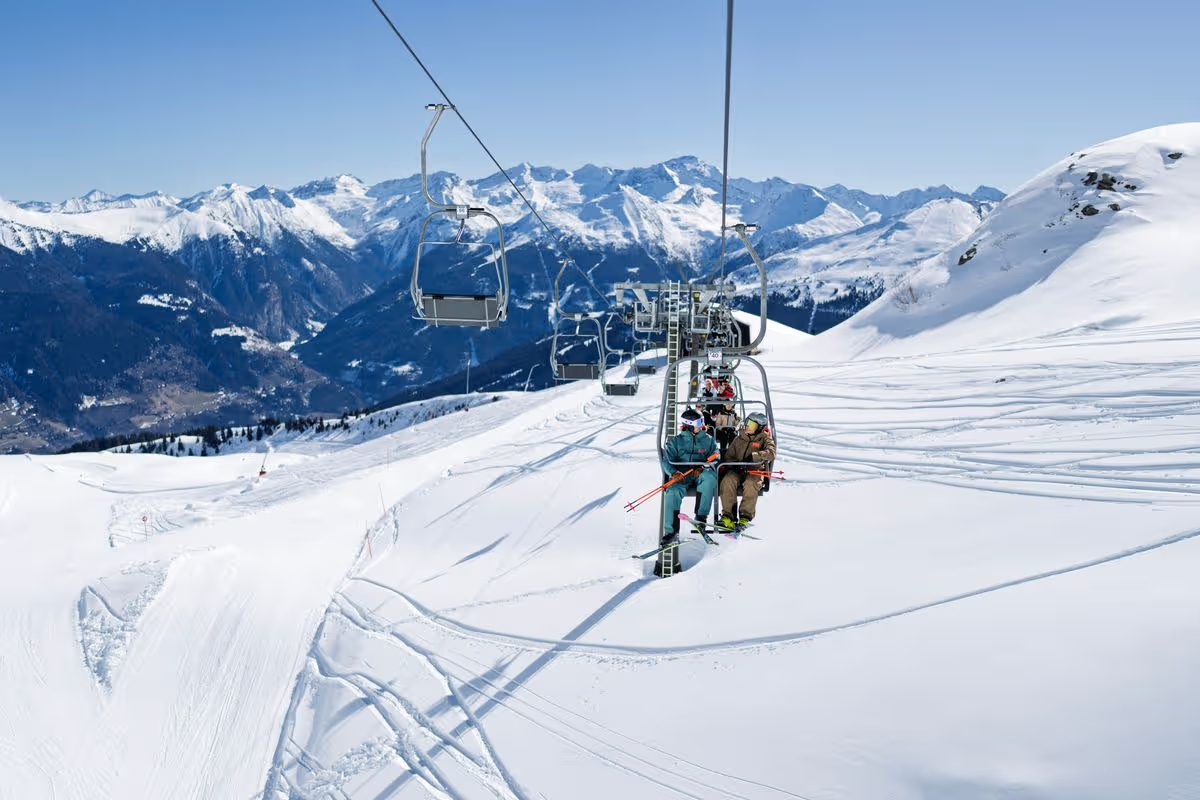
The biggest hidden expense for any skier is the lift pass. This is your ticket to the mountain’s ski lifts and gondolas, which transport you to the top of the slopes so you can ski down. Without a valid pass, you won’t be able to ride the lifts. Passes can range from single-day tickets to multi-day, weekly, or even season-long access, with prices varying widely.
In the Gastein ski area, a one-day adult ticket costs €69.50 (~£59). A six-day pass costs €344.50 (~£293), which works out at around €57.40 (~£49) per day, so staying for a few days noticeably reduces the daily cost.
The pass gives access to the main Schlossalm–Stubnerkogel ski area linking Bad Gastein and Bad Hofgastein, as well as the higher-altitude Sportgastein sector.
Ski hire
If you’re not travelling with your own equipment, rental is the next major cost. At the Angertal Skizentrum in Bad Hofgastein, a day’s rental starts from around €26 (£22) for skis and poles and €14 (£12) for boots.
For weekly rentals, expect to spend around €129 (£110) for skis and €65 (£55) for boots. Snowboard rental is priced similarly.
Ski lessons
For beginners, learning can also be the most expensive part. A three-day beginner’s course can set you back around €294 (£250), including 12 hours of lessons with a dedicated instructor.
Lunch on the mountain
Food prices in the mountains are slightly higher than at your local spot, but Austrian mountain huts are usually gentler on the wallet than some French mega-resorts.
A typical slope-side lunch might include €10–€15 (£8.50–£13) for dishes such as goulash soup or Tiroler gröstl, another €6 (£5) for a drink or coffee, and another €7 (£6) for a slice of strudel. Kaiserschmarrn, the sweetened shredded pancake, costs a little more at around €15 (£13)but it will keep you full well into the evening.
Altogether, €15–€25 (£13–£21) is a realistic spend for lunch and an espresso on the mountain.
One recommendation after a day on the slopes of Bad Hofgastein is the brand new Hirsch und Maus, perched at the mountain peak. A traditional Wiener Schnitzel costs the equivalent of €21 (£18). For those fed up with beige carbs, a Caesar salad is around €19 (£16).
Après ski
Après ski is a key part of the skiing experience, but it can be expensive. After a day on the nursery slopes, a half litre of the local Salzburg brew, Stiegl, costs the equivalent of €6 (£5.30) at the trendy Angertal 1180.
That overall figure can drop if you book lift tickets early, bring your own gear, or choose shorter passes such as half-day tickets. Skiing will never be a budget activity, but not every resort caters only to those on six figures, where single-day lift passes often exceed €80–€90 (~£68–£77).
After the lifts close, many skiers swap their boots for bathrobes and head to the valley’s famous thermal spas, soaking tired legs in steaming mineral waters surrounded by snow.
Accommodation
A classic double room at Hotel Zum Stern costs €294 (~£250) per room per night. Shared between two people, that’s about €147 (~£125) each per night.
Five-day holiday estimate (per person)
Based on the assumption that you’d buy a lift pass for each of the five days of a five-day ski holiday, hire skis and boots for the week, and each day have a mountain lunch, a Schnitzel-style dinner, and one beer Apres ski, this is how much you could expect to spend.
- Lift pass, 5 days: €66–78.50 a day, €330–392 (£280–335) a week
- Ski and boot hire, weekly: €194 (£165)
- Lunch, 5 days: €15–25/day, €75–125 (£65–105) a week
- Dinner, 5 days: £16–18/day, €94–106 (£80–90) a week
- One beer a day, 5 days: €31 (£26.50)
- Accommodation, 5 nights: €1,470 per room, halved to €735 (£625)
Total (no lessons): €1,474–1,536 (£1,255–1,305)
- Optional 3-day beginners course: ~€294 (£250)
Total with lessons: €1,768–1,830 (£1,505–1,555)